Japan is one of the world’s most rewarding travel destinations — and one of the most different from anywhere else most Westerners have been. The language gap is real, the customs are distinct, and the unspoken rules of social conduct have their own logic. But Japan is also extraordinarily safe, efficient, and welcoming to visitors who approach it with curiosity and basic respect. These tips will help you navigate Japan confidently from your very first day.
A note from Jack, editor of Japan Real Guide:
My first Japan trip was in 2012, booked three weeks in advance with almost no preparation. I arrived in Tokyo not knowing how to use the train system, where to exchange money, or what I was going to eat. I spent the first evening walking around Shinjuku in a slight daze, overwhelmed in a way that felt equal parts stressful and exciting.
The tips in this guide are the things I either learned the hard way or wish someone had told me before that first trip. Some are practical (always carry cash; get a prepaid Suica card before you do anything else). Some are more about mindset (slow down; you will not see everything; that is fine). All of them are things I still apply fifteen trips later.
One absolute first step before any of this: confirm your entry requirements. Most nationalities enter Japan visa-free for up to 90 days, but the rules have specific conditions — see our Japan visa requirements guide for a full breakdown by nationality.
Before You Leave Home
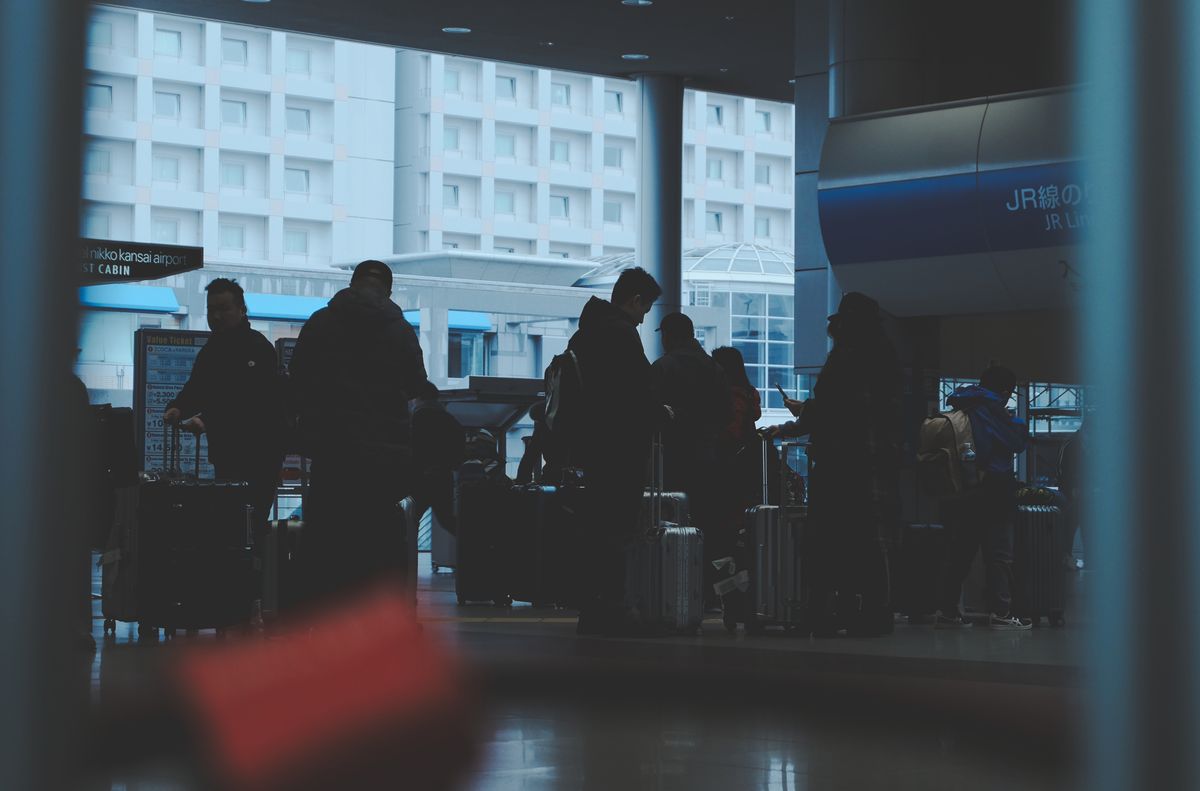
Get a Suica or Pasmo IC card sorted. These rechargeable smart cards handle every train, subway, and bus journey in Japan without needing to buy individual tickets. iPhone users can now load a Suica directly into Apple Wallet before departure (Settings → Wallet → Add Card → Transit Card → Suica). Android users with Felica-capable phones can do the same. Otherwise, pick up a physical card at any JR station on arrival.
Download these apps before flying:
Google Maps (download offline maps of Japan’s major regions)
Google Translate (download Japanese language for offline camera translation)
Japan Official Travel App (train route planning with JR Pass filter)
LINE (Japan’s dominant messaging platform — some guesthouses communicate this way)
Learn a few Japanese phrases. Japanese people deeply appreciate any attempt to communicate in their language, even clumsy. The essentials:
Sumimasen (すみません) — Excuse me / Sorry (extremely versatile — use to get attention, apologize, or signal a waiter)
Arigatou gozaimasu (ありがとうございます) — Thank you (formal)
Kudasai (ください) — Please / I’d like this (point at something and say kudasai to order it)
Ikura desu ka (いくらですか) — How much is it?
Toire wa doko desu ka (トイレはどこですか) — Where is the toilet?
Eigo wa hanasemasu ka (英語は話せますか) — Can you speak English?
Check visa requirements for your nationality. Citizens of most Western countries, Southeast Asian nations, Australia, New Zealand, and many others receive 90-day visa-free entry to Japan on a tourist visa (technically “Temporary Visitor” status, automatically stamped on arrival). Check the Japanese Ministry of Foreign Affairs website for the current list — it changes periodically.
Travel insurance is strongly recommended. Japanese healthcare is excellent but expensive for visitors — a trip to a hospital without travel insurance can cost hundreds of thousands of yen. Japan also has strict immigration controls: if you arrive looking unwell, immigration officers can turn you away. A policy that covers medical evacuation is worth the cost for a trip to Japan.
Money and Cash in Japan

Carry cash at all times. Despite recent improvements, Japan remains a predominantly cash society. Small restaurants, temples, local shops, taxis, and rural businesses often don’t accept credit cards. Carry at minimum ¥10,000 (about $65–70) at all times; more when traveling outside major cities.
7-Eleven ATMs are your friend. Almost every 7-Eleven convenience store (approximately 21,000 locations across Japan) has an ATM that accepts international Visa, Mastercard, Maestro, and Cirrus cards with English menus. Japan Post ATMs are also reliable. Avoid currency exchange booths at airports — rates are typically 3–5% worse than ATM withdrawals.
Consider Wise or Revolut for your spending card. These fintech cards charge near-interbank exchange rates with minimal transaction fees. Loading yen onto a Wise card before departure and using it for ATM withdrawals can save 2–4% compared to using a traditional bank card — meaningful on a multi-week trip.
Tipping is not practiced in Japan. Do not tip at restaurants, hotels, or taxis. Tipping can actually cause confusion and mild offense — it suggests the service was not part of the expected standard. Japanese hospitality (omotenashi) is considered an intrinsic part of the job, not an extra for which supplemental payment is expected. The price you pay is the price; no tip required.
Getting Around Japan
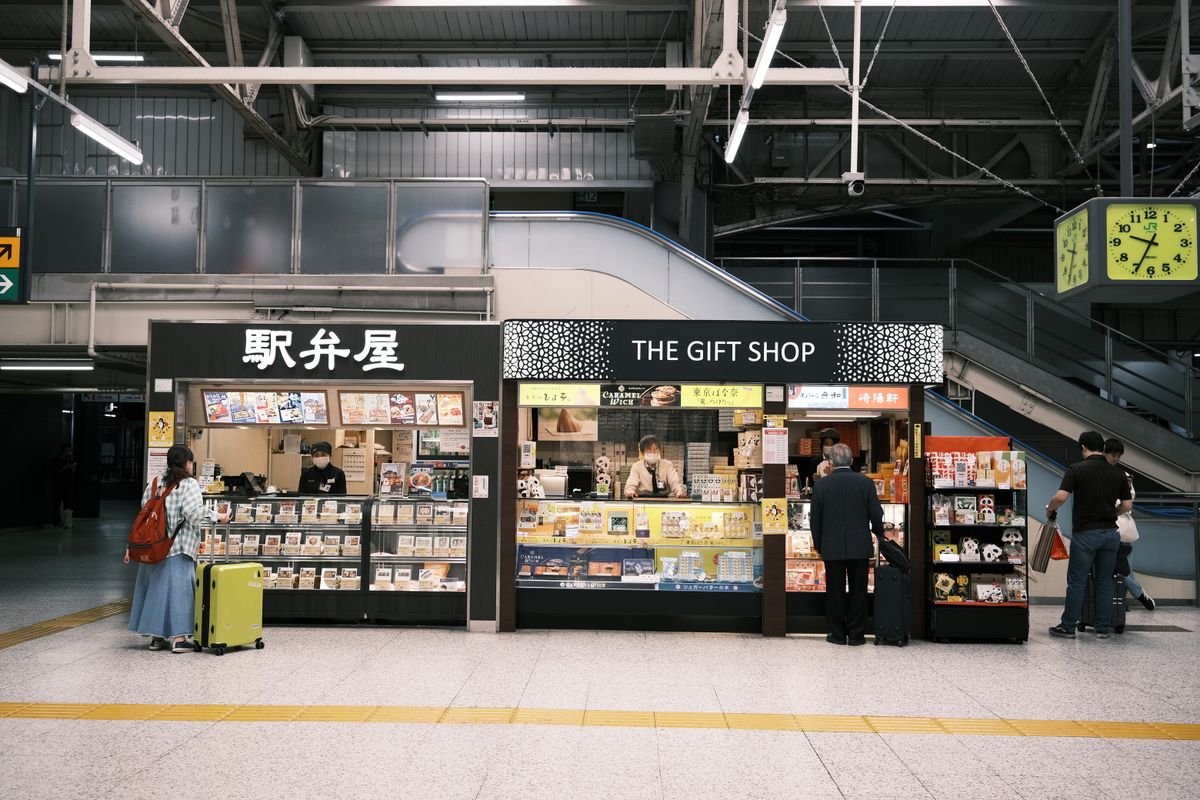
Trains are always the right answer. Japan’s train network — particularly in Tokyo, Osaka, and Kyoto — is more efficient than any other transport option for almost every journey. Learn to read the color-coded subway maps (Google Maps simplifies this dramatically) and trust the system. Trains are on time to the minute; delays of more than two minutes make the national news.
Taxis are expensive. Starting fare is ¥730 and the meter rises quickly. Taxis are useful for late nights after trains stop (typically around midnight) or for travel to very specific, hard-to-reach addresses. In general, trains or walking are faster and much cheaper.
Google Maps handles all Japanese transit flawlessly. Input a destination and select the transit option — Google Maps will show you exactly which train to take, which platform, which exit, and how many minutes to walk at each end. The integration with Japanese transit is as good as anything local apps provide, and it’s in English.
Escalators have a standing side. In Tokyo, stand on the left side of escalators and leave the right side for people walking up. In Osaka, the convention is reversed — stand on the right, walk on the left. Blocking the walking side of a busy station escalator will generate barely perceptible but very real Japanese irritation.
Food Culture and Eating Etiquette
Slurping noodles is correct and expected. The sound is part of the experience — it’s said to enhance the flavor and is a signal to the chef that you’re enjoying the food. Don’t muffle your slurps. Japanese people will be pleased you’re eating authentically.
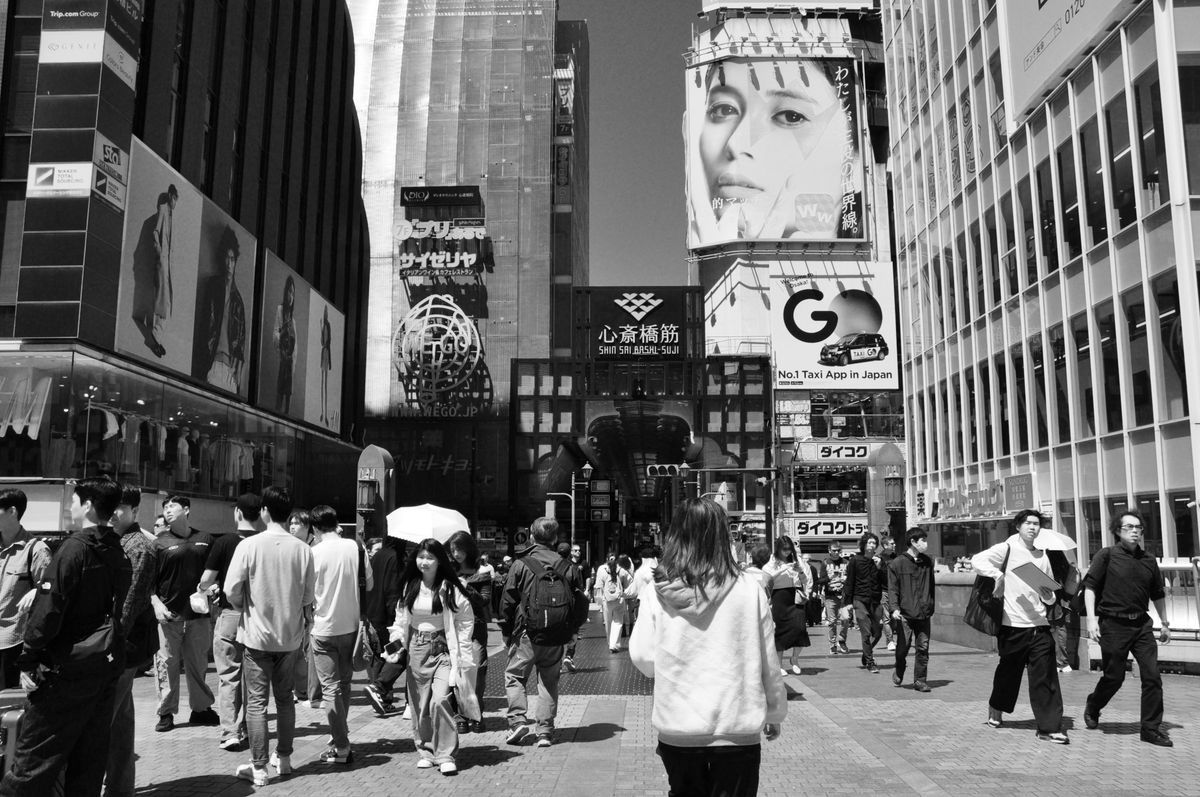
Eating while walking is frowned upon. With some exceptions (festival stalls, Dotonbori in Osaka), eating on the street while walking is considered slightly rude in Japan. Find a place to stop and eat properly, or sit at the restaurant’s designated standing area. This is different from Western casual food culture and surprises many visitors.
Use both hands when receiving things. When receiving a business card, a gift, change, or a receipt, accept it with both hands (or at minimum your right hand supported by your left). This gesture signals respect and is noticed by Japanese people, who will appreciate the consideration.
The ticket machine is your best friend. Most restaurants use automated ticket vending machines at the entrance. You choose your dish by pressing a button (usually with photo assistance), insert money, and receive a ticket. Hand the ticket to a staff member when seated. No language skills required. Don’t walk past the machine and sit down expecting to order at the table — at many places, this doesn’t work.
Free water and tea are standard. At almost every sit-down restaurant, cold water or green tea is served immediately without charge. It’s never expected that you’ll pay for these; asking for more is completely acceptable.
Social Customs and Unspoken Rules
Remove shoes when entering traditional spaces. If you see a step up (tatami floor level change) and a collection of shoes at the entrance of a home, ryokan room, or some restaurant areas, remove your shoes and step up in socked feet. Slippers may be provided for the transition area; remove slippers before stepping onto tatami. A separate pair of toilet slippers is provided in many bathrooms — do not wear these back into the main area (a surprisingly common tourist mistake).
Loud behavior on trains is considered inappropriate. Keep phone calls to urgent situations only on trains — most Japanese people simply don’t make calls on crowded trains. Conversations should be relatively quiet. Mobile phones should be silenced. This is the most consistent social expectation in Japan’s public transport, and the ambient quiet of a Tokyo rush-hour subway is genuinely remarkable.
Queue properly, always. Japanese people form orderly queues for trains (marked spots on platforms show exactly where the train doors will stop), convenience store counters, and restaurant waits. Cut the queue and you’ll generate genuine social disapproval. Wait your turn calmly and you’ll be fine.
Trash cans are rare. Japan has very few public trash cans (a result of terrorism concerns post-1995 sarin attacks). Carry your own small bag for trash, or save wrappers until you reach a convenience store (which will have a bin outside or just inside the entrance). Littering is essentially unheard of in Japan.
Gift-giving is culturally significant. When visiting someone’s home or staying at a ryokan, bringing a small gift (omiyage, お土産) from your home country or from a previous destination is considered thoughtful. The Japanese custom of returning from any trip with local food specialties to distribute to friends and colleagues is deeply embedded — omiyage shops in every train station exist specifically for this purpose.
Safety in Japan
Japan is consistently ranked among the world’s safest countries. Violent crime against tourists is exceptionally rare. Petty theft is minimal — it’s not unusual to leave a wallet or phone on a café table while using the bathroom and return to find it untouched. This level of safety allows a relaxed, open travel style that’s genuinely unusual.
Natural disaster awareness matters more than crime. Japan experiences frequent earthquakes — they’re usually minor, but large earthquakes do occur. Your hotel will have evacuation procedures; the NHK World app provides English-language emergency alerts. In an earthquake: take cover under a sturdy table or desk, protect your head, and wait for the shaking to stop before moving. In a severe earthquake, follow staff instructions at your hotel or venue.
Typhoons (tropical storms) affect Japan’s Pacific coast and western Japan primarily in August and September. Check weather forecasts if traveling during these months — typhoons can disrupt transport significantly but are generally well-forecast and managed.
Health and Medical Care
Japanese healthcare is excellent. Hospitals and clinics in major cities have English-speaking staff or interpretation services. Common medical needs (cold medicine, stomach remedies, bandages) are available at pharmacies (薬局, yakkyoku) throughout the country, with international brands often available alongside Japanese alternatives.
Bring adequate supplies of any prescription medications — some medications legal in other countries are controlled or prohibited in Japan (certain ADHD medications, some painkillers). Check the Japanese Ministry of Foreign Affairs website for the current list of restricted medications and, if needed, obtain a “Yakkan Shoumei” certificate from the Japanese embassy in your country before departure.
Respectful Tourism
Japan is experiencing significant overtourism in some areas, particularly Kyoto and certain spots in Tokyo. A few practices that make you a genuinely good visitor:
Stay on marked paths at temples and shrines — trampling on moss gardens and restricted areas damages irreplaceable landscapes.
Don’t photograph people without permission, especially in Gion’s geisha district (Kyoto) where residents have asked this explicitly.
Book accommodation and experience tours through legitimate operators to ensure your spending benefits local communities.
Visit early in the morning and at less popular sites — your experience is better and you reduce the burden on crowded spots.
Carry reusable bags and water bottles — Japanese convenience culture generates significant single-use plastic, and reducing your contribution matters.
Japan will exceed your expectations almost regardless of how high you’ve set them. The food is better than you think; the efficiency is more extraordinary than you’ve heard; the culture is deeper than any trip can fully explore. Go with curiosity, approach everything with respect, and Japan will open itself to you in ways that take years to fully process. Many travelers find that their time in Japan becomes a reference point — a before and after — in how they understand what travel can be.
Plan Your Japan Trip
📱 Stay Connected: Get a Japan eSIM
One of the best travel tips for Japan: get a data SIM or eSIM before you arrive. Airalo offers affordable Japan eSIM plans you can activate instantly.
Get your Japan eSIM (Stay connected from day 1) →
🏨 Find Your Perfect Hotel in Japan
Compare thousands of hotels, ryokans, and guesthouses across Japan — from budget hostels to luxury resorts.
Related guides
- The Perfect 7-Day Japan Itinerary for First-Timers
- Where to Stay in Kyoto: Best Areas & Ryokan for First-Timers
- Narita & Haneda Airport to Tokyo: The Complete Access Guide
One more thing worth sorting before you fly: travel insurance. Japan’s healthcare is excellent but expensive for visitors, and a simple clinic visit can cost more than your flight. SafetyWing is a popular pay-per-week option built for travelers — a few dollars a week for medical cover.
🗾 Planning your trip? Get our free 7-Day Japan Itinerary (PDF)
Day-by-day Tokyo → Kyoto → Osaka plan with real prices and essential phrases — sent straight to your inbox.
Get the free guide →Going to Japan? Talk to locals with confidence.
Hirameki Japanese — instant offline translation, camera translation, furigana + romaji, and 314 free flashcards. No login. Works without internet.
⬇ Download Free on the App Store
Plan your Japan trip
Two things every first-timer should book
Some links are affiliate links. If you book through them we may earn a small commission at no extra cost to you.