In this guide
- How to choose a Tokyo hotel: three decisions
- The best areas to stay, compared
- What Tokyo hotels cost in 2026
- Luxury hotels
- Mid-range and design hotels
- Budget hotels and capsule hotels
- Ryokan-style stays inside Tokyo
- Airport hotels for early and late flights
- Rooms, check-in and what to expect
- Taxes and fees: what changed in 2026 and what changes in 2027
- Hotels vs vacation rentals (Airbnb)
- Getting from the airport to your hotel
- Luggage, laundry, baths and safety
- Booking tips that actually save money
- Quick picks by type of traveler
- Frequently asked questions
- Plan the rest of your trip
How to choose a Tokyo hotel: three decisions
Tokyo has thousands of hotels, and most of them are clean, safe and well run. That makes the choice less about avoiding bad hotels and more about three practical decisions. Get these right and almost any hotel in this guide will work.
1. Location: be near the right station, not just “central”
Tokyo is not one center but a ring of centers linked by trains. The JR Yamanote Line loops around them: Shinjuku, Shibuya, Tokyo Station, Ueno, Akihabara and Ikebukuro are all on it. A hotel within about five minutes’ walk of one of these stations saves you time every single day, especially at night when you are tired and your feet hurt. A hotel that is “only” 15 minutes from a station sounds fine on a map and feels far in August heat or winter rain.
Also think about your first and last day. If you land at Narita and leave from Haneda, or carry big suitcases, a hotel near an airport bus stop or a direct airport train saves real effort. We cover that in the airport section below.
2. Budget tier: decide what you are paying for
Tokyo hotels fall into four broad tiers, and each one is good at different things:
- Capsule and cabin hotels: a pod or cabin to sleep in, shared bathrooms and lockers. Fine for one or two nights, solo travelers, or late arrivals.
- Business hotels: small private rooms with an en-suite bathroom, usually very close to stations. This is where most visitors stay, and the big chains are consistent.
- Mid-range and design hotels: more space, better lounges or public baths, and a sense of place. Good for couples and families.
- Luxury hotels: large rooms high up in towers, pools and spas, and very polished service.
3. Room size: the number most people forget to check
Japanese hotel sites and booking platforms list room size in square meters (m²). Read it. Budget business-hotel rooms can be very small: the standard double at Hotel MyStays Higashi-Jujo is 11.75 to 13 m², and APA Hotel’s Shinjuku Kabukicho Tower lists singles and doubles at about 11 m². That is enough for one person, tight for two people with two large suitcases. If you are traveling as a couple with big bags, look for 18 m² or more, or a twin room; at the same APA hotel, twins are about 17 m².
The best areas to stay, compared
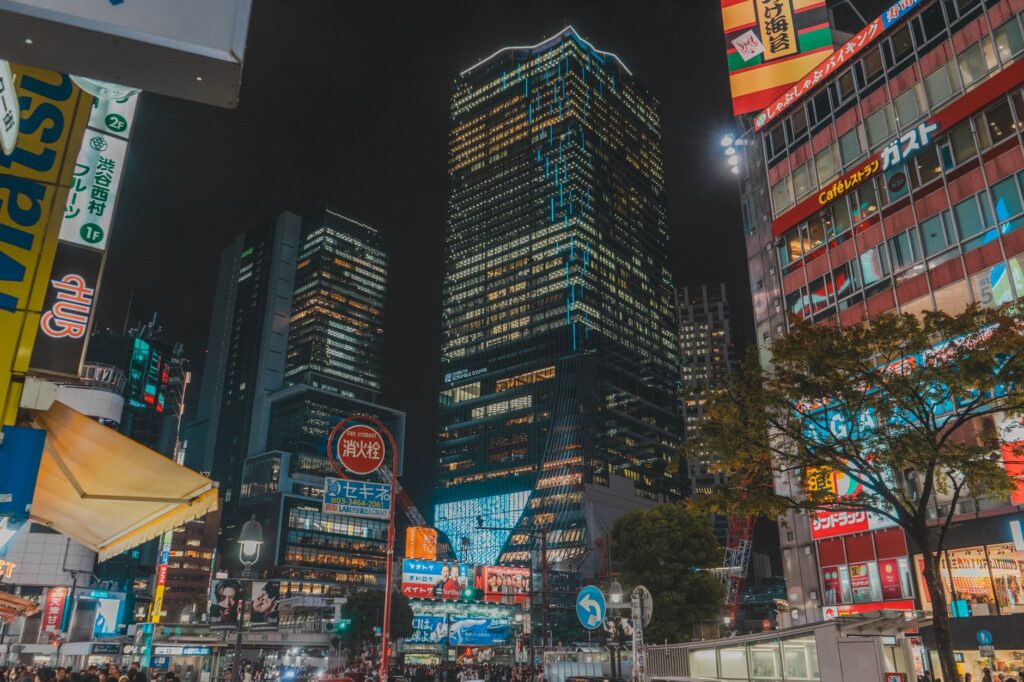
The travel times below are from GO TOKYO, the official Tokyo tourism site. They are typical door-to-door estimates by train or airport bus, and real times vary with the exact hotel and the time of day.
| Area | Best for | Haneda | Narita |
|---|---|---|---|
| Shinjuku | First-timers, nightlife, day trips west (Hakone, Fuji) | About 55 min | About 2 h by bus, 1 h 35 min by train |
| Shibuya | Shopping, Harajuku, a young crowd | 55 min by bus, 45 min by train | 1 h 55 min by bus, 1 h 40 min by train |
| Tokyo Station / Marunouchi | Shinkansen trips, calm evenings, luxury | Buses 30–55 min | Buses about 1 h 20 min |
| Ginza | Shopping, dining, central and quiet at night | 35 min by bus, 50 min by train | 2 h by bus, 1 h 35 min by train |
| Asakusa | Traditional Tokyo, value, Sensoji | About 50 min | About 1 h 25 min by train |
| Ueno | Museums, parks, the Skyliner to Narita | About 50 min | About 1 h 20 min by train |
| Akihabara | Anime and electronics, budget hotels | About 45 min | About 1 h 30 min by train |
| Ikebukuro | Budget, anime shops, Sunshine City | 1 h 10 min by bus, 1 h by train | 2 h 25 min by bus, 90 min by train |
Shinjuku
Shinjuku Station is the busiest station in the world, listed by Guinness at about 3.53 million passengers a day, and it is served by every JR line through the area plus the Keio, Odakyu, Marunouchi, Toei Shinjuku and Toei Oedo lines. The west side is office towers and the Tokyo Metropolitan Government Building; the east side is department stores, restaurants and the neon of Kabukicho. The highway bus terminal (Busta Shinjuku) sits above the south side of the station, which makes Shinjuku the easiest base for buses to Mt. Fuji and for the Odakyu Romancecar to Hakone. Tokyo Station is 14 minutes away on the JR Chuo Line Rapid. The trade-off is crowds and some late-night noise around Kabukicho.
Shibuya
Shibuya is the Scramble Crossing, fashion, music and a lot of new development around the station. Harajuku and Omotesando are about a 20-minute walk. JR lines, the Keio Inokashira, Tokyu Toyoko and Tokyu Den-en-toshi lines and three subway lines meet here, and Shinjuku is 7 minutes away on the Yamanote Line. Shibuya suits travelers who want to walk out of the hotel into the busiest part of the city. It is hilly and the station is a maze, so pick a hotel near the exit you will actually use.
Tokyo Station, Marunouchi and Ginza
This is the most practical base if you plan shinkansen trips to Kyoto, Osaka or the north. Marunouchi mixes office towers with European-style shopping streets and quiet evenings, and several of Tokyo’s top luxury hotels are here or in neighboring Otemachi. Airport buses leave from the Yaesu side of Tokyo Station. Ginza, one stop away, has department stores, Michelin restaurants, the Kabukiza theater and Ginza Six, and it is noticeably calmer after 10 p.m. than Shinjuku or Shibuya. For food ideas nearby, see our Ginza and Tsukiji guide.
Asakusa and Ueno
Asakusa is old Tokyo: Sensoji Temple, Kaminarimon gate, Nakamise shopping street and boats on the Sumida River. Hotels here often cost less than in Shinjuku for a similar room, and Keikyu trains from Haneda run through to Asakusa (the fastest take 34 minutes from Terminal 3), while Keisei Access Express trains from Narita also run through without a change. Ueno, next door, has Ueno Park, the zoo, the national museums and Ameyoko market, and Keisei Ueno is the terminus of the Skyliner from Narita. Ueno is 8 minutes from Tokyo Station on the Yamanote Line. The downside of both: nightlife is quieter and western Tokyo (Shibuya, Shinjuku) is 25 to 35 minutes away.
Akihabara
Akihabara is four minutes from Tokyo Station and full of electronics, anime and game stores, plus many affordable business hotels. JR Yamanote, Keihin-Tohoku and Sobu lines, the Hibiya Line and the Tsukuba Express all stop here, so it is a well-connected budget base even if you have no interest in anime.
Roppongi, Toranomon and Akasaka
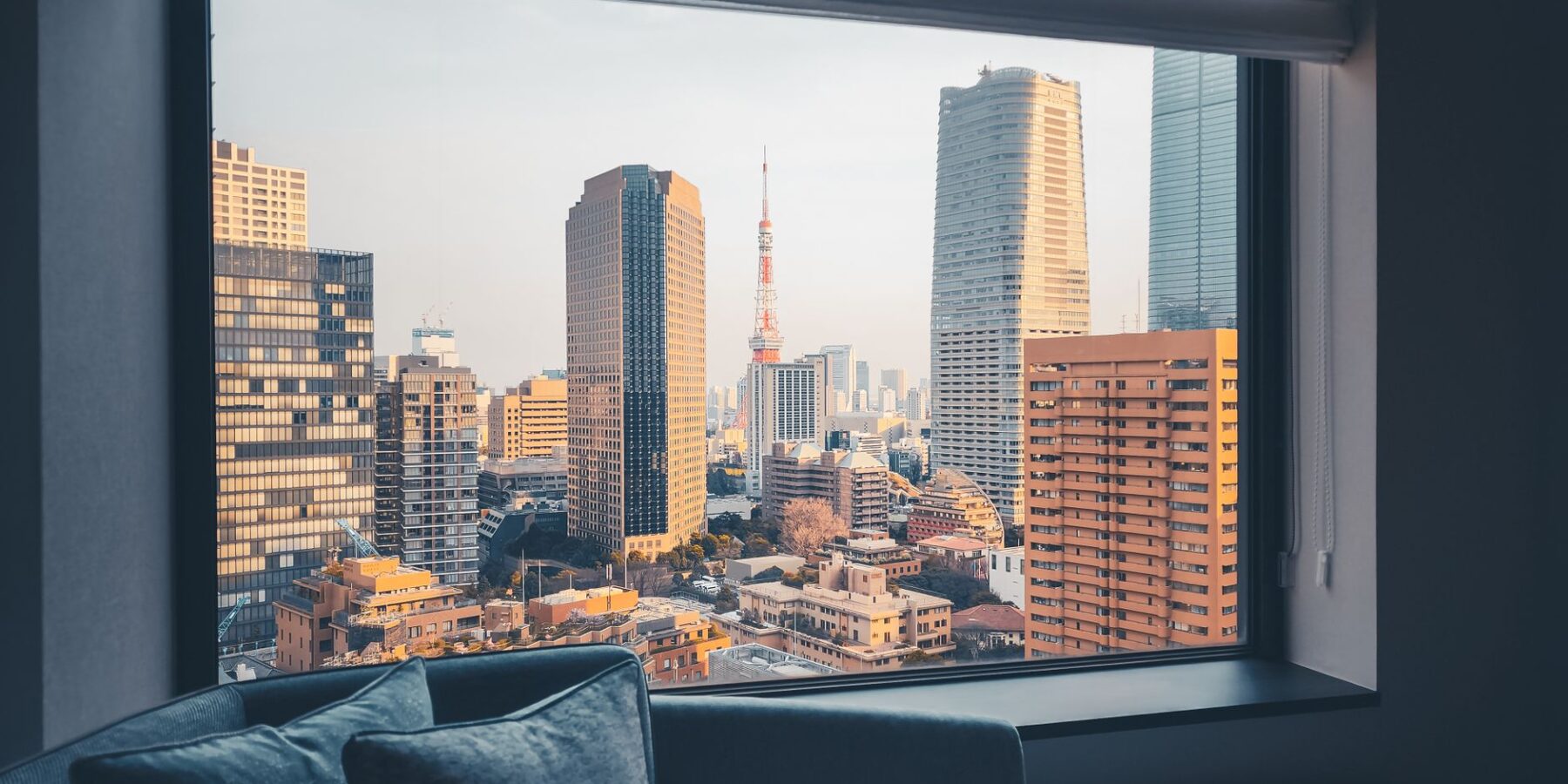
These are business and nightlife districts that have gained a lot of new luxury hotels: Toranomon Hills (its Station Tower opened in October 2023 directly above the Hibiya Line’s Toranomon Hills Station), Azabudai Hills (opened November 2023, home to teamLab Borderless and Janu Tokyo), and in March 2026 the new 1 Hotel Tokyo in Akasaka. Roppongi itself is on the Hibiya and Toei Oedo lines, 9 minutes from Shinjuku on the Oedo Line. These areas are a good choice if you want a high-floor room with a Tokyo Tower view, less so if you want to step out into old streets.
Ikebukuro
Ikebukuro is a busy hub in north Tokyo with Sunshine City and many anime and manga stores. It is on the Yamanote, Saikyo and Shonan-Shinjuku lines plus private railways and three subway lines, and Shinjuku is 8 minutes away. Hotels tend to be cheaper than in Shinjuku, which is the main reason to choose it.
Shinagawa and Takanawa
Shinagawa is the Haneda side of the city: Keikyu trains reach it from Haneda Terminal 3 in as little as 11 minutes, and the shinkansen stops here too. The new Takanawa Gateway City next door had its grand opening on March 28, 2026, and the JW Marriott Hotel Tokyo opened inside it in October 2025. It is a smart base for a short stay with an early flight.
For a deeper look at what each neighborhood feels like, read our Tokyo neighborhoods guide.
What Tokyo hotels cost in 2026
Hotel prices in Tokyo move with demand every night, so any single “price” you read online is a snapshot. What the data does show clearly is the pattern.
The averages
According to Tokyo Shoko Research, the average room rate across 12 listed hotel operators in Japan in fiscal 2025 was ¥17,818, up 8.6% on the previous year, with occupancy at 83.3%. Business-hotel brands averaged ¥14,463 and city-hotel brands ¥25,490. Those are national figures, but Tokyo follows the same trend.
For Tokyo specifically, the hotel analytics firm MetroEngines estimated these average settled rates (what guests actually paid) in 2026:
| Month (2026) | Tokyo business hotels | Tokyo city hotels |
|---|---|---|
| January | ¥12,550 | — |
| March | ¥15,670 | ¥30,282 |
| April | ¥17,802 | ¥31,241 |
| May | ¥14,890 | — |
| June | ¥11,890 (−4.7% vs 2025) | ¥22,195 (−12.8%) |
| July | ¥12,306 (−5.3%) | ¥22,434 (−17.1%) |
Two things stand out. First, April was the most expensive month from January to July 2026 in both categories, which matches the cherry-blossom season. Second, prices in mid-2026 were lower than a year earlier, after several years of steep rises, even though occupancy stayed above 90% in July. In plain terms: Tokyo is still busy, but you are less likely to see the extreme prices of 2024 and 2025 outside peak weeks. Luxury is the exception; JLL reported luxury-hotel average rates in Tokyo up 14.1% in the first quarter of 2026.
When prices peak
The busiest periods in Japan are New Year (roughly December 27 to January 4), Golden Week (April 29 to May 5) and Obon (around August 13 to 16), and JNTO advises booking early for these dates. Add the cherry-blossom weeks of late March and early April for Tokyo. If your dates are flexible, a week either side of these periods can make a big difference.
Comparing prices from different sources? Listed prices on booking sites and the “settled rates” in industry data are measured differently, so do not compare them directly. Compare the same dates on the same site instead.
Luxury hotels

Tokyo’s best hotels sit at the top of skyscrapers, and the view is part of what you pay for. The Michelin Guide’s 2026 hotel “Keys” list gave its top rating, Three Keys, to three Tokyo hotels: Bulgari Hotel Tokyo, Four Seasons Hotel Tokyo at Otemachi and Palace Hotel Tokyo. The reopened Park Hyatt Tokyo entered the list with One Key.
Palace Hotel Tokyo (Marunouchi)
Facing the moat and gardens of the Imperial Palace, with 266 rooms and 18 suites, an underground link from Otemachi Station (exit C13b) and Tokyo Station about 8 minutes on foot. Some rooms have balconies, which is rare in Tokyo, and the evian SPA has a pool. It held Three Michelin Keys in both 2025 and 2026. A good choice if you want classic luxury that is also extremely practical for the shinkansen.
Aman Tokyo (Otemachi)
On the top floors of Otemachi Tower, connected to Otemachi Station and close to Tokyo Station. The lobby on the 33rd floor sits under a six-story atrium, the smallest suites are 71 m², and the spa has onsen-style baths and a 30-meter pool with city views. It opened in December 2014 and remains one of the most sought-after hotels in the city.
Four Seasons Hotel Tokyo at Otemachi
Opened in September 2020 on the top six floors of the 39-story Otemachi One Tower, with 190 rooms, direct access to Otemachi Station and a 20-meter indoor pool. Three Michelin Keys from 2024 to 2026. Note that there is also a much smaller Four Seasons Hotel Tokyo at Marunouchi, with 57 rooms right by Tokyo Station, which reopened after a redesign by André Fu for stays from April 29, 2026.
Bulgari Hotel Tokyo (Tokyo Station, Yaesu side)
Opened in April 2023 on floors 40 to 45 of Tokyo Midtown Yaesu, with 98 rooms, a 1,000 m² spa with a 25-meter pool, an Italian restaurant by Niko Romito and the Bulgari Bar on the 45th floor. It is linked underground to JR Tokyo Station. Three Michelin Keys from 2024 to 2026.
Park Hyatt Tokyo (Nishi-Shinjuku): reopened
The hotel from “Lost in Translation” closed in May 2024 and reopened on December 9, 2025 after a 19-month renovation. It occupies floors 39 to 52 of Shinjuku Park Tower; the number of rooms went from 177 to 171, and there are new 85 m² Park Suites. The New York Grill & Bar on the 52nd floor and the Peak Lounge are back, and the pool under its glass atrium remains. It is about 8 minutes on foot from Tochomae Station and about 12 minutes from the South Exit of JR Shinjuku. If you stay here, you get Shinjuku’s convenience without its crowds.
Janu Tokyo (Azabudai Hills)
The first hotel of Aman’s sister brand, opened in March 2024 inside Azabudai Hills, near Kamiyacho Station on the Hibiya Line. It has 122 rooms, a 4,000 m² spa and wellness center, and eight restaurants and bars. It is livelier and more social than Aman Tokyo.
The Okura Tokyo (Toranomon)
Rebuilt and reopened in September 2019 with 508 rooms in two buildings. Standard rooms in the 41-story Prestige Tower are about 50 m², among the largest in the city at this level, and the lobby recreates the famous 1962 original. There is a 25-meter pool and the Okura Museum of Art on site. Toranomon Hills Station is 5 minutes away.
The Peninsula Tokyo (Yurakucho / Hibiya)
Opened in 2007, with 314 rooms on 24 floors facing the Imperial Palace gardens, direct access to Hibiya Station and JR Yurakucho about 2 minutes away. A renovation was approved in August 2026, but no start date or closure had been announced as of October 2026, so check before booking far ahead.
Also worth a look
- Andaz Tokyo Toranomon Hills: floors 47 to 52 of Toranomon Hills Mori Tower, 164 rooms and a rooftop bar on the 52nd floor.
- The Tokyo EDITION, Toranomon: opened in 2020, 206 rooms from level 31, designed with Kengo Kuma, with Tokyo Tower views. A smaller EDITION opened in Ginza in 2024 with 86 rooms and a rooftop bar.
- JW Marriott Hotel Tokyo (Takanawa Gateway City): opened October 2, 2025, about 200 rooms, an outdoor pool and spa on the 28th floor, roughly 20 minutes from Haneda.
- 1 Hotel Tokyo (Akasaka): opened in March 2026 on floors 38 to 43 of Akasaka Trust Tower, 211 rooms and an indoor pool.
- Bellustar Tokyo (Kabukicho): 97 rooms from the 39th floor of Tokyu Kabukicho Tower; a spa and gym but no pool.
- Mandarin Oriental, Tokyo (Nihonbashi): 179 rooms and suites in Nihonbashi Mitsui Tower, with the spa on the 37th floor.
One more note: some new hotels you may read about are not open yet. The Waldorf Astoria Tokyo Nihonbashi and the Pullman Tokyo Ginza are expected in 2027, Raffles Tokyo in 2028. When you are ready, compare Tokyo luxury hotels on Agoda for your dates.
Mid-range and design hotels
This is the sweet spot for many couples and families: more space than a budget business hotel, a public bath or a good lounge, and a location that is part of the experience.
Hotel Gracery Shinjuku (Kabukicho)
The hotel with the life-size Godzilla head, about 12 meters tall, on its 8th-floor terrace. It opened in April 2015 and has 970 rooms over 30 floors, with the lobby on the 8th floor. It is about 5 minutes on foot from JR Shinjuku’s East Exit and 3 minutes from Seibu-Shinjuku. Six “Godzilla View” rooms (the double is 18 m²) look out at the head, and a Godzilla vs King Ghidorah room opened on the 30th floor in July 2025. Fun, central, and good value for the location.
Hotel Groove Shinjuku, A Parkroyal Hotel (Kabukicho)
Opened in May 2023 inside Tokyu Kabukicho Tower, with 538 rooms on floors 20 to 38, 1 minute from Seibu-Shinjuku and about 7 minutes from JR Shinjuku. There are three artist-designed “GROOVE ROOMs”. Read the price carefully: its rates add a 15% service charge plus the Tokyo accommodation tax, which is common at upscale hotels and easy to miss.
Mitsui Garden Hotel Ginza Premier (Ginza 8-chome)
Lobby on the 16th floor, 45 rooms with “view baths” (some facing Tokyo Tower), and a Superior twin of 26.3 m². Shimbashi Station is 4 to 5 minutes away, Ginza Station about 10, and the Airport Limousine Bus from Narita stops at the hotel. Mitsui Garden runs 13 hotels in Tokyo, and the brand is a dependable choice across the city.
OMO by Hoshino Resorts (four in Tokyo)
OMO hotels are built around the neighborhood: staff called “OMO Rangers” lead local walks, many of them free. In 2026 there are exactly four in Tokyo:
- OMO3 Asakusa: opened July 2023, 98 rooms, 1 minute on foot from Sensoji, with a 13th-floor lounge looking at Sensoji and Tokyo Skytree.
- OMO5 Tokyo Otsuka: 1 minute from JR Otsuka on the Yamanote Line, 125 rooms, “YAGURA” rooms with a cypress sleeping loft, and coin laundry.
- OMO5 Tokyo Gotanda: opened April 2024, 188 rooms for 1 to 6 guests with tatami floors, which is unusually good for families.
- OMO3 Tokyo Akasaka: 3 minutes from Akasaka-mitsuke and Akasaka stations, 140 rooms, with morning shrine walks for guests.
Tokyu Stay (a washer-dryer in the room)
Tokyu Stay’s selling point is a washer-dryer in the room, which is a gift on a trip of a week or more. The brand says rooms “basically” have one, but some room types do not, so check. Tokyu Stay Shibuya has had a washer-dryer, microwave and mini kitchen in every room since its August 2023 renewal, with rooms averaging 25 m². Tokyu Stay Shinjuku, 1 minute from Shinjuku-sanchome, reopened on September 29, 2026 after a renovation that raised the average room size from 16.7 to 24.9 m². A Tokyu Stay Ebisu opened in March 2026.
sequence MIYASHITA PARK (Shibuya)
Above the MIYASHITA PARK complex, 3 to 7 minutes from Shibuya Station, with 240 rooms, bunk rooms for up to six people and a rooftop bar, SOAK, on the 18th floor. Its unusual times are worth knowing: check-in from 17:00, check-out at 14:00. That suits late arrivals and late flights, less so an early start.
The Gate Hotel Kaminarimon by Hulic (Asakusa)
About 2 minutes from Exit 2 of Asakusa Station on the Ginza Line, with a restaurant and bar that overlook Asakusa and Tokyo Skytree. A quieter, more grown-up alternative to staying on the busiest Asakusa streets.
TRUNK(HOTEL), Shibuya
Two small design hotels. TRUNK(HOTEL) Cat Street, between Shibuya and Harajuku, opened in 2017 with 15 rooms, a public lounge and all-day kitchen. TRUNK(HOTEL) Yoyogi Park opened in September 2023 with 25 rooms, all with balconies, and a rooftop pool for guests; it sits close to the luxury tier.
Hotel Metropolitan Tokyo Ikebukuro
A solid, large hotel 3 minutes from the West Exit (South) of Ikebukuro Station, with the Airport Limousine Bus stopping at the front door for both Haneda and Narita. A new “Prime Room” type became bookable in August 2026.
Budget hotels and capsule hotels
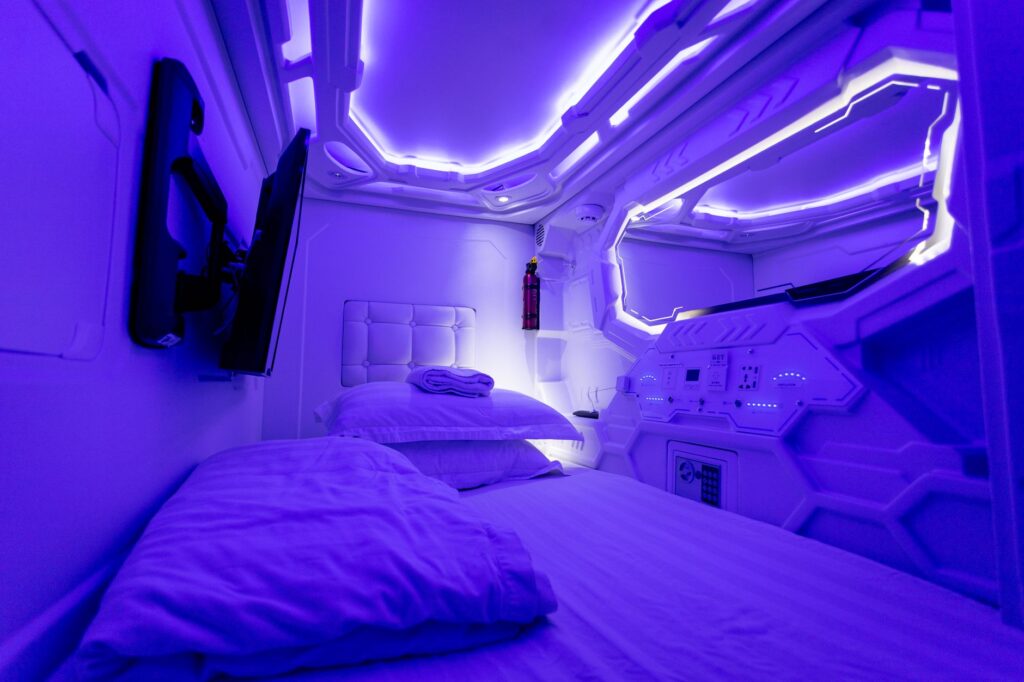
Budget in Tokyo does not mean dirty or unsafe. The main compromise is space. These chains are reliable, and their hotels are usually close to stations.
Dormy Inn
The favorite of many repeat visitors, for one reason: most Dormy Inns have a large public bath, typically open from 15:00 to 10:00, and some add a sauna and cold bath. The brand also offers free late-night ramen called “Yonaki Soba” (a half-size soy-sauce bowl; at Dormy Inn Akihabara it is served from 21:30 to 23:00), ice cream after the bath and a morning drink, with hours that vary by hotel. Laundry is typically a free washer and a ¥100 dryer per 20 minutes. There are 13 Dormy Inns in Tokyo, including Premium Ginza, Premium Shibuya Jingumae, Akihabara, Ueno-Okachimachi, Ikebukuro and Express Asakusa. Onyado Nono Asakusa, from the same company, has all tatami rooms and its own natural hot spring in the basement. Two notes: the official site is now dormy-hotels.com, and guests with tattoos are “in principle” not allowed in the baths, though some hotels offer cover stickers.
APA Hotel
Japan’s largest hotel chain, with 347 hotels nationwide. Rooms are compact (about 11 m² for singles and doubles at the Shinjuku Kabukicho Tower), but locations are central and prices are often low. The Shinjuku Kabukicho Tower has 620 rooms and a guests-only large bath with an open-air section on the 28th floor.
Sotetsu Fresa Inn and Hotel MyStays
Two more dependable chains. Sotetsu Fresa Inn has several Tokyo hotels, including Ginza-Nanachome, Ginza-Sanchome (3 minutes from Ginza Station) and Tokyo-Kanda. Hotel MyStays, now run by ICONIA Hospitality, has about 20 Tokyo hotels, including Asakusa, Ueno East, Nishi-Shinjuku, Hamamatsucho, Kanda and Haneda; newer ones, such as Higashi-Jujo (opened November 2025), have a microwave in every room and 24-hour paid laundry.
Capsule and cabin hotels
- nine hours: sleek capsule hotels with branches including Kita-Shinjuku (opened June 2026, 2 minutes from JR Shin-Okubo, 206 pods), Hamamatsucho, Suidobashi, Ningyocho, Shinagawa Station (men only), Woman Shinjuku and Woman Kanda (women only) and Narita Airport.
- First Cabin: larger “cabins” instead of pods, with branches at Atagoyama, Akasaka, Ichigaya, Akihabara and Haneda Terminal 1. First Cabin Akihabara reopened in June 2026 with 149 cabins, separate floors for men and women, a large bath and coin laundry. No cabin has its own bathroom or toilet.
- BOOK AND BED TOKYO: the “sleep in a bookshelf” hostel now has only one Tokyo branch, in Shinjuku (Kabukicho, 8th floor, 1 minute from Seibu-Shinjuku), with check-in from 16:00. The Ikebukuro and Asakusa branches have closed.
- Women-only options: Nadeshiko Hotel Shibuya (about 3 minutes from Shinsen Station, with an onsen-style bath and a tatami lounge), nine hours Woman Shinjuku and Woman Kanda, and Anshin Oyado Tokyo Woman Shinjuku Ogikubo (women only since March 2026).
Capsules are a good experience for one or two nights. For a full week, most people are happier in a small private room. Our capsule hotel guide explains how they work, from lockers to etiquette.
A correction for older guides: WIRED HOTEL Asakusa, often recommended online, is no longer operating, so do not plan around it.
Ryokan-style stays inside Tokyo
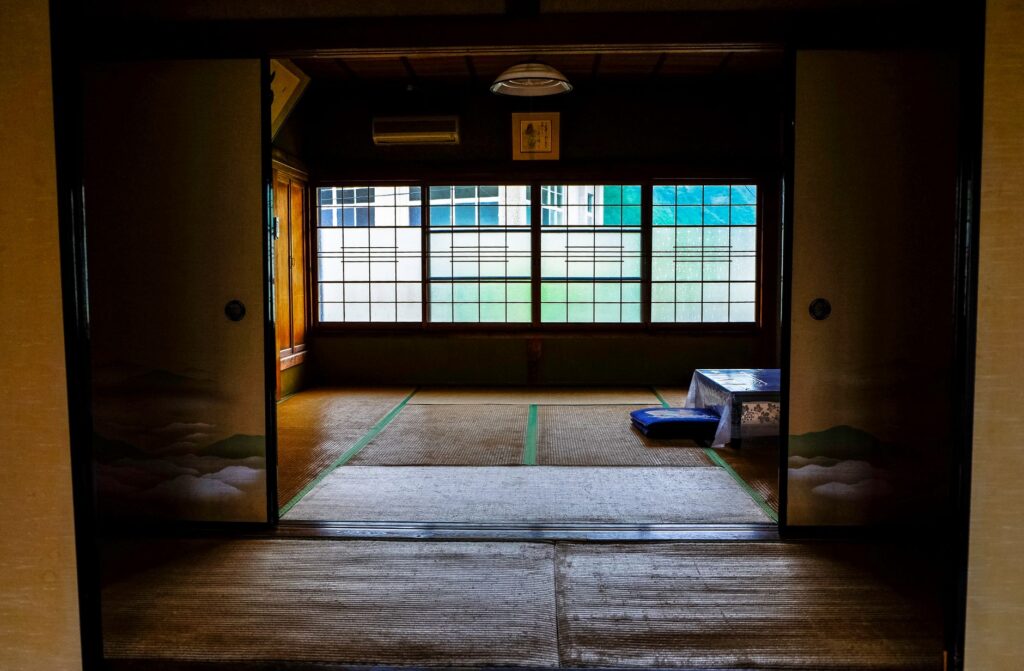
Most classic ryokan are in hot-spring towns, but you can get a taste of the experience without leaving Tokyo.
- HOSHINOYA Tokyo (Otemachi): a 17-story “tower ryokan” with 84 rooms, six rooms per floor sharing their own lounge, tatami-floored corridors and a hot-spring bath on the 17th floor, indoor and open-air, fed by water from about 1,500 meters underground. About 2 minutes from Otemachi Station and 10 minutes on foot from Tokyo Station. The whole hotel is non-smoking. If you have tattoos, ask the hotel about the bath before booking.
- Fufu Tokyo Ginza: a ryokan-style hotel that opened on November 16, 2025, directly connected to Ginza-itchome Station, with in-room baths using hot-spring water brought from Atami.
- Onsen Ryokan Yuen Shinjuku: opened in 2019 with 193 rooms and an open-air bath on the 18th floor using hot-spring water brought from Hakone, 7 minutes from Shinjuku-gyoenmae Station.
- Ryokan Sawanoya (Yanaka): a small family-run inn since 1949 in the old Yanaka neighborhood, with tatami rooms, futons and two private baths (cypress and clay) that you can reserve, which also solves the tattoo question. Nezu Station is about 7 minutes away.
Want the full hot-spring version? Hakone is about 80 minutes from Shinjuku by the Odakyu Romancecar, and Kinugawa Onsen about 2 hours from Asakusa by Tobu limited express. See our guides to the best ryokan in Japan, Hakone and onsen etiquette.
Airport hotels for early and late flights
Haneda is close enough to the city that most people do not need an airport hotel. Narita is a different story: if your flight leaves very early in the morning, or you land after the last trains, a night at or near the airport can be the calmest option.
At Haneda
- The Royal Park Hotel Tokyo Haneda: inside Terminal 3 (3rd floor), 313 rooms, with an airside section for transit passengers.
- Haneda Excel Hotel Tokyu: inside Terminal 2 (2nd floor).
- First Cabin Haneda Terminal 1: cabin-style rooms on the 1st floor of Terminal 1.
- Hotel Villa Fontaine Grand and Premier Haneda Airport: in Haneda Airport Garden, directly connected to Terminal 3. The complex also has Izumi Tenku no Yu, a hot-spring bath on the 12th floor with Mt. Fuji views, open to non-guests for a fee (uncovered tattoos are refused).
The hotels inside the terminals have 24-hour front desks.
At Narita
nine hours Narita Airport has capsules on the basement floor of Terminal 2, before security, with 24-hour check-in and 10:00 check-out. You can also use it by the hour (¥1,500 for the first hour and ¥500 per additional hour) or just for a shower (¥1,000), which is useful on a long layover.
Flying from Narita and leaving from Haneda, or the other way around? The Airport Limousine Bus between the two airports costs ¥3,600 and takes about 1 hour 40 minutes.
Planning your trip? Get our free 7-Day Japan Itinerary (PDF)
Get the free guide →Rooms, check-in and what to expect
Check-in and check-out times
Times vary by hotel, so treat the table as examples, not a rule, and check your booking confirmation.
| Hotel | Check-in | Check-out |
|---|---|---|
| Dormy Inn (brand) | 15:00 | 11:00 |
| OMO (all four in Tokyo) | 15:00 | 11:00 |
| Hotel Gracery Shinjuku | 14:00 | 11:00 |
| Hotel Groove Shinjuku | 15:00 | 11:00 |
| Mitsui Garden Hotel Ginza Premier | 15:00 | 12:00 |
| Palace Hotel Tokyo | 15:00 | 12:00 |
| Andaz Tokyo | 15:00 | 12:00 |
| sequence MIYASHITA PARK | 17:00 | 14:00 |
| nine hours Kita-Shinjuku | 15:00 | 11:00 |
| BOOK AND BED TOKYO | 16:00 | 11:00 |
Your passport at check-in
If you do not have an address in Japan, Japanese law requires hotels and ryokan to record your nationality and passport number, see your passport and keep a copy. This has been the rule since 2005, and the health ministry reminded hotels to enforce it in 2025. Have your passport ready at the desk, even if you booked online; it is not the hotel being difficult.
Room sizes in real numbers
| Room | Size |
|---|---|
| APA Hotel Shinjuku Kabukicho Tower single/double | About 11 m² |
| Hotel MyStays Higashi-Jujo standard double | 11.75–13 m² |
| Hotel Gracery Shinjuku “Godzilla View” double | 18 m² |
| Tokyu Stay Shinjuku (average, after 2026 renovation) | 24.9 m² |
| Tokyu Stay Shibuya (average) | 25 m² |
| Mitsui Garden Hotel Ginza Premier Superior twin | 26.3 m² |
| The Okura Tokyo, Prestige Tower standard | About 50 m² |
| Aman Tokyo, smallest suite | 71 m² |
In practice, a small room means suitcases stay closed on the floor or go under the bed. Many travelers pack a small bag for daily use and leave the big case shut. If you are two people with two large suitcases, a twin room or a room of 18 m² or more is worth the extra cost.
Service charges
Budget and business hotels usually show one price. Many upscale hotels add a service charge on top; Hotel Groove Shinjuku, for example, adds 15% plus the accommodation tax. When comparing two hotels, compare the final total, not the headline rate.
Taxes and fees: what changed in 2026 and what changes in 2027
Tokyo accommodation tax
Tokyo charges its own accommodation tax per person per night, collected by the hotel. The “room charge” it is based on is the room-only price before consumption tax, so meals and other services do not count. The tax is changing. Stays up to March 31, 2027 use the current flat rates; stays from April 1, 2027 use a percentage.
| Room charge per person per night | Until March 31, 2027 | From April 1, 2027 |
|---|---|---|
| Under ¥10,000 | No tax | No tax |
| ¥10,000–¥12,999 | ¥100 | No tax |
| ¥13,000–¥14,999 | ¥100 | 3% of the room charge |
| ¥15,000 and up | ¥200 | 3% of the room charge |
Worked examples from the official rates: a room charge of ¥20,000 per person per night is taxed ¥200 today and ¥600 from April 2027; ¥12,000 is taxed ¥100 today and nothing from April 2027. Today the tax applies only to hotels and ryokan; from April 2027 it also covers hostels, capsule hotels and vacation rentals. The Tokyo government has not announced any upper limit on the 3% tax. If you are booking now for spring 2027, check whether the tax is included in your price.
Japan’s departure tax tripled
The International Tourist Tax, charged on every departure from Japan, rose from ¥1,000 to ¥3,000 on July 1, 2026. It is normally included in your air or ferry ticket, so you do not pay it at the airport. Tickets issued on or before June 30, 2026 keep the old ¥1,000 rate, children under 2 are exempt, and so are transit passengers who leave within 24 hours of arriving.
Hotels vs vacation rentals (Airbnb)
Vacation rentals, called minpaku in Japan, can be a good fit for families or groups who want a kitchen and space. But Tokyo’s rules are strict and getting stricter, and they affect when a legal rental can take guests at all.
- National rule: under the 2018 Private Lodging Business Act, a registered home can host paying guests for up to 180 days a year, and must display a sign showing it is registered.
- Chuo City (Ginza, Nihonbashi, Tsukiji): rentals across the whole ward may only host from Saturday noon to Monday noon.
- Shinjuku City: in exclusively residential zones, rentals may operate only from Friday noon to Monday noon. A stricter proposal, which would ban new rentals in residential zones and limit commercial zones to 120 days, was open for public comment until November 13, 2026 and is not law yet.
- Shibuya City: in restricted zones, which were widened from July 2026, rentals may operate mainly during school holidays.
- Toshima City (Ikebukuro): from December 16, 2026, rentals are limited to 120 days a year in school holidays and banned all year in about 70% of the ward.
What this means for you: in central Tokyo, a legal rental may simply not be available on weekdays or outside school holidays. A listing that is open every night in a residential street of these wards is worth questioning. The Japan Tourism Agency runs an official minpaku portal and asks visitors not to use illegal rentals. Also note that same-day luggage delivery services generally cannot deliver to unstaffed rentals, and from April 2027 rentals pay the Tokyo accommodation tax too. For most first-time visitors, a hotel is simpler, and an apartment-style hotel such as Tokyu Stay gives you a washing machine and microwave without the uncertainty.
Getting from the airport to your hotel
JR East raised its fares on March 14, 2026 (by 7.1% on average), so older guides show lower JR prices. These are the main options with current fares:
| Route | Option | Fare (adult) | Time |
|---|---|---|---|
| Narita → Tokyo Station | Narita Express (N’EX) | ¥3,140 | Check the timetable |
| Narita → Shinjuku | Narita Express (N’EX) | ¥3,330 | About 1 h 24 min |
| Narita ⇄ Tokyo, return | N’EX Tokyo Round Trip Ticket (foreign passport holders) | ¥5,200, valid 14 days | — |
| Narita → Nippori / Ueno | Keisei Skyliner | ¥2,580 (¥2,567 with an IC card for the base fare) | 36 min to Nippori (fastest) |
| Narita → Shinjuku, Shibuya, Ikebukuro, Ginza hotels | Airport Limousine Bus | ¥3,600 | Depends on traffic |
| Narita → Tokyo Station Yaesu | Airport Limousine Bus | ¥3,100 | About 1 h 20 min |
| Narita → Tokyo Station / Ginza | TYO-NRT bus | ¥1,500 (daytime) | From 65 min |
| Haneda → Shinjuku | Airport Limousine Bus | ¥1,400 (late night ¥2,800) | Depends on traffic |
| Haneda → Shibuya / Tokyo Station | Airport Limousine Bus | ¥1,300 / ¥1,200 | Depends on traffic |
| Haneda T3 → Hamamatsucho | Tokyo Monorail | ¥520 | 13 min |
| Haneda T3 → Shinagawa / Asakusa | Keikyu Line | Check Keikyu | From 11 min / 34 min |
A few tips that save stress:
- Pick your hotel with the airport in mind. The Limousine Bus stops right outside several hotels (for example Hotel Metropolitan Tokyo Ikebukuro and Mitsui Garden Hotel Ginza Premier), so you never drag bags through a station.
- Limousine Bus tickets are web-only for reservations. Phone reservations ended in September 2025. Timetables were revised on October 1, 2026.
- The Skyliner is the fastest train into Ueno and Asakusa. You can book Skyliner tickets on Klook before you fly and skip the ticket line.
- With family or a lot of luggage, a private transfer straight to the hotel door can cost less than you think when split between several people: compare private airport transfers in Tokyo with Welcome Pickups.
Step-by-step directions for each route are in our Narita and Haneda to Tokyo guide. For trains in the city, load a Suica or PASMO card on arrival.
Luggage, laundry, baths and safety
Sending suitcases ahead
Japan’s luggage delivery is one of the best travel hacks in the country. Look for the “Hands-Free Travel” logo at airports, stations and hotels, which marks counters for luggage delivery and storage. Two current details:
- Since July 22, 2026, Sagawa has counters at Narita Terminals 1 and 2 with same-day delivery to hotels in 10 central Tokyo wards, including Shinjuku, Shibuya, Chiyoda, Chuo, Minato and Taito. Drop off by 14:00.
- Yamato’s size limits are 160 cm / 25 kg for its “160 size” and 200 cm / 30 kg for its “200 size” (the three sides added together). Yamato raised fares for larger sizes in October 2025, so ask for the current price at the counter.
Our luggage forwarding guide explains how to fill in the forms.
Bags before check-in and after check-out
There is no general rule; it is up to each hotel, and most will hold bags (Dormy Inn, for example, holds them before check-in and after check-out, excluding valuables and fragile items). If you have a gap between check-out and a late flight and do not want to go back to the hotel, find luggage storage near you in Tokyo with Radical Storage.
Laundry
You will not need to pack for every day. Dormy Inn has a free washer and a paid dryer, OMO5 Tokyo Otsuka and First Cabin Akihabara have coin laundry, newer Hotel MyStays have 24-hour paid laundry, and most Tokyu Stay rooms have their own washer-dryer.
Tattoos and hotel baths
Rules are set by each property. Dormy Inn declines tattoos in its baths in principle (some hotels offer cover stickers), and the Izumi Tenku no Yu bath at Haneda refuses uncovered tattoos. The easy solutions are a hotel with a private bath you can reserve, such as Ryokan Sawanoya, or a room with its own bath, such as those at Fufu Tokyo Ginza.
Earthquakes and emergencies
Download Safety tips, a free app supervised by the Japan Tourism Agency. It sends earthquake early warnings, tsunami and weather alerts, heat warnings and evacuation information in 15 languages. JNTO also runs a 24-hour Japan Visitor Hotline in English, Chinese and Korean: 050-3816-2787 (from abroad +81-50-3816-2787). Your hotel’s evacuation map is on the back of the room door. Read it once on your first night.
To use apps and maps everywhere, set up an eSIM before you fly. Airalo has Japan eSIMs you can install at home, or see our eSIM comparison.
Booking tips that actually save money
- Book peak dates early. Late March to early April, Golden Week, Obon and New Year fill up first. For these, book as soon as your dates are fixed and choose a free-cancellation rate.
- Use free cancellation, then check again. Prices in 2026 have been more changeable than in recent years. Book a cancellable rate, then look again two to four weeks before you travel.
- Compare the total. Look at the final price including service charge and tax. A cheaper headline rate with 15% added can end up more expensive.
- Read room size and bed type. “Double” in a business hotel can mean a bed narrower than you expect. Two adults with big bags should consider a twin.
- Location beats a small saving. A hotel 2 minutes from a Yamanote Line station is worth a little more than one 15 minutes away, because you will make that walk several times a day.
- Split long stays. On a week or more, many visitors stay in two areas, for example three nights in Shinjuku and three in Asakusa or Tokyo Station, to see more and shorten travel each day. Luggage delivery makes the move easy.
- Check the official hotel site for notices. Renovations, bath closures and changes to breakfast are posted there first.
When you are ready, compare Tokyo hotels for your dates on Agoda, filtering by station and room size.
Quick picks by type of traveler
| You are… | Consider | Why |
|---|---|---|
| A first-timer who wants convenience | Hotel Gracery Shinjuku, Mitsui Garden hotels, Dormy Inn | Close to big stations, reliable, good value |
| Planning shinkansen trips | Palace Hotel Tokyo, Bulgari, Four Seasons Marunouchi, Ginza or Tokyo Station business hotels | Minutes from Tokyo Station |
| A family of 4 to 6 | OMO5 Tokyo Gotanda, sequence MIYASHITA PARK bunk rooms, Tokyu Stay | Rooms for up to 6, or a washer and microwave |
| A solo budget traveler | nine hours, First Cabin, APA, Hotel MyStays | Low cost, central |
| A woman traveling alone | Nadeshiko Hotel Shibuya, nine hours Woman, women-only floors at First Cabin | Women-only spaces |
| After a public bath every night | Dormy Inn, Onyado Nono Asakusa, Onsen Ryokan Yuen Shinjuku | Large baths, some with hot-spring water |
| Celebrating | Aman Tokyo, Park Hyatt Tokyo, The Okura Tokyo, HOSHINOYA Tokyo | Big rooms, views, spas |
| Catching an early flight | Haneda terminal hotels, Villa Fontaine Haneda, nine hours Narita, JW Marriott Takanawa | At or near the airport |
| Staying a week or more | Tokyu Stay Shibuya or Shinjuku | Washer-dryer and larger rooms |
Frequently asked questions
What is the best area to stay in Tokyo for first-time visitors? Shinjuku is the most popular choice because of its huge station, airport buses and easy day trips to Hakone and Mt. Fuji. If you prefer quieter evenings or plan shinkansen trips, Tokyo Station, Marunouchi or Ginza are better. Asakusa and Ueno are the value pick.
How much should I budget for a Tokyo hotel? Industry data for 2026 put average settled rates for Tokyo business hotels at roughly ¥12,000 to ¥18,000 a night and city hotels at roughly ¥22,000 to ¥31,000, with April the most expensive month so far. Capsules cost less and luxury hotels far more. Always compare the final total for your dates.
Do I need to show my passport at a Tokyo hotel? Yes. If you do not live in Japan, hotels are legally required to record your passport number and nationality and keep a copy of your passport.
Is the Tokyo accommodation tax included in the price? It depends on the booking site and hotel; some show it separately and collect it at the hotel. Until March 31, 2027 it is ¥100 or ¥200 per person per night for room charges of ¥10,000 or more. From April 1, 2027 it becomes 3% of the room charge for ¥13,000 or more per person per night.
Are capsule hotels safe? Yes. They are a normal part of Japanese travel, with lockers for your bags and, at chains like nine hours and First Cabin, separate areas or floors for men and women. The main issues are noise and lack of space, not safety.
Can I check in early or leave my bags? Early check-in depends on the hotel and on availability. Many hotels will hold your bags before check-in and after check-out (Dormy Inn does, for example), but each hotel sets its own policy, so ask at the front desk or check the hotel’s FAQ.
Is Airbnb legal in Tokyo? Registered vacation rentals are legal, but central wards restrict when they can operate, for example only weekends in Chuo City and only weekends in residential parts of Shinjuku. A hotel is simpler for most short trips.
Which Tokyo hotels have a public bath? Most Dormy Inns, APA Hotel Shinjuku Kabukicho Tower (guests only, with an open-air section), First Cabin Akihabara, Onyado Nono Asakusa and Onsen Ryokan Yuen Shinjuku, among others. Luxury hotels such as Aman Tokyo and HOSHINOYA Tokyo have spas or hot-spring baths.
Is it better to stay near Narita or in the city? For most flights, stay in the city. An airport hotel only makes sense for very early Narita departures or late arrivals after the last train.
Plan the rest of your trip
- Tokyo neighborhoods guide
- Best day trips from Tokyo
- Narita and Haneda to central Tokyo
- Japan capsule hotel guide
- The best ryokan in Japan
- Is the Japan Rail Pass worth it?
- Budget travel in Japan
- Cash or card in Japan
- Essential Japanese phrases for travelers
Sources: GO TOKYO (Tokyo Convention & Visitors Bureau) area pages; Tokyo Metropolitan Government press release on the accommodation tax (June 30, 2026) and Bureau of Taxation Q&A; Japan Tourism Agency (International Tourist Tax, Safety tips); Ministry of Health, Labour and Welfare guidance on guest registers; Chuo, Shinjuku, Shibuya and Toshima city minpaku pages; Tokyo Shoko Research via Travel Voice; HotelBank / MetroEngines Research; JLL via Real Estate Asia; Michelin Keys 2026 via Travel Voice; official sites and press releases of the hotels named; Airport Transport Service (Limousine Bus), JR East, Keisei, Keikyu, Tokyo Monorail, Narita Airport and Yamato Transport (checked October 2026). Prices and hours change; if you spot something out of date, please let us know.
Going to Japan? Speak Japanese with confidence.
Hirameki Japanese — camera translate for menus and signs, a two-way conversation mode, and furigana + romaji on every phrase. Free to download with kana charts, conversation mode and starter words; a one-time purchase unlocks everything.

Plan your Japan trip
Two things every first-timer should book
Some links are affiliate links. If you book through them we may earn a small commission at no extra cost to you.