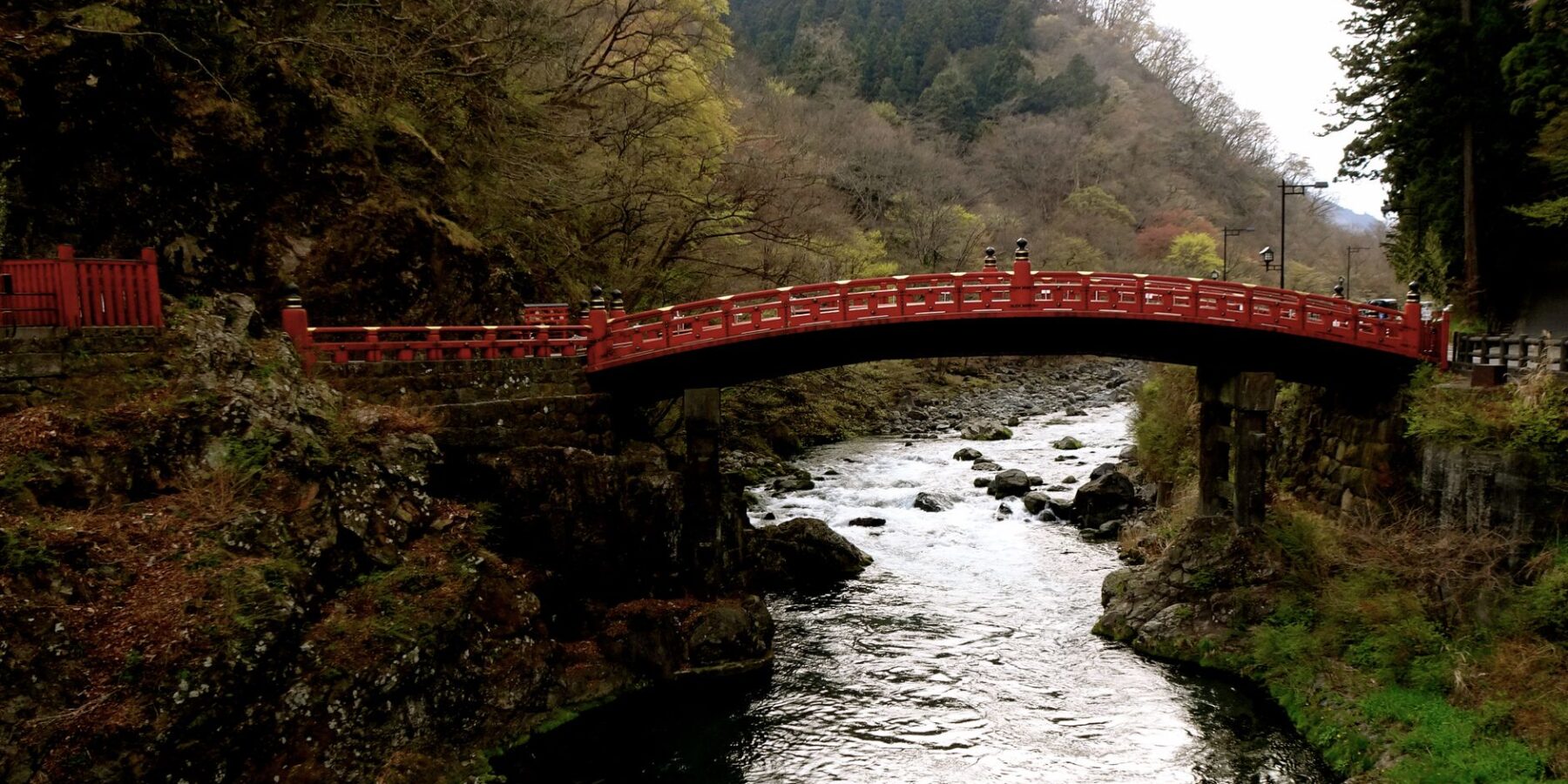
Nikko Travel Guide: Japan’s Most Ornate Shrine Complex and Mountain Retreat
Nikko is one of Japan’s most dazzling destinations — a mountain town in Tochigi Prefecture, 150 kilometers north of Tokyo, that houses the country’s most lavishly decorated religious buildings alongside one of its most spectacular highland lake and waterfall landscapes. The town’s UNESCO World Heritage-listed shrine and temple complex, constructed in the 17th century to honor the memory of the Tokugawa shogunate’s founder, represents the apex of Edo period decorative art: buildings covered in gold leaf, lacquer, intricate wood carvings, and vivid painted patterns that overwhelm the senses with their opulence. Yet just minutes from this baroque excess, the surrounding Nikko National Park offers serene mountain lakes, thundering waterfalls, and cedar forests that provide complete contrast to the ornamental splendor below.
A note from Jack, editor of Japan Real Guide:
Nikko has the problem of being oversold in some ways and undersold in others. The famous Toshogu shrine complex is genuinely elaborate — perhaps the most ornate single shrine site in Japan — but the sheer number of tour groups that pass through on day trips from Tokyo means that the experience is usually a crowded one. I have been on weekdays and weekends, in every season, and have never found it quiet.
What most day-trippers miss is the area beyond the main shrine precinct: the waterfalls, the lake at Chuzenji, and the onsens in the surrounding mountains. My most memorable Nikko experience was not at Toshogu at all but at the Ryuzu Falls in October, when the maple trees lining the gorge were at peak colour and a thin mist was rising off the water.
For a day trip, focus on Toshogu plus one other attraction. For a proper visit, stay overnight and explore the mountains and lake. The guide below covers both approaches.
Nikko is easily reached from Tokyo as a day trip (about 2 hours by limited express train), but overnight visitors discover a completely different experience — the shrines at dusk and dawn with minimal crowds, the highland plateau of Okunikko with its pristine nature, and the traditional ryokan hot spring culture of the mountain hot spring district. Whether you visit for a day or a long weekend, Nikko delivers Japan at its most visually extraordinary.
The Nikko Toshogu Shrine Complex: UNESCO World Heritage Site
The Nikko Toshogu is the mausoleum of Tokugawa Ieyasu, the warlord who unified Japan in 1600 and established the Tokugawa shogunate that would rule the country for the next 268 years. First built in 1617 and lavishly rebuilt between 1634 and 1636 by Ieyasu’s grandson Tokugawa Iemitsu using hundreds of the era’s finest craftsmen, Toshogu is a monument to shogunal power expressed through the most lavish religious architecture ever created in Japan.
The complex is approached through an avenue of enormous cedars (some over 400 years old) and then up successive stone staircases flanked by stone lanterns donated by feudal lords from across Japan. The first major structure encountered is the Omotemon Gate (also called the Niomon Gate), flanked by fierce nio guardian figures. Beyond it stands the Yomeimon Gate — the spiritual centerpiece of the entire complex and one of Japan’s most extraordinary architectural achievements.
The Yomeimon Gate: “Twilight Gate”
The Yomeimon Gate (also known as Higurashi no Mon — “Twilight Gate” — because its beauty could keep one gazing until dusk) is covered in over 500 individual decorative carvings including dragons, lions, peonies, and human figures from Chinese mythology, all brilliantly painted and gilded. The gate’s columns are inverted in design — one of the columns has its decorative grooves running in the opposite direction from the others, a deliberate “error” included by the builders to avoid the wrath of gods who might punish human perfection. This concept of deliberate imperfection to ward off divine jealousy appears throughout the complex’s design.
Above the entrance to the passage leading from the east corridor toward the Okusha hangs the famous carving of the “Sleeping Cat” (Nemuri-neko) by the legendary craftsman Hidari Jingoro — a small carving of a sleeping cat that has become one of Toshogu’s most famous details. Despite its diminutive size (roughly 20 centimeters / 8 inches), the carving’s lifelike quality and symbolic meaning (a sleeping cat that poses no threat to the sparrows in the adjacent carving, representing peace) have made it an icon of Japanese decorative art. It’s visible as you pass beneath the gate toward the inner sanctum.
The Sakashita Gate beyond leads to the Okusha, the inner mausoleum where Tokugawa Ieyasu’s remains are interred in a simple bronze urn beneath a conical bronze pagoda — the restraint of the tomb itself forming a stark contrast to the baroque ornamentation of the approach. Admission to the Okusha is included in the standard Toshogu admission ticket (¥1,600 for adults, ¥550 for children).
The Three Monkeys and Other Famous Details
The Sacred Stable (Shinkyu) in the Toshogu complex houses the famous “three wise monkeys” carving — “see no evil, hear no evil, speak no evil” (mizaru, kikazaru, iwazaru) — one of the most recognized cultural images from Japan worldwide. This carving is one of eight panels depicting the stages of human life through monkey imagery, and the stable was built specifically to house the sacred white horse that participated in shrine ceremonies. The stable is inside the paid area, so a Toshogu ticket is required.
The adjacent Rinno-ji Temple, part of the same UNESCO World Heritage ensemble as Toshogu, houses three enormous golden Buddha statues (each nearly 8 meters tall) representing the three deities enshrined at Nikko’s Futarasan Shrine. The Shoyoen Garden at Rinno-ji is a beautifully designed traditional Japanese garden with a walking path around a central pond. Admission to Rinno-ji’s main hall: ¥400 (approximately $2.70 USD).
Book a guided Nikko heritage tour: Book Japan tours and activities on Klook →
Taiyuin Mausoleum: A More Intimate Splendor
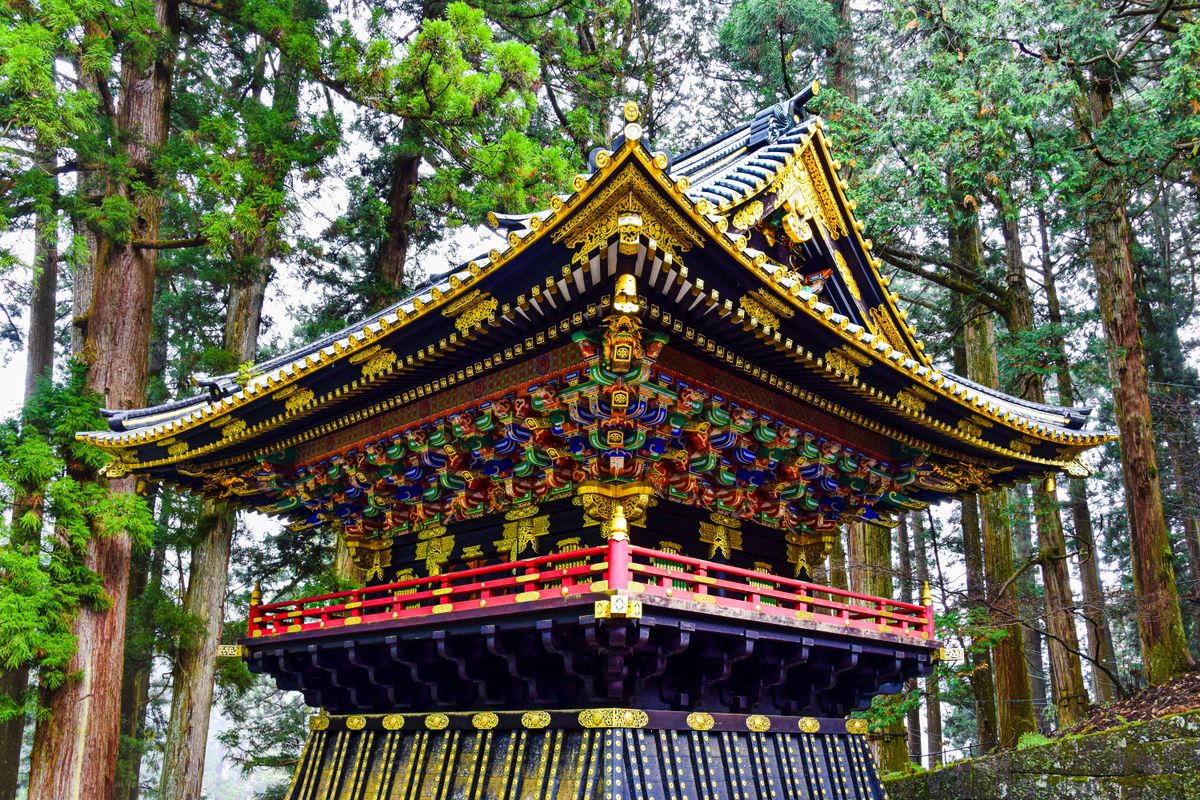
While Toshogu receives the majority of visitor attention, the nearby Taiyuin-byo Mausoleum — the tomb of Tokugawa Iemitsu, who built Toshogu for his grandfather — is considered by many architectural experts to be an even finer achievement. Taiyuin is deliberately designed to be slightly smaller and less ostentatious than Toshogu (out of respect for Ieyasu), but its proportions and craftsmanship are arguably more refined. The complex is less crowded than Toshogu and can be explored in a more meditative atmosphere.
The approach to Taiyuin climbs through successive gates, each more richly decorated than the last: the Nitenmon Gate (guarded by two of the heavenly kings, Jikokuten and Komokuten), the Yashamon Gate (decorated with extraordinary peony carvings that give it the alternative name “Peony Gate”), and finally the Karamon Gate (a Chinese-style structure of extraordinary delicacy). The path through these successive gates creates a building sense of sacred space that culminates at the Aidono hall and Oku-no-in inner sanctum. Admission: ¥550 (approximately $3.70 USD). Combined tickets covering Toshogu, Taiyuin, and Rinno-ji are available for approximately ¥1,000-1,500 ($6.70-10.10 USD).
Okunikko: Lakes, Waterfalls, and Alpine Nature
Kegon Falls: One of Japan’s Three Great Waterfalls
Approximately 20 kilometers west of Nikko town, the highland plateau of Okunikko (“Inner Nikko”) opens into one of Japan’s most spectacular mountain landscapes. The first major attraction encountered on the mountain road (Irohazaka, a pair of one-way switchback roads with 48 hairpin curves in total, 20 on the way up and 28 on the way down) is Kegon Falls — a 97-meter plunge waterfall formed where Lake Chuzenji’s overflow drops over the plateau edge. The falls are designated one of Japan’s three great waterfalls alongside Nachi Falls (Wakayama) and Fukuroda Falls (Ibaraki).
An elevator descends 100 meters (¥600 for adults, round trip only) to an observation platform at the base of the falls, from which the full 97-meter drop is visible with spray reaching the viewing area. The force of the water is most spectacular in June when snowmelt swells the volume. In winter, the falls partially freeze into elaborate ice formations that attract photographers from across Japan. At the top of the falls, the Kegon Bridge provides a different perspective and is free to visit.
Lake Chuzenji: Mountain Lake Serenity
Lake Chuzenji, formed by lava flows from Mt. Nantai, sits at 1,269 meters (4,163 feet) elevation and is one of Japan’s highest large lakes. The lake’s blue water, surrounded by forested mountains with Mt. Nantai’s volcanic cone reflected in the surface on clear days, provides a peaceful counterpoint to the shrine complex below. The lakeside town has excellent restaurants specializing in locally caught himemasu (kokanee salmon), and several hotels and ryokan offer rooms with lake views.
The lakeside path allows leisurely walking with views changing at each bend. The Chuzenji-ko Pleasure Boat operates cruises on the lake from April through November (¥1,200 / approximately $8 USD round trip) that provide sweeping views of Mt. Nantai and the forested shoreline from the water. The Futarasan Shrine Middle Shrine on the lake’s northern shore is an important pilgrimage point for Mt. Nantai climbers and has beautiful grounds overlooking the water. Admission: free.
Ryuzu Falls and Yudaki Falls
The Okunikko plateau contains several additional spectacular waterfalls within easy access of the lake. Ryuzu Falls (Dragon Head Falls) at the northern end of Lake Chuzenji features a series of cascades where the Yukawa River drops into the lake over a wide basalt shelf, creating a fan-like pattern of water that resembles a dragon’s head in full flow. The surrounding marsh (Senjogahara) is famous for its wildflower displays in summer and autumn color in October. Yudaki Falls, at the head of the Senjogahara marsh, is a powerful single-plunge waterfall visible from a walkway along the base — the spray creates a perpetual rainbow in afternoon sunlight.
The Senjogahara Nature Trail connects Ryuzu Falls to Yudaki Falls through a 4.5-kilometer walkway across the highland marsh, one of Nikko National Park’s most rewarding hiking routes. The trail passes through boreal forests, past mountain streams, and across wooden boardwalks over the marsh, with views of surrounding 2,000-meter peaks. Allow 2-3 hours one way; buses connect the start and end points for return.
Nikko’s Hot Springs: Yunishigawa and Kinugawa Onsen
The mountains surrounding Nikko contain several excellent hot spring resorts that provide a relaxing complement to the cultural and natural sightseeing. Kinugawa Onsen, located in a gorge carved by the Kinugawa River about 15 kilometers from Nikko town, is the largest hot spring resort in the Nikko region. A series of large resort hotels and ryokan line the gorge walls, with open-air baths overlooking the rushing river below. The area also has some family-oriented attractions including a modest amusement park.
Yunishigawa Onsen, deeper in the mountains (approximately 40 minutes from Kinugawa by bus), is considerably more atmospheric — a small village of traditional ryokan clustered in a narrow river gorge, accessible until recently only by a single mountain road. The area is famous for its connection to the Heike clan (the losing side in the 12th century Genpei War, many of whom reportedly fled into these mountains after their defeat). A small Heike museum and several ryokan offering traditional meals and hot spring baths with outdoor rotenburo make Yunishigawa a destination for those seeking old Japan atmosphere away from tourist crowds. Ryokan rates in Yunishigawa typically run ¥15,000-30,000 ($101-202 USD) per person including dinner and breakfast.
Book a ryokan in the Nikko hot spring district: Find luxury hotels and ryokan on Agoda →
Getting to Nikko
By Train from Tokyo
The most convenient and economical way to reach Nikko from Tokyo is by the Tobu Nikko Line from Asakusa Station in Tokyo, operated by the private Tobu Railway. The Tobu Nikko Limited Express “Revaty” trains run directly from Asakusa to Nikko Station in approximately 1 hour 50 minutes (¥2,860 / approximately $19 USD for reserved seat, including limited express surcharge). Regular express trains are cheaper but take 2.5-3 hours with a transfer. The Tobu Railway also offers an excellent “Nikko Pass” (¥4,520 / $30 USD for two days, ¥5,870 / $40 USD for four days) covering all trains and local buses in the Nikko area — excellent value for visitors spending more than one day.
Alternatively, JR Pass holders can travel to Nikko via JR Utsunomiya Line from Tokyo’s Ueno or Shinjuku stations to Utsunomiya (about 1 hour 40 minutes, or about 50 minutes by Tohoku Shinkansen from Tokyo or Ueno), then transfer to the JR Nikko Line to Nikko Station (approximately 45 minutes). Total journey time approximately 2 hours. The JR route is less direct but fully covered by the JR Pass; Tobu Railway trains are not covered. A combined JR-Tobu limited express from Shinjuku also runs twice daily in each direction.
Get a Japan eSIM for seamless navigation: Get your Japan eSIM (Stay connected from day 1) →
Getting Around Nikko
The shrine complex is a 20-30 minute walk from Nikko Station along a broad avenue lined with hotels, restaurants, and shops. A free shuttle bus (Tobu bus) also connects the station to the shrine area during peak season. Within the UNESCO heritage complex, everything is walkable on foot — distances between shrines are short and the entire complex can be explored at a leisurely pace in 3-4 hours.
For Okunikko (Lake Chuzenji and the highland plateau), Tobu buses operate from Nikko Station and Nishi-Sando bus stop near the shrines. The bus ride to Lake Chuzenji takes approximately 45-60 minutes (including the winding Irohazaka ascent) and costs ¥1,150 (approximately $7.75 USD) one way. Day passes for Tobu buses in the Nikko area are included with the Nikko Pass, making the Okunikko extension essentially free for pass holders.
In peak autumn season (late October to early November), traffic on the Irohazaka switchback road can create significant delays. Starting the day early (arriving at the shrine complex by 8 AM, taking the bus to Okunikko by 11 AM after the morning crowds thin at the shrines) allows the most efficient use of a day trip.
Best Time to Visit Nikko
Spring (April-May): Cherry blossoms arrive in Nikko in mid-to-late April (later than Tokyo due to the higher elevation and mountain climate). The shrine complex grounds and the lakeside at Chuzenji are beautiful in cherry blossom season. The Yayoi Festival at Futarasan Shrine in mid-April is one of Nikko’s most important religious events, featuring a procession of shrine maidens and ceremonial horses.
Summer (June-August): The highland Okunikko plateau is significantly cooler than Tokyo (often 10-15°C / 18-27°F cooler), making it a popular escape from summer heat. The shrine complex can be explored without snow or autumn crowds, and the waterfalls are at full volume from snowmelt. Summer weekdays at Toshogu are considerably less crowded than the autumn peak season. The Nikko Toshogu Grand Spring Festival on May 17-18 recreates the original procession of the shogun’s funeral cortege with costumed participants.
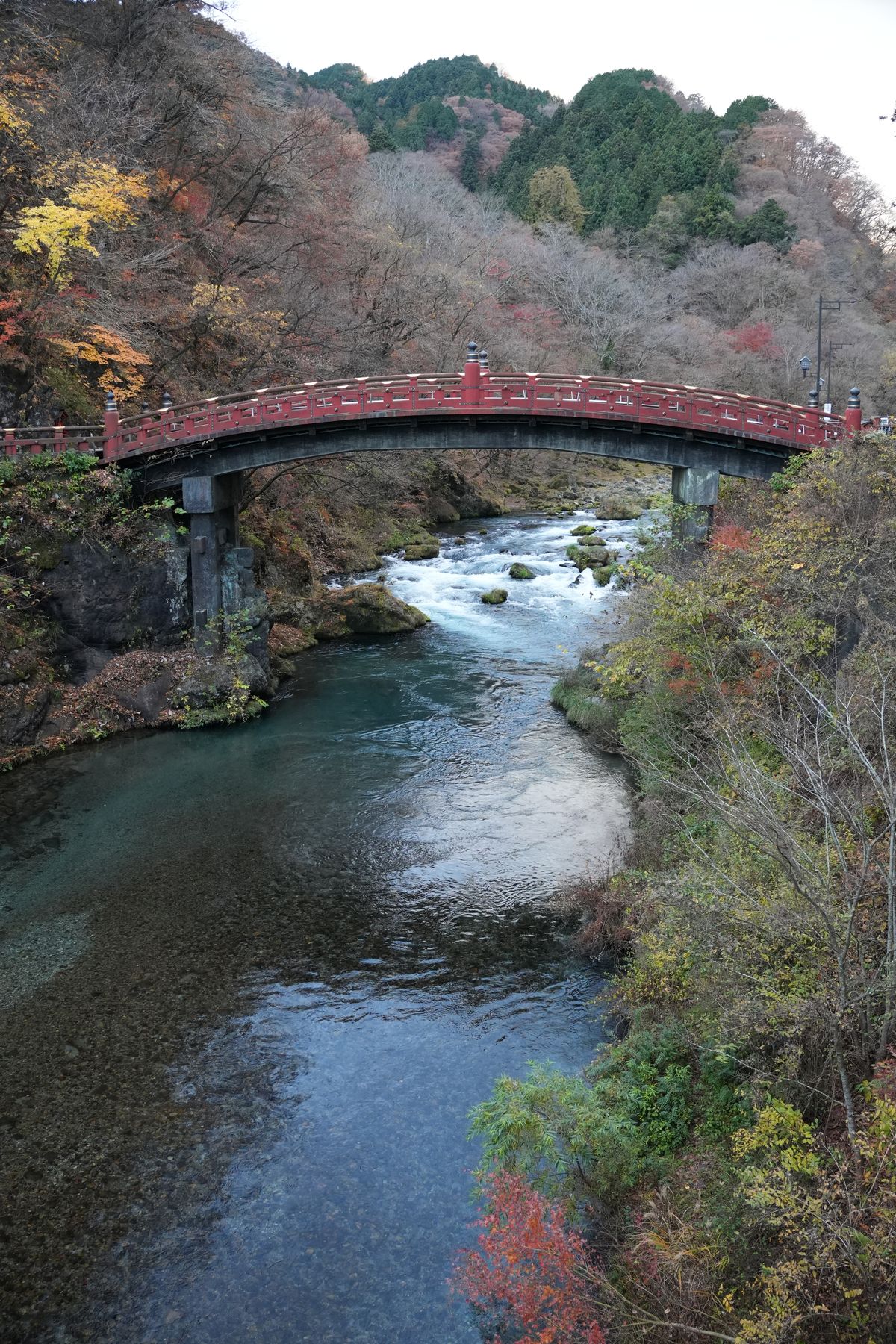
Autumn (September-November): The most popular and most spectacular season for Nikko. The autumn foliage (koyo) in the mountain forests surrounding the shrines and on the Okunikko plateau is extraordinary — one of Japan’s finest autumn displays, combining the rich reds and golds of the natural deciduous forest with the backdrop of Toshogu’s brilliant lacquerwork and gilded carvings. Peak foliage typically falls in late October to early November. Expect large crowds and book accommodation well in advance.
Winter (December-February): Snow transforms Nikko into a peaceful winter landscape. The cedar avenue leading to the shrines with snow-capped trees and the possibility of partially frozen Kegon Falls make for extraordinary photography. Winter crowds are minimal. The highland lake and plateau are accessed less easily in heavy snow, but the shrine complex itself is always accessible. Some ryokan and hotels offer attractive winter packages.
Where to Stay in Nikko
In Nikko Town: Staying in Nikko town puts you closest to the shrine complex, allowing early morning visits before day-trippers arrive from Tokyo. The Nikko Kanaya Hotel, in operation since 1873 and Japan’s oldest Western-style resort hotel still operating in its original building, is a historic landmark with rooms decorated in a charming Victorian-era Japanese style (rates approximately ¥20,000-40,000 / $135-270 USD per room). More affordable guesthouses and business hotels cluster near the station.
At Kinugawa Onsen: The large resort hotels along the Kinugawa gorge offer the classic Japanese hotel experience — communal hot spring baths, evening kaiseki dinner, and the pleasure of soaking while watching the river below. Rates vary from ¥10,000-30,000 ($67-202 USD) per person including meals at most properties.
At Lake Chuzenji: Several smaller ryokan and hotels on the lake shore offer the unique experience of waking above the clouds that sometimes fill the valley below the plateau. Rates typically ¥15,000-35,000 ($101-236 USD) per person. Advance booking is essential for autumn weekends.
Find your perfect Nikko accommodation: Book your hotel on Agoda (Best prices guaranteed) →
Practical Tips for Visiting Nikko
Admission and Combined Tickets
The main shrine area charges combined admission rather than separate tickets for most of its constituent parts. The most common admission option is the Toshogu-Futarasan Shrine-Taiyuin combined ticket (¥1,000 / approximately $6.70 USD), which provides access to the main areas of all three sites. The Toshogu inner sanctum (Okusha, including the mausoleum itself) is included in the ¥1,600 Toshogu ticket at no extra fee. Rinno-ji temple is separately admissioned (¥400 / $2.70 USD for the main hall, additional charge for the garden). Taiyuin charges an additional ¥550 ($3.70 USD) on top of the combined ticket or ¥550 as standalone admission.
Photography is permitted throughout most of the exterior areas. Interior photography restrictions vary by building — check posted signs at each entrance. Drone photography is strictly prohibited throughout the UNESCO heritage zone.
Dress Code and Etiquette
Nikko’s shrines and temples are active religious sites that receive millions of visitors annually. Standard Japanese shrine etiquette applies: bow at the entrance gate, rinse hands at the water basin before entering worship areas, and speak quietly within the precincts. No specific dress code is enforced for tourists, but minimal and beachwear is considered inappropriate near the worship halls. Shoes are removed when entering certain inner shrine buildings.
Food and Dining in Nikko
The road between Nikko Station and the shrines (Shinkyo area) has numerous restaurants and cafes serving local specialties. Yuba (tofu skin) is Nikko’s signature food — the same tradition of Buddhist temple cuisine that inspired yuba production in Kyoto exists here, producing delicate sheets of skin skimmed from simmering soy milk. Nikko yuba appears in multiple formats: fresh sheets folded into dishes, yuba sushi, yuba hot pot, and yuba donuts. A yuba set lunch at one of the specialist restaurants costs approximately ¥1,500-3,000 ($10-20 USD).
The local sake (Nikko Sake) produced with the pure mountain water of the surrounding forests is considered among Tochigi Prefecture’s finest. Local craft beer and regional wagashi (traditional sweets) including yukemuri sembei (hot spring steam crackers from Kinugawa Onsen) are popular edible souvenirs.
Frequently Asked Questions About Nikko
Is Nikko worth visiting as a day trip from Tokyo?
Yes, absolutely — Nikko is one of Japan’s best day trips from Tokyo. However, the day trip is best structured carefully: take the early Tobu Limited Express (departing Asakusa before 8 AM), spend the morning at the shrine complex, take the midday bus to Okunikko for Kegon Falls and Lake Chuzenji, return by late afternoon, and catch the evening Limited Express back. This schedule is achievable and satisfying. Those who stay overnight add the magic of the shrines at dusk and dawn, a hot spring bath, and time for the highland plateau in better light.
How long should I spend at the shrine complex?
The full Toshogu complex, Rinno-ji temple, Futarasan Shrine, and Taiyuin Mausoleum can be explored in 3-5 hours at a comfortable pace. Budget at least 2 hours for Toshogu alone (including the approach avenue, main buildings, Yomeimon Gate, and Okusha mausoleum), 45-60 minutes for Taiyuin, and 30-45 minutes for Rinno-ji. The smaller Futarasan Shrine is a peaceful 20-minute visit. Rushing through in 2 hours is possible but sacrifices significant detail and atmosphere.
Can I visit Nikko and Okunikko in the same day?
Yes, but it requires an early start and efficient timing. Arrive at the shrine complex by 8-9 AM, spend 3 hours, then take the 11:00-12:00 bus to Okunikko. Spend 2-3 hours at Kegon Falls and Lake Chuzenji, return by bus, and take the late afternoon Limited Express back to Tokyo. This is achievable but makes for a full and somewhat rushed day. Alternatively, focus exclusively on either the shrines or Okunikko for a more relaxed experience.
What is the “leave no evil” monkey carving?
The three wise monkeys carving — “see no evil, hear no evil, speak no evil” (mizaru, kikazaru, iwazaru) — is located on the Sacred Stable (Shinkyu) within the Toshogu complex. It is one of eight panels depicting different stages of human life, with monkeys serving as allegorical stand-ins for human behavior. The saying’s origin is thought to be a Japanese adaptation of a Chinese Confucian proverb. The image has spread worldwide as a symbol of willful ignorance or, more positively, of restraint from negative observation and speech. Viewing the stable requires the standard Toshogu admission ticket.
Is Nikko suitable for children?
Yes, Nikko is excellent for families. Children enjoy the dramatic architecture of the shrine complex (especially the fierce guardian statues and the elaborately carved gates), the boat cruise on Lake Chuzenji, and the impressive Kegon Falls. The elevator descent to the falls’ base is a highlight for most children. The Nikko Edo Village (Edo Wonderland), a historical theme park about 15 minutes by bus from Nikko Station recreating the Edo period with costumed performers, ninja shows, and historical performances, is particularly popular with families with children 5-15 years old. Admission approximately ¥2,800 ($19 USD) for adults, ¥1,760 ($11.90 USD) for children.
Book an organized Nikko day tour from Tokyo: Book Japan tours and activities on Klook →
Nikko’s History: From Sacred Mountain to Shogunal Mausoleum
Nikko’s history as a sacred site predates the Tokugawa mausoleum by nearly a thousand years. The Buddhist monk Shodo Shonin founded Nikko’s first temple in 766 CE and reached the summit of Mt. Nantai in 782, founded Nikko’s first temple complex, and established the mountain as a site of religious significance for the esoteric Buddhist tradition. For centuries, Mt. Nantai was a sacred peak open only to initiated male practitioners of mountain Buddhism (shugendo), who climbed its slopes as a form of ascetic practice.
The transformation of Nikko into a site of shogunal memory began with Tokugawa Ieyasu’s death in 1616. Ieyasu had specified in his will that he wished to be enshrined at Nikko as a kami (Shinto deity) protecting Japan. His grandson Iemitsu oversaw the construction of Toshogu between 1634-1636, mobilizing over 450,000 workers and 15,000 craftsmen in a project of staggering ambition and expense. The decoration of the shrine complex consumed extraordinary quantities of gold leaf, lacquer, pigments, and rare hardwoods. The completed Toshogu was deliberately designed to overwhelm — to make the power and resources of the Tokugawa shogunate viscerally apparent to the feudal lords who were required to make regular visits to the shrine.
The shogunal procession to Nikko was itself a form of power display. Shoguns made occasional grand pilgrimages from Edo to Nikko, and the shrine’s spring festival procession commemorates the 1617 transfer of Ieyasu’s remains from Kunozan to Nikko — a journey that took several days and was choreographed to demonstrate the shogun’s military and ceremonial power to anyone who witnessed it passing. This procession is recreated annually on May 17-18 as the Nikko Toshogu Grand Spring Festival (Hyakumonozoroe Sennin Gyoretsu), when 1,200 people in Edo period armor and court costume parade through the shrine complex. The event draws large crowds and represents Japan’s largest procession recreation.
During the Meiji Restoration (1868), the separation of Buddhism and Shinto led to a reorganization of Nikko’s religious institutions — the combined Buddhist-Shinto complex that had characterized the site for centuries was divided into separate Buddhist temples (Rinno-ji) and Shinto shrines (Toshogu, Futarasan). Despite this administrative division, the spiritual atmosphere of the site retains its syncretic character, with the cedar forests, sacred mountains, waterfalls, and ornate architecture continuing to create a unified environment that transcends sectarian boundaries.
Nikko Budget Guide
Understanding Nikko costs helps you plan your visit efficiently. Here is a practical budget overview:
Transportation from Tokyo: Tobu Limited Express from Asakusa to Nikko Station ¥2,860 ($19 USD) each way reserved seat, or approximately ¥1,500 ($10 USD) for slower local/express trains. Tobu Nikko Pass (2-day) ¥4,520 ($30 USD) covers trains and local buses. JR Pass holders: no extra fare on the all-JR route via Utsunomiya.
Admission fees: Toshogu + Futarasan + Taiyuin combined ¥1,000 ($6.70 USD). Toshogu Okusha additional ¥540 ($3.65 USD). Rinno-ji main hall ¥400 ($2.70 USD). Rinno-ji garden ¥300 ($2 USD). Kegon Falls elevator ¥570 ($3.85 USD). Total for all major sites approximately ¥2,800-3,500 ($19-23.60 USD) per person.
Accommodation (per night, per person): Budget guesthouses near the station ¥4,000-8,000 ($27-54 USD). Nikko Kanaya Hotel ¥15,000-25,000 ($101-169 USD) per room. Kinugawa Onsen ryokan with meals ¥12,000-25,000 ($81-169 USD) per person. Lake Chuzenji accommodations ¥15,000-35,000 ($101-236 USD) per person.
Meals: Yuba lunch at a restaurant ¥1,500-3,000 ($10-20 USD). Convenience store or street food lunch ¥600-1,000 ($4-6.70 USD). Dinner at a local restaurant ¥2,000-4,000 ($13.50-27 USD). Kaiseki dinner at ryokan (usually included in ryokan rate) ¥6,000-15,000 ($40-101 USD).
Total day trip budget per person (Tobu Pass + admissions + lunch): approximately ¥8,000-12,000 ($54-81 USD). Overnight trip with mid-range accommodation and dinner: approximately ¥20,000-35,000 ($135-236 USD) per person including transport from Tokyo.
Book your Nikko trip today: Book your hotel on Agoda (Best prices guaranteed) →
Nikko Seasonal Events and Festivals
Beyond the spring and autumn procession festivals, Nikko maintains a rich calendar of religious and cultural events that reward visitors who time their trip to coincide with them.
The Yayoi Festival at Futarasan Shrine (April 13-17) is one of Nikko’s oldest festivals, centered on the belief that the three deities of the Nikko mountains descend temporarily to receive ritual food offerings. The festival features elaborate processions, traditional music, and ceremonial offerings conducted by white-robed priests in the inner precincts of the shrine. The April 17 procession is the festival’s climax, featuring portable shrines (mikoshi) carried through the grounds.
The Toshogu Grand Autumn Festival (October 17) mirrors the spring procession with another re-enactment of the 1,000-strong samurai cortege, this time in the brilliant autumn foliage context that makes the procession even more photographically extraordinary. Securing a viewing position along the procession route requires arriving early on the day of the festival — by 7-8 AM for a good spot at the main viewing areas.
The Nikko Illuminations held in late December and early February transform the shrine complex and cedar avenue with carefully designed lighting, creating a surreal nocturnal landscape of illuminated ancient structures against winter darkness. These events are less well-known internationally than Nikko’s daytime attractions but are considered among the most beautiful winter illumination events in the Kanto region.
The Mt. Nantai Climbing Season (May 5 to October 25) allows summit hikes of the sacred volcano that dominates the Nikko skyline. The trail begins at the Futarasan Shrine Middle Shrine on Lake Chuzenji’s shore and ascends 1,260 meters (4,134 feet) to the 2,486-meter summit over approximately 4-5 hours round trip. The summit has a small shrine dedicated to the mountain deity. Only the fit and properly equipped should attempt the climb; trails can be icy in spring and October.
Shopping and Souvenirs in Nikko
The shopping street between Nikko Station and the shrine complex (Shinkyo area) offers a good selection of regional crafts and food products. Nikko woodcarving (Nikko-bori) is the most distinctive local craft — decorative relief carvings in the elaborate style inspired by the shrine complex’s ornamental woodwork, applied to furniture, lacquerware, and decorative objects. The craft tradition dates back to the craftsmen employed in constructing and maintaining the Toshogu complex, and the carving techniques developed for shrine decoration were adapted to functional and decorative objects for the souvenir trade.
Nikko yuba products — fresh, dried, and processed forms of tofu skin — are the most popular edible souvenirs. Vacuum-packed fresh yuba, dried yuba sheets, and yuba-flavored snacks and confections are available throughout the shopping street. Nikko sake, brewed with the mountain spring water of the area, is available in beautifully packaged bottles at several liquor shops. Goza sembei (rice crackers shaped and textured to resemble the straw mats used in shrine rituals) are another traditional Nikko souvenir with a pleasant mild flavor.
For those interested in religious souvenirs (omamori charms, ema wooden wishing plaques, and ofuda talismans), the shrine office near the Yomeimon Gate sells a complete range of Toshogu-specific protective charms and memorial items. These official shrine omamori are considered particularly powerful due to the shrine’s connection with Japan’s most powerful historical patron. Common categories include academic success charms (for students), travel safety charms, and general good fortune talismans.
Combining Nikko with Other Destinations
Nikko’s location in northern Tochigi Prefecture places it within easy reach of several other excellent destinations that pair naturally with a Nikko visit for multi-day Kanto region exploration.
Mashiko: Japan’s most famous pottery town is approximately 90 minutes from Nikko by train and bus, or 45 minutes by car. Mashiko-yaki (Mashiko ware) is a rustic, folk-art pottery tradition made famous by the legendary potter Hamada Shoji (one of the founders of Japan’s mingei folk craft movement). The town has over 300 pottery studios and kilns, many open to visitors for demonstrations and sales. The Mashiko Museum houses an exceptional collection of Hamada’s work. The bi-annual Mashiko Pottery Fair (spring and autumn) transforms the entire town into one enormous outdoor pottery market.
Utsunomiya: Tochigi’s prefectural capital, on the JR line between Tokyo and Nikko, is Japan’s most famous city for gyoza dumplings — the city consumes more gyoza per capita than any other in Japan and has over 200 specialty gyoza restaurants. A gyoza dinner stop in Utsunomiya on the way to or from Nikko is a practical and delicious addition to the itinerary. The local Utsunomiya-style gyoza tends to be thinner-skinned and more garlicky than other regional styles, and many restaurants offer “stick gyoza” (on skewers) alongside the traditional pan-fried version.
Nasu Highlands: About 60 kilometers north of Nikko, the Nasu Highlands are a popular Kanto weekend escape with hot spring resorts, a safari park, cheese factories, and the dramatic volcanic Mt. Nasu. The area is a favorite of the Imperial Family (the Imperial Villa at Nasu is their summer retreat) and has numerous high-quality ryokan and resort hotels. Combining Nikko (2 days) with Nasu (1-2 days) makes for an excellent 3-4 day Tochigi Prefecture trip.
Nikko encapsulates Japan’s capacity for simultaneous extremes in a single destination: architectural decoration carried to the edge of excess in the shrine complex, and natural landscape of pure, undecorated sublimity in the mountain forests and highland lakes just kilometers away. Both expressions are authentically Japanese, and experiencing the contrast in a single visit creates one of Japan’s most complete and memorable travel days. The 150 kilometers from Tokyo to Nikko is one of the most rewarding journeys in all of Japan.
Related guides
- Chichibu Travel Guide 2026: A First-Timer’s Guide to Shibazakura, a Sacred Wolf Shrine, and Tokyo’s Best Mountain Day Trip in Saitama
- Shimokitazawa Travel Guide 2026: Tokyo’s Coolest Neighbourhood for Vintage Shopping, Cafes and Live Music
- Tokyo Disneyland vs DisneySea: Which Park Should You Visit? (Complete 2026 Guide)
Going to Japan? Speak Japanese with confidence.
Hirameki Japanese — camera translate for menus and signs, a two-way conversation mode, and furigana + romaji on every phrase. Free to download with kana charts, conversation mode and starter words; a one-time purchase unlocks everything.

Plan your Japan trip
Two things every first-timer should book
Some links are affiliate links. If you book through them we may earn a small commission at no extra cost to you.