Introduction to Miyazaki Prefecture
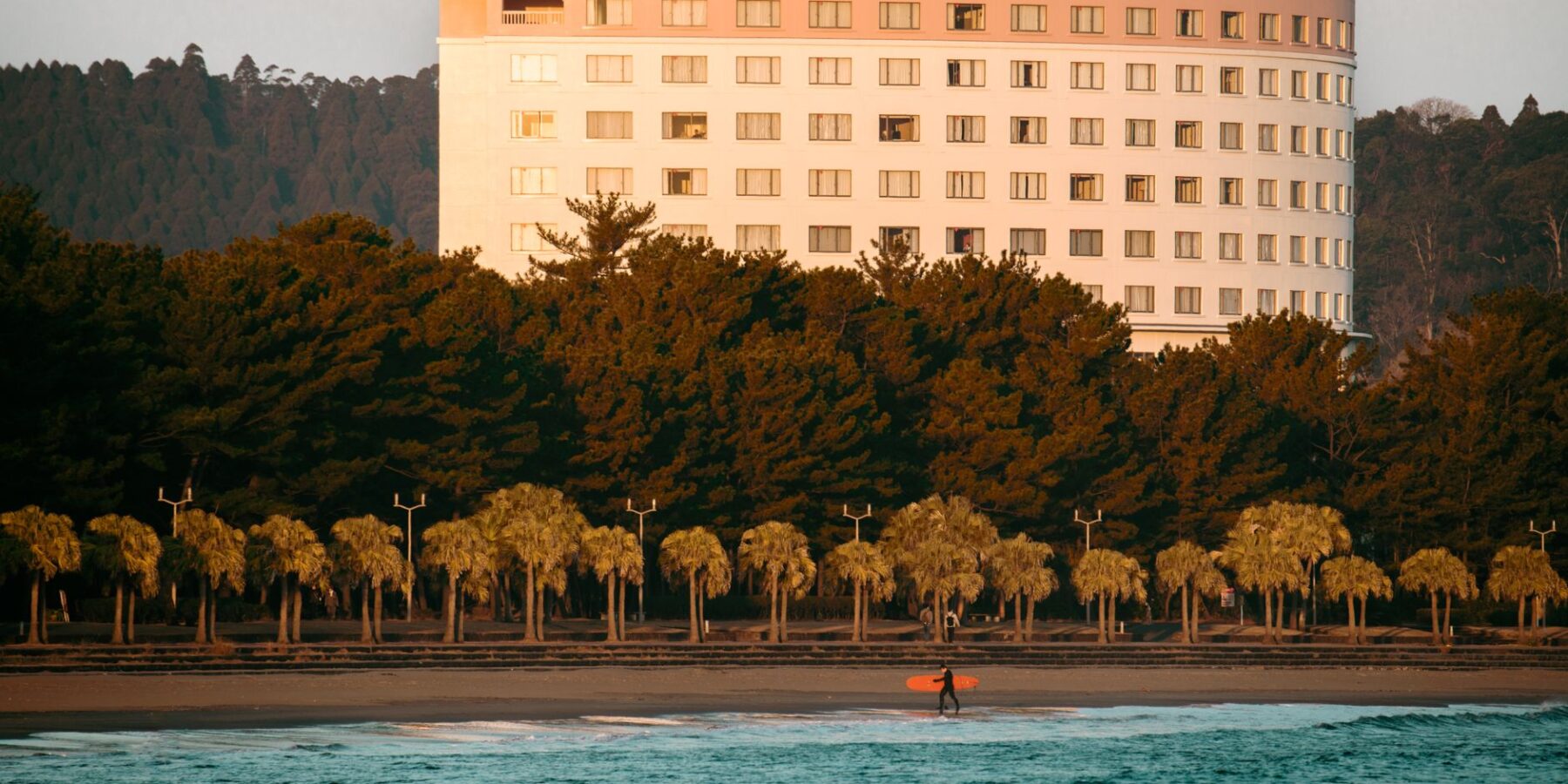
Miyazaki Prefecture, curving along the southeastern coast of Kyushu island, is one of Japan’s sunniest and most nature-blessed destinations. Known as the “Tropical Paradise of Japan” for its warm climate, palm-lined streets, and subtropical vegetation, Miyazaki offers a dramatic landscape ranging from the sacred gorges of Takachiho to the wild surf beaches of the Nichinan Coast and the volcanic highlands of the Kirishima-Kinkowan National Park. This is the birthplace of Japanese mythology — the region where the gods of the Shinto tradition are said to have descended to earth — and that spiritual heritage permeates the landscape, from the mist-draped cliffs of Takachiho Gorge to the ancient cryptomeria forests surrounding Udo Jingu shrine. Miyazaki’s warm, year-round climate makes it a popular domestic resort destination, with Japanese tourists flocking to its beaches in summer and its rural festivals year-round. For international visitors willing to venture beyond Fukuoka and the standard Kyushu circuit, Miyazaki delivers remarkable natural beauty, genuine mythological depth, and excellent local cuisine at a fraction of the crowds found at more famous Japanese destinations.
Top Attractions in Miyazaki Prefecture
Takachiho Gorge
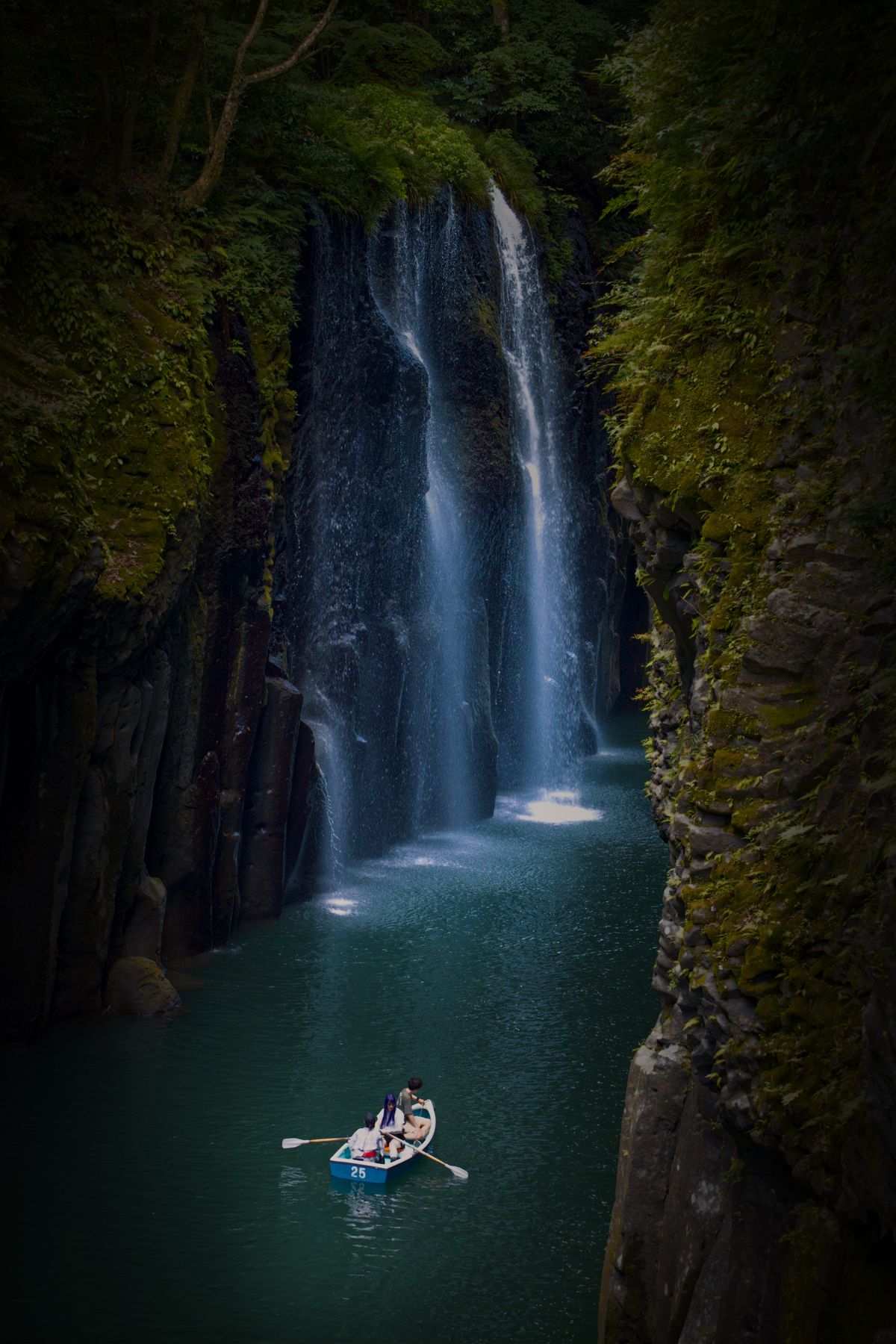
Takachiho Gorge is without question one of Japan’s most spectacular natural landmarks. Carved over thousands of years by the Gokase River through ancient volcanic basalt, the gorge drops up to 100 meters in places, with sheer hexagonal rock columns rising on both sides and the river below compressed into a narrow channel punctuated by dramatic waterfalls — most famously the Manai Falls, which plunges 17 meters into a misty pool that rowboaters pass directly beneath. The 1-kilometer gorge walking path above the river provides the classic elevated view of this extraordinary landscape, while renting a rowboat (approximately 2,000 yen for 30 minutes) and floating beneath the falls is an experience of extraordinary intimacy with one of Japan’s most beautiful natural features. Takachiho Town sits at an elevation of over 500 meters in the Kyushu Mountains, and the surrounding plateau landscape of green fields and dramatic valley views is itself scenically magnificent. The area is best visited in early morning to experience the gorge before crowds arrive and to catch the morning mist that frequently fills the valley in autumn and winter.
Aoshima Island and the Nichinan Coast
Aoshima is a small island connected to the mainland by a pedestrian bridge, covered almost entirely by subtropical jungle and surrounded by extraordinary geological formations called Oni-no-Sentakuita (Devil’s Washboard) — vast flat sheets of sedimentary rock rippled into precise corrugated patterns by millions of years of wave erosion. The island’s ancient Aoshima Shrine, dedicated to a sea deity, sits within the jungle interior and has been a pilgrimage site since antiquity. The Nichinan Coast extending south from Aoshima offers dramatic headlands, surf beaches, and a series of remarkable natural and cultural sights: the cliff-top Udo Jingu Shrine built directly into a sea cave, the historic feudal-era castle town of Obi, and the Cape Toi promontory where wild horses have roamed freely since the feudal era. The combination of subtropical scenery, ancient shrines, and dramatic coastal geology makes the Nichinan Coast one of Kyushu’s most rewarding half-day or full-day drives.
Amano Iwato Shrine and Takachiho Mythology
Takachiho area is the mythological heartland of Japan, said to be where the sun goddess Amaterasu hid in a cave (the Ama-no-Iwato) plunging the world into darkness until the other gods lured her out with a rowdy party — a myth central to Japan’s founding narrative. The Amano Iwato Shrine faces the sacred cave across the Iwato River, viewable from a worship area behind the west shrine on a short guided tour led by shrine staff, and the surrounding ancient cedar forest has an atmosphere of profound spiritual weight. The shrine complex includes both the main Nishi-no-miya (west shrine, facing the cave) and Higashi-no-miya (east shrine, across the river). Every night throughout the year, Takachiho Shrine hosts kagura — sacred ritual dance and music dedicated to the gods — with public performances from 8:00pm to 9:00pm in the shrine’s kagura hall (except during the Nov 22–23 festival), making the evening kagura performance a deeply memorable cultural experience available year-round.
Ebino Plateau and Kirishima Volcanic Highlands
The Ebino Plateau in southwestern Miyazaki, part of the Kirishima-Kinkowan National Park, is one of Kyushu’s premier highland destinations. Sitting at 1,200 meters elevation, the plateau is a world of volcanic crater lakes, montane wetlands, and sweeping views to the surrounding volcanic peaks of the Kirishima range. The plateau’s remarkable cobalt-blue crater lakes — Rokkannon Miike, Byakushi Ike, and the larger Onami Ike — change color with the weather and season, ranging from vivid turquoise to deep indigo. A 2-hour circular hiking course connects the main crater lakes through dwarf oak and rhododendron heathland that blazes crimson and orange during autumn. Only the short paths near the visitor center suit wheelchairs; the lake circuit itself has rocky steps and steep sections. In winter, the plateau sometimes receives snow that dusts the volcanic landscape with a white contrast to the dark rock and vivid lake colors.
Miyazaki City and Heiwadai Park
Miyazaki City, the prefectural capital, is a pleasant modern city with wide palm-lined boulevards that reflect its subtropical climate and self-promotion as Japan’s sunshine capital. Heiwadai Park (Peace Tower Park) is the city’s main attraction, centered on the Heiwa-no-To tower built from stones donated from across Asia and flanked by four large guardian statues representing aspects of the Shinto spirit (its pre-war symbolism is complex and historically controversial). The adjacent Haniwa Garden displays excellent reproductions of ancient clay haniwa figures excavated from nearby kofun burial mounds — Miyazaki has an extraordinary concentration of kofun from the 4th to 7th centuries CE. The city’s Prefectural Museum of Nature and History provides comprehensive context for the region’s geological, biological, and historical story. The beachside Aoshima area, about 20 minutes from the city center, has developed into a pleasant resort district with cafes and seafood restaurants overlooking the subtropical coast.
Getting to Miyazaki Prefecture
From Tokyo
Flying is strongly recommended from Tokyo to Miyazaki. ANA and JAL both operate multiple daily flights from Tokyo Haneda to Miyazaki Airport, with flight time approximately 1 hour 45 minutes. Airfares vary considerably; booking 2 to 3 months in advance typically yields the best prices (about 11,000 to 14,000 yen one-way from Haneda, or about 6,000 yen from Narita on budget airlines). Miyazaki Airport is conveniently connected to Miyazaki Station by the JR Miyazaki Airport Line (about 10 minutes), making it extremely practical. By Shinkansen from Tokyo, the journey requires riding to Kagoshima-Chuo via Hakata and then taking the Limited Express Kirishima to Miyazaki — a total journey of approximately 6.5 to 7 hours and rarely recommended over flying given the time difference and comparable cost.
Before heading out, make sure you have a Japan eSIM ready to navigate, translate, and share photos without worrying about connectivity. Get your Japan eSIM (Stay connected from day 1) →
From Osaka and Fukuoka
From Osaka, flights to Miyazaki from Itami Airport take approximately 70 minutes; from Kansai International Airport, approximately 80 minutes. From Fukuoka (Hakata), the JR Limited Express Nichirin Seagaia runs to Miyazaki Station via Oita in roughly 5.5 hours; the faster option is the Kyushu Shinkansen to Shin-Yatsushiro plus the connecting express bus. This is a scenic coastal route and is recommended for those who enjoy train travel and wish to see the Nippo Coast. Highway buses also run from Fukuoka to Miyazaki (approximately 3.5 to 4 hours, 3,000 to 4,500 yen) — slower but cheaper. From Kagoshima, the JR Limited Express Kirishima connects to Miyazaki in approximately 2 hours via the Nippo Main Line.
Getting Around Miyazaki
A rental car is essentially required for exploring Miyazaki’s main attractions comprehensively, as Takachiho, Ebino Plateau, and the Nichinan Coast are all poorly served by public transport. Car rental is available at Miyazaki Airport (strongly recommended — pick up on arrival) from approximately 5,000 to 7,000 yen per day for a compact car. Within Miyazaki City, JR local trains and the Miyazaki City Bus provide reasonable coverage. The Sun Messe Nichinan sightseeing bus operates seasonally along the Nichinan Coast, connecting Miyazaki Station to Aoshima, Udo Shrine, and Obi. Takachiho is served by infrequent buses from Nobeoka Station on the JR Nippo Line (approximately 90 minutes), but the timetable requires careful planning; renting a car remains the most practical option. For those without a car, organized day tours from Miyazaki City to Takachiho are available through major hotels and local travel agencies.
Where to Stay in Miyazaki
Budget (5,000 to 8,000 yen per night): Business hotels near Miyazaki Station or Aoshima area provide good bases. The APA Hotel Miyazaki and Dormy Inn Miyazaki are popular chain options. Mid-Range (10,000 to 20,000 yen per person): Resort hotels in the Aoshima beach area offer ocean views and access to the subtropical coastline. Takachiho has several ryokan providing traditional hospitality with mountain valley views, typically 12,000 to 18,000 yen per person with dinner. Luxury (25,000 yen or more): Miyazaki Kanko Hotel (a long-established grand resort hotel in the city) and several high-end onsen ryokan in the Kirishima foothills offer premium experiences with full kaiseki cuisine and private onsen. The UMI TO HOTEL and similar boutique coastal properties have emerged in recent years as sophisticated alternatives combining local design, fresh seafood cuisine, and exceptional sea views.
Food and Local Specialties in Miyazaki
Miyazaki’s cuisine is one of Kyushu’s most distinctive, drawing on its subtropical climate, Pacific coastline, and productive agricultural hinterland to produce a range of flavors quite different from the rest of Japan. Miyazaki Jidori Chicken: Miyazaki’s free-range chicken is one of Kyushu’s most celebrated local breeds, raised in the prefecture’s warm, green pastures and prized for its rich flavor and firm texture. It is typically served as charcoal-grilled yakitori, as cold tataki (lightly seared and sliced), or in hot pot. Miyazaki Beef: Alongside its celebrated chicken, Miyazaki produces some of Japan’s most prized Wagyu beef, having won the top prize at Japan’s national wagyu olympics multiple times. Miyazaki beef teppanyaki and sukiyaki restaurants are found throughout the prefecture and Fukuoka. Chicken Nanban: Miyazaki’s most famous export to the wider Japanese food world, chicken nanban consists of deep-fried chicken marinated in sweet vinegar sauce and topped with creamy tartar sauce — a surprisingly addictive combination that has spread from Miyazaki to restaurant menus across Japan. Cold Noodles (Hiyajiru Udon): A summer specialty, hiyajiru (cold miso soup with sesame and dried fish) poured over cold rice or udon noodles is a refreshing and intensely savory Miyazaki breakfast and lunch dish. Mango and Tropical Fruits: Miyazaki’s warm climate supports exceptional mango cultivation, with the prefecture’s Taiyo-no-Tamago (Egg of the Sun) brand mangoes commanding extraordinarily high prices as premium gifts. Fresh mango parfaits, mango gelato, and mango-flavored products are popular souvenirs throughout the prefecture.
Day Trips and Nearby Attractions
Miyazaki’s southern Kyushu location places it within comfortable reach of several outstanding destinations. Kagoshima City (approximately 2 hours by JR Limited Express) offers Sakurajima volcano, the Iso Garden, and Satsuma history. Kirishima Onsen (approximately 90 minutes from Miyazaki by car or combination train and bus) provides excellent hot spring resort facilities at the foot of the Kirishima volcanic range, easily combined with a visit to Ebino Plateau. Cape Toi at the southern tip of the Nichinan Coast features wild Misaki ponies roaming freely on dramatic sea cliffs — one of Japan’s most unusual and atmospheric wildlife encounters. Obi Castle Town, often called the “Little Kyoto of Kyushu,” preserves an intact feudal-era town layout with samurai residences, merchant townhouses, and a partially restored castle complex.
Best Time to Visit Miyazaki
Spring (March to May) offers mild, sunny weather ideal for coastal sightseeing and the cherry blossoms that line Miyazaki City’s main boulevards. Summer (June to August) is hot and humid, with peak beach season at Aoshima and along the Nichinan Coast. July and August bring Japanese domestic tourists to the beaches in large numbers. Autumn (September to November) is perhaps the best season overall — comfortable temperatures, beautiful foliage in the Takachiho Mountains, and clear skies for photography. The Takachiho Yokagura (all-night kagura performances) begin in November and continue through February. Winter (December to February) is mild by Japanese standards (rarely below 5°C in Miyazaki City) and offers the magical experience of all-night yokagura rituals at mountain shrines, uncrowded access to Takachiho Gorge with morning mist, and excellent Miyazaki beef and chicken hot pot cuisine.
Hidden Gems and Local Tips for Miyazaki
Kunimigaoka Observation Deck near Takachiho offers one of Japan’s most spectacular sunrise panoramas — on clear days from October through March, the mountains rise above a sea of clouds filling the valleys below, creating an otherworldly landscape of extraordinary beauty. Arriving before dawn is essential and involves a 15-minute uphill walk from the parking area; the rewards are extraordinary for those who make the effort. Saito Burial Mounds (Saitobaru Burial Mounds) form one of Japan’s largest kofun mound complexes, with over 300 mounds scattered across a pine forest park — an eerie and archaeologically fascinating landscape that receives very few international visitors. Aoshima Tropical Botanical Garden, attached to the Aoshima area, displays a remarkably diverse collection of subtropical and tropical plants in a setting that reinforces Miyazaki’s genuine claim to a tropical character. Mikuriya Brewery in Miyazaki City produces shochu (sweet potato spirit) and sake using local ingredients, and offers tours and tasting — an excellent introduction to Kyushu’s distinctive distilled spirit culture.
Practical Information for Visiting Miyazaki
Tourist Information: Miyazaki Station Tourist Information Center (open 9:00 to 18:30 daily) has English maps and staff who speak basic English. The Miyazaki Airport tourist information counter provides similar services on arrival. Wi-Fi: Free Wi-Fi at the airport, Miyazaki Station, and major hotels; pocket Wi-Fi essential for rural areas including Takachiho and Ebino Plateau. Cash: Carry cash for small shops, rural eateries, ryokan and shrine stamps; IC cards work at convenience stores. Emergencies: Police 110, Fire and Ambulance 119. Miyazaki University Hospital: 0985-85-1510. Weather Note: Miyazaki occasionally receives tropical storms (typhoons) between June and October — check weather forecasts carefully if traveling during this period, as Takachiho roads may close in severe weather.
Miyazaki Budget Guide
Budget (7,000 to 12,000 yen per day): Business hotel in Miyazaki City, chicken nanban at a local restaurant (500 to 800 yen), Aoshima and Heiwadai Park (free admission), local buses and trains. Mid-Range (15,000 to 28,000 yen per day): Resort hotel near Aoshima, Miyazaki beef or jidori chicken dinner (2,000 to 5,000 yen), rental car for Nichinan Coast and Takachiho day trips. Luxury (35,000 yen or more per day): Premium resort hotel or Kirishima onsen ryokan with full kaiseki, Miyazaki wagyu teppanyaki, private onsen, guided kagura experience at Takachiho Shrine.
Frequently Asked Questions About Miyazaki
How do I get to Miyazaki from Tokyo?
Flying is the most practical option — ANA and JAL operate multiple daily flights from Tokyo Haneda to Miyazaki Airport (approximately 1 hour 40 minutes, from about 12,000 yen booked early to over 30,000 yen last-minute). Miyazaki Airport connects directly to Miyazaki City Station by JR train in just 5 minutes.
Is Takachiho worth the trip from Miyazaki City?
Absolutely yes. The 2.5 to 3 hour drive from Miyazaki City through increasingly dramatic mountain scenery is itself rewarding, and Takachiho Gorge is one of Japan’s most spectacular natural sights. Stay overnight in Takachiho to catch the evening kagura performance at Takachiho Shrine and the morning mist in the gorge — both experiences are extraordinary.
What is chicken nanban?
Chicken nanban is Miyazaki’s most famous culinary invention — deep-fried chicken pieces marinated in sweet vinegar sauce and topped with a rich, tangy tartar sauce. It was created in the 1960s at a Nobeoka restaurant and has since spread across Japan. In Miyazaki, it can be found at virtually every local restaurant and family meal, always fresher and more authentic than the versions served elsewhere in Japan.
What is the evening kagura at Takachiho Shrine?
Kagura is sacred Shinto ritual dance and music performed to entertain and honor the gods. Almost every night at Takachiho Shrine from 8:00pm to 9:00pm (except Nov 22–23), four scenes from the mythology of the gods’ descent to Takachiho are performed by local performers wearing elaborate masks and costumes. Admission is 1,000 yen, cash only; booking online is recommended. The full yokagura (all-night kagura, approximately 33 scenes) is performed at local shrines from November through February.
What is the best season to visit Miyazaki?
Autumn (October to November) offers the best combination of comfortable weather, beautiful mountain foliage around Takachiho, and the start of the yokagura season. Spring (April to May) is excellent for coastal sightseeing and city cherry blossoms. Winter is surprisingly mild and offers magical mist-filled gorge experiences and uncrowded access to major sights.
Do I need a car in Miyazaki?
Yes, a rental car is strongly recommended for exploring Miyazaki’s main attractions. Takachiho, Ebino Plateau, and the full Nichinan Coast are difficult or impossible to explore adequately without a car. Renting at Miyazaki Airport on arrival is the most convenient option. Driving on rural Miyazaki’s mountain roads is scenic but requires confidence with winding single-lane sections.
How many days should I spend in Miyazaki?
Three to four days is ideal: one day for Miyazaki City and Aoshima/Nichinan Coast, one day for Takachiho (overnight recommended), and one day for Ebino Plateau and Kirishima area. A fifth day could be spent at Obi castle town or Cape Toi’s wild horses. Miyazaki also works well as a 2-night extension to a Fukuoka or Kagoshima itinerary.
What are the must-eat foods in Miyazaki?
The essential Miyazaki food experiences are: chicken nanban (the local invention now famous nationwide), jidori chicken charcoal-grilled yakitori, Miyazaki wagyu beef teppanyaki or sukiyaki, fresh mango desserts during summer, and hiyajiru cold soup over rice in summer. Local shochu (sweet potato spirit) from the Kirishima region is the preferred drink pairing for Miyazaki’s rich poultry and beef dishes.
Is English widely spoken in Miyazaki?
English is limited in rural Miyazaki, including Takachiho. Major hotels, Miyazaki Airport, and the main tourist information centers have English-speaking staff. If you want English material for the nightly kagura at Takachiho Shrine, check ahead of your visit. A translation app with offline Japanese is essential for independent travel throughout the prefecture.
Miyazaki’s Mythological Heritage
No region in Japan carries a heavier mythological weight than the Takachiho area of Miyazaki Prefecture. According to the Kojiki (Japan’s oldest chronicle, compiled in 712 CE) and the Nihon Shoki, this mountainous plateau is where Ninigi-no-Mikoto, grandson of the sun goddess Amaterasu, descended from the High Plain of Heaven to rule the earth — the event that, in Shinto tradition, marks the beginning of human history and the divine ancestry of the Japanese imperial line. The nearby Mount Takachiho-no-Mine (on the Miyazaki-Kagoshima border in the Kirishima range) is identified as the specific peak of this divine descent. The broader Takachiho area contains over 20 shrines connected to the mythological narrative, and the entire landscape — its mist-filled gorges, cryptomeria forests, and high mountain plateaus — takes on a numinous quality in the context of these ancient stories.
The Takachiho Yokagura — the full-night kagura ritual dance cycle — is directly connected to this mythology, reenacting the 33 scenes of the gods’ activities from creation through the Amaterasu cave episode and beyond. These performances, conducted at local farmers’ homes and village shrines from November through February, have been designated an Important Intangible Folk Cultural Property of Japan. Attending a full yokagura — which runs from dusk until dawn — is an extraordinary cultural experience available only in the Takachiho area and only during the winter months, attracting serious admirers of Japanese traditional performing arts from across the country.
Miyazaki’s Natural Parks and Outdoor Activities

Miyazaki Prefecture contains extraordinary natural diversity within its borders, from subtropical coast to high volcanic plateau, and outdoor activities are central to the Miyazaki travel experience. Surfing and beach activities are significant drawcards along the Nichinan and Hyuga coastlines, with consistent Pacific swells and warm water temperatures (20-28°C in summer) creating ideal conditions. Hyuga City’s Hyuga Surfing Area is one of Kyushu’s most popular surfing destinations. Hiking on Ebino Plateau’s volcanic crater lake circuit (2 to 3 hours, easy terrain) and on the surrounding Kirishima peaks (Karakuni-dake at 1,700 meters is the highest accessible peak) offers superb alpine scenery. The Sobo-Katamuki Mountain Range in northern Miyazaki provides multi-day wilderness hiking through primeval beech and old-growth forests of extraordinary biodiversity. Canoeing and kayaking on the Gokase River below Takachiho Gorge is available through local operators during warmer months — paddling through the basalt gorge from river level provides an entirely different and spectacular perspective than the viewing path above. Cycling along the Nichinan Coast’s Sanga Road offers scenic coastal riding with minimal traffic and regular viewpoints over the Pacific Ocean and the corrugated rock formations characteristic of this coast. Mountain biking trails on Ebino Plateau are also available for those with appropriate equipment.
Shopping in Miyazaki
Miyazaki’s most distinctive souvenirs reflect its agricultural richness and subtropical character. Premium Taiyo-no-Tamago mangoes — the prefecture’s most famous agricultural product — are available for purchase during mango season (May to August) at Miyazaki Airport and major department stores, though prices for the best specimens can be surprisingly high (3,000 to 10,000 yen for a single premium mango sold as a gift item). Mango-flavored processed products including jams, jellies, soft drinks, and confectionery are more affordable souvenir options available year-round. Miyazaki jidori chicken processed products — dried chicken strips, chicken tare sauce, and freeze-dried karaage — travel well and represent the prefecture’s most iconic culinary tradition. Kirishima shochu (sweet potato distilled spirit) from the Kirishima area distilleries is the most characteristic Miyazaki beverage souvenir, with premium aged expressions available at the Miyazaki Airport duty-free and liquor shops. Miyazaki Prefecture’s traditional crafts include kijo lacquerware, made in the coastal Kijo area using urushi lacquer on wood in a tradition stretching back several centuries, and local pottery from kilns in the Takachiho highlands influenced by the region’s ancient ceremonial traditions.
Miyazaki Itinerary Suggestions
3-Day Miyazaki Itinerary
Day 1 — City and Coast: Fly into Miyazaki Airport. Morning: Aoshima Island and Devil’s Washboard geological formations. Afternoon: drive south along the Nichinan Coast to Udo Jingu Shrine (built into a sea cave). Evening: return to Miyazaki City for chicken nanban dinner and overnight stay. Day 2 — Takachiho: Early morning drive to Takachiho (2.5 to 3 hours via scenic mountain route). Late morning: rent rowboat and explore Takachiho Gorge from river level beneath Manai Falls. Afternoon: Amano Iwato Shrine and the Iwato River crossing. Evening: Takachiho Shrine kagura performance (8 to 9pm). Overnight in Takachiho ryokan. Early next morning: Kunimigaoka sunrise over sea of clouds (October to March). Day 3 — Highlands and Return: Drive via Ebino Plateau (volcanic crater lake circuit, 2 hours). Lunch at Ebino Eco-Museum. Drive back to Miyazaki Airport via Kirishima (90 minutes). Afternoon flight home.
Why Miyazaki Is Worth Visiting
Miyazaki is one of Japan’s most nature-blessed and mythologically resonant prefectures, yet it remains significantly under-visited by international tourists compared to its intrinsic merits. The combination of Takachiho’s spectacular gorge and living mythology, the Nichinan Coast’s subtropical drama, Ebino Plateau’s volcanic crater lakes, and Miyazaki’s outstanding chicken and beef cuisine creates a travel experience of rare variety and quality. The prefecture’s warm climate, excellent airport connections from Tokyo, and genuine hospitality toward visitors who venture off the main Kyushu tourist circuit make it an ideal choice for travelers seeking to discover a side of Japan that is simultaneously ancient and vividly alive. Whether you are watching morning mist fill the Takachiho valley from the Kunimigaoka viewpoint, rowing a boat beneath the Manai waterfall, or watching sacred kagura dances performed by firelight in a mountain shrine, Miyazaki delivers experiences of lasting power and beauty that few Japanese destinations can match.
Miyazaki’s Agricultural Heritage and Farm Experiences
Miyazaki Prefecture’s warm climate and fertile coastal plains have made it one of Japan’s most productive agricultural regions, and farm tourism has developed significantly in recent years as a way for visitors to connect directly with the land that produces the prefecture’s celebrated food products. Several mango farms in the Miyazaki City area and the warmer southern districts offer harvest-season visits (May through August) where guests can pick and taste fruit directly from the trees in heated greenhouse environments that recreate the tropical conditions the fruit requires. These experiences typically cost 2,000 to 4,000 yen per person and include a guided explanation of the cultivation techniques that produce Miyazaki’s premium mango varieties. Chicken farms associated with the jidori free-range chicken industry welcome visitors for educational tours and farm-to-table lunch experiences, while Miyazaki beef farms in the Kobayashi and Miyakonojo areas occasionally offer tasting events where the full production story — from pasture to plate — can be appreciated. The Miyazaki Prefectural Agricultural Research Center occasionally hosts public events and exhibitions about the prefecture’s ongoing agricultural innovation, including research into new subtropical crop varieties suited to the changing climate. Vegetable and fruit picking experiences at family farms throughout the countryside — strawberries in spring, sweet corn in summer, persimmons in autumn — are advertised through local tourism offices and provide intimate interaction with Miyazaki’s farming communities that no restaurant visit can replicate.
Miyazaki’s Onsen and Spa Culture
While less internationally famous than Beppu or Kirishima as a hot spring destination, Miyazaki Prefecture has its own significant onsen culture rooted in the volcanic activity of the Kirishima Range that forms its western border. Kirishima Onsen (technically in Kagoshima Prefecture but used frequently as a Miyazaki base) is the most developed resort area, with dozens of ryokan and hotels offering a wide range of sulfur-rich, skin-softening waters. Within Miyazaki Prefecture itself, Ebino Onsen on the plateau offers small, rustic facilities with scenic views across the volcanic landscape — a more intimate and less commercialized alternative to the main Kirishima resorts. Nango Onsen in the southern Nichinan area has modest but pleasant hot spring facilities with ocean views on clear days. Several of the larger resort hotels in Miyazaki City have created their own artificial hot spring facilities (pumping in mineral water from local sources) that provide accessible onsen experiences without requiring travel to the mountain areas. For the most authentic and scenic Miyazaki onsen experience, staying at a small ryokan in the Ebino Plateau area and combining the outdoor crater lake hiking with an evening soak in sulfurous hot spring waters is the definitive combination of Miyazaki’s volcanic landscape and restorative bathing culture.
Miyazaki’s Sports Tourism and Golf Culture
Miyazaki has a long history as a sports tourism destination for Japanese domestic travelers, largely due to its warm climate that permits outdoor training and play year-round. The prefecture became famous in the 1970s and 1980s as the preferred pre-season training location for Japan’s professional baseball teams, with many NPB clubs (including the Yomiuri Giants and SoftBank Hawks) still holding their spring training camps here in January and February. Watching professional baseball spring training in Miyazaki’s relaxed, warm outdoor atmosphere — with players and fans in close proximity — is a uniquely Japanese experience popular with sports enthusiasts. Golf is another major draw: Miyazaki has over 30 golf courses, many with ocean views or mountain backdrops, and the combination of warm weather, scenic settings, and courses of varying difficulty levels has made the prefecture a favorite golfing destination for Japanese and Korean visitors alike. The Phoenix Country Club, hosting the prestigious Dunlop Phoenix Tournament each November, is one of Japan’s most celebrated golf venues. Surfing, paragliding from coastal headlands, sea kayaking in the Pacific bays, and mountain trail running in the Takachiho highlands round out Miyazaki’s extensive outdoor sports offering, making it a genuinely versatile destination for active travelers seeking more than temple-viewing and garden-walking during their Japan trip.
Practical Transportation Tips for Miyazaki
Navigating Miyazaki efficiently requires advance planning, particularly for reaching the prefecture’s most dramatic natural attractions. When renting a car — strongly recommended — book at least a week in advance during peak periods including Golden Week, the summer Obon holiday, and autumn foliage season when rental cars sell out across the prefecture. To drive legally in Japan, carry your home licence plus a 1949 Geneva Convention IDP obtained before departure (1968 Vienna IDPs are invalid), or an official Japanese translation for Swiss, German, French, Belgian, Monaco or Taiwanese licences. Miyazaki’s main roads are generally well-maintained, but mountain roads approaching Takachiho and Ebino Plateau involve steep grades, tight curves, and occasional single-lane sections requiring careful driving and courteous yielding to oncoming traffic. The route to Takachiho via National Route 218 is the most direct from Miyazaki City and is paved throughout; the alternative scenic Aso-Kuju Route via Kumamoto is longer but offers spectacular volcanic highland scenery. For those using public transport, the JR Nippo Main Line connects Miyazaki to Nobeoka (the nearest JR station to Takachiho) in approximately 1.5 hours, from which buses run to Takachiho town (further 1.5 hours, infrequent service). A useful resource for Miyazaki public transport planning is the Miyazaki Prefecture bus route search system (Miyazaki Kotsu website, available in Japanese only — use Google Translate). IC cards (Suica, Nimoca) are accepted on JR Miyazaki lines and some city buses, simplifying payment without purchasing individual tickets. The Miyazaki Airport to City Station train is the single most convenient and economical piece of transport in the prefecture — fast, cheap, and running every 30 minutes throughout the day.
Miyazaki Prefecture is a destination of extraordinary natural drama, mythological depth, and culinary richness that rewards every traveler who ventures to this sunny corner of southern Kyushu. From the mist-filled gorge of Takachiho and the sacred dance of evening kagura to the palm-lined streets of the prefectural capital and the sublime flavors of jidori chicken and premium wagyu beef, Miyazaki offers an experience of Japan that is at once ancient and vibrantly alive. Its warm climate, direct flight connections from Tokyo, and genuine remoteness from the standard tourist circuit make it an ideal destination for travelers seeking authentic discovery beyond the well-worn Golden Route — a place where the gods of Japanese mythology once walked the earth and where the landscape still carries that timeless, numinous quality that makes travel in Japan so endlessly rewarding.
Whether you spend three days or three weeks exploring Miyazaki, you will find a prefecture whose natural grandeur, living cultural traditions, exceptional agriculture, and genuinely warm hospitality make it one of the most satisfying and memorable destinations in the entire Japanese archipelago — a place that, once visited, calls you back with quiet insistence to explore its mountains, coastlines, and mythological heartland more deeply with every return.
Plan your Miyazaki adventure with care, pack your sense of wonder alongside your sunscreen and hiking boots, and prepare to be astonished by a prefecture that consistently exceeds expectations at every turn — from the first glimpse of Takachiho Gorge wreathed in morning mist to the last bite of perfectly grilled jidori chicken washed down with a glass of Kirishima shochu under the warm southern Kyushu sky.
Related guides
- Kirishima Travel Guide 2026: A First-Timer’s Guide to Sacred Shrines, Volcanic Trails, and Kyushu’s Best Onsen in Kagoshima
- Takachiho Gorge Travel Guide 2026: Rowboats, the Sea of Clouds, and Japan’s Sacred Myths in Miyazaki
- Aoshima Island and the Nichinan Coast: A First-Timer’s Guide to Miyazaki’s Subtropical Shrines and Devil’s Washboard
Going to Japan? Speak Japanese with confidence.
Hirameki Japanese — camera translate for menus and signs, a two-way conversation mode, and furigana + romaji on every phrase. Free to download with kana charts, conversation mode and starter words; a one-time purchase unlocks everything.
⬇ Get it on the App Store
Plan your Japan trip
Two things every first-timer should book
Some links are affiliate links. If you book through them we may earn a small commission at no extra cost to you.