Kamakura is one of the most rewarding day trips from Tokyo, combining Japan’s most famous giant Buddha statue, ancient Zen temples, samurai history, and excellent coastal hiking — all within 50 minutes of the city by train. This complete guide covers everything you need for a perfect Kamakura day trip: the best temples and shrines, the famous hiking trails, the Great Buddha, coastal views, where to eat, how to get there, and practical tips for first-time visitors.
A note from Jack, editor of Japan Real Guide:
I have been to Kamakura four times, and each visit I discover something I missed the previous times — not because I was careless, but because the place is genuinely layered in a way that rewards multiple visits. The Great Buddha (Kotoku-in) is the famous landmark, but the hike through the forest trails connecting the northern temples is what I find myself recommending most.
The Kamakura Hiking Course — particularly the section from Zeniarai Benzaiten to Genji-yama Park to Kita-kamakura — passes through forest that feels completely removed from the coastal town below. On a weekday morning in October I walked a section of it with almost nobody else on the trail, then came down into Kita-kamakura and had lunch at a small cafe near Engakuji. The whole thing took about four hours including the temple visits.
Kamakura is easily done as a half-day from Tokyo (about an hour by train), but a full day gives you the option to combine the temples, the hiking trail, and the beach at Yuigahama in a single satisfying loop.
Why Visit Kamakura?
From 1185 to 1333, Kamakura served as Japan’s de facto political capital — the seat of the first military government, the Kamakura shogunate. Warriors from across Japan flocked here, bringing with them a new cultural influence: Zen Buddhism, imported from China. The legacy of that era lives on in Kamakura’s extraordinary concentration of Zen temples, samurai shrines, and ancient carved stone Buddhas, all set in a landscape of forested hills and sea cliffs.
Today Kamakura is a small coastal city of around 170,000 people, but its compact historic district contains over 65 Buddhist temples and 19 Shinto shrines, plus 13 km of official hiking trails through the hills. The city also has excellent restaurants, artisan craft shops, and a lively cafe scene — making it equally appealing to history buffs, hikers, and those simply looking for a scenic escape from Tokyo.
How to Get from Tokyo to Kamakura
By JR Yokosuka Line (Recommended)
The easiest and most direct route is the JR Yokosuka Line from Tokyo Station (via Yokohama and Ofuna). Trains run frequently and take about 55–60 minutes to Kamakura Station. The fare rose with JR East’s March 2026 increase, so check the current price; it is fully covered by the Japan Rail Pass.
By Shonan-Shinjuku Line
From Shinjuku, Shibuya, or Ebisu, take the Shonan-Shinjuku Line directly to Kamakura (about 55–65 minutes; fares rose in March 2026). No transfers needed — very convenient for travelers staying in central or western Tokyo.
Kamakura-Enoshima Pass
If you plan to also visit Enoshima Island (highly recommended), consider the Kamakura-Enoshima Pass (¥700/$4.50 USD, valid 1 day) which covers unlimited rides on the Enoden line and the Shonan Monorail, plus reduced admission to several attractions. Available at Fujisawa and Ofuna stations.
Top Attractions in Kamakura
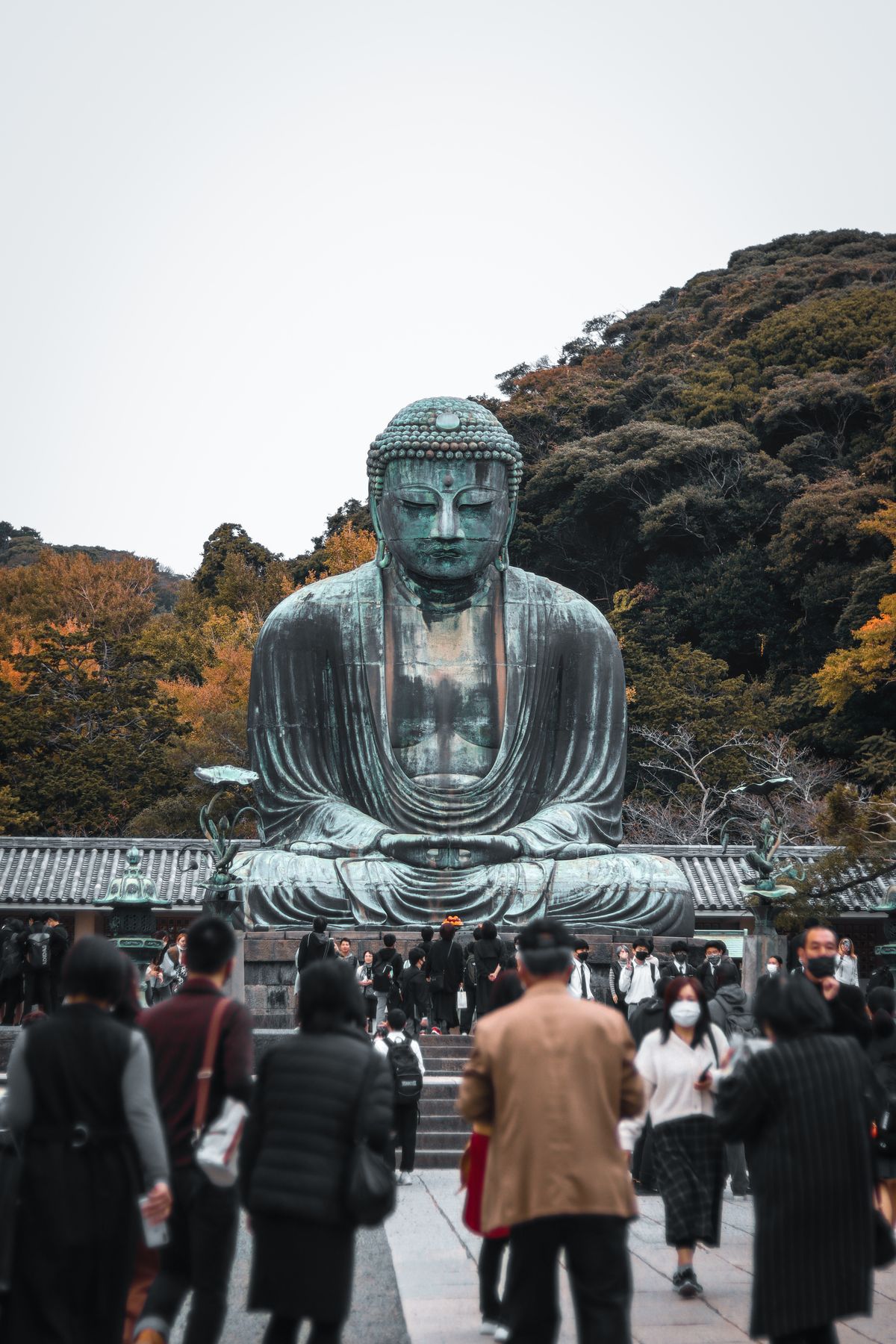
1. Kotoku-in Great Buddha (Kamakura Daibutsu)
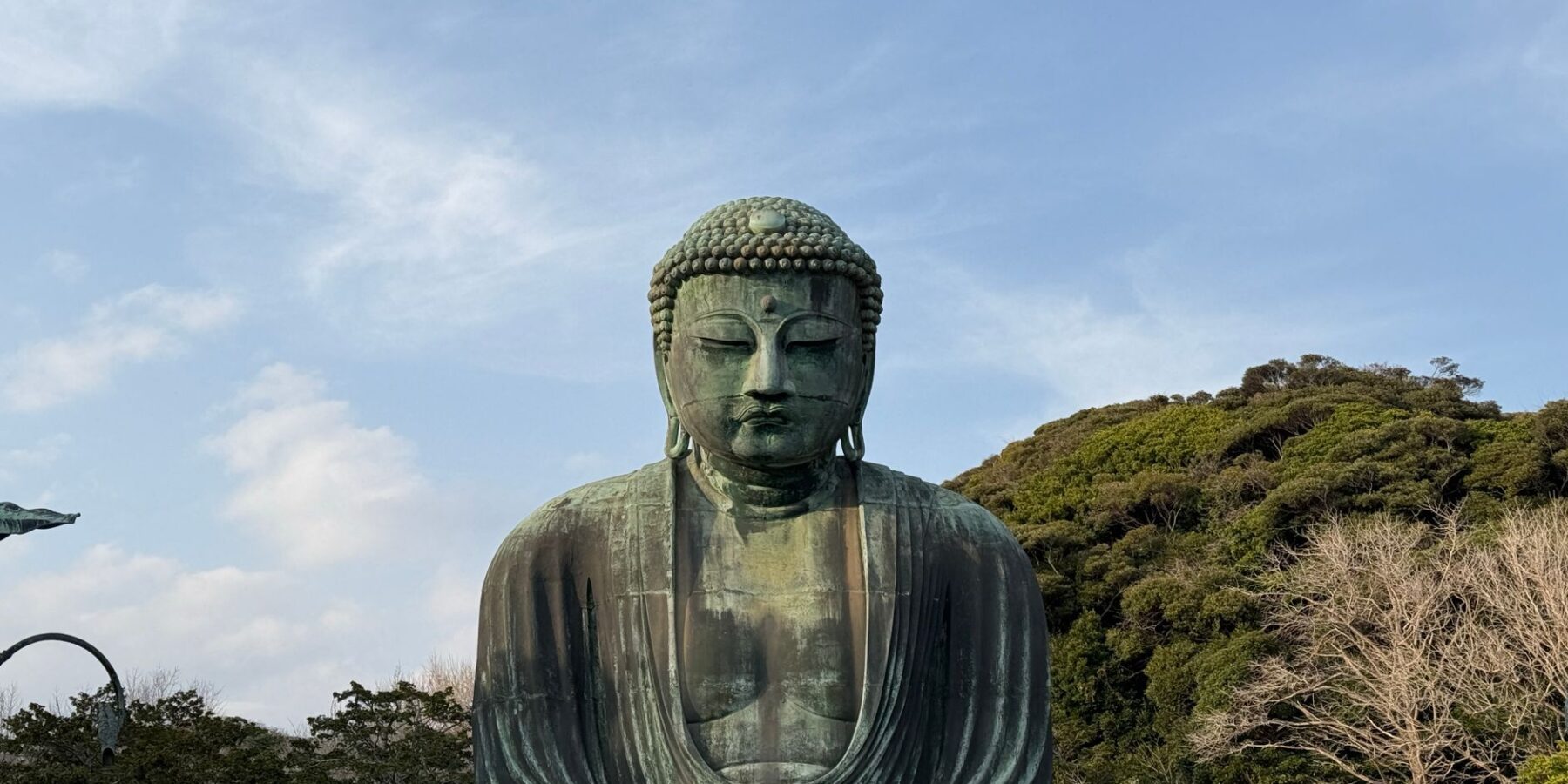
The Kotoku-in Daibutsu is Kamakura’s most iconic sight: a massive bronze seated Buddha statue standing 13.35 meters (44 feet) tall, cast in 1252 and weighing approximately 121 tons. Unlike the famous Nara Daibutsu, Kamakura’s Great Buddha sits in the open air — the wooden hall that originally sheltered it was destroyed by a tsunami in 1498. You can walk around the statue, and for ¥50 ($0.32 USD) extra, enter through openings in the flanks to see the interior structure.
Admission: ¥300 ($2 USD) adults; ¥150 ($1 USD) children
Hours: 8am–5:30pm (Apr–Sep); 8am–5pm (Oct–Mar)
Access: 15-minute walk from Hase Station on the Enoden line, or 30-minute walk from Kamakura Station
2. Tsurugaoka Hachimangu Shrine
The spiritual heart of Kamakura, Tsurugaoka Hachimangu was founded in 1063 and has served as the city’s central shrine for nearly a millennium. A broad, raised approach avenue — the Wakamiya-oji — leads from the sea to the shrine steps, lined with cherry trees that explode in color every spring. The main hall sits atop a dramatic flight of stairs with panoramic views over the city. Free to enter; the treasure museum costs ¥200 ($1.30 USD).
3. Kencho-ji Temple
Japan’s first Zen training monastery, founded in 1253, Kencho-ji is the most important of Kamakura’s five great Zen temples (Kamakura Gozan). The approach through towering juniper trees — planted 750 years ago — creates an atmosphere of immense age and solemnity. The main hall contains a seated Jizo Bosatsu statue carved from a single piece of wood. Behind the complex, a hiking trail leads over the mountain to Zuisen-ji Temple — one of the most scenic routes in Kamakura.
Admission: ¥500 ($3.25 USD) adults
Hours: 8:30am–4:30pm
4. Engaku-ji Temple
Founded in 1282 to honor soldiers killed in the Mongol invasions, Engaku-ji is the second of Kamakura’s five great Zen monasteries. Like Kencho-ji, Engaku-ji is a working Zen monastery where monks live and train. The grounds include a large bell (one of Kamakura’s three great bells), a Shariden reliquary hall housing a tooth of the Buddha, and beautiful moss-covered stone lanterns. The Shariden and the great bell are both designated National Treasures, and the two-story Sanmon gate is an impressive sight.
Admission: ¥500 ($3.25 USD) adults
5. Hase-dera Temple
One of Kamakura’s most photogenic temples, Hase-dera is built on a hillside with sweeping ocean views and features a 9.18-meter gilt wooden Kannon statue — one of the largest wooden sculptures in Japan — said to have washed ashore in 736 AD after being carved from a camphor tree and set adrift in the sea. The temple gardens are stunning year-round, with hydrangeas in June being particularly spectacular. A small cave network carved with Buddhist deity statues adds to the atmosphere.
Admission: ¥400 ($2.60 USD) adults
Hours: 8am–5:30pm (Mar–Sep); 8am–5pm (Oct–Feb)
6. Hokoku-ji Temple (Bamboo Temple)
Hokoku-ji is famous throughout Japan for its private bamboo grove — a stand of hundreds of moso bamboo trees that creates a magical atmosphere of rustling green light. Unlike the crowds at Kyoto’s Arashiyama bamboo grove, Hokoku-ji’s grove feels intimate and peaceful. A small tea ceremony (¥700/$4.50 USD) is available inside the grove. Combined with the temple’s quiet Zen garden, this is one of Kamakura’s most memorable experiences.
Admission: ¥300 ($2 USD) adults
Hours: 9am–4pm (closed Mon)
7. Zuisen-ji Temple
Set at the end of a quiet valley in eastern Kamakura, Zuisen-ji is one of the city’s least visited major temples — which makes it all the more rewarding. The 14th-century garden, designed by the temple’s founder Muso Soseki, incorporates a natural rocky cliff face draped in seasonal flowers and is considered a masterpiece of Kamakura-period garden design. Spring plum blossoms and autumn foliage here are exceptional.
The Kamakura Hiking Trails
Kamakura’s three main hiking trails wind through the forested hills surrounding the city, connecting major temples and offering dramatic views of the city, the sea, and on clear days, Mount Fuji in the distance.
Tenen Trail (Recommended)
The most popular trail, the Tenen Hiking Course runs from Kencho-ji Temple over the mountains to Zuisen-ji Temple in the east. The full route is approximately 4.5 km and takes 2–2.5 hours. The trail climbs steeply out of Kencho-ji, then levels off along a forested ridge with excellent views before descending to Zuisen-ji. Sturdy footwear is recommended; the trail can be slippery after rain.
Daibutsu Trail
The Daibutsu Hiking Course connects Kita-Kamakura Station (near Engaku-ji) with the Great Buddha at Kotoku-in, passing through quiet forest with views over the city. Approximately 3 km; takes 1.5–2 hours. Can be combined with a visit to Zeniarai Benzaiten Ugafuku Shrine (the “money-washing shrine”) along the way.
Gion Trail
A short route starting behind Yagumo Shrine in eastern Kamakura and ending near the Toshoji ruins, with views over the city. About 1 km, taking 30–45 minutes. Good for those with less time but still wanting a taste of Kamakura’s hiking.
Side Trip: Enoshima Island
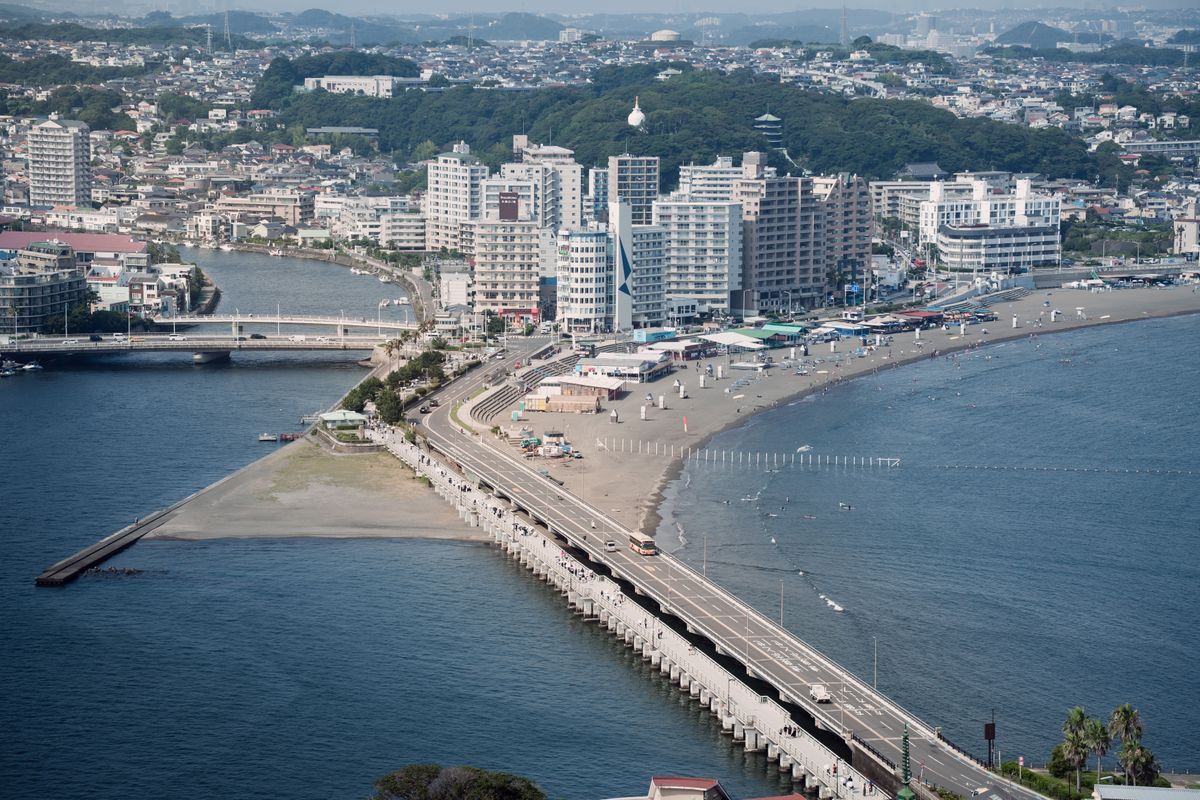
About 25 minutes from Kamakura by the charming Enoden coastal railway, then a short walk, Enoshima is a small island connected to the mainland by a causeway, famous for its cave shrines, sea caves, and lighthouse garden. The island is very popular on weekends; the narrow shopping street leading to the shrines gets extremely crowded. A leisurely visit takes 2–3 hours. Admission to the cave area costs ¥500 ($3.25 USD).
The Enoden Line Experience
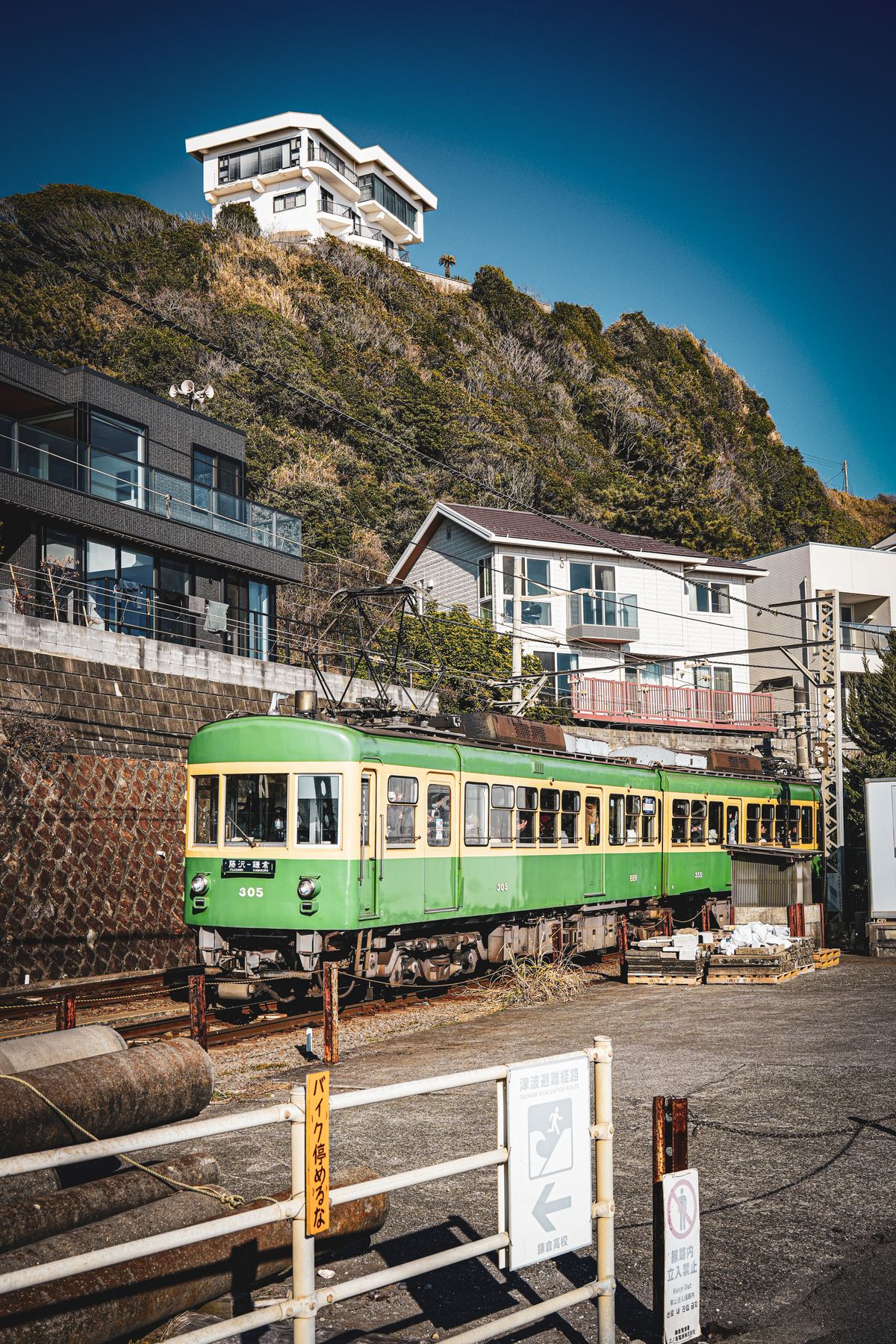
The Enoshima Electric Railway (Enoden) is one of Japan’s most charming train lines — a compact two- or four-car train that runs along the coast between Kamakura and Fujisawa, passing within meters of the ocean at Shichirigahama and through the narrow streets of residential neighborhoods. Even without a destination in mind, riding the Enoden is an experience in itself. The stretch between Inamuragasaki and Shichirigahama offers stunning sea views, and on clear days you can see Mount Fuji across the water.
Where to Eat in Kamakura
Local Specialties
- Shirasu (whitebait): Kamakura and Enoshima are famous for small whitebait fish (shirasu) eaten raw, boiled, or fried. Try shirasu-don (whitebait rice bowl) at restaurants near the coast.
- Koshigoe soba: Buckwheat noodles are popular throughout the area.
- Kamakura vegetables: Local farmers grow a distinctive range of heirloom vegetables; found at upscale restaurants and weekend markets.
Recommended Restaurants
- Nakamura-an (near Tsurugaoka Hachimangu) — classic soba restaurant, ¥800–¥1,500 ($5–$10 USD)
- Bergfeld (near Yuigahama beach) — bakery famous for its milk bread, great for a quick lunch
- Maruide (near Hase Station) — excellent shirasu-don overlooking the sea, ¥1,200–¥1,800 ($8–$12 USD)
- Garden House Kamakura — farm-to-table Japanese-Western fusion in a beautiful garden setting; ¥1,500–¥3,000 ($10–$19.50 USD)
Recommended Kamakura Day Trip Itineraries
Classic Half-Day (5–6 hours)
- Arrive at Kita-Kamakura Station
- Engaku-ji Temple (45 min)
- Kencho-ji Temple (45 min)
- Walk or bus to Tsurugaoka Hachimangu (30 min)
- Lunch near Kamakura Station (60 min)
- Return to Tokyo
Full Day (9–10 hours)
- Arrive at Kita-Kamakura Station
- Engaku-ji + Kencho-ji (90 min)
- Tenen Trail hike to Zuisen-ji (2.5 hrs)
- Hokoku-ji Bamboo Temple (45 min)
- Lunch at Kamakura Station area (60 min)
- Enoden to Hase — Great Buddha + Hase-dera (2 hrs)
- Enoden coastal ride to Enoshima or back to Kamakura
Practical Tips for Visiting Kamakura
- Best seasons: Spring (late March–April, cherry blossoms); Early summer (June, hydrangeas at Hase-dera); Autumn (late November–mid-December, foliage)
- Avoid weekends and holidays: Kamakura is extremely popular and can feel overwhelmed on busy days — aim for a weekday visit if possible
- Wear comfortable shoes: The hiking trails require sturdy footwear; temple steps are often uneven stone
- Buy a Suica or Pasmo IC card: Makes hopping between stations and paying at convenience stores and lockers much easier, but carry cash for temples
- Get a Japan eSIM: Mobile data is essential for navigating between Kamakura’s temples — they are spread across a wide area and require careful navigation
- Start early: Arrive by 9am to beat tour groups at the most popular sights
- Combine with Enoshima: The two destinations are perfectly paired for a full day; Enoshima adds 2–3 hours to the day
Book your Tokyo hotel near Kamakura access points on Agoda →
Get your Japan eSIM — navigate Kamakura’s temples with confidence →
Frequently Asked Questions About Kamakura Day Trips
How long do you need in Kamakura?
A minimum of 5–6 hours covers the essential sights: Engaku-ji or Kencho-ji, Tsurugaoka Hachimangu, and the Great Buddha. A full day of 8–10 hours allows you to add hiking, Hokoku-ji’s bamboo grove, Hase-dera, and possibly Enoshima. If you plan to hike all the major trails, two days would be ideal.
Is Kamakura worth it without the Great Buddha?
Absolutely. The Great Buddha is impressive, but Kamakura’s temples — particularly Kencho-ji, Engaku-ji, and Hokoku-ji — and its hiking trails are arguably even more rewarding. Many repeat visitors to Kamakura skip the Great Buddha to focus on the quieter eastern temples and forest trails.
Can I hike in Kamakura without experience?
Yes. Kamakura’s trails are well-maintained and clearly signposted. The Tenen and Daibutsu trails are suitable for anyone with a reasonable level of fitness. The steepest sections are the initial climbs out of Kencho-ji and near Kita-Kamakura. Good footwear and a bottle of water are the main requirements.
Is Kamakura or Nikko better for a day trip from Tokyo?
They offer very different experiences. Kamakura is better for: outdoor hiking, Buddhist culture, coastal scenery, and a relaxed artistic atmosphere. Nikko is better for: ornate Shinto shrine architecture, dramatic mountain scenery, and Japan’s most elaborate carved wooden gate. First-time visitors often find Kamakura more accessible and varied. History enthusiasts may prefer Nikko’s Toshogu Shrine complex.
What time do Kamakura temples close?
Most temples close between 4:30pm and 5:30pm. The Great Buddha (Kotoku-in) closes at 5:30pm (Apr–Sep) and 5pm (Oct–Mar). Arrive by 3:30pm at the latest for any major temple you want to visit. The outdoor shrines like Tsurugaoka Hachimangu have no closing time for the grounds.
Are there lockers in Kamakura?
Yes. Coin lockers are available at Kamakura Station (both JR and Enoden sides) and at Kita-Kamakura Station. Sizes range from small (¥300/$2 USD) to large (¥600/$4 USD). Leaving bags in a locker makes hiking much more comfortable.
Is Kamakura accessible for wheelchair users?
Kamakura’s main street areas and Tsurugaoka Hachimangu are accessible. Most temple interiors and all hiking trails involve significant steps and are not wheelchair accessible. Kotoku-in (Great Buddha) is partially accessible on paved paths. Contact specific temples directly for current accessibility information.
Related guides
- Enoshima Guide: Island Shrines, Sea Caves and Shonan Beach — The Best Day Trip from Tokyo (Complete 2026 Guide)
- Yokohama Travel Guide: Japan’s Most Cosmopolitan Port City
- Hakone Day Trip from Tokyo: Mt Fuji Views, Onsen, and the Complete Loop Guide
Going to Japan? Speak Japanese with confidence.
Hirameki Japanese — camera translate for menus and signs, a two-way conversation mode, and furigana + romaji on every phrase. Free to download with kana charts, conversation mode and starter words; a one-time purchase unlocks everything.

Plan your Japan trip
Two things every first-timer should book
Some links are affiliate links. If you book through them we may earn a small commission at no extra cost to you.