Kumamoto Prefecture sits at the heart of Kyushu, Japan’s southernmost main island, and its centerpiece is one of the most dramatic landscapes in the country: the Aso caldera, one of the largest active volcanic calderas in the world. Mount Aso’s five peaks rise from a vast grassy plateau where wild horses roam, hot springs bubble up from the earth, and the crater lake occasionally boils with sulfurous emissions visible from miles away. Surrounding this geological spectacle is a patchwork of rural hot spring villages, traditional farmhouses, and some of the finest grassland scenery in Japan.
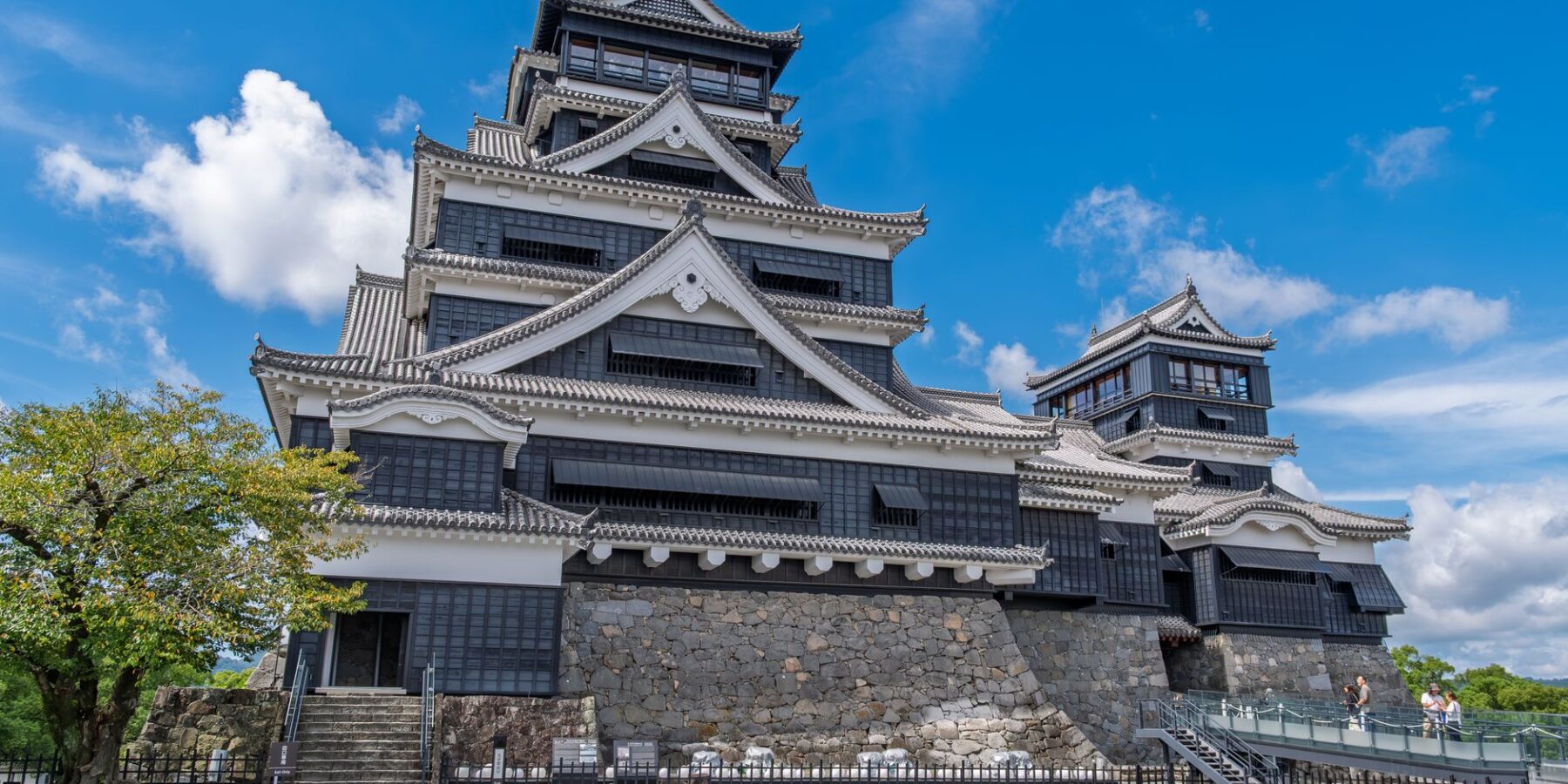
Kumamoto city itself is a modern, friendly prefectural capital best known for its handsome black castle — one of Japan’s three most famous — and a lovable bear mascot named Kumamon who has become one of the most commercially successful regional mascots in Japanese history. The city suffered severe earthquake damage in 2016, and the ongoing restoration of Kumamoto Castle has itself become a point of interest, demonstrating Japanese craftsmanship and resilience.
Kumamoto Castle: Japan’s Reconstruction Story
Kumamoto Castle (Kumamoto-jo) was originally completed in 1607 by Kato Kiyomasa, one of Japan’s most celebrated castle builders. Kato’s design was intended to be impregnable — and indeed, during the Satsuma Rebellion of 1877, the castle withstood a 50-day siege by Saigo Takamori’s forces even though the town itself fell. The castle has three main towers and 49 turrets, spread across a hilltop site in the center of the city.
In April 2016, the Kumamoto earthquakes (two major quakes of magnitude 6.5 and 7.3 within 28 hours) caused severe damage to the castle complex, toppling stone walls, damaging towers, and destroying several smaller structures. The government launched an ambitious 20-year restoration project, and progress has been visible and impressive. The main keep (Tenshukaku) reopened to the public in April 2021 after extensive repairs.
Visiting the castle today: The restored main keep is open and its interior now serves as an excellent museum covering the castle’s history, the 2016 earthquakes, and the restoration process. The outer grounds (Ninomaru area) offer views of the ongoing stone wall restoration work and the contrast between repaired and damaged sections is striking. Admission: ¥800 (~$5.40) for adults, ¥300 (~$2) for children. Open daily 8:30–18:00 (April–October); 8:30–17:00 (November–March).
The castle grounds also include Kato Shrine, dedicated to the castle’s founder Kato Kiyomasa, and the Kumamoto City Museum housed in a former municipal assembly hall nearby. The castle is about a 30-minute walk from Kumamoto Station or accessible by streetcar to Shiyakusho-mae stop.
Mount Aso: Inside the World’s Largest Caldera
The Aso caldera was formed approximately 90,000 years ago in one of the largest volcanic eruptions in geological history. Today it measures about 25 kilometers east to west and 18 kilometers north to south — large enough to contain five towns and 50,000 residents who live inside the caldera rim. The five peaks of Mount Aso rise from the caldera floor, with Nakadake (1,506m) being the only currently active crater.
The Nakadake Crater
On days when volcanic activity permits, visitors can approach within viewing distance of Nakadake’s crater, a remarkable and otherworldly experience. The crater holds a bright turquoise-green acid lake (when not covered by ash or eruption) and emits a near-constant plume of white steam. The area immediately around the crater smells powerfully of sulfur.
Access to the crater area is strictly controlled by the alert level set by the Japan Meteorological Agency. Level 1 allows access to the crater rim; Level 2 restricts access to within 1 kilometer of the crater; Level 3 closes a wider zone of roughly 2 kilometers around the crater. Check the current level at Japan Meteorological Agency before visiting. Even on days when the crater is accessible, shelter bunkers (thick concrete shelters designed to protect from volcanic projectiles) are positioned along the paths — these are not for show.
The Aso Ropeway, which ran from the parking area to the crater rim, has been undergoing major restoration since the 2016 eruption and earthquake damage. Check current status locally as operation dates change seasonally. When operational, the ropeway fare is about ¥1,230 round trip (~$8.30). The crater observation platform is free after riding the ropeway or accessible by a short walk from the Aso Nishi parking area.
The Aso Grasslands and Kusasenri
The volcanic plateau surrounding Aso’s peaks includes some of the most beautiful grasslands in Japan. Kusasenri is a broad grass meadow with a small pond at its center, framed by the peaks of Aso, where horses graze freely. It is one of the most photographed spots in Kyushu and spectacular in all seasons — green in summer, golden in autumn, and occasionally snow-dusted in winter. Free to visit; parking costs ¥100 (~$0.70).
The Aso Nishi and Daikanbo observatories offer panoramic views across the entire caldera and, on clear days, reveal the sheer scale of this geological feature. Both are free. Daikanbo on the northern rim is accessible by road and offers perhaps the most dramatic caldera views.
Cycling the Aso caldera is a wonderful way to explore at your own pace. Rental bicycles and e-bikes are available at Aso Station for ¥1,000–¥3,000 per day (~$6.70–$20). The roads within the caldera are gently rolling and the scenery is exceptional.
Getting to Aso
From Kumamoto city: JR Houhi Line to Aso Station (about 1 hour 20 minutes, ¥1,020 / ~$6.90). From Kumamoto, the “Aso Boy!” tourist train runs on certain days with panoramic windows and a small play area for children (¥840 / ~$5.70 reserved seat surcharge). From Beppu (Oita): the Kyushu Odan (Trans-Kyushu) limited express crosses the caldera to Aso in about 2 hours — one of Japan’s most scenic rail journeys.
By car from Kumamoto city center takes about 1 hour via the Aso Choyo Road. Having a car gives you the flexibility to explore the caldera rim and grasslands on your own schedule, which is strongly recommended.
Aso’s Hot Spring Villages: Kurokawa Onsen
The area surrounding Aso is dotted with hot spring (onsen) villages, and the finest of these is Kurokawa Onsen, about 30 kilometers north of Aso Station. This compact village of about 24 traditional ryokan inns clustered in a forested valley has achieved something remarkable: by maintaining strict architectural standards and banning neon signs and modern facades, it has created what feels like stepping back 150 years. The inns’ outdoor baths (rotenburo) overhang a small river, and the stone-paved streets between them are designed for leisurely wandering.
Kurokawa operates a unique nyuto tegata (bathing pass) system: for ¥1,500 (~$10), you purchase a wooden pass that allows entry to the outdoor baths of any three ryokan inns. This means you can sample the dramatically different bath environments of multiple inns — some with milky sulfur water, others with clear iron-rich water, some perched dramatically over a gorge — in a single visit without committing to a stay. Passes are sold at the Tourism Association office.
Staying overnight in Kurokawa is the ideal experience. Ryokan rates start from ¥15,000 per person including dinner and breakfast (~$100), with mid-range inns running ¥25,000–¥40,000 (~$170–$270). A full kaiseki dinner featuring Aso beef, local mountain vegetables, and seasonal ingredients is usually included. Reservations are essential months in advance during peak autumn foliage season (late October to November).
Book your Kurokawa Onsen ryokan on Agoda →
Kumamoto City: Food, Culture, and Kumamon

Suizenji Jojuen Garden is one of Japan’s finest landscape gardens, created in 1636 by the Hosokawa clan (who succeeded Kato as lords of Kumamoto). The garden recreates in miniature the 53 post stations of the Tokaido road between Edo and Kyoto, including a small hill representing Mount Fuji. A natural spring within the garden produces 3 tons of crystal-clear water per day. Admission: ¥400 (~$2.70). Open daily 7:30–18:00 (March–November), 8:30–17:00 (December–February).
Kumamoto Prefectural Traditional Crafts Center showcases the extraordinary range of crafts produced in Kumamoto, including Higo Zogan (inlaid metalwork), Yamaga lanterns, and Amakusa’s distinctive ceramics. Free admission to the permanent exhibition. A short walk from Kumamoto Castle.
Shimada Museum of Arts holds a fine collection of Japanese art and crafts and is housed in a beautifully designed modern building. Admission varies by exhibition (typically ¥800–¥1,200 / ~$5.40–$8).
Kumamon Square in the city center is a free facility dedicated to Kumamoto’s beloved bear mascot Kumamon, featuring merchandise shops and occasional appearances by the Kumamon character himself. Children and adults alike tend to be delighted by this unabashedly cheerful attraction.
Kumamoto Food Specialties
Basashi (horse sashimi) is Kumamoto’s most distinctive local food and is not for the faint-hearted. Thinly sliced raw horse meat, typically served with ginger, garlic, and soy sauce, is widely available at izakayas and some restaurants. The flavor is mild and slightly sweet, very different from beef. A serving costs ¥800–¥1,500 (~$5.40–$10).
Aso beef is raised on the volcanic grasslands of the Aso caldera and has a distinctive flavor attributed to the mineral-rich grass. Try it as a beef bowl (gyudon), in a hot pot, or grilled at specialist restaurants near Aso Station (lunch sets from ¥1,800 / ~$12).
Kumamoto ramen has a thick tonkotsu pork broth similar to Fukuoka’s style but with a distinctive addition: mayu (blackened garlic oil) is drizzled over the top at serving, adding a deep, rich flavor. A bowl costs ¥800–¥1,300 (~$5.40–$8.80).
Karashi renkon (mustard lotus root) is a preserved food unique to Kumamoto: lotus root is stuffed with miso mixed with Japanese mustard, battered, and deep-fried. The result is a striking cross-section of golden batter, white lotus root, and yellow mustard filling. Available as a side dish at many restaurants.
Practical Tips for Visiting Kumamoto and Aso
Getting to Kumamoto: Kumamoto Station is served by the Kyushu Shinkansen; travel time from Fukuoka (Hakata) is about 32–36 minutes on the fastest Mizuho trains (¥5,310 / ~$36 non-reserved, ¥5,840 / ~$39 reserved), and from Kagoshima Chuo about 50 minutes. From Tokyo by shinkansen, the journey takes about 5.5 hours with a transfer at Hakata. Flying from Tokyo to Kumamoto Airport takes about 1.5 hours; Kumamoto Airport is connected to the city center by bus (about 50 minutes, ¥800 / ~$5.40).
Getting around: Kumamoto city has an excellent streetcar (tram) network; a one-day pass costs ¥500 (~$3.40). For Aso, the JR Houhi Line is the main rail option, but many of the best Aso sights require bus or car. A tourist bus called the “Aso Densha Bus” runs from Aso Station to key volcanic sights in season.
Best time to visit: Autumn (October–November) is peak season for the Aso grasslands, when the grass turns golden and the entire plateau glows. Spring (April–May) brings vibrant green new growth. Summer can be hot in the caldera but the crater views are typically clearer. Winter brings occasional snow to the caldera rim and a dramatically atmospheric quality to the landscape.
Earthquake recovery note: The 2016 Kumamoto earthquakes damaged many buildings and bridges, and some areas were still recovering as recently as 2023. Roads and facilities have largely been restored, but it is worth checking the current status of specific attractions if you plan to visit more remote areas of the prefecture.
Get your Japan eSIM (Stay connected from day 1) →
Frequently Asked Questions About Kumamoto and Aso
Is it safe to visit Mount Aso?
Yes, under normal alert levels. The crater area operates under a volcanic alert system managed by the Japan Meteorological Agency. At alert level 1 (the lowest), the crater rim is accessible. At level 2, visitors must stay 1km from the crater but can still visit the grasslands, observatories, and surrounding villages. Check the current alert level before your trip. The surrounding caldera towns, Kurokawa Onsen, and Kumamoto city are always safe regardless of volcanic alert level.
How far is Aso from Kumamoto city?
About 50 kilometers by road, taking approximately 1 hour by car or 1 hour 20 minutes by JR train. It is feasible as a day trip from Kumamoto, though staying overnight in Kurokawa Onsen or at an Aso ryokan significantly enhances the experience.
Is Kumamoto Castle fully restored after the 2016 earthquake?
The main keep (tenshukaku) was restored and reopened in April 2021. The broader restoration project is ongoing and expected to continue until approximately 2037. In the meantime, you can watch the stone wall reconstruction work in progress and visit a dedicated exhibition about the restoration process — itself a fascinating experience.
Can I ride a horse at Aso?
Yes. Several riding centers in the Aso area offer short horse-riding experiences on the volcanic grasslands, typically lasting 20–60 minutes and costing ¥2,000–¥6,000 (~$13.50–$40). The experience of riding across the Aso grasslands with volcanic peaks in the background is memorable. No riding experience is required for the shorter introductory rides.
What is the best way to combine Kumamoto with other Kyushu destinations?
Kumamoto makes an excellent hub for a Kyushu circuit. A logical 5-day route: Day 1–2 in Fukuoka, Day 3 in Kumamoto (castle and city), Day 4 in Aso (crater and grasslands), Day 5 at Kurokawa Onsen, then continuing south to Kagoshima or east to Beppu. All connections are straightforward by JR train or shinkansen.
What is Kurokawa Onsen and when should I book?
Kurokawa Onsen is a small hot spring village in northern Kumamoto Prefecture, considered one of Japan’s finest onsen destinations. Book accommodation at least 2–3 months in advance for autumn weekends (October–November), which are the busiest period. Weekday stays in spring and summer are generally easier to book and less expensive.
Related Kyushu Travel Guides
Continue planning your Kyushu trip with these related guides: hiking Mount Aso’s caldera, Kurokawa Onsen’s riverside baths, Sakurajima volcano in Kagoshima, Oita’s Beppu hells and Yufuin onsen, and Karatsu, Saga’s seaside castle town.
Going to Japan? Speak Japanese with confidence.
Hirameki Japanese — camera translate for menus and signs, a two-way conversation mode, and furigana + romaji on every phrase. Free to download with kana charts, conversation mode and starter words; a one-time purchase unlocks everything.

Plan your Japan trip
Two things every first-timer should book
Some links are affiliate links. If you book through them we may earn a small commission at no extra cost to you.