Introduction to Tokyo
Tokyo is unlike any other city on Earth. With a population of over 13 million in the city proper — and nearly 38 million in the greater metropolitan area — it holds the title of the world’s most populous urban agglomeration. Yet despite its sheer scale, Tokyo is remarkably clean, safe, efficient, and easy to navigate. First-time visitors are often stunned by the contrast: serene Shinto shrines tucked between glass skyscrapers, Michelin-starred restaurants hidden down unmarked alleyways, and bullet trains gliding silently through dense urban sprawl.
Founded as Edo in 1457 and renamed Tokyo (“Eastern Capital”) in 1868 when it became Japan’s imperial capital, the city has reinvented itself countless times — most dramatically after the 1923 Great Kanto Earthquake and again after World War II. Today’s Tokyo is a city of constant reinvention. Entire neighborhoods transform every decade, pop culture trends emerge from its streets and spread across the globe, and culinary innovation flows endlessly from its more than 200,000 restaurants — the highest concentration of any city in the world.
Whether you’re drawn to the neon-lit chaos of Shinjuku, the traditional temples of Asakusa, the upscale boutiques of Ginza, or the geek paradise of Akihabara, Tokyo delivers. The city rewards both the first-time traveler looking for iconic highlights and the repeat visitor who keeps discovering something new. This comprehensive guide covers everything you need to know to make the most of your time in Japan’s extraordinary capital.
Best Areas to Stay in Tokyo
Choosing the right neighborhood makes an enormous difference to your Tokyo experience. Each area has its own distinct character, price range, and advantages. Here’s a breakdown of the best areas for different types of travelers.
Shinjuku
Shinjuku is Tokyo’s ultimate entertainment hub and the city’s busiest transportation center. The west side of the station features the Metropolitan Government Building (free observation deck), towering skyscraper hotels, and corporate headquarters. The east side explodes into Kabukicho — Tokyo’s largest entertainment district — along with the famous Golden Gai warren of tiny bars, and the peaceful Shinjuku Gyoen national garden. Hotels range from budget guesthouses to five-star luxury. Ideal for: first-timers, nightlife lovers, business travelers.
Shibuya
Home to the world’s busiest pedestrian crossing, Shibuya pulses with youth energy and fashion. The area around the station is packed with department stores, trendy cafes, and global brands. Nearby Daikanyama offers a quieter, more upscale alternative with independent boutiques and coffee shops beloved by Tokyo’s creative class. Ebisu, just one stop south, is polished and residential — perfect for travelers who want style without the crowds. Ideal for: fashion-conscious travelers, shoppers, young travelers.
Asakusa
Asakusa preserves the spirit of old Edo more than anywhere else in Tokyo. The towering Senso-ji temple, rickshaw rides, traditional craft shops along Nakamise-dori, and ryokan (traditional inns) make this the go-to neighborhood for travelers seeking authentic Japanese atmosphere. It’s also extremely well-connected to central Tokyo via the Ginza subway line. Prices tend to be slightly lower than Shinjuku or Shibuya for equivalent quality. Ideal for: culture lovers, those wanting a traditional Tokyo experience, families.
Roppongi
Roppongi is Tokyo’s international district, home to foreign embassies, world-class art museums (Mori Art Museum, National Art Center), and an active nightlife scene that draws expats and tourists alike. It’s not the most authentically Japanese neighborhood, but the area is remarkably walkable with excellent dining options and easy access to Azabu-juban, one of Tokyo’s most charming residential shopping streets. Ideal for: art lovers, international travelers, night owls.
Ginza and Marunouchi
Tokyo’s most upscale shopping and business districts occupy prime real estate near the Imperial Palace. Ginza features flagship stores of every major luxury brand, excellent department stores, and refined dining. Marunouchi caters to business travelers with polished hotels, excellent transport links (5 minutes from Tokyo Station), and a more serene atmosphere than the party neighborhoods. Ideal for: luxury travelers, business visitors.
Ueno and Akihabara
These two adjoining neighborhoods offer exceptional value. Ueno surrounds one of Tokyo’s largest parks, which houses six major museums and a zoo. Budget accommodation is abundant and excellent here. A short walk south brings you to Akihabara, the electronics and anime capital of the world. Ideal for: budget travelers, museum enthusiasts, anime and gaming fans.
Top Attractions in Tokyo

Senso-ji Temple, Asakusa
Tokyo’s oldest temple, founded in 628 AD, receives over 30 million visitors annually. The iconic Kaminarimon (Thunder Gate) with its giant red lantern is one of Japan’s most photographed images. Walk through Nakamise-dori — a shopping street leading to the main hall — to browse traditional souvenirs, crackers, and street food. Arrive before 8am to experience the temple in peaceful near-solitude. Admission to the main grounds is free, 24 hours. The nearby Tokyo Skytree is visible from the temple grounds.
Tokyo Skytree
At 634 meters, the Tokyo Skytree is the world’s tallest tower and the second-tallest structure on Earth. Two observation decks offer panoramic views across the city: the Tembo Deck at 350m and the Tembo Galleria at 450m. On clear days — especially in winter — you can see Mount Fuji on the horizon. The base of the tower houses a massive shopping complex (Tokyo Solamachi) with over 300 shops and restaurants. Prices vary by date: Tembo Deck adult tickets cost 1,800–3,600 yen online, and counter tickets cost 500 yen more.
Tokyo Tower
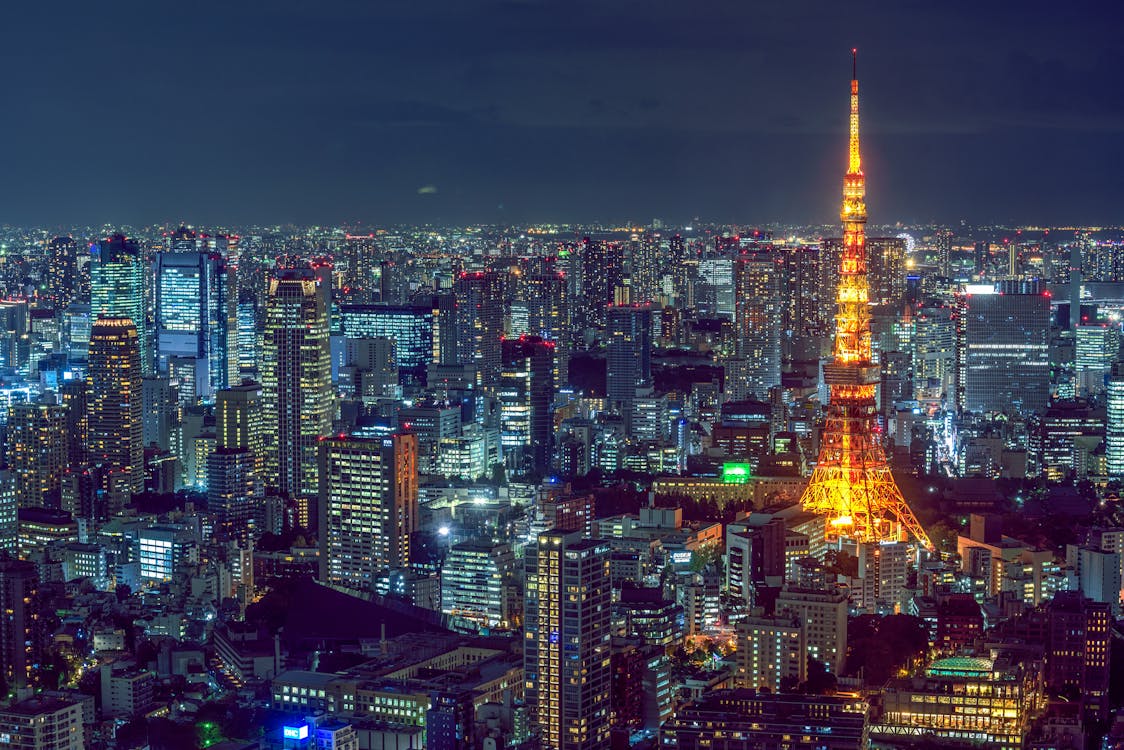
Built in 1958 and modeled after the Eiffel Tower, Tokyo Tower remains one of the city’s most beloved landmarks. The orange-and-white structure is especially beautiful at night when lit up against the dark sky. The Main Deck at 150m costs 1,500 yen and offers a classic Tokyo panorama. Though the Skytree is taller, many visitors prefer Tokyo Tower for its retro charm and central location in Shiba Park — surrounded by beautiful temples and parkland.
Meiji Jingu Shrine
Dedicated to Emperor Meiji and Empress Shoken, Meiji Jingu is Tokyo’s most important Shinto shrine. Set within 70 hectares of forested parkland right in the middle of the city — adjacent to the youth fashion district of Harajuku — the shrine offers a remarkable sense of natural tranquility. The forested path to the main shrine is particularly atmospheric. Free entry.
Tsukiji Outer Market
The famous inner market moved to Toyosu in 2018, but the Tsukiji Outer Market remains one of Tokyo’s best food experiences. Dozens of stalls sell fresh seafood, tamagoyaki (sweet rolled omelette), street food, and kitchen supplies to both tourists and professional chefs. Get there before 9am for the best selection. Must-tries include fresh uni (sea urchin) rice bowls, tuna sashimi, and giant grilled scallops. Open every day except Wednesdays and Sundays.
Imperial Palace East Garden
The inner palace grounds can only be visited on free guided tours (or during the New Year and Emperor’s Birthday greetings), but the East Garden is open most days except Mondays and Fridays (free entry). These beautifully maintained formal gardens occupy the former site of Edo Castle and offer a peaceful green escape in the heart of the city. The Chidorigafuchi moat is one of Tokyo’s top cherry blossom spots in late March and early April.
Odaiba
Tokyo’s artificial island in Tokyo Bay offers a completely different urban experience. The futuristic architecture, shopping malls, and the nearly 20-meter-tall Unicorn Gundam statue attract millions of visitors. The teamLab Planets digital art installation here is one of the most extraordinary immersive art experiences in the world — book tickets well in advance. The Yurikamome monorail to Odaiba is an attraction in itself.
Ueno Park and Museums
Japan’s first public park (opened 1873) serves as Tokyo’s cultural hub. Within the park you’ll find the Tokyo National Museum (Japan’s largest), the National Museum of Nature and Science, the National Museum of Western Art (a UNESCO World Heritage building), the Tokyo Metropolitan Museum of Art, Ueno Zoo, and Shinobazu Pond. The park is also one of Tokyo’s most famous hanami (cherry blossom viewing) sites.
Tokyo Neighborhoods Guide
Harajuku and Omotesando
Harajuku’s Takeshita Street is the epicenter of Japan’s wildest youth fashion — think elaborate Lolita dresses, pastel wigs, and rainbow crepes. Just minutes away, Omotesando is the polar opposite: a broad, tree-lined boulevard lined with architecturally stunning flagship stores by the world’s top luxury brands. Omotesando Hills — designed by Tadao Ando — is itself worth visiting as an architectural achievement.
Shimokitazawa
Tokyo’s bohemian heart, Shimokitazawa is beloved by students, artists, and musicians. The narrow streets are packed with vintage clothing stores, indie record shops, live music venues, and affordable izakayas. It feels completely different from the polished commercial Tokyo most tourists see — more like a European student quarter. Come in the evening when the live music venues and bars fill up. This is one of the city’s best spots to connect with young locals.
Akihabara
Electric Town has evolved from an electronics market into the global capital of anime, manga, and gaming culture. Multi-story buildings are stuffed with figures, video games, retro consoles, maid cafes, and every conceivable piece of merchandise from every anime series ever made. Even if you’re not an otaku, the sensory overload is worth experiencing. Yodobashi Camera’s main Akihabara store is one of the world’s largest electronics retailers.
Ginza
On weekend afternoons, the main Chuo-dori street becomes a pedestrian zone where you can stroll past the flagship stores of global luxury brands. The Itoya stationery building is a must-visit for design lovers. Ginza Six is the area’s premier shopping complex with a beautiful rooftop garden. Despite the luxury focus, many of Ginza’s galleries and department store food halls are free to explore.
Tsukishima
This small island neighborhood is famous for monjayaki, a savory Tokyo-style pancake dish. The main street has dozens of specialist monjayaki restaurants, all with counter seating where you cook the dish yourself on a built-in griddle. It’s one of Tokyo’s most authentic local food experiences and remains largely off the tourist trail despite being just two stops from Tsukiji.
Day Trips from Tokyo
Tokyo’s superb rail network makes excellent day trips easily accessible. Here are the top options within 2 hours of the city.
Nikko
The ornate Tosho-gu shrine complex — mausoleum of shogun Tokugawa Ieyasu — is one of Japan’s most lavishly decorated historic sites. Set in forested mountains 140km north of Tokyo, Nikko also offers hot springs, waterfalls (Kegon Falls at 97m), and the scenic Lake Chuzenji. The Tobu Nikko line makes the journey in about 2 hours from Asakusa station.
Hakone
The Hakone area is famous for hot spring resorts (onsen), views of Mount Fuji across Lake Ashi, and the open-air sculpture museum. The Romancecar limited express from Shinjuku takes about 85 minutes. The Hakone Free Pass gives unlimited use of eight different types of transport including the mountain railway, ropeway, and lake cruise — it’s excellent value and makes for a wonderful circular route through the mountains.
Kamakura
This small coastal city 50km south of Tokyo was Japan’s political capital in the 12th and 13th centuries. It’s packed with ancient temples and shrines and dominated by the Great Buddha (Kotoku-in) — a 13.35-meter bronze statue that has been sitting in the open air since its covering hall was destroyed by a tsunami in 1498. The city is just 1 hour from Tokyo Station on the Yokosuka line. Combine with Enoshima island for a full day out.
Yokohama
Japan’s second-largest city is only 25-30 minutes from Shibuya and forms essentially a continuous urban area with Tokyo. The waterfront Minato Mirai district is dominated by the 296m Landmark Tower, while Chinatown — the largest in Japan — offers excellent dim sum and Chinese sweets. An easy half-day trip that pairs well with an evening in Yokohama’s vibrant harbor area.
Mount Fuji Fifth Station
Even if you’re not climbing Fuji, the Fifth Station (2,305m) offers remarkable scenery. Direct highway buses run from Shinjuku Bus Terminal (about 2.5 hours, around 2,700 yen each way). In 2026 the Yoshida Trail from this station was open for climbing from July 1 to September 10. Gates and fees have been in place since 2024 to manage overtourism: in 2026 every climber paid ¥4,000 and, without a mountain-hut booking, could not start between 2 p.m. and 3 a.m. The 2027 rules have not been announced yet — check the latest rules before visiting.
Food and Dining in Tokyo
Tokyo has more Michelin stars than any other city in the world — over 200 at last count. But some of the city’s best food experiences cost less than 1,000 yen. Here’s how to eat your way through the city.
Ramen
Tokyo-style ramen typically features a clear soy-based (shoyu) broth with thin, curly noodles, sliced chashu pork, nori, and a soft-boiled egg. The Shinjuku and Ikebukuro neighborhoods have dense concentrations of excellent ramen shops. Expect to pay 800-1,500 yen per bowl. Many top shops have ordering machines at the entrance — buy your ticket, hand it to the staff, and take a seat. Don’t be put off by queues — they usually move quickly and the wait is worth it.
Sushi
Tokyo’s sushi ranges from conveyor belt (kaiten-zushi) chains where plates start at 130 yen, to omakase counters where the chef selects a tasting menu costing 30,000-100,000 yen or more. For a mid-range experience, try standing sushi bars where you eat at the counter — excellent quality at around 2,000-4,000 yen. Tsukiji Outer Market and the Toyosu Market area remain excellent spots for fresh, affordable sushi breakfast.
Tempura
Lightly battered and fried seafood and vegetables served with dipping sauce and grated daikon radish. Tempura lunch sets at standing restaurants start at 800 yen. The Asakusa neighborhood has historically been the center of Tokyo’s tempura tradition — look for the old-school specialty restaurants around the temple area. For a special experience, counter seats at a mid-range specialist restaurant (3,000-6,000 yen for lunch) are highly recommended.
Yakitori and Izakaya Culture
Yakitori (grilled chicken skewers) is Tokyo’s definitive casual evening food. Under the train tracks in areas like Yurakucho, tiny yakitori stalls serve skewers for 150-300 yen each alongside cold beer and sake. An izakaya is a Japanese gastropub — the place to go for a long evening of shared dishes, drinks, and conversation. Most izakayas offer an all-you-can-drink (nomihodai) option for around 1,500-2,000 yen for 90 minutes.
Convenience Store Culture
Tokyo’s convenience stores (7-Eleven, FamilyMart, Lawson) are a genuine food destination. The onigiri (rice balls, 130-200 yen), sandwiches, hot foods like nikuman (steamed meat buns), and seasonal specials are legitimately good. 7-Eleven’s tuna mayo onigiri and FamilyMart’s fried chicken have devoted followings among locals. Coffee from the store machine costs around 100 yen for a quality cup. Don’t leave Tokyo without at least one convenience store meal experience.
Getting Around Tokyo
Tokyo’s public transport system is the world’s most extensive and — despite its complexity — remarkably easy to use once you understand the basics.
JR Lines
Japan Railways operates the JR Yamanote Line — a circular route connecting all major hubs including Shibuya, Shinjuku, Ikebukuro, Ueno, Akihabara, and Tokyo Station. A complete loop takes about 65 minutes. This is the most important line for tourists. Single fares start at 150 yen. If you have a Japan Rail Pass, it covers all JR lines within Tokyo including airport express trains.
Tokyo Metro and Toei Subway
Tokyo has 13 subway lines operated by two companies (Tokyo Metro and Toei). They cover areas the JR lines don’t reach and are essential for getting to neighborhoods like Roppongi, Ginza, Asakusa, and Odaiba. The 24-hour Tokyo Metro Pass costs 600 yen and offers unlimited rides on all Metro lines — excellent value if you’re covering multiple neighborhoods in a day.
IC Cards (Suica and Pasmo)
An IC card is the single most useful item for getting around Tokyo. Load credit onto the card and tap in and out at any train or subway station — the correct fare is automatically deducted. IC cards also work on buses and at most convenience stores, vending machines, and many restaurants. Get a Suica from JR stations or a Pasmo from subway stations at the start of your trip. They’re interchangeable across all transport systems in Tokyo.
Buses and Taxis
Tokyo’s city buses are useful for some routes not covered by rail. The flat fare is 210 yen within the 23 wards — use your IC card to board. Taxis are safe, clean, metered, and have automatic doors — don’t try to open or close them yourself. Base fare starts at 500 yen. Taxis are more expensive than trains but useful for late nights when trains have stopped (last trains typically run around midnight).
Cycling in Tokyo
Docomo Bike Share operates a network of rental stations throughout central Tokyo. You can pick up a bike at any station and return it to any other. The basic rate is 165 yen for 30 minutes. The flat terrain of central Tokyo makes cycling very enjoyable, particularly around the Imperial Palace (a 5km cycling loop with no traffic lights is popular with locals) and along the Sumida River.
Getting to Tokyo
Narita International Airport
Located 60km east of central Tokyo, Narita handles most international long-haul flights. Your options for getting into the city: the Narita Express (N’EX) takes about 55-90 minutes to major stations and costs 3,070 yen (discounted round-trip tickets available). The Keisei Skyliner is slightly cheaper at 2,570 yen and faster to Ueno (41 minutes). Limousine buses cost around 3,200 yen. Taxis are prohibitively expensive (20,000 yen or more).
Haneda Airport
Haneda is much closer to the city (15-40 minutes depending on destination) and increasingly handles international flights including routes from Europe, North America, and across Asia. The Tokyo Monorail connects Haneda to Hamamatsucho station in 18 minutes (500 yen). The Keikyu Line connects to Shinagawa (10 minutes, 300 yen) and runs directly to central Tokyo. Taxis from Haneda are reasonable at 3,000-6,000 yen to most central areas.
Best Time to Visit Tokyo
Spring (March to May): Cherry Blossom Season
Late March to early April is peak cherry blossom (sakura) season — arguably the most beautiful time to visit Japan. Parks across the city transform into pink clouds. This is also peak tourist season and prices for accommodation can be 50-100% higher than normal. Book well in advance. Temperatures are mild (10-18 degrees C) and rain is possible. May, after the crowds thin, offers excellent weather and green gardens.
Summer (June to August): Festivals and Fireworks
Summer in Tokyo is hot and humid (30-35 degrees C in July and August) with a rainy season in June. Despite the weather, summer brings some of the city’s best festivals: the Sumida River Fireworks (late July, 20,000+ fireworks), Asakusa Samba Carnival (August), and countless neighborhood matsuri (festivals) with food stalls and traditional music. Air conditioning is ubiquitous in indoor venues.
Autumn (September to November): Foliage Season
Many experienced Japan travelers consider October and November the best time to visit Tokyo. The temperature is comfortable (15-25 degrees C), the skies are clear (ideal for seeing Mount Fuji), and from mid-November the autumn foliage (koyo) turns parks and temple gardens brilliant shades of red and gold. Rikugien Garden, Shinjuku Gyoen, and Hamarikyu Gardens are particularly beautiful.
Winter (December to February): Illuminations
Tokyo winters are crisp and cold but rarely frigid. The city goes all-out with Christmas and New Year illuminations — Roppongi Hills, Keyakizaka in Roppongi, Caretta Shiodome, and Marunouchi all have spectacular light displays. New Year (shogatsu) is one of the most atmospheric times to visit. January and February offer the clearest skies for Fuji views.
Practical Tips for Tokyo
Wi-Fi and Connectivity
Stay connected with a pocket Wi-Fi device (rented at the airport, about 400-1,500 yen/day) or a local SIM card. Major airports sell prepaid data SIMs from 3,000-4,000 yen that work immediately. Free Wi-Fi is available at most convenience stores, major train stations, and tourist areas. Google Maps works excellently for Tokyo’s transit system and will give you step-by-step directions on any train journey.
Etiquette and Manners
Tokyo has some important social norms: don’t eat or drink while walking (except at festivals or designated areas), keep your voice low on trains, give up priority seats to elderly or pregnant passengers, and never tip — it’s considered rude in Japan. Trash cans are rare on the street (carry a small bag for your rubbish). Tattoos may restrict access to some public baths (onsen). Remove your shoes when entering traditional accommodation, temples, and many restaurants.
Money and Currency Exchange
Japan is still largely cash-based, though card acceptance is improving rapidly. Carry 10,000-20,000 yen in cash for emergencies and smaller restaurants. 7-Eleven ATMs reliably accept foreign cards and have English interfaces. In October 2026 the yen was still relatively weak, at about 158 yen per US dollar, making Japan excellent value for foreign visitors. Currency exchange is available at airports, post offices, and some banks.
Emergency Contacts
Police: 110. Ambulance and Fire: 119. The Japan Visitor Hotline (+81-50-3816-2787) operates 24 hours and provides multilingual assistance. Major hospitals with English service include St. Luke’s International Hospital and Tokyo Medical and Surgical Clinic. Always carry travel insurance that covers medical evacuation.
Budget Guide for Tokyo
Budget Traveler (7,000-12,000 yen per day)
Stay in a dormitory hostel or capsule hotel (3,000-4,500 yen/night), eat at convenience stores, ramen shops, and kaiten sushi (300-800 yen/meal), use IC card on trains (500-1,000 yen/day), and focus on free attractions: parks, shrine grounds, free observation decks at Tokyo Metropolitan Government Building and Bunkyo Civic Center. Total: 7,000-12,000 yen/day including accommodation.
Mid-Range Traveler (20,000-40,000 yen per day)
A private room in a business hotel or well-located guesthouse (10,000-18,000 yen/night), lunch at teishoku set-meal restaurants (1,000-1,500 yen), dinner at a mid-range izakaya or specialist restaurant (3,000-6,000 yen), admission to major attractions (1,000-2,500 yen each), and occasional taxis. This budget allows a comfortable, full Tokyo experience with good food and accommodation without compromise.
Luxury Traveler (80,000 yen or more per day)
Tokyo’s luxury tier is exceptional. Park Hyatt Tokyo (made famous by the film Lost in Translation), The Peninsula, Aman Tokyo, and the Four Seasons offer world-class experiences from 60,000-150,000 yen per night. Omakase sushi or kaiseki dinners cost 30,000-100,000 yen per person. Private car transfers, exclusive tea ceremony experiences, and behind-the-scenes sake brewery tours can all be arranged. Tokyo competes with any city in the world for high-end hospitality.
Frequently Asked Questions About Tokyo
How many days do I need in Tokyo?
Most first-time visitors spend 4-5 days in Tokyo, which is enough to see the major highlights without feeling rushed. If you want to explore multiple neighborhoods in depth, do a day trip, and experience Tokyo at a leisurely pace, 7 days is ideal. Many repeat visitors find that even 10 or more days are insufficient — the city genuinely has limitless depth to explore.
Is Tokyo safe for solo travelers?
Tokyo is one of the safest major cities in the world. Violent crime rates are extremely low, the streets are well-lit and busy, and the subway is safe at all hours. Solo female travelers consistently report feeling very safe here. Standard urban precautions apply — keep an eye on your belongings in crowded areas — but in general you can relax and focus on enjoying the extraordinary city around you.
Do I need to speak Japanese?
No — you can navigate Tokyo perfectly well without Japanese. Most train stations have English signage, Google Translate with camera mode handles menus and signs, and many restaurants now have picture menus or English translations. However, learning a few basic phrases — arigatou gozaimasu (thank you), sumimasen (excuse me) — is appreciated and will earn you warm responses from locals.
What is the Japan Rail Pass and should I buy one?
The Japan Rail Pass (JR Pass) gives unlimited travel on JR trains nationwide for 7, 14, or 21 days. If you’re visiting Tokyo only, it’s generally not worth it — the cost (from 50,000 yen for 7 days) exceeds what most Tokyo-only visitors spend on transport. However, if you’re also traveling to Kyoto, Osaka, or other destinations by Shinkansen, it becomes excellent value. Calculate your expected train costs before purchasing.
What should I pack for Tokyo?
Comfortable walking shoes are essential — you’ll easily cover 15,000-25,000 steps per day. Pack layers for variable weather. A small backpack is useful for day trips. Bring any prescription medications from home as some western drugs are restricted in Japan. A pocket umbrella is useful year-round. Note that coin laundromats are common and very affordable (200-400 yen per wash), so you can pack light and do laundry mid-trip.
When do Tokyo’s cherry blossoms bloom?
The cherry blossoms typically peak between late March and early April, though the exact dates vary by year depending on temperatures. The Japan Meteorological Corporation releases annual bloom forecasts from January. The blossoms are at their best for only about one week, so timing requires some flexibility. Shinjuku Gyoen, Chidorigafuchi moat, Ueno Park, and Inokashira Park are the top viewing locations.
Can I drink the tap water in Tokyo?
Yes — Tokyo’s tap water is clean, safe to drink, and tastes fine. You can refill your water bottle at any sink without concern. Bottled water from vending machines or convenience stores costs around 100-150 yen per 500ml, but there’s no need to buy it unless you prefer it.
What is the best way to travel from Tokyo to Kyoto or Osaka?
The Shinkansen (bullet train) is the most practical and popular option. The Nozomi super-express runs from Tokyo to Osaka in about 2 hours 22 minutes, while Tokyo to Kyoto takes about 2 hours 15 minutes. Prices are around 13,700-14,720 yen for a reserved seat (the JR Pass covers the Hikari; to ride the Nozomi, pass holders add a one-way NOZOMI MIZUHO Ticket, 4,960 yen). Night buses are much cheaper (around 4,000-6,000 yen) but take 8-9 hours. When you factor in airport transit time, the Shinkansen is usually faster door-to-door than flying.
Explore Tokyo by Area
Click any neighbourhood below for a full local guide — attractions, food, transport and tips.
Shinjuku
Entertainment, nightlife, Gyoen garden & the world’s busiest station
Shibuya & Harajuku
The famous crossing, Meiji Shrine, Takeshita Street & youth fashion
Asakusa & Ueno
Senso-ji temple, Tokyo National Museum, Ueno Park & Ameyoko market
Akihabara
Anime, manga, electronics, retro games & maid cafes
Ginza & Tsukiji
Luxury shopping, kabuki theatre, sushi breakfast & Tokyo Bay
Roppongi & Minato
Art museums, Tokyo Tower, world-class nightlife & Azabu-Juban
Shimokitazawa
Vintage shops, live music venues, indie cafes & bohemian street life
Odaiba
teamLab digital art, Gundam statue, Rainbow Bridge & Tokyo Bay views
Tokyo Travel Guide
Japan’s electric capital — ancient temples, cutting-edge technology, world-class food, and endless districts to explore.
Tokyo is one of the world’s most fascinating cities — a seamless blend of ultra-modern skyscrapers, historic shrines, neon-lit alleys, and quiet residential neighbourhoods. With over 13 million residents in the city proper, it’s the world’s most populous metropolis, yet it manages to feel clean, safe, and remarkably easy to navigate.
Essential Tokyo Articles


Tokyo Quick Facts
| 🗾 Best time to visit | March–May (cherry blossom) or October–November (autumn colours) |
| ✈️ Nearest airport | Narita (NRT) or Haneda (HND) — both well connected by train |
| 🚇 Getting around | Tokyo Metro & JR Yamanote Line — IC card (Suica/Pasmo) recommended |
| 💴 Daily budget | ¥5,000–8,000 (budget) / ¥15,000–25,000 (mid-range) |
| 📍 Top areas to stay | Shinjuku, Shibuya, Asakusa, Ginza, Akihabara |
Nearby Day Trips
Mt Fuji views & onsen
🏯 Kamakura
Giant Buddha & temples
⛩️ Nikko
Ornate shrine complex
🌋 Mount Fuji
Climb or view Fuji
Pick up a SIM card or eSIM at the airport. Load a Suica card for seamless travel on all trains and buses. Download Google Maps offline before you land.
Tokyo Itinerary Ideas
3-Day Tokyo Itinerary for First-Timers
Day 1 — East Tokyo: Start at Senso-ji temple in Asakusa (arrive before 8am). Walk Nakamise-dori for breakfast snacks. Visit the nearby Tokyo Skytree for panoramic morning views over the city. Afternoon: explore Ueno Park and one of its museums. Evening: head to Akihabara for the electronic and anime experience, then dinner at a ramen shop in the area.
Day 2 — West Tokyo: Morning at Meiji Jingu shrine, then explore Harajuku’s Takeshita Street and the boutiques of Omotesando. Lunch in Daikanyama or Ebisu. Afternoon: the famous Shibuya Crossing and surrounding streets. Evening: Shinjuku — start with drinks at a Golden Gai bar, then dinner at a yakitori restaurant under the train tracks at Yurakucho.
Day 3 — Central and South: Morning at the Imperial Palace East Garden and a walk around the moat. Explore Ginza — window shopping, coffee at a department store cafe, and a visit to the Itoya stationery building. Afternoon: Odaiba by Yurikamome monorail for teamLab Planets (book in advance) or the Unicorn Gundam statue. Evening: Roppongi for dinner and, if desired, the rooftop bar at Mori Art Museum.
5-Day Tokyo Itinerary Including Day Trips
Add days 4 and 5 to the itinerary above: Day 4 — Day trip to Kamakura (Great Buddha, Hase-dera temple, Zeniarai Benzaiten shrine, coastal walk, and fresh fish lunch) plus Enoshima Island. Return via Fujisawa or take the scenic Enoshima Electric Railway back. Day 5 — Spend a slow morning in a neighborhood you haven’t yet explored — Shimokitazawa for vintage shopping and live music, Yanaka for old Tokyo atmosphere and craft shops, or Koenji for an eclectic mix of subcultures. Evening: splurge on an omakase sushi dinner or kaiseki tasting menu to cap your Tokyo stay.
Tokyo Travel Tips You Won’t Find in Guidebooks
Use Google Maps offline: Download the Tokyo map area before you arrive so you can navigate even without data. Google Maps’ transit directions for Tokyo are exceptionally accurate and updated in real time.
Eat at department store basements: The basement food floors (depachika) of Isetan, Mitsukoshi, Takashimaya, and Matsuya in Ginza are extraordinary food halls offering everything from fresh sushi to artisan chocolates, all at reasonable prices. They make excellent lunch stops and are free to browse.
Visit temples on weekday mornings: Most of Tokyo’s major temples and shrines are significantly less crowded on weekday mornings, particularly Tuesday through Thursday. This applies especially to Senso-ji, Meiji Jingu, and the Yanaka cemetery area.
Look up: Some of Tokyo’s best experiences are on upper floors — rooftop bars, observation decks, restaurants with city views, and small galleries. The city rewards those who look up from street level as much as those who explore the alleys.
Get a Tokyo Metro 48-hour pass: If you’re spending two or more full days in Tokyo focused on central neighborhoods, the 48-hour Tokyo Subway Ticket (1,500 yen) is excellent value and eliminates the need to calculate fares for every journey.
Plan Your Japan Trip
Ready to start planning your Japan trip? These resources will help you prepare for every aspect of your visit.
- Japan Packing List — The ultimate checklist of what to pack for Japan, organized by season. Covers clothing, documents, electronics, and Japan-specific essentials.
- Japan Visa Requirements 2026 — Find out if your country qualifies for visa-free entry and what documents you need to prepare.
- Japan Trip Cost Calculator — Estimate your total Japan travel budget based on accommodation type, trip length, and travel style.
Going to Japan? Speak Japanese with confidence.
Hirameki Japanese — camera translate for menus and signs, a two-way conversation mode, and furigana + romaji on every phrase. Free to download with kana charts, conversation mode and starter words; a one-time purchase unlocks everything.
⬇ Get it on the App Store
Plan your Japan trip
Two things every first-timer should book
Some links are affiliate links. If you book through them we may earn a small commission at no extra cost to you.