A day trip to Hakone from Tokyo is one of the most rewarding experiences you can have in Japan. Nestled in the mountains of Kanagawa Prefecture, just 90 minutes from Shinjuku Station, Hakone offers a rare combination of volcanic scenery, natural hot springs, world-class art museums, and — on clear days — breathtaking views of Mount Fuji. This guide covers everything you need to plan the perfect Hakone day trip, from getting there and what to see to where to eat and how to make the most of every hour.
A note from Jack, editor of Japan Real Guide:
Hakone was the day trip where I discovered how much the weather matters in Japan. My first visit was completely overcast — the famous views of Mount Fuji from the lake simply did not exist. I did the ropeway, the open-air sculpture museum, and the hot spring, all of which were worthwhile, but the signature experience of Fuji reflected in Ashi-no-ko was not available that day.
The second visit, on a clear November morning, was revelatory. I took the morning train from Shinjuku, arrived at the lake by 9:30 AM, and spent an hour at the water’s edge with a clean view of a snow-capped summit in the distance. Then the cloud came in from the southwest and the view closed by noon. Window of about two and a half hours.
Hakone is excellent even without Fuji views — the onsen, the art museums, the mountain atmosphere are all genuinely good. But if Fuji is a priority, check the forecast specifically for Hakone the morning before you travel, not just for general Kanagawa Prefecture weather.
Why Hakone Should Be at the Top of Your Japan Itinerary
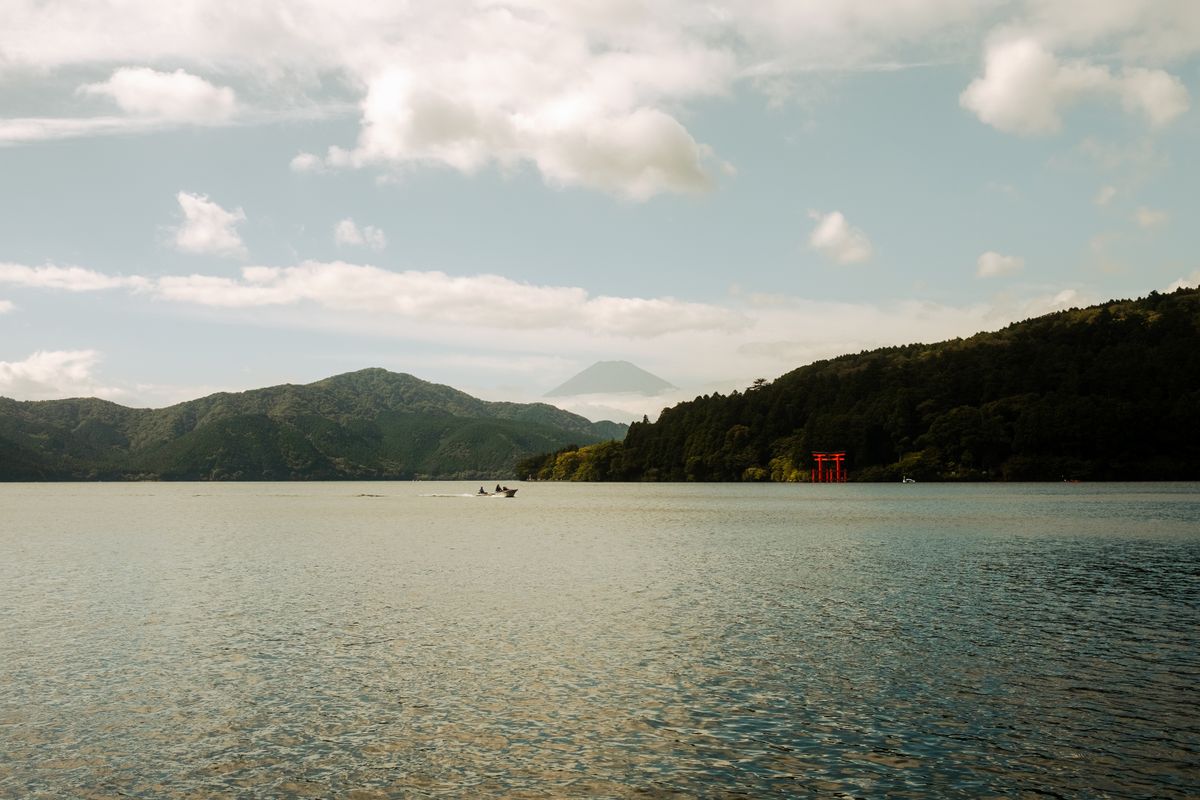
Hakone sits within the Fuji-Hakone-Izu National Park, Japan’s most visited national park, and it is easy to see why. The area formed around a massive volcanic caldera, and the legacy of that geology is everywhere: steaming vents at Owakudani, a deep blue crater lake, therapeutic mineral hot springs, and rocky ridgelines draped in forest. Add to that a string of exceptional museums, traditional inns called ryokan, and excellent local food, and Hakone becomes much more than a side trip — it becomes a highlight of any Japan itinerary.
Many visitors combine Hakone with a broader Mount Fuji trip, but Hakone stands completely on its own. Even if Fuji is hidden behind clouds — which happens more often than travelers expect — the mountain scenery, art experiences, and onsen are more than enough to fill a rewarding day. And if you do get a clear-sky Fuji view from the shores of Lake Ashi or the gondola above Owakudani, it is a moment you will never forget.
Whether you are spending a single day or deciding to stay overnight in a ryokan, this guide walks you through exactly how to make the most of your Hakone visit.
Book your Hakone ryokan or hotel on Agoda (Best prices guaranteed) →
How to Get to Hakone from Tokyo
Getting to Hakone from Tokyo is straightforward, and there are several options depending on your budget and pace.
Option 1: Romancecar from Shinjuku (Recommended)
The most comfortable and scenic way to reach Hakone is the Romancecar, a limited express train operated by the Odakyu Railway from Shinjuku Station. The journey takes about 85 minutes and deposits you at Hakone-Yumoto Station, the main gateway into the Hakone area. Seats are reserved and offer wide windows — perfect for watching the city give way to mountains.
- Cost: Around ¥2,470 ($16 USD) one way including the limited express surcharge
- Departure: Multiple departures daily from Shinjuku; book in advance on the Odakyu website or at Shinjuku Station
- Travel time: 85 minutes to Hakone-Yumoto
Option 2: Regular Odakyu Line (Budget-Friendly)
You can also take a regular Odakyu express train to Odawara (about 75–90 minutes), then transfer to the Hakone Tozan Railway to Hakone-Yumoto. This costs around ¥960–¥1,200 ($6–$8 USD) but requires a transfer and takes slightly longer.
Option 3: Shinkansen to Odawara
If you have a Japan Rail Pass, you can ride the Shinkansen Kodama from Tokyo Station to Odawara (about 35 minutes, free with JR Pass), then take a local bus or the Hakone Tozan Railway into Hakone. This is the fastest option but not necessarily the cheapest without a JR Pass.
Option 4: Highway Bus
Highway buses run from Shinjuku Expressway Bus Terminal directly to various points in Hakone, including the Hakone-en resort on Lake Ashi. Prices start around ¥1,700 ($11 USD) one way, and the journey takes 2–2.5 hours depending on traffic. Best for travelers on a tight budget who don’t mind a longer ride.
The Hakone Free Pass
For most visitors, the Hakone Free Pass (offered by Odakyu) is the best value. Priced at ¥7,100 for 2 days or ¥7,500 for 3 days from Shinjuku (¥6,000 / ¥6,400 if you start from Odawara), it covers a round trip on the Odakyu Line to Odawara (Romancecar seats cost extra), unlimited rides on the Hakone Tozan Railway, the ropeway, the pirate ship on Lake Ashi, local buses, and more. If you plan to visit multiple attractions, it pays for itself quickly.
Book an airport transfer with Welcome Pickups →
Top Things to Do in Hakone
1. Lake Ashi (Ashinoko)
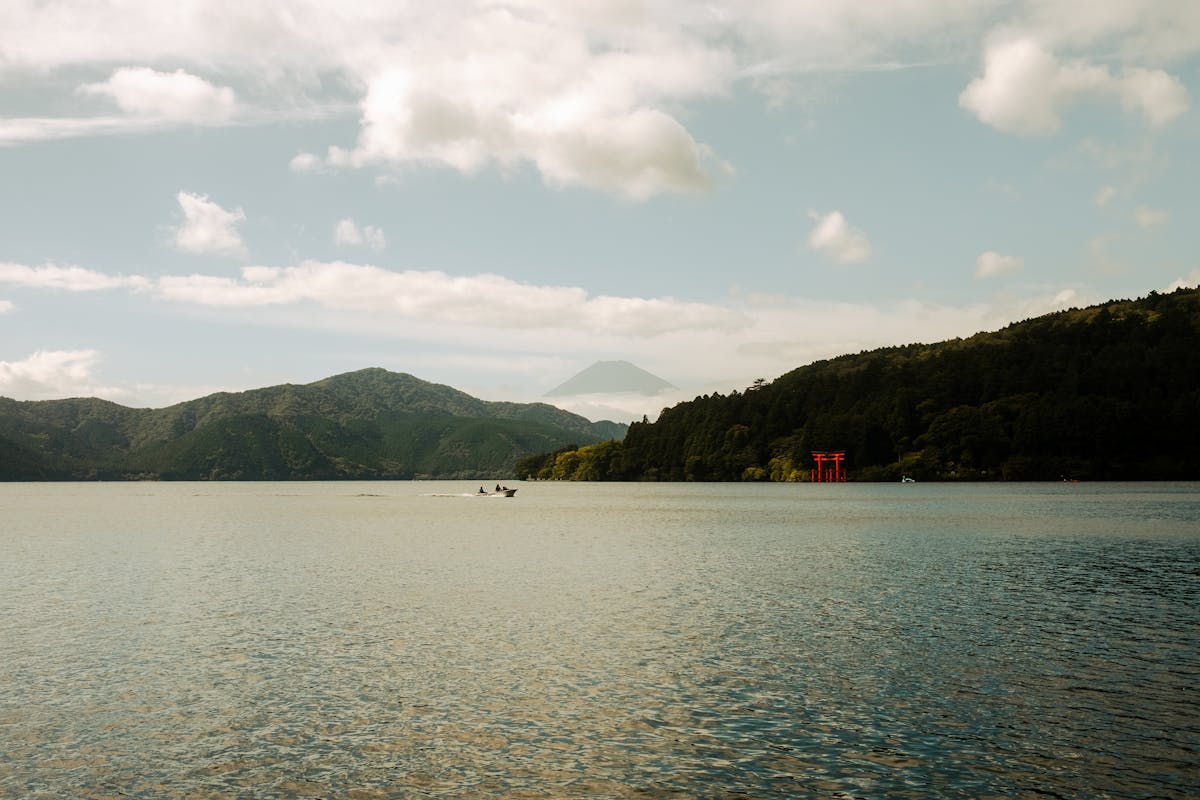
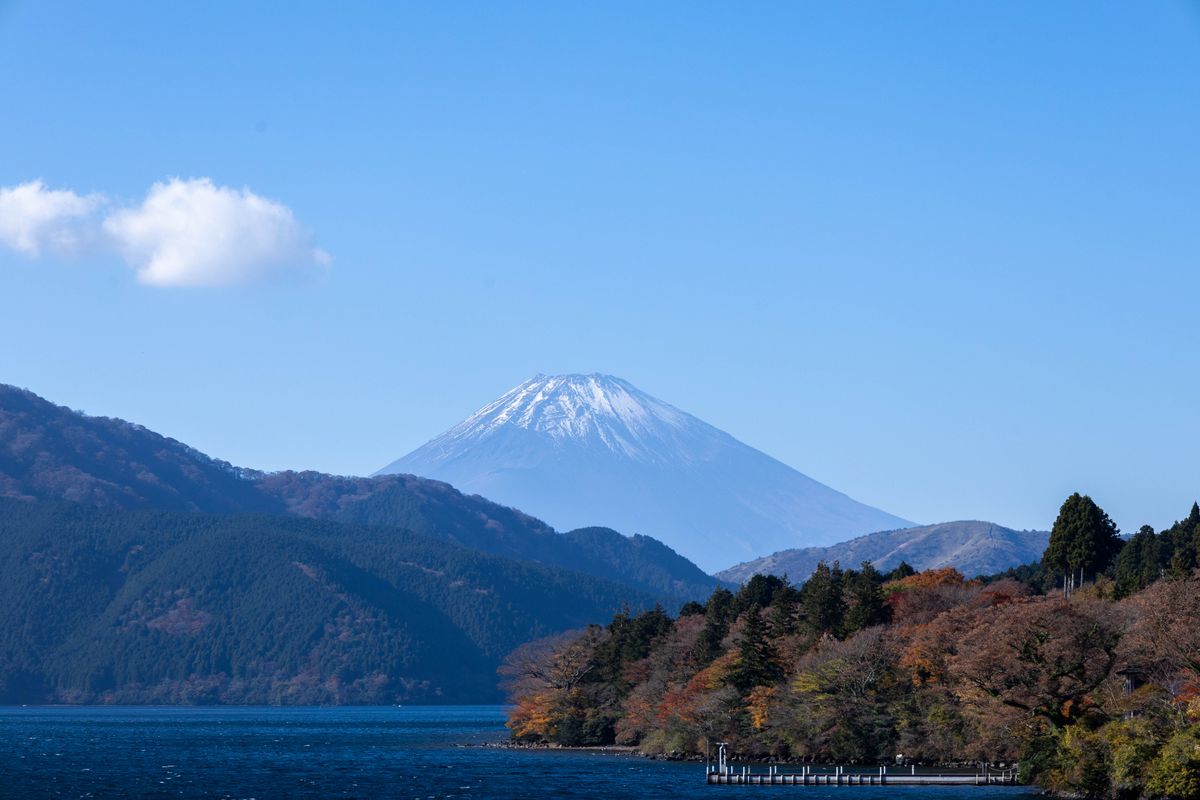
Lake Ashi is the centerpiece of Hakone and one of the most photographed spots in all of Japan. On clear days, Mount Fuji rises magnificently beyond the northwestern shore — a sight that makes every camera come out immediately. The lake sits inside the ancient caldera of the Hakone volcano and is ringed by forested hills that reflect in the calm water.
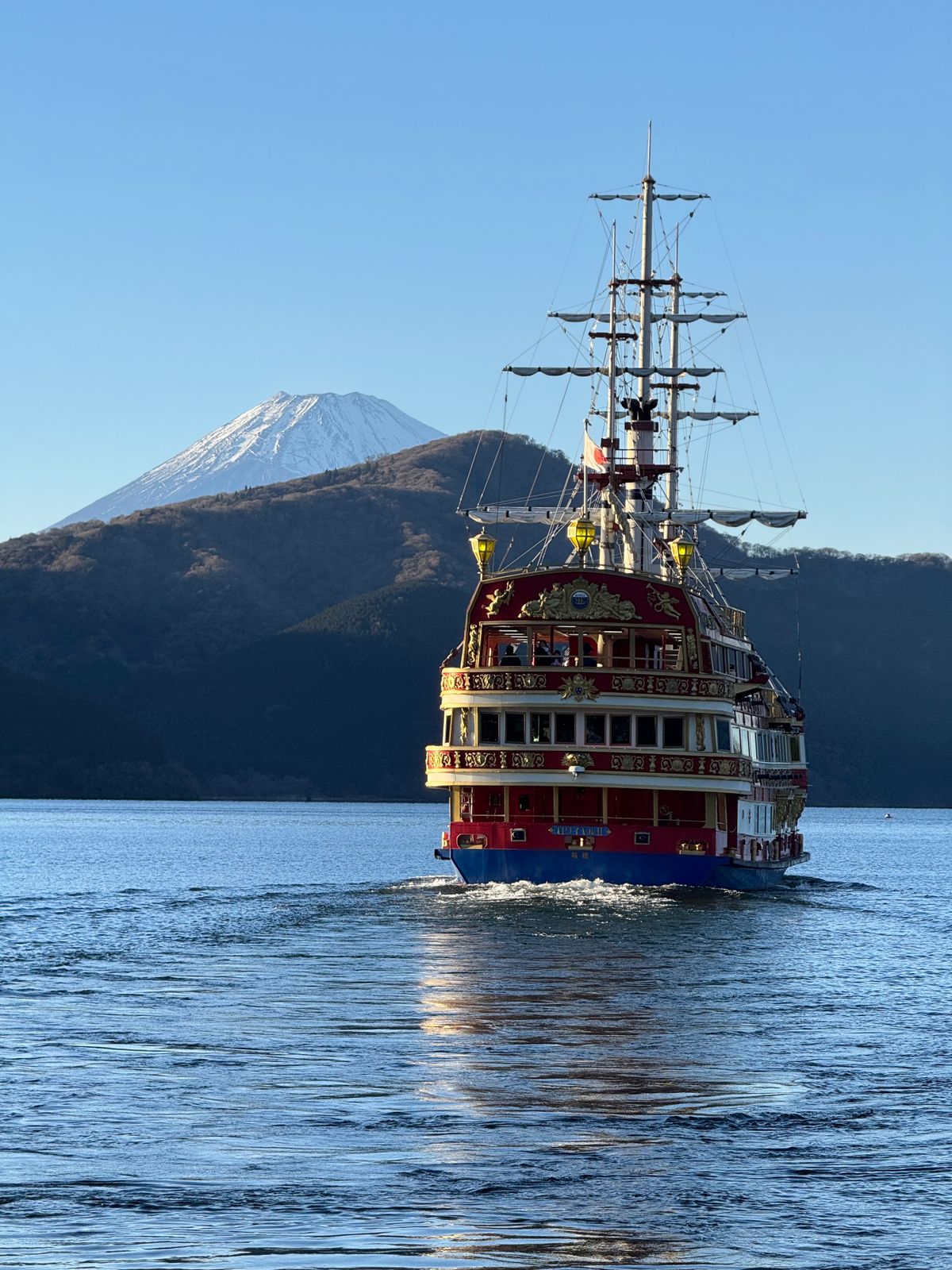
The most enjoyable way to experience the lake is aboard one of the sightseeing “pirate ships” — elaborate galleon-style ferries that cross between Hakone-en, Moto-Hakone, and Togendai. The crossing takes 30–40 minutes each way. Covered by the Hakone Free Pass.
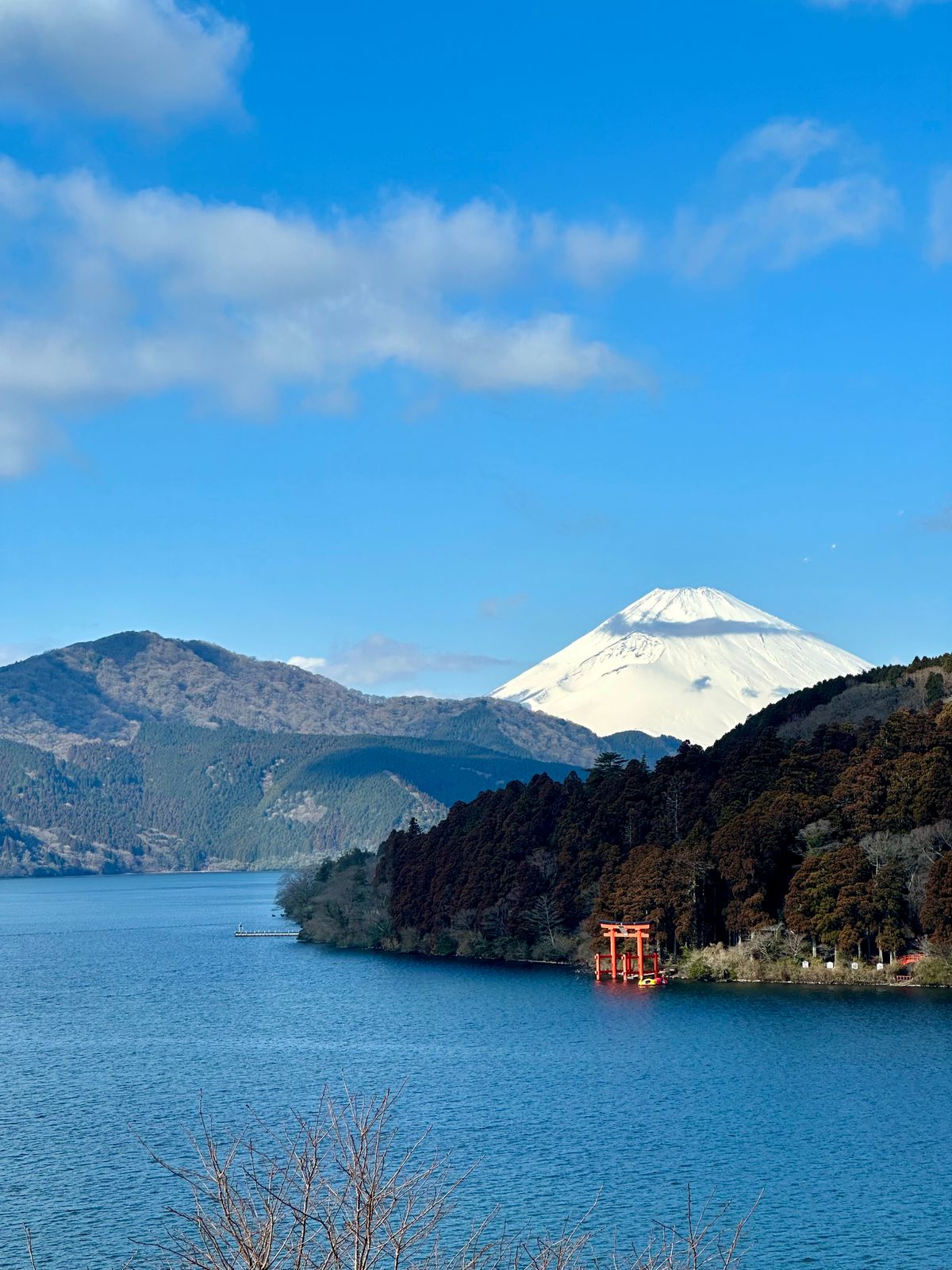
At Moto-Hakone, look for the iconic red torii gate of Hakone Shrine standing in the water — one of Japan’s most photographed torii images. The shrine itself dates to the 8th century and is reached by a cedar-lined avenue just steps from the lake shore.
2. Owakudani Volcanic Valley
Owakudani is Hakone’s most dramatic natural attraction. This active volcanic area sits on the slopes of Mt Kamiyama, the central volcanic cone inside the caldera, where sulfurous gases vent from vents in the rocky ground and the air smells sharply of rotten eggs. Wooden boardwalks wind through the landscape, and at the far end you can buy the area’s famous kuro tamago — eggs boiled black in the volcanic waters, said to add seven years to your life. They taste like regular hard-boiled eggs, but the experience is unique.
The most popular way to reach Owakudani is the Hakone Ropeway, a gondola that rises from Sounzan Station through the mountains, though local buses also serve the area. On clear days the ropeway offers stunning Mount Fuji views. Note that Owakudani occasionally closes during periods of increased volcanic activity — check conditions before visiting.
Owakudani admission: Free (most visitors arrive by ropeway, covered by Hakone Free Pass)
3. Hakone Open Air Museum
One of Japan’s finest outdoor sculpture parks, the Hakone Open Air Museum spreads across a beautifully landscaped hillside with works by Picasso, Rodin, Henry Moore, and dozens of Japanese and international contemporary artists. An indoor gallery houses Japan’s largest Picasso collection. The museum is genuinely world-class and often surprises visitors who stumble in expecting a modest regional attraction.
Admission: ¥1,600 ($10 USD) adults; discounted with Hakone Free Pass. Open daily 9am–5pm.
4. Hakone Shrine and the Cedar Avenue
Founded in 757 AD, Hakone Shrine sits at the edge of Lake Ashi at Moto-Hakone. The approach through a cedar-lined avenue of ancient trees creates an atmosphere of quiet reverence, and the red torii gate standing in the water is one of the most striking images in the Kanto region. The shrine is free to visit and accessible year-round.
5. Hakone Tozan Railway and Hakone-Yumoto Onsen
The Hakone Tozan Railway — Japan’s only mountain railway — switchbacks up steep slopes from Hakone-Yumoto to Gora, passing through hydrangea gardens that bloom spectacularly in June and July. Hakone-Yumoto itself is a pleasant hot-spring town with many public baths, souvenir shops, and restaurants — a good place to end your day before the return train to Tokyo.
6. Pola Museum of Art
For art lovers, the Pola Museum of Art is a world-class collection housed in a stunning modernist building surrounded by forest. The permanent collection spans Monet, Renoir, Cézanne, and Picasso alongside Japanese Western-style paintings. The building itself, designed by Nikken Sekkei, is a work of art. Admission ¥1,800 ($12 USD). Note: slightly off the main Hakone Loop route — best reached by bus from Gora or Sengokuhara.
The Classic Hakone Loop Route
Most visitors follow the famous “Hakone Loop” — a circular route that lets you see the highlights efficiently using multiple forms of transport. Here is the recommended sequence for a day trip:
- Hakone-Yumoto — Arrive by Romancecar from Shinjuku
- Hakone Tozan Railway — Ride the mountain railway up to Gora (35 min)
- Hakone Open Air Museum — Get off at Chokoku-no-Mori Station (between Yumoto and Gora) — 1.5–2 hrs
- Gora → Sounzan — Continue by train to Gora, then take the cable car to Sounzan (10 min)
- Owakudani — Ride the ropeway to Owakudani — 1 hr (eat kuro tamago!)
- Togendai — Continue by ropeway down to Lake Ashi — 30 min
- Lake Ashi Pirate Ship — Cruise to Moto-Hakone or Hakone-en — 35 min
- Hakone Shrine — Walk to the lakeside shrine — 30 min
- Bus back to Hakone-Yumoto — 40–50 min
- Romancecar back to Shinjuku — 85 min
This loop is achievable in a full day if you leave Shinjuku by 7:30–8:00am. Budget about 9–10 hours on the ground.
Where to Eat in Hakone
Local Specialties to Try
- Kuro tamago — The black volcanic eggs at Owakudani (¥500/$3 for 5 eggs)
- Yumoto Udon — Thick wheat noodles in hot broth, a Hakone-Yumoto specialty
- Soba — Many restaurants near Hakone Shrine serve excellent buckwheat soba
- Kaiseki lunch — Traditional multi-course Japanese cuisine available at higher-end ryokan and restaurants
Recommended Spots
- Amazake Chaya — A 350-year-old teahouse on the Old Tokaido Highway near Amazake Pass, serving amazake (sweet rice drink) and mochi. Atmospheric and unique.
- Gora Brewery & Grill — Craft beer and Western-Japanese fusion dishes near Gora Station. Great for a lunch break.
- Restaurants at Hakone-Yumoto — Multiple options near the station for udon, soba, and set lunches priced ¥800–¥1,500 ($5–$10 USD).
Staying Overnight: Hakone Ryokan Guide
While Hakone is perfectly doable as a day trip, staying overnight in a ryokan elevates the experience dramatically. You get to enjoy the onsen after the day-trip crowds have left, savor a multi-course kaiseki dinner prepared by the inn’s chef, and wake up to mountain views. Most Hakone ryokan include dinner and breakfast in their rates (known as ippaku nishoku — one night, two meals).
Ryokan Budget Ranges
- Budget ryokan: ¥8,000–¥15,000 ($52–$98 USD) per person per night with meals — basic tatami rooms, shared hot spring baths
- Mid-range ryokan: ¥15,000–¥30,000 ($98–$195 USD) per person — private baths available, more elaborate kaiseki meals
- Luxury ryokan: ¥30,000–¥80,000+ ($195–$520+ USD) per person — private open-air baths, premium seasonal kaiseki, impeccable service
Popular ryokan areas include Hakone-Yumoto (most accessible), Miyanoshita, Kowakidani, and Sengokuhara. Book well in advance, especially for weekends and holidays.
Find luxury ryokan and hotels in Hakone on Agoda →
Hakone Onsen Guide
Hakone is one of Japan’s most celebrated onsen (hot spring) destinations, with dozens of facilities across the region. The mineral-rich waters here are said to be beneficial for skin conditions, muscle aches, and general wellbeing. Even if you’re not staying at a ryokan, you can enjoy the onsen experience at public facilities called sento or day-use onsen.
Public Onsen in Hakone
- Tenzan Tohji-kyo — A highly regarded day-use onsen with multiple indoor and outdoor pools. Located in Hakone-Yumoto. ¥1,300 ($8 USD). Open 9am–10pm.
- Kappa Tengoku — Budget day-use onsen in Yumoto. Basic facilities, outdoor bath, great value. ¥900 ($6 USD).
- Yunessun — A large water park-style complex in Kowakidani with themed pools (wine bath, sake bath, green tea bath) and a separate traditional onsen section. Fun and family-friendly. ¥2,500–¥4,000 ($16–$26 USD).
Onsen Etiquette Reminders
- Wash your entire body thoroughly at the shower stations before entering any bath
- Tattoos are not allowed at most traditional onsen — check before visiting
- No swimwear in traditional baths; you bathe without clothing
- Tie back long hair so it doesn’t touch the water
- No photographs inside the bathing areas
Practical Tips for Your Hakone Day Trip
- Best months to visit: May–June (fresh greenery and hydrangeas), October–November (autumn foliage), January–February (clearest Fuji views and snow)
- Worst time: July–August (hot, humid, crowds), rainy season in June can obscure Fuji
- Start early: Leave Shinjuku no later than 8:00am to complete the full loop comfortably
- Check Fuji weather: Use Japan Meteorological Agency to check visibility forecasts — clear mornings are best for Fuji views
- Buy the Hakone Free Pass: It pays for itself very quickly and removes the hassle of buying individual tickets
- Bring cash: Many small onsen and restaurants are still cash-only; ATMs available at Hakone-Yumoto Station
- Dress in layers: Mountain weather can be cool even in summer; Owakudani can be windy
- Check Owakudani status: Volcanic activity occasionally closes the area — check before heading up
- Stay connected: Get a Japan eSIM before you arrive so you can use Google Maps to navigate the complex Loop route
Get your Japan eSIM (Stay connected from day 1) →
Hakone vs. Nikko: Which Day Trip from Tokyo Is Better?
Both Hakone and Nikko are popular day trips from Tokyo, but they offer very different experiences. Nikko is famous for its ornate Toshogu Shrine complex and autumn foliage, while Hakone is all about natural scenery, hot springs, and Mount Fuji views. If you can only choose one, Hakone wins for first-time visitors because of its variety — you get mountains, a lake, volcanoes, art, and onsen all in one day. Nikko is the better choice for travelers interested in Japanese history and ornate temple architecture.
Day Trip vs. Overnight: How to Decide
A day trip to Hakone is satisfying and entirely feasible. But if your schedule allows, one night at a ryokan transforms the trip from good to unforgettable. Here is how to decide:
- Choose day trip if: You are short on time, on a tight budget, or have already stayed at a ryokan elsewhere in Japan
- Choose overnight if: This is your first ryokan experience, you want to see Fuji at sunrise, or you want to fully relax in the onsen without rushing back to Tokyo
Frequently Asked Questions About Hakone Day Trips
How far is Hakone from Tokyo?
Hakone is approximately 80 km (50 miles) southwest of central Tokyo. By Romancecar express train from Shinjuku, the journey to Hakone-Yumoto takes about 85 minutes. By Shinkansen to Odawara, it takes about 35 minutes, with an additional transfer to reach central Hakone.
Is the Hakone Free Pass worth it?
Yes, for most visitors the Hakone Free Pass is excellent value. If you plan to ride the Romancecar, Hakone Tozan Railway, ropeway, and Lake Ashi pirate ship in a single day, the pass pays for itself. The 2-day pass from Shinjuku costs ¥7,100 and covers almost all transportation in the Hakone area.
Can I see Mount Fuji from Hakone?
Yes, but it depends on the weather and season. The clearest Fuji views from Hakone are typically in winter (December–February) when the air is driest and clouds least likely. Summer and rainy season (June–July) often obscure the mountain. Check the forecast before your trip. Lake Ashi and the Hakone Ropeway offer the most famous vantage points.
Do I need to book Hakone attractions in advance?
The Romancecar should be booked in advance, especially for weekends and holidays. The Open Air Museum, Pola Museum, and day-use onsen generally do not require advance booking, though the museum can be busy on weekends. Ryokan should always be booked well in advance.
Is Hakone accessible for people with mobility issues?
Hakone is moderately accessible. The pirate ships on Lake Ashi and most of the Hakone Tozan Railway are accessible, but the ropeway, Owakudani walking paths, and some ryokan with steep stairways may present challenges. The Hakone Open Air Museum is wheelchair accessible throughout. Contact specific facilities to confirm before visiting.
What is the best area to stay in Hakone?
Hakone-Yumoto is most convenient for day-trippers and those arriving late by train. Miyanoshita and Kowakidani are mid-mountain with easy access to the Loop route. Sengokuhara is quieter and surrounded by pampas grass fields — beautiful in autumn. Gora is well-positioned near the cable car and ropeway connections.
Can I visit Hakone without the Free Pass?
Yes, but you will pay individually for each transport leg. The Romancecar alone costs ¥2,470 ($16 USD) one way, and adding the railway, ropeway, and pirate ship will cost considerably more than the Free Pass. Unless you plan to skip most of the Loop, the Free Pass saves money.
Related guides
- Enoshima Guide: Island Shrines, Sea Caves and Shonan Beach — The Best Day Trip from Tokyo (Complete 2026 Guide)
- Yokohama Travel Guide: Japan’s Most Cosmopolitan Port City
- Kamakura Day Trip from Tokyo: Great Buddha, Temples, and Hiking Trails Guide
Going to Japan? Speak Japanese with confidence.
Hirameki Japanese — camera translate for menus and signs, a two-way conversation mode, and furigana + romaji on every phrase. Free to download with kana charts, conversation mode and starter words; a one-time purchase unlocks everything.

Plan your Japan trip
Two things every first-timer should book
Some links are affiliate links. If you book through them we may earn a small commission at no extra cost to you.