In this guide
- Why Matsuyama, and what to expect
- The trap every first-timer falls into: two “Matsuyama Stations”
- Getting to Matsuyama
- Getting around: trams, IC cards, day tickets and passes
- Matsuyama Castle, step by step
- Dogo Onsen in brief
- City sights beyond the castle
- Shiki, Soseki and the haiku city
- What to eat in Matsuyama
- Two local words you will hear
- Day trips from Matsuyama
- Seasons and festivals
- Where to stay: city center or Dogo
- Money, taxes and connectivity
- Sample itineraries: two days and three days
- Practical checklist
- Frequently asked questions
- Plan the rest of your trip
Why Matsuyama, and what to expect
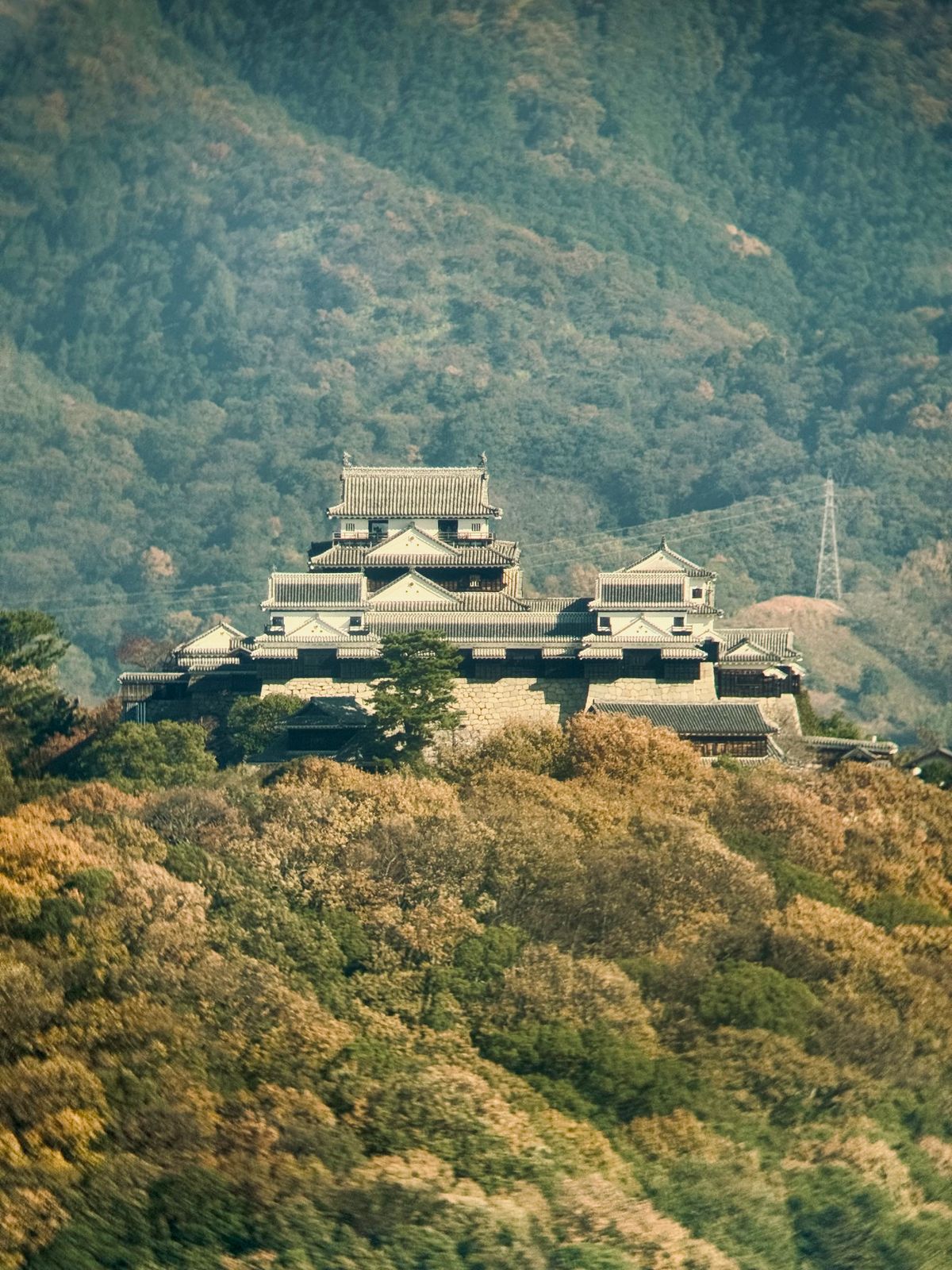
I grew up in Ozu, a castle town in southern Ehime about 40 minutes from Matsuyama, and I still come back whenever I visit family — usually by plane or by ferry, sometimes by car (as a student it was mostly the bus). Matsuyama is the prefectural capital, so let me be straight with you about what it is and what it is not.
Matsuyama is a working prefectural capital of about 495,000 people. It is not a preserved old town, and it has nothing like the temple districts of Kyoto. What it does have is unusually easy to enjoy in two or three days:
- A real castle. Matsuyama Castle is one of only 12 castles in Japan whose keep is original rather than a concrete reconstruction. It sits on a hill in the center of the city, and you ride a ropeway or an open chairlift up to it.
- Dogo Onsen. The wooden Dogo Onsen Honkan bathhouse, which reopened fully in July 2024 after a long renovation, is 20 to 25 minutes from downtown by tram. Two more public bathhouses stand nearby.
- A city built around trams. Flat fare, no transfers to work out, and the three places you care about (JR station, downtown, Dogo) are all on the network.
- Literature you can actually visit. Matsuyama is the hometown of the haiku poet Masaoka Shiki, and the setting of Natsume Soseki’s novel Botchan. There are haiku post boxes on street corners, and a house where the two writers lived together in 1895 was rebuilt and opened in July 2026.
- Food that is specific to here. Sea bream rice (taimeshi), a sweet nabeyaki udon served in an aluminum pot, fried fish cakes called jakoten, a sponge roll called taruto, and mikan juice that comes out of a tap.
- Good day trips. Uchiko and Ozu to the south, Shimonada Station on the water, Tobe pottery, the island of Gogoshima, and the Shimanami Kaido cycling route from Imabari.
Now the honest part. Most sights close between 17:00 and 18:30, so evenings here are about a bath and dinner, not sightseeing. The area around the JR station is a construction site: a new elevated station opened on September 29, 2024, but the station plazas and a tram extension are planned for fiscal 2026 to 2028, so expect fences and detours. And while Matsuyama had about 744,500 foreign visitors in 2025, most came from Korea (about 418,800) and Taiwan (about 165,100); visitors from Europe, the US and Australia together were about 69,700. In practice that means two things: you will rarely be in a crowd of other Western tourists, and you should expect less English than in Tokyo or Kyoto.
How long to stay: two nights is the minimum that lets you do the castle and downtown on one day and Dogo properly on another. Three nights adds a day trip. Matsuyama also works as a stop between Hiroshima and the rest of Shikoku, because the Hiroshima boat and the Okayama express both come here.
The trap every first-timer falls into: two “Matsuyama Stations”
Matsuyama has two stations with almost the same name, run by two different companies, and they are not in the same place.
- Matsuyama Station (JR, often written “JR Matsuyama Station”): where the Shiokaze express from Okayama and the trains from Imabari, Uchiko and Ozu arrive. New, elevated, two platforms and four tracks, with a shopping arcade under the tracks called Dandan-dori.
- Matsuyama-shi Station (Iyotetsu, the local private railway; “shi” means “city”): the hub for Iyotetsu’s suburban trains and the terminus of tram line 3 to Dogo. Downtown, the shopping arcades, the department store and the castle ropeway are all nearer to this station than to the JR one.
The history explains the confusion. Iyotetsu opened in 1888 as the first railway on Shikoku, and its station was simply called “Matsuyama Station”. When the national railway arrived later, the Iyotetsu station was renamed “Matsuyama-shi” and the newcomer took the old name. Locals have lived with it for a century, and to anyone from Ehime the two are simply different places; visitors get caught out every day.
| You want to… | Use this station | How it connects |
|---|---|---|
| Arrive or leave by JR (Okayama, Imabari, Uchiko, Ozu, Shimonada) | JR Matsuyama Station | Tram line 5 to Dogo Onsen (about 25 min); loop line 1 toward downtown; airport bus stop outside |
| Take an Iyotetsu suburban train (Takahama line for Baishinji and the Gogoshima ferry; Yokogawara and Gunchu lines) | Matsuyama-shi Station | Tram line 3 to Dogo Onsen (about 20 min); airport bus stop outside |
| Go straight to the castle or the arcades | Okaido tram stop (airport bus also stops here) | Walk up Ropeway-gai to the ropeway station |
| Go straight to the baths | Dogo Onsen Station (tram lines 3 and 5; airport bus) | 3 to 5 minutes’ walk to the Honkan |
Two practical consequences. First, when a hotel says it is “near Matsuyama Station”, check which one. Second, when you ask for a taxi or type a destination into a map app, use the full name: “JR Matsuyama Station” or “Matsuyama-shi Station”.
Getting to Matsuyama
Four routes matter for a foreign visitor: fly in, take the train from Okayama, take the boat from Hiroshima, or come across the Shimanami Kaido from Onomichi via Imabari. Here is each one with 2026 prices.
By air: Matsuyama Airport and the limousine bus
Matsuyama Airport has domestic flights from Tokyo Haneda, Tokyo Narita (Jetstar, three a day), Osaka Itami, Nagoya Chubu (IBEX, three a day), Fukuoka, Kagoshima and Okinawa (ANA, one a day). International routes are Seoul (Jeju Air, daily), Busan (Air Busan, daily) and Taipei Taoyuan (EVA Air, Wednesday, Thursday and Sunday). Shanghai flights are suspended. Frequencies change with the season, so check the schedule for your dates rather than relying on these counts.
From the airport, the Iyotetsu airport limousine bus is the way into town. There are about 25 runs a day, and the timetable is adjusted every month to match the flights, so look it up for your travel month. You pay when you get off, not when you board.
| Airport limousine to… | Time | Adult fare (cash) | Adult fare (IC card or app) |
|---|---|---|---|
| JR Matsuyama Station | about 15 min | ¥1,000 | ¥980 |
| Matsuyama-shi Station | about 24 min | ¥1,000 | ¥980 |
| Okaido (downtown, for the castle and arcades) | about 29 min | ¥1,200 | ¥1,180 |
| Dogo Onsen Station | about 40 min | ¥1,200 | ¥1,180 |
Children pay half. If your hotel is downtown, stay on past the two stations and get off at Okaido; it saves you a tram ride with luggage. If you are staying in Dogo, the bus takes you to the door of the tram terminus, three to five minutes’ walk from the Honkan. The airport limousine is also included in the digital “Tram + Limousine Bus” one-day ticket described in the next section, which can make sense on your arrival or departure day.
Before you leave the airport, there is one thing to do: the Orange BAR on the first floor pours mikan juice from a tap, for a few hundred yen a cup, from 8:00 to 19:15. More on that in the food section.
By train from Okayama: the Shiokaze
If you are coming from Tokyo, Kyoto or Osaka, the standard route is the shinkansen to Okayama and then JR Shikoku’s Limited Express Shiokaze to Matsuyama. The Shiokaze takes about 2 hr 38 min to 2 hr 48 min. The fare is ¥4,400 for the basic ticket plus ¥2,420 for a non-reserved limited express seat, so ¥6,820 in total; a reserved seat makes it ¥7,350. Those express surcharges move up or down by ¥200 to ¥400 depending on the season.
Two things to know for 2027 planning. First, JR announced on March 19, 2026 that the Shiokaze will become all-reserved from spring 2027, so the “just hop on the non-reserved car” option disappears; book a seat. Second, the Japan Rail Pass (7-day ordinary ¥50,000 bought online, ¥53,000 through agencies) covers JR Shikoku trains including the Shiokaze, but it does not cover anything run by Iyotetsu: not the trams, not the suburban trains, not the airport bus. Our Japan Rail Pass guide works through whether the pass pays off for your route, and the Okayama guide covers the city you will be changing in.
By sea from Hiroshima: Linear Jet or cruise ferry
From Hiroshima Port (Ujina), two kinds of boat cross to Matsuyama Kanko Port (Matsuyama Kanko-ko). This is the route to use if you are combining Miyajima and Hiroshima with Shikoku, and it is a genuinely pleasant way to arrive.
| Boat | Time | Fare (adult / child) | Notes |
|---|---|---|---|
| Linear Jet (high-speed boat) | fastest 70 min | ¥9,000 / ¥4,500 | Price from September 1, 2026. A new vessel, AIVINT, entered service on May 24, 2026. Special timetables apply October 31 to November 13 and November 30 to December 5, 2026. |
| Cruise ferry | about 2 hr 40 min | ¥6,000 / ¥3,000 | Some weekday sailings are cancelled from December 1 to 25, 2026 because of fuel costs; check the timetable. |
Older guides call the fast boat the “Super Jet”; the current service is the Linear Jet. From Matsuyama Kanko Port, an Iyotetsu limousine bus runs into the city. We could not confirm its 2026 fare, so check at the port; it is covered by the Tram + Limousine Bus one-day ticket. For the Hiroshima side of the trip, see our Hiroshima and Miyajima guide and the first-timer’s guide to Miyajima.
From Imabari and the Shimanami Kaido
Cyclists coming across the Shimanami Kaido from Onomichi finish in Imabari, and from there Matsuyama is an easy hop. The Shiokaze and Ishizuchi limited expresses take 35 to 41 minutes (¥1,840 non-reserved, ¥2,370 reserved); a local train takes about 1 hr 20 min for ¥1,080. If you are doing it the other way round, as a day trip from Matsuyama, see the day-trips section below and our full Shimanami Kaido cycling guide.
Which route should you take?
| Coming from | Best option | Door-to-door reality |
|---|---|---|
| Tokyo | Fly to Matsuyama Airport (Haneda or Narita) | Flight plus a 15 to 40 minute bus. The rail alternative is shinkansen to Okayama plus 2 hr 40 min on the Shiokaze; only worth it if you hold a Japan Rail Pass and like trains. |
| Osaka or Kyoto | Shinkansen to Okayama, then Shiokaze; or fly from Itami | The train lets you break the journey in Okayama. Book Shiokaze seats from spring 2027. |
| Hiroshima or Miyajima | Linear Jet from Hiroshima Port (70 min, ¥9,000) or the ferry (2 hr 40 min, ¥6,000) | Faster and more scenic than going round by rail. Boats are not covered by the Japan Rail Pass. |
| Onomichi (Shimanami Kaido) | Cycle to Imabari, then JR express 35 to 41 min | Bicycle tolls on the Shimanami bridges are free until March 31, 2028. |
| Seoul, Busan, Taipei | Direct flight to Matsuyama Airport | Daily from Seoul and Busan; three days a week from Taipei. |
Getting around: trams, IC cards, day tickets and passes
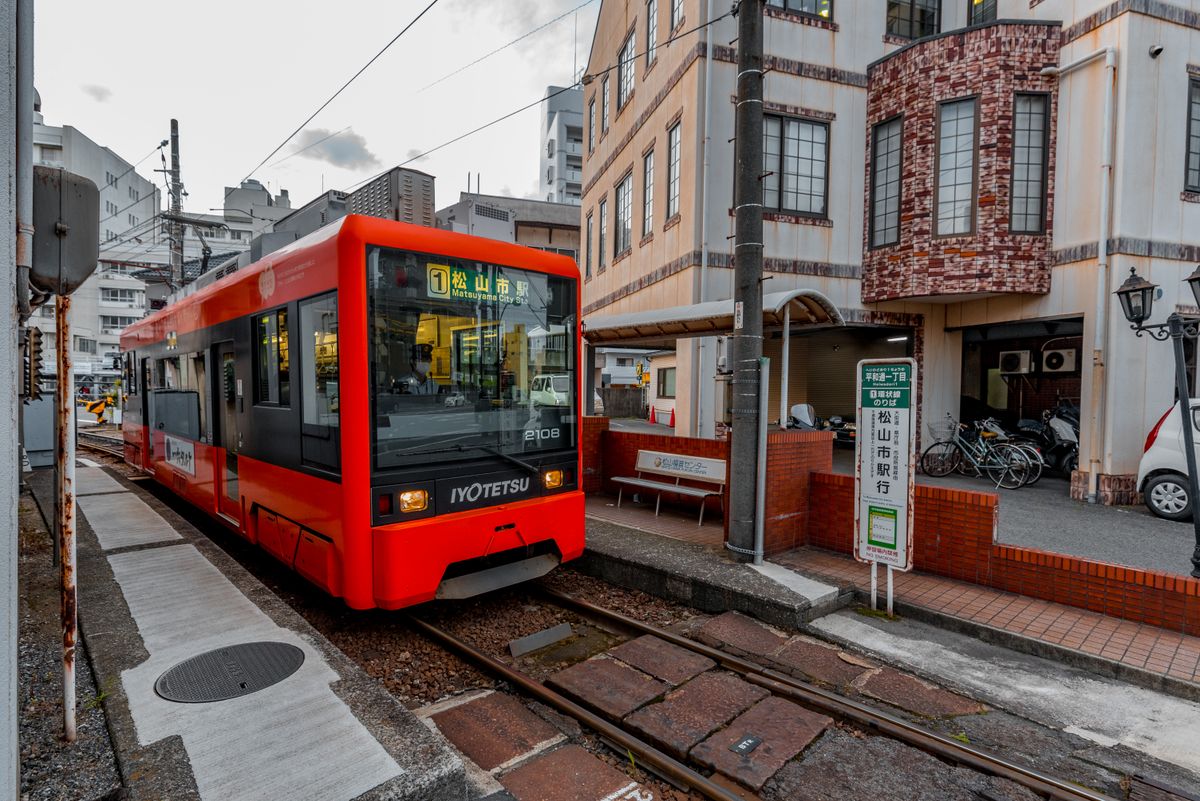
Almost everything in this guide is on the Iyotetsu tram network, and the trams are easy once you know three rules: flat fare, pay when you get off, no change for big notes. The fares below are the ones in force since April 1, 2026, which is when they last went up; most older English guides still quote the old ones.
The tram routes
- Lines 1 and 2: the loop around the castle hill. Line 1 runs via JR Matsuyama Station, line 2 via Okaido.
- Line 3: Matsuyama-shi Station to Dogo Onsen (about 20 minutes).
- Line 5: JR Matsuyama Station to Dogo Onsen (about 25 minutes).
- Line 6: the Honmachi line, weekdays only, seven round trips a day. You are unlikely to need it.
For a visitor, lines 3 and 5 do most of the work: they connect the two stations with downtown and Dogo. The number is shown on the front of the tram.
How to ride and pay
- Board. Trams and the airport bus both use pay-on-exit, so you do not need a ticket to get on.
- When you get off, pay at the front. The fare is flat regardless of distance: ¥250 cash, or ¥230 with an IC card or the app for adults; children ¥130 cash or ¥120 IC.
- If you pay cash, have the exact amount. The driver does not give change. There is a coin changer on board, but it does not accept ¥5,000 or ¥10,000 notes, so break those before you ride.
- If you have an IC card, tap it. Every national transport IC card works (ICOCA, Suica, PASMO and the others, including the phone versions) on all Iyotetsu trains and buses, except highway buses. You cannot top up on board, so load the card at a station or convenience store first. Iyotetsu’s own “i-Card” is gone, so ignore any guide that tells you to buy one.
Whether you can tap a foreign contactless credit card directly on the fare reader was not something we could confirm for 2026, so do not count on it; an IC card or coins are the safe options. The IC discount of ¥20 per ride is small, but over a dozen tram rides it adds up to a free ride, and it saves you from the no-change problem.
Day tickets: app only, and when they pay off
There is no paper day pass and no tram-only day pass. Iyotetsu sells two digital one-day tickets, each covering the trams plus something else. They are the same price as before the April 2026 fare rise.
| Ticket | Covers | Adult / child | Where to buy |
|---|---|---|---|
| Tram + Suburban Train 1Day | All city trams plus the Takahama, Yokogawara and Gunchu suburban lines | ¥2,000 / ¥1,000 | Jorudan app |
| Tram + Limousine Bus 1Day | All city trams plus the airport limousine and the Matsuyama Kanko Port limousine | ¥2,300 / ¥1,150 | Mican app or Jorudan app |
Neither includes the Botchan Ressha. The Mican app requires a Japanese phone number, so as a visitor use Jorudan. Now the arithmetic: at ¥230 a ride with an IC card, the ¥2,000 ticket only beats paying as you go once you ride nine times in a day, or when you add a suburban train trip such as Baishinji or Takahama for the Gogoshima ferry. The ¥2,300 ticket is worth it on an arrival or departure day if you take the airport bus to Dogo (¥1,180) and then make five or more tram rides, which is possible but not typical. Most visitors do better with an IC card and no pass at all.
Rail passes: what changed in 2026
If you have read about the ALL SHIKOKU Rail Pass covering Matsuyama’s trams, that is out of date. Since March 7, 2026 the pass no longer covers Iyotetsu at all, trams included. From October 1, 2026 it is sold only as a 3-day pass for ¥12,000 or a 7-day pass for ¥20,000 (children half); the 4- and 5-day versions were discontinued and the Shodoshima ferry and bus were removed from it. If you buy it through Klook or Trip.com you get a QR code that works at the ticket gates. For a Matsuyama-only stay it does not pay: a round trip to Imabari (¥3,680 non-reserved) plus a round trip to Ozu (¥3,680) is still well under ¥12,000. It starts to make sense when you are moving on by JR to Kagawa, Kochi or Tokushima within three days. You can check current ALL SHIKOKU Rail Pass prices and buy it on Klook, and read our Kagawa, Kochi and Iya Valley guides for where it takes you.
The nationwide Japan Rail Pass, as noted above, covers the Shiokaze and other JR Shikoku trains but nothing run by Iyotetsu.
The Botchan Ressha
The Botchan Ressha is a replica of the small steam train that once ran in Matsuyama, named after the novel. It runs on the tram tracks on weekends and public holidays only (not December 30 to January 3) and costs ¥1,300 for adults, ¥650 for children per ride, paid on board; IC cards are accepted, but the day tickets are not valid on it. There are no reservations. For departures from Dogo Onsen, numbered boarding tickets are handed out from 8:30 on the day at the Dogo ticket counter, so if you want a specific departure, go early. When we checked in October 2026, the Dogo departures were 9:19, 13:19 and 14:59 to Matsuyama-shi Station and 10:48 to JR Matsuyama Station via Komachi; confirm on the day. It is a ride for the fun of it rather than a way to get anywhere, and a real original locomotive is on display in a park near Baishinji Station if you would rather just look at one.
Suburban trains and buses
Iyotetsu’s three suburban lines (Takahama, Yokogawara, Gunchu) leave from Matsuyama-shi Station. The base fare is ¥250 for up to 3 km, and IC cards work. The timetable changed on October 16, 2026, so printed timetables older than that are wrong. City buses start at ¥270 (since April 1, 2026). The airport limousine fares did not change in 2026.
Matsuyama Castle, step by step
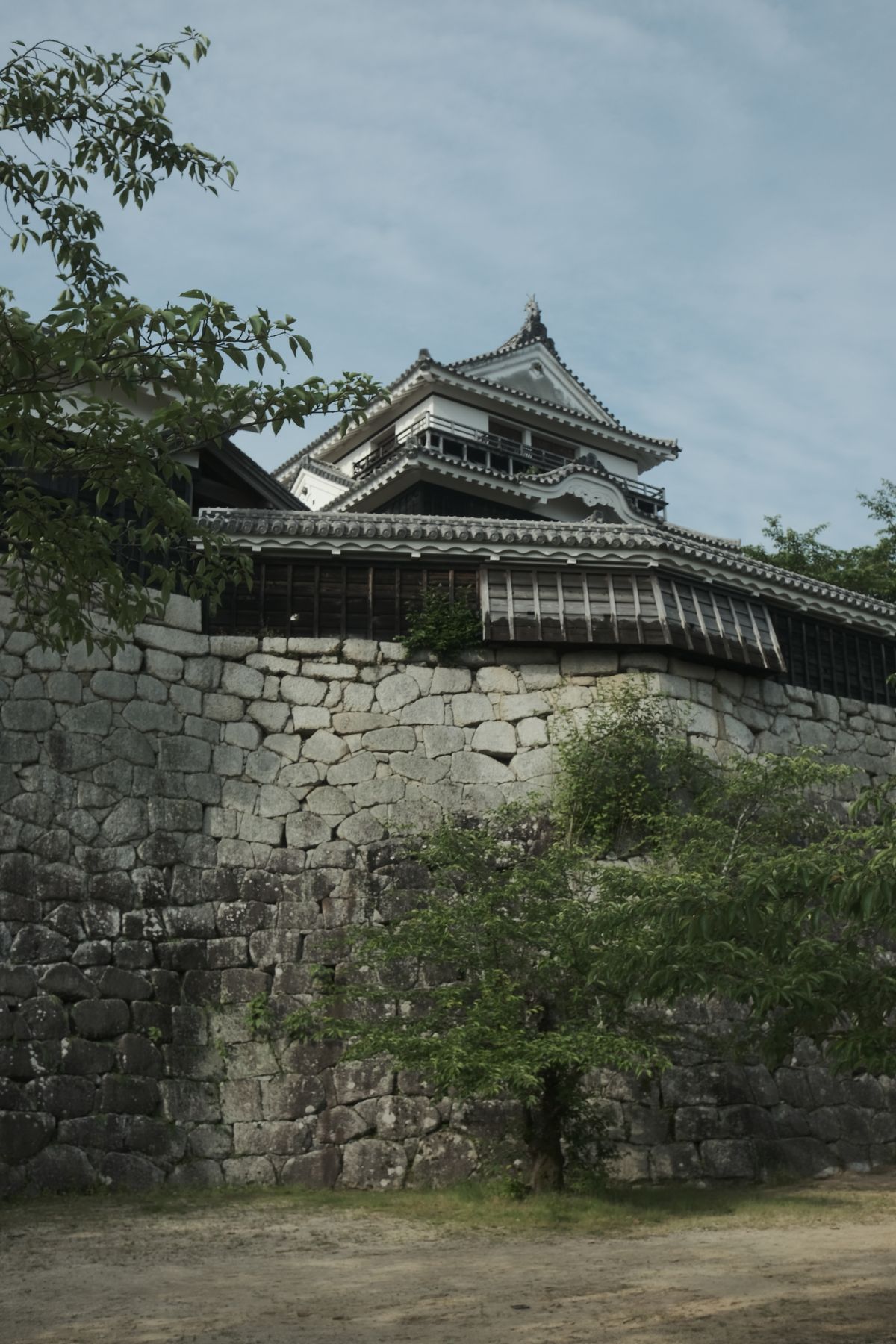
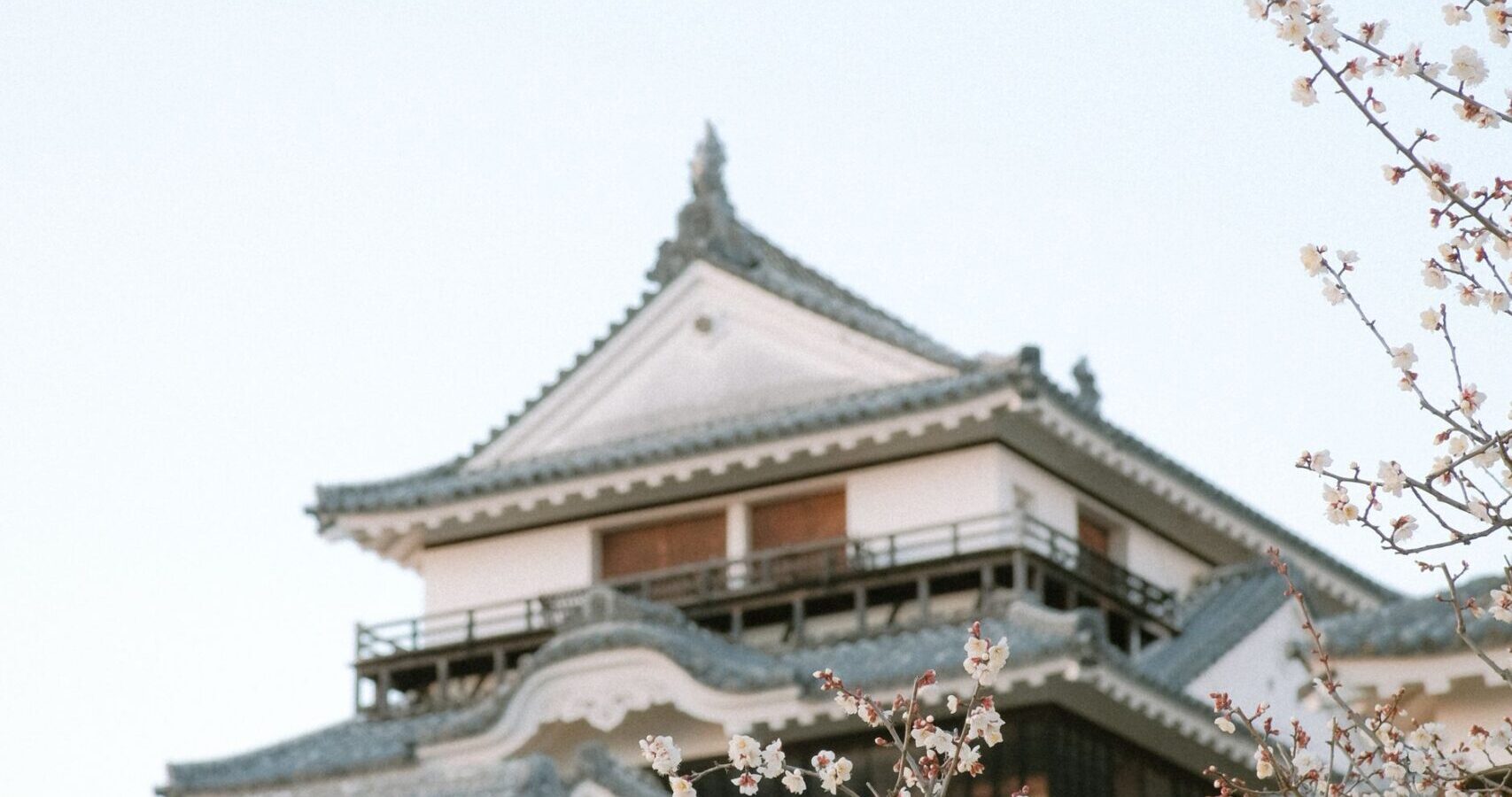
Construction of Matsuyama Castle began in 1602 under Kato Yoshiaki. The keep you see today is not the first one: that burned down after a lightning strike in 1784, and the present keep was completed in 1854. It is one of the 12 original keeps left in Japan, which is the reason to go inside rather than just look at it from below. The castle stands on Shiroyama, the hill in the middle of the city, and the official site is matsuyamajo.jp.
Step 1: Get to the foot of the ropeway
Take a tram to the Okaido stop (the airport bus also stops at Okaido), then walk up Ropeway-gai, a shopping street with a deliberately unified streetscape, to the Shinonomeguchi station of the ropeway. The station building was rebuilt in 2006 and has the Matsuyama Convention & Visitors Bureau’s tourist desk on the second floor, which is the place to ask questions before you go up.
Step 2: Buy the right ticket
There are two separate charges: the ride up and down the hill, and admission to the keep.
| Ticket | Adult | Child (elementary school) |
|---|---|---|
| Ropeway or chairlift, round trip (one ticket is valid for either) | ¥520 | ¥260 |
| Ropeway or chairlift, one way | ¥270 | ¥140 |
| Keep admission | ¥520 | ¥160 |
| Combined ticket (round trip + keep) | ¥1,040 | ¥420 |
| Ninomaru Historic Garden | ¥200 | ¥100 |
Up to two preschool children go into the keep free with an adult. The combined ticket does not save money; its value is that it lets you skip the ticket queue at the keep, which matters on weekends and in the cherry blossom and autumn color seasons. It is sold only from the ticket machine on the first floor of the Shinonomeguchi station building, and only between 8:00 and 14:00. Arrive at 14:30 and you buy the two tickets separately. The keep portion of the combined ticket is non-refundable, so if the weather is doubtful and you might turn back, buy the ride ticket alone.
The ticket machines and counters at Shinonomeguchi take credit cards, IC cards and QR payments. The Chojagadan station at the top is cash only. This catches people who walk up and then decide to ride down: have ¥270 in coins or small notes per person ready.
Step 3: Ropeway or chairlift?
Both leave from the same station and arrive at the same place, Chojagadan, and the same ticket is valid on either. The ropeway is an enclosed cabin; the chairlift is an open lift, which is the more memorable ride if the weather is dry, with the city opening up behind you. Children can use the chairlift from elementary school age. The chairlift stops in rain. Hours differ slightly:
- Ropeway: 8:30 to 17:30 (to 18:00 in August; to 17:00 in December and January).
- Chairlift: 8:30 to 17:00 year-round.
A common and sensible pattern is to ride the chairlift up and take the ropeway down, or the reverse, since the ticket does not care. I have ridden up myself, and it is the easy way to arrive at the top with energy left for the climb to the keep.
Step 4: Walk from Chojagadan to the keep
From Chojagadan it is about a 10-minute uphill walk through the gates and stone walls to the keep (the official figure). The approach is part of the experience: you pass through gates and along stone walls, and the views over the city open up as you climb. Haiku fans should note that the very first Haiku Post box in Japan was placed here at Chojagadan in May 1968; there is more on these in the haiku section.
Step 5: Inside the keep
Keep hours are 9:00 to 17:00, extended to 17:30 in August and cut to 16:30 in December and January. Last entry is 30 minutes before closing. The keep closes only one day a year, the third Wednesday of December. Admission is ¥520 for adults and ¥160 for elementary school children. This is an original wooden keep, so expect steep stairs rather than a museum building with elevators.
Walking up instead
You do not have to ride. Several footpaths climb Shiroyama (the castle website lists four), and walking from the foot of the hill to Chojagadan takes roughly 20 to 30 minutes at a normal pace. The official guidance for walking all the way from the Shinonomeguchi station building to the keep ticket office is about 30 minutes, and the castle advises allowing about an hour including stops. We could not confirm the individual times for each of the four trails, so treat trail signs as your guide. One of them, the Kenchoura trail, is closed to vehicles from September 12 to November 27, 2026, but pedestrians can still use it. If you walk up and ride down, remember the cash-only station at the top.
Ninomaru Historic Garden
The Ninomaru Historic Garden (¥200 adults, ¥100 children) is laid out on the site of the castle’s second bailey. It is a quiet half hour that most visitors skip, and it is worth it if you have the time, especially in combination with a walk down rather than a ride.
Night views: only during events
Some older articles promise a castle lit up every night. We could only confirm lighting during specific events: a summer illumination (in 2026, “Hikari no Omotenashi” from July 24 to August 16, 18:30 to 21:00) and a spring cherry blossom light-up (18:00 to 20:50). Whether the keep is lit on an ordinary night outside those periods is not something we can promise, so do not plan an evening around it without checking the castle site for current events.
A realistic castle budget and timing
Combined ticket ¥1,040, Ninomaru ¥200, two tram rides ¥460 with an IC card: about ¥1,700 per adult. Allow two to two and a half hours from the Okaido tram stop and back, or three if you walk one way and visit the garden. Go in the morning: you can still buy the combined ticket, the light is better on the keep, and you leave the afternoon free for Dogo.
Dogo Onsen in brief
Dogo Onsen is Matsuyama’s hot spring district, 20 to 25 minutes from the city center by tram. Its centerpiece is the Dogo Onsen Honkan, a wooden public bathhouse rebuilt in 1894 and often said to be one of the inspirations for Spirited Away, which reopened fully in July 2024 after a long renovation. The cheapest bath, Kami-no-Yu, costs ¥700 and the building is open 6:00 to 23:00; shampoo and body soap are provided, cards and IC cards are accepted, and towels can be rented. Two more public bathhouses sit nearby: Asuka-no-Yu (from ¥610, with an open-air bath) and Tsubaki-no-Yu (¥500 since May 1, 2026; the locals’ bathhouse, no soap provided). The Honkan has long been known as tattoo-tolerant, but the official site no longer states a policy; call ahead (Honkan 089-921-5141).
Everything else about the baths, including the course system, the Yushinden imperial bath viewing, how the numbered-ticket wait works when it is busy, the three-bath pass, and what is around Dogo (the Botchan Karakuri Clock, the free footbath at Hojoen, Isaniwa Shrine’s 135 steps, the Yuzuki Castle ruins in Dogo Park, Dogo Beer), is in our separate Dogo Onsen guide. If you have never bathed in a Japanese onsen, read our onsen etiquette guide first; the rules at Dogo are the standard ones, and they are enforced.
City sights beyond the castle
Downtown Matsuyama is compact, and the sights below are all within a tram ride or a walk of each other. Note the Monday closures; Monday is the day to go to Dogo or on a day trip instead.
Okaido and Gintengai arcades
Okaido is a 483-meter covered shopping arcade starting at the Okaido tram stop; it joins Gintengai, about 600 meters long, so you can walk more than a kilometer under cover. At the far (west) end you come out at Iyotetsu Takashimaya, the largest department store on Shikoku, and Matsuchika Town, Shikoku’s only underground shopping mall. The department store basement is where to buy food gifts (taruto, jakoten, citrus sweets) in one go, and the arcades are where the Saturday night market sets up in summer (see the seasons section). Ropeway-gai, the street up to the castle ropeway, starts near the Okaido end. For shopping tax rules, see our guide to tax-free shopping, which changes on November 1, 2026.
Bansuiso
Bansuiso is a French-style mansion built in 1922 by Hisamatsu Sadakoto, heir of the family that had ruled Matsuyama as feudal lords. It was designated an Important Cultural Property in 2011. Admission is ¥400 for adults and ¥200 for children, hours are 9:00 to 18:00, and it is closed on Mondays (open if the Monday is a public holiday). From September 12 to November 1, 2026 a special exhibition carries different pricing, so check before you go if you are visiting in that window.
Saka no Ue no Kumo Museum
Designed by Tadao Ando and opened on April 28, 2007, this museum is named after a historical novel about three men from Matsuyama: the poet Masaoka Shiki and the Akiyama brothers. Even if the subject means nothing to you, the Ando building itself is the reason many visitors go. Admission is ¥500 for adults, ¥250 for high school students and visitors aged 65 and over, and free for junior high school students and younger. Hours are 9:00 to 18:30 (last entry 18:00). It closes on most Mondays but not all: in autumn 2026 the closures are October 5 and 26 and November 9 and 16.
Shiki Memorial Museum
The Shiki Memorial Museum (Shiki Kinen Hakubutsukan) covers Shiki’s life and work. It stayed open through a renovation in 2023 and 2024 and has a new permanent exhibition since 2024. Admission is ¥500 for adults, ¥250 for visitors aged 65 and over, and free for students. Hours are 9:00 to 18:00 from May to October and 9:00 to 17:00 from November to April.
Ishiteji
Ishiteji is Temple 51 of the Shikoku 88-temple pilgrimage and the one most visitors to Matsuyama can reach without effort: it is a 15 to 20 minute walk from Dogo Onsen. Its Niomon gate, built in 1318, is a National Treasure (designated 1952), and the temple holds six more Important Cultural Properties. The grounds are free; the treasure hall is ¥200. You may well see white-clad pilgrims here. If the pilgrimage interests you, our Shikoku 88 temple pilgrimage guide explains how it works and how people do it in sections.
Shiki, Soseki and the haiku city
Matsuyama takes literature seriously in a way that shows up on the street. Two writers are behind this: Masaoka Shiki, the Matsuyama-born poet who modernized haiku, and Natsume Soseki, who lived here in 1895 and set his novel Botchan in a provincial town everyone recognizes as Matsuyama. The two were friends, and 2026 marks 120 years since Botchan was published, which is why you will see the name everywhere this year even more than usual.
Haiku Post boxes: anyone can post, in any language
Growing up in Ehime, you meet Shiki and haiku at school, and these boxes are simply part of the scenery. Look for small post boxes marked for haiku at the castle, around Dogo and at sights across the city. As of July 2026 there are 82 of them in Matsuyama, plus 14 elsewhere in Japan outside Ehime and 7 overseas. The first was placed at Chojagadan on the castle hill in May 1968. The boxes are opened every three months and the poems are judged; haiku in foreign languages are also selected, so your English haiku has a real chance of being read and chosen. If you think of a good one after you get home, there is an online version, “Haiku Post 365”, with a monthly deadline on the 19th. A haiku is three lines, roughly 5-7-5 syllables in Japanese, with a seasonal reference; in English nobody will count your syllables.
Shiki and baseball
Shiki is also, improbably, a baseball figure. He translated baseball terms into Japanese (batter, runner and hit-by-pitch are among the words he coined) and even used the pen name “No-Boru”, a baseball pun. In 2002 he was inducted into the Japanese Baseball Hall of Fame. Matsuyama’s summer dance festival, the Yakyuken Odori (see seasons), takes its name from a baseball-themed dance, which fits the city.
Haiku Koshien
Every August Matsuyama hosts the Haiku Koshien, a national haiku competition for high school teams. In 2026 it ran on August 22 and 23, with a public venue set up in the Okaido arcade on the 22nd. If you are in town for it, the Okaido venue is open to passers-by.
Soseki, Botchan and Gudabutsu-an
In 1895 Soseki and Shiki lived together for 52 days in a house called Gudabutsu-an. A reconstruction of the house opened on July 24, 2026 in Nibancho 4-chome, on the former site of the Bancho Elementary School pool. Entry is free, hours are 10:00 to 19:30, and it is closed on Wednesdays and over New Year. It is the newest sight in the city and the late closing time makes it one of the few things you can do after 18:00. The two writers are also said to have bathed together at the Dogo Onsen Honkan in October 1895, and a third-floor room there is named Botchan-no-ma after the novel (ask about current viewing conditions; see the Dogo guide).
The novel’s footprint goes further: Botchan dango sweets, the Botchan Ressha replica train, the Botchan Karakuri Clock in front of Dogo Onsen Station (it performs on the hour from 8:00 to 22:00, and every half hour on weekends, holidays and in busier months), and even the four Dogo beers, named Botchan Kölsch, Madonna Alt, Soseki Stout and Noboru-san Weizen. You do not need to have read the book to enjoy the city, but a copy in English is a good train read on the Shiokaze.
What to eat in Matsuyama
Ehime’s food is specific enough that you can eat regionally for every meal. A few of these dishes are from the south of the prefecture (Nanyo) but are served everywhere in Matsuyama.
Taimeshi: two dishes with one name
Taimeshi means “sea bream rice”, and in Ehime it means two completely different dishes. In Matsuyama and the rest of central and eastern Ehime, the traditional version is a whole sea bream cooked with the rice (the Hojo area version uses nothing but the bream). In Nanyo, around Uwajima, taimeshi is raw sea bream sashimi marinated in a sauce of soy, raw egg and sesame, poured over hot rice. Restaurants and homes in the Matsuyama area now commonly serve both, so ask which style you are getting, or order the two and compare. I grew up in Ozu, in the south, so to me taimeshi means the raw-egg Uwajima kind; try both and decide for yourself.
Jakoten
Jakoten is a fried fish cake from the south of the prefecture, Yawatahama and Uwajima, made by grinding small fish whole, skin and bones included, which gives it a rougher texture and a stronger taste than ordinary white fish cake. It is eaten as a snack or a side dish. The craft is said to have come to Uwajima when its lord, Date Hidemune, brought craftsmen from Sendai. It travels well and makes a good gift. Where I grew up in the south, it is a familiar local food.
Nabeyaki udon: sweet, and served in an aluminum pot
Matsuyama’s own udon dish dates from the post-war years. Sugar was scarce, so sweetness was a treat, and the broth is noticeably sweet by Japanese standards, with sweet-simmered beef and fried tofu on top, cooked and served in a small aluminum pot. It is a local comfort food more than a gourmet dish, and the two best-known shops are old-fashioned in every sense: cash only, short hours, and closed several days a week. Both are in Minatomachi.
| Shop | Address | Hours (check before you go) | Prices (as last checked) |
|---|---|---|---|
| Asahi | Minatomachi 3-10-11 | Thursday to Sunday 10:00 to 15:30; closed Monday to Wednesday | Nabeyaki udon ¥880 |
| Kotori | Minatomachi 3-7-2 | 10:00 to 14:00; closed Wednesdays and irregularly | Udon ¥800; two inari sushi ¥300 (October 2025 prices) |
Both were open as of reviews from September 2026, but hours like these change without notice, so check on the day and go early; Kotori in particular finishes at 14:00. Bring cash.
Botchan dango
A skewer of three small, soft balls colored by their coatings: red bean, egg and matcha. The sweet is named after a scene in Botchan, and a three-color version has been sold by the Tsuboya confectionery since the Taisho era (1912 to 1926). You will find it at sweet shops in Dogo and in the department store basement, and it is cheap enough to try on a whim.
Taruto: not a tart
In Matsuyama “taruto” (tart) means a thin sponge cake rolled around sweet bean paste flavored with yuzu, cut so the cross-section looks like the hiragana character “の”. Legend has it that in 1647 the lord Matsudaira Sadayuki encountered European-style confectionery in Nagasaki and brought the idea back. Ichiroku is one of the best-known makers, but several brands sell it; department stores and souvenir shops stock it, and it keeps well enough to take home. When I was a child, taruto and Botchan dango were the standard gifts everyone bought; today it is mostly visitors who buy them, and locals rarely eat them day to day.
Mikan, Pom Juice and the juice tap
Ehime is citrus country, and the famous “mikan juice from a tap” is real, not a legend. The permanent one is the Orange BAR on the first floor of Matsuyama Airport, open 8:00 to 19:15, where a cup costs a few hundred yen. In Dogo, Ehime no Shokutaku 1970 in the shopping arcade lets you taste different varieties from taps, again for a few hundred yen a glass. Citrus specialty shops such as 10FACTORY (in Dogo and at Okaido 3-chome) sell juices, jellies and fruit by the variety. The classic bottled brand is Pom Juice, launched in December 1952; the name comes from “Nippon-ichi”, “Japan’s number one”, a nickname given by the governor of the day, Hisamatsu Sadatake. Fresh citrus season runs from winter into spring: Ehime-bred varieties ship roughly from November to April, with Beni Madonna in early winter and Kanpei and Setoka following in late winter and spring. In summer you will be drinking juice rather than peeling fruit. In Ehime, mikan arrive at home by the box, and in winter people talk about varieties like Beni Madonna and Kanpei.
Dogo Beer and autumn imotaki
Dogo Beer, brewed since 1996 by the Minakuchi Sake Brewery, comes in four styles named for the novel and its author: Botchan Kölsch, Madonna Alt, Soseki Stout and Noboru-san Weizen. The place to drink it is Dogo Bakushukan, opposite the Honkan, ideally after a bath. If you are in Matsuyama in autumn, ask about imotaki: communal taro-and-vegetable hotpot gatherings held outdoors on the riverside at Deai on the Shigenobu River, roughly from mid-September to late October. Dates and booking details change every year, so check locally.
Two local words you will hear
Standard Japanese works everywhere in Matsuyama, and our essential Japanese phrases will get you through. But two local words are worth knowing because the city has put them on signs.
- Dandan means “thank you” in the Iyo dialect of Ehime. The shopping arcade under the tracks at the new JR Matsuyama Station is called Dandan-dori, “thank-you street”. Say it to a shopkeeper and you will get a smile. To be honest, I rarely hear it in everyday conversation anymore; it now lives mostly on signs like this one.
- Namoshi is a soft sentence ending that Soseki made famous in Botchan, where the local characters tack it onto everything. Today it survives mostly in set phrases, the most common being “Yo oideta namoshi”, which means “welcome” and appears on banners and shop signs. People will not actually speak to you this way, so do not expect it in conversation. Growing up in Ehime, I knew namoshi mainly from television.
Day trips from Matsuyama
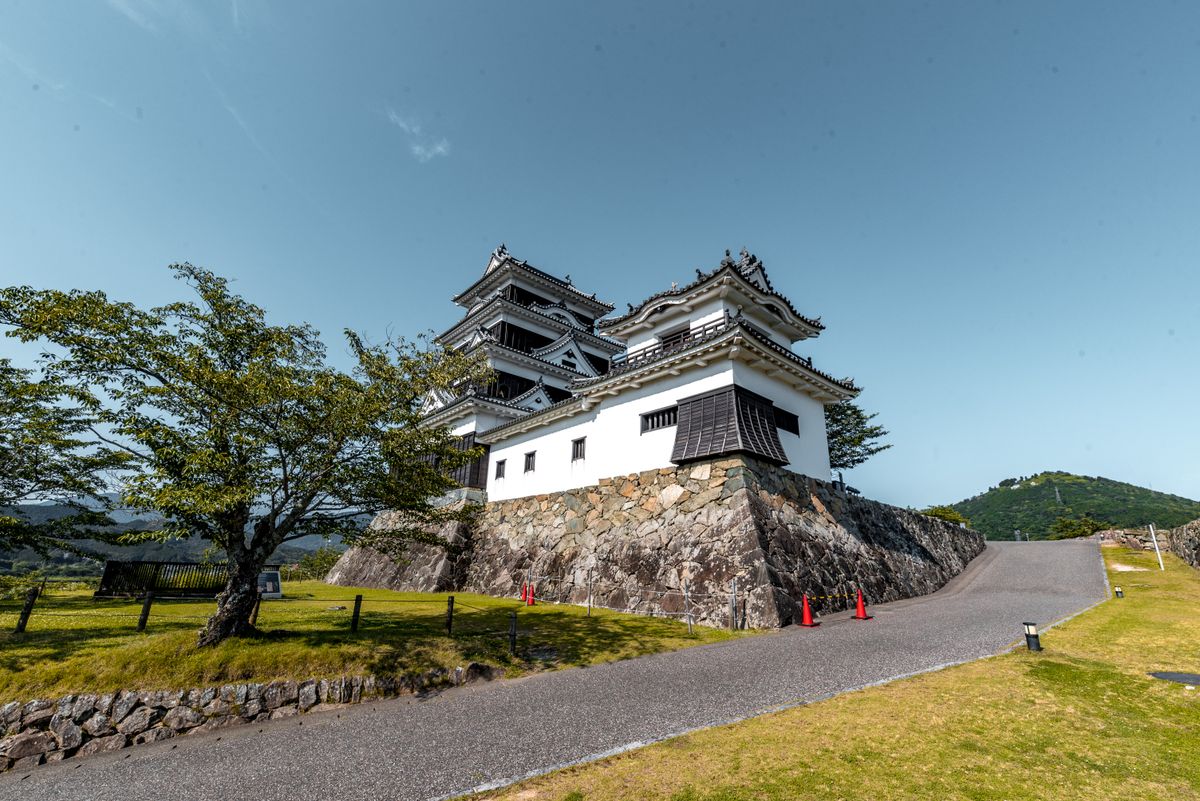
Each of these is a half day or a full day from the city. Where two are on the same line, they combine. Prices are 2026 fares for an adult, one way.
| Destination | From | Time | Fare (one way) | Why go |
|---|---|---|---|---|
| Uchiko | JR Matsuyama Station, limited express | about 31 min | see note | Preserved merchant town of wax, washi and a kabuki theater |
| Ozu (Iyo-Ozu) | JR Matsuyama Station, Limited Express Uwakai | about 38 min | ¥1,840 | Ozu Castle and the Garyu Sanso villa |
| Shimonada Station | JR Matsuyama Station, local train | about 49 min | ¥630 | A small station whose platform faces the sea |
| Tobe | Matsuyama-shi Station, Iyotetsu bus | 45 to 50 min | check | Tobe-yaki pottery; Traditional Industry Hall |
| Baishinji | Matsuyama-shi Station, Takahama line | short suburban ride | from ¥250 | Station right by the sea; original Botchan Ressha locomotive |
| Gogoshima island | Takahama port, ferry | 10 to 13 min by boat | ¥300 (child ¥150) | A quiet island ten minutes offshore |
| Imabari / Shimanami Kaido | JR Matsuyama Station, Shiokaze or Ishizuchi | 35 to 41 min (local about 1 hr 20 min) | ¥1,840 non-reserved, ¥2,370 reserved (local ¥1,080) | Cycling across the bridges to the islands |
Uchiko: go, but know that Uchiko-za is closed
Uchiko is about 31 minutes south by limited express and is the easiest old-town day trip from Matsuyama. Its most famous building, the Uchiko-za kabuki theater, closed on September 2, 2024 for about four years of conservation work, so it is expected to stay shut until around 2028. The theater’s dressing rooms are open to visitors as a consolation (¥200 adults, ¥100 children, 9:00 to 16:30, planned from August 1, 2025 to the end of 2028), but you will not see the auditorium. The town itself, with its wax merchants’ houses and washi paper workshops, is still fully worth the trip. Everything else, including how to spend the day, is in our Uchiko guide.
Ozu: a castle and a villa
Ozu is my hometown, so I will try not to oversell it; here are the facts. Ozu is on the same express route, about 38 minutes from Matsuyama by the Limited Express Uwakai (¥1,840), so it pairs naturally with Uchiko in one day. Ozu Castle costs ¥550 for adults and ¥220 for children; a combined ticket with the Garyu Sanso villa is ¥880 / ¥330, and adding Banzenso makes it ¥1,100 / ¥440. Hours are 9:00 to 17:00 (last entry 16:30) and it is open every day. Castle-stamp collectors should note that since July 1, 2026 the “100 Famous Castles” stamp at Ozu is only available to visitors who have paid admission.
Shimonada Station
Shimonada is a small station on the local line about 49 minutes from JR Matsuyama Station (¥630) whose platform faces straight onto the sea. There is nothing else there, which is the point. Two practical notes: the station’s car park is for drop-off only, so if you rent a car you cannot leave it there, and this is a local line, so check the return train times before you set out. The sightseeing train Iyonada Monogatari, which runs along this coast with meals, operated on 65 selected days between April and September 2026; if you want to ride it in 2027, check the operating calendar and book ahead.
Tobe pottery
Tobe-yaki is Ehime’s pottery; you will have seen it on the murals at Asuka-no-Yu in Dogo. The Tobe Traditional Industry Hall is 45 to 50 minutes by Iyotetsu bus from Matsuyama-shi Station, and it is closed on Mondays. If you are in Ehime in spring, the Tobe-yaki festival (held April 18 and 19 in 2026) is a large pottery fair.
Baishinji and Gogoshima: the easy half day
For a half day without planning, take the Iyotetsu Takahama line from Matsuyama-shi Station. Baishinji Station is right by the sea; Japanese visitors of a certain age come because the final scene of the 1991 TV drama Tokyo Love Story was filmed here, and the park next to it displays a real, original Botchan Ressha steam locomotive, which is more interesting to many people than the replica. Continue to the end of the line at Takahama, and from Takahama port a ferry crosses to Gogoshima in 10 to 13 minutes (to Tomari or Yura; ¥300 adults, ¥150 children, buy on board). There is no sight to tick off on the island; go for the boat ride, the lanes and the water, and take a boat back when you feel like it.
Imabari and the Shimanami Kaido
Imabari is 35 to 41 minutes away by the Shiokaze or Ishizuchi express (¥1,840 non-reserved, ¥2,370 reserved) or about 1 hr 20 min by local train (¥1,080). From Imabari the Shimanami Kaido cycling route runs across the bridges of the Seto Inland Sea toward Onomichi. Bicycle tolls on the bridges are free until March 31, 2028 (mopeds still pay). The official rental cycle terminals at Imabari Station and at Itoyama operate 8:00 to 19:00 from March to November; check winter hours and current rental prices before you go. From Matsuyama, a realistic day is to ride out as far as you like and turn back, rather than attempt the whole route and get back the same night. Our Shimanami Kaido cycling guide covers bike rental, the bridges and the islands.
Seasons and festivals
Matsuyama is a year-round city, but a few fixed dates change everything about a visit, either because they are the reason to come or because they fill the hotels. The autumn festival in particular is on fixed calendar dates, not a weekend, so it is easy to land in the middle of it by accident.
Matsuyama Autumn Festival: October 5 to 7, every year
The city’s shrine festival runs on October 5, 6 and 7 every year regardless of the day of the week. Its signature is hachiawase, the ritual clashing of portable shrines (mikoshi) carried by teams of bearers, and the schedule is brutally early. The main events, as held in 2026:
| Where | When | What happens |
|---|---|---|
| Dogo (in front of Dogo Onsen Station) | Oct 5, 20:00: yoimiya eve-of-festival gathering Oct 7, about 5:30: miya-dashi (the mikoshi leave the shrines) Oct 7, about 6:30: hachiawase |
Eight mikoshi clash in pairs, each pair twice, in the square by the tram terminus. If you are staying in Dogo, you only have to walk downstairs. |
| Mitsu (Mitsu Itsukushima Shrine) | Oct 7, 1:00 am | Akatsuki no miya-dashi, the “dawn” departure of the mikoshi, held in the middle of the night. |
| Komachi (Shiroyama Park, below the castle) | Oct 7, 6:00 and again 18:00 | Mikoshi clashes in the park at the foot of the castle hill; the evening round is the one for people who do not want to get up at dawn. |
If you want to see the Dogo clash, stay in Dogo on the night of October 6 and be at the station square before 6:00 on the 7th. Book early: these dates fill up. If you do not want a festival, note that the baths and trams run as normal, but expect crowds around the shrines and the Dogo station square.
Other fixed dates
- Dogo Onsen Festival, March 19 to 21 (every year; in 2026 that was Thursday to Saturday). It opens with a hot-spring thanksgiving prayer at 9:00 on the 19th at the Tama-no-Ishi stone and Yu Shrine, with mochi throwing, a Dogo Onsen dance nightly at 18:00, and a women’s mikoshi parade on the 21st. The festival dates back to the 1707 earthquake that temporarily stopped the spring.
- Matsuyama Spring Festival (castle festival): early April; in 2026 it was April 4 and 5, and for the first time the feudal lord’s procession was held in the evening (17:30 to 19:00). We could not confirm the rule that sets the dates, so check each year.
- Matsuyama Yakyuken Odori: a summer street-dance festival named after the baseball-themed yakyuken dance; August 7 to 9 in 2026.
- Haiku Koshien: August 22 and 23 in 2026, with the Okaido venue on the 22nd.
- Saturday night market: on Saturday evenings from late June to the first week of August, Okaido, Gintengai and Matsuchika Town fill with stalls. It is the easiest festival-like evening in the city if you are here in summer.
- Castle illuminations: a summer light-up (July 24 to August 16, 2026, 18:30 to 21:00) and a spring cherry blossom light-up (18:00 to 20:50). Outside these events, do not count on the keep being lit.
- Tobe-yaki festival: spring; April 18 and 19 in 2026.
- Hikari no Mi: a winter light display in Dogo Park with thousands of glowing fruit-shaped lanterns, held since 2014; the last edition ran from December 19, 2025 to January 18, 2026. The 2026 to 2027 dates were not announced when we checked.
Season by season
| Season | What it is like | Watch out for |
|---|---|---|
| Spring (March to May) | Dogo Onsen Festival (Mar 19 to 21), castle cherry blossoms with evening light-up, spring festival in early April, Tobe pottery fair. Late-winter citrus such as Setoka still in the shops. | Golden Week (around the end of April and start of May) brings congested roads in Dogo and crowds at the Honkan. |
| Summer (June to August) | Saturday night market in the arcades, castle summer light-up, Yakyuken Odori, Haiku Koshien, longer castle hours in August. | Heat and humidity; the chairlift is less pleasant in full sun, and midday is for the bath, not the hill. |
| Autumn (September to November) | The autumn festival (Oct 5 to 7), imotaki riverside hotpots at Deai on the Shigenobu River (roughly mid-September to late October), autumn colors on the castle hill, first new-season citrus from November. | Hotels fill for Oct 5 to 7. Bansuiso has special pricing Sep 12 to Nov 1, 2026. |
| Winter (December to February) | Peak citrus: Beni Madonna in early winter, then Kanpei and Setoka. Baths are at their best. Fewer visitors. | Shorter hours: the keep closes at 16:30 and the ropeway at 17:00 in December and January; the keep is closed on the third Wednesday of December; the Dogo bathhouses each close one day in December for cleaning; the Botchan Ressha does not run December 30 to January 3; New Year roads around Dogo are congested. |
Where to stay: city center or Dogo
You have two real choices, 10 to 25 minutes apart by tram, and the right one depends on what you want from your evenings.
Dogo
Dogo is mostly ryokan, Japanese inns with dinner and breakfast included, plus a number of hotels. Staying here means you can be at the Honkan when it opens at 6:00, before the day visitors arrive, and again in the evening; it also puts you at the tram terminus, so the city center is one straight ride away. The trade-off is price: a ryokan night with two meals costs much more than a business hotel, and prices swing a lot by season and day of the week. About 818,500 people stayed overnight in Dogo in 2025, so this is a district used to visitors, but the festival dates above sell out well ahead. You can compare Dogo hotels and ryokan on Agoda to see the actual spread for your dates.
City center
Around Okaido, Matsuyama-shi Station and JR Matsuyama Station the stock is business hotels and a few larger ones. They are noticeably cheaper than the equivalent in Tokyo or Kyoto, and you are within walking distance of the castle ropeway, the arcades, Gudabutsu-an and the nabeyaki udon shops. Dogo is then a ¥230 tram ride away for a bath. If your trip is two nights, a sensible split is one night in each; if it is one night, pick the center for sightseeing or Dogo for the bath.
Whichever you choose, remember the two-stations trap when reading hotel descriptions, and note that the JR station area is still a construction zone until the plazas and tram extension are finished.
Money, taxes and connectivity
Cash: where you actually need it
Matsuyama is more card-friendly than its reputation. The Dogo bathhouses take credit and debit cards, transport IC cards and QR payments; the castle ticket machines at Shinonomeguchi take cards, IC and QR. But there is a short, specific list of places where only cash works, and you should carry coins and small notes for them:
- Trams and the airport bus if you pay cash: no change, and the changer refuses ¥5,000 and ¥10,000 notes.
- Chojagadan station at the top of the castle ropeway: cash only.
- Asahi and Kotori, the two nabeyaki udon shops: cash only.
- Small lockers at the bathhouses: a ¥100 coin (returned) for the shoe locker at Asuka-no-Yu, ¥10 for the locker and the hair dryer at Tsubaki-no-Yu.
Our cash versus card guide covers ATMs and the general picture for Japan.
Taxes
Neither Matsuyama nor Ehime Prefecture charges an accommodation tax (as of October 2026), unlike several big-city destinations. What you will see is the bathing tax (nyuto-zei): ¥150 per person per night, added to the bill at hot-spring lodgings; children under 12 are exempt, and the public bathhouses do not charge it.
Connectivity
You will want data for the Jorudan app (day tickets), tram and bus timetables that change monthly, and the Dogo Onsen live wait-time page. An eSIM set up before you land is the simplest option; see our eSIM comparison or get a Japan eSIM from Airalo before departure. If you are arriving with large suitcases and moving on, luggage forwarding between hotels is available in Matsuyama as everywhere in Japan.
What a sightseeing day costs
| Item | Adult price |
|---|---|
| Four tram rides (IC card) | ¥920 |
| Castle combined ticket (ropeway/chairlift round trip + keep) | ¥1,040 |
| Ninomaru Historic Garden | ¥200 |
| Bansuiso | ¥400 |
| Saka no Ue no Kumo Museum or Shiki Memorial Museum | ¥500 |
| Dogo Onsen Honkan, Kami-no-Yu bath (towel rental extra, about ¥100) | ¥700 |
| Nabeyaki udon lunch | ¥800 to ¥880 |
| Total before dinner and hotel | about ¥4,600 to ¥4,700 |
That is a full day. Gudabutsu-an, the footbaths in Dogo, the Ishiteji grounds and the arcades cost nothing.
Sample itineraries: two days and three days
These assume you arrive by air in the morning and use an IC card for the trams. Swap days around to avoid Mondays at Bansuiso, the Saka no Ue no Kumo Museum and the Tobe hall, and Wednesdays at Gudabutsu-an and Kotori.
Two days
Day 1: castle and downtown, then Dogo
- Airport limousine to Okaido (about 29 minutes, ¥1,200 cash or ¥1,180 IC). Drop your bags at your hotel.
- Walk up Ropeway-gai to Shinonomeguchi station. Buy the combined ticket (¥1,040) before 14:00. Chairlift up if dry, 10-minute walk to the keep, keep, ropeway down. Allow two to two and a half hours.
- Lunch: nabeyaki udon in Minatomachi (Asahi Thursday to Sunday, Kotori until 14:00, cash), or taimeshi downtown.
- Afternoon: Bansuiso (¥400) and the Saka no Ue no Kumo Museum (¥500), both closed Mondays. Then Gudabutsu-an (free, open to 19:30, closed Wednesdays).
- Tram line 3 or 5 to Dogo Onsen. Watch the Botchan Karakuri Clock on the hour, soak your feet at the free Hojoen footbath, then bathe at the Honkan (¥700) or Tsubaki-no-Yu (¥500). Dinner in Dogo; Dogo Beer opposite the Honkan.
Day 2: Dogo morning, haiku and the sea
- If you stayed in Dogo, bathe at 6:00 when the Honkan opens. Climb the 135 steps to Isaniwa Shrine, then walk 15 to 20 minutes to Ishiteji (grounds free).
- Shiki Memorial Museum (¥500) for the haiku background, then post a haiku in the nearest Haiku Post box.
- Tram to Matsuyama-shi Station. Lunch and gift shopping in the Gintengai and Okaido arcades, Takashimaya basement and Matsuchika Town.
- Afternoon: Takahama line to Baishinji (sea, original Botchan Ressha locomotive) and on to Takahama for the 10-minute ferry to Gogoshima (¥300 each way). If it is a weekend, ride the Botchan Ressha instead (¥1,300; numbered tickets from 8:30 at Dogo for Dogo departures).
- Evening: taimeshi, both styles. Next morning, airport limousine from Okaido or JR Matsuyama Station, and a cup of tap mikan juice at the Orange BAR (open from 8:00) before your flight.
Three days
Keep the two days above and add one of these as the middle day:
- Uchiko and Ozu. Limited express to Uchiko (about 31 minutes) for the morning: the old merchant streets and the Uchiko-za dressing rooms (¥200; the theater itself is closed until around 2028). Continue on the same route to Iyo-Ozu for Ozu Castle and Garyu Sanso (combined ¥880; 9:00 to 17:00, last entry 16:30). Return to Matsuyama on the Uwakai (about 38 minutes, ¥1,840). You can reverse the order if the timetable suits better.
- Shimanami Kaido taster. Shiokaze or Ishizuchi to Imabari (35 to 41 minutes, ¥1,840 non-reserved), rent a bicycle at Imabari Station or Itoyama (8:00 to 19:00, March to November), ride across the first bridges and back. Bridge tolls for bicycles are free until March 31, 2028. Express back to Matsuyama in time for a bath at Dogo.
- Slow day: Shimonada and Tobe. Local train to Shimonada Station (about 49 minutes, ¥630) for the platform on the sea, back to the city, then the Iyotetsu bus from Matsuyama-shi Station to the Tobe Traditional Industry Hall (45 to 50 minutes; closed Mondays) for pottery. Check the Shimonada return train times before you leave; this is a local line.
If you are continuing around Shikoku, Matsuyama connects by JR to Kagawa (and Konpira-san), Kochi and the Iya Valley; a 3-day ALL SHIKOKU Rail Pass can pay off on that leg, but not for Matsuyama alone.
Practical checklist
- Write down which station your hotel is near: JR Matsuyama Station or Matsuyama-shi Station. They are not the same.
- Load an IC card (ICOCA, Suica, PASMO or phone wallet) before you arrive, or at the first station. You cannot top up on the tram, and it saves ¥20 a ride.
- Carry coins and ¥1,000 notes for trams, the airport bus, the Chojagadan ropeway station and the udon shops. Break ¥10,000 notes at a convenience store.
- Skip the day pass unless you will ride nine or more times or add a suburban train; if you do want one, install the Jorudan app (the Mican app needs a Japanese phone number).
- Do not expect the ALL SHIKOKU Rail Pass or the Japan Rail Pass to cover trams or the airport bus. They do not.
- Castle: go in the morning, buy the combined ticket at the Shinonomeguchi machine between 8:00 and 14:00, and remember the chairlift stops in rain.
- Check closing days: Bansuiso, Saka no Ue no Kumo Museum, Tobe hall and the Dogo Park exhibits close Mondays; Gudabutsu-an and Kotori close Wednesdays; Asahi is open Thursday to Sunday only; the castle keep closes the third Wednesday of December.
- Botchan Ressha runs weekends and holidays only; for a Dogo departure, get a numbered ticket from 8:30.
- Festival dates: October 5 to 7 and March 19 to 21 every year. Book early if you want to be there; avoid them if you want quiet.
- Onsen basics: wash before entering, no swimsuits, no towels in the water, no photos in the changing rooms. The Honkan provides soap and shampoo; Tsubaki-no-Yu does not. Tattoos: call the Honkan ahead (089-921-5141).
- Budget the bathing tax: ¥150 per person per night at hot-spring lodgings. There is no accommodation tax.
- Get data before you land (eSIM) so you can read timetables and the Dogo wait-time page.
- Leave room in your bag for taruto, jakoten and a bottle of Pom Juice; drink the tap mikan juice at the airport on the way out.
Frequently asked questions
Is Matsuyama worth visiting, or is it just a stop on the way to Dogo Onsen? It is worth two nights in its own right. The original castle keep, the arcades and museums, the literary sites and the food fill a day easily, and Dogo fills another. Add a third day for Uchiko and Ozu or the Shimanami Kaido and you have a complete Ehime trip without a car.
How many days do I need? Two nights minimum, three if you want a day trip. One night works only if you are passing through between Hiroshima and the rest of Shikoku and will accept doing the castle in the morning and a bath in the afternoon.
Does the Japan Rail Pass cover the trams in Matsuyama? No. The Japan Rail Pass covers JR trains such as the Shiokaze and the local trains to Uchiko, Ozu, Shimonada and Imabari. The trams, suburban trains and airport bus are run by Iyotetsu, a private company, and are not included. The ALL SHIKOKU Rail Pass stopped covering Iyotetsu on March 7, 2026.
Can I use Suica or ICOCA on the trams? Yes. All national transport IC cards, including the phone versions, work on Iyotetsu trams, suburban trains and city buses (not highway buses), and give you a ¥20 discount per ride. You cannot top up on board.
Is there a tram day pass? Not a tram-only one, and nothing on paper. The two digital one-day tickets (¥2,000 with suburban trains, ¥2,300 with the airport bus) are sold in the Jorudan app; the Mican app also sells the bus version but needs a Japanese phone number. At ¥230 a ride, most visitors do not ride enough to break even.
Can I do Matsuyama as a day trip from Hiroshima? You can: the Linear Jet takes 70 minutes each way from Hiroshima Port, so castle plus a bath at Dogo is feasible. But it costs ¥9,000 each way, and the 6:00 bath and evening at Dogo are the best parts of a visit, so an overnight is better value.
Is Matsuyama Castle an original castle? Yes. The keep completed in 1854 is one of 12 original keeps surviving in Japan. The first keep, from the castle begun in 1602, burned down after a lightning strike in 1784.
Is the castle lit up at night? Only during events that we could confirm: a summer illumination (July 24 to August 16 in 2026) and a spring cherry blossom light-up. Do not plan an evening around seeing it lit without checking the castle website.
Should I stay in Dogo or in the city center? Dogo for the bath experience (6:00 opening, evening lighting, ryokan dinners, higher prices); the center for cheaper hotels, the castle and restaurants, with Dogo a ¥230 tram ride away. With two nights, one of each works well.
Is Dogo Onsen tattoo-friendly? It has long been known as tattoo-tolerant, but the official site no longer states a policy, so call the Honkan ahead on 089-921-5141.
What is the Botchan Ressha and is it worth it? A replica steam train that runs on the tram tracks on weekends and holidays, ¥1,300 per adult ride. It is a novelty ride, fun with children; if you only want to see an original, there is a real locomotive in the park by Baishinji Station.
When is the best time to visit? October 5 to 7 if you want the festival and have booked ahead; late March for the Dogo festival and cherry blossoms; winter for citrus and quiet baths. Avoid Golden Week and the New Year period if you dislike crowds at Dogo.
Is English widely spoken? Less than in Tokyo or Kyoto. Most foreign visitors here are from Korea and Taiwan, and English signage varies. The Dogo official site is in English, the tourist desks have foreign-language material, and a translation app covers the rest.
Plan the rest of your trip
- Dogo Onsen: the complete guide to the three bathhouses
- Japanese onsen etiquette
- Uchiko travel guide
- Shimanami Kaido cycling guide
- Shikoku 88 temple pilgrimage guide
- Hiroshima and Miyajima guide
- Tomonoura, the Edo-era port town in Hiroshima
- Okayama travel guide
- Naoshima art island guide
- Kagawa travel guide
- Kochi travel guide
- Is the Japan Rail Pass worth it?
- Best eSIM for Japan
- Cash versus card in Japan
- Tax-free shopping in Japan
- Essential Japanese phrases for travelers
Sources: Matsuyama Castle official site (matsuyamajo.jp), Iyotetsu fare and timetable notices (April and October 2026), JR Shikoku notices (October 31, 2025; March 19 and August 6, 2026), Matsuyama Airport and airport limousine information, Linear Jet and ferry operator timetables, Dogo Onsen official site (dogo.jp), Matsuyama Convention & Visitors Bureau, Matsuyama City statistics and festival notices, Ministry of Agriculture, Forestry and Fisheries regional cuisine pages, Ehime Inryo (checked October 2026). Prices and hours change; if you spot something out of date, please let us know.
Going to Japan? Speak Japanese with confidence.
Hirameki Japanese — camera translate for menus and signs, a two-way conversation mode, and furigana + romaji on every phrase. Free to download with kana charts, conversation mode and starter words; a one-time purchase unlocks everything.

Plan your Japan trip
Two things every first-timer should book
Some links are affiliate links. If you book through them we may earn a small commission at no extra cost to you.