Introduction to Ibaraki Prefecture
Ibaraki Prefecture, situated just northeast of Tokyo in the Kanto region, is one of Japan’s most underestimated destinations. Easily accessible from the capital yet surprisingly uncrowded, Ibaraki offers a compelling combination of world-class gardens, dramatic waterfalls, ancient shrines, and a rugged coastline that stretches along the Pacific Ocean. The prefecture is perhaps best known for the annual explosion of nemophila (baby blue eyes) flowers at Hitachi Seaside Park — a spectacle that has taken social media by storm in recent years — and the venerable Kairakuen garden, one of Japan’s Three Great Gardens. But Ibaraki rewards deeper exploration: its mountainous interior hides spectacular waterfalls and hiking trails, its coastal towns serve some of the finest seafood in eastern Japan, and its cultural institutions in Mito City offer genuine depth for curious travelers. Often overshadowed by neighboring prefectures in tourist itineraries, Ibaraki is precisely the kind of destination that rewards those who venture beyond the obvious choices.
Top Attractions in Ibaraki Prefecture
Hitachi Seaside Park
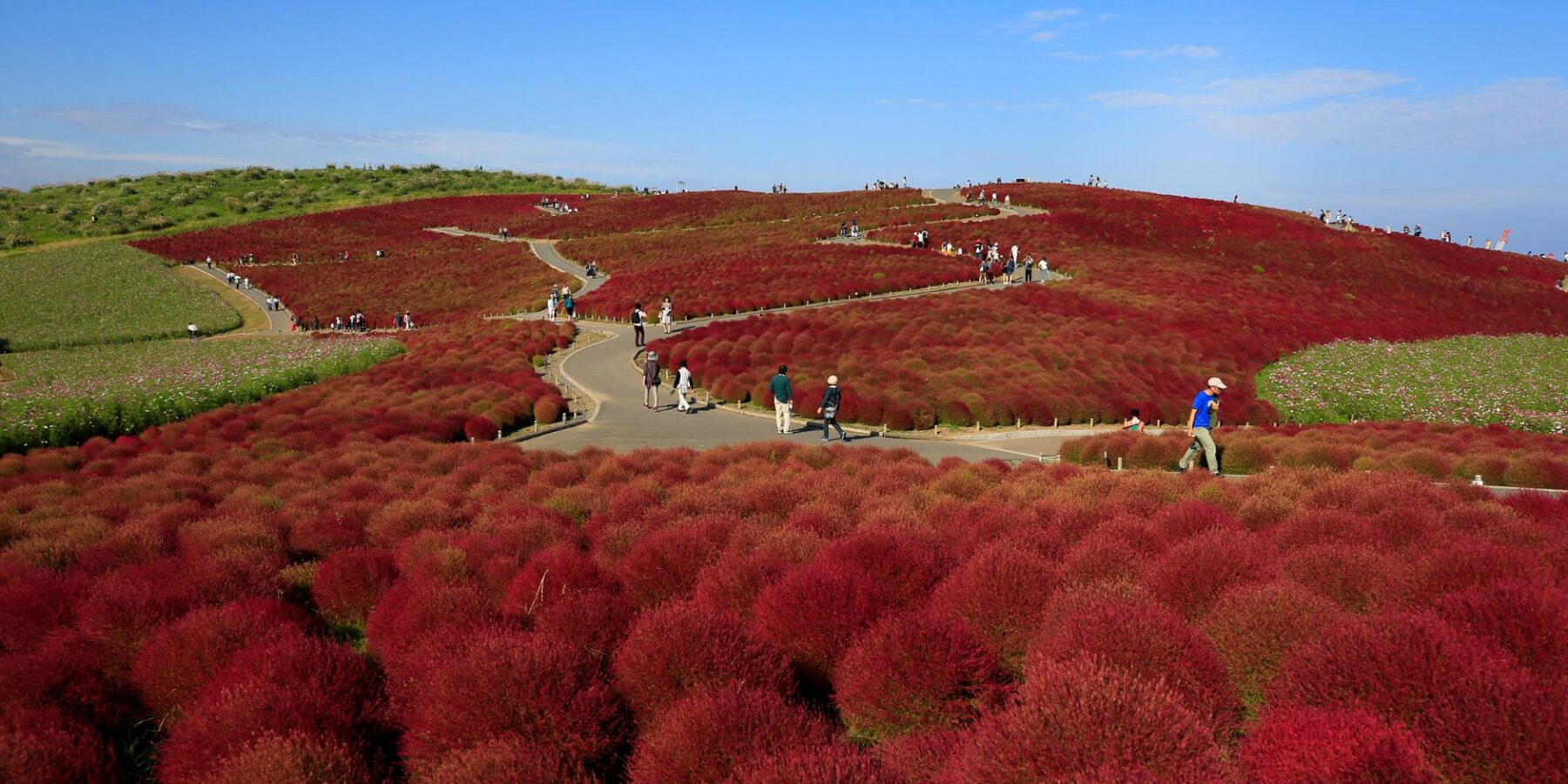
Kokuei Hitachi Kaigan Koen (Hitachi Seaside Park) is a vast public park spanning 215 hectares along the Pacific coast, and it has become one of Japan’s most photographed destinations thanks to its extraordinary seasonal flower displays. In late April and early May, approximately 4.5 million nemophila (baby blue eyes) flowers blanket Miharashi Hill in a breathtaking wash of sky blue that seems to merge with the ocean horizon on clear days. The same hill transforms again in mid-October when 30,000 kochia plants turn from green to brilliant scarlet, creating a different but equally spectacular display. Spring also brings tulips and narcissus, summer features sunflowers, and autumn adds cosmos and more. Beyond the flowers, the park includes cycling paths, a seaside area, and an amusement zone. Admission to the park is 450 yen for adults (free during winter); nemophila and kochia seasons see the park at its busiest, with crowds arriving early on weekends — aim for weekday visits or arrive at opening time (9:30am).
Kairakuen Garden
Kairakuen in Mito City is one of Japan’s Three Great Gardens (alongside Kenrokuen in Kanazawa and Korakuen in Okayama), established in 1842 by the Mito Domain lord Tokugawa Nariaki as a garden to be shared with the public — unusual for its feudal era. The garden is most famous for its 3,000 plum trees representing approximately 100 varieties, which bloom in spectacular fashion from mid-February to late March, filling the air with fragrance and drawing visitors from across Japan to the annual Mito Plum Festival. The garden’s design incorporates a traditional landscape of bamboo groves, cedar forests, and a villa (Kobuntei) overlooking Lake Senba, creating an experience that shifts dramatically between the intimate and the expansive. Outside plum season, Kairakuen’s cedar and bamboo sections maintain year-round appeal, and the adjacent Tokiwa Park provides additional recreational space beside the lake.
Fukuroda Falls (Fukurodataki)
Located in the mountainous Daigo area of northern Ibaraki, Fukuroda Falls is one of Japan’s Three Great Waterfalls, dropping a total of 120 meters in four dramatic tiers down a sheer cliff face. Unlike many famous Japanese waterfalls which are single-drop affairs, Fukuroda’s four distinct stages — each with a different character — create a spectacle that changes appearance with the seasons: a delicate curtain of mist in summer, an explosion of autumn colors in October and November, and a magnificent frozen cascade in winter when temperatures drop sufficiently to turn the falls into a glittering ice sculpture. Access is via a tunnel bored through the mountainside, with viewing platforms at multiple levels. The surrounding Ryujin Gorge offers excellent autumn foliage hiking, and the nearby Ryujin Suspension Bridge (375 meters, one of Japan’s longest pedestrian suspension bridges) offers vertiginous views across the gorge far below.
Kasama Inari Shrine and Ceramic Culture
Kasama Inari Shrine is one of Japan’s Three Great Inari Shrines, dedicated to the fox deity Inari and visited by approximately 3 million worshippers annually. The shrine complex is serene and atmospheric, with rows of vermilion torii gates and numerous fox statues scattered throughout the cedar-shaded grounds. Kasama City is also one of the largest ceramic-producing regions in the Kanto area, with over 200 potters and studios scattered across the surrounding hills producing a wide range of Kasama-yaki pottery — characterized by earthy, natural glazes and free-form artistic expression quite different from the refined porcelain traditions of Kyushu. The Kasama Craft Hills complex houses studios, galleries, and a hands-on pottery workshop where visitors can try making their own pieces. The annual Kasama Pottery Fair (October) draws ceramic artists and buyers from across Japan.
Tsukuba Science City and Mount Tsukuba
Mount Tsukuba (877 meters) is one of Japan’s most celebrated peaks, revered since antiquity and praised in Japan’s oldest poetry anthology, the Man’yoshu. Unlike most famous Japanese mountains, Tsukuba is characterized by its distinctive double-peaked silhouette — the male peak Nantai-san and female peak Nyotai-san — and can be ascended by cable car or ropeway, making it accessible for visitors of all fitness levels. The summit area includes two ancient Shinto shrines, and on clear days the view extends to Tokyo’s skyscrapers and occasionally even to Mount Fuji. The surrounding Tsukuba Science City, Japan’s purpose-built research metropolis developed in the 1960s and 1970s, is home to numerous national research institutions and the excellent JAXA (Japan Aerospace Exploration Agency) facility, which offers free public exhibitions about Japan’s space exploration program.
Getting to Ibaraki Prefecture
From Tokyo
Ibaraki is one of the most accessible day-trip destinations from Tokyo. The JR Joban Line runs directly from Ueno Station (Tokyo) to Mito Station in approximately 75 minutes on the Limited Express Tokiwa (around 4,000 yen or a little more one-way since JR East’s March 2026 fare rise). From Mito, buses and trains connect to other parts of the prefecture. Hitachi Seaside Park is best reached from Katsuta Station (on the Joban Line, just north of Mito) by shuttle bus during flower seasons. Mount Tsukuba is accessible from Akihabara via the Tsukuba Express (TX) to Tsukuba Station in just 45 minutes (1,210 yen) — one of the fastest and most convenient regional rail connections from central Tokyo. Fukuroda Falls requires a JR Suigun Line train from Mito to Fukuroda Station followed by a local bus (about 2.5 hours total from Tokyo), or a direct highway bus from Tokyo operating during autumn and spring peak seasons.
Before heading out, make sure you have a Japan eSIM ready to navigate, translate, and share photos without worrying about connectivity. Get your Japan eSIM (Stay connected from day 1) →
From Osaka and Nagoya
From Osaka or Nagoya, the most efficient route is by Shinkansen to Tokyo, then connecting to the Joban Line Limited Express for Mito — total journey approximately 3.5 to 4 hours from Osaka (well over 16,000 yen, with Nozomi reserved fares rising from July 2027) or 2.5 to 3 hours from Nagoya. Highway buses run overnight from Osaka and Nagoya to Mito and Tsukuba, offering a budget-friendly but time-consuming alternative for those with flexible schedules. Ibaraki Airport, located in Omitama City in central Ibaraki, receives domestic flights from Sapporo, Kobe, Fukuoka and Okinawa, as well as some international charter flights, providing direct access for those traveling from specific regions.
Getting Around Ibaraki
Ibaraki is a large, spread-out prefecture and a rental car is strongly recommended for visitors wishing to explore multiple areas efficiently. The JR Joban Line provides a convenient north-south corridor along the coast, connecting Tokyo to Mito and Hitachi. The JR Suigun Line runs north from Mito into the mountainous interior toward Fukuroda Falls. The Tsukuba Express (TX) connects Tokyo’s Akihabara to Tsukuba in 45 minutes, with good bus connections to Mount Tsukuba from the terminal. Kasama is accessible by bus from Mito Station. A My Seat Highway Bus pass covers key connections between major Ibaraki cities. For comprehensive sightseeing combining coastal park, garden, waterfall, and shrine, renting a car at Mito Station allows a flexible multi-day itinerary. The prefecture’s road network is modern and uncongested outside Tokyo commuter zones. Kairakuen is just a few minutes’ walk from Kairakuen Station on the Joban Line, which operates a special stop during plum blossom season.
Where to Stay in Ibaraki
Budget (5,000 to 8,000 yen per night): Business hotels near Mito Station or Tsukuba Station offer clean, comfortable rooms. The Dormy Inn Mito and APA Hotel Mito-Ekimae are popular choices with reasonable breakfast options. Mid-Range (10,000 to 20,000 yen per person): Ryokan and hot spring hotels in the Daigo area near Fukuroda Falls provide traditional Japanese hospitality with mountain views. Coastal hotels near Hitachi or Oarai offer fresh seafood dinners and ocean views. Luxury (25,000 yen or more per person): Several high-quality ryokan in the Yamakata Onsen area offer private onsen, multi-course kaiseki dinners featuring local ingredients including fresh seafood, beef, and seasonal mountain vegetables. Booking in advance is essential during nemophila season (late April to early May) and plum blossom season (mid-February to mid-March) when accommodation fills quickly throughout the prefecture.
Food and Local Specialties in Ibaraki
Ibaraki’s cuisine reflects its geography — a long Pacific coastline providing exceptional seafood, fertile inland plains producing premium agricultural products, and a brewing tradition yielding some of Japan’s finest sake and natto (fermented soybeans). Anko Nabe (Monkfish Hot Pot): Ibaraki is Japan’s leading producer of anko (monkfish), and the rich, gelatinous hot pot made from every part of the fish — liver, skin, stomach, fins, and flesh — is the prefecture’s most celebrated winter dish. The fishing town of Oarai is the best place to experience authentic anko nabe, with many restaurants specializing in this extraordinary dish from November through March. Natto: Mito City is the self-proclaimed birthplace of natto (fermented soybeans), and Ibaraki produces approximately 60% of Japan’s natto supply. Whether you love or are apprehensive about this pungent, sticky delicacy, sampling Ibaraki natto — often said to be Japan’s finest in flavor and texture — is an essential cultural experience. Hitachi Beef: Ibaraki’s premium Wagyu brand, Hitachi Beef, is raised on the prefecture’s lush plains and produces beautifully marbled meat served at steakhouses and teppanyaki restaurants throughout the prefecture. Sake and Craft Beer: Ibaraki has a strong sake brewing tradition, particularly in the Kasama and Mito areas, with several breweries offering tours and tasting. The coastal town of Hitachi is also home to a growing craft beer scene.
Day Trips and Nearby Attractions
Ibaraki’s proximity to Tokyo makes it an excellent base for day trips, and its own diversity means that multi-day visitors can combine very different types of experiences without driving long distances. From Mito, the historic post town of Toride on the Kanto Plain is a pleasant half-day excursion. The Pacific coastline offers surf beaches and fishing ports worth exploring at a leisurely pace between major sights. Neighboring Tochigi Prefecture’s Nikko (accessible in about 2 hours from Mito) provides an excellent complement to an Ibaraki visit for those interested in combining world-class gardens and waterfalls with ornate shrine architecture. Tochigi Prefecture’s mountainous Nasu area is similarly accessible from northern Ibaraki.
Best Time to Visit Ibaraki
Late February to mid-March is peak season for Kairakuen’s plum blossoms and the Mito Plum Festival — crowds are large but the fragrance and color are extraordinary. Late April to early May is nemophila season at Hitachi Seaside Park, one of Japan’s most spectacular floral events. October brings the crimson kochia at Hitachi Seaside Park, autumn foliage at Fukuroda Falls, and the Kasama Pottery Fair. November to March is anko (monkfish) season on the coast, making it an ideal time for seafood-focused travel. Summer is pleasant for coastal activities and less crowded visits to the park’s sunflower displays. Winter snowfall around Fukuroda Falls occasionally creates spectacular ice formations on the waterfall face, attracting photographers from across Japan.
Hidden Gems and Local Tips for Ibaraki
Oarai Isosaki Shrine sits on wave-battered rocks jutting into the Pacific Ocean, its torii gate rising dramatically from the sea — a genuinely atmospheric and little-visited coastal shrine that photographers will particularly appreciate at sunrise or in stormy weather. Makabe Historic Town preserves an intact Edo-period townscape of whitewashed merchant houses and traditional stone walls that rivals better-known historic districts elsewhere in Japan while receiving a fraction of the visitors. Ibaraki Prefectural Museum of History in Mito offers a comprehensive overview of the prefecture’s remarkable history and archaeology, including Yayoi and Kofun-period artifacts rarely displayed at smaller regional museums, with some English-language signage. The Okukuji area in Ibaraki’s far north, around Mount Yamizo near the Fukushima border, offers forest and gorge hiking well away from the crowds, reachable on day trips from Mito.
Practical Information for Visiting Ibaraki
Tourist Information: Mito Station Tourist Information Center (open 9:00 to 19:00) provides English maps and transport guidance. Seasonal information offices operate at Hitachi Seaside Park during flower seasons. Wi-Fi: Free Wi-Fi at Mito Station, Tsukuba Station, and major tourist sites; pocket Wi-Fi recommended for rural areas. Cash: Cash is widely expected at local restaurants, rural ryokan, and traditional craft shops; ATMs at 7-Eleven and Japan Post accept international cards. Emergencies: Police 110, Fire and Ambulance 119. Mito Kyodo Medical Center: 029-231-2371. JNTO English helpline: 050-3816-2787 (24 hours).
Ibaraki Budget Guide
Budget (6,000 to 10,000 yen per day): Business hotel near Mito Station, convenience store meals and affordable local restaurants, JR trains and buses. Hitachi Seaside Park admission 450 yen, Kairakuen free (during normal season; small fee during plum festival). Mid-Range (15,000 to 25,000 yen per day): Comfortable hotel or modest ryokan, anko nabe dinner at an Oarai seafood restaurant (approximately 3,000 to 5,000 yen per person), rental car for flexible day touring. Luxury (30,000 yen or more per day): Traditional ryokan in Daigo or Yamakata Onsen area with full kaiseki dinner featuring anko, Hitachi beef, and seasonal Ibaraki produce, private onsen bath, and next-day access to Fukuroda Falls and Ryujin Gorge.
Frequently Asked Questions About Ibaraki
How do I get to Ibaraki from Tokyo?
For Mito City and northern Ibaraki, take the JR Joban Line Limited Express Tokiwa from Ueno Station (75 minutes, approximately 4,000 yen). For Tsukuba and central Ibaraki, take the Tsukuba Express (TX) from Akihabara Station to Tsukuba Station in just 45 minutes (1,210 yen). Both are excellent day-trip distances from Tokyo.
When should I visit Hitachi Seaside Park for the nemophila flowers?
The nemophila (baby blue eyes) blooms at their peak from late April to early May, typically around Golden Week. The exact timing varies by year and weather conditions — the official Hitachi Seaside Park website publishes weekly bloom status updates. Weekday visits are strongly recommended as weekends during peak bloom are extremely crowded.
What is natto and is it worth trying in Mito?
Natto is fermented soybeans — sticky, stringy, pungent, and deeply polarizing even among Japanese people. Mito is famous as Japan’s natto capital, and trying the local variety is an authentic Ibaraki experience. If you enjoy strong flavors like blue cheese or kimchi, you may well love it. It is typically served over rice with soy sauce and mustard. Many breakfast sets at Mito hotels include it.
How long does it take to see Kairakuen Garden?
Kairakuen itself can be walked comfortably in 60 to 90 minutes. Combined with the adjacent Kobuntei villa, the Tokiwa Park lakeside area, and the Ibaraki Museum of Modern Art nearby, a half-day or full day can easily be spent in the area. During plum blossom season (February to March), allow extra time for crowds and festival stall browsing.
Is Fukuroda Falls worth the trip from Tokyo?
Yes, especially in autumn (October to November) when fall foliage surrounds the falls, or in winter when partial freezing creates spectacular ice formations. The journey from Tokyo takes about 2.5 to 3 hours each way, making it best combined with a stay in the Daigo area or as part of a multi-day Ibaraki itinerary rather than a single-day round trip from Tokyo.
What is the best food to try in Ibaraki?
Anko nabe (monkfish hot pot) in Oarai is the top recommendation for food lovers visiting Ibaraki from November through March. Mito natto is an essential cultural tasting experience. Hitachi beef teppanyaki is an excellent splurge. Fresh oysters, sashimi, and grilled fish at coastal fishing ports along the Pacific coastline are outstanding year-round.
Do I need a car to explore Ibaraki?
A car is highly recommended for exploring Ibaraki’s full range of attractions, particularly Fukuroda Falls, Kasama, and rural coastal areas. Hitachi Seaside Park, Kairakuen, Tsukuba, and Mito City are accessible by train and bus. Rental cars are available at Mito Station, Tsukuba Station, and Ibaraki Airport.
How many days should I spend in Ibaraki?
Two to three days allows you to cover the main highlights: a day at Hitachi Seaside Park or Kairakuen, a day at Fukuroda Falls and Ryujin Gorge, and a day exploring Kasama Shrine and pottery studios. Ibaraki also works very well as a series of day trips from Tokyo across two or three separate visits.
Is Ibaraki safe for tourists?
Ibaraki is extremely safe, consistent with Japan’s overall very low crime rates. Standard travel precautions apply. The prefecture was affected by the 2011 Tohoku earthquake and tsunami, but has fully recovered and there are no ongoing safety concerns for visitors. Coastal areas have improved tsunami warning infrastructure since 2011.
Ibaraki’s Cultural Heritage and Traditions
Ibaraki Prefecture has a rich cultural tapestry shaped by its position on the Kanto Plain, historically one of Japan’s most productive agricultural regions and a crossroads of ancient trade routes. The Mito Domain, governed by one of the three senior Tokugawa branch families, was particularly influential in shaping Japanese intellectual and cultural life during the Edo period. The Mito School (Mito-gaku) of Neo-Confucian scholarship, centered at the Kodokan — Japan’s largest and best-preserved clan school, open to the public today — produced some of the most important political and philosophical thought of the 18th and 19th centuries, directly influencing the ideological currents that led to the Meiji Restoration. The Tokugawa lords of Mito were also great patrons of the arts, sponsoring garden design, ceramics, and literary culture. This intellectual heritage gives Ibaraki’s cultural institutions — its museums, gardens, and historic sites — a depth and seriousness that repays careful exploration.
Ibaraki’s folk traditions are equally distinctive. The Hitachi Fudoki (8th-century geographical compendium) documents the prefecture’s ancient myths and customs in remarkable detail, giving historians and curious travelers a window into pre-feudal Japanese rural life. Traditional performing arts including Noh theater, lion dances, and rice-planting ceremonies are still practiced in rural communities across the prefecture. The coastal culture of the Pacific-facing towns — where fishermen have for centuries honored the sea through annual shrine festivals and fish-market rituals — provides a vivid sense of how maritime communities maintained their spiritual connection to the ocean that defined their lives. The Oarai Isosaki Shrine festivals, held several times annually on the rocky promontory where the shrine’s torii gate rises from the waves, are among the most atmospheric Shinto observances in eastern Japan.
Outdoor Activities in Ibaraki
Ibaraki offers a wider range of outdoor activities than many visitors expect. The Pacific coastline provides surfing conditions at several beaches between Oarai and Hitachi, with consistent waves during the typhoon season of late summer and autumn drawing surf enthusiasts from across the Kanto region. Kiteboarding and windsurfing are popular at Ibaraki’s flat, wind-exposed coastal zones. Inland, the Abukuma Highlands and the mountains of northern Ibaraki offer hiking trails through beech forests and along river gorges that are spectacular during autumn foliage season. Mount Tsukuba’s multiple hiking trails — ranging from easy 2-hour round trips to more demanding routes through the inner shrine precincts — provide excellent half-day walking experiences accessible directly from the Tokyo metro area. Kasama Artisan Hills has dedicated cycling routes through the ceramic-producing countryside surrounding the city. The Tone River, forming part of Ibaraki’s southern border with Chiba Prefecture, offers freshwater fishing for carp and other species popular among Japanese recreational anglers. Lake Kasumigaura — Japan’s second largest lake, located in central Ibaraki — provides sailing, windsurfing, and cycling along a long lakeside path, as well as boat cruises taking in views across the water to distant mountains.
Shopping in Ibaraki
Ibaraki’s most distinctive souvenirs reflect its agricultural and artisanal strengths. Kasama-yaki pottery — earthy, free-form stoneware quite different from Kyushu’s refined porcelain traditions — makes a beautiful and very reasonably priced souvenir, with small pieces available from 500 yen and larger art pieces up to tens of thousands of yen. Mito natto in vacuum-sealed packs travels well and makes a conversation-starting gift; the Mito Station souvenir area has an excellent selection of natto-based products including natto confectionery, natto rice crackers, and freeze-dried natto. Ibaraki sake from Mito-area breweries is available throughout the prefecture and makes an excellent liquid souvenir; look for labels from producers such as Tokiwa Brewery or Yamakawa Brewery for quality local nihonshu. Dried and processed anko (monkfish) products — including liver paste (ankimo) in cans — travel well and provide a taste of Ibaraki’s most prized seafood. Seasonal products including plum wine (Kairakuen brand), plum jam, and plum confectionery are especially popular as gifts representing the garden’s famous blossoms.
Why Visit Ibaraki?
In the landscape of Japanese tourism, Ibaraki occupies a compelling niche as a prefecture that delivers genuine world-class experiences — the incomparable flower spectacles of Hitachi Seaside Park, the historic grandeur of Kairakuen Garden, the dramatic natural beauty of Fukuroda Falls, and the living craft tradition of Kasama pottery — without the crushing visitor numbers that plague more famous destinations. Its proximity to Tokyo makes it ideal for extending a Japan itinerary with authentic, less-commercialized experiences. Its food culture — from the controversial but rewarding natto to the extraordinary anko nabe of Oarai — provides flavors completely distinct from the more internationally recognized cuisines of Kyoto or Tokyo. And its intellectual heritage, centered on the influential Mito Domain’s remarkable contributions to Japanese history and thought, adds a dimension of cultural depth that consistently surprises visitors who arrive expecting merely a garden and a waterfall. Ibaraki is, in short, an excellent answer to the question of where to go in Japan when you want something genuinely different and genuinely excellent.
Ibaraki’s Festivals and Seasonal Events
Ibaraki’s event calendar is anchored by its extraordinary seasonal natural displays, but supplemented by a rich program of traditional festivals and modern events that bring the prefecture’s communities together throughout the year. The Mito Plum Festival (mid-February to mid-March) is Kanto’s most celebrated early spring event, drawing hundreds of thousands of visitors to Kairakuen Garden to witness the 3,000-tree plum grove in full bloom. The festival includes traditional performing arts, food stalls selling plum-themed products, and guided tours of the historic Kobuntei villa. The Hitachi Fudoki-no-Oka Doll Festival in March is a lesser-known but delightful event where hundreds of traditional hina dolls are displayed along a hillside shrine path. The Kasama Pottery Fair (second weekend of October) is Kanto’s largest ceramics market, with over 200 potters selling directly and demonstrating their craft across the Kasama Artisan Hills complex. The Ibaraki Prefectural Athletic Meet and various agricultural harvest festivals in October and November celebrate the prefecture’s farming heritage across venues throughout the region. Smaller local matsuri occur in virtually every town and village throughout the year, and checking the Ibaraki Tourism website’s event calendar before visiting will reveal community festivals that offer intimate, uncommercial glimpses into genuine rural Japanese life.
Ibaraki for Science and Technology Enthusiasts
Tsukuba Science City, established as a planned research community in the 1960s, houses an extraordinary concentration of cutting-edge research institutions that collectively make it one of the world’s most significant scientific communities. The JAXA Tsukuba Space Center offers free public exhibitions including full-scale rocket models, space station module replicas, astronaut training equipment, and multimedia presentations about Japan’s space exploration program — a genuinely fascinating visit for both adults and children that requires no advance booking for general exhibitions (special tours require reservation). The National Museum of Nature and Science Tsukuba Research Facility, the National Institute of Radiological Sciences, and over 300 other research institutions are concentrated in the Tsukuba area. The city’s planned street layout, large parks, and international academic community give it a distinctive atmosphere quite unlike any other Japanese city — simultaneously futuristic in its ambitions and pleasantly livable in its scale. For science-minded visitors, combining Tsukuba Space Center with a hike or cable car ascent of nearby Mount Tsukuba makes for an excellent full-day excursion from Tokyo.
Ibaraki Itinerary Suggestions
Best 2-Day Ibaraki Itinerary
Day 1 — Coast and Garden: Take the Limited Express Tokiwa from Ueno to Katsuta Station (70 minutes). Morning at Hitachi Seaside Park (flower displays, cycling, coastal views). Afternoon: short train to Mito, explore Kairakuen Garden and Kobuntei Villa. Evening: dinner in Mito featuring local seafood or Hitachi beef. Stay overnight in Mito. Day 2 — Mountains and Craft: Early morning train to Kasama (40 minutes by bus or taxi from Mito). Morning: Kasama Inari Shrine and pottery studio visits. Afternoon: drive or taxi to Daigo for Ryujin Suspension Bridge and beginning of gorge walk. Optional: continue to Fukuroda Falls (30 additional minutes by car). Return to Mito or Tokyo by early evening.
Best 1-Day Tokyo Day Trip to Ibaraki
Take the Tsukuba Express from Akihabara to Tsukuba Station (45 minutes). Visit JAXA Tsukuba Space Center (free, 2 hours). Take bus to Mount Tsukuba Ropeway and ascend to the summit for panoramic Kanto Plain views. Descend, return to Tsukuba Station by bus, and take the TX back to Akihabara. This full day from central Tokyo to Ibaraki’s most accessible mountains costs approximately 3,000 to 4,000 yen in total transport and admission.
Accessibility, Practical Tips and Final Thoughts on Ibaraki
Ibaraki Prefecture is well-suited for independent travelers with standard mobility. Major attractions including Kairakuen Garden, Hitachi Seaside Park, and Kasama Inari Shrine have paved pathways and accessible restrooms. Mount Tsukuba is accessible by cable car and ropeway for those who prefer not to hike. Fukuroda Falls has elevator access within the approach tunnel. For visitors with significant mobility limitations, contacting individual attractions in advance about specific accessibility features is recommended. Regarding digital connectivity, Ibaraki is well covered by all three major Japanese mobile networks (NTT Docomo, Softbank, and Au/KDDI) in urban and suburban areas; mountain areas around Fukuroda and the northern highlands may have limited signal. Pocket Wi-Fi rental from Tokyo airports provides the most reliable data access throughout the trip. For currency, Japan is now majority cashless overall, yet many small shops, stalls and rural businesses still accept only cash; ensure you have adequate yen before departing Mito or Tsukuba for rural areas. The Ibaraki Prefectural Tourism Association website (ibaraki-tourism.com) provides comprehensive English-language information including seasonal event calendars, accommodation directories, and transport guidance updated regularly. Ibaraki is a prefecture that rewards preparation and rewards even more those who go beyond its most famous sights to discover the quieter pleasures of a region that has been shaping Japanese culture, agriculture, and intellectual life for over a thousand years. From the blue flower carpets of Hitachi to the frozen grandeur of Fukuroda in winter, from the earthy beauty of Kasama pottery to the bracing marine flavors of an Oarai seafood breakfast, Ibaraki is a destination that engages all the senses and lingers long in the memory of those fortunate enough to visit.
Lake Kasumigaura and Ibaraki’s Inland Waterways
Lake Kasumigaura, Japan’s second largest lake at 220 square kilometers, occupies a central position in Ibaraki’s geography and cultural history. For centuries, the lake served as the primary transport artery for the region, with shallow-draft trading vessels called hobikisen carrying rice, sake, and goods between the lake’s many ports and the markets of Edo (Tokyo). Today, Kasumigaura is a destination for cycling — the 180-kilometer lakeside cycling road is one of Japan’s longest dedicated cycle paths, offering flat, scenic riding through lotus fields, fishing villages, and historic shrine precincts with views across the broad lake to Mount Tsukuba on clear days. Sailing and windsurfing are popular water sports on the lake’s broad, shallow surface, and several rental facilities operate seasonally. Pleasure cruises offering sunset views and lake breeze are available from Tsuchiura City’s lakeside pier. The lake’s ecosystem supports various migratory waterfowl including white swans and numerous duck species during the winter months, making it an excellent destination for birdwatching from November through March. Fresh eel (unagi) from Lake Kasumigaura has been a regional delicacy for centuries, and Tsuchiura City — the main lakeside town — has numerous unagi specialty restaurants serving grilled eel over rice (unadon) in the traditional Kanto style, lightly sweet and deeply savory. The combination of cycling, water sports, birdwatching, and exceptional eel cuisine makes Lake Kasumigaura a worthwhile addition to any Ibaraki itinerary, easily combined with Tsukuba as a day trip from Tokyo or as part of a multi-day prefecture exploration.
Ibaraki’s Sake Brewing and Craft Beverage Culture
Ibaraki Prefecture has a distinguished sake brewing tradition rooted in the availability of high-quality local rice, pure groundwater from the Abukuma and Nasu mountain ranges, and centuries of accumulated brewing expertise. The prefecture currently has over 30 active sake breweries, producing a wide range of styles from crisp, dry junmai suitable for pairing with fresh seafood to richly aromatic junmai daiginjo with complex fruity notes. The Mito area is home to several of Ibaraki’s most respected producers, including Tokiwa Brewery (established 1832) and the family-run Watabe Brewery. The Kasama area has its own brewing cluster, with several small-scale artisan producers making sake from locally grown rice. Many breweries offer public tours and tasting sessions, particularly during the winter brewing season (December through February) when fresh-pressed new sake is available directly from the tanks. The Ibaraki Sake Festival held annually in March in Mito draws producers from across the prefecture for a comprehensive tasting event open to the public. Beyond sake, Ibaraki has developed a notable craft beer scene in recent years, with the Hitachi region’s craft breweries producing distinctive ales influenced by local ingredients including citrus and seasonal botanicals. Non-alcoholic alternatives are equally distinctive: Ibaraki’s tea cultivation, while less famous than Shizuoka’s, produces some excellent local green teas, and the prefecture’s fruit orchards — producing pears, peaches, and melons — yield outstanding fresh juices and preserves available at roadside stations and farm stands throughout the growing season.
Ibaraki’s combination of world-class garden spectacles, dramatic natural scenery, living craft traditions, exceptional seafood, and cutting-edge scientific heritage makes it one of the most multifaceted and rewarding prefectures in the entire Kanto region — a destination that amply repays every hour invested in exploring its distinctive character and considerable charms.
Related guides
- Hitachi Seaside Park Guide: Ibaraki’s Famous Nemophila Blue Flower Field and Year-Round Garden
- Chichibu Travel Guide 2026: A First-Timer’s Guide to Shibazakura, a Sacred Wolf Shrine, and Tokyo’s Best Mountain Day Trip in Saitama
- Shimokitazawa Travel Guide 2026: Tokyo’s Coolest Neighbourhood for Vintage Shopping, Cafes and Live Music
Going to Japan? Speak Japanese with confidence.
Hirameki Japanese — camera translate for menus and signs, a two-way conversation mode, and furigana + romaji on every phrase. Free to download with kana charts, conversation mode and starter words; a one-time purchase unlocks everything.
⬇ Get it on the App Store
Plan your Japan trip
Two things every first-timer should book
Some links are affiliate links. If you book through them we may earn a small commission at no extra cost to you.