In this guide
- Mt. Fuji in brief
- When you can actually see Fuji
- The best places to see Fuji
- Seeing Fuji from Tokyo and the shinkansen
- Tips for actually seeing Fuji
- Climbing Fuji: season and trails
- 2026 climbing rules and fees
- Getting to the 5th stations
- Mountain huts
- Gear, altitude sickness and safety
- Off-season: why you should not climb
- World Heritage centers
- What changed in 2025–2026
- A sacred mountain
- Sample plans
- Useful Japanese on the mountain
- Frequently asked questions
- Plan the rest of your trip
Mt. Fuji in brief
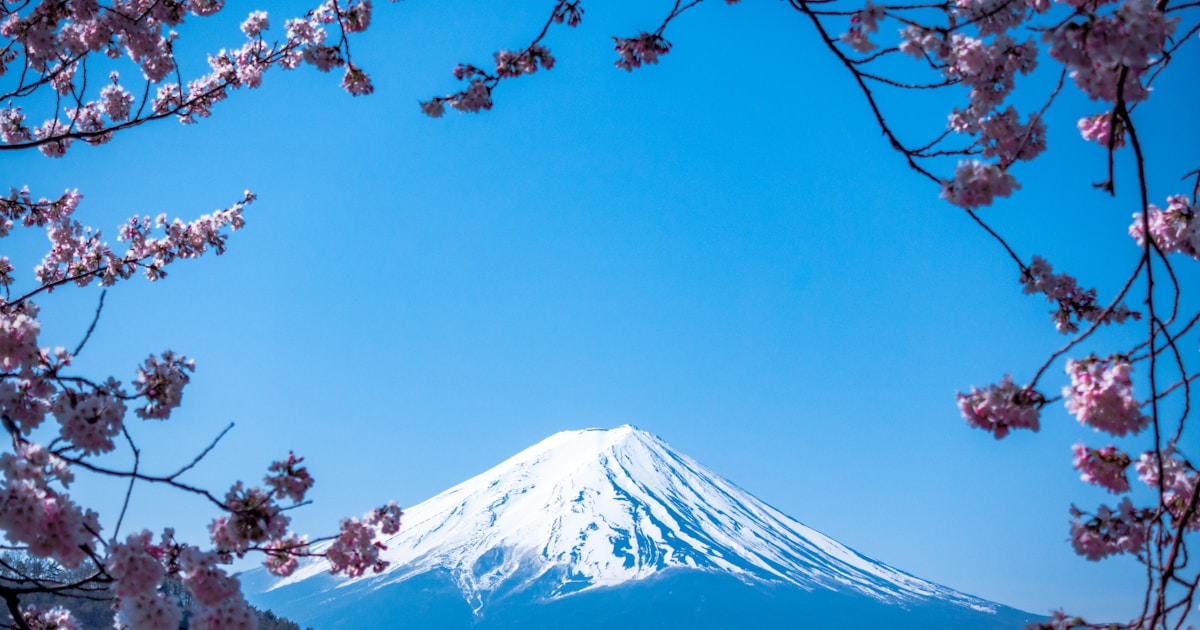
Mt. Fuji, at 3,776 meters, is Japan’s highest mountain and stands on the border of Yamanashi and Shizuoka prefectures, west of Tokyo. It is part of a UNESCO World Heritage Site as a place of worship and a source of artistic inspiration, and it is the single sight most visitors hope to see.
There are two very different ways to experience it:
- Seeing it, from the lakes at its foot, from Hakone, from Tokyo on a clear day or from the shinkansen. This is possible all year, but the mountain hides in cloud far more often than people expect.
- Climbing it, on one of four marked trails, only in the short summer season, with fees and rules that have tightened since 2024.
This guide covers both, with the official information checked in October 2026.
When you can actually see Fuji
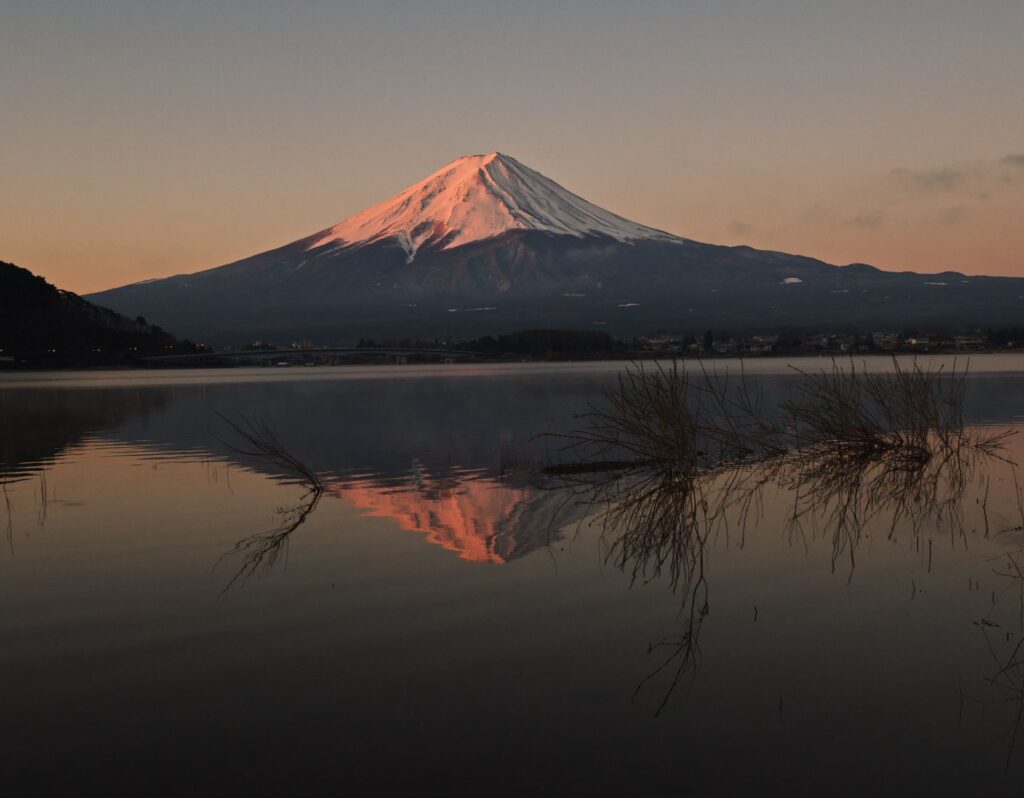
Fuji City, on the Shizuoka side of the mountain, has recorded whether Fuji is visible three times a day since 1990. Its figures are the best guide to your chances. This is the share of days on which the whole mountain was visible at 8 a.m., averaged over 1991 to 2025:
| Month | Whole mountain visible at 8 a.m. |
|---|---|
| January | 60.0% |
| February | 52.6% |
| March | 40.7% |
| April | 36.3% |
| May | 30.2% |
| June | 12.4% |
| July | 9.9% |
| August | 14.6% |
| September | 27.2% |
| October | 41.1% |
| November | 53.9% |
| December | 61.7% |
| Whole year | 36.7% |
What this tells you:
- November to February is the best season. Spring haze from March to May, the rainy season in June and July, and typhoon season in September all lower the odds.
- Mornings are best. In 2025, the whole mountain was visible on 37.3% of days at 8 a.m., but only 26.3% at noon and 24.9% at 4 p.m. Views fade as the day goes on.
- Sunshine in the city is not a guarantee. Fuji City notes that clouds or fog around the mountain can hide it even when the lowlands are sunny.
For a recent example, these were the days in 2025 on which the whole mountain was visible at 8 a.m.:
| Month (2025) | Days | Month (2025) | Days |
|---|---|---|---|
| January | 19 | July | 5 |
| February | 22 | August | 3 |
| March | 13 | September | 6 |
| April | 9 | October | 10 |
| May | 9 | November | 19 |
| June | 2 | December | 19 |
Across the whole of 2025, the mountain was fully visible at 8 a.m. on 136 days, partly visible on 95 and not at all on 134. If seeing Fuji matters to you, build flexibility into your plans: keep two or three possible days and go on the clearest morning. Our Fuji Five Lakes guide covers the lakes area in depth.
The best places to see Fuji
Kawaguchiko and the Fuji Five Lakes (Yamanashi)
The lakes on Fuji’s north side give the closest big views and are the easiest to reach from Tokyo, by the Fuji Excursion train from Shinjuku (fastest 1 hour 53 minutes) or highway buses from Busta Shinjuku.
- Chureito Pagoda: the five-story pagoda with Fuji behind it. It is 398 steps up to the viewing deck, about 25 minutes on foot from Shimoyoshida Station, open 24 hours, with a light-up in October and November (17:00–21:50). Please do not use the station’s toilets or phone the station with questions; the city asks visitors not to.
- Oishi Park: on the north shore of Lake Kawaguchi, with Fuji across the water. It is always open; take the Red Line loop bus from Kawaguchiko Station to “Kawaguchiko Natural Living Center” (about 30 minutes). It gets very congested in season, and the town asks visitors to allow extra time.
- Mt. Fuji Panoramic Ropeway: about 3 minutes up to a viewpoint at 1,075 m. The round trip rises from ¥1,000 to ¥1,200 on November 1, 2026, and the ropeway closes from December 7 to 18, 2026 for its annual inspection.
- Lake Motosu: the reflected Fuji photographed here in 1935 by Koyo Okada was used on the back of Japan’s former ¥5,000 and ¥1,000 notes. The viewpoint at Nakanokura Pass is about a 30-minute walk from the roadside, with parking for about 30 cars; by car it is about 50 minutes from Kawaguchiko IC. A sightseeing bus pass for the Kawaguchiko, Saiko and Motosuko lines costs ¥1,500 for one day.
- Lake Yamanaka, Panorama-dai: a high viewpoint about 20 minutes by car from Yamanakako IC (very small parking area), or a 30-minute walk from a bus stop on the Fujisan Station line.
About the famous “Lawson Fuji” view in Fujikawaguchiko town: the town put up a large screen in 2024 because of crowding, then replaced it with a lower barrier in August 2025. If you go, stay on the pavement and remember that people live and work there.
Shizuoka side
- Shiraito Falls (Fujinomiya): part of the Fuji World Heritage site, reached by bus from JR Fujinomiya Station.
- Miho no Matsubara: a pine-lined beach with Fuji across Suruga Bay, also part of the World Heritage site, reached by bus from JR Shimizu Station; the Miho Shirube visitor center is free.
Hakone
From Lake Ashi in Hakone you can see Fuji over the water on clear days, and the classic Hakone loop by ropeway and sightseeing boat passes several viewpoints. From October 2025 the Hakone Ropeway costs ¥2,000 one way and the pirate ship ¥1,700 (Togendai to Moto-Hakone). See our Hakone day trip guide.
Seeing Fuji from Tokyo and the shinkansen
From the shinkansen
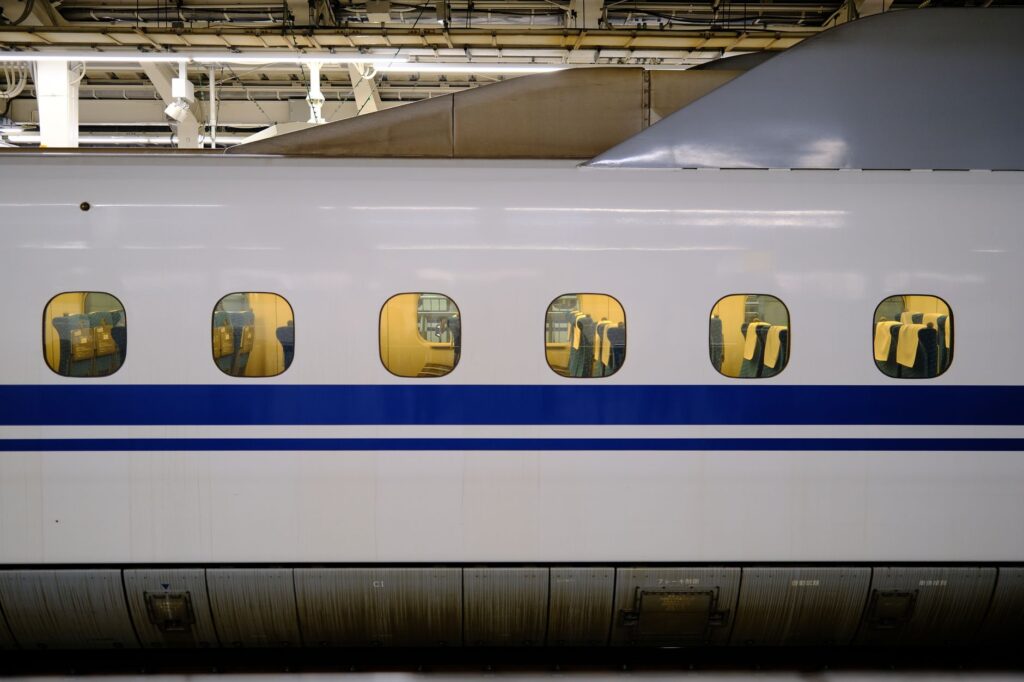
JR Central’s own advice for travelers on the Tokaido Shinkansen between Tokyo and Kyoto or Osaka: “For the best view of Mt. Fuji, choose Seat E in Standard Class or Seat D in Green Class.” The view is brief, so have your camera ready, and check the weather before you choose your seat. Our shinkansen guide explains how to reserve a specific seat.
From Tokyo
- Tokyo Metropolitan Government Building (Shinjuku): two free observation decks. The South deck is open 9:30–22:00 and the North deck 9:30–17:30 (last entry 30 minutes before closing); the South deck closes on the first and third Tuesday and the North deck on the second and fourth Monday, and both close at New Year. The Tokyo government notes that Fuji is visible to the west on many days from December to February, when the air is cold and clear.
- SHIBUYA SKY: the rooftop observation deck above Shibuya Scramble Square is another option on clear days; check the hours and book tickets online.
From Tokyo, Fuji is far away and small on the horizon, so do not expect the huge view you get at the lakes. Early mornings in winter are your best chance.
Tips for actually seeing Fuji
- Keep your Fuji day flexible. Watch the forecast and move your trip to the clearest morning if you can. Booking a refundable bus or a flexible train ticket helps.
- Stay overnight at the lakes. One night at Lake Kawaguchi gives you an evening and a morning, doubling your chances compared with a day trip.
- Arrive early. The records show views fade from morning to afternoon, and the viewpoints are also less crowded early.
- Check live views. Several local tourism and transport sites run live cameras of the mountain; a quick look before you leave Tokyo can save a wasted trip.
- Plan around closures. The Panoramic Ropeway closes from December 7 to 18, 2026, and roads on the mountain close in deep winter.
- Combine Fuji with autumn colors. The Fujikawaguchiko Autumn Leaves Festival runs from November 7 to 29, 2026, right at the start of the clearest season.
Climbing Fuji: season and trails
The 2026 season
| Trail | 2026 season |
|---|---|
| Yoshida (Yamanashi) | July 1 – September 10 |
| Subashiri (Shizuoka) | July 1 – September 10 (moved earlier from the usual July 10) |
| Fujinomiya (Shizuoka) | July 10 – September 10 |
| Gotemba (Shizuoka) | July 10 – September 10 |
| Summit crater rim | From July 10, depending on snow |
On opening days the trails opened at 9:00, and they closed at 17:00 on September 10. On the Fujinomiya side, the short section between the 5th and 6th stations opened earlier, from June 23 to early November in 2026, which lets non-climbers take a short walk above the 5th station. Opening can be delayed by weather or snow. The 2026 season has ended and the mountain is closed; the 2027 dates, fees and reservation dates had not been announced as of October 22, 2026. In 2026, the details were published in spring, and Yoshida Trail reservations opened on April 27; watch the official climbing site for 2027.
Choosing a trail
| Trail | Trailhead | Distance (up / down) | Time (up / down) | Notes |
|---|---|---|---|---|
| Yoshida | Fuji Subaru Line 5th Station, 2,305 m | 6.8 km / 7 km | About 6 h / 4 h | Most huts and facilities; busiest; easiest from Tokyo |
| Fujinomiya | 2,400 m | 4.3 km each way | About 5 h / 3 h | Shortest; steep; from the Shizuoka side |
| Subashiri | 2,000 m | 6.9 km / 6.2 km | About 7 h / 4 h | Forest at the bottom; joins Yoshida at the 8th station |
| Gotemba | New 5th Station, 1,440 m | 10.5 km / 8.4 km | About 9 h / 4 h | Longest; few huts; no first-aid center |
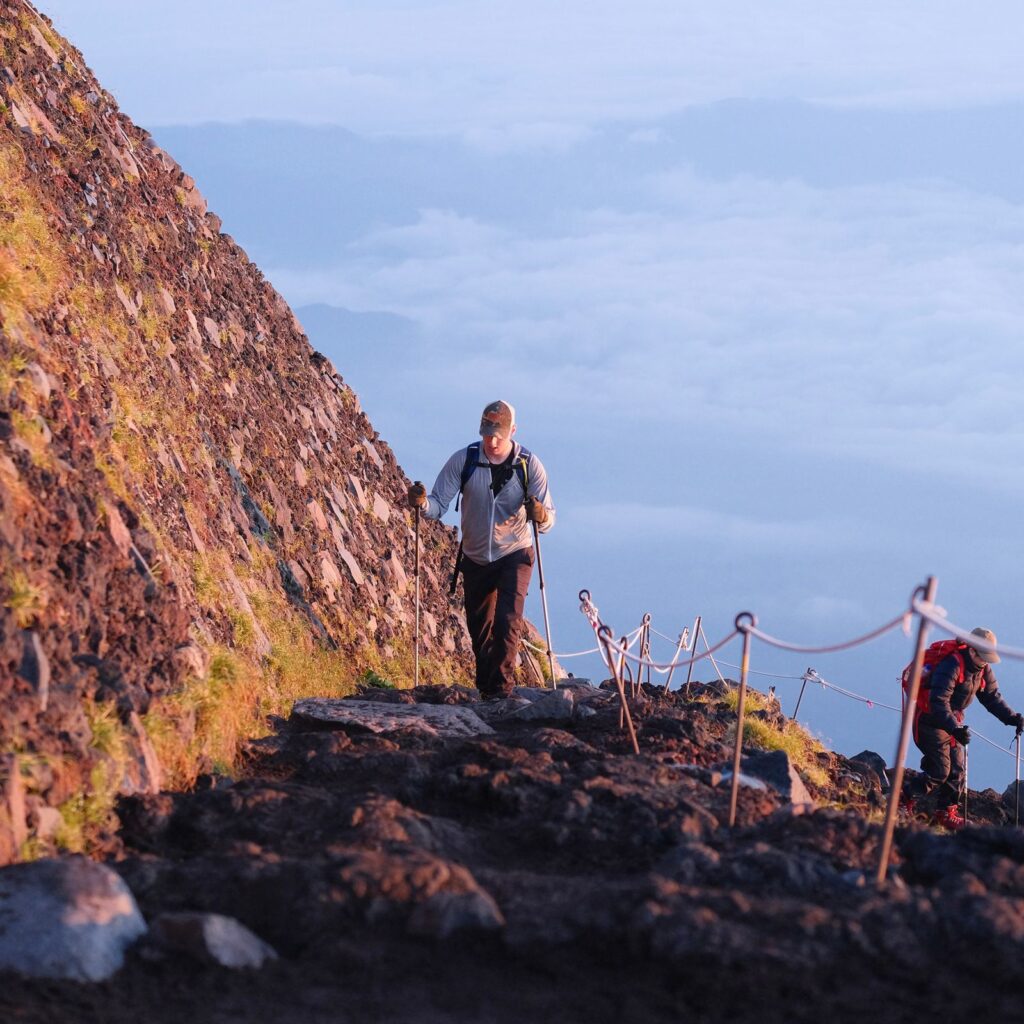
For most first-time foreign climbers, the Yoshida Trail is the practical choice: it has the most huts and first-aid points, and direct buses from Shinjuku in season. Yamanashi’s standard plan for Yoshida is about 6 hours up, 4 hours down and an hour of rest, about 11 hours in total. Be aware that Yoshida and Subashiri merge at the Original (Hon) 8th station, which becomes very crowded before sunrise.
In 2026, about 240,000 people climbed during the season (240,436 by the Ministry of the Environment’s counters), similar to 2019. The Yoshida Trail took 134,777 of them (up 11.3% on 2025), and the three Shizuoka trails 105,659 (up 25.7%): Fujinomiya 60,866, Subashiri 27,129 and Gotemba 17,664. In 2025 the total was about 205,000.
2026 climbing rules and fees
Yoshida Trail (Yamanashi)
- Fee: ¥4,000 per person per climb, required by prefectural ordinance. Children pay too; some disability-certificate holders and school activities can be exempt by applying in advance.
- Gate hours: the gate at the 5th station is closed from 14:00 to 3:00 the next morning. Climbers with a mountain-hut booking are exempt, although they are still asked to pass before 14:00 in principle.
- Daily cap: 4,000 climbers a day, not counting hut guests. The cap was not reached on any day in 2024 or 2025 during permitted hours.
- Gear check: you must carry warm clothing, two-piece rain gear (separate top and bottoms) and footwear suitable for climbing. Without all three you are refused entry, even if you have paid.
- Reservation: the Yoshida Route Passage Reservation System (in English and other languages) opened for 2026 on April 27. Booking is optional but recommended; you can book on the day until the cap is reached, and you prepay the ¥4,000. Before booking you agree to a 13-point pledge, including carrying the required gear, not climbing overnight without a hut and taking your rubbish home. Cancellation is possible until the day after payment, and date changes until the day before your climb.
- Payment: online by major credit cards or PayPay; on site also by UnionPay, WeChat Pay, Alipay+ and Rakuten Pay. There is no ATM at the 5th station.
- Tip: mobile signal at the 5th station can be unstable, so save a screenshot or printout of your booking.
These rules apply above the 5th station only. Visiting the 5th station for sightseeing is not restricted.
Booking the Yoshida Trail, step by step
- Open the reservation page linked from the official climbing site (it runs on the asoview booking platform, in English, Chinese, Korean and Vietnamese).
- Choose your date and agree to the 13-point pledge.
- Pay the ¥4,000 fee online.
- Save the confirmation offline. Advance bookers receive a wooden tag at the gate while stocks last.
Read the cancellation terms: you can cancel free until the day after payment, but from two days after payment the full fee is charged, and personal reasons, including transport delays, are not refunded. The fee is refunded if the prefecture stops passage, for example because of weather.
Fujinomiya, Gotemba and Subashiri (Shizuoka)
- Fee: ¥4,000 per person per entry, under the Shizuoka Prefecture Mt. Fuji Climbing Ordinance.
- Hours: entering between 14:00 and 3:00 requires a mountain-hut stay.
- Prior study: you must complete e-learning on the rules and manners, with a short test, in the “Shizuoka FUJI NAVI” app, which also handles registration, payment and a QR-code entry pass. The app is available in English, Korean, Chinese, Thai, Vietnamese, Indonesian and Japanese. You receive a wristband after the procedure.
- No daily cap on the Shizuoka side.
- Crossing over: if you go up or down on the Yamanashi side, Yamanashi’s rules apply as well.
Shizuoka’s rules started in 2025, and 2026 was the first summer of full enforcement. Fuji’s rules have changed every year recently, so check the official climbing site for 2027 before you book anything.
Getting to the 5th stations
Yoshida Trail: Fuji Subaru Line 5th Station
- From Shinjuku: highway buses from Busta Shinjuku run direct to the Subaru Line 5th Station in the climbing season, in about 2 hours 30 minutes, for ¥4,800 (¥4,500 if you book online); outside the season you change at Kawaguchiko or Mt. Fuji Station. Seats are reserved and go on sale one month ahead. Since October 1, 2026, Fujikyu’s own online booking has moved to a site called “Fujiyama Connect”.
- From Kawaguchiko or Fujisan stations: Fujikyu route buses cost ¥2,000 one way or ¥3,400 round trip (valid two days) since July 1, 2026. One-way fares are paid on board in cash or by IC card; round-trip tickets at counters. In the autumn timetable from October 1, 2026, buses leave Kawaguchiko Station from 9:40 to 14:00 and take about an hour; they do not run when the Subaru Line is closed above the 1st station.
- By car in summer: private cars are banned on the Subaru Line in the climbing season (in 2026 from July 3, 18:00, to September 10, 18:00). Park at Fujisan Parking at the foot of the mountain and take the shuttle bus: ¥3,400 round trip in 2026 (up from ¥3,000 in 2025), about 45 minutes, every 30 minutes. Buses leaving at 13:30 or later arrive too late for the 14:00 gate. In 2026 the first shuttle left at 3:00 on weekends, holidays and August 13–16, and at 4:00 on weekdays. The Fujisan Parking information center (0555-72-9900) is open 9:00–17:00, and until 18:00 in the climbing season.
Shizuoka trails
- Fujinomiya: the Fuji Skyline is closed to private cars in the season (July 10 to September 10 in 2026). The “Fugaku Liner” bus from Mishima Station’s South Exit reached Fujinomiya 5th Station in about 90 minutes for ¥3,500 one way in 2026, bookable one month ahead. Drivers park at Mizugatsuka, the shuttle base, which in the climbing season was open 5:00–13:00 to pre-registered users only.
- Gotemba: no car ban; you can drive to the New 5th Station or take a bus from Gotemba Station.
- Subashiri: the Fuji Azami Line is closed to private cars in the season; buses run from Gotemba Station.
Prefer an organized trip? Many travelers see the 5th station and lakes on a guided day tour from Tokyo: browse Mt. Fuji day tours on Klook.
Planning your trip? Get our free 7-Day Japan Itinerary (PDF)
Get the free guide →Mountain huts
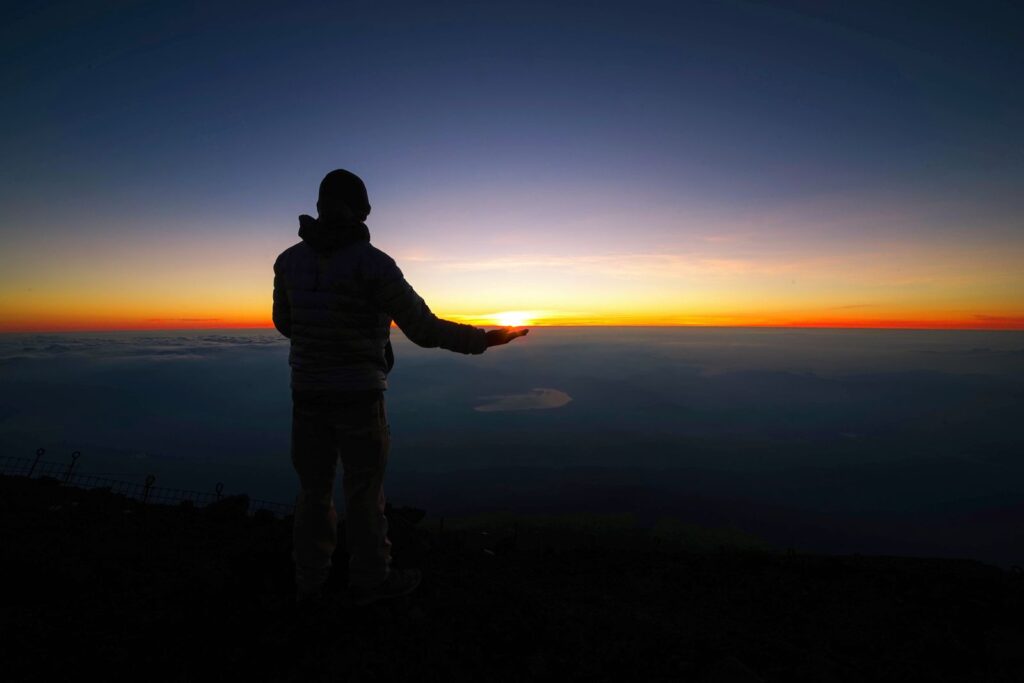
Staying in a mountain hut is the safe and sensible way to climb: you sleep partway up, adjust to the altitude, and start for the summit in the early hours to see the sunrise (goraiko). Yamanashi strongly discourages “bullet climbing” straight through the night without a hut, because of altitude sickness, hypothermia, crowding and falling rocks.
- Book separately: hut reservations and trail reservations are separate. Book your hut directly, and ask each hut when its booking opens.
- Hut guests on Yoshida do not need a separate passage reservation but must pay the ¥4,000 fee, which can be paid on site.
- Facilities: no running water, baths or washrooms; men and women may share rooms; bedding is provided.
- No camping: tents and campfires are not allowed.
- Cash: bring plenty of cash and ¥100 coins for huts and toilets. Toilets on the mountain ask a tip of about ¥100–300 per use, ¥300 at the summit; the summit toilet on the Fujinomiya side also accepts PayPay.
- Offline proof: keep your hut confirmation as a screenshot or printout.
Gear, altitude sickness and safety
What to carry
The official climbing site lists, for a climb with one night in a hut:
- High-cut hiking boots.
- Separate rain jacket and rain trousers (vinyl raincoats sold at huts tear in strong wind).
- Winter layers: fleece, down jacket, gloves and a neck warmer.
- A headlamp with spare batteries, a backpack of about 30 liters, 1 to 2 liters of water and high-calorie snacks.
- Rubbish bags, cash and ¥100 coins, sun protection, a map, poles, a first-aid kit and a written plan.
- Recommended: a helmet, dust mask, goggles, a mobile battery, earplugs and an eye mask.
There is a gear shop at the Fuji Subaru Line 5th Station if you forget something. Remember that on the Yoshida Trail, warm clothing, two-piece rain gear and proper footwear are checked at the gate, and you will be turned back without them.
Altitude sickness
Symptoms include headache, dizziness, fatigue, nausea, vomiting and loss of appetite. To reduce the risk, the official advice is to rest for about one to two hours near the 5th station before starting, walk slowly, breathe deeply and drink often. If you use a pulse oximeter, a reading below 90% suggests altitude sickness, and below 80% means descend immediately. “Descending is the best course of action.”
Weather and cold
Temperature falls about 0.6°C for every 100 meters you climb, and feels about 1°C colder for every meter per second of wind. At the summit it is in single digits even in midsummer and can drop below freezing in early July and from late August. Summer thunderstorms are common; take shelter at once if you hear thunder. Heat stroke is a risk lower down: the official advice is to drink about 1.2 liters a day and carry enough water for the descent, especially on the Yoshida, Subashiri and Gotemba trails.
Crowds and first aid
Crowds peak from late July to late August, especially on weekends and holidays, and the trail below the summit jams before sunrise. In 2026, first-aid stations included the Yoshida 5th station (7:00–19:00), the Yoshida 7th station (24 hours) and the Subashiri 5th station (6:00–21:00). Drones and paragliders are banned above the 8.5th station. Most guided climbing tours accept children from about fourth grade, depending on fitness.
Climbing with a guide or with children
Yamanashi asks inexperienced climbers to go with a guide, and most guided climbing tours accept children from about fourth grade, depending on fitness. A guide also takes care of hut bookings and pacing, which matters at altitude. Whatever you choose, follow the instructions of the prefecture’s guidance officers on the trail.
Off-season: why you should not climb
Outside the summer season the trails are closed from the 5th station up (from the 6th station on Fujinomiya), and Yamanashi describes them as closed to passage under the Road Act. Conditions are winter-mountain conditions: snow, ice, extreme cold and strong winds. Both prefectures strongly discourage off-season climbing.
Rescues have so far been publicly funded, but that is changing. In September 2026, Yamanashi’s governor announced a plan to charge off-season climbers for prefectural helicopter rescues, aiming for 2027 through a new ordinance, and Shizuoka is studying similar measures. No new off-season ordinance was in force as of October 2026. The simple advice: enjoy Fuji from below outside July to early September.
You can still visit the Fuji Subaru Line 5th Station outside the climbing season while the road is open, but it closes in deep winter (last winter, access to the 5th station ended after January 18, 2026, and the road fully reopened on April 18, 2026). Check road and bus status before you go.
World Heritage centers
| Center | Admission | Hours |
|---|---|---|
| Yamanashi Prefectural Fujisan World Heritage Center (Fujikawaguchiko) | Free | 9:00–17:00 (July–August 8:30–18:00; December–February 9:00–16:30). South Building closed on the 4th Tuesday. |
| Mt. Fuji World Heritage Centre, Shizuoka (Fujinomiya) | ¥500 for the permanent exhibition (free for 15 and under, students, 70 and over, and people with disabilities and a caregiver) | 9:00–17:00 (July–August to 18:00); closed on the 3rd Tuesday. Remaining 2026 closures include November 17, November 30, December 1–4, December 15 and December 27–31. |
The Yamanashi center is at Funatsu 6663-1, Fujikawaguchiko (0555-72-0259), and the Shizuoka centre at 5-12 Miya-cho, Fujinomiya (0544-21-3776). Both are good rainy-day options and explain why Fuji is a World Heritage site.
What changed in 2025–2026
- Shizuoka introduced a ¥4,000 fee, a 14:00–3:00 hut rule and mandatory e-learning in 2025, with full enforcement in 2026.
- The Subashiri Trail opened on July 1 in 2026, instead of July 10.
- The Yoshida Trail kept its 2025 rules in 2026: ¥4,000, the 14:00–3:00 gate, a 4,000-a-day cap and the gear check.
- The Subaru Line shuttle rose to ¥3,400 round trip, and Fujikyu’s 5th-station route bus fares were revised on July 1, 2026.
- Fujikyu’s online bus booking moved to “Fujiyama Connect” on October 1, 2026.
- The Mt. Fuji Panoramic Ropeway round trip rises to ¥1,200 on November 1, 2026.
- Fujikawaguchiko Town and Fujiyoshida City plan an accommodation tax of ¥200 per person per night from April 1, 2027.
- Yamanashi dropped its light-rail plan for the Subaru Line in 2024 in favor of a rubber-tired “Fuji Tram”, which was still at the study stage in 2026.
A sacred mountain
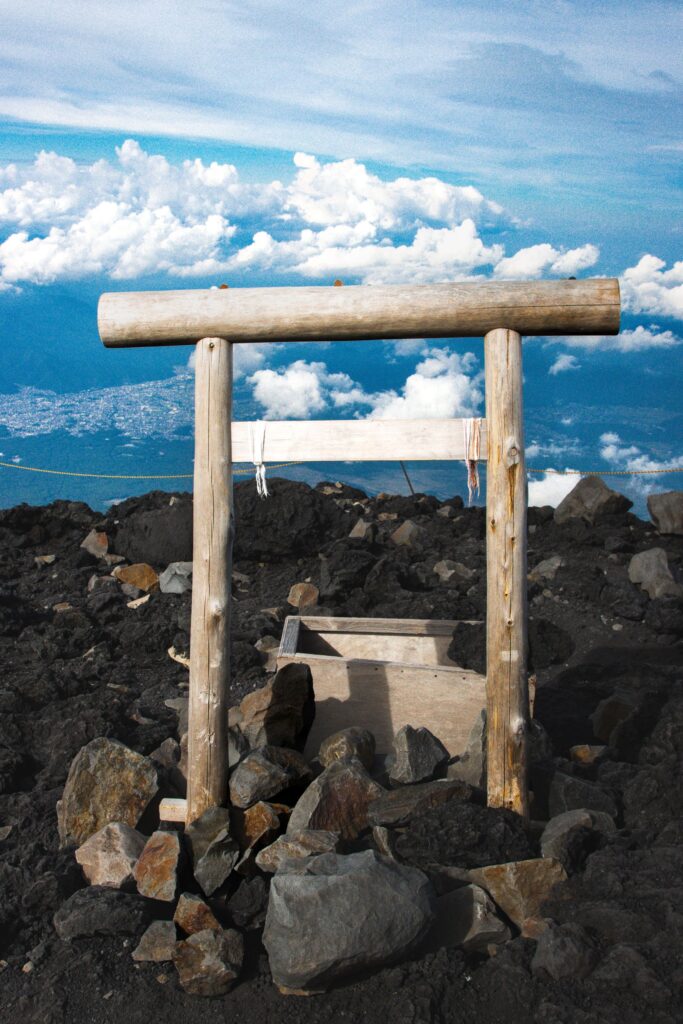
Fuji has been worshipped for centuries, and that is part of why it is a World Heritage site rather than only a natural one. The upper mountain, from the 8.5th station up, belongs to Fujisan Hongu Sengen Taisha shrine, and drones and paragliders are banned there. You will see torii gates and small shrines on the summit, and many Japanese climbers time their ascent to greet the sunrise, goraiko, which carries a sense of occasion as well as a view. The mountain has inspired artists too: the reflected Fuji at Lake Motosu, photographed in 1935, appeared on Japan’s banknotes for decades. Treat the summit shrines with the same respect you would any shrine, and take all your rubbish home.
Sample plans
A Fuji-viewing day trip from Tokyo (best November to February)
- Take the first Fuji Excursion train (7:30 from Shinjuku) or an early bus from Busta Shinjuku.
- Go straight to Oishi Park or Chureito Pagoda while the morning is clear.
- Ride the Panoramic Ropeway, then visit the Fujisan World Heritage Center.
- Lunch on hoto noodles, and back to Tokyo in the afternoon.
An overnight to maximize your chances
Stay a night by Lake Kawaguchi and you get two mornings at the lake instead of one. To compare places to stay, check Kawaguchiko hotels on Agoda.
A two-day climb (July to early September)
- Day 1: bus from Shinjuku to the Subaru Line 5th Station; rest an hour or two to acclimatize; pay the fee, pass the gear check and climb to your hut by afternoon.
- Night: eat, sleep early.
- Day 2: start in the early hours for the summit and sunrise; descend to the 5th station and take the bus back to Tokyo.
Useful Japanese on the mountain
| Japanese (romaji) | Meaning |
|---|---|
| Yoyaku shite imasu. | I have a reservation (at a hut or the gate). |
| Goraiko wa nanji desu ka? | What time is sunrise? |
| Toire wa ikura desu ka? | How much is the toilet? |
| Kibun ga warui desu. | I feel sick. |
| Atama ga itai desu. | I have a headache. |
| Tasukete kudasai! | Please help! |
In an emergency anywhere in Japan, call 119 for an ambulance or rescue, and 110 for the police.
Frequently asked questions
When is the best time to see Mt. Fuji? From November to February, and in the morning. Fuji City’s records show the whole mountain visible at 8 a.m. on about 60% of days in December and January, compared with about 10% in July.
Can I climb Mt. Fuji now? Not safely or legally outside the season. In 2026 the season was July 1 to September 10 on the Yoshida and Subashiri trails and July 10 to September 10 on the Fujinomiya and Gotemba trails. The 2027 dates had not been announced as of October 2026.
How much does it cost to climb Mt. Fuji? In 2026, the fee was ¥4,000 per person on the Yoshida Trail and ¥4,000 on the Shizuoka trails, plus transport (for example ¥4,800 by direct bus from Shinjuku in season), a mountain hut, food and toilet tips.
Do I need a reservation to climb Fuji? On the Yoshida Trail, reservation is optional but recommended, and you prepay the fee. On the Shizuoka side, you register, pay and complete e-learning in the FUJI NAVI app. Mountain huts must be booked separately.
Which trail is best for beginners? The Yoshida Trail, for most people: it has the most huts and first-aid points and direct buses from Shinjuku in season. It is also the busiest.
How long does it take to climb Mt. Fuji? On the Yoshida Trail, about 6 hours up and 4 hours down. Fujinomiya is shorter (about 5 hours up), and Gotemba much longer (about 9 hours up).
Can I see Fuji from the shinkansen? Yes, on a clear day. JR Central recommends seat E in Standard Class or seat D in the Green Car on the Tokaido Shinkansen.
Can I see Mt. Fuji from Tokyo? On clear days, especially in winter, from high places such as the free observation decks of the Tokyo Metropolitan Government Building in Shinjuku. It looks small from the city.
Is the 5th station open outside the climbing season? The Fuji Subaru Line 5th Station can be visited while the road is open, but access closes in deep winter. Check road and bus information before you go.
Can children climb Mt. Fuji? Yes, with preparation. Children pay the same ¥4,000 fee, and most guided tours accept children from about fourth grade, depending on fitness. Altitude sickness can affect anyone, so plan a hut night and turn back if symptoms appear.
What happens if I arrive at the Yoshida 5th station after 14:00? Without a mountain-hut booking you cannot pass the gate until 3:00 the next morning. On the Shizuoka trails, entering between 14:00 and 3:00 also requires a hut stay. Plan your bus so that you arrive well before 14:00, with time to rest.
Is there an ATM at the 5th station? No. There is no ATM at the Fuji Subaru Line 5th Station, so bring enough cash for huts, toilets (¥100–300 per use, ¥300 at the summit) and food. The Yoshida trail fee can be paid by card or QR payment.
Plan the rest of your trip
- Fuji Five Lakes guide
- Best day trips from Tokyo
- Hakone day trip
- Shinkansen guide
- Tokyo to Kyoto
- Best hotels in Tokyo
- Best eSIM for Japan
Sources: official Mt. Fuji climbing site (fujisan-climb.jp: season, trail comparison, rules, FAQ, health and safety, things to know); Yamanashi Prefecture (2026 climbing information, Subaru Line car restrictions and shuttle, FAQ, Fuji Tram); Shizuoka Prefecture (climbing ordinance, FUJI NAVI); Ministry of the Environment climber counts via Kyodo; Fuji City “Mt. Fuji observation record” report; Fujikyu bus and highway bus; Fujiyoshida City and Fujikawaguchiko Town tourism sites; Yamanashi Tourism; Mt. Fuji Panoramic Ropeway; Tokyo Metropolitan Government observation deck information; JR Central; Yamanashi and Shizuoka World Heritage centers; Ministry of Internal Affairs and Communications (accommodation tax) (checked October 2026). Prices and hours change; if you spot something out of date, please let us know.
Going to Japan? Speak Japanese with confidence.
Hirameki Japanese — camera translate for menus and signs, a two-way conversation mode, and furigana + romaji on every phrase. Free to download with kana charts, conversation mode and starter words; a one-time purchase unlocks everything.

Plan your Japan trip
Two things every first-timer should book
Some links are affiliate links. If you book through them we may earn a small commission at no extra cost to you.