The Tokyo–Kyoto route is the most traveled corridor in Japan, and for good reason: it connects the country’s pulsating modern capital with its ancient cultural heart, 450 km apart. Every year millions of visitors make this journey, and there are more options than most travelers realize — from the world-famous Shinkansen bullet train to overnight buses that can save both money and a night’s hotel cost. This complete guide covers every way to get from Tokyo to Kyoto, with travel times, costs in both JPY and USD, tips on which option is best for different types of travelers, and how the Japan Rail Pass affects the calculation.
A note from Jack, editor of Japan Real Guide:
I have made the Tokyo to Kyoto journey more times than I can count at this point. Shinkansen, overnight bus, local train, and — once, memorably — a combination of local trains that took about eight hours but cost almost nothing and passed through parts of central Japan I would never otherwise have seen.
My honest assessment: for most visitors, the Nozomi Shinkansen (2 hours 15 minutes, around ¥13,800) is the right choice. The overnight bus is genuinely good value for those on tight budgets but not particularly comfortable. The local train option is for travellers who have time and enjoy the journey as the destination. The guide below covers all three options honestly, including the hidden costs of each.
One consistent piece of advice: book Shinkansen seats in advance on holiday weekends (Golden Week, Obon, New Year) or you may find the reserved carriages fully booked and be limited to standing in the unreserved areas.
Before heading out, make sure you have a Japan eSIM ready. Get your Japan eSIM (Stay connected from day 1) →
Book your hotel on Agoda (Best prices guaranteed) → or
Overview: Tokyo to Kyoto Options at a Glance
| Method | Time | Cost (one way) | JR Pass? |
|---|---|---|---|
| Shinkansen Nozomi | 2h 15min | ¥13,910 ($90 USD) | Pass + NOZOMI MIZUHO Ticket (¥4,960) |
| Shinkansen Hikari | 2h 40min | ¥13,910 ($90 USD) | Covered |
| Shinkansen Kodama | 3h 45min+ | ¥13,910 ($90 USD) | Covered |
| Highway Bus | 8–9 hrs | ¥3,000–¥6,000 ($19–$39 USD) | Not covered |
| Overnight Bus | 8–9 hrs (overnight) | ¥4,000–¥10,000 ($26–$65 USD) | Not covered |
| Domestic Flight | ~3.5 hrs total | ¥8,000–¥25,000+ ($52–$163 USD) | Not covered |
Option 1: Shinkansen (Bullet Train) — The Recommended Choice
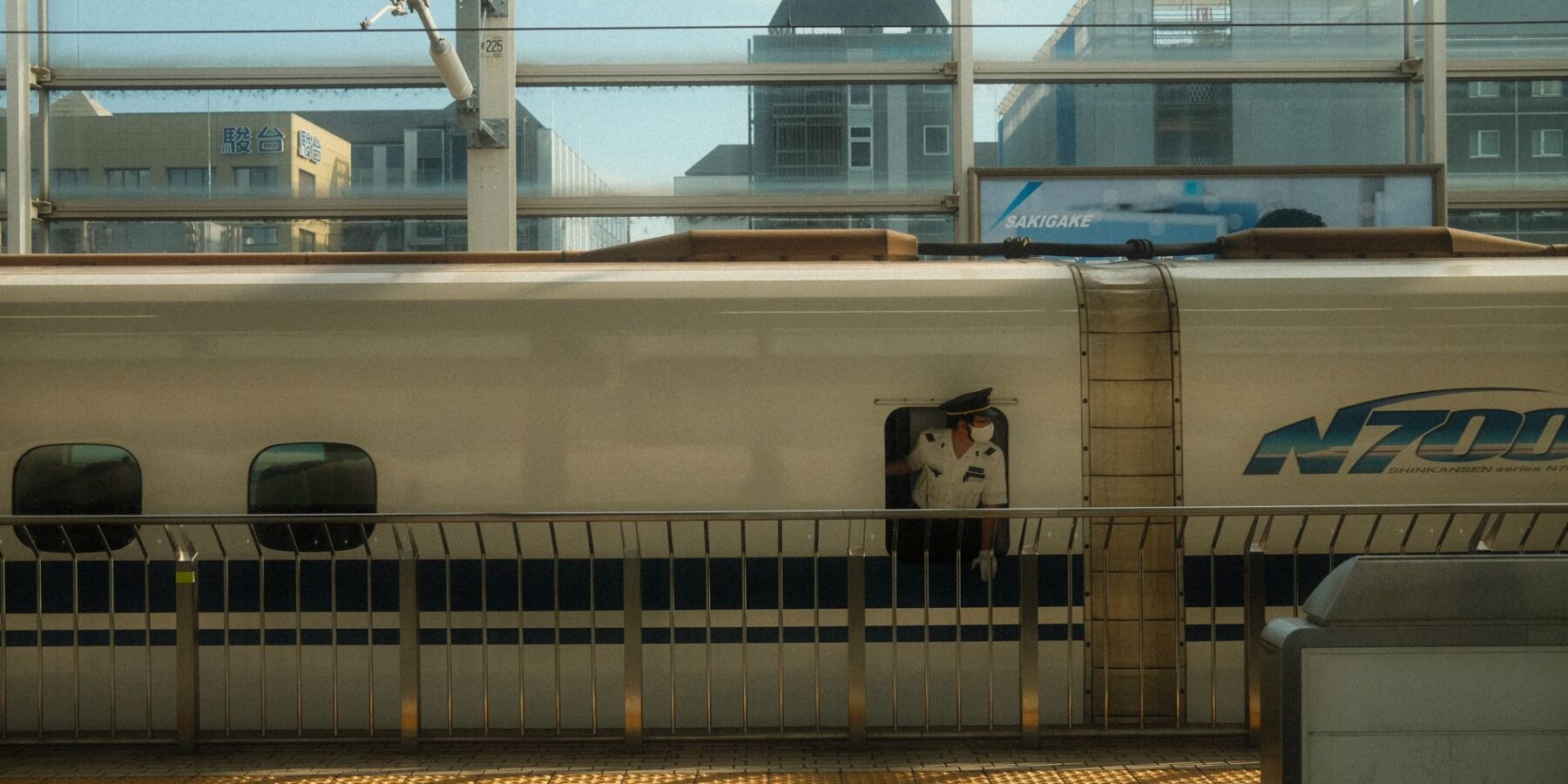
The Tokaido Shinkansen is Japan’s most famous transport corridor, running from Tokyo Station to Shin-Osaka via Kyoto. It is the most popular way to travel between Tokyo and Kyoto, combining speed, comfort, reliability, and the unique experience of riding one of the world’s most impressive high-speed rail systems.
The Three Train Types: Nozomi, Hikari, and Kodama
Nozomi (fastest — JR Pass holders need a NOZOMI MIZUHO Ticket)
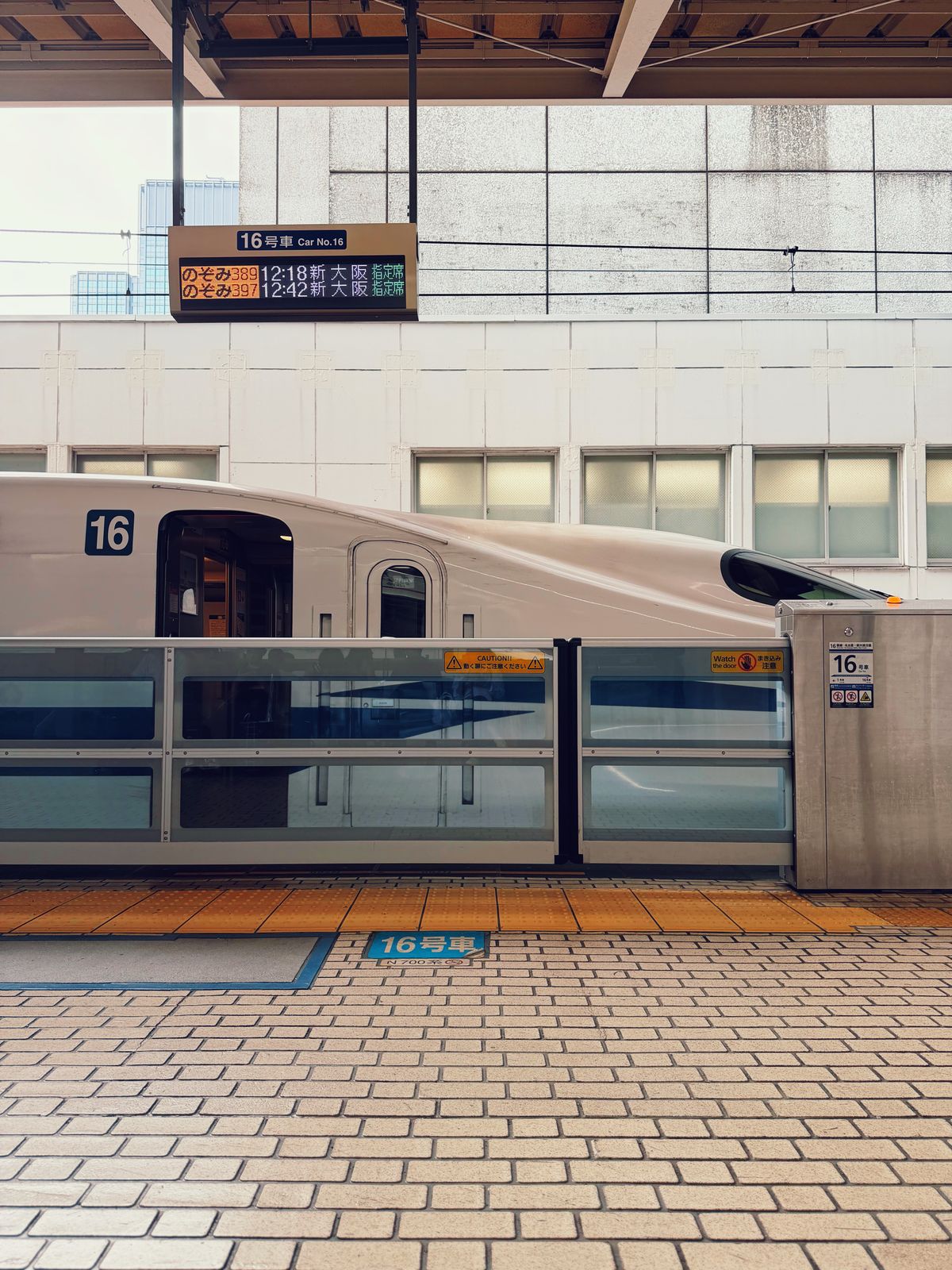
The Nozomi is the fastest Shinkansen service, reaching Kyoto in approximately 2 hours 15 minutes. It stops only at major stations (Shinagawa, Shin-Yokohama, Nagoya, Kyoto, Shin-Osaka) and departs very frequently — typically every few minutes during peak hours. The Nozomi is the train most business travelers use.
Important: The Japan Rail Pass alone does not cover the Nozomi. If you have a pass, buy a one-way NOZOMI MIZUHO Ticket (¥4,960 Tokyo–Kyoto, valid for one day; sold at station ticket machines and ticket offices up to one month ahead) and you can ride it. Without a pass, the regular fare is ¥13,910 ($90 USD) for a reserved seat one way, or ¥13,320 ($87 USD) for an unreserved seat (standing or occupying available unseated car).
Hikari (recommended for JR Pass holders)
The Hikari is the second-fastest service, reaching Kyoto in about 2 hours 40 minutes. It stops at a few additional stations (Odawara, Atami, Hamamatsu, or similar, depending on the service) and is fully covered by the Japan Rail Pass with no extra charge. Seat reservations for Hikari are available at no cost at JR ticket offices.
For most tourists, the 25-minute difference between Nozomi and Hikari is completely insignificant, making Hikari the default smart choice for JR Pass holders, since it needs no extra ticket.
Kodama (slowest — covered by JR Pass)
The Kodama stops at every station on the Tokaido Shinkansen line, taking around 3 hours 45 minutes or more to reach Kyoto. It is rarely used for the Tokyo–Kyoto journey except when seeking guaranteed unreserved seating or traveling to intermediate stations.
Reserved vs. Unreserved Seats
All Shinkansen trains have both reserved seat cars and unreserved cars (except the rare all-reserved Nozomi and Mizuho services). Reserved seats guarantee you a specific numbered seat; unreserved cars mean you can sit in any available seat. During peak periods (Golden Week, Obon, New Year, cherry blossom season), the unreserved cars can be packed and standing may be required for the full journey. Reserve a seat for peace of mind.
JR Pass holders can reserve seats for free at any JR ticket office (midori-no-madoguchi) or green ticket machines. Do this as soon as you arrive in Japan, especially for popular travel dates.
Where to Board the Shinkansen in Tokyo
The Tokaido Shinkansen departs from Tokyo Station (Shinkansen platforms 14–19, accessible via JR turnstiles). It also stops at Shinagawa Station (a good option for travelers staying in southern Tokyo or near Haneda Airport). Shinkansen does NOT stop at Shinjuku, Shibuya, or Harajuku — plan your journey to Tokyo or Shinagawa Station first.
Where to Alight for Kyoto
All Hikari and Nozomi trains stop at Kyoto Station, which is a major hub with direct subway and bus connections to all major sightseeing areas. Unlike Osaka, Kyoto has only one Shinkansen stop, so there is no ambiguity about where to get off.
Option 2: Highway Bus — Best Budget Option
For budget-conscious travelers who don’t have a JR Pass, the highway bus is the cheapest way to get from Tokyo to Kyoto. Services run from multiple Tokyo departure points (Shinjuku Expressway Bus Terminal being the main one) to Kyoto Station and points around the city.
Daytime Bus
Daytime buses depart in the morning and early afternoon, arriving in Kyoto roughly 8–9 hours later. Fares vary by date and seat type; Willer daytime fares sampled were about ¥11,000–¥14,000 per person one way. Buses have reclining seats, but charging outlets and Wi-Fi are not standard; many budget buses list neither. Rest stops are made at highway service areas approximately every 2 hours.
Overnight Bus
The overnight bus departs Tokyo in the late evening (typically about 9:30–11:30pm) and arrives in Kyoto the following morning (about 5:30–7:30am), saving you a night’s accommodation cost. This is particularly popular with young travelers and backpackers. Prices for overnight buses vary by date, from about ¥1,500 for basic 2-2 seats on discount days to over ¥8,000 at peak, with more for premium “relaxation seats” with more legroom and privacy curtains.
Premium overnight buses with upgraded seat types on some services offer more space and privacy that make the overnight journey genuinely comfortable — much better than a typical economy flight. For a solo traveler, this can represent excellent value: ¥7,000–¥10,000 ($45–$65 USD) for transportation plus an essentially free night’s accommodation in a comfortable seat.
Booking Highway Buses
Book through Willer Express (willerexpress.com), Japan Bus Online, or at the bus terminal ticket counters. Booking in advance is strongly recommended for popular routes and dates.
Option 3: Domestic Flight — Rarely Worth It
There are no direct flights between Tokyo and Kyoto because Kyoto has no airport. The nearest airports are Osaka Itami (for central Osaka, about 75 minutes from central Kyoto) and Kansai International Airport (about 90 minutes from Kyoto by train).
Flights from Tokyo (Haneda or Narita) to Itami Airport take about 1 hour in the air, but when you add check-in time, airport transit, and the journey from Itami to Kyoto, the total door-to-door time is around 3.5–4 hours, longer than the Nozomi Shinkansen and much more stressful. Prices for advance-purchased flights start around ¥8,000 ($52 USD) but frequently exceed ¥20,000 ($130 USD). The Shinkansen is almost always the better option.
The Japan Rail Pass: Is It Worth It for Tokyo–Kyoto?
The Japan Rail Pass covers all Hikari and Kodama Shinkansen services at no extra charge; to ride the Nozomi, add a NOZOMI MIZUHO Ticket (¥4,960 Tokyo–Kyoto). Bought on the official JR Pass website, a 7-day Ordinary pass costs ¥50,000 ($325 USD); a 14-day pass costs ¥80,000 ($520 USD).
That official-website price is offered for a limited time, with no end date announced. Through overseas travel agencies the same passes cost ¥53,000 (7 days) and ¥84,000 (14 days) since October 1, 2026.
The Tokyo–Kyoto round trip on the Hikari costs ¥13,910 × 2 = ¥27,820 ($181 USD). If you’re also making one or two more long-distance JR journeys (say, Kyoto to Hiroshima and back, or a trip to Hakone), a 7-day pass starts to pay for itself. If you’re traveling more extensively — Tokyo, Kyoto, Hiroshima, Nara, and perhaps Osaka — the pass is almost certainly worth it.
However, for a simple Tokyo–Kyoto–Tokyo trip with minimal travel elsewhere, the JR Pass may not be worth buying, especially now that prices have increased. Use the Japan Rail Pass calculator (available on the JR Pass website) to compare your planned journeys against the pass cost before purchasing.
If the math works out, buy your JR Pass through JRPass.com — an authorised distributor with clear USD/GBP/EUR pricing.
Book Japan tours and rail passes on Klook →
Getting Around After Arriving in Kyoto
Kyoto Station is well-connected to all major sightseeing areas:
- Subway Karasuma Line: Runs north through the city center (Shijo for Nishiki Market) to Kitaoji, where buses connect to Kinkaku-ji. ¥220 ($1.43 USD) base fare.
- City Bus: Kyoto’s extensive bus network reaches most major temples and shrines. One-ride ¥230 ($1.50 USD); the old bus-only day pass has been discontinued, so heavy sightseers should get the Subway & Bus 1-Day Pass (¥1,100).
- Taxi: Readily available outside Kyoto Station. For short distances (up to 10 min) ¥700–¥1,200 ($4.55–$7.80 USD). Many taxis have English-speaking drivers.
- Bicycle rental: Kyoto is relatively flat and has dedicated bike lanes. Rental costs ¥1,000–¥1,500 ($6.50–$10 USD) per day — excellent for exploring at your own pace.
Practical Tips for the Tokyo–Kyoto Journey
- Book reserved seats in advance: During peak periods (cherry blossom, Golden Week, Obon, New Year) reserved seats sell out weeks ahead. Book at least 2–4 weeks in advance.
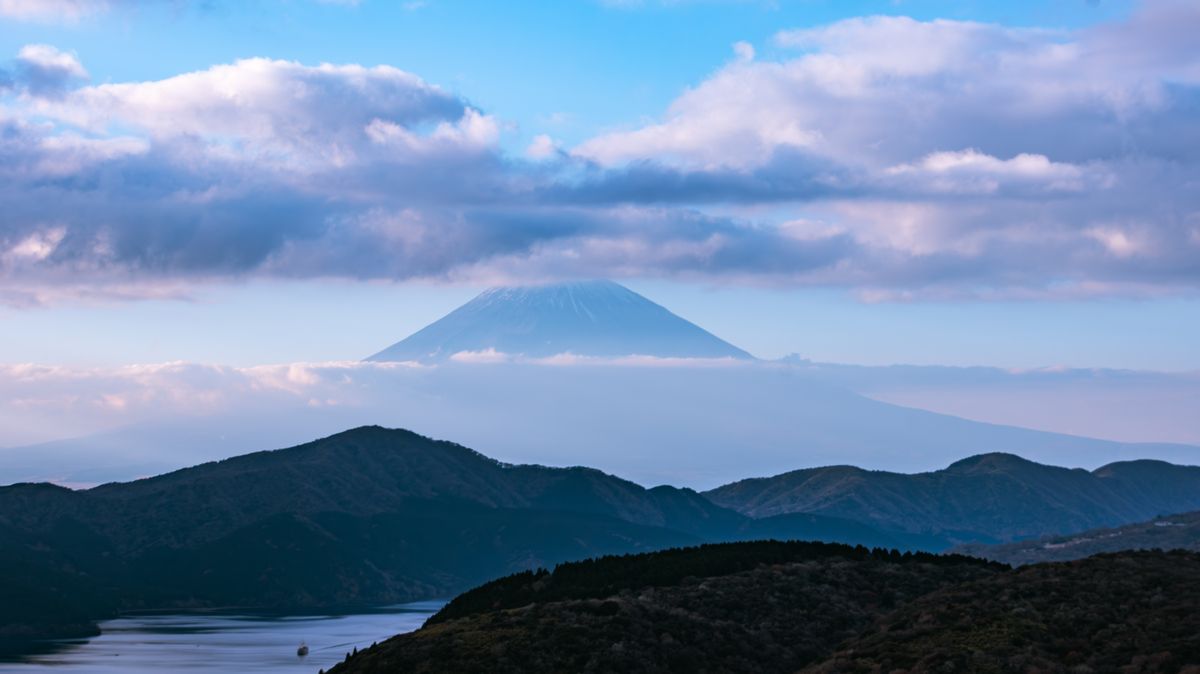
- Sit on the right side (D/E seats) heading to Kyoto: For Mount Fuji views, sit on the right-hand side of the train (D or E window seats) when heading from Tokyo to Kyoto. The best views are around Shin-Fuji and Mishima stations, about 45–55 minutes after departure from Tokyo.
- Large luggage: Since 2020, on the Tokaido, Sanyo and Kyushu Shinkansen, bags over 160 cm (up to 250 cm) in total dimensions need a reserved seat with an oversized baggage area, or a ¥1,000 fee applies on board; bags over 250 cm are not allowed. Make this reservation when booking your seat.
- Ekiben (station bento): Buy a beautiful bento box (ekiben) from Tokyo Station’s Gransta shopping area to eat on the train — a quintessentially Japanese travel experience.
- IC cards: Load a Suica or Pasmo IC card for seamless payment on all JR, subway, and bus systems without ticket-buying queues.
- Stay connected: Mobile navigation is essential for finding your way around both Tokyo Station and Kyoto. Get a Japan eSIM before you travel to avoid roaming charges.
Book a Tokyo airport transfer with Welcome Pickups →
Get your Japan eSIM (Stay connected from day 1) →
Frequently Asked Questions: Tokyo to Kyoto Travel
How long does it take to get from Tokyo to Kyoto by Shinkansen?
The fastest Shinkansen service, the Nozomi, reaches Kyoto in approximately 2 hours 15 minutes. The Hikari (covered by JR Pass) takes about 2 hours 40 minutes. The slowest service, Kodama, takes 3 hours 45 minutes or more. Most travelers take the Nozomi or Hikari, making the journey significantly faster than any other option.
How much does the Shinkansen cost from Tokyo to Kyoto?
The standard fare for a reserved seat on the Shinkansen (Nozomi or Hikari) from Tokyo to Kyoto is ¥13,910 ($90 USD) one way. An unreserved seat (Jiyuseki) costs ¥13,320 ($87 USD). The JR Pass covers the Hikari and Kodama services at no additional charge; pass holders can ride the Nozomi by adding a NOZOMI MIZUHO Ticket (¥4,960).
Is the overnight bus from Tokyo to Kyoto safe?
Yes. Japanese overnight buses operate to very high safety and comfort standards. Modern buses have seatbelts, GPS tracking, and multiple driver rest stops. Premium services offer semi-private seats with curtains and recline capabilities. The main downsides are the travel time (8–9 hours) and the modest discomfort of sleeping in a seat. For healthy young travelers on a budget, it’s an excellent option.
Which station in Tokyo do I use for the Shinkansen to Kyoto?
The Tokaido Shinkansen departs from Tokyo Station (most services) and Shinagawa Station. Both stations are on the JR Yamanote Line. If you’re coming from Shinjuku or Shibuya, Shinagawa is usually more convenient. If coming from Akihabara or Ueno, Tokyo Station is better. Both stations serve all Shinkansen types.
Can I use a day JR Pass for the Tokyo–Kyoto Shinkansen?
Yes. The standard 7-day and 14-day JR Passes cover all Hikari and Kodama Shinkansen services between Tokyo and Kyoto at no additional charge, including seat reservations. The Nozomi is the only major exception — with any pass length you need to add a one-way NOZOMI MIZUHO Ticket (¥4,960 Tokyo–Kyoto) to ride it.
What time is the first Shinkansen from Tokyo to Kyoto?
The first Nozomi from Tokyo Station departs at around 6:00am, arriving in Kyoto at approximately 8:20am. The first Hikari departs slightly later. Check the JR Central website, Google Maps, Japan Travel by NAVITIME or Jorudan for exact daily schedules, which can vary slightly by day of week and season.
Is it better to fly or take the Shinkansen from Tokyo to Kyoto?
In almost all cases, the Shinkansen is better. There is no direct airport for Kyoto; the nearest is Osaka Itami, which adds 60–90 minutes of ground travel to your journey. The Shinkansen is faster door-to-door, deposits you directly at Kyoto Station in the city center, has no security screening delays, and offers a more comfortable and scenic journey. Only if you find an exceptional airfare discount does flying become competitive on this route.
Related guides
- Japan Shinkansen Guide: How to Ride the Bullet Train Like a Pro
- Japan SIM Card & eSIM Guide 2026: Best Options for Staying Connected
- Japan Rail Pass: Is It Worth It in 2026? (Honest Guide)
Going to Japan? Speak Japanese with confidence.
Hirameki Japanese — camera translate for menus and signs, a two-way conversation mode, and furigana + romaji on every phrase. Free to download with kana charts, conversation mode and starter words; a one-time purchase unlocks everything.

Plan your Japan trip
Two things every first-timer should book
Some links are affiliate links. If you book through them we may earn a small commission at no extra cost to you.