Osaka has one of the most compelling food cultures on earth. The city’s unofficial motto — kuidaore (食い倒れ), “eat until you drop” — isn’t a warning but an aspiration. Osakans have spent centuries perfecting the art of street food, neighborhood eating, and casual dining that elevates everyday meals into genuine pleasures. This guide takes you through everything you need to eat in Osaka, from the iconic street foods of Dotonbori to the hidden izakayas that locals return to every week.
A note from Jack, editor of Japan Real Guide:
Osaka changed how I thought about Japanese food. Before my first visit to the city — in 2014 — I had spent several trips eating well but somewhat cautiously, sticking to what I recognised. Osaka, specifically the area around Dotonbori and Shinsekai, pushed me to try things I would not have ordered on my own: fugu (puffer fish), horumon (offal skewers), a bowl of Osaka-style oden at a standing counter where I was clearly the only non-regular.
The honest assessment: Osaka’s food culture is different from Kyoto’s and Tokyo’s in a way that is hard to quantify but immediately obvious when you are there. The atmosphere in the eating places is louder, more playful, less formal. People talk to strangers more readily. The food portions at izakayas tend to be larger and the prices tend to be lower. It genuinely earns its reputation as Japan’s kitchen.
The dishes covered in this guide are the ones worth seeking out specifically in Osaka, not just the general Japan food list. Some of them you can find elsewhere, but they taste different — better — here.
Osaka’s Food Philosophy: Why This City Eats Differently

To understand Osaka food culture, you need to understand the city’s history. Unlike Kyoto (imperial capital, refined aesthetics) or Tokyo (political center, formal dining), Osaka grew wealthy as a merchant city. The merchant class valued practical pleasures — good food, good company, good value. This mercantile sensibility produced a food culture that prizes flavor over presentation, abundance over restraint, and accessibility over exclusivity.
The result is a city where a ¥200 takoyaki from a street stall is just as proudly served as a ¥20,000 kaiseki dinner, where neighborhood okonomiyaki shops have been running unchanged for 50 years, and where the question “where should we eat?” generates passionate opinions from everyone within earshot.
Takoyaki: Osaka’s Most Iconic Food
Takoyaki (たこ焼き) — octopus balls — is Osaka’s signature dish, and the city’s relationship with it borders on religious. These golf-ball-sized spheres of wheat batter are filled with a chunk of boiled octopus (tako), pickled ginger, and green onion, then cooked in a special cast-iron pan with half-sphere molds that require constant turning to achieve the perfect round shape.
The result is a crispy outer shell giving way to a molten, almost liquid interior — if done correctly, the inside flows slightly when bitten. They’re served in portions of 6 or 8, topped with takoyaki sauce (similar to Worcestershire but sweeter), Japanese mayonnaise, dried bonito flakes (katsuobushi) that wave in the heat, and aonori (dried green seaweed).
Where to eat the best takoyaki:
Aizuya — The oldest takoyaki restaurant in Osaka, operating since 1933 in Tenjinbashi. No fancy toppings, no frills — just the purest expression of the form.
Kukuru — A more modern, tourist-friendly option in Dotonbori with consistently excellent quality.
Wanaka — Multiple Osaka locations; beloved by locals for the softer, creamier filling.
Any street stall in Dotonbori or Shinsekai — The spontaneous stall with a queue of locals eating standing up is often the best choice.
Price: ¥400–¥600 for 6–8 pieces
Etiquette: Eat immediately while hot. They’re difficult to eat gracefully — just embrace the mess.
Okonomiyaki: Japan’s Greatest Savory Pancake
Okonomiyaki (お好み焼き) translates roughly as “what you like, grilled” — a fitting name for a dish that’s different at every restaurant. The base is a thick batter of flour, dashi, egg, and shredded cabbage, to which any number of additional ingredients are added: pork belly, shrimp, squid, cheese, mochi, and more. The mixture is cooked on a flat iron griddle (teppan), flipped with skill, and topped with the same combination of sauce, mayo, bonito, and aonori as takoyaki.
In Osaka-style okonomiyaki, all ingredients are mixed together before cooking (contrast with Hiroshima-style, where they’re layered). Many restaurants provide a teppan at each table and let you cook your own — a wonderfully interactive meal.
Best Osaka okonomiyaki restaurants:
Mizuno — Operating in Dotonbori since 1945. Long queues, worth every minute. Their yam (yamaimono) variation is exceptional.
Chibo — High-quality chain with locations throughout the city. Consistent, reliable, great for first-timers.
Ajinoya — Near Namba Station, beloved for generous portions and traditional preparation.
Price: ¥900–¥1,800 depending on ingredients
Tip: If the restaurant provides a teppan and supplies, cooking your own is half the fun. Staff will usually show you the basics if you look uncertain.
Kushikatsu: The Dotonbori Deep-Fry Experience
Kushikatsu (串カツ) — skewered, breaded, and deep-fried meats and vegetables — originated in Osaka’s working-class Shinsekai neighborhood in the early 20th century, where factory workers needed cheap, fast, satisfying food. Today it’s one of Osaka’s most beloved culinary institutions.
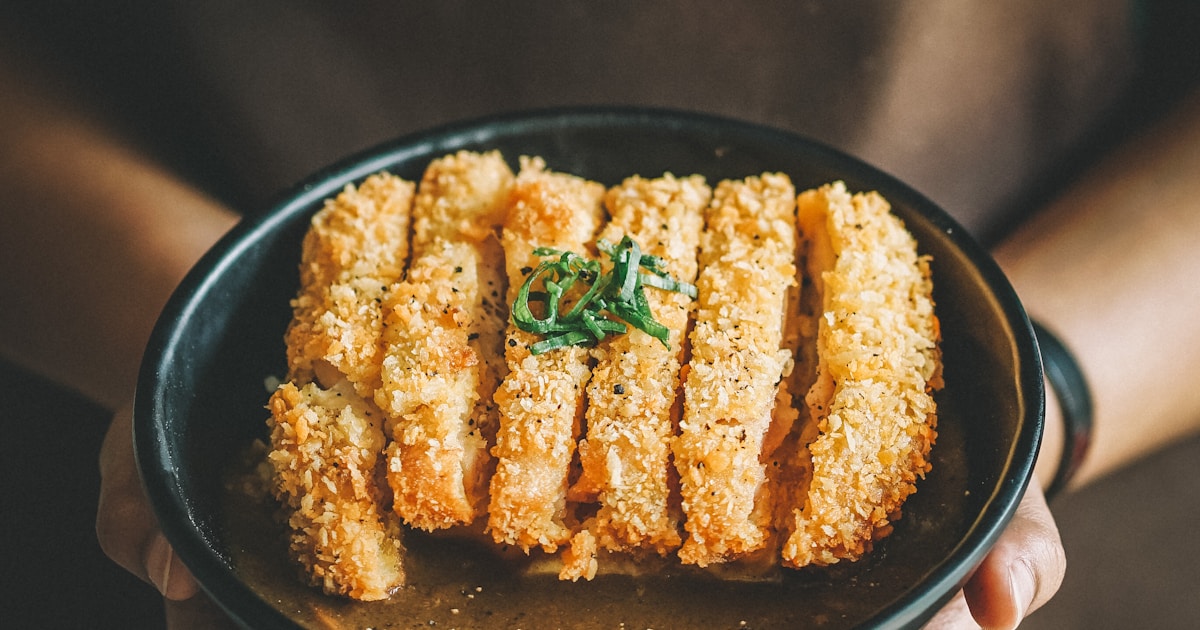
Almost anything can be kushikatsu: pork, beef, chicken, quail egg, prawn, lotus root, corn, onion, asparagus, cheese, banana (surprisingly good) — each item skewered, dipped in a light panko-breadcrumb batter, and fried to golden perfection. They arrive at the table two or three at a time, served with the communal dipping sauce and a pile of raw cabbage (for palette cleansing between skewers).
The absolute rule of kushikatsu: no double dipping in the shared sauce. Use the cabbage to scoop extra sauce if needed, but once a skewer touches your mouth, it doesn’t go back in the pot. This rule is posted in English at virtually every establishment, sometimes emphatically.
Best kushikatsu in Osaka:
Daruma — The most famous kushikatsu chain, founded in Shinsekai in 1929. The original Shinsekai location has the authentic working-class atmosphere. Try the Billiken-shaped store for a classic photo.
Kushikatsu Tanaka — More modern chain found across Japan; excellent for a relaxed introduction.
Any Shinsekai street stall — The Shinsekai neighborhood itself is the home of kushikatsu and worth an evening visit for the retro arcade and street atmosphere.
Price: ¥100–¥200 per skewer; a full meal typically costs ¥1,500–¥3,000
Dotonbori: The Unmissable Food Street
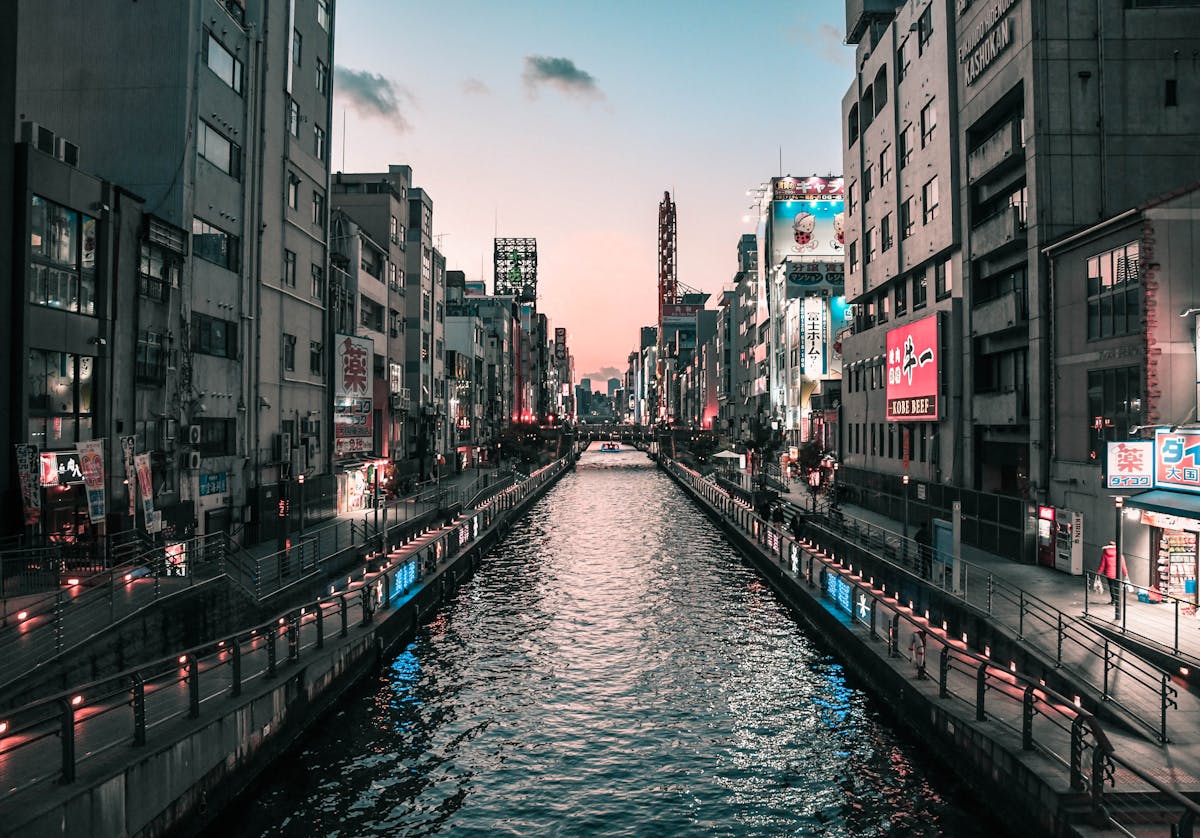
No Osaka food guide is complete without Dotonbori. The canal-side district is overwhelming on first encounter — enormous mechanical crabs and blowfish sign hang over restaurant entrances, electronic billboards cascade light onto the water, and the smell of takoyaki, grilled meat, and tempura mingles in the evening air.
The famous Glico Running Man sign overlooking the canal is Osaka’s most photographed sight. But the real attraction is eating and drinking while wandering the streets along the canal. Kuromon Ichiba Market (15 minutes walk) is another essential stop — a 580-meter covered market selling the freshest seafood, prepared street food, and ingredients that supply Osaka’s restaurants.
Must-try Dotonbori street foods:
Kani Doraku crab (the restaurant with the enormous mechanical crab sign — surprisingly good value for lunch sets)
Freshly grilled horumon (offal) from street stalls near Ebisu Bridge
Matsusakagyu (Matsusaka beef) skewers from specialist butchers
Ice cream mochi from Japanese confectionery shops
Freshly made gyoza wrappers at various dumpling specialists
Sushi and Seafood in Osaka
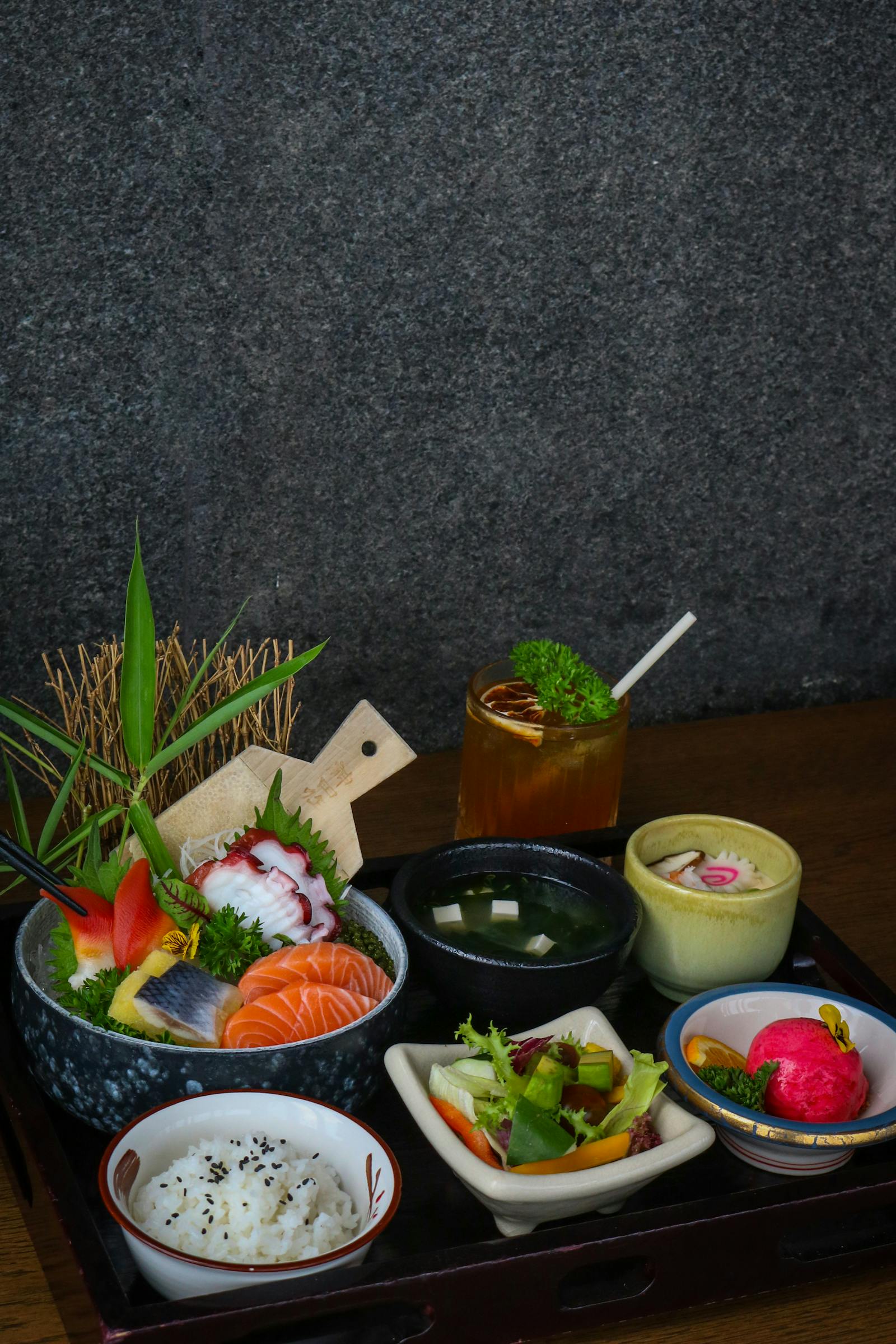
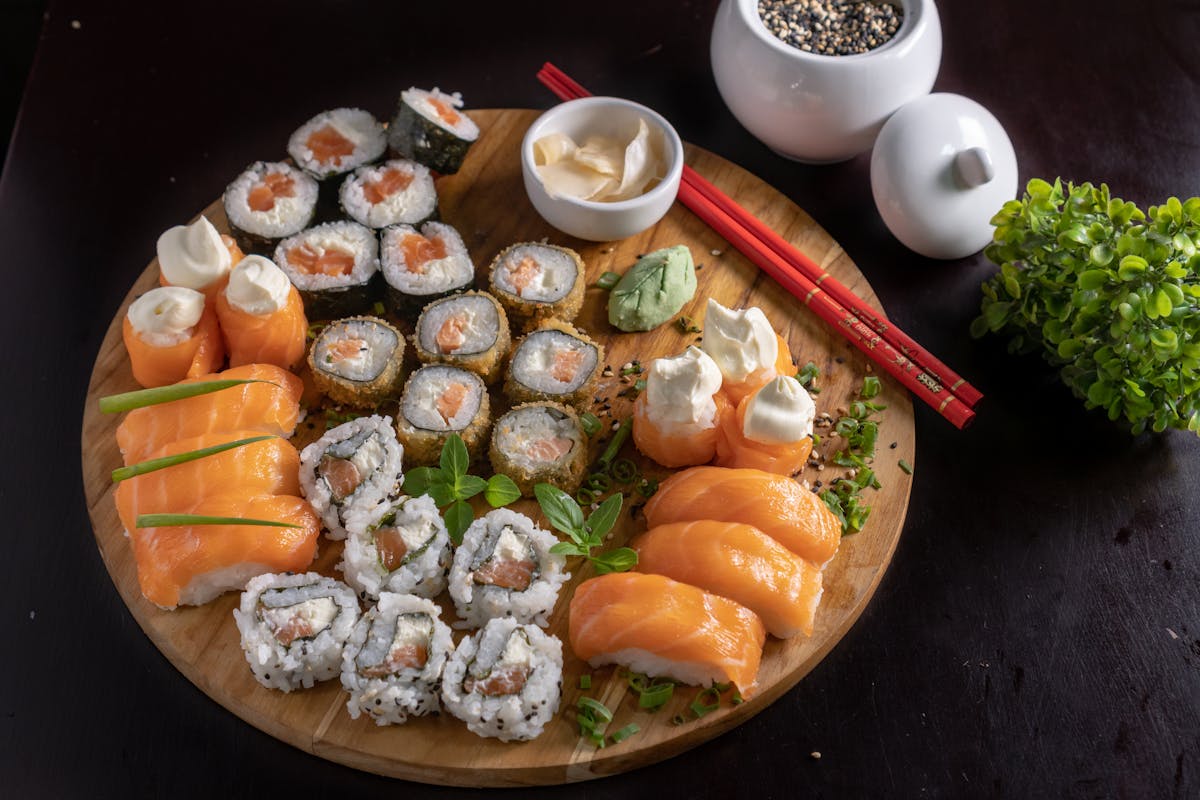
Osaka is historically more famous for oshi-zushi (pressed sushi) than the nigiri-style associated with Tokyo. Hako-zushi (box sushi) is Osaka’s traditional form — rice and toppings pressed in a wooden mold and sliced into rectangular pieces. It’s vinegar-forward, visually beautiful, and represents sushi’s original purpose as a preservation method rather than a showcase for premium fish.
For modern sushi, Osaka’s Osaka Minami district and the excellent Kuromon Ichiba Market offer outstanding options at reasonable prices. The distance from Tokyo means prices are generally 20–30% lower for comparable quality.
Don’t miss:
Battera — Osaka’s iconic pressed mackerel sushi, wrapped in konbu seaweed. Extraordinary when fresh.
Oshizushi sets at Yoshino Sushi (one of Japan’s oldest sushi restaurants, founded 1841, near Osaka Station)
Fresh sea urchin (uni) and toro sets at the stalls inside Kuromon Ichiba Market
Ramen and Noodles
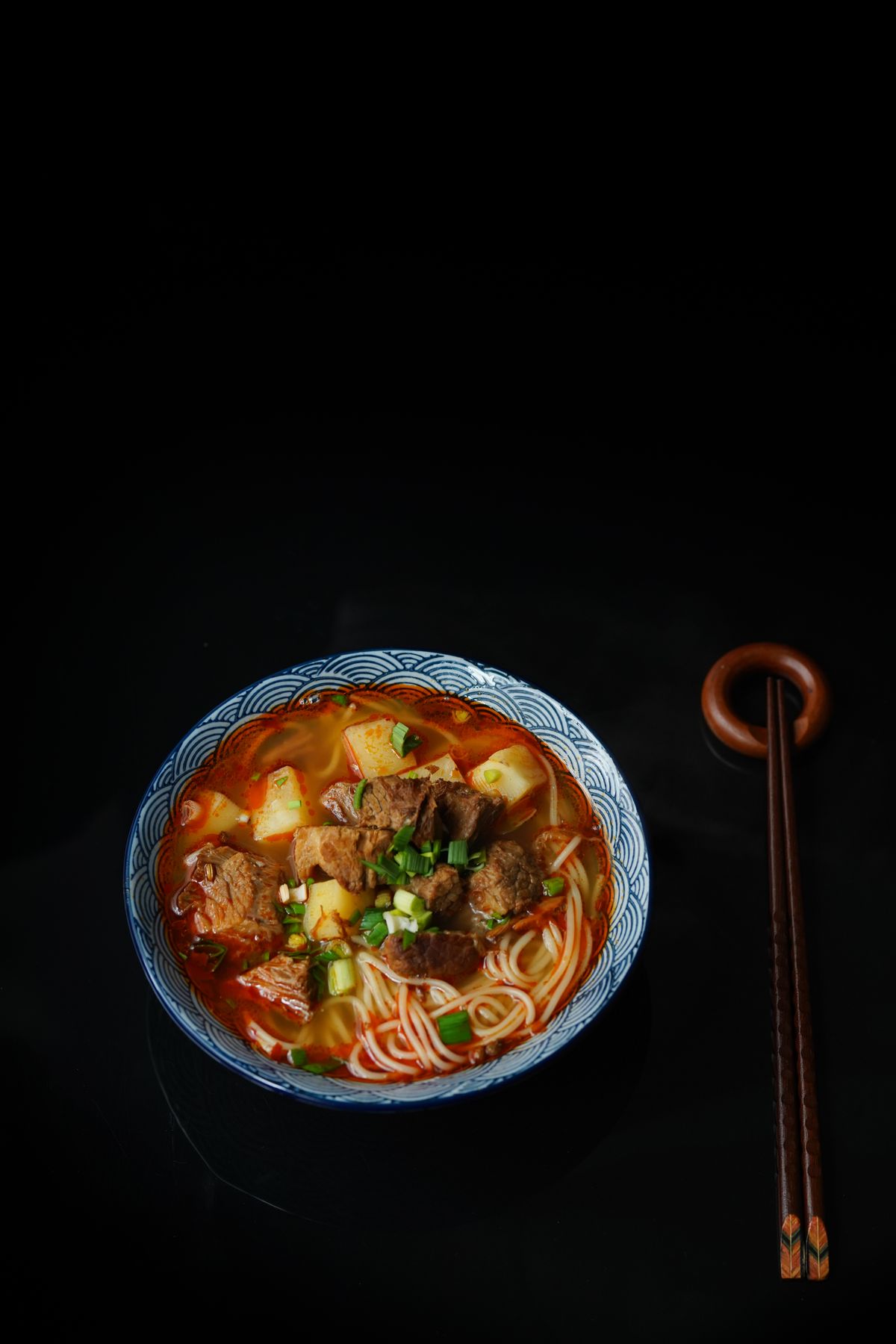
While Osaka is more famous for its grilled foods, the city has its own noodle culture worth exploring. Udon is the dominant noodle form in the Kansai region — thicker and chewier than the noodles of Tokyo’s east. The broth is lighter and more dashi-forward, using less soy than the Tokyo style.
Kitsune udon (fox udon) — topped with sweet, simmered aburaage (fried tofu skin) — is the Kansai staple, named after the mythological fox (kitsune) believed to favor fried tofu. Try it at any udon chain (Marugame Seimen, Hanamaru Udon) for an authentic and affordable meal.
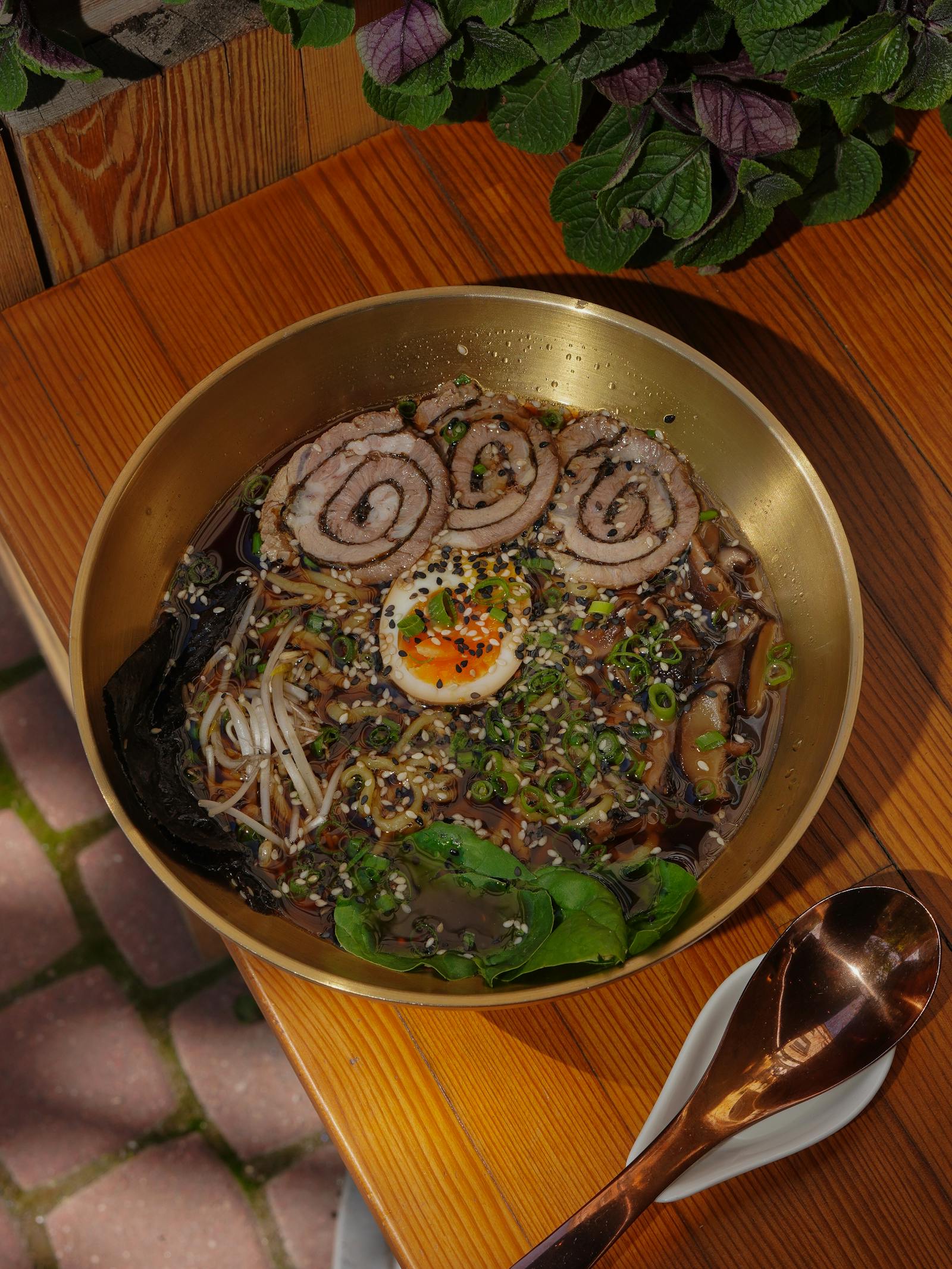
For ramen, Osaka doesn’t have a dominant local style but has absorbed excellence from across Japan. Ichiran’s Dotonbori location draws huge queues; Kinryu Ramen operates 24-hour stalls on Dotonbori itself with a distinctive dragon (kinryu = golden dragon) sign.
Osaka Food Markets
Kuromon Ichiba Market — “Osaka’s Kitchen.” A 580-meter covered arcade of approximately 170 shops, selling fresh fish, vegetables, meat, spices, pickles, and prepared foods. The market has served the professional kitchens of Osaka for over 190 years. Many stalls now serve eat-as-you-shop options: freshly grilled scallops, sea urchin on the shell, king crab legs, and tamagoyaki (rolled egg omelette). Open approximately 9:00am–6:00pm, closed Sundays.
Tsuruhashi Market — Known as Osaka’s “Koreatown,” this warren of narrow market streets around Tsuruhashi Station is the place for Korean food and ingredients. Korean BBQ restaurants, kimchi shops, and Korean grocers create a fascinating cultural pocket. Excellent for an evening of yakiniku (grilled meat) at very competitive prices.
Namba Walks and Shinsaibashi shopping arcade — The underground and covered shopping arcades connecting Namba and Shinsaibashi stations contain dozens of casual restaurants, chain eateries, and food stalls serving everything from Yoshinoya gyudon to elaborate dessert cafes. Good for quick meals between sightseeing.
Izakayas and Evening Eating
Osaka’s izakaya culture is outstanding — the city has arguably more izakayas per capita than anywhere in Japan. An izakaya evening in Osaka follows a rhythm: cold beer (or ume-shu plum liqueur) ordered immediately; a succession of small dishes to share — edamame, karaage chicken, dashimaki tamago (dashi-soaked rolled egg), grilled meat skewers, salads, pickles; conversation growing louder as the night progresses.
Best izakaya neighborhoods:
Namba/Dotonbori — Tourist-friendly but genuinely excellent; many establishments offer English menus
Fukushima — Osaka’s most fashionable restaurant neighborhood; dozens of small, expert izakayas along Fukushima-dori and side streets
Nakazakicho — Bohemian, artsy neighborhood with indie bars and creative izakayas
Tennoji — Local, non-touristy; excellent value
Sweets and Desserts
Purin (crème caramel) — Osaka has a minor obsession with purin, producing some of Japan’s most elaborate versions. Look for it at depachika (department store basement food halls) and specialty dessert shops throughout the city.
Mitarashi dango — Skewered rice dumplings grilled over charcoal and coated in a sweet soy sauce glaze. Available at most traditional sweet shops and temple fair stalls.
Kushi-age dessert skewers — Some creative restaurants have extended the kushikatsu concept to desserts: deep-fried cheesecake, chocolate banana, and sweet potato skewers that are wonderfully indulgent.
Fresh mochi from Dotonbori confectionery shops — Japanese mochi rice cakes in seasonal flavors (sakura in spring, sweet potato in autumn, strawberry year-round) are an essential Osaka sweet.
Practical Tips for Eating in Osaka
Lunch is exceptional value. Most Osaka restaurants offer lunch sets (teishoku) at dramatically lower prices than the same dishes at dinner. A restaurant serving a ¥4,000 kaiseki-style dinner may offer a ¥1,200 lunch set. Eat your most ambitious meal at lunch.
Queue willingly. The best Osaka food attracts queues — Mizuno okonomiyaki, popular takoyaki stalls, and Kuromon Market stalls all have lines. Move on to the next option if a queue exceeds 30 minutes, but for 10–20 minutes, it’s almost always worth waiting.
Use Google Maps for discovery. Search “izakaya” (居酒屋), “定食” (teishoku set meal), or “ラーメン” (ramen) in your current location and filter by highest-rated. Japanese Google Maps reviews are reliable, and a 4.0+ rating in Japan is genuinely exceptional.
Bring cash. Many small Osaka restaurants, market stalls, and street food vendors don’t accept cards. Keep ¥5,000–¥10,000 in cash on you at all times during food exploration.
Eat everything standing up when appropriate. The greatest cultural compliment you can pay Osaka street food is to eat it the moment it’s handed to you, while still standing at or near the stall. This is how it’s meant to be eaten — freshest, hottest, most alive.
Osaka doesn’t ask for your admiration. It just puts extraordinary food in front of you and trusts you’ll understand. One day in Osaka’s eating landscape is enough to convert even the most skeptical traveler. By day two, you’ll be planning what to eat next before you’ve finished what’s in front of you. This is what kuidaore actually means — not a warning but a promise.
Plan Your Japan Trip
🍣 Book an Osaka Food Tour
Dive deep into Osaka’s legendary food scene with a local guide. From takoyaki to kushikatsu, explore the best flavors of Japan’s kitchen.
🏨 Where to Stay in Osaka
Find the best hotels near Dotonbori, Namba, and Shinsaibashi — Osaka’s top dining and entertainment districts.
Related guides
- How to Read a Japanese Restaurant Menu (Even With Zero Japanese)
- Nishiki Market Travel Guide 2026: A First-Timer’s Guide to Eating Your Way Through Kyoto’s Kitchen
- Japan Izakaya Guide: What to Order, How to Behave, and the Best Spots in Tokyo and Osaka
Going to Japan? Talk to locals with confidence.
Hirameki Japanese — instant offline translation, camera translation, furigana + romaji, and 314 free flashcards. No login. Works without internet.

Plan your Japan trip
Two things every first-timer should book
Some links are affiliate links. If you book through them we may earn a small commission at no extra cost to you.