In this guide
- What the Shikoku pilgrimage is
- Four prefectures, four “dojo”: the temple ranges
- How long it really takes
- Choosing your style: full walk, sections, one prefecture, tours
- What to do at each temple, step by step
- Stamps (nokyo): fees, hours and what you receive
- Name slips (osamefuda) and what the colors mean
- What to wear and carry
- Where to sleep: temple lodgings, pilgrim inns and how to book
- Osettai: the gifts you will be given, and how to receive them
- Getting around Shikoku: rail pass, buses, taxis and tours
- The Ehime section in detail
- Seasons and budget
- Safety, cash and staying connected
- Finishing: Temple 88, the Henro Ambassador certificate, Koyasan and World Heritage
- Sample plans: one day in Matsuyama, 7 to 10 days in Ehime, day one in Tokushima
- Practical checklist
- Frequently asked questions
- Plan the rest of your trip
What the Shikoku pilgrimage is
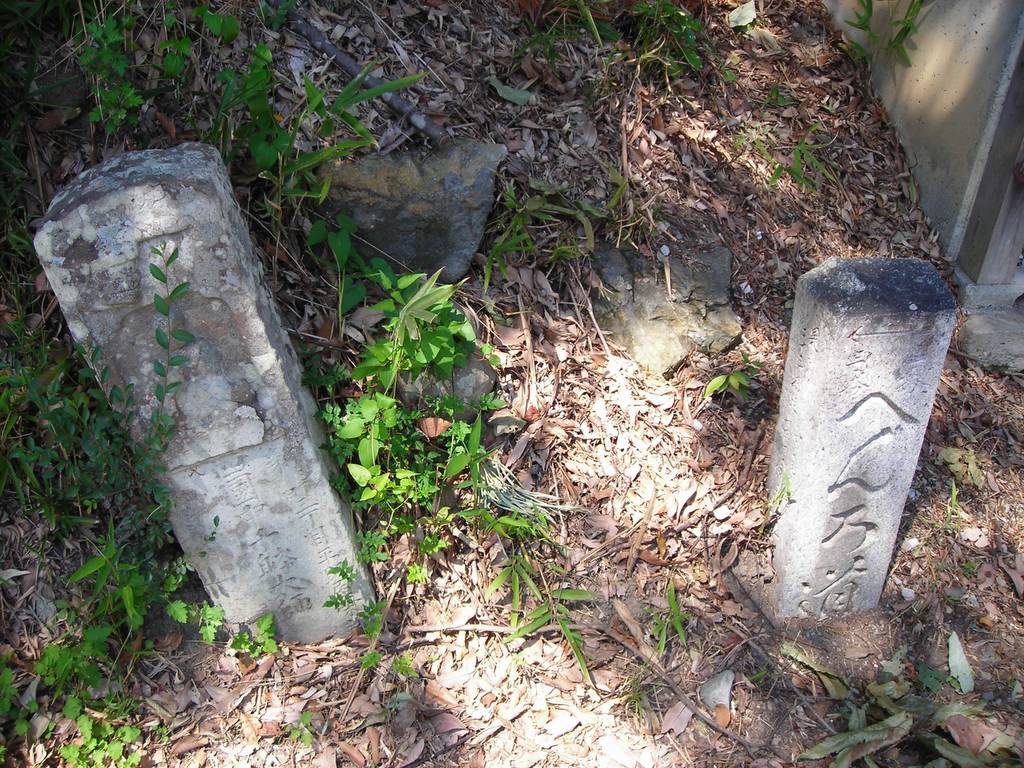
I grew up in Ozu, in southern Ehime, and I still come back whenever I visit family. The pilgrim path runs through my hometown. Toyogahashi, the bridge where Kobo Daishi is said to have spent a cold night, is in Ozu, and it is the reason pilgrims all over Shikoku keep their staffs quiet when they cross any bridge. So this guide comes at the pilgrimage from the Ehime side, and I have tried to keep it honest: what the route actually is, what it costs in 2026, what to do at a temple so that you do not feel lost, and which of the many “rules” you read online are real.
The basics first. The Shikoku 88 is a loop of 88 Buddhist temples, numbered 1 to 88, spread around all four prefectures of the island of Shikoku. Temple 1 is Ryozenji in Naruto, Tokushima Prefecture, about a 10-minute walk from JR Bando Station. Temple 88 is Okuboji in Kagawa, and arriving there is called kechigan, completion. The walking path that connects them is about 1,200 km long; the traditional full circuit is often quoted as 1,400 km. Ehime’s share of the pilgrim paths alone is more than 500 km, the longest of the four prefectures.
Every one of the 88 temples has two buildings that matter to you as a pilgrim: the Main Hall (hondo), which houses that temple’s principal image, and the Daishi Hall (daishido), dedicated to Kobo Daishi, the Buddhist master in whose footsteps the pilgrimage is walked (daishi means “great teacher”). You pray at both. Legends about Kobo Daishi are woven through the whole route: Temple 51 Ishiteji in Matsuyama takes its name from the legend of Emon Saburo, and Toyogahashi in Ozu is where he is said to have slept under a bridge on a cold night.
The Japanese word for the pilgrimage and for the pilgrim is henro; with the polite prefix it becomes ohenro, and pilgrims are addressed as ohenro-san. The standard Japanese map book carries the phrase Shikoku Henro Hitori Aruki Dogyo Ninin on its cover, which translates roughly as “walking Shikoku alone, two traveling together”. We have deliberately not padded this guide with the deeper religious meanings behind that phrase; the temples’ own association, the Reijokai, explains them better than we can.
Three ways to go around
- In order, 1 to 88. The usual way, and the way this guide is written.
- In sections (kugiri-uchi). Splitting the route into pieces over several trips, or doing just one piece, is completely accepted. The Reijokai’s own FAQ says you may divide the route any way you like.
- In reverse, 88 to 1 (gyaku-uchi). Walking backwards is linked to leap years and to the Emon Saburo legend; the saying is that going the other way you may “meet Kobo Daishi”. You will also hear that it earns “three times the merit”, which is a saying, not a rule. The next leap year is 2028. For a first visit, go forwards: the signs, the map books and the other pilgrims all face that way.
Visiting Koyasan (Mount Koya, in Wakayama) after Temple 88 is a tradition, not a requirement, according to the Reijokai.
Who is walking it now
You will not be the only foreigner. The Henro Ambassador certificate, issued to people who have walked the full route, was given to 1,688 pilgrims between July 2025 and June 2026, and 553 of them, 32.8 percent, were from overseas, a record. A fixed-point survey near Temple 11 in 2023 counted 1,543 foreign walkers, 44 percent of all walkers passing that point. In the 2024 to 2025 certificate year the largest groups were from France (73), the United States (72), Taiwan (61), Germany (49), the Netherlands (36), Australia (35) and Canada (30). English information has improved to match: the Reijokai has an English site (88shikokuhenro.jp/en), and a multilingual portal called OHENRO.ONLINE launched on April 15, 2026 in eight languages, run by a promotion committee of private companies, with AI-avatar guide videos added in July 2026.
Four prefectures, four “dojo”: the temple ranges
Pilgrims think of the island in four stages, one per prefecture, each with an old provincial name and a spiritual theme called a dojo. Knowing the ranges is practical: it tells you which temples a “Tokushima section” or an “Ehime section” includes.
| Prefecture (old name) | Temples | Number | Dojo | Notes for planning |
|---|---|---|---|---|
| Tokushima (Awa) | 1–23 | 23 | Dojo of Awakening (Hosshin) | Where almost everyone starts. Temple 1 Ryozenji is 10 minutes on foot from JR Bando Station; Temple 2 is 1.2 km on. The stage from Temple 11 to Temple 12 Shosanji is about 12.5 km and 5 hours of hard mountain walking. From Temple 23 to Temple 24 is about 83.5 km (about 20 hours). |
| Kochi (Tosa) | 24–39 | 16 | Dojo of Ascetic Training (Shugyo) | Fewest temples, longest gaps. Temple 37 to Temple 38 is about 86.5 km (about 25 hours), the longest single stretch on the route. |
| Ehime (Iyo) | 40–65 | 26 | Dojo of Enlightenment (Bodai) | The most temples and more than 500 km of path. Runs from Temple 40 Kanjizaiji in Ainan to Temple 65 Sankakuji in Shikokuchuo. Temple 43 to Temple 44 is about 70 km (about 20 hours) and passes through the Ozu and Uchiko area. Matsuyama has eight temples (46–53). |
| Kagawa (Sanuki) | 66–88 | 23 | Dojo of Nirvana (Nehan) | Temple 66 Unpenji counts as Kagawa but physically stands in Miyoshi, Tokushima. Temple 65 to 66 is about 20.5 km; Temple 87 to Temple 88 Okuboji about 15.6 km. The Henro Ambassador certificate is issued at the Maeyama Ohenro Koryu Salon between Temples 87 and 88. |
Distances above are the official figures for the walking route between consecutive temples. The hours are the official walking estimates, not including temple visits or breaks.
How long it really takes
Most of the disappointment we hear about comes from underestimating time. Here are the numbers that hold up.
| How | Full circuit | Rough cost | What it is like |
|---|---|---|---|
| Walking | 45–60 days | About ¥500,000 for a 50-day walk (see budget) | About 1,200 km, which over 50 days means roughly 24 km a day on average, with several stages of 70–86 km between temples that take two or three days each. |
| Rental car | About 10 days | ¥200,000–250,000 (2025 estimate) | The fastest independent way, and the one that sees the least of the walking culture. |
| Bus tour | 9–12 days | Varies by operator | Japanese-language group tours. |
| Jumbo taxi with a certified guide-driver | 8 nights 9 days to 10 nights 11 days, including Koyasan | Varies; ask the operator | Private van tours (Iyotetsu Taxi, Iyotetsu Travel) led by a driver who is a certified sendatsu (pilgrimage guide). Japanese-language. |
| Bicycle | Not verified | — | People do cycle it, but we have not found a reliable day count, so we do not quote one. |
| Sections (kugiri-uchi) | Anything from one day up | Scales with days | What most first-time foreign visitors actually do. Examples below. |
Two more honest points. First, the walking estimates assume you are fit and keep going; a first-timer carrying a pack, stopping at every temple for 20 minutes of ritual and a stamp, and sleeping where there are beds, will tend toward the 60-day end. Second, there is an official-style model for one prefecture by public transport: the tourist information center at Tokushima Station offers a seven-day plan that covers Tokushima’s 23 temples from a single base using trains and buses. That is a realistic “first pilgrimage” for someone who wants temples without a 50-day commitment.
Choosing your style: full walk, sections, one prefecture, tours
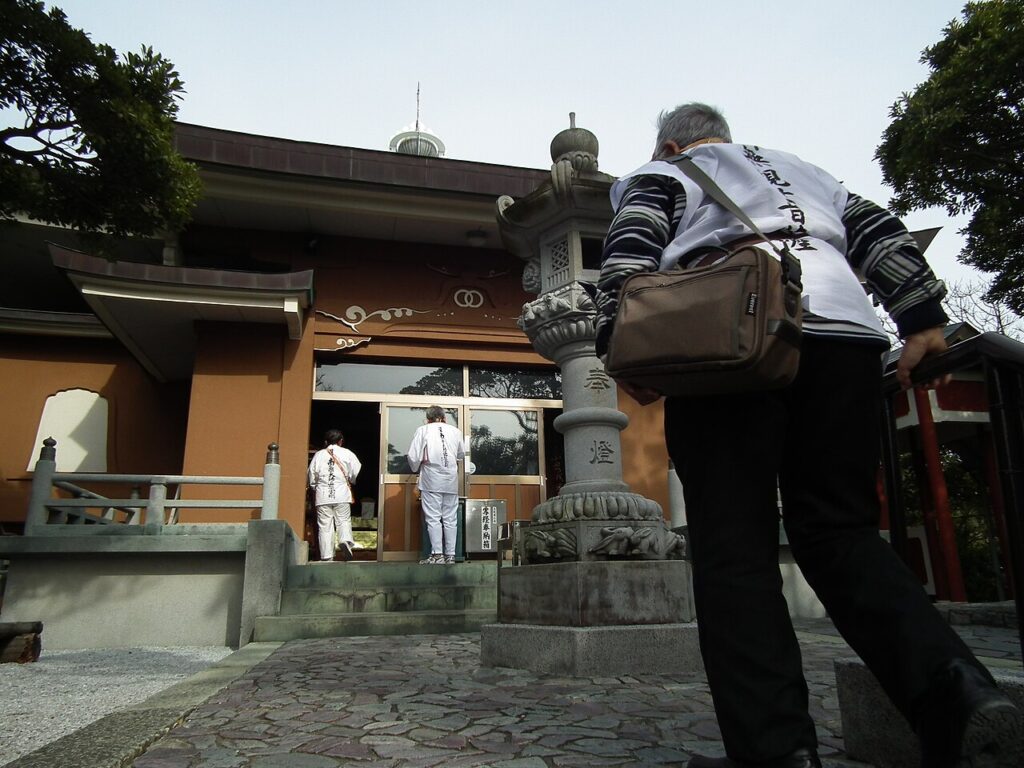
There is no “correct” way, and nobody checks. Pick the version that fits your time, fitness and interest, and do it properly rather than rushing a longer one.
The full walk (45 to 60 days)
For people with two months, good knees and a tolerance for repetitive days. You need to be comfortable booking Japanese inns by phone, carrying several days of cash, and walking stages of 20 to 30 km with occasional 80-km gaps that take three days. The reward is the certificate, the osettai, and a kind of friendship with the island that nothing shorter gives. Roughly one in three people who finish on foot are now foreign visitors, so you will meet others doing the same.
Sections over several trips (kugiri-uchi)
Many Japanese pilgrims complete the 88 over years, one prefecture or one long weekend at a time, and your stamp book does not care how long it takes: stamps carry no date, on the principle that each day is a passing point. For a foreign visitor this is the most practical shape. A first trip might be Temples 1 to 12 from Tokushima (including the hard climb to Shosanji), a second the Matsuyama temples with Dogo Onsen, a third Kagawa and the finish.
One prefecture
- Tokushima (1–23): the obvious choice for a first week. The Tokushima Station tourist information desk (10:00–19:00) has the seven-day public-transport model mentioned above, will phone inns for you, and stores luggage for ¥500 a day.
- Ehime (40–65): the most temples and the most variety, with Matsuyama and Dogo Onsen as a base. Detailed below.
- Kagawa (66–88): the finish, with Temple 88 Okuboji and the Henro Ambassador salon.
- By taxi: Iyotetsu Taxi sells one-prefecture tours of two nights and three days (Japanese-language).
Matsuyama’s eight temples in a day or two
Temples 46 to 53 all lie within Matsuyama city. Temple 46 to Temple 51 Ishiteji is about 12.5 km and 3 hours 10 minutes of walking; continuing to Temple 53 Enmyoji makes about 25 km. Iyotetsu Taxi runs day tours covering 8 or 10 temples. This is the easiest way to taste the pilgrimage inside an ordinary Japan trip, and you can sleep at Dogo Onsen. See the Ehime section and the sample plans.
Organized tours
Japanese-language options are well developed. Iyotetsu Travel runs an 11-day jumbo-taxi tour of the full circuit plus Koyasan with a certified sendatsu as driver, and is holding free information briefings from October to December 2026. Iyotetsu Taxi offers the full circuit in 8 nights 9 days or 10 nights 11 days, one-prefecture tours, Matsuyama day tours, and the option of a female certified sendatsu. Bus tours of 9 to 12 days exist from several companies. In English, operators such as Walk Japan and Oku Japan run guided or self-guided sections; check their current programs directly, because tour content changes from year to year and we have not verified 2026 departures.
By car
About 10 days and ¥200,000 to 250,000 for the rental and running costs (2025 estimate). You give up most of the osettai and the walking culture, but you see all 88 and sleep where you like.
What to do at each temple, step by step
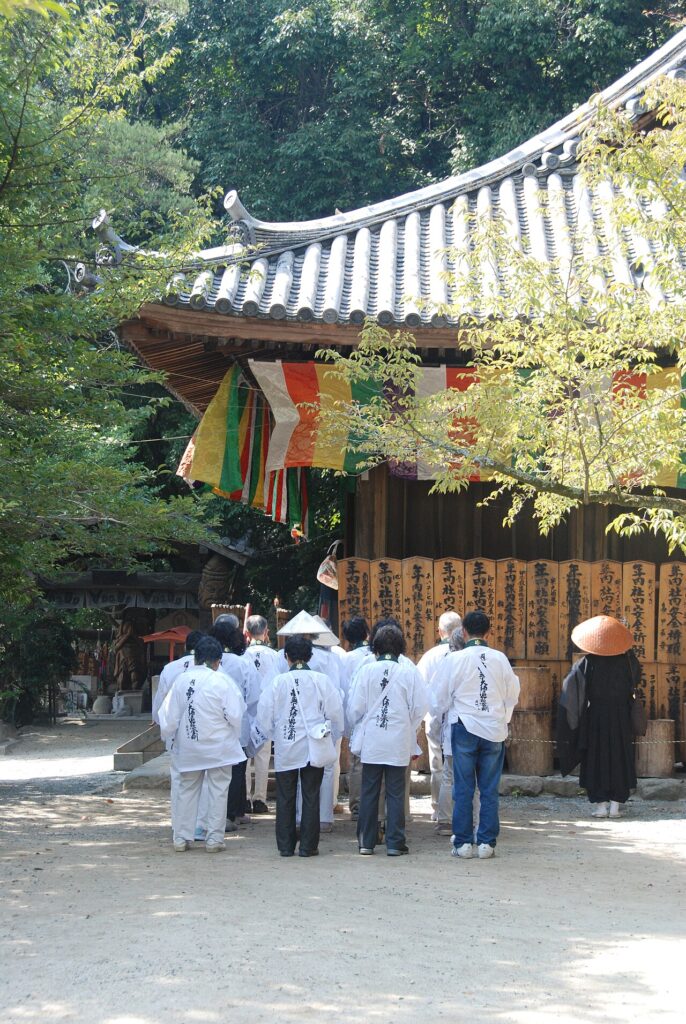
This is the part first-timers worry about most, and it is simpler than it looks. The sequence below follows the Reijokai’s official guidance. Do it at every temple, in this order, and you will not offend anyone.
- Bow at the gate. Stop at the main gate (sanmon or niomon), put your palms together (gassho) and bow once before stepping through.
- Purify at the water basin (chozuya). Take the ladle in your right hand and pour water over your left hand; switch and pour over your right hand; pour a little into your cupped left hand to rinse your mouth (do not drink from the ladle); finally tilt the ladle upright so the remaining water runs down the handle, rinsing it for the next person.
- Ring the bell once, before you pray. Many temples have a bell tower you may ring. Ring it once, and only on arrival. Ringing the bell as you leave is considered bad luck, and it is one of the mistakes visitors make most often. If there is a sign asking you not to ring, do not.
- Main Hall (hondo). Light a candle and place it on the top tier of the stand first (filling from the top means nobody has to reach over lit candles). Place incense sticks standing in the burner, near the center. Never drop a used match into the incense burner. Put a name slip (osamefuda) in the slip box, and a coin or small offering in the offering box. Then pray or chant.
- Daishi Hall (daishido). Repeat exactly the same steps: candle, incense, name slip, offering, prayer. The only difference in chanting is that you skip the mantra of the temple’s main image, because this hall is for Kobo Daishi.
- Stamp office (nokyosho). Only after you have prayed at both halls do you take your book to the office for the stamp. Fees and hours are in the next section.
- Bow at the gate on the way out. Turn to face the temple, gassho, bow, and go.
What is actually chanted
The full sequence Japanese pilgrims recite at each hall, in order, is: the opening verse (Kaikyoge), the verse of repentance (Sangemon), the three refuges (Sankiemon), the ten precepts (Juzenkai), the mantra of arousing the enlightened mind (Hotsubodaishin shingon), the samaya precept mantra (Sanmayakai shingon), the Heart Sutra, the mantra of the temple’s main image (Main Hall only), the Mantra of Light (Komyo shingon), the sacred name of Kobo Daishi (Gohogo), and the dedication of merit (Ekomon). Pilgrims read these from a small sutra book, so nobody expects you to know them by heart.
Two things make this easy for a non-Buddhist visitor. First, a silent prayer is acceptable: stand before the hall, gassho, and say or think what you wish. Shikoku’s official tourism site says so; the temples’ association does not address the question either way, and in practice nobody will stare. Second, you may offer a hand-copied sutra (shakyo) instead of chanting, if you have prepared one.
The one exception to the order
If you reach a temple just before 17:00, go to the stamp office first and tell them you are about to pray. They may stamp your book before you do the halls, so that you are not locked out of the stamp when the office closes. It is the only time you should collect the stamp before praying.
Small courtesies
- Do not take name slips left by others out of the boxes, even the rare gold or brocade ones.
- Keep your voice down near the halls; other pilgrims are chanting.
- If you carry a staff, do not tap it on bridges (more on why under Ehime).
Stamps (nokyo): fees, hours and what you receive
The nokyo is the stamp and brushed calligraphy that a temple writes into your stamp book, scroll or white robe. Collecting all 88 is the physical proof of the pilgrimage, and the book itself is a beautiful object. Two facts you will find wrong in older English guides:
- Fees rose on April 1, 2024. A stamp in a book is now ¥500, not ¥300. The same fee applies at all 88 temples, and there has been no further change in 2025 or 2026.
- Offices open at 8:00, not 7:00. Stamp offices are open 8:00 to 17:00 every day, year-round, since April 2024.
| Stamp on | Fee since April 1, 2024 | Previous fee | Notes |
|---|---|---|---|
| Stamp book (nokyocho) | ¥500 | ¥300 | Comes with a small picture card (omie). |
| Hanging scroll (kakejiku) | ¥700 | ¥500 | Also comes with an omie. Scrolls are bulky to carry. |
| White robe (hakui) | ¥300 | ¥200 | No omie with a robe stamp. |
| Daishi nokyo (a dedicated Kobo Daishi stamp) | ¥500 | — | Optional extra. |
| Reijokai paper sheet | ¥500 | — | Loose official sheets instead of a book. |
| Repeat stamp in a book from an earlier circuit | ¥300 | ¥300 | Unchanged. Applies when you bring the same book back for a second or later round. |
| Extra omie | Color ¥200 / black-and-white (omisugata) ¥100 | — | Available on request. |
At ¥500 a temple, a full book of 88 stamps costs ¥44,000. Budget for it from the start; the cost model in the budget section includes it. Expect to pay stamp fees in cash. Have coins and ¥1,000 notes ready rather than hoping to pay ¥500 from a ¥10,000 note at a mountain temple at 16:55.
Where to buy the book
Stamp books, robes and the rest are sold at the shop in the general information center at Temple 1 Ryozenji and at Monzen Ichibangai, the shop at Temple 1’s gate. Prices run to a few thousand yen per item; check at the shop, because the published figures we found are from 2023 and we do not want to quote them as current. If you start somewhere other than Temple 1 (in Matsuyama, for example), ask at your first temple’s stamp office whether they sell books; we have not confirmed this temple by temple.
Why there is no date
Your stamps will not be dated. The idea is that each day is a passing point rather than an achievement to record, which is also why splitting the route over years is normal. Keep your own log if you want dates.
Name slips (osamefuda) and what the colors mean
An osamefuda is a small paper slip that you write your name on and leave in the slip box at the Main Hall and the Daishi Hall of each temple. You will need two per temple, so 176 for the full route, plus extras, because you also hand them to people as thanks for osettai (see below). They are sold in packs at the pilgrim shops.
The color tells other pilgrims how many times the person has completed the circuit:
| Color | Completed circuits |
|---|---|
| White | 1–4 (this is you) |
| Green | 5–6 |
| Red | 7–24 |
| Silver | 25–49 |
| Gold | 50–99 |
| Brocade (nishiki) | 100 and more |
Use white. If a pilgrim with a red or gold slip gives you one in conversation, that is a kindness; keep it. But never fish slips out of the boxes at the halls, whatever their color. It is the temple’s business what happens to them.
What to wear and carry
You do not need the full outfit. The Reijokai’s FAQ says so directly. The simplified form is a white robe (hakui) and a stole (wagesa) over your normal clothes; white walking shoes are fine. The Reijokai asks pilgrims to carry a stole, a staff (kongozue), prayer beads (juzu) and a stamp book. Beyond that, it is up to you.
| Item | Essential or optional? | Why |
|---|---|---|
| Stamp book (nokyocho) | Essential if you want stamps | Your record of the route. A book, not a scroll, is the practical choice for a walker. |
| Name slips (osamefuda), white | Essential | Two per temple plus extras for osettai. A pen to write them with. |
| Candles, incense, lighter | Essential for the full ritual | Needed at both halls of every temple. Optional if you are praying silently. |
| Stole (wagesa) | Strongly recommended | The minimum that says “I am a pilgrim”; the Reijokai asks pilgrims to carry one. |
| White robe (hakui) | Recommended | The item foreign visitors most often buy. It also marks you for osettai and for drivers on narrow roads. |
| Staff (kongozue) | Recommended for walkers | Genuinely useful on the mountain stages. Remember: no tapping on bridges. |
| Sedge hat (sugegasa) | Optional | Popular with foreign visitors; shades you from sun and light rain, but awkward to pack. |
| Prayer beads (juzu) | Optional | Held during prayer; the Reijokai lists them among the items to carry. |
| Sutra book (kyohon) | Optional | Only if you intend to chant. |
| Good walking shoes, rain gear, water, small first-aid kit | Essential for walkers | Ordinary hiking sense. Stages like Temple 11 to Temple 12 are real mountain walking. |
| Cash | Essential | Much of the route is cash-only. See safety and cash. |
Where to buy, and rental
- Temple 1 Ryozenji: the shop in the general information center sells everything, and it is where most walkers kit out.
- Monzen Ichibangai, at Temple 1’s gate: beginner sets, and outfit rental if you do not want to own a robe for a short section. Hours 8:30 to 17:00 (check before you rely on them).
- Sumotoriya Asano, near Temple 10: a pilgrim-goods shop about 130 years old.
- If you start somewhere other than Temple 1, do not assume every temple sells books and slips. Ask at the stamp office of your first temple, and buy candles and incense in town before you set out.
On price: items cost a few thousand yen each, and a full kit adds up quickly. We will not quote a total because the only itemized prices we found are from 2023. Decide what you will actually use. A stamp book, slips, a stole and candles and incense is a sensible minimum for a section walker; add the robe if you want to be recognized as a pilgrim, which matters more than it sounds for osettai.
Where to sleep: temple lodgings, pilgrim inns and how to book
Beds are the thing that shapes a walking day on Shikoku, more than distance. Here are the types, with real 2026 numbers where we have them.
Temple lodgings (shukubo)
Some temples take guests. A shukubo is cheaper than a hotel but less convenient (curfews, set meal times, nothing nearby), and it must be booked ahead. The best-documented example is Temple 6 Anrakuji in Tokushima, whose 2026 plans on Rakuten Travel ran from ¥8,500 to ¥23,500 per person with dinner and breakfast, or ¥6,000 to ¥7,500 room only. There is an optional evening service at 19:00 (sometimes 17:30), the curfew is 21:00, and there are no shops nearby, so eat in. Anrakuji has 57 rooms and about 30 percent of its guests in 2025 were foreign, which tells you both that it is used to overseas pilgrims and that it fills. Temple 75 Zentsuji in Kagawa also has a shukubo where guests can join the morning service.
Pilgrim inns and minshuku
Family-run pilgrim inns are the backbone of the walk. The broadcaster KSB’s 2025 cost model used ¥7,000 a night, and the “Minna no Henro” inn search site (min88.jp/inn/en, in Japanese, English and traditional Chinese) lists rooms from the ¥4,000s. Be aware that these inns are disappearing: there were 687 in 2020 and about 70 fewer by 2023. On the long gaps (Temple 37 to 38, 23 to 24, 43 to 44) the few that remain fill up, so book those nights first.
How booking actually works
- Many inns are phone-only, in Japanese. Call in the morning or early afternoon; late afternoon is dinner preparation and nobody picks up.
- Let the tourist office call for you. The information desk at Tokushima Station (10:00–19:00) will phone inns on your behalf. Use it on day one to book your first several nights.
- Booking.com works for part of the route. Many foreign pilgrims use it for the inns and business hotels that list there, and phone for the rest.
- Do not no-show. It is a real problem for inns that cook for you, and some now ask for prepayment because of it. If your plans change, call; a one-word “cancel” and your name is enough.
- City nights are easy. In Tokushima, Kochi, Matsuyama and Takamatsu you can use ordinary business hotels; compare hotels and ryokan on Agoda for those nights and save your phone calls for the countryside.
Huts, free lodgings and camping
You will see roadside pilgrim huts and hear about free or donation-based lodgings. The rules differ from place to place, so we will only say this: huts are generally rest shelters, not hotels, and you should always get permission before sleeping in or beside anything. Never pitch a tent in temple grounds, on farmland or at a shelter without asking.
An Ehime example: Tado Village
On the 70-km stage between Temple 43 and Temple 44, in the Uchiko area, an inn called Tado Village hosted 386 guests in fiscal 2024 and 366 in fiscal 2025, with a growing share of foreigners who get by with translation apps. Its busiest months are April to May and November, which mirrors the pilgrimage as a whole. If you walk this stage, it is exactly the kind of place to book early.
Osettai: the gifts you will be given, and how to receive them
Osettai is the Shikoku custom of helping pilgrims: food, a drink pressed into your hand, small gifts, sometimes a bed for the night. The belief behind it is that helping a pilgrim earns the giver the same merit as walking the route, so the gift is not charity and you are not a beggar; you are giving the giver something too. Foreign walkers constantly ask why strangers do this, and that is the answer. The custom is still alive, though less common than it once was.
How to receive it
- It is customary to accept with thanks. You will read “never refuse osettai” as if it were a rule; it is not an official one, but the polite default is to accept, with both hands and a bow.
- Give a name slip in return. This is the formal thank-you: hand over one of your white osamefuda with your name on it. Keep a few in a pocket, not at the bottom of your pack.
- A sincere arigato gozaimasu and a gassho are enough words. Do not try to pay.
- If you genuinely cannot carry or eat what you are given, explain gently and apologize; an allergy is understood.
Organized osettai
Osettai is sometimes done at scale. Temple 58 Senyuji in Ehime held mochi-pounding osettai events in May, July and October 2025, and a one-day “hospitality walk” on February 23, 2026 aimed to involve 10,000 people in the custom.
Getting around Shikoku: rail pass, buses, taxis and tours
Shikoku has good trains between its four cities and thin public transport in between, which is where most of the temples are. Plan transport around that reality.
ALL SHIKOKU Rail Pass (what changed on October 1, 2026)
If you are using trains to hop between sections, the ALL SHIKOKU Rail Pass is usually the best value, but the product changed in 2026 and many guides still describe the old one.
| Pass | Adult | Child | Notes |
|---|---|---|---|
| 3-day | ¥12,000 | ¥6,000 | Sold from October 1, 2026 |
| 7-day | ¥20,000 | ¥10,000 | Sold from October 1, 2026 |
| 4-day and 5-day | Discontinued; sales ended September 30, 2026 | ||
- Covers: all JR Shikoku trains including non-reserved seats on limited expresses, the Tosa Kuroshio Railway, the Asa Kaigan Railway DMV, Kotoden in Kagawa and Tosaden in Kochi.
- Does not cover: the Sunrise Seto sleeper, any buses, the Shodoshima ferry and bus (removed in 2026), and, importantly for the Ehime section, Iyotetsu (Matsuyama’s trams, suburban trains and buses), which has not been covered since March 7, 2026.
- Who can buy: short-term foreign visitors only.
- How to buy: buy the ALL SHIKOKU Rail Pass on Klook (QR tickets that work at the gates, offered since April 2025) or on Trip.com, or at JR Shikoku stations.
- Coming in spring 2027: the Shiokaze (Okayama–Matsuyama) and Nanpu limited expresses become all-reserved; the Ishizuchi keeps non-reserved cars. How the pass will treat reserved seats on those trains has not been announced, so check when you buy.
For a 10-day Ehime trip that uses trains only on two or three days, buy the 3-day pass for those days or pay as you go. If you are bouncing between prefectures on a longer section, the 7-day pass at ¥20,000 pays for itself quickly. Our national Japan Rail Pass article explains how the national pass covers JR Shikoku trains but not Iyotetsu either.
Buses: sparse, and getting sparser
Local buses are infrequent, especially in southern Tokushima, and routes do get cut: the town bus that used to run below Temple 12 Shosanji has been discontinued. The “Shikoku 88 NAVI” bus guide is useful but Japanese-only. Always check the last bus back before you walk up to a mountain temple, and treat buses as a bonus, not a plan.
Luggage
- The Tokushima Station tourist information desk stores bags for ¥500 a day.
- Bag transfer services operate around the two hardest Tokushima sections, Temples 11 to 12 and 20 to 22; ask at your inn or the information desk.
- For getting a big suitcase from Shikoku to your next city, see our luggage forwarding guide.
Taxis and tours in Japanese
Iyotetsu Taxi (Matsuyama) runs pilgrimage packages from a single-day Matsuyama 8- or 10-temple tour, through one-prefecture tours (two nights, three days), to the full circuit (8 nights 9 days or 10 nights 11 days), with the option of a female certified sendatsu. Iyotetsu Travel’s 11-day jumbo-taxi full circuit includes Koyasan. These are run in Japanese; if you have a Japanese-speaking friend or are comfortable with a translation app, they are an efficient way to see temples you could not reach by bus.
Tours in English
Operators such as Walk Japan and Oku Japan run guided or self-guided sections of the route. Confirm current programs and dates with the operators themselves; we have not verified their 2026 departures.
Getting to Shikoku and to the start points
- Temple 1 (Tokushima): about 10 minutes on foot from JR Bando Station in Naruto.
- Matsuyama (Ehime): by air to Matsuyama Airport (airport bus to JR Matsuyama Station ¥1,000 cash, to Dogo Onsen Station ¥1,200, pay on exit), by the Shiokaze limited express from Okayama (about 2 hours 40 minutes, ¥6,820 non-reserved), or by the 70-minute Linear Jet boat from Hiroshima (¥9,000). Full details in our Matsuyama and Ehime guide.
- Within Matsuyama: trams are a flat ¥250 cash or ¥230 with a transport IC card (since April 1, 2026), paid when you get off, with no change given for large notes. Not covered by any rail pass. Beware that JR Matsuyama Station and Matsuyama-shi Station are different stations; to anyone from Ehime they are simply two different places.
Maps and apps
- The standard Japanese map book, Shikoku Henro Hitori Aruki Dogyo Ninin by the Henro-michi Hozon Kyoryokukai (the path preservation society), is in its 14th edition (October 2025, ¥3,000, Japanese only).
- The English equivalent is the Shikoku Japan 88 Route Guide (Buyodo), 10th edition, August 2025.
- The English app “Ohenro: Shikoku Pilgrimage” is unofficial; treat it as a supplement to the printed map, not a replacement.
- Online: 88shikokuhenro.jp/en (the Reijokai’s English site; some of its notices date from the COVID years) and OHENRO.ONLINE (multilingual, from April 2026).
The Ehime section in detail
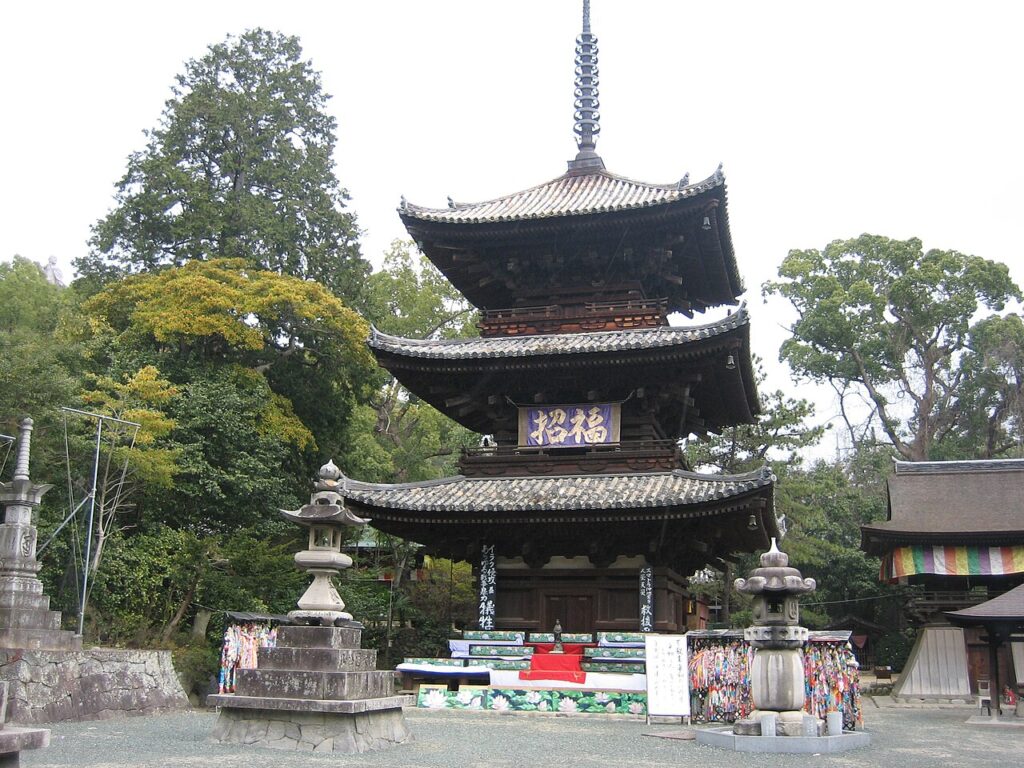
Ehime, the Dojo of Enlightenment, holds Temples 40 to 65: 26 of the 88, the most of any prefecture, along more than 500 km of path from Ainan in the far south to Shikokuchuo on the Kagawa border. It is my home prefecture, and it is also the easiest for a visitor to combine with ordinary sightseeing, because eight of its temples sit inside Matsuyama city next to Dogo Onsen.
Matsuyama’s eight temples (46 to 53)
| No. | Temple | Notes |
|---|---|---|
| 46 | Joruriji | Grounds are part of the national historic site “Iyo Henro-michi”. |
| 47 | Yasakaji | Historic-site grounds. |
| 48 | Sairinji | — |
| 49 | Jodoji | Historic-site grounds. |
| 50 | Hantaji | Historic-site grounds. |
| 51 | Ishiteji | Next to Dogo Onsen; National Treasure gate; the headline temple of the section (details below). |
| 52 | Taisanji | — |
| 53 | Enmyoji | Grounds added to the historic site in June 2025. |
Walking from Temple 46 to Temple 51 is about 12.5 km and 3 hours 10 minutes; all the way to Temple 53 is about 25 km. That makes a natural two-day plan with a night at Dogo in between, or one long day if you are fit and start early. The national historic site “Iyo Henro-michi” protects the pilgrim path through the grounds of Joruriji, Yasakaji, Jodoji, Hantaji and Enmyoji (Enmyoji was added in June 2025), so the stretch you walk is formally recognized as a piece of the historic road, not just a route between modern streets.
Temple 51 Ishiteji
Ishiteji is 15 to 20 minutes on foot from Dogo Onsen Station, which makes it the one pilgrimage temple that many ordinary tourists visit without meaning to. Do not treat it as an afterthought. Its name comes from the Emon Saburo legend, the same story tied to reverse-order pilgrimage. Its Niomon gate, built in 1318, is a National Treasure, and the temple holds 10 National Treasures and Important Cultural Properties in all. On April 4, 2026 the temple held a ceremony marking two things at once: the installation of its 45th chief priest and the completion of the restoration of its three-story pagoda, the first full restoration since 1935. If you visited while the work was under way, the pagoda is finished.
The grounds are free; the treasure hall is ¥200. Getting there: tram line 5 from JR Matsuyama Station (about 25 minutes) or line 3 from Matsuyama-shi Station (about 20 minutes) to Dogo Onsen Station, ¥250 cash or ¥230 by IC card, then walk. For the bathhouses and where to stay around them, see our Dogo Onsen guide; a pilgrim day that ends in the Honkan bath is a good day.
Temple 43 to Temple 44: the long stage through Seiyo, Ozu and Uchiko
South of Matsuyama the pilgrimage turns inland and the distances grow. From Temple 43 to Temple 44 is about 70 km and about 20 hours of walking, normally three days, through the Seiyo, Ozu and Uchiko area and up into the mountains of Kumakogen. Part of this route is itself a national historic site, the “Daihoji-michi” (the old road to Temple 44 Daihoji), spanning Seiyo, Ozu and Kumakogen. This is one of the three long gaps on the whole route, with Temple 37 to 38 and Temple 23 to 24, and it is where you must book beds in advance. Tado Village in the Uchiko area (see lodging) is one of the inns on the path.
If you are not walking the whole stage, Uchiko and Ozu are both worth time in their own right. Ozu is a castle town reachable from Matsuyama by the Uwakai limited express in about 38 minutes (¥1,840). Uchiko, with its preserved street of wax merchants’ houses, is about 31 minutes by limited express; see our Uchiko guide.
Toyogahashi, and why nobody taps a staff on a bridge
In Ozu stands Toyogahashi, a bridge with a temple, Eitokuji, which is Bekkaku No. 8, one of the associated temples outside the main 88. The legend is that Kobo Daishi spent a cold night sleeping under this bridge. From that story comes a custom observed across the entire pilgrimage, not only here: pilgrims do not tap their staffs on bridges, so as not to disturb the Daishi who may be resting beneath. The custom applies to every bridge you cross, modern or old. It is one of the quiet rules that marks someone who knows the route, and it starts in my hometown.
Further on in Ehime
- Temple 58 Senyuji is one of the temples where organized osettai happens: mochi-pounding events were held in May, July and October 2025.
- Temple 65 Sankakuji in Shikokuchuo is Ehime’s last temple. From there to Temple 66 Unpenji is about 20.5 km, and Unpenji, although counted as Kagawa’s first temple, stands in Miyoshi, Tokushima.
Seasons and budget
When to go
- March to May and October to November are the pilgrimage seasons. The Tokushima Station information desk is busiest in March to April and October to November, and Tado Village’s busiest months are April to May and November, which tells you when the beds go.
- Golden Week (late April to early May) fills inns. Book weeks ahead or avoid.
- Summer is hot and humid, and long days on open roads are hard on walkers. Start at dawn, carry more water than you think, and shorten stages. We have not found an official heat guideline for pilgrims, so we will not invent one.
- Winter has short days (the Reijokai itself points this out), which matters when stamp offices close at 17:00 and mountain stages take five hours.
What it costs
| Item | Figure | Source and notes |
|---|---|---|
| Lodging, walking | About ¥7,000 a night | Broadcaster KSB’s 2025 model; pilgrim inns from the ¥4,000s exist, shukubo with meals ¥8,500–23,500 at Anrakuji. |
| Meals, stamps, extras | About ¥150,000 over 50 days | KSB model; includes the ¥44,000 for 88 book stamps. |
| Full walk, 50 days | About ¥500,000 | ¥7,000 × 50 nights = ¥350,000, plus ¥150,000 = roughly ¥10,000 a day. |
| Rental car, 10 days | ¥200,000–250,000 | 2025 estimate including car and running costs. |
| Stamp in book | ¥500 per temple | Since April 1, 2024; ¥44,000 for all 88. |
| Gear | A few thousand yen per item | Check at the Temple 1 shops; rental available. |
| ALL SHIKOKU Rail Pass | ¥12,000 (3 days) / ¥20,000 (7 days) | From October 1, 2026. |
For a 7- to 10-day section, the same ¥10,000-a-day rule of thumb works: ¥70,000 to ¥100,000 plus transport to and from Shikoku and whatever gear you buy. A one-day Matsuyama temple walk costs little more than tram fares, ¥500 per stamp and lunch.
Safety, cash and staying connected
- Cash. Much of the route is cash-only: inns, stamp offices, small shops, buses. Withdraw in the cities before each section and carry enough for several nights. Our cash versus card guide explains Japanese ATMs.
- Mountain stages. Temple 11 to Temple 12 Shosanji (12.5 km, 5 hours) is the first real test. Start early, carry water and food, and do not attempt it late in the day. There is no longer a bus below Temple 12.
- Long gaps. 37 to 38 (86.5 km), 23 to 24 (83.5 km), 43 to 44 (70 km): book every night before you set out.
- Heat. Summer walking is genuinely dangerous without discipline. Dawn starts, shade, water, salt, and the humility to stop.
- Daylight. Stamp offices close at 17:00. In winter that leaves a short walking day; plan stages so you reach the day’s last temple by 16:30.
- No-shows. Not a safety point but an honesty one: inns hold dinner for you. Cancel by phone if you cannot make it.
- Connectivity. You will want mobile data every day for maps, translation and calling inns. A Japan eSIM set up before you arrive is the simplest fix: see our eSIM comparison or get an Airalo Japan eSIM.
- Language. Inns and stamp offices are Japanese-speaking. A few set phrases (“one person, tonight, with dinner”; “please stamp here”; “thank you for the osettai”) go a long way; see our essential Japanese phrases.
Finishing: Temple 88, the Henro Ambassador certificate, Koyasan and World Heritage
Kechigan at Okuboji
Arriving at Temple 88 Okuboji is kechigan, completion. The last stage from Temple 87 is about 15.6 km. Many pilgrims then go on to Koyasan; the Reijokai is clear that this is a tradition, not a requirement.
The Henro Ambassador certificate
If you have walked the entire route, stop at the Maeyama Ohenro Koryu Salon, between Temples 87 and 88, to receive a Henro Ambassador certificate. The numbers show how international the walk has become:
| Year (July–June) | Certificates | Foreign | Share |
|---|---|---|---|
| 2018–19 | — | 345 | — |
| 2023–24 | — | 512 | 28.2% |
| 2024–25 | — | 536 | 33.0% |
| 2025–26 | 1,688 | 553 | 32.8% (record number) |
Roughly one in three people who complete the walk on foot is now from overseas.
World Heritage status
You will see the pilgrimage described as a World Heritage candidate. The accurate position as of July 22, 2026: it is not on Japan’s Tentative List for UNESCO nomination; a review is ongoing with no announced timetable. A 2017 petition gathered 207,082 signatures in support. Treat any “World Heritage pilgrimage” wording as aspiration, not status.
Sample plans: one day in Matsuyama, 7 to 10 days in Ehime, day one in Tokushima
These are shapes, not timetables. We give exact figures only where we have checked them.
Plan A: Matsuyama’s temples in one day (Temples 46 to 51, about 12.5 km)
- Morning. Get to Temple 46 Joruriji by 8:30. The simplest way from downtown is a taxi; the tourist desk on the second floor of the Okaido ropeway station can tell you the current bus options. Bring your stamp book, slips, candles and incense with you; if you have none, ask at the stamp office whether they sell them (we could not confirm this for Joruriji).
- Temples 46, 47, 48, 49, 50. Walk the historic Iyo Henro-michi path between them. At each: gate bow, water, bell once, Main Hall, Daishi Hall, stamp. Allow 20 to 30 minutes per temple plus the walking (about 3 hours 10 minutes in total to Temple 51).
- Afternoon. Arrive at Temple 51 Ishiteji with time to see the 1318 Niomon gate, the restored pagoda and the treasure hall (¥200) before the stamp office closes at 17:00.
- Evening. Walk 15 to 20 minutes to Dogo Onsen and bathe. Sleep in Dogo or take the tram back downtown (¥250 / ¥230).
Variation: if you have a second day, continue from Temple 51 to Temples 52 Taisanji and 53 Enmyoji (the full 46-to-53 walk is about 25 km) and finish in Matsuyama.
Plan B: 7 to 10 days in Ehime
- Day 1: arrive Matsuyama. Plane, Okayama express or Hiroshima boat. Visit Ishiteji (51) in the afternoon as an introduction, and ask at its stamp office about a stamp book and slips if you did not bring them from Temple 1. Night at Dogo.
- Days 2–3: Matsuyama’s eight temples. Day 2: Temples 46 to 51 (12.5 km). Day 3: 51 to 53 and back into town (the full stretch is 25 km). Nights in Dogo or downtown.
- Day 4: move south to Temple 43. Take the Uwakai limited express toward Ozu and Seiyo (Matsuyama to Iyo-Ozu about 38 minutes, ¥1,840). Visit Toyogahashi in Ozu on the way, and lift your staff over the bridge. Pray at Temple 43 and sleep nearby; book this bed by phone before you leave Matsuyama, and ask your Matsuyama hotel to help with the call if you need it.
- Days 5–7: walk Temple 43 to Temple 44 (about 70 km). Three days through Ozu, Uchiko (Tado Village is one option for a night) and up to Kumakogen on the Daihoji-michi historic road. Pray at Temple 44 Daihoji.
- Day 8 (7-day version ends here): return to Matsuyama by bus or taxi (check the day’s services before you leave Temple 44; do not assume a late bus) and depart.
- Days 8–10 (10-day version): add a rest day in Dogo, a day in Uchiko’s old town, and a day for the mountain temples beyond Temple 44 on advice from the stamp office there. We have not verified those distances, so we will not print them.
Rail pass logic for Plan B: you ride trains on perhaps two days, so pay as you go rather than buying the 7-day pass. Matsuyama’s trams are not covered by the pass in any case.
Plan C: day one in Tokushima, from Temple 1
- From 10:00. At Tokushima Station, visit the tourist information desk (open 10:00–19:00) to pick up the seven-day public-transport model if you want it, ask them to phone your first nights’ inns, and leave anything you do not need for ¥500 a day. Then travel to JR Bando Station.
- Temple 1 Ryozenji. Ten minutes on foot from Bando. Kit out at the shop in the general information center or at Monzen Ichibangai at the gate (beginner sets, outfit rental; 8:30–17:00). Perform your first full temple sequence here.
- Temple 2. Only 1.2 km on. By now the routine will feel natural.
- Onward. Continue as far as your pre-booked bed. If you want a temple night, Temple 6 Anrakuji has a shukubo (book ahead; dinner and breakfast plans from ¥8,500, room only from ¥6,000; optional 19:00 evening service; 21:00 curfew). Remember that Temples 11 to 12 is the hard day, so plan it with a bag transfer and an early start.
Practical checklist
- Decide your style: full walk, one prefecture, a section, Matsuyama in a day, or a tour.
- Book the first several nights, especially any on the long gaps (37–38, 23–24, 43–44). Have the Tokushima Station desk phone for you.
- Buy or rent: stamp book, white name slips, stole, candles and incense, lighter; robe and staff if you want them.
- Carry cash for several days; coins and ¥1,000 notes for stamps (¥500 each) and offerings.
- Learn the sequence: gate bow, water, bell once on arrival, Main Hall, Daishi Hall, stamp, gate bow.
- Stamp offices 8:00–17:00; if you arrive just before 17:00, ask for the stamp first.
- Never ring the bell when leaving; never take slips from the boxes; never tap your staff on a bridge.
- Accept osettai with thanks and give a name slip in return.
- Check the ALL SHIKOKU Rail Pass terms (3-day ¥12,000 / 7-day ¥20,000; Iyotetsu not covered) before buying.
- Have an eSIM, a translation app and the printed route guide.
- If you walk the whole route, collect your Henro Ambassador certificate at the Maeyama salon between Temples 87 and 88.
Frequently asked questions
Do I have to be Buddhist, or know how to chant? No. A silent prayer with your hands together is acceptable at every hall; Shikoku’s official tourism site says so, and nobody will check. Japanese pilgrims read the chants from a booklet anyway.
How much does a temple stamp cost in 2026? ¥500 for a stamp in a book, ¥700 on a scroll, ¥300 on a white robe, at all 88 temples. These fees took effect on April 1, 2024 and have not changed since. Guides quoting ¥300 for a book stamp are out of date.
What time do stamp offices open and close? 8:00 to 17:00 every day, since April 2024. The old 7:00 opening time no longer applies anywhere on the route.
Can I do only part of the pilgrimage? Yes. Dividing the route into sections (kugiri-uchi) is fully accepted by the temples’ association, stamps carry no date, and one prefecture or even one day in Matsuyama is a legitimate pilgrimage.
Do I need the white robe and hat? No. The full outfit is not required. The minimum most pilgrims carry is a stole, a staff, prayer beads and a stamp book; the white robe is the item foreign visitors most often add. Rental is available at Monzen Ichibangai at Temple 1.
How do I book pilgrim inns if I do not speak Japanese? Many are phone-only. Ask the Tokushima Station tourist information desk (10:00–19:00) to call for you, use Booking.com where inns list there, and have your current inn phone the next one. Never no-show; some inns now ask for prepayment because of it.
What is osettai and should I accept it? Gifts of food, drink or help given to pilgrims by local people, who earn merit by giving. It is customary to accept with thanks and to hand over a white name slip in return.
Is the ALL SHIKOKU Rail Pass worth it for the pilgrimage? For hopping between sections by train, yes: ¥12,000 for 3 days or ¥20,000 for 7 days (from October 1, 2026). It does not cover buses or Matsuyama’s Iyotetsu trams and trains, and the 4- and 5-day versions no longer exist. For a walk inside one prefecture, pay as you go.
Why should I not tap my staff on bridges? Because of the legend that Kobo Daishi spent a cold night sleeping under Toyogahashi bridge in Ozu, Ehime. Pilgrims lift their staffs on every bridge so as not to disturb him.
Is the Shikoku pilgrimage a World Heritage Site? No. As of July 2026 it is not on Japan’s Tentative List; a review is ongoing with no timetable.
Can I camp or sleep in the pilgrim huts? Only with permission. Huts are generally rest shelters, not lodgings, and rules vary by place. Ask before you sleep anywhere that is not a booked bed.
Where do I get the certificate for completing the walk? At the Maeyama Ohenro Koryu Salon between Temples 87 and 88, for those who have walked the full route. About one in three recipients is now a foreign visitor.
Plan the rest of your trip
- Matsuyama and Ehime travel guide
- Dogo Onsen guide
- Japanese onsen etiquette
- Uchiko, the old merchant town on the pilgrim road
- Shimanami Kaido cycling guide
- Kagawa travel guide
- Konpira-san: climbing Shikoku’s shrine of 1,368 steps
- Kochi travel guide
- Iya Valley guide
- Naoshima art island guide
- Is the Japan Rail Pass worth it?
- Japan luggage forwarding guide
- Cash versus card in Japan
- Best eSIM for Japan
- Essential Japanese phrases for travelers
Sources: Shikoku 88 Temple Pilgrimage Association (Reijokai) English site and FAQ, 88shikokuhenro.jp, and its March 2025 flyer; Reijokai fee and hours notices (April 2024, February 2025); OHENRO.ONLINE; Shikoku Tourism official site; Henro-michi Hozon Kyoryokukai map book (14th edition, October 2025); Buyodo Shikoku Japan 88 Route Guide (10th edition, August 2025); JR Shikoku notices on the ALL SHIKOKU Rail Pass (October 31, 2025; August 6, 2026) and on all-reserved limited expresses (March 19, 2026); Iyotetsu fare notices (April 2026); Iyotetsu Taxi and Iyotetsu Travel pilgrimage tour pages (2026); Tokushima Station tourist information center; Tokushima Keizai (2025); KSB (2024, 2025) and Matsuyama City (June 2025) reports; Rakuten Travel listings for Anrakuji (2026); Minna no Henro inn search; Japan Tourism Agency (2020); Ishiteji and Matsuyama City cultural property notices (June 2025, April 2026); Maeyama Ohenro Koryu Salon certificate statistics (2018–2026); Japan’s UNESCO Tentative List status as of July 22, 2026 (checked October 2026). Prices and hours change; if you spot something out of date, please let us know.
Going to Japan? Speak Japanese with confidence.
Hirameki Japanese — camera translate for menus and signs, a two-way conversation mode, and furigana + romaji on every phrase. Free to download with kana charts, conversation mode and starter words; a one-time purchase unlocks everything.

Plan your Japan trip
Two things every first-timer should book
Some links are affiliate links. If you book through them we may earn a small commission at no extra cost to you.