Gion Guide: Kyoto’s Geisha District, Traditional Streets and Hidden Temples for First-Time Visitors
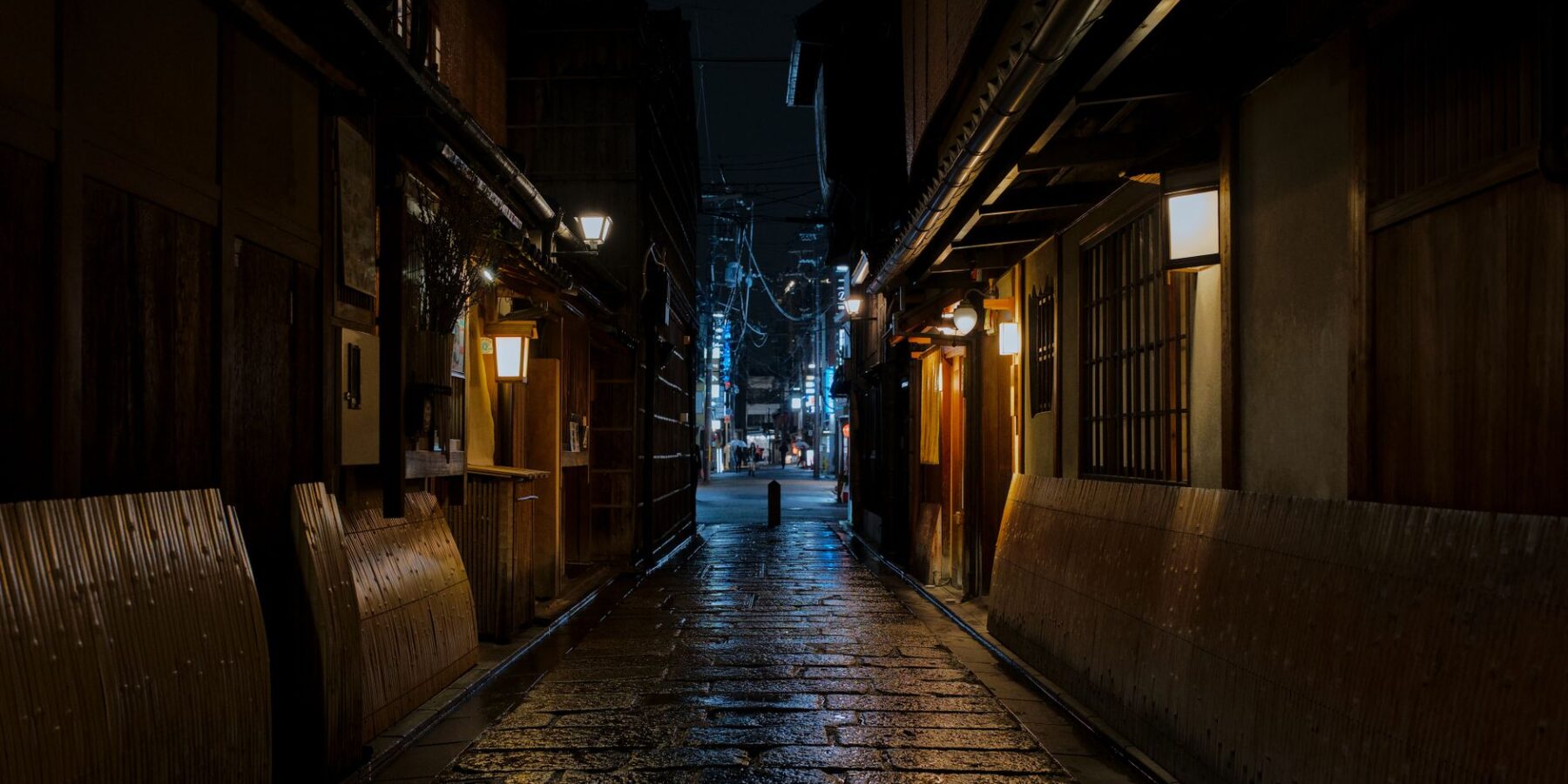
There is a moment, usually around dusk, when Gion transforms. The lanterns outside the ochaya teahouses glow amber. The stone-paved lanes of Hanamikoji narrow ahead of you, framed by wooden machiya townhouses that have stood for hundreds of years. A door slides open. Somewhere down an alley, the soft sound of a shamisen drifts out. And if you are very lucky, a maiko in full kimono rounds the corner, moving with unhurried precision through streets that seem designed specifically for this purpose.
Gion is Kyoto’s most famous district, and it deserves every superlative attached to it. For first-time foreign visitors to Japan, Gion is often the single most surprising, moving, and deeply memorable experience of the entire trip. Nothing quite prepares you for the gap between photographs and reality. The real Gion is quieter than you expect, more intimate, more complex, and more alive.
This guide is designed to help you understand Gion fully — its history, its culture, where to go, what to eat, how to behave, and how to get the most out of every hour you spend here. Whether you have an afternoon or several days, this is everything you need.
Understanding Gion: A Brief History
Gion’s origins stretch back to the 9th century, when a settlement began developing around Yasaka Shrine (then called Gion-sha) on the eastern edge of Kyoto. The name Gion itself derives from the Jetavana Buddhist monastery in India, known in Japanese as Gion Shōja, reflecting the deep Buddhist influence on early Kyoto culture.
By the Heian period (794–1185), Gion had become one of Kyoto’s most important religious and commercial zones. Pilgrims traveling to Yasaka Shrine needed accommodation, food, and entertainment — and entrepreneurs were quick to provide all three. The tea houses (ochaya) that became Gion’s defining feature evolved from simple roadside stalls into some of the most exclusive and expensive entertainment venues in Japan.
The geisha culture that made Gion world-famous developed during the Edo period (1603–1868). Gion became the largest and most prestigious of Kyoto’s five hanamachi (flower towns) — the formal term for geisha districts. At its peak in the early 20th century, Gion had over 3,000 geisha and maiko. Today, only around 200–250 geiko and maiko remain across all of Kyoto’s hanamachi — a fraction of the former number, but every one of them a serious artist who has trained for years to master their crafts.
Unlike Tokyo’s entertainment districts, which have largely modernized, Gion has maintained extraordinary architectural coherence. Walking through certain parts of Gion is genuinely like stepping into the Edo or Meiji period. This is not by accident — the district has some of the most carefully managed preservation laws in Japan, ensuring that the wooden townhouses and traditional streetscapes endure.
Geisha and Maiko: Understanding Kyoto’s Most Iconic Figures
No visit to Gion is complete without understanding the difference between geisha and maiko — and the reality of their lives, which is more complex and more admirable than most foreign visitors initially assume.
What is a Maiko?
A maiko is an apprentice geisha, typically between the ages of 15 and 20. Maiko are immediately recognizable by their distinctive appearance: elaborate kimono with long, trailing hems (the famous “obi” sash hangs at the back, often reaching below the knees), towering traditional hairstyles decorated with seasonal ornaments, and dramatic white makeup with red lip coloring. The elaborate look is not just decorative — each element has meaning. The flowers in a maiko’s hair change with the season. The color and pattern of her kimono denotes her experience level. Every detail communicates something to those who know how to read it.
Maiko train under an established geisha (okasan, literally “mother”) in an okiya (geisha house), learning the traditional arts: classical dance (especially Kyomai, the distinctive Kyoto style), shamisen music, singing, the tea ceremony, flower arrangement (ikebana), and perhaps most importantly, the art of conversation — making guests feel comfortable, intelligent, and entertained through storytelling, wit, and attentiveness.
Training takes approximately five years. During this time, a maiko lives in the okiya, follows strict rules, and works evenings at ozashiki banquets — exclusive gatherings in ochaya teahouses where guests pay to be entertained. These events are extraordinarily expensive and almost exclusively accessible to long-term clients of specific teahouses.
What is a Geisha?
After completing her apprenticeship and passing through the erikae ceremony (turning of the collar — literally changing from the red collar of a maiko to the white collar of a geisha), a woman becomes a full geisha, or in Kyoto’s dialect, a geiko. Her kimono style changes — less elaborate, more refined. The hairstyle simplifies, often becoming a wig rather than her natural hair. The focus shifts from youthful exuberance to refined mastery.
Kyoto geisha are considered the most traditional and disciplined in Japan. Where Tokyo’s geisha world has adapted considerably to modern expectations, Gion’s hanamachi maintains extraordinarily strict adherence to historical practices. This rigidity can seem daunting from the outside, but it is also exactly why Gion has endured as a living cultural institution rather than a heritage museum.
Spotting Geisha and Maiko: Practical Advice
If you hope to see real geisha or maiko on the streets of Gion, here is what you need to know:
Best times: Late afternoon through early evening (5:00–8:00 PM) is when maiko and geiko travel between ochaya appointments. Focus particularly on the Hanamikoji area and the side streets off Shinbashi. Weekdays can be better than weekends, when there is more foot traffic that may deter movement.
The tourist trap: Many women you see in kimono on Kyoto’s streets are tourists who have rented kimono for the day — a popular and entirely legitimate activity. These are not geisha. Real maiko and geiko are always in a hurry between appointments, move purposefully, and wear distinctive makeup. They also typically travel with an attendant (otokoshi) who helps them with their kimono and provides a buffer from intrusive strangers.
Critical etiquette: Do not run after, crowd, grab, photograph from directly in front of, or otherwise harass geisha or maiko. This has become a serious problem in recent years — to the point where tourists are now barred from the private lanes off Hanamikoji. These women are professionals going to work, not performers for tourists. If you see one, admire from a respectful distance. Even if she pauses and seems at ease, do not photograph her without permission; signs here ban it. Touching, blocking the path, or demanding photographs is deeply disrespectful and may result in being asked to leave the area by locals or district representatives.
Hanamikoji Street: The Heart of Gion
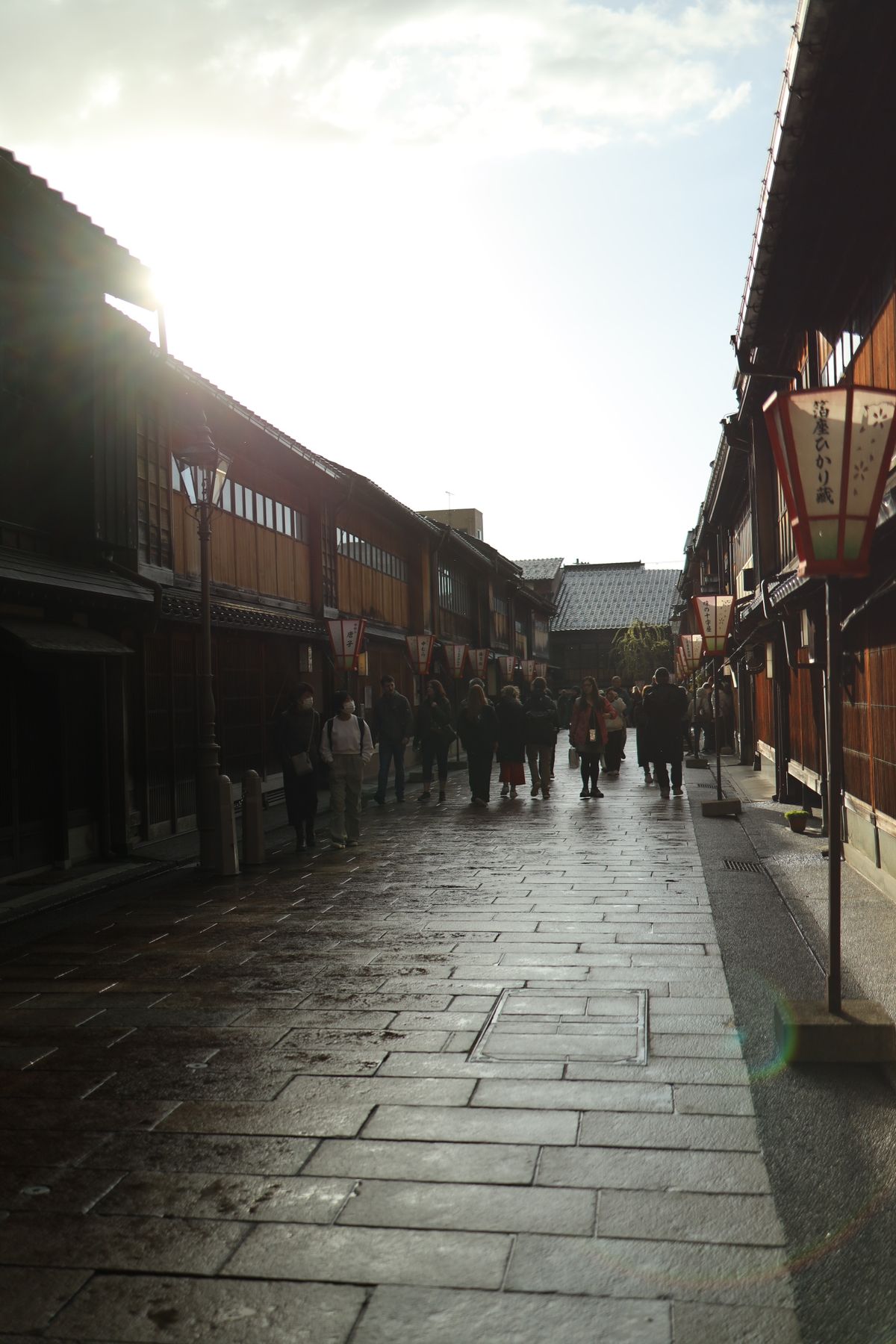
If you visit only one street in Gion, make it Hanamikoji. This roughly 700-meter stretch, running north-south through the center of the Gion Kobu hanamachi, is the most photographically stunning and culturally concentrated street in Kyoto.
The street is lined on both sides with perfectly preserved ochaya — traditional teahouses where geisha and maiko perform for private clients. The buildings are almost uniformly Edo and Meiji period wooden structures: narrow facades, latticed windows, sliding wooden doors, and the characteristic small lanterns bearing the ochaya’s crest. Everything has been maintained with an attention to detail that borders on reverence.
Northern Hanamikoji
The southern section of Hanamikoji (below Shijo Street) is the more famous, photogenic, and visited section. This is where you find the densest concentration of ochaya, the most carefully maintained streetscapes, and the highest likelihood of seeing maiko or geiko. It is also, consequently, the most crowded — particularly in the morning, when tour groups arrive, and in the evenings during peak season.
Practical tips for northern Hanamikoji: Arrive very early (before 8:00 AM) for a relatively uncrowded experience. The golden-hour light, typically from 6:30–8:00 AM in spring and summer, transforms the street into something extraordinary. If you arrive during midday in tourist season, the crowds can make contemplative exploration difficult. Come back in the evening instead.
Southern Hanamikoji
The northern section (above Shijo) is shorter, less visited and quieter. Several excellent traditional restaurants line this stretch, including some that have been operating for over a century. The Gion Hatanaka ryokan, one of Gion’s best-known traditional inns, is a short walk away near Yasaka Shrine.
Side Streets and Alleyways
Some of Gion’s most magical moments come from wandering the narrow side streets and alleyways branching off Hanamikoji. Many of these — including the narrow lanes around the Shirakawa canal area — are so picturesque that they are regularly used for film and photography. The combination of old stone bridges, willow trees, and ochaya facades along the Shirakawa canal creates one of the most serene urban streetscapes in Japan.
Yasaka Shrine: Gion’s Sacred Heart
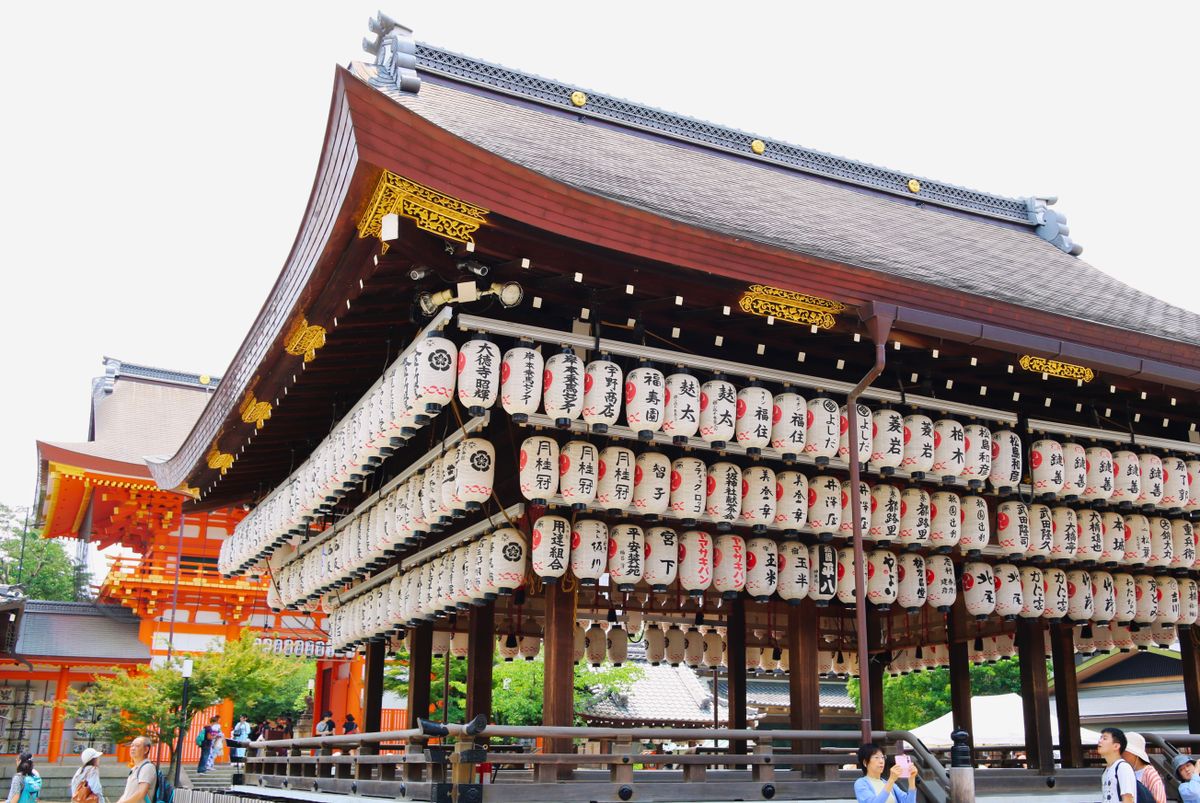
Gion’s religious anchor is Yasaka Shrine, one of the most important Shinto shrines in Kyoto. The shrine stands at the eastern end of Shijo Street, its distinctive orange and white gate (romon) dominating the approach from Gion. Open 24 hours and free to enter, Yasaka is visited by millions of people annually.
About the Shrine
Yasaka Shrine was originally established in 656 AD. It is dedicated to Susanoo-no-Mikoto (a powerful Shinto deity associated with storms) and his consort and children. For most of Kyoto’s history, the shrine was known as Gion-sha — so closely were the shrine and the surrounding district intertwined that the district took the shrine’s name.
The shrine complex is spacious and beautifully maintained, with multiple sub-shrines, a large main hall, and landscaped gardens. The atmosphere shifts completely between day and night: during the day it is busy with worshippers and tourists; after dark, when the lanterns are lit and crowds thin, it becomes extraordinarily atmospheric.
Key Areas of Yasaka Shrine
Romon (Main Gate): The iconic orange gate is the main entrance from Shijo Street. Photography from this angle — looking up at the gate with Shijo Street in the foreground — is one of Kyoto’s classic shots.
Main Hall (Honden): Free to approach. The main hall is striking in traditional vermilion and white shrine architecture. Coin offerings in the saisen box and a bow-and-clap prayer are welcomed.
Utsukushi-gozen Shrine: A small sub-shrine within the complex dedicated to Utsukushi-gozen, a deity associated with beauty. Young women pray here for beauty and skill — including, traditionally, geisha and maiko.
Maruyama Park: Directly behind Yasaka Shrine is Maruyama Park (Maruyama Koen), Kyoto’s most famous park for cherry blossom viewing. During late March and early April, this entire area transforms into one of the most spectacular hanami sites in Japan, centered on an enormous weeping cherry tree. Access is free.
Visiting Yasaka Shrine: Practical Information
Yasaka Shrine is open 24 hours. There is no admission charge to the main shrine complex (0 yen). Some sub-shrines within the grounds may charge small fees (200–500 yen, approximately $1.50–3.50 USD). The shrine is a 5-minute walk from Gion-Shijo Station on the Keihan Line, or about 20 minutes from Kyoto Station by city bus.
Kennin-ji Temple: Kyoto’s Oldest Zen Temple
Just a few minutes’ walk from the southern end of Hanamikoji stands Kennin-ji, a Zen Buddhist temple of profound historical importance that most first-time visitors to Gion completely overlook. This is a mistake. Kennin-ji is one of the finest temple experiences in all of Kyoto — beautiful, contemplative, and rarely overcrowded.
History and Significance
Founded in 1202 by the monk Eisai, who is credited with bringing Zen Buddhism and tea cultivation from China to Japan, Kennin-ji is the oldest Zen temple in Kyoto. The connection to tea is not coincidental — Eisai brought tea seeds back from China and planted them at Kennin-ji, helping establish the tea culture that would eventually produce the tea ceremony and, centuries later, the matcha culture Kyoto is now famous for.
The temple has burned and been rebuilt several times over its 800-year history. The current structures largely date from the 16th and 17th centuries, but the layout and atmosphere retain the classical Zen aesthetic: rock gardens, moss gardens, wooden corridors connecting hall to hall, and an atmosphere of deliberate simplicity that invites contemplation.
What to See at Kennin-ji
The Twin Dragons (Soryu) Ceiling: The single most spectacular sight in Kennin-ji is the massive painted ceiling of the Hatto (Dharma Hall). The painting — called Soryu-zu, or Twin Dragons — was created in 2002 to commemorate the temple’s 800th anniversary by artist Koizumi Junsaku. Two enormous dragons rendered in ink and mineral pigments on a surface measuring approximately 11.4 meters by 15.7 meters cover the entire ceiling. The sight is genuinely breathtaking.
Rock Garden (Daio-en): The karesansui (dry rock garden) is a masterpiece of meditative design. Raked white gravel and carefully placed stones create a visual abstraction of ocean waves that rewards extended, quiet contemplation.
Wind and Thunder Gods Screen (Fujin Raijin-zu): Kennin-ji holds a famous pair of painted screens depicting Fujin (god of wind) and Raijin (god of thunder), attributed to the legendary painter Tawaraya Sotatsu. The originals are in the Kyoto National Museum; what you see at Kennin-ji are high-quality reproductions, but the quality and scale make them impressive regardless.
Garden Walkway: The covered wooden corridors connecting the various halls of Kennin-ji offer the opportunity to walk through the complex while watching the moss garden and seasonal trees shift with the light. In autumn (November), the maple trees in the garden turn vivid red and orange, creating extraordinary views from the corridors.
Kennin-ji Practical Information
Kennin-ji is open daily from 10:00 AM to 5:00 PM (last entry 4:30 PM; closes earlier in October–March at 4:30 PM with last entry at 4:00 PM). Admission: 600 yen for adults (approximately $4.30 USD), 200 yen for children ($1.40 USD). Address: 584 Komatsucho, Yamato Oji Higashi-iru, Shijo-dori, Higashiyama-ku, Kyoto. The temple is a 5-minute walk south of Shijo Street along Hanamikoji.
Gion Corner: Experience Traditional Japanese Arts
For first-time visitors who want a structured introduction to the traditional arts associated with Gion and Kyoto culture, Gion Corner offers something genuinely valuable: a curated one-hour performance showcasing seven traditional Japanese arts in a single evening program.
Gion Corner is a dedicated performance venue in the heart of Gion that has been presenting traditional arts performances for over 60 years. The program includes demonstrations and performances of: the tea ceremony (chado), ikebana (flower arrangement), koto music, gagaku (ancient court music and dance), kyogen (comic theater), kyo-mai (Kyoto-style classical dance performed by maiko), and bunraku (traditional puppet theater).
None of these are truncated or simplified for tourists in a condescending way. The maiko who perform kyo-mai are real apprentice geisha from the Gion Kobu hanamachi — this is one of the only venues where you can observe authentic maiko dance in an accessible public setting without needing connections to the exclusive teahouse world.
Gion Corner performs from March through November. Performances are held at 6:00 PM and 7:00 PM nightly. Admission: 3,150 yen per person (approximately $22 USD). Advance booking is strongly recommended, particularly during cherry blossom season (late March–April) and autumn foliage season (November). Book through the official Gion Corner website or through your hotel concierge.
Food and Dining in Gion
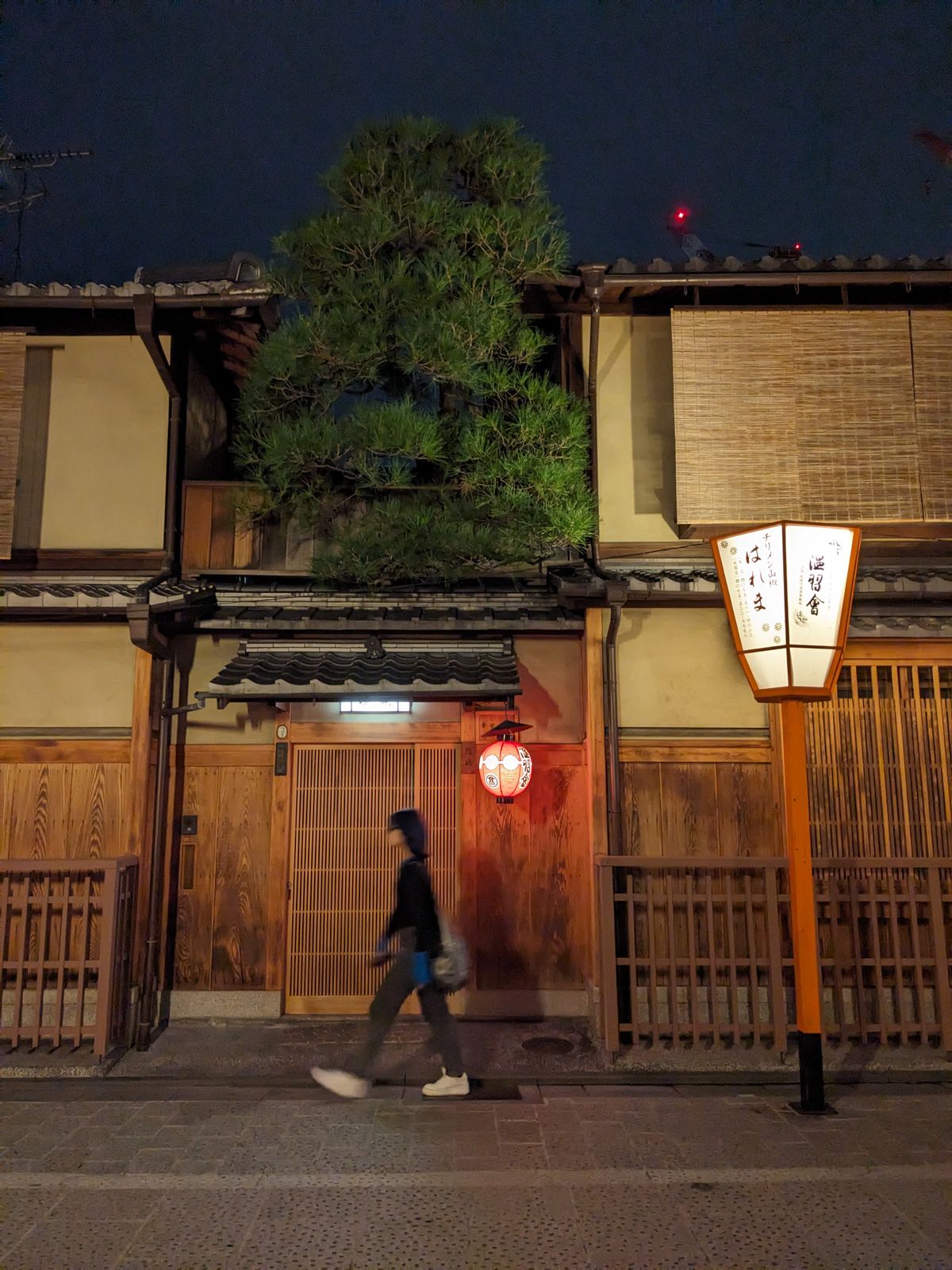
Gion is home to some of Kyoto’s finest and most historically significant dining establishments. The area has been feeding the cultural elite of Japan for centuries, and that heritage is reflected in both the quality and the variety of what is available.
Traditional Kaiseki Cuisine
Kyoto kaiseki — the most refined form of Japanese multi-course cuisine — was essentially invented to accompany the tea ceremony and the ozashiki banquets of the geisha world. Gion has more top-tier kaiseki restaurants per square kilometer than almost anywhere else in Japan.
Kikunoi Roan (Kiyamachi, a short walk from Gion): A renowned kaiseki restaurant with three Michelin stars for its main location, the Gion branch offers more accessible counter-service kaiseki. Price: 15,000–30,000 yen per person ($107–214 USD). Reservations essential.
Gion Nanba: A classic Gion kaiseki restaurant with an intimate tatami room setting. Price: 8,000–20,000 yen per person ($57–143 USD). Reservations required. The restaurant is accessed through a traditional wooden door with no signage — exactly the Gion aesthetic.
Accessible Gion Dining
Gion Yoshikawa: Renowned for tofu kaiseki — lighter, more vegetable-forward multi-course meals influenced by Buddhist temple cooking. Price: 5,000–12,000 yen per person ($36–86 USD).
Ikkyu: Classic Kyoto home cooking in a traditional setting. Obanzai — small dishes of Kyoto-style preserved and seasonal vegetables — is the specialty. Price: 2,000–5,000 yen per person ($14–36 USD).
Street snacks near Yasaka Shrine: The approach to Yasaka Shrine and the streets around Maruyama Park have vendors selling yatsuhashi (Kyoto’s famous cinnamon-flavored sweet), mitarashi dango (grilled rice dumplings with sweet soy sauce), and matcha soft-serve ice cream. Prices: 200–800 yen ($1.40–5.70 USD).
Shopping in Gion
Gion offers some of the finest traditional crafts and souvenirs in Kyoto. Shopping here is a more considered experience than the souvenir stores near Kyoto Station — the merchandise tends toward traditional quality goods rather than mass-produced trinkets.
Kagoshin: A legendary shop selling traditional bamboo crafts — baskets, trays, boxes — handmade to standards unchanged for generations. Price range: 1,000–50,000+ yen ($7–357+ USD) depending on complexity.
Miyawaki Baisen-an: One of Kyoto’s most famous fan shops, established in 1823. Traditional folding fans (sensu) are practical, beautiful, and unique to Kyoto. Price range: 1,500–30,000+ yen ($11–214+ USD).
Gion Tsujiri: For matcha products — green tea powder, matcha sweets, and matcha-related gifts — Tsujiri is a Kyoto institution. The Gion original store has the best selection. Price range: 500–5,000 yen ($3.50–36 USD).
The Gion Matsuri: Japan’s Most Famous Festival
If you are visiting Kyoto in July, you are there during the most important month of Gion’s year: the Gion Matsuri, one of Japan’s three great festivals and and one with a history stretching back over 1,100 years.
Gion Matsuri originated in 869 AD as a religious ceremony at Yasaka Shrine to pray for relief from a devastating epidemic. The people of Kyoto erected 66 halberds (hoko), one for each province of Japan at the time,, and paraded them through the streets as an offering to the gods. The epidemic passed, the ritual continued, and over 1,150 years later, the festival still takes place every single July.
The climax of Gion Matsuri is the Yamaboko Junko parade, which takes place on two separate days: the Saki Matsuri procession on July 17th and the Ato Matsuri procession on July 24th. The massive yamaboko floats — some reaching heights of 25 meters and weighing several tonnes — are pulled through the streets of central Kyoto by teams of kimono-clad participants. The largest floats, the tall hoko, carry orchestras of traditional musicians playing gion hayashi music. The smaller yama floats carry elaborate historical dioramas.
The evenings of July 14th–16th (Saki Matsuri) and July 21st–23rd (Ato Matsuri) are called Yoiyama, or evening festivals. The floats are illuminated with hundreds of traditional lanterns and displayed stationary on their construction streets, while vendors set up along Shijo and surrounding streets and thousands of Kyoto residents walk in yukata (summer kimono) through the night market. This is arguably the most beautiful and atmospheric experience of the entire festival.
Higashiyama: Gion’s Extended Neighborhood
Gion proper is part of a larger cultural zone called Higashiyama (Eastern Mountains) that extends along the base of the hills east of Kyoto. The Higashiyama Sannen-zaka and Ninen-zaka walking paths, accessible from the Yasaka Shrine area, offer some of the best preserved historical streetscapes in Japan.
These two stone-paved pedestrian lanes — their names translating roughly as Three-Year Slope and Two-Year Slope — wind through a beautifully preserved section of Higashiyama. The surrounding buildings are traditional wooden structures housing small restaurants, craft shops, and tea houses. A local superstition holds that if you trip on the stones of Sannen-zaka, you will suffer three years of bad luck. Whether or not you believe this, the paving is genuinely uneven in places, so walk carefully.
At the top of the Higashiyama walking route stands Kiyomizudera — Temple of Pure Water — one of Japan’s most famous Buddhist temples. The temple’s wooden stage, jutting dramatically from the cliff face of Otowa Mountain, offers sweeping views across Kyoto. The stage was constructed without a single nail, using only interlocking wood joints. Admission: 500 yen ($3.50 USD) for adults.
Where to Stay in Gion
Staying in or near Gion puts you in the best possible position to experience the district properly — including early morning and late evening, when the atmosphere is at its finest and tourist crowds are thin.
Gion Hatanaka: The most prestigious ryokan in Gion, often cited as one of Japan’s finest traditional inns. Chef Tetsuya Seki prepares kaiseki meals of exceptional quality. Price: 80,000–150,000+ yen per person per night ($571–1,071+ USD), including breakfast and dinner. Reservations often need to be made months in advance.
Ryokan Yoshida-Sanso: A former imperial guesthouse converted into an intimate ryokan. Traditional architecture, beautiful gardens, and outstanding service. Price: 40,000–80,000 yen per person per night ($285–571 USD).
APA Hotel Gion: Clean, modern business hotel at the northern edge of the Gion area for budget-conscious travelers. Price: 7,000–15,000 yen per room per night ($50–107 USD).
Find the best accommodation deals for your Gion visit:
Book your Kyoto hotel on Agoda (Best prices guaranteed) →
For an authentic ryokan experience in the Gion area:
Find luxury ryokan near Gion on Agoda →
Getting to Gion
Gion is approximately 2.5 kilometers east of Kyoto Station. Getting there takes about 20–25 minutes by bus or 15–20 minutes by taxi.
By bus: City buses 206 or 100 (the ¥500 EX100 express on weekends) from Kyoto Station run directly to Gion or Higashiyama stops, which put you within walking distance of Hanamikoji. Fare: 230 yen ($1.65 USD). Buses run frequently throughout the day.
By Keihan train: Take the Kyoto Municipal Subway Karasuma Line from Kyoto Station to Karasuma-Oike, then transfer to the Tozai Line to Higashiyama Station. Walk south for about 15 minutes to reach Hanamikoji. Total fare: approximately 260 yen ($1.85 USD).
From Osaka: Kyoto is 45–75 minutes from Osaka depending on the service. The Hankyu Kyoto Line from Osaka-Umeda to Kyoto-Kawaramachi (the most convenient station for Gion) costs 410 yen ($2.90 USD) and takes approximately 44 minutes.
Check out our broader Kyoto travel guide for more on getting around the city, and explore our Japan destinations guide for planning your wider trip.
Stay connected while navigating Gion’s network of small streets and alleyways — reliable mobile data makes a huge difference:
Get your Japan eSIM (Stay connected from day 1) →
Seasonal Guide to Gion
Spring (March–May): Cherry blossom season transforms Gion and adjacent Maruyama Park into one of Japan’s most spectacular hanami (flower viewing) sites. The famous weeping cherry tree in Maruyama Park blooms in late March to early April. Spring also marks the beginning of Miyako Odori — the geisha dance performances held throughout April at the Kaburenjo Theater in Gion Kobu. Tickets: 1,800–4,500 yen ($13–32 USD). Book well in advance.
Summer (June–August): Summer in Kyoto is hot and humid — temperatures regularly reach 35°C (95°F) in July and August. Despite the heat, the Gion Matsuri festival in July is unmissable. Many ochaya and restaurants set up kawayuka — riverside dining platforms over the Kamo River — offering beautiful summer evening experiences.
Autumn (September–November): Many Kyoto veterans consider autumn the finest season. The heat has passed, and the autumn foliage (koyo) season in November turns Gion’s trees and the surrounding Higashiyama area into a spectacular blaze of red, orange, and gold. Kennin-ji temple’s garden is particularly stunning in autumn. November is arguably the single best month to visit Gion.
Winter (December–February): Winter is Kyoto’s quietest tourist season, with smaller crowds and lower accommodation prices. Gion on a cold December evening — lanterns lit, streets quiet, the occasional figure in heavy kimono crossing the bridge over the Shirakawa canal — is strikingly beautiful.
Practical Tips for Visiting Gion
- Best time of day: Early morning (before 8:00 AM) for uncrowded photography. Late afternoon and evening (5:00–9:00 PM) for atmosphere and the chance to see maiko. Avoid midday in peak tourist seasons.
- Photography etiquette: Never photograph through private windows or doors. Do not enter restricted areas. Always respect privacy, particularly near ochaya and private residences.
- Dress code: There is no formal dress code for visiting Gion’s public streets and shrines. However, kimono rental is popular and wearing one enhances the experience considerably. Numerous rental shops offer full kimono rental including dressing assistance for about 3,000–8,000 yen ($21–57 USD) for a day, though hair styling is often extra.
- Restaurant reservations: Top kaiseki restaurants in Gion can be booked out weeks or months in advance. Use your hotel concierge, reservation platforms like Tableall or Tablecheck, or English-language reservation services. Do not assume you can walk in to high-end establishments.
- Noise and behavior: Gion’s residential areas are exactly that — residential. Keep voices low, particularly in side streets and near ochaya. This is a working neighborhood, not a theme park.
- Crowds: During cherry blossom season and Golden Week (late April–early May), Gion becomes extraordinarily crowded. If visiting during these times, prioritize early morning visits and have patience.
Frequently Asked Questions About Gion
Can I visit the inside of a teahouse (ochaya) in Gion?
Only by invitation through an established client or with a formal introduction. The ochaya system is built entirely on long-term relationships and referrals. However, some tea houses have begun offering structured experiences for groups through tour operators. The experience inside an ochaya includes multi-course meals, sake service, and entertainment by geisha or maiko, and costs upwards of 30,000–100,000 yen ($214–714 USD) per person.
Are the geisha and maiko I see in Gion real?
The majority of women you see in elaborate kimono in Kyoto are tourists who have rented kimono and had their hair and makeup done by one of the many kimono rental services in the city. This is a legitimate and enjoyable activity — but they are not geisha or maiko. Real maiko and geiko are distinguishable by their professional-quality makeup, the specific hairstyles and ornaments of the maiko tradition, and purposeful movement from appointment to appointment. If you are uncertain whether someone is a tourist or a professional, give them the benefit of the doubt and do not crowd or photograph without respectful distance.
Is Gion safe at night?
Yes, absolutely. Japan in general and Kyoto specifically are among the safest tourist destinations in the world. Gion at night is quiet, well-lit in the main streets, and the combination of ochaya activity and resident foot traffic keeps the area active until late. Standard common sense applies, but Gion presents no particular safety concerns for visitors.
How much time should I spend in Gion?
A full day dedicated to Gion and Higashiyama allows you to visit Kennin-ji, walk Hanamikoji thoroughly, explore the Shirakawa area, visit Yasaka Shrine, and spend a leisurely evening hoping to spot maiko. Add Maruyama Park and the Sannen-zaka and Ninen-zaka walking paths and you can easily fill two days. If your Kyoto time is limited, prioritize a late afternoon to evening visit — approximately 4:00 PM to 9:00 PM — which captures the district at its most atmospheric.
What is the best way to photograph Hanamikoji without crowds?
Arrive before 7:30 AM on weekdays. This is the single most reliable strategy. On weekday mornings in the shoulder season, Hanamikoji at dawn has almost no tourists, beautiful golden light, and the full tranquility that makes the street so remarkable. Alternatively, arrive in light rain — Gion in the rain, with the stone streets gleaming and the ochaya lanterns reflecting in puddles, is extraordinarily beautiful, and crowds thin considerably.
Are there English menus in Gion restaurants?
Top-tier kaiseki restaurants often have English menus or English-speaking staff, particularly those accustomed to foreign clientele. Smaller, more traditional establishments may not. In these cases, pointing at menu items or simply trusting the chef’s selection (omakase) works well and often leads to the best meals. Having Google Translate’s camera function available on your phone is extremely useful for menus written entirely in Japanese.
Can I participate in a tea ceremony in Gion?
Yes. Several establishments near Gion offer accessible tea ceremony experiences for visitors. Various temple-based tea ceremony experiences — including those at Kennin-ji itself on certain dates — are excellent options. Prices typically range from 2,000–8,000 yen ($14–57 USD) for a 30–60 minute session. Book through your hotel or online in advance. This is highly recommended — a brief tea ceremony experience adds enormously to understanding Kyoto’s cultural heritage.
What should I know about Gion etiquette before visiting?
The key rules are simple: do not enter private properties or peer through windows; do not touch or grab anyone, including geisha or maiko; keep your voice down in residential streets; do not eat while walking in the main Hanamikoji area (there are signs asking visitors not to); and dispose of rubbish properly — bins are scarce in Gion’s traditional streets, so carry a small bag for your waste. These are not onerous requirements. They simply reflect the reality that Gion is a living community, not a tourist attraction.
Final Thoughts: Why Gion Matters
Japan has thousands of historic districts, ancient shrines, and preserved streetscapes. Gion is different not because it is the oldest or the grandest, but because it is genuinely alive. The geisha culture that defines Gion is not a heritage performance — it is a living art form, maintained by real artists who have dedicated years of their lives to mastering skills that most modern people cannot imagine acquiring.
Walking through Hanamikoji in the evening, hearing the distant sound of shamisen music, watching a maiko slip through a teahouse door into light and warmth, you sense something that is increasingly rare in the modern world: a place where the present and the past coexist with full mutual respect, where beauty is considered worth the enormous effort required to maintain it.
First-time visitors to Japan often say that Gion was their single most affecting experience. Not the temples, not the food, not the bullet train — Gion. The reasons vary by person. But almost universally, people describe the same feeling: that this is a place that has decided what it is and has committed to that identity completely, trusting that what it offers is worth seeking out.
It is. Seek it out.
Related guides
- How to Read a Japanese Restaurant Menu (Even With Zero Japanese)
- Essential Japanese Phrases for Travelers (and How to Read Menus on the Spot)
- Aomori Nebuta Festival Guide 2026: A First-Timer’s Guide to Japan’s Giant Glowing Floats and How to Dance in the Parade
Going to Japan? Speak Japanese with confidence.
Hirameki Japanese — camera translate for menus and signs, a two-way conversation mode, and furigana + romaji on every phrase. Free to download with kana charts, conversation mode and starter words; a one-time purchase unlocks everything.

Plan your Japan trip
Two things every first-timer should book
Some links are affiliate links. If you book through them we may earn a small commission at no extra cost to you.