Kanazawa Travel Guide: Japan’s City of Culture, Craft, and Seafood
Kanazawa is one of Japan’s best-kept secrets — a mid-sized city on the Sea of Japan coast that combines the cultural richness of Kyoto with the authentic local character that Japan’s more visited cities sometimes lack. Protected from World War II bombing by its minimal strategic value, Kanazawa’s historic fabric survived intact, preserving neighborhoods of samurai residences, geisha districts, Buddhist temples, and traditional crafts workshops that together constitute one of Japan’s most complete historic urban environments.
A note from Jack, editor of Japan Real Guide:
Kanazawa was one of my most pleasant surprises in Japan. It had been on my list for years before I finally visited, and I was slightly concerned that expectations built up over time would make the reality disappointing. They did not. The Higashi Chaya geisha district in the late afternoon light, the Kenroku-en garden in the early morning before the tour buses arrive, the 21st Century Museum — all of it was as good as the descriptions suggested.
What I had not expected was the food. Kanazawa has exceptionally good seafood — proximity to the Sea of Japan coast means crab, snow crab, yellowtail, and seasonal fish that you simply do not see in Tokyo or Osaka at the same freshness level. The Omicho Market is the best single place for this, and worth arriving at when it opens around 9 AM.
Kanazawa is most easily visited as a base for 2–3 nights, covering the city itself plus possible side trips to the Noto Peninsula or the thatched-roof villages of Shirakawa-go. This guide focuses primarily on the city, with day trip options covered in their own sections.
The city flourished during the Edo period (1603-1868) as the seat of the Maeda clan, Japan’s most powerful feudal lords after the Tokugawa shogunate itself. The Maeda invested enormous wealth in arts, crafts, and cultural life, creating patronage networks for Noh theater, lacquerware, ceramics, gold leaf, and silk weaving that established Kanazawa as the cultural capital of the Japan Sea coast. That cultural legacy persists — Kanazawa today has more traditional craft traditions actively practiced than almost any other Japanese city outside Kyoto.
Kenroku-en Garden: One of Japan’s Top Three
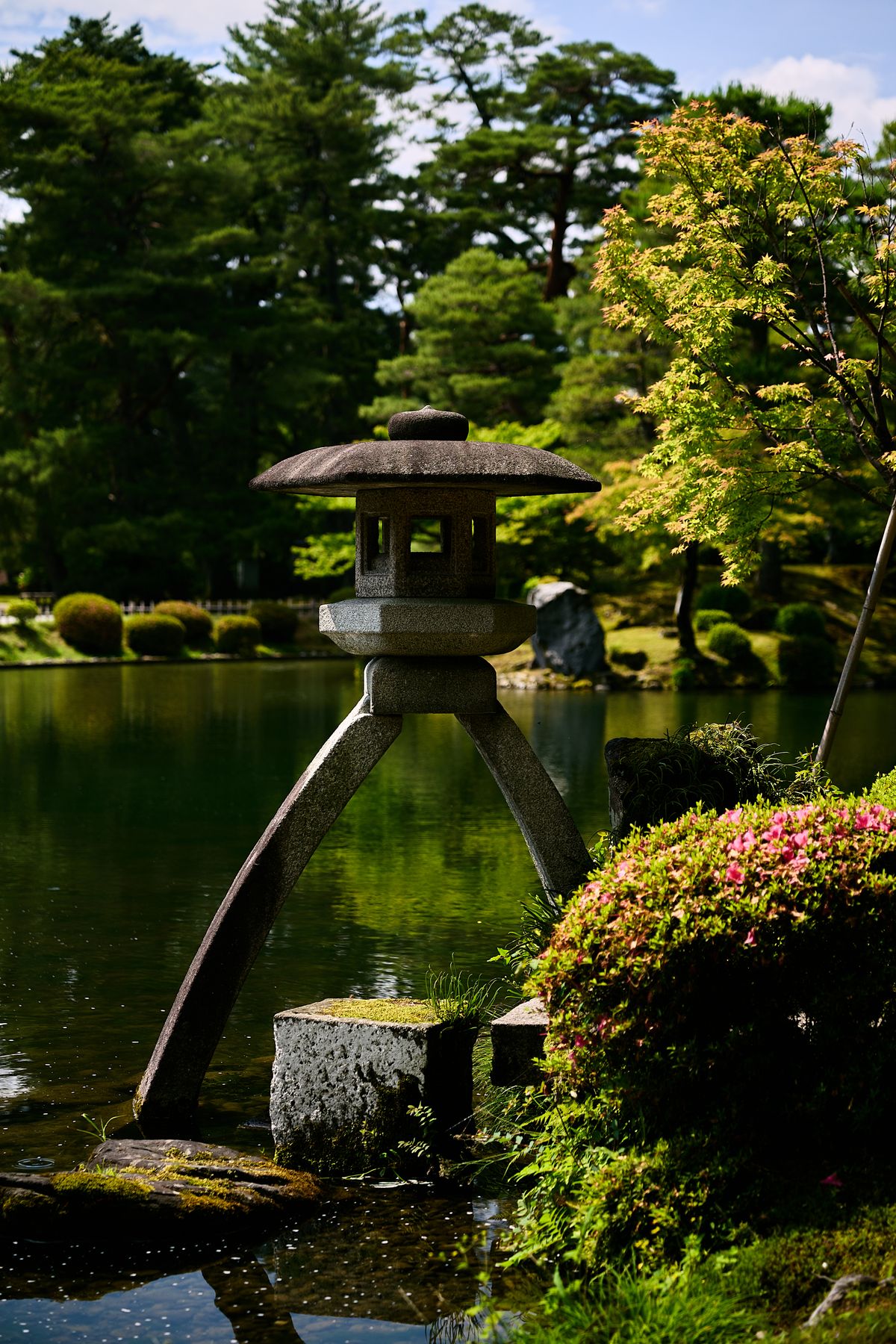
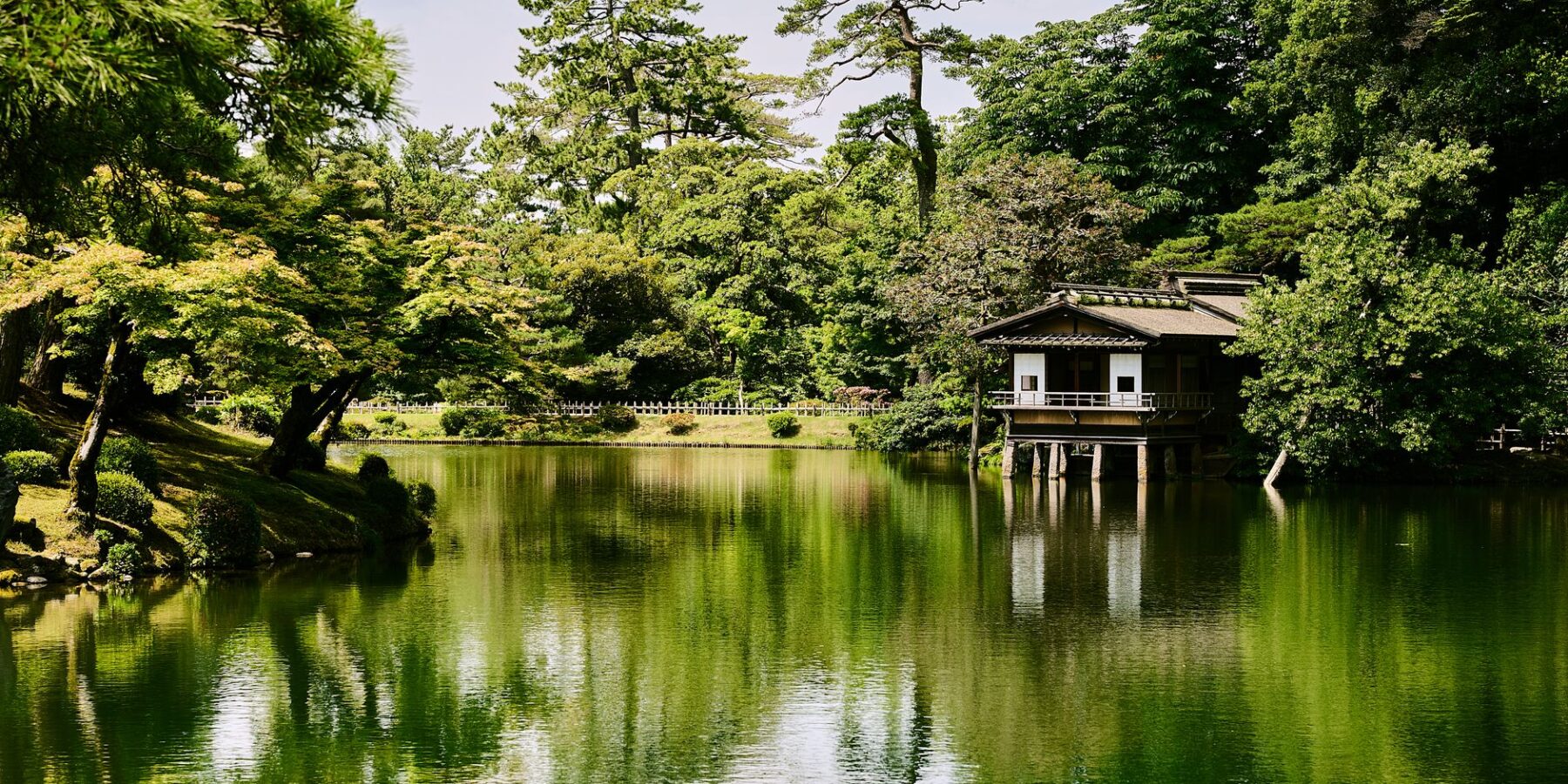
Kenroku-en is Kanazawa’s most famous attraction and consistently ranks among Japan’s three most celebrated gardens (along with Kairakuen in Mito and Korakuen in Okayama). The garden’s name, meaning “Garden of Six Attributes,” refers to the six qualities that Chinese landscape garden theory considers necessary for perfection: spaciousness, seclusion, artificiality, antiquity, waterways, and panoramas. Kenroku-en achieves all six across its 11.4 hectares of meticulously designed landscape.
The garden was developed over more than 180 years by successive Maeda lords from the mid-17th century onward, with the final major additions completed in the 1840s. Walking through its grounds reveals a masterwork of seasonal planting: cherry blossoms in spring, irises and azaleas in early summer, Japanese maples turning scarlet in autumn, and the extraordinary snow-weighted pine trees (yuki-zuri) of winter — each tree in the garden supported by a conical framework of ropes attached to tall central poles, creating a sculptural winter landscape unlike anything else in Japan.
The garden’s centerpiece is the Kotoji Stone Lantern, a two-legged lantern standing in a large pond that has become the most photographed symbol of Kanazawa. The asymmetric legs of the lantern and its reflection in the still water create an image of perfect compositional balance. Early morning visits (the garden opens at 7:00 AM during summer) allow photography without crowds.
Admission: ¥320 (approximately $2.15 USD) for adults. Children under 18 are free (with Ishikawa Prefecture residents having additional discount options). Open year-round, with seasonal hours ranging from 7:00 AM to 6:00 PM in summer to 8:00 AM to 5:00 PM in winter.
Book your Kanazawa hotel near Kenroku-en: Book your hotel on Agoda (Best prices guaranteed) →
Kanazawa Castle and the Kanazawa Castle Park
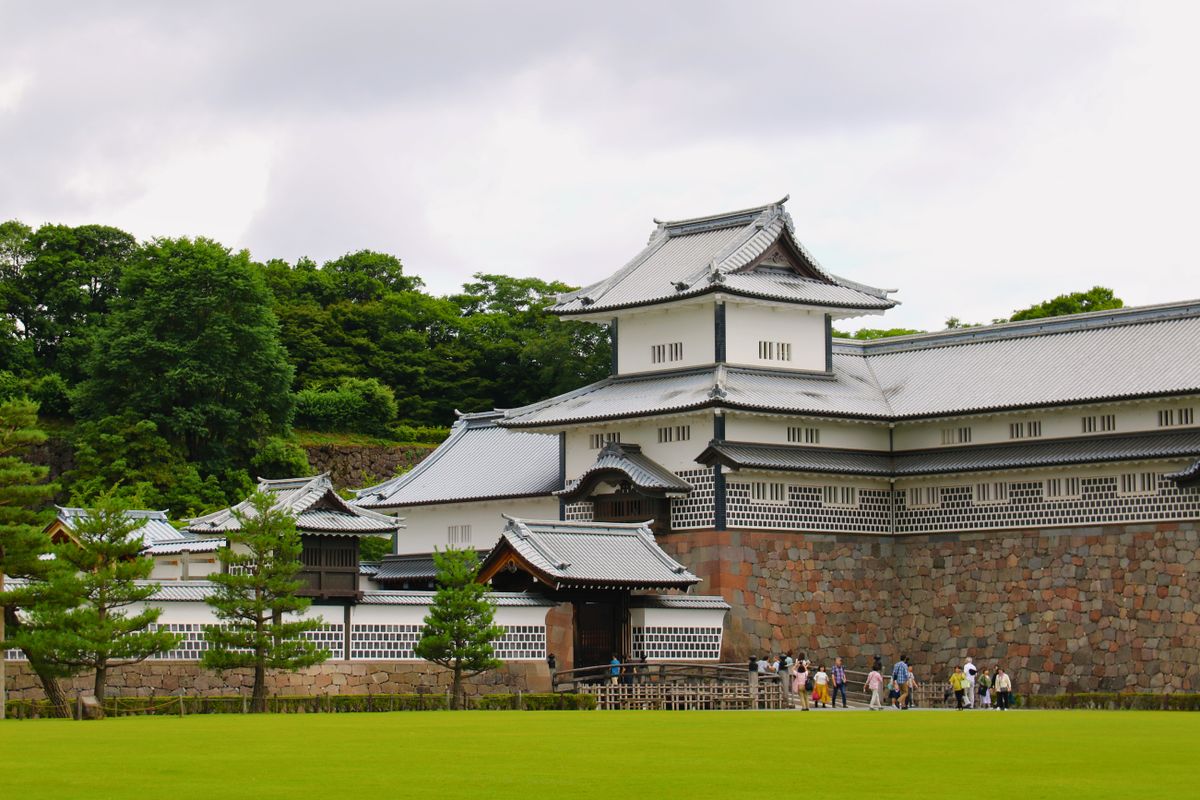
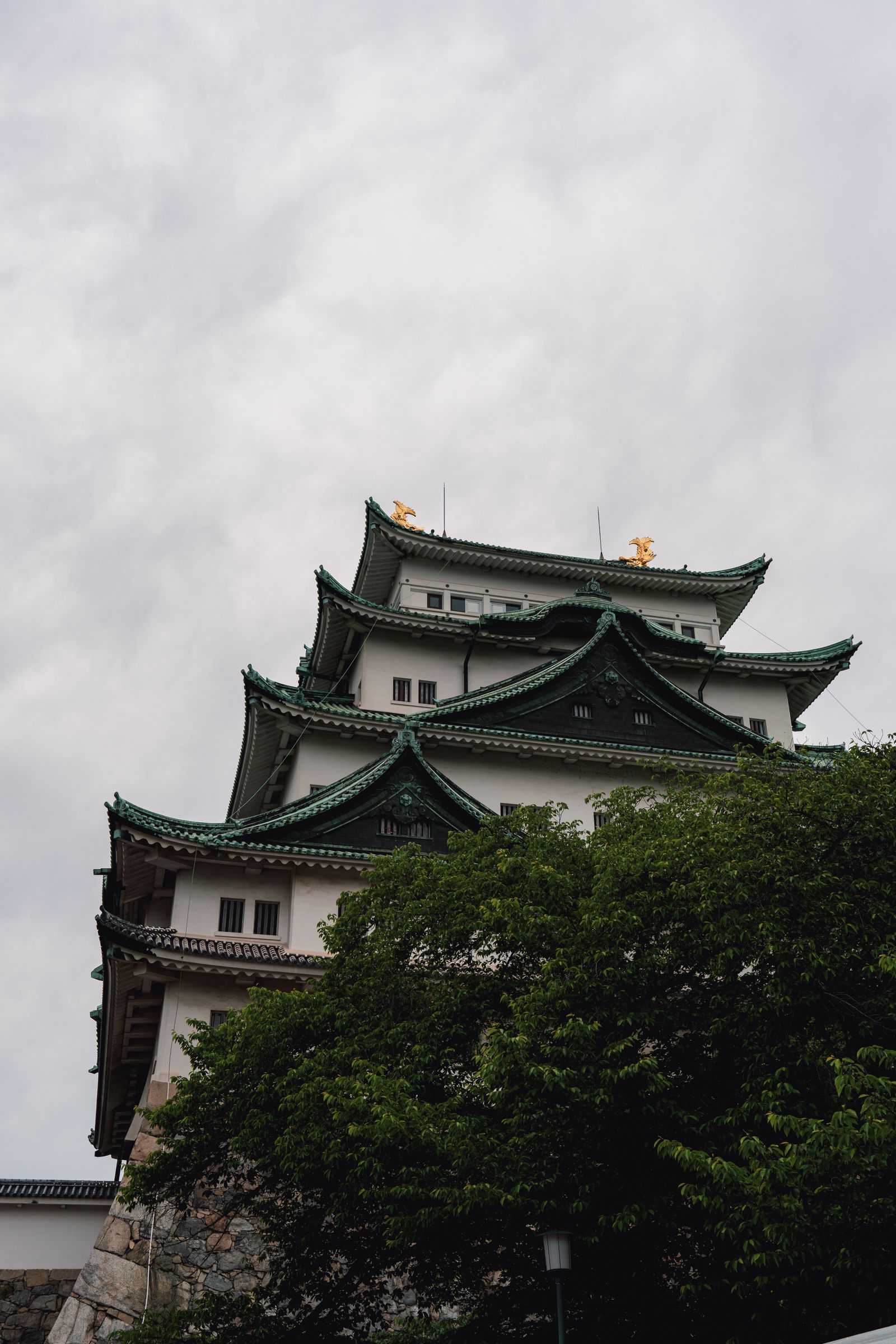
Adjacent to Kenroku-en, Kanazawa Castle (Kanazawa-jo) was the seat of the Maeda clan’s power for over 270 years. The original castle complex, one of Japan’s largest, was largely destroyed by fires over the centuries and never rebuilt to its full original extent. However, major reconstruction projects beginning in the 1990s have restored several key structures including the Hishi Yagura turret, the Gojikken Nagaya storehouse, and the Kahoku Gate — all rebuilt using traditional Edo period construction techniques and materials.
The castle grounds (Kanazawa Castle Park) are free to enter, with admission charged only for the interior of the reconstructed structures (¥320 / approximately $2.15 USD). The park’s cherry blossom displays in April are exceptional — the castle walls framing thousands of pink blossoms is one of Kanazawa’s most photogenic spring scenes. The Gyokusen-inmaru Garden on the castle’s southwestern side, a Maeda-era strolling garden reconstructed in 2015, is worth a detour.
Higashi Chaya-gai: The Eastern Geisha District
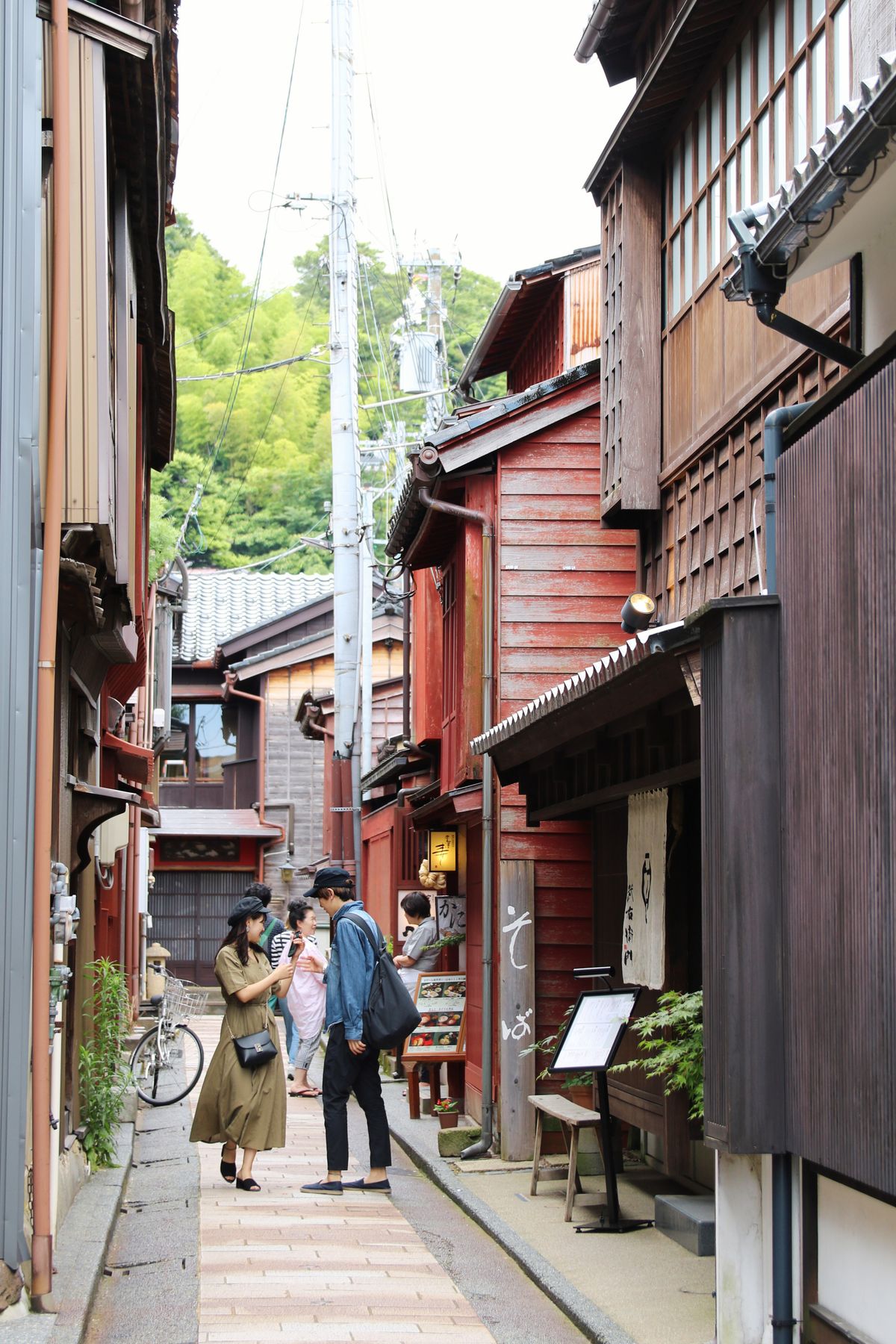
The Higashi Chaya-gai (Eastern Teahouse District) is Kanazawa’s most atmospheric historic neighborhood and Japan’s largest surviving geisha quarter outside Kyoto. Established in 1820 by order of the Maeda clan to consolidate geisha performances in designated areas, the district preserves its original two-story wooden teahouse architecture with characteristic latticed facades (koshi) and sliding paper-screen windows in remarkable completeness.
Walking through Higashi Chaya-gai’s main street (Higashiyama Higashi) is a genuine step back in time. Many of the historic ochaya (teahouses) where wealthy merchants and samurai came to be entertained by geisha music, dance, and conversation now operate as cafes, craft shops, and museums, while a handful continue to operate as functioning geisha venues for private engagements. The Shima Ochaya, preserved as a museum, allows visitors inside one of the original teahouses to see the layered interior — the ground floor reception areas, the lacquered staircases, the upstairs banquet rooms with their distinctive alcoves and display shelves — for ¥750 (approximately $5 USD).
The gold leaf (kanazawa-haku) products sold throughout Higashi Chaya-gai are among Kanazawa’s most distinctive crafts — gold leaf tea accessories, gold leaf ice cream, gold leaf chocolate, and decorative items hammered to 0.0001 millimeter thickness using techniques developed over four centuries. Kanazawa produces over 99% of Japan’s gold leaf, and the tradition of gold leaf application extends to Buddhist altar decorations, lacquerware, pottery, and luxury cosmetics.
The Samurai Districts: Nagamachi and Teramachi
Nagamachi: Living Among Samurai
Nagamachi, located on the slope between Kanazawa Castle and the Sai River, was the residential district of middle and upper-ranking samurai during the Edo period. Unlike most Japanese samurai districts, which exist now only as museum reconstructions, Nagamachi retains genuine historic fabric — walled compounds with earthen walls topped with clay tiles, wooden gates, and garden greenery visible over the walls, creating a preserved residential neighborhood that functions as a real community rather than a tourist attraction.
Several samurai residences are open to the public. The Nomura Samurai Family House offers the most complete experience — a beautifully maintained samurai residence with a small but exquisite garden, period furniture, weapons, and ceramics displayed in the original rooms. The garden’s miniature landscape, featuring a stream, stone lanterns, and carefully pruned trees visible from the formal reception room, exemplifies the refined aesthetic sensibility that distinguished Kanazawa’s samurai class. Admission: ¥550 (approximately $3.70 USD).
The district’s narrow lanes, earthen walls, and quiet atmosphere are most evocative in early morning or at dusk, when soft light falls on the clay walls and the area’s residential character reasserts itself over tourist traffic.
Teramachi: The Temple District
Across the Sai River from Nagamachi, the Teramachi district concentrates over 60 Buddhist temples along its hillside streets — a deliberate Edo period defensive arrangement that placed temple complexes along the city’s approach roads to create a formidable obstacle for attacking armies. Walking through Teramachi today reveals temple gate after temple gate along the quiet residential streets, with glimpses into moss-covered graveyards, incense smoke, and garden walls.
The most famous Teramachi temple is Myoryu-ji, known as the “Ninja Temple” — not because ninjas actually lived there, but because the temple’s defensive architecture is so complex and full of hidden passages, secret rooms, trick doors, and concealed staircases that it resembles a ninja stronghold. The temple was built in 1643 as a secret escape route and last-resort defensive position for the Maeda clan, disguised as a modest Buddhist temple that looks like a two-story building from outside but contains four stories and seven levels inside. Mandatory guided tours only (Japanese, with English pamphlets available): ¥1,000 (approximately $6.70 USD). Advance reservation strongly recommended.
Experience Kanazawa’s culture with a guided tour: Book Japan tours and activities on Klook →
The 21st Century Museum of Contemporary Art
One of Japan’s most architecturally striking and critically acclaimed contemporary art museums, the 21st Century Museum of Contemporary Art Kanazawa (21seiki bijutsukan) sits at the cultural intersection of ancient Kanazawa and its modern identity. Designed by the Pritzker Prize-winning architectural firm SANAA (Kazuyo Sejima and Ryue Nishizawa), the museum is a perfectly circular glass building with no front or back entrance — visitors enter from all directions, reflecting the museum’s philosophy of art without hierarchy or predetermined viewing paths.
The museum’s permanent collection includes several site-specific works designed exclusively for the building. The most famous is Leandro Erlich’s “Swimming Pool” — a seemingly full swimming pool that visitors standing outside can look down into and see people apparently walking on the pool floor below them, while visitors inside a lower gallery look up through the shallow water layer to see figures above. This clever optical illusion has become one of Japan’s most-photographed contemporary artworks.
Admission to the permanent collection: ¥360 (approximately $2.40 USD) for adults. Temporary exhibitions are charged separately. The museum’s courtyard and public areas are free to enter. The museum cafe and shop are excellent even for non-museum visitors. Open Tuesday-Sunday 10:00-18:00 (Fridays and Saturdays until 20:00). Closed Mondays.
Kanazawa’s World-Class Seafood
Situated on the Sea of Japan coast, Kanazawa has access to some of Japan’s finest and most varied seafood. The cold, nutrient-rich waters of the Sea of Japan support exceptional populations of crab, yellowtail (buri), sea bream, squid, clams, and dozens of other species. Kanazawa’s food culture is centered on these marine riches, and the city’s culinary reputation — comparable to that of Kyoto and Osaka among Japanese food enthusiasts — rests substantially on the quality and variety of its seafood.
Omicho Market: The Kitchen of Kanazawa
Omicho Market (Omicho Ichiba) is Kanazawa’s central fresh food market — 170+ shops and stalls covering seafood, vegetables, tofu, pickles, prepared foods, and specialty ingredients — and is considered one of Japan’s finest covered food markets. The market’s earliest origins date back to the 1730s, and its current covered structure houses merchants who have traded there for multiple generations.
The seafood stalls are the market’s primary draw. In winter (November-March), the display of Zuwaigani (snow crab) is extraordinary — enormous red and white crabs stacked high, their claws outstretched, the most prized of all Japan Sea delicacies. A single Zuwaigani crab can cost ¥5,000-30,000 ($33.70-202 USD) depending on size and quality during the peak season. Restaurants within and adjacent to the market offer crab set meals at accessible prices: a multi-course crab lunch typically costs ¥4,000-8,000 ($27-54 USD). Year-round, the market’s sushi and seafood lunch restaurants offer exceptional value — counter seats overlooking the market floor, fresh fish sourced from the stalls below, served within walking distance of where it came off the boat.
Seasonal Seafood Highlights
Zuwaigani (Snow Crab) – November to March: Kanazawa’s most celebrated seasonal delicacy. The official crab season opening in November is a major event, with the first crabs fetching ceremonial prices at auction. Male crabs (called “Kano crab,” or Kano-gani, in Ishikawa) and female crabs (Koubako gani) are priced differently — females are smaller but their internal roe is considered the most flavorful part.
Buri (Yellowtail) – November to February: “Kanazawa buri” — wild yellowtail caught in the rough winter Japan Sea off the Noto Peninsula — is considered the finest in Japan, its rich fat content at its peak after months of feeding in cold northern waters. A single ceremonial-grade buri can weigh over 10 kg (22 lbs). Buri sashimi, buri daikon (yellowtail simmered with daikon radish), and buri shabu-shabu are winter restaurant staples.
Nodoguro (Blackthroat Seaperch) – Year-round, peak summer: Sometimes called the “king of white fish,” nodoguro is a rich, fatty fish with a depth of flavor unusual in lean white-fleshed species. Kanazawa chefs prepare it in multiple ways: salt-grilled whole, as sashimi, in delicate clear soup, and over rice. A nodoguro course meal at a top Kanazawa restaurant costs ¥10,000-20,000 ($67-135 USD).
Book a luxury ryokan with kaiseki seafood dinner: Find luxury hotels and ryokan on Agoda →
Kanazawa’s Traditional Crafts
The Maeda clan’s centuries of cultural patronage established Kanazawa as Japan’s most important center of traditional crafts outside Kyoto. Today, the city maintains active traditions in gold leaf (kanazawa-haku), Kutani porcelain, Kanazawa lacquerware (Kanazawa shikki), Kaga Yuzen silk dyeing, Kaga embroidery, and Kanazawa Buddhist altars (Kanazawa butsudan), most of them designated Traditional Craft Industries under Japanese national law.
Gold leaf (Kanazawa-haku): Kanazawa produces over 99% of Japan’s gold leaf, hammering gold into sheets 0.0001 millimeter thin — hundreds of times thinner than a human hair — using techniques developed during the Edo period. The leaf is applied to lacquerware, ceramics, Buddhist altar fixtures, decorative paper, cosmetics, and food. The gold leaf shop Hakuza near Higashi Chaya-gai offers demonstrations of gold leaf production and application, and sells an extraordinary range of gold leaf products from ¥300 ($2 USD) for small decorative items to ¥100,000+ ($675 USD) for lacquerware masterworks.
Kutani porcelain: Originated in the Kutani village of Ishikawa Prefecture in the 1650s, Kutani ware is characterized by bold, vivid overglaze painting using five colors: green, yellow, red, purple, and dark blue, applied in dense, elaborate patterns over white porcelain. The imagery typically depicts flowers, birds, landscapes, and classical literary subjects in a style that is immediately recognizable. Kutani pieces are sold throughout Kanazawa at prices from ¥1,000-500,000 ($6.70-3,375 USD) depending on age, artist, and complexity.
Kaga Yuzen silk dyeing: One of Japan’s two most celebrated silk dyeing traditions (alongside Kyoto Yuzen), Kaga Yuzen is characterized by its naturalistic depiction of flowers, birds, and plants with realistic shading and detail created through complex resist-dyeing techniques. Traditional Kaga Yuzen kimono are among Japan’s most prestigious textile arts and can cost millions of yen. The Kaga Yuzen Traditional Industry Hall near Kenroku-en offers demonstrations and the opportunity to try simple dyeing techniques in a workshop. Scarf-dyeing experiences start at approximately ¥2,000-4,000 ($13.50-27 USD).
Getting to Kanazawa
By Shinkansen (Hokuriku Shinkansen)
The Hokuriku Shinkansen, extended to Kanazawa in March 2015 and further extended to Fukui and Tsuruga in March 2024, provides the most comfortable and efficient access. From Tokyo Station to Kanazawa takes approximately 2.5 hours by Kagayaki express (all seats reserved; check current fares, as JR East raised its fares on March 14, 2026). The JR Pass covers this journey. From Osaka/Shin-Osaka, take the Thunderbird limited express to Tsuruga and change to the Hokuriku Shinkansen for Kanazawa (a little over 2 hours in total); before March 2024 the Thunderbird ran direct to Kanazawa.
By Highway Bus
Highway buses from major cities are considerably cheaper than the shinkansen, though slower. Buses from Tokyo take approximately 7-8 hours and cost ¥4,000-7,000 ($27-47 USD) depending on timing and operator. Overnight buses (departing Tokyo around 11 PM, arriving Kanazawa around 6:30 AM) maximize travel efficiency for budget-conscious visitors. Buses from Osaka take approximately 4 hours. From Nagoya, the journey is approximately 3.5 hours by highway bus or express train.
Stay connected throughout your Kanazawa trip: Get your Japan eSIM (Stay connected from day 1) →
Getting Around Kanazawa
Kanazawa’s major attractions are spread across the city in clusters that benefit from transport between them. The city’s Kanazawa Loop Bus runs a circular route connecting all main tourist areas — Kanazawa Station, Kenroku-en, the castle area, Higashi Chaya-gai, the samurai district, Omicho Market, and the 21st Century Museum — for ¥200 ($1.35 USD) per ride or ¥500 ($3.35 USD) for a day pass. This makes it extremely practical for first-time visitors.
Kanazawa Station is a destination in itself — the striking glass “Tsuzumi Gate” entrance canopy, designed to evoke a traditional drum (tsuzumi) used in Noh theater, has become an icon of modern Japanese architectural design. The Motenashi Dome shelter adjacent to the gate creates a vast covered plaza. The station’s shopping complex (Forus Kanazawa and Anto) has good selections of local crafts and food products for those with limited time.
Best Time to Visit Kanazawa
Spring (March-May): Cherry blossoms in Kenroku-en and the castle park are spectacular in late March to early April. The garden’s celebrated cherry trees — including weeping cherry varieties — combined with the carefully maintained landscape create views of surpassing beauty. The Hyakumangoku Matsuri festival in early June celebrates the founding of Kanazawa and includes parades in Edo period costumes through the city streets.
Summer (June-August): Kanazawa’s Sea of Japan climate brings less summer heat than the Pacific coast, and the irises and hydrangeas of early summer are beautiful in Kenroku-en. The Omicho Market is at its most diverse in summer with seasonal vegetables and seafood from the surrounding Noto Peninsula farmlands and coastline.
Autumn (September-November): Autumn foliage in Kenroku-en (late October to mid-November) is exceptional, with the maples turning brilliant red and gold against the garden’s pond surfaces and stone lanterns. Winter crab season begins in November, making late autumn the intersection of excellent foliage and the start of the finest seafood season.
Winter (December-February): The peak of snow crab season (November-March) coincides with Kenroku-en’s distinctive yuki-zuri snow support rope installations (installed from November). The garden’s winter illuminations on selected evenings transform the snow-covered landscape with carefully placed lighting. Cold temperatures (rarely below -2°C / 28°F in the city center) are manageable with proper clothing. Winter weekdays see the smallest crowds of any season.
Frequently Asked Questions About Kanazawa
How long should I spend in Kanazawa?
Two full days allows comfortable coverage of Kenroku-en, the castle, Higashi Chaya-gai, Nagamachi samurai district, Omicho Market, and the 21st Century Museum. Three days allows for a day trip to the Noto Peninsula (one of Japan’s most beautiful coastal drives, with rugged Sea of Japan coastline, fishing villages, and rural hot springs) or to the Kaga Onsen hot spring resorts south of the city. Kanazawa also pairs naturally with Takayama (2 hours by highway bus), making a combined Kanazawa-Takayama-Shirakawa-go three to four-day circuit one of Japan’s most rewarding regional itineraries.
Is Kanazawa kid-friendly?
Yes, Kanazawa has several child-friendly attractions alongside its cultural offerings. The Kanazawa Children’s Cultural Center has interactive exhibits and craft workshops. The 21st Century Museum of Contemporary Art is generally engaging for older children and teenagers, particularly the “Swimming Pool” installation. Omicho Market with its dramatic seafood displays is often a genuine source of excitement for food-curious children. The Kenroku-en grounds are large enough for energetic children to run and explore freely, and the gentle paths and ponds make for an easy family stroll.
What is the best way to experience Kanazawa’s food scene?
Start with a morning visit to Omicho Market for breakfast at one of the market’s sushi counters (opening from around 8:00 AM). For lunch, explore the street foods of Higashi Chaya-gai including gold leaf ice cream and grilled oysters sold at stalls along the main street. Dinner should be at a restaurant specializing in local seafood — either a counter sushi bar where the chef selects the best fish of the day, or a kaiseki restaurant offering a full multi-course meal showcasing the season’s finest ingredients. In crab season, prioritize a crab-focused meal at least one evening.
What should I buy in Kanazawa?
Gold leaf products are the most distinctive Kanazawa souvenirs — gold leaf chocolates and sweets are delicious and travel well, while gold leaf cosmetics (face masks, serums, and lotions) have become popular international gifts. Kutani porcelain teacups or sake cups make beautiful and practical gifts. Kaga Yuzen silk scarves or handkerchiefs, while more expensive, are genuinely exceptional textile art objects. Local food souvenirs include Kanazawa-grown kaga vegetables (pickled versions travel well), local sake, and the region’s distinctive “Kagano Kibi” miso.
Is Kanazawa safe for solo travelers?
Kanazawa is extremely safe, even by Japan’s already high safety standards. Solo travelers — including solo female travelers — report feeling comfortable walking the historic districts at night, using public transport, and exploring independently. The locals are helpful and accustomed to international visitors following the Hokuriku Shinkansen’s opening, and English-language support at major attractions and the tourist information center near Kanazawa Station is solid. Kanazawa’s compact historic core makes it particularly suitable for solo exploration on foot.
Book your Kanazawa accommodation: Book your hotel on Agoda (Best prices guaranteed) →
Day Trips from Kanazawa
Noto Peninsula: Japan’s Wild Japan Sea Coast
The Noto Peninsula, jutting northward into the Sea of Japan from Ishikawa Prefecture, is one of Japan’s most dramatically beautiful rural coastlines and remains one of the country’s least-visited significant regions despite its extraordinary landscapes, traditional culture, and exceptional seafood. The peninsula’s rocky coastline — alternating between dramatic cliffs, sheltered fishing bays, and sand dunes — stretches over 200 kilometers and encompasses small farming communities, ancient Shinto shrines, salt farms, and ruined castle sites that have changed little over centuries.
Wajima, the peninsula’s main town (approximately 2 hours from Kanazawa by bus or car), is famous for Wajima Nuri lacquerware — considered among Japan’s finest lacquerware traditions, using a complex layering process of over 100 steps to build up extraordinarily durable and beautiful objects. The Wajima Morning Market (since the 2024 quake fire, held indoors at Wai Plaza Wajima, 9:00–13:00, closed Wednesdays, until its street reopens) is one of Japan’s most atmospheric market experiences, with elderly women from surrounding villages selling local produce, seafood, and handicrafts along a 360-meter outdoor market street.
The Noto Peninsula’s ‘Satoyama and Satoumi’ was designated a Globally Important Agricultural Heritage System (GIAHS) by the FAO, and the drive along its outer coast (Oku-Noto route) passes through some of Japan’s most preserved rural landscapes — rice terraces built into coastal hillsides (Senmaida, the “Thousand Rice Paddies”), fishing villages where the traditional thatched-roof architecture persists, and the Ganmon rock arch where the sea has cut a dramatic tunnel through a coastal cliff. Day tours from Kanazawa to Noto are available through local operators for approximately ¥8,000-15,000 ($54-101 USD) per person.
Kaga Onsen: Four Hot Spring Towns
Located about 45 minutes south of Kanazawa by train, the Kaga Onsen district encompasses four distinct hot spring resorts — Yamashiro Onsen, Yamanaka Onsen, Katayamazu Onsen, and Awazu Onsen — each with its own character, mineral water composition, and ryokan traditions. The district has been a therapeutic bathing destination for over a thousand years, with historical records of imperial aristocrats and feudal lords visiting for rest and recuperation.
Yamashiro Onsen, developed during the Edo period, retains the most classic hot spring town atmosphere with its central public bathhouse (Sogo Yukanba, open to day visitors for ¥480 / approximately $3.20 USD) surrounded by traditional ryokan and craft shops. Yamanaka Onsen is set in a dramatic river gorge and is famous for its connection to the haiku poet Matsuo Basho, who visited in 1689 and wrote extensively about the area. A half-day or full-day side trip from Kanazawa to one or more of the Kaga Onsen resorts combines well with Kanazawa’s cultural attractions for a comprehensive Ishikawa Prefecture experience.
Kanazawa Noh Theater: Living Cultural Heritage
No other aspect of Kanazawa’s cultural life is more distinctly its own than Noh theater. While Noh is performed throughout Japan, Kanazawa has maintained a living tradition of Kaga Hosho school Noh — the style patronized by the Maeda clan — that has produced some of Japan’s most accomplished Noh actors over four centuries. The city has more active Noh performers per capita than anywhere else in Japan, and Noh performances remain a genuine part of local cultural life rather than a purely touristic offering.
Public Noh performances are held several times annually at the Kanazawa Noh Theater near Kenroku-en. The theater building itself, a modern structure incorporating traditional aesthetic principles, is worth visiting even outside performance days. The nearby Kanazawa Noh Museum displays a remarkable collection of Noh masks, costumes, and performance equipment. The expressions carved into Noh masks — seemingly neutral when viewed face-on, but shifting between grief, joy, and fury as the angle changes — are one of Japanese theatrical art’s most extraordinary achievements.
For visitors interested in experiencing Noh performance firsthand, the Kanazawa tourist information center maintains a schedule of public performances. Tickets typically range from ¥2,000-5,000 ($13.50-33.70 USD). Even a brief exposure to Noh’s slow, hypnotic movement and the piercing sounds of the fue flute and taiko drum creates a profound impression of Japan’s deep artistic heritage.
Kanazawa Practical Tips and Budget Guide
Where to Stay in Kanazawa
The most convenient base for exploring Kanazawa is within walking distance of either the Kenroku-en area or the historic districts of Higashi Chaya-gai and Nagamachi. Many of the city’s traditional ryokan are located in these areas, while larger Western-style hotels cluster near Kanazawa Station.
Budget accommodation (¥4,000-8,000 / $27-54 USD per night): Kanazawa has several excellent hostels near the historic center, including the popular Kanazawa Hakugen Hostel in a renovated traditional townhouse near Omicho Market. Budget business hotels near Kanazawa Station (APA Hotel, Dormy Inn) offer reliable rooms from approximately ¥6,000-9,000 ($40-61 USD).
Mid-range accommodation (¥10,000-25,000 / $67-169 USD per night): Traditional machiya (townhouse) vacation rentals and boutique guesthouses in the Higashi Chaya-gai and Nagamachi areas provide atmospheric alternatives to standard hotels. The Kanazawa Tokyu Hotel and Hotel Nikko Kanazawa are reliable mid-range options near the station.
Luxury accommodation (¥25,000+ / $169+ USD per person per night): Kanazawa has several superb luxury ryokan offering full kaiseki dinner experiences using local seasonal ingredients, private hot spring baths, and the highest level of traditional Japanese hospitality. Conveniently located near Kenroku-en, these properties make the garden’s early morning and evening visits (when crowds thin) easily accessible on foot.
Find luxury ryokan in Kanazawa: Find luxury hotels and ryokan on Agoda →
Money and Costs
Kanazawa is slightly more affordable than Tokyo or Kyoto while offering comparable cultural depth. A comfortable daily budget for one person: mid-range accommodation ¥10,000-20,000 ($67-135 USD), meals ¥3,000-8,000 ($20-54 USD), attraction admissions ¥1,500-3,000 ($10-20 USD), local transport ¥500-1,000 ($3.35-6.70 USD). Total: approximately ¥15,000-32,000 ($101-216 USD) per day. During crab season, dining costs rise significantly for those indulging in premium seafood experiences.
ATMs at 7-Eleven, Family Mart, and Japan Post offices accept international cards. The Omicho Market and smaller craft shops are predominantly cash-only; larger stores and museum shops accept credit cards. Kanazawa’s Loop Bus accepts IC cards (Suica, ICOCA) as well as cash.
Best Walking Routes
The most rewarding half-day walking circuit in Kanazawa starts at Omicho Market for breakfast, walks through the covered Katamachi entertainment district to the Nagamachi samurai district (20-minute walk), continues uphill through Nagamachi’s walled lanes to the Kenroku-en garden and Kanazawa Castle (15-minute walk from Nagamachi), then descends eastward through the garden’s exit to the 21st Century Museum (5-minute walk) before taking a bus or 15-minute walk north to the Higashi Chaya-gai geisha district for the afternoon. This circuit can be done at a comfortable pace in 5-6 hours.
For those with more time, the full Teramachi temple district walk (approximately 2 hours to explore all the major temple gates and the Ninja Temple) on a second day adds significant depth to the Kanazawa experience. The walk from Kenroku-en through Katamachi to Teramachi and back along the Sai River takes approximately 3-4 hours at a leisurely pace.
Book your airport or station transfer: Book airport transfer on Kiwitaxi →
Kanazawa Festivals and Annual Events
Kanazawa’s cultural calendar reflects the city’s deep roots in traditional arts and seasonal celebration. The Hyakumangoku Matsuri (early June) is the city’s largest festival, commemorating Lord Maeda Toshiie’s entry into Kanazawa Castle in 1583; the name refers to the Kaga domain’s later rice yield of one million koku (a measurement of rice production indicating the domain’s wealth). The three-day festival features an enormous parade through the city center with participants in Edo period costumes, portable shrine processions, traditional performing arts, and street food stalls. Attendance exceeds 700,000 across the festival period.
The Kanazawa Jazz Street festival (September-October) brings international and Japanese jazz musicians to venues throughout the city, including outdoor stages in Kenroku-en park, Kanazawa Station’s Tsuzumi Gate plaza, and the historic district’s public spaces. The festival’s juxtaposition of contemporary jazz and traditional settings is characteristically Kanazawa — a city comfortable inhabiting both its past and its present simultaneously.
The Kenroku-en Winter Illuminations (late November through February) transform the garden with carefully designed lighting on selected evenings, casting the yuki-zuri rope-supported pine trees, stone lanterns, and pond surfaces in dramatic light. The contrast of illuminated winter garden and the cold Japan Sea sky above creates a uniquely atmospheric experience. These events are popular and attract Kanazawa residents as well as tourists.
The Wajima Taisai Kiriko Festival on the Noto Peninsula (August) is one of the most visually stunning of Ishikawa Prefecture’s seasonal events — enormous illuminated floats (kiriko) up to 15 meters tall, carried through the streets at night by teams of men in traditional dress, their paper lantern surfaces glowing from within. Visiting Wajima in August combines the Kiriko festival with the morning market and lacquerware culture for an exceptional day trip from Kanazawa.
Kanazawa Cuisine Beyond Seafood
While Kanazawa’s seafood is rightly celebrated, the city’s food culture extends to exceptional vegetables, tofu, sweets, and regional dishes that reward curious eaters. Kaga vegetables (Kaga yasai) are a group of 15 traditional vegetable varieties grown exclusively in the Kanazawa region for over three centuries. These include the Kaga lotus root (renkon), Kaga cucumber, Kaga red squash, and Tsuruma eggplant — varieties bred for flavor rather than appearance and yield, resulting in produce with intensity and character that modern commercial varieties cannot match. Kaga vegetables appear in kaiseki menus, izakaya salads, and the morning market stalls of Omicho.
Kanazawa tofu (Kaga tofu) is another regional specialty — firmer and richer than standard Japanese tofu, using locally sourced soybeans and Kanazawa’s excellent water supply. The local tofu shops in the historic district and near Kenroku-en sell fresh tofu daily, and restaurants incorporate it into dashi-simmered preparations that showcase its clean flavor. Jibu-ni is a local hot pot dish specific to Kanazawa — duck or chicken pieces dredged in wheat flour and simmered in a sweet soy-based dashi with seasonal vegetables and fu (gluten cakes) in a style developed during the Maeda period. Jibu-ni appears on the menus of most kaiseki restaurants in the city and is the most distinctly Kanazawa of its local dishes.
For sweets, Kanazawa has a distinguished wagashi (traditional Japanese confectionery) tradition — the Maeda clan’s patronage of the tea ceremony created demand for refined sweets to accompany matcha, and the city’s wagashi makers developed a level of artistry that rivals Kyoto. The seasonal wagashi available at specialist shops near Kenroku-en and in the Higashi Chaya-gai district change monthly, reflecting seasonal ingredients and motifs: spring wagashi featuring cherry blossom and warbler imagery, summer pieces shaped like clear jelly with goldfish suspended inside, autumn confections in the colors of maple leaves. Purchasing wagashi as gifts is a quintessential Kanazawa souvenir experience.
Kanazawa stands as one of Japan’s great under-appreciated destinations — a city that offers the cultural depth of Kyoto, the seafood abundance of the Japan Sea coast, and the genuine local character of a city that has not been overwhelmed by mass tourism. Its gardens, geisha districts, samurai neighborhoods, crafts traditions, and world-class contemporary art make it rewarding on multiple levels simultaneously. For travelers willing to venture to the Sea of Japan coast, Kanazawa reliably delivers one of Japan’s finest travel experiences.
Related guides
- Kanazawa Travel Guide 2026: A First-Timer’s Guide to Kenrokuen, Geisha Districts, Samurai Streets and Sea of Japan Seafood
- Eiheiji Temple Guide: Japan’s Most Sacred Zen Monastery in Fukui (Complete 2026 Guide)
- Jigokudani Snow Monkey Park: A First-Timer’s Guide to Nagano’s Bathing Monkeys and Onsen Towns
Going to Japan? Speak Japanese with confidence.
Hirameki Japanese — camera translate for menus and signs, a two-way conversation mode, and furigana + romaji on every phrase. Free to download with kana charts, conversation mode and starter words; a one-time purchase unlocks everything.

Plan your Japan trip
Two things every first-timer should book
Some links are affiliate links. If you book through them we may earn a small commission at no extra cost to you.