Takayama Travel Guide: Japan’s Little Kyoto in the Japanese Alps
Nestled in a mountain valley in Gifu Prefecture at an elevation of 573 meters (1,880 feet), Takayama is one of Japan’s most extraordinarily preserved historic towns. While much of Japan modernized rapidly in the 20th century, Takayama’s remote location deep in the Hida mountains kept it relatively isolated from the forces of urban development. The result is a town whose ancient streets, merchant houses, sake breweries, and craft workshops feel genuinely, organically historic — not reconstructed for tourism but preserved through geography and circumstance.
Often called Hida-Takayama and frequently nicknamed “Little Kyoto” for its well-preserved traditional architecture, Takayama offers visitors a window into the Japan of the Edo period (1603-1868) that is remarkable for its completeness and authenticity. The old town’s Sanmachi Suji historic district, a grid of dark wood merchant houses, sake breweries with cedar ball lanterns above their doors, and stone-flagged streets, is one of Japan’s most photogenic historic areas. The twice-yearly Takayama Matsuri festival, featuring magnificent lacquered floats decorated with mechanical dolls, is considered one of Japan’s three greatest festivals.
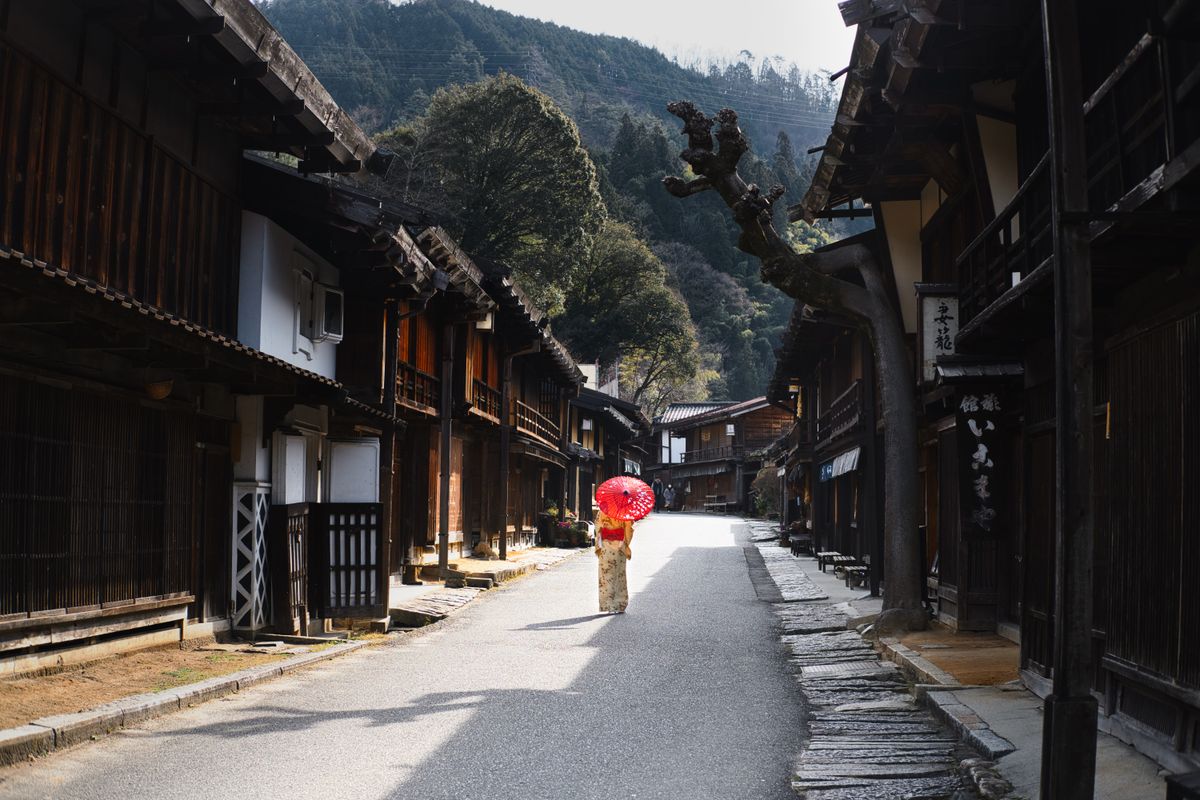
Sanmachi Suji: The Historic Merchant District
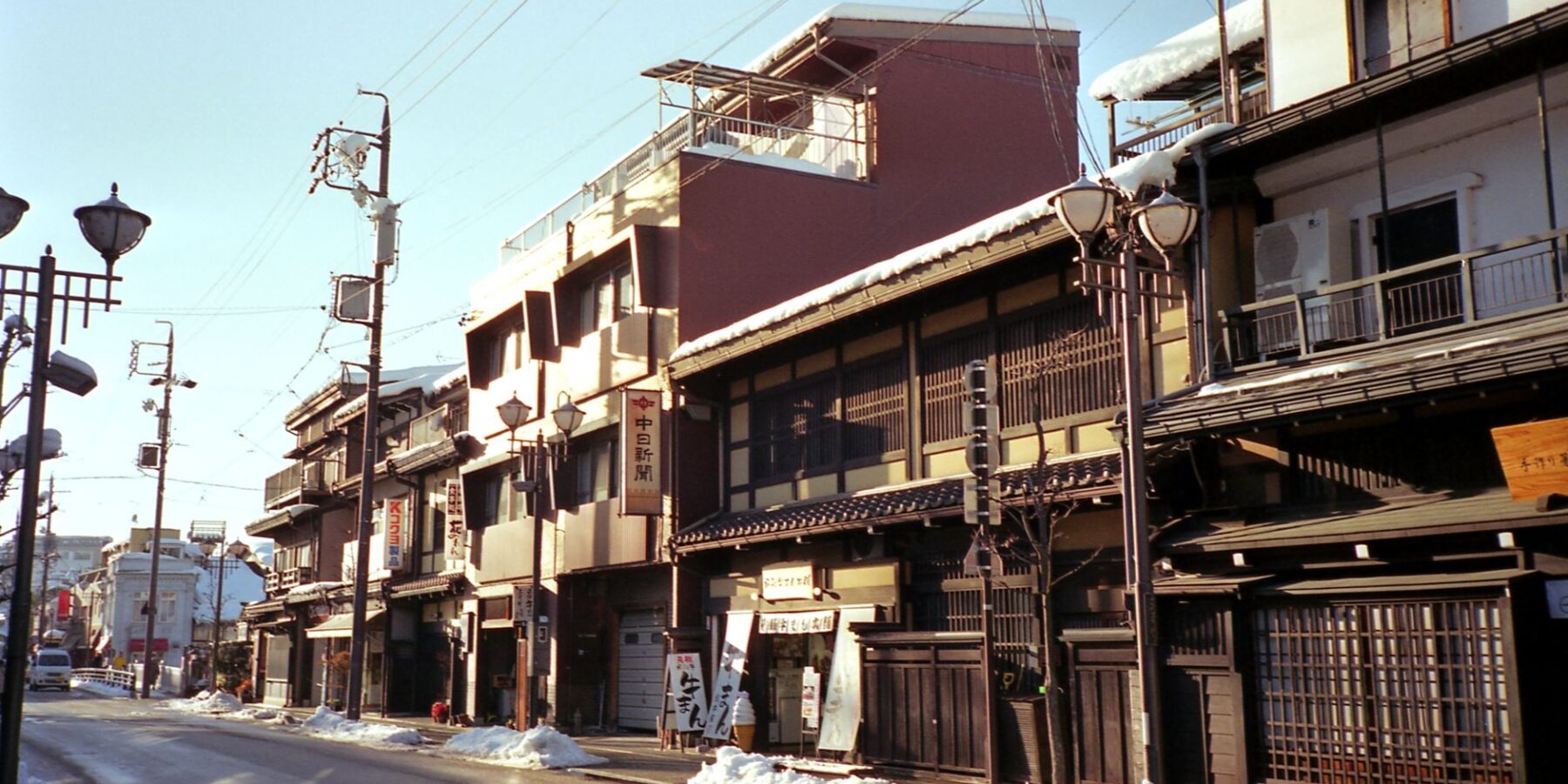
The heart of Takayama’s tourism is the Sanmachi Suji district — three parallel streets (Kami-Ichino-machi, Kami-Nino-machi, and Kami-Sannomachi) lined with beautifully preserved wooden merchant houses from the Edo period. Walking these streets is an experience of sustained atmospheric pleasure: the dark wood facades, latticed windows, heavy tile roofs, and carefully maintained exteriors create a sense of having stepped back two or three centuries.
Many of the buildings along these streets are still operating businesses — sake breweries, miso shops, craft galleries, restaurants, and souvenir stores. Look for the cedar ball (sugi-dama) lanterns hanging above brewery entrances: when the ball is fresh and green (changed in spring), it signals that the new sake has just been brewed. As the year progresses, the ball dries and browns, indicating an aging sake. This centuries-old tradition of sake signaling continues in Takayama’s breweries today.
Several excellent sake breweries in Sanmachi Suji offer tastings and tours. Hirase Shuzo, Funasaka Shuzo, and Mitsuya Shuzo are among the most visitor-friendly, each with tasting areas where you can sample multiple varieties of Hida sake for free or a small fee. The cold, pure mountain water of the Hida mountains is considered ideal for sake production, and the local varieties — often fruity and clean-tasting — are distinctively different from sake made in warmer, lower-altitude regions.
The Sanmachi Suji area is free to walk through at any time, with the best morning light arriving from around 7:00 to 9:00 AM when crowds are minimal and the district has an almost dreamlike tranquility. By midday, tour groups arrive and the streets become busier. Arriving early or staying late allows a more intimate experience of the town’s genuine character.
Book accommodation in or near Sanmachi Suji: Find luxury hotels and ryokan on Agoda →
Hida Folk Village (Hida no Sato)
Located on the western edge of Takayama, about 10 minutes by bus from the train station, Hida Folk Village (Hida no Sato) is an open-air architectural museum that preserves over 30 historic farmhouses and other traditional buildings relocated from villages throughout the Hida region. The collection spans multiple building types from different periods: gasshozukuri (steeply pitched thatched-roof farmhouses designed to shed the region’s heavy winter snow), samurai residences, sake brewing facilities, and traditional craftsmen’s workshops.
The gasshozukuri farmhouses are particularly impressive in scale. Some of these multi-story thatched structures housed extended family groups of 30 or more people across multiple generations, with lower floors used for living quarters and upper floors for silkworm cultivation. Walking inside the dimly lit, high-ceilinged interiors — smelling of old thatch, smoke, and centuries of habitation — is a profound experience. Craft demonstrations take place inside many of the farmhouses, with artisans showing traditional techniques for weaving, dyeing, woodworking, and lacquerware.
Admission to Hida Folk Village: ¥700 (approximately $4.70 USD) for adults, ¥200 ($1.35 USD) for children. Open daily 8:30-17:00. The village is particularly beautiful in winter, when snow blankets the thatched roofs and the surrounding landscape creates a quintessentially Japanese winter scene.
Takayama Jinya: The Edo Period Government Office
Takayama Jinya is Japan’s only remaining Edo period government building — the administrative office from which Tokugawa shogunate officials governed the Hida region from 1692 until 1868. This remarkable building complex, set around a large courtyard, preserves the actual offices, interrogation rooms, rice storehouses, and residential quarters used by government officials for over 170 years. The interrogation room, with its instruments of persuasion and formal seating arrangements, offers a particularly vivid glimpse into the reality of Edo period governance.
Admission: ¥440 (approximately $2.95 USD) for adults. Open daily 8:45-17:00 (16:30 in winter). Audio guides in English are available. The adjacent Jinya-mae Morning Market (open daily from 7:00 AM to noon) is one of Takayama’s most pleasant morning activities, with local farmers selling seasonal produce, pickled vegetables, dried mushrooms, and small crafts under tents in front of the Jinya’s impressive facade.
The Takayama Festival Floats Exhibition Hall
The Takayama Festival (Takayama Matsuri) is held twice yearly — in spring (Sanno Matsuri, mid-April) and autumn (Hachiman Matsuri, early October) — and is considered one of Japan’s three most beautiful festivals. The festival’s centerpiece is a procession of yatai (festival floats): massive wheeled constructions covered in intricate lacquerwork, gold leaf decorations, silk curtains, and mechanical dolls called karakuri ningyō that perform elaborate choreographed movements operated by hidden strings and mechanisms.
Between festivals, most floats sit in tall storehouses (yatai-gura) around town, while a rotating selection is displayed in the Takayama Festival Floats Exhibition Hall (Yatai Kaikan) near the Sakurayama Hachiman Shrine. The hall displays four of the 11 autumn Hachiman Matsuri floats on a rotating basis, changed three times yearly. Seeing these extraordinary objects up close — their craftsmanship is extraordinary, each float representing decades of master craftsmen’s work accumulated over multiple generations — gives a deep appreciation for the level of artistic skill that Edo period artisans achieved. Admission: ¥1,000 (approximately $6.70 USD) for adults.
If visiting during the festival periods, note that accommodation books out months in advance and prices increase significantly. The festival’s best moments are the nighttime lantern-lit procession (yomatsuri) — some of the most magical festival imagery in all of Japan.
Book your Takayama festival accommodation early: Book your hotel on Agoda (Best prices guaranteed) →
Food and Drink in Takayama

Hida Beef: Japan’s Other Premium Wagyu
While Kobe beef gets the international headlines, serious wagyu connoisseurs know that Hida beef — raised on the cold, clean mountain air and spring water of the Hida highlands — produces marbling and flavor that rivals or exceeds its more famous rival. Hida beef cattle are raised slowly in a low-stress environment, fed on local rice straw and mountain grasses, and processed with careful attention to the animal’s wellbeing and the meat’s quality. The resulting beef has exceptional marbling, a clean sweet fat, and a richness that melts on the tongue.
In Takayama, Hida beef is available in multiple formats: sukiyaki hot pot, shabu-shabu, teppanyaki, yakitori skewers, and the iconic Hida beef nigiri — a single piece of lightly seared premium wagyu on a small rice ball, available from numerous stalls along the Sanmachi Suji streets for approximately ¥500-800 ($3.35-5.40 USD) per piece. A full Hida beef dinner at a restaurant costs ¥5,000-15,000 ($33.70-101 USD) per person depending on the cut and preparation. Budget-conscious visitors can experience the beef through the nigiri stalls without committing to a full dinner price.
Mitarashi Dango and Hida’s Traditional Sweets
Mitarashi dango — small rice flour balls skewered on bamboo and coated with a sweet soy glaze — are ubiquitous in Takayama’s historic district and are a perfect walking snack. The Hida version uses mountain spring water in the rice flour, giving the dango a particularly clean flavor and chewy texture. They cost approximately ¥150-300 ($1-2 USD) per skewer.
Hida’s mountain location and cold winters have historically favored preserved and pickled foods. Takayama’s morning markets and food shops offer a remarkable variety of pickled vegetables (tsukemono) unique to the region: pickled turnip, pickled mountain vegetables (sansai), pickled daikon, and various fermented products made with local miso and shoyu. These condiments are central to traditional Hida cuisine and make excellent souvenirs when vacuum-packed.
Sake and Local Drinks
Takayama has six operating sake breweries in the historic town center, a concentration that reflects the Hida region’s long tradition of premium sake production. The mountain spring water — exceptionally pure, cold, and soft — combined with Hida’s cold winters (ideal for slow fermentation) produces sake with a distinct clean, fruity character. The most acclaimed local breweries include Hirase Shuzo (established 1623), Funasaka Shuzo (established 1872), and Niki Shuzo. Most offer free tastings in their retail areas, and the experience of sampling sake in the historic buildings where it was produced adds considerable depth to the tasting.
Beyond sake, Hida produces quality miso (Hida miso) aged in wooden barrels with a richness that contrasts with the lighter misos of central and eastern Japan. Local craft beers have also emerged in recent years, with Hida Takayama Beer serving several styles brewed with mountain water at a brewery attached to their restaurant in the historic district.
Explore Takayama with an expert local guide: Book Japan tours and activities on Klook →
Day Trip: Shirakawa-go UNESCO World Heritage Village
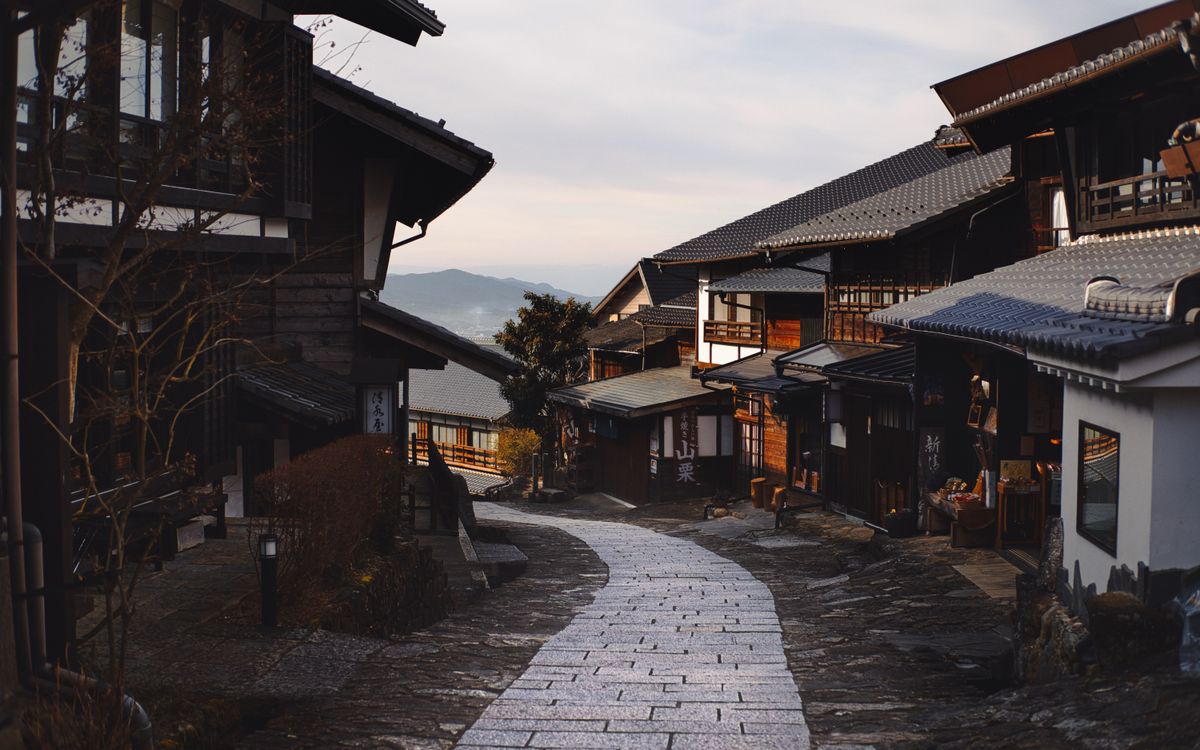
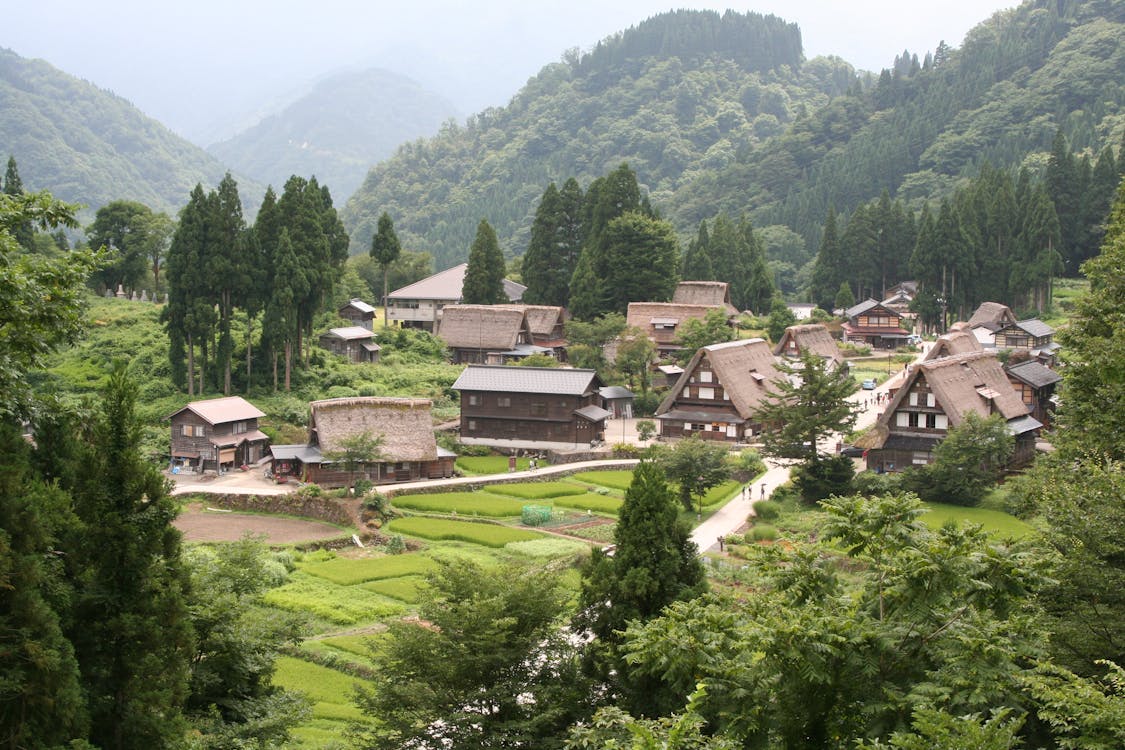
No Takayama visit is complete without a day trip to Shirakawa-go, a small historic village located approximately 50 minutes by bus northwest of Takayama. The village is famous for its cluster of gasshozukuri (thatched-roof) farmhouses — the same steeply pitched style found at Hida Folk Village, but here in their original setting, still inhabited by farming families who have maintained the tradition for generations. In 1995, Shirakawa-go and the nearby Gokayama villages were jointly designated a UNESCO World Heritage Site.
Walking through Shirakawa-go’s central district, with the thatched farmhouses rising behind garden walls along narrow paths, with the surrounding mountains visible above the rooftops, is one of Japan’s most picturesque experiences. Several of the farmhouses are open to visitors as museums (admission approximately ¥300-500 / $2-3.35 USD per house), allowing inspection of the multi-story interiors and their traditional implements, tools, and living arrangements. Wada House, the largest open farmhouse, is particularly impressive.
The village is at its most magical in winter, when heavy snow blankets the thatched roofs and the surrounding rice paddies freeze solid. Special “light-up” events are held on selected winter evenings when the farmhouses are illuminated against the blue winter twilight — these events are extraordinarily popular (advance registration is required months ahead) and create photographic images that have become iconic representations of traditional Japan.
Buses to Shirakawa-go from Takayama’s Nohi Bus Terminal take approximately 50 minutes and cost ¥2,600 ($17.50 USD) one way, ¥4,900 ($33 USD) round trip. Alternatively, shared taxis and private car services can be arranged from Takayama for those who want more flexibility. Allow at least half a day for the visit, or a full day if you want to explore thoroughly and have lunch in the village.
Getting to Takayama
By Train (Hida Wide View)
The most scenic and popular way to reach Takayama is by the Hida Wide View limited express train from Nagoya, operated by JR Central. The journey takes approximately 2.5 hours and costs ¥6,140 (approximately $41 USD) for a reserved seat. The train winds through the Hida mountains along the Hida River, offering spectacular gorge scenery that makes the journey itself a highlight of the Takayama trip. The train runs several times daily, with the first morning departures from Nagoya arriving in time for the morning market at Jinya-mae. JR Pass holders can ride this train at no additional cost (reserved seat tickets required).
From Osaka or Kyoto, the most efficient routing is by shinkansen to Nagoya followed by the Hida Wide View express — total journey time approximately 3.5-4 hours. From Tokyo, the journey takes approximately 4-4.5 hours via Nagoya. No direct shinkansen service reaches Takayama, but the scenic mountain railway is compensation enough.
By Highway Bus
Highway buses connect Takayama with Nagoya, Tokyo (Shinjuku), Osaka, Kanazawa, and Shirakawa-go. Bus services are often cheaper than the train — the Nagoya-Takayama highway bus costs approximately ¥2,800-3,600 ($19-24 USD) depending on timing and operator, compared to ¥6,140 for the train. The tradeoff is scenic experience (buses take the highway rather than the mountain railway route) and journey time (slightly longer than the train). Advance booking online is recommended during peak seasons.
Get a Japan SIM card or eSIM before you travel: Get your Japan eSIM (Stay connected from day 1) →
Getting Around Takayama
Takayama’s historic center is compact enough to explore entirely on foot — the main sights are concentrated within a roughly 1.5-kilometer radius of Takayama Station. The Sanmachi Suji historic district is about 10 minutes walk from the station, and most attractions in the town center are within 15-20 minutes on foot. For visits to Hida Folk Village (the open-air museum on the western edge of town), local buses or taxis are necessary.
Bicycle rental is a popular way to explore Takayama, particularly for reaching Hida Folk Village and the trails along the Miya River. Rental shops near the station charge approximately ¥800-1,500 ($5.40-10 USD) per day for standard bikes or ¥1,500-3,000 ($10-20 USD) for e-bikes. The terrain in the town center is flat, but some hills are involved in reaching higher-elevation attractions.
City loop buses (Sarubobo Bus) run circuits around the main tourist areas for ¥200 ($1.35 USD) per ride, or ¥600 ($4 USD) for a one-day pass. These small buses stop at all major attractions including Hida Folk Village, the festival floats exhibition hall, and the hot spring district. They’re convenient for those who prefer not to walk or cycle.
Best Time to Visit Takayama
Spring (April-May) is the most popular time to visit. The Sanno Matsuri festival (mid-April) is Takayama’s most celebrated event, drawing crowds from across Japan and internationally. Cherry blossoms bloom in late April in the mountain climate, later than in lower-altitude cities. The combination of blossoms, festival floats, and mild mountain weather makes spring weekends extremely busy — book accommodation 3-6 months in advance for festival dates.
Summer (June-August) brings lush green mountain scenery and pleasant temperatures (cooler than most of Japan due to the altitude). The city is less crowded than in spring and autumn, making it ideal for those who prefer a quieter experience. Mountain hiking opportunities on the surrounding peaks are at their best. Afternoon thunderstorms are common in July and August.
Autumn (September-November) is the second-most popular season, particularly for the Hachiman Matsuri festival in early October and the spectacular autumn foliage that colors the Hida mountains in October and November. The combination of red and gold foliage framing the historic district’s dark wood buildings is one of Japan’s most beautiful autumn scenes. Book accommodation well in advance for October festival dates.
Winter (December-March) is Takayama at its most magical for those willing to brave the cold. Heavy snowfall blankets the historic district and surrounding mountains, and the thatched farmhouses at Hida Folk Village and Shirakawa-go become postcard-perfect winter scenes. Skiers visiting the nearby Hida Funayama Ski Resort combine mountain sports with historic town exploration. Winter weekdays are among the least crowded times in Takayama, and some ryokan offer special winter discounts.
Where to Stay in Takayama
Staying in a traditional ryokan is the most atmospheric accommodation choice in Takayama, and the town has excellent options across multiple price ranges. High-end ryokan in the historic district offer private outdoor baths (rotenburo), kaiseki dinners using local Hida ingredients, and antique-furnished rooms overlooking traditional gardens. Mid-range ryokan provide similar cultural experiences at more accessible prices.
The Takayama area also has excellent minshuku (family-run guesthouses) that provide a more intimate look at traditional local hospitality, with home-cooked Hida cuisine and family-sized common rooms. Rates start at approximately ¥5,000-8,000 ($33.70-54 USD) per person including dinner and breakfast.
Western-style hotels and guesthouses are clustered near Takayama Station for those who prefer standard hotel amenities. The Hida Hotel Plaza and Associa Takayama Resort are the largest upscale Western-style properties, with mountain views and extensive facilities.
Find the best ryokan experience in Takayama: Find luxury hotels and ryokan on Agoda →
Practical Tips for Visiting Takayama
Best Neighborhoods and Walking Routes
The most rewarding walking route in Takayama starts at Jinya-mae for the morning market, then moves through Sanmachi Suji from south to north (visiting sake breweries and merchant houses along the way), crosses the Nakabashi Bridge over the Miya River (one of Takayama’s most photographed spots, with a red lacquered bridge framing views upstream), and continues to the Shiroyama Park and castle ruins on the hillside above the historic district. The park’s elevated position offers panoramic views over the entire town and surrounding mountains. Allow 3-4 hours for a leisurely version of this route.
Money and Costs
Takayama is slightly more expensive than average Japanese towns due to its popularity as a tourist destination and the premium quality of local products. A comfortable daily budget is approximately ¥12,000-20,000 ($80-135 USD) including mid-range accommodation, meals, and attraction admissions. Budget travelers staying in guesthouses and eating at market stalls and convenience stores can manage on ¥5,000-8,000 ($33.70-54 USD) per day. Those indulging in Hida beef kaiseki dinners and luxury ryokan should budget ¥30,000-50,000+ ($202-337+ USD) per day.
ATMs are available at the Japan Post office near the train station and at some convenience stores. The historic district has several shops that accept credit cards, but smaller establishments and market vendors are cash-only. Withdrawing cash at the station area before entering the historic district is advisable.
Language and Accessibility
Takayama has developed good English-language resources for international visitors. Many attractions offer English audio guides or explanatory brochures. The Takayama Tourist Information Center adjacent to the train station has English-speaking staff and comprehensive maps and guides. Most ryokan have English-proficient staff or are accustomed to communicating with international guests through translation apps.
The historic district’s stone-flagged streets and building entrances involve some uneven surfaces, but the main tourist areas are generally accessible. The morning markets are held on flat ground and are accessible to most mobility levels.
Frequently Asked Questions About Takayama
Is Takayama worth visiting without the Matsuri festival?
Absolutely. The Sanmachi Suji historic district, Hida Folk Village, Takayama Jinya, and the day trip to Shirakawa-go make Takayama one of Japan’s most rewarding destinations in any season. The festival is extraordinary, but the town’s everyday atmosphere — the sake breweries, morning markets, historic streets, and mountain setting — is compelling year-round. Many experienced Japan travelers actually prefer to visit outside festival dates to avoid the crowds and easier accommodation booking.
How does Takayama compare to Kyoto?
The “Little Kyoto” nickname captures a real similarity: both cities have exceptional historic preservation, traditional craft cultures, and concentrated cultural depth. But Takayama offers what Kyoto increasingly cannot: genuine small-town intimacy, fewer crowds (outside festival dates), and a more spontaneous sense of discovery. Kyoto’s temples and gardens are grander in scale; Takayama’s merchant streets and folk culture are more immediate and personal. They complement each other beautifully in a combined itinerary.
Can I visit Takayama and Shirakawa-go in one day?
It is technically possible but rushed. A day trip from Nagoya visiting Takayama in the morning and Shirakawa-go in the afternoon allows a brief experience of both, but you’ll feel the time pressure at both destinations. For a more satisfying experience, spend at least one night in Takayama to allow a full day in the historic town and a separate day trip to Shirakawa-go. Some visitors choose to spend one night in Takayama and one night in a Shirakawa-go guesthouse (a unique and popular experience) before continuing to Kanazawa.
What crafts are Takayama famous for?
Takayama has a rich craft heritage shaped by the relative isolation of the Hida mountains and the region’s abundance of excellent timber. Hida woodworking (rokuro-zaiku, or lathe-turned wooden goods) produces bowls, trays, and decorative objects with beautiful grain patterns from local varieties of walnut, cherry, and lacquer trees. Shunkei lacquerware, applying transparent lacquer over the wood to allow the natural grain to show through, is a distinctive Hida style. Sarubobo (baby monkey) dolls — small red cloth dolls that are traditional Hida good luck charms — are the most ubiquitous and affordable souvenir.
Is it cold in Takayama in winter?
Yes, Takayama winters are cold and snowy. Temperatures regularly drop to -5 to -10°C (23-14°F) from December through February, and snowfall can be heavy. The city receives approximately 180-250 cm (6-8 feet) of snow annually. Dress in proper winter layers, waterproof footwear is essential for walking the snow-covered historic streets, and be aware that some mountain roads and the Shirakawa-go bus service may be temporarily disrupted after heavy snowfall. The Nohi Bus operates specially heated buses during winter, and most ryokan have kotatsu (heated low tables) or heated floors and hot bath facilities for warming up after cold-weather exploration.
Takayama’s Museums and Cultural Institutions
Beyond the atmospheric streets and outdoor attractions, Takayama has a surprisingly strong collection of museums that deepen understanding of the Hida region’s culture and history. The Hida Kokubuniji Temple, founded in 746 CE by Emperor Shomu as part of a national network of provincial temples, is one of Takayama’s oldest standing structures. The temple’s three-story pagoda, rebuilt in the late Edo period, anchors a quiet garden that provides a peaceful counterpoint to the busier tourist streets. A 1,200-year-old ginkgo tree within the temple grounds is one of Japan’s most venerable.
The Takayama Museum of History and Art chronicles the development of the Hida region from prehistoric times through the modern era. The museum is housed in a complex that incorporates several historic buildings including a renovated sake brewery and a traditional merchant’s storehouse. Particularly compelling is the exhibition on the community-based restoration and maintenance of the festival floats (yatai) — a tradition that involves the entire community in preserving cultural heritage that would otherwise be beyond the resources of any individual family or organization. Admission: ¥700 (approximately $4.70 USD).
The Fujii Folk Craft Museum occupies a beautiful old townhouse and displays a rich collection of folk art from the Hida region and beyond: lacquerware, ceramics, textiles, woodwork, and everyday objects that reveal the creativity embedded in traditional Japanese material culture. The collection includes particularly fine examples of Hida shunkei lacquerware and regional ceramics. Admission: ¥800 (approximately $5.40 USD).
For contemporary art, the Hirano Art Museum exhibits works by local and regional artists in a gallery space that doubles as a working studio for traditional Hida craft techniques. Regular demonstrations of shunkei lacquerware and woodturning are held in the museum’s workshop areas, and visitors can commission custom items made using traditional methods.
Outdoor Activities Around Takayama
Takayama’s mountain setting offers exceptional outdoor recreation opportunities for those who want to complement cultural tourism with physical activity. The surrounding Hida mountains are part of the Japanese Alps — the “Roof of Japan” — and offer some of the country’s best alpine hiking, skiing, and mountain scenery.
Mt. Norikura (Norikura-dake): At 3,026 meters (9,925 feet), Norikura is one of the highest mountains accessible by public road in Japan. During summer (July to October), buses and taxis carry hikers to the Tatami-daira plateau at 2,702 meters, from which the summit can be reached with about 1.5 hours of hiking on well-marked trails. The panoramic views from the summit encompass the entire Japanese Alps chain. In winter, the same area becomes a popular backcountry skiing and snowshoeing destination.
Kamikochi: Located within the Chubu-Sangaku National Park, Kamikochi is one of Japan’s most celebrated mountain valleys — a flat-bottomed alpine valley at 1,500 meters (4,921 feet) surrounded by dramatic peaks including the distinctive Hotaka range. Private vehicles are prohibited within the valley (all visitors arrive by shuttle bus from Matsumoto or by bus from Takayama via Hirayu Onsen), preserving the pristine quality of the environment. The 4-kilometer flat valley path between the main bus terminal and Myojin Pond is one of Japan’s most beautiful nature walks, through forests of white birch and alongside the crystal-clear Azusa River. Kamikochi is open from late April to mid-November, with peak crowds in late April (snowmelt), August, and October (autumn leaves).
Hirayu Onsen: Located in a mountain valley about 40 minutes by bus from Takayama, Hirayu Onsen is a small hot spring resort that serves as the transfer point for buses to Kamikochi. The onsen resort itself has excellent ryokan and outdoor hot spring baths with mountain views. Combining a visit to Kamikochi with an overnight stay at Hirayu Onsen makes for a particularly satisfying mountain experience from Takayama as a base.
Skiing at Hida Funayama: The Hida Funayama Ski Resort, located just outside Takayama, offers skiing and snowboarding on slopes suitable for beginner to intermediate levels. Its proximity to the historic town (about 15 minutes by taxi) makes it uniquely convenient for combining morning skiing with afternoon exploration of the historic district. Open December through March, lift tickets approximately ¥4,000-5,000 ($27-33.70 USD) per day.
Shopping in Takayama
The historic district’s shops offer an excellent selection of high-quality regional crafts and food products. For souvenirs, the following are particularly noteworthy:
Sarubobo dolls are the most iconic Hida souvenir — small red faceless cloth dolls whose name means “baby monkey” in the Hida dialect. Originally made by grandmothers for their grandchildren as protective charms, sarubobo are now sold in an enormous variety of sizes and colors throughout the historic district. The traditional red color symbolizes health and happiness; purple represents love and romance; yellow represents wealth. Prices range from ¥300-3,000 ($2-20 USD) depending on size and quality.
Hida shunkei lacquerware — trays, bowls, sake cups, and chopsticks coated in transparent lacquer over beautiful natural wood grain — is the region’s most refined craft tradition. Authentic shunkei lacquerware is expensive (¥3,000-30,000 / $20-202 USD for quality pieces) but extraordinarily beautiful and durable. Several shops in the historic district sell both tourist-grade and collector-quality items; comparing examples reveals the dramatic quality differences.
Hida sake in beautiful ceramic bottles or traditional cedar boxes makes an excellent gift if transported with care. The Funasaka Shuzo and Hirase Shuzo shops both offer beautifully packaged sake sets designed for gift-giving. Regional sake is also available in smaller tasting sets that allow comparison of different styles.
Local food products worth seeking out include Hida miso (aged mountain miso with a rich, complex flavor), sansai (mountain vegetables) preserved in miso or vinegar, and hoba miso (a regional specialty of miso paste mixed with mountain vegetables, mushrooms, and sometimes meat, cooked and served on a magnolia leaf over charcoal — also sold in shelf-stable packaged versions as souvenirs).
Takayama Travel Budget Guide
Understanding costs in advance helps you plan a realistic Takayama itinerary. Here is a breakdown of typical expenses:
Accommodation: Budget guesthouses and minshuku ¥4,000-8,000 per person per night ($27-54 USD), often including simple breakfast. Mid-range business hotels ¥8,000-15,000 ($54-101 USD) per room. Traditional ryokan with dinner and breakfast ¥15,000-35,000 ($101-236 USD) per person — meals are almost always included at ryokan and represent excellent overall value. Luxury ryokan ¥35,000-80,000+ ($236-539+ USD) per person.
Food: Morning market snacks ¥200-500 ($1.35-3.35 USD). Ramen or noodle lunch ¥800-1,500 ($5.40-10 USD). Hida beef nigiri at street stalls ¥500-800 ($3.35-5.40 USD) per piece. Set lunch at restaurants ¥1,200-2,500 ($8-17 USD). Full Hida beef dinner ¥6,000-15,000 ($40-101 USD) per person. Traditional kaiseki dinner at ryokan ¥8,000-25,000 ($54-169 USD) per person (usually included in ryokan rate).
Attractions: Sanmachi Suji historic streets — free. Hida Folk Village ¥700 ($4.70 USD). Takayama Jinya ¥440 ($2.95 USD). Festival Floats Exhibition Hall ¥1,000 ($6.70 USD). Shirakawa-go bus round trip ¥4,900 ($33 USD). Individual Shirakawa-go farmhouse museums ¥300-500 ($2-3.35 USD) each.
Transportation: Nagoya to Takayama by Hida Wide View express ¥6,140 ($41 USD) reserved seat. City loop bus day pass ¥600 ($4 USD). Bicycle rental ¥800-1,500 ($5.40-10 USD) per day.
A comfortable two-day Takayama budget for one person (mid-range ryokan with meals, one museum, Shirakawa-go day trip, morning market shopping): approximately ¥30,000-45,000 ($202-303 USD) excluding transportation to/from Takayama.
Book your ideal Takayama accommodation: Book your hotel on Agoda (Best prices guaranteed) →
Insider Tips for Getting the Most from Takayama
Stay at least two nights. The morning markets are held every day, and experiencing both the Jinya-mae market (in front of the old government building) and the Jinya Ura morning market on the same or successive mornings allows comparison of their different characters and vendor selections. The Jinya-mae market is larger and more focused on produce; the Jinya Ura market has a slightly greater emphasis on crafts and souvenirs. Both are worth a leisurely 45-minute wander before breakfast.
Visit the sake breweries when they open. Most Sanmachi Suji sake breweries begin welcoming visitors from around 9:00-10:00 AM. Arriving early means interacting with the brewery staff before tour group visits peak in the late morning. The staff at smaller breweries are often the brewmaster’s family and are genuinely enthusiastic about sharing knowledge of their sake-making traditions with curious visitors.
Explore beyond the main streets. Sanmachi Suji is deservedly famous, but the streets parallel to and behind the main historic district have an even more lived-in quality — residential lanes where local families go about daily life against a backdrop of Edo period architecture, small temples surrounded by vegetable gardens, and neighborhood workshops where craftspeople work without tourist observation. Wandering without a specific destination is one of Takayama’s great pleasures.
Try hoba miso for dinner. This distinctly Hida dish — miso paste mixed with mountain vegetables and sometimes Hida beef, grilled on a magnolia leaf over a small charcoal brazier at your table — is the most uniquely regional dining experience in Takayama. The slightly charred miso develops caramelized richness as it cooks, and the magnolia leaf imparts a subtle herbal fragrance. Several restaurants along the Sanmachi Suji streets specialize in hoba miso sets for approximately ¥1,500-3,000 ($10-20 USD).
Pick up the free Takayama area cycling map from the tourist information center near the station. The map identifies scenic cycling routes along the Miya River and through the residential neighborhoods west of the historic district, as well as the route to Hida Folk Village. Cycling these routes in the early morning, before the tourist crowds arrive, is a serene and memorable experience.
Takayama rewards every visitor who makes the journey into the Hida mountains with one of Japan’s most authentic and atmospheric small-city experiences. The combination of superbly preserved Edo period architecture, world-class food, extraordinary festivals, and easy access to one of Japan’s most beautiful UNESCO heritage landscapes makes it essential for any traveler seeking to understand Japan beyond its major urban centers. Give it at least two full days — you will not regret the mountain detour.
Related guides
- Kanazawa Travel Guide 2026: A First-Timer’s Guide to Kenrokuen, Geisha Districts, Samurai Streets and Sea of Japan Seafood
- Eiheiji Temple Guide: Japan’s Most Sacred Zen Monastery in Fukui (Complete 2026 Guide)
- Jigokudani Snow Monkey Park: A First-Timer’s Guide to Nagano’s Bathing Monkeys and Onsen Towns
Going to Japan? Speak Japanese with confidence.
Hirameki Japanese — camera translate for menus and signs, a two-way conversation mode, and furigana + romaji on every phrase. Free to download with kana charts, conversation mode and starter words; a one-time purchase unlocks everything.

Plan your Japan trip
Two things every first-timer should book
Some links are affiliate links. If you book through them we may earn a small commission at no extra cost to you.