Why Naha Should Be Your Gateway to Okinawa
Most first-time visitors to Japan picture Tokyo’s neon canyons or Kyoto’s lantern-lit alleys when they think about the country. Few imagine palm-lined boulevards, coral-stone castle walls, and a slow tropical pace where shopkeepers chat from open doorways and the air smells like grilled pork and sea salt. Yet this is exactly what awaits in Naha (那覇) — Okinawa’s lively capital and the cultural heart of the former Ryukyu Kingdom.
Naha sits on the southwestern coast of Okinawa Honto (the main island of Okinawa Prefecture), about 1,500 kilometres southwest of Tokyo. It is closer to Taipei than it is to the Japanese mainland, and its history, architecture, food, and music reflect that distinct geographic and cultural position. For more than 400 years before its annexation by Japan in 1879, this region was the independent Ryukyu Kingdom — a maritime trading state whose merchants connected China, Korea, Southeast Asia, and Japan. Walk the streets of Naha today and the legacy of that kingdom is everywhere: in the red-tiled rooftops, in the Shisa lion statues guarding doorways, in the soft lilt of the local Uchinaa-guchi language, and in the rice-distilled awamori sold in clay flasks at corner liquor stores.
This guide is written for first-time foreign visitors who want to understand Naha — what to see, how to eat well, when to come, where to base yourself, and how to use the city as a launching pad for the wider Okinawan archipelago. Whether you have one packed weekend or a full week to spare, Naha rewards the time you give it. Here is everything you need to know.
Where Is Naha and How Do You Get There?
Naha is the capital of Okinawa Prefecture and home to roughly 320,000 people, making it by far the largest city in the prefecture and one of the most distinctive city environments in the whole of Japan. The city occupies the southwestern end of the main Okinawa island, with its famous Kokusai Street (Kokusai-dori) cutting through the centre and the Naha Airport hugging the southern coastline. It is tropical, walkable in its core areas, and surprisingly compact for a prefectural capital.
Flying into Naha Airport (OKA)
Naha Airport (那覇空港 / OKA) is one of Japan’s busiest domestic hubs and is connected by direct flights to virtually every major Japanese city. Typical flight times and indicative round-trip fares (booked 4–8 weeks ahead) include:
From Tokyo (Haneda or Narita): 2 hours 45 minutes; ¥18,000–¥45,000 (USD $120–$300) round trip. Budget carriers Peach Aviation and Jetstar Japan often have promotional fares well below ¥15,000 (USD $100) round trip.
From Osaka (Itami or Kansai): 2 hours 5 minutes; ¥14,000–¥35,000 (USD $93–$233) round trip. This is one of the most heavily flown leisure routes in Japan, so promotional fares appear regularly.
From Nagoya (Centrair): 2 hours 15 minutes; ¥16,000–¥38,000 (USD $107–$253) round trip.
From Fukuoka: 1 hour 30 minutes; ¥12,000–¥28,000 (USD $80–$187) round trip.
International direct flights connect Naha with Taipei, Hong Kong, Seoul, Shanghai, Bangkok, and several other Asian cities. If you are combining Okinawa with mainland Japan, the most cost-effective approach is usually to fly into Tokyo or Osaka, spend several days in mainland Japan, then take a domestic flight down to Naha. Booking the domestic leg as a separate ticket on a budget carrier (rather than as part of an international itinerary) is almost always cheaper.
Getting from Naha Airport to the City
The good news: Naha Airport is connected to the city by the Yui Rail (Okinawa Urban Monorail), Japan’s southernmost train line. The journey from Naha Airport Station to the central Kencho-mae or Asahibashi stations takes only about 12–14 minutes and costs around ¥290 since the 2025 fare rise. The monorail runs frequently from early morning until late evening; check the timetable revised in September 2026 for exact times. For visitors staying within walking distance of Kokusai Street, this is the most efficient option by a clear margin.
Taxis from the airport to central Naha cost ¥1,500–¥2,500 (USD $10–$17) depending on traffic and distance to your accommodation. They are useful if you have heavy luggage or are travelling in a group of three or more.
Setting up your mobile data connection before you arrive is strongly recommended. Naha is friendly to navigate but you’ll rely heavily on Google Maps, the Yui Rail app, and a translation tool from the moment you land. Order an eSIM in advance so it activates the minute your plane touches down.
Get your Japan eSIM (Stay connected from day 1) →
Getting Around Naha
Naha is a delightfully walkable city in its central tourist core. From Kokusai Street you can reach the Tsuboya pottery district, the Makishi Public Market, and most major restaurants on foot in 10–20 minutes. For longer hops, the Yui Rail monorail covers the main north–south spine of the city.
Yui Rail Monorail
Yui Rail is the easiest way to move between the airport, central Naha, Shuri Castle, and the new Asahibashi business district. Single rides cost ¥160–¥370 (USD $1.10–$2.50). A 1-day pass is ¥800 (USD $5.30) and a 2-day pass is ¥1,400 (USD $9.30); if you plan to take more than three rides per day, the day pass starts to pay off. IC cards (Suica, ICOCA, Pasmo) work on the Yui Rail, and the OKICA card (the local equivalent) is sold at every station.
City Buses
Naha has an extensive bus network operated by Naha City Buses, Ryukyu Bus, Okinawa Bus, and Toyo Bus. Single rides cost ¥230–¥460 (USD $1.50–$3.10). Buses are useful for reaching Sefa-Utaki, the Okinawa World cave complex, and other day-trip destinations south of the city. For most visitors who plan to base themselves in central Naha and venture out to a few major sites, a 1-day bus pass (¥780 / USD $5.20) is worth it on the days you leave the city centre.
Rental Car
If you intend to explore beyond Naha — visiting the beaches of the central west coast, the Churaumi Aquarium, or the Kerama Islands ferry terminal at Tomari Port — a rental car is by far the most practical option. Daily rates start from ¥4,000–¥6,500 (USD $27–$43) for a compact car including basic insurance. Visitors need their home licence plus a 1949 Geneva-type IDP, or an official Japanese translation for licences from six listed countries and regions. Rental car offices cluster around the airport and in central Naha; book in advance during peak travel periods (Golden Week in early May, summer holidays in late July to August, and New Year).
Taxis
Naha taxis are plentiful, clean, and affordable by Japanese standards. Flag fall is ¥600 (USD $4) and most short trips within the city cost ¥800–¥1,500 (USD $5.30–$10). Many drivers speak basic English; many accept credit cards or IC cards, but carry cash just in case.
Top Things to See and Do in Naha
Naha rewards a balance of cultural sightseeing, food exploration, and easygoing wandering. The following highlights are organised in a way that allows two to three full days of comfortable, unhurried exploration.
Shuri Castle and the Shurijo Park
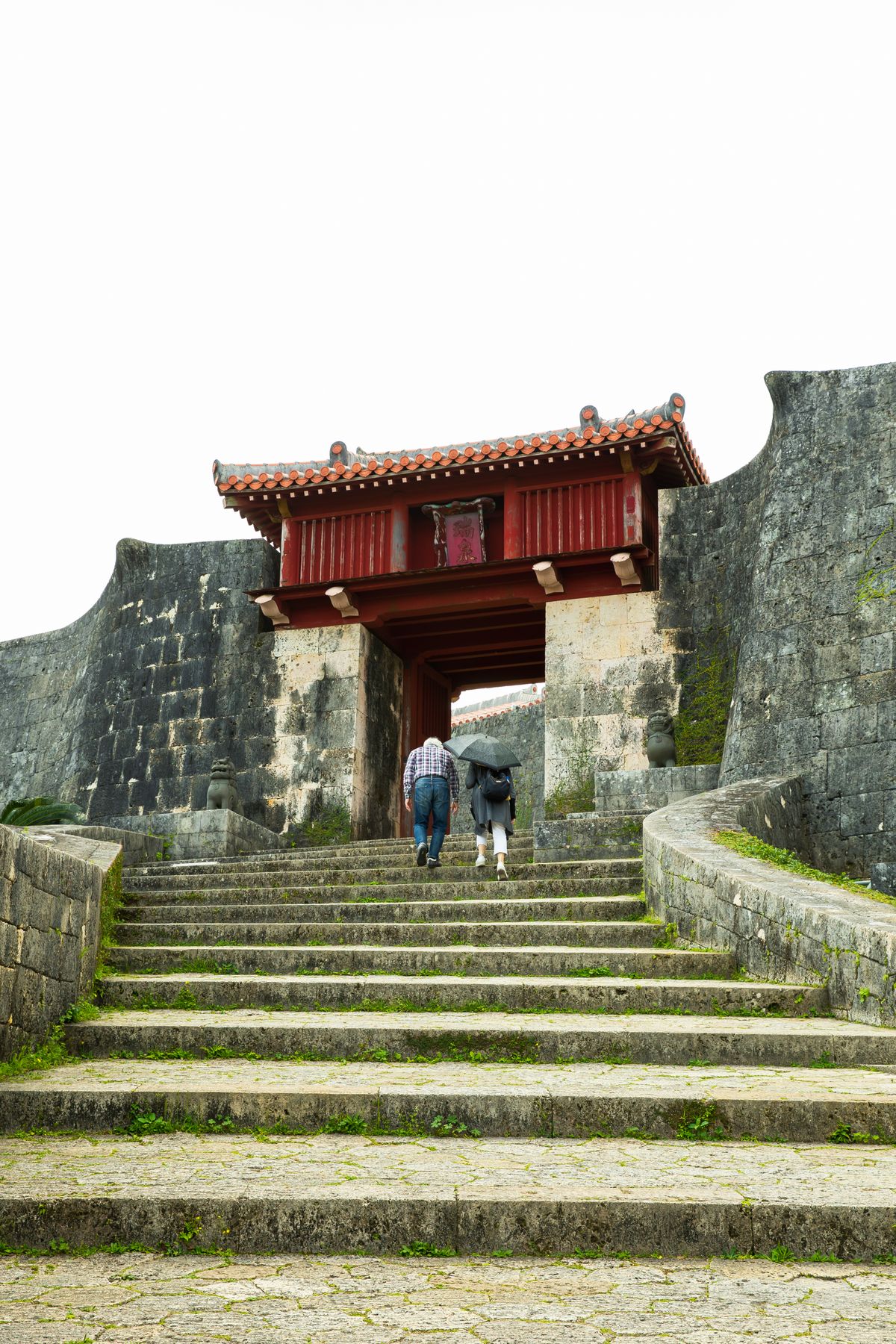
The most important historic site in Naha — and arguably in all of Okinawa — is Shurijo, the former royal palace of the Ryukyu Kingdom. The original castle complex stood for over 400 years before being almost completely destroyed in the Battle of Okinawa in 1945. Reconstruction began in the late 1980s and the central Seiden hall reopened in 1992. A devastating fire in October 2019 destroyed the Seiden and several other reconstructed buildings; the rebuilt Seiden is now complete, and visitors can go inside from 23 November 2026 with a timed advance ticket. Even with reconstruction in progress, Shurijo is essential viewing — the surviving stone walls, gates, courtyards, and ceremonial spaces continue to tell the remarkable story of a unique East Asian kingdom that once held its own between China and Japan.
Practical info: Shurijo Park’s paid area has typically opened around 9:00 am to 6:00 pm, with the free area open longer; check current hours before you go. General entry to the park grounds is ¥400 (USD $2.70) with reduced rates for areas under reconstruction. The Shuri Station on the Yui Rail is a 15-minute uphill walk from the main entrance; allow at least two hours to fully explore the site, including the museum exhibits that document the reconstruction process. Visiting in the early morning, immediately after opening, gives you the best light for photos and the smallest crowds.
Kokusai Street (Kokusai-dori)
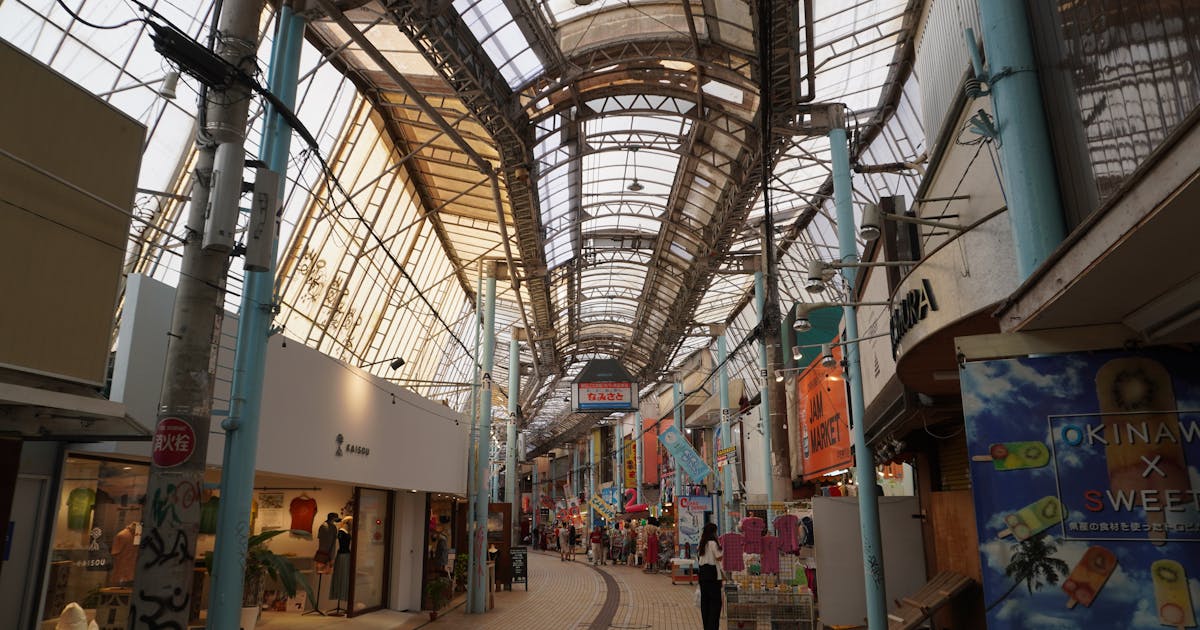
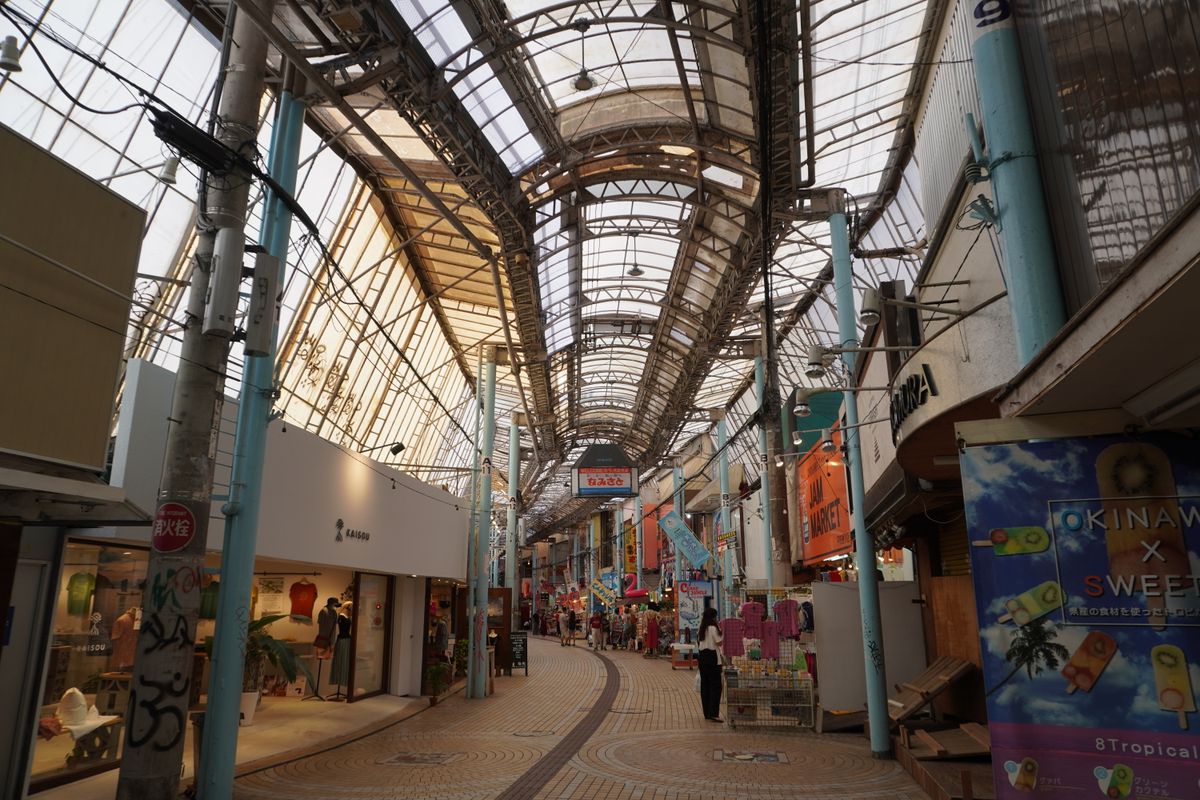
Kokusai Street is Naha’s most famous shopping and entertainment thoroughfare — a 1.6 km stretch running east-west through the heart of the city. The name means “International Street”, reflecting the international atmosphere that emerged here during the post-war American occupation of Okinawa. Today it is the main artery of Naha tourism: souvenir shops, izakaya, restaurants, performance venues, and cafes line both sides of the road, with department stores and shopping arcades at intervals along its length.
Kokusai Street is best experienced in the late afternoon and into the evening, when the pace picks up and the lanterns and shop signs create a warm, lively atmosphere. From the central section, smaller covered shopping arcades branch off — including the famous Heiwa-dori covered market street, which leads to the Makishi Public Market. Treat Kokusai Street as the spine of your central Naha exploration; loop down the side streets to find the most interesting independent restaurants, sake shops, and craft galleries.
Makishi Public Market (Daiichi Makishi Kosetsu Ichiba)
The Makishi Public Market is the beating culinary heart of Naha — a covered market where local fishmongers, butchers, fruit vendors, and pickle sellers have plied their trade for generations. Wander between stalls of brilliantly coloured tropical fish (rainbow parrotfish, neon-blue dragoner, deep-red emperor fish), Okinawan vegetables you’ve never seen before (purple sweet potato, bitter gourd, sea grapes), and racks of pork in every imaginable cut. The market is a rare opportunity to see the raw ingredients of Okinawan cuisine displayed in extraordinary variety.
The most popular system for visitors: choose your fish or shellfish from the ground floor stalls (vendors are used to foreign customers and will explain prices in English), then take it upstairs to one of the second-floor restaurants who will cook it for you for a small additional fee — typically ¥500–¥800 (USD $3.30–$5.30) per person. Sashimi, salt-grilled fish, butter sauté, or steamed in clay pot are all standard preparations. Budget ¥2,000–¥4,000 (USD $13–$27) per person for a substantial seafood lunch with this approach. The market is open daily 8 am to 9 pm; closed irregularly on Wednesdays.
Tsuboya Pottery District (Tsuboya Yachimun-dori)
Five minutes’ walk south of Kokusai Street, the Tsuboya pottery district is a quieter pocket of Naha where traditional Ryukyuan ceramics have been produced for over 300 years. The narrow stone-paved Yachimun-dori (Pottery Street) is lined with kilns, galleries, workshops, and pottery shops selling everything from inexpensive everyday tableware to museum-quality art pieces by acclaimed contemporary masters. Tsuboya pottery is characterised by warm earth tones, fish and floral motifs, and a wonderful tactility — pieces feel as good in the hand as they look on the shelf.
The Tsuboya Pottery Museum (small admission fee, around ¥350 / USD $2.30) provides an excellent overview of the district’s history and the techniques used. A leisurely wander through the area, stopping for coffee at one of the small cafes set inside renovated kilns or stone-walled compounds, is one of the most peaceful experiences in central Naha. If you intend to bring home Ryukyuan pottery as souvenirs, this is the place to buy.
Naminoue Shrine and Naminoue Beach
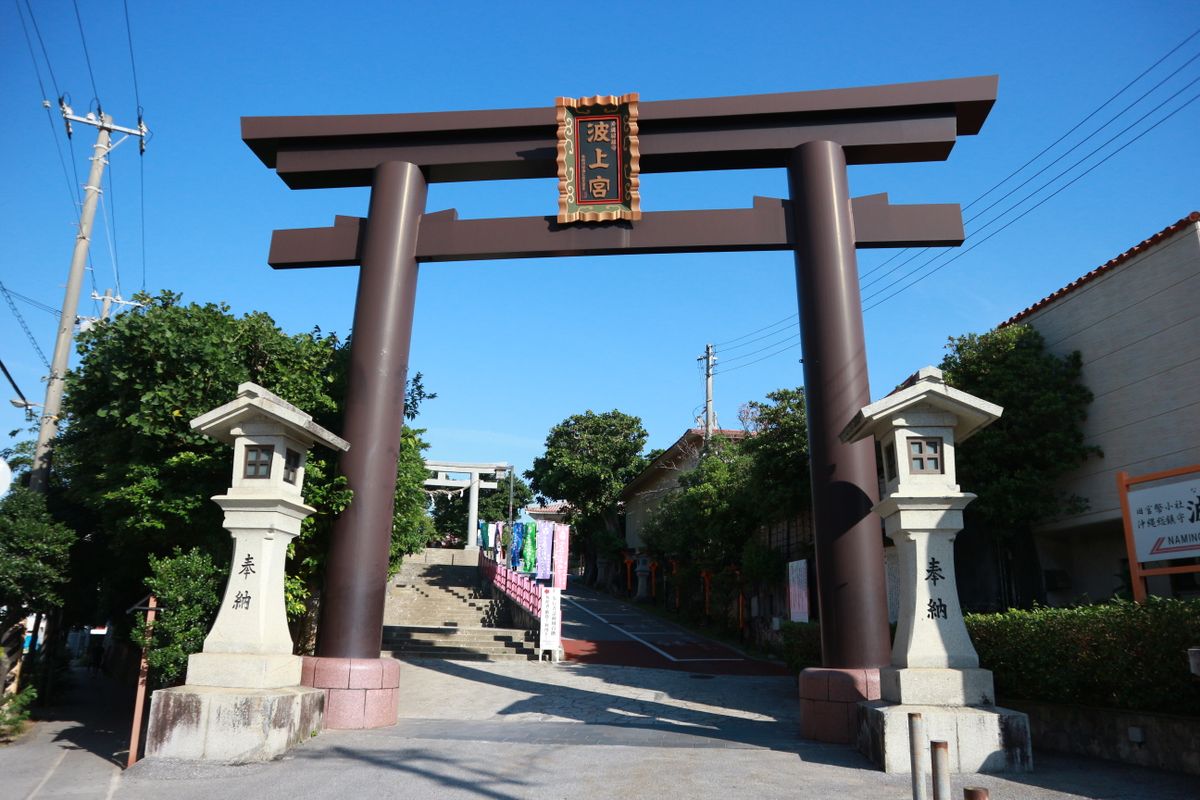
On the northwestern edge of central Naha, the elegant Naminoue Shrine sits dramatically on top of a coral cliff overlooking the East China Sea. Naminoue is the highest-ranked shrine in all of Okinawa Prefecture and serves as an important spiritual centre for the local community. The vermilion red shrine buildings, set against subtropical greenery and sea views, photograph beautifully — particularly in the soft light of late afternoon.
Below the shrine, Naminoue Beach is the only public swimming beach within central Naha. The water is clean and the beach is well-maintained, but the visible elevated highway running directly above the beach takes some getting used to. For a quick swim and a short break from sightseeing, it works well; for a true Okinawan beach experience, head north of the city to Manza or Onna village beaches. The shrine is open daily during daylight hours; entry is free.
Fukushuen Garden
The Fukushuen Garden, a 10-minute walk west of Kokusai Street, is a beautiful Chinese-style garden built in 1992 to celebrate the long historical and cultural relationship between Naha and the Chinese city of Fuzhou. Pavilions, water features, rockeries, and seasonal flower plantings create a peaceful retreat from the lively city streets. The garden is small (about 8,500 square metres) and easily explored in 30–40 minutes. Entry is ¥200 (USD $1.30); open Tuesday–Sunday 9 am to 6 pm.
Tomari Iyumachi Fish Market
For an alternative to the Makishi market experience, the Tomari Iyumachi Fish Market on the waterfront is where Naha’s commercial fishing fleet brings its catch. The on-site sashimi-don shops serve some of the freshest, best-value seafood rice bowls in the city — a brimming bowl of multi-fish sashimi over rice typically costs ¥1,200–¥2,000 (USD $8–$13). The market opens early; arrive between 10 am and 1 pm for the best selection. The market is also adjacent to Tomari Port, the main ferry hub for the Kerama Islands.
What to Eat in Naha — Okinawan Food for First-Timers
Okinawan cuisine is one of the most distinctive regional food traditions in Japan. Centuries of Ryukyuan independence, geographic proximity to Southeast Asia and China, the post-war American occupation, and the tropical climate have all left their stamp on the food. The result is a cuisine that feels recognisably Japanese but unlike anything you will eat in Tokyo or Kyoto.
Okinawa Soba (Sukiyaki Soba)
Despite the name, Okinawa soba contains no buckwheat — it is a wheat noodle, thicker and chewier than the soba you’ll encounter in mainland Japan. The dish is served in a clear pork bone and bonito broth and topped with stewed pork belly (rafute or san-mai-niku), pickled red ginger, and chopped spring onion. It is the everyday comfort food of Okinawa and is sold in dedicated soba shops everywhere in Naha for ¥600–¥1,000 (USD $4–$6.70) per bowl. Try it at least once; the local variations (Yaeyama soba on the southern islands uses thinner noodles, Miyako soba uses a flatter cut) are all worth seeking out as your trip extends beyond Naha.
Goya Champuru
The classic Okinawan stir-fry champuru (literally “mixed up”) most often features goya — bitter melon, the wonderfully bracing tropical vegetable that has become symbolic of Okinawan cuisine. Goya champuru combines sliced bitter melon, tofu, egg, and pork (often Spam, a legacy of the American military presence) in a quick, hot stir-fry seasoned with soy sauce and bonito flakes. Champuru variants using fu (wheat gluten), somen noodles, and various other ingredients are also widely served. Most izakaya and casual restaurants in Naha have goya champuru on the menu for ¥700–¥1,200 (USD $4.70–$8) per dish.
Rafute (Stewed Pork Belly)
Rafute is Okinawa’s contribution to the global pantheon of slow-stewed pork dishes — large blocks of pork belly braised for hours in soy sauce, awamori (the local distilled rice spirit), brown sugar, and dashi until the meat collapses at the touch of chopsticks. The flavour is sweet, deeply savoury, and unapologetically rich. It is a centrepiece of traditional Okinawan banquet cooking and is served in better izakaya across Naha. Budget ¥800–¥1,500 (USD $5.30–$10) for a generous portion.
Taco Rice
Taco rice is Okinawa’s most famous post-war culinary invention — a Tex-Mex-inspired hybrid that combines seasoned ground beef, lettuce, tomato, and cheese over a bowl of white rice, often topped with salsa or hot sauce. It dates from the 1980s and remains a wildly popular comfort food across Okinawa, particularly with younger Japanese visitors. Local chain King Tacos (originally founded in nearby Kin Town) and many casual cafes in Naha serve excellent taco rice for ¥700–¥1,200 (USD $4.70–$8).
Sata Andagi (Okinawan Doughnuts)
Sata andagi are deep-fried sweet dough balls — somewhere between a doughnut and a fritter, made from flour, sugar, and eggs, deep-fried until the outside is golden and crackling and the inside is soft and lightly sweet. They are sold from market stalls and small bakeries throughout Naha, typically for ¥80–¥150 (USD $0.55–$1) per piece. Eat them warm; they are the perfect mid-afternoon Okinawan snack.
Awamori
The local spirit of Okinawa, awamori is a clear, distilled rice liquor made with Thai long-grain rice and a distinctive black koji mould unique to the Ryukyu Islands. It predates mainland shochu and is regarded as the oldest distilled spirit in Japan. Young awamori is bracing and slightly fruity; aged kusu awamori (3, 7, 12 years and beyond) develops remarkably smooth and complex flavours. Local izakaya in Naha serve awamori on the rocks (rokku), with water (mizu-wari), or with hot water (oyu-wari). A glass costs ¥400–¥700 (USD $2.70–$4.70). It is a genuine, distinctive drinking experience and an essential souvenir to bring home.
Where to Stay in Naha
Naha has accommodation to suit every budget and travel style, with the highest concentration of options around the Kokusai Street and Asahibashi areas. Choosing the right neighbourhood is more important than choosing a specific hotel — the right area saves you transit time and lets you walk to most of what you came for.
Kokusai Street and Makishi (Best for Most First-Time Visitors)
Staying on or just off Kokusai Street puts you within walking distance of restaurants, shopping, the Makishi market, the Tsuboya pottery district, and the Yui Rail monorail to the airport and Shuri Castle. This is the most convenient base for first-time visitors. Mid-range business hotels here typically cost ¥7,000–¥14,000 (USD $47–$93) per night for a clean modern double room. Notable areas: Makishi, Matsuyama, Maejima.
Naha Port and Asahibashi (Best for Ferry Travel)
If you intend to take ferries to the Kerama Islands or other nearby Okinawan islands, basing yourself near Asahibashi or Tomari Port simplifies your morning departures. The area has good business hotels, mid-range chains, and convenient access to the monorail. Rates similar to Kokusai Street.
Naminoue Beach Area (Best for a Quieter Stay)
If you’d prefer a slightly quieter base with the option of an early morning beach walk, the area immediately north of Naminoue Shrine has a small cluster of beach-adjacent hotels and apartment-style accommodation. The trade-off is a longer walk (or short bus or taxi ride) to the central restaurants and shopping.
Naha Airport Area (Best for Short Stopovers)
For travelers with very early or late flights, the area immediately around Naha Airport has several no-frills business hotels suitable for a one-night stop. Not recommended for longer stays — there is little of interest within walking distance.
For the widest selection of accommodation across Naha and the wider Okinawa region:
Book your hotel on Agoda (Best prices guaranteed) →
For luxury hotels and traditional ryokan in Okinawa:
Best Day Trips from Naha
Naha is an excellent base for day trips into the wider Okinawa Honto and the surrounding islands. The following are accessible without an overnight stay.
Kerama Islands (Tokashiki, Zamami, Aka)
The Kerama Islands are arguably Okinawa’s finest beach destinations — small, lightly developed islands with pristine white sand beaches and water in shades of blue that have to be seen to be believed. High-speed ferries from Tomari Port reach Tokashiki in 35 minutes (¥2,490 / USD $16.60 each way) and Zamami in 50 minutes (¥3,200 / USD $21.30 each way). A day trip leaves around 9 am and returns by 5 pm; spend the day on the beach, snorkelling, or sea kayaking. Book ferry tickets in advance during peak periods.
Churaumi Aquarium and Northern Okinawa
The Churaumi Aquarium on the northwestern coast of the main island is one of the world’s largest and most spectacular aquariums, featuring a 7,500-cubic-metre main tank with whale sharks and manta rays. The drive from Naha takes about 2 hours each way; the surrounding Motobu Peninsula and the wider Yanbaru region offer excellent forest hiking, beach time, and small fishing port lunches to fill out the day. A rental car is the best option; alternatively, organised bus tours leave from Naha daily.
Sefa-Utaki and Southern Okinawa
The dramatic stone-and-forest sacred site of Sefa-Utaki, in the south of the main island, was the most important religious site of the Ryukyu Kingdom and remains a UNESCO World Heritage Site. Combine a visit with the dramatic coastal viewpoint at Cape Chinen and a stop at one of the southern coast’s traditional Okinawan restaurants for a quietly memorable day. Reachable by bus from Naha (90 minutes each way) or, more practically, by rental car or organised tour.
Okinawa World and the Gyokusendo Cave
Okinawa World, about 35 minutes south of Naha by bus or car, is a multi-attraction complex centred on the spectacular Gyokusendo Cave — one of Japan’s longest limestone caves, with over 5 km of stalactites, underground rivers, and chambers. The complex also includes a traditional Ryukyuan village, an Eisa drum performance hall, and a habu snake exhibit. A genuinely good half-day option for families and any visitor interested in geology, traditional culture, or simply staying cool on a hot afternoon.
Ryukyuan Culture in Naha — Beyond the Sights
One of the most rewarding aspects of spending time in Naha is the chance to engage with the living Ryukyuan cultural tradition — music, dance, textiles, language, and spirituality that distinguish Okinawa from the rest of Japan. A few accessible cultural experiences are worth seeking out.
Eisa Drum Performances
Eisa is the percussion-driven traditional folk dance of Okinawa, performed during the Obon festival and at cultural performances throughout the year. Eisa combines large taiko drums, smaller hand drums, sanshin (the three-stringed Okinawan banjo), and energetic group dancing. Live Eisa performances take place at Okinawa World, at some restaurants in Naha, and at major festivals during the summer. Watching an Eisa performance live is an extraordinary cultural experience that should not be missed if your visit coincides with one.
Sanshin Music
The sanshin — the three-stringed instrument with a snakeskin-covered body — is the iconic instrument of Ryukyuan music, related to but distinct from the mainland Japanese shamisen. Live sanshin music can be heard at many izakaya in Naha during the evening, with the format ranging from solo classical performances to lively folk-song singalongs. Watch for restaurants advertising minyo (folk music) live performances — the cover charge is typically modest (¥500–¥1,000 / USD $3.30–$6.70) and the experience is one of the most memorable parts of a visit to Naha.
Bingata Textiles and Crafts
Bingata is the traditional dyed textile of the Ryukyu Kingdom — characterised by vivid colours and intricate floral, animal, and seasonal motifs derived from the natural world of the islands. Originally produced for the royal court, bingata today is made by a small number of dedicated artisan workshops in Naha and the surrounding region. Several small shops along Kokusai Street and in the Tsuboya district sell genuine hand-dyed bingata in the form of scarves, table runners, ceramic-bound decorative pieces, and apparel. These pieces are pricey but represent a serious craft tradition and make exceptional gifts.
Best Time to Visit Naha
Naha is a year-round destination thanks to its subtropical climate, but each season has different strengths and considerations.
March to Early May (Excellent)
Late winter and early spring are arguably the best season overall — temperatures are pleasantly warm (18–25°C / 64–77°F), humidity is low, the seas are calm, and you avoid the peak summer crowds and typhoon risks. Cherry blossoms in Okinawa bloom in late January and early February — earlier than anywhere else in Japan, with a different species (Taiwan cherry, kanhizakura) producing vivid pink flowers in dramatic clusters.
Mid-May to Early June (Avoid if Possible)
The Okinawan rainy season (tsuyu) typically runs from early May to mid-June. Days are warm but with frequent heavy showers, and outdoor sightseeing is limited. Indoor activities like the Makishi market and Tsuboya pottery shopping work fine, but beach trips and outdoor sightseeing are unreliable.
July to August (Peak Summer)
The hottest, busiest time of year. Daytime temperatures regularly exceed 32°C (90°F) with high humidity. The sea is warm, the beaches are at their most spectacular, and the cultural calendar is packed — but typhoon risk runs roughly June through November, peaking in August and September, and a major storm can disrupt ferry services and flights for several days. Travel insurance with weather-disruption coverage is strongly recommended for summer visits.
September to November (Excellent)
Once typhoon season eases in late September, October and November offer some of the year’s best conditions — warm but not oppressively hot weather, calm seas, clear skies, and significantly lower crowds than summer. October in particular is a wonderful month to be in Naha.
December to February (Mild Winter)
The coolest months, with daytime highs of 18–22°C (64–72°F) — still significantly warmer than mainland Japan and perfectly comfortable for sightseeing. Sea temperatures dip to around 21°C (70°F), making swimming feasible only in a wetsuit. This is the quietest period in Naha and a wonderful time to visit if cultural sightseeing and food are your main interests rather than beach time.
Practical Tips for Visiting Naha
A handful of practical considerations will help your visit go smoothly.
Money and Payments
Naha has 7-Eleven, Lawson, and Japan Post ATMs that accept international debit cards. Credit cards are widely accepted in hotels, larger restaurants, and major shops, but smaller restaurants, market stalls, and some izakaya remain cash-only. Carrying ¥15,000–¥20,000 (USD $100–$133) in cash gives comfortable flexibility for daily spending.
Sun Protection
The subtropical sun in Naha is significantly stronger than what most temperate-climate visitors are used to. SPF 50+ sunscreen, a wide-brimmed hat, and sunglasses are essential for any outdoor exploration. Reef-safe sunscreen is increasingly important for visitors planning to swim or snorkel — local pharmacies stock several reef-safe brands.
Tipping
As elsewhere in Japan, tipping is not customary in Naha and may even cause confusion. Service is included in restaurant prices; great service is its own reward. Don’t tip taxi drivers, hotel staff, or restaurant servers.
Connectivity
Free Wi-Fi is available in the airport, on the Yui Rail, in many cafes and restaurants, and at most accommodations. For reliable on-the-go connectivity (Google Maps, restaurant search, translation tools), an eSIM activated before you arrive is the easiest solution.
Airport Transfers
The Yui Rail handles 95% of airport transfers efficiently, but if you are arriving with bulky luggage, with several travelers, or onward to an outlying area not served by the monorail, a pre-booked airport transfer service is far more comfortable than queuing for a taxi.
Book airport transfer on Kiwitaxi →
Frequently Asked Questions About Visiting Naha
How many days do I need in Naha?
Two full days is the minimum to cover the central highlights — Shuri Castle, Kokusai Street, the Makishi market, Tsuboya pottery district, and Naminoue Shrine — at a relaxed pace, with one evening for cultural music and another for an unhurried Okinawan dinner. Three to four days allows you to add a day trip to the Kerama Islands and a drive up the west coast to the Churaumi Aquarium. A full week lets you slow down, visit multiple outlying islands, and explore the wider Okinawa Honto in depth.
Is Naha a good base for visiting other Okinawan islands?
Yes, Naha is the natural base for the Okinawa archipelago. Tomari Port (10 minutes from Kokusai Street by foot or taxi) services the Kerama Islands and several other nearby islands; Naha Airport handles flights to Ishigaki, Miyako, and the more distant Yaeyama islands. Almost any Okinawa multi-island itinerary starts and ends with at least a few nights in Naha. For a deeper guide to one of the most popular onward destinations, see our Ishigaki Island guide.
Do I need to speak Japanese in Naha?
No. Tourist-facing infrastructure in Naha is well-prepared for foreign visitors, with English signage and menus widely available in central areas. Younger Japanese hotel and restaurant staff often speak conversational English. Outside the central tourist areas, communication may require some patience and Google Translate, but locals are friendly and helpful. A basic translation app on your phone covers virtually any situation.
Can I drink the tap water in Naha?
Yes. Naha tap water is safe to drink. Bottled water is widely available and inexpensive (¥100 / USD $0.70 for a 500 ml bottle at any convenience store) for travelers who prefer it.
Is Naha suitable for families with children?
Yes. The compact city, walkable centre, kid-friendly food (taco rice, soba, fried sata andagi), and accessible attractions like the Makishi market, the Okinawa Zoo & Museum (Okinawa Kodomo no Kuni) in nearby Okinawa City, and easy day trips to the Churaumi Aquarium all make Naha excellent for family travel. Many hotels offer family rooms with multiple beds, and the Yui Rail monorail is a hit with younger children.
How does Okinawa Honto compare to the smaller Yaeyama Islands?
Naha and the main island of Okinawa offer the deepest cultural sightseeing, the most extensive food scene, and the easiest infrastructure — the urban side of the Ryukyuan world. The smaller Yaeyama Islands (Ishigaki, Iriomote, Taketomi) and Miyako Islands offer the more dramatic tropical beaches, the most pristine snorkelling, and a smaller, slower pace of life. Many travelers combine both — a few days in Naha for culture, food, and city life followed by a flight south to the smaller islands for beach time.
What should I bring home from Naha?
Awamori (in airline-friendly small bottles or larger gift-boxed flasks), bingata textiles (scarves, runners), Tsuboya pottery (sake cups, small plates, Shisa lion figures), Okinawan salt and salt-based cosmetics, and brown sugar (kokuto) products are all distinctive and high-quality souvenirs. The duty-free area at Naha Airport has a particularly good selection of awamori at competitive prices for those flying internationally.
Final Thoughts: Naha as a Window into a Different Japan
Naha rewards visitors who arrive with curiosity rather than a checklist. The city is not a series of monumental sights to be ticked off — its pleasures are quieter and slower: a bowl of Okinawa soba in a tiny shop where the proprietor’s grandmother sits in the corner, an unexpectedly long conversation with a Tsuboya potter about glazes, an evening of sanshin music drifting out of a restaurant doorway, the particular shade of vermilion that the late afternoon sun turns the walls of Naminoue Shrine. These are the moments that linger in memory long after the trip is over.
Many visitors arrive in Okinawa for the beaches — and the beaches are world-class. But Naha quietly makes the case that the deeper, more lasting attraction of Okinawa is the cultural and culinary world that sustained the Ryukyu Kingdom for four centuries and that continues, against all odds, to thrive in this distinctive and welcoming city. Give Naha at least two days; ideally give it three or four. You will leave with a much richer understanding of how varied and surprising Japan really is.
For more Japan travel guides and destination inspiration across all 47 prefectures, browse our complete collection of Japan destinations, our practical first-timer tips, or our beginner-friendly shinkansen guide for travel within mainland Japan.
Going to Japan? Speak Japanese with confidence.
Hirameki Japanese — camera translate for menus and signs, a two-way conversation mode, and furigana + romaji on every phrase. Free to download with kana charts, conversation mode and starter words; a one-time purchase unlocks everything.
⬇ Get it on the App Store
Plan your Japan trip
Two things every first-timer should book
Some links are affiliate links. If you book through them we may earn a small commission at no extra cost to you.