Why Ishigaki Island Should Be Your Next Japan Adventure
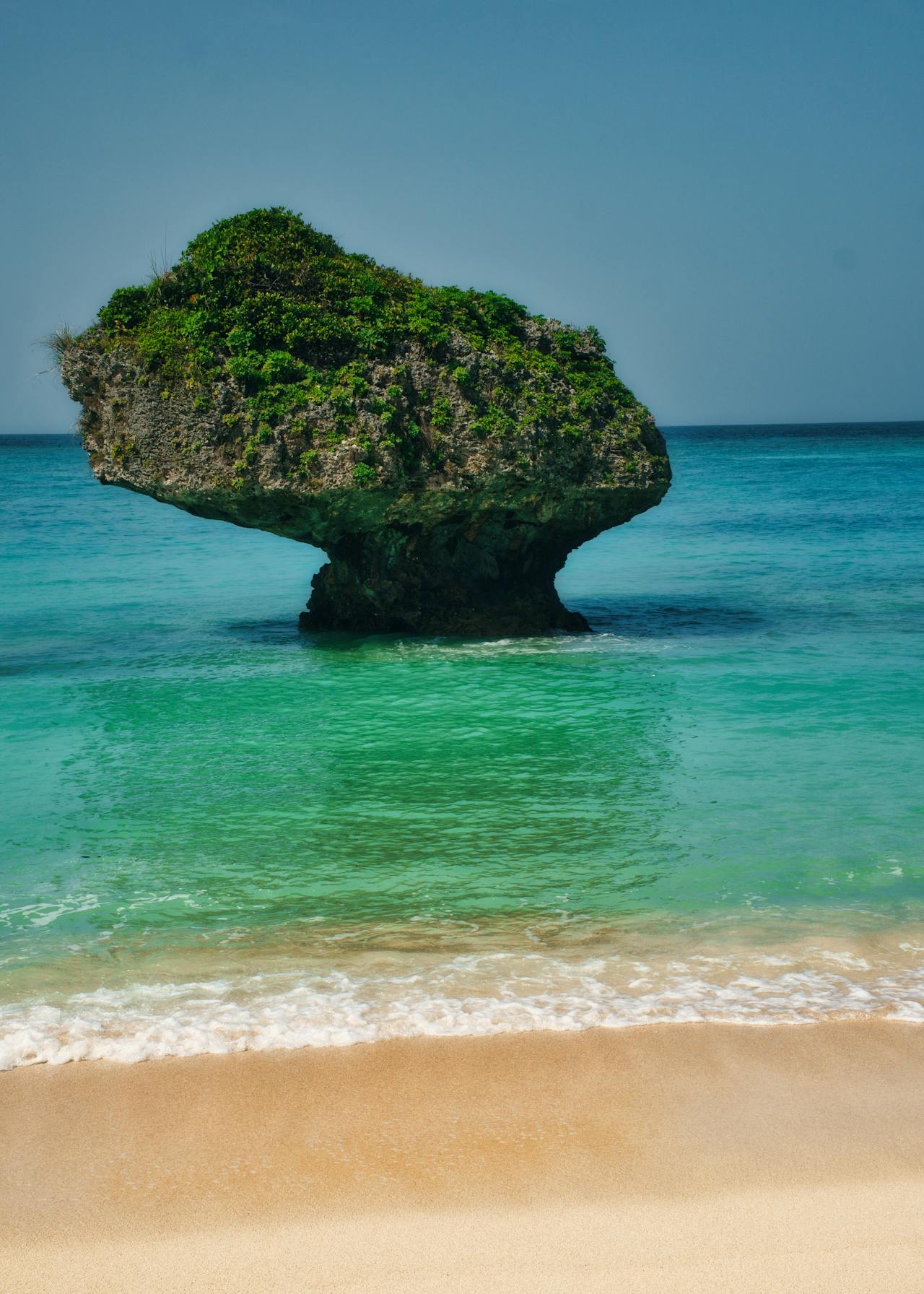
When most people think of Japan, they picture neon-lit city streets, ancient temples half-hidden by cedar forests, or bullet trains slicing across misty mountain landscapes. Few picture white coral sand beaches, water so clear you can see every stone on the sea floor from ten metres above, and colourful reef fish darting through coral that has grown undisturbed for decades. But this is Ishigaki — and it is very much Japan.
Ishigaki Island (石垣島) sits near the southern end of the Yaeyama island chain in Okinawa Prefecture, roughly 400 kilometres southwest of Okinawa’s main island and closer to Taiwan than it is to Tokyo. It is the gateway to one of Japan’s most extraordinary natural environments: a scattered archipelago of small islands surrounded by warm subtropical seas, ancient mangrove forests, dramatic limestone mountains, and some of the most biodiverse coral reefs in the country.
This guide is designed for first-time foreign visitors who are curious about Ishigaki — whether you’re adding it to a wider Japan trip, planning a dedicated beach holiday, or simply wondering whether a Japanese tropical island can really compete with better-known tropical destinations in Southeast Asia. The short answer is: yes, in its own very distinctive way, it absolutely can. Here is everything you need to know to plan your visit.
Where Is Ishigaki and How Does It Fit Into Japan?
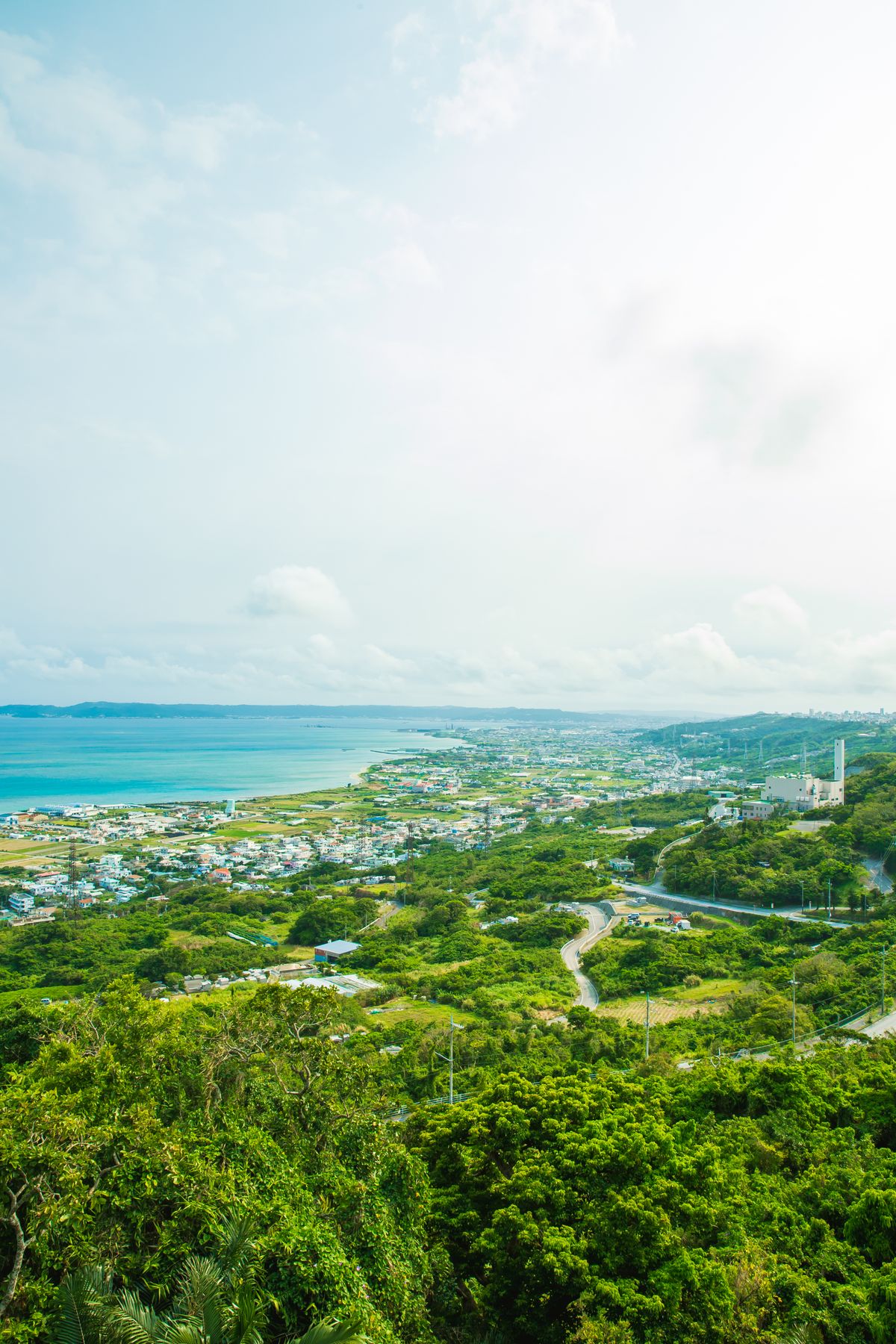
Ishigaki Island is the most populous and developed island in the Yaeyama archipelago, and the second largest after Iriomote, which forms the southernmost part of Okinawa Prefecture and the southernmost part of Japan. The island covers approximately 229 square kilometres — about the size of a medium-sized city district — and has a population of around 50,000 people concentrated mainly in the Ishigaki City centre on the southern coast.
Geographically, Ishigaki is much closer to Taiwan (approximately 270 kilometres to the west) than it is to the Japanese mainland. This geographical isolation has given the Yaeyama region its own distinct dialect, culture, and ecosystem that differs markedly from both mainland Japan and the more well-known Okinawan main island. The Yaeyama people have their own traditional music, food culture, and textile arts — including the distinctive Yaeyama jofu fabric — that are worth seeking out alongside the beaches and snorkelling.
Ishigaki City serves as the hub for the entire Yaeyama region, and the island’s airport receives direct flights from Tokyo, Osaka, Nagoya, and other major Japanese cities. Most visitors to the surrounding smaller islands — including the famous Taketomi, Iriomote, Kohama, and Kuroshima — fly into Ishigaki and take ferries onward.
Getting to Ishigaki Island
Ishigaki is accessible only by air (there are no ferry connections to the Japanese mainland or Okinawa’s main island over such distances). The good news is that direct flights from all major Japanese cities make it surprisingly straightforward to reach.
From Tokyo
Direct flights from Tokyo Haneda Airport to New Ishigaki Airport (ISG) take approximately 3 hours and 20 minutes. Multiple airlines operate this route, including Japan Airlines (JAL), All Nippon Airways (ANA), Peach Aviation (budget), and Jetstar Japan (budget). Return fares on the budget carriers can be as low as ¥15,000–¥25,000 (USD $100–$167) for the round trip when booked well in advance, making this one of Japan’s best-value domestic flight routes. Full-service carriers typically charge ¥25,000–¥45,000 (USD $167–$300) each way in standard economy.
From Osaka
Direct flights from Osaka Itami or Kansai International Airport take approximately 2 hours and 40 minutes. Budget carriers Peach and Jetstar frequently offer competitive fares on this route.
From Okinawa Main Island (Naha)
If you’re combining Ishigaki with a visit to Okinawa’s main island, direct flights from Naha Airport to New Ishigaki Airport take approximately 55 minutes. Multiple flights operate daily, making this an easy connection. This is a common routing for visitors doing a broader Okinawa circuit.
Before You Fly: Getting Connected
New Ishigaki Airport has limited public transport connections to the city and surrounding beaches — you’ll almost certainly need to rely on your smartphone for maps and navigation. Setting up your mobile data connection before you land (rather than scrambling for a SIM card on arrival) is strongly recommended.
Get your Japan eSIM (Stay connected from day 1) →
Getting Around Ishigaki Island
Getting around Ishigaki effectively requires either a rental car or careful use of the island’s bus network. The island is about 40 kilometres long, and the best beaches and snorkelling spots are scattered around the coastline, not clustered near the city centre.
Rental Car
A rental car is by far the most convenient and recommended option for exploring Ishigaki. Driving in Japan is on the left, and road signs include English-language equivalents in most areas. Rental car companies operate directly from the airport arrivals area. Book in advance, especially for peak periods (late April to early June, late July to August, and New Year), when availability is tight. Daily rates start from approximately ¥4,000–¥6,000 (USD $26.50–$40) for a compact car, with fuel and a basic English navigation system typically included.
Rental Scooter or Bicycle
For solo travelers or couples who don’t want to deal with rental car paperwork, motorized scooters (available with an international driving licence) offer an excellent alternative. Several shops in Ishigaki City rent 50cc and 125cc scooters for ¥2,500–¥4,000 (USD $16.50–$26.50) per day. Note that 50cc scooters are limited to 30 km/h in Japan, which makes longer cross-island journeys slow — a 125cc is much more practical for covering the full island. Bicycles are a pleasant option for exploring the city area but impractical for visiting distant beaches.
Bus Network
Ishigaki has a bus network operated mainly by Azuma Bus that connects the airport, city centre, and major coastal areas. Buses run infrequently (roughly hourly on most routes) and do not reach some of the most scenic spots. The day pass (¥1,000 / USD $6.60) offers unlimited rides and can be worthwhile if you’re visiting beaches accessible by the main routes. Timetables are available in English at the bus terminal opposite Ishigaki Port.
The Best Beaches on Ishigaki Island
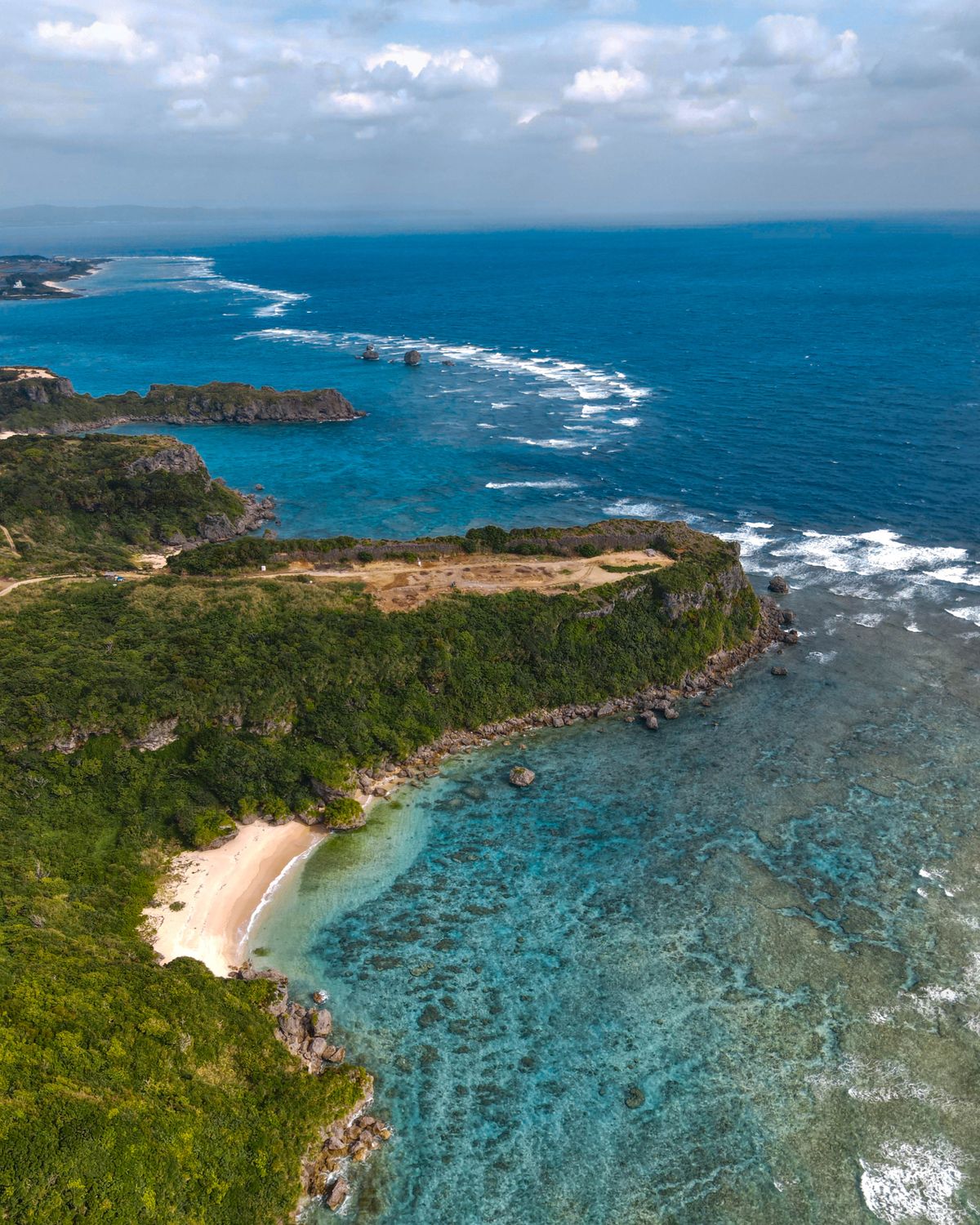
Ishigaki has dozens of beaches ranging from easily accessible public beaches near the city to hidden coves reachable only by small boat or a scramble through coastal forest. Here are the highlights that every visitor should know about.
Kabira Bay (Kawira-wan)
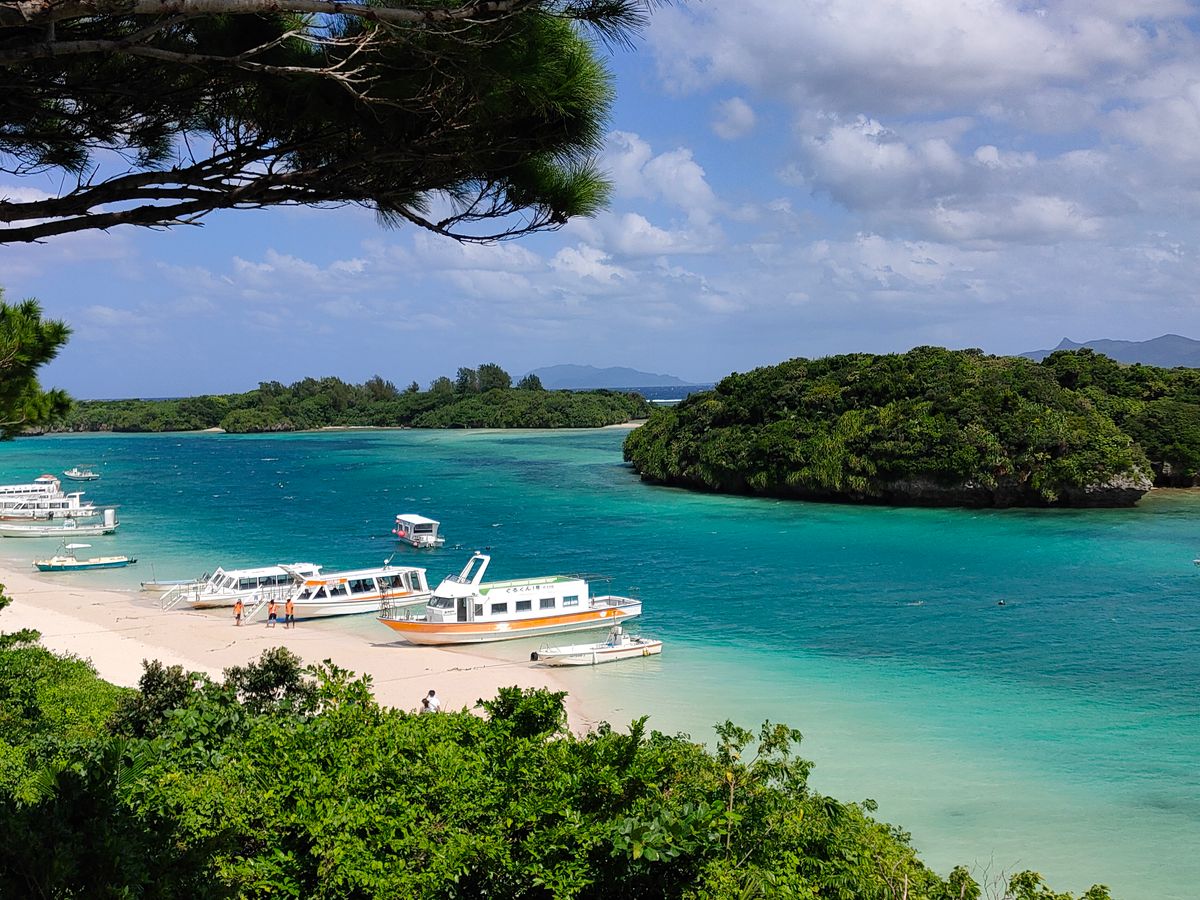
Kabira Bay on the northwest coast is Ishigaki’s most famous sight — a sweeping bay of vivid turquoise water scattered with forested islets that has appeared on virtually every piece of Okinawa tourism material ever produced. The colours here are genuinely extraordinary: the water shifts from deep jade green over the seagrass beds to brilliant turquoise over the shallow sandy patches, with visibility that can exceed 20 metres on a calm day.
Important note: swimming is prohibited in Kabira Bay to protect the bay’s pearl oyster cultivation and the delicate seagrass ecosystem. However, glass-bottomed boat tours operate from the beach and provide excellent views of the reef and marine life beneath without entering the water. Tour duration is approximately 30 minutes; cost is ¥1,050 (USD $7) for adults. The bay is also surrounded by walking paths through the coastal forest, with viewpoints over the water that are worth the short climb.
Yonehara Beach (Yonehara Kaigan)
Located on the north coast between Kabira Bay and the cape at Hirakubo, Yonehara Beach is Ishigaki’s best easily accessible snorkelling beach. The coral reef begins just metres from the shore and hosts an extraordinary density of marine life — parrotfish, butterflyfish, triggerfish, and turtles are regularly encountered even by casual snorkellers in very shallow water. The beach has a parking area, toilet facilities, and a small snorkelling equipment rental shop. No entry fee. Water shoes are recommended, as the shore is covered with coral rubble rather than sand.
Sunset Beach (on the Hirakubo peninsula in the north)
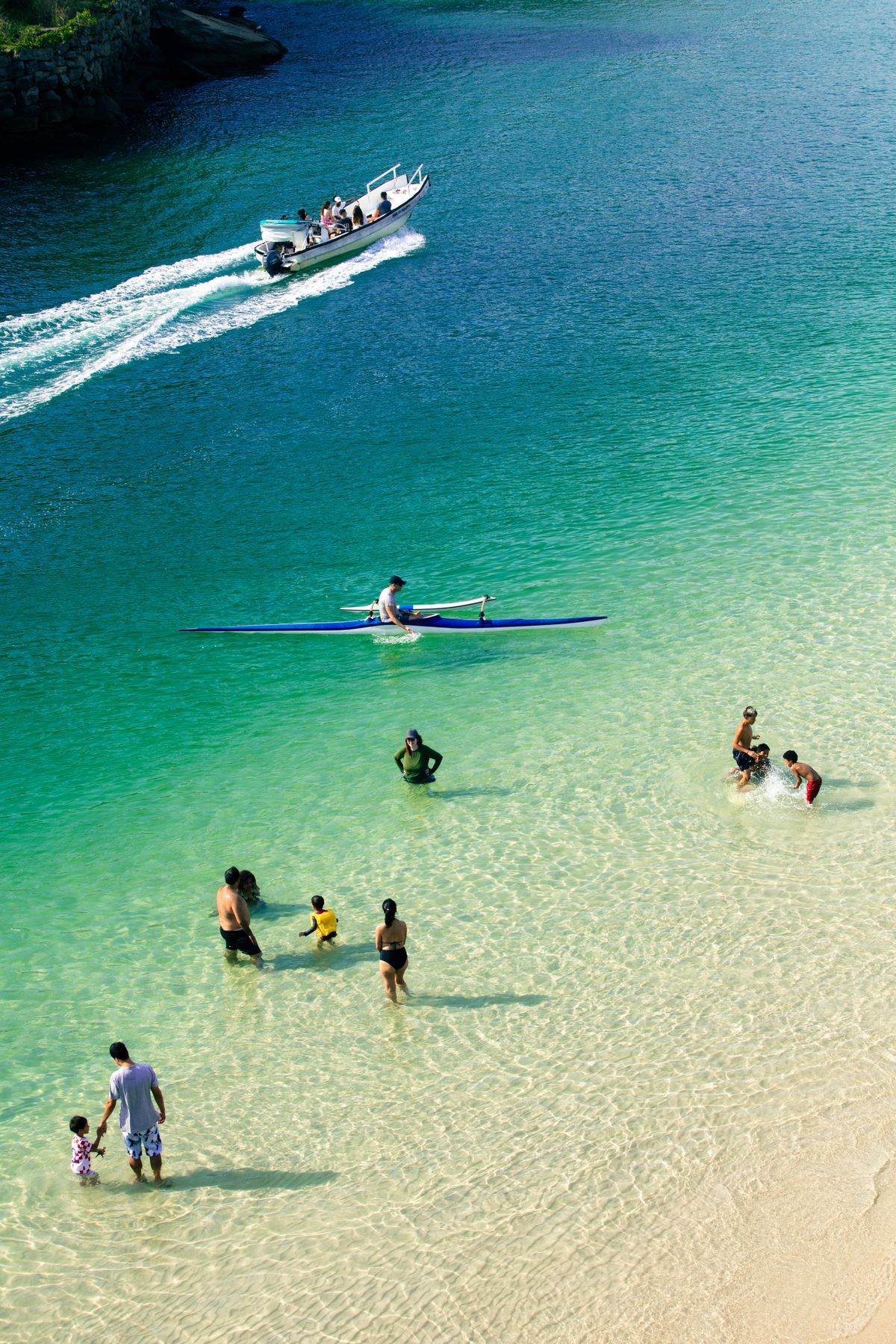
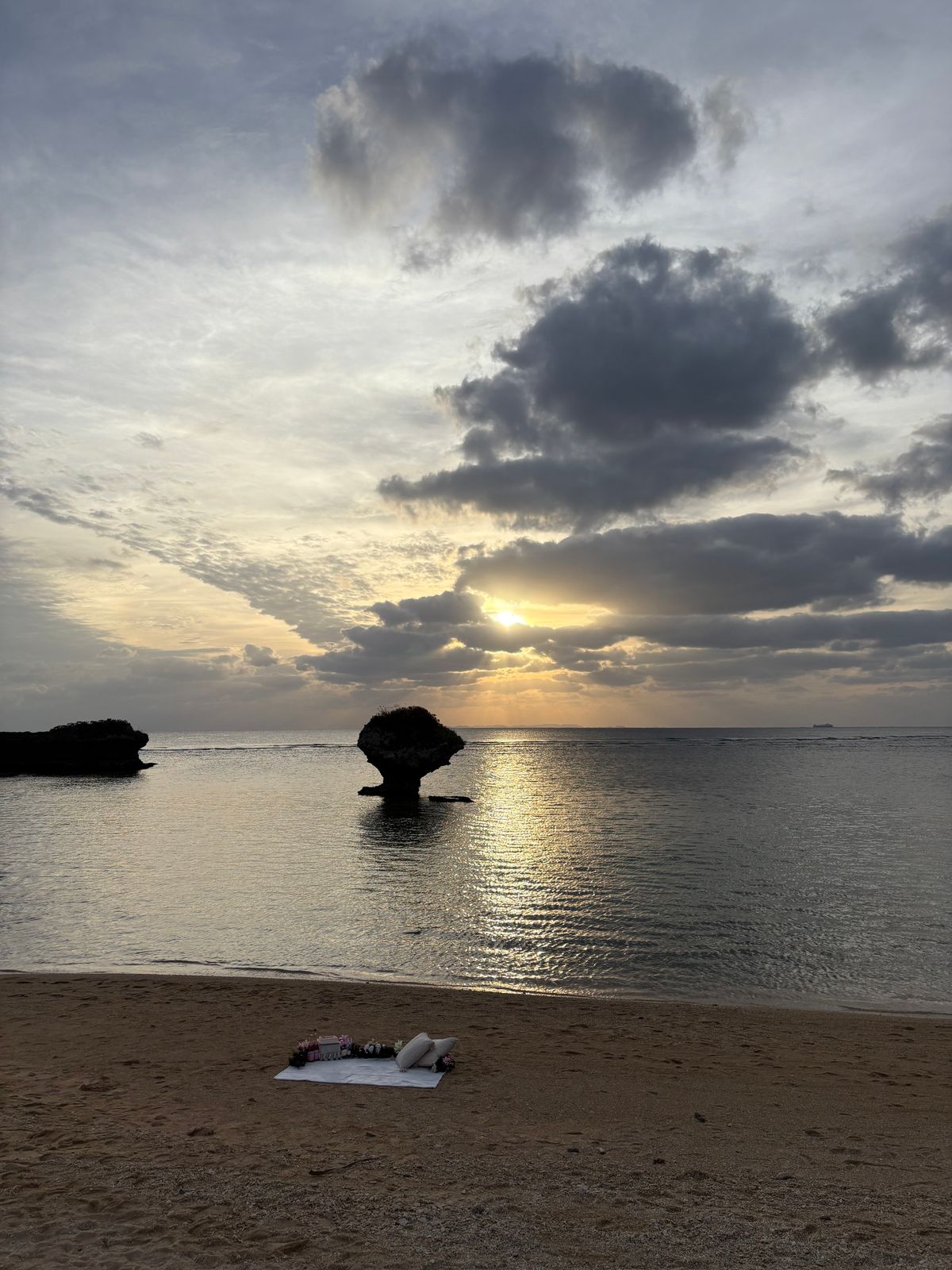
Near Kabira Bay on the northwest coast, Sunset Beach — also called Nishi-Kaigan — lives up to its name with a wide stretch of white coral sand facing the west and offering reliably spectacular sunsets from May through October. The beach has shallow, calm waters suitable for children and less confident swimmers, with a gentle sandy entry. Facilities include parking, toilets, and a small beachside shop selling drinks and snacks. One of Ishigaki’s most consistently pleasant beach experiences for a relaxed half-day visit.
Ibaruma Beach
On the remote northeastern peninsula, Ibaruma Beach is one of Ishigaki’s lesser-visited but most beautiful stretches of coastline. The white sand is particularly fine, the water exceptionally clear, and the sense of peaceful isolation complete. This is the kind of beach you have largely to yourself on a weekday morning outside of peak season — a remarkable contrast with the crowded tropical beaches of better-known destinations in the region.
Maezato Beach
Near Ishigaki City in the south of the island, Maezato Beach is a convenient option for those based in the city who want an easy afternoon at the water. The beach has good facilities and consistent calm water, and while it’s less dramatically beautiful than Kabira Bay or Yonehara, its proximity to the city makes it practical for the last afternoon of a trip when you’ve already returned your rental car.
Snorkelling and Diving in Ishigaki
The waters around Ishigaki Island and the wider Yaeyama region are among the most biodiverse in Japan and rank among the finest snorkelling and diving destinations in all of East Asia. The main draw for diving enthusiasts worldwide is the manta ray (giant oceanic manta) aggregation site off Ishigaki’s northeast coast, known internationally as Manta Scramble.
Manta Scramble — Diving with Giant Manta Rays
Manta Scramble (Manta Square) at Cape Kabira Saki on the northern coastline of Ishigaki is one of the world’s most reliable sites for close encounters with reef manta rays. These enormous creatures — with wingspans reaching up to five metres — gather at the site’s coral cleaning stations, hovering almost motionless while small fish remove parasites from their skin. The site is shallow (6–15 metres) and suitable for both certified divers and, during calm conditions, snorkellers.
Best season for mantas at Ishigaki: June through October, with the peak aggregation typically occurring in August and September. A guided dive trip to Manta Scramble from Ishigaki City costs approximately ¥8,000–¥12,000 (USD $53–$80) for certified divers including equipment rental, or ¥5,000–¥7,000 (USD $33–$46) for a snorkelling trip (subject to sea conditions).
Coral Reef Snorkelling
Beyond Manta Scramble, the reef systems throughout the Yaeyama region offer excellent snorkelling for beginners. Yonehara Beach (accessible independently), the reefs around Taketomi Island (reachable by a 10-minute ferry), and the mangrove waterways of Iriomote Island (reachable by 40-minute ferry) are all outstanding options. A full-day snorkelling tour from Ishigaki City covering multiple sites typically costs ¥8,000–¥15,000 (USD $53–$100) per person including equipment rental, boat transport, and a guide.
Day Trips from Ishigaki: The Yaeyama Archipelago
One of the greatest pleasures of basing yourself on Ishigaki is the ease with which you can hop between the surrounding islands by high-speed ferry from Ishigaki Port. Each island has a completely distinct character, and combining two or three of them across a week-long trip is an excellent way to experience the full diversity of the Yaeyama region.
Taketomi Island
A 10-minute ferry ride from Ishigaki Port brings you to Taketomi — a tiny, flat island of about 350 residents that has maintained its traditional Okinawan ryukyu village layout with exceptional care. The main village has red-tiled roofs, white sand lanes, and large Shisa guardian lion statues at every gate. You’ll see more traditional village architecture in perfect condition here than almost anywhere else in the Okinawa region. The island is explored by rental bicycle (¥500–¥800 / USD $3.30–$5.30 per hour) or by water buffalo cart tour. Kondoi Beach, a 10-minute cycle from the village, has calm, beautifully clear water ideal for swimming. Ferry: approximately ¥730 (USD $4.90) each way.
Iriomote Island
A 40-minute high-speed ferry from Ishigaki Port reaches Iriomote, Okinawa Prefecture’s second-largest island after Okinawa’s main island, and one of the country’s most extraordinary natural environments. Over 90% of Iriomote is covered in subtropical rainforest and mangrove, and it is home to the critically endangered Iriomote wildcat, found nowhere else on Earth. Activities here include kayaking through mangrove rivers, hiking to inland waterfalls (Pinaisara Falls, at 55 metres, is Okinawa’s highest), and snorkelling the surrounding reefs. Iriomote rewards at least a full day’s visit; consider staying overnight at one of the island’s small guesthouses to experience it more deeply. Ferry: approximately ¥2,690 (USD $17.90) each way.
Kohama Island
Twenty minutes by ferry from Ishigaki, Kohama (population approximately 600) is a mid-sized island in the Yaeyama chain known for its beautiful beaches, sugar cane fields, and gentle, unhurried pace. Kohama’s quiet beaches are lovely, but for star sand, Hoshizuna no Hama on nearby Iriomote is particularly famous for its sand, which is composed almost entirely of tiny star-shaped foram skeletons rather than conventional sand grains — bring a magnifying glass and prepare to be amazed. Ferry: approximately ¥1,540 (USD $10.30) each way.
Food in Ishigaki: What to Eat
Yaeyama food culture is distinct from both mainland Japanese cuisine and the broader Okinawan cooking tradition that visitors may be familiar with. The combination of subtropical climate, surrounding sea, and cultural influences from Taiwan, Southeast Asia, and the Ryukyu Kingdom creates a culinary landscape that is genuinely unlike anywhere else in Japan.
Ishigaki Beef (Ishigaki-gyu)
Perhaps the most prestigious local food product is Ishigaki beef — a wagyu breed raised on the island’s subtropical grasslands. Ishigaki cattle are actually an important source bloodline for the famous Miyazaki and Matsusaka wagyu brands, as island-born cattle are often shipped to the mainland for fattening. Eating Ishigaki beef on the island itself, however, means tasting locally raised animals that have never left the island. At dedicated wagyu restaurants and izakaya in Ishigaki City, expect to pay ¥3,000–¥8,000 (USD $20–$53) for a full grilled beef meal. The quality is outstanding.
Yaeyama Soba
Yaeyama soba is the local version of Okinawa soba — a wheat noodle (not buckwheat, despite the name) served in a clear pork broth, typically topped with stewed pork belly (rafute), fish cake (kamaboko), and pickled ginger. The Yaeyama version tends to use thinner, rounder noodles than other Okinawan styles, with a delicate, subtly sweet broth. This is the dish to seek out for a quick, inexpensive, and thoroughly local meal. Budget ¥700–¥1,100 (USD $4.60–$7.30) for a bowl at local soba shops in Ishigaki City.
Fresh Seafood
The surrounding waters provide an exceptional range of tropical seafood including grouper (haata in local dialect), sea urchin, various shellfish, and the distinctive garupa fish. The fish market area near Ishigaki Port has several seafood restaurants that change their menus daily based on the morning’s catch. Grilled whole fish, sashimi platters of ultra-fresh local fish, and shellfish cooked in their shells in various styles are all reliable and delicious choices. Budget ¥1,500–¥3,000 (USD $10–$20) for a substantial seafood meal at market-adjacent restaurants.
Awamori
Awamori is the traditional distilled spirit of the Ryukyu Islands — made from long-grain Thai rice and aged in clay pots, it is Japan’s oldest indigenous distilled liquor and very much the local drink of Ishigaki. It tastes somewhat like shochu but with a slightly smoky, complex character. Aged awamori (kusu) from 3 to over 30 years old can be found at specialist liquor shops in the city. A glass at a local bar costs ¥500–¥800 (USD $3.30–$5.30), typically served on the rocks or with water. Many visitors bring a bottle home as an excellent souvenir.
Where to Stay in Ishigaki
Accommodation on Ishigaki ranges from budget guesthouses and minshuku (family-run B&Bs) through mid-range hotels to full-service beach resorts. Most accommodation clusters around Ishigaki City, with resort properties spread along the northern and western coasts near the better beaches.
Ishigaki City
Staying in the city centre puts you within walking distance of the port (for day trips to other islands), the restaurants and bars of the main Shinmachi district, and the regular bus services to the rest of the island. Business hotel-style accommodation here offers good value at ¥7,000–¥13,000 (USD $46.50–$86.50) per night for a standard double room. Several of the city-area hotels have rooftop terraces with ocean views that make them particularly pleasant.
Resort Accommodation near Kabira Bay
Several mid-to-upper-range resort hotels are located on the northwest coast near Kabira Bay, offering beach access, pool facilities, and the ability to wake up directly at the water’s edge. These typically range from ¥15,000–¥40,000+ (USD $100–$266+) per room per night during high season. Book well in advance for peak summer period (July–August), when demand significantly outstrips supply.
For the widest range of accommodation options across all budgets on Ishigaki Island:
Book your hotel on Agoda (Best prices guaranteed) →
Best Time to Visit Ishigaki Island
Ishigaki has a subtropical climate with warm temperatures year-round, but there are significant seasonal considerations that should influence when you plan your visit.
May to June (Recommended)
Late May and June offer excellent conditions for beach and water activities, with sea temperatures warm enough for comfortable snorkelling (around 25–27°C / 77–81°F), lower crowds than peak summer, and generally clear weather in early May before the rainy season begins. The manta rays begin to gather at Manta Scramble from June onward. This is arguably the best overall window for a first-time visit.
July and August (Peak Summer)
Peak season for domestic Japanese tourists. The weather is hot and humid, sea conditions are generally good, and the mantas are at Manta Scramble in full force. Accommodation and ferry tickets to smaller islands should be booked well in advance. Typhoon risk begins to increase from late July — Ishigaki sits directly in the path of western Pacific typhoons, and a significant storm during your visit can disrupt ferry services and outdoor activities for several days. Travel insurance that covers typhoon disruption is strongly recommended for summer visits.
September to November
September remains typhoon season, but October and November are excellent — the peak summer crowds have gone, the water is still warm and very clear, and the island settles into a beautiful, relaxed autumn rhythm. Manta ray season continues through October. This is a strong choice for visitors who prioritise diving and snorkelling quality over beach-holiday ambiance.
December to April
The coolest months, with sea temperatures dipping to 19–22°C (66–72°F) — technically snorkellable but cold for anyone not in a full wetsuit. The rainy season (tsuyu) typically runs from late May to mid-June. January to March is the quietest period on the island and sees the lowest accommodation prices, but the weather is unpredictable and beach activities are limited. Good for travelers interested in the culture and food side of Ishigaki rather than water activities.
Practical Information for Visiting Ishigaki
Money and Payments
Ishigaki City has 7-Eleven and Japan Post ATMs that accept international bank cards. Outside the city, cash facilities are very limited — fill up your wallet before heading to remote beaches or smaller islands. Many smaller restaurants, guesthouses, and beach stalls operate cash-only. Carrying ¥20,000–¥30,000 (USD $133–$200) in cash gives comfortable flexibility for a multi-day island visit.
Ferry Services to Other Islands
Ferries to Taketomi, Iriomote, Kohama, and other Yaeyama islands depart from Ishigaki Port (離島ターミナル), a 10-minute walk from the city centre. The main operators are Yaeyama Kanko Ferry and Anei Kanko. Tickets can be purchased at the port terminal on arrival, though for popular routes during peak season (July–August) it’s worth pre-booking where available. Timetables are posted at the port and available in English.
Sun Protection
The subtropical sun at Ishigaki’s latitude (24°N) is significantly stronger than what most visitors from temperate climates are accustomed to. Sunscreen with SPF 50+ is essential for any outdoor activities, including snorkelling. A long-sleeved UV-protective rash guard is highly recommended for snorkelling sessions — two hours on the water without one can result in a severe burn that ruins the rest of your trip. Both are widely available at local drugstores if you forget to bring them.
For First-Time Japan Visitors
If Ishigaki Island is your introduction to Japan travel, you’ll find it a warm and welcoming entry point — the island’s tourism infrastructure is well-developed and the pace of life is more relaxed than the major cities. That said, combining Ishigaki with a few days in a city like Tokyo, Osaka, or Kyoto will give you a much richer understanding of the extraordinary breadth of Japanese culture and experience. See our guides for first-time Japan travelers and browse all Japan destinations for more inspiration.
Yaeyama Culture and Local Life
One of the most rewarding aspects of visiting Ishigaki beyond the beaches is the opportunity to engage with the distinctive Yaeyama cultural traditions that set this region apart from both the Japanese mainland and Okinawa’s main island. First-time visitors are often surprised to discover that the Yaeyama islands have their own language (Yaeyama-go), their own musical traditions, and a cultural identity deeply rooted in the Ryukyu Kingdom that predates Japan’s absorption of the Ryukyu Islands in the late 19th century.
Yaeyama Music and Dance
The most accessible entry point to Yaeyama culture is its music. Yaeyama minyo (folk songs) are performed on the sanshin — the three-stringed instrument that is the Yaeyama and Okinawan equivalent of the shamisen, covered in python skin and played with a plectrum. The sound is haunting, melodic, and deeply evocative of the subtropical landscape. Live performances can be heard at dedicated cultural venues in Ishigaki City and at some restaurants in the evening. Look for venues hosting Yaeyama min’yo performances — these typically combine music, traditional dance, and often audience participation in a friendly, accessible format. Admission varies from free (at some public performances) to ¥2,000–¥3,000 (USD $13.30–$20) for dedicated show dinners.
Minsa Weaving
Minsa is a traditional narrow-band textile woven by Yaeyama women in distinctive diamond and square patterns, traditionally given by a woman to her partner as a symbol of loyalty. The pattern encodes the message “I will love you for ever and ever” in its repeating motifs. Today, minsa textiles are produced both traditionally (by hand on backstrap looms) and commercially (on power looms), and the distinctive indigo pattern of five and four squares appears on everything from souvenirs and clothing to coasters and phone cases. For something more meaningful, seek out hand-woven minsa items at craft shops in Ishigaki City — they are more expensive than the mass-produced versions but carry genuine craft value and make exceptional gifts.
Hirosaki and Obon Festivities
If your visit coincides with Obon season (the 13th to 15th of the seventh lunar month, usually mid-August to early September), Ishigaki and the surrounding islands come alive with Angama, the masked Obon processions unique to Yaeyama — the lively, percussion-driven folk dance associated with the festival of the dead in the Ryukyu tradition. Villages on the smaller islands in particular maintain these traditions with remarkable vitality, and witnessing a village Eisa performance on Taketomi or Kohama during Obon is an extraordinary cultural experience that most visitors to Japan never have the chance to see.
Nature Beyond the Beaches: Mangroves and Mountains
Ishigaki’s natural attractions extend well beyond its celebrated coastline. The island’s interior and river systems offer some of the most accessible subtropical wilderness experiences available anywhere in Japan.
Miyara River Mangrove Kayaking
The Miyara River on Ishigaki’s eastern coast is home to one of Japan’s finest mangrove forests, easily explored by kayak. Several tour operators in the city offer guided mangrove kayaking experiences suitable for complete beginners (no prior kayaking experience required). Paddling through the arching root systems of the mangroves, with kingfishers and crabs as your only company, is a meditative and genuinely beautiful experience quite unlike anything available elsewhere in Japan. Tour duration is typically 2 hours; cost approximately ¥4,000–¥5,500 (USD $26.50–$36.50) per person including all equipment.
Omoto-dake — Ishigaki’s Sacred Peak
At 526 metres, Omoto-dake is the highest mountain in Okinawa Prefecture and the spiritual high point of the Yaeyama archipelago. The peak is considered sacred in local belief systems and is home to the Kinomata-ki (Pandanus forest) — a grove of ancient screw pine trees with a primordial, otherworldly character. A hiking trail to the summit takes approximately 3–4 hours return from the trailhead and involves some steep sections through genuine subtropical forest. The views from the summit on a clear day extend across the entire Yaeyama archipelago. This is a more challenging and less-visited experience than the beaches, and all the more rewarding for it.
Star Gazing on Ishigaki
The Yaeyama archipelago is one of the best locations in Japan for star gazing, thanks to its distance from mainland light pollution. The Ishigaki Island Astronomical Observatory (Ishigakijima Tenmondai) operates public viewing nights using one of Japan’s largest publicly accessible telescopes. On clear nights, the Milky Way is visible to the naked eye from dark spots on the island’s less-developed northern and eastern coasts. If you’re visiting between October and March — when nights are longer and often clearer — plan an evening at the observatory or drive to one of the cape viewpoints for an unforgettable sky-gazing experience. The observatory hosts public nights approximately 3–4 times per week; check the schedule and book in advance as capacity is limited.
Frequently Asked Questions About Ishigaki Island
Do I need to speak Japanese to visit Ishigaki?
No. While Ishigaki is less internationally geared than Tokyo or Kyoto, the main tourist infrastructure — including hotels in the city centre, tour operators offering water activities, and the ferry terminal — all have English-language capacity. Google Maps works well for navigation on the island. Away from the city, communication may require some patience and creative mime, but the local population is invariably warm and helpful toward foreign visitors. Having Google Translate on your phone (with offline Japanese pack downloaded) is a useful backup for menus and signs in smaller establishments.
How many days should I spend on Ishigaki?
Three full days is a comfortable minimum: one day to explore Ishigaki’s own beaches and north coast, one day for a day trip to Taketomi or Iriomote, and one day for a snorkelling or diving excursion. Five to seven days allows you to explore at a genuinely relaxed pace, visit multiple surrounding islands, try multiple snorkelling and diving sites, and get beyond the main tourist circuit to the quieter corners of the island. Ishigaki rewards slow travel — the island has more depth than a rushed itinerary can capture.
Is Ishigaki suitable for families with children?
Yes, very much so. Calm-water beaches like Kondoi Beach on Taketomi Island and Sunset Beach on Ishigaki’s northwest coast are perfect for young children. Glass-bottomed boat tours at Kabira Bay are accessible to all ages. Snorkelling at Yonehara Beach is manageable for children who are comfortable in the water and can wear a life vest. The laid-back island pace and warm, clear water make Ishigaki particularly well-suited for family holidays with children of almost any age.
What is the best way to see Kabira Bay?
The best approach to Kabira Bay is to arrive early (before 9 am) for the clearest light and fewest visitors. Take one of the glass-bottomed boat tours to see the bay from the water and observe the marine life below — tours run throughout the day and cost ¥1,050 (USD $7) per adult. Supplement this with a walk on the forested hillside paths above the bay, which offer elevated viewpoints over the full sweep of the turquoise water and forested islets. Note that swimming is strictly prohibited in the bay to protect the pearl oyster cultivation and the marine ecosystem.
Can I island-hop from Ishigaki to Okinawa’s main island?
Not directly by ferry — the distances are too great for regular ferry services. However, there are multiple daily flights between Ishigaki (ISG) and Naha Airport on Okinawa’s main island (approximately 55 minutes flight time). This makes a combined Okinawa main island and Ishigaki island trip very practical: fly into Naha, spend two to three days on Okinawa’s main island, then fly across to Ishigaki for the Yaeyama island experience, and fly home from either Naha or Ishigaki directly.
Is it worth bringing my own snorkelling equipment?
If you own quality snorkelling gear, yes — particularly a well-fitting mask, which is the single most important factor for a good snorkelling experience. Rental equipment on Ishigaki is generally adequate but masks may not seal perfectly for all face shapes. Fins can be borrowed locally without much quality concern. A rash guard and UV-protection gloves are worth packing even if you don’t bring a full snorkelling kit — sun exposure on the water is intense and easy to underestimate.
What is awamori and should I try it?
Awamori is the traditional distilled spirit of the Ryukyu Islands, made from Thai long-grain rice using a distinctive black koji mould fermentation process. It predates Japanese sake and shochu and is believed to be Japan’s oldest indigenous distilled alcohol. Aged awamori (kusu) develops complex, smooth flavours over time. Trying awamori at a local bar in Ishigaki — particularly a locally produced variety from one of the island’s own distilleries — is a genuine cultural experience that connects you to the Ryukyuan history of the region in a very direct and enjoyable way. Drink it with ice (rokku) or diluted with water (mizu-wari). ¥500–¥800 (USD $3.30–$5.30) per glass at local bars.
Getting the Most Out of Your Visit: Final Tips
Before you travel, make sure your airport connection is sorted efficiently. Most international visitors will arrive at a major Japanese airport before connecting to Ishigaki — navigating airport transfers with luggage and a limited Japanese vocabulary can be stressful. Booking a reliable airport transfer service from your arrival airport to your onward transport hub takes one variable out of the equation entirely.
Book airport transfer on Kiwitaxi →
Final Thoughts: Why Ishigaki Is Worth the Journey
Japan surprises visitors constantly, but few surprises are as complete as arriving in Ishigaki for the first time and realising that the country’s tropical islands — remote, unhurried, coral-fringed, and genuinely beautiful — are as compelling as anything the famous cities can offer. Ishigaki is not just a beach destination bolted onto a Japan trip as an afterthought. It is a destination with its own distinct culture, cuisine, history, and natural environment, as worthy of dedicated exploration as Kyoto or Hiroshima.
Come for the snorkelling and the sunsets, by all means — but stay long enough to eat Yaeyama soba for breakfast, cycle across Taketomi’s white-sand lanes, watch the manta rays at dusk, and drink aged awamori under a sky full of stars that are invisible from the mainland’s light-polluted cities. That is the Ishigaki that lingers in memory long after the tan has faded.
For more Japan travel guides and destination inspiration, explore our full collection of Japan destinations and discover what’s waiting beyond the well-trodden tourist trail.
Going to Japan? Speak Japanese with confidence.
Hirameki Japanese — camera translate for menus and signs, a two-way conversation mode, and furigana + romaji on every phrase. Free to download with kana charts, conversation mode and starter words; a one-time purchase unlocks everything.

Plan your Japan trip
Two things every first-timer should book
Some links are affiliate links. If you book through them we may earn a small commission at no extra cost to you.