Introduction to Oita Prefecture
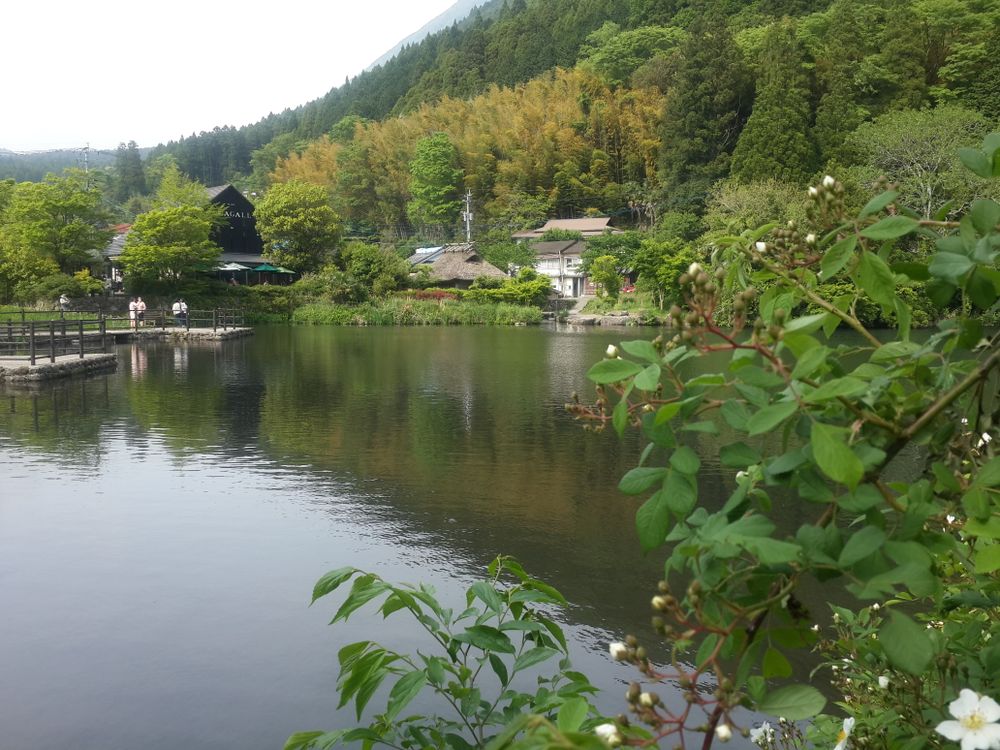
Oita Prefecture, occupying the northeastern corner of Kyushu, is Japan’s undisputed capital of hot springs — a title it holds with extraordinary authority. With more hot spring sources, more spa facilities, and more hot spring water flowing per day than any other prefecture in Japan, Oita earns its proud claim to be the “Onsen Prefecture.” The twin resort towns of Beppu and Yufuin, though very different in character, together define Oita’s identity for most visitors, and between them they offer the full spectrum of Japanese hot spring culture from the grand theatrical spectacle of Beppu’s Hell Springs to the refined, intimate ryokan experience of Yufuin’s misty valley.
Beyond its extraordinary thermal heritage, Oita offers remarkable natural landscapes — the Kusu Kuju mountain range with Japan’s largest active volcanic field, the dramatic highland plateau of the Kuju Mountains, the gorge scenery of Takachiho (shared with Miyazaki), and the historic Buddhist stone carvings of Usuki that rank among the finest religious art in Japan. Oita’s food culture, centered on fugu (puffer fish) in winter, fresh Beppu Bay seafood year-round, and the distinctively smooth Oita-style soy sauce, adds another dimension to what is already one of Kyushu’s most rewarding travel destinations.
Top Attractions in Oita Prefecture
Beppu: The City of Eight Hells
Beppu is Japan’s most famous hot spring resort city and one of the world’s great thermal phenomena — a city where hot spring steam rises from the ground in hundreds of locations, where the air smells of sulfur in certain districts, and where approximately 130,000 kiloliters of hot spring water flow daily from more than 2,900 registered spring sources. The city sits on the rim of a volcanic caldera, and the geological forces that make it one of the most tectonically active places in Japan are simultaneously responsible for its extraordinary therapeutic and commercial hot spring infrastructure.
The Beppu Hells (Jigoku Meguri) are the city’s most famous attraction — seven dramatically different hot spring pools designated as national Places of Scenic Beauty that visitors tour on a circuit through the northern Kannawa and Shibaseki districts. Each Hell has its own distinctive character: Umi Jigoku (Sea Hell) is a brilliantly blue pool colored by dissolved iron sulfate; Chinoike Jigoku (Blood Pond Hell) is a deep crimson red from iron oxide in the clay; Tatsumaki Jigoku (Waterspout Hell) periodically erupts in a geyser of boiling water; and Oniyama Jigoku (Monster Mountain Hell) is famous for the crocodiles that live in the steaming water that flows from the spring. The theatrical, spectacular nature of these pools makes them unlike any other onsen experience in Japan.
Beyond the Hells, Beppu offers an extraordinary range of hot spring bathing experiences in its eight distinct hot spring districts (Hatto). The sand bath at Beppu Kaihin Sunayu, where bathers lie buried under volcanic sand heated by geothermal energy while clothed in yukata robes, is one of Japan’s most distinctive bathing traditions. Public bathhouses (konyoku) operate throughout the city at very low prices, providing the authentic Beppu onsen experience that the tourist-oriented facilities cannot replicate. The Kannawa district, with its traditional earthen steam cookers (jigokumushi) where vegetables, eggs, and seafood are cooked using the volcanic steam, is Beppu’s most atmospheric and least touristic area.
Yufuin: Refined Onsen Village
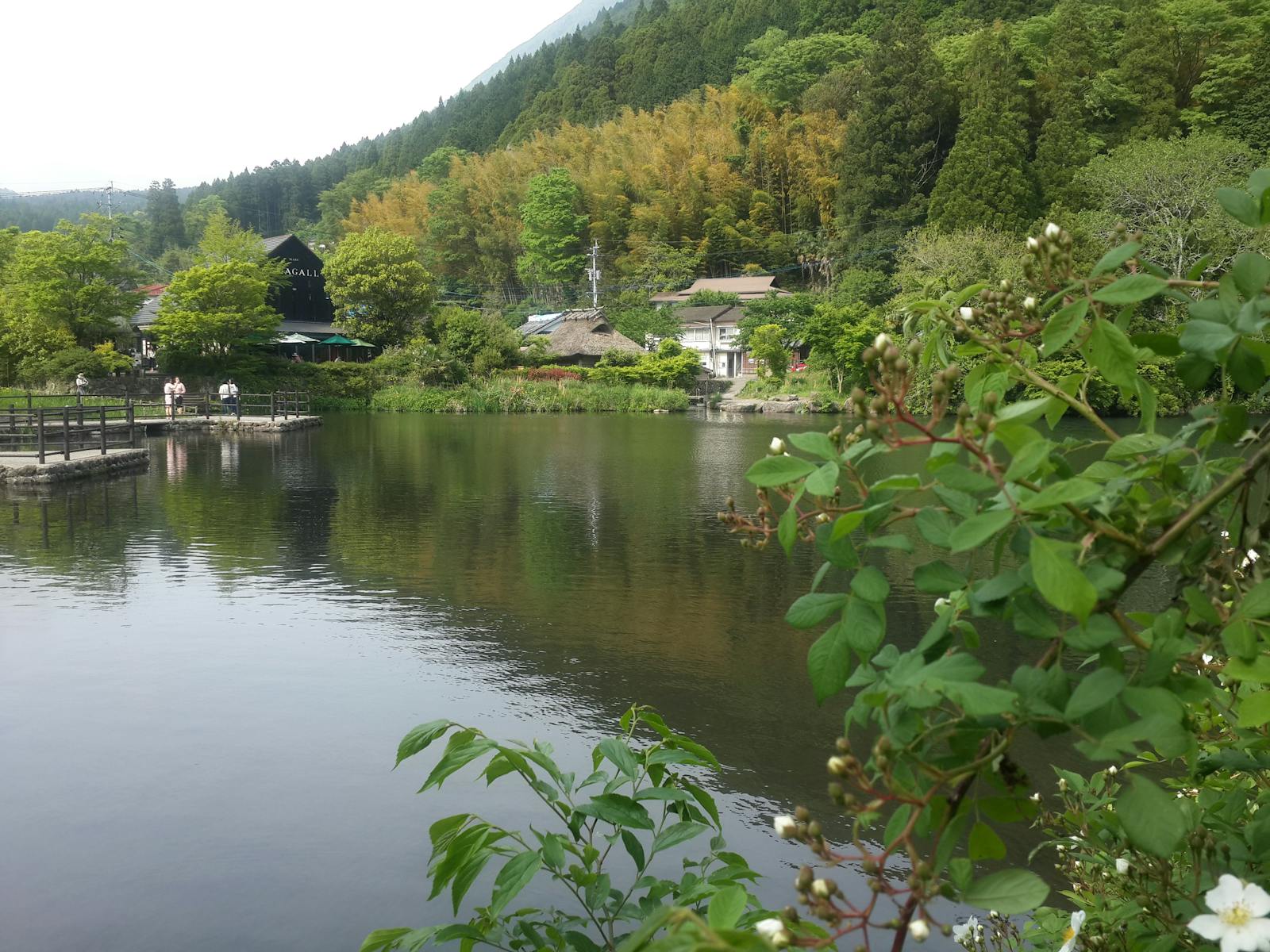
Yufuin, a hot spring resort town nestled in a valley basin beneath the twin peaks of Mount Yufu at the base of Oita’s volcanic highlands, is the antithesis of Beppu — quiet, refined, and deliberately oriented toward a more contemplative, boutique tourism experience. Where Beppu embraces scale and spectacle, Yufuin cultivates intimacy and rusticity: narrow lanes of boutique shops and galleries, traditional ryokan with exquisite cuisine, and the morning mist that rolls in from the surrounding mountains and Lake Kinrin to create an atmosphere of exceptional natural beauty.
The Yunotsubo Kaido main street from Yufuin Station to Lake Kinrin is lined with artisan food shops, locally produced craft galleries, pottery studios, and cafes that make the walk itself a pleasure quite apart from any destination. Lake Kinrin, a small lake fed by hot spring water where steam rises from the surface in cold weather and fish swim in the warming water, is the most photographed spot in Yufuin — the morning mist over the lake with Mount Yufu’s twin peaks emerging from the clouds above is one of Japan’s most beloved onsen town landscape photographs.
Yufuin’s ryokan culture is among the finest in Japan. The best properties offer private garden baths in natural rock or wood, kaiseki dinners featuring seasonal Oita ingredients, and a level of personal service and attention to detail that represents the Japanese inn tradition at its most refined. Several of Yufuin’s most celebrated ryokan are among Japan’s best overall accommodation options regardless of category, drawing guests who return year after year for the combination of hot spring bathing, exceptional food, and restorative mountain atmosphere.
Kuju Mountains and Aso Kuju National Park
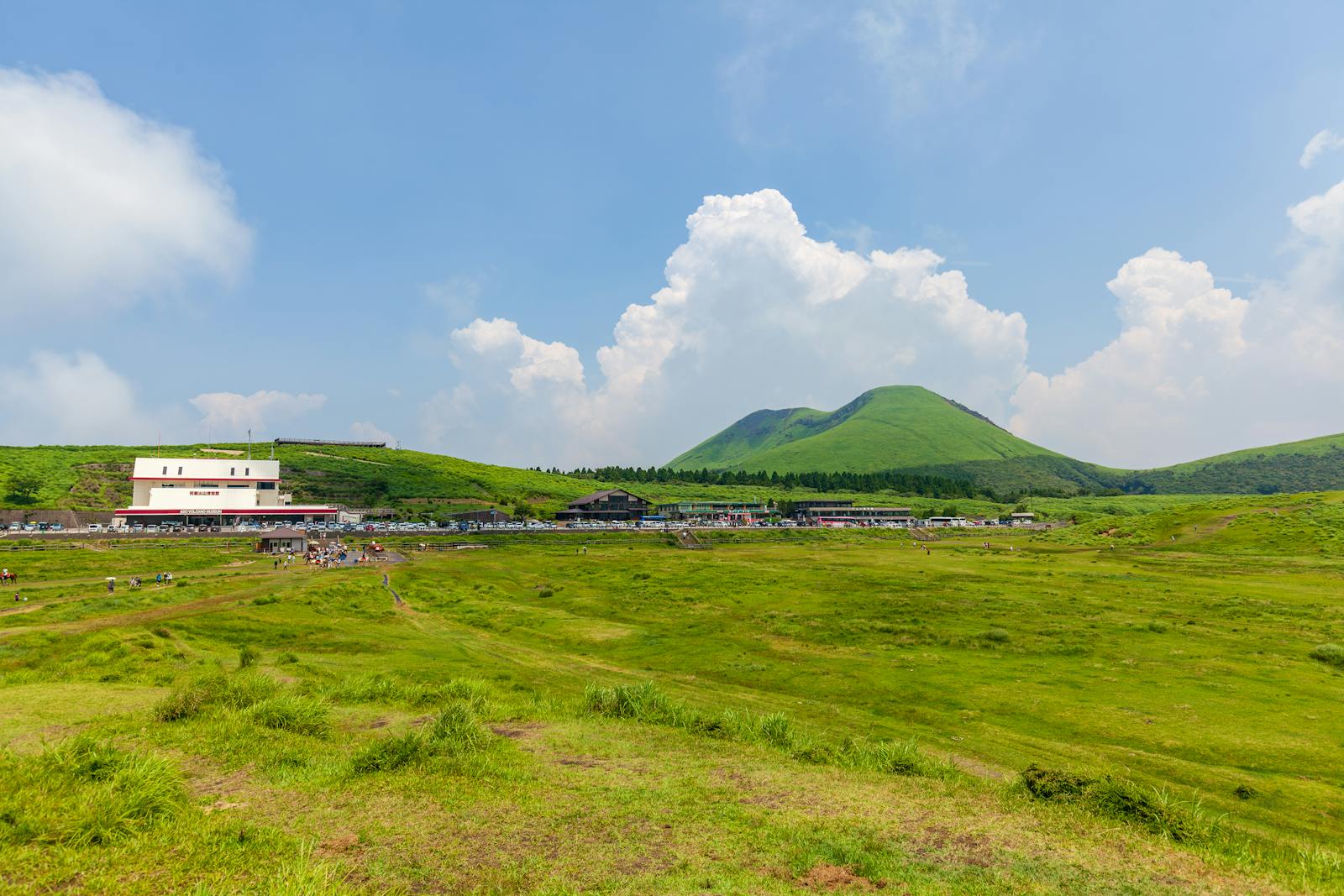
The Kuju Mountains in central Oita form the largest active volcanic field in Japan, a highland plateau of extraordinary beauty where volcanic peaks, alpine flower meadows, and highland wetlands create a landscape of unique ecological character. Mount Kurodake (1,786 meters) and the Kuju range surrounding it are covered in sasa bamboo grass and alpine wildflowers from May through July, producing a vivid green plateau that is one of Japan’s finest high-altitude hiking environments.
Bougainvillea no Sato Kuju, the Kuju highland plateau, is particularly beautiful in autumn when the Japanese pampas grass (susuki) creates a golden sea across the highland plateau that photographers and hikers find irresistible. The Chojabaru Visitor Center provides hiking route information for all skill levels, and the gondola at Kuju Kogen provides easy access to the highland for those who prefer a less strenuous introduction to the mountain scenery. Several mountain hot spring facilities are accessible from the highland hiking routes, allowing onsen bathing to be combined with mountain walking in a combination uniquely available in this volcanically active region.
Usuki Stone Buddhas: Japan’s Finest Rock Carvings
The Usuki Stone Buddhas, carved into cliff faces in the hills near Usuki City in southern Oita, are designated as National Treasures and are considered the finest examples of stone Buddhist sculpture in Japan. Approximately 60 stone figures carved during the Heian period (794-1185) occupy four separate cliff sites in a forested valley, with the largest groupings at Hoki-ji East and West and Furuzono. The carving style reflects the influence of continental Asian Buddhist art filtered through the lens of Japanese Heian aesthetics, and the combination of the serene sculptural faces emerging from the natural stone and the forested valley setting creates an atmosphere of extraordinary spiritual beauty.
The Usuki Stone Buddhas receive far fewer visitors than comparable cultural heritage sites in Japan, meaning that the experience of encountering these extraordinary works is genuinely contemplative rather than touristic. The small town of Usuki itself has a well-preserved historic townscape from the Edo period that complements the Stone Buddha visit and merits several hours of unhurried exploration.
Kunisaki Peninsula: Ancient Buddhist Landscape
The Kunisaki Peninsula, jutting into the Seto Inland Sea from northern Oita, is one of Japan’s most remarkable and least-visited cultural landscapes — a circular peninsula of ancient volcanic peaks covered with cedar and cypress forest, within which an extraordinary concentration of Buddhist temples, stone Buddhas, and sacred stone paths has accumulated over more than 1,300 years. The Rokugo Manzan religious culture that developed here created a unique fusion of Shinto and Buddhist practice expressed through the construction of temples, shrines, and sacred paths throughout the peninsula’s mountain forests.
Walking the ancient stone-paved paths between the peninsula’s temples, encountering stone Buddhas emerging from the forest floor at unexpected turns, and experiencing the profound atmosphere of a living religious landscape that has changed little over centuries makes the Kunisaki Peninsula one of Japan’s most profound cultural walking experiences for those with the time and inclination to explore it.
Getting to Oita
Oita is served by Oita Airport in the northern part of the prefecture, receiving flights from Tokyo Haneda (approximately 1 hour 25 minutes) and Osaka Itami (approximately 55 minutes). By rail, the JR Sonic limited express connects Hakata (Fukuoka) to Oita in approximately 2 hours 20 minutes, running along the Seto Inland Sea coast. The Kyushu Shinkansen from Shin-Osaka reaches Hakata in approximately 2 hours 15 minutes, making an Osaka-Hakata-Oita journey of approximately 4 hours 30 minutes possible by rail. Highway buses connect Oita and Beppu to Fukuoka in approximately 2 hours and are a competitive alternative to the train.
Before heading out, make sure you have a Japan eSIM ready to navigate, translate, and share photos without worrying about connectivity. Get your Japan eSIM (Stay connected from day 1) →
For visitors approaching from Shikoku or western Honshu, ferries connect Matsuyama in Ehime Prefecture to Usuki in southern Oita in approximately 2 hours 10 minutes — a scenic sea crossing through the Seto Inland Sea that provides a memorable arrival into Kyushu. The Beppu-Osaka ferry is another option for those traveling from Kansai, an overnight crossing that combines transport and accommodation.
Getting Around Oita
Within Beppu, the Kamei Bus and other local bus services connect the major hot spring districts and the Hell Springs area. The Beppu ropeway provides access to the viewpoint above the city. For Yufuin, the JR Kyudai Main Line connects Oita to Yufuin in approximately 1 hour 15 minutes and is a scenic mountain railway journey in its own right. The special Yufuin no Mori tourist train, which must be reserved in advance, makes the journey from Hakata to Yufuin in approximately 2 hours 15 minutes through the volcanic highland landscape.
A rental car is strongly recommended for exploring Oita’s broader attractions including the Kuju Mountains, Usuki Stone Buddhas, and the Kunisaki Peninsula. The highland driving routes through the Kuju area are particularly spectacular, and several onsen facilities along these routes can be incorporated into a scenic mountain driving day. Car rental is available at Oita Station, Beppu Station, and Oita Airport.
Where to Stay in Oita
The choice between Beppu and Yufuin as a base shapes the entire Oita experience. Beppu offers the widest range of accommodation from budget guesthouses (including several excellent hostels in converted old bathhouses) to mid-range hotels and traditional ryokan. The most distinctive Beppu accommodation are the mushi-yu (steam bath) ryokan in the Kannawa district, where private rooms are equipped with personal steam baths using the volcanic steam that emerges from the ground below the building.
Yufuin’s celebrated ryokan represent some of Japan’s finest traditional inn experiences, particularly in the price range of 30,000 to 60,000 yen per person including two meals. Properties like Sanso Murata, Kamenoi Bessou, and Yamanosou are internationally recognized as among Japan’s top ryokan destinations. For visitors on a tighter budget, Yufuin has several guesthouses and smaller inns at more accessible price points that still provide access to hot spring baths and the valley’s extraordinary natural atmosphere.
Food and Local Specialties in Oita
Oita’s food culture reflects its extraordinary thermal environment and maritime position on the Seto Inland Sea. Jigoku-mushi (hell steam cooking) is one of Beppu’s most distinctive culinary traditions — vegetables, eggs, seafood, and pudding are placed in containers over the volcanic steam vents and cooked by geothermal energy alone, producing foods of extraordinary sweetness and purity of flavor unaltered by direct heat or water. Several jigoku-mushi facilities in the Kannawa district allow visitors to cook their own food using the volcanic steam, creating a participatory cooking experience available nowhere else in the world.
Oita is also one of Japan’s top fugu (puffer fish) prefectures, with the winter season bringing exceptional torafugu from the cold waters of the Seto Inland Sea and the Bungo Channel. Toriten (chicken tempura) is another Oita specialty — large pieces of marinated chicken breast coated in a thin egg batter and deep-fried to create a dish that is both lighter and more flavorful than typical chicken preparations. Nakatsu karaage (fried chicken) from the Nakatsu area in northern Oita has become one of Japan’s most celebrated regional fried chicken styles, with numerous dedicated karaage restaurants attracting devotees from across Kyushu.
Day Trips and Nearby Destinations
From Oita City and Beppu, Kumamoto is accessible by a combination of JR train and ferry across the Shimaabara Strait in approximately 3 to 4 hours, making a Beppu-Kumamoto itinerary viable over several days. Fukuoka (Hakata) is 2 to 2.5 hours by JR Sonic limited express and serves as the natural gateway between Oita and the broader Kyushu circuit. The Takachiho Gorge on the Miyazaki border, accessible by bus from Nobeoka (reached by JR from Oita), is one of Kyushu’s most spectacular natural attractions — a narrow basalt gorge where the Gokase River flows through a succession of waterfalls and emerald pools in a landscape of legendary beauty.
Best Time to Visit Oita
Oita is an outstanding year-round destination. Winter (December through February) is the prime season for outdoor hot spring bathing, when the cold air creates maximum contrast with the hot spring water and the steam clouds are most dramatic. The fugu season runs November through March. Spring brings cherry blossoms to Beppu Park and Yufuin’s lakeside, and the highland wildflower season in the Kuju Mountains begins in May. Autumn is spectacular in Yufuin, when the surrounding mountain foliage turns brilliant colors that reflect in Lake Kinrin and frame the misty morning valley atmosphere at its most photogenic. Summer is warm and humid but remains good for highland hiking in the Kuju area where temperatures are considerably cooler than the coast.
Hidden Gems and Local Tips for Oita
Beppu’s public bathhouses (shisetsu no yu) throughout the city’s eight hot spring districts charge minimal entry fees (100 to 300 yen) and provide access to the same extraordinary hot spring water as expensive resort facilities — just without the amenities. The Takegawara Onsen, a wooden bathhouse dating to 1879, is the most famous of these public facilities and houses both regular hot spring baths and the distinctive sand bath where bathers are buried in hot spring-heated sand. Bathing at Takegawara is one of Beppu’s most authentic and affordable hot spring experiences.
The Beppu ropeway provides access to the summit of Mount Tsurumi (1,375 meters) above the city, where views across Beppu Bay and the surrounding volcanic landscape provide an outstanding introduction to Oita’s geological character. Local tip: Yufuin’s most celebrated morning experience is the mist that rolls in from the mountains before 8 AM on cool, clear mornings, creating a briefly magical atmosphere of floating clouds that dissipates as the sun rises — set an early alarm and walk to Lake Kinrin before breakfast for the best chance of experiencing this famous natural phenomenon.
Practical Information for Oita
Oita Prefecture operates on Japan Standard Time (JST, UTC+9). English-language materials are available at the Beppu Hell Springs, major ryokan, and the main tourist information centers at Beppu and Oita stations. Yufuin’s main street and the most visited ryokan provide English-language service. Public bathhouses in the residential hot spring districts may have Japanese-only facilities and etiquette guidance — a translation app is useful, and basic Japanese onsen etiquette (shower before entering, no swimming costume, no towel in the bath) is universal. International credit cards are accepted at major hotels and tourist facilities.
Budget Guide for Oita
Oita’s hot spring culture spans an extraordinary budget range. Public bathhouses cost 100 to 300 yen per visit — genuine hot spring bathing at negligible cost. Mid-range onsen ryokan with two meals cost 15,000 to 30,000 yen per person. Premium Yufuin ryokan cost 30,000 to 80,000 yen or more per person. The Beppu Hell Springs combined ticket costs approximately 2,100 yen and covers all seven hells. Jigoku-mushi cooking in Kannawa costs approximately 200 to 800 yen per item depending on what you cook. Budget travelers staying in Beppu guesthouses and using public baths can manage on 7,000 to 10,000 yen per day. A premium Yufuin ryokan experience is a major expense but represents one of Japan’s finest traditional accommodation offerings.
Frequently Asked Questions About Oita
Why is Oita called the Onsen Prefecture?
Oita has more registered hot spring sources (approximately 4,400), more total hot spring volume flowing per day (approximately 290,000 kiloliters), and more hot spring facilities than any other prefecture in Japan. This combination of quantity and geological diversity — the prefecture sits above active volcanic systems that produce thermal water of many different temperatures, mineral compositions, and geological characters — makes Oita’s claim to be the Onsen Prefecture essentially unchallengeable. More than anywhere else in Japan, hot spring bathing is woven into the fabric of everyday life in Oita.
What is the difference between Beppu and Yufuin?
Beppu is a large, urban hot spring resort city of approximately 120,000 people that embraces tourism at scale — spectacular Hell Springs, public bathhouses throughout the city, a wide range of accommodation, and the full infrastructure of a major resort. Yufuin is a small, deliberately intimate hot spring village of approximately 12,000 people that has resisted mass tourism development in favor of boutique ryokan, artisan shops, and natural beauty. Beppu is spectacular and democratic; Yufuin is refined and exclusive. Many visitors choose to base in one and day-trip to the other, as they are only 30 minutes apart by train.
What are the Beppu Hells?
The Beppu Hells (Jigoku Meguri) are seven dramatically different hot spring pools in the northern Kannawa and Shibaseki districts of Beppu, designated as national Places of Scenic Beauty. Each Hell has a distinctive character: Sea Hell (Umi Jigoku) is a brilliant cobalt blue; Blood Pond Hell (Chinoike Jigoku) is deep crimson red; Waterspout Hell (Tatsumaki Jigoku) erupts periodically like a geyser; White Pond Hell (Shiraike Jigoku) is milky white; Mountain Hell (Yama Jigoku) has animals living in the heated surroundings; Demon’s Mountain Hell (Oniyama Jigoku) houses crocodiles; and Golden Dragon Hell (Kinryu Jigoku) has the lowest temperature among the group. A combined ticket covers all seven and takes approximately 2 hours to complete at a comfortable pace.
What is the best Yufuin ryokan?
Yufuin has several outstanding ryokan that are consistently ranked among Japan’s finest traditional inn experiences. Sanso Murata is frequently cited as one of Japan’s absolute top ryokan for the combination of individual cottage accommodation, extraordinary kaiseki cuisine, and private garden baths. Kamenoi Bessou is a historic property dating to 1921 with exceptional gardens and food. Yamanosou offers beautiful private baths and outstanding multi-course dinners. The best choice depends on your budget and preferences — all of these properties require advance reservation and fill well in advance for popular periods including autumn foliage season.
What is jigoku-mushi cooking?
Jigoku-mushi (hell steam cooking) is a Beppu culinary tradition in which foods are cooked using the volcanic steam that emerges from geothermal vents in the Kannawa district. Vegetables, eggs, seafood, puddings, and other foods are placed in bamboo steamers or metal containers positioned over the steam vents, and cooked by the natural geothermal energy without any additional heat source. The result is food of exceptional purity and sweetness — the steam adds no flavoring and the gentle, moist cooking method brings out the natural flavor of each ingredient. Several jigoku-mushi facilities in Kannawa allow visitors to purchase raw ingredients from an adjacent market and cook them themselves.
How far is Oita from Fukuoka?
Beppu and Oita City are approximately 2 hours to 2 hours 30 minutes from Fukuoka (Hakata) by JR Sonic limited express train. This is far enough to justify at least an overnight stay rather than a day trip. Yufuin is approximately 2 hours 15 minutes from Hakata by the special Yufuin no Mori tourist train (reservation required). Highway buses from Fukuoka to Beppu take approximately 2 hours and are a slightly cheaper alternative to the train. The shinkansen does not serve Oita directly — the most practical high-speed connection is the Kyushu Shinkansen to Kokura or Hakata followed by the Sonic limited express.
What is Nakatsu karaage?
Nakatsu karaage is a style of Japanese fried chicken that originated in Nakatsu City in northern Oita Prefecture and has become one of Japan’s most celebrated regional fried chicken styles. The distinctive characteristics of Nakatsu karaage include marinating the chicken in a garlic-heavy soy sauce and ginger mixture before coating in a thin starch batter and frying at high temperature to achieve a particularly crispy exterior and juicy interior. Nakatsu has over 60 dedicated karaage restaurants serving this preparation, and the city’s restaurants have been exporting their style throughout Japan and internationally. A visit to Nakatsu specifically for karaage is considered a legitimate and worthwhile pilgrimage by serious fried chicken enthusiasts.
Is Oita good for families?
Oita is excellent for families. The Beppu Hell Springs are genuinely exciting for children — the colors, the steam, and the dramatic geological activity provide a natural science experience unlike any classroom could offer. The jigoku-mushi cooking facilities allow children to participate directly in food preparation using volcanic steam. Beppu’s Umi Tamago aquarium on the seafront is excellent for younger visitors. The Kuju highland area offers safe, scenic hiking for mixed-age groups. The only consideration is that many of Yufuin’s most celebrated ryokan do not accept children under a certain age to preserve the peaceful atmosphere for adult guests — check individual policies when booking.
3-Day Oita Itinerary: Japan’s Hot Spring Capital
Day 1: Beppu’s Eight Hells and City Onsen Culture
Arrive in Beppu by JR Sonic limited express from Hakata/Fukuoka (2h) or by ferry from Osaka (overnight, 12h, arriving morning). Begin with the Beppu Hells (Jigoku Meguri) — eight dramatically different geothermal springs too hot to bathe in, each with its own remarkable character. Umi Jigoku (Sea Hell) is cobalt blue; Chinoike Jigoku (Blood Pond Hell) is a visceral blood red from iron minerals; Tatsumaki Jigoku (Waterspout Hell) erupts at regular intervals. A combined ticket covers all eight hells efficiently. Evening: experience jigoku mushi (hell steaming cooking) at a restaurant or public cooking facility — Beppu residents use the natural geothermal steam to cook vegetables, seafood, and eggs. Try jidori chicken (Oita’s free-range specialty), toriten (tempura-style fried chicken), and locally caught fish steamed in geothermal heat for a genuinely unique dinner.
Day 2: Yufuin Mountain Onsen Resort
Take the Yufuin no Mori tourist train (1h from Beppu, ¥1,840) — a beautifully designed wood-paneled train with panoramic windows running through the forested mountain landscape to Yufuin. This small resort town in a volcanic caldera basin has transformed itself from a simple rural onsen into Japan’s most tasteful mountain resort — a compact village of art galleries, craft boutiques, artisan food shops, and small ryokan, all maintaining a deliberate low-rise, non-commercial aesthetic that contrasts sharply with Beppu’s more urban hot spring culture. The walk from Yufuin Station through the main Yufuin no Mori street to Lake Kinrinko (morning lake mist creates extraordinary atmospheric scenes) takes about 30 minutes one-way. Afternoon: soak in a private open-air bath (rotemburo) at one of Yufuin’s many small ryokan that offer day-use facilities (higaeri onsen), then browse the craft shops and art spaces. Return to Beppu by evening.
Day 3: Usuki Stone Buddhas and Kunisaki Peninsula
Drive south to Usuki Stone Buddha Statues (Usuki Sekibutsu) — a collection of 59 stone-carved Buddhist figures from the Heian and Kamakura periods (10th–13th centuries), designated as Japan’s first National Treasure stone Buddhist sculptures. The figures are carved directly into tuff rock cliff faces in a wooded gorge setting, and many retain remarkable detail and expression despite 800+ years of exposure. The site has a quality of quiet, discovery-through-wandering that rewards careful attention. Drive north to the Kunisaki Peninsula — a remote mountainous promontory where a uniquely syncretic religious culture blending Shinto, Buddhism, and mountain ascetic practice (Rokugo Manzan) flourished for over 1,000 years. The peninsula’s stone-paved trails, ancient temple complexes hidden in forested gorges, and carved stone Buddhist figures embedded in the landscape create one of Japan’s most atmospheric spiritual landscapes.
Shopping Guide: Oita Souvenirs
Oita’s craft and food traditions produce distinctive regional souvenirs. Beppu bamboo craft (Beppu-take saiku) is one of Japan’s finest bamboo weaving traditions — baskets, trays, lamp shades, and decorative items woven with extraordinary precision from local black bamboo. The Beppu Traditional Bamboo Craft Center sells a wide selection and shows craftsmen at work. Yufuin’s artisan food shops sell an exceptional range of local products including yuzu jam, smoked local chicken (yuzu-smoked jidori), craft chocolate from locally-sourced ingredients, and small-batch Oita sake. Kabosu citrus products — kabosu is a large sour citrus grown primarily in Oita and used throughout Japanese cuisine as a finishing condiment — are available as juice, ponzu, vinegar, and preserved products. Oita wooden crafts from the Hita region (known for its cedar forests) include traditional toys, lacquerware, and elegant wooden household items.
Family-Friendly Activities in Oita
The Beppu Hells are consistently rated one of Kyushu’s top family attractions — the combination of blood-red, cobalt-blue, and erupting geyser springs creates dramatic natural spectacle that fascinates children. The Jigoku mushi geothermal cooking experience — watching eggs, sweet potatoes, and corn cook in steam vents — is educational and delicious for children. African Safari Park near Beppu (Japan’s largest wildlife drive-through park, where buses drive through areas of free-roaming lions, tigers, bears, and elephants) provides an extraordinary wildlife encounter experience popular with families. Yufuin Floral Village — a recreation of an English country village with small animal petting areas — is gentle and family-friendly. The Beppu Beach Sand Bath at Shoningahama (buried in hot sand by attendants while wearing a yukata) is safe and enjoyable for children 6 and older.
Solo Travel Tips for Oita
Oita’s onsen culture is exceptionally welcoming to solo travelers — communal bathing spaces and the relaxed, anonymous atmosphere of hot spring towns naturally suit independent travel. Beppu has over 2,800 registered hot spring sources (more than any city in Japan), creating extraordinary variety: foot baths in the shopping arcade, large public sento bathhouses charging ¥100–300, private single-person tubs (kashi-kiri buro), and elaborate resort facilities. Solo travelers on a budget should focus on Beppu’s municipal public baths — the Takegawara Sento (historic public bath built 1879) charges just ¥100 for a traditional community bathing experience. Yufuin’s intimate ryokan atmosphere can feel isolated for solo travelers; Beppu’s more urban character offers better solo socialization opportunities.
Frequently Asked Questions About Oita
Why is Beppu famous for hot springs?
Beppu sits atop one of the world’s most intense geothermal zones, with over 2,800 registered hot spring sources producing approximately 130,000 liters of hot water per minute — second only to Yellowstone globally in geothermal output. The city has developed its extraordinary hot spring resources into a comprehensive tourism culture over 100 years, with facilities ranging from ¥100 public baths to luxury resort spas. The famous white steam rising from multiple points across the city throughout the day and night creates a dramatic visual landscape unlike anywhere else in Japan.
What is the difference between Beppu and Yufuin?
Beppu is a city (population 120,000) with a comprehensive, somewhat commercialized hot spring culture — numerous public baths, entertainment facilities, seafood restaurants, and the famous Hells tourist circuit. It attracts a wide demographic from backpackers to tour groups. Yufuin is a small mountain resort town (population 11,000) that has deliberately cultivated a tasteful, boutique aesthetic — artisan galleries, craft shops, small exclusive ryokan, and a quiet, fog-wrapped mountain atmosphere. Yufuin tends to attract couples and travelers seeking a more refined, less crowded experience. Both are excellent but provide very different characters of hot spring experience.
How do I get to Oita from Fukuoka or Tokyo?
From Fukuoka (Hakata): the JR Sonic limited express runs directly to Beppu and Oita City in about 2 hours (¥5,250). From Tokyo: fly to Oita Airport (90 minutes from Haneda, ANA/JAL) — much faster than the 7-hour train journey. From Osaka: overnight ferry from Osaka Nanko Port to Beppu Port (12 hours, arriving morning) is an excellent value option that combines transport and accommodation while providing a relaxing sea journey along the Seto Inland Sea. The North Kyushu Rail Pass covers JR travel throughout Oita from Fukuoka.
Essential Travel Tips for Oita
Oita is accessible by Shinkansen via the JR Sonic limited express from Hakata (Fukuoka) — the journey takes about 2 hours to Oita City (¥5,250, not covered by JR Pass on the Sonic but accessible via Shinkansen to Kokura then limited express). Budget airline Starflyer and ANA fly from Tokyo Haneda to Oita Airport in 1 hour 30 minutes (¥8,000–¥20,000). From Oita Airport, an airport bus runs to Beppu (45 minutes, ¥1,500) and Oita City (55 minutes, ¥1,600). Within Beppu, the My Beppu Free bus pass (¥1,000/day) covers most major “Hell” hot spring sights and is excellent value.
The Beppu “Eight Hells” (別府地獄めぐり Beppu Jigoku Meguri) charge ¥2,200 for a combo ticket covering six of the eight hells — buy at the first hell you visit. Yufu-in is best explored on foot; the main sightseeing street from Yufuin Station to Lake Kinrinko takes about 15–20 minutes each way and is lined with craft shops, cafes, and galleries. Avoid visiting Yufuin on weekends in autumn (October–November) as crowds can be overwhelming — a Tuesday or Wednesday visit offers a far more serene experience. Onsen etiquette is important: wash thoroughly before entering any communal bath, no swimwear in traditional onsen (unless specified), and tattoos may be restricted at some facilities — check policies in advance. Oita is famous for chicken tempura (とり天 tori-ten) and fugu (pufferfish) — both are affordable and widely available at local restaurants.
Sample Oita Itinerary: Making the Most of Your Visit
A two-night, three-day Oita itinerary splits time between Beppu’s dramatic hot springs and Yufuin’s tranquil valley resort. Day 1: Arrive in Beppu and check into your hotel. Begin with the Beppu Eight Hells tour (starts at Umi Jigoku — Sea Hell — in Kannawa district; combo ticket ¥2,200). The six hell tour takes approximately 3 hours at a relaxed pace. Lunch: try Beppu’s famous jigoku mushi (地獄蒸し — food steamed by volcanic heat) at one of the Kannawa steam-cooking restaurants. Evening: enjoy a private family bath (家族風呂 kazoku buro) at your accommodation. Day 2: Travel by JR Kyudai Line to Yufuin (45 minutes, ¥870). Walk from Yufuin Station along Yufuin Floral Village and Yunotsubo Kaido to Lake Kinrinko, where morning mist rises dramatically over the water. Browse handcraft shops and enjoy a French-inspired lunch at one of Yufuin’s many charming cafes. Check into a traditional ryokan and enjoy kaiseki dinner. Day 3: Take the early train back to Beppu or Oita for departure. Optional: stop at Takasakiyama Natural Zoological Garden (竹崎山自然動物園, ¥520) near Oita City to see Japan’s famous wild monkey colony. Budget estimate: ryokan in Yufuin ¥15,000–¥30,000 per night (dinner/breakfast included), Beppu Hells ¥2,200, total trip ¥35,000–¥60,000 per person.
Related guides
- Kirishima Travel Guide 2026: A First-Timer’s Guide to Sacred Shrines, Volcanic Trails, and Kyushu’s Best Onsen in Kagoshima
- Takachiho Gorge Travel Guide 2026: Rowboats, the Sea of Clouds, and Japan’s Sacred Myths in Miyazaki
- Aoshima Island and the Nichinan Coast: A First-Timer’s Guide to Miyazaki’s Subtropical Shrines and Devil’s Washboard
Going to Japan? Talk to locals with confidence.
Hirameki Japanese — instant offline translation, camera translation, furigana + romaji, and 314 free flashcards. No login. Works without internet.
⬇ Download Free on the App Store
Plan your Japan trip
Two things every first-timer should book
Some links are affiliate links. If you book through them we may earn a small commission at no extra cost to you.