Why Ginzan Onsen Should Be on Every Visitor’s Japan Itinerary
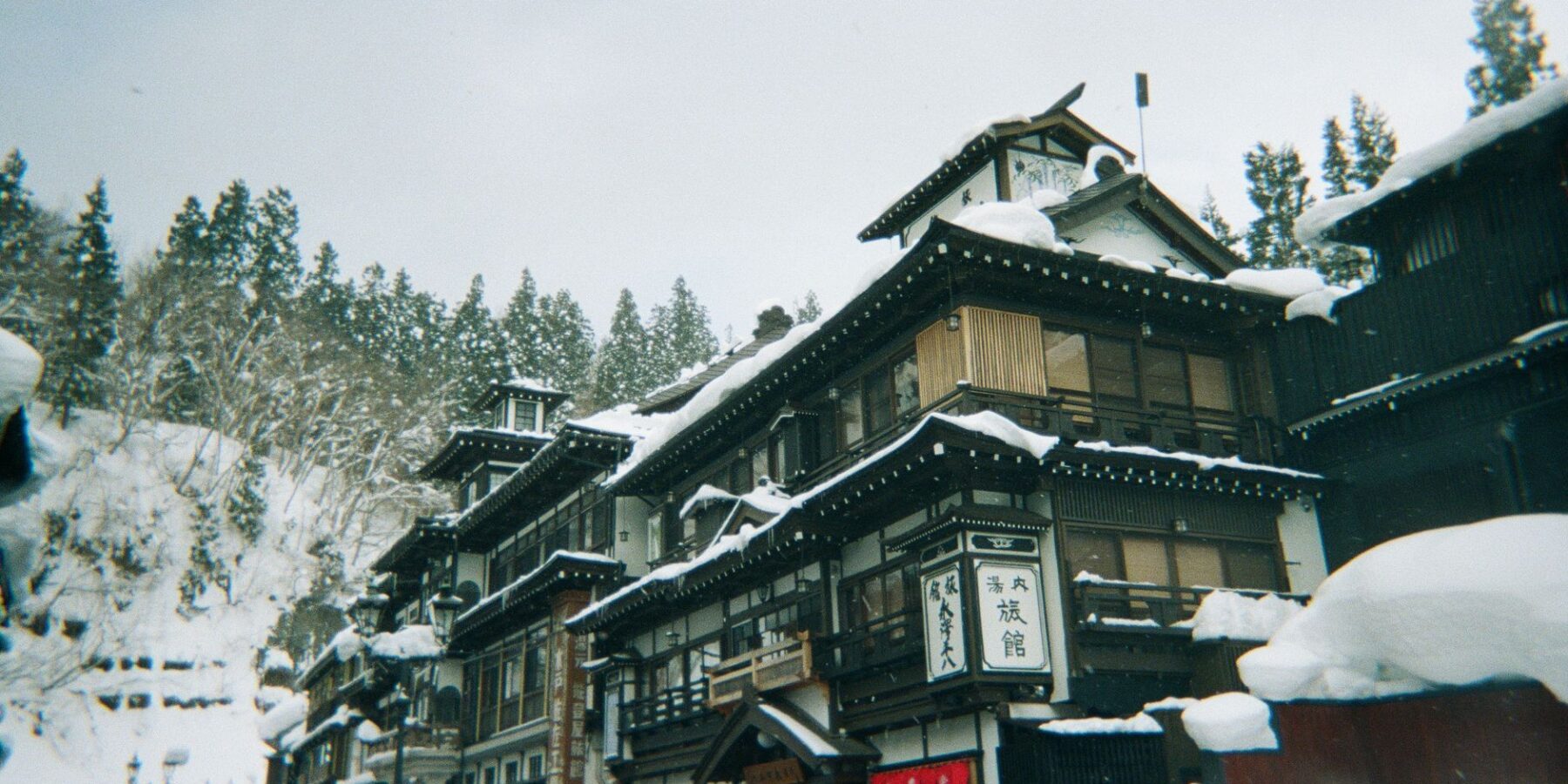
If you’ve ever imagined what it would feel like to step directly into a Japanese woodblock print, Ginzan Onsen in Yamagata Prefecture is the place that will make that dream come true. Tucked deep in the mountains of the Tohoku region, this tiny hot spring village has changed remarkably little in over a century. Gas lanterns flicker along a narrow cobblestone lane, traditional wooden inns (ryokan) rise four and five storeys above a rushing mountain stream, steam drifts lazily from volcanic vents, and — in winter — the entire scene is blanketed in deep white snow.
It is, quite honestly, one of the most visually striking destinations in all of Japan, and yet it remains relatively uncrowded compared to the famous onsen towns of Kyushu or the ever-busy streets of Hakone. For first-time visitors to Japan who want to experience genuine, deeply traditional Japanese culture away from the crowds, Ginzan Onsen is close to perfect.
This complete guide will walk you through everything you need to know: how to get there, where to stay, what to eat, how to use the public baths, what to do in every season, and how to make the very most of your visit to this extraordinary place. Whether you’re planning a winter pilgrimage for the snowy lantern scenery or a summer escape into cool mountain air, this guide has you covered.
Before we dive in, one practical tip: make sure you have mobile data sorted before you arrive. Ginzan Onsen is in a rural mountain area and reliable connectivity is important for navigation and translation. Get your Japan eSIM (Stay connected from day 1) →
The History and Story Behind Ginzan Onsen
Ginzan Onsen’s name literally translates as “Silver Mine Hot Spring,” a name that reveals its origins. The area was once home to an active silver mine during the Edo period (1603–1868), and when the mine eventually closed, the community’s economy shifted to the healing waters that had long bubbled beneath the earth here.
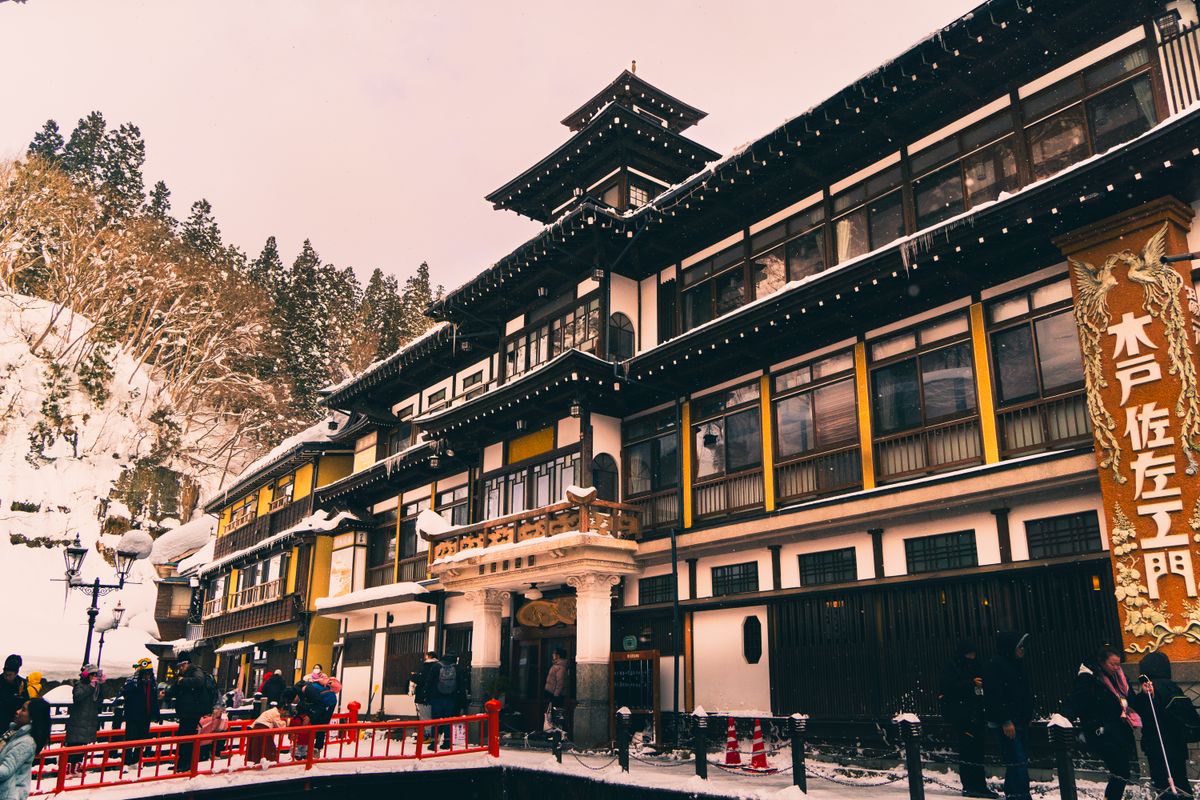
The characteristic multi-storey wooden ryokan buildings that line the stream were built primarily during the Taisho era (1912–1926), giving the village an aesthetic that feels frozen beautifully in time. The Japanese word for this style is Taisho Roman — a blend of traditional Japanese architecture with subtle Western influences from that period of cultural exchange. The buildings are built in a style unique to this valley, and their cascading wooden balconies, decorated railings, and warm lit windows create a scene that is recognisably, quintessentially Japanese.
Ginzan Onsen became famous well beyond Japan’s borders partly through the animated film Spirited Away by Studio Ghibli, whose bathhouse setting was reportedly inspired partly by Dogo Onsen in Ehime but also draws aesthetic elements from traditional onsen towns like Ginzan. Whether or not you’re a Ghibli fan, it is hard not to see the visual connection when you stand on the stone bridge looking down the lamp-lit lane at dusk.
A Village That Time Forgot — In the Best Possible Way
What makes Ginzan truly special is how little it has commercialised itself. The main street is about 500 metres long and is entirely pedestrian. There are no souvenir shops aggressively hawking mass-produced trinkets, no chain restaurants, no neon signs. Instead, there are perhaps a dozen ryokan, a small number of restaurants and cafés, some foot baths (ashiyu) open to everyone, and a few artisan shops. The pace is slow and intentional.
The local hot spring water is drawn from the earth at around 75°C (167°F) and cooled to a comfortable bathing temperature. It is a sodium-chloride type spring, which is said to be excellent for skin conditions, muscle aches, fatigue, and general recuperation — exactly what tired travellers need.
How to Get to Ginzan Onsen from Tokyo and Osaka
Ginzan Onsen is in Obanazawa City, Yamagata Prefecture, in the Tohoku region of northern Honshu. It is not the easiest place to reach, which is partly what keeps it special, but with the right planning it is entirely manageable even for first-time Japan visitors.
From Tokyo (Recommended Route)
The most straightforward journey from Tokyo takes approximately 3.5 to 4 hours. Here is the step-by-step:
- Take the Yamagata Shinkansen (bullet train) from Tokyo Station to Oishida Station. This takes approximately 3 to 3.5 hours. Reserved-seat fares rose with JR East’s March 14, 2026 fare increase, so check the current price before you book. If you have a Japan Rail Pass, this train is covered.
- From Oishida Station, take a local bus to Ginzan Onsen. The bus journey takes approximately 35–40 minutes and costs ¥780 (~$5 USD). Buses run several times a day but are not frequent — check the timetable in advance.
- Alternatively, take a taxi from Oishida Station to Ginzan Onsen. The taxi ride takes 25–30 minutes and costs approximately ¥5,000–¥6,000 (~$35–$40 USD). This is a good option if you arrive at an awkward time or are travelling as a group.
You can also take the Yamagata Shinkansen all the way to Yamagata Station and then transfer to a JR bus to Ginzan Onsen. The total journey time is slightly longer (around 4 hours) but this route has more bus departures and can be more convenient.
From Osaka or Kyoto
Travelling from Osaka or Kyoto is a longer undertaking. The easiest route is:
- Take the Shinkansen from Osaka (Shin-Osaka Station) or Kyoto to Tokyo (approximately 2.5 hours from Osaka / 2.25 hours from Kyoto)
- Transfer at Tokyo Station and take the Yamagata Shinkansen to Oishida, then bus to Ginzan Onsen as above.
Total journey time: approximately 6–7 hours. It is worth considering making Ginzan Onsen part of a Tohoku-focused trip rather than a day trip from Kansai.
By Car
For those renting a car, Ginzan Onsen can be reached via the Yamagata Expressway and National Route 13 northbound to Obanazawa, then following Route 458 into the mountains. Drive time from Yamagata City is approximately 1 hour. In winter, you will need a car with snow tyres or chains and should check road conditions before setting out. Note that private vehicles are restricted from entering the main village area during certain busy periods — there is a car park near the entrance where you leave your vehicle and walk into the village.
Where to Stay in Ginzan Onsen: Ryokan Guide and Recommendations
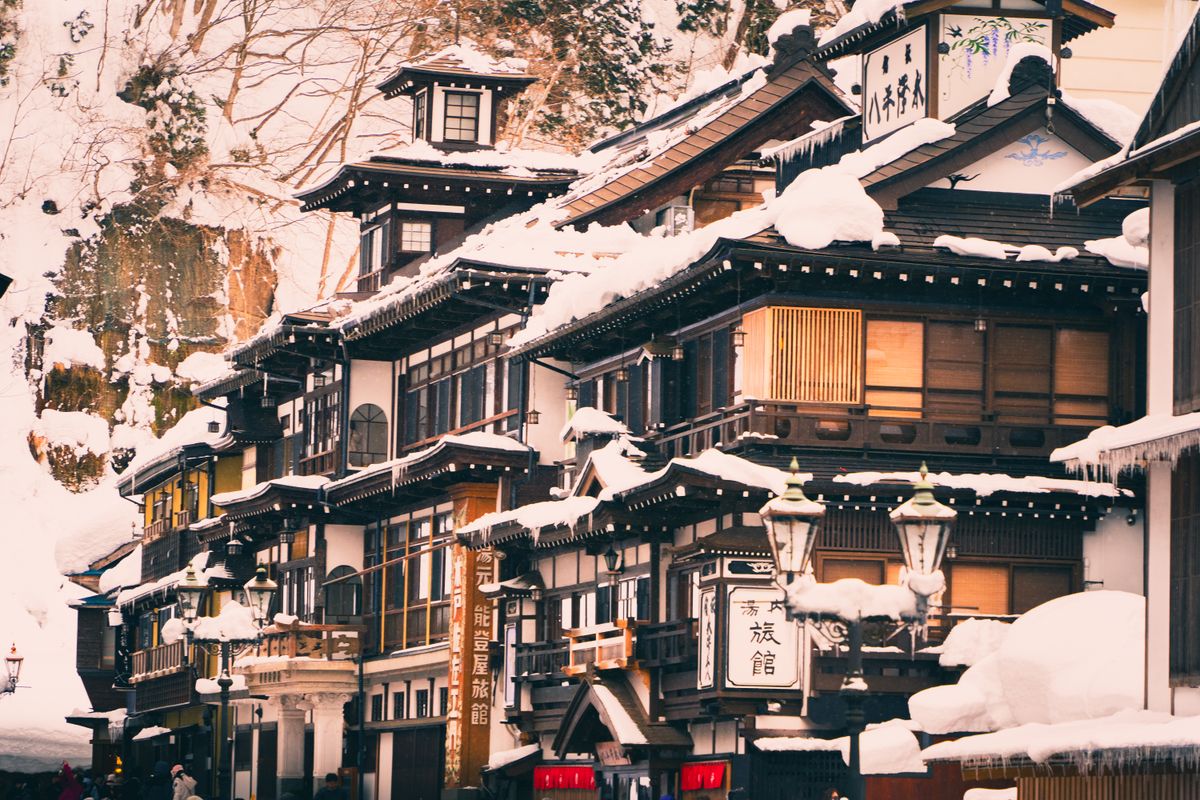
Staying overnight at Ginzan Onsen is strongly recommended — in fact, it is arguably the whole point. The village is at its most magical in the early morning and evening, when day-trippers have gone and the gas lanterns take over. The mist, the sound of the river, the glow of warm rooms behind latticed windows — these are things you can only experience if you stay.
What to Expect from a Ryokan Stay
Most accommodation in Ginzan Onsen is in the form of traditional Japanese inns (ryokan). A stay at a ryokan is a complete cultural experience and typically includes:
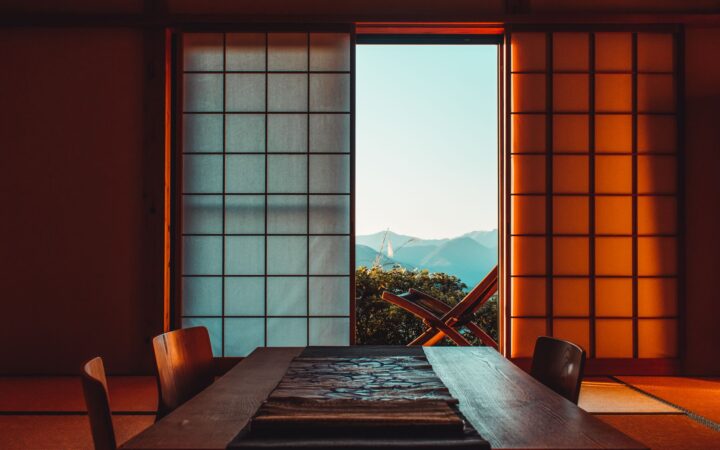
- A tatami-matted room with low furniture, a folded futon (laid out by staff in the evening), and sliding paper screens (shoji)
- Yukata (a lightweight cotton robe) provided to wear around the inn and in the public areas of the village
- A multi-course dinner (kaiseki) featuring local Yamagata ingredients, served either in your room or a dining room
- A traditional breakfast the following morning
- Access to the inn’s private baths, typically separated by gender, with both indoor and outdoor (rotenburo) pools
Ryokan Price Guide
Ryokan pricing at Ginzan Onsen is typically quoted per person, per night, including dinner and breakfast:
- Budget ryokan: ¥15,000–¥25,000 per person (~$100–$170 USD)
- Mid-range ryokan: ¥25,000–¥45,000 per person (~$170–$300 USD)
- Luxury ryokan: ¥50,000–¥80,000+ per person (~$340–$540+ USD)
The most famous and visually iconic ryokan at Ginzan Onsen is Notoya Ryokan, a stunning Taisho-era wooden building that has been photographed from every angle. It books out months in advance, particularly for the winter season. Other highly regarded options include Notoya Ryokan, Ginzan Onsen Yukimi, and Omeya Ryokan.
Book your ryokan stay well in advance, especially for winter (December–February) or sakura season (late April). We recommend using Agoda for competitive pricing on Ginzan Onsen accommodation: Book your hotel on Agoda (Best prices guaranteed) →
Day-Trip Bathing Options
If staying overnight is beyond your budget or not possible due to availability, you can still experience the onsen as a day visitor. The village has two public bathhouses that are open to visitors:
- Kagamiike Rotenburo: A small outdoor foot bath near the river, free to use. A gentle introduction to onsen bathing.
- Shirogane Yu: One of the village’s few facilities that accepts day-bather visitors for a fee (approximately ¥500–¥700 / ~$3.50–$4.70 USD). Hours vary — check in advance.
Ginzan Onsen Through the Seasons: When is the Best Time to Visit?
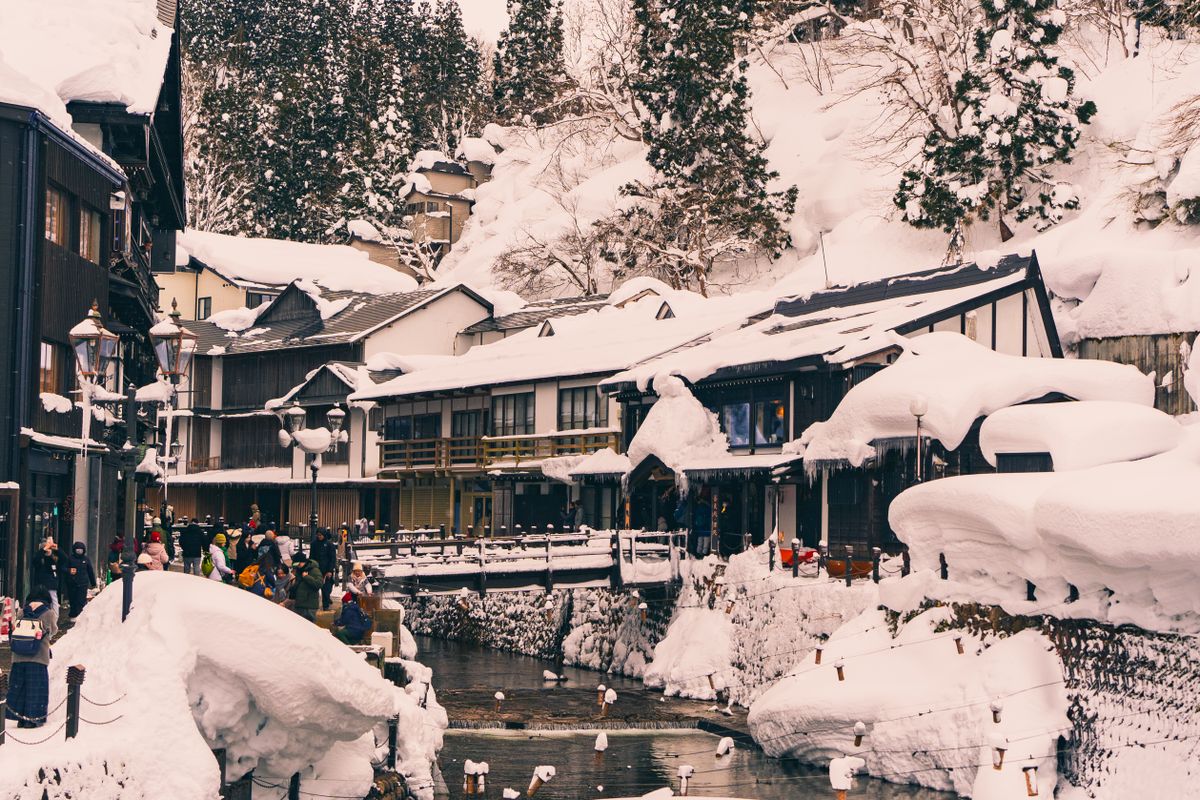
Ginzan Onsen is beautiful in every season, but each offers a very different experience. Your choice of when to visit will depend on what you want to see and how you handle weather extremes.
Winter (December to February): Snow Fantasy
This is what most people picture when they think of Ginzan Onsen: knee-deep snow, gas lanterns reflected in the white street, steam rising from baths and vents into frozen air, guests in yukata and wooden geta sandals padding gingerly along the paths. It is magical and it is cold — temperatures regularly drop to -10°C (14°F) or below at night.
The peak period is January and February, when snow is typically most reliable and deepest. Snowfall can be heavy enough to close access roads temporarily. Book accommodation and buses well in advance — winter is the high season here. Prices are at their highest (expect to pay 20–30% more than summer rates).
If you visit in winter, bring proper warm clothing: thermal underlayer, waterproof outer jacket, waterproof boots with grip, gloves, and a hat. The beauty is worth every layer.
Spring (March to May): Gradual Thaw and Fresh Greens
Spring brings the slow melt of winter snow and the emergence of fresh green buds along the valley. The village is quieter and prices drop from their winter peak. Cherry blossoms typically arrive in late April, though Ginzan sits at a higher elevation than Yamagata City, so they bloom a week or two later. A very peaceful and beautiful time to visit.
Summer (June to August): Lush Green Valley
The mountains around Ginzan are deeply, vividly green in summer. Wildflowers bloom along the river banks and hiking trails in the surrounding hills become accessible. The air is noticeably cooler than lowland Japan — a genuine relief if you’re visiting during the humid Japanese summer. Fewer tourists than winter, comfortable temperatures, and excellent availability at ryokan. Highly recommended for those who want a more relaxed visit.
Autumn (September to November): Foliage Spectacle
The Yamagata mountains put on a spectacular autumn foliage show, and Ginzan Onsen is surrounded by maple, beech, and cherry trees that turn vivid shades of red, orange, and gold. Peak koyo (autumn colour) at Ginzan typically occurs between mid-October and early November. This rivals winter as the most dramatic and photographically rewarding season.
How to Use an Onsen: Etiquette Guide for First-Timers
For many international visitors, using a traditional Japanese onsen for the first time is a slightly nerve-wracking prospect. It shouldn’t be — once you know the rules, it is one of the most relaxing and culturally rich experiences Japan has to offer. Here is everything you need to know:
Before You Enter the Bath
- Remove all clothing. Japanese onsen are used completely naked. This is non-negotiable at traditional establishments. Swimwear is not permitted in most onsen.
- Shower thoroughly first. Each bathing area has a row of shower stations with stool, showerhead, soap, shampoo, and conditioner. Wash your entire body before entering the communal bath. This is the most important rule of onsen etiquette.
- Tie up long hair so it does not dip into the water.
- Do not bring your towel into the bath. Leave your large towel in the changing room. You may bring a small modesty towel to cover yourself while walking, but place it at the side of the bath (not in it) while bathing.
In the Bath
- Enter slowly and gently — the water is hot (typically 40–42°C / 104–108°F).
- Move quietly and avoid splashing. Onsen are places of relaxation, not play.
- Do not swim or engage in strenuous activity in the bath.
- Avoid dunking your head or washing in the communal bath water.
- Stay hydrated — hot water bathing can lead to dehydration. Drink water before and after bathing.
- Most onsen advise limiting your soak to 15–20 minutes at a time.
Tattoo Policy
Many traditional onsen in Japan have historically prohibited tattoos. This policy is changing gradually, and some ryokan now permit guests with small or discreet tattoos to use the baths, or offer private bath reservations. If you have tattoos, contact your chosen ryokan directly before booking to confirm their current policy. Many ryokan at Ginzan Onsen offer private family baths (kashikiriburo) that can be reserved exclusively for your group — an ideal solution.
What to Eat and Drink in Ginzan Onsen
Food at Ginzan Onsen is dominated by the ryokan dinner experience, but there are also some excellent daytime eating options in and around the village.
Ryokan Kaiseki Dinner
The multi-course kaiseki dinner at your ryokan will likely be one of the most memorable meals of your Japan trip. Expect:
- Yamagata beef — the prefecture produces some of Japan’s finest wagyu, and it frequently features in ryokan dinners either as shabu-shabu (hotpot) or as teppanyaki
- Mountain vegetables (sansai) — fiddlehead ferns, bamboo shoots, wild mushrooms and other foraged ingredients from the surrounding mountains
- Fresh river fish — Yamagata’s rivers produce excellent trout, sweetfish (ayu), and other freshwater species
- Imo-ni — a hearty taro potato hot pot that is a defining autumn dish of Yamagata, made with local taro, beef, konjac, and vegetables in a soy-based broth
- Yamagata rice — the prefecture is one of Japan’s top rice-producing regions and the quality is exceptional
Daytime Food Options
In the village and just outside it, you will find a handful of restaurants and cafés serving lunch and light snacks:
- Soba noodles — Yamagata is famous for its hand-cut buckwheat soba, and several small restaurants near the village entrance serve excellent bowls. A basic soba lunch costs ¥900–¥1,400 (~$6–$9.50 USD).
- Beef croquettes — a popular street snack using Yamagata beef. Look for these at small shops near the bus stop area.
- Soft cream ice cream — surprisingly popular even in winter, and made with excellent local dairy products.
- Local sake — Yamagata is one of Japan’s premier sake-producing prefectures. Many ryokan and small shops sell locally produced sake; look for labels from breweries in Tendo, Sagae, or Obanazawa.
Things to Do In and Around Ginzan Onsen
While soaking in the baths and wandering the main street form the heart of any Ginzan Onsen visit, there are several other worthwhile activities in the area.
Walk the Main Street at Dusk
The single most important activity at Ginzan Onsen is simply walking the main street as darkness falls and the gas lanterns begin to glow. This costs nothing and is one of the most atmospheric walks you will take anywhere in Japan. Allow at least an hour and bring a good camera. In winter, be careful on the icy cobblestones — the ryokan will provide guests with wooden sandals (geta), but they can be slippery.
Cross the Stone Bridges
Several stone bridges span the Ginzan River through the village, each offering a different angle on the iconic ryokan row. The bridge near the Fujiya Ryokan is particularly popular for photography. Early morning, before the day-trippers arrive, is the best time for unobstructed views.
Visit Hakugin Falls (Shiraito Falls)
A short walk from the top of the main street brings you to Shirogane Falls, a 22-metre waterfall that partially freezes into dramatic ice formations in winter. The path is well-maintained in summer and autumn but can be icy and challenging in winter — ask your ryokan whether the trail is safe on the day of your visit.
Hiking in the Surrounding Mountains
The mountains around Ginzan Onsen are laced with hiking trails accessible from late spring through autumn. The ridge above the village offers views over the entire valley and, on clear days, distant peaks. Trails are marked but not always in English — ask your ryokan for a map and recommend routes.
Day Trip to Yamadera Temple
Approximately 1 hour from Ginzan Onsen by bus and train, Yamadera (formally Risshaku-ji Temple) is one of the most dramatic temple complexes in northern Japan. Built into the side of a cliff in 860 AD, it is reached by climbing 1,015 stone steps up the mountainside. The views from the top are extraordinary, and the complex includes numerous halls and sub-temples along the way. Plan for at least 3 hours here. Admission is ¥500 for adults (cash only at the Sanmon gate).
Explore Obanazawa City
The nearest town of any size, Obanazawa City, is about 15 km from Ginzan Onsen. It is modest but has good local restaurants and a small history museum; the Yamagata Shinkansen stops at nearby Oishida Station. Worth a quick explore if you arrive early before checking in.
Practical Tips for Visiting Ginzan Onsen
- Book ryokan accommodation at least 2–3 months in advance for winter and autumn peak seasons. Same-week bookings are almost impossible for the most popular inns.
- Check bus timetables carefully. The bus between Oishida Station and Ginzan Onsen runs only a handful of times per day. Missing the last bus means paying for a taxi.
- Bring cash. While some ryokan now accept cards, smaller establishments and food stalls operate cash-only. There is no ATM in the village — the nearest is at a convenience store in Obanazawa.
- Pack light layers for indoor wear. You will likely spend much of your time in yukata provided by the ryokan. Bring warm socks for walking between buildings in winter.
- Respect quiet hours. Most ryokan ask guests to be quiet after 10 PM and some have curfews. The village goes to sleep early.
- Photography etiquette: Do not photograph other guests in the baths or changing areas. Outside, photography of the village is welcomed and encouraged.
- Download offline maps before you go — Google Maps works well, but internet connectivity in the valley can be patchy. Get a reliable data connection with Get your Japan eSIM (Stay connected from day 1) →
- Bring a good umbrella or waterproof jacket. Mountain weather in Yamagata can change quickly.
- Alcohol and onsen: Drink responsibly if using the baths — the combination of alcohol and hot water can cause dizziness and in rare cases fainting.
- Book tours through reputable operators if you’d prefer guided access to the region:
Combining Ginzan Onsen with a Tohoku Road Trip
Ginzan Onsen is ideally placed to be combined with other outstanding Tohoku destinations. Here is a suggested 5-day Tohoku itinerary that includes Ginzan:
5-Day Tohoku Itinerary
Day 1 — Sendai: Fly or take the Shinkansen to Sendai. Visit Zuihoden Mausoleum, Sendai Castle ruins (Aoba-jo), and try the city’s famous grilled beef tongue (gyutan) for dinner.
Day 2 — Matsushima: Take the short train journey to Matsushima Bay, one of Japan’s top three scenic views, and explore its cluster of pine-covered islands and historic Zuigan-ji Temple.
Day 3 — Yamadera & Ginzan: Take the train to Yamadera in the morning, climb the 1,015 steps, and then make your way onward to Ginzan Onsen for an evening arrival and overnight stay.
Day 4 — Ginzan Onsen: Spend the morning hiking, visiting Shiraito Falls, and exploring the village before a luxurious afternoon of bathing and a kaiseki dinner at your ryokan.
Day 5 — Return via Yamagata: Take the bus back to Oishida or Yamagata and connect to the Shinkansen for Tokyo or onward travel.
For more inspiration on exploring Japan’s incredible destinations, visit our full destinations guide and browse our collection of in-depth regional travel articles.
If this is your first time visiting Japan, our comprehensive Japan travel tips for first-timers will help you prepare for everything from transport to tipping customs.
Budget Planning for Your Ginzan Onsen Visit
Here is a realistic budget breakdown for different types of visitor:
Budget Traveller (Day Trip Only)
- Shinkansen Tokyo–Oishida (reserved): ¥11,000–¥12,500 each way (~$75–$85 USD)
- Bus Oishida–Ginzan and back: ¥1,560 (~$10 USD)
- Day-bathing entry (Shirogane Yu): ¥500–¥700 (~$3.50–$4.70 USD)
- Lunch and snacks: ¥1,500–¥2,000 (~$10–$14 USD)
- Day trip total (excluding Shinkansen): approximately ¥3,500–¥5,000 (~$24–$34 USD)
Comfortable Overnight Stay
- Shinkansen Tokyo–Oishida (one way): ¥11,000–¥12,500 (~$75–$85 USD)
- Bus both ways: ¥1,560 (~$10 USD)
- Mid-range ryokan (per person, with meals): ¥25,000–¥40,000 (~$170–$270 USD)
- Snacks and sake: ¥1,000–¥2,000 (~$7–$14 USD)
- Overnight total (excluding Shinkansen): approximately ¥27,000–¥44,000 (~$183–$298 USD)
Japan Rail Pass Consideration
If you are visiting multiple cities in Japan over 7 days or more, a Japan Rail Pass may make the Yamagata Shinkansen portion free or heavily discounted. Our detailed analysis of whether the Japan Rail Pass is worth it will help you decide.
Frequently Asked Questions About Ginzan Onsen
Do I need to speak Japanese to visit Ginzan Onsen?
You do not need to speak Japanese, but it certainly helps. Most ryokan at Ginzan Onsen have at least one staff member who can communicate in basic English, and many have English-language menus and information sheets available. However, the local bus schedules, some signage, and smaller restaurants may not be in English. Downloading a translation app such as Google Translate with Japanese offline data is highly recommended. It is also worth having your accommodation’s address written in Japanese to show taxi drivers or bus staff.
Is Ginzan Onsen suitable for families with children?
Yes, Ginzan Onsen is very suitable for families. The village is compact and safe, children are warmly welcomed at most ryokan, and the experience of sleeping on a futon, wearing yukata, and eating a Japanese breakfast is genuinely exciting for young travellers. Most ryokan will arrange family rooms or adjoining rooms if requested. Children using the communal baths should be supervised at all times, and the water temperature should be checked carefully before allowing young children to enter.
What should I wear at Ginzan Onsen?
Your ryokan will provide yukata (light cotton robes) and sometimes warmer haori (short kimonos) for cooler weather. These are appropriate for wearing in the inn, walking the main village street, and visiting the communal baths. For outdoor activities such as hiking or exploring in winter, you will need your own warm, weatherproof clothing. Bring comfortable walking shoes or boots for the surrounding area.
Can I visit Ginzan Onsen without staying overnight?
Yes, it is possible to visit Ginzan Onsen as a day trip from Yamagata or from Tokyo, but we strongly encourage an overnight stay if at all possible. The village is most magical in the evening and early morning, and the ryokan dinner experience is central to what makes Ginzan Onsen special. A day trip will give you a taste of the place but not the full experience. If you can only manage a day trip, arrive by late afternoon so you can see the lanterns come on as evening falls.
When is the best time to photograph Ginzan Onsen?
The best photography conditions at Ginzan Onsen occur in the blue hour just after sunset in winter, when the snow is deep, the gas lanterns are lit, and steam is rising from the river and buildings. The entire scene takes on a dreamlike quality that photographs beautifully. A tripod is extremely useful in these low-light conditions. Early morning, particularly in autumn when mist hangs in the valley, is also outstanding. Summer dawn, when the village is absolutely quiet and the light is soft, provides a different but equally rewarding photography opportunity.
Is Ginzan Onsen accessible for visitors with mobility challenges?
The main street of Ginzan Onsen is cobblestone and not easily accessible for wheelchairs. The surrounding mountain trails are also unsuitable for those with significant mobility limitations. However, some ryokan do have ground-floor rooms and accessible bathroom facilities — contact individual ryokan directly to discuss your needs before booking. The foot baths (ashiyu) near the village entrance are accessible to most visitors.
Are there convenience stores or ATMs in Ginzan Onsen?
There are no convenience stores or ATMs within Ginzan Onsen village. The nearest convenience store and ATM are in Obanazawa City, approximately 15 km away. Ensure you have sufficient cash before arriving in the village. While some ryokan accept credit cards (particularly for room payment), you will want cash for snacks, the public bath entrance fees, and smaller shops.
Final Thoughts: Why You Should Visit Ginzan Onsen
Ginzan Onsen is one of those rare places in Japan — and indeed in the world — where the setting, the culture, the food, and the atmosphere combine into something that feels genuinely irreplaceable. It has no grand attractions, no theme parks, no Michelin-starred restaurants. What it has is something far more valuable: an authentic, deeply Japanese experience of rest, nourishment, beauty, and tradition.
Whether you come in winter to see the snow and lanterns, in autumn to walk among blazing maple leaves, in summer to escape the city heat in cool mountain air, or in spring to watch the quiet valley wake up from winter — you will not regret the journey. Plan carefully, book early, and give yourself at least one night. Ginzan Onsen will reward you with memories that last a lifetime.
Ready to start planning your Japan trip? Browse our destinations section for in-depth guides to every region of Japan, or read our essential Japan first-timer tips before you book your flights.
Related Tohoku Onsen & Travel Guides
Explore more of Tohoku and its onsen with these related guides: Zao’s snow monsters and mountain onsen, Yamadera’s 1,000 stone steps, Nyuto Onsen’s remote mountain baths, Kakunodate’s samurai district, and Kusatsu Onsen in Gunma.
Going to Japan? Speak Japanese with confidence.
Hirameki Japanese — camera translate for menus and signs, a two-way conversation mode, and furigana + romaji on every phrase. Free to download with kana charts, conversation mode and starter words; a one-time purchase unlocks everything.

Plan your Japan trip
Two things every first-timer should book
Some links are affiliate links. If you book through them we may earn a small commission at no extra cost to you.