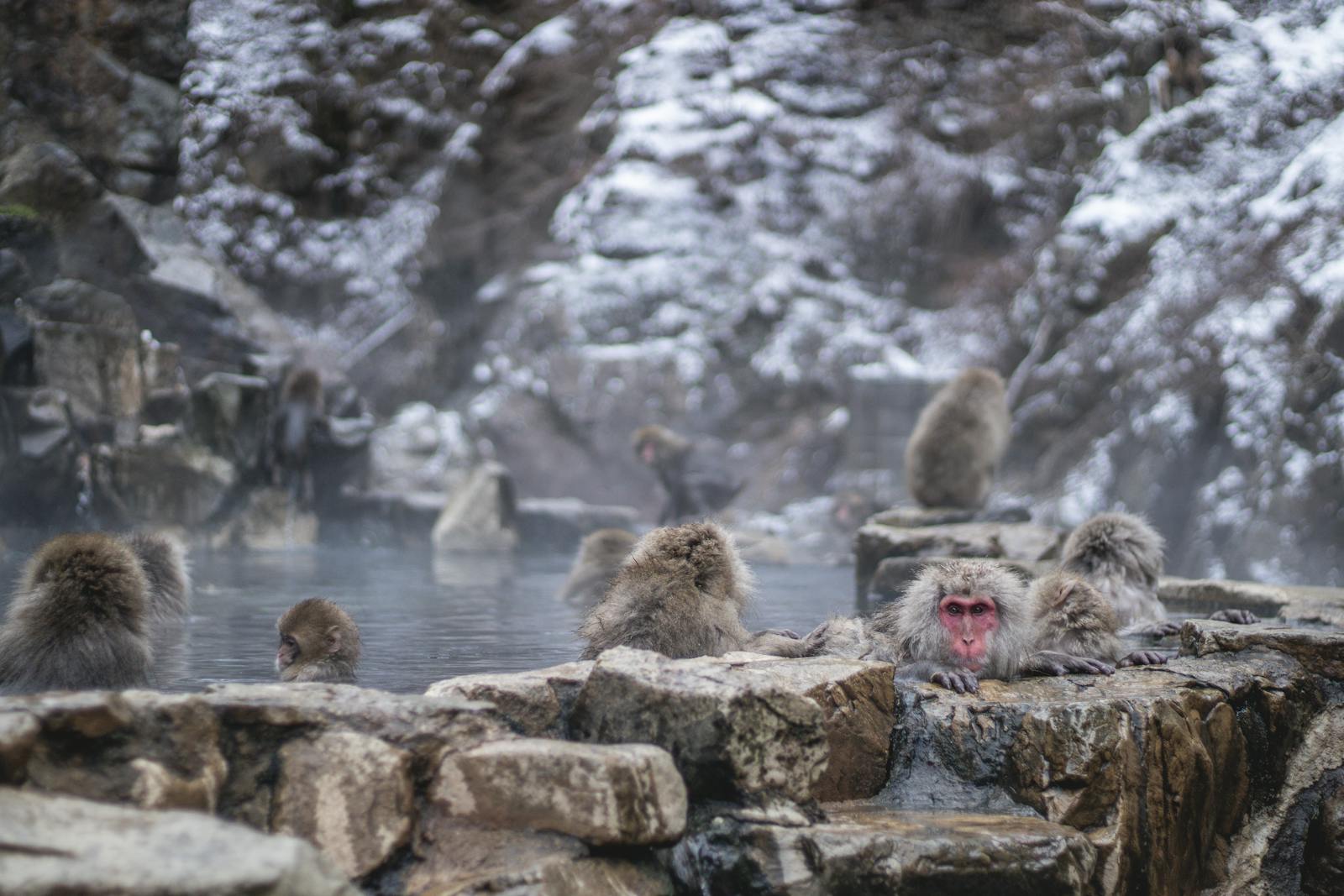
For many first-time visitors, the image of a wild monkey sitting calmly in a steaming hot spring while snow falls around it is one of the most iconic pictures of Japan. That scene is real, and it happens every winter at the Jigokudani Monkey Park (地獄谷野猿公苑) in the mountains of Nagano Prefecture. This is the only place in the world where you can reliably watch wild Japanese macaques — the famous “snow monkeys” — bathe in a natural onsen just a few steps in front of you.
But the snow monkeys are only half the story. The park sits at the top of a forested valley above Yudanaka and Shibu Onsen, two of the oldest and most atmospheric hot-spring towns in Japan, where you can soak in the same kind of mineral water the monkeys enjoy, sleep in a traditional wooden ryokan, and wander cobblestone streets in a cotton yukata. Add easy access on the Hokuriku Shinkansen and you have one of the best one or two-night side trips you can make from Tokyo.
This complete first-timer’s guide covers everything you need: how to get there step by step, what to expect at the park, the best season and time of day to visit, where to stay, what to eat, a sample itinerary, costs in yen and US dollars, and a detailed FAQ. By the end you’ll be able to plan the whole trip with confidence.
Why the Snow Monkeys of Jigokudani Are Worth the Trip
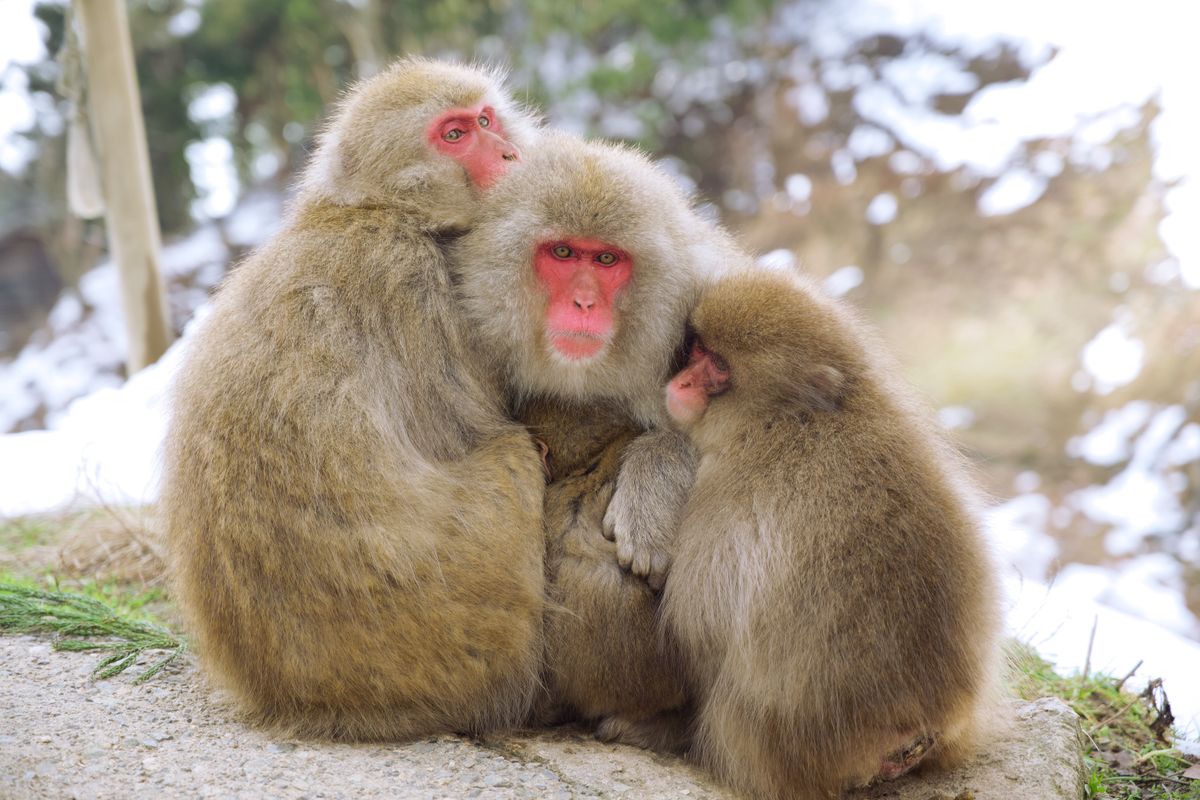
The monkeys here are Japanese macaques (Macaca fuscata), the most northern-living non-human primate on Earth. They survive winters where temperatures regularly drop below −10°C (14°F) and snow can pile up more than a metre deep. In the 1960s, staff at the local ryokan noticed monkeys dipping into the warm pools that bubble up in the valley. To keep them away from the human baths, the park built a pool just for the monkeys — and a global icon was born.
What makes Jigokudani special is how close and how natural the encounter is. There are no cages, no glass and no feeding shows. The monkeys are genuinely wild; they come and go as they please, groom each other on the rocks, chase their young across the snow, and slip into the steaming water to warm up. You stand on the same ground, often within a metre or two, watching ordinary monkey life unfold. For wildlife lovers and photographers it is unforgettable, and for families it is a guaranteed highlight that children remember for years.
The name “Jigokudani” means “Hell Valley,” a reference to the steam and boiling water that hiss out of the cliffs and ground all around. Combined with the surrounding forest of the Joshinetsu Kogen National Park, it is a genuinely beautiful spot in any season, though winter — roughly December to March — is when the postcard scene of monkeys in the snow comes to life.
Where Is Jigokudani and How to Get There
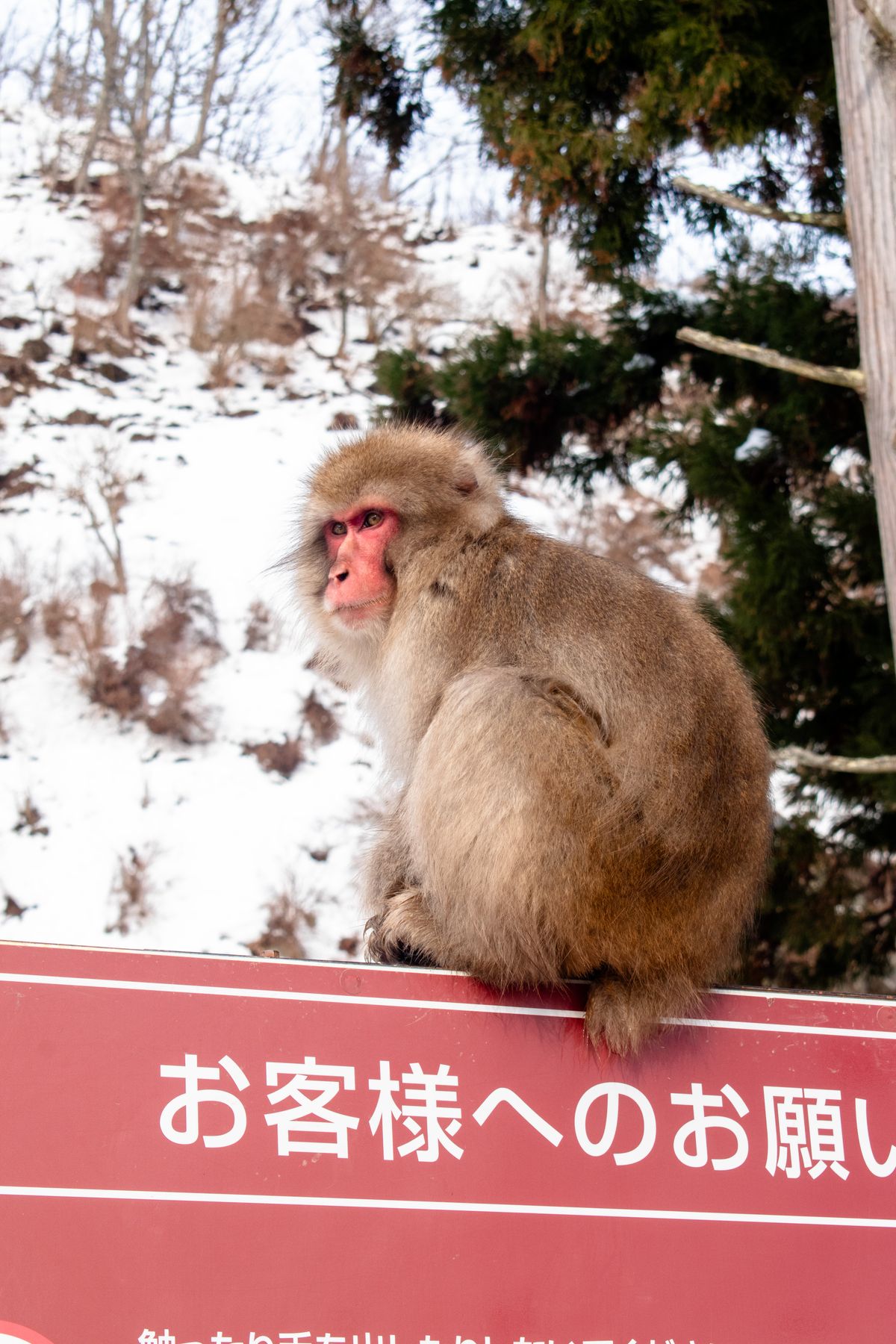
Jigokudani Monkey Park is in the town of Yamanouchi, Nagano Prefecture, in central Japan. Despite feeling remote, it is surprisingly easy to reach from Tokyo — you can even do it as a long day trip, though staying overnight is far more rewarding.
Step 1: Tokyo to Nagano City by Shinkansen
From Tokyo Station (or Ueno), take the Hokuriku Shinkansen to Nagano Station. The fastest “Kagayaki” and “Hakutaka” trains take about 80–100 minutes. A one-way reserved seat costs roughly ¥8,340 (about US$54). If you hold a Japan Rail Pass, this leg is fully covered, which makes the pass worth considering if you are travelling more widely.
Step 2: Nagano to Yudanaka by Train or Bus
From Nagano Station, you have two good options. The Nagaden (Nagano Electric Railway) Limited Express runs from Nagano to Yudanaka Station in about 45 minutes for around ¥1,290 (US$8) including the express surcharge. Alternatively, an express bus runs directly from Nagano Station to the “Snow Monkey Park” bus stop in roughly 40–45 minutes for about ¥1,500 (US$10).
Step 3: The Final Walk to the Park
From Yudanaka/Shibu Onsen or the Snow Monkey Park bus stop, a local bus brings you to the trailhead at Kanbayashi Onsen. From there it is a 1.6 km (about 30–40 minute) walk through forest to the park entrance. The path is mostly flat but can be icy and snow-packed in winter, so proper footwear matters (more on that below). There is no way to drive directly to the monkeys — the walk is part of the experience.
Booking tip: If you’d rather not piece together trains and buses, many travellers book a small-group day tour from Nagano or even Tokyo that handles all transport and timing. You can compare guided day tours and experiences through .
What to Expect at Jigokudani Monkey Park
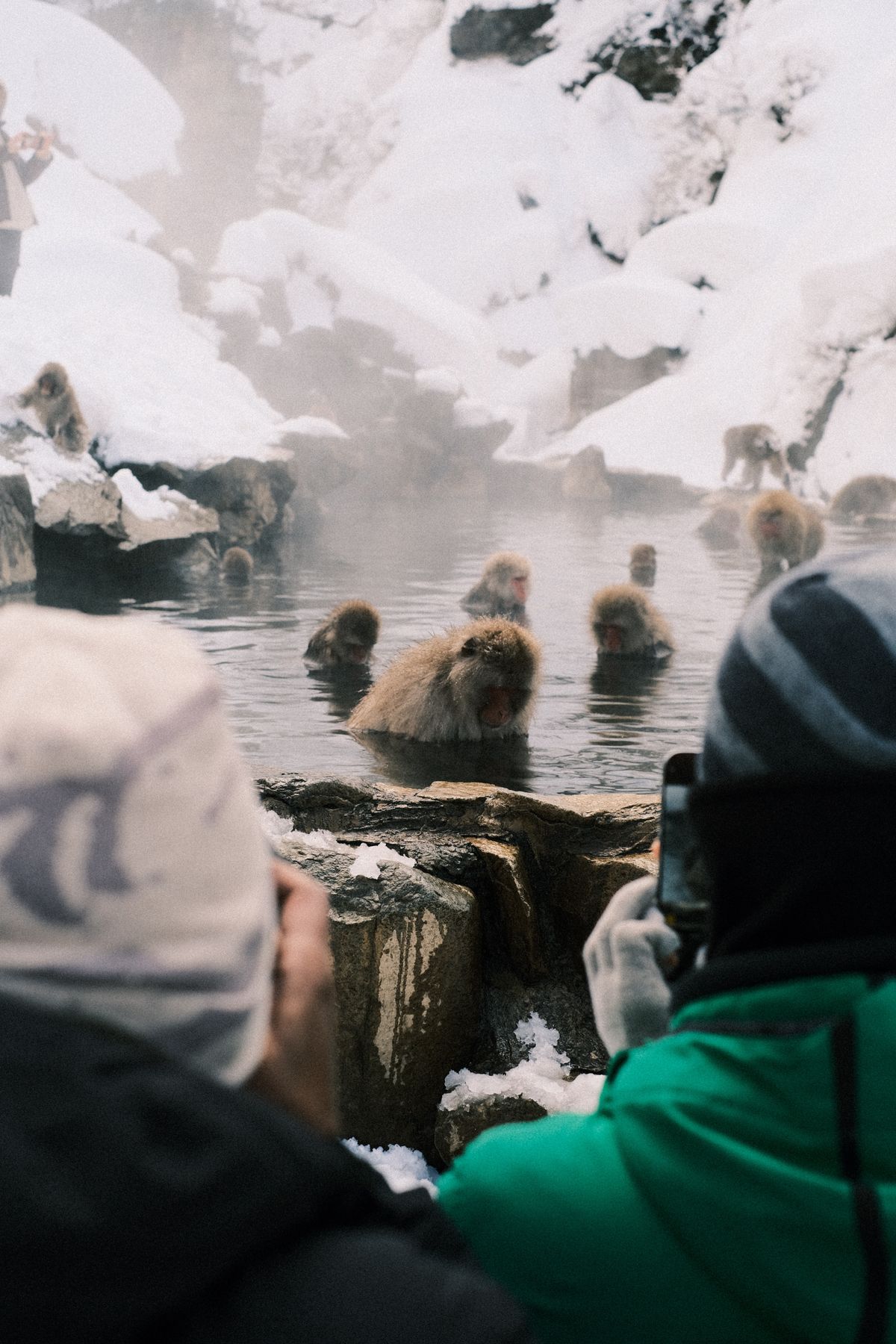
The park is small and focused. After the forest walk you reach a ticket hut, pay the entrance fee, cross a small bridge, and arrive at the main hot-spring pool where the monkeys gather. There is no fixed route or barrier — you simply share the open space with the troop, which usually numbers 160 to 270 monkeys.
Opening hours change with the season: roughly 8:30 or 9:00 to 16:00 or 17:00 (the park closes earlier in winter when the sun sets sooner). Admission is ¥800 for adults and ¥400 for children (about US$5.20 and US$2.60). You can check live conditions and even a real-time monkey-cam on the park’s official website before you set out, which is genuinely useful for deciding when to go.
Rules to respect: Do not touch, feed, or stare directly into a monkey’s eyes (they read this as a threat). Keep food and drinks hidden in your bag — a visible snack can be snatched. Give mothers and babies space. The monkeys are habituated to people but they are still wild animals, and following the simple etiquette keeps both you and them safe and relaxed.
Photography Notes
This is a dream location for photographers. Bring a lens cloth, because steam from the pool fogs lenses instantly. A zoom in the 70–200 mm range is ideal, but even a smartphone produces lovely shots because the monkeys come so close. Mornings often have softer light and fewer crowds. If it is snowing, protect your gear — and embrace it, because falling snow is exactly what makes these photos magical.
Best Time and Season to See the Snow Monkeys
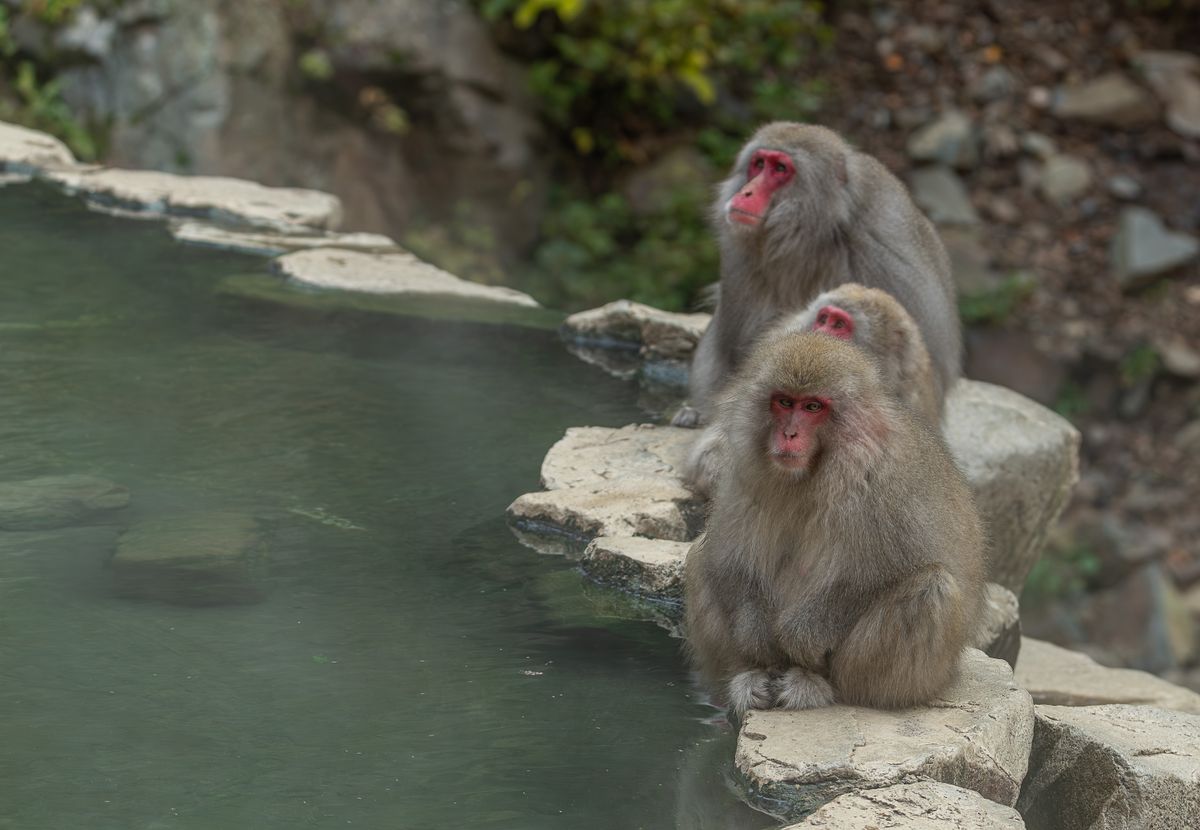
The park is open all year, and the monkeys live there in every season, so you will see them whenever you go. However, the experience changes dramatically through the year.
Winter (December–March) is the classic time. Cold temperatures push the monkeys into the hot pool far more often, and snow blankets the valley for the postcard scene everyone imagines. This is peak season; aim for a weekday morning to avoid the largest crowds. January and February offer the deepest snow.
Spring (April–May) brings baby monkeys — tiny, clinging infants that are adorable to watch — along with milder hiking weather and cherry blossoms lower in the valleys. Summer (June–August) is lush and green; the monkeys soak less because it is warm, but they are very active and you’ll see lots of grooming and play. Autumn (October–November) wraps the forest in spectacular red and gold foliage, a beautiful and far less crowded alternative to winter.
In short: come in winter for the iconic image, but don’t dismiss the other seasons — each has its own charm, and the shoulder months are quieter and cheaper.
Yudanaka and Shibu Onsen: The Perfect Base
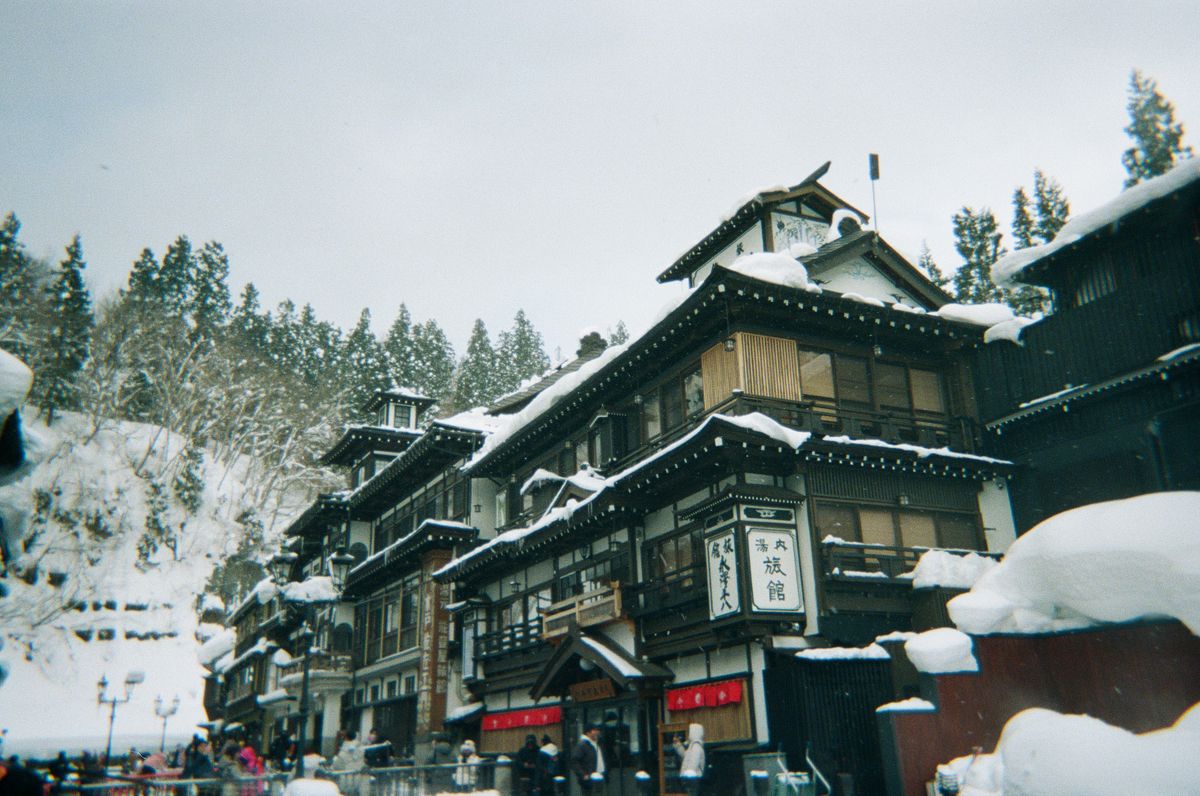
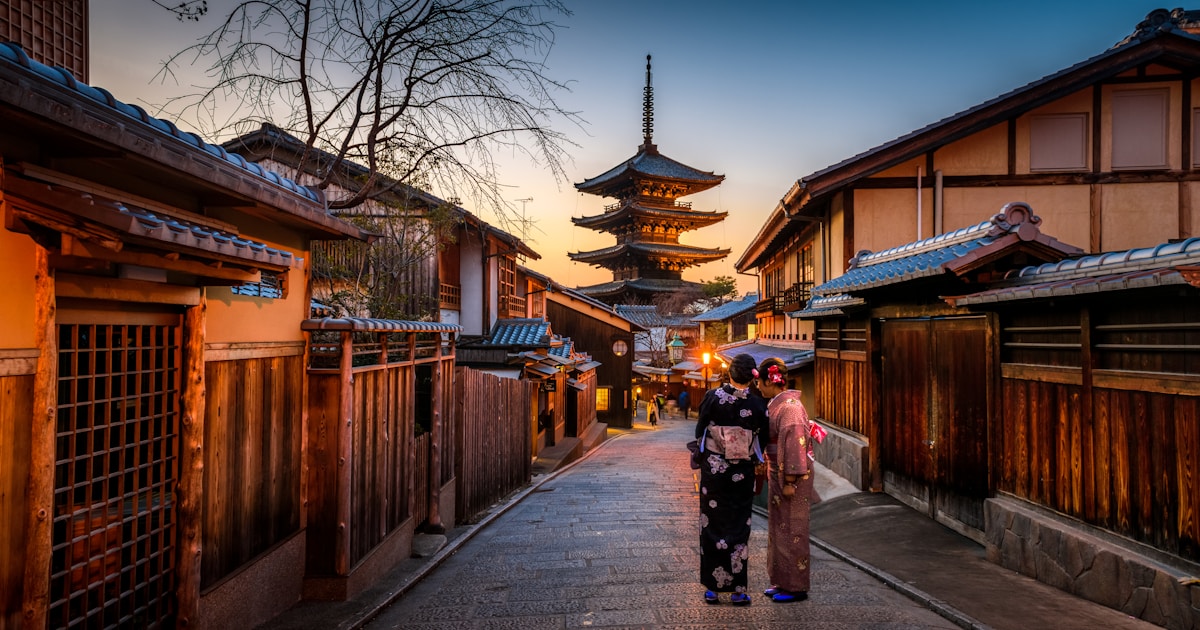
Staying overnight near the park transforms the trip. Just below the monkeys lie Yudanaka Onsen and the older, more atmospheric Shibu Onsen, hot-spring resorts with histories going back more than a thousand years. Shibu in particular is a joy to wander: a narrow cobblestone lane lined with wooden ryokan, steam drifting from drains, and the clack of wooden geta sandals on the stones.
Shibu Onsen is famous for its “nine public baths” (kuyu meguri). Guests staying in the town receive a key that opens all nine small bathhouses, and a traditional pilgrimage of visiting each one is said to bring good fortune and health. Wandering the lane in a yukata, hopping from bath to bath, is one of the most authentically Japanese evenings you can have — and it costs almost nothing once you have a room.
Because the same geothermal water that warms the monkeys warms these towns, you are quite literally sharing the bath with the wildlife you came to see. It is a wonderful, slightly surreal connection that makes the overnight stay so memorable.
Where to Stay Near the Snow Monkey Park
You have three broad choices for where to base yourself, depending on your budget and travel style.
1. Traditional ryokan in Shibu or Yudanaka Onsen. This is the most atmospheric option and what we recommend for first-timers. You sleep on futon over tatami mats, soak in private and public hot springs, and are usually served a multi-course kaiseki dinner and Japanese breakfast. Expect to pay roughly ¥15,000–¥35,000 (US$97–US$226) per person per night including two meals, with luxury ryokan running higher. For these higher-end traditional inns, the specialist site Ikyu.com (premium ryokan & hotels) is excellent for comparing rooms and meal plans.
2. Mid-range and budget hotels in Yudanaka. Around Yudanaka Station you’ll find simpler hotels, guesthouses and minshuku from around ¥6,000–¥12,000 (US$39–US$78) per night, some still with their own hot-spring baths. These are great if you want to save money but still enjoy an onsen soak.
3. Stay in Nagano City. If you prefer Western-style hotel comforts and easy onward connections, Nagano City has plenty of business and tourist hotels from about ¥8,000 (US$52), and you simply make the monkey park a day trip. You’ll find the widest selection and easy price comparison on Agoda, which has strong coverage of both Nagano City hotels and the onsen towns.
Whatever you choose, book early for winter weekends and the New Year holiday, when ryokan in Shibu and Yudanaka fill months in advance.
What and Where to Eat
Nagano is one of Japan’s great food regions, and your trip is a chance to taste it. The signature dish is shinshu soba — buckwheat noodles, served cold with dipping sauce or hot in broth — widely considered among the best in the country thanks to the region’s cool climate and clean mountain water. A bowl typically costs ¥800–¥1,500 (US$5–US$10).
Other local specialities to seek out include oyaki (grilled or steamed dumplings stuffed with vegetables or sweet bean paste, a perfect cheap snack at around ¥150–¥250 each), Shinshu miso, freshwater iwana (char) grilled on a skewer, and crisp local apples and the apple-based sweets the prefecture is known for. In the onsen towns, look out for eggs slow-cooked in the hot-spring water (onsen tamago), sold at little stalls.
If you stay in a ryokan with meals included, your dinner and breakfast are taken care of in grand style. For lunch on a day trip, eat near Yudanaka Station or in Nagano City — there is little food up at the park itself, so carry water and a small snack hidden in your bag.
Sample Itinerary: Two Days, One Night
Here is a relaxed, realistic plan that combines the monkeys with the onsen experience.
Day 1
• Morning: Depart Tokyo on the Hokuriku Shinkansen; arrive Nagano in about 90 minutes.
• Late morning: Transfer to Yudanaka by Nagaden train or express bus (about 45 minutes). Drop your bags at your ryokan.
• Afternoon: Bus to Kanbayashi, walk 30–40 minutes through the forest, and spend two hours at Jigokudani Monkey Park.
• Evening: Return to Shibu Onsen. Change into your yukata and do the nine-bath pilgrimage, then enjoy a kaiseki dinner at your inn.
Day 2
• Morning: A second optional early visit to the park for soft light and quiet (or a relaxed onsen morning).
• Midday: Soba lunch in Yudanaka or back in Nagano City.
• Afternoon: Visit Zenko-ji Temple in Nagano City — one of Japan’s most important and atmospheric temples — before catching your shinkansen onward to Tokyo, Kanazawa or beyond.
If you only have one day, skip the overnight and do the park as a Tokyo day trip; it is tight but doable, leaving the city early and returning late.
Practical Tips for Visiting the Snow Monkeys
- Wear proper winter footwear. The forest trail is icy and snow-packed from December to March. Waterproof boots with good grip, or slip-on crampons, make the walk safe and comfortable. Avoid smooth-soled shoes.
- Dress in warm layers. You’ll be standing still in the cold while watching and photographing. Gloves, a hat, and a windproof jacket are essential in winter.
- Go early on a weekday. Tour groups arrive mid-morning. Being at the gate when it opens means quieter viewing and better light.
- Check the live monkey-cam. The park’s official site shows current conditions, so you can confirm the monkeys are around before making the trek.
- Keep food and drinks out of sight. Visible snacks may be grabbed; tuck everything into a zipped bag.
- Carry cash. The park entrance and many small inns and shops in the onsen towns prefer cash. Have yen on hand.
- Stay connected. Mountain mobile coverage can be patchy, and you’ll want maps, train times and the monkey-cam on hand. A prepaid Japan & Global eSIM lets you set up data before you arrive so you’re online the moment you land — far easier than queuing for a SIM at the airport.
- Consider a private airport or station transfer. If you are arriving with luggage or in a group, a shared or private transfer such as NearMe airport shuttle can save the hassle of changing trains with heavy bags.
- Allow buffer time. Winter trains and buses occasionally run late in heavy snow. Don’t schedule the trip on the same day as a flight out of Japan.
Understanding the Japanese Macaque
Knowing a little about the animals makes watching them far richer. Japanese macaques are highly intelligent, social primates that live in troops with a clear hierarchy led by dominant males and matriarchal family lines. At Jigokudani the troop is closely studied, and researchers have recorded fascinating behaviours here for decades.
One famous discovery is that the snow monkeys learned to bathe by imitation. The habit started with a few individuals and spread socially through the troop — an example of cultural learning in animals that scientists still cite today. You may also notice monkeys washing food, grooming one another for hours (a key social bond, not just hygiene), and youngsters play-fighting and sliding in the snow. Mothers carry infants on their bellies and later on their backs, and the whole troop communicates with a surprising range of coos, grunts and facial expressions.
Their thick winter coats, which grow denser and greyer as the cold sets in, are what let them survive these mountains. Watching a monkey sit half-submerged with snow gathering on its head, eyes half closed in contentment, you understand instantly why this place became world-famous. Taking a few quiet minutes simply to observe, rather than only photographing, is often the most rewarding part of a visit.
Detailed Transport Options and Passes
Because reaching the park involves several legs, it helps to understand your choices in detail.
The Snow Monkey Pass
The Snow Monkey Pass is a convenient day ticket sold in Nagano that bundles unlimited Nagaden train and bus travel between Nagano and the park area, plus park admission. It costs around ¥3,500 (US$23) and can save both money and the hassle of buying separate tickets if you are doing the trip in a single day. Buy it at the Nagano Station travel centre.
Coming from Kyoto, Osaka or Kanazawa
From Kanazawa, the Hokuriku Shinkansen reaches Nagano in about 70 minutes, making the snow monkeys an easy add-on if you are travelling the Hokuriku region. From Kyoto or Osaka, the simplest route is the Tokaido Shinkansen to Nagoya, then the Limited Express “Shinano” through the mountains to Nagano (about 3 hours from Nagoya), or via Tokyo. Either way, plan an overnight rather than a day trip from the Kansai region.
Driving
Renting a car gives flexibility, especially if you are combining the trip with ski resorts, but winter mountain driving in Nagano demands snow tyres and confidence on icy roads. There is a paid car park near the Kanbayashi trailhead, but you still must walk the final forest path. For most first-time visitors, the train-and-bus combination is easier and less stressful than driving in snow.
Onsen Etiquette: How to Bathe Like a Local
Soaking in a hot spring is central to this trip, and Japanese bathing has clear etiquette. Following it shows respect and lets you relax without worry.
- Wash before you soak. Hot springs are for soaking, not washing. Rinse and scrub thoroughly at the seated shower stations before entering the communal bath.
- No swimsuits. Bathing is done nude; baths are almost always separated by gender. A small towel is for modesty and washing — keep it out of the water, often resting on your head.
- Tie up long hair so it doesn’t touch the water.
- Keep quiet and calm. The bath is a place to unwind; no splashing, swimming or loud talking.
- Tattoos: Some onsen still restrict guests with tattoos. Many ryokan offer private baths (kashikiri) you can reserve, which solves the issue — ask at check-in.
Once you know the rhythm — rinse, soak, cool down, repeat — the onsen becomes the most restorative part of your day, especially after hours in the cold watching monkeys.
Combining the Snow Monkeys with Skiing and Sightseeing
Yamanouchi sits in the heart of one of Japan’s best winter-sports regions, so it is easy to build a longer trip around the monkeys.
Shiga Kogen, Japan’s largest connected ski area, is right above the onsen towns and was a venue for the 1998 Nagano Winter Olympics. Nozawa Onsen, a short drive away, pairs excellent skiing with a gorgeous traditional village and free public baths. Both are ideal for adding a few days on the slopes to your wildlife trip.
For culture, Zenko-ji Temple in Nagano City is unmissable. Founded over 1,400 years ago, it houses what is said to be the first Buddhist statue ever brought to Japan, hidden from all eyes. Don’t miss the pitch-black underground passage beneath the main hall, where you feel along the wall for a “key to paradise.” Entry to the grounds is free; the inner sanctuary and passage cost about ¥600 (US$4). It is an easy and meaningful stop on your way back to the shinkansen.
Visiting with Children, Older Travellers and Accessibility
Jigokudani is a wonderful family destination — children are usually mesmerised by the monkeys. That said, the 1.6 km forest walk and winter ice mean it is not stroller-friendly in snow; a baby carrier works far better for little ones. For older travellers, the gentle gradient is manageable with time and good footwear, but those with serious mobility limitations should know there is no vehicle access to the monkeys themselves and the path can be slippery.
Whatever your group, build in plenty of time, don’t rush the walk, and choose an overnight stay so no one is exhausted by a single long day. The onsen towns themselves are flat and easy to enjoy at any pace.
Responsible Wildlife Tourism
The reason Jigokudani remains such a special, natural encounter is that visitors respect the animals. Please do your part: never feed the monkeys (human food harms them and changes their behaviour), keep a respectful distance, don’t use flash photography, and follow all staff instructions. The park’s careful management is why these monkeys stay wild and healthy while welcoming visitors from around the world. Travelling responsibly here ensures the experience survives for future generations.
A Closer Look at Shibu Onsen and Its Nine Baths
If you stay overnight, set aside an evening for Shibu Onsen’s kuyu meguri, the nine-bath pilgrimage. Each of the nine small public bathhouses draws on a slightly different mineral source and is traditionally believed to cure a different ailment, with the ninth and largest bath thought to grant overall good health and the fulfilment of wishes. Guests staying at a Shibu ryokan receive a master key that opens all nine doors, and many inns provide a small stamp towel so you can collect a stamp at each bath as you go.
Walking the dimly lit lane at night in your yukata and wooden geta, ducking under noren curtains into steaming little baths barely big enough for a handful of people, is the kind of slow, sensory experience that defines a Japanese onsen town. The water is genuinely hot — ease in slowly — and between baths you can buy onsen-steamed eggs, sip local sake, and admire the wooden facades that have changed little in generations. Allow a couple of unhurried hours; it is the highlight of many travellers’ stays.
Even if you cannot complete all nine, visiting two or three is a wonderful experience. Remember that these are local community baths: keep your voice low, follow the wash-first rule, and be considerate of residents who use them daily.
Month-by-Month: When to Plan Your Visit
December: Snow begins to settle; early-season crowds are lighter than peak. A lovely time for the festive feel of fresh snow.
January–February: Deepest snow and coldest temperatures — prime time for the iconic monkeys-in-snow scene, but also the busiest. Book lodging well ahead, especially around Lunar New Year when overseas visitors peak.
March: Still snowy early in the month but thinning toward spring. A good balance of wintry scenes and slightly thinner crowds.
April–May: Baby monkeys appear, valleys turn green, and lower elevations see cherry blossoms. Comfortable walking weather.
June–August: Warm, green and lush. Monkeys soak rarely but are lively; the forest walk is pleasant though humid, and summer storms are possible.
September–November: Crisp air and brilliant autumn foliage from mid-October. One of the most beautiful and least crowded windows to visit.
Budget Breakdown and Money-Saving Tips
Here is a realistic per-person estimate for a one-night trip from Tokyo, so you can plan with confidence.
- Round-trip Tokyo–Nagano shinkansen: about ¥16,700 (US$108), or free with a Japan Rail Pass.
- Local trains/buses (Nagano–park return): about ¥3,500 (US$23) with the Snow Monkey Pass.
- Park admission: ¥800 (US$5).
- One night, mid-range ryokan with two meals: about ¥18,000 (US$117).
- Extra meals and snacks: about ¥3,000 (US$19).
Total: roughly ¥42,000 (US$272) per person, or noticeably less with a rail pass or budget lodging.
To save money: travel midweek when ryokan rates dip, choose a guesthouse in Yudanaka instead of a luxury inn, carry your own snacks and a refillable water bottle, and consider the Snow Monkey Pass for day trips. If you are visiting several regions, price out whether a Japan Rail Pass is worth it for your overall route — for a Tokyo–Nagano return alone it usually is not, but across a longer itinerary it often pays off.
Complete Packing Checklist
- Waterproof, grippy winter boots (or slip-on crampons for the icy trail)
- Warm, layered clothing: thermal base, fleece, windproof outer shell
- Gloves, a warm hat and a scarf or neck gaiter
- A lens cloth and, if possible, a zoom lens for photography
- A small zipped daypack to keep food and drinks out of sight from the monkeys
- Cash in yen for the park, small inns and local shops
- A refillable water bottle and a light snack
- Hand warmers (sold cheaply at any convenience store in Japan)
- A fully charged phone with an active eSIM data plan for maps and the park’s live monkey-cam
Beyond the Monkeys: Nature and Day Trips in the Area
The snow monkeys may be the headline, but the surrounding Joshinetsu Kogen highlands reward anyone who lingers. In the warmer months the area is laced with hiking trails through beech and birch forest, alpine ponds, and wildflower meadows, while the volcanic landscape that gives “Hell Valley” its name steams away year-round. Birdwatchers and photographers find endless subjects beyond the macaques.
Within easy reach you can also visit the apple orchards and vineyards of the Nagano basin, sample award-winning local sake at small mountain breweries, and in autumn drive or ride through some of central Japan’s finest foliage. Pairing the wildlife of Jigokudani with the culture of Zenko-ji, the slopes of Shiga Kogen and the baths of Shibu turns a single sight into a genuinely well-rounded few days in the Japanese Alps.
Health, Safety and Final Preparations
A visit to Jigokudani is safe and well-managed, but a few final preparations make all the difference in winter. Mountain weather changes quickly, so check the forecast the night before and again in the morning. Dress warmly enough that you can stand still comfortably for an hour, and keep a spare pair of dry socks in your bag in case snow gets into your boots. If you take medication or have any mobility concerns, factor in extra time for the forest walk and never rush on icy sections.
Travel insurance that covers winter activities is worth having if you plan to ski as well, and it is wise generally for any overseas trip. Convenience stores in Yudanaka and Nagano sell hand warmers, hot drinks and snacks, so you can top up supplies easily before heading to the trail. With a little planning, the only thing left to do is enjoy one of Japan’s most extraordinary wildlife encounters.
Frequently Asked Questions
Do I need to book the snow monkey park in advance?
No advance booking is required for the park itself — you simply pay admission at the gate. What you should book ahead is your accommodation, particularly ryokan in Shibu and Yudanaka during winter weekends and holidays, and any guided tour if you prefer not to navigate the transport yourself.
What happens if it’s not snowing when I visit?
The monkeys are there regardless of snow, and they still use the hot pool whenever they feel cold, so a snowless winter day is far from a wasted trip. That said, if a guaranteed snowy backdrop is essential to you, target January and February and keep an eye on the forecast and the park’s live camera.
How much time should I spend at the park?
Most visitors spend about one to two hours at the pool watching and photographing the monkeys, plus the 30–40 minute walk each way. Photographers and wildlife lovers easily fill a half-day; a relaxed family visit might take two to three hours in total including the walk.
Is the trip suitable in bad weather?
The park stays open in snow and light rain, and snowfall actually enhances the experience. In heavy storms, however, mountain trains and buses can be delayed, so build in buffer time and check conditions the morning of your visit.
Can I see the snow monkeys in summer, or only in winter?
You can see them year-round — the monkeys live at the park every day of the year. The difference is behaviour: in winter’s cold they bathe in the hot pool far more often, creating the iconic snowy scene. In summer they soak less but are very active. If the “monkeys in snow” photo is your goal, visit between late December and early March.
How long is the walk to the park, and is it difficult?
From the Kanbayashi trailhead it is about 1.6 km, or a 30–40 minute walk through forest. The path is mostly flat with a gentle slope and is manageable for most people, including older children. The main challenge is winter ice, so wear boots with grip or use slip-on crampons.
Is Jigokudani doable as a day trip from Tokyo?
Yes, but it is a long day. With the Hokuriku Shinkansen to Nagano (about 90 minutes) plus the onward train/bus and the forest walk, you can manage a return day trip if you leave Tokyo early. Staying one night in Yudanaka or Shibu Onsen is far more relaxing and lets you enjoy the hot-spring towns.
How much does the whole trip cost?
Park admission is ¥800 (US$5.20) for adults. Round-trip transport from Tokyo runs roughly ¥18,000–¥22,000 (US$117–US$143) without a rail pass. A night in a ryokan with meals is about ¥15,000–¥35,000 (US$97–US$226) per person. A comfortable one-night trip from Tokyo therefore costs somewhere around ¥35,000–¥60,000 (US$226–US$390) per person, less if you choose budget lodging or hold a rail pass.
Are the monkeys safe to be around?
Yes, when you follow the simple rules. The macaques are wild but habituated to people and generally ignore visitors. Don’t touch or feed them, don’t make direct eye contact, and keep food hidden. Give mothers with babies extra space. Incidents are very rare when etiquette is respected.
What else can I do nearby?
Combine the park with the nine-bath pilgrimage in Shibu Onsen, a visit to Zenko-ji Temple in Nagano City, skiing or snowboarding at nearby resorts such as Shiga Kogen and Nozawa Onsen, or the Tateyama Kurobe Alpine Route further into the Japan Alps in season.
Final Thoughts
Few experiences capture the magic of a Japanese winter like watching wild snow monkeys soak in a steaming hot spring while snow drifts down around them. Pair that with a night in a centuries-old onsen town, a yukata stroll between wooden bathhouses, and a bowl of Nagano’s famous soba, and you have a side trip that feels worlds away from Tokyo yet sits just ninety minutes up the shinkansen line.
Plan ahead for winter weekends, wear the right boots, go early, and respect the monkeys’ space — and you’ll come home with both unforgettable photographs and one of the warmest memories of your trip to Japan.
For more help planning your journey, see our guides to riding the shinkansen and our essential travel tips for first-timers, or browse all of our destination guides to keep building your itinerary.
🗾 Planning your trip? Get our free 7-Day Japan Itinerary (PDF)
Day-by-day Tokyo → Kyoto → Osaka plan with real prices and essential phrases — sent straight to your inbox.
Going to Japan? Talk to locals with confidence.
Hirameki Japanese — instant offline translation, camera translation, furigana + romaji, and 314 free flashcards. No login. Works without internet.

Plan your Japan trip
Two things every first-timer should book
Some links are affiliate links. If you book through them we may earn a small commission at no extra cost to you.