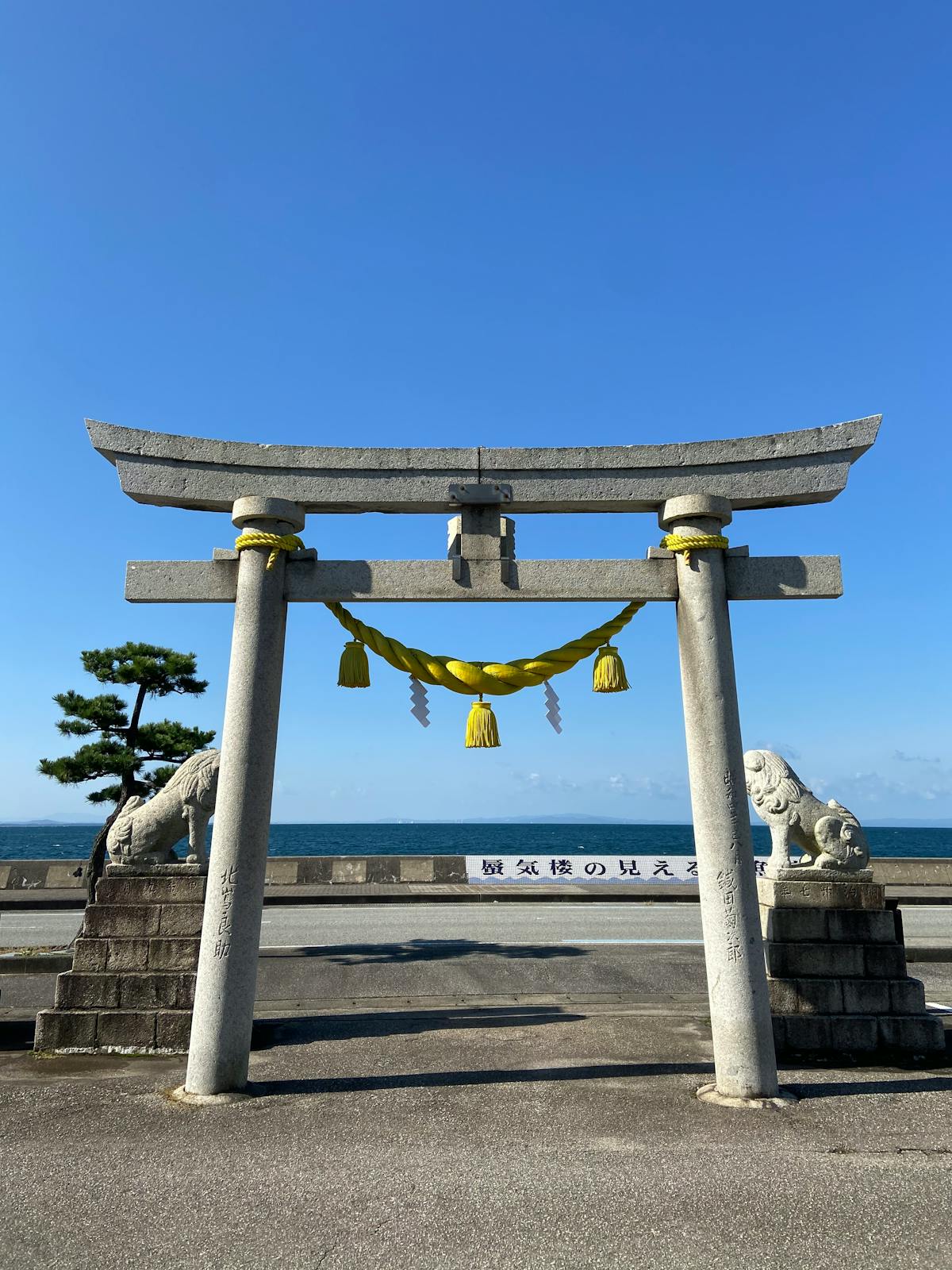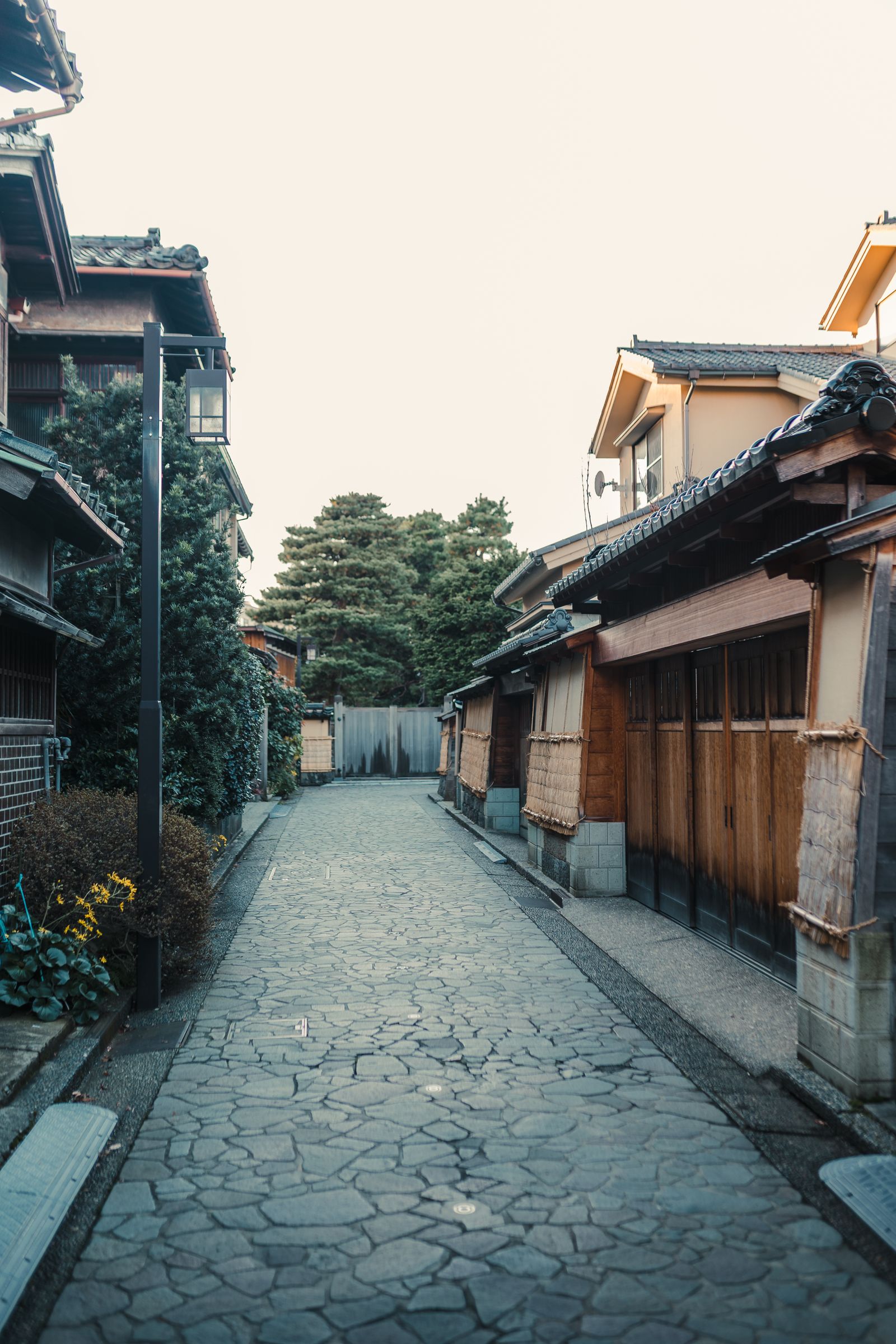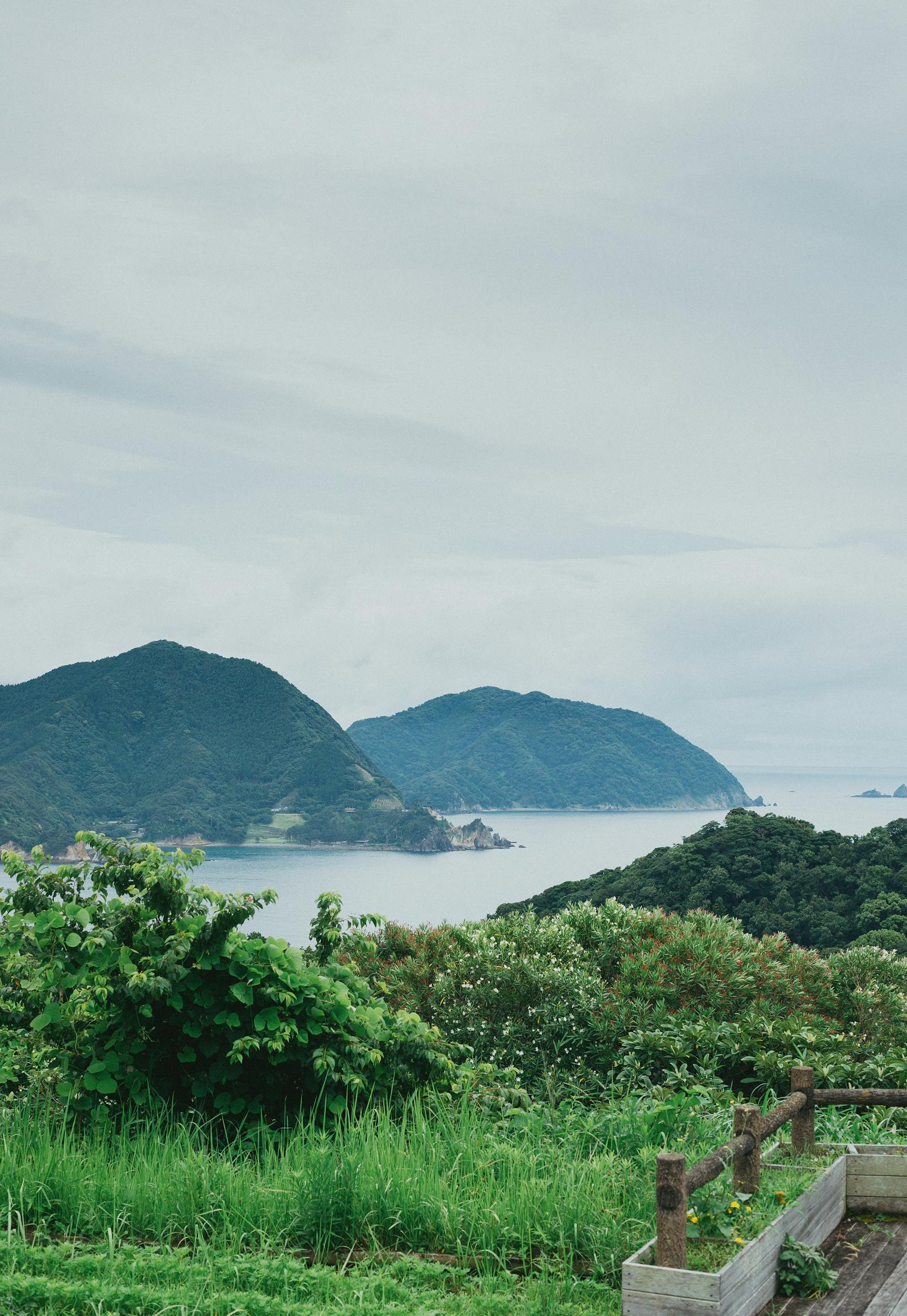
The Izu Peninsula is one of Japan’s most underrated escapes — a finger of land that juts south from Shizuoka Prefecture into the Pacific Ocean, less than two hours from Tokyo by bullet train. While most first-time visitors race between Tokyo, Kyoto and Osaka, Izu quietly offers something the big cities cannot: dramatic coastal scenery, world-class hot springs that bubble up beside the sea, sandy beaches with crystal-clear water, and traditional ryokan inns where you can sink into an outdoor bath while watching the sun melt into the Pacific.
For travelers willing to step off the Golden Route, Izu rewards with experiences that feel both quintessentially Japanese and refreshingly slow. This guide covers everything you need to know to plan a successful trip — how to get there, where to stay, what to eat, when to visit, and how to put together an itinerary that balances coast, mountains and onsen culture.
Why Visit the Izu Peninsula?
The Izu Peninsula occupies a unique place in Japanese travel culture. For Tokyoites, it has been the classic weekend getaway for more than a century — the place where Tokyo’s wealthy fled the summer heat in elegant beachside villas, where writers retreated to write, and where samurai and shoguns came to soak in mineral-rich waters. Today it remains a place where you can experience something genuinely traditional without the crowds you find in Kyoto or Kamakura.
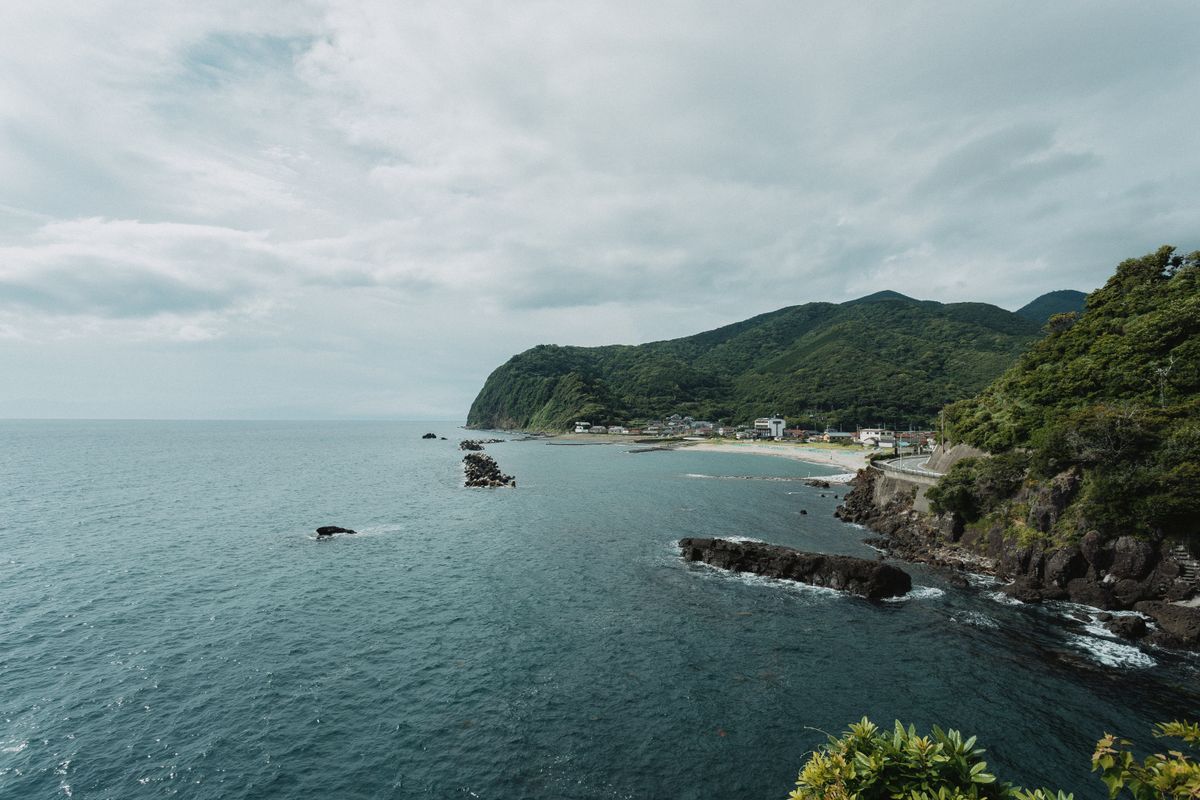
The geography is what makes Izu special. It sits at the meeting point of three tectonic plates, which explains both the abundance of hot springs and the dramatic, almost otherworldly coastline. On the east coast you find calm bays, classic onsen resort towns and rocky cliffs sculpted by the Pacific. On the west coast — facing Suruga Bay and Mount Fuji — you find some of the most beautiful sunsets in Japan, fishing villages frozen in time, and outdoor baths with sweeping ocean views. In the middle rises a forested mountain spine reaching nearly 1,400 meters, riddled with hiking trails and waterfalls.
For first-time visitors to Japan, Izu offers an ideal contrast to the urban intensity of Tokyo. You can be in Atami, the gateway city, in just 45 minutes from Tokyo Station — and feel like you’ve crossed into a different country.
How to Get to the Izu Peninsula
From Tokyo by Shinkansen
The fastest and easiest way is the Tokaido Shinkansen from Tokyo Station to Atami, which takes 35–45 minutes and costs around ¥4,000 (about $26 USD) one way. From Atami, regional trains continue down the east coast on the JR Ito Line and then the private Izukyu Line, reaching Ito in about 25 minutes, Atagawa in 50 minutes, and the end-of-line town of Shimoda in roughly 90 minutes.
If you have the Japan Rail Pass, the Tokaido Shinkansen Hikari and Kodama services to Atami are covered, but the private Izukyu Line beyond Ito is not — so you’ll need a separate ticket for the southern stretch (about ¥2,000 to Shimoda). For practical advice on whether the Rail Pass is right for your trip, see our honest 2026 guide to the Japan Rail Pass.
From Tokyo by Limited Express
The most scenic option is the Odoriko or Saphir Odoriko limited express, which runs directly from Tokyo Station to Atami, Ito, Atagawa and Shimoda. The Saphir Odoriko in particular is one of Japan’s most luxurious sightseeing trains, with panoramic windows, lounge cars and premium green car seating. Travel time to Shimoda is about 2 hours 40 minutes, with prices ranging from ¥6,000 standard to ¥10,000+ for premium service.
For a deeper look at how to navigate Japan’s famous bullet train network, see our complete Shinkansen guide.
From Tokyo by Car
Renting a car makes serious sense in Izu, especially if you want to explore the west coast or central mountains, where public transport is limited. Driving from central Tokyo to Atami takes about 90 minutes via the Tomei Expressway and Atami-Yugawara Road. Tolls run around ¥3,500 each way. Once on the peninsula, the coastal road (Route 135 along the east, Route 136 along the west) is one of the most beautiful drives in Japan.
From Tokyo by Bus
Highway buses run from Shinjuku and Tokyo Station to Atami, Ito and Shimoda. They’re cheaper (¥2,500–4,500) but slower (3–4 hours), and best reserved for budget travelers who don’t mind the extra time.
Airport Transfers
If you’re arriving at Haneda or Narita airport and heading straight to Izu, a private door-to-door shuttle service can save a lot of headache, especially with luggage. Book airport transfer with NearMe → for shared private rides from Tokyo airports — convenient for first-timers still figuring out the rail system.

East Izu: Classic Hot Springs and Coastal Towns
The east coast of Izu is the more developed and accessible side — connected by direct trains, lined with hot spring resort towns, and offering the easiest entry point for first-time visitors.
Atami: The Gateway City
Atami sits at the very north of the peninsula and is essentially Tokyo’s seaside hot spring suburb. The city has been a hot spring destination since the 8th century, when warriors and shoguns came to soak in its mineral-rich waters. Today it’s a slightly faded but charming resort town with a long crescent beach, fireworks displays from May through December, and dozens of ryokan ranging from budget-friendly to ultra-luxury.
Key sights include the MOA Museum of Art, perched on a hillside with sweeping ocean views and an outstanding collection of Japanese antiquities; Kiunkaku Villa, a beautifully preserved Taisho-era residence; and Atami Plum Garden, which blooms a full month before Tokyo’s plum trees in late January. Atami Castle, a 1960s reconstruction, offers panoramic photos of the bay.
For a unique experience, take the small ropeway up Akao Promontory to Akao Herb and Rose Garden — the views of Sagami Bay from up here are unbeatable, particularly at sunrise. Atami is also famous for fresh seafood, with sushi restaurants clustered around the train station serving morning catch from the local fishing port.
Ito Onsen
About 25 minutes south of Atami sits Ito, a quieter and arguably more atmospheric hot spring town. Ito’s historical streets, lined with weathered wooden inns and small temples, give a stronger sense of old Japan than glitzier Atami. The town is built around the Matsukawa River, where willow-lined paths invite an evening stroll.
The standout attraction is Tokaikan, a beautifully preserved three-story wooden ryokan from 1928, now open as a museum. For ¥200 you can wander the tatami rooms, walk across the original wooden corridors, and even take a soak in the historical onsen bath. Ito is also home to Jogasaki Kaigan — a rugged coastal trail along volcanic cliffs about 15 minutes by bus from town. The dramatic Kadowakizaki suspension bridge here is one of Izu’s most photographed spots.
Atagawa and Inatori
Continuing south along the Izukyu Line, the smaller resorts of Atagawa, Inatori and Kawazu offer a more low-key, traditional ryokan experience. Atagawa is known for its powerful onsen, with water so hot it has to be cooled before bathing. Inatori has a tradition of hanging colorful fabric hina-doll displays in spring that draws photographers from across Japan.
Kawazu, slightly further south, is famous for its Kawazu cherry blossoms — an early-blooming variety that flowers in February, weeks before Tokyo’s main sakura season. The Kawazu Cherry Blossom Festival, with around 8,000 trees lining the Kawazu River, is one of Japan’s hidden seasonal highlights.
Shimoda: The Southernmost Town
At the southern tip of the east coast sits Shimoda, a town of huge historical significance. This is where Commodore Matthew Perry and the American Black Ships forced Japan to open to the West in 1854. The Perry Road area preserves several buildings and a small museum from that era.
But Shimoda’s real appeal today is its beaches. Shirahama Beach, about 10 minutes by bus from Shimoda Station, is widely considered the best beach in Honshu — a 700-meter sweep of fine white sand backed by green pines, with water clear enough for snorkeling. Tatadohama Beach is the surf capital of Izu, with a serious local surf scene. Yumigahama Beach, on the way to Cape Iro, is smaller and more secluded.
If you’re visiting Izu in summer (July–August), Shimoda is the obvious base. Just be aware that hotels book out months in advance, particularly during the Obon holiday week in mid-August.
West Izu: The Hidden Side
West Izu is where Izu reveals its more dramatic, lesser-traveled face. With no train line, the west coast is reached primarily by bus from Shuzenji (the central rail hub) or by car. The reward for the extra effort is some of the most spectacular coastal scenery in Japan, paired with sunset views of Mount Fuji rising across Suruga Bay.
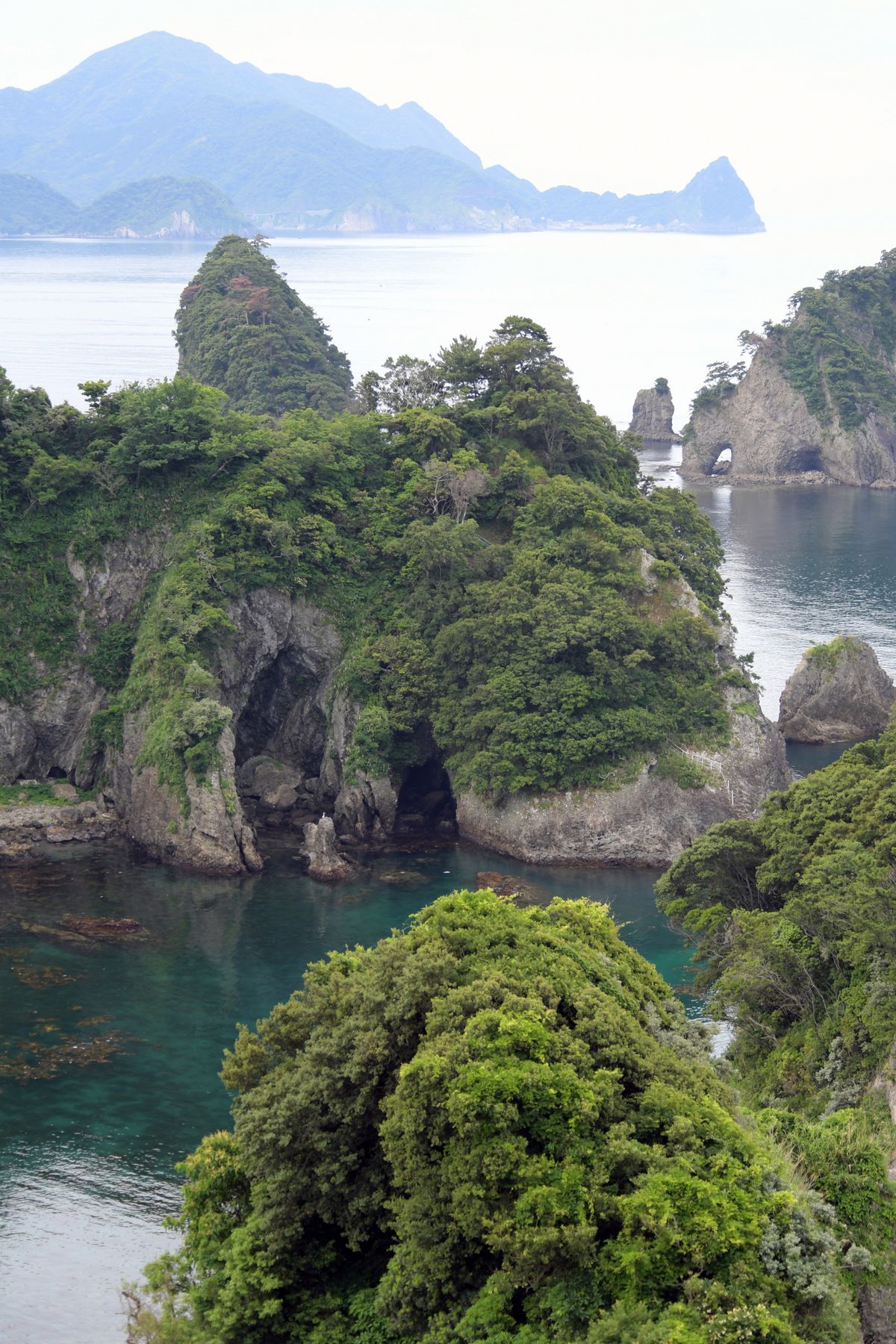
Dogashima
Dogashima is a string of dramatic volcanic islets connected by sandbars that emerge at low tide — a phenomenon known locally as “tombolo.” A small boat tour (¥1,300 for 20 minutes) takes you inside the famous Tensodo cave, where sunlight filtering through a hole in the ceiling creates a glowing blue pool. From the cliff-top walking paths above, you get postcard-perfect views of the rocky islets framed by pine trees.
Dogashima is also home to one of Izu’s most spectacular open-air baths: Sawada Park Open-Air Bath. For just ¥600, you can soak in a cliffside pool overlooking Suruga Bay as the sun sets directly into the sea. There’s no better introduction to onsen-meets-ocean than this.
Heda and Toi
Further north, the small fishing villages of Heda and Toi feel a generation removed from modern Japan. Heda’s fishing port is famous for landing deep-sea crab, which you can eat in dozens of family-run restaurants along the harbor. Toi has Japan’s largest outdoor sand clock (a quirky photo stop) and a small gold mine museum — Toi was a major gold-producing region in the Edo period.
Both villages offer simple, affordable seaside ryokan with rates often half of what you’d pay in Atami. If you want to experience an authentic, quiet Japanese seaside village, this is the place.
Cape Mihama and Mount Daruma
Cape Mihama is one of the most underrated viewpoints in all of Japan. A short walk from the parking area leads to a grassy headland looking directly across Suruga Bay to Mount Fuji. On a clear winter day, the view is staggering: snow-covered Fuji rising perfectly framed above the deep blue sea. Mount Daruma, the highest point on the central Izu spine, also offers panoramic views and is reachable by car on a winding mountain road.
For travelers searching for Japan’s most beautiful Mt Fuji views beyond the obvious Tokyo viewpoints, see our Fuji Five Lakes guide — it pairs perfectly with a west Izu trip.
Central Izu: Mountains, Waterfalls and Shuzenji
The interior of the peninsula is dominated by the Amagi mountain range, draped in cedar and bamboo forests and dotted with hot springs, waterfalls and historic ryokan towns. The central hub here is Shuzenji.
Shuzenji Onsen
Shuzenji is one of the oldest and most atmospheric onsen towns in Japan, founded around 800 CE by Kobo Daishi, the same monk who created the Shikoku 88 Temple Pilgrimage. The town center is a small grid of streets along the Katsuragawa River, where you’ll find red bridges, bamboo groves, traditional shops and Tokko-no-Yu, an outdoor bath right in the middle of the river. (As of 2024 it’s no longer for active bathing but remains a photo spot.)
The town’s central temple, Shuzenji, has a beautifully landscaped garden and a small but interesting bamboo grove that rivals (in atmosphere if not size) the famous one in Arashiyama. Several ryokan in Shuzenji are over 100 years old; staying overnight here is a quintessential Japanese experience. Don’t miss the small bamboo-lined path — Chikurin no Komichi — at dusk, when the lanterns come on and the whole town feels timeless.
Joren Falls and the Amagi Pass
About 30 minutes south of Shuzenji by car or bus, Joren Falls is one of Izu’s prettiest waterfalls — a 25-meter cascade backed by columnar basalt rock and surrounded by wasabi farms (Izu produces some of Japan’s finest wasabi). Visitors can buy fresh wasabi ice cream at the parking area.
The drive over the Amagi Pass, made famous in Yasunari Kawabata’s novella “The Izu Dancer,” winds through dense cedar forest and offers occasional sea views. The historic Old Amagi Tunnel (built in 1904) is on the UNESCO industrial heritage list and worth a short stop.
Mishima Skywalk
At the northern edge of central Izu, the Mishima Skywalk is Japan’s longest pedestrian suspension bridge — 400 meters long — with stunning views of Mount Fuji on clear days. There are zip lines, a small theme park area, and several cafes. Admission is ¥1,100.
Best Hot Spring Towns in Izu
Izu has more than a dozen distinct onsen areas. Here’s how to choose among them:
Atami
Best for: First-time visitors, easy access from Tokyo, mix of modern and traditional. Atmosphere: Resort town, slightly built-up. Average ryokan price: ¥18,000–60,000 per person per night with two meals.
Ito Onsen
Best for: Authentic atmosphere, historic ryokan, walking. Atmosphere: Wooden inns, riverside lanterns, traditional. Average ryokan price: ¥15,000–40,000 per person.
Shuzenji
Best for: Quiet bamboo-grove village vibe, history. Atmosphere: Small mountain onsen town. Average ryokan price: ¥20,000–50,000 per person.
Dogashima/Toi
Best for: Sunset baths with Mt Fuji views, secluded vibe. Atmosphere: Coastal villages, fishing port. Average ryokan price: ¥12,000–30,000 per person.
Kawazu Nanadaru
Best for: Waterfall hikes plus hot springs. Atmosphere: Quiet mountain hot spring valley. Average ryokan price: ¥15,000–35,000 per person.
For more inspiration on choosing a ryokan, including how to book one and what to expect during your stay, browse Find luxury hotels on Ikyu.com → — Ikyu is Japan’s leading platform for traditional ryokan and high-end resort accommodations.
If you’re new to Japanese hot spring culture, take a few minutes to read our guide to Japanese onsen etiquette before your trip — knowing the basics will help you relax and enjoy the experience without unintended faux pas.
Beaches and Coastal Activities
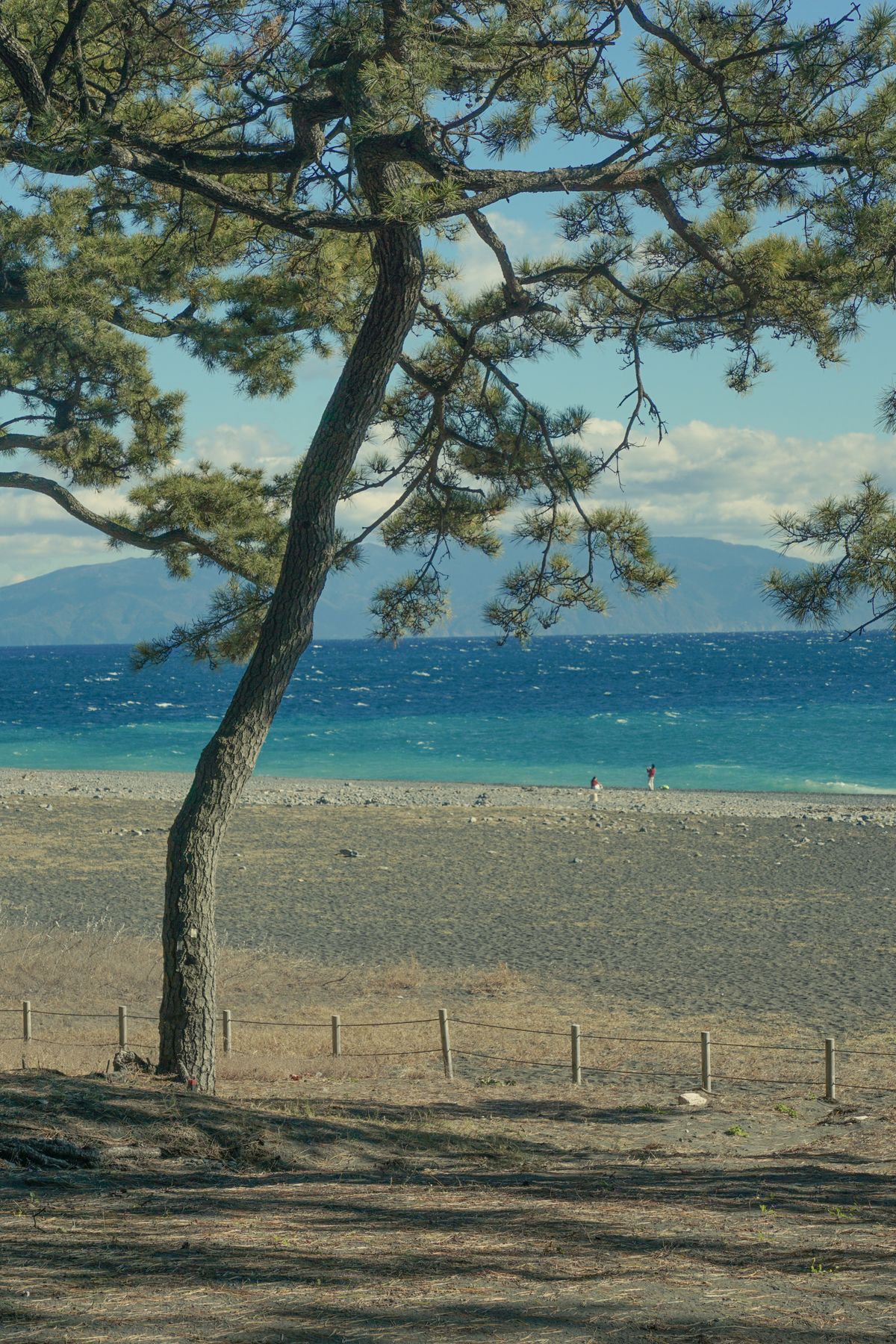
Izu has some of the cleanest, most beautiful beaches in mainland Japan. Most are sand or white-coral; water clarity is genuinely impressive, especially on the southern tip and around offshore islets.
Top Beaches
Shirahama Beach (Shimoda): The most famous, 700 meters of fine white sand. Snorkeling, paddle boarding and surf rentals. Crowded in August.
Iritahama Beach (Shimoda): Smaller and less crowded; often called the “honeymoon beach” for its picture-perfect setting.
Tatadohama Beach (Shimoda): Year-round surf scene; lessons available.
Sotoura Beach (Numazu): Sheltered bay on the west, calm water, great for families.
Kisami Ohama: Surfers’ favorite with consistent breaks.
Snorkeling and Diving
Cape Hirizo, on the southern tip, is one of the best snorkeling spots in mainland Japan — reachable only by a small ferry in summer (¥1,500 round-trip). Visibility regularly exceeds 15 meters, and the underwater landscape includes tropical fish, coral formations and sea caves. Shore dives near Inatori and Kawana offer easy entry-level diving in summer.
Boat Tours and Sea Kayaking
Dogashima offers cave tours and sunset cruises. Sea kayaking is popular along the dramatic west coast — Cape Mihama and around the Tagomi rock formations are particular highlights. Most operators charge around ¥6,000 for a half-day with gear.
Where to Stay on the Izu Peninsula
Izu’s accommodation scene is dominated by traditional ryokan — many of them genuine multi-generational family inns rather than modern resort facilities. Expect tatami floors, futon bedding, multi-course kaiseki dinners showcasing local seafood, and access to the inn’s private onsen baths.
Where to Base Yourself
First-timer, 1–2 nights: Atami or Ito on the east coast for easy access.
Onsen + ocean experience: Dogashima or Toi on the west for sunset baths.
Beach trip: Shimoda for the south coast beaches.
Mountain + bamboo: Shuzenji in the central hills.
Recommended Accommodation Bookings
For straightforward hotel and ryokan deals, Book your hotel on Agoda (Best prices guaranteed) → — Agoda has the best inventory and prices for Izu’s mid-range and resort properties.
For deeper deal hunting, Search hotel deals on Yahoo! Travel → regularly turns up significant savings on Izu ryokan, especially for weekday stays.
Food and Drink in Izu
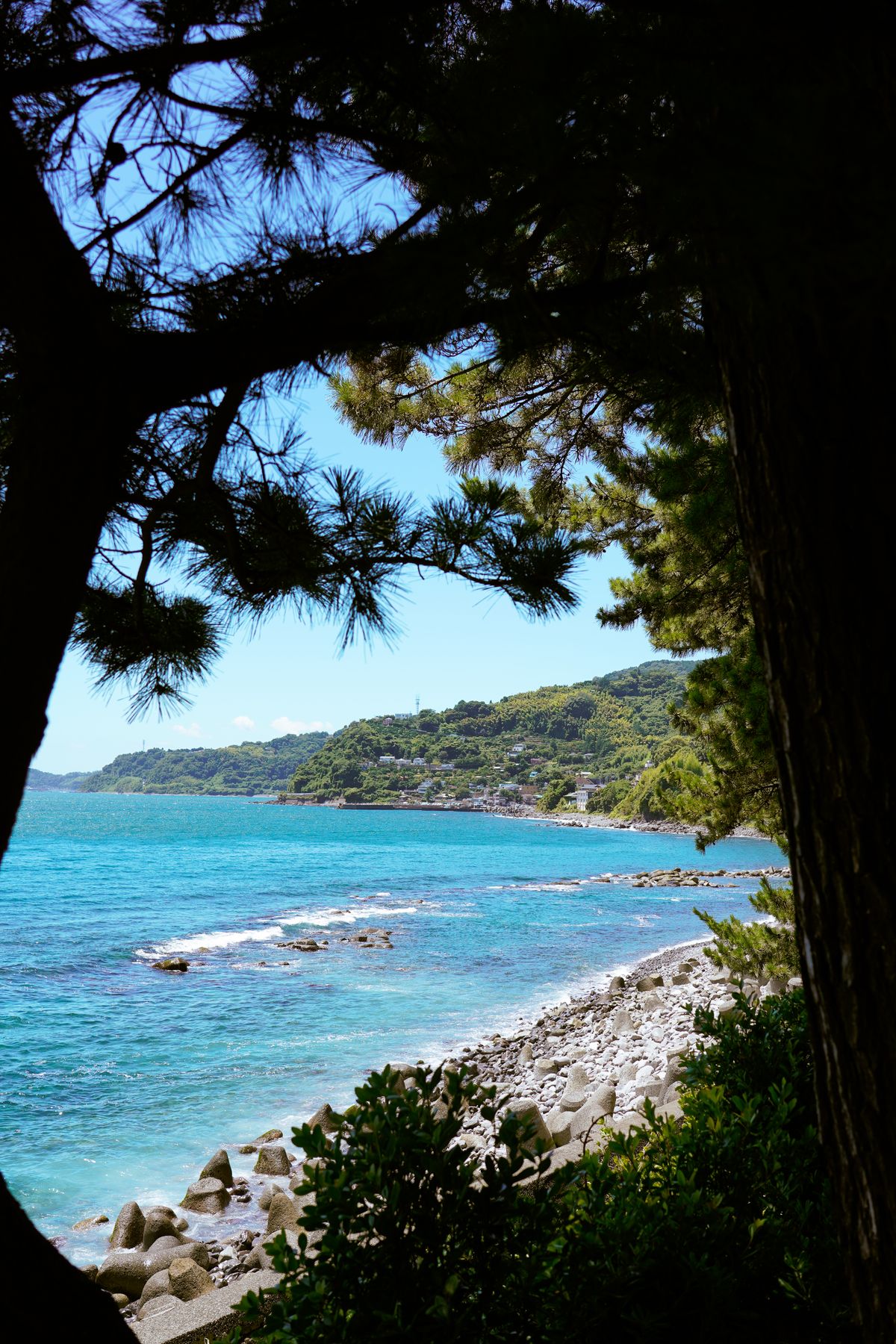
Izu’s food scene is built around fresh seafood from the Pacific and Suruga Bay, mountain vegetables and wasabi from the interior, and citrus from the warm coastal climate. Don’t leave without trying:
Kinmedai (Golden Eye Snapper): Inatori is Japan’s top port for kinmedai, a deep-red snapper with rich, slightly sweet flesh. It’s typically prepared simmered in soy and ginger broth (kinmedai nitsuke) or as sashimi. Many ryokan offer it as part of dinner.
Wasabi: Real wasabi grows in clear mountain streams, and Izu produces some of the best in Japan. Try wasabi-don — fresh-grated wasabi over hot rice with shaved bonito — at restaurants near Joren Falls. Wasabi ice cream is a fun surprise: not as fiery as it sounds, with a clean herbal finish.
Crab: Heda is famous for fresh deep-sea crab, particularly red crab and snow crab in winter. Several Heda ryokan offer crab kaiseki menus from November through March.
Mikan (Mandarin Oranges): Coastal Izu produces some of Japan’s sweetest mikan. Pick-your-own farms operate from late October through January.
Saiboku (Black Pork): Inland farms specialize in slow-grown black pork. Try it tonkatsu-style at restaurants in Shuzenji.
For more on what to eat across the country, our Japan street food guide covers the must-try dishes from takoyaki to matcha crepes.
When to Visit the Izu Peninsula
Spring (March–May)
Spring is arguably the best season. The Kawazu cherry blossoms bloom from early February through early March, weeks ahead of the rest of Japan. Mainland cherry blossom season follows in late March. Temperatures are mild (12–20°C) and rainfall low. Hotel prices peak slightly during Golden Week (late April to early May).
Summer (June–August)
Beaches come alive from late June. July and August are hot and humid (28–32°C) but the ocean is at its warmest. Atami’s fireworks displays run throughout summer. Be aware: this is by far the most crowded and expensive season, especially around Obon (mid-August). Book ryokan months in advance.
Autumn (September–November)
An underrated season. The Amagi mountains turn red and gold from late October into November. Sea temperatures stay warm enough for swimming through September. Crab season begins in November.
Winter (December–February)
Mild compared to most of Japan — coastal Izu rarely sees snow and temperatures hover around 5–13°C. Crystal-clear days mean some of the best Mt Fuji views of the year from the west coast. Crab and kinmedai are at their peak. Hot springs feel especially magical when there’s a chill in the air.
For broader seasonal planning across Japan, see our month-by-month best time to visit Japan guide.
Sample Itineraries
2-Day Weekend Getaway (Tokyo Base)
Day 1: Morning Shinkansen to Atami. Stroll Atami Beach, lunch of seafood near the station, visit MOA Museum of Art in the afternoon. Evening: check in to a ryokan, soak in the bath, kaiseki dinner.
Day 2: Morning bath, breakfast, then train to Ito. Walk Tokaikan and the historic streets, lunch, take a bus to Jogasaki Kaigan and walk the cliff path. Late afternoon train back to Tokyo.
3-Day Classic Izu Loop
Day 1: Tokyo → Atami → Ito (overnight in Ito).
Day 2: Ito → Kawazu → Shimoda (overnight in Shimoda; visit Shirahama Beach).
Day 3: Shimoda → Shuzenji via central Izu, lunch around Joren Falls, afternoon at Shuzenji, then train back to Tokyo.
5-Day Deep Dive (Rental Car Recommended)
Day 1: Atami (overnight Atami).
Day 2: Drive south to Shimoda via the east coast (overnight Shimoda).
Day 3: Cape Iro and Shirahama Beach, then cross to the west coast to Dogashima (overnight Dogashima).
Day 4: Sunrise at Cape Mihama, drive north along the west coast to Toi or Heda for fresh crab, continue to Shuzenji (overnight Shuzenji).
Day 5: Morning in Shuzenji, Joren Falls, drive back to Tokyo via Mishima Skywalk.
Practical Tips
- Stay connected: Mobile reception is reliable on the east coast but spotty on the west and in central mountains. Pick up an eSIM before you arrive. Get your Japan eSIM (Stay connected from day 1) → — JAPAN&GLOBAL eSIM activates the moment you land at Haneda or Narita.
- Cash matters: Many smaller Izu inns and restaurants are cash-only. Withdraw ¥20,000–30,000 per day before leaving Tokyo, or use convenience-store ATMs.
- Reserve ryokan early: Especially on weekends, during cherry blossom (February–March in Kawazu), and through August. Top properties can book out three months ahead.
- Buy the Tokai Bus Free Pass if you’re not renting a car: ¥3,700 for two days of unlimited rides on most Izu bus routes — a huge saving versus paying per ride.
- Bring small bills: Bus drivers don’t always have change for ¥10,000 notes.
- Pack layers: The interior mountains are 5–10°C cooler than the coast, even in summer.
- Bring slip-on shoes: You’ll be removing them constantly at ryokan, temples and restaurants. See our Japan packing list for a complete checklist.
- Try a local sake brewery: Bandai, in central Izu, has been brewing since 1791.
- Use luggage forwarding: Many ryokan accept takkyubin (next-day luggage delivery), so you can travel light between stops.
Culture and History on the Peninsula
Izu has played a surprisingly large role in Japanese history. In 1854, Commodore Matthew Perry’s American “Black Ships” forced open the port of Shimoda — making it Japan’s first port open to foreign trade and one of the catalysts of the Meiji Restoration. Townsend Harris, the first US Consul to Japan, lived in Shimoda from 1856 to 1857. The Ryosenji Treaty Museum in Shimoda preserves this story with original documents, a small but excellent collection of period artifacts, and reconstructions of the consulate. Admission is ¥500 and worth every yen.
Before that, Izu had served for centuries as a refuge for exiled nobles and warriors. Minamoto no Yoritomo, the founder of the Kamakura shogunate, spent two decades in exile in Hirugashima (modern-day Izunokuni City) before launching his uprising in 1180. Several temples and a small museum preserve this period.
In literature, Yasunari Kawabata’s 1926 novella “The Izu Dancer” — which won the future Nobel laureate national recognition — is set on the Amagi Pass and Yugashima Onsen. The story of a young student traveling with a wandering dance troupe captures the melancholic beauty of the Izu mountains. Several reading spots along the old route are marked with plaques quoting the novel; for literary travelers, this is a quiet pilgrimage worth making.
Izu was also a centre of stone quarrying for centuries. Edo-period stonemasons cut huge blocks from the volcanic cliffs and shipped them by sea to Edo (Tokyo) to build castle walls. The quarries at Cape Shimoda and around Toi can still be visited, with massive Edo-era stone cuts left in the cliffs like archaeological sculptures.
The Izu Islands: A Different World Offshore
Often overlooked even by Japanese travelers, the Izu Islands stretch into the Pacific south of the peninsula. The closest, Oshima, is reachable from Tokyo by overnight ferry (8 hours, ¥6,000) or by high-speed jetfoil from Atami (45 minutes, ¥6,800). The island is dominated by Mount Mihara, an active volcano you can hike to the crater rim, and a rugged black-sand coastline.
Further out, the islands of Niijima, Kozushima, Mikurajima and Hachijojima offer increasingly remote experiences — Niijima has white-sand surf beaches and a free onsen at the harbor, Mikurajima is famous for swim-with-dolphin programs (April–November), and Hachijojima has subtropical forests and dramatic volcanic peaks. None of these will work as a quick add-on, but for a Japan repeater looking for the wildest mainland-accessible destinations in the country, they’re remarkable.
Onsen Culture: How to Actually Enjoy It
For many first-time visitors, the biggest barrier to a great Izu trip is anxiety about onsen etiquette. The rules are simpler than they sound. You wash thoroughly, fully naked, at a seated shower station before entering the bath. You bring a small towel into the bathing area but never let it touch the water (most people fold it on their head). You don’t talk loudly, don’t take photos, and never bring soap or shampoo into the bath itself. Long hair should be tied up. Tattoos are still a point of friction at some traditional inns, but tattoo-friendly options are growing in Izu — and many ryokan now offer private baths (kashikiri-buro) you can book for 45–60 minutes for around ¥2,000, which sidesteps the issue entirely.
The reward for following these simple rules is one of Japan’s most distinctive pleasures: slow, hot mineral water against cool air, often in stunning natural settings, finishing a long day of travel. Combined with kaiseki dinner, futon bedding on tatami, and yukata robes you wear around the inn, a ryokan stay in Izu is a complete cultural experience — not just lodging.
For Travelers Who Want a Tour
Frequently Asked Questions
Is the Izu Peninsula good for first-time visitors to Japan?
Yes — provided you’ve already booked Tokyo and want a contrast. Izu offers the easiest accessible introduction to ryokan and onsen culture outside of Hakone, without the crowds. A two-night detour from Tokyo on either side of your Kyoto trip works beautifully. We particularly recommend Izu for travelers who’ve already visited Hakone on a previous trip and want something fresher.
How does Izu compare to Hakone?
Hakone is closer, more developed, and easier to do as a one-night side trip from Tokyo. It also has better Mount Fuji views from the lake area. Izu, however, has the ocean — and the ocean changes everything. You can soak in baths overlooking the Pacific, eat fresh fish at the source, and lie on actual white-sand beaches in summer. For couples on a second or third trip to Japan, Izu often feels more authentic. Read our Hakone day trip guide for a side-by-side comparison.
Do I need to speak Japanese to visit Izu?
You can manage without Japanese in Atami, Ito and Shimoda, where many ryokan and restaurants have English menus or translation tablets. Outside these areas, English support drops sharply. A good translation app is essential. Most ryokan staff have at least basic English; Google Translate handles the rest.
Is it worth renting a car?
For 3+ days on the peninsula, especially if you want to visit the west coast or central mountains, yes. The freedom is significant and parking is rarely an issue outside Atami. Daily rentals start around ¥5,000 plus gas and tolls. Make sure you have an International Driving Permit issued in your home country before you fly — Japan doesn’t accept US, UK or AU licenses without one.
What’s the best month to visit?
For most visitors, late October to mid-November offers the ideal mix of mild weather, clear Fuji views, autumn foliage in the interior mountains, lower prices than summer, and the start of crab season. Cherry blossom enthusiasts should target Kawazu in late February. Beach lovers will want late June to early August.
Can I do Izu as a day trip from Tokyo?
You can, but you shouldn’t. The whole point of Izu is to slow down — to spend an evening in a ryokan, soak in an onsen at sunset, eat kaiseki dinner, sleep on tatami, and have another bath in the morning. A day trip to Atami is possible but reduces Izu to a passable seaside afternoon. At a minimum, plan one overnight stay.
Are there English-speaking guides?
Yes — small operators in Shimoda and Shuzenji offer English-language guided walks. The Shimoda Tourism Office can match you with volunteer English-speaking guides for free with advance booking. Larger ryokan in Atami and Shuzenji often have at least one English-speaking staff member.
Is Izu suitable for families with kids?
Very much so. Shimoda’s beaches are family-favorites, Atami has aquariums and small theme parks, and most ryokan welcome children (though some upscale properties have minimum ages). The Mishima Skywalk has zip lines and forest activities aimed at kids.
Estimated Budget for an Izu Trip
A two-night Izu trip from Tokyo is more affordable than most first-time visitors expect. Below is a realistic mid-range estimate per person for a couple traveling together.
Transportation: Round-trip Shinkansen Tokyo–Atami + local trains around the peninsula = roughly ¥10,000–13,000 ($65–$85). A rental car for two days runs about ¥10,000 per person split, plus fuel and tolls of another ¥2,500.
Accommodation: Two nights at a mid-range ryokan (with two meals included) = ¥40,000–60,000 per person total. Budget options exist around ¥12,000–15,000 per night for simpler inns; luxury ryokan can push past ¥80,000 per night per person.
Food beyond ryokan meals: Lunches at local restaurants average ¥1,200–2,500. Coffee and snacks ¥500–1,000 per stop.
Attractions: Most museums and observation points charge ¥500–1,500. A Dogashima cave tour is ¥1,300. Activities like sea kayaking run ¥5,000–7,000.
Total realistic mid-range budget: About ¥65,000–90,000 per person ($430–$580 USD) for two nights, all inclusive. For tighter budgets, see our complete guide to traveling Japan on a budget.
Final Thoughts
The Izu Peninsula is the kind of destination that quietly converts skeptics. Travelers come for one night of onsen and end up extending their stay; people who thought they’d seen Japan after Tokyo and Kyoto leave with a whole new sense of the country. The combination of coast, mountains, hot springs and food — and the slower pace of small-town Japan — adds something genuinely different to a Japan trip.
If you’re putting together a first-time Japan itinerary, consider giving Izu two or three nights. If you’re returning to Japan, give it five. Either way, you’re not likely to forget the experience of soaking in a hilltop bath as the sun melts into Suruga Bay, with Mount Fuji rising in the distance and the steam swirling around you.
For more under-the-radar Japanese destinations, browse all our destination guides, or get a broader plan started with our two-week first-timer itinerary — which can easily be adapted to include an Izu detour.
Going to Japan? Talk to locals with confidence.
Hirameki Japanese — instant offline translation, camera translation, furigana + romaji, and 314 free flashcards. No login. Works without internet.

Plan your Japan trip
Two things every first-timer should book
Some links are affiliate links. If you book through them we may earn a small commission at no extra cost to you.