Tucked into the far north of Gunma Prefecture, less than 90 minutes from the heart of Tokyo, Minakami (sometimes written Minakami Onsenkyo, literally “the source of the water”) is one of the most rewarding destinations in Japan that most first-time visitors have never heard of. This is the place where the mighty Tone River — the river that eventually flows through the Kanto plain and supplies water to Tokyo itself — is still young, wild and crystal clear, tumbling down from the snow-capped peaks of the Mikuni Mountains and the dramatic east face of Mount Tanigawa.
Minakami is two destinations rolled into one. On one hand it is Japan’s adventure capital, a place where you can spend the morning bouncing through grade-three rapids on a white-water raft and the afternoon leaping off a bridge on a bungee cord. On the other hand it is one of the country’s most atmospheric hot-spring regions, home to roughly eighteen separate onsen areas and one of the largest open-air mixed baths in all of Japan. Add forested hiking trails, a cable car that climbs to an alpine plateau, world-class powder snow in winter and blazing maple foliage in autumn, and you have a destination that genuinely offers something in every season.
This complete first-timer’s guide walks you through exactly how to get to Minakami, what to do when you arrive, where to soak, where to sleep, what to eat, and how to plan your time — with real prices in Japanese yen and US dollars, journey times, and the practical booking tips that make the difference between a smooth trip and a stressful one. For broader trip planning, it pairs well with our wider Japan destinations guide and our essential Japan travel tips for first-timers.
Why Visit Minakami?
Most first-time itineraries in Japan follow the well-trodden “Golden Route” of Tokyo, Hakone, Kyoto and Osaka. Those places are popular for good reason, but they also mean crowds, queues and a version of Japan that can feel a little polished and predictable. Minakami is the antidote. It is rural, green and refreshingly uncommercial, yet it remains astonishingly easy to reach — which is exactly why it makes such a clever addition to a first trip.
Here are the things that make Minakami special:
- Real wilderness, close to Tokyo. Few places let you stand in genuinely wild mountain scenery so soon after leaving the world’s largest metropolis. The Tone River gorge, the beech forests of the Tanigawa foothills and the alpine plateau above the ropeway all feel a world away from the city.
- Adventure for every comfort level. From gentle family rafting and forest walks to canyoning, bungee jumping and serious alpine climbing, Minakami scales from “relaxing day out” to “adrenaline overload.”
- Hot springs everywhere. The region’s eighteen onsen areas range from riverside open-air baths to tiny historic inns where the water has been flowing for centuries. After a day outdoors, sinking into a steaming bath under the stars is the perfect reward.
- Four genuinely different seasons. Cherry blossoms and fresh green in spring, rafting and river play in summer, fiery koyo foliage in autumn, and deep powder snow in winter. You can visit four times and have four completely different trips.
- Value for money. Compared with the famous resort towns, Minakami is gentle on the wallet — accommodation, food and activities all tend to cost noticeably less than their equivalents in Hakone or Karuizawa.
Where Is Minakami and How to Get There
Minakami sits in the mountainous northern tip of Gunma Prefecture, in the Kanto region, right up against the border with Niigata. Despite feeling remote, it is one of the easiest mountain destinations in Japan to reach from Tokyo thanks to the Joetsu Shinkansen, the bullet-train line that burrows north under the Mikuni range toward the Japan Sea coast.
From Tokyo by Shinkansen (the easy way)
The gateway is Jomo-Kogen Station, a Joetsu Shinkansen stop. From Tokyo Station (or Ueno) a Toki or Tanigawa service reaches Jomo-Kogen in about 70 minutes. A one-way reserved ticket costs roughly ¥5,700–6,200 (about US$38–42). If you hold a Japan Rail Pass or the regional JR East Tokyo Wide Pass, this leg is fully covered — which is one reason the area is so popular with rail-pass holders. For help deciding whether a pass makes sense for your trip, see our dedicated Japan Shinkansen guide.
From Jomo-Kogen Station, a Kan-etsu Transportation bus from Bus Stop No. 1 runs toward Minakami Station (about 20 minutes) and on toward the Tanigawadake Ropeway (about 45 minutes from the station). Buses are timed loosely to connect with bullet-train arrivals, but they are not frequent, so check the posted timetable the moment you step off the train. A taxi from Jomo-Kogen to central Minakami Onsen costs roughly ¥3,000–4,000 (US$20–27) and is worth splitting between a group if you have just missed a bus.
The slower, scenic local-train option
Budget travelers and rail romantics can skip the Shinkansen entirely and ride the JR Joetsu Line local trains north from Takasaki to Minakami Station. The journey from Tokyo takes around three hours with a change at Takasaki, but it costs only about ¥2,300 (US$15) and rolls through gorgeous river-valley scenery. This is also the line that serves the legendary Doai Station — more on that remarkable place below.
Getting around once you arrive
Minakami is spread out: the onsen town, the rafting bases along the Tone River, the ropeway and the remote inns are all some distance apart, and public buses are infrequent. You have three realistic options:
- Activity-operator shuttles. The big adventure companies almost always include hotel or station pickup in their tour price, so for rafting and canyoning days you rarely need your own transport.
- The Minakami Area Pass. Kan-etsu Transportation sells a digital two-day bus pass covering the main routes (Jomo-Kogen — Minakami — Takaragawa — Yunokoya, and the ropeway line). At around ¥2,000–2,500 it pays for itself quickly if you plan to ride to Takaragawa Onsen and the ropeway.
- Rental car. If you are comfortable driving in Japan, a car transforms the trip — you can reach the remote onsen and trailheads on your own schedule. The Kan-etsu Expressway runs straight to the Minakami interchange, about two hours from central Tokyo outside of rush hour.
Stay connected from the moment you land. Mountain valleys, bus timetables that change with the season, and trailheads with no English signage all make a reliable data connection invaluable here. The simplest solution is an eSIM you activate before you fly: Get your Japan eSIM (Stay connected from day 1) →
The Best Things to Do in Minakami
Minakami earned its reputation as Japan’s “outdoor sports kingdom” honestly. The combination of a powerful, clean river, deep gorges, dense forest and a high alpine ridge means the menu of activities is unusually broad. Here are the experiences worth building your trip around.
White-water rafting on the Tone River
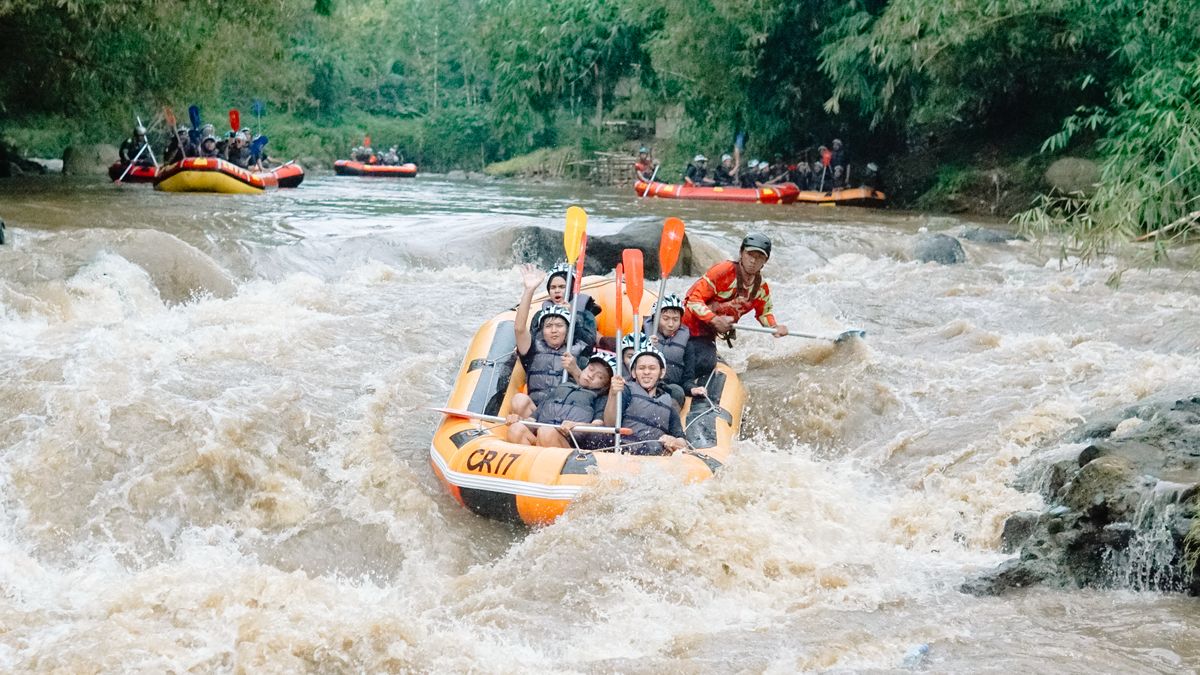
This is the signature Minakami experience, and for many visitors it is the single best adventure day available within easy reach of Tokyo. The upper Tone River swells with snowmelt in spring and stays lively through summer, producing rapids that range from playful to genuinely exciting. Half-day trips typically run ¥6,000–9,000 (US$40–60) and full-day trips with lunch around ¥10,000–13,000 (US$67–87); wetsuit, helmet, life jacket and an English-speaking guide are almost always included.
The rafting season runs roughly from April to October. The wildest water comes in April and May, when the snowmelt is at full force and the rapids reach grade three to four — exhilarating, and best for those who do not mind a soaking and the occasional swim. By midsummer the river mellows, which is ideal for families and first-timers; many operators accept children from around age ten on the gentler summer runs. Book ahead in July, August and the autumn-foliage weekends, when spots fill fast.
Canyoning, bungee and other adrenaline
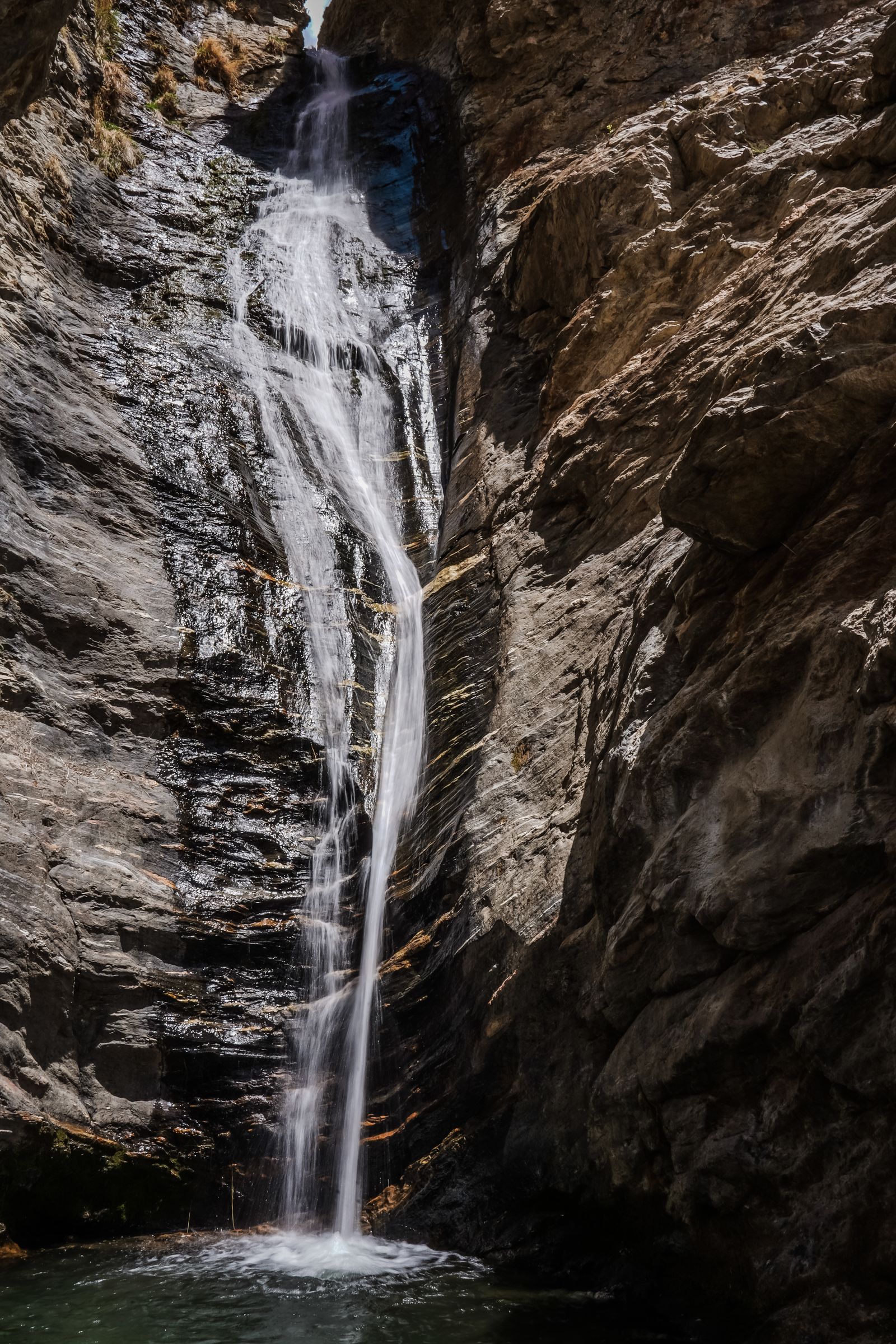
If rafting whets your appetite, Minakami has more. Canyoning sends you sliding down natural rock chutes, jumping into emerald plunge pools and abseiling beside waterfalls in the side gorges — a half-day costs around ¥8,000–10,000 (US$53–67). The Minakami Bungy at Suwakyo Bridge drops you 42 meters toward the river below and is one of the highest bridge bungee jumps in Japan, at around ¥10,000 (US$67). Other options include stand-up paddleboarding on calmer stretches, mountain biking, and gorge-walking. Almost every operator runs in English and provides all the gear, so no experience is needed.
Tanigawadake Ropeway and the high country
Looming over the valley is Mount Tanigawa (Tanigawadake), a 1,977-meter peak famous among Japanese climbers — and infamous for its sheer east face. You do not need to be a mountaineer to enjoy it, though. The Tanigawadake Ropeway whisks you from the Tsuchidaru base station up to the Tenjindaira plateau at around 1,300 meters in about ten minutes. A round-trip ticket costs roughly ¥2,000–3,000 (US$13–20) depending on the season. From the top, easy boardwalk trails lead through alpine wildflower meadows in summer and unbelievable foliage in autumn, with the serrated ridgeline of Tanigawa rising directly above. Serious hikers use it as the springboard for the climb to the summit, but casual visitors can simply stroll, picnic and soak up the views.
Doai Station: Japan’s deepest railway station
Rail enthusiasts and anyone with a taste for the wonderfully strange should not miss Doai Station on the JR Joetsu Line. The downbound platform sits inside a tunnel 70 meters underground, reached by descending 486 steps — making it the deepest station in Japan. The cavernous concrete stairwell, dimly lit and dripping with mountain water, has an almost cinematic, otherworldly atmosphere. Trains stop only a handful of times a day, so check the timetable carefully, but even a quick visit between services is memorable.
Lakes, waterfalls and gentle walks
Not everything in Minakami requires a wetsuit. Lake Okutone (Okutone-ko), formed by the Yagisawa Dam, offers calm sightseeing-boat cruises among forested slopes that turn spectacular in October. The Suwakyo Gorge rewards a short walk with dramatic rock walls and rushing water, and small shrines and waterfalls dot the forest trails near the onsen town. These quieter corners are perfect for travelers who want the mountain scenery without the adrenaline.
Minakami’s Onsen: Soaking in the Mountains
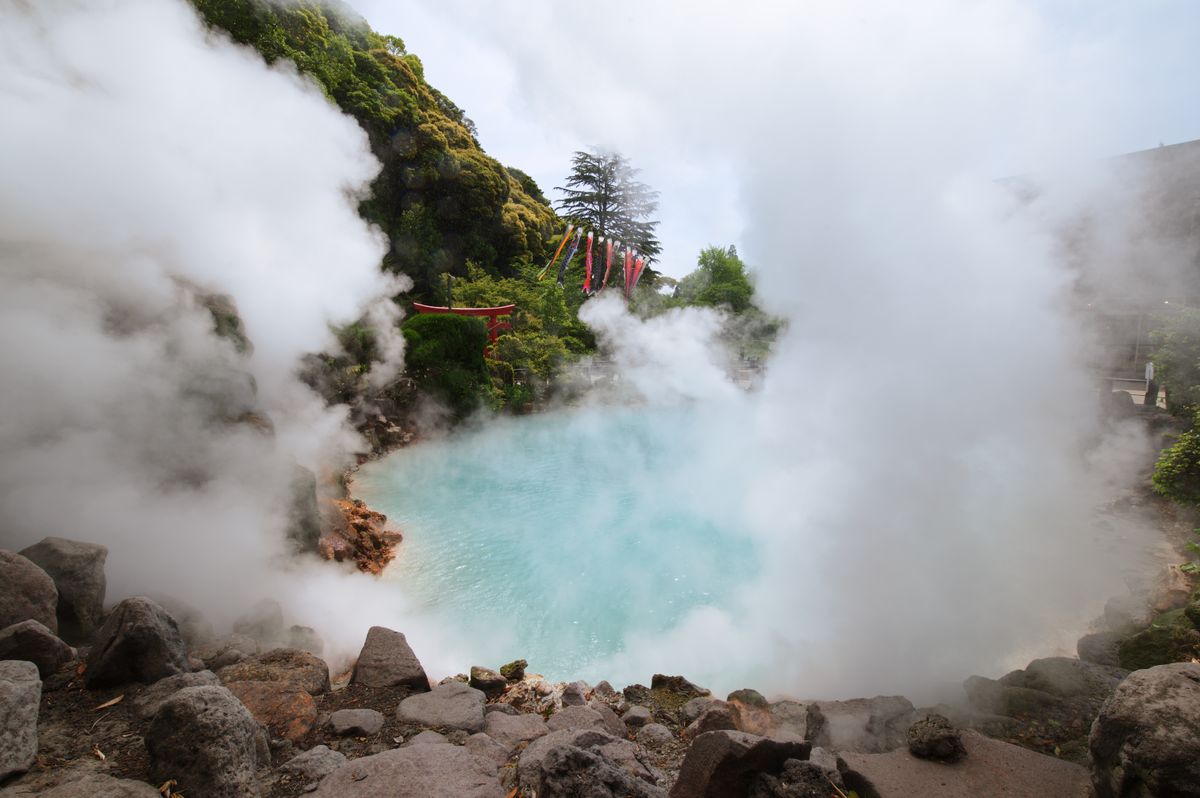
If adventure is one half of Minakami’s appeal, hot springs are the other. The region is dotted with around eighteen distinct onsen areas, collectively known as Minakami Onsenkyo, each with its own character, mineral content and history. After a day on the river or the trail, lowering yourself into a steaming bath — ideally an outdoor rotenburo beside the rushing Tone — is the quintessential Minakami experience.
Takaragawa Onsen: the riverside giant
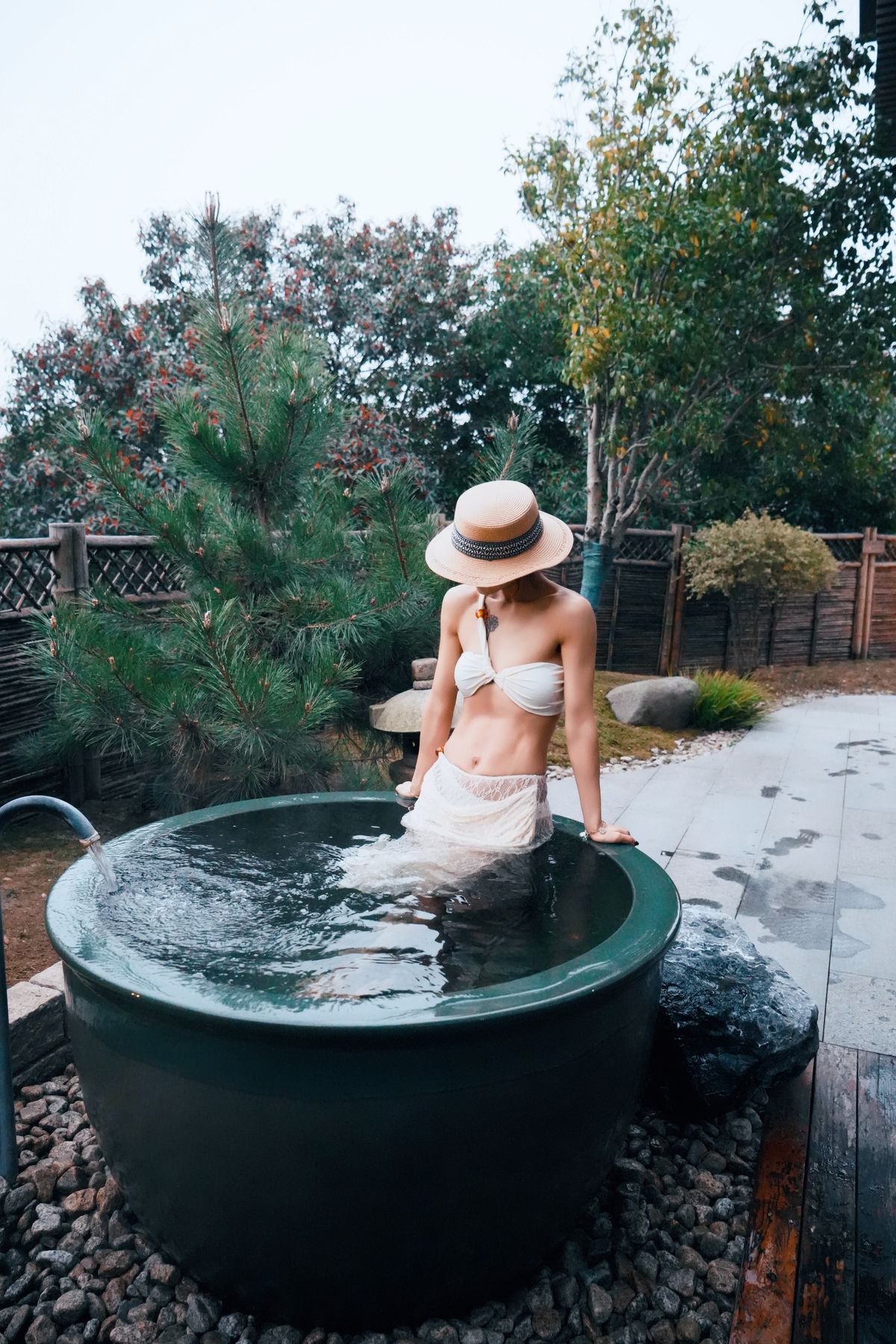
The most famous bath in the region is Takaragawa Onsen Osenkaku, an old inn set deep in a forested gorge about 50 minutes by bus from Minakami Station. Its claim to fame is one of the largest open-air baths in Japan: a series of huge riverside pools strung along both banks of the Takara River, partly shaded by the inn’s wooden bridges. Soaking here, with the river rushing past at eye level and maples or snow framing the scene, is genuinely unforgettable. Several of the pools are mixed-gender (bathers can use a provided wrap), and there is a women-only pool as well. Day-use bathing costs around ¥1,500 (US$10); staying overnight at the historic inn is a splurge-worthy experience in its own right.
Minakami Onsen and the town baths
Right in the center of things, Minakami Onsen proper lines the banks of the Tone River with ryokan and a few public bathhouses. Many inns open their baths to day visitors for ¥500–1,000, so even on a quick trip you can sample the famously soft, skin-friendly water. The simple alkaline springs here are said to be gentle and good for the skin — a soothing counterpoint to a hard day’s paddling.
Historic hideaways: Hoshi Onsen and Sarugakyo
For a more secluded soak, head to Hoshi Onsen Chojukan, a beautifully preserved wooden inn whose Meiji-era bathhouse, with hot water bubbling up directly through the pebbled floor, is a registered cultural property. Nearby Sarugakyo Onsen, set beside a tranquil lake, makes another atmospheric base, particularly in autumn. These quieter inns reward travelers who want history and stillness rather than crowds.
A first-timer’s guide to onsen etiquette
Bathing in an onsen follows a few simple rules that every visitor is expected to know. They are easy once you understand the logic — the bath is for soaking, not washing.
- Wash first. Use the showers or wash stations to clean yourself thoroughly before entering the communal bath. Soap never goes in the bath water.
- No swimwear. Onsen are enjoyed nude. Bring or rent a small “modesty towel” — but keep it out of the water, usually folded on your head or set at the edge.
- Tie up long hair so it does not touch the water, and keep noise to a relaxed minimum.
- Tattoos. Some traditional baths still restrict tattoos. Many Minakami inns are relaxed about it, and some offer private baths (kashikiri) you can reserve — worth asking about when you book.
For a full walkthrough of bathing customs, our first-timer’s travel tips cover onsen etiquette in more depth.
Minakami Through the Seasons
Few destinations in Japan transform as completely from season to season as Minakami. Knowing what each one offers helps you time your visit to your interests.
Spring (April–May)
Spring arrives late in the mountains, so while Tokyo’s cherry blossoms have long faded, Minakami’s sakura and fresh green leaves often peak in mid-to-late April. This is also when the rafting season opens with its biggest, fastest water. Pack a warm layer — mornings can still be chilly and the river is icy with snowmelt.
Summer (June–August)
Summer is the peak adventure season. The river settles into family-friendly flows, the forests are lush, and the high country above the ropeway fills with alpine flowers. Lowland Japan can be oppressively hot and humid in summer, but Minakami’s elevation keeps evenings pleasantly cool — making it a popular escape from Tokyo’s heat.
Autumn (October–early November)
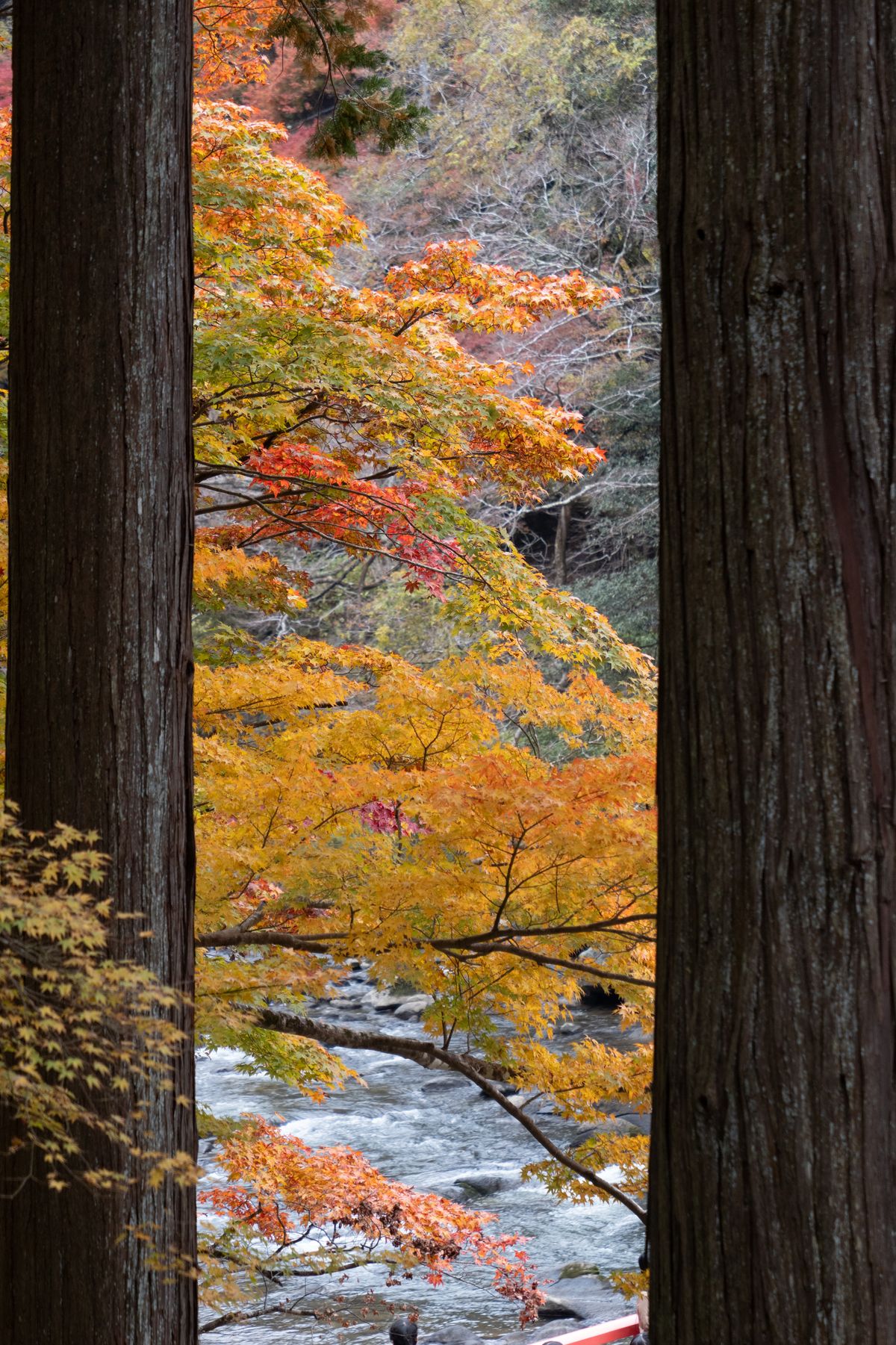
For many travelers, autumn is Minakami at its most beautiful. The koyo (autumn foliage) sweeps down from the peaks through October, setting the Tone gorge, Lake Okutone and the ropeway plateau ablaze in red, orange and gold. Rafting continues on calmer water, and the onsen feel especially inviting in the crisp air. Foliage weekends are busy, so reserve accommodation and the ropeway early.
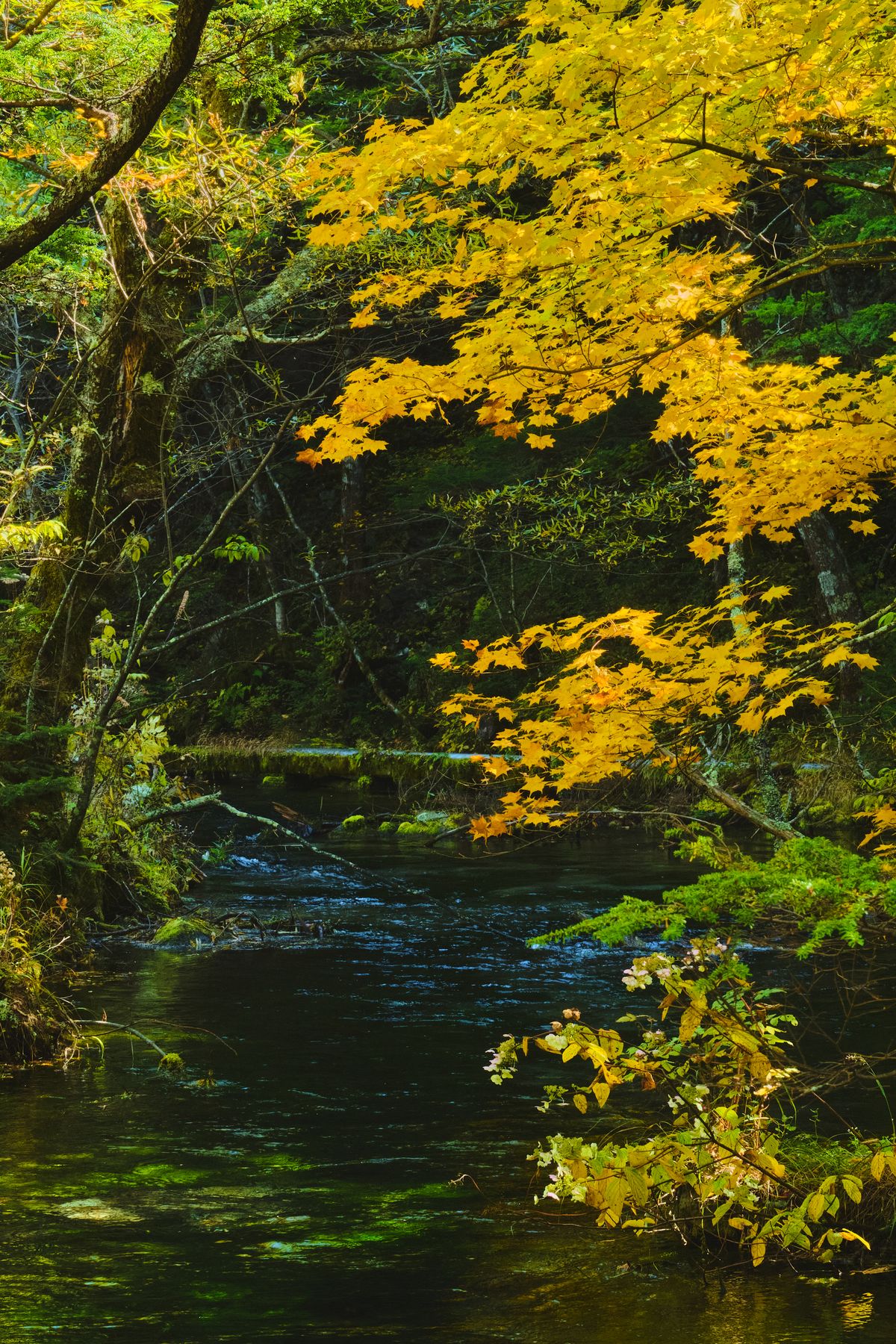
Winter (December–March)
When the snow arrives, Minakami becomes a snow-sports playground. The area has several ski resorts — including Minakami Kogen, Houdaigi and Tanigawadake Tenjindaira — offering reliable powder thanks to the moisture-laden clouds that pile against the Mikuni range. Snowshoeing, snow-rafting and snow tubing add family-friendly fun, and the contrast of stepping from deep snow straight into a steaming outdoor bath is pure magic. Roads can be snowy, so factor in extra travel time and check bus schedules, which thin out in winter.
Where to Stay in Minakami
Accommodation in Minakami ranges from rustic mountain inns to comfortable riverside ryokan, and prices are generally lower than at Japan’s marquee resort towns. Staying overnight is strongly recommended — it lets you enjoy the onsen after the day-trippers leave and catch the valley at its quiet, misty best.
Traditional ryokan and onsen inns
The classic Minakami experience is a night at a ryokan with its own hot-spring bath, a multi-course kaiseki dinner of mountain vegetables and local fish, and a futon laid out on tatami. Riverside inns in Minakami Onsen and the historic properties at Takaragawa, Hoshi and Sarugakyo are all wonderful choices. Expect roughly ¥15,000–30,000 (US$100–200) per person including dinner and breakfast for a mid-range to upper inn.
Budget and mid-range options
Guesthouses, pensions and adventure-lodge bunkhouses near the rafting bases offer beds from around ¥4,000–8,000 (US$27–53), often with a communal onsen and an easygoing, outdoorsy crowd. These are ideal if you are here mainly for the activities and want to keep costs down.
Because Minakami’s inns are spread out and the best ones book up on weekends and in foliage and ski season, it pays to reserve early and to compare rates across platforms:
Book your hotel on Agoda (Best prices guaranteed) →
Find luxury hot-spring ryokan on Ikyu.com →
What and Where to Eat
Gunma’s mountain cuisine is hearty and satisfying — exactly what you want after a day outdoors. Local specialties to seek out include:
- Mizusawa udon — thick, chewy hand-pulled noodles considered one of Japan’s three great udon styles, served cold with a dipping sauce. Made nearby and worth a detour.
- Maitake and mountain vegetables (sansai) — wild mushrooms and foraged greens turn up in tempura, hot pots and rice dishes throughout the region.
- River fish — salt-grilled ayu (sweetfish) and iwana (char), often skewered and cooked over charcoal at riverside restaurants.
- Konnyaku — Gunma produces most of Japan’s konjac, and you’ll find it in everything from sashimi-style slices to simmered dishes.
- Gunma wagyu and Joshu beef — the prefecture’s well-regarded beef appears on many ryokan dinner menus.
Most travelers eat dinner at their ryokan, where the kaiseki spread is part of the experience. For lunch, the cafes and noodle shops around Minakami Station and the activity bases are casual and reasonably priced. Carry some cash — smaller mountain establishments do not always take cards.
Suggested Minakami Itineraries
How long should you stay? Minakami works as a long day trip, but an overnight (or two) is far more rewarding. Here are three templates to adapt.
The day trip (for the time-pressed)
Catch an early Joetsu Shinkansen from Tokyo and you can be on the river by late morning. Do a half-day rafting trip, grab a noodle lunch, ride the Tanigawadake Ropeway for the afternoon views, take a quick day-use onsen soak, and return to Tokyo by evening. It is a full, fast day — but it proves how accessible this wilderness really is.
The classic two-day onsen-and-adventure trip
Day 1: Morning Shinkansen, half-day rafting or canyoning, check into a riverside ryokan, long soak and a kaiseki dinner. Day 2: Ropeway and a gentle plateau walk in the morning, a visit to Doai Station or Lake Okutone, a final day-use bath at Takaragawa Onsen, then the train home. This is the sweet spot for most first-timers.
The three-day deep dive
Add a third day for a bigger adventure (a full-day rafting or canyoning combo, or a guided hike toward Tanigawa’s higher trails), an onsen-hopping afternoon among the historic inns, and time to simply slow down. In winter, swap the river day for a day on the ski slopes.
Practical Tips for Visiting Minakami
- Book activities and lodging in advance for summer weekends, the autumn foliage season and ski holidays — the best operators and inns sell out.
- Carry cash. Many small inns, restaurants and bus services are cash-only. There are ATMs at convenience stores and the post office, but do not rely on cards everywhere.
- Check bus timetables immediately on arrival at Jomo-Kogen and Minakami stations. Services are infrequent and seasonal, and missing one can cost you an hour.
- Pack layers and quick-dry clothes. Mountain weather shifts fast; even summer evenings are cool, and you will get wet on the river.
- Bring or rent water shoes for rafting and canyoning if your operator does not provide them.
- Reserve the Tanigawadake Ropeway-friendly days for clear weather when you can — the views are the whole point, and low cloud can erase them.
- Consider the Minakami Area Pass if you plan to bus between the town, Takaragawa and the ropeway over two days.
- Tell your inn your arrival time. Ryokan dinners are served at set hours, and many will arrange a pickup from the nearest bus stop if you ask ahead.
- Respect onsen etiquette — wash before bathing, no swimwear, towels out of the water.
- Buy travel data before you arrive. Coverage in the gorges can be patchy, and you’ll want maps and timetables on hand: Get your Japan eSIM here →
Frequently Asked Questions
How far is Minakami from Tokyo?
Minakami is about 70 minutes from Tokyo Station to Jomo-Kogen Station on the Joetsu Shinkansen, plus a 20-minute bus or short taxi ride to the town center. By local train it is around three hours, and by car roughly two hours via the Kan-etsu Expressway. That makes it one of the most accessible mountain destinations in Japan.
Is Minakami good for a day trip, or should I stay overnight?
You can absolutely visit Minakami as a day trip from Tokyo and fit in rafting plus the ropeway. However, staying at least one night is strongly recommended so you can enjoy the onsen after the day-trippers leave, savor a traditional ryokan dinner, and experience the valley’s quiet, misty atmosphere in the early morning and evening.
When is the best time to go rafting in Minakami?
The rafting season runs roughly from April to October. April and May offer the biggest, fastest rapids from snowmelt — thrilling but cold and best for confident participants. Midsummer brings gentler, family-friendly flows. Many operators welcome children from about age ten on the calmer summer runs.
Do I need to speak Japanese to visit Minakami?
No. The major adventure operators run tours in English and are used to international guests, and key signage at the stations and ropeway includes English. That said, rural Japan has less English than Tokyo, so a translation app and a data connection are very helpful, especially for buses and smaller inns.
Can people with tattoos use the onsen in Minakami?
Policies vary. Some traditional baths still restrict visible tattoos, but many Minakami inns are relaxed, and a number offer private reservable baths (kashikiri) where tattoos are not an issue. If this matters to you, ask when booking or choose accommodation with a private bath.
What should I pack for Minakami?
Bring quick-dry clothing and a swimsuit base layer for water activities, warm layers for cool mountain evenings (even in summer), sturdy shoes for walking, sunscreen, cash, and any personal toiletries. In winter add proper cold-weather gear; ski equipment can be rented at the resorts.
Is Minakami suitable for families with children?
Yes. In addition to summer’s gentle rafting, families enjoy the ropeway and plateau walks, lake cruises on Okutone, snow play in winter, and the novelty of Doai Station. Many ryokan welcome children and offer family-friendly meals and baths.
A Brief History of Minakami and the Tone River
Understanding the Tone River helps explain why Minakami exists. The Tone, or Tonegawa, is one of Japan’s greatest rivers — second longest in the country and by far the largest by drainage area in the Kanto region. Historically nicknamed Bando Taro (“the eldest son of the east”), it has shaped the geography, agriculture and very survival of eastern Japan for centuries. Minakami sits near its mountain source, where snowmelt from the Mikuni and Tanigawa ranges gathers into the clear, powerful flow that gives the town its name.
For generations Minakami was a quiet onsen and forestry district, its hot springs known mainly to Japanese travelers seeking a mountain cure. The literary giant Yasunari Kawabata and other writers retreated to its inns, and the region developed a gentle reputation as a place of rest. Everything changed in the late twentieth century when international rafting operators recognized that the upper Tone offered some of the best white water within reach of Tokyo. Adventure tourism took off, and today Minakami blends those two identities — contemplative hot-spring retreat and high-energy outdoor hub — into one unusually well-rounded destination. In recognition of its forests, rivers and traditional land use, the wider area was designated a UNESCO Biosphere Reserve, underlining how seriously the region takes the balance between recreation and conservation.
Combining Minakami with the Rest of Gunma
Minakami pairs naturally with other highlights of Gunma Prefecture if you have extra time, since the Joetsu Shinkansen and Joetsu Line make hopping around easy. A few ideas:
- Kusatsu Onsen — Japan’s most famous hot-spring resort, with its theatrical yubatake hot-water field, lies further west in Gunma and makes a superb add-on for onsen lovers.
- Ikaho Onsen — known for its iconic stone staircase lined with shops and inns, and its rare brown “golden” iron-rich waters.
- Numata and Fukiware Falls — on the way to or from Minakami, the so-called “Niagara of the East” thunders through a rock channel and is spectacular after rain or in autumn.
- Takasaki — the prefecture’s transport hub and home to the giant white Byakue Daikannon statue, an easy stop on the rail line south.
Building a two- or three-stop Gunma loop is a great way to experience a side of Japan that few first-time visitors ever see, and it keeps you off the most crowded tourist trails.
How Much Does a Minakami Trip Cost?
Minakami is refreshingly affordable, but costs add up across transport, activities and accommodation. Here is a rough per-person budget for a typical two-day, one-night trip from Tokyo, to help you plan:
- Round-trip Shinkansen (Tokyo–Jomo-Kogen): about ¥11,000–12,400 (US$74–83), or free with a valid rail pass.
- Local buses or Area Pass: roughly ¥2,000–2,500 (US$13–17) for two days.
- Half-day rafting: about ¥6,000–9,000 (US$40–60).
- Tanigawadake Ropeway round trip: about ¥2,000–3,000 (US$13–20).
- One night at a mid-range onsen ryokan with dinner and breakfast: about ¥15,000–25,000 (US$100–167).
- Lunches, snacks and a day-use bath: about ¥3,000–5,000 (US$20–33).
All told, a comfortable two-day trip lands somewhere around ¥35,000–55,000 (US$235–370) per person, and considerably less for budget travelers using local trains, guesthouses and a single activity. Compared with the equivalent experience in Hakone or Karuizawa, Minakami consistently delivers more nature and adventure for the money — one more reason this under-the-radar mountain town deserves a place on a first-time Japan itinerary.
What a Rafting Day Actually Looks Like
If you have never rafted before, knowing the rhythm of the day takes away the nerves. After booking online, you will usually receive a meeting time at the operator’s base — often with a free shuttle from your hotel or the station. On arrival you change into the wetsuit, splash jacket, helmet and life jacket provided, stow your valuables in a locker, and gather for a safety briefing. Guides explain the paddle commands (“forward,” “back,” “hold on”), what to do if you fall in, and how the team works together. None of it is complicated, and the guides keep the mood light and reassuring.
You will then ride a short way to the put-in point, where rafts are carried down to the river. The trip itself alternates between bursts of splashing, shouting fun through the rapids and calm stretches where guides point out the gorge scenery, let braver paddlers swim or jump from rocks, and crack jokes. A half-day run lasts around two to three hours on the water. Afterward you return to base for a hot shower, and many operators share photos taken from the riverbank. Bring a change of dry clothes, a towel and — if you want your own pictures — a securely strapped action camera, since phones are best left in the locker.
The same easygoing structure applies to canyoning and the other guided activities, which is part of what makes Minakami so welcoming to first-timers: you need no prior skill, just a willingness to get wet and have fun.
Best Photo Spots in Minakami
Minakami is wonderfully photogenic, and a few locations stand out for capturing the region’s character:
- The riverside baths at Takaragawa Onsen — the wooden bridges, stone pools and surrounding forest are iconic, especially framed by autumn maples or fresh snow (be respectful of other bathers and follow the inn’s photography rules).
- Tenjindaira plateau, atop the ropeway — the serrated ridge of Mount Tanigawa rising above wildflower or autumn-colored slopes is one of Gunma’s great mountain panoramas.
- Doai Station’s underground stairwell — the long, dim flight of 486 steps descending into the mountain has a haunting, almost surreal quality.
- Lake Okutone in October — mirror-calm water reflecting blazing foliage, best from the sightseeing boat or the dam overlook.
- The Tone River gorge from the rafting put-ins — clear green water cutting through mossy rock, framed by steep forested walls.
Whenever you shoot in onsen areas or at traditional inns, be mindful of other guests’ privacy — a quick check with staff about where photography is allowed keeps everyone comfortable.
Is Minakami Right for Your Trip?
Minakami is an outstanding choice if you want to balance Japan’s famous cities with a genuine dose of nature, if you enjoy the outdoors at any intensity, or if onsen culture is high on your wish list. It rewards travelers who are happy to slow down, who do not mind infrequent rural buses, and who appreciate scenery and atmosphere over shopping and nightlife. Families, couples, solo adventurers and rail enthusiasts all find something here.
It may be less ideal if your trip is extremely short and city-focused, if you need constant English-language convenience, or if you are visiting in the deep off-season shoulder weeks when some activities pause and bus schedules thin out. Even then, the onsen and the mountain views remain. For most first-timers building a one- to two-week Japan itinerary, slotting in a Minakami overnight between Tokyo and points north is one of the smartest, most memorable decisions you can make — a quiet, green counterpoint to the neon and the crowds that will likely become a highlight of the whole journey.
Final Thoughts
Minakami is proof that you do not have to travel far from Tokyo to find the wild, mountainous, hot-spring side of Japan that so many travelers dream of. In a single short trip you can raft a roaring river, ride a cable car into alpine meadows, descend into the country’s deepest railway station, and end the day neck-deep in a riverside bath as steam curls into the cool mountain air. Whether you come for adrenaline, for relaxation, or — best of all — for both, this corner of Gunma delivers an experience that feels genuinely off the beaten path while remaining wonderfully easy to reach.
Ready to plan your escape into the mountains? Compare onsen-ryokan rates on Agoda, secure your data with a Japan eSIM, and browse more inspiration in our Japan destinations guide.
Going to Japan? Talk to locals with confidence.
Hirameki Japanese — instant offline translation, camera translation, furigana + romaji, and 314 free flashcards. No login. Works without internet.

Plan your Japan trip
Two things every first-timer should book
Some links are affiliate links. If you book through them we may earn a small commission at no extra cost to you.