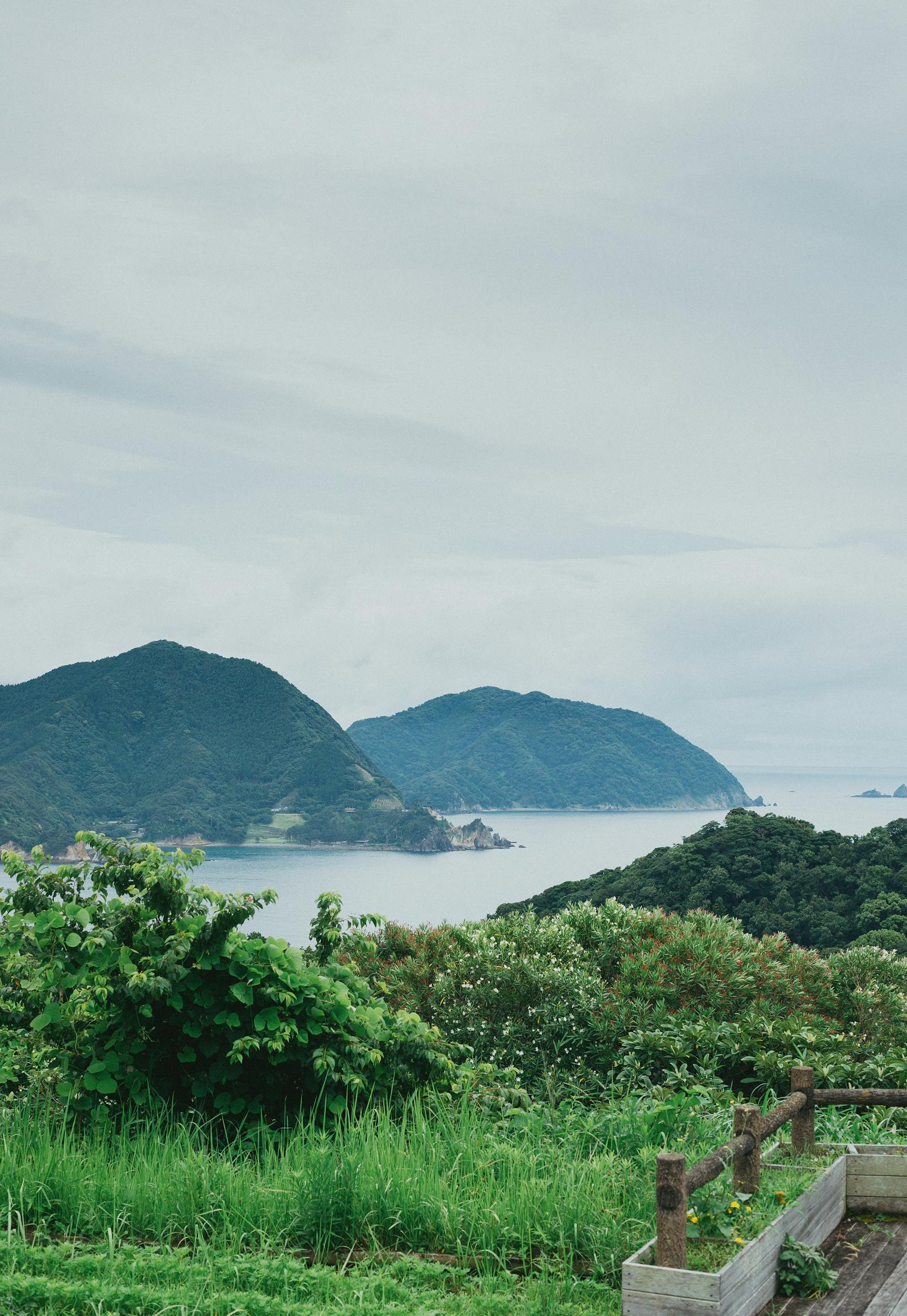
Tucked into a quiet river valley deep in the mountains of Shimane Prefecture, on the often-overlooked San-in coast of western Japan, the little town of Tsuwano feels like a secret that the rest of the country has somehow kept to itself. With its white-walled samurai houses, stone-lined canals where thousands of brightly colored carp swim, a mountaintop shrine reached through a tunnel of vermilion gates, and a vintage steam train that still puffs into its station on summer weekends, Tsuwano is the kind of place that rewards travelers willing to stray from the well-trodden Tokyo-Kyoto-Osaka route.
Often called the “Little Kyoto of San-in,” Tsuwano packs an astonishing amount of history and charm into a town you can comfortably explore on foot or by rented bicycle in a single day. This complete first-timer’s guide covers everything you need to know: the town’s samurai-era history, its most famous sights, the legendary SL Yamaguchi steam train, exact costs and opening hours, the best time to visit, detailed transport directions, where to stay, what to eat, and a full set of practical tips and frequently asked questions.
Why Visit Tsuwano?
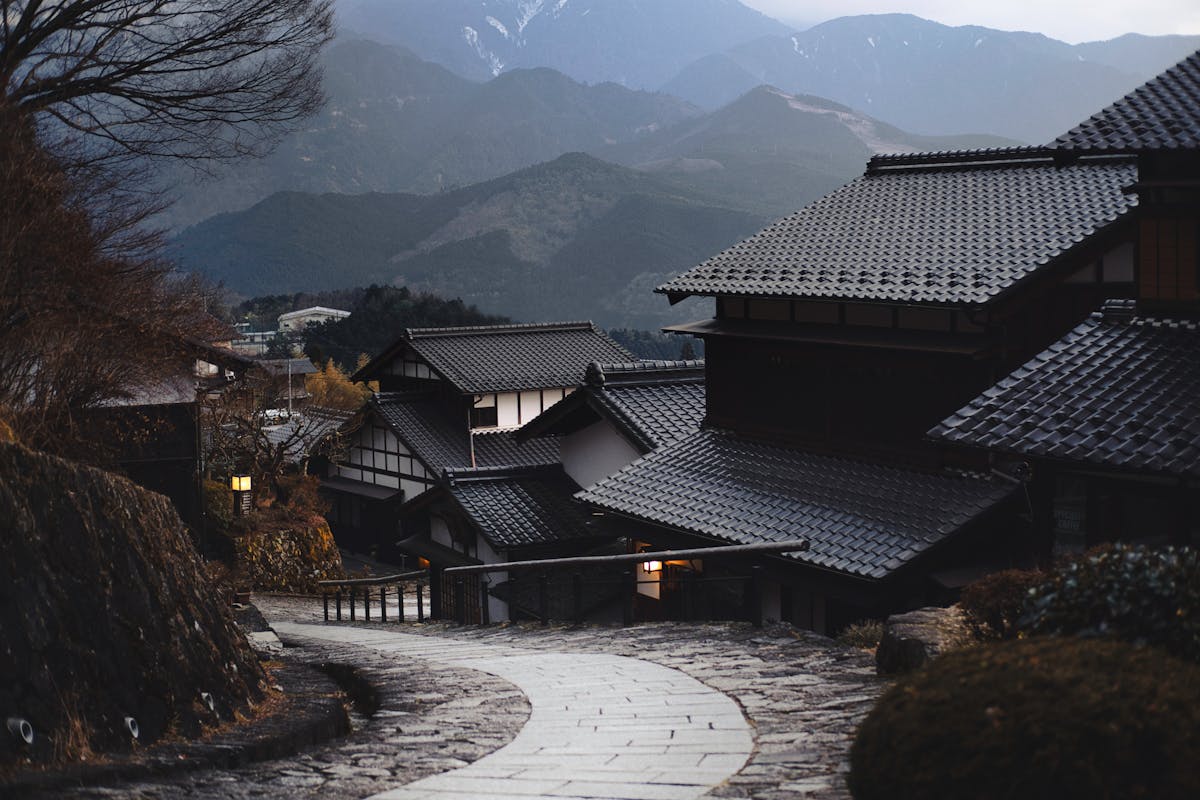
In a country full of beautifully preserved old towns, what makes Tsuwano special is its combination of intimacy, authenticity, and sheer variety. This is not a sprawling city with a historic district bolted on; the entire town is small, walkable, and wrapped in green mountains, so that almost everywhere you go you feel the presence of the surrounding nature. Because it lies far from the major tourist corridors, it has never been overrun, and even at its busiest it retains a gentle, lived-in atmosphere that has all but vanished from Japan’s most famous sightseeing spots.
Tsuwano also offers an unusual concentration of distinct experiences within a tiny area. In the space of a few hours you can stroll a perfectly preserved samurai street, watch thousands of koi carp glide through crystal-clear canals, climb (or ride a chairlift) to a hilltop shrine famous for its long tunnel of red torii gates, explore the ruins of a mountaintop castle with sweeping valley views, and — if your timing is right — watch a 1930s-era steam locomotive arrive in a cloud of white smoke. Few towns of this size pack in so much.
For travelers seeking the “real Japan” beyond the bullet-train cities, Tsuwano delivers in a way that feels effortless and unforced. It is a place to slow down, breathe clean mountain air, chat with friendly local shopkeepers, and experience the rhythm of a small Japanese town that still moves to its own quiet beat. If you are building an itinerary through western Japan and want a genuine hidden gem to anchor it, Tsuwano belongs near the top of your list. You can browse more off-the-beaten-path ideas in our hub of Japan destination guides.
A Brief History: The Little Kyoto of San-in
Tsuwano grew up around a mountaintop castle first built at the end of the thirteenth century to defend the region against potential invasion. Over the following centuries it developed into a prosperous castle town, ruled for much of the Edo period by the Kamei clan, whose samurai administrators laid out the elegant streets, canals, and residences that still define the town today. The careful town planning of that era — with the samurai quarter, merchant district, and temples each in their place — survives remarkably intact, which is why Tsuwano is so often compared to Kyoto.
The town has long had an outsized reputation for learning and culture. During the Edo period its domain school produced notable scholars, and Tsuwano later became the birthplace of two of modern Japan’s most important figures: Mori Ogai, the celebrated novelist, translator, and army surgeon, and Nishi Amane, a pioneering philosopher who helped introduce Western thought to Japan. The preserved former homes of both men can be visited today, adding a literary and intellectual dimension to the town’s appeal.
Tsuwano also holds a poignant place in the history of Christianity in Japan. In the early Meiji period, a group of persecuted Christians from Nagasaki were exiled here, and a small hillside chapel and memorial, the Otome Toge, now commemorate them. This layering of samurai heritage, literary legacy, and religious history gives Tsuwano a depth that belies its modest size. Walking its streets, you are not simply admiring pretty old buildings; you are moving through a town that has played a quiet but real role in the cultural story of Japan.
Tonomachi: The Old Samurai Street and Its Famous Carp
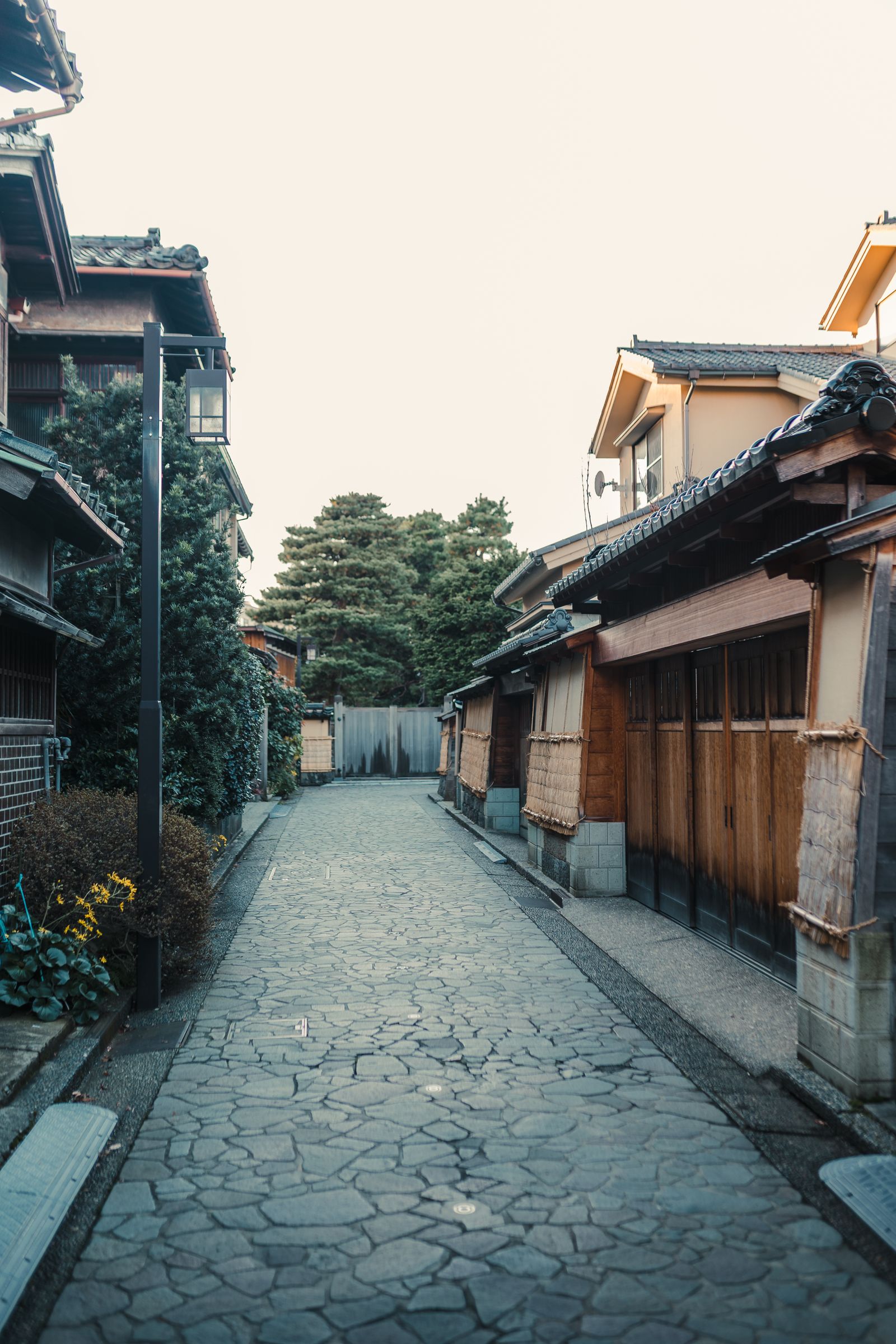
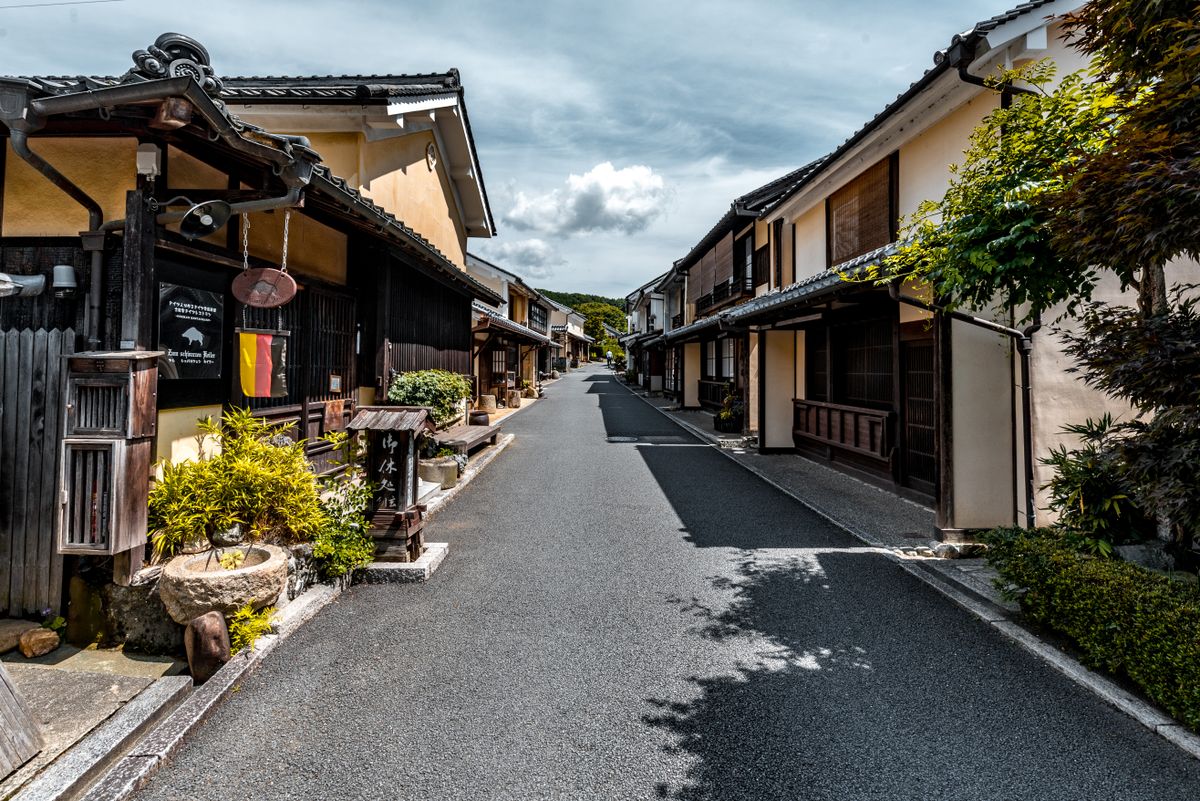
The heart of Tsuwano is the Tonomachi district, the former samurai quarter, where a long, straight street is lined with handsome white-plastered buildings, old merchant shops, sake breweries, and dignified residences. The architecture is beautifully preserved, with dark wooden lattices, tiled roofs, and the distinctive white and black walls of a prosperous Edo-period town. It is a wonderful place to wander slowly, ducking into craft shops, sampling local sweets, and admiring the craftsmanship of a bygone age.
But Tonomachi’s most famous and unexpected feature lies at street level: the stone-lined canals that run alongside the road are home to thousands of koi carp. These colorful fish — orange, white, gold, and black — glide lazily through the clear water in such numbers that, in places, they are said to outnumber the town’s human residents. Legend holds that the carp were originally raised as an emergency food supply in case of famine or siege, but they were never needed and instead became cherished symbols of the town. Today they are a beloved sight, and watching them is one of the simple pleasures of a visit.
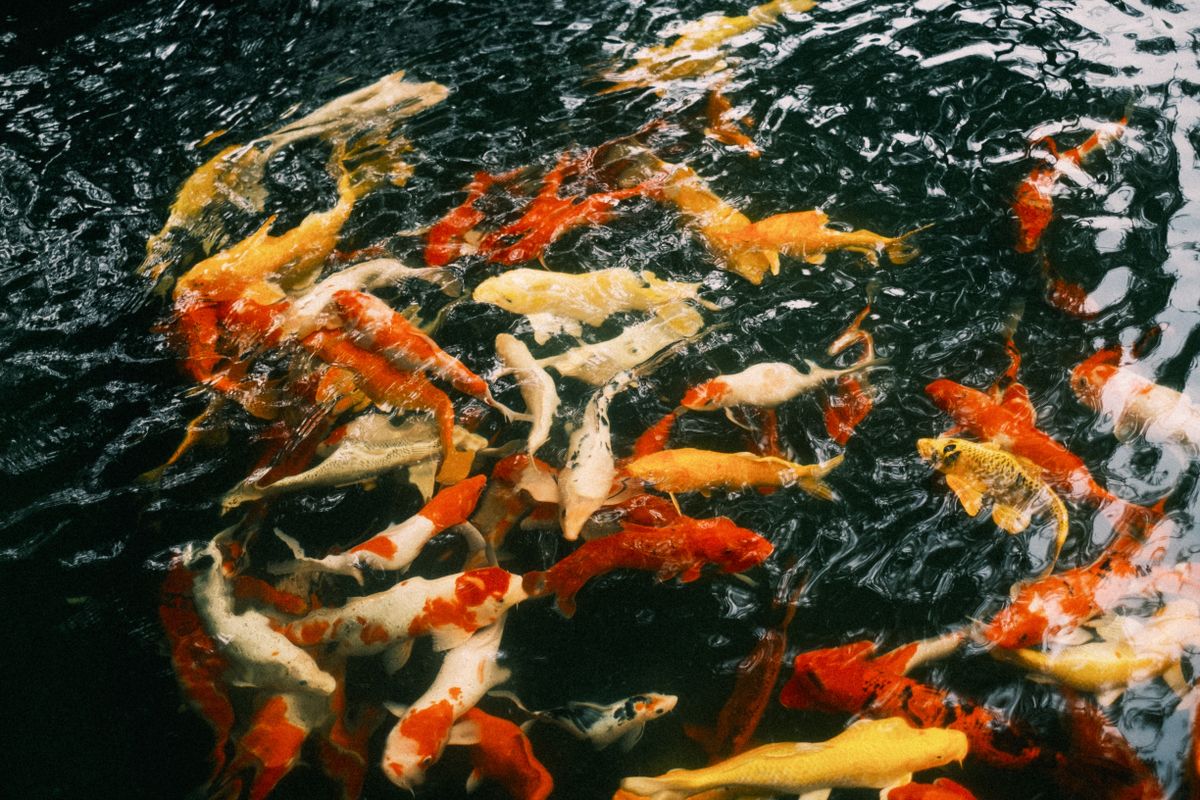
The contrast of the immaculate white walls, the gentle sound of running water, and the flash of brilliantly colored fish makes Tonomachi one of the most photogenic streetscapes in all of Japan. In early summer, irises bloom along the waterways, adding splashes of purple to the scene. Take your time here; buy a small bag of fish food from a shop to feed the carp, browse the local crafts, and soak up the unhurried atmosphere that makes Tsuwano so special.
Taikodani Inari Shrine: A Tunnel of Red Torii Gates
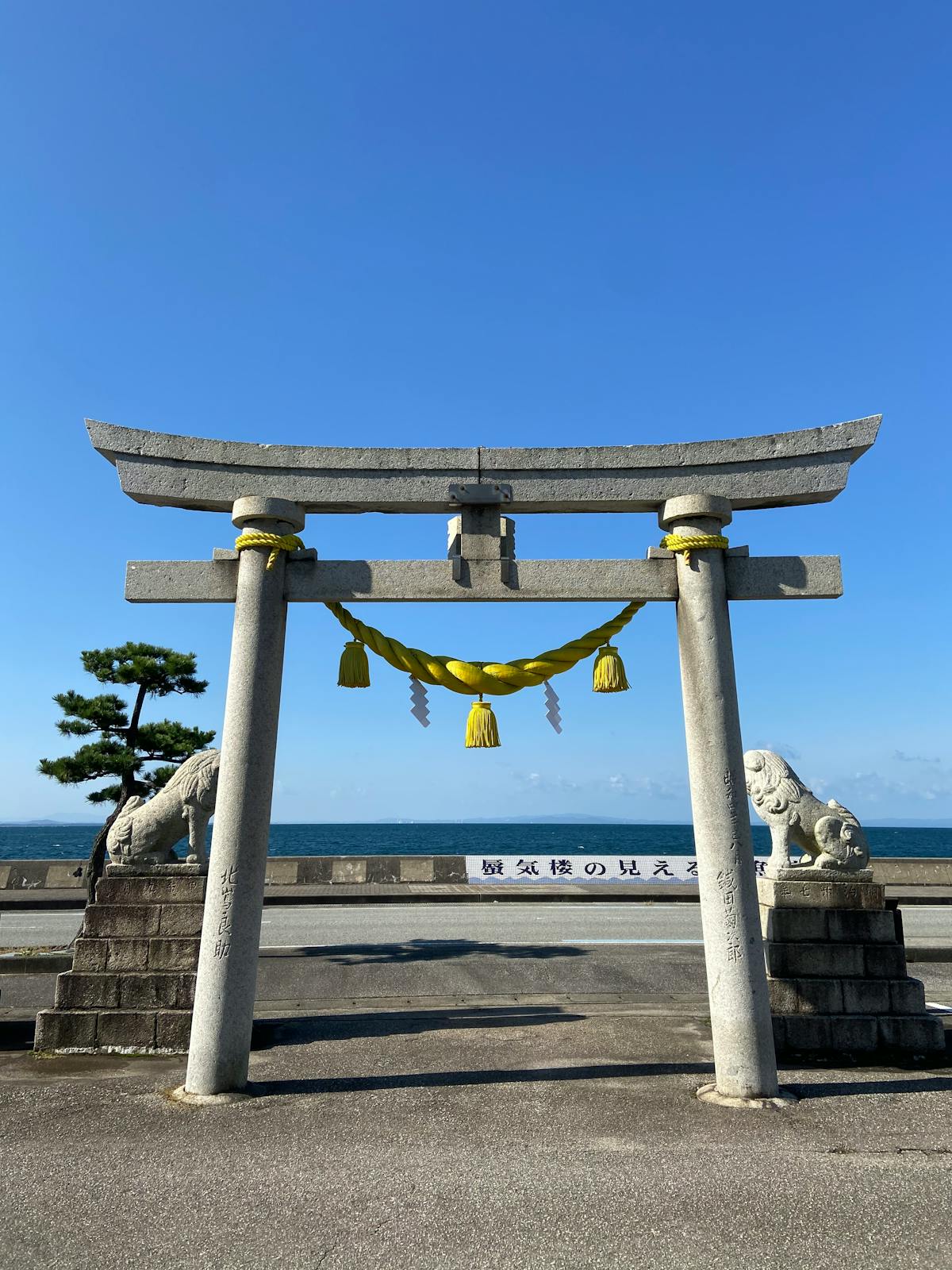
Rising on the hillside above the town is Tsuwano’s most striking sight: Taikodani Inari Shrine, one of the five great Inari shrines of Japan. Dedicated to the deity of rice, prosperity, and business, it is approached by an unforgettable pathway — a tunnel of around a thousand vermilion torii gates that zigzags up the mountainside for several hundred meters. Walking beneath the endless arch of glowing red gates, with the town spreading out below through the gaps, is a magical experience that rivals the more famous (and far more crowded) torii path at Fushimi Inari in Kyoto.
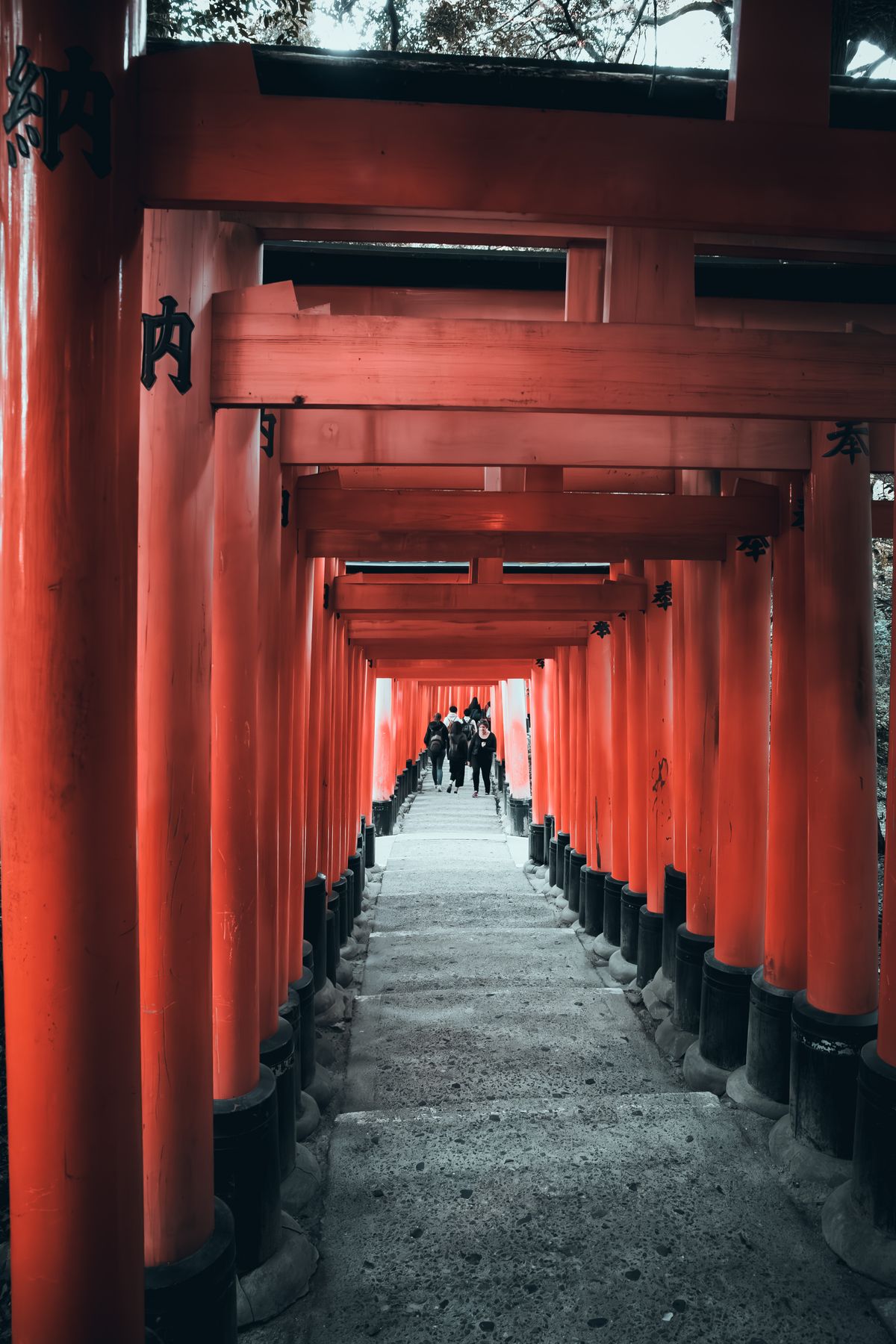
The climb up through the gates takes around fifteen to twenty minutes at an easy pace, and the shrine at the top is a vivid complex of bright orange and red buildings, beautifully maintained and often surprisingly quiet. From the shrine grounds you are rewarded with lovely views over the red rooftops of Tsuwano and the green valley beyond. If you prefer not to climb, you can also reach the shrine by road, but walking up through the torii tunnel is very much part of the experience and well worth the modest effort. The shrine is free to enter and open throughout the day, making it an essential stop on any Tsuwano itinerary.
Tsuwano Castle Ruins and the Chairlift
High on the mountain above Taikodani Inari Shrine stand the ruins of Tsuwano Castle. While the wooden keep is long gone, the impressive moss-covered stone walls remain, and the site offers what many consider the finest view in the region: a sweeping panorama over the entire town laid out in its narrow valley, with mountains rolling away on every side. On misty mornings, the valley sometimes fills with a sea of clouds, and the castle ruins seem to float above it — a breathtaking and much-photographed sight for those willing to rise early.
To reach the ruins, you can ride a nostalgic single-person chairlift partway up the mountain (operating seasonally and in good weather), followed by a short uphill walk of about fifteen minutes along a forest path. The chairlift is inexpensive and adds a touch of fun, gliding you up over the treetops. Alternatively, energetic visitors can hike the whole way up. Wear comfortable shoes and allow extra time, as the final stretch to the ruins is unpaved and can be slippery after rain. The combination of the torii-gate shrine and the castle ruins makes the mountainside above Tsuwano a half-day adventure in itself.
Riding the SL Yamaguchi Steam Train
One of Tsuwano’s most beloved attractions is not a building but a train. On select weekends and holidays, mainly from spring through autumn, a beautifully restored vintage steam locomotive known as the SL Yamaguchi runs between Shin-Yamaguchi and Tsuwano, hauling elegant retro-styled carriages through the mountains. Watching the black locomotive pull into Tsuwano Station in a billowing cloud of white steam, whistle echoing off the hills, is a genuinely thrilling sight that delights railway fans and families alike.

The journey itself is a highlight, winding for around two hours through river valleys and rural scenery in carriages designed to evoke the romance of early twentieth-century rail travel. Because seats are limited and the train is hugely popular, reservations are essential and often sell out well in advance, especially during the autumn foliage and cherry blossom seasons. Tickets can be booked through JR ticket offices and reservation systems. Even if you do not ride it, timing your visit to coincide with the train’s arrival so you can photograph it at the station is a memorable experience. For help planning train connections across the wider region, see our guide to the Japan Shinkansen network, which explains how the high-speed lines link up with local services like those serving Tsuwano. If you would like to fold a steam-train ride into a wider organized itinerary, browse curated tours and rail experiences on NEWT.
Costs and Practical Visiting Information
Tsuwano is a wonderfully affordable destination. Many of its best experiences — strolling the Tonomachi samurai street, watching the carp, and visiting Taikodani Inari Shrine — are completely free. The seasonal chairlift up toward the castle ruins costs only a few hundred yen, around ¥700 (about USD 5) for a round trip. Entry to the various small museums and preserved residences, such as the Mori Ogai Memorial Museum or the old samurai houses, typically runs ¥300 to ¥600 (about USD 2 to USD 4) each.
Renting a bicycle is the ideal way to get around, since Tsuwano’s sights are slightly spread out along the valley; rental shops near the station charge roughly ¥500 to ¥800 (about USD 3.50 to USD 5.50) for a few hours or a full day. Most attractions are open from around 9:00 a.m. to 5:00 p.m., though the shrine and outdoor streets can be enjoyed at any time. A relaxed day is plenty to see the highlights, but staying overnight lets you catch the magical early-morning light and the possibility of a cloud sea over the valley.
As in much of rural Japan, cash is important here — many small shops, the chairlift, and bicycle rentals may not accept cards, so carry enough yen. Mobile reception is generally fine in the town but can be patchy in the mountains, so setting up a reliable travel eSIM before you arrive ensures your maps, train apps, and translation tools keep working throughout your trip. For comparing accommodation and transport package deals across the region, it can also be worth checking travel-deal sites before you book.
Best Time to Visit Tsuwano
Tsuwano is rewarding in every season, and the surrounding mountains ensure that the scenery changes dramatically throughout the year. Choosing when to go depends on what you most want to see.
Spring (late March to April) brings cherry blossoms along the river and the canals, framing the white samurai walls in clouds of pink, and the weather is mild and ideal for cycling and climbing to the shrine. Early summer (late May to June) is when the irises bloom along the Tonomachi canals and the carp are at their most active, while the famous Sagi-mai, or heron dance, a centuries-old ritual in which performers in elaborate white heron costumes dance through the streets, is held in July, offering a rare glimpse of living tradition.
Autumn (late October to November) may be the most beautiful season of all, when the mountains around the town blaze with red and gold, the castle ruins are wreathed in color, and the SL Yamaguchi steam train runs against a backdrop of fall foliage. The cooler air also increases the chance of an early-morning cloud sea over the valley. Winter (December to February) is quiet and can be cold, with occasional snow dusting the rooftops and torii gates for a serene, photogenic scene, though some seasonal services such as the chairlift and steam train do not operate. For most first-time visitors, spring and autumn offer the best balance of scenery, comfortable weather, and full operation of the town’s attractions.
How to Get to Tsuwano
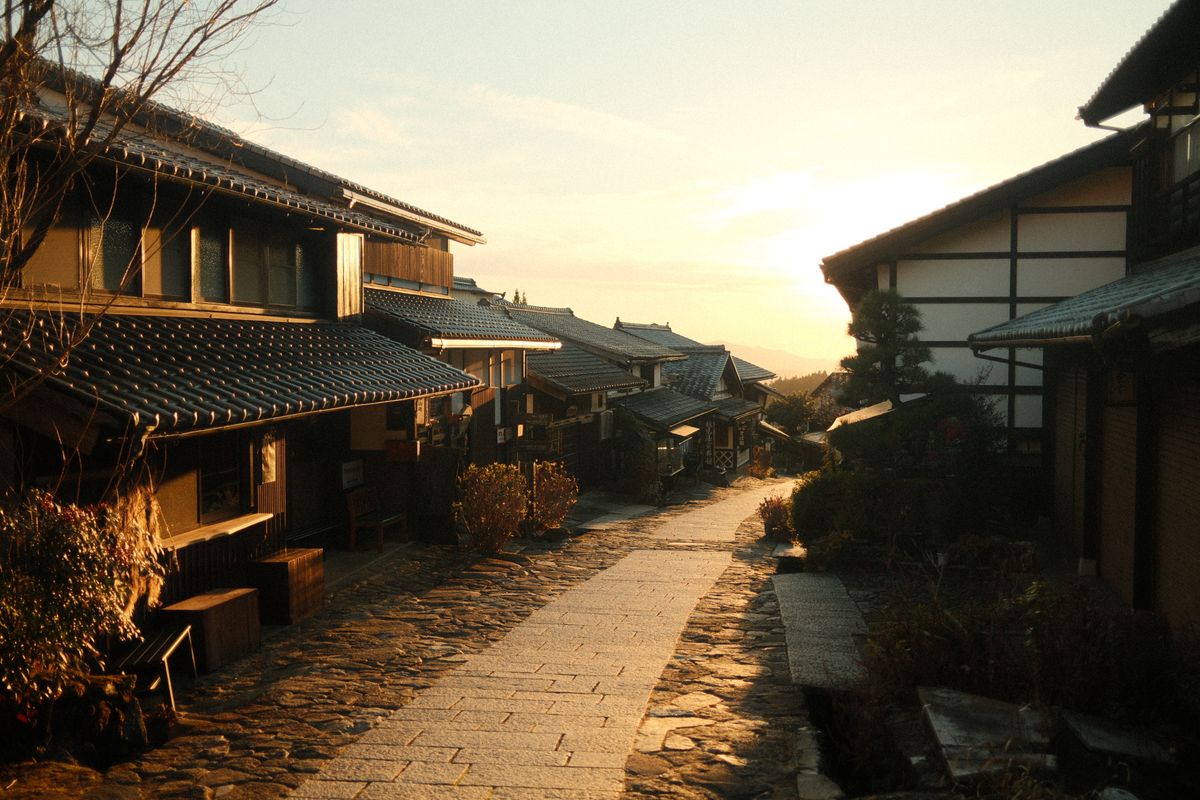
Part of Tsuwano’s charm is that reaching it requires a little effort, which is exactly what keeps it so unspoiled — but it is far from inaccessible. The town has its own station, Tsuwano Station, on the JR Yamaguchi Line, and from there all the main sights are within walking or easy cycling distance.
The most common approach is from the south. From Shin-Yamaguchi Station, which is served by the Sanyo Shinkansen, local trains on the JR Yamaguchi Line reach Tsuwano in around one hour to ninety minutes. This is also the route taken by the SL Yamaguchi steam train on operating days. Shin-Yamaguchi is easily reached by Shinkansen from Hiroshima (about 30 to 40 minutes) or from Osaka and beyond, making Tsuwano a feasible if leisurely day trip or overnight from Hiroshima.
From the north, Tsuwano can be reached from Masuda on the San-in coast, with onward connections toward Matsue and Izumo. Travelers exploring the wider San-in region — including the Izumo Taisha grand shrine and the castle town of Matsue — can link Tsuwano into a rewarding loop. Because services on these rural lines are infrequent, always check timetables carefully and plan your connections in advance. If you intend to cover long distances across western Japan by rail, our guide on whether the Japan Rail Pass is worth it can help you work out the most cost-effective option. First-time visitors will also find our Japan travel tips for first-timers useful for navigating local trains, etiquette, and payment.
Where to Stay in Tsuwano
Although many people visit Tsuwano as a day trip, staying overnight is highly recommended. Once the day-trippers leave, the town becomes wonderfully peaceful, and an early start gives you the best chance of catching the morning mist over the valley and the soft light on the samurai street before anyone else is about.
Accommodation in Tsuwano is mostly small-scale and traditional, which is part of its appeal. You will find family-run ryokan and minshuku (guesthouses) offering tatami rooms, futon bedding, and home-cooked local meals, as well as a few simple business hotels near the station. Staying in a traditional inn, with a kaiseki-style dinner featuring local river fish and mountain vegetables followed by a generous breakfast, is an experience in itself and deepens your sense of the town’s old-fashioned hospitality. You can compare available inns and guesthouses in and around Tsuwano on Agoda.
If Tsuwano’s limited lodging is fully booked, or if you prefer a wider choice of restaurants and amenities, you can base yourself in a larger nearby city such as Yamaguchi, Hiroshima, or Masuda and visit Tsuwano on a day trip, though this means you will miss the magical early mornings and quiet evenings. For broader price comparisons across booking platforms and occasional package deals, it is also worth checking travel aggregators before committing.
What to Eat in Tsuwano
For such a small town, Tsuwano has a distinctive and memorable local cuisine shaped by its mountain-and-river setting. The most famous specialty is uzume-meshi, a humble but delicious dish in which finely chopped vegetables, mushrooms, and sometimes fish or tofu are buried beneath a bowl of rice and topped with a savory dashi broth, wasabi, and seaweed. Tradition holds that the ingredients were hidden under the rice during the frugal Edo period; today it is a comforting local favorite served in several restaurants around town.
Another regional treat is sasazushi, sushi rice and toppings wrapped in bamboo grass leaves, a portable and beautifully presented dish. Tsuwano is also known for its handmade genjimaki, a soft sponge cake rolled around sweet bean paste that makes an excellent souvenir, and for fresh local wasabi, grown in the clear mountain streams of the area. The town’s clean water also supports a couple of historic sake breweries in the Tonomachi district, where you can sample and buy crisp local rice wine. After a day of walking and climbing, settling down to a meal of these regional specialties, perhaps with a cup of Tsuwano sake, is the perfect way to round off your visit.
Combining Tsuwano with Other San-in Destinations
While Tsuwano is worth a dedicated overnight stay, it also fits beautifully into a longer journey through the quiet, beautiful San-in region of western Japan, which sees far fewer foreign visitors than the Pacific side of the country. Pairing it with other nearby highlights turns a single stop into a memorable multi-day adventure off the standard tourist trail.
To the south, Hiroshima and Miyajima are within easy reach via Shin-Yamaguchi, allowing you to combine Tsuwano’s intimate charm with one of Japan’s most iconic shrine-and-island landscapes. To the north along the San-in coast lie the grand Izumo Taisha, one of the oldest and most important shrines in Japan, and the atmospheric castle town of Matsue with its original feudal keep. Adventurous travelers can string together Tsuwano, Yamaguchi city, the Akiyoshido limestone cave, and the San-in coast into a varied route that showcases a side of Japan most visitors never see. Browse our full collection of Japan destination guides to help plan the perfect western Japan itinerary.
Practical Tips for Visiting Tsuwano
- Rent a bicycle. The sights are spread along the valley; a cheap rental bike from near the station is the most enjoyable and efficient way to get around.
- Stay overnight if you can. Tsuwano is at its most magical early in the morning and in the evening, once the day-trippers have gone.
- Book the SL Yamaguchi steam train far in advance. Seats sell out weeks ahead, especially in spring and autumn. Reserve as early as possible if you want to ride it.
- Carry cash. Many small shops, the chairlift, and bike rentals do not accept cards. Bring enough yen for the day.
- Check train timetables. Local trains on the Yamaguchi Line are infrequent; note your connections so you are not stranded.
- Wear comfortable shoes. Climbing the torii tunnel and walking to the castle ruins involves slopes and uneven, sometimes slippery paths.
- Start early for the cloud sea. On cool, still mornings, the valley can fill with mist seen best from the castle ruins. Sunrise is the time to catch it.
- Set up mobile data before arrival. A prepaid eSIM keeps your maps and timetable apps working in this rural area.
- Feed the carp. Buy a small bag of fish food and enjoy one of Tsuwano’s simplest, most charming pleasures.
- Respect residents. Tsuwano is a living town, not a theme park. Keep noise down in residential lanes and ask before photographing people.
Frequently Asked Questions
Where is Tsuwano and how do I get there?
Tsuwano is a small castle town in Shimane Prefecture, on the San-in side of western Japan. The easiest approach is from Shin-Yamaguchi Station, served by the Sanyo Shinkansen, from where local JR Yamaguchi Line trains reach Tsuwano in about one to one-and-a-half hours. Shin-Yamaguchi is about 30 to 40 minutes by Shinkansen from Hiroshima.
How long should I spend in Tsuwano?
You can see the main highlights — the samurai street and carp, Taikodani Inari Shrine, and the castle ruins — comfortably in a single full day. However, staying overnight is highly recommended to enjoy the peaceful early mornings, the chance of a cloud sea over the valley, and a traditional ryokan dinner.
What is Tsuwano famous for?
Tsuwano is known as the “Little Kyoto of San-in” for its well-preserved samurai streets, the thousands of koi carp swimming in its canals, the tunnel of around a thousand red torii gates leading up to Taikodani Inari Shrine, its mountaintop castle ruins, and the vintage SL Yamaguchi steam train that runs there on weekends.
Can I ride the SL Yamaguchi steam train to Tsuwano?
Yes, on select weekends and holidays mainly from spring through autumn, the restored SL Yamaguchi steam locomotive runs between Shin-Yamaguchi and Tsuwano. Seats are limited and very popular, so reservations are essential and should be made well in advance through JR ticket offices or reservation systems.
Is Tsuwano expensive to visit?
Not at all. Many of its best experiences, including the samurai street, the carp canals, and Taikodani Inari Shrine, are free. The chairlift, museum entries, and bicycle rental each cost only a few hundred yen, making Tsuwano a very budget-friendly destination apart from accommodation and the optional steam-train fare.
What is the best time of year to visit Tsuwano?
Spring, with cherry blossoms, and autumn, with vivid foliage and the steam train running against fall colors, are the most beautiful seasons. Early summer brings irises and active carp, plus the traditional heron dance in July. Winter is quiet and occasionally snowy, but some seasonal services pause.
What food should I try in Tsuwano?
Look for uzume-meshi (vegetables and broth over rice), sasazushi (sushi wrapped in bamboo leaves), genjimaki sponge cake, fresh local wasabi, and crisp sake from the town’s historic breweries.
Tsuwano’s Literary and Intellectual Heritage
Beyond its postcard scenery, Tsuwano holds a special place in Japan’s cultural and intellectual history, and tracing this heritage adds real depth to a visit. The town was the birthplace of Mori Ogai (1862–1922), one of the towering figures of modern Japanese literature. A military surgeon, translator, and novelist, Ogai studied in Germany and went on to write landmark works that helped shape modern Japanese prose. His carefully preserved childhood home stands near the river, a modest wooden house that offers a vivid sense of the world in which he grew up, and an adjacent memorial museum displays manuscripts, photographs, and personal effects that illuminate his remarkable life.
Tsuwano was also home to Nishi Amane (1829–1897), a pioneering philosopher and statesman who played a key role in introducing Western philosophy, science, and political thought to Japan during the country’s rapid modernization. It was Nishi who coined many of the Japanese words still used today for Western concepts such as philosophy, reason, and science. His former residence can also be visited near Ogai’s. That a town of this size produced two such influential thinkers speaks to Tsuwano’s long tradition of valuing scholarship, a legacy that began with its respected Edo-period domain school. For travelers with an interest in literature, history, or the story of Japan’s encounter with the modern world, these sites turn Tsuwano from a pretty mountain town into a place of genuine significance.
Getting Around Tsuwano
One of the joys of Tsuwano is how easy and pleasant it is to explore under your own steam. The town is compact, and most visitors get around either on foot or, better still, by bicycle. Several rental shops cluster near Tsuwano Station, offering bikes for a few hundred yen for a few hours or a modest day rate. Because the valley is relatively flat along the river, cycling between the station, the Tonomachi samurai street, the carp canals, the foot of the torii-gate path, and the various museums is quick and enjoyable, and it lets you cover everything comfortably in a day.
Walking is equally rewarding if you prefer a slower pace, as the distances between the central sights are not large and the streetscapes are made for strolling. For the shrine and castle ruins on the mountainside, you will need to climb on foot through the torii gates or use the seasonal chairlift, after which a short forest walk leads to the ruins. There is no need for taxis or buses within the town itself, though taxis are available at the station if required. Overall, Tsuwano is one of those rare destinations where the simplest, cheapest way of getting around — your own two feet or a rented bicycle — is also by far the most enjoyable.
What to Pack for Tsuwano
Tsuwano does not demand any special equipment, but a little preparation will make your visit smoother. Bring comfortable walking shoes with decent grip, since you will be on your feet a great deal and the climb to the shrine and castle ruins involves slopes and uneven ground. A light, foldable rain jacket is wise, as mountain weather can change quickly, and an umbrella doubles as sun protection on hot days. In summer, pack sunscreen, a hat, and insect repellent for the forested shrine path; in winter, bring warm layers, as the valley can be genuinely cold.
Because Tsuwano is a rural town, come prepared with enough cash in yen for shops, the chairlift, bike rental, and small eateries that may not take cards. A camera or a charged phone is essential for the carp canals, torii tunnel, and valley views, and a travel data plan will keep your maps and train apps reliable in an area where public Wi-Fi is scarce. If you are staying overnight in a traditional ryokan, you will generally be provided with yukata robes, towels, and toiletries, so you can travel light. A small daypack to carry water, snacks, and layers as you cycle and climb completes your kit for a perfect day in Tsuwano.
Tsuwano for Different Types of Travelers
Tsuwano’s varied attractions mean it appeals to a wide range of visitors. History and culture lovers are drawn to the samurai streets, the preserved residences, and the town’s literary heritage. Photographers revel in the carp canals, the red torii tunnel, the castle ruins, and the possibility of a sea of clouds at dawn. Railway enthusiasts and families are thrilled by the SL Yamaguchi steam train, while active travelers enjoy cycling the valley and climbing to the shrine and ruins.
Budget travelers appreciate that so much of Tsuwano is free or inexpensive, and those seeking peace and authenticity find exactly what they are looking for in a town that has resisted mass tourism. Couples and solo travelers alike enjoy the unhurried, romantic atmosphere, especially in the quiet hours of early morning and evening. Because the town is small and safe, it is also an easy and reassuring destination for first-time visitors to rural Japan who want to experience small-town life without language stress or complicated logistics. Whatever kind of traveler you are, Tsuwano offers an experience that feels personal and unrushed. If you decide to linger, you can find welcoming traditional inns and guesthouses on Agoda to make the most of your stay.
Festivals and Living Traditions in Tsuwano
For a town of its size, Tsuwano sustains an unusually rich calendar of festivals and traditions, and timing your visit to coincide with one of them offers a window into a Japan that feels increasingly rare. The most celebrated is the Sagi-mai, or white heron dance, performed in late July as part of the Gion Festival at Yasaka Shrine. In this graceful ritual, which dates back centuries, two dancers wear towering, elaborate white heron costumes with outstretched wings and move slowly through the streets to the accompaniment of drums, flutes, and song, reenacting a courtship dance. It is a mesmerizing, almost otherworldly spectacle and one of the most distinctive folk performances in the country.
Spring and autumn bring their own seasonal events, from cherry-blossom gatherings along the river to autumn festivals at the town’s shrines, while the operating days of the SL Yamaguchi steam train turn ordinary weekends into small celebrations as locals and visitors gather at the station to watch the locomotive arrive. The deep connection between Taikodani Inari Shrine and the rhythms of the agricultural year means that visiting during a shrine festival can be especially atmospheric. Even outside of festival times, you will notice that traditional crafts, sake brewing, and old customs remain part of everyday life here rather than mere tourist attractions. This sense of living, breathing tradition — unselfconscious and genuine — is perhaps Tsuwano’s most precious quality, and it rewards travelers who take the time to slow down, observe, and engage with the town on its own terms.
Is Tsuwano suitable for a first visit to rural Japan?
Yes. Tsuwano is compact, safe, friendly, and easy to navigate on foot or by bicycle, which makes it an ideal and low-stress introduction to small-town and rural Japan. Its sights are close together, the locals are welcoming, and you can experience traditional inns, regional food, and living festivals without the complicated logistics or heavy crowds of larger destinations, making it a confidence-building first step off the beaten path.
Tsuwano is proof that some of Japan’s most rewarding destinations are the ones that take a little extra effort to reach. With its carp-filled canals, samurai streets, torii-lined mountain shrine, castle ruins, and nostalgic steam train, this small town in the mountains of Shimane offers a richer, quieter, and more authentic experience than many of Japan’s famous sights — a true hidden gem for travelers ready to explore beyond the bullet-train cities.
Going to Japan? Talk to locals with confidence.
Hirameki Japanese — instant offline translation, camera translation, furigana + romaji, and 314 free flashcards. No login. Works without internet.

Plan your Japan trip
Two things every first-timer should book
Some links are affiliate links. If you book through them we may earn a small commission at no extra cost to you.