Tucked away in the highlands of Oita Prefecture in northern Kyushu, Yufuin is one of Japan’s most beloved onsen resort towns — and for very good reason. Unlike the bold, dramatic landscapes of its near neighbor Beppu, Yufuin seduces visitors with a quieter kind of magic: misty mornings over mirror-still lake water, steam rising from hidden baths among cedar forests, and a charming pedestrian street lined with boutique shops, art museums, and cafés. Every single year, millions of visitors make the pilgrimage to this small mountain town, and yet it somehow manages to retain a serene, unhurried atmosphere that larger Japanese resort destinations have long since lost.
Yufuin sits at an elevation of around 500 meters, cradled in a basin at the foot of twin-peaked Mount Yufu (由布岳), an active volcano that watches over the town like a benevolent guardian. The cool mountain air, the abundance of natural hot spring water, and the thoughtful preservation of the town’s traditional character have made Yufuin a favorite not just among domestic Japanese tourists, but increasingly among international travelers seeking something more authentic than the usual big-city itinerary.
Whether you’re planning a romantic weekend escape, a solo onsen retreat, or a multi-day cultural immersion in Kyushu, this complete Yufuin travel guide covers everything you need to know: getting there, getting around, where to bathe, what to eat, where to stay, and how to make the most of every moment in this exceptional town.
Before diving in, make sure you have reliable internet access for your Japan trip. Get your Japan eSIM (Stay connected from day 1) → — you’ll need it for navigation, translation apps, and booking on the go.
Why Yufuin Should Be on Every Japan Itinerary
Japan has hundreds of onsen towns, so what makes Yufuin stand out? The answer lies in a combination of factors that few other destinations can replicate.
First and foremost, Yufuin is authentically Japanese in a way that feels increasingly rare. The town’s local government and business community made a conscious decision decades ago to resist large-scale commercial development. There are no towering resort hotels blocking the mountain views. No neon-lit pachinko parlors or convenience stores on every corner. Instead, you’ll find carefully maintained traditional architecture, ryokan gardens that overflow with seasonal flowers, and a retail streetscape that prioritizes quality artisan products over mass-market souvenirs.
Second, Yufuin offers an exceptional ryokan experience. The traditional Japanese inn — the ryokan — reaches its finest expression in onsen towns like this one, and Yufuin’s ryokans are among the most beautiful in all of Japan. Staying in a top ryokan here means kaiseki multi-course dinners, private outdoor baths filled with naturally hot mineral water, tatami-floored rooms with mountain views, and the kind of attentive hospitality that will ruin all future hotel stays for you.
Third, the town is compact and walkable. Unlike many Japanese resort areas that require taxis or buses to get between attractions, Yufuin’s core can be explored entirely on foot. From the train station to Kinrin-ko Lake, the town’s scenic centerpiece, is only a fifteen-minute gentle walk along the famous Yunotsubo Kaido shopping street.
And fourth — perhaps most importantly for international travelers — Yufuin is easier to visit than you might think. Direct express trains run from Fukuoka (Hakata) multiple times per day, making it an easy addition to any Kyushu itinerary. You don’t need to be an expert Japan traveler to get here and enjoy it fully.
Getting to Yufuin: Complete Transportation Guide
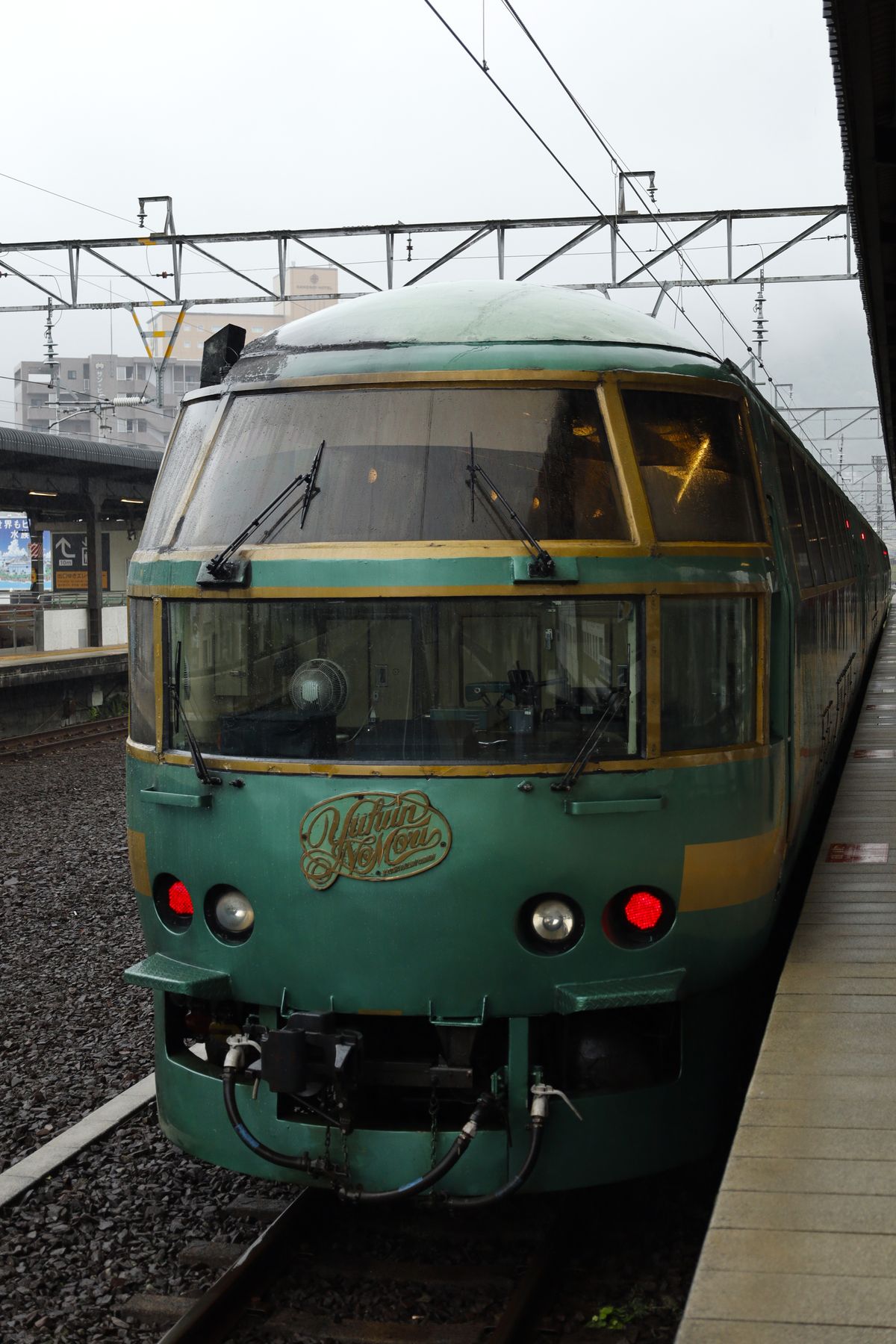
Yufuin is served by JR Kyushu’s scenic Yufu line, and getting there is a pleasurable experience in itself. Here are your main options from each major hub city:
From Fukuoka (Hakata Station)
The most popular approach is on the Yufuin no Mori (ゆふいんの森) limited express — one of Japan’s most beautiful and iconic scenic trains. This forest-green train with panoramic windows and a distinctive retro styling departs from Hakata Station in central Fukuoka and winds through the mountains of Oita Prefecture to Yufuin Station, taking approximately 2 hours and 10 minutes.
Reservations are required, as every seat is reserved (and trains often sell out in peak season). Seats cost approximately ¥4,150 (about $28 USD) one-way including the seat reservation. The Japan Rail Pass covers this train, and seat reservations are free for pass holders. Trains run 3–4 times daily.
Alternatively, the Yufu limited express train runs on the same route for a similar price but without the scenic train experience — it’s a more standard express train. Travel time is about 2 hours.
From Beppu
If you’re combining Yufuin with the famous Beppu Onsen area, the journey between the two towns is refreshingly short. Local trains run from Beppu to Yufuin in approximately 50 minutes to 1 hour, costing around ¥770 ($5 USD). The Yufu express also connects them in about 35 minutes.
This proximity makes it very easy to split your Kyushu hot spring time between Beppu’s famous “Hells” (jigoku) geothermal pools and Yufuin’s more refined ryokan atmosphere. Many travelers do both in a 2–3 day Oita Prefecture loop.
From Kumamoto or Nagasaki
From Kumamoto, take the Shinkansen or limited express to Hakata, then connect to the Yufuin no Mori. Total journey time is around 3.5 hours. From Nagasaki, the combination of trains runs about 3–4 hours via Hakata.
From Osaka or Kyoto
From the Kansai region, the most efficient route is Shinkansen to Kokura or Hakata, then the Yufuin no Mori scenic express. Total travel time from Osaka is approximately 4.5 hours, making it a long day trip (not recommended) or better suited to an overnight stay or multi-day Kyushu trip.
By Car
Yufuin is accessible by highway from Fukuoka in about 1.5 hours via the Oita Expressway. Having a car gives you much more flexibility, especially for exploring the countryside around Yufu mountain and smaller hot spring villages outside the town center. Car rentals can be arranged at major Fukuoka stations or at Oita Airport.
When you arrive, don’t forget you’ll want reliable mobile connectivity for navigating unfamiliar mountain roads. Get your Japan eSIM (Stay connected from day 1) →
When to Visit Yufuin: Seasons and Events
Yufuin is a year-round destination, but each season brings a dramatically different character to the town. Understanding the seasonal dynamics will help you choose the best time for your visit.
Spring (March–May)
Spring in Yufuin is wildly popular, and for good reason. Cherry blossoms (sakura) bloom around the shores of Kinrin-ko Lake in late March to early April, creating scenes of almost painful beauty — pale pink petals drifting over steaming hot spring water with Mount Yufu rising behind. This is peak season, so book ryokans at least two to three months in advance.
Late April through May, after the cherry blossoms fade, the countryside around Yufuin erupts in vivid green. The crowds thin somewhat and the weather is mild and clear — arguably the best weather window of the year for hiking the slopes of Mount Yufu.
Summer (June–August)
Early June brings the rainy season (tsuyu), which can make the surrounding mountain scenery look ethereal and mist-wreathed — very atmospheric if you don’t mind the rain. The famous Yufuin Film Festival takes place every August and is one of Japan’s most beloved art cinema events, drawing cinephiles from across the country. Accommodation during the festival fills up extremely quickly.
Late July and August is hot and humid even at Yufuin’s altitude. The outdoor onsen experiences are still wonderful, but sightseeing in the midday heat can be tiring.
Autumn (September–November)
Many regular visitors consider autumn the finest season in Yufuin. The mountain forests surrounding the town turn extraordinary shades of red, gold, and amber in October and November, and the contrast of autumn leaves with the steam rising from countless hot springs is genuinely spectacular. The November foliage tends to be particularly vivid.
This is peak season along with spring — book accommodations well in advance.
Winter (December–February)
Yufuin in winter has a quietly magical quality that many people underestimate. Snow occasionally dusts Mount Yufu and the surrounding forests, and sinking into an open-air (rotenburo) hot spring bath while snowflakes fall on your head is one of those experiences that stays with you forever. Winter is also the off-peak season, meaning slightly better availability and sometimes lower ryokan prices (though top ryokans rarely discount significantly).
The town is transformed on New Year (oshogatsu, January 1–3) when many visitors come for the first shrine visit of the year — a uniquely Japanese tradition worth experiencing if you’re in the area.
Top Attractions in Yufuin
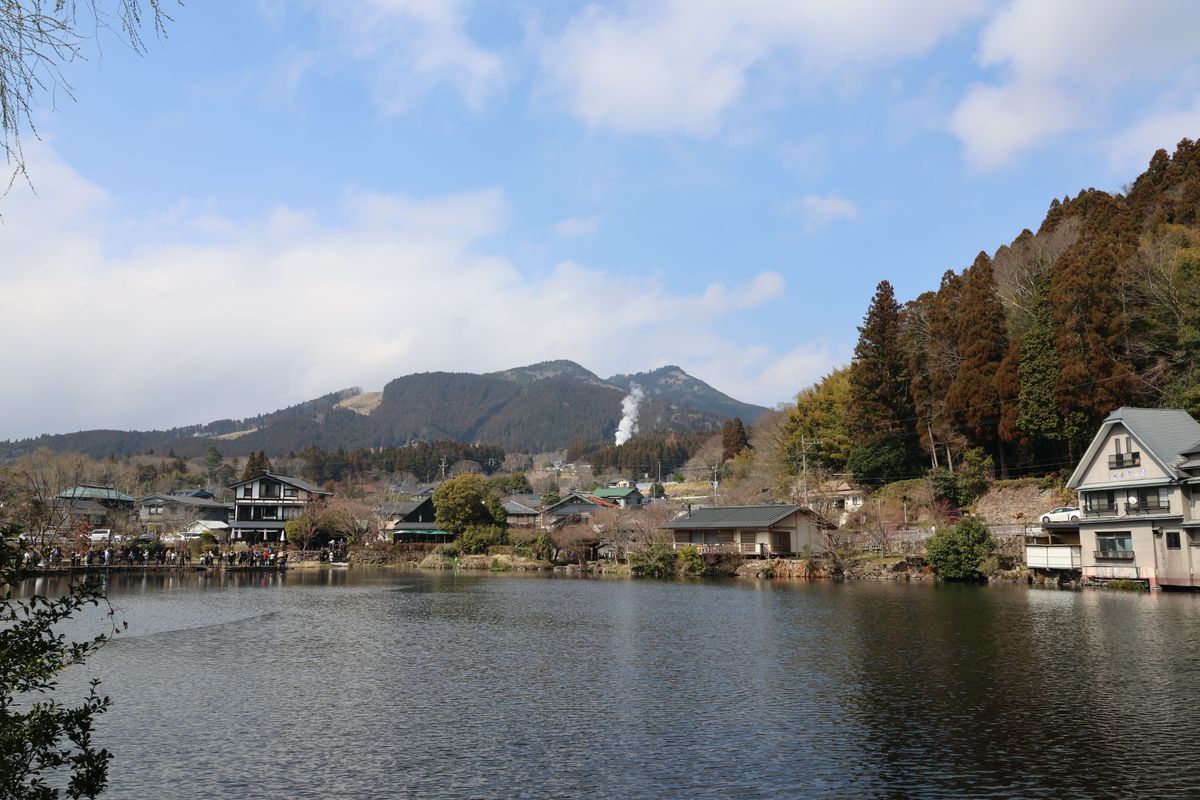
Yufuin’s appeal is less about checking off a list of individual “must-see” sights and more about immersing yourself in the atmosphere of the place. That said, there are specific spots and experiences that define the Yufuin experience and shouldn’t be missed.
Kinrin-ko Lake (金鱗湖)
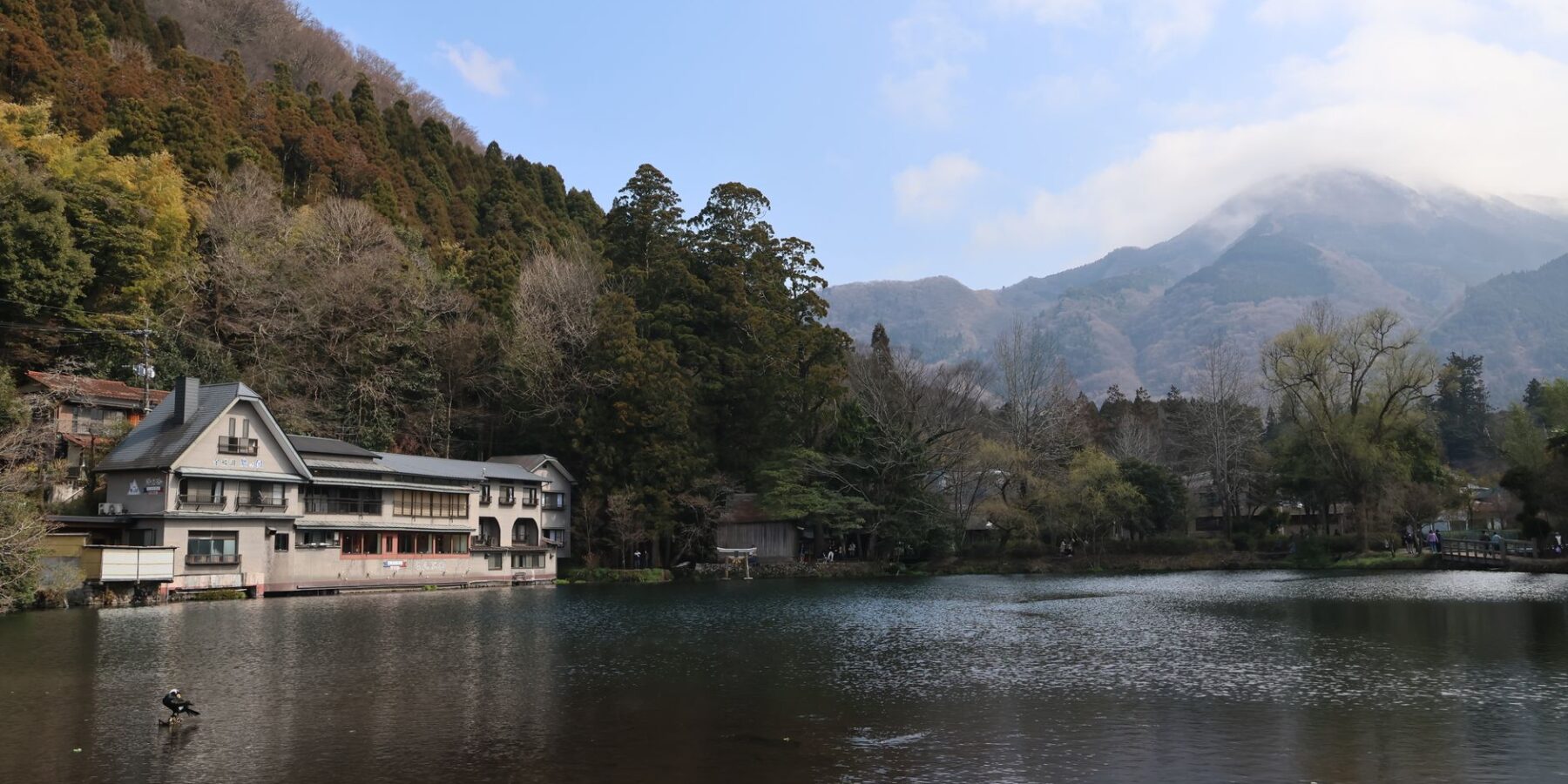
Kinrin-ko — literally “Golden Scale Lake” — is the spiritual heart of Yufuin and one of the most photographed spots in all of Kyushu. This small, spring-fed lake at the foot of Yufuin’s gentle hills stays at a relatively warm temperature year-round because natural hot spring water feeds into it from the lake bed. The result is that on cool mornings, the lake’s surface is wreathed in a delicate mist that drifts around the surrounding gardens, trees, and small shrines — a scene of extraordinary, dreamlike beauty.
The best time to experience Kinrin-ko’s famous morning mist is between 7:00 and 9:00 AM, particularly in autumn and winter when the temperature differential between the warm water and the cold air is greatest. Many ryokans offer early morning packages designed around this experience. Admission to the lake area is free, and the surrounding walking path takes about 20 minutes to complete. The carp visible beneath the surface (the “golden scales” of the name refers to these fish glinting in sunlight) are surprisingly large and beautiful.
In the evenings, the lake reflects the illuminated surroundings and takes on an entirely different character — warm, intimate, and romantic. There are several cafés and small restaurants along the lake edge where you can sit with a drink and watch the reflections.
Yunotsubo Kaido Street (湯の坪街道)
Stretching from Yufuin Station to Kinrin-ko Lake, Yunotsubo Kaido is the town’s main pedestrian shopping street and one of the most charming retail environments in Japan. Unlike the tourist trap souvenir streets of some destinations, Yunotsubo Kaido is genuinely interesting, lined with:
- Specialty food shops offering B-speak’s famous P-roll cake, freshly baked breads, Yufuin Milk Kobo dairy products (the soft-serve ice cream here is locally famous), and various sweets made with locally-sourced ingredients
- Artisan craft galleries featuring local ceramics, glassware, woodwork, and textile arts
- Independent cafés ranging from traditional Japanese tea houses to European-style coffee shops with spectacular views of Mount Yufu
- Small museums dedicated to Japanese animation, crystal art, and local history
The street is busiest in the afternoon — if you want to browse without fighting crowds, aim for a 10:00 AM start. Many shops open at 9:00 or 9:30 AM and close around 5:00 PM.
Mount Yufu (由布岳) Hiking
Rising to 1,583 meters above sea level, the distinctive twin-peaked Mount Yufu is the visual symbol of Yufuin and offers excellent hiking for fit travelers. The standard ascent route from the Yufu-Tozan-Guchi trailhead (accessible by bus from Yufuin Station, about 20 minutes) takes approximately 2.5 to 3 hours up and 2 hours down, with the total round trip covering about 7 km.
The views from the summit are spectacular on clear days — you can see across Oita Prefecture to the Inland Sea, and the bird’s-eye view of Yufuin town below with its patches of steam rising from countless hot spring sources is genuinely thrilling.
Hiking season runs from spring through autumn; winter hiking on Mount Yufu requires ice axes and technical experience and is not recommended for casual hikers. Check conditions at the tourist information office in Yufuin Station before setting out. Sturdy walking shoes (not sandals) are essential.
Yufuin Film Festival
Running for several decades, the Yufuin Film Festival (湯布院映画祭) is held each August and has a beautifully intimate, community-centered character unlike any other film festival in Japan. Films are screened outdoors and in small venues around town, and the festival has a strong emphasis on independent and arthouse cinema. There’s a festive, casual atmosphere where filmmakers, critics, and ordinary movie lovers mingle in the onsen town setting.
If you’re visiting in August, check the festival dates (usually mid-to-late August) and book accommodation at least three months in advance if you want to attend.
Shitan-yu (したん湯)
One of Yufuin’s oldest surviving public bathhouses, Shitan-yu sits right on the edge of Kinrin-ko Lake and offers a pure, unspoiled onsen experience. This isn’t a luxury spa — it’s a simple wooden building with a basic changing room and a small but perfectly maintained hot spring bath. The atmosphere is completely authentic, the water is excellent, and the price is minimal (typically around ¥200–¥300, or about $2 USD).
Shitan-yu demonstrates something important about Japanese onsen culture: the experience doesn’t require luxury. Sometimes the most memorable bath is the simplest one, taken in a wooden tub that has been warming bathers for generations.
Yufuin Art and Museum Scene
Perhaps surprisingly for a small rural town, Yufuin has an impressive collection of small museums and galleries. Standouts include:
- Yume Yakata (湯布院 夢館) — a small museum with an eclectic collection of dolls, antiques, and folk art items that gives a fascinating glimpse into regional Japanese culture
- Yufuin Floral Village (ゆふいんフローラルヴィレッジ) — an unusual complex built in the style of an English village with flower gardens, craft shops, and a small animal petting area; popular with families and couples
- Comico Art Museum Yufuin — a sleek modern art space showcasing contemporary Japanese art in a beautiful building designed by architect Kengo Kuma (admission approximately ¥1,000, $7 USD)
Yufuin Onsen: A Complete Guide to the Hot Springs
The hot springs are, of course, the absolute heart of the Yufuin experience. Oita Prefecture has the highest concentration of onsen in Japan (even more than any other prefecture), and Yufuin’s springs are among the finest in the region. Here’s what you need to know.
Types of Onsen Water in Yufuin
Yufuin’s hot spring water is primarily classified as sodium chloride and sodium bicarbonate type springs, with temperatures ranging from around 42°C to 48°C (108–118°F) at the source. The water is said to be excellent for skin, with a smooth, slightly silky texture that regulars describe as making their skin feel noticeably softer after bathing. The springs are also reputed to help with fatigue, joint stiffness, and general circulation — claims that have their basis in traditional Japanese onsen medicine (balneology).
Types of Baths
Yufuin offers several different onsen experiences:
- Rotenburo (露天風呂) — outdoor open-air baths, considered the ultimate onsen experience, often surrounded by gardens or natural scenery
- Kashikiri onsen (貸切温泉) — private rental baths where you book an entire bath for yourself or your group, perfect for couples or families; most ryokans offer these, typically for 45–60 minutes at a cost of ¥1,500–¥3,000 ($10–$20 USD)
- Konyoku (混浴) — mixed-gender bathing; becoming rarer but still exists at a few traditional establishments; generally respected with strict etiquette norms
- Day-use onsen (日帰り温泉) — onsen facilities you can visit without staying overnight; many of Yufuin’s ryokans offer day bathing passes
Best Day-Use Onsens in Yufuin
If you’re visiting Yufuin on a day trip (not an overnight stay), these public and day-use onsen facilities are your best options:
Shitan-yu (したん湯) — ¥200–300 (at Kinrin-ko Lake; oldest public bath in Yufuin)
Ubuyuza (うぶゆ座) — ¥500 (a comfortable public bath house near the station with both indoor and outdoor sections)
Tama no Yu (たまの湯) — ¥700 (slightly more refined day-use facility with beautiful outdoor baths)
Several of the top ryokans also offer day-use bathing packages, typically from ¥1,500–¥5,000 ($10–$34 USD), sometimes including a meal. Check directly with your chosen ryokan about day-use availability and booking requirements.
Onsen Etiquette Essentials
For first-time visitors to Japanese hot springs, here are the non-negotiable rules:
- Wash completely before entering the bath — there are washing stations (araiba) beside every onsen; use them thoroughly before stepping into the communal water
- No swimwear in traditional Japanese onsen (unless it’s a “swimwear onsen”)
- No tattoos at most traditional facilities — Yufuin has some tattoo-friendly private baths; ask in advance
- Keep your small towel out of the water — fold it on your head or the bath edge
- No loud talking, diving, or swimming — the bath is for quiet soaking, not recreation
- Stay hydrated — drink water before and after bathing; hot springs are dehydrating
- Don’t drain the tub or add cold water without checking if it’s permitted
Top Ryokans in Yufuin: Where to Stay for the Full Experience
The ryokan — Japan’s traditional inn — is at its most refined in onsen towns like Yufuin. A true Yufuin ryokan stay includes your room, two meals (dinner and breakfast, both kaiseki style), use of the onsen baths, and often a private outdoor bath attached to or available to your room. It’s an all-encompassing immersion in Japanese hospitality culture.
Prices for a one-night stay including two meals typically start at around ¥30,000 per person ($200 USD) for mid-range ryokans and can reach ¥80,000–¥150,000+ ($530–$1,000+ USD) per person at the most prestigious establishments. This is expensive by any measure, but for many visitors it represents the most memorable night of their entire Japan trip.
Some well-regarded ryokans in Yufuin to consider:
Sansou Murata (山荘 無量塔) — considered one of the finest ryokans in all of Japan, with extraordinarily beautiful grounds, exceptional kaiseki cuisine, and an uncompromising attention to traditional Japanese aesthetics. Book months in advance.
Tamanoyu (玉の湯) — one of Yufuin’s most storied ryokans, with beautiful gardens, excellent hot springs, and outstanding local cuisine. Popular with Japanese celebrities and repeat visitors.
Yufurinji — a more accessible option in the mid-range that still delivers excellent food and beautiful traditional rooms without the highest price points.
For those visiting on a budget, guesthouses and smaller minshuku (family-run inns) in Yufuin offer simple but clean accommodation starting around ¥8,000–¥15,000 ($55–$100 USD) per person without meals.
Wherever you choose to stay, we recommend booking via Book your hotel on Agoda (Best prices guaranteed) → to compare options and secure the best available rates.
Food and Drink in Yufuin: What to Eat
Yufuin might be a small town, but its food scene is exceptional by any measure. Both the ingredients available in this part of Kyushu and the culinary ambition of the local restaurant and ryokan community are impressive.
Yunotsubo Kaido Street Food
The main shopping street serves as a wonderful open-air food market in miniature. Key things to try as you walk:
Yufuin Milk Kobo soft-serve ice cream — using fresh local Oita Prefecture dairy, this is possibly the finest soft-serve in Japan. The matcha and milk swirl is outstanding. Line up expected: ¥450–600 ($3–4 USD).
B-roll korogane sausages — handmade German-style sausages grilled fresh, a Yufuin specialty. Eat them walking on skewers: ¥400–600 ($3–4 USD).
Freshly baked cream puffs — multiple shops along the street offer these, filled with locally-made custard.
Yufuin Pudding (由布院プリン) — egg custard pudding made with local farm eggs and dairy, available in small pots to eat on the spot or take home.
Kaiseki Cuisine at Your Ryokan
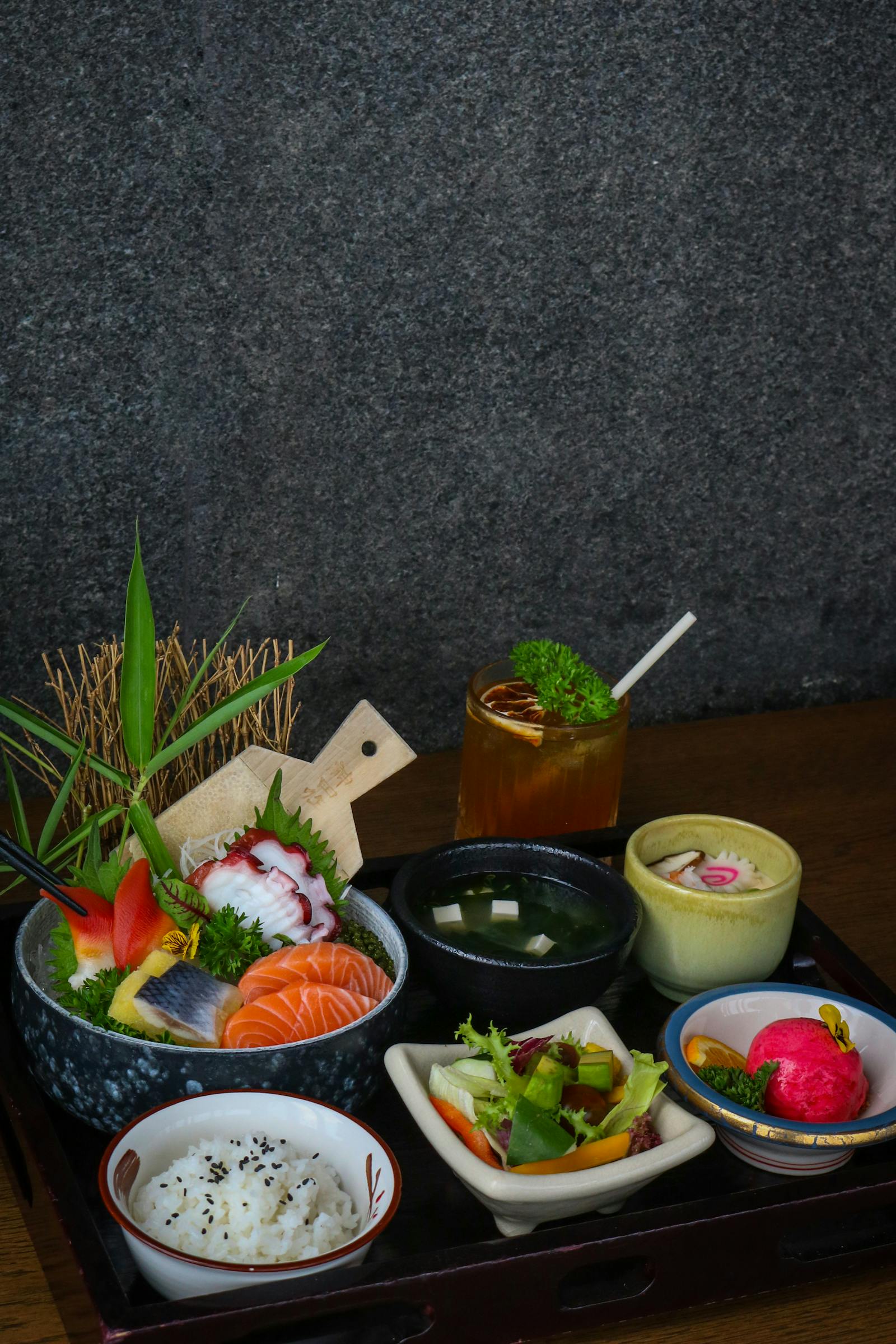
If you’re staying at a ryokan, your dinner will almost certainly be a kaiseki multi-course meal — the pinnacle of Japanese traditional cuisine. Yufuin’s kaiseki dinners emphasize local Oita Prefecture ingredients:
- Oita wagyu beef — Oita produces excellent wagyu cattle; expect beautifully marbled beef in various preparations
- Fresh mountain vegetables — Yufuin’s highland location means access to exceptional seasonal produce including sansai (mountain vegetables)
- Local seafood — despite being inland, Yufuin ryokans receive fresh daily deliveries from Oita Prefecture’s excellent coastal fisheries, including fugu (blowfish) in winter and fresh sea bream
- Yufuin tofu — locally made tofu served in delicate preparations
- Yuzu — the fragrant Japanese citrus grown in the region appears in multiple courses
Restaurants in Yufuin
Beyond the ryokans and street food, Yufuin has an excellent selection of independent restaurants. Highlights include:
Café la Ruche — a beloved lakeside café at Kinrin-ko with beautiful terrace seating, excellent coffee, and handmade desserts. Perfect for a relaxed afternoon stop.
Yufuin Burger — don’t be fooled by the casual name; this small shop makes spectacular wagyu beef burgers using locally sourced meat. A complete meal under ¥2,000 ($14 USD).
Restaurant Asahi — an institution serving Yufuin’s local home-style cooking (teishoku set meals) at remarkably reasonable prices.
Local Sake and Shochu
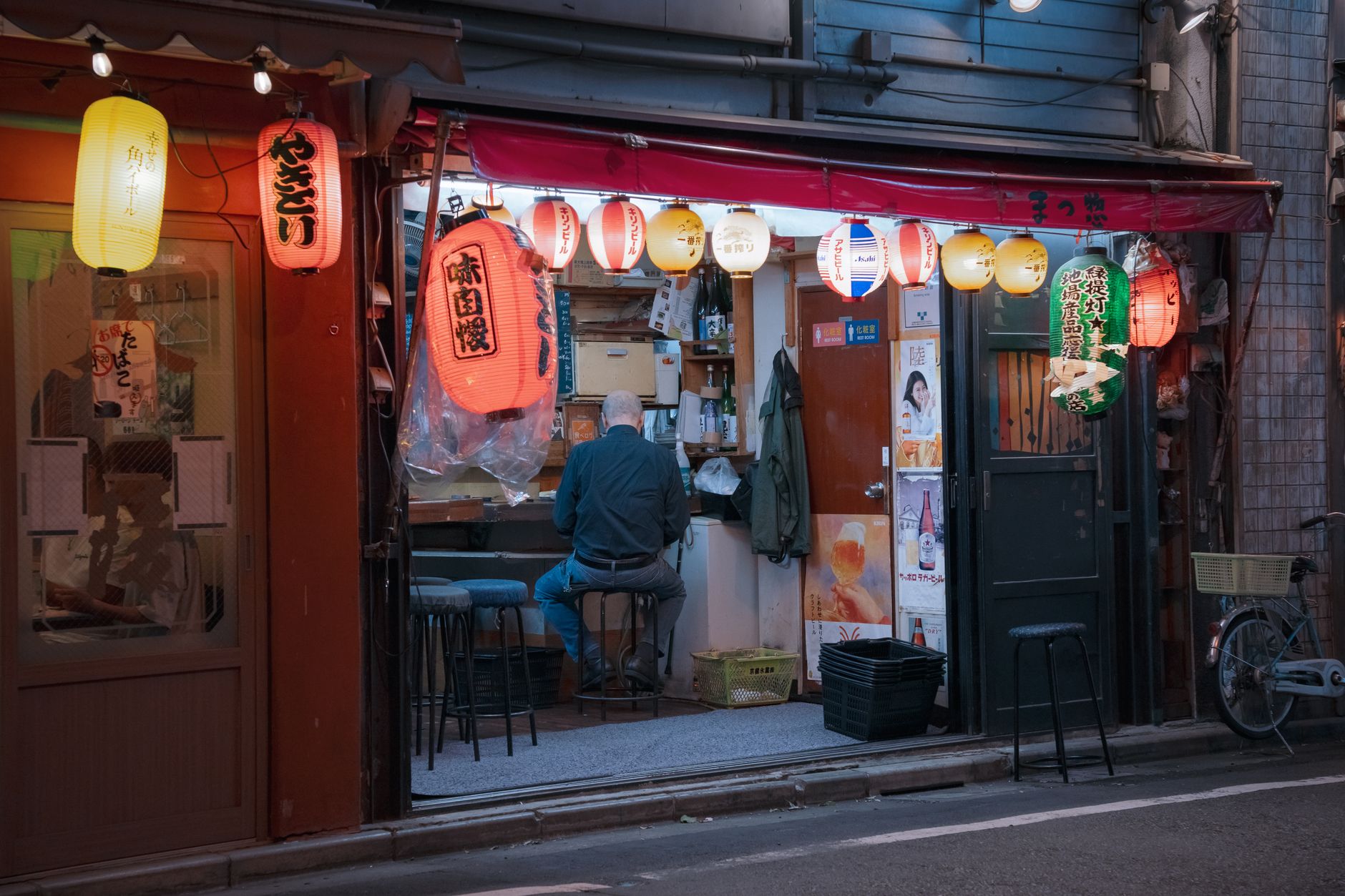
Oita Prefecture is known for its mugi shochu (barley-based distilled spirit), and you’ll find excellent local brands throughout Yufuin. The preferred local drinking style is oyuwari — diluted with hot water in a 6:4 shochu-to-water ratio. Pair it with grilled meat, yakitori, or any of the local specialties at an izakaya (gastropub) in the evenings.
Day Trips from Yufuin
Yufuin’s location in Oita Prefecture makes it an ideal base for exploring some of Kyushu’s other excellent destinations. Here are the best day trips:
Beppu (30–50 min by train)
The most natural companion to a Yufuin visit is Beppu Onsen, Japan’s most famous hot spring city. Where Yufuin is refined and quiet, Beppu is dramatic and theatrical — famous for its “seven hells” (jigoku), geothermal pools in impossibly vivid colors (cobalt blue, blood red, steaming grey) that are viewable as spectacles rather than bathing spots. The contrast between the two onsen experiences makes for a perfect Oita Prefecture pairing.
Kurokawa Onsen (Kumamoto) (1.5 hours by car)
If you have a car, the drive through the mountains to Kurokawa Onsen in northern Kumamoto Prefecture is genuinely beautiful. Kurokawa is another highly regarded onsen town with a different character again — smaller and more intimate than Yufuin, with a scenic gorge running through the center and numerous outdoor baths carved into the riverside cliffs.
Aso Caldera (1.5–2 hours by car)
Mount Aso, home to one of the world’s largest volcanic calderas, lies within day-trip distance by car. The scale of the caldera is staggering — you drive through it without realizing it surrounds you on all sides — and the active volcano at the center, when accessible (it closes to visitors during increased volcanic activity), is one of the most dramatic natural sights in Japan. Check volcanic activity alerts before visiting.
Practical Tips for First-Time Visitors to Yufuin
Here’s the essential practical information to make your Yufuin visit smooth:
- Book ryokans well in advance — especially for weekends, cherry blossom season (late March–early April), autumn foliage (mid-October–December), and the Yufuin Film Festival (August). Two to three months ahead is not excessive for popular properties.
- Cash is essential — Yufuin’s smaller shops, public baths, and some restaurants are still cash-only. Get yen from an ATM (7-Eleven or Japan Post ATMs work with international cards) before arriving or at Yufuin’s convenience store.
- Download Google Maps offline for Yufuin — the town’s layout is simple enough to navigate without WiFi, but having offline maps helps for finding specific ryokans down unmarked lanes.
- The tourist information office at Yufuin Station (open daily 9:00 AM–5:00 PM) has excellent English-language resources, free maps, and helpful staff who can help with same-day accommodation if you haven’t booked.
- Rent bicycles — several rental shops near the station offer bicycles for ¥500–¥800 per hour or ¥1,500–¥2,000 per day, ideal for exploring beyond the main street and reaching the outer ryokans and natural areas around Mount Yufu.
- Buses from Yufuin Station connect to the Mount Yufu trailhead and to Beppu; timetables are available at the tourist office.
- For medical emergencies, the nearest major hospital is in Yufu City; the tourist office can help with translation assistance.
- Pack light layers — Yufuin’s highland climate means it can be noticeably cooler than the coast even in summer, and evenings in spring and autumn can be quite cold.
If you need an airport transfer to or from Fukuoka Airport when entering or leaving Kyushu, Book airport transfer on Kiwitaxi → for a comfortable, reliable shared transfer service.
Budget Guide: How Much Does Yufuin Cost?
Yufuin can be visited on a range of budgets, though the full luxury ryokan experience is genuinely expensive. Here’s a realistic breakdown:
Budget day trip (train from Fukuoka, no overnight):
Train: ¥4,200 each way = ¥8,400 round trip ($56 USD)
Street food lunch + snacks: ¥2,000 ($14 USD)
Public onsen day use: ¥300–700 ($2–5 USD)
Total: approximately ¥11,000–13,000 ($74–88 USD) per person
Budget overnight (guesthouse without meals):
Guesthouse per person: ¥8,000–12,000 ($54–80 USD)
Add meals: ¥3,000–5,000 ($20–34 USD)
Day-use onsen: ¥500–1,500 ($3–10 USD)
Total: approximately ¥12,000–18,500 ($80–124 USD) per person
Mid-range ryokan (with meals):
Per person including two meals: ¥25,000–50,000 ($167–334 USD)
This is the sweet spot for the ryokan experience — excellent quality without the extreme premium prices of the flagship properties.
Luxury ryokan:
Per person including meals: ¥60,000–150,000+ ($400–$1,000+)
At the very top properties, this is an investment, but many guests describe it as the best single hospitality experience of their lives.
Getting Around Yufuin
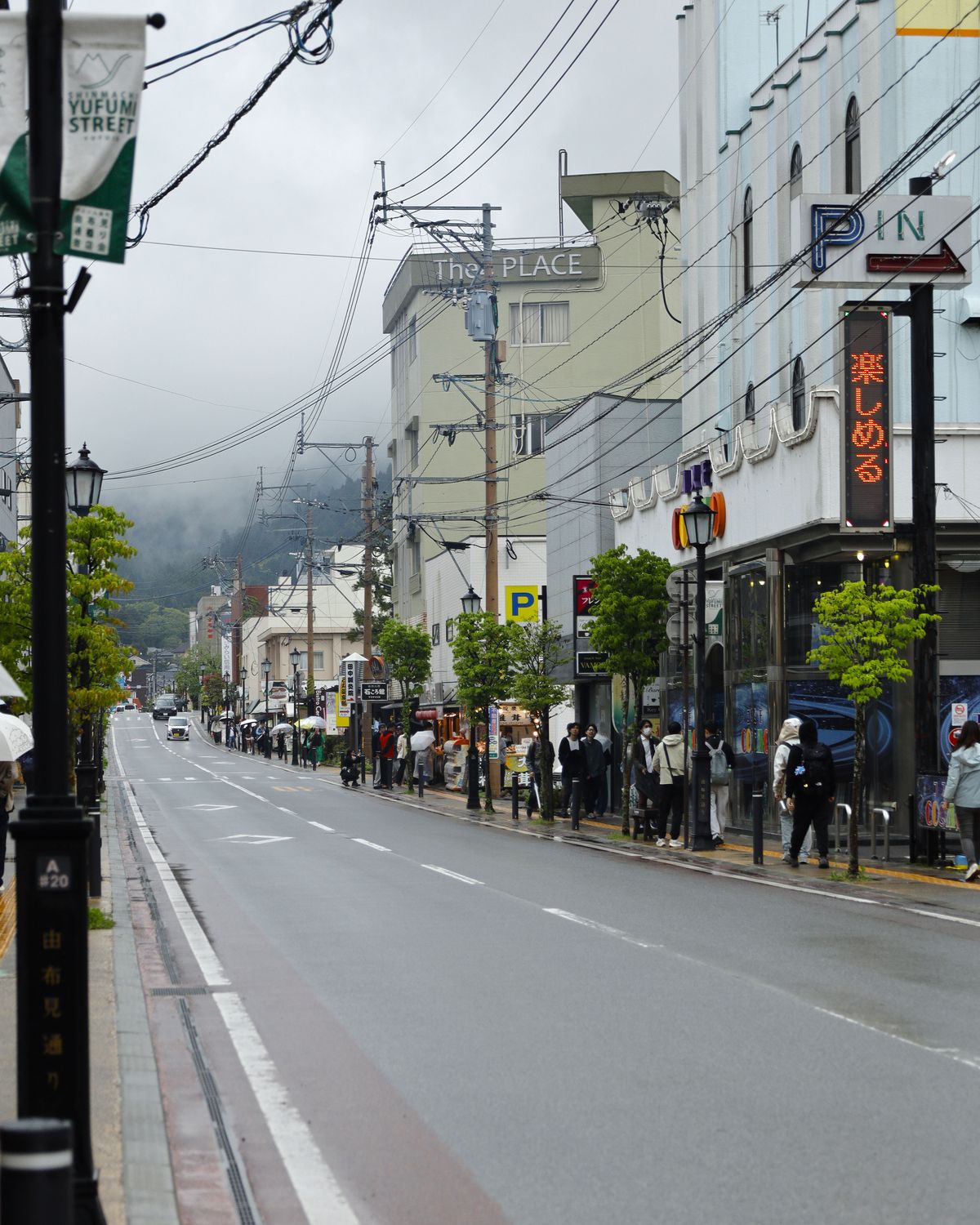
The town center is small enough that you’ll primarily move around on foot. From Yufuin Station to Kinrin-ko Lake is a pleasant 15–20 minute walk along Yunotsubo Kaido. From the station, walking to most central ryokans takes 10–25 minutes.
A popular alternative is the Yufuin Horse Carriage — a retro horse-drawn carriage service that operates a route from the station to Kinrin-ko Lake and back. It’s a charming experience that adds to the nostalgic character of the town and is popular with couples. Cost is approximately ¥1,500 per person ($10 USD) one way.
For reaching more distant ryokans or the Mount Yufu trailhead, local buses or taxis are available from the station. Taxi base fare starts at around ¥730 ($5 USD).
Yufuin for Couples and Honeymooners
It’s worth noting that Yufuin has a particular reputation as one of the most romantic destinations in Japan. Many Japanese couples choose Yufuin for honeymoons, anniversaries, and romantic getaways, and the town has catered brilliantly to this market. Some specific romantic highlights:
- Kashikiri (private) baths at ryokans let you share the hot spring experience with your partner in complete privacy
- Kinrin-ko Lake at dawn — watching morning mist rise over the lake together is a deeply memorable experience
- Sunset at Mount Yufu viewpoints — several cafés along the Yunotsubo Kaido have terrace seating looking up at the mountain; sunset and golden hour here are stunning
- Kaiseki dinner for two in your tatami room — room service kaiseki dinners are offered by many ryokans and represent the height of romantic Japanese dining
Explore more destination options for planning your Japan itinerary at Japan Real Guide — Destinations.
Yufuin FAQ: Everything First-Timers Ask
Do I need to speak Japanese to visit Yufuin?
You don’t need to speak Japanese, but it helps more here than in Tokyo or Kyoto. Yufuin is a domestic tourism destination first and international tourism destination second, so English fluency among shop owners and ryokan staff varies considerably. That said, many ryokans now have at least some English-speaking staff (or use translation apps), and the tourist information office at the station offers English assistance. Learning a few basic Japanese phrases (thank you = arigatou gozaimasu; excuse me = sumimasen; hot spring = onsen; good evening = konbanwa) will be warmly appreciated.
Can I visit Yufuin with tattoos?
This is a common concern. Yufuin’s traditional onsen facilities, including many ryokans’ communal baths, maintain the traditional no-tattoo policy. However, many ryokans offer kashikiri (private) baths which are typically tattoo-friendly. If you have visible tattoos, book a ryokan with private baths specifically and confirm their policy when reserving. Some newer or more internationally-oriented facilities in Yufuin are also relaxing the blanket ban on tattoos. Always ask directly before arriving to avoid disappointment.
How many days should I spend in Yufuin?
Most visitors spend one or two nights in Yufuin, which is enough to experience the core attractions — Kinrin-ko Lake, Yunotsubo Kaido, the hot springs, and a ryokan dinner. For a more relaxed pace, or if you want to hike Mount Yufu and take day trips to Beppu, two nights is ideal. Yufuin can also be done as a day trip from Fukuoka if time is tight, though the ryokan overnight is what makes it truly special.
Is Yufuin suitable for children?
Yufuin is popular with Japanese families and is very child-friendly in many respects. The Yunotsubo Kaido street food, the Yufuin Floral Village with its small animals, and the scenic landscape are all excellent for kids. The hot springs can be used by children, though parents should monitor young children’s time in very hot water. Most ryokans welcome children; some ultra-luxury properties prefer adult guests only — check when booking. The horse-drawn carriage tour is particularly popular with children.
What is the best way to book a ryokan in Yufuin?
Top ryokans in Yufuin often need to be booked directly through their own websites or through Japanese booking platforms like Jalan (じゃらん) or Relux. For international visitors, Agoda and Booking.com list many Yufuin ryokans and handle international payment easily. We recommend starting your search early — especially for peak season dates — and using Book your hotel on Agoda (Best prices guaranteed) → for English-language comparison and booking with traveler reviews.
What should I pack for an onsen trip to Yufuin?
Ryokans provide yukata (cotton kimono) for in-house wear, small towels for the bath, and most toiletries. You don’t need to bring your own towel or bathrobe. Do bring comfortable walking shoes for the town streets, a slightly warmer layer for evenings (especially in spring/autumn/winter), and any personal medications. Leave large suitcases at your hotel in Fukuoka or Beppu if possible — Yufuin’s narrower streets and ryokan corridors are not well-suited to huge luggage. Use the luggage forwarding service (takkyubin) to send your bags directly to the ryokan from your previous accommodation.
Are there any free things to do in Yufuin?
Yes — quite a few. Walking the Yunotsubo Kaido street costs nothing. Strolling around Kinrin-ko Lake is free. Browsing the galleries and shops is free. The approach hike toward Mount Yufu is free up to the summit. The town’s overall atmosphere and scenic beauty — including the constant backdrop of Mount Yufu — can be enjoyed entirely without spending money. Where you will spend is on food, onsen entries, and accommodation.
Final Thoughts: Why Yufuin Deserves a Place on Your Japan Itinerary
Japan is full of extraordinary places, and competition for space on any itinerary is fierce. Tokyo, Kyoto, Hiroshima, Hakone — all magnificent and worth your time. But Yufuin offers something genuinely different: a chance to slow completely down, to sink into natural hot spring water, to eat extraordinarily well in a traditional tatami room, and to experience Japanese hospitality at its most careful and intentional.
Whether you approach it as a day trip from Fukuoka or a two-night immersion in the full ryokan experience, Yufuin rewards attentive visitors with memories that last for years. The morning mist over Kinrin-ko Lake. The smell of sulfur mingled with cedar forest and fresh mountain air. The sound of rain on a garden while you soak in an outdoor bath. The patience and artistry in every dish of a kaiseki dinner.
These are the moments that make people return to Japan again and again — and Yufuin, quiet, beautiful, and unhurried, creates more of them per square kilometer than almost anywhere else in the country.
Start planning your Yufuin escape now, and be sure to explore Japan Real Guide — Destinations for more guides to Japan’s most rewarding travel experiences.
Going to Japan? Speak Japanese with confidence.
Hirameki Japanese — camera translate for menus and signs, a two-way conversation mode, and furigana + romaji on every phrase. Free to download with kana charts, conversation mode and starter words; a one-time purchase unlocks everything.

Plan your Japan trip
Two things every first-timer should book
Some links are affiliate links. If you book through them we may earn a small commission at no extra cost to you.