They call it “Kyoto’s Kitchen,” and for good reason. Nishiki Market (錦市場, Nishiki Ichiba) is a narrow, five-block shopping street in the heart of Kyoto where, for more than four hundred years, locals have come to buy the city’s finest seasonal food. Today it is one of the most rewarding places in Japan to eat your way through a culture — a roofed arcade packed with around a hundred and thirty stalls selling everything from skewered baby octopus to fresh soy-milk doughnuts, pickles, knives, sashimi, mochi, and matcha sweets.
This guide is written for first-time visitors. I will explain what Nishiki Market is and why it matters, exactly how to get there, when to go to avoid the worst crowds, the etiquette that keeps locals happy, the specific foods you should not miss, what it all costs, and how to combine the market with the rest of central Kyoto. Come hungry. Whether you have half a day or just a spare hour between temples, Nishiki is one of the easiest and most delicious ways to experience the real, everyday Kyoto that exists alongside the famous shrines and gardens — and unlike much of the city, it is fully covered, so neither rain nor summer heat can spoil your visit.
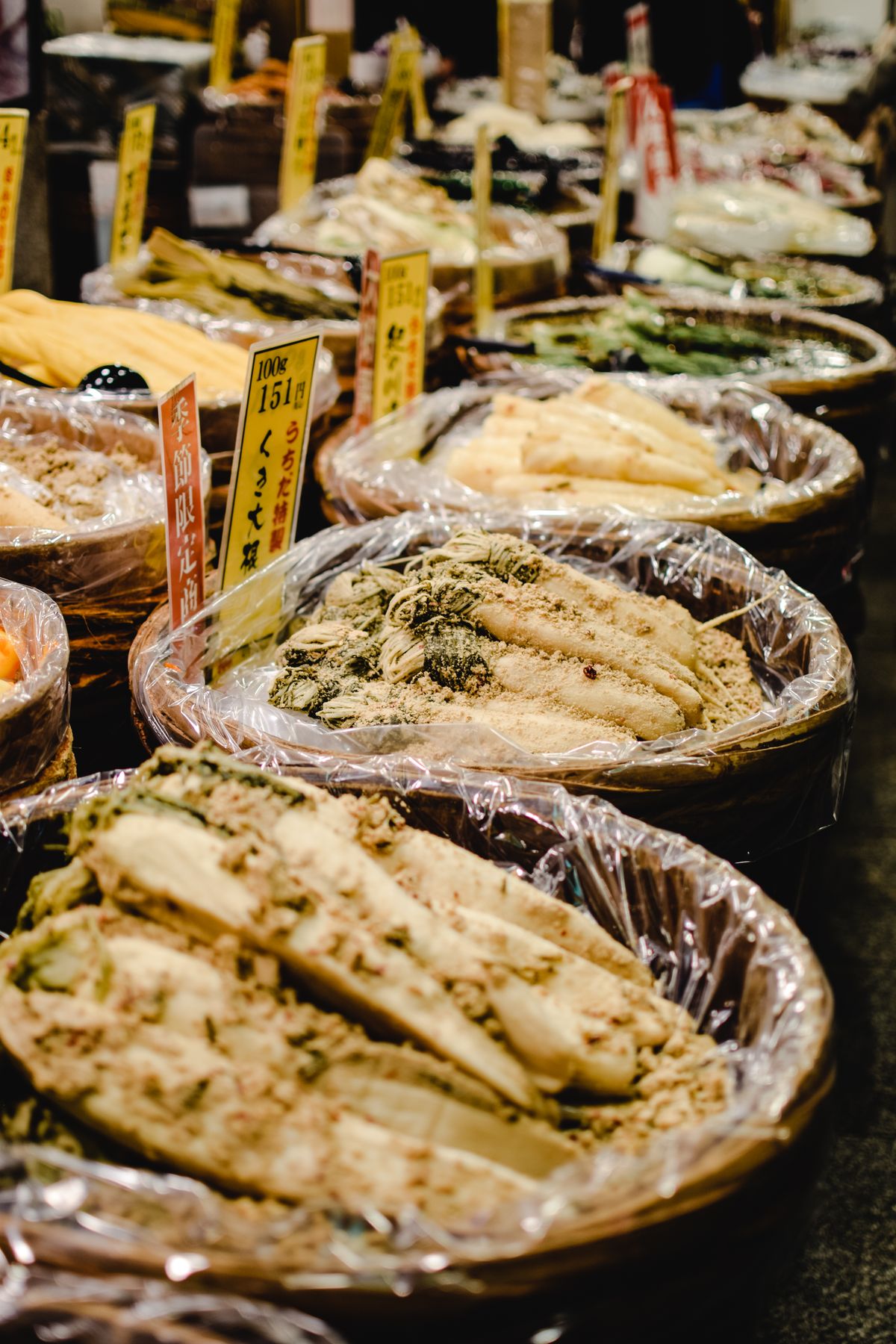
What is Nishiki Market and why visit?
Nishiki Market is a covered pedestrian arcade about 400 metres long, running east to west one block north of Shijo Street in downtown Kyoto. The shops are famously narrow — many just a few metres wide — but they are deep, and many have been run by the same families for generations. Historically this was a wholesale market specialising in fish, thanks to the cool groundwater that runs beneath the street and kept produce fresh long before refrigeration. Over time it grew into the place where Kyoto’s restaurants, inns, and home cooks sourced the freshest seasonal ingredients.
What makes Nishiki special for travellers is that it is still a genuine working market, not a purpose-built tourist attraction. Yes, it has become busy and increasingly geared toward visitors, but you will still see professional chefs selecting vegetables, elderly residents buying their pickles, and craftspeople sharpening knives. It is the perfect introduction to Kyoto’s refined food culture — pickles (tsukemono), tofu and yuba, Kyoto vegetables (kyo-yasai), wagashi sweets, and delicate seafood — all in one walkable, weatherproof street.
The market also has a beautiful sense of place. Its translucent arcade roof is striped in red, yellow, and green, casting coloured light over the stalls, and the whole street hums with the calls of vendors and the sizzle of grills. For anyone who loves food, it is one of the most enjoyable hours you can spend in Kyoto.
A short history of Kyoto’s Kitchen
Nishiki Market’s roots reach back over a thousand years, but its life as a formal market is usually dated to the early 1600s, when it received official recognition as a wholesale fish market. The secret to its success was water: a layer of cold, clean groundwater sits just beneath the street, and merchants dug wells to keep fish and produce fresh in Kyoto’s notoriously hot, humid summers. Some of those wells still exist today.
The market has weathered fires, wars, and economic upheavals, and it nearly disappeared more than once when authorities tried to relocate the fish trade. Each time, the merchants fought to stay, and the street adapted — broadening from fish into vegetables, pickles, sweets, and prepared foods. The name “Nishiki,” meaning brocade, hints at the colourful, layered abundance you still find here. Walking the arcade today, you are following in the footsteps of four centuries of Kyoto cooks.
How to get to Nishiki Market
Nishiki Market sits right in central Kyoto, so it is easy to reach from almost anywhere in the city. It runs parallel to and just north of Shijo Street, between Teramachi and Takakura streets.
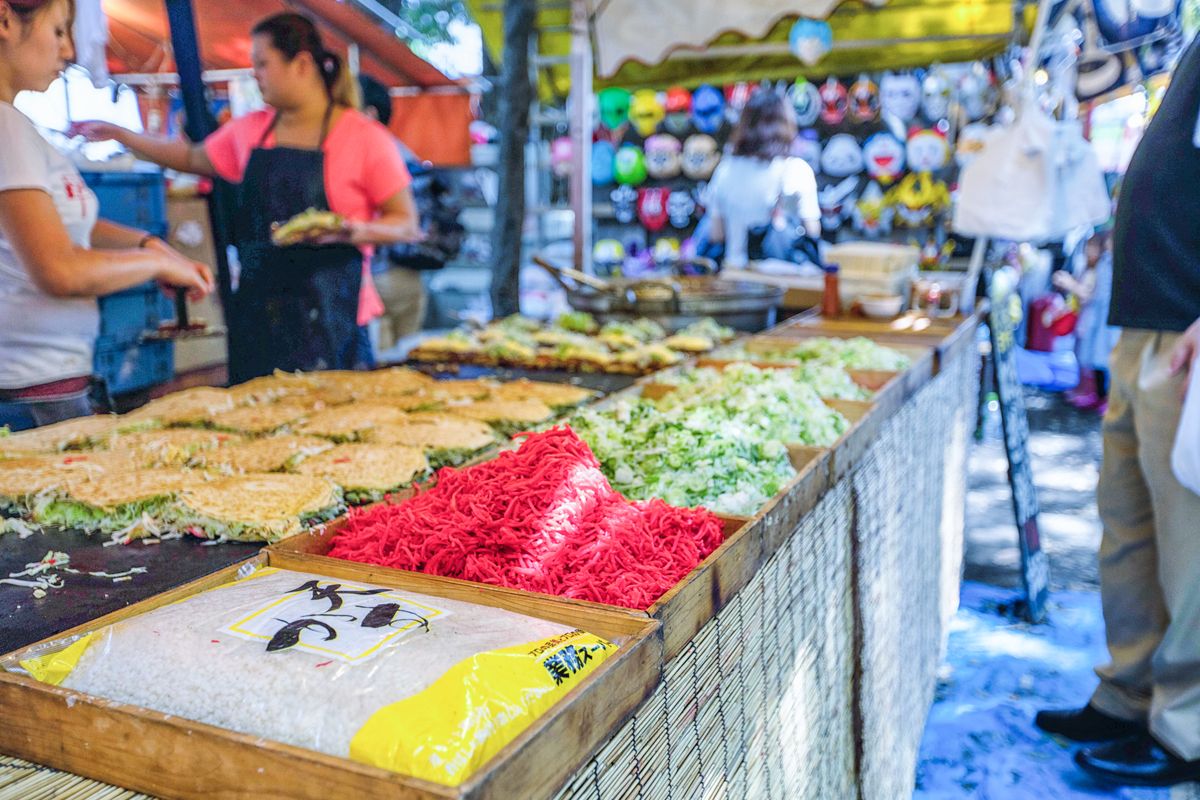
By subway
The most convenient station is Shijo Station on the Karasuma subway line, or Karasuma Station on the Hankyu line (the two connect underground). From either, it is a five-minute walk east along Shijo Street to the western entrance of the market. A single subway ride within central Kyoto costs around ¥220–¥260 (about USD 1.50–1.75).
By train
From the Hankyu line, Kawaramachi Station puts you at the eastern (Teramachi) end of the market, also about a five-minute walk. If you are coming from Osaka, the Hankyu line from Osaka-Umeda to Kawaramachi is a cheap and direct option (roughly 45 minutes, around ¥410 / USD 2.75).
By bus or on foot
Kyoto’s city buses stop along Shijo Street near the market; a flat city-bus fare is about ¥230 (USD 1.55). Honestly, though, central Kyoto is compact and walkable, and the market is an easy stroll from the Gion district, Pontocho alley, and the Kamo River, so many visitors simply walk over as part of a downtown day.
Travel tip: Many Nishiki stalls are cash-friendly and have their own websites, menus, and seasonal specials worth checking before you go. Staying online with a prepaid travel eSIM makes navigating the downtown streets and translating menus effortless.
Opening hours and best time to visit
Most shops in Nishiki Market open between 9:00am and 10:00am and begin closing around 5:00pm to 6:00pm, so it is a daytime destination. Individual stalls set their own hours, and some close one day a week (often Wednesday or Sunday), but with well over a hundred shops, you will always find plenty open.
Go early to beat the crowds
Nishiki has become extremely popular, and from late morning through mid-afternoon the narrow street can get shoulder-to-shoulder, especially on weekends and during cherry-blossom and autumn-foliage seasons. The single best tip in this guide is simple: arrive when the shops open, around 9:30am to 10:00am. The light is lovely, vendors have time to chat, and you can actually move and take photos. Late afternoon, an hour or so before closing, is the second-quietest window.
Seasonal notes
The market is indoors and covered, so it is a brilliant rainy-day or hot-day activity year-round. Each season brings its own specialities — bamboo shoots and sakura sweets in spring, fresh eel and chilled treats in summer, matsutake mushrooms and chestnuts in autumn, and crab and yuzu in winter — so there is always something new to taste.
What to eat at Nishiki Market
This is the heart of any visit. Nishiki is best enjoyed as a slow grazing session — buy one small thing, eat it, move on, and repeat. Portions are usually bite-sized and inexpensive, so you can sample widely. Here are the specialities first-timers should look for.
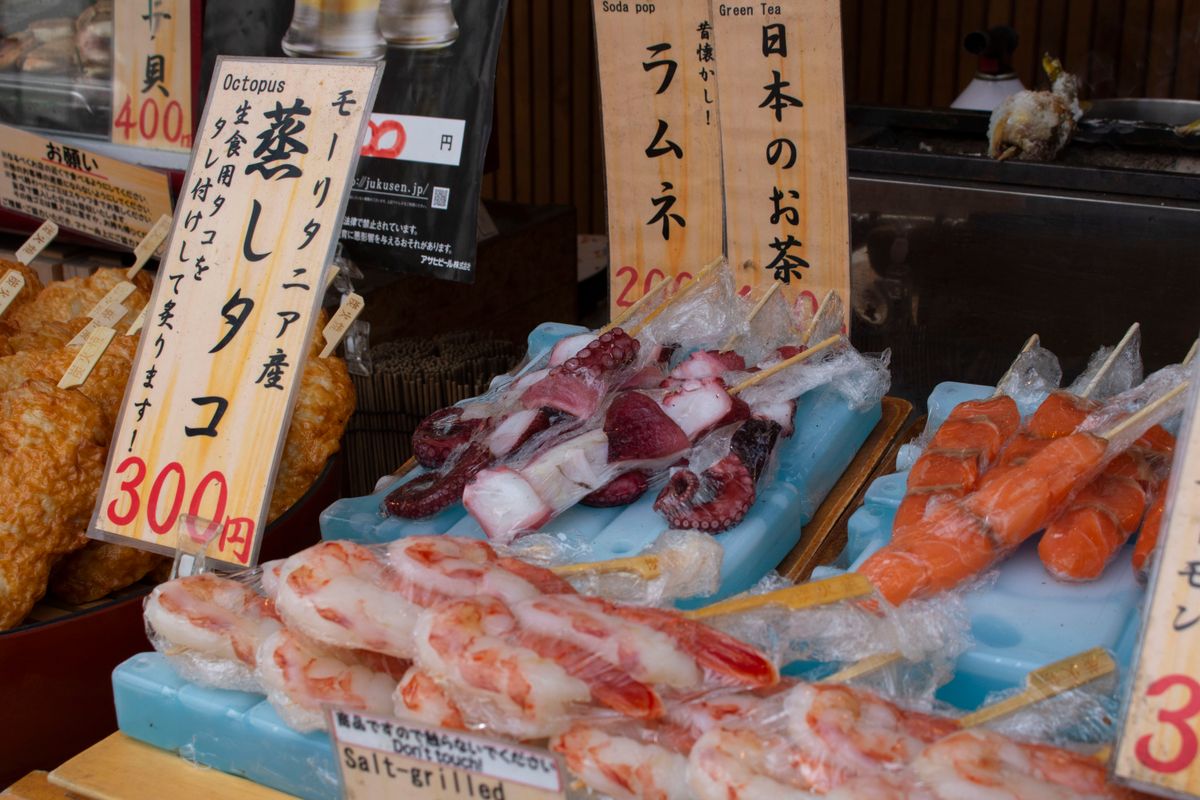
Tako tamago (candied octopus with a quail egg)
The market’s most photographed snack is a small whole octopus glazed in sweet soy and stuffed with a quail egg, served on a stick. It is sweet, chewy, and surprisingly moreish — and at around ¥500–¥600 (USD 3–4) it is the quintessential Nishiki bite.
Tamagoyaki (rolled omelette)
Several specialist stalls make tamagoyaki to order, layering sweet-savoury egg into a fluffy roll. Freshly cut, warm slices on a skewer cost roughly ¥150–¥400 (USD 1–3). Watching the cooks flip the giant omelettes is half the fun.
Soy-milk doughnuts and fresh yuba
Kyoto is famous for tofu, and Nishiki has wonderful soy products. Look for warm soy-milk doughnuts (about ¥100–¥150 / under USD 1 each) and fresh yuba (delicate tofu skin), a refined Kyoto delicacy you can taste in small servings.
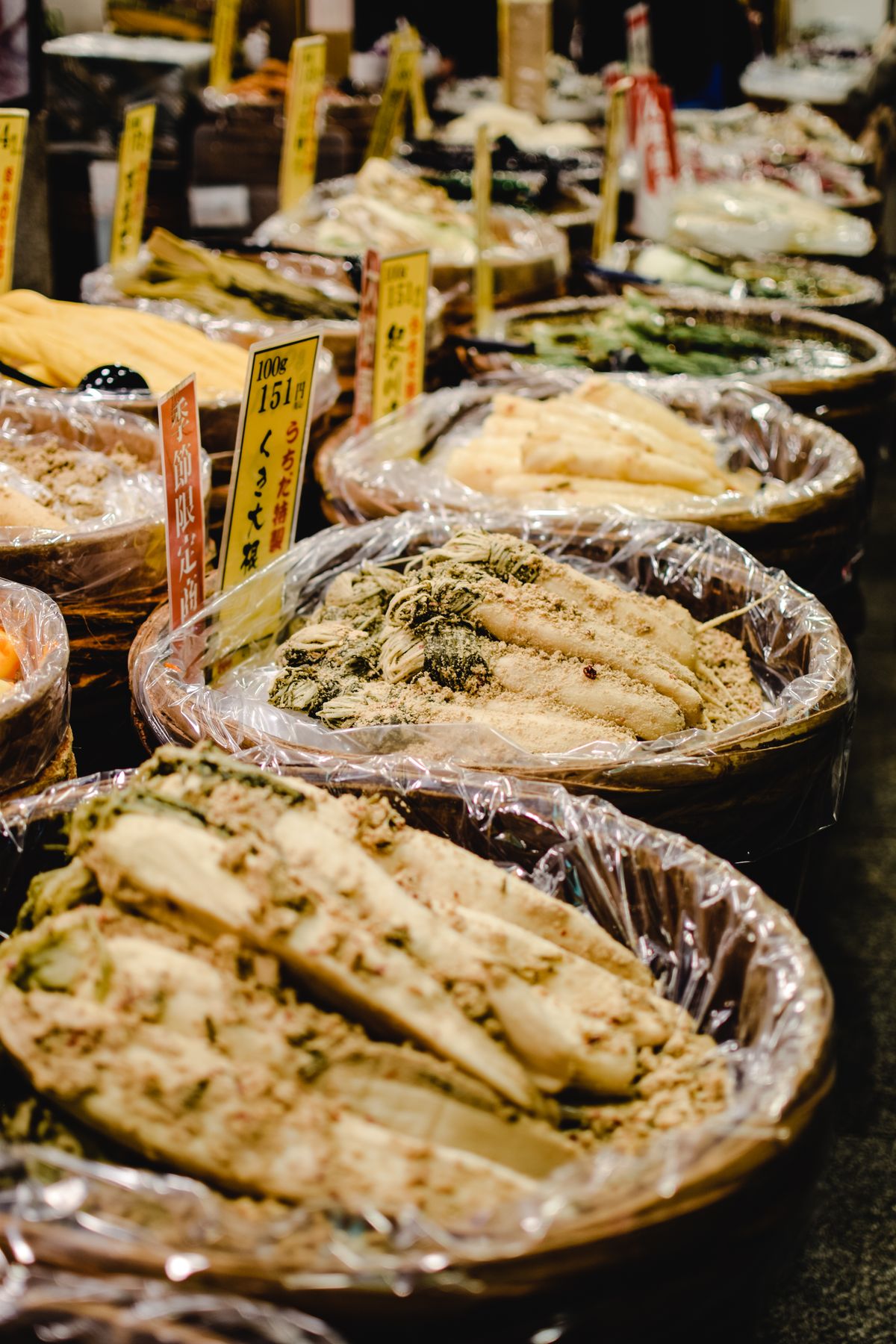
Tsukemono (Kyoto pickles)
Kyoto-style pickles are an art form, and the pickle shops let you sample before you buy. Try senmai-zuke (thinly sliced pickled turnip) in winter, or vivid purple shibazuke. They make a great, light souvenir, with small packs from around ¥400–¥800 (USD 3–5).
Fresh seafood and skewers
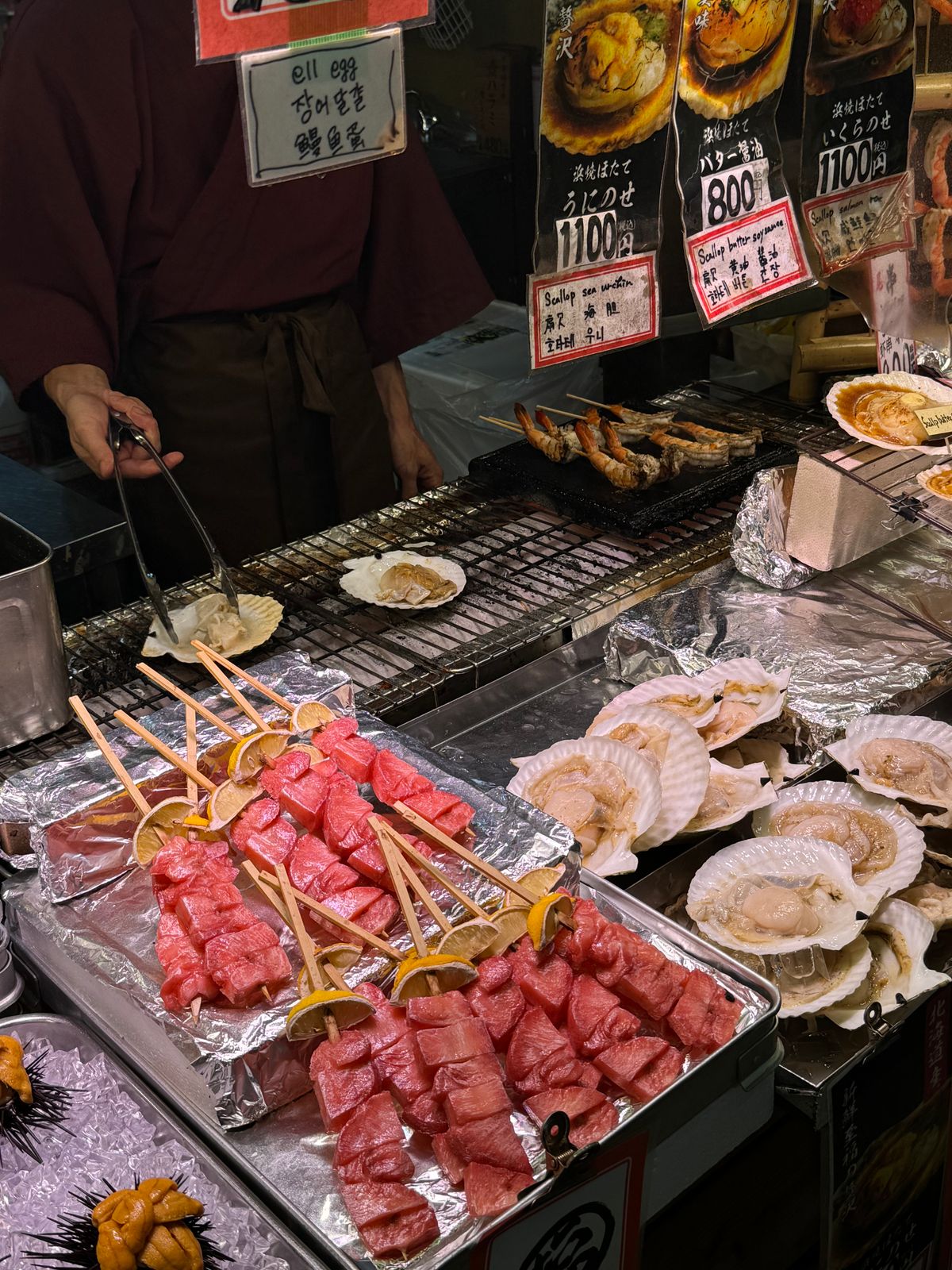
Given its origins, it is no surprise Nishiki excels at seafood. Grilled scallops in the shell, skewers of grilled eel, sashimi cups, grilled crab legs, and tempura are all available to eat on the spot. Prices vary widely — a grilled scallop might be ¥400 (USD 3), while a fat skewer of grilled wagyu or eel can run ¥800–¥1,500 (USD 5–10).
Matcha and wagashi sweets
Finish on something sweet. Stalls and small cafes serve matcha soft-serve ice cream, warabi-mochi, dango, and dorayaki, plus beautiful seasonal wagashi (traditional sweets). A matcha soft-serve runs about ¥400–¥500 (USD 3). Several shops also sell high-grade matcha powder and tea to take home.
Non-food finds: Aritsugu knives
Near the Teramachi end stands Aritsugu, a knife-maker with centuries of history, where chefs from around the world buy hand-forged blades. Even if you are not buying, it is fascinating to watch the staff sharpen and engrave knives. If you do purchase one, they will hone it and add your name — a meaningful, if pricier, Kyoto souvenir starting from several thousand yen.
Nishiki Market etiquette: how to eat without offending locals
As Nishiki has grown busier, the merchants’ association has introduced some clear rules to protect the market and keep it pleasant. Following them marks you out as a considerate traveller.
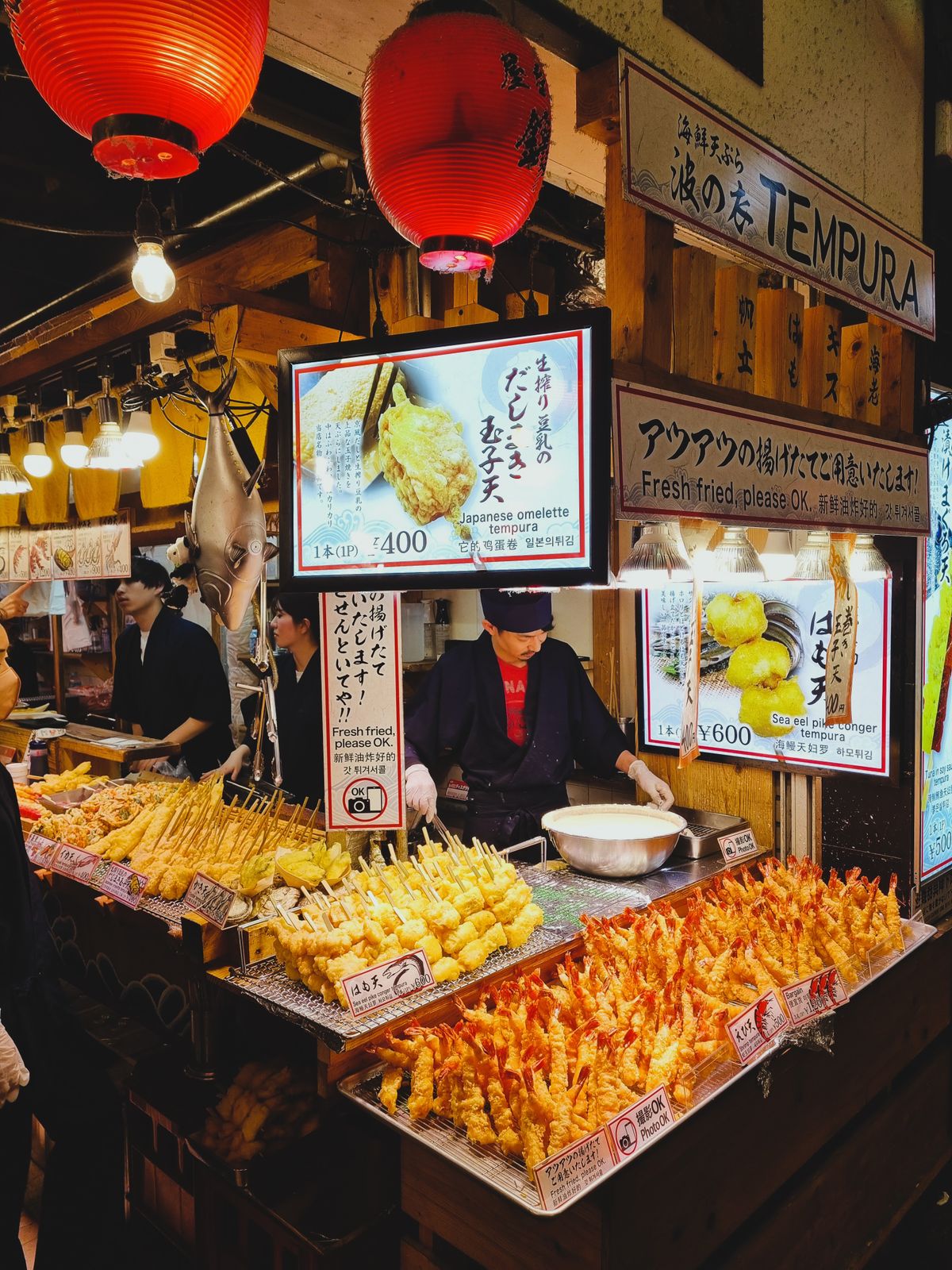
- Do not walk and eat. The traditional and now strongly encouraged rule is to eat where you buy — stand to the side near the stall, finish your snack, then move on. Walking through the crowded street while eating risks spills on others and is frowned upon.
- Eat in, not out. Many stalls have a small standing counter or bench for exactly this purpose. Use it.
- Hold on to your rubbish. Public bins are scarce. Stalls will usually take back the skewer or cup from something you bought there, but otherwise carry a small bag for your own waste.
- Ask before photographing. The market is photogenic, but shops sell their goods, not photo opportunities. A quick smile and gesture, or buying something first, goes a long way before you point a camera at a vendor or their display.
- Do not touch the produce. Point or ask rather than handling food you have not bought.
- Keep to one side in crowds. The street is narrow; pause out of the flow of foot traffic when you stop to look or eat.
What it costs to graze Nishiki Market
One of the joys of Nishiki is that you can eat extremely well for very little, because everything is sold in small portions. There is no entry fee — you simply pay for what you taste.
- Small snack (doughnut, tamagoyaki slice): ¥100–¥400 (USD 1–3)
- Signature bites (tako tamago, grilled scallop): ¥400–¥600 (USD 3–4)
- Premium skewers (wagyu, eel): ¥800–¥1,500 (USD 5–10)
- Matcha soft-serve or sweets: ¥400–¥500 (USD 3)
- Pickles or tea to take home: from ¥400 (USD 3)
A satisfying grazing session sampling six or seven items typically comes to around ¥2,000–¥3,500 (USD 13–23) per person — excellent value for one of Japan’s great food experiences. Bring some cash; while more stalls now take cards and IC cards like ICOCA, smaller vendors remain cash-only.
Combine Nishiki with the rest of central Kyoto
Nishiki sits in the middle of Kyoto’s most walkable district, so it is easy to fold into a wider day.
Nishiki Tenmangu Shrine
At the eastern end of the market, tucked among the shops, is this small but atmospheric shrine dedicated to the deity of learning. Its lanterns and the “smart cow” statue make a charming end point to your market stroll, and there is a sacred spring on the grounds.
Teramachi and Shinkyogoku arcades
The market spills directly into the covered Teramachi and Shinkyogoku shopping arcades, full of shops selling crafts, stationery, clothing, and souvenirs — perfect for browsing after you have eaten.
Pontocho and the Kamo River
A few minutes’ walk east brings you to the Kamo River and the lantern-lit alley of Pontocho, one of Kyoto’s most beautiful dining lanes — ideal for an evening meal after an afternoon of grazing.
Take a guided food tour
If you want context, history, and access to the best stalls without the guesswork, a guided market food tour is a fantastic option. A knowledgeable local guide introduces you to vendors, explains each speciality, and helps you taste things you might otherwise walk past. You can browse Kyoto food tours and experiences on NEWT.
Where to stay near Nishiki Market
Because Nishiki is dead-centre in downtown Kyoto, staying nearby puts you within walking distance of the market, Gion, Pontocho, and the main shopping streets — and on a direct subway line to the major temple districts.
Downtown (Shijo-Karasuma / Kawaramachi)
This area has the widest choice of hotels, from sleek business hotels to boutique stays, many within a five-minute walk of the market. It is the most convenient base for first-timers who want food, shopping, and transport on the doorstep. Compare rates and locations on Agoda to find something close to the action.
Gion and Higashiyama
For a more traditional atmosphere, stay across the river in the Gion or Higashiyama districts, where you will find machiya townhouse stays and ryokan within easy walking distance of both Nishiki and Kyoto’s famous eastern temples. These tend to be quieter and more atmospheric, if a little pricier.
Suggested half-day downtown Kyoto itinerary
Here is an easy plan that makes Nishiki the centrepiece of a relaxed downtown morning. Arrive at the western entrance around 9:30am as the shops open, and graze your way slowly east — tako tamago, a tamagoyaki slice, a soy-milk doughnut, some pickles to sample. Pause at Nishiki Tenmangu Shrine at the eastern end, then continue into the Teramachi and Shinkyogoku arcades to browse and pick up souvenirs. Finish with a matcha soft-serve, then walk a few minutes to the Kamo River and Pontocho for photos. If you still have an appetite, settle in for a proper lunch at one of the downtown restaurants. The whole loop takes about three to four hours and leaves your afternoon free for a temple district.
Practical tips for visiting Nishiki Market
- Come hungry and early. The market is best on an empty stomach and a quiet street — aim for opening time around 9:30–10:00am.
- Bring cash. Cards and IC cards are increasingly accepted, but many small stalls remain cash-only. Small denominations help.
- Graze, don’t gorge. Buy one small thing at a time so you can try as many specialities as possible without filling up too fast.
- Eat where you buy. Stand to the side and finish your snack before moving on, in line with market etiquette.
- Carry a small bag. For your own rubbish and for any pickles, tea, or sweets you buy to take home.
- Visit on a rainy day. The covered arcade is a perfect bad-weather activity when the temples are wet.
- Learn a few words. A friendly “sumimasen” (excuse me) and “oishii” (delicious) make interactions with vendors warmer.
For more on Kyoto’s sights and neighbourhoods, see our full Kyoto travel guide, and if you love eating your way around Japan, do not miss our Japan street food guide for what to try beyond Kyoto.
Understanding Kyoto’s food culture through Nishiki
Nishiki Market is more than a place to snack — it is a window into why Kyoto cuisine is considered the pinnacle of Japanese cooking. For over a thousand years Kyoto was the imperial capital, home to the court, powerful temples, and the tea ceremony. That heritage created a refined culinary tradition built on subtlety, seasonality, and presentation rather than bold spice or heavy sauces.
Because Kyoto is landlocked, fresh sea fish historically arrived only after a long journey, so the city’s cooks became masters of preserved and prepared foods — hence the extraordinary depth of pickles, dried goods, and salted fish you see at Nishiki. They also elevated humble local vegetables into prized ingredients: kyo-yasai such as kamo eggplant, kujo leeks, and shogoin turnips are grown specifically for the Kyoto market and command premium prices. Tofu, yuba, and fu (wheat gluten) became central to the vegetarian temple cuisine called shojin-ryori, and you can taste all of these at Nishiki today.
The concept that ties it together is washoku, the traditional dietary culture of Japan recognised by UNESCO. Washoku emphasises fresh seasonal ingredients, balance, and respect for nature’s rhythms — ideas you can literally taste as the market’s offerings shift month by month. Spending an hour grazing here teaches you more about real Kyoto cooking than almost any restaurant meal.
How the market is laid out
Nishiki runs in a straight line for about five blocks, so it is impossible to get lost — you simply walk from one end to the other. The western end, nearest the Karasuma subway, tends to have more of the traditional grocery and specialist food shops, while the eastern end toward Teramachi has more prepared snacks, cafes, and souvenir-oriented stalls, finishing at the Nishiki Tenmangu Shrine. Side streets and the intersecting Teramachi arcade offer detours when you want a break.
A good strategy is to walk the entire length once without buying, to scout what looks good and how busy each stall is, then double back and eat. Because the street is covered, you can do this comfortably in any weather. Allow at least an hour to enjoy it properly, or two if you want to eat a full progressive meal of small bites and shop for souvenirs.
Vegetarian and dietary notes
Nishiki is reasonably friendly to vegetarians thanks to Kyoto’s tofu and pickle traditions — soy-milk doughnuts, yuba, pickles, sweets, and matcha treats are widely available. That said, dashi (a stock often made from bonito) and seafood are everywhere, so strict vegetarians and vegans should ask about ingredients, as even some vegetable dishes are seasoned with fish-based stock. Travellers with shellfish or other allergies should be cautious around the seafood stalls, where cross-contact is likely. Carrying a small translation card or using a translation app helps you communicate dietary needs clearly.
A seasonal eating calendar for Nishiki
Part of the magic of Nishiki is that it changes with the seasons, reflecting the deep Japanese attention to shun — the moment when an ingredient is at its peak. Knowing roughly what to look for makes your visit even more rewarding.
In spring (March to May), watch for fresh bamboo shoots (takenoko), sweet strawberries, sakura-themed mochi and wagashi tinted pink, and the first tender mountain vegetables. The market takes on a soft, celebratory feel during cherry-blossom season. In summer (June to August), Kyoto’s brutal humidity makes the covered arcade a refuge; look for grilled freshwater eel (unagi), believed to give stamina in the heat, plus chilled tofu, hamo (pike conger), and cooling kakigori shaved ice. In autumn (September to November), the market fills with chestnuts, sweet potatoes, persimmons, matsutake mushrooms, and rich seasonal wagashi — arguably the most delicious time to graze. In winter (December to February), the highlights are crab, oysters, yuzu citrus, warming oden, and senmai-zuke pickled turnip, a Kyoto winter classic. Whenever you visit, ask vendors what is in season — they are usually delighted to point you to the best thing on their counter that day.
Standout stalls and specialities to seek out
With well over a hundred shops, it helps to know the kinds of specialists that make Nishiki famous, so you can pick them out as you walk. Look for the dedicated tamagoyaki makers, where cooks fold giant sweet omelettes in long copper pans all day. Seek out a traditional tsukemono shop with rows of wooden barrels and dozens of pickles laid out for tasting — these are some of the oldest businesses on the street. The tofu and soy-milk specialists are unmissable for their warm doughnuts and silky fresh yuba. Dashi and dried-goods stalls sell the bonito flakes, kombu kelp, and dried fish that form the backbone of Japanese cooking, and they make compact, lightweight souvenirs. Knife and kitchenware shops, led by the famous Aritsugu, draw professional chefs from around the world. And scattered throughout are the sweets and tea shops where you can pause for matcha soft-serve, warabi-mochi, or a cup of high-grade sencha. You do not need a precise list of names — simply slowing down to notice what each narrow shopfront specialises in is half the pleasure.
How Nishiki compares with other Japanese markets
If you have visited or plan to visit other famous food markets, it helps to know what makes Nishiki distinct. Compared with Tokyo’s sprawling Tsukiji Outer Market, Nishiki is smaller, more compact, and more refined — it is about delicate Kyoto specialities rather than tuna auctions and big seafood bowls. Compared with Osaka’s Kuromon Ichiba, which leans toward bold, generous seafood and street eats, Nishiki feels more genteel and historic, with a stronger emphasis on pickles, tofu, sweets, and traditional crafts. None is better than the others — they simply reflect their cities. Nishiki is the one to choose when you want to understand Kyoto’s subtle, seasonal, centuries-old approach to food, all within a single weatherproof street in the heart of the old capital.
Frequently asked questions
How long should I spend at Nishiki Market?
Plan for at least an hour to walk the length and sample a few specialities, or two to three hours if you want a full grazing meal plus souvenir shopping and a stop at Nishiki Tenmangu Shrine. It pairs easily with the nearby Teramachi arcades and Pontocho for a half-day downtown.
What time does Nishiki Market open and close?
Most shops open between 9:00am and 10:00am and close around 5:00pm to 6:00pm. Hours vary by stall, and some close one day a week, but the market is firmly a daytime destination. Arriving at opening time is the best way to avoid the crowds.
Is Nishiki Market expensive?
No. Snacks are sold in small, affordable portions, and there is no entry fee. A grazing session of six or seven items typically costs ¥2,000–¥3,500 (USD 13–23) per person, making it one of the best-value food experiences in Kyoto.
Can I walk and eat at Nishiki Market?
It is discouraged. The custom — now actively promoted by the merchants’ association — is to eat where you buy: stand to the side near the stall, finish your snack, and then move on. This keeps the narrow, crowded street clean and pleasant for everyone.
Is Nishiki Market good for vegetarians?
Reasonably, yes. Tofu, yuba, soy-milk doughnuts, pickles, sweets, and matcha treats are easy to find. Be aware that fish-based dashi and seafood are common, so strict vegetarians and vegans should confirm ingredients before buying.
Do I need to book anything in advance?
No booking is needed to visit the market itself — just turn up. If you want a guided food tour with a local expert, those do sell out and are worth reserving ahead, especially in peak seasons.
When is the least crowded time to visit?
Right at opening (around 9:30–10:00am) on a weekday is by far the quietest and most enjoyable. Late afternoon, an hour before closing, is the next best window. Avoid late-morning and lunchtime on weekends if you can.
Best souvenirs and omiyage to bring home
Nishiki is one of the best places in Kyoto to buy food souvenirs (omiyage) that travel well. Vacuum-packed Kyoto pickles are a classic choice and keep for weeks. High-grade matcha powder and loose-leaf sencha make elegant, lightweight gifts, and many tea shops can explain how to brew them. Dried-goods stalls sell beautifully packaged kombu, bonito flakes, and dried mushrooms — practical for anyone who cooks. For sweets, individually wrapped wagashi, yatsuhashi (cinnamon-scented rice-flour sweets), and matcha chocolates are popular and sturdy. If you have the budget and a real interest in cooking, an Aritsugu knife is a once-in-a-lifetime keepsake that will outlast almost anything else you bring home. Just remember to pack knives and any liquids in your checked luggage for the flight, not your carry-on.
Getting to Kyoto and reaching the market
Most international visitors arrive in Kyoto by Shinkansen, which connects to Kyoto Station from Tokyo (about 2 hours 15 minutes) and from Shin-Osaka (about 15 minutes). From Kyoto Station, take the Karasuma subway line north to Shijo Station (about 5 minutes), then walk 5 minutes east to the market. If you are based in Osaka and want a day trip, the Hankyu line from Osaka-Umeda to Kawaramachi drops you right at the eastern end of Nishiki for around ¥410 (USD 2.75) one way — one of the easiest and cheapest day trips in the Kansai region. Kyoto is genuinely compact, so once you are downtown, walking between the market, Gion, and the Kamo River is part of the fun.
Money-saving tips for foodies
- Share portions. Travelling with others? Split each snack so everyone tastes more for less.
- Look for samples. Pickle and sweet shops often offer free tastings — a polite way to find your favourite before buying.
- Buy take-home items here, not at the station. Pickles, tea, and dried goods are often fresher and better value at Nishiki than at souvenir counters.
- Eat lunch as small bites. A grazing session can replace a sit-down lunch for less money and more variety.
- Carry an IC card. An ICOCA or Suica card speeds up the few stalls and the transport that accept it, and saves fumbling for coins.
Accessibility and visiting with children
The market is flat and fully covered, which makes it easier than Kyoto’s hilly temple districts for visitors with limited mobility, though the narrow street gets very crowded at peak times, which can be challenging for wheelchairs and strollers. Visiting at opening time, when the crowds are thinnest, makes a big difference. Children generally love Nishiki — the colourful stalls, the novelty snacks on sticks, and the matcha ice cream are all kid-friendly — but keep little ones close in the busy aisle and be mindful of hot grills at seafood stalls. Restrooms are limited within the market itself, so use the facilities at the nearby subway stations or department stores before you start.
Tea and matcha at Nishiki
Kyoto is the spiritual home of Japanese tea, and Nishiki is a great place to engage with that tradition without committing to a formal tea ceremony. Several long-established tea merchants on and around the street sell everything from everyday sencha and roasted hojicha to ceremonial-grade matcha, often milled on-site. Staff can advise on grades and brewing temperatures, and many shops let you smell or taste before buying. Beyond leaves to take home, the market and its surrounding arcades are dotted with stands serving matcha soft-serve, matcha lattes, warabi-mochi dusted with kinako soybean flour, and seasonal parfaits, so you can enjoy Kyoto’s tea culture as a sweet treat as you walk. If the experience sparks a deeper interest, a proper tea ceremony or hands-on cultural experience nearby is a wonderful next step, and many can be booked in advance through tour platforms. For more ideas on edible experiences across the country, our Japan street food guide is a good companion read.
Common mistakes first-timers make
- Visiting at peak lunchtime. The street is at its most crushing from late morning to early afternoon. Going at opening time transforms the experience.
- Filling up too fast. The portions are small for a reason — pace yourself so you can taste a wide range rather than two big items.
- Walking and eating through the crowd. It blocks the aisle and goes against market etiquette. Step aside and finish your snack near the stall.
- Only relying on cards. Some of the best little stalls are cash-only, so always carry yen.
- Rushing through. Treat Nishiki as an experience, not a checklist. Chatting with vendors and noticing the seasonal produce is where the real joy lies.
- Skipping the shrine. Many visitors turn back before reaching Nishiki Tenmangu at the eastern end — it is a lovely, atmospheric way to close the walk.
Is Nishiki Market worth visiting?
It is a fair question, because Nishiki has become genuinely popular and, at the wrong time of day, very crowded. Some travellers arrive at midday on a weekend, find themselves shuffling through a wall of people, and leave underwhelmed. But that is a timing problem, not a Nishiki problem. Visit when the shops open, treat it as a slow grazing experience rather than a quick photo stop, and engage with the vendors, and it becomes one of the most memorable few hours of a Kyoto trip. For food lovers it is essential; for everyone else it is still a delightful, weatherproof, low-cost way to taste the city’s culture and pick up excellent souvenirs.
It is also one of the most accessible cultural experiences in Kyoto — no entrance fee, no need to book, centrally located, and open year-round in any weather. Few places let you connect so directly with a city’s living food heritage. Even on a tight schedule, an early-morning hour at Nishiki rewards you out of all proportion to the time it takes, and it sets up the rest of your downtown Kyoto day perfectly. In short: yes, absolutely worth it — just go early, go hungry, and go slow, and the market will reward you with one of the most authentic tastes of Kyoto you can find anywhere in the city.
Final thoughts
Nishiki Market is one of those rare places that delivers on its reputation. In a single covered street you can taste four hundred years of Kyoto’s food culture — the pickles and tofu, the seasonal vegetables, the sweets and the seafood — all in friendly, affordable, bite-sized form. Come early, come hungry, eat where you buy, and take your time chatting with the vendors who keep these family shops alive.
Build your visit into a relaxed downtown morning, pair it with Pontocho in the evening, and you will understand why locals have shopped here for centuries. Sort out your travel eSIM and a well-located downtown Kyoto hotel in advance, and Kyoto’s Kitchen is ready to serve.
🗾 Planning your trip? Get our free 7-Day Japan Itinerary (PDF)
Day-by-day Tokyo → Kyoto → Osaka plan with real prices and essential phrases — sent straight to your inbox.
Going to Japan? Talk to locals with confidence.
Hirameki Japanese — instant offline translation, camera translation, furigana + romaji, and 314 free flashcards. No login. Works without internet.

Plan your Japan trip
Two things every first-timer should book
Some links are affiliate links. If you book through them we may earn a small commission at no extra cost to you.