Introduction to Kyoto
Kyoto served as Japan’s imperial capital for over a thousand years, from 794 to 1868, and remains the country’s undisputed cultural heart. While Tokyo dazzles with its scale and modernity, Kyoto seduces with its depth and beauty. Nowhere else in Japan — or arguably the world — can you walk from a 1,200-year-old Shinto shrine to a Zen temple garden, pause for a matcha ceremony, and then watch a maiko (apprentice geisha) walking to an evening engagement along a lantern-lit cobblestone street.
The city was deliberately spared from American bombing during World War II largely because of its cultural significance, leaving an extraordinary concentration of intact historic architecture. Today Kyoto has 17 UNESCO World Heritage Sites — more than almost any other city in the world. With over 1,600 Buddhist temples, 400 Shinto shrines, and countless traditional machiya townhouses lining its older streets, the city rewards slow, unhurried exploration.
Kyoto is also a living city, not a museum. It’s home to world-class universities, innovative restaurants, cutting-edge craft studios, and a sophisticated local culture that blends ancient tradition with contemporary Japanese life. Whether you’re visiting for the first time or returning for the tenth, this comprehensive guide will help you experience Kyoto at its best.
Top Temples and Shrines in Kyoto
Kinkaku-ji (Golden Pavilion)
The three-story pavilion covered in gold leaf, reflected in the Mirror Pond, is one of the most photographed buildings in Japan. Originally built in 1397 as a retirement villa for shogun Ashikaga Yoshimitsu, it was converted to a Zen Buddhist temple after his death. The current structure is a 1955 reconstruction after the original was burned down by a disturbed monk in 1950 — a story immortalized in Mishima Yukio’s novel. Admission is 500 yen. Arrive before 9am to beat the crowds.
Ginkaku-ji (Silver Pavilion)
Despite its name, the Silver Pavilion was never actually covered in silver — the shogun ran out of money before completion. Yet many visitors find it more beautiful than Kinkaku-ji precisely because of its understated wabi-sabi aesthetic. The surrounding garden is considered a masterpiece of Japanese landscape design, featuring the famous Kogetsudai (moon-viewing platform) made of sand. The approach along the Philosopher’s Path, lined with cherry trees, is enchanting in any season. Admission is 500 yen.
Kiyomizu-dera
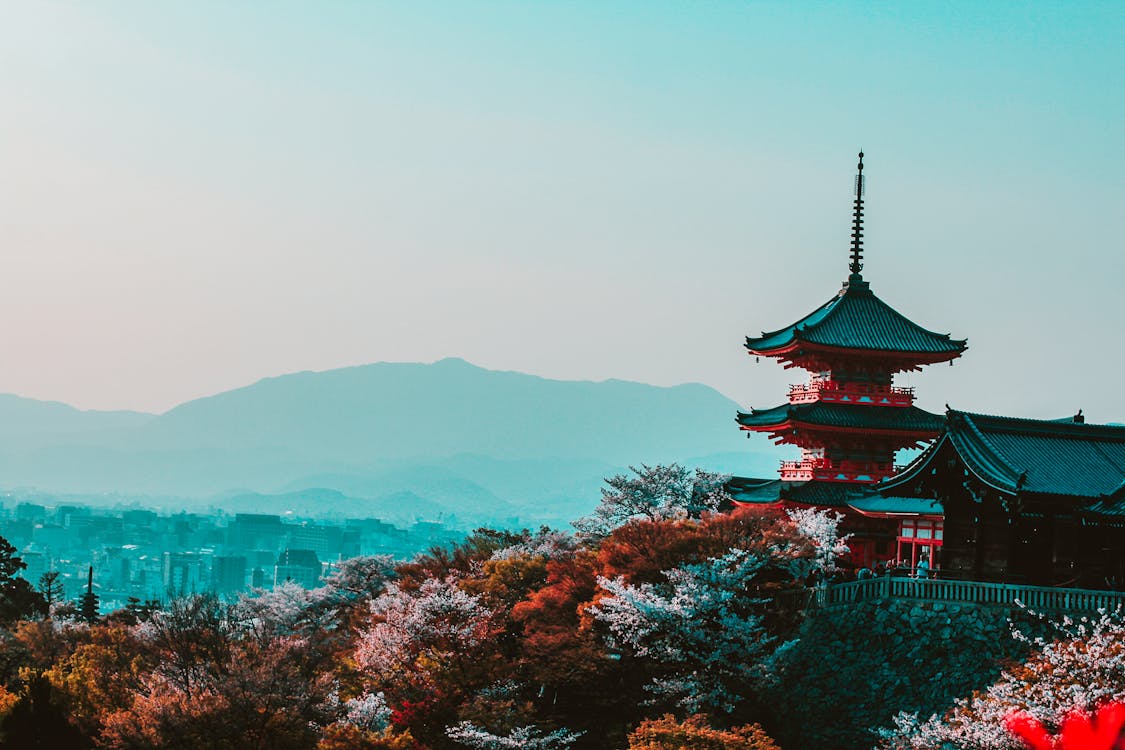
Perched on the wooded hillside of Higashiyama, Kiyomizu-dera’s famous wooden stage stands 13 meters above the hillside, supported by a lattice of wooden pillars assembled without nails. The view over Kyoto from the stage is extraordinary, especially during cherry blossom (late March-April) and autumn foliage (November). The temple’s three streams of sacred water are believed to grant wishes for longevity, success in studies, and luck in love. Admission is 500 yen. The approach through Sannen-zaka and Ninen-zaka cobblestone streets is lined with shops selling Kyoto crafts and snacks.
Fushimi Inari Taisha
Kyoto’s most iconic experience: a tunnel of over 10,000 vermilion torii gates winding 4km up Mount Inari. The shrine is dedicated to Inari, the Shinto god of rice, sake, and commerce — hence why thousands of businesses across Japan have donated gates with their company names inscribed. Free to enter and open 24 hours. The full hike to the summit takes about 2-3 hours; most visitors go as far as the Yotsutsuji intersection (about 30-40 minutes up) for the view over Kyoto. Go early morning or evening for the most atmospheric experience.
Nijo Castle
Built in 1603 as the Kyoto residence of shogun Tokugawa Ieyasu, Nijo Castle is a UNESCO World Heritage Site renowned for its extraordinary Ninomaru Palace interiors — arguably the finest surviving example of Edo-period decorative art. The ‘nightingale floors’ (uguisubari) chirp with every step, a deliberate security measure to prevent ninja infiltration. The surrounding garden is beautiful in every season. Admission is 1,300 yen. Closed Tuesdays.
Arashiyama and the Bamboo Grove
The Arashiyama district in western Kyoto offers a completely different atmosphere from the city center. The famous bamboo grove — a narrow path flanked by towering stalks that filter light into an otherworldly green glow — is one of Japan’s most photographed natural features. Nearby Tenryu-ji temple (UNESCO listed) has a sublime garden. The Togetsukyo bridge over the Oi River, with mountains behind, is magnificent in autumn. Rent a rickshaw or cycle through the quieter back lanes to escape the crowds on the main path.
Best Areas to Explore in Kyoto
Gion
Gion is Kyoto’s most famous geisha district, a preserved historic neighborhood of wooden machiya townhouses, tea houses (ochaya), and exclusive restaurants along Hanamikoji Street. This is your best chance to spot a maiko or geiko (Kyoto’s term for geisha) walking between appointments, usually between 5pm and 8pm. Please be respectful — do not chase or grab them for photographs. The area around Gion Shimbashi and Shirakawa canal is magical in the early morning before tourists arrive.
Nishiki Market
Known as “Kyoto’s Kitchen,” this narrow 400-meter covered shopping arcade has been a food market since the 14th century. About 100 stalls sell fresh tofu, pickled vegetables (tsukemono), fresh fish, Kyoto sweets (wagashi), sake, and street food skewers. It’s a wonderful place to graze your way through lunch while learning about Kyoto’s distinctive culinary culture. The market runs parallel to Shijo Street, between Teramachi and Takakura Streets.
The Philosopher’s Path
This 2km stone path follows a canal lined with hundreds of cherry trees between Ginkaku-ji and Nanzen-ji temples. Named after philosopher Nishida Kitaro, who reportedly meditated here on his daily walk to Kyoto University. In spring, the cherry blossoms create a pink tunnel over the canal — it’s one of Japan’s most beautiful hanami experiences. In autumn, maples line the path in red and gold. Worth walking any time of year for its serene atmosphere.
Higashiyama
The eastern mountain district is home to Kyoto’s highest concentration of historic streets and temples. The preserved Sannen-zaka and Ninen-zaka cobblestone lanes leading to Kiyomizu-dera are flanked by craft shops, cafes, and traditional restaurants. Nearby Yasaka Shrine anchors the Gion district and is the focus of the spectacular Gion Matsuri festival each July. The entire hillside area is best explored on foot over half a day.
Fushimi
South of the main city, Fushimi is famous for two things: the Fushimi Inari shrine and sake brewing. The district has been producing sake for centuries, thanks to its exceptionally pure underground water. Several breweries offer tours and tastings, and the historic sakagura (sake warehouse) district around Teradaya is atmospheric. Fushimi is easily reached on the Kintetsu or Keihan lines from central Kyoto.
Traditional Experiences in Kyoto
Tea Ceremony
Experiencing a traditional Japanese tea ceremony (chado or chanoyu) in Kyoto is one of the most memorable things you can do in Japan. Numerous venues offer sessions for visitors, ranging from 30-minute introductory experiences (around 1,500-2,000 yen) to full 2-hour ceremonies with cultural explanation (4,000-8,000 yen). Some of the best experiences are held in historic machiya townhouses or traditional teahouses overlooking gardens. En tea ceremony in Gion and Camellia Tea Experience are consistently well-reviewed options.
Kimono Rental
Renting a kimono and strolling through Kyoto’s historic streets is one of the most popular and rewarding visitor experiences. Dozens of rental shops operate near major tourist areas, particularly around Gion and Higashiyama. A basic kimono rental with dressing assistance typically costs about 3,000-5,500 yen for the day, sometimes a little less if booked online, and hair styling is often extra; a full furisode (formal kimono) with hair styling can cost 8,000-15,000 yen. The rental includes obi (sash) and accessories. Most shops ask you to return the kimono by 5:30-6:00pm.
Maiko Performance Viewing
Seeing a maiko or geiko perform traditional arts (dance, music, games) in an intimate ozashiki setting is one of Kyoto’s most exclusive experiences — traditionally available only through personal introduction. Several venues now offer ozashiki experiences for visitors at around 15,000-30,000 yen per person including dinner. The Gion Hatanaka restaurant and Gion Hatanaka Geigi Theater are well-established options. For a more affordable introduction, the Gion Corner theater (about 3,150 yen) offers condensed performances of seven traditional arts including maiko dance.
Zazen Meditation
Several Zen temples in Kyoto offer early-morning zazen (seated meditation) sessions open to the public, often at no charge or a small donation. Kennin-ji, Shunkoin Temple (with English instruction), and Tofuku-ji all run regular sessions. Sitting in silence in a centuries-old meditation hall before the tourist crowds arrive is an experience you won’t forget. Sessions typically start at 6:00-6:30am and last 30-60 minutes. No experience is required.
Day Trips from Kyoto
Nara
Japan’s first permanent capital (710-784 AD) is only 45 minutes from Kyoto by Kintetsu Express train (750 yen). The main attraction is Nara Park, where over 1,200 semi-wild deer roam freely and will bow for shika senbei (deer crackers, 200 yen). Todai-ji temple houses the world’s largest bronze Buddha statue (Daibutsu) — at 15 meters tall, it’s breathtaking. Kasuga Taisha shrine with its thousands of stone and bronze lanterns, and the beautiful Yoshiki-en and Isuien gardens, round out a perfect day trip.
Osaka
Japan’s second city is just 15-30 minutes from Kyoto by Shinkansen or express train, making it the easiest day trip. Osaka’s energy is completely different from Kyoto — louder, more commercial, and obsessed with food. Dotonbori’s neon signs, Osaka Castle, Kuromon Market, and the nightlife of Namba offer a vivid contrast to Kyoto’s refinement. Many travelers base themselves in Kyoto and take a half-day trip to Osaka for the food and atmosphere.
Kobe
The port city of Kobe is 30-45 minutes from Kyoto by express train. Famous for its international atmosphere (it was one of the first Japanese ports open to foreign trade), spectacular beef (Kobe beef is among the world’s finest), and the hilly Kitano district of preserved Western-style houses. The Arima Onsen hot spring resort in the mountains above Kobe makes for a luxurious afternoon extension. The Shin-Kobe ropeway offers panoramic views over the city and bay.
Himeji
Himeji Castle is Japan’s finest surviving feudal castle and a UNESCO World Heritage Site — nicknamed the White Heron Castle for its brilliant white exterior. Just 50 minutes from Kyoto by Shinkansen (around 3,000 yen each way), it’s worth a half-day visit. The castle’s defensive systems are extraordinarily well-preserved, and the surrounding gardens including Koko-en are excellent. Combine with a visit to the Engyo-ji temple complex on nearby Mount Shosha, reached by ropeway.
Hieizan (Mount Hiei)
The sacred mountain northeast of Kyoto is home to Enryaku-ji, the head temple of the Tendai sect of Buddhism, founded in 788 AD. The sprawling temple complex across three mountain zones (Todo, Saito, and Yokawa) is a UNESCO World Heritage Site. The Eizan Railway from Demachiyanagi to Yase-Hieizanguchi, followed by the Eizan Cable Car and ropeway, makes access straightforward. The mountain forests, especially in autumn, are stunningly beautiful and largely crowd-free compared to Kyoto’s main sights.
Food and Dining in Kyoto
Kaiseki Cuisine
Kyoto is the birthplace of kaiseki — Japan’s most refined multi-course cuisine. Originally developed as accompaniment to the tea ceremony, kaiseki evolved into an elaborate tasting format featuring seasonal ingredients prepared with extraordinary skill and presented with artistic attention to detail. A full kaiseki dinner at a top Kyoto restaurant costs 15,000-50,000 yen per person, but lunch kaiseki at the same venues often starts at 5,000-8,000 yen. Kikunoi, Mizai, and Nakamura are among the most celebrated names.
Yudofu (Hot Tofu)
Kyoto’s Buddhist temple culture created a refined vegetarian cuisine centered on tofu, and yudofu — tofu simmered in kombu broth — is its simplest and most iconic expression. Several restaurants near Nanzen-ji temple specialize in yudofu set meals (2,000-4,000 yen), serving the silken tofu with dipping sauces and a series of vegetable side dishes. Okutan, operating since 1635 near Nanzen-ji, is widely considered the best.
Obanzai
Kyoto’s traditional home cooking style, obanzai features small dishes of seasonal vegetables, tofu, pickles, and fish prepared simply to highlight natural flavors. This is everyday Kyoto cuisine — you’ll find obanzai-style dishes at neighborhood restaurants (izakayas and shokudo) for very affordable prices (1,000-2,000 yen for a full meal). The Nishiki Market is an excellent place to sample individual obanzai dishes as street food.
Matcha Sweets
Kyoto produces the finest matcha in Japan — the Uji district just south of the city has been the country’s premier tea-growing area for centuries. This means Kyoto’s matcha sweets (wagashi) are exceptional: matcha soft serve ice cream, matcha parfaits layered with red bean and mochi, matcha tiramisu, and traditional sweets like namagashi. Nishiki Market, the Gion area, and the streets around Kinkaku-ji all have excellent matcha sweet shops. Treat yourself to a proper matcha parfait at Tsujiri or Nakamura Tokichi.
Getting Around Kyoto
Buses
Kyoto City Bus is the most comprehensive way to reach major tourist sites. The flat fare within central Kyoto is 230 yen; use an IC card to board. The bus-only day passes have been discontinued; for unlimited rides, buy the Subway & Bus 1-Day Pass (1,100 yen), valid on city buses and the subway on the day you first use it — good value if you’re visiting multiple sites. However, buses can be extremely crowded during peak seasons and at popular times. The #100 and #101 sightseeing routes serve most major attractions efficiently.
Subway
Kyoto has two subway lines: the Karasuma Line (north-south) and the Tozai Line (east-west). The subway is fast and reliable but doesn’t reach most tourist sites directly. It’s useful for getting between Kyoto Station and the central part of the city, or reaching Nijo Castle (Nijo-jo-mae station) and the northwest suburbs. Combined day passes with buses are available and good value.
Arashiyama Railway (Randen)
The charming Randen tram line connects central Kyoto with the Arashiyama and Sagano districts, running through quiet residential streets. It’s a slow but delightful way to reach the western sights. In November, the Randen runs a special Momiji (maple leaf) tunnel illumination at night — one of Kyoto’s most magical seasonal experiences.
Rental Bicycle
Cycling is one of the best ways to explore Kyoto at your own pace. The city is largely flat and well-suited to cycling. Rental shops near Kyoto Station and throughout the city charge around 1,000-1,500 yen per day. Cycling through the quiet streets of the Nishijin weaving district, along the Kamo River, or through northern Kyoto’s less-visited neighborhoods is a wonderful way to discover the city beyond the tourist trail.
Getting to Kyoto
By Shinkansen
The Shinkansen (bullet train) is the most comfortable and popular way to reach Kyoto. From Tokyo, the Nozomi or Hikari takes about 2 hours 15-25 minutes to Kyoto Station (Nozomi reserved seats cost more for tickets bought from July 1, 2027). From Osaka, it’s just 15 minutes (1,500-2,900 yen). If you have a JR Pass, the slightly slower Hikari is covered at no extra cost; to ride the Nozomi, buy a one-way NOZOMI MIZUHO Ticket (4,960 yen from Tokyo). Kyoto Station is a major hub with direct connections to most major Japanese cities.
By Airplane
Kyoto has no airport of its own. The nearest airports are Osaka Itami (domestic flights, 75 minutes by airport limousine bus) and Kansai International Airport — KIX (international flights, about 75 minutes by Haruka limited express train or around 90-105 minutes by limousine bus). Most international visitors flying into the Kansai region take the JR Haruka from KIX to Kyoto Station — a comfortable 75-minute journey (3,690 yen, discounted passes available for tourists).
Best Time to Visit Kyoto
Spring Cherry Blossoms (Late March to Early April)
Kyoto during cherry blossom season is extraordinarily beautiful — and extraordinarily crowded. The city’s temples and gardens become scenes of breathtaking pink beauty. Maruyama Park, Philosopher’s Path, Kiyomizu-dera, and Heian Jingu are the top spots. Book accommodation 3-6 months in advance as hotels sell out at 3-4x normal prices. If you can only visit once, this is the season — but go early morning (before 8am) to experience the famous sites in something approaching tranquility.
Autumn Foliage (Mid-November to Early December)
Many Kyoto devotees consider autumn foliage season even more beautiful than cherry blossom time. The maples, ginkgos, and other deciduous trees at Tofuku-ji, Eikan-do, Rurikoin (limited seasonal access), Arashiyama, and throughout the Higashiyama mountains turn brilliant shades of red, orange, and gold. The light in November is perfect for photography. Again, book well in advance — this is the most popular tourist season.
Gion Matsuri (July)
The Gion Matsuri is one of Japan’s three great festivals, held throughout the entire month of July with the main events being the yoiyama evenings on July 14-16 and 21-23 and the grand procession of enormous wooden floats called yamaboko junko on July 17 and 24. The yamaboko — some over 25 meters tall and weighing 12 tons, decorated with centuries-old Nishijin weavings and imported tapestries — are among the most spectacular sights in traditional Japanese culture. The evening yoiyama street festival is free and magical.
Avoiding Crowds in Kyoto
Visit Early Morning
The single most effective strategy for avoiding crowds at Kyoto’s most popular sites is arriving early. Fushimi Inari Taisha is magical before 7am and nearly empty. Kinkaku-ji is surprisingly peaceful before opening time — admire it through the fence. The Arashiyama bamboo grove is best before 8am. Most temple gardens don’t get crowded until 10am. Set your alarm, embrace the early start, and you’ll have transformative experiences at sites that feel impossibly crowded at midday.
Explore Lesser-Known Sites
Some of Kyoto’s finest experiences are off the main tourist trail. Jonangu shrine’s magnificent garden is almost never crowded. Kurama village in the mountains north of Kyoto has a wild, ancient atmosphere. Daitoku-ji temple complex contains 22 sub-temples, only a few of which are regularly open — those that are tend to be tranquil. The Nishijin weaving district and its quiet residential backstreets give you authentic neighborhood Kyoto without the tourist density of Gion.
Travel in Shoulder Season
June (rainy season) and February are Kyoto’s least visited months — and they have their own distinct beauty. June’s hydrangeas and lush greenery are gorgeous; February’s plum blossoms at Kitano Tenmangu shrine are stunning. Prices drop significantly, accommodation is easy to book, and you’ll feel like you have the city’s treasures to yourself. Winter evenings in Kyoto, with light snow occasionally dusting the temple rooftops, can be the most atmospheric experience of all.
Budget Guide for Kyoto
Budget Traveler (7,000-13,000 yen per day)
Stay in a hostel dorm or guesthouse (2,500-4,000 yen/night), eat at convenience stores and standing noodle shops, and focus on Kyoto’s many free attractions — Fushimi Inari (free, 24 hours), Arashiyama bamboo grove (free), Philosopher’s Path (free), and Kamo River. Many temples cost 500-600 yen entry; budget 2,000-3,000 yen for admissions per day. The Subway & Bus 1-Day Pass (1,100 yen) covers most of your transportation within the city.
Mid-Range Traveler (20,000-35,000 yen per day)
A private room at a well-located business hotel or traditional guesthouse (8,000-15,000 yen/night), lunch at a mid-range kaiseki or obanzai restaurant (2,000-4,000 yen), admission to major sites plus one special experience (tea ceremony or kimono rental), and comfortable transport. This budget gives you a rich and authentic Kyoto experience without the stress of cutting corners.
Luxury Traveler (60,000 yen or more per day)
Kyoto’s luxury accommodation is exceptional. Staying in a traditional ryokan with kaiseki dinner included (20,000-80,000 yen/night) is one of the finest hospitality experiences in the world. The Tawaraya ryokan, established over 300 years ago, is considered Japan’s finest traditional inn. Alternatively, Aman Kyoto, Six Senses Kyoto, and The Ritz-Carlton Kyoto offer modern luxury. Add ozashiki geiko entertainment, private temple access, and bespoke food experiences for the ultimate Kyoto journey.
Frequently Asked Questions About Kyoto
How many days do I need in Kyoto?
Three to four days is the minimum for seeing Kyoto’s major highlights without feeling rushed. Five to seven days allows you to explore at a relaxed pace, including day trips and lesser-known areas. Many visitors find themselves planning a return trip — the city has enough depth to reward multiple visits across different seasons.
Is Kyoto or Tokyo better to visit first?
Most first-time Japan visitors start in Tokyo (arriving at Narita or Haneda) and travel to Kyoto by Shinkansen. This works well logistically and allows you to experience modern Japan before immersing yourself in its historical heart. Some prefer to do it in reverse — arriving at Osaka’s Kansai International Airport and exploring the Kansai region first. Either order works; both cities are extraordinary.
Is Kyoto expensive?
Kyoto is more expensive than most Japanese cities — particularly for accommodation during peak seasons (spring cherry blossoms and autumn foliage). However, many of its greatest experiences are free or very affordable: the bamboo grove, Fushimi Inari, Philosopher’s Path, and most shrine grounds cost nothing to enter. Temple admission typically runs 500-1,000 yen. Food ranges from 500 yen obanzai lunch sets to 50,000 yen kaiseki dinners.
What is the best way to get between Kyoto and Tokyo?
The Shinkansen is the most popular choice — about 2 hours 15 minutes and extremely comfortable. If you’re budget traveling, overnight highway buses run from roughly 1,500 yen on discount days to 8,000 yen or more at peak, and take about 7-9 hours. Domestic flights exist but the door-to-door time advantage is minimal once you factor in airport transit. The Shinkansen experience is itself worth the price — watching the Japanese countryside blur past at 285km/h with Mount Fuji appearing suddenly in the distance is unforgettable.
Can I see geisha in Kyoto?
Yes — Kyoto has five geisha districts (hanamachi), with Gion Kobu being the most famous. Your best chance of a spontaneous sighting is on Hanamikoji Street in Gion between 5-8pm on evenings when the tea houses are busy. Please be respectful: do not chase, surround, or grab geiko and maiko for photos. This behavior has become a significant problem and some areas now have photography restrictions. For a guaranteed, respectful encounter, book an ozashiki dining experience through a reputable agency.
What are the top free attractions in Kyoto?
Kyoto has remarkable free attractions: Fushimi Inari Taisha (open 24 hours), the Arashiyama bamboo grove, Philosopher’s Path, Kamo River and its riverside walking paths, most shrine outer precincts including Heian Jingu’s outer gardens, Nishiki Market (free to browse), the Nishijin neighborhood, and the Imperial Palace Outer Garden. You could spend a full day in Kyoto seeing extraordinary things without paying a single admission fee.
Where should I stay in Kyoto?
Downtown Kyoto (Karasuma/Shijo area) gives the best balance of access to attractions and transport. Staying in Gion puts you at the heart of the most atmospheric neighborhood but tends to be pricier. Arashiyama accommodation lets you experience the bamboo district in the early morning and evening after day-trippers leave — magical, but less central. Budget travelers will find the best value in the Kyoto Station area, with excellent access to buses and trains.
Kyoto Travel Guide
Japan’s cultural heart — 1,600 temples and shrines, geisha districts, bamboo groves, and the finest traditional cuisine.
Kyoto served as Japan’s imperial capital for over a millennium, and its legacy is visible everywhere — in the golden pavilions that shimmer above tranquil ponds, in the vermilion torii gates that stretch up wooded hillsides, and in the cobbled lanes of Gion where maiko still train their craft. No visit to Japan is complete without at least two or three days here.
Essential Kyoto Articles


Kyoto Quick Facts
| 🗾 Best time to visit | Late March–April (sakura) or mid-November (koyo) |
| 🚄 Getting there | Shinkansen from Tokyo (~2h15m) or from Osaka (~15 min) |
| 🚌 Getting around | City buses, subways, and bicycle rentals are best |
| 💴 Daily budget | ¥6,000–10,000 (budget) / ¥18,000–35,000 (mid-range) |
| 📍 Top areas to stay | Gion, Downtown (Kawaramachi), Arashiyama, Fushimi |
Nearby Day Trips from Kyoto
Deer, giant Buddha & ancient temples 🏯 Osaka
Street food capital, 30 min away ⛩️ Hiroshima
History, peace & floating torii
Kyoto Itinerary Ideas
3-Day Kyoto Itinerary
Day 1 — Eastern Kyoto: Begin early (before 7am) at Fushimi Inari Taisha — hike partway up the mountain before the tour groups arrive. Return to central Kyoto for a late breakfast at Nishiki Market. Afternoon: the Higashiyama walking route from Gion through Sannen-zaka and Ninen-zaka lanes up to Kiyomizu-dera. Evening stroll through Gion’s Hanamikoji Street and Shimbashi area. Dinner at a Gion restaurant serving obanzai cuisine.
Day 2 — Northern and Central Kyoto: Morning at Kinkaku-ji (arrive at opening, 9am). Continue to the zen garden at Ryoan-ji (the famous rock garden) and then Ninnaji temple. Afternoon: Nishijin weaving district and a visit to Kitano Tenmangu shrine with its plum orchard. Evening: tea ceremony experience in the Gion or Higashiyama area.
Day 3 — Arashiyama and Southern Kyoto: Early morning in Arashiyama — bamboo grove before 8am, Tenryu-ji garden at opening, boat ride on the Oi River if time allows. Afternoon: Fushimi sake brewery district or the magnificent garden at Jonangu shrine. End the day at Tofuku-ji (spectacular in autumn) or a final sunset view from the Kiyomizu-dera stage.
Kyoto’s Hidden Gems Worth Seeking Out
Rurikoin temple (open for limited periods in spring and autumn) has one of the most photographed interiors in Japan — a study room where the maple tree outside is reflected in the polished lacquer floor. Queues are long but it’s worth it. Jonangu shrine has exceptional seasonal garden displays almost entirely unknown to foreign visitors. Kurama village north of Kyoto, reached by the charming Eizan Railway, has a primeval mountain atmosphere unlike anything else in the city. The Kurama-dera temple complex and the mountain path to Kibune are outstanding.
Nishiki Tenmangu shrine sits directly above Nishiki Market and offers a serene 5-minute escape from the market crowds below. Shimogamo shrine, one of Kyoto’s oldest (a UNESCO site), sits in a beautiful primeval forest corridor called Tadasu no Mori just north of the city center. Daitoku-ji’s sub-temples — particularly Daisen-in and Zuiho-in — have extraordinary dry landscape gardens that see a fraction of the visitors that Ryoan-ji receives.
Essential Kyoto Travel Tips
Book popular restaurants in advance: Kyoto’s top restaurants — particularly kaiseki establishments — require reservations weeks or months ahead. Services like Tableall, Omakase, and concierge services at high-end hotels can help secure bookings at otherwise inaccessible venues.
Understand the temple timing: Most Kyoto temples open at 9:00am and close at 4:30-5:00pm. The exceptions are shrine outer grounds (often open 24 hours) and special night illumination events during spring and autumn seasons. Plan your day around these hours — you cannot enter Kinkaku-ji or Ginkaku-ji before or after these times.
Avoid peak times on buses: Kyoto’s buses are notoriously crowded during peak tourist seasons. Lines 100 and 101 can have waits of 30+ minutes in spring and autumn. Consider using the subway combined with short taxi or walk segments, or renting a bicycle to avoid bus dependency entirely during busy periods.
Dress modestly for temple visits: While strict dress codes are rare at most Kyoto temples, covering shoulders and knees shows respect and is appreciated. Some gardens ask you to remove shoes before entering viewing areas — wear clean socks. Photography is restricted or prohibited inside many temple buildings; always check signage before raising your camera.
Try a ryokan stay: Even if your budget only allows one night, spending a night in a traditional Japanese inn (ryokan) in Kyoto is one of the most memorable travel experiences available anywhere in the world. The kaiseki dinner, futon bedding, yukata robe, and communal bath combine into an immersive cultural experience you cannot replicate in a hotel. Prices start at around 12,000 yen per person including breakfast and dinner.
Kyoto Seasonal Guide
Kyoto’s beauty changes dramatically with each season, and the city offers distinct, irreplaceable experiences throughout the year. Understanding the seasonal calendar helps you choose the right time for your visit and set realistic expectations about what you’ll find.
Spring in Kyoto (March to May)
Late March and early April bring Kyoto’s most famous season: cherry blossoms (sakura). The Philosopher’s Path, Maruyama Park, Heian Jingu’s garden, and the grounds around Kiyomizu-dera transform into landscapes of pink and white. The blooming period lasts just 7-10 days at peak, making timing crucial. After the cherries fade in mid-April, Kyoto in May is genuinely wonderful — the azaleas and wisteria bloom, the tourist crowds ease, and the weather is ideal for walking. May is an underrated time to visit.
Summer in Kyoto (June to August)
Summer in Kyoto is famously hot and humid — temperatures regularly exceed 35 degrees C in July and August. However, summer brings the city’s most spectacular festival: the Gion Matsuri in July. The entire month is filled with events, culminating in the grand procession of towering wooden floats on July 17 and 24. The evening yoiyama street festivals on July 16 and 23 are free and extraordinarily atmospheric. The Daimonji Gozan Okuribi fire festival on August 16 — where five giant bonfires are lit on the mountains surrounding Kyoto — is one of the most moving events in the Japanese calendar.
Autumn in Kyoto (September to November)
Autumn foliage (koyo) season — typically mid-November to early December — is arguably Kyoto’s finest season, with the maples and ginkgos turning the temple gardens into paintings. Tofuku-ji, Eikan-do, Kinkaku-ji garden, Jojakko-ji in Arashiyama, and Rurikoin (seasonal access only) are among the finest autumn foliage sites. The light in late afternoon on a clear November day, falling through maple leaves onto mossy stone temple gardens, is one of the most beautiful things you will see anywhere. Book accommodation 3-6 months ahead.
Winter in Kyoto (December to February)
Winter is Kyoto’s most underrated season for visitors. The crowds thin dramatically (except around New Year), accommodation prices drop, and the city takes on a quiet, contemplative atmosphere perfectly suited to its temples and gardens. Light snowfall occasionally dusts the Golden Pavilion and the bamboo grove in Arashiyama — scenes of extraordinary beauty. Plum blossoms begin at Kitano Tenmangu shrine in February, marking the end of winter. For a profound, unhurried encounter with Kyoto’s spiritual atmosphere, a winter visit is hard to beat.
Kyoto Language and Cultural Notes
Kyoto has a distinct local culture and dialect (Kyoto-ben) that differs from standard Japanese. Kyotoans are known throughout Japan for their elegant indirectness — a cultural trait sometimes described as saying one thing while meaning another. The standard example is that if a Kyoto neighbor tells you your flute playing is charming, they may actually mean your playing is bothering them. This indirectness is not rudeness; it’s a deeply ingrained cultural preference for harmony and avoiding direct confrontation. As a visitor you’ll encounter warm hospitality, but understanding this cultural context helps you appreciate the city’s social nuances.
Temple and shrine etiquette in Kyoto: bow slightly when passing through torii gates or entering temple precinct gates. Don’t touch altars, statues, or offerings. In purification fountains (temizuya), rinse your left hand first, then right hand, then rinse your mouth (from the left hand, not directly from the ladle), then clean the ladle. Photography restrictions vary widely — always check for signs before photographing temple interiors, as flash photography can damage centuries-old artworks.
Plan Your Japan Trip
Ready to start planning your Japan trip? These resources will help you prepare for every aspect of your visit.
- Japan Packing List — The ultimate checklist of what to pack for Japan, organized by season. Covers clothing, documents, electronics, and Japan-specific essentials.
- Japan Visa Requirements 2026 — Find out if your country qualifies for visa-free entry and what documents you need to prepare.
- Japan Trip Cost Calculator — Estimate your total Japan travel budget based on accommodation type, trip length, and travel style.
Going to Japan? Speak Japanese with confidence.
Hirameki Japanese — camera translate for menus and signs, a two-way conversation mode, and furigana + romaji on every phrase. Free to download with kana charts, conversation mode and starter words; a one-time purchase unlocks everything.
⬇ Get it on the App Store
Plan your Japan trip
Two things every first-timer should book
Some links are affiliate links. If you book through them we may earn a small commission at no extra cost to you.