In this guide
- Arashiyama at a glance
- Getting to Arashiyama
- The Bamboo Grove
- Tenryuji Temple
- Togetsukyo Bridge, river boats and the Monkey Park
- The Sagano Romantic Train
- The Hozugawa River Boat Ride
- Beyond the crowds: the temples of Sagano
- When to go: seasons and 2026 events
- Where to eat
- Sample itineraries
- Practical tips: crowds, luggage, cash and taxes
- Walking times and a budget for the day
- Useful Japanese for Arashiyama
- Frequently asked questions
- Plan the rest of your trip
Arashiyama at a glance
Arashiyama is a district on the western edge of Kyoto where the hills meet the Katsura River. In the Heian period it was a place where nobles built country villas, and it is still the part of Kyoto where nature and temples feel closest together. The area north of the river, toward the old pilgrim road, is called Sagano, and most people use the two names together.
It is not one sight but a cluster of them within walking distance of each other. You can see the highlights in half a day, or spend a full day adding the river, the scenic train and the quieter temples further north.
| Sight | Price (adult) | Time to allow |
|---|---|---|
| Bamboo Grove | Free | 20–30 min |
| Tenryuji garden (+ halls) | ¥500 (+¥300) | 45–60 min |
| Tenryuji cloud dragon ceiling | ¥500 | 15 min |
| Togetsukyo Bridge | Free | 15 min |
| Oi River shared sightseeing boat | ¥1,500 | About 30 min |
| Hozugawa River Boat Ride | ¥6,000 | About 2 hours, plus getting to Kameoka |
| Jojakkoji / Nisonin / Gioji | ¥600 / ¥500 / ¥500 | 30–45 min each |
| Daikakuji (halls / Osawa Pond) | ¥800 / ¥500 | 45–60 min |
Getting to Arashiyama
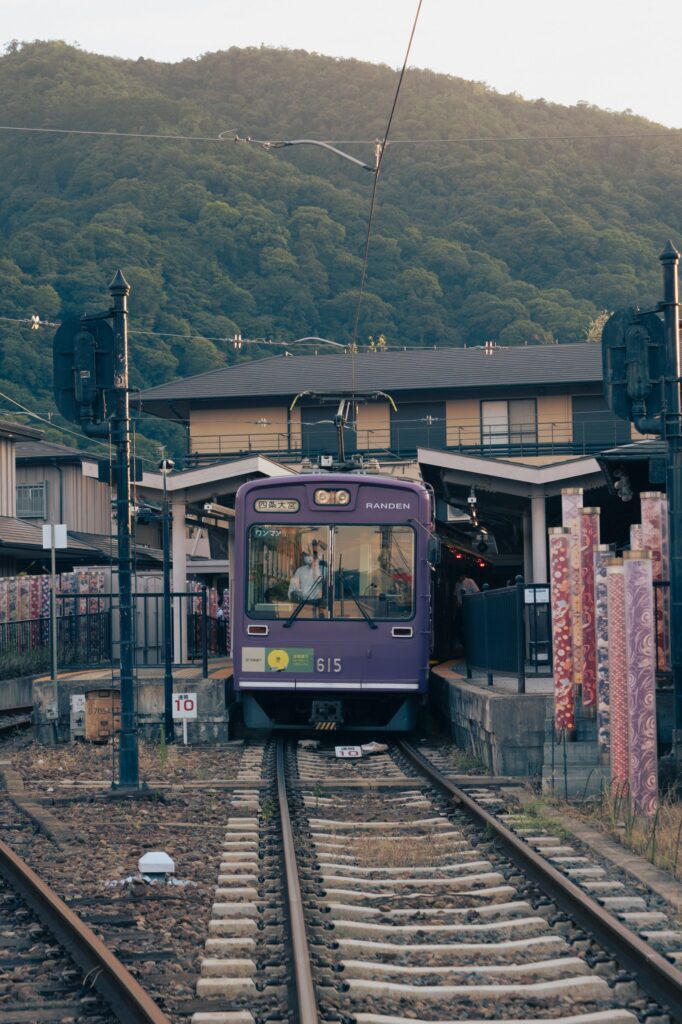
Three railways serve Arashiyama, each arriving at a different station. All three are in walking distance of the main sights, so pick the one that is easiest from where you are staying.
| From | Route | Time | Fare (IC) | Arrives at |
|---|---|---|---|---|
| Kyoto Station | JR Sagano Line (San-in Line) | 11 min rapid, 17 min local | ¥240 | Saga-Arashiyama |
| Shijo-Omiya | Randen (Keifuku) Arashiyama Line | 24 min | ¥250 | Randen Arashiyama |
| Kyoto-kawaramachi | Hankyu, change at Katsura | 19–32 min | ¥240 | Hankyu Arashiyama |
| Osaka-umeda | Hankyu limited express, change at Katsura | 47–49 min | ¥410 | Hankyu Arashiyama |
| JR Osaka | JR special rapid to Kyoto, then Sagano Line | About 57 min | ¥960 | Saga-Arashiyama |
JR from Kyoto Station: the fastest
The Sagano Line platforms at Kyoto Station are a long walk from the other platforms, so allow a few extra minutes. The official Kyoto tourism site points out that the cars nearest the platform entrance are the most crowded and suggests walking toward the far end. Both rapid and local trains stop at Saga-Arashiyama, and from the station it is about 8 minutes on foot to Togetsukyo Bridge. JR West did not change fares in 2026, so the ¥240 fare still applies. The Sagano Line is a JR line, so it is covered by the Japan Rail Pass.
Randen: the most charming
The Randen is a small tram-like railway with a flat fare of ¥250 for adults (¥120 for children). Its Arashiyama Station is in the middle of everything, 10 minutes on foot from the Bamboo Grove. A Randen 1-day ticket covering the Arashiyama and Kitano lines costs ¥700. The official tourism site recommends a less crowded route from central Kyoto: Karasuma subway to Karasuma Oike, the Tozai Line to Uzumasa Tenjingawa, then the Randen to Arashiyama.
Hankyu: best from Osaka and Kawaramachi
Hankyu Arashiyama Station is south of the river. Walk through the park, over the arched bridge and turn left to reach Togetsukyo. It is the cheapest way from Osaka, and in autumn 2026 Keifuku sells a Hankyu version of its “Kyoto-Arashiyama 1day Pass” (¥1,400, on sale October 1 to December 6) for travelers coming from the Hankyu line; check what it covers before you buy.
Buses: usually the slowest
City buses cost a flat ¥230, and Saga-Arashiyama is inside the flat-fare zone. But the official tourism site warns that buses from Kyoto Station are crowded and slow, and that bus 11 from Shijo Kawaramachi runs along the always-congested Shijo-dori, so trains are the better choice. During Golden Week and the autumn peak, a special bus 109 links Kitaoji Bus Terminal with Arashiyama, useful if you are combining Arashiyama with Kinkakuji.
Passes and fare changes to know
- Bus-only day pass: no longer sold (it ended in September 2023). The Subway & Bus 1-day pass (¥1,100) continues; it is designed for city subways and buses, not for Randen, Hankyu or JR trains, so check whether it suits your day.
- Visitor bus fares: Kyoto City plans a “resident-priority” bus fare, with a latest plan of ¥200 for residents and ¥360 for others, pending approval, from fiscal 2027 (April 2027 to March 2028). It had not started as of October 2026; the fare is still ¥230.
- JR Kansai Area Pass: the paper version stopped selling on September 30, 2026. Passes bought before then remain valid.
For tapping in and out on all of these, see our Suica and PASMO guide.
The Bamboo Grove
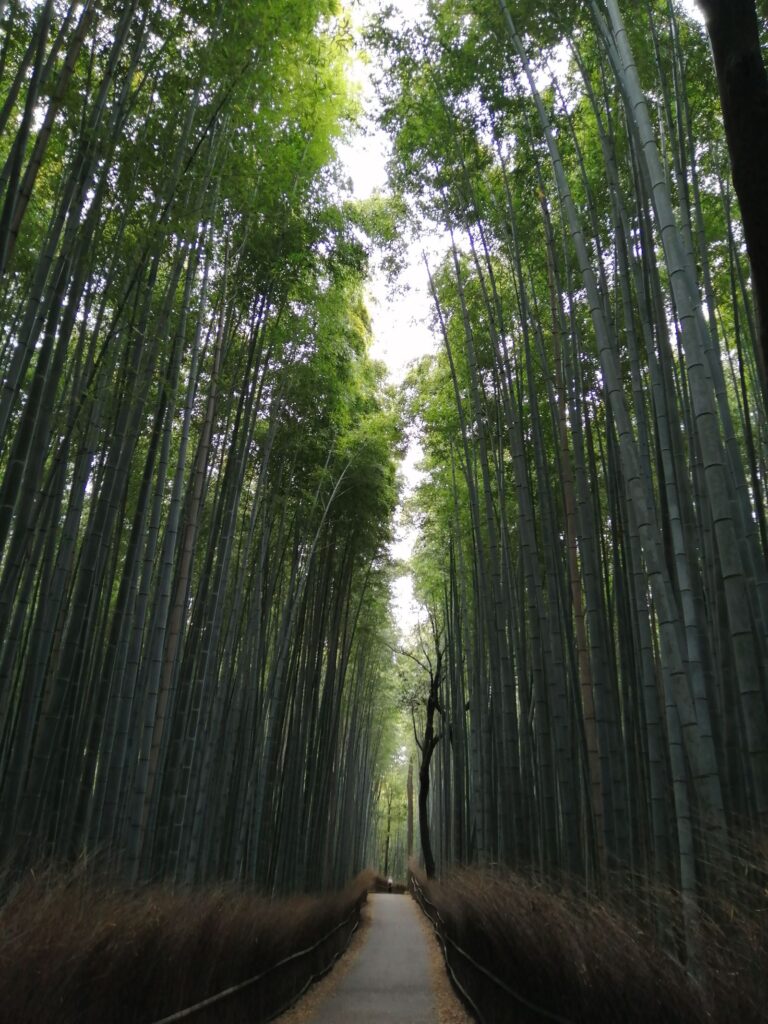
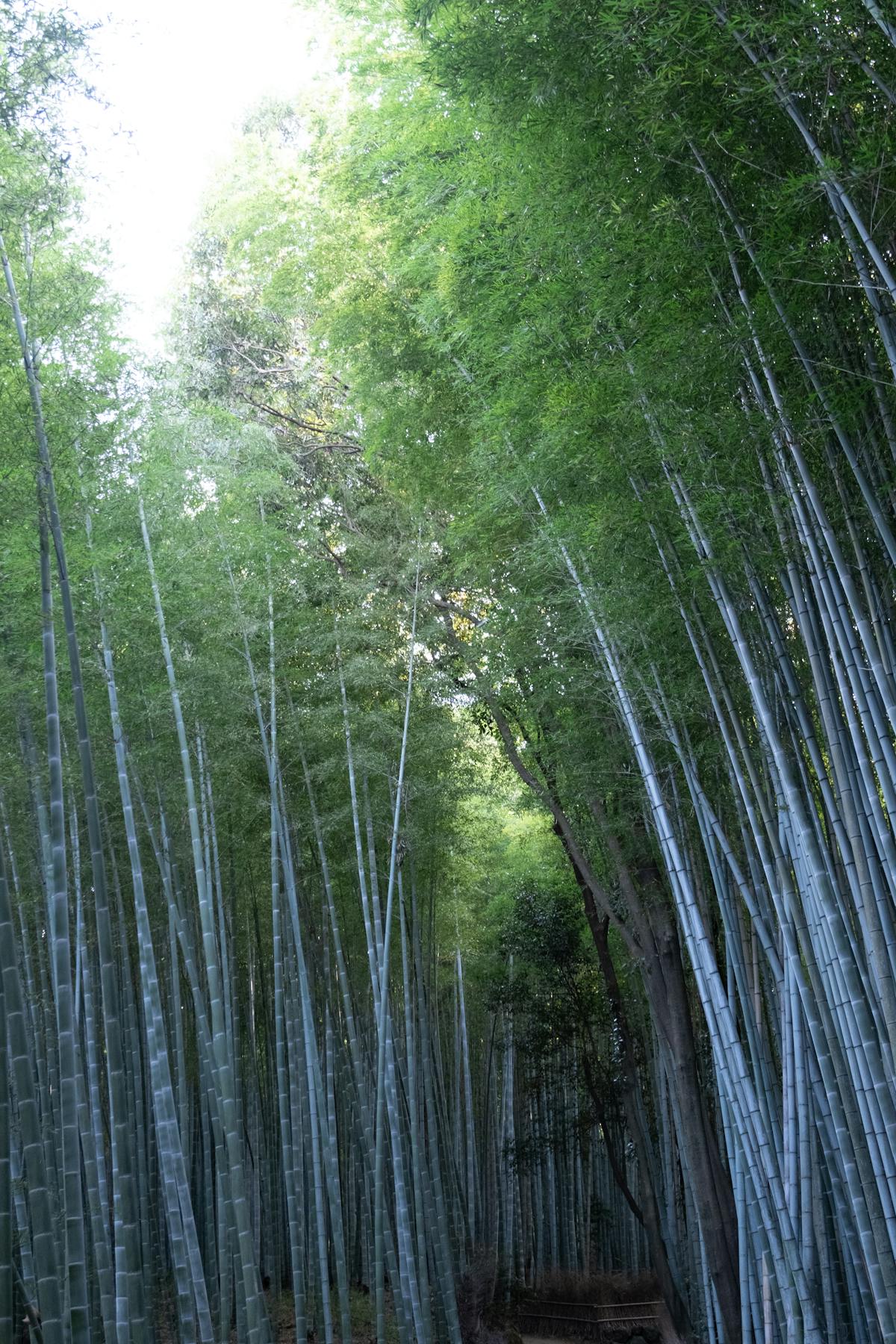
The Bamboo Grove path, called Chikurin no Komichi in Japanese, is about 400 meters long. It runs from Nonomiya Shrine, past the North Gate of Tenryuji, to the entrance of Okochi Sanso villa. On cloudy days the path is dim even at midday, which is part of its atmosphere.
Essentials
- Price: free. The official tourism site lists no fee, opening hours or closing day.
- Walking times: about 10 minutes from Randen Arashiyama, 13 minutes from JR Saga-Arashiyama, 21 minutes from Hankyu Arashiyama.
- Combine with Tenryuji: Tenryuji has a ticket desk at its North Gate, which opens onto the bamboo path, so you can walk from the garden straight into the grove.
- Check the crowds before you go: the Kyoto City Tourism Association streams a live camera of the path, and the official “Kyoto Sightseeing Comfort Map” forecasts crowds on a 1-to-5 scale for the Bamboo Forest and Togetsukyo, based on smartphone location data, the date, time and expected weather.
Please do not touch or carve the bamboo
This is now a real problem. A survey in October 2025 found about 350 bamboo stalks next to the path damaged by carved names and messages, mostly in Roman letters. Local groups have taped over the carvings and posted warnings in four languages, police have stepped up patrols, and in November 2025 the city and local groups cut down about 20 damaged stalks as a test. The area is a Special Historic Landscape Preservation District, and cutting bamboo needs city permission. Look, photograph, and keep your hands to yourself.
Quieter bamboo, if the crowds are too much
The official tourism site suggests two alternatives: the bamboo path inside Adashino Nenbutsuji temple further north in Sagano, and the “Bamboo Path” (Take no Michi), about 1.8 km long, near Rakusai Bamboo Park in Nishikyo ward.
Arashiyama Tsukitouro: the new autumn light-up
The old Arashiyama Hanatouro, a December light-up that older guides still mention, is no longer held. It has been replaced by Arashiyama Tsukitouro, a light-up of the Bamboo Grove that started in October 2025. In 2026 it runs from September 30 to November 8, 18:00 to 21:00 (last entry 20:40), with no closing days but cancellation in severe weather. Same-day tickets cost ¥1,500, cash only, sold from 17:50 at a booth on the bamboo path; children 12 and under are free. An online “EX” ticket with guaranteed entry costs ¥2,000 through JR Central’s booking site. Profits from the first edition paid for repairs to the brushwood fences along the path.
Tenryuji Temple
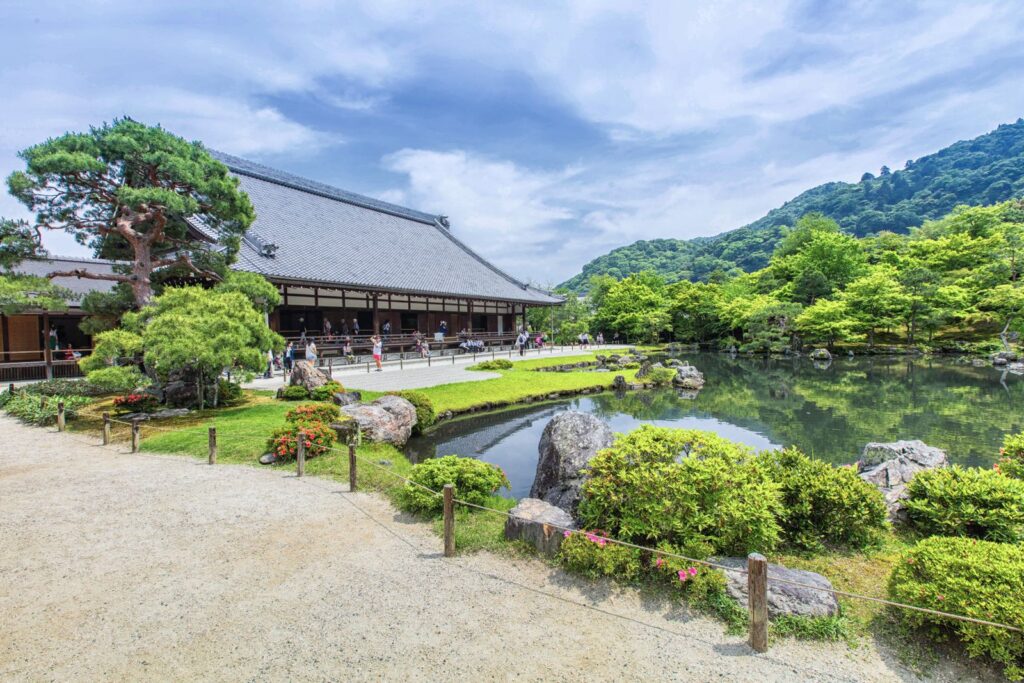
Tenryuji is part of the “Historic Monuments of Ancient Kyoto” World Heritage Site. Its Sogenchi pond garden is set against the hills of Arashiyama, and it is the one paid sight in Arashiyama that almost everyone should see.
| Ticket | Price | Hours |
|---|---|---|
| Garden (Sogenchi pond, Hyakkaen) | ¥500 (elementary and junior high ¥300) | 8:30–17:00, last entry 16:50 |
| Halls (Ohojo, Shoin, Tahoden) | +¥300 on top of the garden | 8:30–16:45, last entry 16:30 |
| Hatto Hall cloud dragon ceiling (Unryuzu) | ¥500, separate | 9:00–16:30, last entry 16:20 |
- The cloud dragon: painted on the ceiling of the Hatto Hall by Kayama Matazo in 1997. It is open on Saturdays, Sundays and holidays, and every day in special periods (in 2026, March 1 to May 31 and September 19 to December 6). It is closed all day on October 28 and 29, 2026, and until about 12:45 on October 30.
- Early autumn opening: from November 14 to 30, 2026, the garden opens at 7:30 (garden desk; the North Gate desk opens at 8:30). This is the best way to see the autumn garden before the crowds.
- Hogon-in: a sub-temple of Tenryuji with the Shishiku garden, open only in special seasons. In autumn 2026 it is open from October 3 to December 6, 9:00 to 17:00 (last entry 16:45), ¥700 for adults, with an evening light-up from November 13 to December 6 that needs a separate ticket.
Togetsukyo Bridge, river boats and the Monkey Park
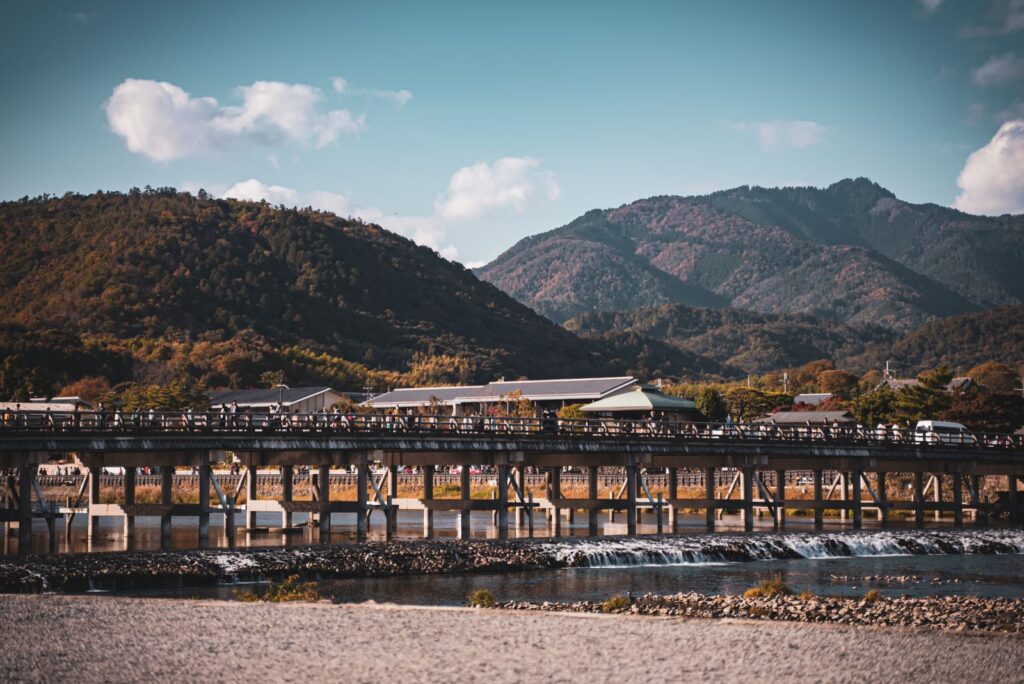
Togetsukyo Bridge
Togetsukyo, the “moon-crossing bridge”, is 155 meters long and spans the river at the heart of Arashiyama. A bridge was first built here in 836; the current one, finished in 1934, is reinforced concrete with cypress railings so that it keeps its traditional look. The name is said to come from a remark by Emperor Kameyama during a moonlit boat party. The street leading to the bridge, Nagatsuji-dori, is extremely crowded, and the tourism site asks visitors to keep to the sidewalk.
Boats on the river
Arashiyama Tsusen runs boats from two landings, on the north and south banks near the bridge. All are cash only and need no reservation.
| Boat | Price | Details |
|---|---|---|
| Shared sightseeing boat | ¥1,500 (12 and under ¥1,000) | About 30 min round trip into the gorge, roughly 1 km upstream; leaves every 20 to 40 minutes |
| Rowboat | ¥2,000 per boat | Up to 3 people, up to 1 hour; waits possible in spring and autumn |
| Private boat (food and drink allowed) | ¥15,000 for up to 5 people | 1 hour or more; ¥3,000 per extra adult |
| Cormorant fishing (ukai) viewing boat | ¥3,000 (12 and under ¥1,500) | July 1 – September 23, about 1 hour, evening departures |
Desk hours are 9:00–15:30 in spring (from the second Wednesday of March) and autumn (to the third Monday of December), 12:00–16:00 in summer, and 10:00–15:00 in winter. In the cormorant season, boats leave at 19:00 and 20:00 from July 1 to August 15, and at 18:30 and 19:30 from August 17 to September 23; August 16 is private boats only, and sudden downpours can cancel the evening.
Arashiyama Monkey Park Iwatayama
Across the bridge on the south bank, an uphill path leads to a hilltop where about 120 wild Japanese macaques live. The rest area at the top, at 160 meters, looks out over Kyoto. Feeding is allowed only from inside the visitor hut, never directly. The park did not have a working official website when we checked, and its listed admission prices vary between sources, so confirm the fee and hours at the entrance. It can close in heavy rain or storms.
The Sagano Romantic Train
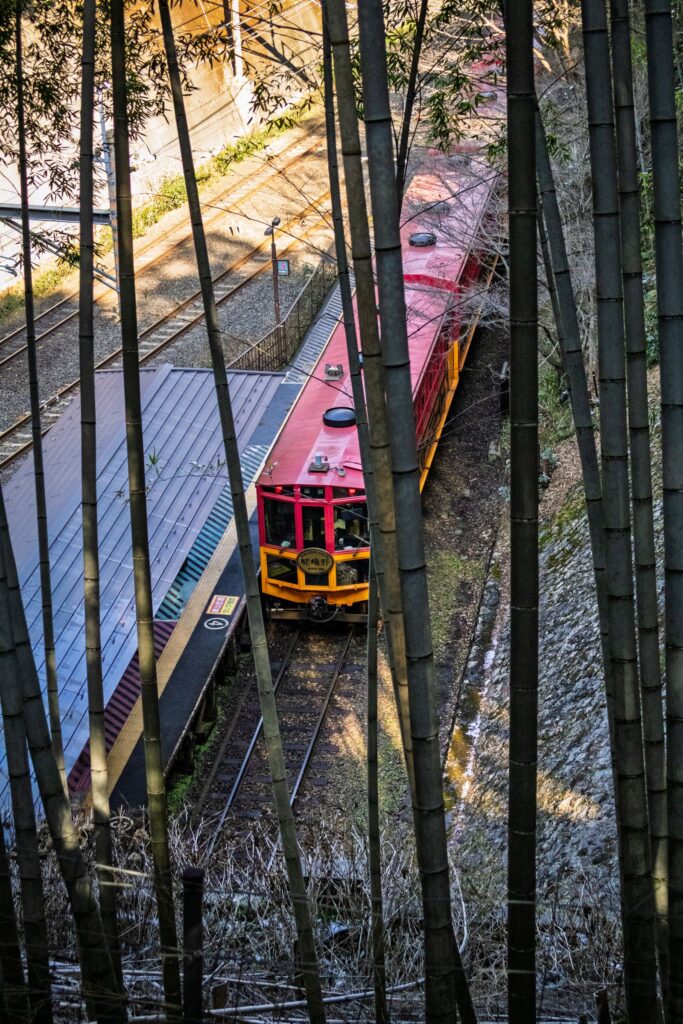
The Sagano Romantic Train (Sagano Torokko) is a slow scenic train along the Hozu River gorge. It runs 7.3 km between Torokko Saga, next to JR Saga-Arashiyama Station, and Torokko Kameoka, with stops at Torokko Arashiyama and Torokko Hozukyo. The ride from Saga to Kameoka takes about 28 minutes. It is run by its own company, so the Japan Rail Pass does not cover it.
Tickets
Seats go on sale online on the official website from midnight one month before the travel date. Station windows do not sell advance tickets; same-day tickets are sold at each station except Torokko Hozukyo, but trains often sell out in busy seasons, so book online if you can. Check the official site for the current fare.
2026 is a farewell year
The current cars, including the open-air car with no glass in its windows, make their final runs on December 29, 2026. New trains, with wider seat spacing, a glass roof and glass sides and a special room, are due to debut in spring 2027; test runs began in August 2026. Before that, the autumn light-up “Hikari no Gensou Ressha” runs from October 24 to December 29, 2026, from 16:30 until the last train, with extra evening trains on many dates and no trains on December 16. If you want to ride the original train, this autumn is your last chance. If you are visiting between January and spring 2027, check the official site for the restart date before you plan around it.
A classic plan is to ride the train up to Kameoka and come back down the river by boat (next section). To compare Kyoto activities and tours in one place, browse Kyoto tours and tickets on Klook.
The Hozugawa River Boat Ride
The Hozugawa River Boat Ride (Hozugawa Kudari) is a boat trip down about 16 km of the Hozu River gorge from Kameoka to Arashiyama, taking about 2 hours. It runs normally in 2026.
| Item | Details |
|---|---|
| Fare (shared boat, up to 24 people) | Adult ¥6,000, child (infant to elementary) ¥4,500 |
| Private boat (up to 17 people) | ¥144,000; ¥162,000 in peak periods such as November |
| Departures, March 10 – December 13, 2026 | Weekdays hourly 9:00–15:00; weekends and holidays whenever a boat fills |
| Departures, January 5 – March 9, 2026 | 10:00, 11:30, 13:00, 14:30 |
| Closed | December 29 – January 4, inspection days, storms and high water |
| Booking | Online on the official site, or by phone (0771-22-5846, 8:00–17:00) |
- Life jackets are compulsory. Every passenger must wear one, and wearing the fixed type is a condition of boarding (in summer an automatic-inflating shoulder type is used). Every boat carries a GPS digital radio.
- Children under 80 cm tall cannot board.
- Rain: the boat runs in rain under a tent cover. From mid-December to early March it runs as a covered, heated winter boat, but the gorge is still cold, so dress warmly.
- Check before you go: trips are cancelled in high water, and the official website posts same-day cancellations.
Beyond the crowds: the temples of Sagano
Most visitors walk the bamboo path, see Tenryuji and the bridge, and leave. Walk 15 to 30 minutes north into Sagano and the crowds thin out fast. These are the best stops, from nearest to furthest.
Okochi Sanso Garden
At the top of the bamboo path, this villa and garden was built over 30 years by a film actor of the early Showa period and is a national cultural property. Open every day 9:00–17:00 (last entry 16:30). Admission includes matcha and a sweet; check the current fee at the gate. Its autumn leaves are forecast to peak from about November 19 in 2026.
Nonomiya Shrine
At the start of the bamboo path, a small shrine known for its black torii of unbarked oak, described by the shrine as the oldest style of torii in Japan. People pray here for good relationships, children and study. Open 9:00–17:00, free.
Jojakkoji and Nisonin
Two hillside temples a short walk north. Jojakkoji costs ¥600 (9:00–17:00, desk closes 16:30), and Nisonin ¥500 (9:00–16:30, free for elementary age and under). Both reported their cherry blossoms at their best in late March 2026. Nisonin holds early-morning special viewings on November 22, 23 and 29, 2026.
Gioji
A small, quiet temple about 25 minutes on foot from JR Saga-Arashiyama or Randen Arashiyama. Open 9:00–16:30 (last entry), ¥500. A joint ticket with Daikakuji costs ¥1,000 for adults, instead of ¥1,300 separately (it does not include Daikakuji’s Osawa Pond area).
Adashino Nenbutsuji and Saga-Toriimoto
Adashino Nenbutsuji is known for thousands of small stone Buddhas and its own quiet bamboo path. It is open every day, 9:00 to 16:30 (last entry) from March to November and to 15:30 from December to February, and may close for ceremonies or bad weather; check the fee at the gate. Every year on the last weekend of August, it holds the Sento Kuyo candle memorial (August 29–30 in 2026).
Just beyond is Saga-Toriimoto, a street on the old pilgrim road to Atago Shrine with houses from the 19th and early 20th centuries. It was designated a national preservation district for traditional buildings in 1979, one of four in Kyoto City, and is about 30 minutes on foot from Togetsukyo. The Saga-Toriimoto Preservation Hall, an early-Meiji merchant house, is free to enter.
Otagi Nenbutsuji
Further up the road toward Atago, Otagi Nenbutsuji is worth the extra effort if you have time. Open 9:00–16:00, ¥1,000 (age 10 and under free). The temple’s own site lists regular closing days, so check before you make the trip. From Hankyu Arashiyama, Kyoto Bus 94 (bound for Kiyotaki) to Otagidera-mae takes about 25 minutes (¥230); a taxi from JR Saga-Arashiyama’s north exit is about 5 minutes; on foot it is about an hour.
Daikakuji
A large temple with the broad Osawa Pond. Halls ¥800 and Osawa Pond ¥500 for adults, each 9:00–17:00 (last entry 16:30). Photos are not allowed inside the halls, and tripods, drones and cosplay shoots are banned. About 20 minutes on foot from JR Saga-Arashiyama. In autumn 2026 the Shinden hall is specially open from October 9 to December 7 as part of a 400th-anniversary celebration.
When to go: seasons and 2026 events
Autumn
Autumn is Arashiyama’s peak season. In 2026 the leaves are running late because of a warm autumn: Weathernews forecasts the Arashiyama peak around November 24, and tenki.jp forecast color from about November 13 (on October 21 the leaves were still green). The usual peak is mid-November to early December. Expect very heavy crowds on November weekends.
| Dates (2026) | Event |
|---|---|
| Sep 30 – Nov 8 | Arashiyama Tsukitouro, Bamboo Grove light-up (¥1,500) |
| Oct 3 – Dec 6 | Hogon-in autumn opening (night light-up Nov 13 – Dec 6) |
| Oct 9 – Dec 7 | Daikakuji Shinden special opening |
| Oct 24 – Dec 29 | Sagano Romantic Train autumn light-up, final season of the current cars |
| Nov 7 – 8 | Arashiyama Momiji Matsuri (cancelled in rain) |
| Nov 14 – 30 | Tenryuji garden opens early, from 7:30 |
| Nov 22, 23, 29 | Nisonin early-morning special viewing |
Other autumn openings in the area in 2026 include the Seiryoji treasure hall (October 1 to November 30), Kogenji (October 3 to December 6) and Enrian (November 1 to December 7). The Rokuoin night viewing is cancelled for 2026.
Spring
In 2026, Kyoto’s benchmark cherry tree reached full bloom on March 30; in Arashiyama, Jojakkoji reported its cherry blossoms at their best on March 27 and Nisonin reported full bloom on March 31. Late March to early April is the spring peak, and as busy as autumn.
Summer
Green, humid and less crowded than spring or autumn. Evening cormorant fishing on the river (July 1 to September 23) is the summer highlight, and the gorge feels cooler on the Hozugawa boat.
Winter
The quietest season, and the best for a calm walk through the bamboo. The Hozugawa boats switch to covered, heated winter boats from mid-December, and the Sagano Romantic Train’s current cars finish on December 29, 2026, with new trains due in spring 2027.
For the bigger picture of when to visit Kyoto, see our Kyoto temples guide.
Where to eat
Simmered tofu (yudofu) and tofu-based kaiseki are a classic Kyoto meal, and Arashiyama has several restaurants that serve them. A few places with official details:
- Shoraian serves tofu kaiseki in a setting upstream of Togetsukyo, about 15 minutes on foot from Randen Arashiyama. Lunch courses with yudofu cost ¥5,500, ¥6,500 or ¥8,000 (vegetarian ¥7,000); dinner courses ¥10,000 or ¥12,000 (vegetarian ¥9,000), with prices revised in August 2026. Open 11:00–17:00 Monday to Thursday and 11:00–20:00 Friday to Sunday and holidays; dinner needs a reservation by 17:00 the day before. Closed Wednesdays (except in November) and over New Year. Phone 075-861-0123.
- Arashiyama Yoshimura, the main shop of the Yoshimura group, serves soba two buildings west of the north end of Togetsukyo.
- % Arabica Kyoto Arashiyama is a popular coffee stand overlooking Togetsukyo, open daily 9:00–18:00. Expect a line.
In busy seasons, eating a little before or after the noon rush makes a big difference. If you want to read a menu without guessing, our essential Japanese phrases will help.
Sample itineraries
Half a day: the highlights
- JR to Saga-Arashiyama, arriving as early as possible.
- Tenryuji garden (and the cloud dragon if it is open that day).
- Out through Tenryuji’s North Gate into the Bamboo Grove, then up to Okochi Sanso.
- Walk down to Togetsukyo Bridge; lunch, then the Randen back toward central Kyoto.
A full day: train and river
- Early Bamboo Grove and Tenryuji.
- Sagano Romantic Train from Torokko Saga or Torokko Arashiyama to Torokko Kameoka (book a month ahead).
- Hozugawa River Boat Ride back down to Arashiyama (about 2 hours).
- Togetsukyo at sunset and dinner near the river.
A full day: the quiet temples
- Bamboo Grove and Nonomiya Shrine early.
- Walk north: Jojakkoji, Nisonin, Gioji.
- Adashino Nenbutsuji and the Saga-Toriimoto street.
- Bus or taxi to Otagi Nenbutsuji (check its opening days), or end at Daikakuji and take the JR home from Saga-Arashiyama.
From Osaka
Arashiyama is an easy day trip from Osaka: Hankyu from Osaka-umeda takes 47 to 49 minutes (¥410) and JR about 57 minutes (¥960). Combine it with an afternoon in central Kyoto, or see our Osaka day trips guide for more ideas. If you are in Kyoto for several days, the Kyoto day trips guide covers Nara and beyond.
Practical tips: crowds, luggage, cash and taxes
Beat the crowds
- Go on a weekday, and arrive early. Check the official Kyoto Sightseeing Comfort Map and live cameras (Bamboo Grove, Daikakuji, Seiryoji, Saga-Toriimoto) before you leave.
- Use the trains, not the buses, and consider the Randen route via Uzumasa Tenjingawa.
- Do the Bamboo Grove first, then head north into Sagano, where it is much quieter.
Luggage
Do not bring suitcases to Arashiyama; the paths are narrow and busy. Kyoto is pushing “hands-free” sightseeing: JR West’s pikuraku PORTER smart lockers at Kyoto Station (Karasuma side, and since May 22, 2026 inside the Kintetsu Kyoto Station gates) deliver bags dropped by 14:00 to about 280 Kyoto City hotels the same evening. Delivery costs ¥1,900 to ¥2,800 by size; storage only costs ¥400 to ¥900 per 24 hours, payable by IC card or credit card. Kyoto Station coin lockers and how full they are appear on the free “Kyoto Station Smart Navi” map. If you need storage elsewhere in the city, find luggage storage in Kyoto with Radical Storage. Our luggage forwarding guide explains how sending bags works.
Cash
Carry some cash. The Arashiyama Tsusen river boats (including cormorant fishing) and the Tsukitouro same-day ticket are cash only. See cash or card in Japan for how to get yen.
Kyoto’s accommodation tax went up
If you stay overnight in Kyoto City, note the accommodation tax rose on March 1, 2026. It is charged per person per night:
| Room charge per person per night | Tax from March 1, 2026 | Before |
|---|---|---|
| Under ¥6,000 | ¥200 | ¥200 |
| ¥6,000 to under ¥20,000 | ¥400 | ¥200 |
| ¥20,000 to under ¥50,000 | ¥1,000 | ¥500 |
| ¥50,000 to under ¥100,000 | ¥4,000 | ¥1,000 |
| ¥100,000 and over | ¥10,000 | ¥1,000 |
Arashiyama has ryokan and hotels by the river that are lovely in the early morning and evening when day-trippers have gone. Compare Arashiyama and Kyoto hotels on Agoda, and see our guides to where to stay in Kyoto and Kyoto ryokan and hotels by area.
Help and connectivity
The Kyoto Tourist Information Center is on the 2nd floor of the Kyoto Station Building (075-343-0548). For maps, crowd cameras and the Sagano train booking site on the go, set up data before you arrive: Airalo’s Japan eSIM installs at home, or compare options in our eSIM guide.
Walking times and a budget for the day
Arashiyama is a walking district, and the distances add up. These are the walking times given by the official tourism site and by the temples themselves, so you can plan realistically.
| From | To | On foot |
|---|---|---|
| JR Saga-Arashiyama | Togetsukyo Bridge | About 8 min |
| Randen Arashiyama | Bamboo Grove | About 10 min |
| JR Saga-Arashiyama | Bamboo Grove | About 13 min |
| Hankyu Arashiyama | Bamboo Grove | About 21 min |
| Randen Arashiyama | Shoraian | About 15 min |
| JR Saga-Arashiyama or Randen Arashiyama | Gioji | About 25 min |
| JR Saga-Arashiyama | Daikakuji | About 20 min (35 min from Hankyu Arashiyama) |
| Togetsukyo / Tenryuji | Saga-Toriimoto | About 30 min |
| JR Saga-Arashiyama | Otagi Nenbutsuji | About 1 hour (or a 5-minute taxi) |
Wear comfortable shoes. A loop from the station through the Bamboo Grove, north to Gioji and Saga-Toriimoto and back to Daikakuji is a good half day of walking on its own.
What a day in Arashiyama costs
Using the prices in this guide, here is what a full day can cost per adult, from Kyoto Station:
| Item | Simple day | Full day |
|---|---|---|
| JR Kyoto ⇄ Saga-Arashiyama | ¥480 | ¥480 |
| Bamboo Grove | Free | Free |
| Tenryuji garden (+ cloud dragon) | ¥500 | ¥1,000 |
| Temples in Sagano | — | ¥1,600 (Jojakkoji, Nisonin, Gioji) |
| River | ¥1,500 shared boat on the Oi River | ¥6,000 Hozugawa River Boat Ride, plus the Sagano Romantic Train fare |
| Lunch | Soba or a café | Tofu kaiseki lunch at Shoraian from ¥5,500 |
A simple day of the free bamboo path, Tenryuji and a boat ride comes to under ¥3,000 before food. Adding the Hozugawa boat and a kaiseki lunch takes it past ¥15,000. Most of the best things in Arashiyama, the bamboo, the bridge and the river views, cost nothing at all.
Useful Japanese for Arashiyama
Staff at the big sights are used to visitors, but a few words of Japanese go a long way at smaller temples, boat landings and family-run shops.
| Japanese (romaji) | Meaning |
|---|---|
| Chikurin no komichi wa doko desu ka? | Where is the bamboo path? |
| Otona hitori, onegaishimasu. | One adult, please (at a ticket desk). |
| Kaado wa tsukaemasu ka? | Can I pay by card? |
| Genkin dake desu ka? | Is it cash only? |
| Shashin o totte mo ii desu ka? | May I take a photo? |
| Toire wa doko desu ka? | Where is the toilet? |
| Tsugi no fune wa nanji desu ka? | What time is the next boat? |
| Arigatou gozaimashita. | Thank you (after a meal or a visit). |
For more, see our essential Japanese phrases for travelers.
Frequently asked questions
Is the Arashiyama Bamboo Grove free? Yes. The path is free to walk and the official tourism site lists no opening hours or fee. The only paid event in the grove is the autumn Arashiyama Tsukitouro light-up (¥1,500 in 2026).
How long do you need in Arashiyama? Half a day for the Bamboo Grove, Tenryuji and Togetsukyo. A full day if you add the Sagano Romantic Train and the Hozugawa River Boat Ride, or the quieter temples of Sagano.
What is the best way to get to Arashiyama from Kyoto Station? The JR Sagano Line to Saga-Arashiyama: 11 minutes by rapid train, ¥240, covered by the Japan Rail Pass. City buses cost a flat ¥230 but are much slower and more crowded.
Is Arashiyama Hanatouro still held in December? No. It has been replaced by Arashiyama Tsukitouro, an autumn light-up of the Bamboo Grove; in 2026 it runs from September 30 to November 8.
Is the Sagano Romantic Train worth it? If you enjoy scenery, yes, especially in autumn. 2026 is the last season for the current cars, which retire on December 29; new trains arrive in spring 2027. Book online a month ahead.
Is the Hozugawa River Boat Ride safe? Every passenger must wear a life jacket, every boat carries a GPS radio, and trips are cancelled in high water. Children under 80 cm tall cannot board.
When are the autumn leaves best in Arashiyama in 2026? Forecasts point to mid- to late November, with Weathernews predicting a peak around November 24 because of the warm autumn.
Can I touch the bamboo? Please do not. Hundreds of stalks have been damaged by carving, and damaged bamboo has had to be cut down. Photograph it and keep your hands off.
Is Arashiyama a good day trip from Osaka? Yes. Hankyu from Osaka-umeda takes under an hour for ¥410, arriving at Hankyu Arashiyama south of the river.
Plan the rest of your trip
- Kyoto temples guide
- Gion, Kyoto’s geisha district
- Nishiki Market guide
- Day trips from Kyoto
- Where to stay in Kyoto
- Tokyo to Kyoto
- Is the Japan Rail Pass worth it?
Sources: Kyoto City Tourism Association (Kyoto Kanko Navi, access pages, spot pages, event listings, Kyoto Sightseeing Comfort Map, accommodation tax notice); Kyoto City press releases (Bamboo Grove, Tsukitouro, luggage services); Kyoto City Transportation Bureau; Kyodo News; Tenryuji; Hogon-in; Jojakkoji; Nisonin; Gioji; Daikakuji; Otagi Nenbutsuji; Nonomiya Shrine; Japan Tourism Agency and MLIT multilingual databases; JNTO; Keifuku Electric Railroad (Randen); JR West; Sagano Scenic Railway press release (September 18, 2026); Hozugawa Yusen; Arashiyama Tsusen; Weathernews; tenki.jp; Kyoto Local Meteorological Office; Shoraian; Yoshimura; % Arabica; route searches for fares (checked October 2026). Prices and hours change; if you spot something out of date, please let us know.
Going to Japan? Speak Japanese with confidence.
Hirameki Japanese — camera translate for menus and signs, a two-way conversation mode, and furigana + romaji on every phrase. Free to download with kana charts, conversation mode and starter words; a one-time purchase unlocks everything.

Plan your Japan trip
Two things every first-timer should book
Some links are affiliate links. If you book through them we may earn a small commission at no extra cost to you.