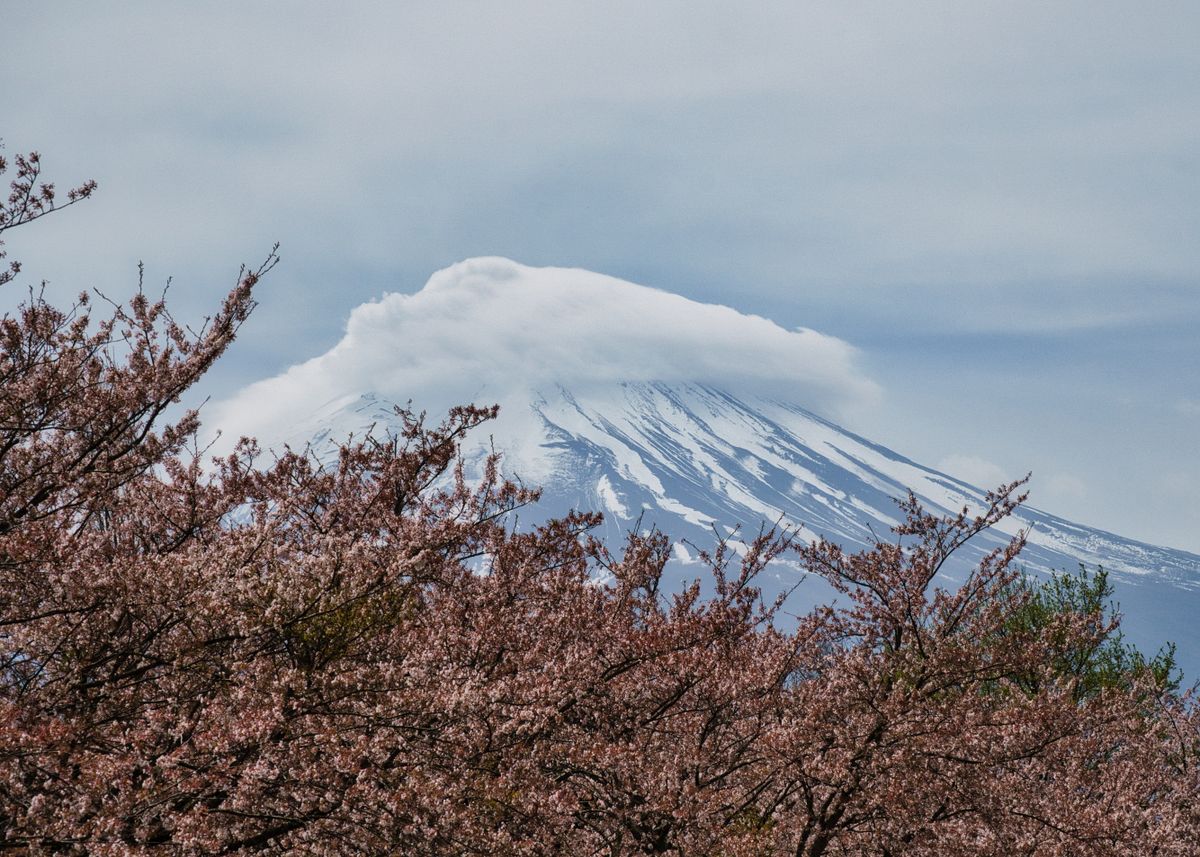
Yoshino is the spiritual heart of Japan’s cherry blossom culture — a long, gentle ridge in central Nara Prefecture covered with roughly 30,000 cherry trees that bloom in successive waves from valley to mountaintop each spring. For more than a thousand years, poets, emperors, monks, samurai, and humble pilgrims have walked these slopes when the sakura are at their peak, often calling Yoshino “Japan’s most beautiful place.” It is also a UNESCO World Heritage Site, an active centre of Shugendo mountain ascetic practice, the historic site of an imperial schism that split Japan into two rival emperors in the 14th century, and one of the few places where you can still experience the layered religious and aesthetic life of pre-modern Japan in a single afternoon.
This complete guide explains exactly how first-time visitors can plan a trip to Yoshino: how to get there from Tokyo, Kyoto, and Osaka; when the cherry blossoms peak (and how to avoid the worst crowds); what to see on the mountain in spring, autumn, and the quieter seasons; where to eat the famous kakinoha-zushi and kuzu sweets; where to sleep on the slope itself; and the cultural and historical context that turns a simple mountain stroll into something genuinely moving. All prices are in yen and approximate US dollars (¥150 ≈ $1), with current 2026 figures.
Why Yoshino Matters: Mountains, Cherry Trees, and Sacred History
Before the rise of Tokyo and even Kyoto, the Yoshino region was already a holy mountain. As early as the 7th century, a charismatic ascetic named En no Gyoja founded a mountain religion that came to be called Shugendo — a synthesis of Shinto nature worship, esoteric Buddhism, and Daoist practice. The Yoshino-Kumano range south of Nara was Shugendo’s spiritual home, and the great temple Kinpusen-ji was its central monastery. Pilgrims, ascetics, monks, and emperors poured into Yoshino for centuries, and the mountain became dotted with shrines, temples, hermitages, and roadside teahouses serving travellers.
Cherry trees were planted on the slopes for a religious reason: they were considered sacred to Zao Gongen, the multi-armed wrathful protective deity of Kinpusen-ji. Devotees planted cherry trees as offerings century after century, gradually building up a forest of perhaps 200,000 trees at the medieval peak. About 30,000 trees remain today, in four broad clusters at progressively higher altitudes — Shimo Senbon (“lower 1,000”), Naka Senbon (“middle 1,000”), Kami Senbon (“upper 1,000”), and Oku Senbon (“inner 1,000”). Because each level sits at a slightly higher elevation, blossoms arrive in waves over roughly three weeks, giving Yoshino a far longer cherry season than any single city park.
Yoshino is also famous for being the southern capital of medieval Japan during the dramatic 14th-century Nanboku-cho period, when two rival emperors and two competing imperial courts existed at the same time — one in Kyoto, the other here in Yoshino — for nearly six decades. The hillside palaces are long gone, but several quiet temples and shrines along the ridge still mark these dramatic centuries.
In 2004, Yoshino was inscribed on UNESCO’s World Heritage list as part of “Sacred Sites and Pilgrimage Routes in the Kii Mountain Range” — a designation it shares with Koyasan and the Kumano Kodo trails to the south. Walking the slopes today, you are walking through several thousand years of layered Japanese religion, poetry, and politics.
How to Get to Yoshino
Yoshino is more accessible than most first-time visitors expect. The journey is part of the experience: you ride a small mountain railway through forested valleys, then take a short cable car up the steep ridge to the temple town. There are no Shinkansen or major express trains that go to Yoshino itself.
From Osaka (Recommended Base)
The fastest and easiest approach is via Osaka:
- Kintetsu Limited Express from Osaka Abenobashi Station to Yoshino Station: about 1 hour 15 minutes, around ¥1,580 (~$10) for an express ticket, plus a small reserved-seat surcharge.
- Kintetsu local trains: slightly cheaper but slower at around 1 hour 50 minutes.
- From Yoshino Station, the Yoshino Ropeway cable car climbs up to the temple town in just 3 minutes, ¥600 (~$4) round trip, departing every 15 minutes.
The Kintetsu Limited Express runs roughly once an hour. Reserve seats during cherry blossom season — trains fill quickly. From central Osaka (Namba), Tennoji and Abenobashi are connected by short subway/JR rides.
From Kyoto
- Kintetsu Limited Express Kyoto → Kashihara-Jingu-mae, then transfer to the Yoshino line: total about 1 hour 50 minutes, around ¥2,000 (~$13).
- Alternatively, JR Nara Line Kyoto → Nara, then Kintetsu Nara → Kashihara-Jingu-mae → Yoshino.
From Tokyo
- Tokyo → Shin-Osaka by Shinkansen Nozomi: 2 hours 30 minutes, ¥14,720 (~$98).
- Shin-Osaka → Yoshino: About 1 hour 45 minutes by Kintetsu (via Tennoji and Abenobashi).
- Total: Roughly 4.5 hours from Tokyo. Definitely an overnight trip, not a day trip from Tokyo.
Travellers with a Japan Rail Pass: note that the Kintetsu private line is not covered by the JR Pass. Budget around ¥3,000 (~$20) one way from Osaka for the Kintetsu and ropeway portions. If you’re hopping between several big cities by Shinkansen anyway, the pass is still excellent — see our Japan Shinkansen guide for booking specifics.
From Nara
If you’re already based in Nara, the trip is short and beautiful: Kintetsu Nara → Yamato-Saidaiji → Kashihara-Jingu-mae → Yoshino, about 1 hour 15 minutes total. Day trips from Nara work well in spring or autumn.
The Four Senbon: Yoshino’s Cherry Blossom Tiers
Yoshino’s cherry trees are not a single planting. They climb the ridge in four loosely defined clusters, each at a higher elevation than the last. The wave of bloom usually starts at the bottom (Shimo Senbon) and works its way up over two to three weeks. Knowing which level is currently in bloom is essential for trip planning. Local tourist offices and the official Yoshino-cho website post daily flowering reports during the season.
Shimo Senbon (Lower 1,000)
The first cluster, around the ropeway top station and the main temple town. This is the heart of the Yoshino experience: most temples, shrines, restaurants, and inns are here. Elevation around 230 metres. Usually the first to bloom, in late March to early April.
Naka Senbon (Middle 1,000)
About a 20-minute walk further up the ridge, with iconic open views down across the entire valley. Famously photographed: looking down across white-and-pink waves of cherry blossom with temple rooftops nestled in. Elevation around 350 metres. Usually blooms a few days after Shimo Senbon.
Kami Senbon (Upper 1,000)
Another 30–40 minutes higher on the ridge, surrounding the historically important Yoshimizu Shrine (where Emperor Go-Daigo founded his Southern Court). Some of the best photographs of Yoshino come from this stretch. Elevation around 450 metres.
Oku Senbon (Inner 1,000)
The most remote and quietest cluster, roughly 90 minutes’ walk above the town, near Kinpu Shrine and the simple Saigyo-an hermitage where the wandering monk-poet Saigyo lived alone among the cherry trees in the 12th century. Elevation over 600 metres. Usually the last to bloom, in mid-April. Far fewer day-trippers reach this level — those who do are rewarded with silence and views.
When to Visit Yoshino
Cherry Blossom Season (Late March – Mid-April)
The main season, and the reason most international visitors come. Exact peak dates shift each year with weather, but a rough timetable looks like:
- Shimo Senbon: Late March to early April
- Naka Senbon: First week of April
- Kami Senbon: First to second week of April
- Oku Senbon: Second to third week of April
For most years, the safest bookings are April 5–15, which catches a mix of mid/upper levels even if a warm year pushes lower blossoms ahead of schedule. Watch live cherry blossom forecasts in early March if your dates are flexible. For broader cherry blossom planning across Japan, see our Japan cherry blossom guide.
Summer (June–August)
Green, quiet, and surprisingly cool given the elevation — daytime temperatures in town typically run 5–8°C lower than the lowlands. June brings beautiful hydrangeas at Niu Kawakami Shrine. July and August have very small festivals at individual temples. Hotels are easy to book, prices are lower, and the temple town has a calm, lived-in feel without the spring rush.
Autumn (Late October – Mid-November)
Many travellers don’t realize Yoshino is also a spectacular autumn destination. The same 30,000 trees that bloom pink in spring turn red, gold, and orange in mid-November. Crowds are a fraction of cherry blossom season. The light is cleaner, the air sharper. For photographers, autumn Yoshino is arguably more spectacular than spring.
Winter (December–February)
Snow is occasional but not constant; most years see a handful of dustings rather than deep accumulations. The main temple Kinpusen-ji holds the dramatic Setsubun fire ritual on February 3, when yamabushi mountain monks ignite enormous bonfires and chant. Visitors are welcome to attend.
What to See in Yoshino
Kinpusen-ji Temple
The single most important site in Yoshino. Kinpusen-ji is the head temple of the Shugendo mountain religion and home of Zao-do, the massive main hall — one of the largest wooden structures in Japan, second only to Todai-ji’s Daibutsuden in Nara. Inside, three towering blue-skinned statues of Zao Gongen rise nearly 7 metres tall, with terrifying faces and dynamic poses. They are normally hidden from public view, but Kinpusen-ji holds special openings several times a year, including a major one in spring during cherry blossom season. If your trip coincides with an opening, do not miss it. Regular admission is ¥800 (~$5); special opening admission with Zao Gongen viewing is ¥1,600 (~$11).
Note that Kinpusen-ji is an active practising temple. Yamabushi monks in distinctive checked robes and small black caps still make ritual mountain pilgrimages from here, sometimes blowing conch shells as they walk. They have been doing this for over 1,300 years.
Yoshimizu Shrine
Halfway up the ridge in the Kami Senbon area, Yoshimizu Shrine has one of the most dramatic histories of any small shrine in Japan. It served briefly as the imperial palace of Emperor Go-Daigo in 1336 — the moment he fled Kyoto and established the rival Southern Court. The unifier Toyotomi Hideyoshi later used it as a base for his famously extravagant 1594 cherry blossom party, when 5,000 of his retainers spent five days here in matching costumes. Today the shrine is small, atmospheric, and contains a treasure room with weapons and documents from these events. Admission ¥400 (~$3).
The view of Naka Senbon and the valley from the shrine grounds is one of the most photographed cherry blossom scenes in Japan.
Kimpu Shrine (Kinpu Jinja)
At the entrance to Oku Senbon, this small, ancient shrine sits in a grove of giant cedar trees. It is one of the original sites of Yoshino-Kumano mountain worship, and yamabushi pilgrims still start their pilgrimages from here. Quiet, simple, and very atmospheric. Free.
Nyoirin-ji Temple
The mausoleum of the unfortunate Emperor Go-Daigo, who founded the Southern Court and is buried here. The temple’s small main hall and graveyard sit in a peaceful cedar grove. ¥500 (~$3).
Saigyo-an
A small hermitage at Oku Senbon where the wandering 12th-century monk-poet Saigyo lived for several years. He composed many of his most famous waka poems here, including verses about cherry blossoms that remain widely quoted today. A simple wooden hut, a small stone, a sweeping view down the mountain — it is one of the most evocative spots in Yoshino and a pilgrimage destination for Japanese literary travellers. Free to visit; about a 90-minute walk uphill from the ropeway.
Yoshino Mikumari Shrine
A beautiful Muromachi-era shrine complex high in the Kami Senbon area, dedicated to a water deity who controls the headwaters of the Yoshino River. Painted in red and adorned with elaborate woodwork, it is a small jewel-box of late medieval shrine architecture. ¥0 admission. About 60 minutes’ walk uphill from the ropeway.
Walking the Mountain: Routes and Trails
Yoshino is best explored on foot. The main road runs along the ridge from the ropeway top station up to Oku Senbon, with side paths branching to viewpoints, shrines, and small inns. Distances are walkable, but elevation gain adds up.
The Standard Half-Day Route (4–5 hours)
- Ropeway up to Yoshinoyama Station
- Walk through Shimo Senbon, stopping at Kinpusen-ji
- Continue uphill through Naka Senbon for the iconic valley views
- Reach Yoshimizu Shrine in Kami Senbon (turn-around point)
- Return downhill the same way (faster)
This covers the three most important clusters and the major historical sites. It is the right plan for first-time visitors with limited time.
The Full Day Route (7–8 hours)
Add the climb to Oku Senbon — Saigyo-an and Kimpu Shrine — for the full experience. Allow plenty of breaks and lunch on the way.
Bus Shortcut
A small local bus runs during cherry blossom season between the ropeway top and Naka Senbon, then onward to Oku Senbon. Useful if your knees or schedule won’t take all the climbing. ¥400–800 (~$3–5) per leg. Bus does not run in low season.
Where to Eat in Yoshino
The temple town has dozens of small restaurants, tea houses, and souvenir shops lining the main road. Local specialties run deep.
Kakinoha-zushi (Persimmon Leaf Sushi)
Yoshino’s most famous food. Slices of salted mackerel or salmon are pressed onto small portions of vinegared rice, then each piece is wrapped tightly in a persimmon leaf and aged briefly. The leaves preserve and faintly flavour the fish — a practical solution from before refrigeration, when fresh ocean fish had to travel inland to mountain towns. Today, kakinoha-zushi is delicious in its own right, and several shops in Yoshino have made it for many generations. Hiraso and Yamato are the two best-known producers, with shops in town and at Yoshino Station. A box of 6–8 pieces runs ¥1,200–1,800 (~$8–12). Perfect for an informal lunch in the cherry blossom shade.
Kuzumochi and Kuzu Sweets
Yoshino is the home of kuzu — a starch extracted from the kudzu vine, prized for centuries for its silky texture and supposed medicinal properties. The most famous kuzu sweet is kuzumochi, a translucent, jelly-like cube served with kuromitsu (brown sugar syrup) and kinako (roasted soybean flour). Several tea houses along the ridge serve handmade kuzumochi for ¥600–1,000 (~$4–7). The texture is unlike anything else in Japanese sweets.
Sansai (Mountain Vegetables)
Spring Yoshino menus are full of seasonal mountain vegetables — wild ferns, butterbur shoots, mountain peach, bracken — prepared as tempura, simmered side dishes, or rice toppings. A sansai soba or udon set runs ¥1,200–1,800 (~$8–12) and is one of the simplest, most authentic meals in town.
Ayu (Sweetfish)
Caught in the Yoshino River, ayu are grilled whole on skewers over charcoal and served with a sprinkle of salt. Available in summer at riverside teahouses and inns. Plan a ¥800–1,500 (~$5–10) splurge if visiting June–September.
Yoshino Sake
Yoshino has multiple small sake breweries, several of which welcome visitors. Kitaoka Honten is the largest, with a small tasting bar in town. Try the local junmai or aged sakes; many are hard to find elsewhere in Japan. For more food experiences across the country, see our guide to the best Japanese street food.
Where to Stay in Yoshino
For full cherry blossom season magic, you really want to sleep on the mountain. After the day-trip buses leave around 4 p.m., the temple town empties dramatically — and you can walk under blossoms by lantern light without crowds. Many small ryokan and minshuku line the main ridge road, ranging from rustic to lovingly traditional.
Ryokan on the Ridge
Expect to pay ¥15,000–30,000 (~$100–200) per person including a multi-course mountain dinner (sansai, river fish, kuzu) and breakfast. Houtokukan, Chikurin-in Gunpoen, and Yukawaya Ryokan are among the most beloved. Chikurin-in in particular is famous for its beautiful garden designed by tea master Sen no Rikyu in the 16th century.
Booking During Cherry Blossom Season
Yoshino’s small inn count means rooms during peak cherry season (the first two weeks of April) are extremely hard to get — many regulars book a full year in advance. If you have flexible dates, book the moment you know you’re coming. If you can’t find Yoshino rooms, your fallback is to stay in Nara or Osaka and day-trip in. For broad accommodation options across Japan, you can book your hotel on Agoda (Best prices guaranteed) →. For luxury ryokan in particular, find luxury hotels on Ikyu.com → has strong listings for Kansai region high-end inns.
Cherry Blossom Survival Tips: Beating the Crowds
During peak bloom, Yoshino receives an extraordinary number of Japanese day-trippers. The main road through Shimo Senbon can feel like Tokyo on a holiday weekend. A few simple strategies make the difference between a magical visit and a stressful one.
- Stay overnight. The town empties by late afternoon. Evening, dawn, and very early morning are stunning and quiet.
- Walk uphill, not downhill. Most day-trippers stop after Naka Senbon. Climb to Kami Senbon or Oku Senbon and your crowd count falls by 80%.
- Visit on weekdays. Tuesday through Thursday are dramatically quieter than weekends.
- Arrive early. Catch a 7:00 a.m. train from Osaka to reach Yoshino before 9:00 a.m.
- Use the early or late ropeway. The first ropeway is at 9:20 a.m.; queues build quickly. Last ropeway down is around 5:40 p.m.
- Look up. Sounds obvious, but in the dense temple town crowds, remember to lift your eyes to the cherry-covered hillsides above and below the road. The best views are not at eye level.
- Pack snacks. Restaurants and tea houses get packed at lunch. A kakinoha-zushi box from a station shop plus a temple-grove picnic is a fantastic spring lunch.
- Stay connected. Cell coverage is patchy on the higher trails. Save offline maps before you go, and grab a Japan eSIM before flying — get your Japan eSIM (Stay connected from day 1) →
Suggested Itineraries
Day Trip from Osaka (Doable)
- 07:00: Depart Osaka Abenobashi on Kintetsu Limited Express
- 08:30: Arrive Yoshino Station; ropeway up
- 08:45: Walk through Shimo Senbon to Kinpusen-ji
- 10:00: Continue uphill to Naka Senbon viewpoints
- 12:00: Lunch (kakinoha-zushi at a tea house with valley view)
- 13:00: Yoshimizu Shrine and Kami Senbon
- 15:00: Walk down or take bus back
- 16:30: Ropeway down; depart Yoshino Station
- 18:00: Back in Osaka in time for dinner
Overnight Yoshino (Strongly Recommended for Cherry Season)
- Day 1: Late morning arrival; check into ryokan; afternoon Shimo and Naka Senbon; evening cherry blossom walk by lantern light; ryokan dinner.
- Day 2: Pre-dawn walk to Kami Senbon for sunrise photography; breakfast at ryokan; morning climb to Oku Senbon, Saigyo-an, and Kimpu Shrine; lunch; afternoon return.
Kansai Cherry Blossom Loop (5 Days)
One of the most rewarding spring trips in Japan: Osaka → Nara → Yoshino (overnight) → Kyoto. You walk under blossoms in city parks, on a sacred mountain ridge, and along willow-and-cherry canals. The Kintetsu Rail Pass offers significant savings on this loop.
Yoshino’s Place in Japanese Poetry and Art
It is impossible to discuss Yoshino without mentioning its central role in Japanese poetry. From the 8th-century Manyoshu anthology onward, “Yoshino” appears in waka and haiku as a near-magical place name — a stand-in for transcendent beauty, for the fragility of life, and for the passage of seasons. The wandering monk-poet Saigyo wrote some of the most famous verses in Japanese literature about Yoshino’s blossoms in the 12th century, including:
“Negawaku wa / hana no shita nite / haru shinan / sono kisaragi no / mochizuki no koro”
(“My wish — to die under the blossoms / in spring, / around the full-moon night / of the second month.”) Saigyo did in fact die in February of the lunar calendar, beneath cherry trees, fulfilling his own poem.
Centuries later, the haiku master Matsuo Basho made multiple journeys to Yoshino and wrote some of his finest spring verses here. The artist Hokusai included Yoshino views in his prints. The modern poet Saigyo’s spirit continues to draw literary pilgrims today, especially to Saigyo-an in Oku Senbon. Walking these slopes with even a small knowledge of these poets transforms the experience.
Shugendo and the Yamabushi
If you visit Kinpusen-ji and see a man or woman in checkered hakama trousers, a small black cap, and a giant white pom-pom of cloth on the chest, you are looking at a yamabushi — a practitioner of Japan’s living mountain ascetic tradition. Yamabushi spend long periods on remote mountain pilgrimages, fasting, meditating under waterfalls, and chanting before dawn. The Yoshino-Omine pilgrimage trail still runs south from Yoshino over rugged peaks all the way to Kumano on the coast, a roughly 100-kilometre route that has been walked by ascetics for 1,300 years.
Most visitors will encounter yamabushi only in passing, but several Yoshino institutions offer short yamabushi experiences for foreign visitors — meditation, mountain walks, simple ritual instruction — for ¥10,000–25,000 (~$67–167) per day. These programs have grown in popularity since UNESCO inscription in 2004 and are a powerful way to engage with a living religious tradition.
Practical Tips for Visiting Yoshino
- Cash: Many small shops and inns are cash only. ATMs that accept foreign cards are limited on the mountain itself — withdraw yen before arriving. Yoshino Station has a single 7-Eleven ATM in the convenience store.
- Footwear: The main road is paved, but side paths and steps to upper shrines are uneven. Bring comfortable walking shoes with good grip.
- Layers: Mountain weather changes fast even in spring. Pack a light raincoat and a fleece, especially if heading to Oku Senbon.
- Lockers: Coin lockers at Yoshino Station fit small bags. Larger suitcases should be left at your Osaka or Kyoto hotel, or shipped ahead by takkyubin.
- Airport transfer: Flying into Kansai International Airport (KIX), the simplest connection toward your Osaka or Kyoto hotel is by private door-to-door shuttle — book airport transfer with NearMe →
- Tours: Organized day tours from Osaka and Kyoto run during peak season — for guided cherry blossom day-trip options.
- Language: Yoshino sees more international visitors during peak cherry season than at any other time, and signage and menus are increasingly bilingual. Outside peak season, English support is limited. A translation app helps.
- Photography: Drones are prohibited in the World Heritage area. Tripods are allowed on the main road but restricted at temple grounds. Be considerate when photographing inside temples — flash is forbidden.
- Garbage: Japan has very few public trash bins. Carry your wrappers and bottles back down with you — yamabushi traditions emphasize “leave no trace” on sacred mountains.
- Toilets: Public toilets are available at the ropeway top station and near each major temple. Some are squat-style; bring a small pack of tissues just in case.
Cultural Etiquette at Yoshino’s Sacred Sites
Yoshino is more than a beautiful park — it is an active Shugendo religious centre. Treat it accordingly. At temple gates, bow slightly before passing through. At Shinto shrines, do the two-bow / two-clap / one-bow ritual at the offering box if you wish to pray (silent prayer is welcomed even from non-believers). At purification basins, use the long-handled ladle in the order described in our first-timer travel tips guide: rinse left hand, then right, then mouth, then handle. Inside main halls, keep your voice low; mobile phones on silent. Never sit on stone basins, lanterns, or stairs of religious buildings. Do not climb cherry trees for selfies — most have plaques noting their age, and many are heritage trees protected by the temple.
Frequently Asked Questions
When is the best time to see cherry blossoms in Yoshino?
The single safest window for catching at least one of the four cherry blossom levels at peak bloom is April 5–15. Bloom dates vary by 5–7 days from year to year depending on winter and spring temperatures. Lower Shimo Senbon often peaks in late March in warm years, while upper Oku Senbon can hold into the third week of April. Check official Yoshino-cho cherry blossom forecasts in early March for that year’s expected dates.
Can I do Yoshino as a day trip from Kyoto?
Yes, but it’s a long day. Plan on roughly 2 hours of travel each way, plus the walk up the mountain. You’ll see Shimo, Naka, and Kami Senbon comfortably, but Oku Senbon and the upper hermitages are out of reach without rushing. Day trips from Osaka are noticeably faster and easier. For a relaxed experience and access to the entire ridge, stay one night on the mountain.
How crowded is Yoshino in cherry blossom season?
Very crowded on weekends in peak bloom — Yoshino is one of the top three or four cherry blossom destinations in Japan. The Shimo Senbon area and the main road can feel jammed at midday. Crowds drop sharply after 4:00 p.m. as day-trippers leave, and again by 8:00 a.m. before they arrive. Weekday mornings are markedly calmer. Climb above Naka Senbon and you leave most of the crowd behind.
Is Yoshino worth visiting outside cherry blossom season?
Absolutely — and you’ll have a wildly different experience. Autumn (mid-November) brings spectacular foliage with a fraction of the visitor numbers. Summer is cool, green, and almost empty. Winter is silent and atmospheric, with the chance of snow and the dramatic Setsubun fire ritual on February 3. For travellers who care more about culture, history, and architecture than blossoms, off-season Yoshino lets you actually see the temples without crowds.
Do I need to hike to enjoy Yoshino?
You can see the lower temple town, Kinpusen-ji, and Naka Senbon viewpoints with mostly gentle walking on paved roads. Reaching Kami Senbon and Oku Senbon involves steeper paths and steps. Local buses run during cherry blossom season and reduce the climb. Anyone with reasonable mobility can enjoy the highlights; serious hikers can extend onto the Yoshino-Omine pilgrimage trail.
Is Yoshino family friendly?
Yes — children love the ropeway ride, the temple town’s snack shops, and the cherry-covered hillsides. The main road has many bench-and-tea-house stops perfect for breaks. Smaller children may tire on the longer climbs; the bus is helpful.
Can I see Yoshino and Koyasan in the same trip?
Yes — both are part of the same UNESCO inscription, and both are accessible from Osaka. The standard combined itinerary is Osaka → Yoshino (overnight) → back to Osaka → Koyasan (overnight) → Kyoto. Direct travel between Yoshino and Koyasan is possible but slow (about 4–5 hours via Kashihara and Hashimoto), so most travellers route through Osaka.
Are there any free things to do in Yoshino?
Plenty. Walking the main road and side paths is free. Most shrines including Kimpu Shrine and Yoshino Mikumari Shrine are free to enter. Cherry blossom viewing in all four senbon zones is free. The mountain itself is a freely accessible public space. Only the temples (Kinpusen-ji, Nyoirin-ji) and a few historical buildings (Yoshimizu Shrine treasure hall) charge admission, and total entry fees for a thorough day rarely exceed ¥2,500 (~$17).
How long do the cherry blossoms last?
Each level holds at near-peak for about 5–7 days, weather permitting. Strong wind or rain can strip blossoms in a day. Because Yoshino has four staggered levels, the overall cherry blossom season is roughly three weeks — significantly longer than a typical city park. This is one of the unique advantages of visiting Yoshino over urban hanami spots.
What if I cannot get a Yoshino ryokan during cherry season?
You have three options: (1) Stay in Nara city — about 1 hour 15 minutes away on the Kintetsu Limited Express. (2) Stay in Osaka — about 1 hour 15 minutes. (3) Stay in Kashihara — a small city about 30 minutes from Yoshino with several business hotels and far less competition for rooms during peak season. In all three cases, plan an early start to beat the day-trip crowds.
Yoshino-Omine Pilgrimage Trail: For Adventurous Hikers
If you have any interest in serious mountain hiking and several days to spare, Yoshino is the northern trailhead of one of Japan’s oldest pilgrimage routes. The Yoshino-Omine trail runs roughly 100 kilometres south from Yoshino over a serrated spine of 1,500–1,900 metre peaks to Kumano on the Pacific coast. It has been walked by yamabushi ascetics continuously for more than 1,300 years and is part of the same UNESCO inscription as Yoshino itself.
Most foreign visitors do not attempt the full trek, which involves caves, chain ladders, ridge campsites, and a famously demanding section called Omine Okugake-michi that requires real mountain fitness and Japanese-language confirmation that conditions are safe. A few sections, however, are accessible to fit day-hikers — particularly the climb from Yoshino over Aone-ga-take and down to Dorogawa Onsen, a tiny mountain hot spring village famous for its lantern-lit night streets. From Dorogawa, buses run back to Shimoichiguchi Station for return to Osaka. The 2-day version of this route is a memorable add-on to a Yoshino visit between April and November.
One traditional restriction to know about: Mount Omine itself (the most sacred of the peaks) is one of the very few sites in Japan still closed to women — a Shugendo tradition stretching back over a thousand years that has been formally maintained despite extensive public debate. Yoshino itself and the surrounding mountains have no gender restrictions; only the summit of Sanjo-ga-take (Mount Omine proper, not to be confused with the broader Omine range) is affected.
Yoshino River and Lower Valley Add-Ons
If you have time after the temple town, the lower Yoshino River valley has several lesser-known sites worth a half-day. The river itself is one of the cleanest in Japan and is famous for river rafting, sweetfish (ayu) fishing, and gentle kayaking in summer. Small towns like Gojo and Tsuburo preserve traditional white-walled merchant townhouses from the Edo era. The Niu Kawakami Shrines (Upper, Middle, and Lower) are ancient water shrines that pre-date Yoshino’s Buddhist temples and are still visited by farmers from across western Japan praying for rain in dry summers.
For families or travellers wanting a non-temple day, Yoshino-go (Yoshino Cedar Village) demonstrates traditional logging and cedar craftsmanship. The Yoshino cedar (Yoshino-sugi) has been harvested here for centuries and remains a hallmark Japanese building material — Kinpusen-ji’s massive Zao-do is built largely from local cedar.
Photography Tips for Yoshino’s Cherry Blossoms
If you’ve travelled to Yoshino specifically for photography, a few practical pointers:
- Best vantage points: The terrace of Hanayagura Observation Deck above Naka Senbon for the classic valley view; from Yoshimizu Shrine for the iconic temple-and-blossoms composition; from the trail above Kami Senbon looking down at sunrise.
- Light timing: First light (5:30–7:00 a.m.) gives the softest cherry blossom colour. Mid-afternoon light tends to be flat. Late afternoon to dusk offers golden glow on the upper slopes.
- Weather to chase: Light fog or low cloud after rain is magical — softening colours and adding mystery. Clear blue-sky days give vivid contrast.
- Avoid: Heavy direct sun at noon, which blows out pink blossoms to white. Strong wind days, which can strip blossoms entirely.
- Gear: A medium telephoto (70–200mm equivalent) is more useful than a wide-angle for compressing distant cherry-covered slopes. A small tripod helps for evening shots.
- Drone restriction: Drones are prohibited inside the World Heritage area. Aerial shots circulated online are usually taken from neighbouring valleys outside the protected zone.
- Crowds in frame: If you want crowd-free compositions, climb above Naka Senbon, shoot at dawn, or wait for late afternoon when day-trippers leave.
Combining Yoshino with the Rest of Japan
Yoshino works best as part of a broader Kansai trip. A classic 7-day spring route looks like: arrive Osaka → 2 nights Osaka (with Nara day trip) → 1 night Yoshino → 3 nights Kyoto → depart. This catches three major hanami zones at successive altitudes and gives a complete Kansai cultural arc. For a more ambitious 10–14 day trip, slot in Hiroshima, Himeji, or Hakone before returning to Tokyo.
For travellers building a “best of Japan” itinerary from scratch, Yoshino fits naturally into the second half of a trip after the bigger cities. Many returning visitors who have already seen Kyoto find Yoshino more rewarding than another round of the famous Kyoto temples. To see all the regions of Japan we cover, browse our complete destinations index.
What’s Different About Yoshino
It’s worth pausing on what makes Yoshino unlike most other Japanese cherry blossom sites. First, scale: 30,000 trees over a 7-kilometre ridge versus a few hundred in a typical city park. Second, religious context: these trees are not decoration but offerings to a Buddhist deity over the course of more than a thousand years. Third, layered bloom: four altitude tiers mean a much longer cherry blossom window than anywhere else in Japan. Fourth, living tradition: yamabushi monks still walk these slopes daily. Fifth, history: the southern imperial court, the Hideyoshi cherry-blossom feast, Saigyo’s hermitage — these are not museum exhibits but actual places you walk past.
If you come to Yoshino expecting an “upgraded version of Maruyama Park,” you’ll be disappointed. Come expecting something deeper, slower, and more spiritually textured, and Yoshino is one of the most rewarding places in all of Japan.
Final Thoughts: Why Yoshino Belongs on Every Japan Itinerary
Many first-time travellers to Japan focus their cherry blossom plans on Tokyo’s Meguro River or Kyoto’s Philosopher’s Path. Those are beautiful — but Yoshino is on another level entirely. Standing on the ridge above Naka Senbon, looking down across waves of pink and white cherry blossoms folding into a forested valley, with the dark roofs of temples poking through and the faint sound of yamabushi conch shells from somewhere above, is one of the visual experiences of a lifetime. The mountain has been planted, written about, painted, and worshipped continuously for more than a thousand years — and you are simply the latest in a very long line of travellers welcomed here.
Add Yoshino to your spring trip if you can, and absolutely make the effort to stay at least one night on the mountain. Off-season Yoshino is just as worthwhile in its own quieter way. Either way, pack good shoes, a small wonder, a box of kakinoha-zushi for the trail, and a willingness to look up.
Going to Japan? Talk to locals with confidence.
Hirameki Japanese — instant offline translation, camera translation, furigana + romaji, and 314 free flashcards. No login. Works without internet.

Plan your Japan trip
Two things every first-timer should book
Some links are affiliate links. If you book through them we may earn a small commission at no extra cost to you.