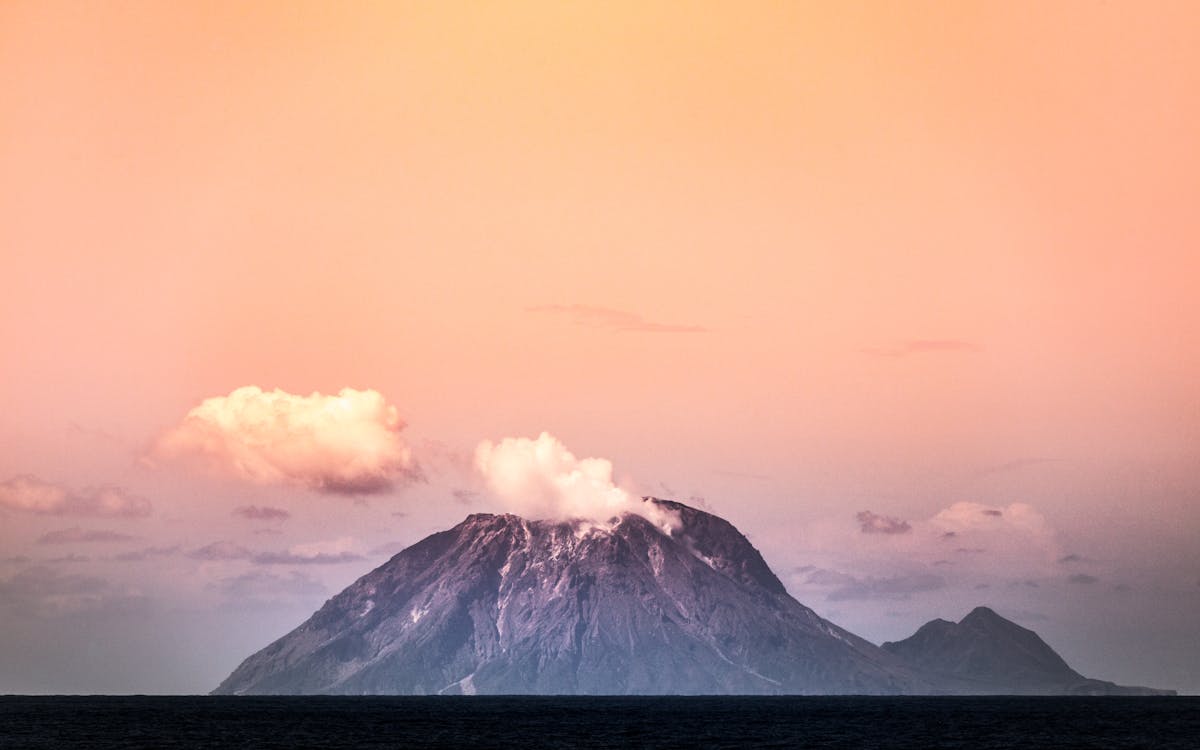
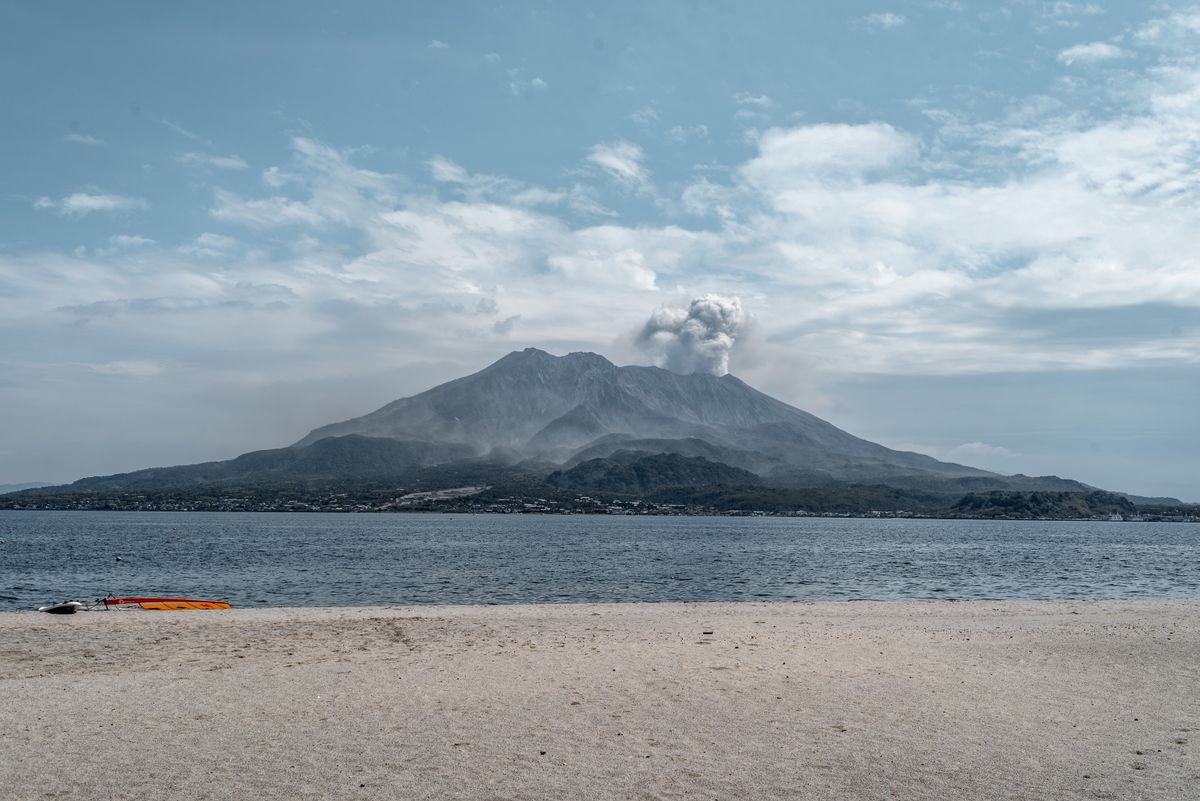
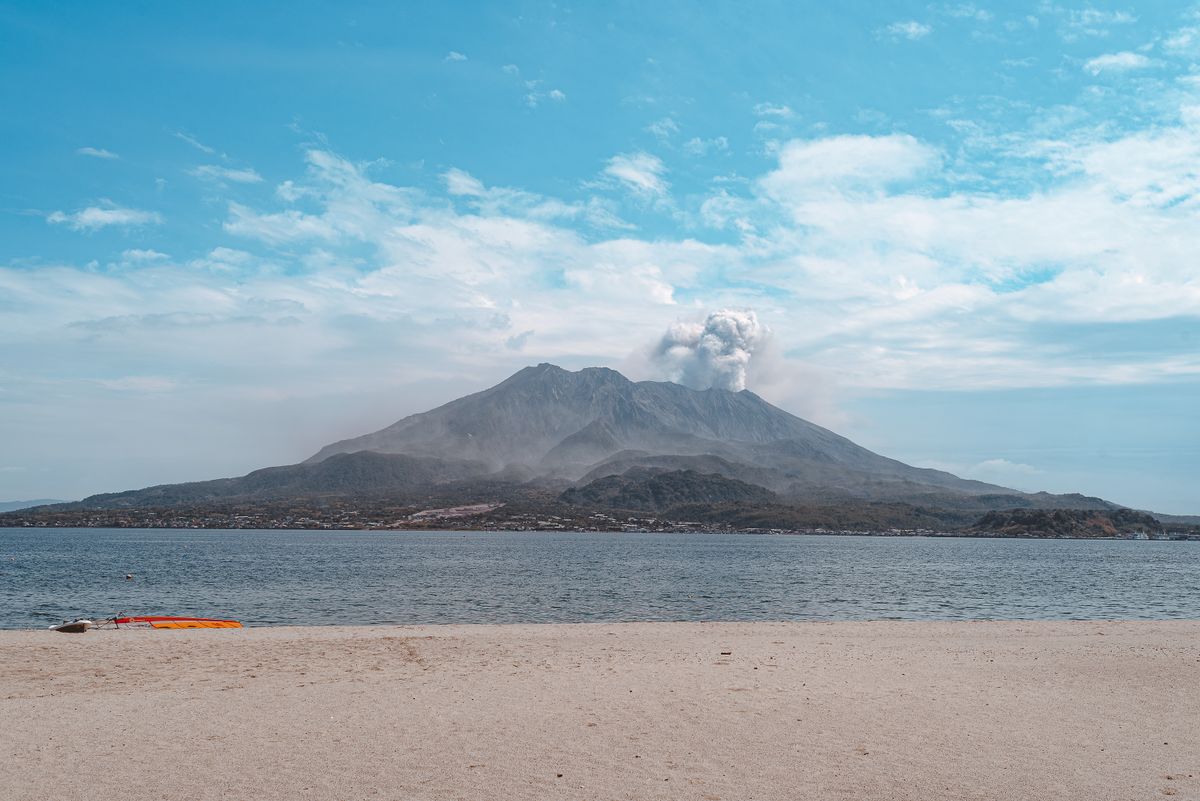
Most travellers who fly into Kagoshima for the first time do a double take. There, just across the bay from the modern city, sits an enormous, smoking volcano — its crater pluming a thin grey ash cloud into the sky, as casually as a chimney on a winter morning. That is Sakurajima, one of the most active volcanoes in the world, and one of the most extraordinary places you can visit in Japan. It is not a ruin or a memorial; it is a working volcano that erupts hundreds of times per year, sometimes daily, and a small ferry from downtown Kagoshima will deliver you to its base in just fifteen minutes. Stand at a lookout, feel the ground hum, watch ash drift like soft snow, and you will understand why Kyushu locals say their southern volcano is the soul of the region.
This complete Sakurajima guide is written for first-time foreign visitors to Japan. It covers how to get to Sakurajima from Kagoshima city and from elsewhere in Japan, the safest and most spectacular places to experience the volcano, hot springs heated by its own subterranean fire, the food culture (Kurobuta pork, Sakurajima radish, Sakurajima mikan), where to stay, the best time to visit, and a long list of practical tips. By the end you will know exactly how to plan a half-day, a full day or an overnight trip to one of Japan’s most underrated sights, plus how to combine Sakurajima with the wider Kyushu region.
What Makes Sakurajima Special
Sakurajima sits in Kagoshima Bay (Kinko-wan) in the southern tip of Kyushu, the southernmost of Japan’s four main islands. It is technically two overlapping volcanoes — Kita-dake (northern peak, 1,117 metres) and Minami-dake (southern peak, 1,040 metres) — which formed an island in prehistoric times. Then, in 1914, a massive eruption sent enough lava across the eastern channel to permanently connect Sakurajima to the Osumi Peninsula. The “island” of Sakurajima is now technically a peninsula, but everyone still calls it an island and the connecting lava field, which you can walk on, is one of the most dramatic landscapes in the country.
Sakurajima is constantly active. Minami-dake, the southern peak, erupts hundreds of times a year. The most spectacular were the 2013 eruption (which produced a 5-kilometre ash plume) and the 1914 Taisho eruption (which deposited up to four metres of pumice on the surrounding countryside). On most ordinary days, Sakurajima sends up small puffs of ash that local residents simply sweep off their cars. Kagoshima city, only four kilometres across the bay, has dedicated “ash bags” (kazaibukuro) that residents leave outside on collection days — a banal evidence of life with a working volcano.
For travellers, this all sounds intimidating, but Sakurajima is one of the most carefully monitored volcanoes on the planet. The Sakurajima Volcanological Observatory tracks seismic activity in real time, and a clear exclusion zone (currently a 2 km radius around the active vents) keeps visitors well away from any danger. The visitor areas are entirely safe — they have been welcoming families, schoolchildren and overseas tourists for decades.
How to Get to Sakurajima
From Kagoshima city by ferry
The classic and easiest way to reach Sakurajima is the Sakurajima Ferry, which runs from Kagoshima Port to Sakurajima Port 24 hours a day, every 15 minutes during the day and every hour overnight. The crossing takes 15 minutes and costs ¥250 (about USD 1.70) for adults — one of the best value boat rides in Japan. You do not need to reserve; you simply walk onto the ferry and pay on the Sakurajima side as you exit. Bicycles and cars can also be loaded for an additional fee.
The ferry experience is half the fun. The boats are old-style passenger ferries with open decks where you can stand in the sea breeze, watch gulls trail the boat, and see the volcano grow from a distant silhouette to a towering wall of black volcanic rock. Many travellers grab a paper cup of “yabu-ai udon”, a hot noodle dish sold from a small counter inside the ferry — a Kagoshima ritual.
From central Kagoshima, the ferry terminal is reachable by City View tourist bus, a short taxi (¥800–¥1,000 from Kagoshima Chuo Station) or about a 25-minute walk from the Tenmonkan downtown area.
From Tokyo, Osaka and the rest of Japan
Most foreign visitors reach Sakurajima by first travelling to Kagoshima. The Kyushu Shinkansen connects Hakata (Fukuoka) to Kagoshima-chuo Station in about 1 hour 20 minutes (¥10,640, around USD 71). From Tokyo, the fastest combination is the Tokaido-Sanyo-Kyushu Shinkansen, which runs end-to-end in roughly 6 hours 40 minutes (¥31,000, around USD 207). For a deeper look at the bullet train system, see our complete Shinkansen guide for first-timers. If you are using a Japan Rail Pass, the Tokaido-Sanyo legs are covered but the final Kyushu Shinkansen segment requires either the all-Japan pass or a Kyushu-specific JR pass.
By air, Kagoshima Airport (KOJ) has direct flights from Tokyo (Haneda and Narita), Osaka (Itami and Kansai), Nagoya, Sapporo, Naha and Fukuoka, plus international routes from Seoul, Taipei and Hong Kong. The airport limousine bus to Kagoshima-chuo Station takes 40 minutes and costs ¥1,400. From there it is a short taxi or bus to the Sakurajima Ferry terminal.
To stay connected from the moment you land, sort out mobile data in advance. Get your Japan eSIM (Stay connected from day 1) →
From Kagoshima Airport by direct shuttle
If you want to skip the city entirely, the Sakurajima Airport Limousine (operated seasonally) runs from Kagoshima Airport directly to Sakurajima Port via a road tunnel. It is faster on paper but runs only a few times a day, so most visitors instead go via Kagoshima-chuo. Pre-booking a private airport transfer is worth it if you are arriving late or with luggage. Book airport transfer with NearMe →
Getting Around Sakurajima Once You Arrive
The Sakurajima Island View Bus
The Island View Bus is the single most useful way for first-time visitors to see Sakurajima’s highlights without a car. It is a hop-on hop-off loop bus that leaves from Sakurajima Port and circles the most important viewpoints, lava trails and hot spring spots in roughly an hour. A one-day pass costs ¥500 (USD 3.30) and is the best deal on the island. Buses depart every 30 minutes from 9 a.m. to about 4:30 p.m., so plan your day around the schedule.
The route hits Karasujima Observatory, Akamizu View Park (also called the Yunohira Observatory area), and the Yunohira Observatory itself — the closest point you are allowed to approach the active crater. It also stops at the Sakurajima Visitor Center near the port, which is free to enter and has excellent multilingual displays explaining the volcano’s history.
Cycling around Sakurajima
A 36-kilometre paved road circles the entire island, and renting a bicycle at Sakurajima Port (around ¥1,500 for a half-day, ¥3,000 for a full day) is a popular way to explore for travellers comfortable on a bike. The route is mostly flat along the coast, but there are a couple of significant hills near the Furusato Onsen area. E-bikes are also available at a slightly higher price and are highly recommended for first-timers.
Driving
If you have an International Driving Permit and are comfortable with Japanese roads, renting a car at Kagoshima-chuo Station opens up the entire island and the eastern coast around the Arimura Lava Observatory. The car can ride the Sakurajima Ferry for ¥1,600 each way, which is excellent value. Driving lets you reach the more remote eastern side where the 1914 lava field hits the sea.
Walking and short hikes
You cannot hike to the summit of Sakurajima — the active vents make that strictly illegal. But several lower-elevation lava trails are open to visitors. The two best are the Nagisa Lava Trail (a 3-kilometre coastal path near the port) and the Yogan Nagisa Yuhodo (lava promenade), which threads through the 1946 lava field with interpretive signs. Both are flat, easy and astonishing.
Top Things to See and Do on Sakurajima
Yunohira Observatory (湯之平展望所)
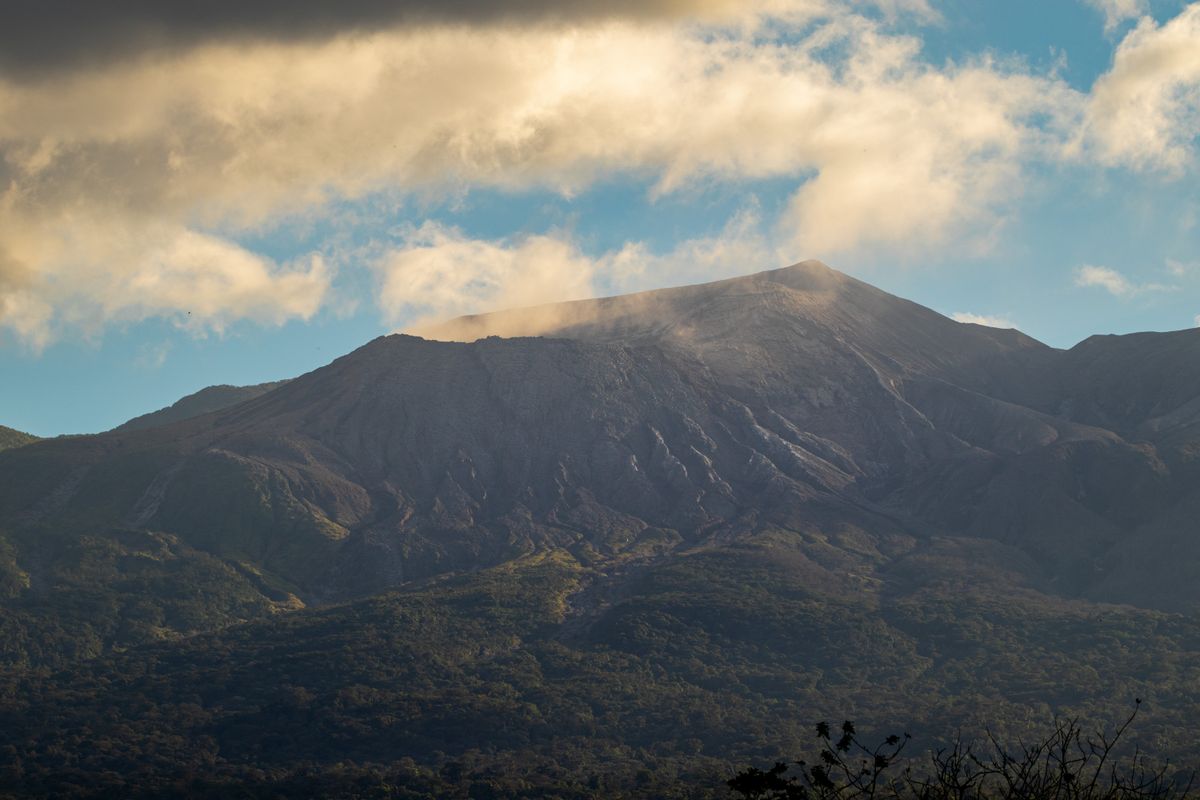
This is the iconic Sakurajima photograph. Yunohira sits at 373 metres above sea level on the northern slope of Kita-dake, and it is the closest point ordinary visitors are allowed to approach the volcano. From the deck, you can see the entire northern flank, the smoking summit, the lava fields below and Kagoshima city across the bay on a clear day. There is a small café, a free observatory with multilingual signs, and a sheltered seating area. The Island View Bus stops here for around 15 minutes — enough to take photographs but not really enough to soak in the scale. Many visitors choose to spend an extra cycle here.
Arimura Lava Observatory
On the south-eastern side of the island, far from the ferry port, Arimura Lava Observatory offers a completely different angle. Here you walk a 1-kilometre path that crosses the 1946 lava flow — black, twisted rock that looks like frozen ocean — with the volcano looming directly above you. There is almost no shade and the rock holds heat, so visit in the morning or late afternoon during summer. The view across the bay toward the Osumi Peninsula and out to the open Pacific is one of the most underrated panoramas in Japan.
Karasujima Observatory
This small observatory sits on what was once Karasujima — a tiny island in the bay that was completely swallowed by the 1914 lava flow. Today, the former island is a rocky promontory connected to the mainland, and the observatory marks the spot where, before the eruption, fishermen used to dock their boats. It is a 10-minute walk from the Sakurajima Visitor Center and a poignant reminder of how dramatically a volcano can reshape a landscape in a matter of days.
Sakurajima Visitor Center
Free, modern and superbly designed, the Visitor Center is the first place you should go after disembarking from the ferry. Inside are full-scale models of the volcano, video footage of historic eruptions, displays on local geology and the ash-management practices that keep Kagoshima city running. The information desk hands out English-language maps and can help you plan your visit. Open daily 9 a.m.–5 p.m.
The Buried Torii Gate at Kurokami
One of the most haunting sights on the island is the Kurokami Buried Shrine Torii on the eastern side. Before 1914, this torii (sacred gateway) stood three metres tall at the entrance to a small Shinto shrine. After the eruption, ash and pumice buried it almost completely — and locals decided to leave the top, now just barely poking out of the ground, as a memorial to the power of the volcano. Standing next to it, with the volcano visible behind, you understand at a gut level what “active volcano” really means. The site is reachable by local Sakurajima bus from the port (about 40 minutes) or by car.
Sakurajima Outdoor Footbaths
Several free public foot baths (ashiyu) line the western coast near Sakurajima Port. The most popular is the Sakurajima Yogan Nagisa Park footbath — a 100-metre-long natural hot spring foot bath that runs along the seaside lava trail. It is one of the longest free foot baths in Japan, with sweeping views across to Kagoshima city. Bring a small towel and sit a while; the volcanic-heated water is hot enough to feel restorative even on a warm day.
Volcanic Hot Springs (Onsen) on Sakurajima
One of the great pleasures of visiting an active volcano is bathing in water heated by it. Sakurajima has several excellent onsen, all with mineral-rich, rust-coloured water and views directly at the volcano or back across the bay to Kagoshima.
Furusato Kanko Hotel and the Lost Furusato Onsen
For decades the most famous bath on Sakurajima was the open-air rock bath at the Furusato Kanko Hotel, where bathers wore white yukata (allowed because the bath was directly under a Shinto torii gate). Sadly, that specific bath was closed to the public after a 2013 landslide and is currently inaccessible. The hotel itself remains open and offers other private onsen for guests. Confirm the current status of the rock bath before relying on it.
Magma Onsen at the National Park Lodge
Inside the Sakurajima Rainbow Park Lodge near the port, the “Magma Onsen” is open to day visitors for ¥390. The water comes from a deep volcanic source and is a striking brown colour. It is a working bath in a no-frills facility — exactly the kind of cheap-and-cheerful onsen most visitors want. For broader context, see our complete Japanese onsen etiquette guide before you go.
Sakurajima Seaside Hotel
Located a few minutes from the ferry port, this small hotel has an open-air bath with direct views of the volcano. Non-guests can use the bath for ¥800 in the late afternoon. It is one of the most photographed onsen panoramas in southern Japan.
If you want a more luxurious soak elsewhere in Kagoshima, the famous sand baths of Ibusuki are a 90-minute train ride south. Find luxury hotels on Ikyu.com →
Food and Local Specialties of Sakurajima
Sakurajima Daikon — The World’s Largest Radish
Sakurajima is famous for growing the largest radishes on earth. The Sakurajima daikon is a round, almost basketball-sized vegetable that thrives in the mineral-rich volcanic soil. Local farmers say it takes a year of careful growing to reach a single radish weighing 10 to 20 kilograms. You will see it in restaurants prepared simply: simmered in dashi with bonito flakes, pickled in miso, or sliced raw in salads. It is sweet, slightly nutty and unlike any radish you have eaten before. Most ferry-port restaurants serve it, and you can buy whole radishes (or vacuum-packed pickles) at the Sakurajima farmer’s market.
Sakurajima Mikan — The World’s Smallest Mandarin
In a delightful paradox, Sakurajima is also home to the world’s smallest mandarin orange — the Sakurajima komikan, a citrus fruit about the size of a ping-pong ball. They are sweet, fragrant and harvested between November and January. Local cafés make them into juice, sorbet, jam and even a regional liqueur. Try at least one if you visit during winter.
Kurobuta Pork
Kagoshima is the spiritual home of kurobuta — “black pig” pork, descended from Berkshire stock introduced from Britain in the 19th century. The pigs are raised on a diet that includes locally grown sweet potatoes, producing a richly marbled meat. The Sakurajima port restaurants serve kurobuta in tonkatsu, shabu-shabu and grilled forms. A standard kurobuta tonkatsu set costs ¥1,500–¥2,500.
Tsukiage (Satsuma-age)
This is Kagoshima’s traditional fried fish cake — minced white fish blended with sake and sugar, formed into patties and deep-fried. It is sold hot from stalls near the ferry terminal for around ¥200 each and pairs perfectly with an ice-cold local beer.
Volcano-Themed Souvenirs and Snacks
Among the most fun food souvenirs are “Akamizu” volcanic chocolate, “Sakurajima Lava Curry” instant retort packs, and tubes of Sakurajima daikon pickle. The Sakurajima Visitor Center gift shop sells all of these. For a wider look at edible souvenirs across Japan, see our Japan street food guide.
Where to Stay
Most visitors make Sakurajima a day trip from Kagoshima city, where hotels are plentiful and prices reasonable. But staying on the island itself — even for a single night — is a memorable, slightly surreal experience. The night air smells faintly of sulphur, the streetlamps glow orange against the black volcanic landscape, and you can hear (and feel) the occasional rumble of the volcano.
On Sakurajima itself
Sakurajima Rainbow Hotel sits near the ferry port and offers comfortable Western-style rooms from ¥9,000–¥13,000 per person. The hotel includes the Magma Onsen and has a restaurant featuring local food. The Sakurajima Seaside Hotel is a smaller boutique-feeling option with bay views from ¥12,000.
For ryokan lovers, the Furusato Kanko Hotel remains the marquee option on the island despite the closure of its famous outdoor bath. Rooms with kaiseki dinner start at ¥15,000 per person.
In Kagoshima city
Kagoshima has dozens of hotels in every price range. The Solaria Nishitetsu Hotel near Kagoshima-chuo Station is a popular four-star choice in the ¥14,000 range. The Remm Kagoshima, just a few blocks from the Tenmonkan downtown, is another excellent mid-range pick. Budget travellers will find APA Hotels, Toyoko Inns and a handful of hostels offering dorm beds from ¥3,000 and private rooms from ¥6,500.
Book your hotel on Agoda (Best prices guaranteed) →
For longer stays, look at hotels in the Tenmonkan neighbourhood — Kagoshima’s main entertainment district, with restaurants and bars open until midnight. Search hotel deals on Yahoo! Travel →
Best Time to Visit Sakurajima
Spring (March–May)
Spring is the most popular season. Cherry blossoms peak in late March in Kagoshima — earlier than Tokyo and Kyoto, making Sakurajima a strategic destination for travellers arriving too early to catch sakura further north. The island has more than a thousand cherry trees, planted as part of post-eruption recovery and rotated around the lava fields. Temperatures hover at 12–22 °C and skies are usually clear, which means crisp views of the volcano. The downside is that the ferry and viewpoints can be busy on weekends. See our Japan cherry blossom guide for sakura forecast tips.
Summer (June–August)
Summer is hot (28–33 °C) and humid, with afternoon thunderstorms and the chance of a typhoon. The advantage: the volcano is especially photogenic against the green of summer foliage, and outdoor festivals — including the Sakurajima Rainbow Festival in August — bring a buoyant, family-friendly atmosphere. Pack light, breathable clothing and stay hydrated, and avoid lava trails in the heat of midday.
Autumn (September–November)
Many travellers consider October the perfect Sakurajima month. Temperatures cool to 18–24 °C, humidity drops, the skies are clear and the surrounding mountains turn gold and red. The ferry decks become pleasant places to linger. Crowds are thinner than in spring, and hotels can drop their prices.
Winter (December–February)
Winters in Kagoshima are mild compared to most of Japan — daytime highs sit around 11–14 °C and snow is rare. Sakurajima’s slopes occasionally get a light dusting, which makes for striking photographs. The Sakurajima komikan mandarin is in season, and hot foot baths feel especially indulgent. Pack a sweater and a windbreaker for the ferry.
Sample Itineraries
Half-day Sakurajima itinerary
Take the 9 a.m. ferry from Kagoshima. Visit the Sakurajima Visitor Center for 30 minutes. Walk the Yogan Nagisa coastal lava trail to the long footbath (allow 90 minutes including soaking time). Lunch of kurobuta tonkatsu at one of the port restaurants. Catch the 12:30 p.m. Island View Bus to Yunohira Observatory; spend an hour there. Return to the port and catch the 14:30 ferry back to Kagoshima. Ideal if you only have a single morning.
Full-day Sakurajima itinerary
Take the 8 a.m. ferry. Hire a rental bicycle (or e-bike) at the port. Cycle clockwise around the western shore: Yunohira (via shuttle), then back to Akamizu, Karasujima and the Yogan Nagisa Park footbath. Lunch near the port. Afternoon: Island View Bus or e-bike to Arimura Lava Observatory on the southern side. Soak in the Magma Onsen before catching the late-afternoon ferry back. Add the buried Kurokami torii if you have a car.
Overnight Sakurajima itinerary
Spend the first afternoon on the western half (Yunohira, Visitor Center, Karasujima, Yogan footbath). Stay at the Sakurajima Rainbow Hotel or Seaside Hotel. Soak in the bath at sunset and dine on Kagoshima specialties. Wake early the next morning — the chances of a clear summit view are highest from 6 to 8 a.m. — and either drive or take the local bus to Arimura and the Kurokami buried torii. Lunch at the port, then ferry back to Kagoshima by mid-afternoon.
Combining Sakurajima with the Rest of Kyushu
Sakurajima fits beautifully into a wider Kyushu itinerary. Most travellers pair it with Kagoshima city (Shiroyama Observatory, Sengan-en Garden, Tenmonkan dining), then continue to Ibusuki for the famous sand baths, the Satsuma Peninsula for its peaceful coastline, or northward to Kumamoto and Mount Aso. For a complete Kyushu loop including Fukuoka, Nagasaki, Kumamoto and Beppu, see our destinations overview and our Mount Aso guide. Travellers fascinated by volcanoes will also love the geothermal landscape at Beppu Onsen in Oita.
To plan ferry departures alongside your Kagoshima dining and sleeping plans, packaged Japan tours can save time. Book Japan tours and hotels on JTB →
A Brief History of Sakurajima’s Eruptions
Sakurajima has shaped southern Kyushu for thousands of years. The earliest documented eruption dates back to 708 AD, recorded in court chronicles, and is one of the oldest written eruption records in Japan. Historians have catalogued more than 30 major eruptive events since then, but four loom largest in local memory and in any geology textbook.
The Bunmei Eruption of 1471–1476 lasted for five years and created the dramatic lava fields now visible along the northwestern coast. Entire villages were buried, while new land was forced upward from the sea. The Anei Eruption of 1779 was even more violent: a column of pumice and ash rose more than 20 kilometres into the atmosphere, and the resulting tsunamis killed an estimated 150 people on the bay’s far shores. Then came the Taisho Eruption of 1914, the largest in 20th-century Japan. In just over a month, Sakurajima produced more than 1.5 cubic kilometres of lava and connected the previously island volcano to the Osumi Peninsula. The earlier village of Karasujima — its torii is now buried at Kurokami — vanished beneath ash and pumice in days.
The most recent major event was the 2013 Showa-crater paroxysm, which produced a 5-kilometre ash column on August 18 and blanketed parts of Kagoshima city in a centimetre of grey dust. Eruptions in 2020 and 2022 were smaller but spectacular, with night-time ejections briefly illuminating the bay. Walking around the Visitor Center, you can read full timelines, study geological cross-sections and watch unedited footage of these events. It is one of the most striking museum experiences in Kyushu.
Wildlife, Plants and the Surprisingly Lush Side of Sakurajima
You might assume an active volcano would be a dead place. The opposite is true. Sakurajima is unexpectedly green and biologically rich. The island is home to wild boar, native pheasants, copper-coloured Japanese pit vipers (rarely seen — give them a wide berth), and a wide range of seabirds, including ospreys and white-bellied sea eagles. Cherry trees, planted heavily in the 20th century, bloom across the lava flows in March and April. Black pine, camphor and silver grass have all colonised the cooled lava in successive waves, and biologists from Kagoshima University use Sakurajima as an open-air laboratory for studying how life reclaims volcanic landscapes.
Closer to the sea, the island hosts small populations of green sea turtles that come ashore to nest on a couple of remote southern beaches between May and August. Local rules ask visitors to keep a respectful distance and to avoid any lights at night during nesting season — a reminder that even an active volcano shares its turf with quiet creatures.
Photography Tips for Sakurajima
Sakurajima is a photographer’s dream and a photographer’s headache in equal measure. The volcano is so big and so close to Kagoshima that almost any wide-angle lens will struggle to capture both the city and the summit in one frame. A 35mm or 50mm lens often produces more satisfying compositions than the ultrawide most people instinctively reach for. Light is best in the first hour after sunrise (the volcano faces east-southeast, so it glows gold) and the hour before sunset (long shadows down the western flank).
If you are shooting from Kagoshima city, the Shiroyama Observatory offers the classic postcard angle. From the ferry, position yourself on the upper deck near the bow on the right-hand side as you depart Kagoshima — the volcano grows from a distant silhouette to a wall of black rock over fifteen minutes. From the island itself, the Yunohira Observatory gives you the dramatic close-up, while Arimura Lava Observatory captures the volcano from below with the lava flow in the foreground. On rare days when the wind blows ash to the south, photographers can capture a slim plume crossing a clear blue sky — the iconic Sakurajima image.
Safety, Ash and What to Do During an Eruption
Sakurajima erupts so frequently that small ash falls are part of daily life. They are not dangerous in the visitor areas. Modern monitoring is excellent: the Japan Meteorological Agency publishes alert levels from 1 (lowest) to 5 (highest), and during higher alerts the Sakurajima Visitor Center and Yunohira Observatory close access roads. The Island View Bus also halts at elevated alerts. Check the JMA website on the morning of your visit, or simply ask at your Kagoshima hotel.
If you find yourself outdoors during a moderate ash fall, the practical advice is simple. Cover your nose and mouth with a tissue, handkerchief or N95 mask (most Kagoshima convenience stores sell them for ¥150). Use sunglasses or any eyewear; ash is irritating to the eyes. Step indoors and wait for the wind to shift. Heavier ash falls are extremely rare and would be flagged hours in advance through Japan’s emergency alert system.
Practical Tips for First-Time Visitors
- Carry cash: The ferry, Island View Bus and many small port restaurants are cash-only. Withdraw at 7-Eleven or Japan Post ATMs before crossing. See our Japan cash vs card guide.
- Comfortable shoes: Lava trails are uneven and rocky. Sandals will not do; closed-toe walking shoes are essential.
- Sun protection: Sakurajima’s lava fields radiate heat. Hat, sunglasses and SPF50 sunscreen are not optional in summer.
- Mask and tissues: Keep a couple of paper masks and a packet of tissues handy for the rare moments of ash fall.
- Suica / Pasmo: Both IC cards work on the Sakurajima Ferry and the Island View Bus.
- Connectivity: Coverage on the island is excellent for the major Japanese carriers. Get your Japan eSIM → before leaving home.
- Tipping: Not practised in Japan. Round amounts, no tip.
- Onsen etiquette: Wash before entering the bath, do not bring towels into the water, and remove tattoos coverings if a particular bath asks. See our onsen etiquette guide for the full set of rules.
- Language: English signage exists at major sites and the Visitor Center, but is limited at small restaurants. Google Translate’s camera mode is invaluable.
- Pack light: If you plan to cycle or hop on and off the Island View Bus, a small day pack is enough. Coin lockers at Sakurajima Port (¥300–¥500) can hold larger luggage.
For a wider primer on visiting Japan for the first time, see our Japan travel tips for first-timers.
Frequently Asked Questions
Is it safe to visit Sakurajima?
Yes. Sakurajima is one of the most carefully monitored volcanoes in the world. A 2-kilometre exclusion zone keeps visitors well away from the active vents, and access is automatically closed if alert levels rise. Hundreds of thousands of tourists visit each year without incident. The most common minor inconvenience is occasional light ash fall, which is easily handled with a mask and tissues.
How long should I spend on Sakurajima?
A half-day (4–5 hours including ferry) is enough to see the Visitor Center, one viewpoint and the long footbath. A full day allows you to add a second viewpoint, a lava trail and a soak. An overnight stay rewards travellers who want to see the volcano at sunrise and sunset, and to experience the slower rhythm of the island.
Can you climb to the summit of Sakurajima?
No. Climbing the summit or any of the active craters is strictly forbidden, and the trails are physically barricaded. Visitor access is limited to lower-elevation lava trails and viewpoints up to 373 metres at Yunohira. There are no exceptions, including for guided tours.
What happens if there is an eruption while I am visiting?
Small puff eruptions are routine and not a concern for visitors. Larger ones trigger alert-level changes — the Visitor Center and observatories close, the Island View Bus stops, and the ferry adjusts schedules. Hotels and the tourist information centre will direct guests on what to do. The Japan Meteorological Agency posts real-time alerts; check kazan.data.jma.go.jp on the morning of your visit.
Is Sakurajima worth visiting if I have already seen other volcanoes in Japan?
Sakurajima is unlike any other Japanese volcano. Mount Aso is bigger and more dramatic at its caldera. Mount Fuji is far more iconic. But neither is as active or as accessible as Sakurajima — you cannot, in either case, take a ¥250 ferry to the base of an erupting volcano. If you have seen Aso or Fuji, Sakurajima still offers a completely different experience.
Can I visit Sakurajima as a day trip from Fukuoka?
It is possible but tight. The Kyushu Shinkansen takes 1 hour 20 minutes from Hakata to Kagoshima-chuo. With ferry transfers, observatory time and lunch, you are looking at a long 13-hour day. An overnight stop in Kagoshima is recommended.
What is the cheapest way to see Sakurajima?
The ¥250 ferry plus a ¥500 Island View Bus day pass gives you almost everything for under ¥1,000 in transport. Lunch at a port restaurant is ¥1,000–¥1,500. The Visitor Center is free. A complete day on Sakurajima can be done on under ¥3,000 in total spending. See our budget travel guide to Japan for more savings tips.
Can I see the volcano from Kagoshima city without going to the island?
Yes — Sakurajima is visible from almost everywhere in Kagoshima. The best free vantage points are Shiroyama Observatory (a 15-minute taxi from Kagoshima-chuo Station), the Dolphin Port waterfront, and the upper floors of department stores in Tenmonkan. Visit the island for the immersive experience, but the views from the city alone are remarkable.
Are there any guided tours that include English?
Yes. Several Kagoshima-based operators run half-day and full-day English-language tours of Sakurajima, typically picking up at central city hotels and the Kagoshima-chuo Station. Prices range from ¥4,500 (small group bus tours) to ¥18,000 (private guides). The Kagoshima tourist information centre at the station can book day-of tours when space allows.
Final Thoughts
Sakurajima is one of the most extraordinary travel experiences in Japan precisely because it does not announce itself the way Fuji or Kinkaku-ji do. It just sits there, smoking gently, going about the daily business of being one of the world’s most active volcanoes while Kagoshima city carries on its life across the bay. To visit is to confront geology at the human scale — to watch the earth quietly building itself, to walk on lava that solidified inside a single lifetime, to soak in a bath heated by the same fire still rising in the crater above. It costs less than a coffee in Tokyo to get there, and it will reorder your sense of what an “ordinary” Japanese day can look like. Plan an overnight if you can. Either way, do not miss it.
Going to Japan? Talk to locals with confidence.
Hirameki Japanese — instant offline translation, camera translation, furigana + romaji, and 314 free flashcards. No login. Works without internet.

Plan your Japan trip
Two things every first-timer should book
Some links are affiliate links. If you book through them we may earn a small commission at no extra cost to you.