In this guide
- Why stay a night on Koyasan
- Getting to Koyasan
- Okunoin: the great cemetery
- Danjo Garan, Kongobuji and the Daimon
- Temple stays (shukubo) on Koyasan
- What happens during a temple stay
- Meditation, sutra copying and rituals
- Shojin ryori and dietary needs
- Temple stays elsewhere in Japan
- Etiquette at temples and shukubo
- When to go
- A one-night plan
- What it costs
- Combining Koyasan with the rest of Kansai
- Frequently asked questions
- Plan the rest of your trip
Why stay a night on Koyasan
Koyasan is a town of temples on a forested plateau in the mountains of northern Wakayama. It was founded in the early 9th century by the monk Kukai, known after his death as Kobo Daishi, as the center of the esoteric Shingon school of Buddhism he brought back from China. The Koyasan Shukubo Association counts 117 temples on the mountain today, and 52 of them offer lodging. Together with the pilgrimage routes that lead here, Koyasan is part of the UNESCO World Heritage Site “Sacred Sites and Pilgrimage Routes in the Kii Mountain Range”.
What makes it special for visitors is that you can sleep inside a working temple. You eat the Buddhist vegetarian cuisine called shojin ryori, can join the monks’ morning service in the main hall, and walk through Okunoin, a vast cemetery under ancient cedars, at dusk. It is close enough to Osaka for a day trip, but the real experience starts when the day visitors leave.
Getting to Koyasan
Almost everyone arrives on the Nankai Koya Line from Namba in Osaka, then rides a cable car up the final climb. The Japan Rail Pass does not cover Nankai, a private railway.
| Leg | Time | Fare (adult) |
|---|---|---|
| Namba to Gokurakubashi, limited express Koya (all seats reserved) | 1 h 31 min | ¥2,030 (fare ¥930 + fee ¥1,100) |
| Namba to Gokurakubashi, express (no reservation) | about 1 h 40 min | ¥930 |
| Namba to Gokurakubashi, GRAN TENKU sightseeing train | about 1 h 30 min | ¥3,130 (fare + ¥1,700 seat fee) |
| Koyasan Cable Car, Gokurakubashi to Koyasan Station | about 5 min | ¥500 |
| Nankai Rinkan bus, Koyasan Station to Okunoin-mae | 28 min | ¥610 |
- Nankai’s limited-express fees rose on April 1, 2026. The Koya fee is ¥300 more if bought on board and ¥150 less through ticketless booking.
- GRAN TENKU, a sightseeing limited express, started on April 24, 2026. It does not run on Wednesdays or on the second and fourth Thursdays.
- The cable car closes for maintenance on some days; in December 2025 it stopped for three days with replacement buses. Check Nankai’s notices before winter trips.
Koyasan World Heritage Ticket
Nankai’s two-day ticket covers the round trip from Namba to Koyasan Station including the cable car, the Rinkan buses on the mountain, and discount coupons for Kongobuji, the Kondo, the Konpon Daito and the Reihokan museum. Prices rose in 2026: the paper ticket from Namba is ¥4,210 (¥5,200 with an outbound Koya seat), and the digital ticket ¥3,980 (¥4,910 with Koya). If you plan to ride the buses several times and visit the main halls, it usually pays off.
From Kyoto and Tokyo
- Kyoto: travel to Namba by train, or take the seasonal Keihan direct bus, which runs once a day each way from April 10 to November 29, 2026: Kyoto Station (Hachijo exit) 8:10, arriving Kongobuji-mae 11:08; returning 15:27, arriving 18:35.
- Tokyo: take the shinkansen to Shin-Osaka (about ¥14,720 reserved), the Midosuji subway to Namba, then the Nankai line. Most travelers stay a night in Osaka or Kyoto first.
Leave big suitcases behind. The cable car, buses and temple corridors are not suitcase-friendly; send large bags ahead to your next hotel by luggage delivery, or store them in Osaka.
Okunoin: the great cemetery
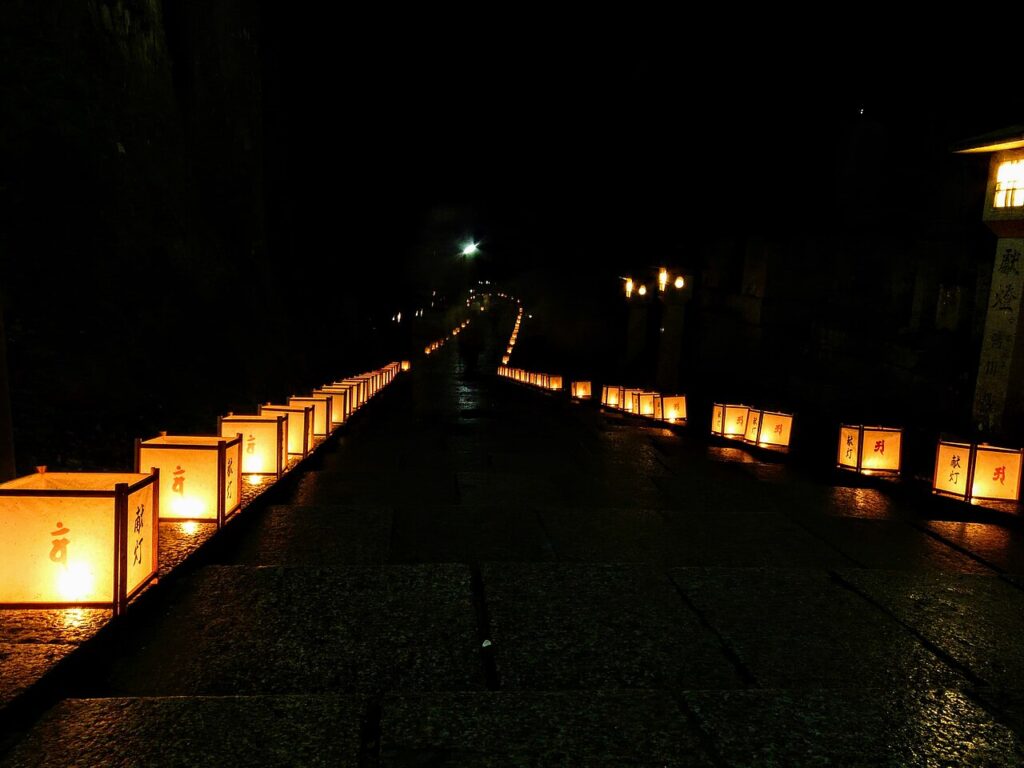
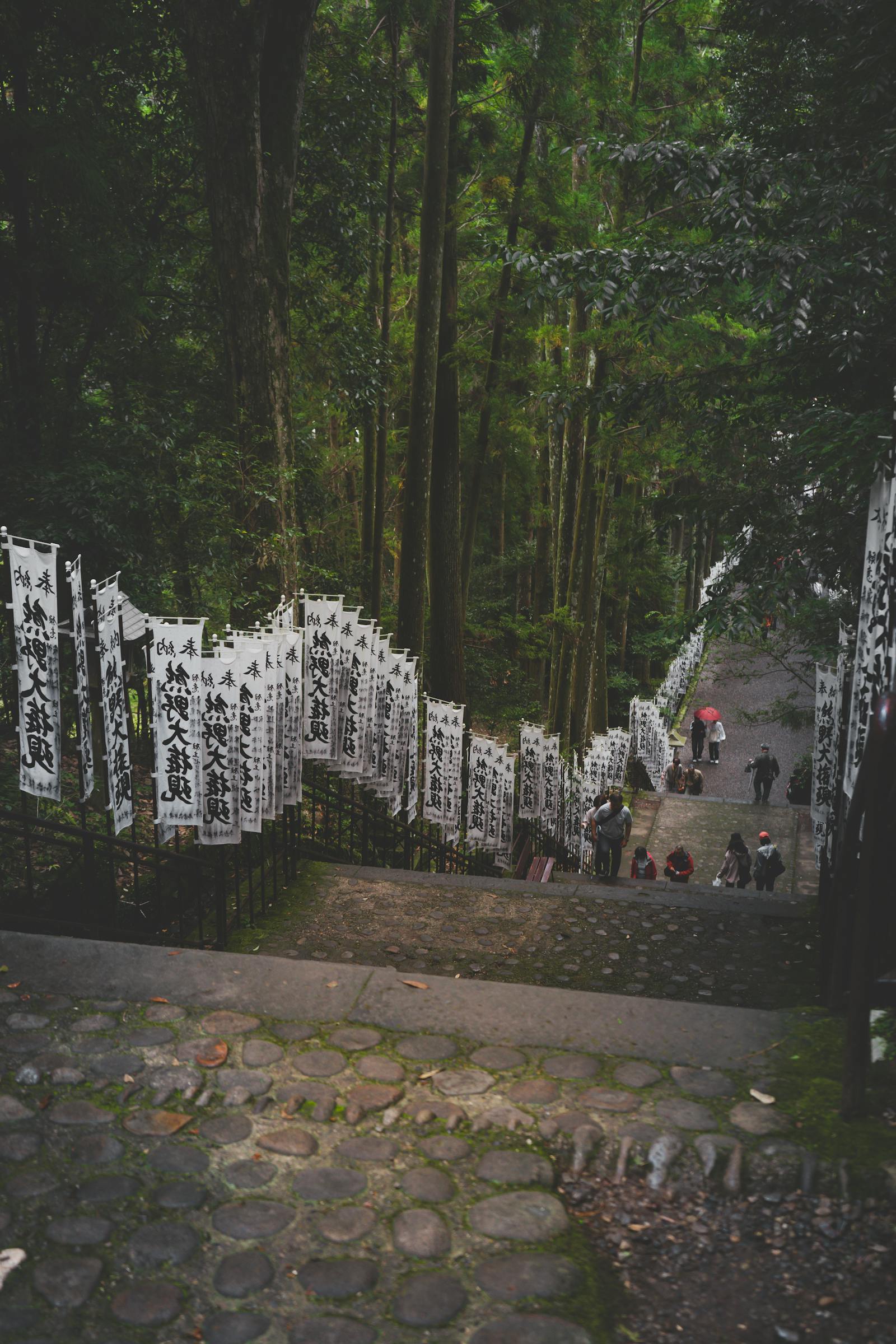
Okunoin is the sacred heart of Koyasan. From the Ichi-no-hashi bridge, a path of about two kilometers runs through towering cedars and a forest of tombs and memorials, said to number more than 200,000, to the mausoleum of Kobo Daishi, who believers hold is still in eternal meditation. Among the memorials are those of famous warlords such as Oda Nobunaga and Takeda Shingen, as well as modern companies.
- The Torodo (Lantern Hall) in front of the mausoleum is open 6:00–17:00, with the underground hall until 16:45.
- No photography anywhere from the Gobyobashi bridge to the Torodo and the mausoleum. Kongobuji strictly bans it.
- Dress: since April 2026, Kongobuji asks visitors to wear neat, ordinary clothes at Okunoin and other sacred sites. Visitors in revealing clothes may be asked to cover up or not enter.
The Okunoin night tour
The official “Koyasan Okunoin Night Tour” has run since 2011 and is operated by AWESOME TOURS with guides licensed by Kongobuji, in English and Japanese.
- English tour from ¥6,000 booked online, or ¥7,000 (child ¥4,900) booked by email or phone and paid on the day; ages 6 and up.
- Check-in 18:30–19:00 at TAIRA café near Ekoin; the tour lasts about 1 hour 20 minutes and covers about 3 km, ending at the mausoleum.
- A free bus back leaves Okunoin-mae at 20:43 on weekdays and 20:35 on weekends and holidays.
- It is often full from March to November, so book early. Guests at some shukubo with early curfews (Renge-in, Sainan-in and Ichijo-in) cannot join.
If you walk at night on your own, stay on the main lit path. In October 2026 the Koya Town Tourism Association reported bears seen in the town.
Danjo Garan, Kongobuji and the Daimon
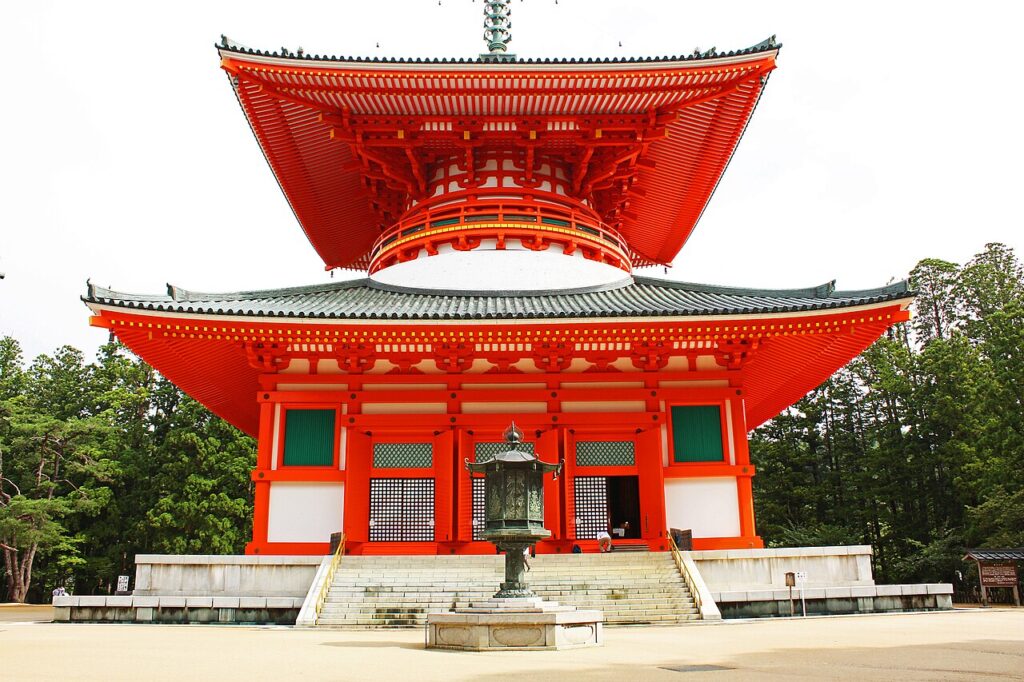
At the western side of town, the Danjo Garan is the religious complex Kukai first laid out, dominated by the vermilion Konpon Daito pagoda and the Kondo main hall. A short walk away, Kongobuji is the head temple of Koyasan Shingon Buddhism, with painted sliding doors and the large Banryutei rock garden.
| Site | Admission (adult) |
|---|---|
| Kongobuji | ¥1,000 (elementary ¥300) |
| Kondo | ¥500 |
| Konpon Daito | ¥500 |
| Tokugawa Mausoleum | ¥200 |
| Combined ticket (Kongobuji, Kondo, Daito, Tokugawa Mausoleum, jukai at Daishi Kyokai) | ¥2,500 |
| Reihokan museum (not in the combined ticket) | ¥1,300 (¥1,100 with the World Heritage Ticket); 9:00–17:00 |
These fees come from the Shukubo Association’s list, in force since 2020; check at the gate, since Kongobuji’s own site was down for maintenance when we checked. From October 24 to November 10, 2026, Kongobuji opens its normally closed Okuden for a special autumn viewing (¥500 on top of admission). Photography is banned inside Kongobuji except at the Banryutei garden, and inside the Garan halls.
The Reihokan holds Koyasan’s temple treasures, many of them National Treasures or Important Cultural Properties, and is a good refuge on a rainy afternoon.
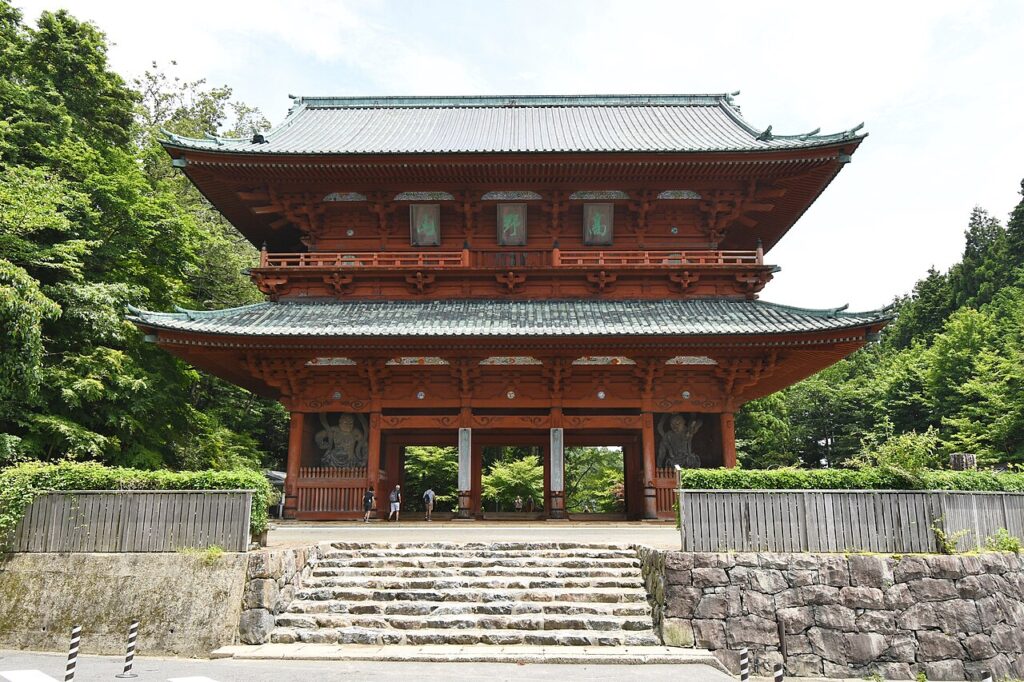
The Daimon, the great gate at the western edge of town, was the traditional entrance for pilgrims climbing up from the valley, and it is a fine spot at sunset. The walk from the Daimon past the Garan to Okunoin crosses the whole town and makes a good introduction to Koyasan.
Temple stays (shukubo) on Koyasan
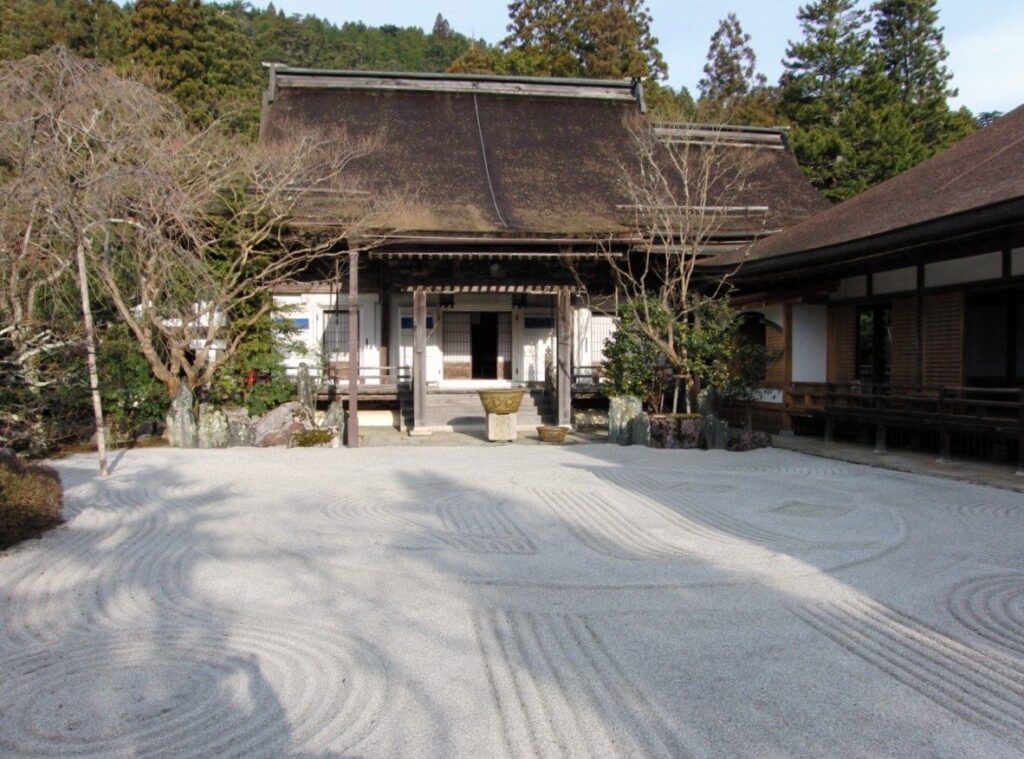
A shukubo is lodging inside a temple. Originally it housed pilgrims; today most also welcome travelers of any faith, and Ekoin states plainly that Koyasan is a place people of all religions can visit. Like any accommodation in Japan, a shukubo charging for rooms needs a lodging permit, but the experience is not a hotel’s: meals and bath times are fixed, many rooms are divided only by sliding paper doors, and the temple’s religious life goes on around you.
Prices
Rates are per person with dinner and breakfast, and depend on the room. These were the lowest prices shown on each temple’s own booking system in October 2026, for two adults sharing (most systems do not say whether tax is included):
| Temple | From (per person, 2 meals) | Notes |
|---|---|---|
| Ekoin | ¥17,000 | Shared facilities in basic rooms; rooms with bath and toilet from ¥29,000; daily goma ritual and ajikan meditation for guests |
| Fukuchiin | ¥18,000 | Says it is the only shukubo on Koyasan with a natural hot spring; room with toilet ¥23,150; solo room ¥40,000 |
| Rengejoin | ¥19,000 | Standard rooms with sliding-door partitions; superior and suite rooms cost more |
| Sekishoin | ¥20,000 | Japanese room with bath and toilet; pay at the temple |
| Nan-in (via Kumano Travel) | ¥16,500 (sample plan) | Booked on the Tanabe City Kumano Tourism Bureau’s site |
As a rule of thumb, expect from about ¥16,500–¥20,000 per person in a basic shared room, and ¥23,000 to ¥50,000 or more for rooms with a private bath. Koyasan has no accommodation tax in 2026; Wakayama Prefecture has drafted a ¥200-per-night tax planned for June 2028, which is not yet law.
How to book
- Koyasan Shukubo Association: its online booking system (koyasan-shukubo.net) has been paused since October 21, 2026 for security work, with no restart date announced. You can still book by phone on +81-736-56-2616 (9:00–16:30). When the system works, six temples offer instant booking: Hojo-in, Kodai-in, Fugen-in, Daien-in, Fudo-in and Ekoin.
- Direct with the temple: several temples run their own English booking pages. Ekoin and Ichijo-in open bookings 11 months ahead, and Ichijo-in and Sekishoin say their own sites give the best rate. Fukuchiin takes online bookings in English and phone bookings 9:00–20:00.
- Booking sites: some shukubo also appear on major hotel sites; you can compare availability on Agoda. Kumano Travel lists three Koyasan shukubo: Muryoko-in, Nan-in and Fudo-in.
Autumn and the cherry blossom season fill first. Book as soon as your dates are fixed.
Rooms and facilities
- Bathrooms: basic rooms share toilets and a bath; Ekoin’s superior rooms and above have their own, Muryoko-in has “a limited number” of rooms with a shower and toilet, and every room in Ichijo-in’s main building has a bath and a bed.
- Privacy: many rooms are separated only by fusuma sliding doors. Fukuchiin notes its rooms cannot be locked from outside and provides an in-room safe.
- Wi-Fi: free at Ekoin, Sekishoin and Muryoko-in, among others.
- Baths: fixed hours, for example Ekoin’s large bath 15:00–24:00 and 6:00–9:00, Muryoko-in’s from 17:00. Fukuchiin’s hot-spring outdoor bath is open 15:00–20:00.
- Tattoos: Fukuchiin, with its onsen, refuses guests with tattoos. Rules at other temples vary, so ask before booking.
- Solo travelers: Ekoin welcomes women traveling alone; Fukuchiin has a single-room plan.
- Children: Rengejoin accepts children but asks you to discuss the room type in advance. Preschool children cannot join ajikan at Ekoin and Rengejoin, or Rengejoin’s morning service.
- Payment: varies. Ekoin takes most cards and e-money; Rengejoin takes Visa, UC, DC and Mastercard; Fukuchiin is prepaid online by card; Sekishoin is paid at the temple. Carry cash as a backup.
How to choose a shukubo
With about 50 temples to choose from, it helps to decide what matters most to you:
| If you want… | Look for | Example from official pages |
|---|---|---|
| A fire ritual every morning | A temple holding a daily goma | Ekoin (7:30, free for guests), Muryoko-in |
| Meditation included | Ajikan for guests | Ekoin (16:30 daily), Rengejoin (17:00 daily) |
| To join the Okunoin night tour | A late or no curfew | Ekoin has no curfew; avoid temples with a 20:00 curfew |
| Your own bathroom | Superior rooms or temples with en-suite rooms | Ichijo-in main building, Sekishoin, Ekoin’s upper room grades |
| A hot-spring bath | A temple with its own onsen | Fukuchiin (no tattoos) |
| Strict vegan meals | Clear written policy on eggs and dairy | Ekoin |
| To pay by card | Card payment listed on the booking page | Ekoin, Rengejoin, Fukuchiin (prepaid) |
Read each temple’s own English page before booking: rules on curfew, check-in, meals and children are set temple by temple, and they matter more than the room photos.
Getting around the mountain
Koyasan’s town stretches several kilometers from the Daimon in the west to Okunoin in the east. Nankai Rinkan buses link Koyasan Station with the town center and Okunoin-mae (28 minutes, ¥610 from the station), and the World Heritage Ticket covers the buses on the mountain, though not the Tateri, Koya-Ryujin or Kyoto lines. Walking between the Garan, Kongobuji and the start of Okunoin is easy. The Shukubo Association can also arrange licensed precinct guides: up to two hours at Okunoin for ¥6,000 per guide, or up to an hour at Kongobuji or the Garan for ¥3,000, booked at least three days ahead.
What happens during a temple stay
Every temple has its own timetable, but a stay at Rengejoin, as the temple describes it, shows the typical rhythm:
| Time | What happens |
|---|---|
| 15:00 | Check-in, tea in your room |
| 17:00 | Ajikan meditation |
| 18:00 | Dinner (shojin ryori) |
| 21:00 | Gate closes (curfew, as a rule) |
| 6:00 | Morning service |
| 7:00 | Breakfast |
| 10:00 | Check-out |
Other temples differ. Ekoin’s check-in is from 14:00 (last 19:00), dinner is at 17:30, its morning service is at 7:00 and a goma fire ritual follows at 7:30, and it has no curfew. Fukuchiin’s last check-in on meal plans is 17:30, dinner is served until 18:30 and check-out is 9:00; its gate closes at 21:00. Ichijo-in’s curfew is 20:00.
Arrive on time. Dinner times are fixed, and Ekoin warns that if you arrive after 17:30 you may lose your dinner, with the meal charged as a same-day cancellation. Plan your train so you reach your temple by mid-afternoon.
The morning service (otsutome or gongyo) is the heart of the stay: monks chant sutras by candlelight and incense in the main hall. At most temples it is optional. The Shukubo Association presents it as an invitation, Fukuchiin says anyone may join freely, and JNTO calls it an option. Change out of your yukata into ordinary clothes before you go, sit quietly, and keep your phone away.
Meditation, sutra copying and rituals
- Ajikan meditation at shukubo: Ekoin holds ajikan daily at 16:30 for about 40 minutes, free for guests (¥2,000 for non-guests). Rengejoin holds it every evening at 17:00.
- Ajikan at Kongobuji: from April to November, on Fridays, Saturdays, Sundays and holidays only from 2026 (plus listed dates such as Golden Week and Obon), at 9:00, 11:00, 13:30 and 15:30, about one hour, 14 people per session. It costs ¥1,000 plus Kongobuji admission, is taught in Japanese with an English text, and is booked on the day at Kongobuji’s counter, on tablets at the association’s offices (card only), or on the morekoyasan.com site; not by phone.
- Sutra copying (shakyo): at Ekoin you can copy a sutra in your room at any time, with ¥1,000 to dedicate it at Okunoin; Rengejoin charges ¥1,500. Daishi Kyokai offers sutra copying daily from 8:30 to 15:00 for ¥1,500 including paper and a brush pen.
- Jukai (receiving the precepts): at Daishi Kyokai, a short ceremony of about 30 minutes held seven times a day, for a ¥1,000 offering; you cannot leave once it starts.
- Goma fire ritual: Ekoin holds one every morning at 7:30 in its Bishamondo, free for guests with no booking; Muryoko-in also holds a goma every morning.
Planning your trip? Get our free 7-Day Japan Itinerary (PDF)
Get the free guide →Shojin ryori and dietary needs
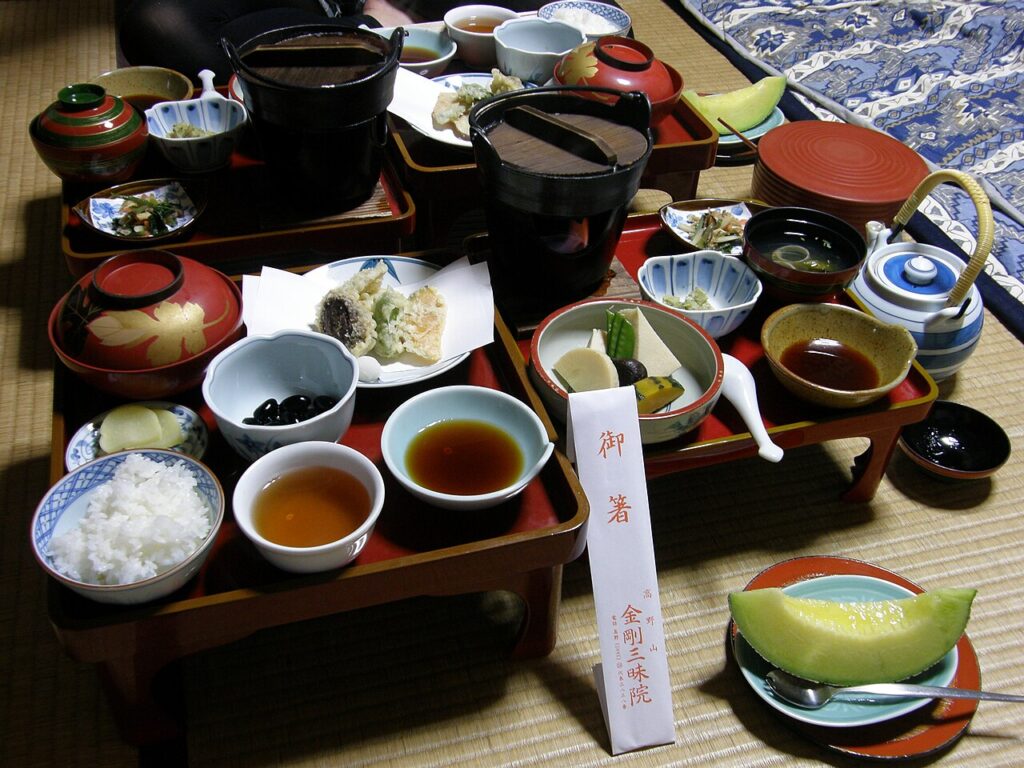
Shojin ryori is Buddhist vegetarian cuisine made from vegetables, mountain plants and soy. Koyasan’s specialties are goma-dofu, a silky sesame “tofu” set with starch, and koya-dofu, freeze-dried tofu simmered in broth, which is sold as a souvenir.
- No meat or fish at any of the temples we checked.
- Onion and garlic are avoided at Ekoin, Rengejoin and Sekishoin.
- Vegan? Ekoin says its meals exclude meat, fish, eggs, dairy, onion and garlic and suit vegans. But not every kitchen is the same: Muryoko-in says nuts, soba and eggs are sometimes served. Ask about egg and dairy when you book.
- Soy and wheat are hard to avoid, because soy sauce and miso are in most dishes.
- Allergies are handled differently by each temple. Ekoin needs at least a week’s notice and can offer gluten-free meals; Rengejoin asks to be told by the day before and suggests room-only for gluten-free guests; Fukuchiin does not make individual allergy menus; Muryoko-in takes no special requests but lets you bring your own food.
- Alcohol: the Shukubo Association says sake and beer, called “hannyato”, are available; rules vary by temple.
For lunch, cafes and restaurants line the main street; the association’s shukubo lunch bookings were paused in October 2026.
Temple stays elsewhere in Japan
Koyasan is the best-known place for a temple stay, but not the only one. Several famous options were not taking individual guests in 2026, so check before you plan around them.
| Place | What to expect | Status and price (October 2026) |
|---|---|---|
| Zenkoji, Nagano | 39 shukubo, each a subtemple; staff take guests to the sunrise morning service (O-asaji) | From ¥13,200 per person with 2 meals on weekdays; 11 marked as accepting foreign guests |
| Chishakuin, Kyoto | Lodge inside a Shingon head temple; guests can join the early morning service | Open; book by phone or online |
| Chion-in Wajun Kaikan, Kyoto | Facing Chion-in’s main gate; morning service, sutra copying, shojin restaurant | Open; English site |
| Shunkoin, Kyoto | English-language Zen retreats | No individual stays; scheduled retreats only |
| Eiheiji, Fukui | Soto Zen head temple | English one-night stay suspended spring to fall 2026; the temple-gate hotel Hakujukan lets guests join the morning service if they ask by check-in |
| Mount Minobu, Yamanashi | 20 shukubo near Kuonji, whose 5:30 morning service anyone may attend | JNTO names Kakurinbo as an option for non-Japanese speakers |
| Haguro-san (Dewa Sanzan), Yamagata | 14 pilgrim lodgings in the Toge district, linked to the mountain’s Shugendo tradition | About ¥10,000 with 2 meals; book with each lodging |
| Mount Mitake, Tokyo | More than 20 lodgings run by shrine-priest families (Shinto, not temples) | Komadori Sanso from ¥14,000 with 2 meals; cable car ¥700 one way from October 2026 |
| Shikoku 88 pilgrimage | 17 of the 88 temples list a shukubo, including Nos. 40, 44 and 58 in Ehime | Book each temple directly; e.g. Zentsuji (Kagawa) ¥10,000 with 2 meals |
Zenkoji in Nagano
Zenkoji is the easiest temple stay to reach from Tokyo: about 1 hour 30 minutes by Hokuriku Shinkansen to Nagano, then about 15 minutes by bus to the Zenkoji Daimon stop (¥190). Its 39 shukubo are each a subtemple with its own hall and priest. You can book through the Zenkoji Shukubo Association (026-237-7676, daily 9:00–16:30) or with each shukubo directly; weekday rates start at ¥13,200 per person with two meals for two or more adults, plus accommodation tax, with weekends and peak days costing more. The draw is the O-asaji, a morning service held at sunrise every day of the year, after which the chief priests touch the heads of kneeling worshippers with their rosaries (the Ojuzu Chodai). Shukubo staff take guests there.
On the Shikoku pilgrimage
Temple lodgings on the Shikoku 88 route range from simple to large. No. 6 Anrakuji in Tokushima has 57 rooms and a hot-spring bath, check-in from 14:00 to 20:00, a 21:00 curfew, and two meals from about ¥9,500–¥11,000, with an English page. No. 75 Zentsuji in Kagawa, traditionally regarded as the birthplace of Kobo Daishi, charges ¥10,000 with two meals including tax, holds its morning service at 6:00, welcomes non-pilgrims, and closes from December 27 to January 5. In Ehime, No. 58 Senyuji charges ¥8,000 with meals (served as bento), takes phone bookings only and asks guests to join its 6:00 service.
Eiheiji and Mount Mitake
When Eiheiji’s English one-night Sanzen stay runs, it is a genuine taste of Zen training: a ¥15,000 donation paid on arrival, applications at least a month ahead, check-in at 14:00–15:00, shared rooms separated by sex, three or four periods of zazen, the morning service and two temple meals, with silence, no going out and no outside food. It was suspended from spring to fall 2026, so check the temple’s English page. Day visitors can still join zazen at 10:00, 13:30 or 15:30 without booking (temple admission ¥700). Hakujukan, the hotel at the temple gate, has 18 rooms and shojin meals, and lets guests join the morning service except during the Rohatsu retreat (December 1–8, 2026) and the Hoon retreat (February 1–8, 2027).
Mount Mitake, about three hours from central Tokyo by JR train, bus, cable car and a 15-minute walk, has lodgings run by the families of shrine priests serving Musashi Mitake Shrine. Komadori Sanso, dating from 1776, takes solo guests and serves meals that are not strictly vegetarian. Another lodging, Seizanso, which offers waterfall-training stays, closes for renovation from December 1, 2026 to April 30, 2027.
A few details are worth knowing. At Zenkoji, some foreign-friendly shukubo still ask for one Japanese speaker in the group. The Shikoku pilgrimage association reminds visitors that its temple lodgings “are not hotels or ryokan”: book ahead and expect simple facilities. Ehime’s No. 58 Senyuji takes phone bookings only and asks guests to join its 6:00 service. There is no temple lodging on the Kumano Kodo routes themselves; Kumano Travel’s temple-stay listings are all on Koyasan. JNTO’s “Temple stays” page lists temples that can be booked online, several of them in English.
If you are walking or driving the Shikoku pilgrimage, our Shikoku 88 pilgrimage guide covers the route.
Etiquette at temples and shukubo
- Be on time for check-in and dinner, and tell the temple your arrival time if you will be late.
- Keep quiet, especially in the evening; JNTO reminds guests that monks are in training. Walls are often paper.
- Yukata are nightwear. Change into ordinary clothes for the main hall and the morning service, and do not wear yukata at the Garan or Okunoin.
- Dress neatly at sacred sites. Since April 2026 Kongobuji asks visitors not to wear tank tops, camisoles, off-shoulder tops, mini skirts or shorts at Okunoin and other sacred sites; cover bare shoulders with a jacket.
- Photography: banned inside Kongobuji (except the Banryutei garden), inside the Garan halls, and everywhere at Okunoin beyond the Gobyobashi bridge. At other temples, ask before photographing altars or monks.
- Worship: take off your hat at the temple gate, rinse your hands and mouth at the water basin, put your palms together and bow once before the main hall.
- Shoes and socks: you will take your shoes off indoors, so wear socks; some temples ask for them in the halls.
- Outside food: some temples, including Fukuchiin, do not allow outside food or drink without permission.
- Smoking: only in designated areas; all Ekoin rooms are non-smoking.
- No tipping. Fees for rituals, such as ¥1,000 to dedicate a sutra, are set amounts.
What to bring: warm layers (Koyasan is below freezing in January and February), socks, some cash, and your own razor and comb, which not every temple provides. Most shukubo supply towels, a yukata and basic toiletries; check your temple’s page.
When to go
- Spring: cherry blossoms come later on the mountain than in Osaka. Nights are cold into April.
- Summer: cooler than the cities below and green; Okunoin is shaded by cedars. Shukubo halls are often not air-conditioned.
- Autumn: the most popular season, with maples around the temples. Kongobuji’s special Okuden viewing runs October 24 to November 10, 2026. The Kyoto direct bus stops after November 29.
- Winter: January and February are the coldest months, below freezing with occasional snow, and the first snow can come in mid-December. Snow makes Okunoin beautiful and quiet; dress warmly and check cable car notices.
Bears and trails: the Kurokawa-michi pilgrimage trail to Koyasan was closed after a bear attack on October 2, 2026. If you walk the Choishi-michi, the old stone-marker trail up from Kudoyama, carry a bear bell or spray and check local notices first.
A one-night plan
Day 1
- Take a morning limited express from Namba (about 1 hour 50 minutes to Koyasan Station with the cable car).
- Bus to the Daimon or the Garan, and visit the Konpon Daito, the Kondo and Kongobuji.
- Check in at your shukubo by mid-afternoon; join the temple’s ajikan meditation if it offers one.
- Dinner at 17:30–18:00.
- Okunoin night tour (check-in 18:30–19:00), if your temple’s curfew allows.
Day 2
- Morning service at 6:00 or 7:00, and a goma ritual if your temple holds one.
- Breakfast, then check out by 9:00–10:00.
- Walk Okunoin in daylight from the Ichi-no-hashi bridge to the Torodo.
- Visit the Reihokan, or join Kongobuji’s ajikan if it is a Friday to Sunday or a holiday.
- Afternoon train back to Osaka.
What it costs
| Item | Approximate cost per person |
|---|---|
| Koyasan World Heritage Ticket from Namba (paper, with Koya seat) | ¥5,200 |
| One night in a basic shukubo with 2 meals | from about ¥16,500–¥20,000 |
| Combined temple ticket | ¥2,500 |
| Reihokan (with World Heritage Ticket coupon) | ¥1,100 |
| Okunoin night tour (online) | from ¥6,000 |
| Lunch and snacks | variable |
That puts a one-night trip from Osaka at roughly ¥31,000–¥35,000 per person before lunch and souvenirs, or much more with a private-bath room. Guided tours from Osaka are also available on Klook if you prefer not to plan the logistics.
Combining Koyasan with the rest of Kansai
Most visitors add Koyasan as a one-night detour from Osaka; see our day trips from Osaka for the other options. Koyasan is also the northern end of the Kii Peninsula’s pilgrimage network: the Kohechi route links it with the Kumano Kodo, covered in our Kumano Kodo guide. Wakayama City and its castle are a short train ride away, in our Wakayama guide. Keep your data connection for maps and bus times; an Airalo eSIM installs before you fly.
Frequently asked questions
How much does a temple stay on Koyasan cost? From about ¥16,500–¥20,000 per person with dinner and breakfast in a basic shared room, based on temples’ own booking systems in October 2026. Rooms with a private bath cost ¥23,000 to ¥50,000 or more.
How do I book a shukubo on Koyasan right now? The Shukubo Association’s online booking has been paused since October 21, 2026, so book by phone with the association (+81-736-56-2616) or directly on a temple’s own website.
Do I have to join the morning service? At most temples it is optional, though it is the highlight for many guests. A few temples elsewhere, such as Senyuji in Shikoku, ask guests to attend.
Is shojin ryori vegan? Often, but not always. No meat or fish is served, and some temples, such as Ekoin, also exclude eggs and dairy. Others sometimes use eggs, so ask when you book.
Can I stay with tattoos? It depends on the temple. Fukuchiin, which has a hot-spring bath, refuses guests with tattoos; ask other temples directly.
Is one night enough? One night covers the essentials: dinner, the morning service and Okunoin. Two nights let you walk Okunoin twice and join Kongobuji’s ajikan.
Can I visit Koyasan as a day trip? Yes, at about 1 hour 50 minutes each way from Namba, but you miss the evening and morning, which are the best parts.
Does the JR Pass cover the trip to Koyasan? No. The Nankai line is a private railway; Nankai’s Koyasan World Heritage Ticket is the best-value option.
Where else can I do a temple stay in Japan? Zenkoji in Nagano, Chishakuin in Kyoto, Mount Minobu, and temples on the Shikoku pilgrimage all offer lodging. Eiheiji’s English stay was suspended for spring to fall 2026.
What should I wear on Koyasan? Neat, ordinary clothes. Since April 2026 Kongobuji asks visitors not to wear tank tops, camisoles, off-shoulder tops, mini skirts or shorts at Okunoin and other sacred sites, and the yukata provided by your temple is for indoors only. In winter, dress for temperatures below freezing.
Can I join a guided tour of Okunoin during the day? Yes. The Shukubo Association can arrange licensed precinct guides (up to two hours at Okunoin for ¥6,000 per guide), booked at least three days ahead.
Is it safe to walk at night with bears around? Stay on the main lit Okunoin path or join the official night tour, and follow local notices. Bears were reported in the town in October 2026.
Plan the rest of your trip
- Best day trips from Osaka
- Kumano Kodo pilgrimage guide
- Wakayama travel guide
- Where to stay in Osaka
- Japanese onsen etiquette
- Essential Japanese phrases
Sources: Koyasan Shukubo Association (temple count, booking notices of June and October 2026, fees, services); Kongobuji (experience programs, dress and photography guidance, Okunoin hours, autumn special viewing; archived official pages, 2026); Ekoin, Rengejoin, Fukuchiin, Sekishoin, Ichijo-in and Muryoko-in official sites and booking systems (October 2026); Kumano Travel; Koyasan Okunoin Night Tour (AWESOME TOURS); Reihokan; Nankai Electric Railway (fares, World Heritage Ticket; archived official pages, 2026); Wakayama Tourism Federation (Kyoto–Koyasan bus); Wakayama Prefecture (accommodation tax study, August 2026); Koya Town Tourism Association; Visit Wakayama; Zenkoji; Chishakuin; Chion-in Wajun Kaikan; Shunkoin; Eiheiji and Hakujukan; Minobusan Tourism Association and Kuonji; Haguro Tourism Association; Mitake Tozan Railway and Komadori Sanso; Shikoku 88 Reijokai and temple sites; JNTO (Koyasan and temple stays pages) (checked October 2026). Prices and programs change; please confirm with your temple and let us know if you spot something out of date.
Going to Japan? Speak Japanese with confidence.
Hirameki Japanese — camera translate for menus and signs, a two-way conversation mode, and furigana + romaji on every phrase. Free to download with kana charts, conversation mode and starter words; a one-time purchase unlocks everything.

Plan your Japan trip
Two things every first-timer should book
Some links are affiliate links. If you book through them we may earn a small commission at no extra cost to you.