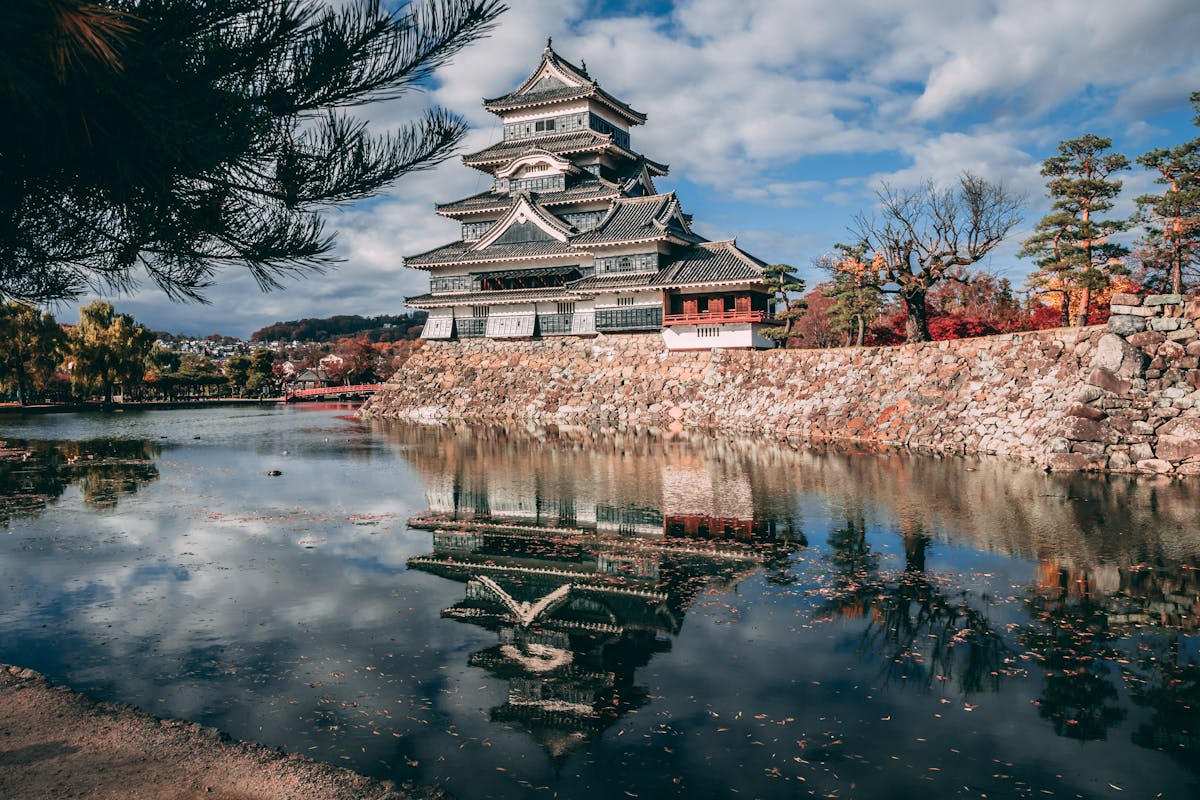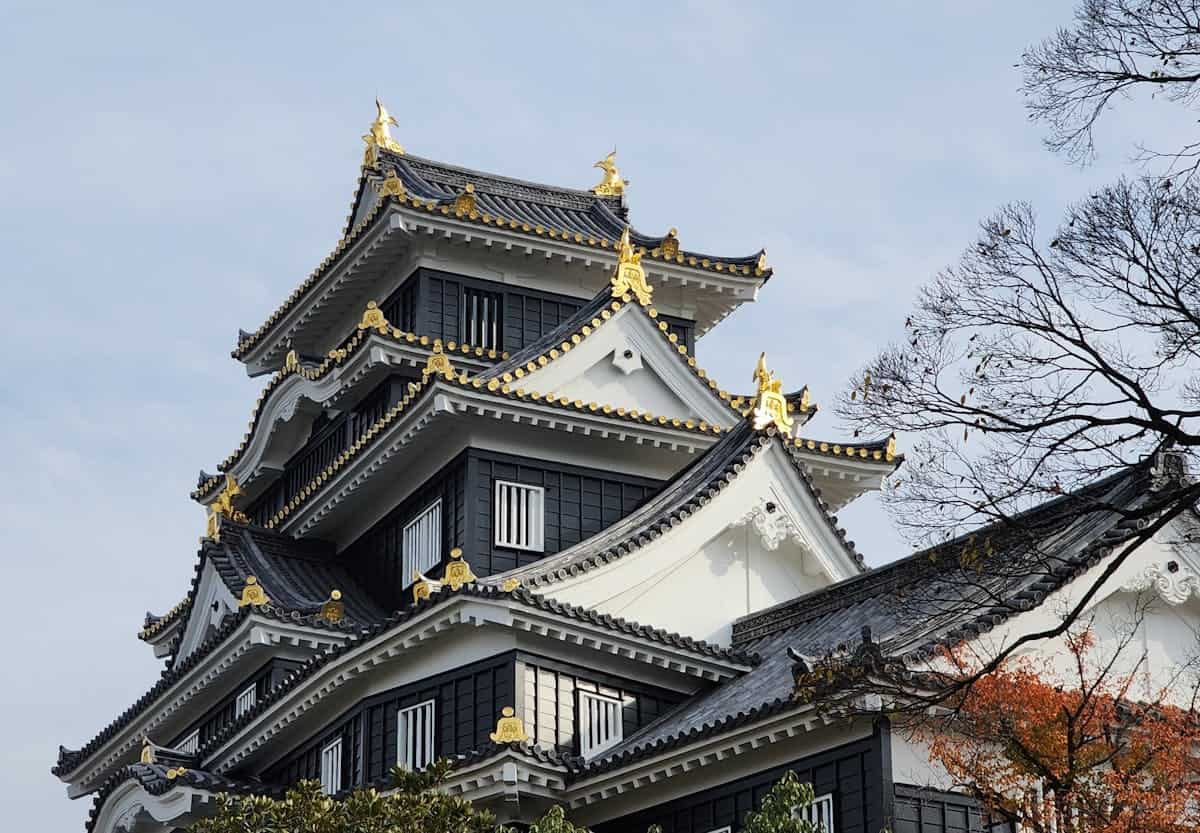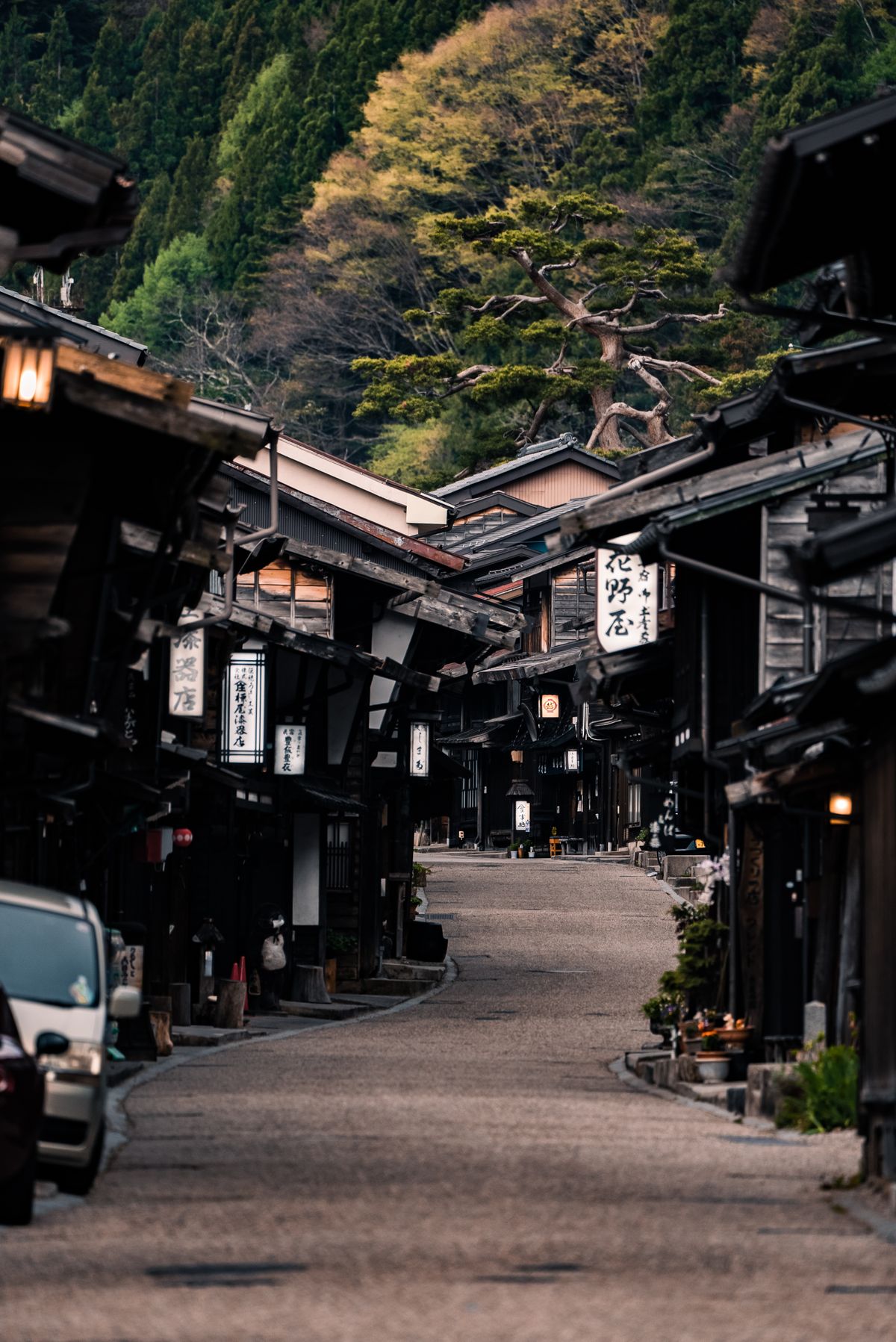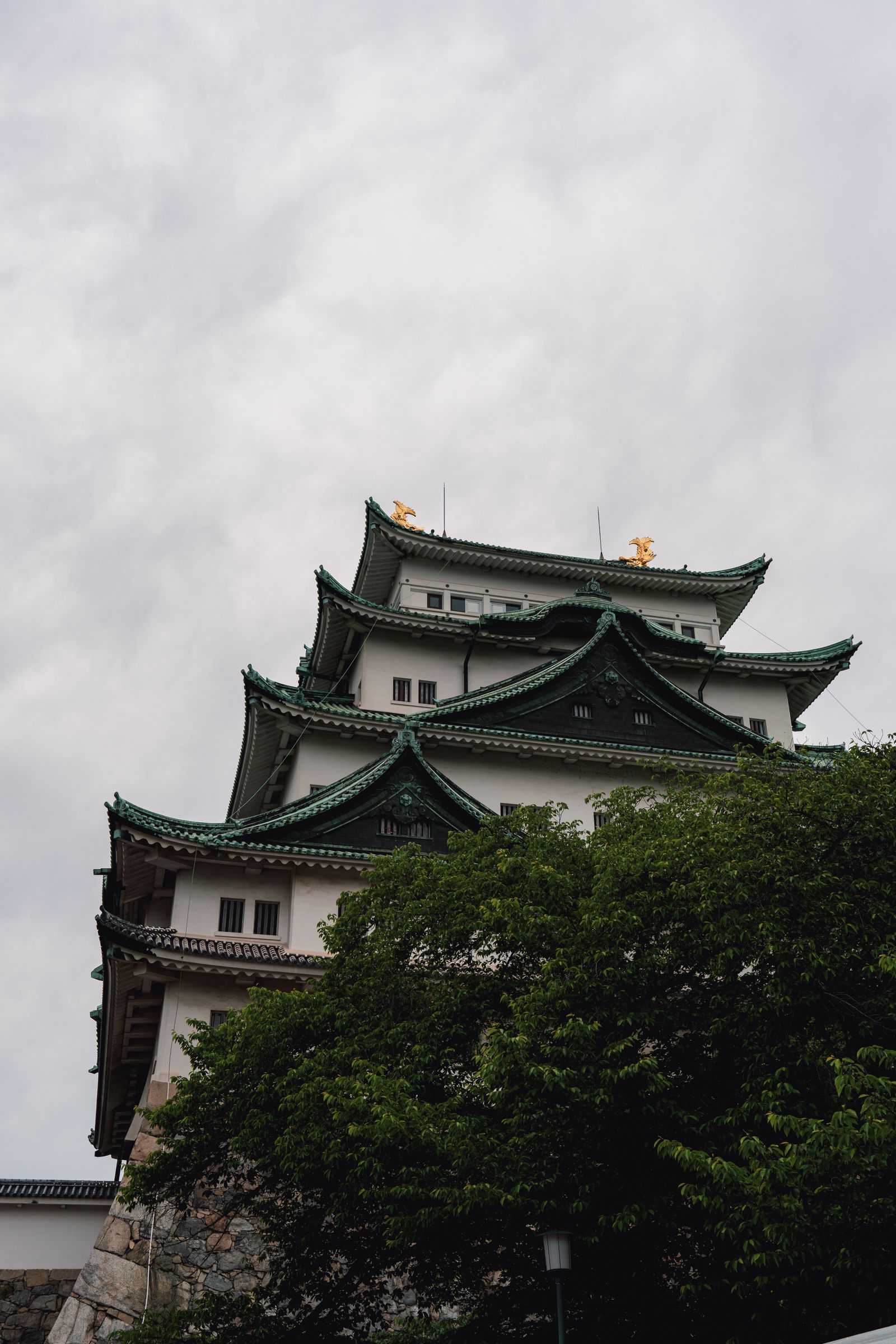
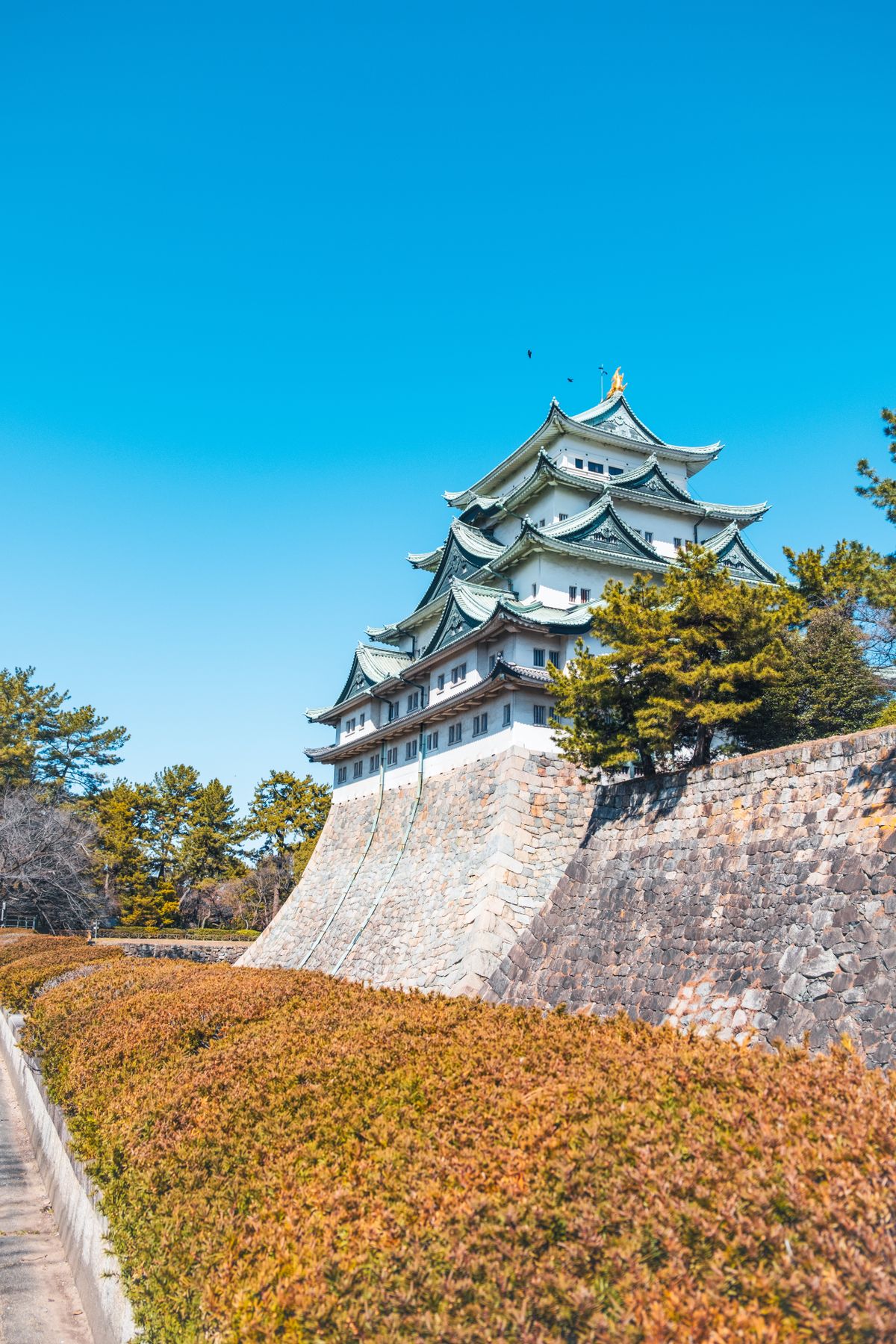
Rising above the heart of Japan’s fourth-largest city, Nagoya Castle (Nagoya-jo) is one of the country’s grandest and most historically significant fortresses — and one of its most underrated. Crowned by a pair of glittering golden dolphins that have become the very symbol of the city, the castle was built at the dawn of the Edo period by the most powerful man in Japan, and it sat at the center of three centuries of Tokugawa rule over the prosperous Owari domain. Today it offers first-time visitors a rare combination: a monumental castle complex, a breathtakingly reconstructed palace covered in gold-leaf paintings, sweeping gardens, and a front-row seat to the story of how Japan was unified.
Best of all, Nagoya sits squarely on the Tokaido Shinkansen line, almost exactly halfway between Tokyo and Kyoto, which makes the castle one of the easiest major historical sites in Japan to fit into a first-time itinerary — whether as a half-day stop between the two big cities or as the centerpiece of a longer stay in the Chubu region. This complete guide covers everything you need to know: the castle’s dramatic history, how to get there, ticket prices and opening hours, exactly what to see, the famous local food waiting just outside the gates, and answers to the questions first-timers ask most. For wider planning, pair it with our Japan destinations guide and our travel tips for first-time visitors.
Why Visit Nagoya Castle?
Many travelers speed straight through Nagoya on the bullet train, glancing at the city only as a name on the departure board between Tokyo and Kyoto. That is a mistake — and Nagoya Castle is the single best reason to break the journey. Here is what makes it worth your time:
- One of Japan’s “big three” castles. Alongside Himeji and Kumamoto, Nagoya Castle is traditionally ranked among the greatest fortresses in the land, both for its scale and its historical weight.
- The golden shachihoko. The two gleaming golden tiger-fish (kinshachi) perched on the roof of the main keep are among the most recognizable images in all of Japan and have symbolized Nagoya for four centuries.
- A flawlessly reconstructed palace. The Hommaru Palace, painstakingly rebuilt using traditional techniques and reopened in full in 2018, is a jaw-dropping showcase of gold-leaf screens, cypress wood and Kano-school painting — arguably the finest reconstructed palace interior in the country.
- Easy to reach and easy to enjoy. A short subway ride from Nagoya Station, with English signage, gentle paths and plenty of space, it is a relaxed, family-friendly half-day.
- A gateway to “Nagoya Meshi.” The castle pairs perfectly with the city’s famous and distinctive local cuisine, from grilled-eel hitsumabushi to miso-glazed pork cutlets.
A Brief History of Nagoya Castle
To understand Nagoya Castle is to understand a pivotal moment in Japanese history. After Tokugawa Ieyasu emerged victorious at the Battle of Sekigahara in 1600 and was named shogun, he set about securing his new regime. In 1610 he ordered the construction of a great castle at Nagoya, partly to guard the strategic Tokaido road against any remaining rivals in the west, and partly as a seat for his ninth son, Tokugawa Yoshinao, founder of the Owari branch — the most senior of the three Tokugawa cadet houses.
The work was a feat of organized power. Ieyasu compelled some twenty feudal lords from across western Japan to supply labor and materials, a deliberate strategy that drained the resources of potential opponents. The colossal stone walls were built by these daimyo teams, and to this day you can spot carved marks on individual stones identifying which lord’s crew placed them. The main keep was completed around 1612, and the lavish Hommaru Palace followed in 1615, serving first as the residence of the Owari lords and later as an official guest hall for shoguns traveling between Edo and Kyoto.
For more than 250 years the castle anchored the wealthy castle town of Nagoya through the peaceful Edo period. It survived the turbulence of the Meiji Restoration and was designated a national treasure. Then, in May 1945, in the final months of World War II, American firebombing destroyed the main keep, the Hommaru Palace and most of the original structures in a matter of hours — an irreplaceable loss.
The Nagoya of the postwar era rebuilt with determination. The main keep was reconstructed in ferro-concrete in 1959, restoring the skyline and the golden dolphins. Decades later, the city undertook an even more ambitious project: a complete, historically faithful reconstruction of the Hommaru Palace using traditional carpentry, hinoki cypress and reproductions of the original paintings, completed in stages and fully opened in 2018. The concrete keep, meanwhile, has since been closed as the city plans to rebuild it entirely in wood, recreating the 1612 design — a monumental undertaking expected to continue into the early 2030s.
How to Get to Nagoya Castle
Nagoya is one of Japan’s great transport hubs, so reaching the castle is straightforward from almost anywhere on the main island.
From Tokyo
The fastest way is the Tokaido Shinkansen. A Nozomi service from Tokyo Station reaches Nagoya in about 100 minutes, with Hikari trains (covered by the Japan Rail Pass) taking around 120 minutes. A one-way reserved seat costs roughly ¥11,300 (about US$76). If you are deciding how to handle bullet-train costs across a longer trip, see our Japan Shinkansen guide.
From Kyoto and Osaka
Nagoya is even closer to the Kansai cities: about 35 minutes from Kyoto and 50 minutes from Shin-Osaka by Shinkansen. This makes the castle a very natural half-day stop when traveling between Tokyo and Kyoto — you can store your luggage in a coin locker at Nagoya Station, visit the castle, eat lunch, and continue on the same day.
From Chubu Centrair International Airport
If you fly into Nagoya’s airport, the Meitetsu express train connects Centrair to Nagoya Station in about 30 minutes. For groups or travelers with luggage who prefer door-to-door convenience, a shared airport transfer is a stress-free option: Book an airport transfer with NearMe →
From Nagoya Station to the castle
The castle is not within walking distance of the main station, but the subway makes it easy. Take the Higashiyama Line one stop to Sakae, transfer to the Meijo Line, and ride to Shiyakusho Station (City Hall); Exit 7 brings you out a three-minute walk from the castle’s East Gate. The total trip takes about 15 minutes and costs around ¥240. Alternatively, the Me-guru sightseeing loop bus from Nagoya Station stops directly at the castle and is handy if you plan to visit several city attractions in a day.
Tickets, Hours and Practical Information
Nagoya Castle is refreshingly affordable and well organized for international visitors. Here are the essentials:
- Admission: ¥500 (about US$3.30) for adults; free for junior-high-school students and younger. This single ticket includes entry to the castle grounds and the Hommaru Palace — there is no separate palace fee.
- Opening hours: the grounds are generally open 9:00 a.m. to 4:30 p.m. The Hommaru Palace admits its last visitors at 4:00 p.m., so arrive with time to spare.
- Closed: December 29 to January 1.
- Main keep: note that the main keep tower itself is currently closed to interior visitors pending its planned wooden reconstruction. You can still admire and photograph it from the grounds, and the Hommaru Palace, gardens, walls and turrets remain fully open.
- Accessibility: the grounds are largely flat with paved paths, and the palace has step-free access in most areas.
- Time needed: allow about two to three hours to enjoy the palace, gardens and grounds at a relaxed pace.
Because details can shift with the seasons and the ongoing reconstruction, it is wise to keep a live connection so you can check the latest hours and any event closures. The easiest fix is an eSIM activated before you arrive: Get your Japan eSIM (Stay connected from day 1) →
What to See at Nagoya Castle
The castle complex is large and rewards an unhurried visit. Here are the highlights, roughly in the order you encounter them.
The main keep and the golden shachihoko
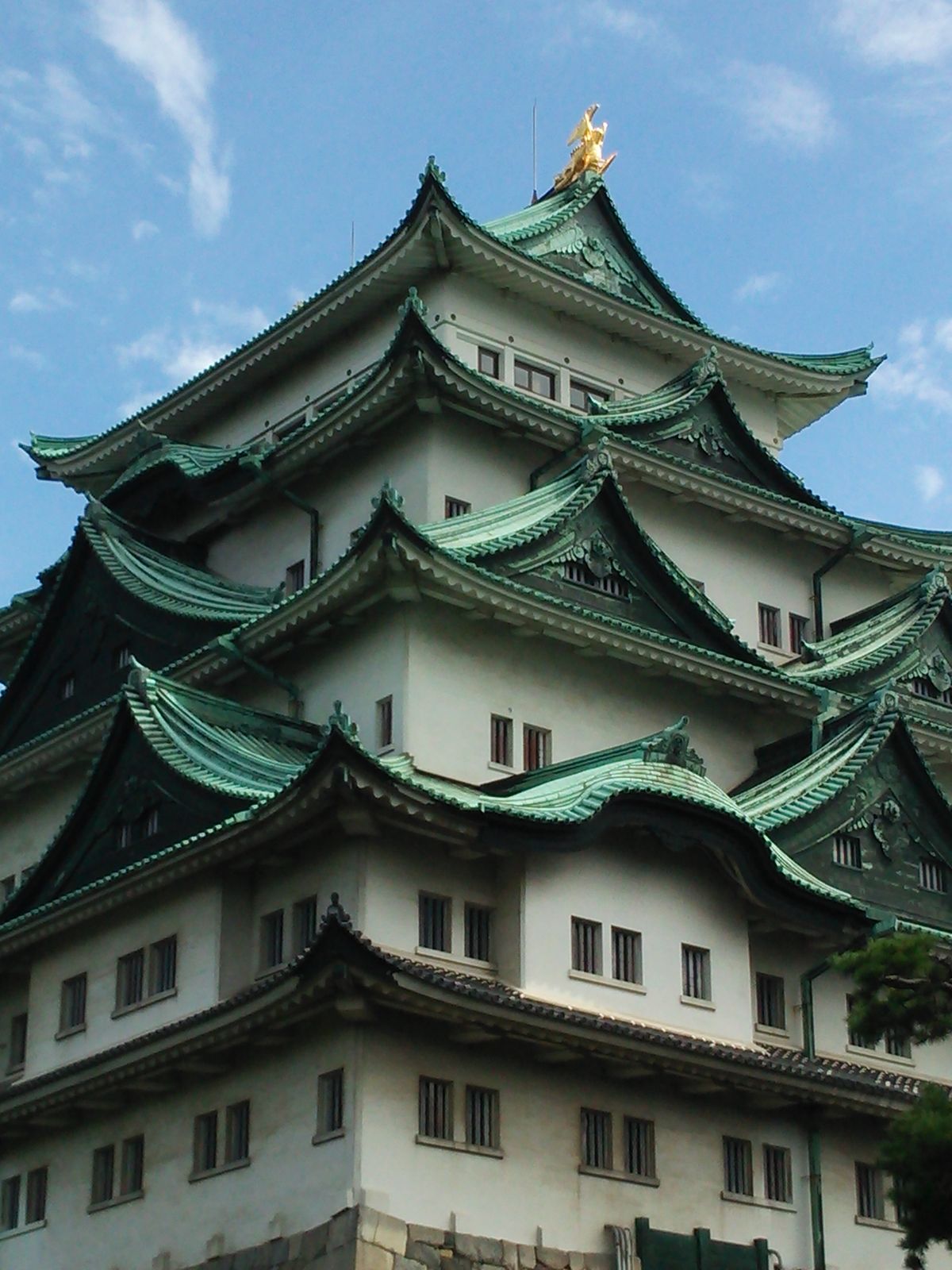
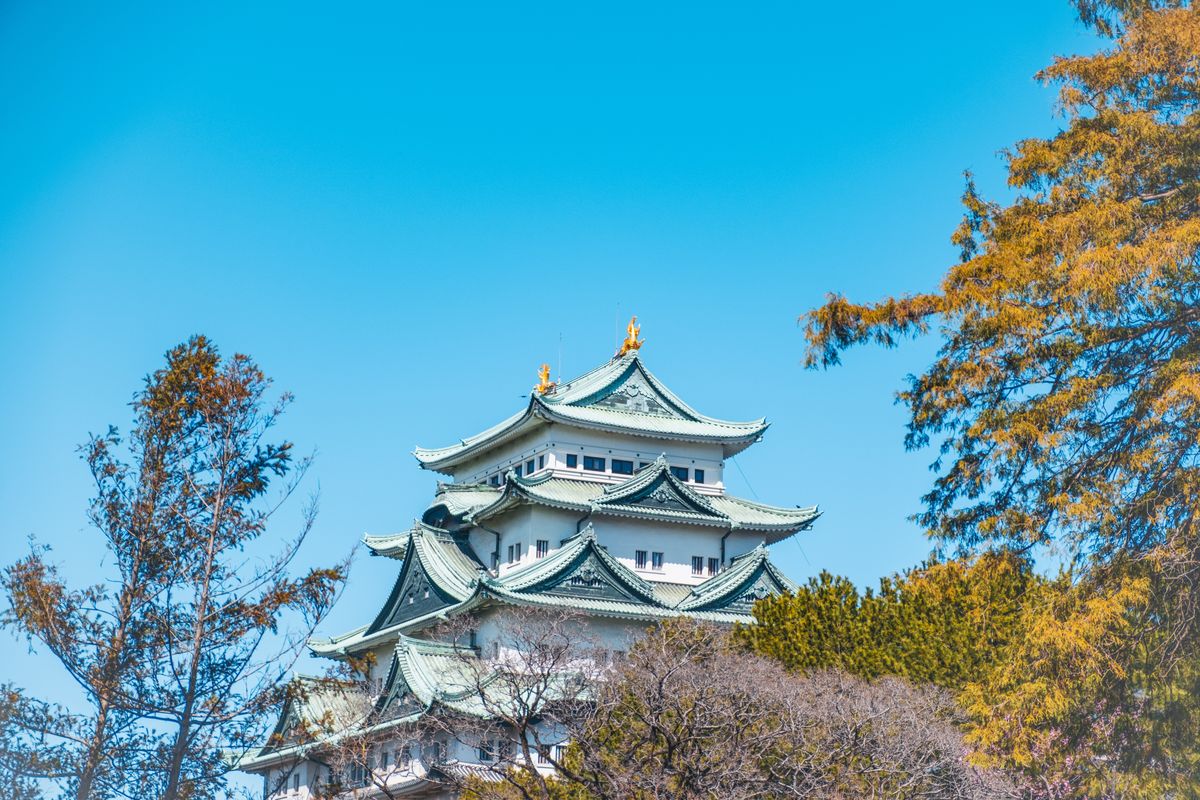
The five-story main keep (tenshu) dominates the skyline, its dark walls, green-tiled roofs and white gables instantly recognizable. Perched at the very top are the castle’s celebrated treasures: a pair of golden shachihoko, mythical creatures with the head of a tiger and the body of a carp, believed to protect the castle from fire. The originals were sheathed in an astonishing amount of gold, and even today’s reconstructions gleam brilliantly in the sun. While you cannot currently enter the keep, walking its perimeter — across the inner moat bridge and around the great stone base — lets you appreciate its sheer scale and snap the classic postcard view.
Hommaru Palace: the star attraction
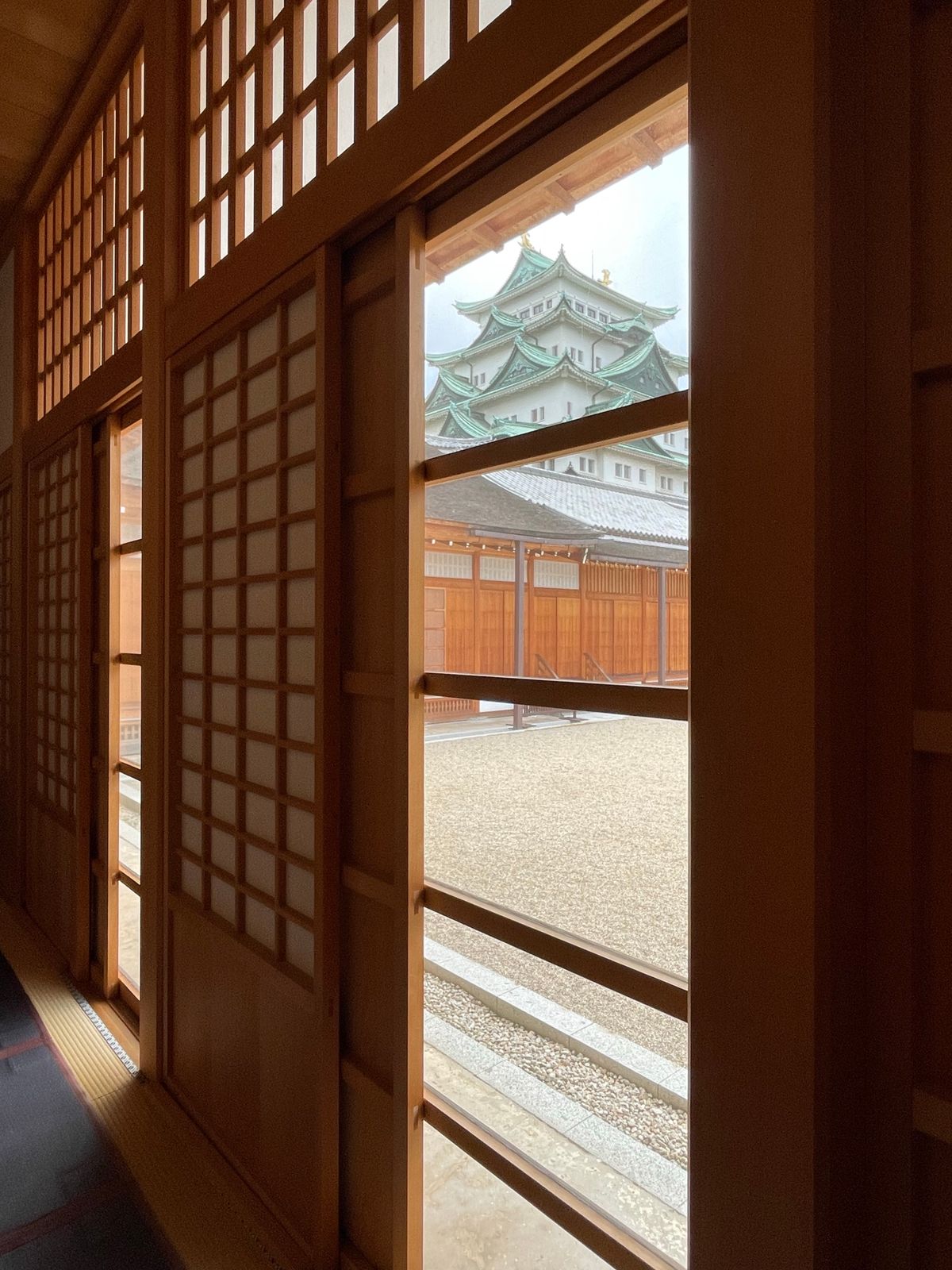
For many visitors, the reconstructed Hommaru Palace steals the show. Reopened in full in 2018 after a decade-long project, it recreates the original 1615 palace using traditional joinery, fragrant hinoki cypress and meticulous reproductions of the famous Kano-school paintings that once adorned its sliding doors and walls. Room after room unfolds in shimmering gold leaf, depicting tigers, leopards, pine trees, cherry blossoms and birds, with the grandest chambers reserved for receiving the shogun. The craftsmanship — much of it executed by living masters using period methods — is extraordinary, and the palace ranks among the most beautiful interiors you can visit anywhere in Japan. Photography is allowed in most areas (without flash or tripods). You will be asked to remove your shoes, so wear socks you do not mind walking in.
Ninomaru Garden
To the east of the keep lies the Ninomaru Garden, a spacious Edo-period strolling garden that was once part of the secondary palace. Restored over many years, it features ornamental ponds, teahouses, carefully placed stones and seasonal plantings, and offers some of the best framed views of the main keep. It is a peaceful counterpoint to the grandeur of the palace and a lovely place to slow down.
Stone walls, turrets and gates
Some of the castle’s most impressive original features are the ones that survived the war. Three corner turrets (sumi-yagura) and two gates date back to the Edo period and are designated Important Cultural Properties. The cyclopean stone walls, with their gently curving “fan-slope” profile, are a masterclass in feudal engineering; look for the lord’s marks carved into individual stones, and seek out the famous Kiyomasa-ishi, an enormous stone said to have been hauled into place by the legendary general Kato Kiyomasa.
Kinshachi Yokocho food street
Just outside the gates, the Kinshachi Yokocho dining street serves up Nagoya’s signature dishes in an atmospheric setting themed around the golden dolphins. It is the most convenient place to sample local specialties before or after your visit, with the Yoshinaomon zone near the East Gate leaning traditional and the Muneharumon zone near the Seventh Gate offering more modern takes.
Nagoya Castle Through the Seasons
The castle is beautiful year-round, but each season brings its own character.
Spring (late March–early April)
Spring is the most popular time to visit. Around 1,000 cherry trees bloom across the grounds, framing the keep and the moats in clouds of pink. The castle holds a spring festival with evening illuminations during peak bloom, when the floodlit keep above the blossoms is unforgettable. Expect crowds on sunny weekends.
Summer (June–August)
Summer brings lush greenery to the gardens, though Nagoya is famously hot and humid, so visit early in the day and carry water. Evening summer events and beer gardens sometimes enliven the grounds.
Autumn (November)
The Ninomaru Garden and the trees along the moats turn gold and crimson in November, with another round of seasonal illuminations. Cooler temperatures make it one of the most comfortable times to explore.
Winter (December–February)
Winter is quiet and crisp, with the bare-branched gardens and occasional dustings of snow lending the keep a stark, dramatic beauty. Crowds are thin, making it a good choice if you prefer a peaceful visit.
Nagoya Meshi: What to Eat Near the Castle
Nagoya has one of Japan’s most distinctive regional food cultures, collectively known as Nagoya Meshi. A castle visit is the perfect excuse to dig in, whether at Kinshachi Yokocho by the gates or back in the city center. The essentials:
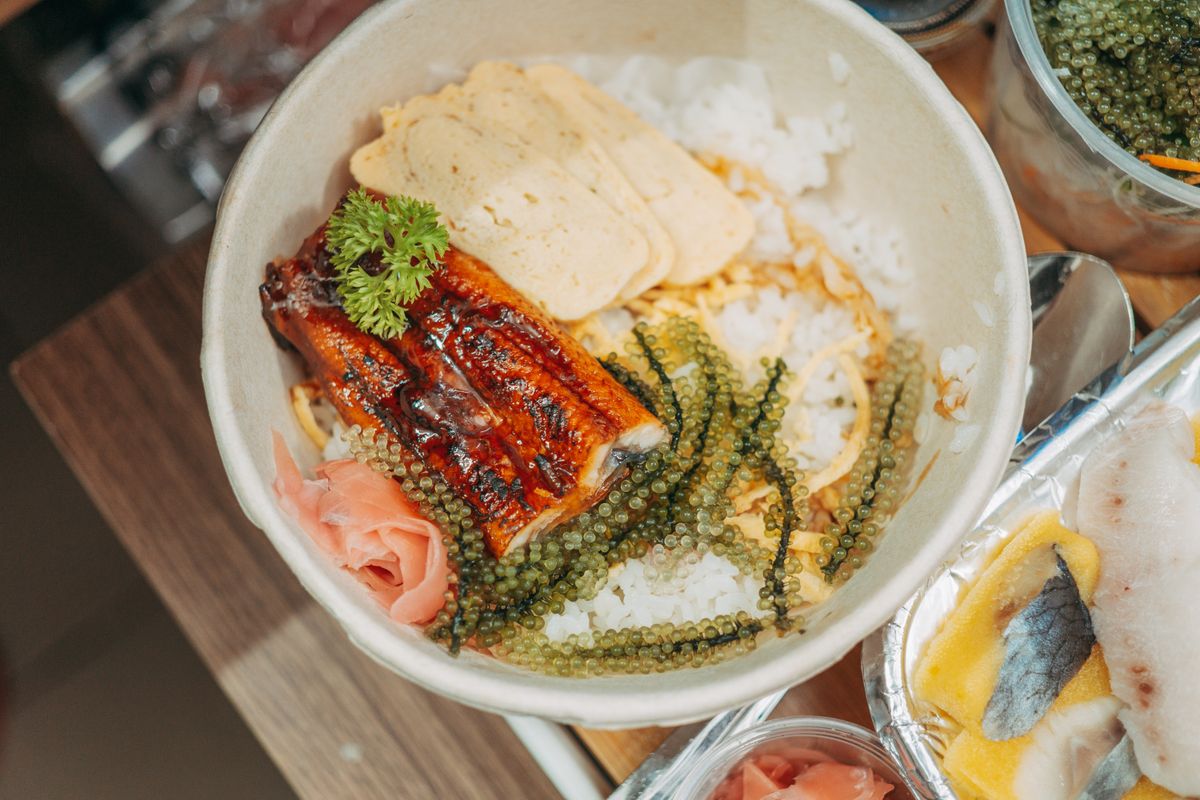
- Hitsumabushi — the city’s signature dish: grilled freshwater eel (unagi) lacquered in sweet soy and served sliced over rice. Tradition says to eat it in three ways — plain, with condiments, and finally with dashi broth poured over as a tea-rice (ochazuke).
- Miso katsu — a deep-fried pork cutlet smothered in rich, dark Hatcho miso sauce, the kind of hearty comfort food Nagoya does best.
- Tebasaki — crispy, peppery glazed chicken wings, a beloved izakaya snack.
- Kishimen — flat, wide udon-style noodles in a light dashi broth.
- Miso nikomi udon — chewy noodles simmered in a thick, savory red-miso broth, often in an earthenware pot.
- Ogura toast — thick buttered toast topped with sweet red-bean paste, a quirky local breakfast or cafe treat.
What Else to See in Nagoya
If the castle leaves you wanting more, Nagoya rewards a longer stay with an unusually varied set of attractions:
- Atsuta Shrine — one of the most sacred Shinto shrines in Japan, said to enshrine the legendary Kusanagi sword, set in a tranquil ancient forest.
- Toyota Commemorative Museum of Industry and Technology — a brilliant, hands-on museum tracing the city’s textile-and-automobile story; a hit with families and engineering fans.
- SCMAGLEV and Railway Park — a superb train museum near the port displaying everything from steam locomotives to record-breaking maglev trains.
- Osu Shopping District — a lively, eclectic warren of arcades blending an old temple, vintage shops, street food and subculture stores.
- Sakae and Oasis 21 — the downtown entertainment district, with the futuristic glass “Spaceship-Aqua” landmark and the Nagoya TV Tower.
- Nagoya Port and Aquarium — a large, family-friendly aquarium famous for its orcas and dolphins.
Nagoya also makes an excellent base for day trips into the wider Chubu region, from the original castle keep at nearby Inuyama to the sacred Ise Jingu shrine and the mountain valleys beyond.
Where to Stay in Nagoya
Nagoya is a major business and convention city, which means a deep supply of hotels at every price point — and, because it sees fewer overnight leisure tourists than Tokyo or Kyoto, often better value. The two most convenient areas to base yourself are:
- Around Nagoya Station (Meieki) — ideal for rail travelers, with luxury towers, business hotels and easy onward connections. Perfect if Nagoya is a one-night stop between cities.
- Sakae — the downtown entertainment and shopping district, close to dining and nightlife and a short subway ride from the castle.
Budget travelers will find clean, reliable business hotels from around ¥7,000–10,000 (US$47–67) a night, while four-star comfort often costs noticeably less than the equivalent in the bigger tourist cities. Booking ahead is wise during major conventions and the spring and autumn travel peaks. Compare options here:
Book your Nagoya hotel on Agoda (Best prices guaranteed) →
A Suggested Half-Day to Full-Day Itinerary
Nagoya Castle slots neatly into trips of any length. Here is how to make the most of it.
The half-day castle stop (between Tokyo and Kyoto)
Store luggage in a coin locker at Nagoya Station, ride the subway to Shiyakusho, and spend two to three hours touring the Hommaru Palace, gardens and grounds. Have a hitsumabushi lunch at Kinshachi Yokocho, then return to the station and continue your journey — all comfortably within a four- to five-hour window.
The full Nagoya day
Start at the castle in the morning when it is coolest and least crowded, lunch on Nagoya Meshi, then spend the afternoon at Atsuta Shrine or one of the city’s outstanding museums, finishing with dinner and the city lights in Sakae. Add a second day for a Chubu day trip to Inuyama Castle or Ise.
Practical Tips for Visiting Nagoya Castle
- Arrive early — mornings are cooler and quieter, and the light is excellent for photographing the keep.
- Enter the Hommaru Palace before 4:00 p.m., as it stops admitting visitors well before the grounds close.
- Wear easy-off shoes and clean socks for the palace, where you must remove footwear.
- Use a coin locker at Nagoya Station if you are visiting between trains; you do not want to tour the grounds with heavy luggage.
- Buy the Me-guru loop-bus or subway day pass if you plan to combine the castle with other city sights.
- Bring water in summer — Nagoya’s heat and humidity are no joke.
- Carry some cash for small food stalls and the admission gate, even though cards are widely accepted in the city.
- Check for seasonal illuminations in cherry-blossom and autumn-foliage seasons, when evening hours and special lighting transform the grounds.
- Be respectful inside the palace — keep voices low, no flash photography, and do not touch the painted surfaces.
- Stay connected to check live hours and event closures around the ongoing reconstruction: Get your Japan eSIM here →
Frequently Asked Questions
How much does it cost to enter Nagoya Castle?
Admission is ¥500 (about US$3.30) for adults, and free for junior-high students and younger. Crucially, this single ticket includes both the castle grounds and the magnificent Hommaru Palace — there is no separate fee for the palace.
Can you go inside the main keep of Nagoya Castle?
Not at present. The concrete main keep has been closed to visitors as the city prepares to reconstruct it entirely in wood, a project expected to take until the early 2030s. You can still photograph the keep from the grounds, and the Hommaru Palace, gardens, turrets and walls all remain open and are well worth the visit.
How long should I spend at Nagoya Castle?
Allow about two to three hours to enjoy the Hommaru Palace, the Ninomaru Garden and the grounds at a relaxed pace. If you add a meal at Kinshachi Yokocho, budget around half a day in total.
Is Nagoya Castle worth visiting as a stop between Tokyo and Kyoto?
Absolutely. Nagoya sits on the Tokaido Shinkansen roughly halfway between the two cities, with luggage lockers at the station and a 15-minute subway ride to the castle. The reconstructed palace alone justifies breaking the journey, and you can be back on a bullet train the same afternoon.
What is the best time of year to visit Nagoya Castle?
Spring, for the cherry blossoms and evening illuminations, is the most spectacular, followed by the November autumn colors. Both are busy but beautiful. Winter is quiet and atmospheric, while summer is lush but hot and humid — visit early in the day if you come then.
How do I get from Nagoya Station to the castle?
Take the Higashiyama subway line to Sakae, change to the Meijo line, and ride to Shiyakusho Station; Exit 7 is a three-minute walk from the East Gate. The trip takes about 15 minutes. The Me-guru sightseeing loop bus from Nagoya Station also stops right at the castle.
Is Nagoya Castle good for children?
Yes. The spacious grounds, the golden dolphins, the dramatic stone walls and the colorful palace paintings appeal to kids, and entry is free for younger children. Nearby museums like the SCMAGLEV and Railway Park and the Toyota museum make excellent family add-ons.
A Suggested Walking Route Through the Grounds
The castle complex can feel sprawling on a first visit, so a simple route helps you see the best of it without backtracking. Enter through the East Gate near Shiyakusho Station, where you buy your ticket. Bear right into the Ninomaru Garden first, while your energy is fresh, strolling its ponds and teahouse views and catching your first framed glimpse of the keep across the trees. From there, cross toward the inner moat and the Hommaru (main citadel), pausing on the bridge to take in the towering stone base of the keep.
Tour the Hommaru Palace next — it is the centerpiece, and seeing it before the midday crowds arrive is a real advantage. Allow at least 45 minutes to move slowly through its golden chambers. Afterward, walk the perimeter of the main keep for photographs, then trace the line of the great walls toward the surviving corner turrets, keeping an eye out for the lords’ marks and the giant Kiyomasa stone. Finish by exiting toward Kinshachi Yokocho for a well-earned meal. This loop takes most visitors two and a half to three hours and covers every major highlight in a logical, mostly flat circuit.
The Story of the Golden Shachihoko
No symbol is more closely tied to Nagoya than the kinshachi, the golden shachihoko that crown the castle keep. A shachihoko is an imaginary sea creature with the head of a tiger or dragon and the scaled body of a carp, its tail curling dramatically toward the sky. In Japanese architecture such figures were placed on rooftops as talismans against fire — a constant danger for timber buildings — in the hope that the water-dwelling beasts would summon rain to protect the structure.
Nagoya’s pair were extraordinary even by castle standards. The originals commissioned for the 1612 keep were clad in a fortune of gold, a deliberate display of Tokugawa wealth and authority, and over the centuries they became legendary. Stories tell of thieves who tried, and failed, to scale the keep and pry loose their golden scales. A male and a female dolphin face each other atop the roof, and the city has embraced them as its emblem: you will see kinshachi motifs on manhole covers, souvenirs, sweets and signs throughout Nagoya. When the wartime fires destroyed the keep, the loss of the originals was mourned deeply; the gleaming reconstructions that replaced them in 1959 helped restore not just the skyline but the city’s spirit.
Architecture and Engineering: A Closer Look
Nagoya Castle is a textbook of early-Edo fortress design, and noticing its details deepens the visit. The keep is a borogata tower built atop a massive stone podium, with multiple roofs, white plaster gables and ornamental flourishes that signal status as much as defense. The stone walls reward close attention: their elegant concave “fan slope” (ogi-no-kobai) both resists earthquakes and makes the walls harder to scale. Because some twenty daimyo houses were each assigned sections, you can still find masons’ marks and family crests carved into the stones — a literal record of the political muscle behind the project.
The defensive logic is visible throughout: angled approaches that expose attackers, gates set into tight enclosures (masugata) designed to trap intruders, and moats that ring the citadel. Yet for all its martial design, the castle was built in an era of peace, and so it doubled as a stage for displaying culture and refinement — nowhere more so than in the painted halls of the Hommaru Palace, where art, not warfare, was the true statement of power.
Festivals and Events at Nagoya Castle
The castle is a living civic space that hosts events throughout the year. The spring festival coincides with the cherry blossoms, bringing food stalls, performances and nighttime illuminations of the floodlit keep above the pink blooms. Autumn brings a foliage festival with similar evening lighting in the Ninomaru Garden. Around Golden Week in early May and on major holidays, costumed performers and historical reenactments — including the popular “samurai and ninja” troupes that roam the grounds — add color and are a hit with children. Seasonal markets, tea ceremonies in the garden teahouses and special exhibitions round out the calendar. Checking the official schedule before you go can help you catch a festival, or avoid the very busiest days if you prefer a quieter visit.
Combining Nagoya Castle with the Rest of Chubu
One of Nagoya’s great strengths is its position as the gateway to the Chubu region, the mountainous central heart of Honshu. With the castle as your anchor, a number of outstanding destinations lie within easy reach:
- Inuyama — home to one of Japan’s twelve surviving original castle keeps, a charming small town just 30 minutes north of Nagoya.
- Ise Jingu — Japan’s most sacred Shinto shrine, set in ancient forest, reachable in around 80 minutes by limited express.
- Takayama and Shirakawa-go — the atmospheric old town of Takayama and the UNESCO-listed thatched-roof farmhouses of Shirakawa-go make a superb overnight loop into the Japan Alps.
- Gujo Hachiman and the Gifu countryside — castle towns, clear rivers and traditional crafts await north of the city.
Building a two- or three-day Chubu itinerary around Nagoya lets you balance urban history with mountain scenery and tradition — a side of Japan that many first-timers miss entirely, and one that rewards the detour handsomely.
Best Photo Spots at Nagoya Castle
The castle is wonderfully photogenic, and a few vantage points stand out for first-time visitors hoping to capture it well:
- The inner moat bridge — the classic head-on view of the keep rising above its stone base, especially striking in the clear light of morning.
- From within the Ninomaru Garden — the keep framed by pine branches, ponds and seasonal color makes for a more artful composition.
- Along the southern outer moat in spring — rows of cherry trees mirrored in the water with the keep beyond create the quintessential Nagoya postcard.
- Looking up at a corner turret — the surviving Edo-period turrets show off the dark timber, white plaster and curving roofs at close range.
- Detail shots of the golden shachihoko — a zoom lens lets you isolate the gleaming dolphins against the sky.
For evening photography, the spring and autumn illumination events are the highlight of the year, with the floodlit keep reflected in the moats. Tripods are restricted inside the Hommaru Palace, so plan handheld shots there and save the long exposures for the grounds.
Money-Saving Tips and Sightseeing Passes
Nagoya is already an affordable city, but a little planning stretches your budget further. The Me-guru Sightseeing Route Bus offers a one-day pass that loops between the castle, the Toyota museum, Nagoya TV Tower and other landmarks, and pass-holders receive small discounts at participating attractions. The city’s subway-and-bus one-day “Donichi Eco” pass, valid on weekends and holidays, is excellent value if you are hopping between sights. Combining either with the ¥500 castle admission makes for a remarkably cheap day of high-quality sightseeing.
If you are visiting Nagoya as part of a wider rail journey, check whether a regional pass such as those covering central Japan suits your route — the same logic that applies to the famous national rail pass applies here, and our Shinkansen guide can help you weigh the options. And because Nagoya hotels are often cheaper than those in Tokyo and Kyoto for comparable quality, an overnight here can actually lower the average cost of your trip while giving you more time to enjoy the castle and the city’s underrated food scene.
Is Nagoya Castle Worth It?
For first-time visitors weighing how to spend limited time in Japan, Nagoya Castle earns its place. It delivers genuine historical depth, a reconstructed palace interior that rivals anything in the country for sheer beauty, easy access on the main bullet-train spine, a gentle price, and a built-in excuse to feast on one of Japan’s most characterful regional cuisines. The closure of the keep’s interior is a minor caveat against all of that — and a reason to come back once the wooden reconstruction is complete and the keep stands restored to its 1612 glory. Whether you stop for a half-day between Tokyo and Kyoto or settle in to explore Nagoya and the wider Chubu region, the castle of the golden dolphins will not disappoint.
Accessibility and Visiting with Limited Mobility
Nagoya Castle is one of the more accessible historical sites in Japan. The grounds are broad and largely flat, with paved or compacted paths connecting the main areas, and the distances, while substantial, involve few steep gradients. The reconstructed Hommaru Palace was designed with accessibility in mind and offers step-free routes through most of its rooms, along with wheelchair loans and accessible restrooms near the main facilities. Because visitors remove their shoes to enter the palace, staff are on hand to assist, and benches are placed throughout the grounds for resting.
Families with strollers will find the flat layout convenient, and the gentle pace suits older travelers and young children alike. If mobility is a concern, the subway’s Shiyakusho Station has elevators, and the Me-guru loop bus is accessible — making it possible to reach and enjoy the castle comfortably without a long walk from the station. As always, the ongoing reconstruction means some areas near the main keep may be fenced off, so allow a little flexibility in your route and check current notices at the ticket gate when you arrive.
Final Thoughts
Nagoya Castle is far more than a quick photo stop on the way between Japan’s headline cities. It is a window into the moment the Tokugawa shoguns secured their grip on the country, a showcase of traditional craftsmanship reborn in the dazzling Hommaru Palace, and the proud golden-crowned symbol of a city that is too often overlooked. Add in the easy access, the gentle admission price and the irresistible local food waiting just outside the gates, and you have one of the most rewarding half-days in central Japan.
Ready to plan your visit? Compare Nagoya hotel deals on Agoda, stay online with a Japan eSIM, and explore more of the country in our Japan destinations guide and first-timer travel tips.
Related Castle Town Guides
Explore more of Japan’s castles and castle towns with these related guides: Inuyama Castle, Japan’s oldest keep, Hikone Castle on Lake Biwa, Matsue, the city of water, Hagi’s samurai castle town, and Gujo Hachiman’s castle town.
Going to Japan? Talk to locals with confidence.
Hirameki Japanese — instant offline translation, camera translation, furigana + romaji, and 314 free flashcards. No login. Works without internet.

Plan your Japan trip
Two things every first-timer should book
Some links are affiliate links. If you book through them we may earn a small commission at no extra cost to you.