In this guide
- Drink machines: the fun ones
- Restaurant ticket machines (shokkenki)
- Station machines: mostly skippable
- FAQ
Drink machines: the fun ones
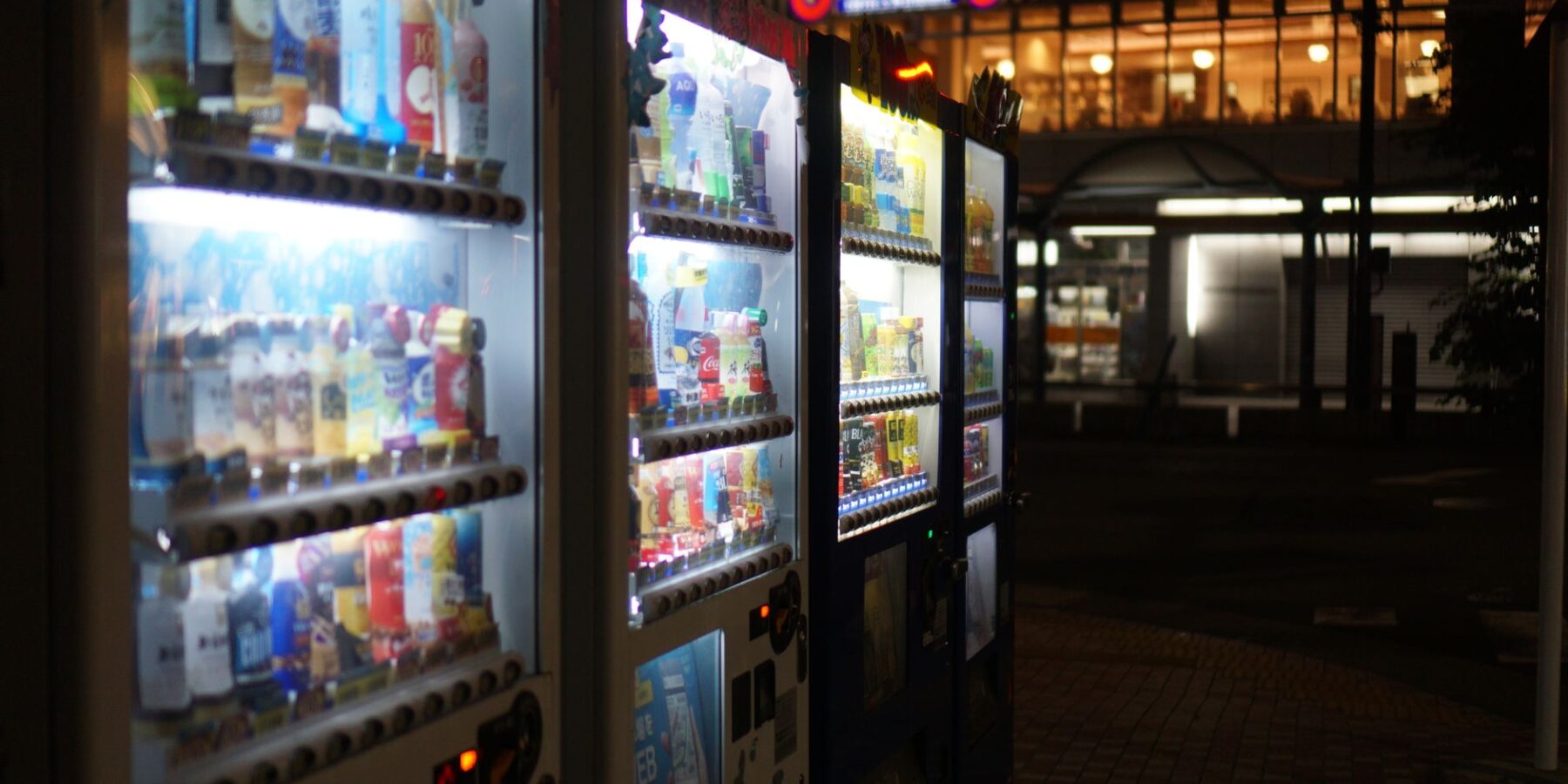
They’re everywhere — mountaintops, shrine paths, residential alleys — and they’re cheap (¥110–180). The one trick that matters: red price labels mean HOT, blue mean COLD, and in winter the same machine sells hot milk tea, corn soup and canned coffee alongside cold sodas. Tap your Suica/IC card instead of hunting for coins. Beyond drinks you’ll meet machines selling ice cream, hot snacks, batteries, even fresh eggs in the countryside — trying a weird one is a legitimate Japan activity. Labels all in kanji? Camera-translate and know your corn soup from your red bean soup before committing ¥130.
Restaurant ticket machines (shokkenki)
The system that intimidates first-timers most, and the one most worth learning — it’s how Japan’s best cheap food is ordered. At many ramen shops, gyudon chains and curry counters: ① pay the machine first (cash almost always works; newer ones take IC), ② press your dish — the top-left button is typically the house specialty, an insider default that rarely misses — ③ take the paper ticket to the counter and hand it over. No talking required; the staff cook, you eat. Buttons often show photos; when they’re text-only kanji, Hirameki’s camera translation reads the whole panel offline — the difference between guessing and choosing at a Tokyo ramen bar (our Tokyo ramen guide lists shops worth the queue). Extra toppings and size-ups are separate buttons; press them before the main dish prints.
Station machines: mostly skippable
Good news: the intimidating wall of train-ticket machines is mostly obsolete for travelers — your IC card taps through nearly everything, and every machine has an English button anyway. You’ll only need machines for shinkansen reserved seats (English menus, straightforward — walkthrough in our shinkansen guide) and IC top-ups (cash in, tap done). If a machine flashes something unexpected mid-transaction, the station staff button connects you to a human instantly — or see our guide to asking for help.
Frequently asked questions
How do restaurant ticket machines work? Pay first at the machine, press your dish, hand the paper ticket to the counter. Top-left button = house specialty.
Do vending machines take credit cards? Many newer ones take IC cards and contactless; older ones are coins and ¥1,000 notes. Keep an IC card charged and you’re covered.
What if the buttons are all in Japanese? Point Hirameki Japanese’s camera at the panel — it translates offline on the spot, photos or no photos.
Why does Japan have so many vending machines? Low vandalism, cheap electricity, dense foot traffic — and a national love of convenience. Enjoy it.
Going to Japan? Talk to locals with confidence.
Hirameki Japanese — instant offline translation, camera translation, furigana + romaji, and 314 free flashcards. No login. Works without internet.

Plan your Japan trip
Two things every first-timer should book
Some links are affiliate links. If you book through them we may earn a small commission at no extra cost to you.