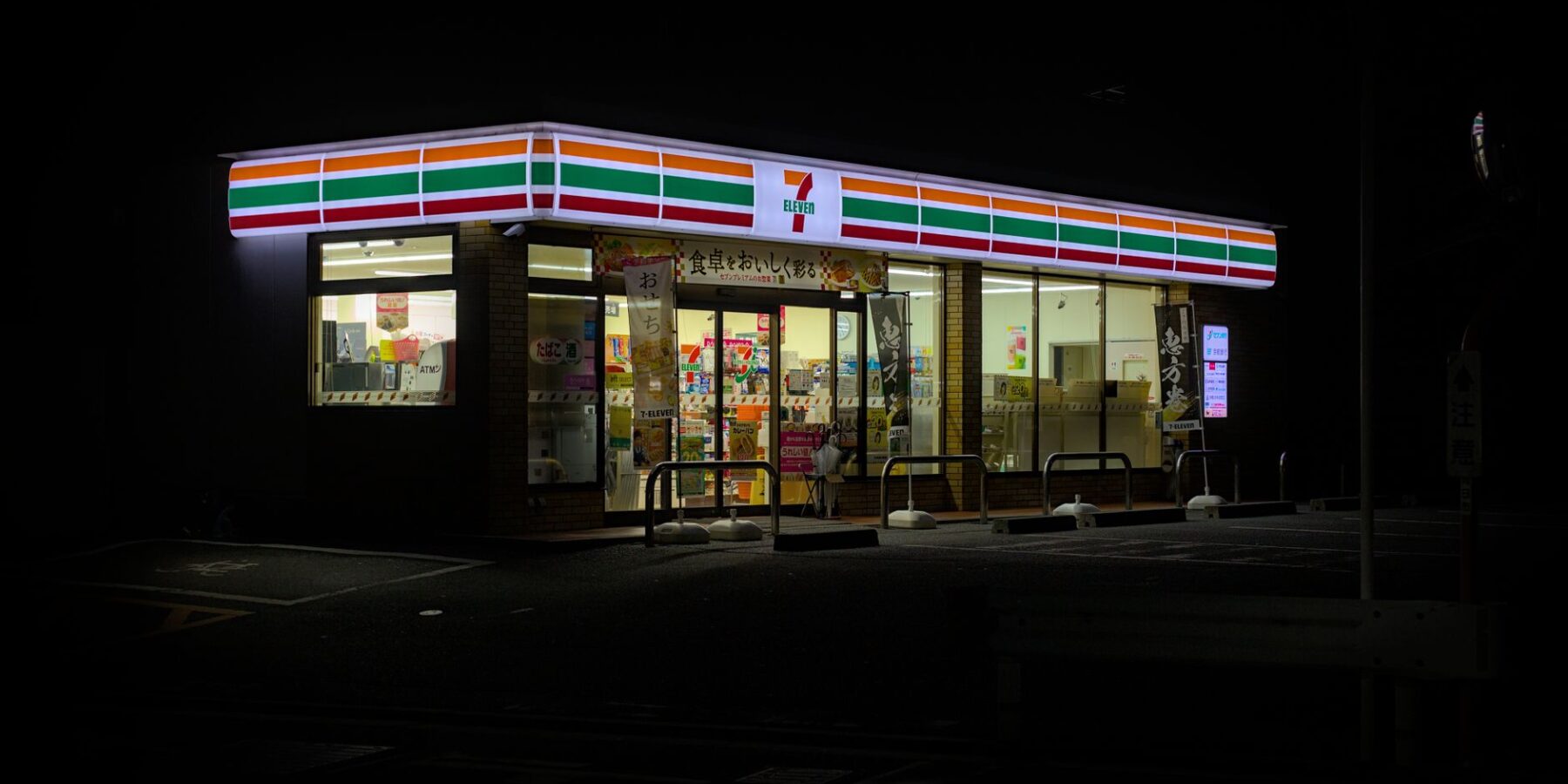
Japanese convenience stores — called konbini (コンビニ) — are unlike any convenience stores you have encountered before. Far from being a last-resort stop for overpriced snacks and stale sandwiches, Japanese konbini are genuine institutions: open 24 hours, impeccably clean, staffed by uniformly helpful and efficient employees, and stocked with a range of quality food, services, and products that would be impressive in any context. For visitors to Japan, the konbini is one of the most important and enjoyable discoveries of the trip. This complete guide covers the major chains, what to buy (and what’s surprisingly excellent), the services available, and how to use Japan’s convenience stores to your maximum advantage.
A note from Jack, editor of Japan Real Guide:
Japanese convenience stores — 7-Eleven, Lawson, and FamilyMart specifically — are not comparable to convenience stores in most other countries. They function as bakeries, hot food counters, pharmacies, ATM points, ticket offices, parcel services, and sitting areas. The food quality is genuinely good by any standard, not just by convenience store standards.
On more than one Japan trip I have had convenience store onigiri and coffee as a deliberate breakfast choice rather than a fallback option. The Lawson karaage chicken, the 7-Eleven egg salad sandwiches, the FamilyMart nikuman steamed buns — these are specific products I go back for. They are not compromises.
The guide below covers what is worth buying, what the pricing looks like compared to restaurants, and how to use the less-obvious services (ATMs, ticket printing, parcel pickup) that save significant time and hassle on a Japan trip.
The Three Major Convenience Store Chains in Japan
7-Eleven Japan (Seven-Eleven)
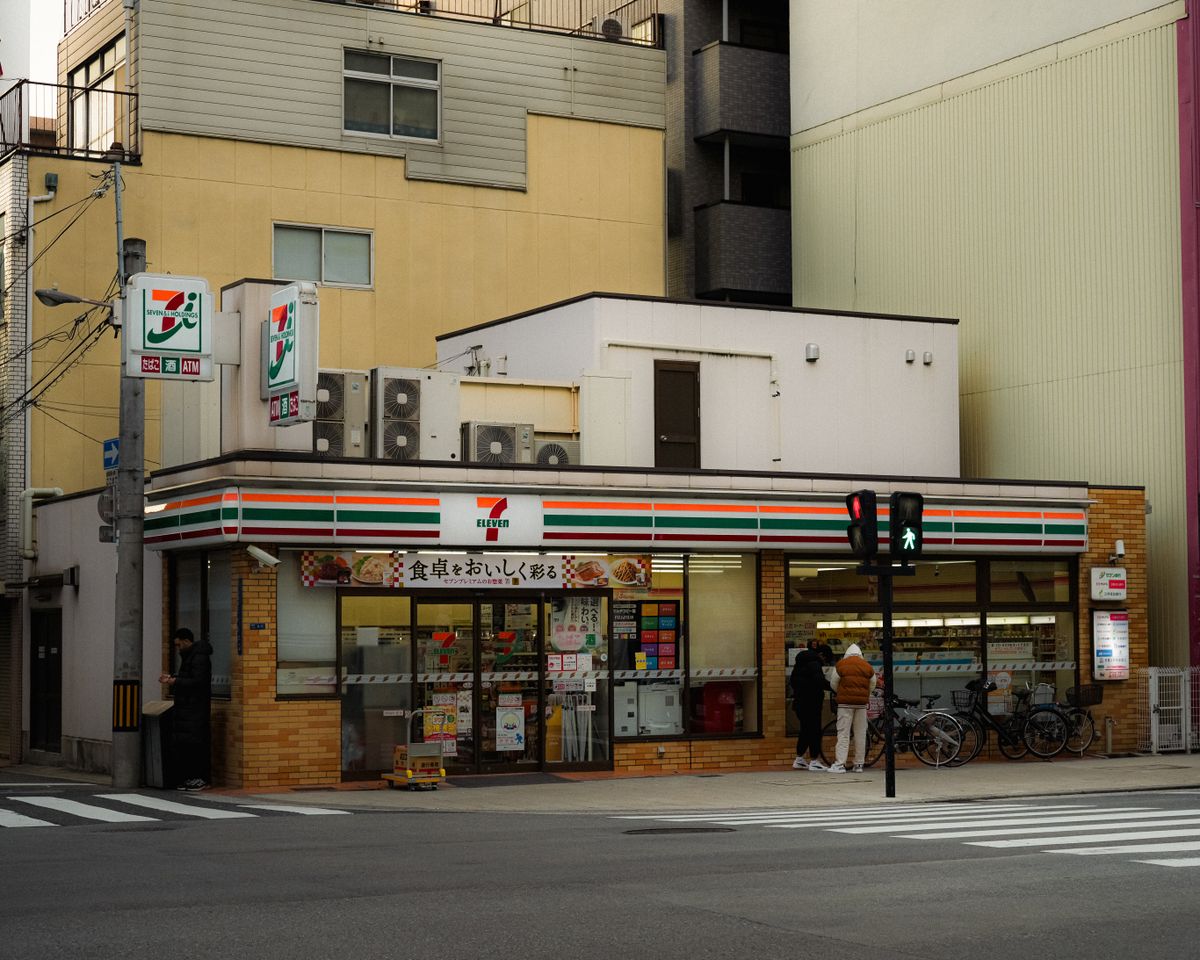
With over 21,000 locations, 7-Eleven Japan is the largest convenience store chain in the country and widely regarded as having the highest quality food of any chain. Although the American 7-Eleven brand originated the name, the Japanese business began in 1973 as a licensee under Ito-Yokado and developed in an entirely different direction. Japanese 7-Eleven is consistently praised for its rice balls (onigiri), sandwiches, and seasonal limited-edition food items. The in-store Seven Bank ATMs accept virtually all international debit and credit cards — an invaluable service for foreign visitors.
Lawson
Lawson (over 14,000 locations) is famous for its hot-case karaage-kun (bite-sized fried chicken nuggets, ¥216/$1.40 USD), its excellent baked goods, its high-quality desserts, and its Uchi Cafe premium dessert line. Lawson is also known for its strong anime and entertainment tie-in merchandise, rotating seasonal collaborations with major franchises. Natural Lawson (a sub-brand) focuses on healthier products and is found in urban areas.
FamilyMart
FamilyMart (around 16,000 locations) is distinguished by its fried chicken (FamiChicken), widely considered the best hot deli chicken among the major chains, its strong coffee program, and its extensive collection of Famima-branded private-label products. FamilyMart also has a well-regarded dessert line and is known for innovative seasonal collaborations.
Other Chains Worth Knowing
- Ministop — Known for soft-serve ice cream and large hot food selection; also operates small eat-in areas in many stores
- Daily Yamazaki — Particularly good for fresh baked bread and pastries; close ties to Yamazaki Baking
- Sunkus / Circle K — Merged with FamilyMart; some locations still display the older branding
The Best Food at Japanese Convenience Stores
Onigiri (Rice Balls)
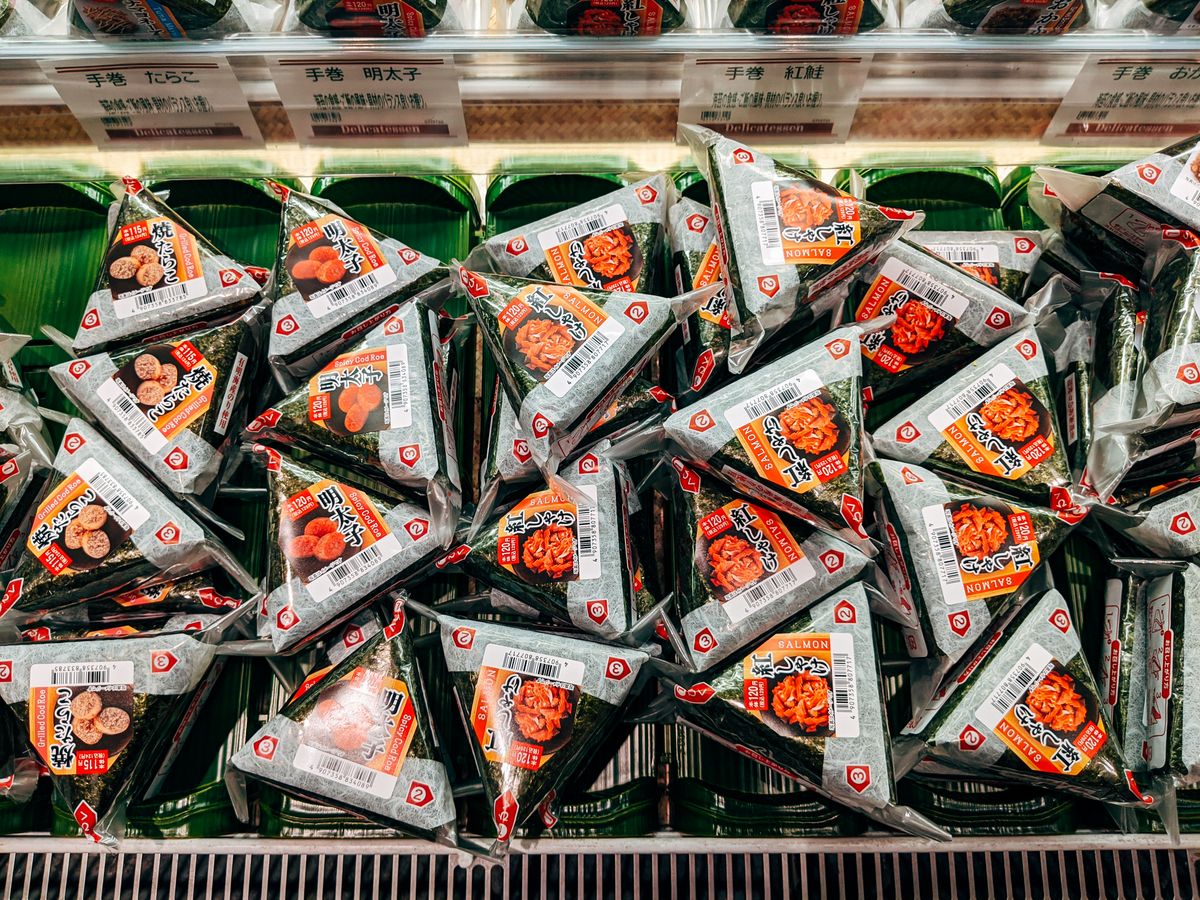
The onigiri is the quintessential konbini food — triangular rice balls wrapped in nori seaweed, filled with various ingredients, and individually packaged in clever tri-fold wrappers that keep the nori crispy until you peel it open. Every major chain sells dozens of varieties; the lineup rotates seasonally. Standard onigiri cost ¥120–¥200 ($0.78–$1.30 USD).
Recommended fillings to try:
- Sake (salmon) — mild, slightly salty; universally popular
- Tuna mayo — tuna mixed with Japanese mayonnaise; a konbini classic
- Mentaiko (spicy cod roe) — bold and distinctly Japanese
- Takana (pickled mustard greens) — tangy and refreshing
- Umeboshi (pickled plum) — intensely sour and salty; an acquired taste but authentically Japanese
- Seasonal specials — vary by store and time of year; always worth trying
Hot Foods (Hot Case / 揚げ物コーナー)
The hot food case near the register is one of the most underappreciated sections of any Japanese konbini. Items are fried in batches throughout the day and kept warm in the heated case. Staff will ask if you want them in a bag or paper; eat them while walking or sitting on a nearby bench.
Must-try hot case items:
- FamiChicken (FamilyMart) — Juicy, crispy fried chicken ¥230 ($1.50 USD)
- Karaage-kun (Lawson) — 6 bite-sized fried chicken pieces ¥216 ($1.40 USD); available in regular, spicy, and cheese flavors
- Nikuman — Steamed pork bun ¥130–¥160 ($0.85–$1 USD); best on cold days
- Croquette (Korokke) — Breaded potato and meat croquette ¥120–¥180 ($0.78–$1.17 USD)
- Corn dog (American Dog) — A Japanese konbini staple; slightly sweeter than the American version
- Pizza man — Pizza-filled steamed bun; surprisingly good
Sandwiches and Prepared Foods
Japanese konbini sandwiches bear no resemblance to their Western equivalents. Sold in clear plastic cases in the chilled section, they are made daily and feature perfectly trimmed white bread with precise, generous fillings. The egg salad sandwich (tamago sando) — with thick, creamy Japanese egg salad — became an international phenomenon after food writers began praising it. 7-Eleven’s version is consistently rated among the best. ¥200–¥350 ($1.30–$2.28 USD).
Desserts and Sweets
Konbini desserts are astonishingly good for their price. Japanese food culture applies the same quality focus to convenience store desserts that it does to every other food category. Top picks:
- Cream puffs (シュークリーム) — Rich custard-filled choux pastry; Lawson’s version with fresh whipped cream is legendary. ¥130–¥200 ($0.85–$1.30 USD).
- Roll cake slices — Light sponge wrapped around fresh cream; seasonal flavors throughout the year. ¥150–¥250 ($0.98–$1.63 USD).
- Purin (pudding) — Japanese crème caramel; firmer and eggier than French versions. ¥120–¥180 ($0.78–$1.17 USD).
- Parfaits — Layered dessert cups with cream, fruit, and granola. Seasonal strawberry parfaits (winter) are a highlight. ¥250–¥400 ($1.63–$2.60 USD).
- Soft-serve (at Ministop) — Fresh soft-serve ice cream sold at counter; ¥200–¥280 ($1.30–$1.82 USD).
- Daifuku and wagashi — Traditional Japanese mochi and sweet confections; rotating seasonal varieties.
Beverages
The beverage refrigerators in a Japanese konbini are a wonderland. Beyond soft drinks and water, expect:
- Canned coffee — Hot and cold; Boss, Georgia, and UCC are major brands. Japan’s canned coffee culture is distinctive and worth experiencing. ¥120–¥160 ($0.78–$1 USD).
- Matcha drinks — Iced matcha lattes, matcha milk, and green tea in endless varieties
- Melon soda — Neon green and distinctly Japanese in flavor
- Mugicha — Chilled roasted barley tea; refreshing and caffeine-free
- Calpis — A milky fermented drink with a yogurt-like tang; polarizing but worth trying
- Fresh coffee — All major chains have excellent espresso machine coffee at the counter. ¥100–¥180 ($0.65–$1.17 USD) for an American coffee; ¥150–¥200 for lattes. Among the best value coffees in Japan.
- Amazake and seasonal drinks — Rotating seasonal specials; spring sakura drinks and autumn chestnut lattes are highlights
Oden (Hot Pot Items)
From autumn through early spring, a large simmering pot of oden sits near the register in most konbini. Oden consists of various ingredients — boiled eggs, tofu, daikon radish, fishcakes, konnyaku — simmered in a light dashi broth. Point at what you want and the staff will scoop it into a container; each piece costs ¥80–¥200 ($0.52–$1.30 USD). On a cold winter day, a cup of oden and a hot canned coffee eaten outside a konbini is one of the most authentic and affordable Japanese experiences available.
Services Available at Japanese Convenience Stores
Japanese konbini are far more than food shops. They function as essential service hubs for everyday life in Japan, and many of these services are directly useful for travelers:
ATM (Seven Bank, Lawson Bank, E-net)
Each chain operates its own ATM network. Seven Bank ATMs (7-Eleven) and Lawson Bank ATMs accept major international cards with English menus. Available 24 hours. This is the #1 recommended way for foreign visitors to access cash in Japan.
Printing and Photocopying
The multifunction printer in most Japanese konbini can print documents, photos, and PDFs from a USB drive, smartphone via Wi-Fi, or the chain’s dedicated app. You can also print PDFs from email. For travelers who need to print boarding passes, visas, or hotel confirmations, this service is invaluable. Printing costs ¥10–¥50 ($0.065–$0.32 USD) per page depending on format.
Ticket Sales
Concert, sports, and theme park tickets can be purchased at konbini ticket terminals (Loppi at Lawson, Famiport at FamilyMart, multi-copy machines at 7-Eleven). Many Japanese events sell tickets exclusively through these terminals. While the interface is primarily Japanese, many tourist tickets and popular events have English-language options or can be purchased through tour operators.
Public Services
Japanese konbini can also handle:
- Payment of utility bills, national health insurance, and parking fines (cash or IC card)
- Sending and receiving packages (Yamato Transport, Sagawa)
- Fax services
- Purchase of stamps and envelopes
- Payment for online shopping orders (cash on delivery)
- Government document services at some 7-Eleven locations (resident registration, etc.)
Free Wi-Fi
Most major konbini chains offer free Wi-Fi in-store. 7-Eleven, Lawson, and FamilyMart all provide free guest Wi-Fi (registration via email or SNS account typically required on first use). Speed and reliability vary, but it’s useful for a quick internet connection while on the go.
Konbini Shopping Tips for Travelers
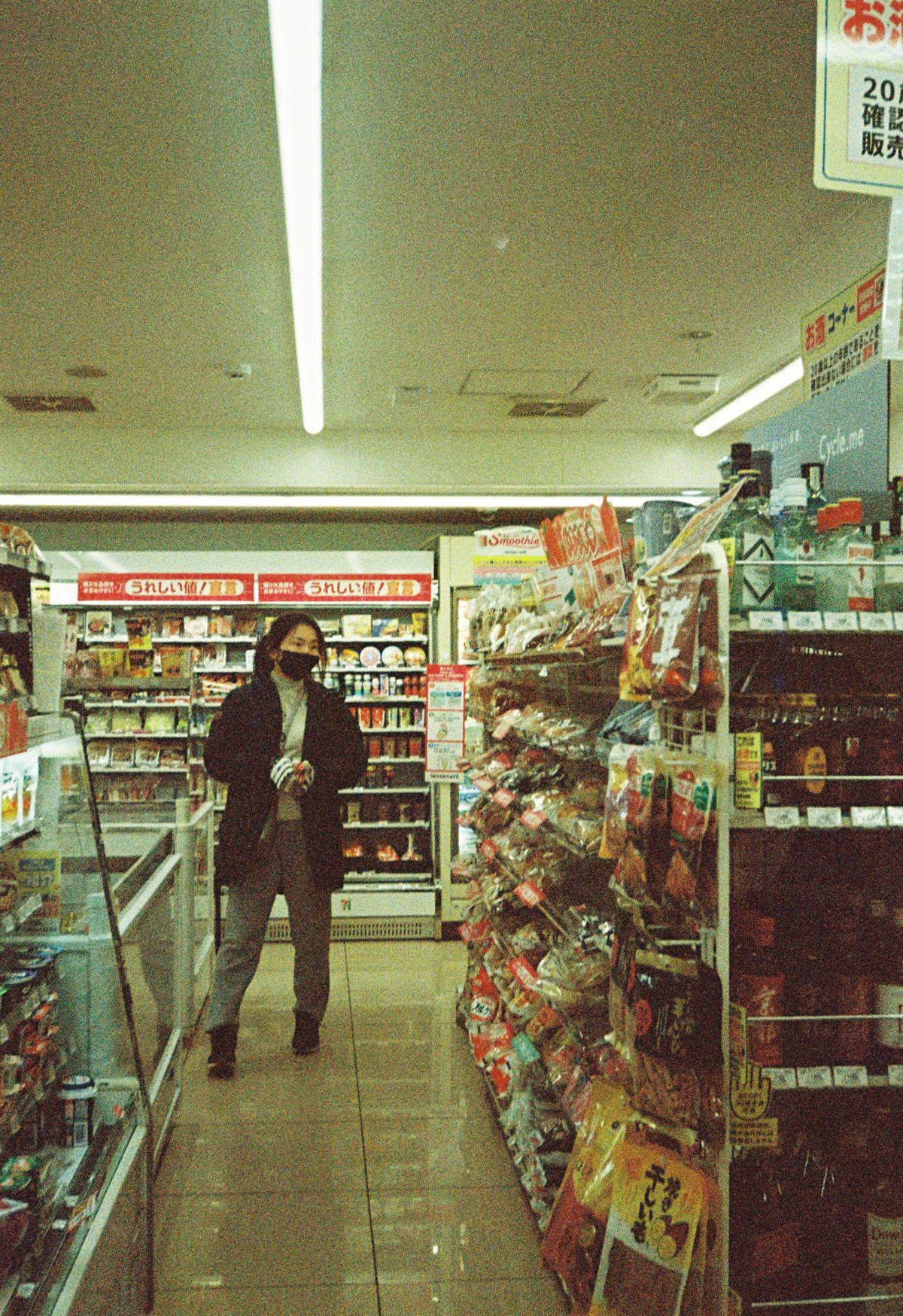
- Check the chilled section first thing in the morning: Fresh items like sandwiches and onigiri are restocked overnight and in the early morning — selection is best between 7–9am
- Ask to heat your food: Hot items (packaged nikuman, rice dishes, noodles) can be heated in the store microwave — say atatamete kudasai (“please heat it up”) at the register
- Look for the daily markdown section: Items approaching their best-before time are often discounted 30–50% — a great way to try more items cheaply
- Use the in-store seating if available: Some larger konbini, especially Ministop, have small eat-in areas
- Seasonal and regional exclusives: Many konbini items are region-specific or seasonal. Items available in Hokkaido may not exist in Osaka. Ask a local or check Japanese food blogs for current seasonal highlights
- Pocket Wi-Fi and SIM cards: 7-Eleven and some other chains sell prepaid SIM cards and pocket Wi-Fi rentals — convenient but more expensive than ordering a Japan eSIM in advance
- Konbini as a base: When exploring a new area, identify the nearest konbini first — it’s your backup for snacks, cash, Wi-Fi, phone charging (some have USB charging at customer counters), and directions
Book your Japan hotel near major konbini on Agoda →
Get your Japan eSIM before you arrive — faster and cheaper than konbini SIM cards →
Konbini Etiquette
- Greet staff with sumimasen (excuse me) if you need help, and arigatou gozaimasu when leaving
- Don’t eat while standing in the store (unless there is a designated eat-in area)
- Use the provided chopsticks, plastic forks, and wet wipes that staff automatically add to your bag — don’t take excessive quantities
- Dispose of wrappers in the provided bins outside the store, not on the street
- During peak hours (morning rush, lunchtime) try to have your payment ready to keep the queue moving
Frequently Asked Questions About Japanese Convenience Stores
Which konbini chain has the best food?
7-Eleven Japan consistently wins in independent taste tests and traveler polls for overall food quality, particularly its onigiri and egg salad sandwich. Lawson wins for desserts (especially cream puffs and parfaits). FamilyMart wins for hot deli items (FamiChicken). You can’t go wrong at any of the three major chains — the quality floor is high across all of them.
Are Japanese convenience stores open 24 hours?
The vast majority of 7-Eleven, Lawson, and FamilyMart locations are open 24 hours, 365 days a year, including national holidays. A small number of locations in residential areas may have reduced hours due to local ordinances or staffing constraints, but these are exceptions. In cities and tourist areas, you can reliably expect 24-hour operation.
Can I get a SIM card at a convenience store in Japan?
Yes. 7-Eleven and some other konbini sell prepaid data SIM cards for foreign visitors. These are convenient but more expensive and offer less data than ordering a Japan eSIM in advance through providers like JAPAN&GLOBAL eSIM or Saily. If you’re planning ahead, order an eSIM before your trip for better value and instant connectivity on arrival.
What is the tamago sando and why is it famous?
The tamago sando (egg salad sandwich) is Japan’s most famous konbini food internationally. It consists of soft Japanese white bread, crusts removed, filled with a thick, creamy egg salad made with Japanese mayonnaise (Kewpie-brand, made with rice vinegar and egg yolks only). The texture is much creamier and richer than Western egg salad. It gained international attention when food writers began describing it as one of the world’s great sandwiches — which it genuinely is. ¥200–¥280 ($1.30–$1.82 USD) at any major chain.
Do Japanese convenience stores accept credit cards?
Yes. All major convenience store chains (7-Eleven, Lawson, FamilyMart) accept major credit cards (Visa, Mastercard, JCB, American Express), IC cards (Suica, Pasmo), and increasingly mobile payment via Apple Pay and Google Pay. Convenience stores are one of the most reliably card-accepting types of business in Japan.
What should I definitely try at a Japanese convenience store?
If it’s your first time, try: a salmon or tuna mayo onigiri (eat it immediately after opening the clever three-step wrapper), a cream puff from Lawson, a FamiChicken piece, a cup of counter espresso or canned hot coffee, and — if it’s cold outside — a cup of oden items with dashi broth. Budget ¥800–¥1,200 ($5–$8 USD) for this entire tasting menu.
Can you brush your teeth at a convenience store?
Japanese konbini sell full-size and travel-size toiletries including toothbrushes, toothpaste, shampoo, deodorant, razors, and basic skincare products. If you’ve forgotten something from home, the nearest konbini almost certainly has a passable substitute. They also sell basic over-the-counter medications like pain relief and cold medicine, though the packaging is in Japanese — ask a pharmacist at a nearby drugstore (Matsumoto Kiyoshi, etc.) for advice on specific products.
Related guides
- How to Read a Japanese Restaurant Menu (Even With Zero Japanese)
- Nishiki Market Travel Guide 2026: A First-Timer’s Guide to Eating Your Way Through Kyoto’s Kitchen
- Japan Izakaya Guide: What to Order, How to Behave, and the Best Spots in Tokyo and Osaka
Going to Japan? Speak Japanese with confidence.
Hirameki Japanese — camera translate for menus and signs, a two-way conversation mode, and furigana + romaji on every phrase. Free to download with kana charts, conversation mode and starter words; a one-time purchase unlocks everything.

Plan your Japan trip
Two things every first-timer should book
Some links are affiliate links. If you book through them we may earn a small commission at no extra cost to you.