Introduction to Yamagata Prefecture
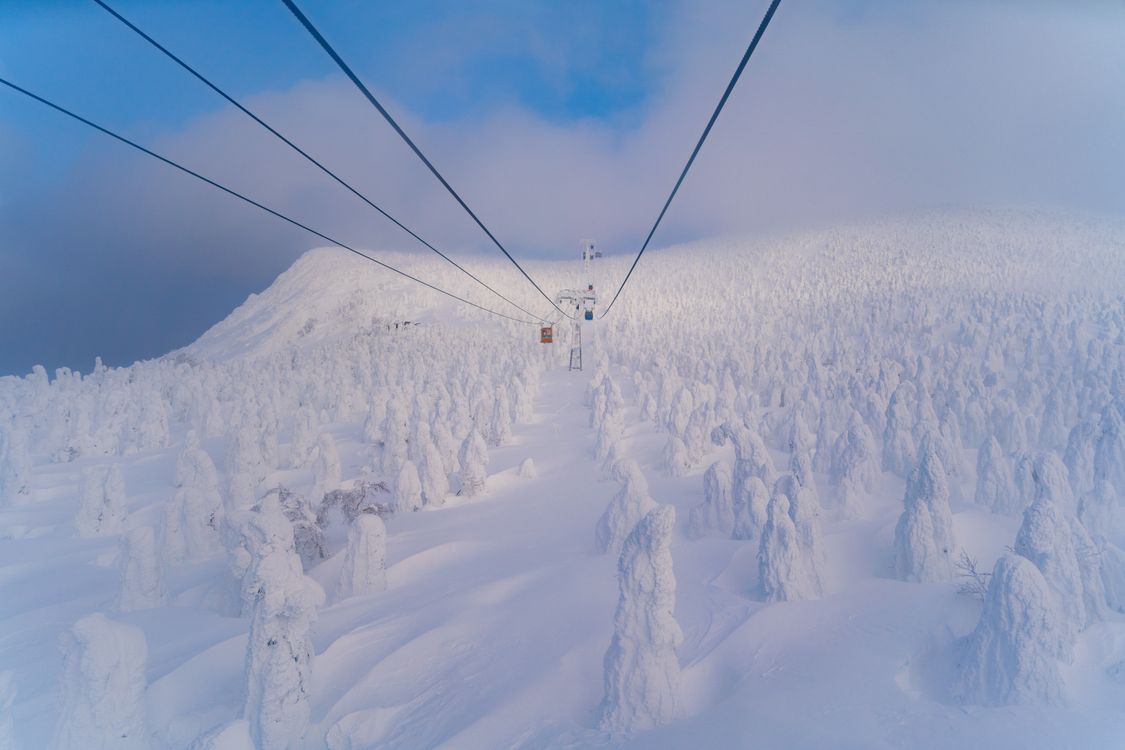
Yamagata Prefecture, set among the rugged mountains of the Tohoku region, is a place of extraordinary contrasts. Here, thousand-year-old mountain temples perch impossibly on rocky crags, while world-class ski resorts transform the same mountains into winter playgrounds. Ancient post towns preserved in amber offer glimpses of feudal Japan, and hot spring villages wrapped in snow create some of the most ethereal landscapes in the country.
Despite its remarkable offerings, Yamagata remains refreshingly uncrowded by international tourists, making it an ideal destination for travelers seeking authentic Japanese experiences beyond the familiar circuit of Tokyo, Kyoto, and Osaka.
Yamadera: The Temple in the Rocks
Perched dramatically on a mountain of volcanic rock, Risshaku-ji Temple — universally known as Yamadera — is Yamagata Prefecture’s most iconic sight and one of the most visually stunning religious sites in all of Japan. Founded in 860 AD by the priest Jikaku Daishi, this mountain temple complex climbs some 1,015 stone steps up through ancient cedar forests to reach its uppermost halls overlooking a sweeping valley.
The ascent passes numerous sub-temples, stone lanterns, and carved Buddhas hidden among the rocks and moss-covered boulders. The climb takes approximately 20 to 30 minutes and rewards visitors with breathtaking panoramic views from the Godaido observation platform at the top. The sight of traditional wooden temple buildings clinging to sheer rock faces with the valley spread below is truly unforgettable.
Yamadera is associated with the haiku master Matsuo Basho, who visited in 1689 and was inspired to write one of his most celebrated poems: “The stillness — seeping into the rocks, the voice of the cicadas.” This literary connection adds a layer of cultural depth that enriches every visit.
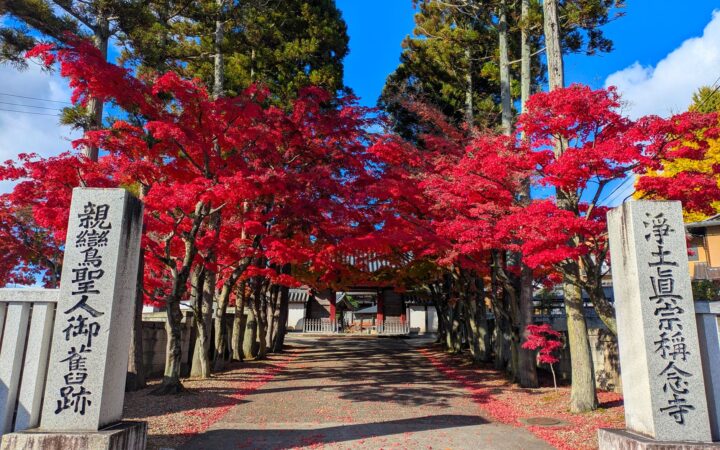
The temple is beautiful in all seasons — blossoms frame it in spring, deep green canopies in summer, blazing maples in autumn, and pristine snow in winter. Each season reveals a different face of this ancient sacred place.
Zao Onsen: Hot Springs and Snow Monsters
Zao Onsen is one of Japan’s most versatile mountain resorts, offering world-class skiing and snowboarding in winter alongside year-round hot spring bathing. Located in the Zao Mountains along the Yamagata-Miyagi border, the resort sits at elevations reaching 1,660 meters.
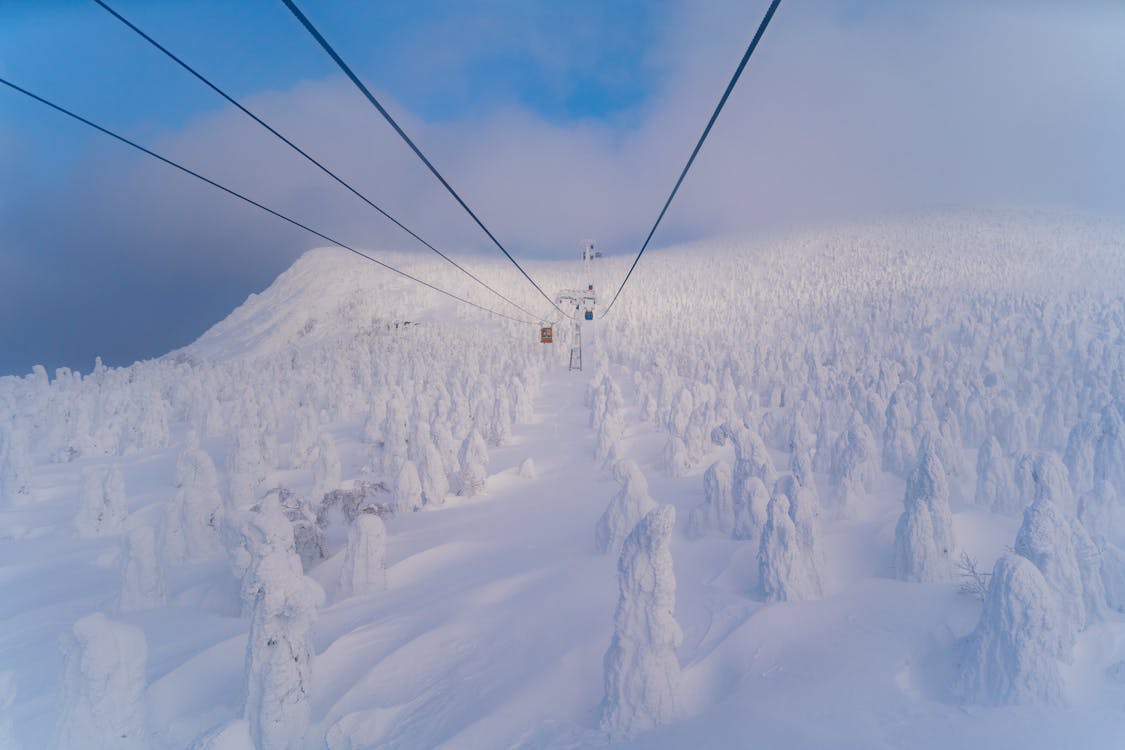
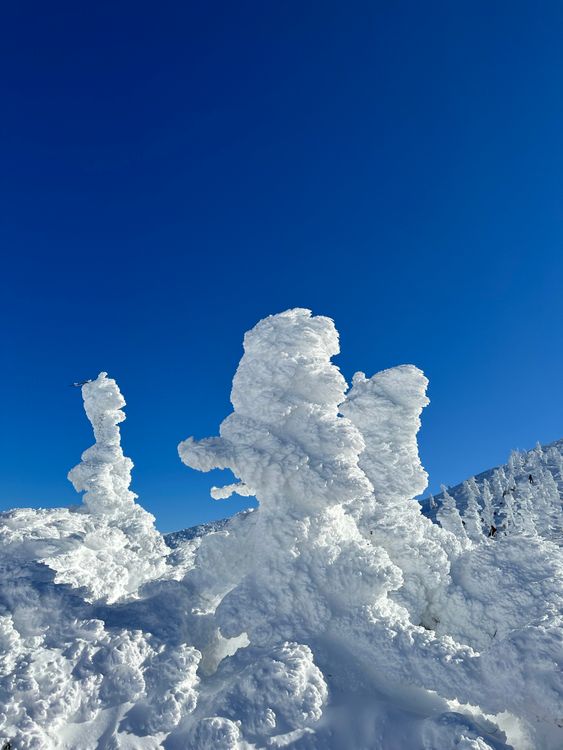
The most extraordinary feature of Zao in winter is the juhyo — literally “ice trees” or “snow monsters.” These remarkable natural sculptures form when strong mountain winds coat the fir trees with successive layers of ice and snow, creating massive white formations that look like sleeping giants or prehistoric creatures emerging from the landscape. The juhyo forests at Zao are considered the finest examples of this phenomenon in Japan.
Viewing the snow monsters is best done on the Zao Ropeway, which lifts visitors above the treeline to where the juhyo cluster most dramatically. The season typically runs from late December to late February, with lighting events held on select evenings that transform the white monsters into an otherworldly blue and purple spectacle.
Beyond winter, Zao Onsen remains a wonderful destination. The hot spring water here is highly acidic with a distinctive milky-green color, believed to be effective for skin conditions and general wellness. The outdoor rotenburo (open-air bath) called Zao Onsen Dai Rotenburo is one of Japan’s largest and finest, with multiple interconnected pools fed by natural spring water.
Ginzan Onsen: A Village Frozen in Time
Ginzan Onsen is arguably the most beautiful hot spring village in Japan, a place so perfectly preserved that it seems transported directly from the Taisho era (1912-1926). Situated in a narrow valley carved by the Ginzan River, the village consists of a row of elegant three and four-story wooden ryokan that face each other across a rushing mountain stream.
The village takes its name from the silver mines (gin = silver, zan = mountain) that brought prosperity to the area in the 17th century. When the mines were exhausted, the town reinvented itself as a hot spring resort, and the elegant ryokan built during the Taisho period have survived remarkably intact.
Ginzan Onsen is at its most magical in winter, when the wooden buildings are draped in snow and gas lanterns cast a warm amber glow over the entire village. Photographs of Ginzan in winter have appeared around the world and are said to have inspired the bathhouse in Hayao Miyazaki’s animated film “Spirited Away,” though Miyazaki has never confirmed this directly.
The village has a public foot bath beside the river, free for all visitors to enjoy. Day-trippers can also use the baths at several ryokan for a fee, but an overnight stay in one of the traditional inns, complete with kaiseki dinner and communal bathing, is the ultimate Ginzan experience.
Dewa Sanzan: The Three Sacred Mountains
For those seeking a deeper spiritual experience, Yamagata’s Dewa Sanzan — the Three Sacred Mountains of Dewa Province — offers one of Japan’s most profound pilgrimage experiences. The three mountains of Haguro, Gassan, and Yudono have been sacred to the Shugendo tradition of mountain worship for over 1,400 years.
Mt. Haguro is the most accessible and features a remarkable 2,446-step cedar-lined stone stairway leading to a Five-Story Pagoda (National Treasure) and the summit shrine. Mt. Gassan at 1,984 meters is the highest peak, while Mt. Yudono is considered the most sacred and is shrouded in mystery, with portions of the inner shrine so holy that photography is forbidden.
Yamagata Cherry Blossoms and Local Culture
Yamagata is one of Japan’s premier cherry blossom destinations. The roughly 1,500 cherry trees of Kajo Park in Yamagata City draw visitors from across Japan every spring. The Hanagasa Festival in August, one of Tohoku’s big four festivals, sees thousands of dancers wearing flower-adorned hats parade through the city streets.
Local cuisine is another highlight. Yamagata is renowned for its beef, considered among the finest wagyu in Japan, as well as its cherries, La France pears, and edamame. The local cold ramen (hiyashi ramen), served in chilled broth, is a summer specialty not to be missed.
Getting to Yamagata
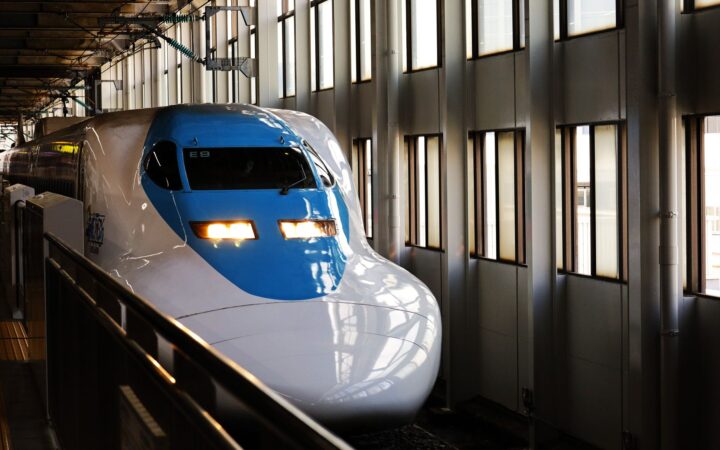
The Yamagata Shinkansen connects directly to Tokyo in approximately 2.5 hours, making Yamagata one of the more accessible Tohoku prefectures. From the city, buses run to Yamadera, Zao Onsen, and Ginzan Onsen, though a rental car greatly increases flexibility for exploring the region at your own pace.
Where to Stay in Yamagata
Yamagata offers accommodations to suit every style and budget. For the quintessential experience, book a traditional ryokan at Ginzan Onsen or Zao Onsen. Modern hotels are available in Yamagata City, and guesthouses near Yamadera cater to pilgrimage-minded travelers.
Final Thoughts

Yamagata Prefecture is a destination that rewards curiosity and rewards it generously. Whether you are climbing to a mountain temple on ancient stone steps, soaking in milky-green hot springs beneath a canopy of stars, gazing in wonder at forests of snow monsters, or wandering the lantern-lit lanes of a Taisho-era hot spring village, Yamagata delivers experiences that stay with you long after you have returned home.
Top Attractions in Yamagata Prefecture
Zao: Ice Monsters and Volcanic Crater
The Zao mountain range, straddling the border between Yamagata and Miyagi prefectures, is one of Tohoku’s most dramatic natural destinations and a year-round outdoor recreation paradise. In winter (typically January through March), Zao’s trees become encrusted with thick ice and snow, transforming the ski slopes into an otherworldly forest of ice monsters (juhyo) — enormous frozen sculptures created when supercooled water droplets carried by winter winds from the Sea of Japan freeze on contact with the trees and wind-driven snow builds up in layers around branches and trunks. The result is a landscape of alien magnificence unique in Japan, illuminated at night during the Juhyo Festival for a truly surreal effect. In summer, the volcanic crater lake Okama changes color between cobalt blue, deep green, and milky turquoise depending on weather conditions and volcanic activity — a phenomenon that has earned it the nickname the Five-Colored Pond. The Zao Echo Line and Zao Highline toll road lead to a parking area near the crater rim, and a short walk provides views of this extraordinary natural phenomenon. Winter skiing at Zao Onsen Ski Resort is exceptional, with some of Japan’s most reliable deep powder and a well-developed slope system catering to all ability levels.
Yamadera (Risshaku-ji Temple)
Perched dramatically on and within the cliffs of a steep rocky mountain in the Yamadera valley, Risshaku-ji Temple is one of the Tohoku region’s most iconic sights. Founded in 860 CE by the monk Jikaku Daishi, the temple complex climbs 1,015 stone steps carved directly into the cliff face, passing through ancient cryptomeria forests and between dramatic rock formations to reach the summit main hall (Okuno-in) with its sweeping views across the valley below. The approach through ancient cedar forest, punctuated by small sub-temples, stone lanterns, and moss-covered boulders, has an atmosphere of accumulated centuries that is profoundly moving. The celebrated poet Matsuo Basho visited in 1689 and composed his most famous haiku here: “Shizukasa ya / iwa ni shimiiru / semi no koe” (The stillness — seeping into the rocks, a cicada’s cry). Allow 2 to 3 hours for the round trip climb; appropriate footwear is essential as the stone steps can be slippery.
Ginzan Onsen
Ginzan Onsen is one of Japan’s most perfectly preserved and photogenic hot spring towns, its multi-story wooden Taisho-era ryokan rising along both banks of the Ginzan River in a narrow mountain gorge, their lantern-lit windows reflecting in the rushing stream below. The town looks like a set from a period film — particularly in winter when heavy snow blankets the rooftops and steam rises from the hot spring streams into cold mountain air, creating an atmosphere of incomparable romantic beauty. Silver mining in the area during the feudal era (gin means silver in Japanese) gave the town its name, and the remaining historic townscape is protected as a cultural heritage district. The town has just one road, one river, and a handful of ryokan — no convenience stores, no chain restaurants — making it one of Japan’s most authentically traditional onsen destinations. Booking accommodation (typically 15,000 to 30,000 yen per person with two meals) is essential and should be done months in advance for winter weekends.
Shonai Region: Dewa Sanzan Sacred Mountains
The three sacred mountains of Dewa — Mount Haguro, Mount Gassan, and Mount Yudono — have been the center of Shugendo mountain asceticism for over 1,400 years, attracting pilgrims, monks, and spiritual seekers to their forested slopes throughout recorded history. Mount Haguro is the most accessible, crowned by a magnificent Five-Story Pagoda (Japan’s oldest cedar-roofed pagoda) and the Dewa Sanzan Shrine at the summit, approached via a 2,446-step stone staircase through a primeval cedar forest of extraordinary atmosphere. Mount Gassan (1,984 meters) is the highest and offers alpine summer hiking from July through mid-October through snowfields and highland wildflower meadows. Mount Yudono is considered the most sacred — shoes must be removed before the final approach, and details of the inner shrine must not be revealed to non-initiates. The tradition of sokushinbutsu (self-mummification practiced by Buddhist monks in extreme asceticism) is unique to this region of Japan, and several preserved mummies are on display at local temples, providing a startling encounter with one of Japan’s most extraordinary religious practices.
Yonezawa: Castle Town and Wagyu Beef
Yonezawa, in the southern Okitama region, was the proud castle town of the Uesugi clan — one of the most powerful feudal lords of the Sengoku period — and retains a strong sense of its samurai heritage. The former Yonezawa Castle grounds (now Matsugasaki Park) are spectacular during cherry blossom season, and the Uesugi Shrine honoring the revered lord Uesugi Kenshin draws pilgrims year-round. Yonezawa is also the origin of one of Japan’s most prestigious beef brands: Yonezawa beef (Yonezawa-gyu), a Wagyu brand with a history stretching back to the Meiji period and consistently rated among Japan’s finest three Wagyu varieties. Premium Yonezawa beef teppanyaki, sukiyaki, and shabu-shabu restaurants in the city center offer this celebrated meat at prices ranging from 5,000 to 20,000 yen per person.
Getting to Yamagata Prefecture
From Tokyo
The Yamagata Shinkansen runs directly from Tokyo Station to Yamagata Station in approximately 2 hours 30 minutes (fares rose in JR East’s March 2026 increase, so check current prices; JR Pass covered). The train splits from the Tohoku Shinkansen at Fukushima, traveling through the scenic Ou Mountains into Yamagata. An extension continues to Shinjo. For Shonai (Tsuruoka, Sakata), the fastest route from Tokyo uses the Joetsu Shinkansen to Niigata then the JR Uetsu Line north to Tsuruoka (approximately 3.5 hours total) or the Inaho limited express from Niigata. Yamagata Airport receives domestic flights from Tokyo Haneda (50 minutes, multiple daily), Osaka, and Sapporo.
From Osaka and Nagoya
From Osaka or Nagoya, the most practical route is Shinkansen to Tokyo, then continuing on the Yamagata Shinkansen. Total journey from Osaka to Yamagata City is approximately 4.5 to 5 hours. Domestic flights from Osaka Itami to Yamagata Airport (approximately 75 minutes) offer a faster alternative. From Sendai (Miyagi), the JR Senzan Line runs to Yamagata in approximately 1 hour — a convenient connection for those combining Yamagata with the Sendai/Matsushima area.
Getting Around Yamagata
The Yamagata Shinkansen and JR local lines connect the main cities (Yamagata, Kaminoyama, Yonezawa, Shinjo), but many top attractions require alternative transport. Yamadera is on the JR Senzan Line, 17 minutes from Yamagata Station by local train. Zao Onsen is connected to Yamagata Station by frequent bus (40 minutes). Ginzan Onsen is accessible by bus from Oishida Station on the Yamagata Shinkansen (30 minutes by infrequent service) or by taxi. The Dewa Sanzan mountains in the Shonai region are best reached by car or tourist bus from Tsuruoka Station. A rental car from Yamagata Station is strongly recommended for touring the prefecture comprehensively, particularly for the Dewa Sanzan pilgrim mountains and Ginzan Onsen.
Where to Stay in Yamagata
Budget (5,000 to 8,000 yen/night): Business hotels near Yamagata Station provide good bases for day-trip exploration. Mid-Range (10,000 to 20,000 yen/person): Ryokan in the Zao Onsen village offer ski-in/ski-out access in winter and hot spring soaking year-round; Kaminoyama Onsen and Tendo Onsen (known as the “Shogi Piece Town”) offer pleasant mid-range alternatives. Luxury: Ginzan Onsen’s historic ryokan (Notoya Ryokan, Fujiya, Shirakabekan) represent the pinnacle of Yamagata luxury accommodation — multi-story Taisho-era wooden buildings with private onsen, mountain spring water, and exquisite multi-course kaiseki cuisine (20,000 to 40,000 yen per person with two meals). Book 3 to 6 months in advance for winter weekends.
Food and Local Specialties in Yamagata
Yamagata’s cuisine reflects its mountain culture and agricultural abundance. Yonezawa Beef: One of Japan’s Big Three Wagyu brands, Yonezawa-gyu is celebrated for its delicate marbling and refined flavor. Premium restaurants in Yonezawa and Yamagata City serve it as sukiyaki, teppanyaki, and steak. Imoni: Yamagata’s most beloved communal dish, a hearty taro potato and beef stew cooked in soy-sauce-based broth over an open fire, traditionally made in enormous quantities at autumn riverside gatherings attended by thousands. Yamagata Cherries: The prefecture produces over 70% of Japan’s cherries, and the Sato Nishiki variety — large, sweet, and brilliantly red — is considered Japan’s finest. Cherry-picking farm experiences are available throughout the Higashine and Higashikawa areas from mid-June to late July. Yamagata Soba: The mountain climate and clear spring water produce exceptional buckwheat noodles; Yamadera soba restaurants near the famous temple are particularly recommended. Dashi: A distinctively Yamagata condiment of finely chopped summer vegetables (cucumber, eggplant, okra, myoga) mixed with soy sauce and eaten over rice — a refreshing, nutritious local specialty.
Best Time to Visit Yamagata
Winter (January to March): Peak season for Zao’s ice monsters and excellent skiing. Ginzan Onsen is at its most photographically spectacular under heavy snow. Spring (April to May): Cherry blossoms at Kajo Park (Yamagata City) and Yonezawa Castle grounds. Mountain hiking routes begin opening in late May. Summer (June to August): Cherry-picking season, Dewa Sanzan mountain pilgrimages, and the spectacular Hanagasa Festival in Yamagata City (August 5 to 7) — thousands of dancers in flower-decorated hats parade through the city streets. Autumn (September to November): Imoni gatherings along the rivers, spectacular mountain foliage in Zao and Dewa Sanzan, and harvest festivals celebrating Yamagata’s famous fruits and rice.
Hidden Gems and Local Tips for Yamagata
Shiraito no Taki waterfall near Zao provides a peaceful alternative to the crowded main sights, its slender cascade dropping through a beech forest particularly beautiful during autumn foliage. Tendo City, the “Shogi Piece Town,” produces 95% of Japan’s shogi (Japanese chess) pieces and has museums, workshops open to visitors, and a human shogi tournament in May where costumed players act as living pieces on a giant outdoor board. Sakata City in the Shonai region preserves an elegant historic merchant townscape that reflects the wealth generated by the rice trade that once made Sakata one of Japan’s most prosperous port cities. The Homma Museum here houses one of Japan’s finest collections of pre-modern Japanese art accumulated by the wealthy Homma merchant family. Gassan Ski Resort operates Japan’s latest ski season (May to July) due to the extraordinary snowpack on Mount Gassan — skiing in June against a backdrop of summer alpine wildflowers is a uniquely Japanese experience.
Practical Information for Visiting Yamagata
Tourist Information: Yamagata Station Tourist Information Center (open daily 10:00 to 18:00) provides English maps and basic English assistance. Wi-Fi: Available at Yamagata Station and major hotels; limited in rural mountain areas. Pocket Wi-Fi recommended for Ginzan Onsen and Dewa Sanzan areas. Cash: Essential in mountain onsen towns and rural areas. Emergencies: Police 110, Fire and Ambulance 119. Yamagata University Hospital: 023-628-5111. Weather Note: Yamagata winters are severe with heavy snowfall; check road conditions before driving in mountain areas between December and March.
Yamagata Budget Guide
Budget (6,000 to 10,000 yen/day): Business hotel in Yamagata City, imoni stew and soba lunch (700 to 1,500 yen), JR trains and buses. Yamadera admission 300 yen. Mid-Range (15,000 to 25,000 yen/day): Zao Onsen ryokan, Yonezawa beef sukiyaki set (3,000 to 6,000 yen), rental car for mountain touring. Luxury (30,000 yen or more/day): Ginzan Onsen historic ryokan with private spring water onsen, multi-course kaiseki featuring Yonezawa wagyu, seasonal mountain vegetables, and Yamagata sake.
Frequently Asked Questions About Yamagata
How do I get to Yamagata from Tokyo?
The Yamagata Shinkansen runs directly from Tokyo Station to Yamagata Station in approximately 2 hours 30 minutes (one-way fares rose in JR East’s March 2026 increase, so check current prices; JR Pass covered). Domestic flights from Tokyo Haneda to Yamagata Airport take about 50 minutes and may be cheaper if booked early.
When can I see the Zao ice monsters?
The Zao juhyo (ice monsters) typically form from late December and reach their peak from mid-January to late February, depending on weather conditions. The Zao Juhyo Festival illuminates the ice trees at night from late January through mid-February. Zao Onsen Ski Resort operates chairlifts and gondolas that carry visitors to the ice monster viewing areas for a fee.
Is Yamadera Temple worth visiting?
Absolutely. The 1,015-step climb through ancient cedar forest to the cliff-top temple halls is one of Tohoku’s most memorable experiences, combining physical effort with extraordinary natural and spiritual atmosphere. Allow 2 to 3 hours for the full round trip. The admission fee (300 yen) is extremely modest for what is arguably one of Japan’s most dramatically situated temple complexes.
What is Ginzan Onsen and why is it famous?
Ginzan Onsen is a perfectly preserved hot spring village in a narrow mountain gorge, famous for its multi-story Taisho-era wooden ryokan reflected in the river below, particularly stunning in winter when covered with heavy snow. It is one of Japan’s most photogenic and romantically atmospheric onsen destinations, inspiring comparisons to the bathhouse setting in Studio Ghibli’s Spirited Away. Accommodation must be booked months in advance for winter weekends.
What is Yonezawa beef?
Yonezawa-gyu (Yonezawa beef) is one of Japan’s three most prestigious Wagyu brands, raised in the Yonezawa basin under strict standards since the Meiji period. It is celebrated for its exceptionally fine marbling, delicate flavor, and smooth texture. Premium sukiyaki, teppanyaki, and shabu-shabu sets featuring Yonezawa beef are available at specialty restaurants in Yonezawa City and Yamagata City.
What are the Dewa Sanzan sacred mountains?
The three sacred mountains — Haguro, Gassan, and Yudono — have been centers of Shugendo mountain asceticism for over 1,400 years. Mount Haguro (most accessible; approached via 2,446 stone steps through ancient cedar forest) is the recommended starting point. Combined pilgrimage visits to all three mountains follow ancient routes and take 1 to 3 days depending on the level of commitment and fitness.
How many days should I spend in Yamagata?
Three to four days allows you to visit Yamadera, spend a night at Ginzan Onsen or Zao Onsen, explore Yonezawa for beef and history, and visit the Dewa Sanzan mountains in the Shonai area. Yamagata combines naturally with Sendai (about 1 hour by JR Senzan Line or highway bus) and Akita (via the Ou Main Line) for a comprehensive Tohoku itinerary.
Do I need a car in Yamagata?
A car is highly recommended for the Shonai region and Dewa Sanzan mountains, and useful for Ginzan Onsen and rural areas. Yamadera, Zao Onsen, Kaminoyama, and Yonezawa are accessible by train and bus. Car rental is available at Yamagata Station.
What is the Hanagasa Festival in Yamagata City?
The Yamagata Hanagasa Festival (August 5 to 7) is one of the Four Great Tohoku Festivals, featuring approximately 10,000 dancers parading through Yamagata City’s main streets wearing flower-decorated straw hats (hanagasa) and performing the traditional Hanagasa Odori dance. The festival draws around 1 million visitors over its three evenings and is one of Tohoku summer’s most spectacular events.
Yamagata’s Craft Traditions and Shopping
Yamagata Prefecture has a strong tradition of high-quality artisanal crafts developed over centuries of feudal patronage and mountain-community ingenuity. Yamagata Ironwork (Yamagata Imono): While Morioka’s Nanbu tekki is more internationally famous, Yamagata has its own distinguished iron casting tradition producing wind chimes, bells, and decorative objects of exceptional quality. The craft traces back to the 11th century, when casters accompanying Minamoto no Yoriyoshi’s army found good sand and clay along the Mamigasaki River. Tendo Shogi Pieces: The city of Tendo produces 95% of all shogi (Japanese chess) pieces manufactured in Japan, using boxwood or Japanese loquot wood hand-carved and lacquered by skilled artisans. Visiting a shogi piece workshop in Tendo is a fascinating cultural experience, and purchasing a high-quality hand-made shogi set makes a uniquely Japanese souvenir of considerable cultural significance. Yamagata Beni-bana (Safflower) Products: Safflower cultivation in the Yamagata basin has a 400-year history, originally producing the red dye used for court ladies’ cosmetics and ceremonial fabrics in Kyoto. Today, safflower-based products including natural dyes, cosmetics, herbal teas, and food products are available throughout the prefecture as distinctive local specialties. Yamagata Cherries and Agricultural Products: Premium Yamagata cherries (particularly the large Sato Nishiki variety), La France pears, and Tsuyahime brand rice are the prefecture’s most prized agricultural products and make excellent food souvenirs when purchased at Yamagata Station’s souvenir shops or directly from farm stands during the harvest season.
Yamagata’s Sake and Craft Beverage Culture
Yamagata Prefecture has emerged in recent decades as one of Japan’s most exciting sake-producing regions, its combination of clean mountain snowmelt water, excellent locally grown sake rice (particularly the Dewa Sansan and Kamenoo varieties), and cold winters ideal for slow fermentation creating conditions for exceptional nihonshu production. The prefecture currently has over 50 active sake breweries, a remarkable concentration for its size, producing styles ranging from crisp, dry junmai to richly complex junmai daiginjo with fruity, floral aromatics. Yamagata Prefecture sake has won prestigious national awards consistently in recent years, and the region’s output is increasingly sought by sake enthusiasts internationally. The annual Yamagata Sake Forum in November offers comprehensive tastings and brewery tours, while individual breweries throughout the prefecture — particularly in Tendo, Kaminoyama, Sagae, and the Shonai region — welcome visitors for tours and tasting sessions. The local craft beer scene is also developing, with several small breweries in the Shonai region and Yamagata City producing ales and lagers using local ingredients including Yamagata hops and safflower. Non-alcoholic local beverages worth sampling include Yamagata fruit juices (cherry, pear, and apple), natural spring waters from the Zao mountains, and traditional amazake (sweet sake without alcohol) produced at several shrine breweries and available warm in winter as a deeply comforting cold-weather drink.
Day Trips and Nearby Destinations from Yamagata
Yamagata’s position in the heart of Tohoku makes it an excellent hub for exploring neighboring prefectures. Sendai (Miyagi) is about 1 hour from Yamagata by the JR Senzan Line rapid service, or about 1 hour by frequent highway bus — offering Matsushima Bay, Zuiganji Temple, and Sendai’s vibrant city culture. Akita is accessible in approximately 2.5 hours by the JR Ou Main Line from Yamagata, passing through spectacular mountain scenery. Niigata is reachable in about 3 hours by car via the beautiful Mogami River valley route, combining Yamagata’s mountain scenery with Niigata’s coastal landscape and sake culture. For those interested in Japan’s feudal history, combining Yamagata with Aizu-Wakamatsu in Fukushima (approximately 2 hours by car or bus) creates an excellent multi-day samurai history itinerary covering the Uesugi clan at Yonezawa and the Aizu domain at Aizu-Wakamatsu.
Why Visit Yamagata?
Yamagata Prefecture offers one of Japan’s most seasonally dramatic travel experiences. In winter, the ice monsters of Zao create a landscape unlike anything else on earth, and Ginzan Onsen’s snow-covered ryokan provide perhaps the most perfectly atmospheric onsen experience in all of Tohoku. In summer, the sacred Dewa Sanzan mountains offer a profound encounter with Japan’s ancient mountain religion, and cherry orchards throughout the prefecture provide one of Japan’s most delicious agricultural tourism experiences. In autumn, imoni gatherings beside the Mogami River and Yamadera Temple surrounded by blazing foliage represent Tohoku living culture at its most vibrant and welcoming. The combination of Yonezawa wagyu beef, Yamagata cherries, mountain soba noodles, prize-winning local sake, and Ginzan Onsen’s incomparable hospitality makes Yamagata one of Japan’s richest regional culinary destinations. For any traveler who has already explored the main Tohoku cities of Sendai and Aomori, Yamagata provides the deeper, more intimate encounter with this extraordinary region’s culture, crafts, and natural beauty that makes Tohoku travel so profoundly rewarding.
Yamagata’s Outdoor Activities and Nature
Beyond skiing at Zao and hiking the Dewa Sanzan mountains, Yamagata offers a wide range of outdoor activities that take full advantage of its remarkable natural landscape. River Cruising on the Mogami River: One of Japan’s Three Great Rapids rivers, the Mogami River flows through a magnificent gorge between towering cliffs and ancient cedar forests, and boat trips through the Mogami Gorge (approximately 90 minutes, 2,500 to 3,000 yen per person) are one of Yamagata’s most popular tourist experiences. In summer, umbrella-covered flat boats drift past verdant green forest; in winter, heated covered boats travel through snow-draped canyon scenery with crew members singing traditional river songs. Mountain Biking and Cycling: The Zaou area and the Shonai plain both offer excellent cycling terrain with dedicated routes and rental facilities. The Mogami River cycling path along the river’s lower reaches provides flat, scenic riding through agricultural landscapes. Paragliding and Hang Gliding: The Moogami Plateau area has established paragliding launch sites that attract enthusiasts from across Tohoku for the thermal conditions and panoramic views across the Yamagata basin. Cherry Picking and Farm Tourism: From mid-June to late July, dozens of cherry orchards across the Higashine, Higashikawa, and Sagae areas open for pick-your-own experiences at prices typically running 1,500 to 2,500 yen for 30 to 60 minutes of unlimited eating. The experience of eating sun-warmed cherries directly from the tree in a Yamagata orchard is one of the prefecture’s most delightful and distinctly local pleasures. Snowshoeing in Winter: Guided snowshoeing tours from Zao Onsen and the Gassan area allow non-skiers to experience the Tohoku winter landscape in relative silence and intimacy, moving through forests and open ridges that show a completely different character of the mountains compared to summer hiking.
Yamagata’s Historic Sites and Cultural Depth
Beyond its celebrated natural attractions, Yamagata Prefecture possesses remarkable historical and cultural depth that rewards curious travelers willing to look beneath the surface of its mountain scenery and seasonal spectacles. The Uesugi clan, who ruled the Yonezawa domain for over 270 years, left a legacy of governance philosophy, martial tradition, and cultural patronage that is still vigorously celebrated in Yonezawa today. The domain’s most celebrated lord, Uesugi Harunori (1751-1822), rescued a nearly bankrupt domain through extraordinary reforms — encouraging industrial production including the Yonezawa-ori textile tradition, promoting agriculture, reducing samurai expenses, and implementing innovative welfare programs — and is today studied as an exemplary administrator in Japanese business schools. His philosophical approach to governance has contemporary relevance and is the subject of ongoing scholarly interest. The Kajo Park in Yamagata City preserves the foundations and remaining structures of Yamagata Castle (霞城), surrounded by one of Tohoku’s finest cherry blossom parks with over 1,500 trees. The adjacent Yamagata Prefectural Museum of Art and Museum of History provide excellent context for the prefecture’s remarkable cultural heritage. The historic town of Kaminoyama, just south of Yamagata City on the Shinkansen line, preserves a charming hot spring castle town townscape with a small reconstructed castle and traditional ryokan lining narrow streets — an excellent half-day addition to a Yamagata City visit.
Yamagata Prefecture stands as one of Tohoku’s most complete and rewarding travel destinations — a place where the drama of winter ice monsters and the serenity of Ginzan Onsen’s snow-buried lanes, the spiritual gravity of Dewa Sanzan’s ancient mountain religion and the earthy pleasure of a Mogami River boat cruise through autumn foliage, the theatrical satisfaction of climbing 1,015 steps to Yamadera’s cliff-top halls and the simple joy of eating sun-warmed cherries in an orchard above the Yamagata plain all contribute to an experience of rare depth, variety, and genuine Japanese authenticity. Plan your Yamagata journey with care, allow sufficient time to move slowly through its remarkable landscape, and prepare to be enriched by a prefecture that delivers some of Japan’s finest regional experiences in every season of the year.
Related guides
- Aomori Nebuta Festival Guide 2026: A First-Timer’s Guide to Japan’s Giant Glowing Floats and How to Dance in the Parade
- Ouchijuku Travel Guide 2026: A First-Timer’s Guide to Fukushima’s Edo-Era Thatched Post Town
- Yamadera Temple Guide 2026: How to Climb Yamagata’s 1,000 Stone Steps to Risshaku-ji
Going to Japan? Speak Japanese with confidence.
Hirameki Japanese — camera translate for menus and signs, a two-way conversation mode, and furigana + romaji on every phrase. Free to download with kana charts, conversation mode and starter words; a one-time purchase unlocks everything.
⬇ Get it on the App Store
Plan your Japan trip
Two things every first-timer should book
Some links are affiliate links. If you book through them we may earn a small commission at no extra cost to you.