Introduction to Yamaguchi Prefecture
Yamaguchi Prefecture occupies the westernmost tip of Honshu, Japan’s main island, where the narrow Kanmon Strait separates it from Kyushu across the water. This geographic position at a crossroads between east and west has shaped Yamaguchi’s extraordinary history and cultural identity. The prefecture was a crucible of the Meiji Restoration — many of the revolutionary samurai who overthrew the Tokugawa shogunate and built modern Japan came from the Choshu domain that occupied most of today’s Yamaguchi Prefecture, including Ito Hirobumi, Japan’s first prime minister.
Beyond its historical significance, Yamaguchi offers some of western Japan’s most spectacular natural attractions: the elegant Kintai Bridge arching over the Nishiki River, the dramatic limestone plateau and cave system of Akiyoshidai and Akiyoshido, the stunning Tsunoshima Bridge spanning an impossibly blue sea, and the revolutionary port city of Hagi with its extraordinary concentration of pre-Meiji samurai and merchant architecture. For visitors seeking a destination that combines natural beauty, deep historical layers, and genuine off-the-beaten-path character, Yamaguchi delivers in abundance.
Top Attractions in Yamaguchi Prefecture
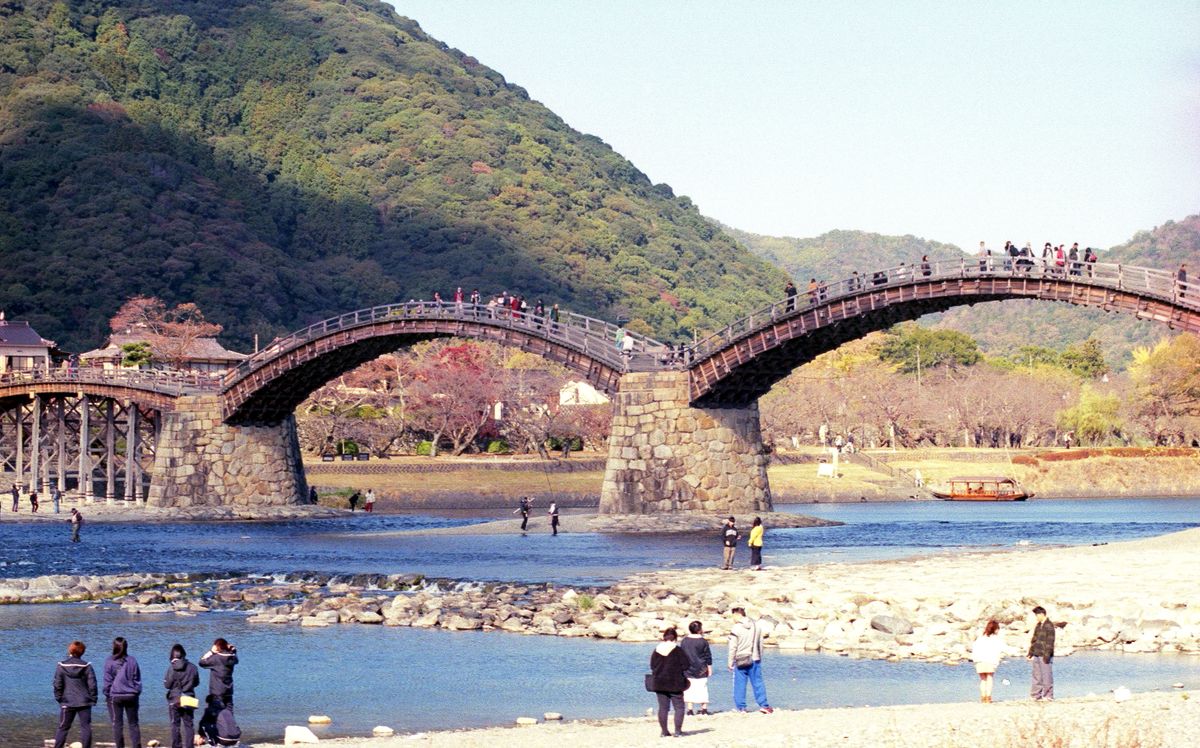
Kintai Bridge: The Samurai’s Five Arches
Kintai Bridge in Iwakuni is one of Japan’s most recognizable and photographed bridges, a masterpiece of traditional Japanese wooden bridge engineering constructed in 1673 that spans the Nishiki River with five wooden arches resting on four stone piers. The bridge’s distinctive profile — five sweeping arches of unpainted wood rising and falling in a graceful wave form — is unique in the world of bridge architecture and has inspired countless paintings, woodblock prints, and photographs over its 350-year history.
Crossing Kintai Bridge on foot costs a small toll and takes only a few minutes, but the views from the bridge deck looking upstream and downstream along the Nishiki River, with mountains framing the scene in all directions, make it worth lingering. The bridge is most spectacular in spring when hundreds of cherry trees along the river banks bloom simultaneously, creating a scene of legendary beauty. The annual Cherry Blossom Festival at Kintai Bridge in April is one of the most celebrated hanami events in western Japan, drawing visitors from across the country.
On the far side of the bridge, Iwakuni Castle occupies the summit of a forested hill accessible by ropeway, offering views of the bridge, the river, and the surrounding town from above. The Iwakuni domain was ruled by a branch of the Mori clan, and the samurai district and white snake sanctuary (Iwakuni is famous for its population of rare albino Japanese rat snakes, considered sacred) add additional interest to the overall Iwakuni experience.
Akiyoshidai and Akiyoshido Cave
Akiyoshidai is Japan’s largest karst plateau, a dramatic landscape of grey limestone outcroppings emerging from a rolling grass tableland that stretches for approximately 130 square kilometers in the mountains of central Yamaguchi Prefecture. The plateau is designated a quasi-national park and offers extraordinary hiking through an alien landscape where the pale limestone formations create patterns that change completely with the light of different times of day. The plateau is most atmospheric in winter when frost covers the grass and the limestone peaks emerge from low morning mist.
Beneath Akiyoshidai lies Akiyoshido, one of Japan’s largest limestone caves, extending for approximately 10 kilometers underground with a 1-kilometer section open to public access. The accessible section contains extraordinary formations including flowstones, stalactites, stalagmites, and underground ponds lit by colored lights that emphasize the cave’s natural geometry. The Kogane-bashira (Golden Pillar), a towering golden flowstone column, is the cave’s most dramatic feature. The cave maintains a constant temperature of 17 degrees year-round, making it delightfully cool in summer and refreshingly warm in winter.
Hagi: The City That Made Modern Japan
Hagi is one of Japan’s most historically significant small cities, a castle town where the Choshu domain’s tradition of samurai education produced an extraordinary concentration of men who went on to shape modern Japan. The Shoka Sonjuku private school founded by the revolutionary teacher Yoshida Shoin in 1857 taught students including Ito Hirobumi (Japan’s first prime minister), Yamagata Aritomo (one of Japan’s greatest generals and twice prime minister), and many other architects of the Meiji Restoration. The school, which stands within the grounds of Shoin Shrine, is inscribed as a UNESCO World Heritage Site as part of the Sites of Japan’s Meiji Industrial Revolution.
The historic Hagi townscape — preserved across the Jokamachidate samurai district, the Tamachi merchant district, and the Horiuchi traditional residential area — is one of the most completely preserved pre-modern Japanese urban environments outside of Kyoto and Kanazawa. Narrow lanes of whitewashed earthen walls enclose the gardens of samurai residences, and many of the buildings were inhabited by the direct ancestors of the men who built modern Japan. Walking these streets with knowledge of what they produced is a genuinely moving historical experience.
Hagi Castle Ruins, now a park of cherry trees and stone walls at the tip of the Hagi peninsula, offers views of the Sea of Japan and the mountains of the Chugoku range behind the city. The castle was dismantled following the Meiji Restoration as part of the new government’s abolition of the feudal domain system, and what remains are the elegant stone foundation walls and moats that convey the castle’s former scale. Hagi is also famous for Hagi ware (Hagi-yaki), a form of Korean-influenced pottery prized for tea ceremony use, produced in the city’s working kilns for over 400 years.
Tsunoshima Bridge and the Turquoise Sea
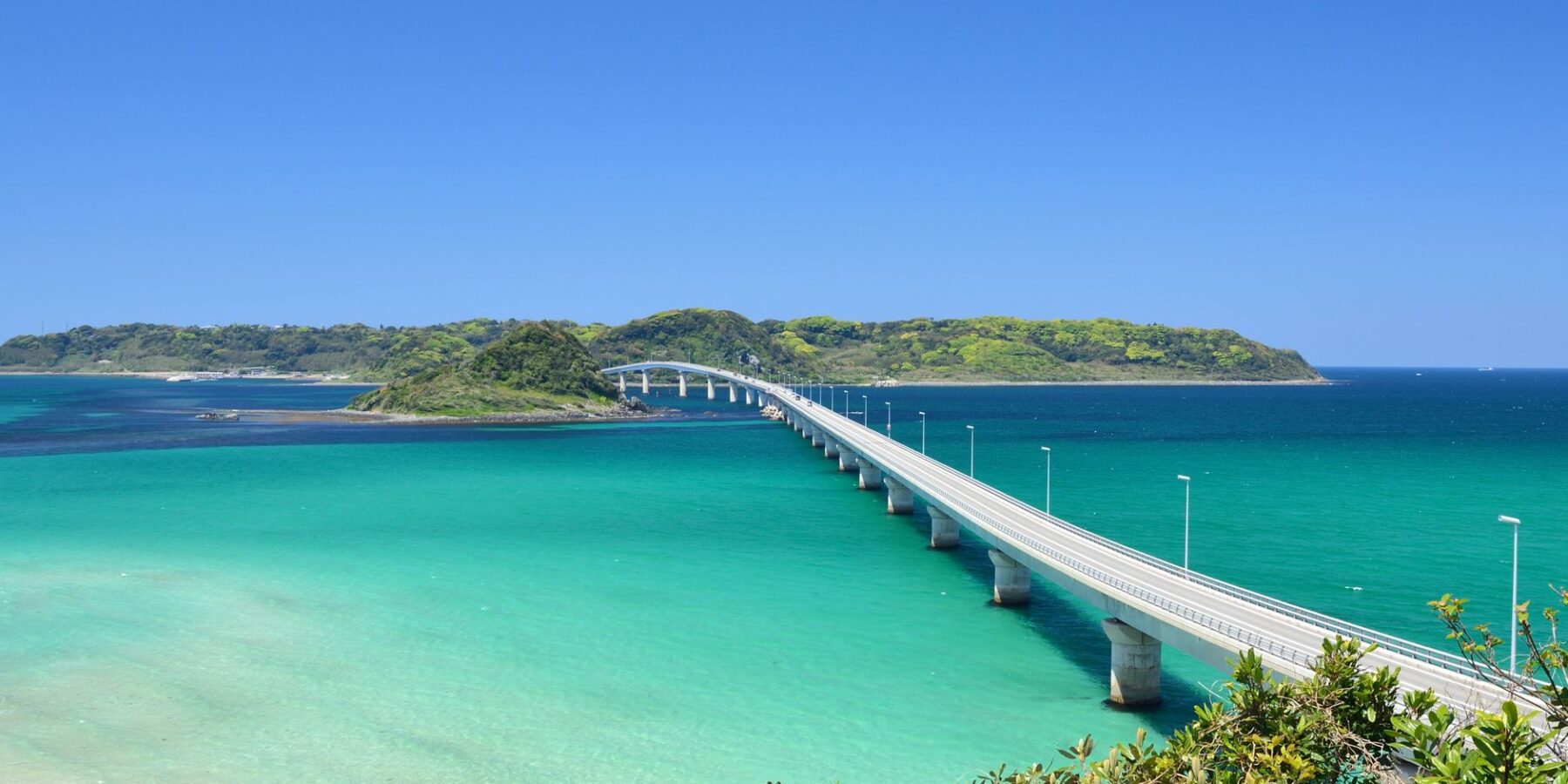
Tsunoshima Bridge, spanning 1,780 meters across the Sea of Japan to connect the mainland with the small island of Tsunoshima, has become one of the most photographed coastal landscapes in western Japan. The bridge’s low elevation allows it to appear to glide just above the surface of the sea, and the extraordinarily clear, turquoise-colored water of the surrounding sea — colored by the absence of river sediment and the white sand seabed visible below — creates a tropical-looking scene at odds with the temperate Japanese climate.
Tsunoshima Island itself is a small, flat coral-influenced island with a lighthouse, small fishing village, and beaches of remarkable clarity. The drive across the bridge and around the island, with views of the Sea of Japan in all directions and the distant mountains of Kyushu on clear days, is one of the finest coastal drives in Japan. The island is best visited in early summer when the surrounding water is at its clearest and most brilliantly colored.
Shimonoseki and the Kanmon Strait
Shimonoseki, at the very tip of Honshu, is where Japan’s main island faces Kyushu across the narrow Kanmon Strait. The strait, at its narrowest point only 700 meters wide, was the site of the decisive naval Battle of Dan-no-ura in 1185 where the Minamoto clan defeated the Taira clan and established the era of samurai rule in Japan. The battle’s historical significance and the dramatic seascape of the strait — with freighters, ferries, and fishing boats passing in an almost continuous procession — make Shimonoseki’s waterfront one of Japan’s most historically loaded coastal landscapes.
Shimonoseki is also Japan’s premier destination for fugu (puffer fish) cuisine. The Kanmon Strait’s strong currents create ideal conditions for the torafugu (tiger puffer fish) that Japanese chefs prize above all other varieties, and Shimonoseki processes approximately 80% of Japan’s entire fugu catch. The Karato Market near the waterfront is one of Japan’s most vibrant morning fish markets, where the extraordinary diversity of Kanmon Strait seafood is sold fresh each morning and fugu can be sampled in various preparations.
Getting to Yamaguchi
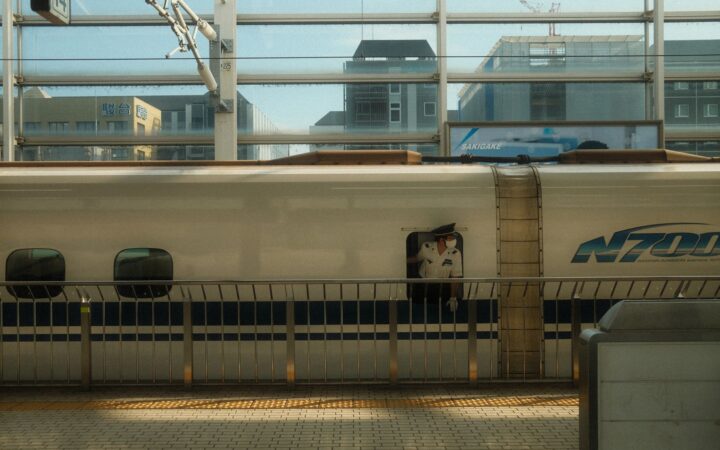
Yamaguchi Prefecture is served by the Sanyo Shinkansen, which runs along the southern coast connecting Hiroshima to Shin-Yamaguchi (for central Yamaguchi and Hagi), Shin-Shimonoseki, and Kokura (gateway to Kyushu) in rapid succession. From Osaka, Shin-Yamaguchi is approximately 2 hours by shinkansen. From Hiroshima, the journey to Shin-Yamaguchi takes approximately 35 minutes. The Japan Rail Pass covers all shinkansen (the Nozomi and Mizuho with an extra NOZOMI MIZUHO Ticket) and local JR services in Yamaguchi, making it very economical for pass holders covering western Japan.
Before heading out, make sure you have a Japan eSIM ready to navigate, translate, and share photos without worrying about connectivity. Get your Japan eSIM (Stay connected from day 1) →
For Hagi and the northern San’in coast, buses run from Shin-Yamaguchi and Yamaguchi City, though the journey takes approximately 2 hours. Iwakuni is accessible from Hiroshima by local JR train in approximately 45 minutes. Shimonoseki is easily reached from Fukuoka (Kokura) by shinkansen in 15 minutes, making it a natural extension of a Kyushu itinerary.
Getting Around Yamaguchi
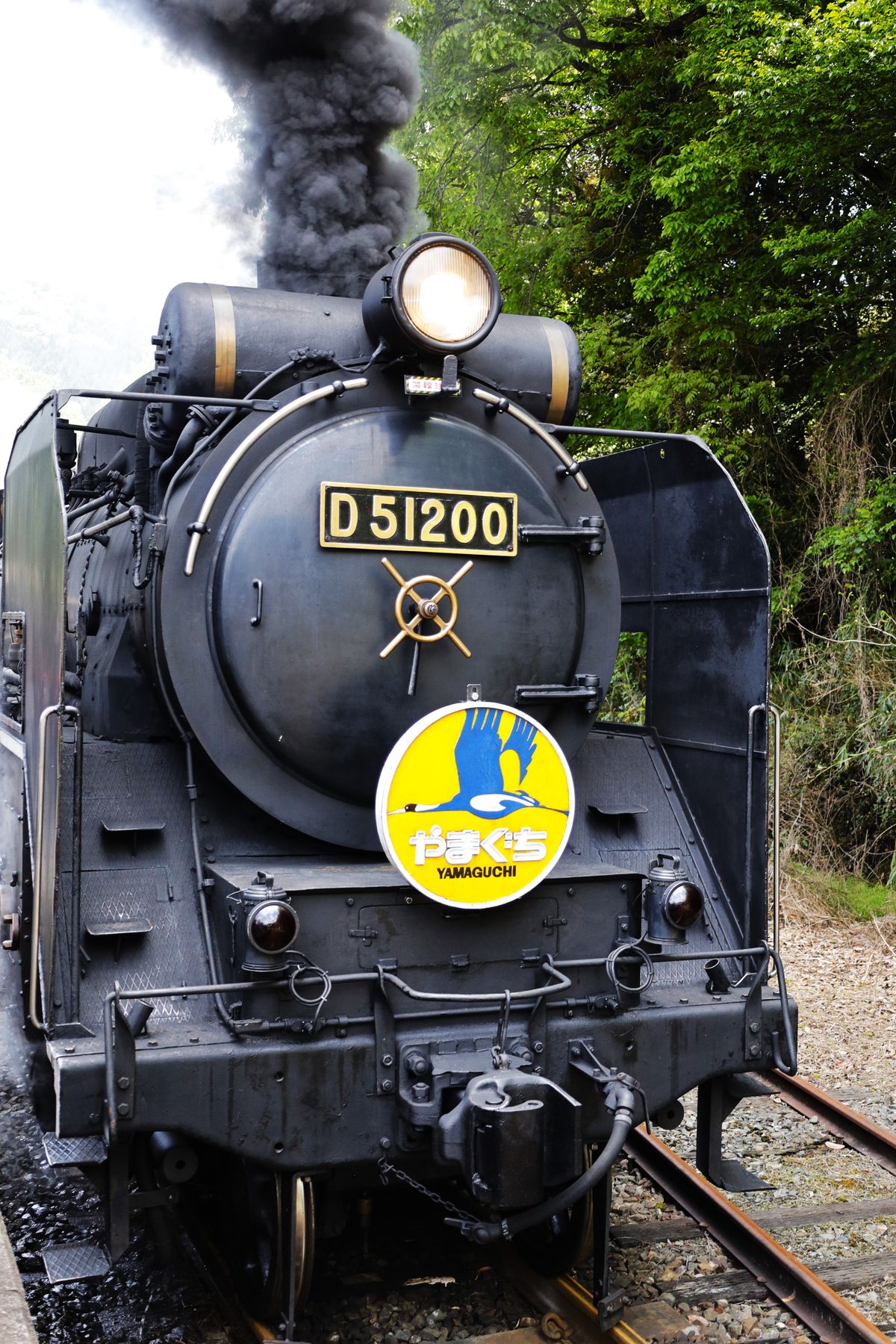
Yamaguchi is a large prefecture with a diverse landscape, and getting between its major attractions requires planning. The JR San’in Line and JR Ube Line provide rail connections along both coasts, but the more remote central areas including Akiyoshidai and the Tsunoshima coast are best accessed by rental car. Car rental is available at major stations including Shin-Yamaguchi and Shimonoseki. The SL Yamaguchi tourist steam locomotive that runs between Shin-Yamaguchi and Tsuwano on selected weekends and holidays from May through December is one of Japan’s most beloved heritage rail experiences.
Where to Stay in Yamaguchi
Accommodation options in Yamaguchi reflect the prefecture’s spread-out geography. Shimonoseki has a range of business hotels and waterfront accommodation, convenient for evening fugu dining and morning fish market visits. Iwakuni has several hotels near the Kintai Bridge area. Hagi offers the most atmospheric accommodation options, with traditional ryokan in the historic samurai district allowing guests to sleep within the preserved Edo-period townscape. Several ryokan in Hagi have sea-view rooms overlooking the Sea of Japan and serve kaiseki dinners featuring local seafood.
Food and Local Specialties in Yamaguchi
Yamaguchi’s culinary identity is dominated by fugu (puffer fish), which the prefecture has been licensed to prepare since 1888 — longer than any other prefecture. Shimonoseki’s fugu cuisine ranges from the theatrical to the intimate: fugu sashimi (fugu-sashi) arranged in chrysanthemum patterns on a platter, fugu hot pot (fugu-chiri), fugu skin in ponzu dressing, deep-fried fugu (fugu karaage), and fugu sake (hot sake with a toasted fugu fin). A full fugu kaiseki course in Shimonoseki is one of Japan’s most distinctive regional dining experiences.
Hagi’s local specialties reflect its long history as a castle town port: fresh Sea of Japan seafood including snow crab in winter, yellowtail, and various shellfish. Uragami Manju, a steamed sweet bun that has been made in Hagi for over 400 years using local rice flour and red bean paste, is the town’s most beloved confection. Yamaguchi City’s famous summer festival Gion Festival features the local specialty of champon noodles — a Yamaguchi-style version quite different from the Nagasaki variety, using a lighter broth and local vegetables.
Best Time to Visit Yamaguchi
Spring is spectacular in Yamaguchi, particularly at Kintai Bridge where the cherry blossom festival in April creates one of western Japan’s most celebrated seasonal events. Summer is the best time to visit Tsunoshima for swimming in the turquoise water. Autumn brings excellent foliage to the mountains around Akiyoshidai and Hagi, with October and November providing comfortable walking temperatures. Winter is fugu season, when the cold-water fish reach peak flavor, and a winter visit to Shimonoseki specifically for fugu cuisine is a pilgrimage that serious food lovers make annually.
Hidden Gems and Local Tips for Yamaguchi
Tsuwano, accessible by the heritage SL Yamaguchi steam locomotive from Shin-Yamaguchi on weekends, is one of Japan’s most remarkably preserved small castle towns, nicknamed Little Kyoto for the density of historical atmosphere packed into its narrow valleys and mountain-flanked streets. The town’s Taikodani Inari Shrine, approached by a tunnel of hundreds of vermilion torii gates similar to Fushimi Inari in Kyoto but far less crowded, is one of Japan’s five great Inari shrines. The carp that swim in the open roadside channels along Tsuwano’s main street are one of the town’s signature sights.
Motonosumi Inari Shrine on the Sea of Japan coast near Nagato, where 123 vermilion torii gates descend a cliff to the churning sea below, has become one of Yamaguchi’s most shared photography subjects in recent years — extraordinary to see in person, with the sea visible through the gate tunnel framing sea and sky. Local tip: Akiyoshido cave’s natural temperature of 17 degrees makes it particularly valuable on hot summer days — time your visit to the plateau and cave to use the cave as a midday refuge from the heat before exploring the plateau in the cooler afternoon light.
Practical Information for Yamaguchi
Yamaguchi Prefecture operates on Japan Standard Time (JST, UTC+9). English signage is adequate at major tourist sites including Kintai Bridge, Akiyoshido Cave, and the main Hagi historic sites, but rural areas and smaller attractions rely on Japanese-only materials. The Hagi and Yamaguchi city tourist information offices provide English-language assistance and maps. International credit cards are widely accepted in larger towns and tourist facilities.
Budget Guide for Yamaguchi
Yamaguchi is a moderately priced destination. Kintai Bridge crossing costs 310 yen toll plus 270 yen for the Iwakuni Castle ropeway. Akiyoshido cave entry is 1,200 yen. The main Hagi historic sites charge modest individual entry fees of 100 to 500 yen. Budget travelers can manage on 8,000 to 12,000 yen per day. The major optional expense is fugu cuisine: a full fugu kaiseki course in a reputable Shimonoseki restaurant costs 8,000 to 15,000 yen per person. Tsuwano and Hagi ryokan accommodation with two meals typically runs 15,000 to 25,000 yen per person.
Frequently Asked Questions About Yamaguchi
What is Yamaguchi most famous for?
Yamaguchi is most famous for the Kintai Bridge in Iwakuni, the historic city of Hagi and its central role in the Meiji Restoration, fugu (puffer fish) cuisine centered on Shimonoseki, the limestone cave system of Akiyoshido, and the spectacular Tsunoshima Bridge over turquoise sea. The prefecture is also historically significant as the home of many of Japan’s Meiji-era political and military leaders, giving it an outsized role in Japanese national history relative to its population.
Is fugu (puffer fish) safe to eat?
Fugu prepared by licensed chefs in Japan is extremely safe. The dangerous tetrodotoxin poison is concentrated in specific organs that licensed chefs have been trained to remove with complete precision — a training and licensing process that takes several years and involves rigorous examinations. Fugu-related illness in Japan is extremely rare and almost always involves home preparation rather than restaurant consumption. Shimonoseki’s fugu chefs are among the most experienced in Japan, and eating fugu in a licensed restaurant here is completely safe.
How do I get to Hagi from Hiroshima?
The most straightforward route from Hiroshima to Hagi is by shinkansen to Shin-Yamaguchi Station, followed by a highway bus to Hagi that takes approximately 2 hours. On weekends from March through November, the SL Yamaguchi steam locomotive operates between Shin-Yamaguchi and Tsuwano, and Hagi is accessible by bus from Tsuwano. A rental car from Shin-Yamaguchi is the most flexible option and allows stops at attractions along the way. The total journey from Hiroshima to Hagi takes approximately 3 to 3.5 hours.
What is the historical significance of Hagi?
Hagi was the castle town of the Choshu domain, which played a decisive role in the overthrow of the Tokugawa shogunate and the Meiji Restoration of 1868. The domain’s tradition of progressive samurai education produced an extraordinary concentration of reformers and modernizers including Yoshida Shoin, whose Shoka Sonjuku private school taught many of Japan’s Meiji-era leaders. The Shoka Sonjuku and related Meiji Restoration heritage sites in Hagi and Yamaguchi Prefecture are inscribed on the UNESCO World Heritage List as part of the Sites of Japan’s Meiji Industrial Revolution.
Can I swim at Tsunoshima?
Yes, Tsunoshima has beaches suitable for swimming in summer, and the extraordinary clarity and turquoise color of the water makes it one of the most appealing coastal swimming spots in western Japan. The main beach area near the bridge approach is the most accessible swimming location. Summer weekends at Tsunoshima can be crowded with Japanese visitors, so an early morning or weekday visit is recommended for the best experience of the island’s exceptional coastal landscape.
What is the SL Yamaguchi and how do I ride it?
The SL Yamaguchi is a heritage steam locomotive that operates on the JR Yamaguchi Line between Shin-Yamaguchi and Tsuwano on selected weekends and public holidays from May through December in 2026, with no September runs. The journey takes approximately 2 hours and 20 minutes each way through mountain scenery along the Fushino and Abu river valleys. The train uses a genuine steam locomotive that produces dramatic plumes of smoke on the mountain grades. All seats are reserved, so book a reserved-seat ticket in advance through JR ticket channels before you plan to ride. The Japan Rail Pass is accepted for the SL Yamaguchi service.
Is Yamaguchi good for day trips from Hiroshima?
Iwakuni is excellent for a day trip from Hiroshima — the train journey takes only 45 minutes, and Kintai Bridge, Iwakuni Castle, and the surrounding area can be comfortably covered in a full day. Shimonoseki is approximately 1 hour from Hiroshima by shinkansen and makes for a good day trip focused on the Kanmon Strait waterfront, fugu lunch, and the Karato fish market. Hagi and the interior attractions of Yamaguchi require at least one overnight stay to visit properly from Hiroshima.
3-Day Yamaguchi Itinerary: Temples, Karst Caves, and Puffer Fish
Day 1: Hagi Samurai Town
Start in Hagi, the best-preserved castle town in western Japan and the birthplace of many key figures of the Meiji Restoration including Ito Hirobumi (Japan’s first Prime Minister) and Yamagata Aritomo. The Hagi Old Town district retains an intact network of samurai residential streets with white-walled garden gates, merchant townhouses, and temple complexes that have changed little since the Edo period. The Kikuya Residence (a wealthy merchant family’s preserved estate) and the Mori Clan Samurai Residence offer genuine windows into Edo-period social hierarchy. Hagi Castle ruins (only the stone walls and moat remain) sit dramatically on the coast overlooking the Sea of Japan — the setting is magnificent even without the castle itself. Try Hagi-yaki pottery (Hagi ware, second only to Raku ware in the Japanese tea ceremony hierarchy) at one of the town’s traditional kilns, where studio tours and purchase are both welcome.
Day 2: Akiyoshidai Karst Plateau and Akiyoshido Cave
Drive to the center of the Yamaguchi Peninsula to Akiyoshidai Quasi-National Park — Japan’s largest karst plateau, a surreal landscape of grass-covered limestone pavements dotted with thousands of white limestone outcroppings called “hitsuji-iwa” (sheep rocks) for their resemblance to a flock of sheep. The plateau stretches for 16 kilometers and its alien, treeless topography is striking in any season — particularly beautiful in winter when early morning frost covers the limestone in white. Descend into Akiyoshido Cave — Japan’s largest limestone cave system (10 km of passages, 1 km open to visitors) where vast chambers filled with stalactites, stalagmites, and underground rivers create an underground world of extraordinary geological drama. The cave maintains a constant temperature of 17°C year-round — welcome in both summer heat and winter cold. Afternoon: explore the village of Mine City for Yamaguchi’s distinctive local crafts.
Day 3: Shimonoseki Fugu and Moji Retro District
Head to Shimonoseki — the self-proclaimed global capital of fugu (puffer fish) cuisine. Japan consumes most of the world’s fugu, and Shimonoseki’s Karato Fish Market handles the largest fugu volume in Japan. The Karato weekend morning market (Saturdays and Sundays 8 AM–2 PM) is one of Japan’s most vibrant fish markets, with stalls selling fugu sashimi, whole fish, and processed fugu products directly to the public at market prices. Lunch: try a fugu kaiseki meal at a licensed Shimonoseki fugu restaurant — the elaborate preparation includes fugu sashimi (cut paper-thin to be transparent), fugu hot pot (fugu-chiri), and fried fugu (kara-age). Cross the Kanmon Strait Tunnel (accessible on foot) to Kitakyushu’s Mojiko Retro District in Fukuoka Prefecture for an afternoon of Meiji-era Western-style architecture before returning to Shimonoseki for overnight or departure.
Shopping Guide: Yamaguchi Souvenirs
Yamaguchi’s most distinctive souvenirs come from its unique culinary and craft traditions. Fugu products — dried fugu (hirezake, fugu fin sake), pickled fugu skin, and fugu roe (highly processed to neutralize toxins) — are exclusively Shimonoseki specialties. Hagi-yaki pottery cups, bowls, and sake vessels in the characteristic soft, porous clay with pink-orange glaze are among Japan’s most prized tea ceremony wares, available from traditional kilns in Hagi in a wide price range. Nishiki-ori textiles from Yanai City and Ouchi-nuri lacquerware from Yamaguchi City are traditional craft products of the prefecture. Kawara senbei (roof-tile-shaped biscuits filled with cream) from Hagi and fugu-flavored rice crackers from Shimonoseki are popular food souvenirs. Local sake from Yamaguchi breweries, particularly from the Iwakuni area, reflects the region’s excellent rice and water.
Family-Friendly Activities in Yamaguchi
Akiyoshido Cave is Yamaguchi’s top family attraction — the 1-km walk through Japan’s largest cave system, with its dramatic formations and underground river, inspires genuine awe in children and adults alike. The adjacent Akiyoshidai limestone plateau with its surreal sheep-rock landscape provides excellent outdoor play space for energetic children after the cave. Karato Fish Market in Shimonoseki is excellent for older children interested in Japan’s fishing industry culture — the Saturday morning fugu auction atmosphere is uniquely educational. The Hagi Museum has exhibits on Hagi’s history and its role in the Meiji Restoration, suitable for older children. Tsunoshima Island (connected to the mainland by a bridge) has one of western Japan’s most beautiful beaches with transparent shallow water excellent for summer family swimming.
Solo Travel Tips for Yamaguchi
Yamaguchi Prefecture is excellent for solo travelers with a genuine interest in history and unique culinary experiences. Hagi’s samurai districts are ideal for solo wandering — the town is compact, the streets are atmospheric, and the pace is slow enough for unhurried exploration. Solo fugu dining in Shimonoseki is entirely comfortable — many restaurants have counter seats, and the elaborate multi-course preparation is an engaging solo experience. A rental car from Yamaguchi or Hagi is strongly recommended for accessing Akiyoshidai, which has limited public bus service. The Chugoku Nature Trail passes through Yamaguchi Prefecture, offering multi-day hiking options for adventurous solo trekkers through the Akiyoshidai plateau and surrounding forest landscapes.
Frequently Asked Questions About Yamaguchi
Is fugu (puffer fish) safe to eat?
Yes — fugu served at licensed Japanese restaurants is completely safe. Japanese law requires all fugu chefs to hold a special license obtained after rigorous training and testing in fugu preparation. The toxic parts (liver, ovaries, and skin in some species) are carefully removed before the fish is prepared, and the remaining flesh is entirely safe. Japan serves millions of fugu meals annually with an extremely rare incidence of adverse effects, virtually all of which are associated with unlicensed home preparation. Eating fugu at a licensed restaurant in Shimonoseki carries no meaningful risk and is a unique and delicious experience.
How do I get to Yamaguchi Prefecture?
The Sanyo Shinkansen connects Shin-Yamaguchi Station (serving Yamaguchi City) and Shin-Shimonoseki Station from Osaka (about 2 hours) and Tokyo (about 4 hours). Hagi is accessible by bus from Shin-Yamaguchi (about 70 minutes) or by JR San’in Line from Masuda. Akiyoshidai is accessible by bus from Shin-Yamaguchi. A rental car from Shin-Yamaguchi Station is the most practical way to cover multiple Yamaguchi destinations efficiently.
What is Hagi-yaki pottery?
Hagi-yaki (Hagi ware) is one of Japan’s most revered pottery traditions, particularly in the tea ceremony world. The characteristic soft, porous clay (sourced from mountains near Hagi) absorbs tea and develops a patina over time — tea masters say Hagi ware “improves with age” as the color gradually changes from its initial pink-orange to warm amber tones with use. This quality of improvement through use (Hagi no nanabake, meaning “seven transformations”) is unique to Hagi ware and is the quality most prized by tea ceremony practitioners. Modern Hagi potters produce both traditional tea ceremony ware and contemporary functional tableware that makes excellent everyday souvenirs.
Yamaguchi’s Historic Temples and Gardens
Yamaguchi City, the prefectural capital, has an unexpectedly rich cultural heritage as the former seat of the Ouchi clan (14th–16th centuries) — powerful feudal lords who cultivated a sophisticated court culture modeled on Kyoto. The city retains several remarkable cultural monuments from this period. Ruriko-ji Temple in the center of the city houses a stunning five-story pagoda (1442) considered one of Japan’s three most beautiful pagodas — its elegant proportions and forested setting are extraordinary. The Joei-ji Garden, designed by the Zen monk Sesshu Toyo (one of Japan’s greatest painters) in 1479, is a remarkable dry landscape garden where carefully arranged rocks and raked gravel represent a mountain landscape — considered one of Japan’s finest gardens by specialists, though little-known outside Japan. The Saint Francis Xavier Memorial Church commemorates Francis Xavier, who arrived in Japan at Kagoshima in 1549 and preached in Yamaguchi in 1550–51, preaching in Yamaguchi for two years under Ouchi clan protection.
Tsuwano, a small valley town just across the border in Shimane Prefecture, is called the “Little Kyoto of the San’in region” for its remarkably preserved Edo-period townscape. The main street features white-walled merchant houses with traditional koi-filled irrigation channels (hori) running alongside — children and adults delight in watching the massive carp gliding along these urban streams. Tsuwano Castle ruins on the mountain above town are accessed by chairlift and offer panoramic valley views. The town’s Taikodani Inari Shrine — one of Japan’s five great Inari shrines — features over 1,000 red torii gates lining the hillside approach, creating a tunnel of red that rivals Kyoto’s famous Fushimi Inari. Tsuwano is accessible by the scenic steam-powered SL Yamaguchi tourist train (selected weekends, May–December) from Shin-Yamaguchi Station — an extraordinary vintage railway journey through mountain valleys.
Yamaguchi’s Ube City has developed an unexpected identity as a sculpture city — dozens of large-scale outdoor sculptures by Japanese and international artists are distributed throughout the city’s parks and public spaces as part of the Ube Biennale (held every two years since 1961, Japan’s oldest outdoor sculpture competition). The Ube area’s industrial heritage and contemporary art ambition create an interesting urban contrast well worth exploring for travelers interested in contemporary Japanese art outside the famous Naoshima-style gallery settings.
Yamaguchi Prefecture rewards every type of traveler — whether drawn by history, art, nature, or gastronomy. With excellent transport connections and a wealth of authentic experiences unavailable in Japan’s overcrowded tourist centers, this is one of western Japan’s most compelling and underappreciated destinations. Plan at least two to three days to experience the full depth this remarkable prefecture has to offer.
The steam locomotive journey on the SL Yamaguchi, the pungent thrill of fugu cuisine, the surreal limestone plateau of Akiyoshidai, and the perfectly preserved samurai streets of Hagi together create a Yamaguchi experience that lingers long after departure. This is Japan’s far west at its most authentic and surprising — a destination that rewards the traveler willing to look beyond the obvious.
Yamaguchi Prefecture’s position at the westernmost tip of Honshu gives it a unique character shaped by centuries of being a gateway between Japan and the Asian continent. This borderland history created the cosmopolitan culture of the Ouchi clan, the early Christian missions of Francis Xavier, and the revolutionary Choshu clan that drove the Meiji Restoration — three transformative moments in Japanese history, all centered on this often-overlooked prefecture. For travelers willing to explore Japan’s western frontier, Yamaguchi offers historical depth, culinary adventure, and natural spectacle in equal measure.
Related guides
- Tomonoura Travel Guide 2026: A First-Timer’s Guide to Japan’s Best-Preserved Edo-Era Port Town in Hiroshima
- Shimanami Kaido Cycling Guide 2026: How to Ride Japan’s Island-Hopping Bike Route Across the Seto Inland Sea
- Miyajima Travel Guide 2026: A First-Timer’s Guide to the Floating Torii, Itsukushima Shrine, Mount Misen and Hiroshima’s Sacred Island
Going to Japan? Speak Japanese with confidence.
Hirameki Japanese — camera translate for menus and signs, a two-way conversation mode, and furigana + romaji on every phrase. Free to download with kana charts, conversation mode and starter words; a one-time purchase unlocks everything.
⬇ Get it on the App Store
Plan your Japan trip
Two things every first-timer should book
Some links are affiliate links. If you book through them we may earn a small commission at no extra cost to you.