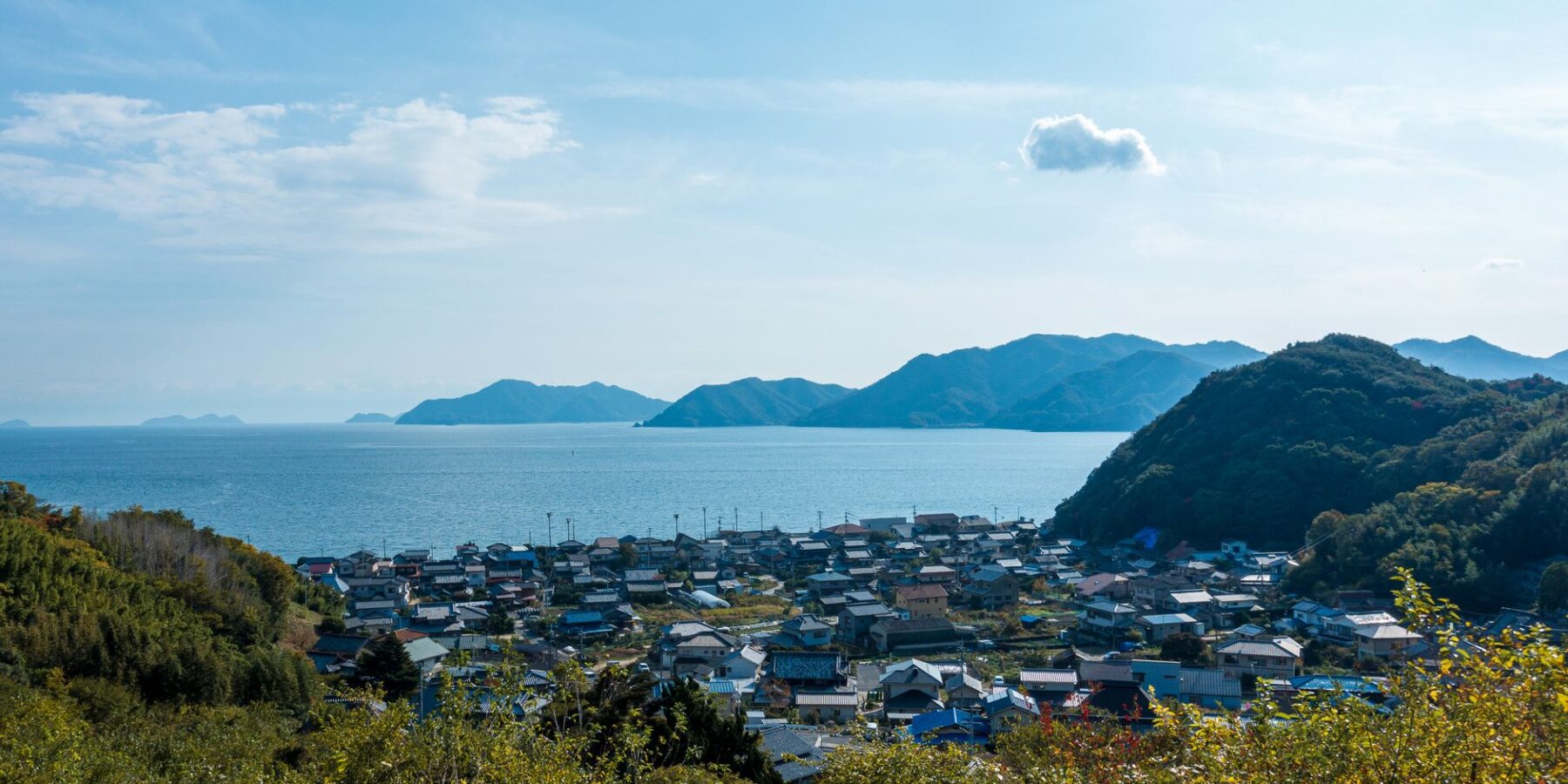
Tucked into a quiet corner of the Seto Inland Sea in Hiroshima Prefecture, Tomonoura (鞆の浦) is the kind of place most first-time visitors to Japan never hear about — and that is exactly why you should go. While the crowds pour into Kyoto and Tokyo, this tiny port town has been quietly preserving its Edo-period soul for centuries. Narrow stone lanes wind between weathered merchant houses, fishing boats bob in a harbor framed by a stone lighthouse dating from 1859, and the islands of the Inland Sea float on the horizon like a classical ink painting.
Tomonoura is more than just pretty, though. It is one of the few places in Japan where you can still see a complete, intact Edo-era port system — the lighthouse, the boat ramps, the lookout, the warehouses, the harbor wall — all in their original positions. Film lovers may recognize it as the inspiration for Hayao Miyazaki’s Ponyo and as a filming location for Hollywood’s The Wolverine. History buffs will know it as the place where the samurai Sakamoto Ryoma negotiated after a famous shipwreck. And anyone who simply wants to slow down and breathe will find Tomonoura an antidote to the rush of big-city Japan.
This guide covers everything a first-time visitor needs: how to get there, what to see, where to eat and stay, the best time to visit, a ready-made day-trip itinerary, and answers to the questions travelers ask most. Let’s begin.
Why Visit Tomonoura? A Living Edo-Era Port
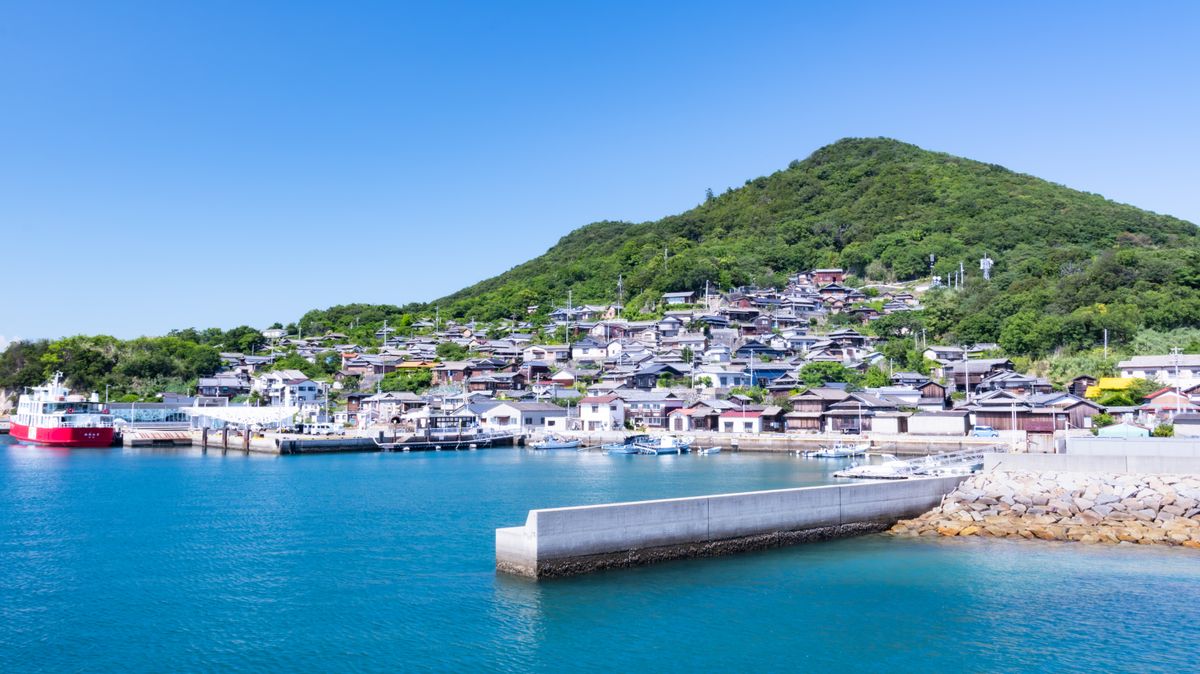
Tomonoura grew rich because of the tides. In the age of sail, ships traveling the Seto Inland Sea had to wait at Tomonoura for the currents to turn in their favor — the tide literally splits here, flowing in from both the east and west and meeting at the town. Sailors called this shio-machi, or “waiting for the tide,” and while they waited they spent money. For more than a thousand years Tomonoura was a thriving stopover, and that prosperity built the temples, mansions, and harbor works you can still walk through today.
What makes the town genuinely special is how little has changed. Most historic Japanese ports modernized their waterfronts in the twentieth century, tearing out old stone ramps to make room for concrete piers. Tomonoura did not. It still has its original joyato (a tall stone lighthouse from 1859), its gangi (stepped stone boat ramps), its hatoba (harbor pier), its tadeba (boat-repair dock), and its funabansho (harbor watch station). Historians regard this as the only complete surviving set of Edo-period port facilities in Japan. Walking the seawall, you are seeing the harbor essentially as a merchant in 1700 would have seen it.
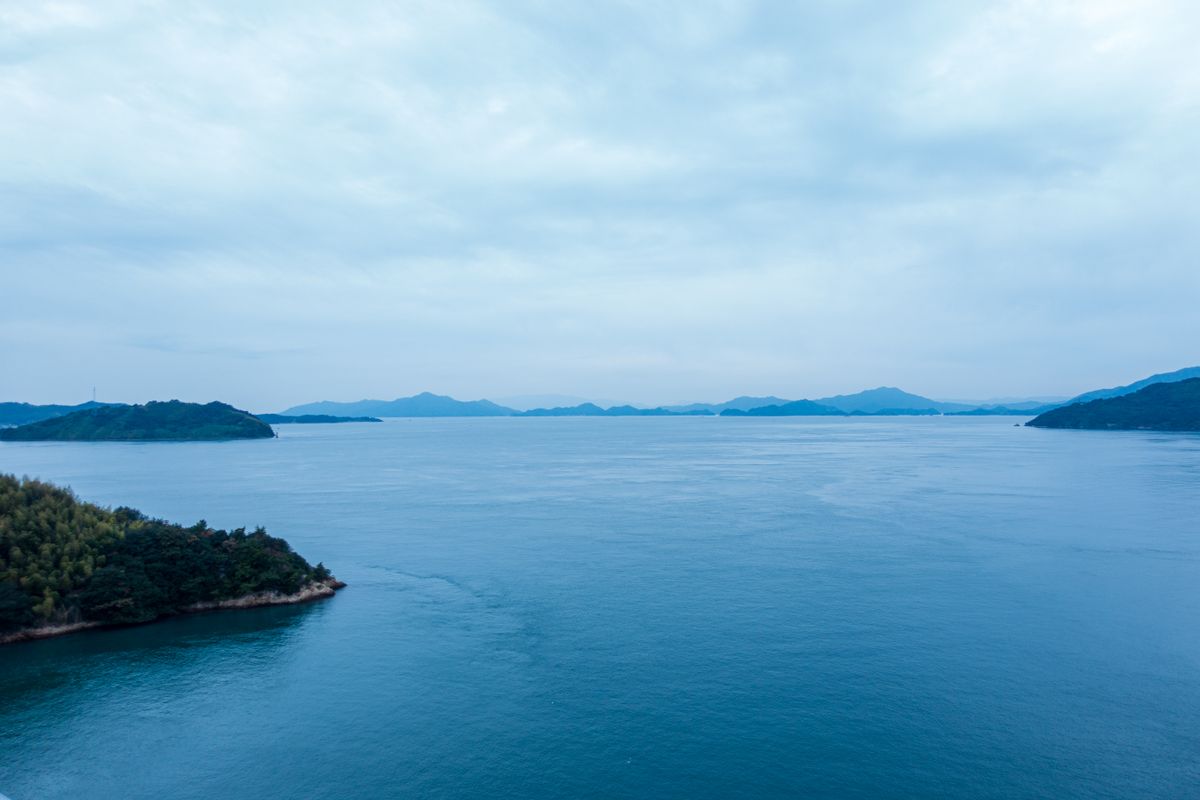
It helps to understand the setting. The Seto Inland Sea is a calm, island-studded body of water sheltered between three of Japan’s four main islands — Honshu, Shikoku, and Kyushu. Its waters are gentle, its light is soft, and its hundreds of pine-covered islands have been celebrated in Japanese art and poetry for centuries. Tomonoura sits on a little promontory jutting into this sea on the Honshu side, in the southeastern corner of Hiroshima Prefecture. From almost anywhere in town you can see water and islands, and the constant presence of the sea shapes the whole rhythm of the place — the fishing boats, the ferries, the tides, the seafood, and the salt-tinged air.
For travelers, the appeal is twofold. First, there is the sheer atmosphere — the kind of unhurried, lived-in beauty that is increasingly hard to find in Japan’s more famous destinations. Second, there is the rarity. You can tell people you have been to Kyoto and they will nod; tell them you spent a day in Tomonoura and you will sound like someone who really knows Japan. If you are building an itinerary that values authentic, off-the-beaten-path destinations, this is one of the best you can add.
How to Get to Tomonoura
Tomonoura has no train station, which is part of its charm and part of the reason it stays quiet. The gateway is Fukuyama Station (福山駅), a major stop on the Sanyo Shinkansen line, and from there you take a short local bus.
By Shinkansen to Fukuyama
Fukuyama is extremely well connected. From Tokyo, the Nozomi shinkansen reaches Fukuyama in about 3 hours and 30 minutes (¥16,930 for a non-reserved seat, or ¥18,310 reserved in regular season). From Shin-Osaka, it is about 1 hour (¥7,470 non-reserved, or ¥8,530 for a reserved Nozomi seat). From Hiroshima, it is under an hour depending on the train (¥4,510 non-reserved, about ¥5,440–5,760 reserved). From Hakata (Fukuoka), expect about 1 hour 15 minutes. If you are traveling widely around the country, it is worth checking whether a rail pass makes sense for your route — our guide on riding the shinkansen in Japan walks through ticketing, seat reservations, and luggage rules.
By Bus from Fukuyama Station to Tomonoura
From the south exit of Fukuyama Station, take the Tomotetsu bus bound for Tomonoura (鞆の浦 / 鞆港). Buses leave roughly every 20–30 minutes, the ride takes about 30 minutes, and the fare is ¥530 (about US$3.60) one way. Get off at the Tomonoura or Tomoko stop — both put you within a two-minute walk of the harbor. You can pay with cash or an IC card such as Suica or ICOCA.
By Car or Private Transfer
Driving from Fukuyama takes about 30 minutes, and there are paid parking lots near the harbor (around ¥500–700 per day). The streets of the old town itself are extremely narrow, so park on the edge and walk in. If you are arriving with luggage, traveling as a family, or coming from an airport such as Hiroshima or Okayama, a door-to-door shared ride can save a lot of hassle — services like Kiwitaxi airport transfers let you book a private or shared van in advance so you are not wrestling suitcases onto a local bus.
Stay Connected
Tomonoura is small and signage is mostly in Japanese, so having data on your phone for maps and translation is genuinely useful. If you have not sorted out connectivity yet, a prepaid Japan & Global eSIM is the easiest option — you install it before you fly and it activates the moment you land, with no need to find a counter at the airport.
Best Things to Do in Tomonoura
Tomonoura is compact — you can walk across the historic core in fifteen minutes — but it rewards slow exploration. Here are the highlights, roughly in the order you might encounter them on a walk around the harbor.
The Joyato Lighthouse and Harbor
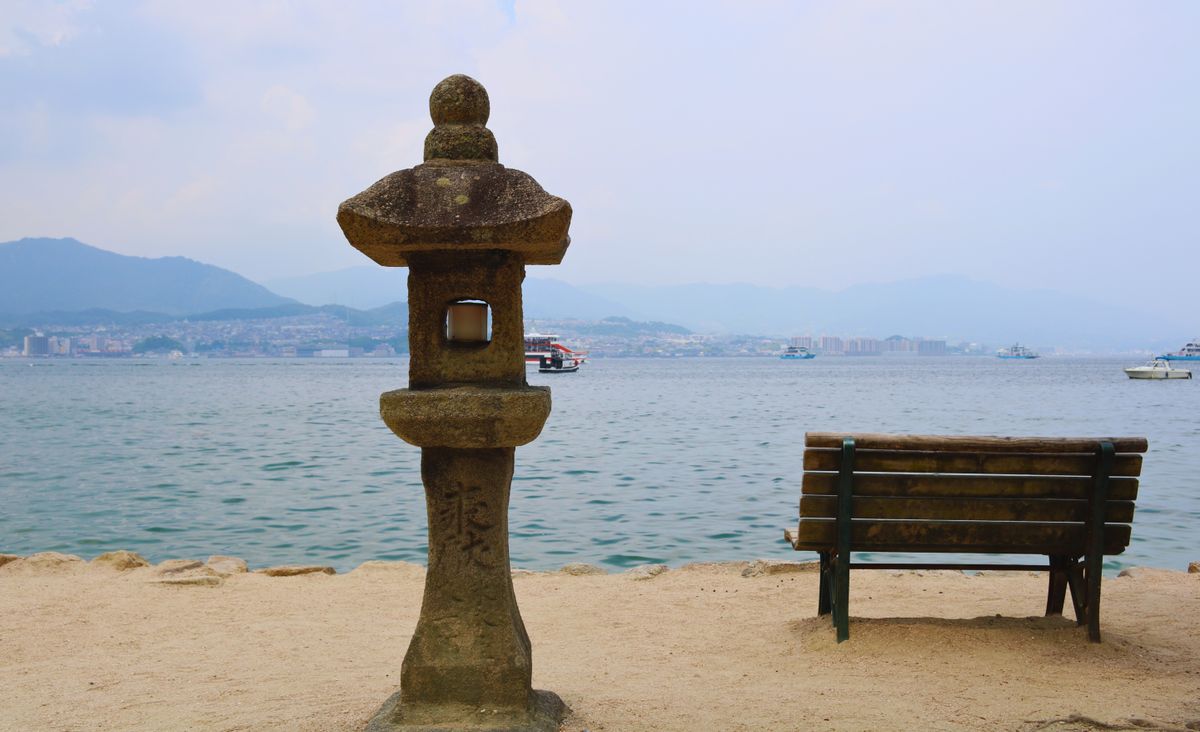
The undisputed symbol of Tomonoura is the joyato, a stone lighthouse built in 1859 that stands more than five meters tall at the tip of the harbor pier. By day it is a handsome piece of stonework; at dusk, when its lantern glows and the boats sway in the harbor, it becomes one of the most photographed scenes on the whole Inland Sea. Stand on the pier and you can take in the full Edo-era harbor in a single glance — the lighthouse, the stepped boat ramps, the seawall, and the islands beyond. There is no entry fee, and it is open at all hours.
Fukuzen-ji Temple and the Taichoro Hall
A short climb above the harbor brings you to Fukuzen-ji, a temple whose guest hall, the Taichoro, frames what an 18th-century Korean envoy famously called the most beautiful view in all of Japan. Sit on the tatami, slide your gaze past the temple’s open veranda, and the islands of the Inland Sea are framed like a painting in the doorway. Entry is ¥200 (about US$1.40). It is a quiet, contemplative spot and rarely crowded.
The Iroha-maru Museum
In 1867 the samurai reformer Sakamoto Ryoma was aboard the steamship Iroha-maru when it collided with a vessel belonging to the powerful Kishu domain and sank off Tomonoura. Ryoma came ashore here and conducted Japan’s first-ever maritime compensation negotiation, citing international law. The small Iroha-maru Museum, set in a former warehouse by the water, tells the story with artifacts recovered from the wreck. Entry is around ¥200 (US$1.40). Even if you do not know the history going in, it is a fascinating window into the dramatic final years of the samurai era.
The Old Town Streets and Homeishu Shops
Wander inland from the harbor and you enter a maze of lanes lined with Edo- and Meiji-period buildings — lattice-fronted merchant houses, white-walled storehouses, and tiny shrines tucked into corners. Tomonoura is famous for homeishu (保命酒), a sweet medicinal liquor infused with sixteen herbs that has been brewed here since 1659. Several historic shops, including the beautiful Ota Residence (an Important Cultural Property), let you taste and buy it. A bottle makes an unusual, very local souvenir, and tastings are usually free.
Sensui-jima Island
A five-minute ferry ride from the harbor takes you to Sensui-jima, a small island with walking trails, a pebble beach, colorful “five-colored” rock cliffs, and panoramic views back toward the town. The ferry runs roughly every 20 minutes and costs about ¥240 round trip (US$1.70). The island has a faded, nostalgic resort feel and makes a relaxing add-on if you have a couple of extra hours.
Iou-ji Temple and the Hilltop Viewpoint
For the best aerial view of the harbor, climb the stone steps behind Iou-ji temple to the Taishiden hall. It is a steep but short climb (about 580 steps), and the reward is a sweeping panorama of the roofs of the old town, the harbor, the lighthouse, and the islands. Go in the late afternoon for the best light. There is no fee.
Tomonoura on Screen: Ponyo and The Wolverine
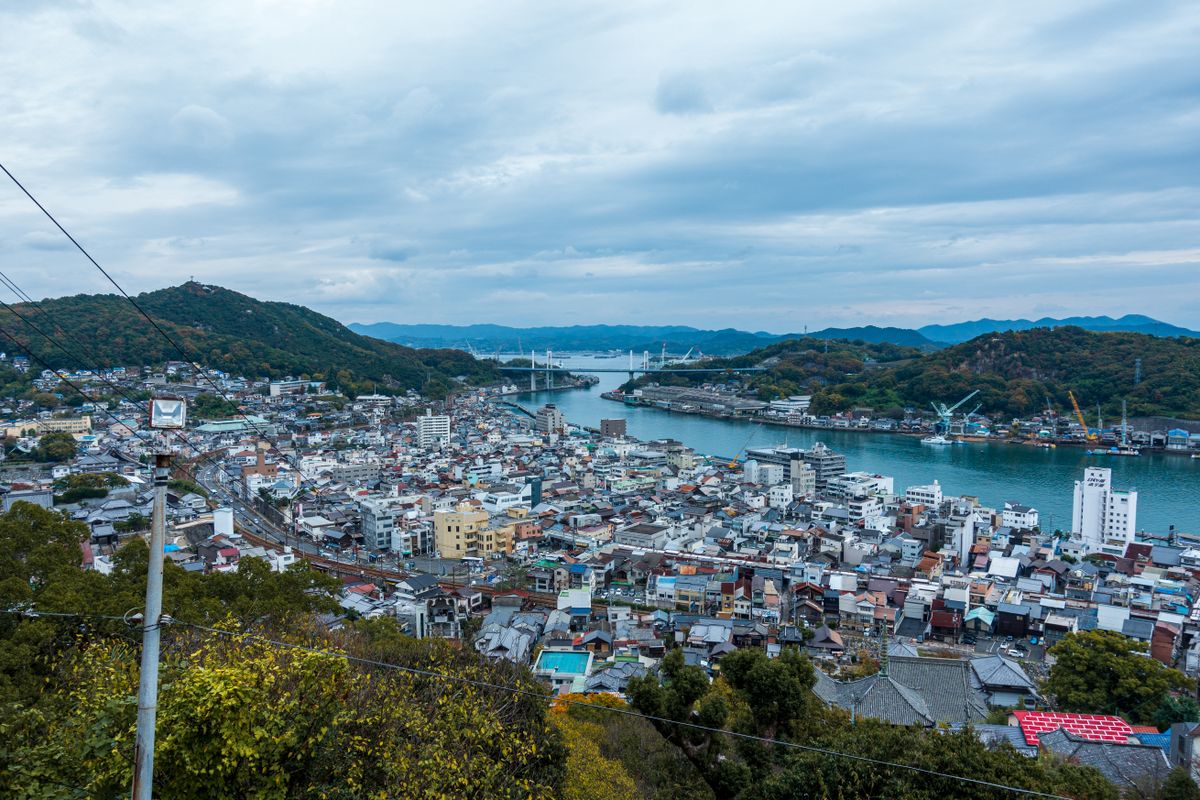
Tomonoura has a special place in film history. Hayao Miyazaki, the director behind Studio Ghibli’s beloved animated films, reportedly stayed in Tomonoura for two months and drew on its harbor, hillside houses, and sea-level streets when creating the seaside town in Ponyo (2008). You will not find an exact one-to-one map of the movie onto the town, but the spirit is unmistakable — the way the houses cling to the slopes, the way the sea is always just at the end of the lane.
The town also doubled as a 1940s Japanese fishing village in the 2013 Hollywood film The Wolverine, starring Hugh Jackman. Several scenes were shot among the old streets and along the harbor. For fans, simply standing on the pier where these stories were imagined adds a layer of magic to the visit. Even if you have seen neither film, the cinematic quality of the place is obvious the moment you arrive.
The History of Tomonoura: From Ancient Poetry to a Preservation Victory
Tomonoura’s story stretches back far beyond the Edo period. The town appears in the Manyoshu, Japan’s oldest poetry anthology, compiled in the 8th century — a courtier named Otomo no Tabito wrote verses here mourning his late wife, describing the juniper trees along the rocky shore. That a place this small earned a mention in the nation’s foundational literature tells you how important the harbor already was more than 1,200 years ago.
Through the medieval period, Tomonoura’s strategic position at the tidal midpoint of the Inland Sea made it a prize. Warlords stationed garrisons here; the last shogun of the Ashikaga shogunate, Ashikaga Yoshiaki, took refuge in the town in the 16th century, an episode sometimes called the “Tomo shogunate.” During the Edo period (1603–1868), the harbor reached its commercial peak. It became an official stopping point for the grand diplomatic processions of Joseon Korean envoys traveling to and from the shogun’s court — it was one such envoy, gazing from Fukuzen-ji, who pronounced the view the finest in all of Japan. The town’s merchants grew wealthy on shipping, salt, and the famous homeishu liquor.
When steamships and railways arrived in the modern era, the need to “wait for the tide” vanished, and Tomonoura’s commercial importance faded. Paradoxically, that decline is exactly why so much survives: there was no money and no pressure to modernize the waterfront, so the Edo-era harbor stayed intact while busier ports paved theirs over.
The town’s preservation was not guaranteed, though. For decades, a plan existed to build a bridge and bypass road directly across the historic harbor to ease traffic. Residents and conservationists fought it for years, and in a landmark 2009 ruling a Japanese court blocked the reclamation project on the grounds that the landscape’s scenic and cultural value deserved protection — a rare and influential decision in Japanese environmental and heritage law. The road was eventually routed through a tunnel instead, and in 2017 the townscape was designated an Important Preservation District for Groups of Traditional Buildings. When you walk the harbor today, you are seeing a view that people quite literally went to court to save.
Understanding the Edo-Era Harbor: The Surviving Structures
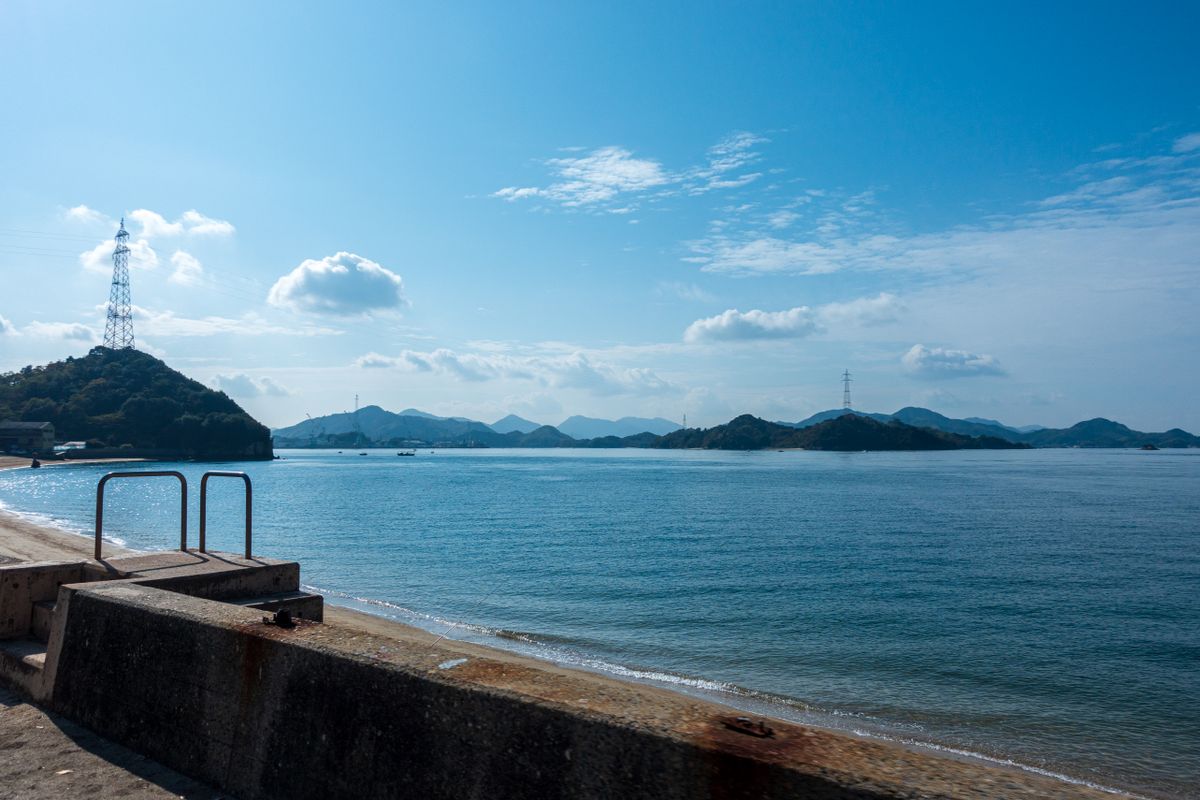
What historians prize about Tomonoura is that all five classic elements of an Edo-period port still stand in their original locations. Spotting them on a slow walk turns the harbor from a pretty picture into a living lesson in how a pre-modern Japanese port actually worked.
- Joyato (常夜灯): The stone lighthouse of 1859, the town’s emblem. Its lantern guided boats into the harbor at night — a striking piece of public infrastructure paid for by the merchant community.
- Gangi (雁木): Wide stepped stone ramps leading down into the water. Because the Inland Sea has a large tidal range, boats needed steps rather than a single fixed pier so they could load and unload at any tide level.
- Hatoba (波止場): The stone breakwater and pier that shelters the harbor from waves and gives boats a place to moor.
- Tadeba (焚場): A dock where wooden hulls were dried and scorched to remove barnacles and pests — essential maintenance in the age of wooden ships.
- Funabansho (船番所): The harbor watch station, where officials monitored the comings and goings of vessels and collected duties.
No other port in Japan retains this complete set in situ, which is why scholars and architecture enthusiasts make the pilgrimage here. You do not need any special knowledge to appreciate it — but knowing what you are looking at adds real depth to the walk.
Two More Worthwhile Stops
Beyond the headline sights, two quieter spots reward those with extra time. Ankoku-ji is a Zen temple founded in the 14th century with an elegant Buddha hall (Shaka-do) that is one of the oldest wooden structures in the region. And just outside the town, the Abuto Kannon temple perches dramatically on a cliff above the sea — its vermilion hall jutting over the waves is one of the most photogenic temples on the whole Inland Sea, and it has long been visited by those praying for safe childbirth and healthy children.
Side Trips: Combining Tomonoura with Onomichi, Kurashiki, and the Islands
Because Tomonoura is reached via Fukuyama, it pairs naturally with several other excellent destinations in the area, letting you build a rich two- or three-day Inland Sea itinerary.
- Onomichi — About 20 minutes by train from Fukuyama, this hillside port town of temples, cats, and a famous “temple walk” is also the mainland gateway to the Shimanami Kaido cycling route. It shares Tomonoura’s nostalgic, seaside-slope character.
- Shimanami Kaido — The celebrated 70-kilometer cycling route that island-hops across the Inland Sea on a chain of soaring bridges. Even non-cyclists can experience it by bus or by riding a short, scenic section.
- Kurashiki — About 30 minutes from Fukuyama by train, the Bikan historical quarter is a willow-lined canal district of white-walled storehouses turned into museums, cafes, and craft shops.
- Fukuyama Castle — Right beside Fukuyama Station, a reconstructed castle with a museum inside, easy to fit in before or after your Tomonoura visit.
For ideas on stitching these together and reaching them efficiently, browse our full list of Japan destinations and decide which combination suits your pace.
Where to Eat in Tomonoura
The Seto Inland Sea is one of Japan’s great fishing grounds, and Tomonoura’s specialty is tai (sea bream), considered a celebratory fish in Japan. Spring is the prime season, when the “cherry-blossom sea bream” (sakura-dai) run, but you can enjoy it year-round.
Look out for these local dishes and treats:
- Tai-meshi — sea bream cooked together with rice in an earthenware pot, intensely savory and a Tomonoura signature. Expect around ¥1,500–2,500 (US$10–17) for a set.
- Tai-somen — thin wheat noodles served with sea bream, a refreshing summer dish.
- Fresh seafood set meals — small family-run restaurants near the harbor serve sashimi and grilled fish defined by what came in that morning.
- Homeishu — the herbal medicinal liquor, served as an after-meal digestif or bought by the bottle to take home.
- Tomonoura-style sweets — small cafes in the old houses serve matcha, kakigori (shaved ice) in summer, and traditional confections.
Most restaurants are small and family-run, with limited hours that often end by mid-afternoon, so plan lunch rather than counting on a late dinner. Many close one day a week, and few take reservations — just turn up and be flexible. Cash is still king in some of the oldest shops, so carry some yen. For more on Japan’s regional specialties and how to order with confidence, see our broader guide to Japanese food experiences.
What to Buy: Souvenirs from Tomonoura
Tomonoura makes a wonderful place to pick up souvenirs you genuinely cannot find elsewhere, because so many of its specialties are made right in town. The obvious choice is a bottle of homeishu, the 16-herb medicinal liquor, sold in everything from small gift bottles (around ¥1,000 / US$7) to handsome ceramic decanters. Beyond the liquor, look for these local finds:
- Homeishu-flavored sweets and candies — gentler, non-alcoholic ways to take the famous flavor home.
- Hand-crafted goods from the old merchant houses, including textiles, ceramics, and paper items.
- Sea bream (tai) themed crafts — the celebratory fish appears on everything from chopstick rests to charms.
- Ponyo and film-related goods in a few of the town’s shops, fun for families and fans.
- Locally caught dried seafood — a savory, lightweight gift that travels well.
Because many of these shops are tiny, family-run, and cash-only, it is worth carrying small bills. Opening hours can be irregular, especially on weekdays in the off-season, so buy something when you see it rather than assuming you can return later.
Budgeting Your Tomonoura Trip
One of Tomonoura’s quiet pleasures is how affordable it is compared with Japan’s marquee destinations. The town itself has almost no expensive admission fees — the harbor, lighthouse, lanes, and hilltop viewpoints are all free, and the small museums and temples charge only ¥200 (about US$1.40) or so each. Here is a rough sense of day-trip costs for one person starting from Fukuyama:
- Round-trip bus, Fukuyama–Tomonoura: about ¥1,060 (US$7)
- Sensui-jima ferry round trip: about ¥240 (US$1.70)
- Two or three small museum/temple admissions: about ¥600 (US$4)
- Lunch (tai-meshi set): about ¥1,500–2,500 (US$10–17)
- Coffee, snacks, a homeishu souvenir: about ¥1,500 (US$10)
All in, a comfortable day costs roughly ¥5,000–7,000 (US$35–48) per person before the shinkansen fare to Fukuyama. That makes Tomonoura a genuinely budget-friendly highlight, with the main variable being how you reach the region. If you are watching your overall trip spending, our destinations hub can help you plan a route that clusters nearby sights to minimize transport costs.
Where to Stay: Tomonoura and Fukuyama
You can absolutely visit Tomonoura as a day trip, but staying overnight lets you experience the harbor after the day-trippers leave — when the lighthouse lights up and the town falls quiet. You have two main options: a ryokan or guesthouse in Tomonoura itself, or a business hotel in Fukuyama.
Staying in Tomonoura
Tomonoura has a handful of traditional inns and seafront ryokan, several with their own onsen baths and rooms overlooking the harbor. Waking up to the sound of the sea and watching fishing boats head out at dawn is a genuinely special experience. Because the inventory is small, these places book up on weekends and in peak seasons, so reserve ahead. You can compare availability and rates for Tomonoura and the wider Fukuyama area on Agoda, which tends to have strong coverage of smaller regional Japanese properties.
If you want to treat yourself to a higher-end ryokan with kaiseki dining and private baths, Agoda specializes in Japan’s premium inns and luxury hotels and is worth a look for a memorable splurge by the sea.
Staying in Fukuyama
Fukuyama, 30 minutes away by bus, has a good range of reliable, well-priced business hotels clustered around the station — convenient if you are arriving late by shinkansen or moving on the next morning. For well-priced business hotels near the station, Agoda is handy for budget-conscious travelers. A night near Fukuyama Station also lets you combine Tomonoura with a visit to Fukuyama Castle, which is right beside the station.
Best Time to Visit Tomonoura
Tomonoura is a year-round destination, but each season has its own character.
- Spring (March–May): Arguably the best time. The weather is mild, the sea bream are running, and cherry blossoms add color to the temple grounds and hillsides. The town stages historical events around this season.
- Summer (June–August): Hot and humid, but the sea sparkles and Sensui-jima’s beach comes alive. Evenings on the harbor are pleasant. Bring sun protection and water; June can be rainy during the tsuyu rainy season.
- Autumn (September–November): Comfortable temperatures, clear skies for island views, and excellent seafood. A reliably good time to visit with fewer crowds than spring.
- Winter (December–February): Cool but rarely freezing, and beautifully quiet. The crisp air gives the sharpest island views of the year, and you may have the lanes almost to yourself.
Whatever the season, weekdays are quieter than weekends, and early morning or late afternoon offers the most atmospheric light for photographs.
A Perfect One-Day Tomonoura Itinerary
Here is a relaxed day-trip plan that hits the highlights without rushing. It assumes you are starting from Fukuyama Station.
- 9:00 — Catch the Tomotetsu bus from Fukuyama Station’s south exit. Arrive in Tomonoura around 9:30.
- 9:30 — Walk straight to the harbor and the joyato lighthouse. Take in the full Edo-era port and your first photos in the morning light.
- 10:00 — Wander the old-town lanes; stop at a homeishu shop for a tasting and pop into the Ota Residence.
- 10:45 — Visit the Iroha-maru Museum for the Sakamoto Ryoma shipwreck story.
- 11:15 — Climb to Fukuzen-ji’s Taichoro hall for the framed island view.
- 12:00 — Lunch: tai-meshi or a fresh seafood set at a harborside restaurant.
- 13:30 — Take the ferry to Sensui-jima for a gentle walk, the colorful cliffs, and views back to town.
- 15:00 — Back on the mainland, climb the steps behind Iou-ji for the panoramic hilltop view.
- 16:00 — Coffee or kakigori in an old-house cafe; last souvenir shopping.
- 17:00 — Sunset on the harbor pier (in season), then catch the bus back to Fukuyama.
If you are staying overnight, you can stretch this out considerably and add a leisurely dinner and the lit-up lighthouse after dark.
Practical Tips for Visiting Tomonoura
- Carry cash. Many small shops and restaurants are cash-only, and ATMs in town are limited. Withdraw yen at a Fukuyama convenience store before you board the bus.
- Wear comfortable shoes. The lanes are uneven stone and there are steep temple stairs; sandals are not ideal.
- Start early. Restaurants and small museums often close by mid- to late afternoon. Mornings are also the quietest and most photogenic.
- Check bus times for the return. Buses to Fukuyama thin out in the evening, so note the schedule when you arrive to avoid a long wait.
- Respect that people live here. Tomonoura is a working town, not an open-air museum. Keep your voice down in residential lanes and do not photograph people’s homes intrusively.
- Bring a light rain layer. Sea weather changes quickly, especially in the June rainy season.
- Pack out your trash. Public bins are scarce in Japan; carry a small bag for your rubbish.
- Combine it with Fukuyama Castle. If you have time, the castle right by the station makes an easy bonus stop.
If this is your first trip to Japan, you may also want to review our general Japan travel tips for first-timers, which covers etiquette, money, transport, and the small cultural details that make a trip run smoothly.
Frequently Asked Questions
Is Tomonoura worth visiting?
Yes — especially if you appreciate history, photography, and quiet, authentic places over big-name attractions. Tomonoura preserves the only complete set of Edo-period port facilities in Japan, has strong film and historical connections, and offers a peaceful break from crowded cities. If your itinerary is all famous spots and you want one place that feels like a discovery, Tomonoura is an excellent choice.
How long should I spend in Tomonoura?
A half-day (about 4 hours) covers the main sights at a brisk pace. A full day lets you add Sensui-jima island, a relaxed lunch, and the hilltop viewpoint without rushing. Staying overnight is ideal if you want to experience the harbor in the evening after the day-trippers leave.
Can I do Tomonoura as a day trip from Hiroshima or Osaka?
Yes. From Hiroshima it is about 25 minutes by shinkansen to Fukuyama plus a 30-minute bus, so a day trip is very doable. From Osaka it is about an hour on the shinkansen to Fukuyama plus the bus — a long but feasible day trip, or a good overnight. Kyoto is similar to Osaka in travel time.
Is there an ATM in Tomonoura, and can I use credit cards?
ATMs and card acceptance are both limited. Some larger restaurants and shops take cards, but many small, traditional establishments are cash-only. Withdraw enough yen before you arrive — a post office or convenience store ATM in Fukuyama is your best bet.
Is Tomonoura family-friendly?
Very. The town is compact and walkable, the ferry to Sensui-jima is a fun short ride for kids, and the harbor and beach are safe and engaging. Be mindful that some streets are narrow with occasional cars, and the temple stairs are steep, so keep younger children close.
What is homeishu, and should I try it?
Homeishu is a sweet, herbal medicinal liquor that has been made in Tomonoura since the 1600s, infused with sixteen herbs and spices. It is traditionally taken in small amounts as a tonic or digestif. Tastings at historic shops are usually free, and a bottle makes a distinctive souvenir. It is mildly alcoholic, so it is for adults.
Do I need to speak Japanese to visit?
No, but a little goes a long way here. Tomonoura sees fewer foreign visitors than the big cities, so English signage and English-speaking staff are limited. A translation app and a data connection make everything smoother — a prepaid eSIM is the simplest way to stay online for maps and translation throughout your trip.
When does Tomonoura get busy, and how do I avoid crowds?
Tomonoura is never as crowded as Kyoto or Tokyo, but it sees its heaviest visitor numbers on spring and autumn weekends, during cherry-blossom season, and around local festivals. The simplest way to enjoy it at its most peaceful is to come on a weekday and arrive early in the morning. Day-trippers tend to appear from late morning onward and thin out by mid-afternoon, so the first and last hours of the day are both quieter and more beautifully lit.
Can I see Tomonoura and the Shimanami Kaido in the same trip?
Yes, and it is a popular pairing. Both are reached via the Fukuyama–Onomichi corridor. A common plan is to spend a half-day at Tomonoura, stay overnight near Fukuyama or Onomichi, and then dedicate the next day to the Shimanami Kaido cycling route or an island-hopping bus tour. This gives you both the historic-port and the open-sea sides of the Inland Sea in one compact trip.
Is Tomonoura accessible for travelers with limited mobility?
The harborfront, main lanes, and several shops and restaurants are relatively flat and manageable, but many of the most rewarding spots — the Taichoro hall at Fukuzen-ji and especially the hilltop viewpoints behind Iou-ji — involve stairs and uneven stone surfaces with few handrails. Travelers with limited mobility can still enjoy the harbor, the lighthouse, the museum, and the old-town atmosphere at ground level. If stairs are a concern, focus your time around the waterfront and skip the elevated temples.
What should I pack for a day in Tomonoura?
Bring comfortable, closed walking shoes for the stone lanes and stairs, cash in small bills, a charged phone with data for maps and translation, sun protection in summer and a light rain layer in the wetter months, a refillable water bottle, and a small bag to carry your trash since public bins are scarce. A camera or a phone with plenty of storage is a must — you will take more photos than you expect.
Final Thoughts
Tomonoura is the rare destination that feels like a secret even though it has inspired world-famous films and sheltered ships for over a thousand years. There are no towering attractions and no lines to stand in — just a perfectly preserved harbor, lanes that have barely changed in centuries, and the slow rhythm of a town that still lives by the tides. Add it to a wider Seto Inland Sea trip alongside places like Onomichi and Miyajima, or visit it on its own as a deliberate slowing-down. Either way, you will leave with the quiet satisfaction of having seen a side of Japan that most travelers miss entirely. Pack comfortable shoes, bring some cash, keep your phone charged for photos, and give yourself permission to wander. Tomonoura rewards exactly that.
🗾 Planning your trip? Get our free 7-Day Japan Itinerary (PDF)
Day-by-day Tokyo → Kyoto → Osaka plan with real prices and essential phrases — sent straight to your inbox.

Plan your Japan trip
Two things every first-timer should book
Some links are affiliate links. If you book through them we may earn a small commission at no extra cost to you.