Fifteen kilometres off the coast of Nagasaki, a small concrete island rises out of the East China Sea like the silhouette of a warship. Its proper name is Hashima (端島), but almost everyone calls it Gunkanjima (軍艦島) — “Battleship Island”. For most of the twentieth century it was the most densely populated place on Earth, a privately owned coal-mining city of 5,300 people crammed onto a rock the size of a few city blocks. Then in 1974 the mine closed, the population left in a matter of weeks, and the island was sealed off. For more than thirty years no one set foot on it. Today, after a careful UNESCO World Heritage designation and a controlled re-opening, Hashima has become one of the most haunting and most unforgettable day trips in all of Japan.
This guide is written for first-time English-speaking visitors who want to actually go — not just read about it. It covers exactly what Hashima Island is, the layered (and at times controversial) history behind it, how to book a landing tour, which operator to pick, what to expect on the boat and on the island itself, the museums and viewpoints in Nagasaki that bring the story to life, where to base yourself, what else to do in Nagasaki on the same trip, costs, weather considerations, etiquette, and the questions first-timers ask before they go. By the end of the article you will know how to plan and book a Hashima visit and what to do around it.
What Exactly Is Hashima (Battleship) Island?
Hashima is a tiny rectangular island about 480 metres long and 160 metres wide — smaller than the deck of a single Tokyo train platform. It lies in the Goto Sea, roughly 15 km from the centre of Nagasaki city. The island is best known for two things: the seawall that gives it the famous battleship silhouette, and the dense forest of concrete apartment blocks, schools, hospitals, shops, cinemas, shrines and bathhouses that once filled almost every square metre inside that seawall.
Underground beneath the visible city ran a labyrinth of coal mine shafts extending more than 1,000 metres below sea level, tunnelling out under the surrounding ocean. The mine was opened by the Mitsubishi corporation in 1890 to extract a high-quality bituminous seam discovered offshore. The seam fed the modernising industrial machinery of the Meiji era, then powered Japan’s Pacific War effort, then helped rebuild the country in the post-war boom. When that boom shifted Japan’s economy from coal to petroleum, the mine became uneconomical almost overnight. Mitsubishi announced the closure in January 1974, and by April every resident had left. Furniture was abandoned, calendars were left turned to the page of the day, schoolbooks remained open on classroom desks.
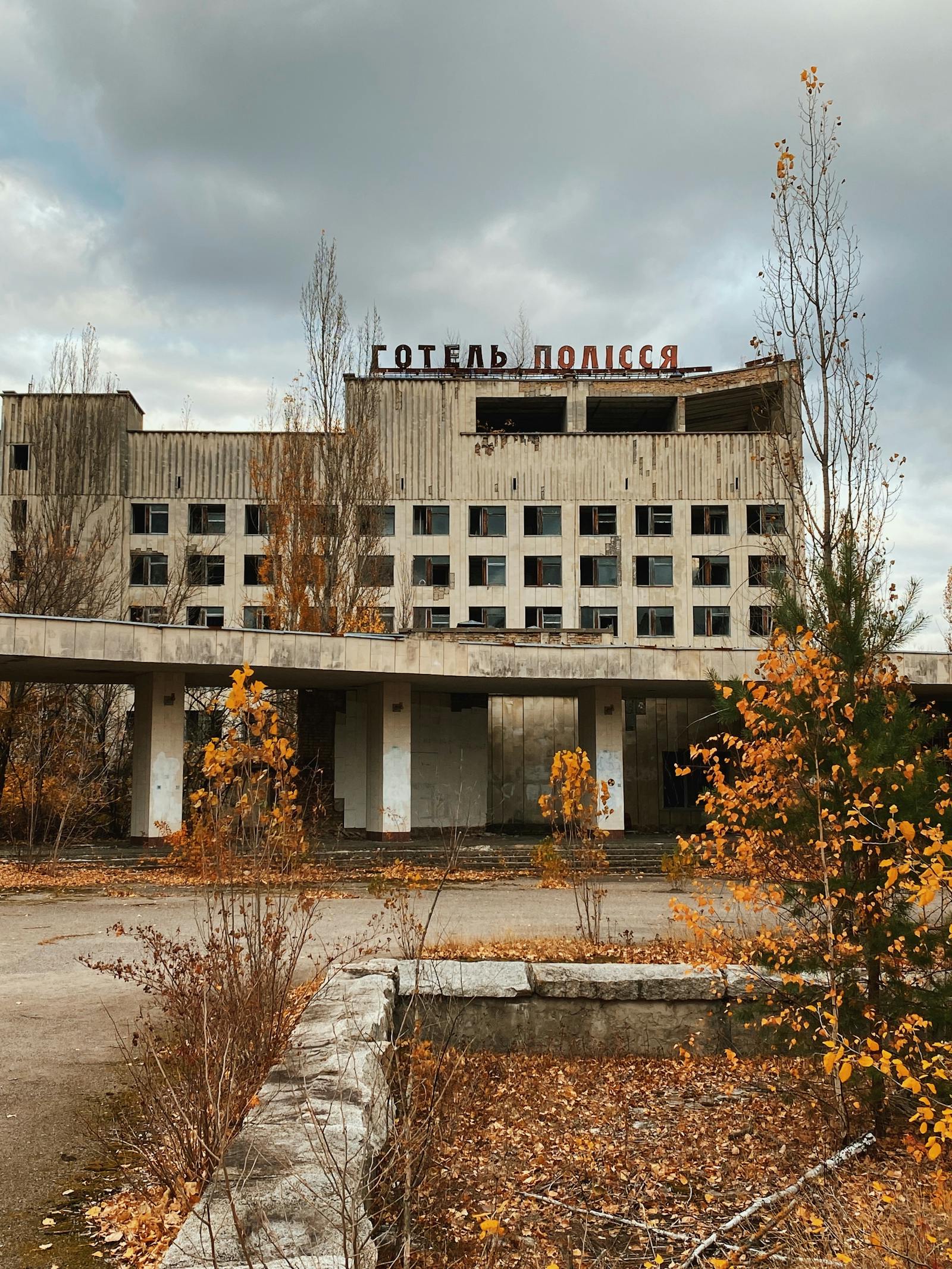
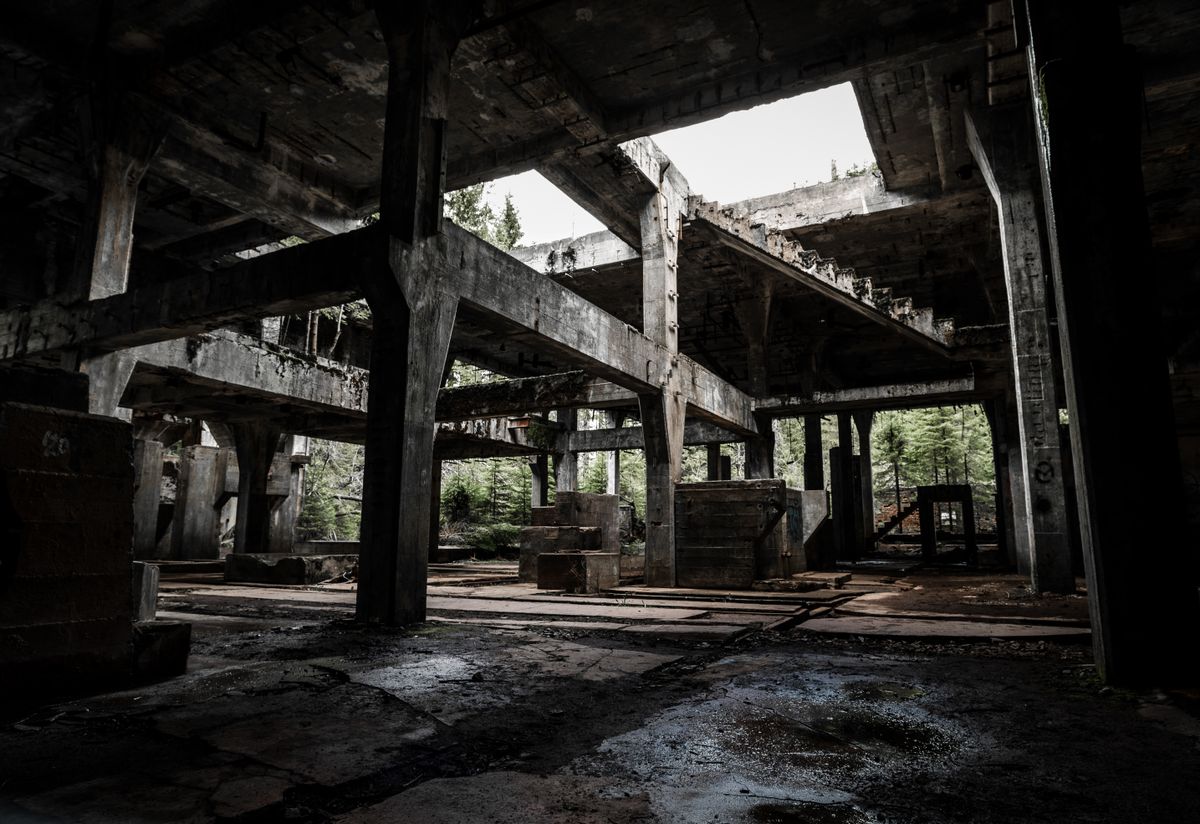
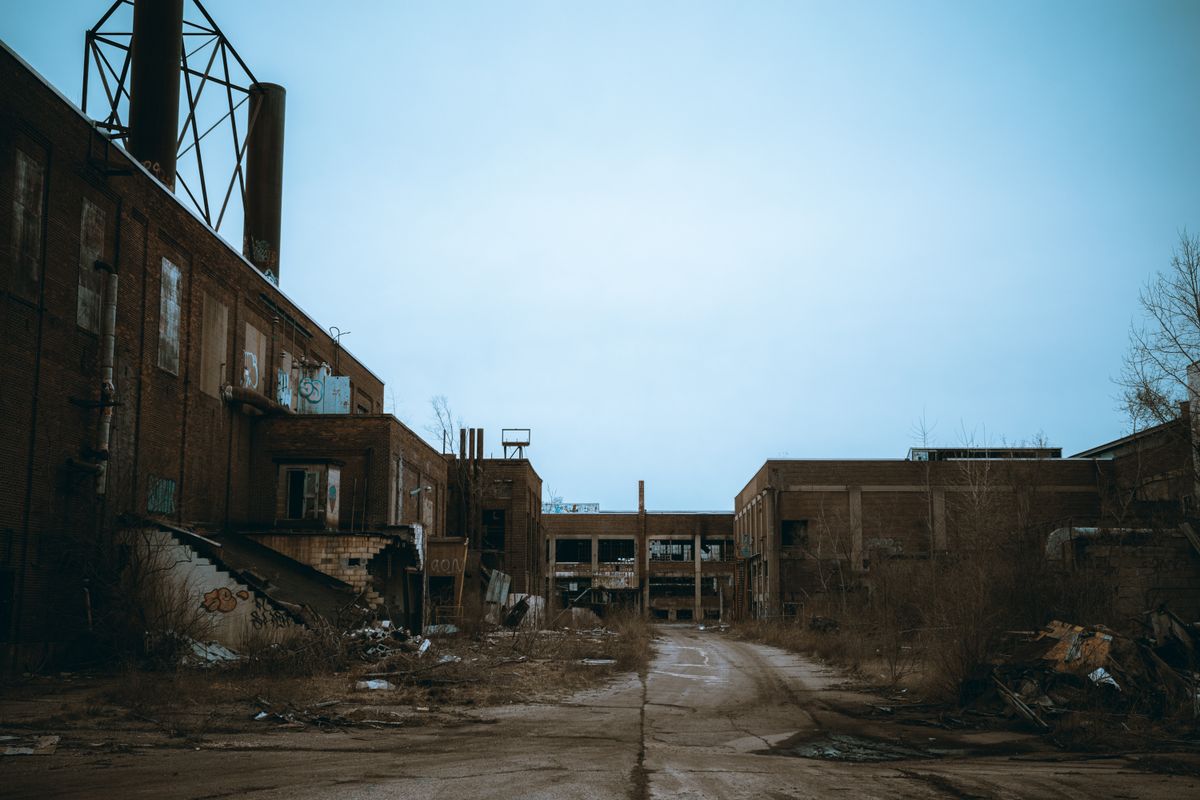
The island was sealed off in 1974 and entry was illegal for the next 35 years. During those decades typhoons, salt spray and reinforced concrete chemistry slowly took the buildings apart. When Japanese authorities finally re-opened a controlled landing path in 2009, visitors found a ghost city of broken windows, peeling paint and slumping apartment blocks — an entire suburb of post-war Japan held in suspended animation. In 2015 Hashima was inscribed on the UNESCO World Heritage list as part of the “Sites of Japan’s Meiji Industrial Revolution”.
Why is it called Battleship Island?
Look at the island from the sea and you can immediately see why. The high concrete seawall, the closely packed apartment blocks rising above it, and the long low profile of the rock combine to produce an outline that, especially in silhouette at dusk, looks uncannily like a Japanese battleship of the early twentieth century. The famous comparison was first made in a 1921 newspaper article that likened Hashima’s silhouette to the Imperial Japanese Navy battleship Tosa. The nickname Gunkanjima stuck and is the name most Japanese people use today.
The Compressed City: How 5,300 People Lived Here
To understand why Hashima fascinates visitors, you have to understand the density. At its 1959 population peak, Hashima had 5,259 residents on 6.3 hectares. That works out to roughly 83,500 people per square kilometre — nine times the density of central Tokyo and the highest population density ever recorded anywhere on Earth. Every centimetre of the island was used.
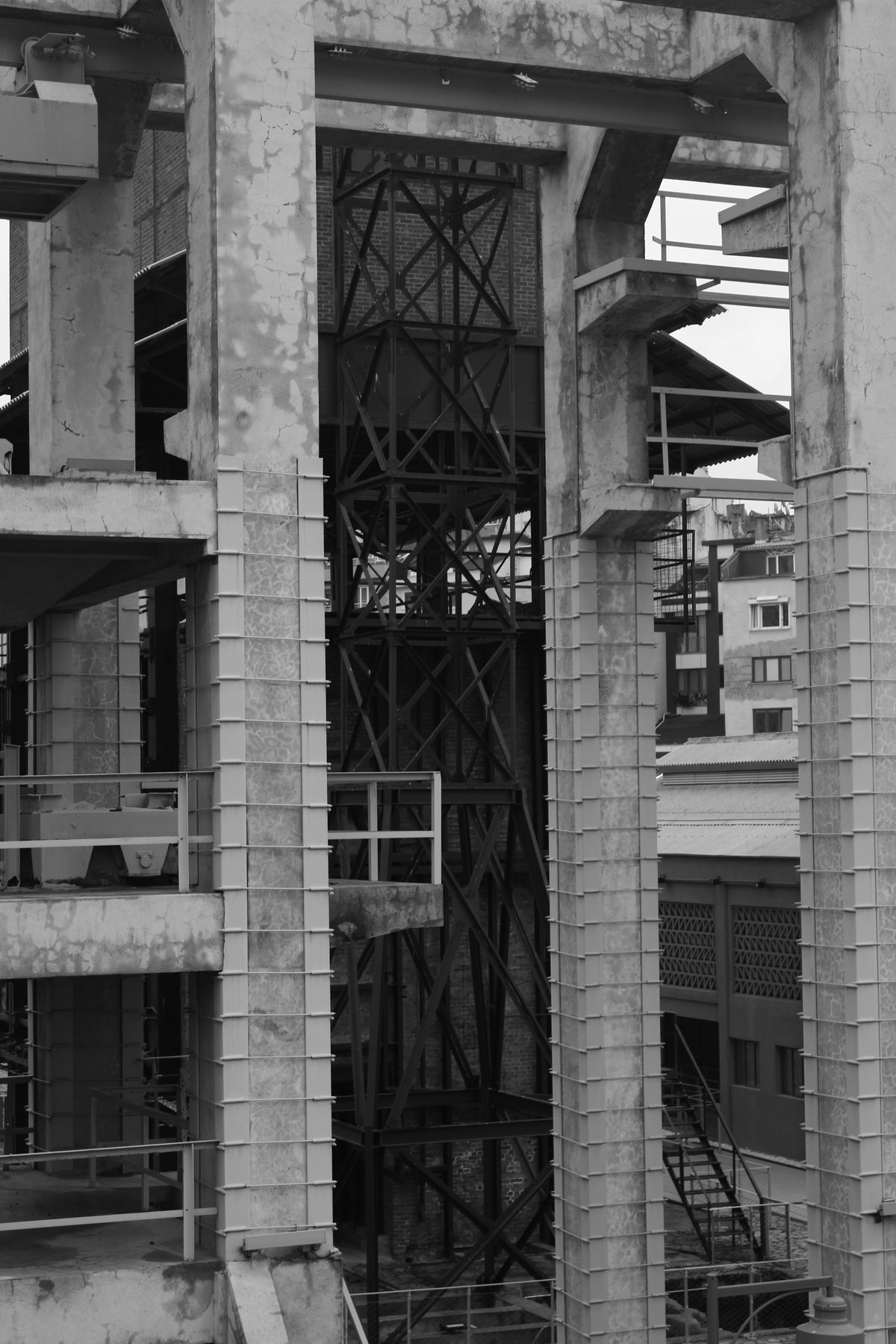
The city had everything a town of its size needed: an elementary school and a junior high school (a single building, the school being a seven-storey concrete tower), a hospital with a maternity ward, a community swimming pool perched on the seawall, a movie cinema called the Showa-kan, a pachinko parlour, public bathhouses for the miners, a Shinto shrine on the highest point of the rock, a Buddhist temple, several barbershops, restaurants, a billiards hall, a Mahjong parlour, dozens of tiny shops, and a rooftop garden built across the tops of two apartment blocks because there was no ground left for children to play on. The miners lived in nine-storey “Block 30” — Japan’s oldest large reinforced-concrete apartment building, built in 1916 — and in a series of progressively taller post-war blocks. Families paid nothing for housing, water, electricity or fuel; everything was provided by Mitsubishi.
Daily rhythm on the island was structured around the three mining shifts. Men descended into the shafts in lift cages that dropped them more than a kilometre below the seabed in less than two minutes, then walked horizontally several more kilometres to reach the working face. Temperatures at the face exceeded 30°C with humidity close to 100 percent. Above ground, women ran the shops, children went to the seven-storey school, and life unfolded against a backdrop of constant industrial noise from the conveyor belts, ventilation fans and ore-processing plants.
The Complicated History: What You Should Know Before You Go
A responsible Hashima visit means understanding the full history, not just the photogenic ruins. From the 1930s through the end of the Pacific War in 1945, the Mitsubishi mine relied heavily on forced labourers brought from Korea and conscripted prisoners from China. Conditions for those workers were brutal. Korean labour historians estimate that more than 1,300 Koreans were forced to work on Hashima between 1939 and 1945, with hundreds dying from accidents, malnutrition or disease.
The 2015 UNESCO inscription was contested by the South Korean government for precisely this reason, and Japan committed to representing the “full history” of the site as part of the inscription agreement. A purpose-built interpretation centre, the Industrial Heritage Information Centre in Tokyo, opened in 2020 and the dedicated Hashima museums in Nagasaki now include exhibits on forced labour, though both the depth and tone of those exhibits remain a point of ongoing debate. A thoughtful visitor will read about this history before going and, ideally, will visit both the official sites and the independent Gunkanjima Digital Museum in Nagasaki to form their own view.
This does not mean you should not visit. It means you should visit with eyes open, the way you would visit a former mining town anywhere — aware that the romance of industrial ruins always sits on top of harder human stories.
How to Get to Hashima Island: Tours and Booking
You cannot walk, swim, kayak or charter a private boat to Hashima. The island is government property and the only way to set foot on it is via one of five licensed tour operators that depart from Nagasaki Port. All five run essentially the same trip in terms of access — they all use the single official landing pier and follow the same fixed walking route on the island — but they differ in price, vessel size, English support and the quality of onboard commentary.
The five licensed operators
Gunkanjima Concierge. The largest operator, with the most modern fast vessels, the best English audio guides on board (downloadable to your own phone), and the most consistent landing rate. Most reviewed by foreign visitors. Tour price approximately ¥4,500–5,000 (US$30–33) per adult plus the ¥310 island entry fee.
Gunkanjima Cruise Co. Mid-sized vessels, slightly cheaper, good English staff during the boarding process. Tour price approximately ¥4,000 per adult plus entry fee.
Yamasa Kaiun (Marbella). Larger ferry-style boat with full kitchen, used for longer combined cruises that include lunch and circumnavigation of Hashima as well as landing. Tour price ¥5,500–7,000.
Seaman Shoukai. The smallest operator with the smallest boats. The advantage: more intimate experience and easier access to the captain’s commentary. Disadvantage: rougher ride in moderate seas. Tour price approximately ¥3,900.
High-speed Takashima Kaiun. Mostly serves residents of nearby Takashima but offers occasional Hashima landings, often the cheapest option but with the most limited schedule. Useful only if you have flexible dates.
For most first-time visitors who have travelled from Tokyo, Kyoto or overseas, Gunkanjima Concierge is the recommended default. The combination of reliable departures, good English support and the smoothest fast vessel matters more than the small price difference.
The landing-success problem
This is the single most important fact to know before you book. Roughly 30 percent of all scheduled tours do not actually land on Hashima. The reason: by law, the captain may only attempt the landing if all four of the following sea conditions are met: wave height below 0.5 metres, wind speed below 5 metres per second, visibility above 500 metres, and pier-side current below a safe threshold. Even on calm-looking sunny days these limits can be exceeded. When the boat cannot land, it instead circles the island three times at close distance — still a worthwhile experience but obviously not what you came for. Tour operators do not refund a non-landing trip.
Two things you can do to maximise your chances: build a buffer day into your Nagasaki schedule so you can rebook for a second attempt if the first is non-landing, and book the morning tour — afternoon winds typically build through the day in this part of Kyushu, and the morning slot has measurably the highest landing-success rate.
How to book in English
Gunkanjima Concierge and Gunkanjima Cruise both have English booking pages on their official websites and accept international credit cards. Book at least one week in advance for spring and autumn weekends, two to three weeks ahead in golden week, summer and the New Year period. You will pay at the time of booking and receive an email voucher that you exchange for a ticket and life-jacket at the Nagasaki Port departure terminal 45 minutes before sailing. Bring your passport in case ID is requested. The Industrial Heritage Information Centre is in Tokyo, but the local Gunkanjima Digital Museum is in central Nagasaki and many tour packages bundle entry to it for around ¥1,800 extra.
What to Expect on the Day
Departure and the crossing
Arrive at the Nagasaki Port Motofunamachi terminal at least 45 minutes before your scheduled departure. Check in, watch a short safety video (subtitled in English on the larger operators), collect your numbered life jacket and queue at the gate. Boarding starts about 20 minutes before departure. Seats are usually unassigned — aim for the upper deck if you want the best photographs, the lower deck if you are prone to seasickness.
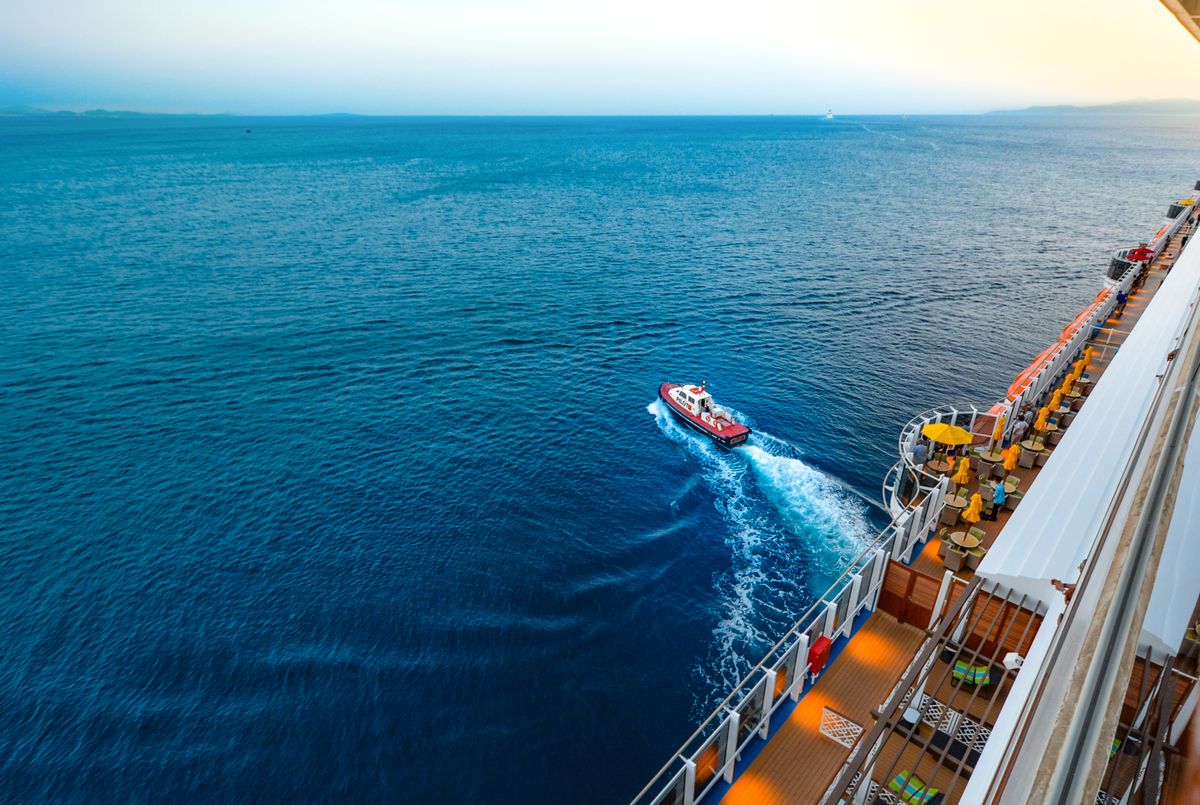
The crossing takes roughly 40 minutes each way. The route takes you past Mitsubishi’s huge Nagasaki Shipyard (where some of the world’s largest LNG carriers are still being built), the giant Mitsubishi crane that lifted the warship Musashi during construction, the cathedral of Oura on the city’s hills, and the inhabited islands of Takashima and Naka-no-shima. The captain commentates the whole way over the speakers in Japanese; the larger operators provide a smartphone app or audio handset for English.
On the island
If sea conditions allow, the boat docks at the official “Dolphin Pier” on the east side of the island. Passengers disembark in groups of about 30 and are led on a fixed 200-metre concrete walkway that has been reinforced for visitor safety. You will not be allowed to wander off this path — the rest of the island is genuinely dangerous, with collapsing floors and falling masonry. The visit lasts about 50 to 60 minutes total on the island. The walkway includes three observation areas:
Observation Point 1: The Apartment Blocks. The closest legal view of the residential city, including Block 30 (Japan’s oldest reinforced-concrete apartment building) and the imposing pyramid of post-war high-rises behind it.
Observation Point 2: The Mining Facilities. The conveyor belts, ore-processing chambers and the entrance to the second-pit elevator shaft that once carried miners more than a kilometre below the seabed.
Observation Point 3: The Brick Office. The general affairs office building, the oldest brick structure on the island. This area also overlooks the famous seawall and gives the best photographs of the iconic battleship silhouette from a low angle.
The guides commentate in Japanese, with English signage at each stop. Time goes faster than you expect. Bring a wide-angle lens if you have one, and a polarising filter to cut sea glare. Tripods are not allowed.
The return cruise
On the way back the boat usually does a slow 360-degree circle of the island so that everyone gets a clear view of the famous silhouette. This is the moment most people put down their cameras and just look. The 40-minute return crossing usually feels much quieter than the outbound trip.
Things to Do in Nagasaki Around Your Hashima Visit
A Hashima trip is a half-day commitment, including the round-trip cruise and check-in. Build a full day or two around it. Nagasaki rewards slow exploration and is one of the most distinctive cities in Japan, with a layered history that includes Portuguese missionaries, Dutch traders, atomic devastation, and Chinese and Korean influences that no other Japanese city carries in the same way.
Nagasaki Peace Park and Atomic Bomb Museum
Non-negotiable. On 9 August 1945, an atomic bomb detonated 500 metres above the Urakami valley in northern Nagasaki, killing more than 70,000 people. The Peace Park, the hypocentre cenotaph, and the Atomic Bomb Museum tell that story with extraordinary care and restraint. Allow at least three hours for the museum alone. Tram access from the city centre is straightforward (Lines 1 or 3 to Heiwa-koen).
Gunkanjima Digital Museum
Located in Matsugae-machi near the port, this private museum opened in 2015 and uses VR, large-scale projection and interactive exhibits to take you “inside” buildings on Hashima that you cannot enter on the actual landing tour. Visit it the day before your Hashima cruise for context, or after for a deeper interpretive layer. Entry around ¥1,800.
Dejima
The reconstructed Dutch trading post that was Japan’s only window onto the outside world during the 220 years of Tokugawa isolation. Painstakingly rebuilt over the last 25 years on its original fan-shaped footprint, Dejima is a strange, fascinating walk through the time when nutmeg, eyeglasses and astronomy were smuggled into Japan one ship at a time. Two hours.
Glover Garden and Oura Cathedral
The hillside European quarter, with the preserved homes of Thomas Glover (the Scottish merchant who armed the rebels of the Meiji Restoration), beautiful sea views, and the oldest standing Western-style church in Japan. Two hours.
Chinatown and Shinchi
Japan’s oldest Chinatown. Eat champon (a thick noodle and seafood soup that is the signature Nagasaki dish) and sara-udon (crispy noodles with seafood and vegetables) at one of the family-run shops here. The streets light up beautifully during the Chinese Lantern Festival in early February.
Inasayama nightscape
Mount Inasa rises 333 metres directly behind central Nagasaki. The summit, reached by ropeway or bus, offers one of the most acclaimed night views in all of Japan — routinely ranked alongside the night views from Hong Kong and Monaco. Go at dusk and stay through full darkness.
Spectacles Bridge (Megane-bashi)
The famous double-arch stone bridge on the Nakashima River, named for the perfect “spectacles” reflection it produces in still water. Easy 30-minute stroll combined with Teramachi temple district behind it.
Where to Stay in Nagasaki
Three areas work well for a Hashima-centred visit.
Around Nagasaki Station and the port
The most convenient base for an early-morning Hashima cruise. Several modern business hotels and a couple of international chains. Walk to the port in under 20 minutes. This is where we recommend most first-timers stay.
Shianbashi and the Hama-machi shopping arcade
The best food and nightlife district. A short tram ride from the port. Pick this area if you want to eat well in the evenings and don’t mind getting up earlier on your cruise day.
Hilltop Glover Garden area
Quieter, more atmospheric, with sea views from the higher boutique hotels and some lovely old Western-style buildings repurposed as inns. Best for a second or third night when you have already done the practical part of the trip.
For mid-range and luxury bookings, Agoda offers consistently competitive Nagasaki rates with best-price guarantee → — we use it as our default first check. For Japanese-style accommodation specifically, Yahoo! Travel Japan often shows lower rates on local properties not listed on global platforms →. Compare both before booking. For an overview of accommodation types throughout the country, see our broader guide to the best ryokan in Japan.
How to Get to Nagasaki From Tokyo, Kyoto and Osaka
From Tokyo
The fastest reliable option is to fly from Haneda or Narita to Nagasaki Airport (NGS). Flight time about 1 hour 50 minutes; airport bus to Nagasaki Station 45 minutes (¥1,200). Total city-to-city door-to-door about 4 hours 30 minutes. Several airlines compete on this route; one-way fares typically ¥12,000–25,000 (US$80–165) if booked in advance.
By rail, the journey is the Tokaido and Sanyo Shinkansen from Tokyo to Hakata (Fukuoka), then the new Nishi-Kyushu Shinkansen “Kamome” from Takeo-Onsen to Nagasaki, with a connecting Relay Kamome express linking Hakata to Takeo-Onsen. Total rail time about 7 hours 30 minutes, cost approximately ¥30,000 one way without a rail pass. For most travellers, flying is faster and cheaper unless a multi-week Japan Rail Pass is already in play.
From Osaka and Kyoto
From Shin-Osaka, the Sanyo Shinkansen reaches Hakata (Fukuoka) in 2 hours 30 minutes. Transfer to the Relay Kamome and Nishi-Kyushu Shinkansen for the final 1 hour 30 minutes to Nagasaki. Total rail time about 4 hours 30 minutes from Osaka, 5 hours from Kyoto. Cost approximately ¥20,000 one way. With a Japan Rail Pass the entire journey is covered.
From within Kyushu
From Fukuoka the new shinkansen makes Nagasaki a comfortable day trip (1 hour 30 minutes each way) but staying overnight is much better. From Kumamoto, take the JR Hisatsu Orange line or transfer at Shin-Tosu — total about 3 hours. From Beppu and Yufuin, expect 4–5 hours by rail.
For more on travelling around the country by bullet train, our complete Japan Shinkansen guide covers seat reservation, etiquette, and the new green-car experience. To decide whether a multi-day rail pass makes sense for your particular itinerary, see our honest review of the Japan Rail Pass.
What to Wear and Bring
Hashima is exposed to weather and salt spray; the boat ride is rougher than most tourists expect. Pack accordingly even on a sunny day.
Closed-toe shoes with grippy soles. Mandatory on the island. Sandals and high heels are not permitted by the operators.
Light windbreaker. Even in midsummer, the open boat deck is windy at speed.
Hat and sunscreen. No shade on the visitor walkway.
Bottled water. There are no shops, water fountains or vending machines on the island, and only basic vending on the boat.
Camera with wide-angle lens. 24 mm equivalent or wider captures the apartment blocks. A polariser cuts glare. Mobile phone wide-angle modes work surprisingly well.
Seasickness tablet. Take 30 minutes before boarding if you are prone. Sea conditions vary unpredictably.
Layered clothing in winter. December and January crossings can be cold and wet.
Cash. Some tour operators still take cash only for on-the-day extras. Our complete guide to cash vs card in Japan covers ATM strategy and which credit cards work best.
Mobile data. You will want navigation, translation and the operator’s English audio app. Set up an eSIM before you leave home. We use JAPAN&GLOBAL eSIM — instant activation from a QR code, excellent Kyushu coverage → on every recent trip; it has been our most reliable rural-Japan option. Alternative options are covered in our Japan SIM and eSIM guide.
For broader first-timer suitcase planning, see our complete Japan packing list.
Costs: What a Hashima-Centred Nagasaki Trip Looks Like
A realistic budget for two days and one night in Nagasaki, including a Hashima landing tour:
Round-trip Osaka ↔ Nagasaki by shinkansen: approximately ¥40,000 (US$260) without rail pass
One night mid-range business hotel near the station: approximately ¥10,000 (US$65)
Hashima Concierge landing tour + island entry: approximately ¥5,200 (US$34)
Gunkanjima Digital Museum entry: approximately ¥1,800 (US$12)
Atomic Bomb Museum entry: ¥200 (US$1.30) — one of the great cultural bargains in Japan
Local trams (one-day pass): ¥600 (US$4)
Meals (dinner with champon, lunch, breakfast, snacks): approximately ¥6,000 (US$40)
Total per person: roughly ¥63,800 (US$415)
You can shave significantly with budget-airline pricing from Tokyo, hostel-style accommodation, and budget restaurant choices. Our complete budget Japan guide shows how to do the country comfortably on US$50–100 per day.
When to Go: Best Time of Year for Hashima
Sea conditions are the controlling factor. The best landing-success months are April, May, October and early November — gentle seas, mild temperatures, low humidity. These are also the prettiest months in Nagasaki generally.
Summer (June–August). Hot and humid in the city; intermittent typhoons in August and September can cancel sailings for days at a time. The island under bright summer light produces the most dramatic photographs but the deck of the cruise boat is brutally exposed.
Autumn (mid-September to late November). The best landing-success rates after October, when the weather settles. Crowds peak in November so book ahead.
Winter (December–February). The coldest crossings; sea conditions are often choppy. Landing rates drop, but the moody grey light on the island can be extraordinary if you do get ashore. The Chinese Lantern Festival in early February is a separate reason to be in Nagasaki at this time.
Spring (March–May). Comfortable temperatures, calm seas, cherry blossoms in the city. Late March to early April is one of the very best weeks of the year.
For broader season planning, see our Japan cherry blossom guide and autumn foliage guide.
Etiquette and Behaviour
Hashima is a UNESCO World Heritage site, a graveyard of dangerous structures, and a place of complicated memory. Behave accordingly.
- Stay on the marked walkway at all times. Leaving it is illegal and incurs immediate removal and a substantial fine.
- Do not touch any masonry, fencing or installation. Concrete here is unstable.
- Do not take stones, shells or any object as a souvenir. The island is a protected site.
- Photography is allowed everywhere on the walkway; commercial photography requires a permit.
- No food or drink on the island. Eat before departure or after return.
- No smoking anywhere on the island or on the open boat deck.
- Be aware of the layered history. Discuss the forced labour history if you wish to, but do so respectfully and ideally after reading official sources.
- Toilets are on the boat, not on the island. Use them before disembarkation.
Building Hashima Into a Longer Kyushu Trip
Nagasaki sits at the western edge of Kyushu, the southernmost of Japan’s main islands and a region that is dramatically under-visited by foreign tourists. A Hashima visit naturally combines with:
Fukuoka. Two hours north by shinkansen. Japan’s most livable city and the home of tonkotsu Hakata ramen. See our Fukuoka travel guide for a two-day itinerary.
Kumamoto and Mount Aso. One of the world’s largest volcanic calderas, with a still-active central cone. Visit Kumamoto and Mount Aso from Nagasaki by train via Shin-Tosu in around 3 hours.
Beppu and Yufuin. Kyushu’s hot-spring heartland. Easy to add as a 2- or 3-day extension. See our Beppu onsen guide and Yufuin travel guide.
Kagoshima and Sakurajima. Japan’s most active accessible volcano, with hot baths, samurai history and a 3.5-hour shinkansen ride south. See our Kagoshima and Sakurajima guide.
The broader case for spending more time in this region is covered in our overarching Japan destination guides and our first-timer overview at essential Japan travel tips.
If Your Tour Doesn’t Land: The Plan B
About one in three scheduled tours do not land on Hashima due to sea conditions. If you are unlucky, the boat will still complete the circumnavigation and you will have decent photos from the water, but the island visit itself doesn’t happen. Here is the plan B that turns a non-landing day into a still-excellent day.
Go straight from the port to the Gunkanjima Digital Museum and spend two hours there. The VR walk through the actual interior of an apartment block, school and miners’ bathhouse is in many ways more atmospheric than the controlled walkway visit you missed. Then take the tram to the Atomic Bomb Museum and Peace Park — both deserve a full half day anyway, and the emotional weight of those sites tends to put a missed boat trip into perspective. Finish at Inasayama Ropeway for the night view.
If your schedule allows, rebook the cruise for the very next morning slot. The tour operators are good about reseating non-landed customers when space is available, and morning landing rates are reliably higher than afternoons.
Hashima in Film and Popular Culture
You may already have seen Hashima even if you don’t recognise the name. The island’s silhouette inspired the lair of the Bond villain Raoul Silva in the 2012 film “Skyfall” (although filming itself took place on stage and at Hashima look-alikes for safety reasons). It appears in the 2015 Japanese film “Battleship Island” and the 2017 Korean film “The Battleship Island”, which dramatised the forced labour history. The video game “The Evil Within 2” used the island as a visual reference. Japanese television documentaries have produced more than a dozen specials on the island since 2009.
One result of all this exposure is that Hashima is now the most internationally recognised abandoned site in Japan and one of the most photographed industrial ruins on Earth. A consequence: arrive expecting your own photographs to look familiar, and try instead to spend more time looking with your eyes than through the viewfinder.
Frequently Asked Questions
Is Hashima Island safe to visit?
Yes, on the controlled visitor walkway. The walkway is reinforced and inspected regularly. The closed parts of the island are genuinely dangerous — collapsing floors, falling concrete, exposed rebar — which is why access is restricted.
How long does the whole tour take?
Plan for 3 to 4 hours door to door, including check-in 45 minutes before departure, 40-minute outbound cruise, 50–60 minutes on the island, 40-minute return cruise, and disembarkation. Allow another 2 hours for the Gunkanjima Digital Museum if you visit it on the same day.
Can children visit Hashima?
Yes, but the operators set a minimum age of 7 for the landing tour and require children under 12 to be accompanied at all times. The walkway is straightforward but the open sea crossing can be choppy and is not enjoyable for very young children prone to motion sickness.
What if I have mobility issues?
The boat is accessible (the larger operators have step-free boarding) but the island visitor walkway has steps and uneven surfaces and is not wheelchair-accessible. Travellers using crutches or who cannot stand for 60 minutes should consider doing the circumnavigation-only cruise as an alternative, which is offered as a separate cheaper product by all operators.
Is there a Hashima visit option that doesn’t require a boat?
No. There is no bridge, no helicopter service and no underwater tunnel. The boat tour is the only option. If you cannot manage the boat, the Gunkanjima Digital Museum in central Nagasaki provides the best alternative.
Can I take a drone over Hashima?
No. Drones are prohibited above the island and within a marine exclusion zone surrounding it. Operators have powers of confiscation.
What’s the best month to visit?
April–May or October are the best balance of pleasant weather, calm seas and reasonable crowds. Avoid August (heat and typhoons) and the long New Year holiday in late December and early January (crowds and frequent cancellations).
Is the forced labour history acknowledged on the tour?
It is mentioned briefly in the audio commentary and signage on the island. For a fuller treatment, visit the Gunkanjima Digital Museum and read independent sources such as the Korean Council reports and academic histories. UNESCO has continued to monitor Japan’s compliance with its commitment to represent the full history of the site.
Can I book a Hashima tour as part of a wider Japan package?
Yes. Major Japanese tour operators bundle Hashima visits with Nagasaki city tours and onsen extensions. JTB — Japan’s largest travel company — offers Kyushu packages that include Hashima →, and with the major operators. Booking direct with the cruise operator and arranging your own hotel will almost always be cheaper, but a package can simplify logistics if you are short on planning time.
Do I need to speak Japanese?
No, though the on-island guide commentary is in Japanese only. The Gunkanjima Concierge tour provides an English audio app you can download to your phone before boarding. English signage on the walkway is good. Restaurants and hotels in central Nagasaki commonly have English menus and staff.
Is photography allowed everywhere?
On the walkway, yes. Inside the cruise boat, yes. Commercial use of images requires a separate permit from the Nagasaki city government — standard travel snaps and social-media use is fine.
Can I combine Hashima with the Atomic Bomb Museum in one day?
Yes, comfortably, if you do the morning Hashima cruise and the museum in the afternoon. The two sites together make for one of the most emotionally weighty days you can spend in Japan, so allow time to decompress afterwards.
What’s the most surprising thing about visiting Hashima?
Most visitors expect the ruins themselves to be the strongest impression. In practice it is the small human details that linger: a child’s red plastic bath toy left on a balcony, a 1973 calendar still pinned to a wall behind broken glass, the rounded concrete steps of the bathhouse that thousands of miners climbed each evening. Hashima feels less like a ruin and more like a city that briefly turned around to leave.
Where can I read more before I go?
The most useful single book in English is “Hashima: The Ghost Island” by Brian Burke-Gaffney, the standard scholarly history. The official Industrial Heritage Information Centre in Tokyo and the Gunkanjima Digital Museum in Nagasaki both publish accessible English-language booklets. The Korean Council and academic journals provide critical perspectives on the forced labour history.
Are there other abandoned places in Japan worth visiting?
Yes. The Kyushu region alone contains several other industrial heritage sites (the Mitsubishi shipyard buildings in Nagasaki itself, the Yawata steel works in Kitakyushu, the former coal mining town of Omuta) inscribed under the same Meiji Industrial Revolution UNESCO listing. Beyond Kyushu, the abandoned Matsuo sulphur mine in Iwate, the former Ashio copper mine in Tochigi, and the deserted Ikeshima coal town off Nagasaki itself are all accessible to visitors with arrangements.
Final Thoughts
Hashima Island does not look or feel like the rest of Japan. It does not look or feel like the rest of anywhere, really. A square kilometre of mid-twentieth-century apartment blocks marooned in the ocean, slowly being eaten by the salt, surrounded by the most photographable silhouette of industrial decay you will ever see — and surrounded too by a difficult history that the island is, slowly and imperfectly, learning how to tell.
If you want a perfect souvenir of Tokyo neon, photogenic Kyoto temples, deer in Nara and Osaka takoyaki, the standard first-timer Japan itinerary will deliver exactly that. If you want, additionally, to spend half a day standing 100 metres from the ruins of a city that once held the densest concentration of human beings on planet Earth and that vanished almost overnight, you need to go a little further south and put yourself on a small fast boat from Nagasaki Port. It is one of the most unusual short trips you can build into a Japan holiday, and one of the ones you will think about most often after you have gone home.
Book early, build a buffer day for weather, visit the Digital Museum to fill in what the walkway cannot show you, and approach the trip with the seriousness the place deserves. The island will do the rest.
Going to Japan? Talk to locals with confidence.
Hirameki Japanese — instant offline translation, camera translation, furigana + romaji, and 314 free flashcards. No login. Works without internet.

Plan your Japan trip
Two things every first-timer should book
Some links are affiliate links. If you book through them we may earn a small commission at no extra cost to you.