Introduction to Tokushima Prefecture

Tokushima Prefecture, occupying the northeastern corner of Shikoku island, is a land of extraordinary contrasts — dramatic mountain gorges, powerful tidal phenomena, sacred pilgrimage routes, world-class contemporary art, and one of Japan’s most energetic summer festivals all coexist within a prefecture that most international visitors have yet to discover. Facing both the Seto Inland Sea to the north and the Kii Channel to the east, Tokushima’s geographic position at the meeting of multiple water bodies has shaped its culture, cuisine, and character in profound ways.
The prefecture’s identity is inseparably linked to three things above all others: the Awa Odori, one of Japan’s three great Bon Odori festivals, in which the entire city of Tokushima erupts into a massive four-day street dance every August; the Naruto whirlpools, one of the world’s largest tidal vortex phenomena produced by the meeting of currents in the narrow Naruto Strait; and the Iya Valley, one of Japan’s most remote and dramatically beautiful mountain gorges where ancient vine bridges, preserved thatched farmhouses, and emerald-green river water create a landscape that has barely changed in centuries. Together these attractions make Tokushima one of Japan’s most compelling off-the-beaten-path destinations.
Top Attractions in Tokushima Prefecture
Awa Odori: Japan’s Greatest Bon Dance Festival
The Awa Odori, held every year from August 12 to 15, is one of Japan’s three great Bon Odori festivals and the largest dance festival in Japan, drawing approximately 1.3 million visitors to Tokushima City over its four-night run. The festival has been held annually for over 400 years, originating in celebrations following the construction of Tokushima Castle in 1586. Today it has grown into an event of extraordinary scale and energy, in which approximately 100,000 dancers from organized teams (ren) perform through the city’s streets and designated dance venues throughout the night.
The Awa Odori’s distinctive dance style — women in white cotton yukatas and large straw hats performing a stately, wrists-upraised shuffle, men in cotton robes performing more comic, extravagant movements — is instantly recognizable and deeply joyful. The musical accompaniment of shamisen lutes, taiko drums, flutes, and the distinctive hyoshigi clappers creates a driving, hypnotic rhythm that draws both performers and spectators into an almost collective trance-like state as the night progresses. The famous saying associated with the festival captures its infectious spirit: “Odoru aho ni miru aho, onaji aho nara odoranya son, son” — “The dancing fool and the watching fool are equal fools, so if you’re going to be a fool, better dance.”
The festival is at its most spectacular in the designated enza (performance venues) where competing ren dance in organized performances for seated audiences, but the informal street dancing that takes over the entire city outside the main venues is arguably even more atmospheric. The Awa Odori Kaikan near Tokushima Station provides year-round Awa Odori demonstrations and a museum for those visiting outside the August festival period.
Naruto Whirlpools: The Tidal Vortex Spectacle
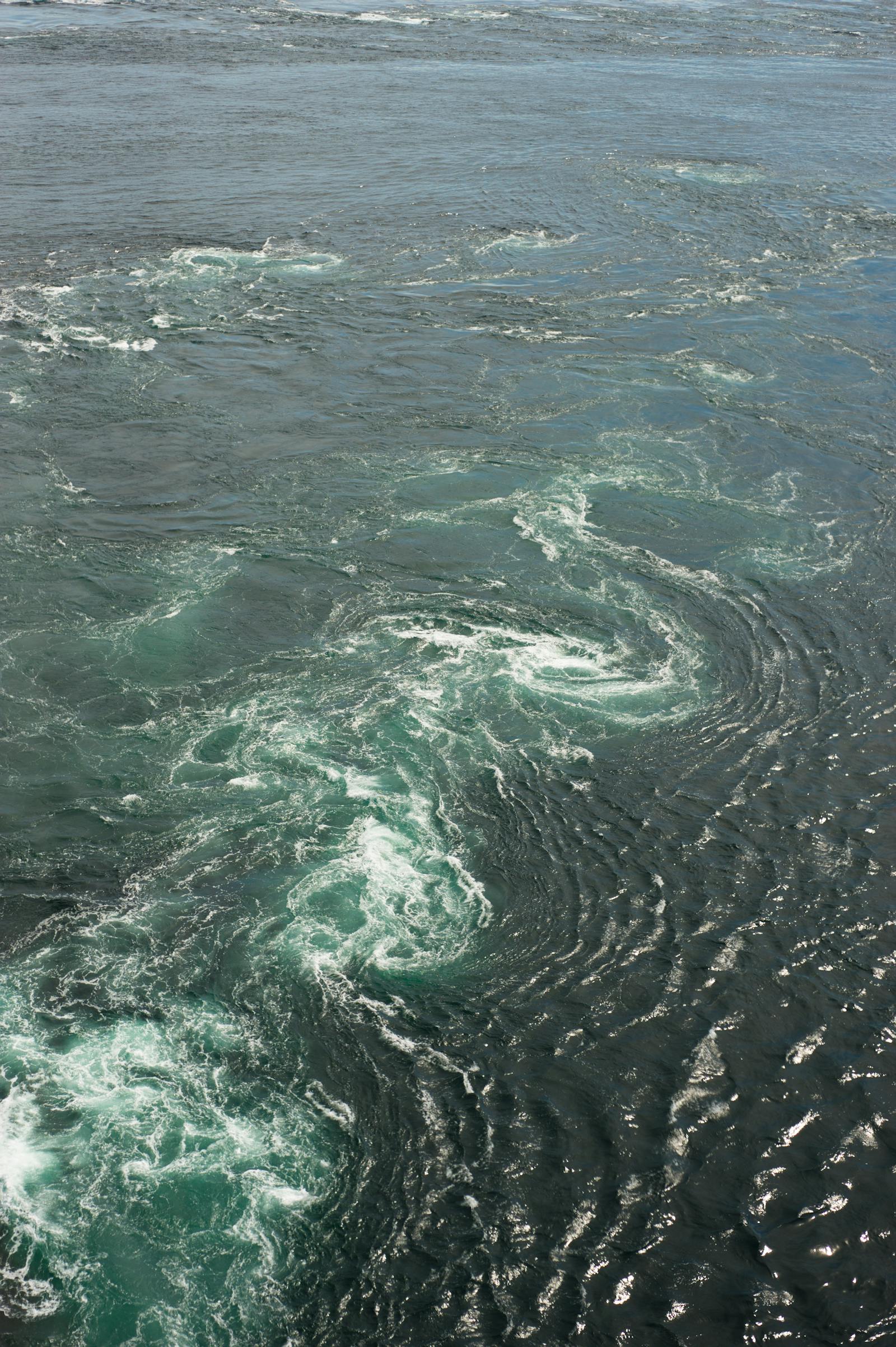
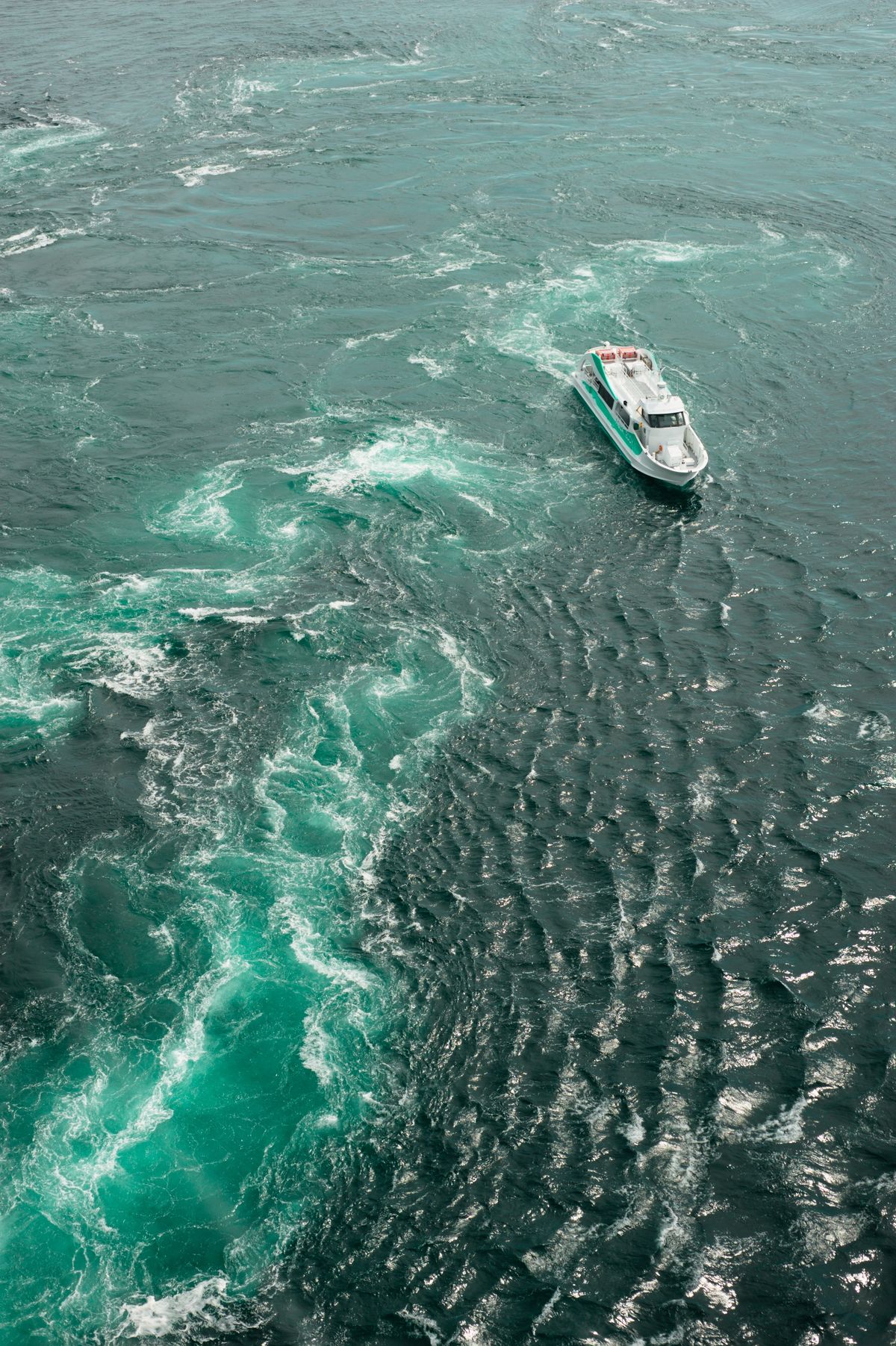
The Naruto Strait, separating the northeastern tip of Shikoku from Awaji Island, produces one of the world’s largest tidal whirlpool phenomena, as enormous volumes of water surge through the narrow strait during tidal changes, creating vortices that can reach up to 20 meters in diameter and 2 meters in depth. The whirlpools form four times daily as the tide turns, with the largest and most dramatic examples occurring during spring tides around new moon and full moon periods.
The whirlpools can be observed from three vantage points: the Uzushio observation boats that venture directly into the strait and surround the whirlpools at close range, the Onaruto Bridge walkway (Uzu no Michi) that provides a glass-floored observation corridor suspended 45 meters above the churning water, and the land-based observation areas at Naruto Park on the Shikoku side. Each perspective offers a dramatically different experience of the same phenomenon, with the boat tour providing the most visceral sense of the tidal power.
Iya Valley: Japan’s Hidden Gorge
The Iya Valley in western Tokushima is one of Japan’s most remote and dramatically beautiful landscapes — a deep river gorge carved by the Iya River through the mountains of central Shikoku, where vertical cliff faces drop hundreds of meters to the emerald-green water below. For centuries the valley’s remoteness and inaccessibility served as refuge for people fleeing persecution: survivors of the defeated Heike clan after the Battle of Dan-no-ura in 1185, warrior monks driven from their temples, and resistance fighters throughout Japanese history all found sanctuary in these hidden valleys.
The Iya Kazurabashi vine bridges — suspension bridges woven from wild mountain vines that must be completely replaced every three years using the same traditional techniques — cross the Iya River at several points and are among Japan’s most distinctive and atmospheric traditional engineering structures. The main Kazurabashi at Nishi-Iya, sagging slightly under its own weight as all vine bridges do, swaying gently in the mountain breeze, provides a crossing that combines genuine historical authenticity with a modest sense of adventure. The bridges are certified by government standards for safety, but the feeling of walking on woven vines over a green river gorge is pleasurably thrilling regardless.
Ochiai village in the upper Iya Valley is one of Japan’s most remarkably preserved traditional mountain settlements, where stone-walled thatched farmhouses cling to a nearly vertical mountainside in a configuration that looks physically impossible — a vernacular architecture solution to extreme terrain that has no parallel elsewhere in Japan. The village is best viewed from the opposite valley wall at dawn or dusk, when the angled light creates dramatic shadows across the mountain face and the farmhouses appear to float between forest and sky.
Otsuka Museum of Art: The World in Ceramic
The Otsuka Museum of Art on the Naruto coast is Japan’s largest art museum by floor space and contains the world’s most extraordinary collection of ceramic reproductions of Western art masterworks — approximately 1,000 works reproduced at full original scale using ceramic-based technology that achieves extraordinary color fidelity and will theoretically preserve the works for 2,000 years. Works by Raphael, Leonardo, Michelangelo, El Greco, Velazquez, Rembrandt, Monet, Van Gogh, Picasso, and Pollock are all represented at full scale, displayed in environments recreating the architectural contexts of their original settings.
The museum is controversial among art purists who question the merit of reproductions, but for many visitors it provides an unparalleled educational and aesthetic experience — the ability to see works from the Sistine Chapel ceiling next to the Parthenon frieze next to Monet’s Water Lilies in a single day, at full scale and in excellent viewing conditions, is something no other museum in the world can offer. For families, art students, and general visitors without access to the world’s major European collections, the Otsuka Museum provides extraordinary value. Budget a full day for a thorough visit.
Mount Tsurugi: Shikoku’s Sacred Peak
Mount Tsurugi, at 1,955 meters the second-highest peak in Shikoku, is one of Japan’s 100 Famous Mountains and a site of ancient sacred significance in the mountain worship traditions that predate institutional Buddhism and Shinto. The mountain’s twin-peaked summit has been associated with sword worship (tsurugi means sword in Japanese) for over a thousand years, and the small shrine at the summit is one of Japan’s most dramatically situated alpine sanctuaries. The hiking season runs from late May through October, with the most spectacular conditions in autumn when the mountain’s forests blaze with color.
Getting to Tokushima
Tokushima is served by Tokushima Airport, which receives flights from Tokyo Haneda (approximately 1 hour 10 minutes) and Osaka Itami (approximately 35 minutes). By rail, the JR Tokushima Line connects Tokushima to Takamatsu in approximately 1 hour by limited express, and to Awa-Ikeda (gateway to the Iya Valley) in approximately 1 hour 20 minutes. From Osaka, highway buses reach Tokushima via Awaji Island in about 2.5 hours, and Nankai Ferry crosses the Kii Channel from Wakayama in about 2 hours.
Before heading out, make sure you have a Japan eSIM ready to navigate, translate, and share photos without worrying about connectivity. Get your Japan eSIM (Stay connected from day 1) →
The Akashi Kaikyo Bridge and Onaruto Bridge together create a land connection between Tokushima and the Kansai region via Awaji Island, making highway bus travel from Osaka and Kobe straightforward and relatively fast. For the Naruto whirlpools, Naruto City is accessible from Tokushima by JR Naruto Line in approximately 40 minutes.
Getting Around Tokushima
Within Tokushima City, local buses and the city’s compact downtown area make most central attractions walkable. For the Naruto area, trains and buses provide adequate coverage. For the Iya Valley, a rental car is strongly recommended — the valley’s remote location and the distribution of its attractions across a wide mountain area make it essentially impossible to explore adequately by public transport within a reasonable timeframe. Car rental is available at Tokushima Station and Airport. The drive through the Iya Valley along the narrow mountain roads is itself a spectacular scenic experience.
Where to Stay in Tokushima
Tokushima City has business hotels and mid-range accommodation concentrated near the station. During the Awa Odori festival in August, accommodation in the entire city books out months in advance, and prices increase significantly — plan and book very early if visiting for the festival. The Iya Valley offers several outstanding accommodation options including Iya Onsen, a hot spring ryokan accessible only by cable car and positioned directly above the Iya River gorge, offering one of Japan’s most dramatically situated hot spring experiences. Traditional thatched-farmhouse guesthouses (kayabuki no ie) in the upper Iya Valley provide the most authentic immersion in the valley’s traditional culture.
Food and Local Specialties in Tokushima
Tokushima’s food culture reflects its position at the intersection of mountain and sea. Sudachi, a small, intensely fragrant green citrus fruit unique to Tokushima Prefecture, is used throughout the local cuisine as a seasoning and garnish — its sharp, bright flavor is used to dress noodles, fish, and hot pot dishes in place of conventional seasonings. Tokushima ramen is a distinctly rich and sweet regional noodle style, using a pork bone broth flavored with soy sauce and sweetened with a distinctive sweet mirin-like seasoning, topped with pork belly and raw egg.
Iya soba, produced in the high valleys of the Iya region from locally grown buckwheat, has a distinctive roughness and intense flavor that reflects the mountain conditions in which it is grown. Several restaurants in the Iya Valley serve this exceptional noodle with simple accompaniments that showcase the flavor of the buckwheat itself. Fresh Naruto sea bream and Awa Odori chicken (a local free-range breed) are other Tokushima specialties worth seeking out.
Day Trips and Nearby Destinations
From Tokushima, Takamatsu in neighboring Kagawa Prefecture is easily accessible in approximately 1 hour by limited express train, making a day trip to Ritsurin Garden and Takamatsu’s Seto Inland Sea coast straightforward. Kochi in the south is approximately 2 hours by express bus or JR limited express via Awa-Ikeda. The Shikoku 88-temple pilgrimage begins at Ryozen-ji Temple in Naruto, just north of Tokushima City, making Tokushima the starting point for the famous Ohenro circuit — even a short walk along the initial pilgrimage section provides a taste of this extraordinary Japanese spiritual tradition.
Best Time to Visit Tokushima
August is the most exciting time to visit Tokushima for the Awa Odori festival (August 12-15), though accommodation must be booked many months in advance. Spring (April through June) is excellent for the Naruto whirlpools and comfortable mountain hiking in the Iya Valley, with the added possibility of spring flowers along the valley slopes. Autumn (October through November) brings spectacular foliage to the Iya Valley and the Tsurugi mountain area, with the combination of red maple leaves over the green river gorge creating some of Shikoku’s most beautiful seasonal landscapes. The Naruto whirlpools are impressive year-round, with the largest examples during spring tide periods.
Hidden Gems and Local Tips for Tokushima
Oboke Gorge, just north of the Iya Valley accessible from Oboke Station on the JR Dosan Line, offers extraordinary river canyon scenery where the Yoshino River has carved deep into ancient metamorphic rock to create cliffs of extraordinary color and texture. Boat tours through the gorge at water level provide a dramatically different perspective from the hillside road views. The Iya Valley’s Peeing Boy statue, a small bronze figure balanced on a rock outcrop above a vertiginous drop over the Iya River, is the valley’s lightest-hearted attraction and one of Japan’s most distinctive regional folk sculptures.
Local tip: the Awa Odori Kaikan in Tokushima City holds daily dance performances year-round, with visitor participation encouraged in the afternoon shows — even attempting the basic Awa Odori shuffle step with a professional dancer is a genuinely joyful and memorable experience regardless of dancing ability. The rooftop of the Kaikan building has an excellent view over Tokushima City and the surrounding mountains that provides good geographic orientation before exploring the prefecture.
Practical Information for Tokushima
Tokushima Prefecture operates on Japan Standard Time (JST, UTC+9). English-language materials are available at the Naruto Park area, the Otsuka Museum of Art, and Tokushima City’s main tourist sites. The Iya Valley has limited English resources and a translation app is very useful for restaurant and accommodation navigation in the more remote areas. International credit cards are accepted at major accommodation and tourist facilities, but smaller establishments in rural and mountain areas are often cash-only.
Budget Guide for Tokushima
Tokushima is generally affordable. The Naruto Uzushio observation boat costs approximately 1,600 yen. The Onaruto Bridge Uzu no Michi walkway costs 510 yen. The Otsuka Museum of Art entry is 3,300 yen (expensive but justifiable given the extraordinary collection and space). Kazurabashi vine bridge crossing costs 550 yen. Budget travelers can manage on 8,000 to 12,000 yen per day. Iya Valley accommodation ranges from budget guesthouses at 6,000 to 8,000 yen to the luxury Iya Onsen ryokan at 40,000 to 60,000 yen per person including meals.
Frequently Asked Questions About Tokushima
What is Tokushima most famous for?
Tokushima is most famous for the Awa Odori festival (August 12-15), one of Japan’s largest and most energetic traditional dance festivals; the Naruto whirlpools, dramatic tidal vortices in the Naruto Strait; the Iya Valley, one of Japan’s most remote and beautiful mountain gorges; and the Kazurabashi vine bridges. The Otsuka Museum of Art near Naruto is also internationally recognized as a unique cultural institution. Together these attractions make Tokushima one of Shikoku’s most distinctive and rewarding destinations.
When are the Naruto whirlpools best?
The Naruto whirlpools are largest and most spectacular during spring tides, which occur around new moon and full moon periods each month. The largest whirlpools of the year typically form during the spring tide periods of March through April and September through October, when the tidal range is greatest. During these optimal conditions, individual whirlpools can reach 20 meters in diameter. The whirlpool timetable is published on the Naruto tourism website and should be consulted when planning a visit to maximize the chance of seeing the largest phenomena.
Is the Iya Valley worth visiting?
The Iya Valley is absolutely worth visiting for those seeking Japan’s most dramatic and least-visited mountain landscapes. The combination of the deep gorge scenery, the Kazurabashi vine bridges, the preserved thatched farmhouses of Ochiai Village, and the extraordinary hot spring accommodation at Iya Onsen creates an experience that is genuinely unlike anything available in Japan’s main tourist destinations. The valley requires a rental car to explore properly and rewards those who invest a full day or overnight stay with scenery and cultural experiences of the highest order.
How do I attend the Awa Odori festival?
The Awa Odori runs August 12-15 each year in Tokushima City. Tickets for the main enza (performance venues) with seated viewing cost approximately 800 to 2,000 yen and should be booked months in advance through official ticketing channels. Free viewing areas exist along the main dance streets where spectators can watch from the roadside without tickets. Accommodation in Tokushima during the festival books out months in advance and prices increase significantly — book as early as possible, potentially a year ahead for the best options. Arriving on August 12 evening for the opening night and staying through August 15 provides the full festival experience.
What is sudachi and how is it used?
Sudachi is a small, intensely fragrant green citrus fruit that is unique to Tokushima Prefecture, where approximately 98% of Japan’s entire sudachi production occurs. The fruit’s juice has a bright, sharp flavor that is more complex than lemon and less sweet than yuzu, making it a versatile seasoning used throughout Tokushima cuisine. It is squeezed over noodles, fish, hot pot, and grilled foods to add a distinctive citrus brightness. Sudachi is harvested from August through October and is at its most fragrant when used fresh during this period. Sudachi juice, vinegar, and processed products make excellent Tokushima souvenirs available year-round.
Where does the Shikoku 88-temple pilgrimage start?
The Shikoku 88-temple Ohenro pilgrimage traditionally starts at Ryozen-ji Temple (Temple 1) in Naruto City, easily accessible from Tokushima by JR Naruto Line. Walking the full circuit covers approximately 1,200 kilometers through all four Shikoku prefectures and takes 30 to 60 days depending on pace. Most visitors today complete the pilgrimage by car or bus in 10 to 14 days. Even those not undertaking the full pilgrimage often visit the first few temples near Tokushima to experience the pilgrimage atmosphere and understand the tradition that has shaped Shikoku’s cultural identity for over 1,200 years.
Is Tokushima good for hiking?
Tokushima offers excellent hiking, particularly in the Iya Valley and the mountain ranges of western Tokushima. Mount Tsurugi (1,955 meters) is one of Japan’s 100 Famous Mountains and offers rewarding hiking from late May through October with extraordinary views from the summit. The Iya Valley rim trails provide spectacular gorge views at various points. The initial sections of the Shikoku pilgrimage near Tokushima City offer gentle walking through historical landscape for those wanting a taste of pilgrimage route hiking without the full commitment. The Shikoku Karst plateau on the Ehime-Kochi border, a longer trip from Tokushima, provides unusual open grassland hiking with panoramic mountain views.
3-Day Tokushima Itinerary
Day 1: Awa Odori Culture and City Life
Begin in Tokushima City with the Awa Odori Kaikan performance center — professional daily shows and participatory dance workshops teach the distinctive “fool’s dance” steps of Japan’s largest dance festival. The adjacent Bizan Ropeway ascends to panoramic views of the city and Yoshino River delta. Evening: experience Tokushima ramen — a distinctive pork-bone soy broth topped with raw egg, with a rich slightly-sweet character unique to the prefecture.
Day 2: Naruto Whirlpools and Pilgrimage Temple
Drive to Naruto Strait for Japan’s most powerful tidal whirlpools — reaching 20-meter diameters, visible from the glass-floor Uzuno-Michi walkway under the Onaruto Bridge (45m above the churning water) or from sightseeing boats. Afternoon: visit Ryozenji Temple (Temple 1 of the Shikoku 88 Pilgrimage) — the traditional starting point where white-robed pilgrims begin their 1,200-km journey, creating an unforgettable encounter with living Japanese spiritual tradition.
Day 3: Iya Valley Deep Mountain
Drive west into the Iya Valley — a remote mountain gorge and historical refuge for defeated Heike warriors. The Kazurabashi vine bridges, woven from shirakuchi kazura (hardy kiwi) vines and rebuilt every 3 years, cross the gorge in an 800-year tradition. The dramatic scenery of mist-wrapped peaks, thatched villages on near-vertical slopes, and crystal-clear river below creates one of Japan’s most extraordinary mountain landscapes. Nearby Oboke Gorge offers white-water rafting and glass-bottomed boat tours through colorful marble canyon walls.
Shopping Guide: Tokushima Souvenirs
Awa washi handmade paper from Yamakawa — notebooks, lamp shades, and decorative sheets — is a traditional craft of exceptional quality. Naruto kintoki sweet potatoes grown in Tokushima’s coastal sand fields (Japan’s finest sweet potato variety) are available as chips and mochi year-round. Sudachi citrus juice and ponzu — the bright green citrus grown almost exclusively in Tokushima — are essential regional products. Awa Odori-themed goods including dancing dolls and traditional straw amigasa hats make distinctive regional souvenirs. Iya soba noodles from the mountain valley and local sake from small Tokushima breweries complement the regional souvenir selection.
Family-Friendly Activities in Tokushima
The Naruto whirlpools from the Uzuno-Michi glass floor or sightseeing boats inspire genuine awe in children — the 20-meter rotating water masses are unlike anything seen in everyday life. The Awa Odori dance workshop at the Kaikan is immediately fun and inclusive for families. The Kazurabashi vine bridges in the Iya Valley are thrilling for older children. Oboke Gorge glass-bottomed boats provide a gentle family way to experience dramatic marble canyon scenery. The Tokushima City Children’s Science Museum near the station has hands-on exhibits suitable for elementary-age children.
Solo Travel Tips for Tokushima
Tokushima’s first 23 pilgrimage temples make it a complete destination for solo walkers wanting the o-henro experience without the full 1,200-km commitment. The Iya Valley’s farmhouse inns warmly welcome solo travelers with communal meals and local hospitality. Rent a car at Tokushima Station for maximum flexibility — public transport to the Iya Valley is limited. The city’s izakaya culture around covered shopping arcades offers excellent solo dining with local sudachi drinks and Awa chicken (jidori).
Frequently Asked Questions About Tokushima
When is the Awa Odori Festival?
August 12–15 in Tokushima City — Japan’s largest traditional dance festival with over 100,000 dancers. Hotel rooms fill 6–12 months in advance. Paid spectator stands line the main parade routes; free standing areas are also available. Daily Awa Odori performances at the Kaikan center offer the experience year-round outside festival season.
How do I get to Tokushima?
Fastest from Osaka: express bus from Namba or Shin-Osaka (2h30m, ¥2,500). From Tokyo: fly to Tokushima Awaodori Airport (85 min from Haneda). From Okayama: Marine Liner to Takamatsu then local train (2h total). From Kochi: JR Dosan Line to Awa-Ikeda, then Tokushima Line (about 2 hours). The Shikoku Rail Pass covers all JR routes within Tokushima Prefecture.
What makes Naruto whirlpools special?
Among the world’s three largest tidal whirlpools (alongside Norway and Canada), Naruto’s uzushio form when tidal flows through the narrow strait create velocity differentials between the Seto Inland Sea and Pacific Ocean — rotation masses reach 20 meters during peak spring tides. Four times daily, with the largest whirlpools on spring-tide days around full and new moon. The Naruto tourism site publishes daily prediction schedules for optimal viewing planning.
Tokushima’s Natural Wonders Beyond the Iya Valley
Cape Muroto (located in Kochi Prefecture — accessible as a day trip) south of Tokushima along the Pacific coast is one of Japan’s most spiritually and geologically significant peninsulas — where the monk Kukai (Kobo Daishi) achieved Buddhist enlightenment in the sea cave of Mikurodo, and where the Nankai Trough’s tectonic forces have pushed ancient ocean floor sediments above sea level in formations visible at Muroto Geopark. The cape’s black volcanic coastline, swept by warm Kuroshio Current waters, supports extraordinary marine biodiversity — manta rays gather seasonally at cleaning stations accessible by snorkeling, and loggerhead sea turtles nest on the beaches from June through August. The Hiwasa Sea Turtle Museum Caretta in Minami Town on Tokushima’s southern coast documents the sea turtle nesting ecology with an aquarium and seasonal turtle conservation programming.
The Yoshino River flowing through central Tokushima is Japan’s most celebrated white-water rafting river, its dramatic Oboke and Koboke gorges (shared with Kochi Prefecture) offering everything from family-friendly float trips through marble canyons to advanced-level rapids for experienced paddlers. The river’s crystal-clear water takes on a distinctive emerald green color in the gorge sections — photographs of the Oboke gorge with its multicolored marble cliff faces are among Shikoku’s most recognized images. In winter, the gorge’s forests create spectacular rime ice formations when freezing mist coats the trees and rocks in white.
Tokushima’s Sudachi (the small, bright green citrus) deserves special mention as both culinary culture and agricultural identity. Grown almost exclusively in Tokushima, sudachi is used throughout Japanese cuisine as a garnish for grilled fish, added to ponzu dressing, and squeezed over noodles and hot pot. The fruit has a brighter, more floral acidity than lemon and a distinctively Japanese flavor profile. Tokushima produces over 90% of Japan’s total sudachi crop, and the fruit’s harvest season (August–October) fills the air of the producing regions with its extraordinary fragrance. The Kamiyama Sudachi Festival celebrates the harvest with communal meals, market stalls, and live music in the mountain village of Kamiyama — an authentic rural festival worth timing a visit around.
The Tokushima LED Art Festival held in winter transforms public spaces throughout the city with LED light installations created by artists and technology companies, reflecting Tokushima’s position as the home of the blue LED invention by Nobel Prize laureate Shuji Nakamura (who developed the technology at Nichia Chemical in Tokushima). The festival celebrates this scientific heritage through cutting-edge light art that draws visitors from across Japan. The adjacent Awaodori Kaikan Museum provides comprehensive documentation of the festival’s 400-year history including rare historical photographs, festival costumes across eras, and recordings of great performers.
Tokushima’s Agricultural and Craft Heritage
Tokushima Prefecture has a rich indigo dyeing tradition — Awa-ai (Awa indigo) cultivated in the Yoshino River valley was historically Japan’s most important indigo source, supplying dye to textile producers throughout the country. The deep blue color achieved through Tokushima’s natural fermentation indigo process (sho-ai) has a depth and complexity impossible to replicate with synthetic dye. Several workshops in the Kamiyama and Aizumi areas continue traditional indigo cultivation and dyeing, offering visitor workshops where participants can dye cotton and linen using the ancient fermentation vat method. The resulting textiles retain the distinctive earthy-sweet fragrance of the indigo plant alongside rich, slowly fading blue color that improves with age and washing — the opposite of synthetic dye. Awa-ori textiles (traditional Tokushima woven fabric), Awa ningyo joruri puppet theater (a distinct regional form of traditional puppet drama), and Naruto kintoki sweet potato treats (sweets and chips made from the prized sweet potatoes grown in Naruto’s sandy coastal fields) round out the prefecture’s distinctive cultural heritage. Tokushima’s combination of dramatic natural scenery, ancient pilgrimage tradition, exuberant festival culture, and agricultural craft identity creates a depth that repeatedly rewards returning visitors.
Getting to and Around Tokushima
Tokushima is well-connected by express bus, ferry, and limited express train. From Osaka Namba or Shin-Osaka: the Tokushima Express Bus (JR Shikoku Bus or Nankai Bus) takes 2h30m for approximately ¥2,500 one-way — the fastest and most economical connection. From Okayama: take the JR Marine Liner to Takamatsu (1h), then the JR Tokushima Line to Tokushima (1h30m). By ferry: Nankai Ferry links Wakayama Port to Tokushima Port in about 2 hours, with several sailings a day. From Tokyo: fly to Tokushima Awaodori Airport (85 minutes from Haneda by JAL or ANA). The Shikoku Rail Pass covers unlimited JR travel throughout Tokushima.
Within Tokushima Prefecture, a rental car is strongly recommended for visiting the Iya Valley, Cape Muroto (located in Kochi Prefecture — accessible as a day trip), and rural craft areas — public bus service covers main routes but with limited frequency in rural areas. Tokushima City itself is navigable by city bus, on foot, and by rental bicycle. The JR Tokushima Line connects major towns along the Yoshino River valley. For Naruto, the JR Naruto Line runs from Tokushima in about 40 minutes. Most major attractions in the city center are within easy walking distance of Tokushima Station.
Tokushima Prefecture stands as Shikoku’s most dramatically varied destination — where mountain gorges plunge 1,000 meters beside villages clinging to near-vertical slopes, where ocean whirlpools 20 meters across form and dissolve on tidal schedule, where 1,200 years of pilgrimage tradition and 400 years of exuberant dance festival energy collide in a culture of extraordinary vitality. For travelers willing to venture beyond Shikoku’s more famous destinations, Tokushima delivers authentic, dramatic, and deeply memorable Japan.
Essential Travel Tips for Tokushima
Getting to Tokushima is easy from major Kansai cities. From Osaka (Nanba Station), the Mugi/Naruto Express bus takes about 2 hours and costs approximately ¥2,500 one-way — a budget-friendly option. By rail, the JR Limited Express Uzushio from Okayama reaches Tokushima Station in about 2 hours (¥4,500 with reserved seat). Renting a car is highly recommended for exploring the Iya Valley and rural Tokushima, as public transport is limited in those areas. Major car rental agencies are available at Tokushima Airport and Tokushima Station. Book in advance during Awa Odori Festival week (mid-August) as prices surge and availability drops sharply.
Cash is essential outside the city center — many rural restaurants and guesthouses in the Iya Valley only accept yen. Withdraw from 7-Eleven or Japan Post ATMs before heading into the mountains. The climate is warm and humid in summer (July–September); lightweight, quick-dry clothing and insect repellent are recommended for hiking the Iya Valley. During Awa Odori (August 12–15), book accommodations at least three months in advance and expect festival tickets for the grandstand (演舞場 enbujou) to sell out quickly — these cost ¥1,500–¥2,000 but offer the best viewing. Free viewing spots along the street routes fill up by late afternoon. IC transport cards (Suica/Pasmo) are accepted on Tokushima city buses. Remember that Japan has a zero-tolerance drink-driving policy — plan accordingly if enjoying Awa sake or local shochu.
Sample Tokushima Itinerary: Making the Most of Your Visit
A two-night, three-day itinerary balances Tokushima city highlights with the wild interior of Shikoku. Day 1: Arrive in Tokushima and check in near the station. Visit Tokushima Castle ruins (free) and the adjacent Senshu Park for a 30-minute walk. In the afternoon, head to the Awa Odori Kaikan (阿波おどり会館) on the lower slope of Mt. Bizan — watch a short live performance (¥800, hourly from 11am), then take the ropeway to the summit for panoramic views (¥610 return). Evening: try Tokushima ramen at a local restaurant (¥800–¥1,000). Day 2: Rent a car or join a bus tour to the Naruto Whirlpools (45 minutes from the city). Walk the Uzu-no-Michi glass-floored walkway under Onaruto Bridge (¥510) and watch the tidal whirlpools peak at high/low tide — check tidal charts online before you go. Afternoon: drive into the Iya Valley (1.5 hours), crossing the Kazurabashi vine bridge (¥550). Overnight at a ryokan in Nishi-Iya. Day 3: Hike to Biwa Waterfall and explore Oboke Gorge by sightseeing boat (¥1,080). Return to Tokushima for your onward journey. Budget: accommodation ¥8,000–¥20,000 per night, car rental ¥6,000–¥8,000/day, total trip estimate ¥25,000–¥45,000 excluding transport to/from Tokushima.
Related guides
- Tomonoura Travel Guide 2026: A First-Timer’s Guide to Japan’s Best-Preserved Edo-Era Port Town in Hiroshima
- Shimanami Kaido Cycling Guide 2026: How to Ride Japan’s Island-Hopping Bike Route Across the Seto Inland Sea
- Miyajima Travel Guide 2026: A First-Timer’s Guide to the Floating Torii, Itsukushima Shrine, Mount Misen and Hiroshima’s Sacred Island
Going to Japan? Speak Japanese with confidence.
Hirameki Japanese — camera translate for menus and signs, a two-way conversation mode, and furigana + romaji on every phrase. Free to download with kana charts, conversation mode and starter words; a one-time purchase unlocks everything.
⬇ Get it on the App Store
Plan your Japan trip
Two things every first-timer should book
Some links are affiliate links. If you book through them we may earn a small commission at no extra cost to you.