Few places in Japan ask more of a traveler than Nagasaki Peace Park. It is a destination defined not by what survived but by what was lost — at 11:02 in the morning on August 9, 1945, an atomic bomb detonated 500 metres above this quiet hillside neighbourhood, and a city of homes, schools and Catholic parishes vanished in a single white flash. Today the park, the museum and the surrounding hypocenter form one of the most important sites of remembrance in the world, and a visit is one of the most quietly powerful experiences any traveler can have in Japan.
This guide is written for first-time foreign visitors who want to understand what they will see, how to get there, how to plan their day, and — perhaps most importantly — how to behave with the kind of quiet respect that this place deserves. Nagasaki Peace Park is not a tourist attraction in the conventional sense. It is a memorial, an open-air classroom, and for many Japanese visitors a place of personal grief. Approach it that way and your visit will stay with you for the rest of your life.
A Brief History: What Happened on August 9, 1945
To stand in Nagasaki Peace Park is to stand inside a story that changed the modern world. Three days after the United States dropped an atomic bomb on Hiroshima, a B-29 bomber named Bockscar took off from Tinian Island in the western Pacific with a single weapon onboard. The primary target was the industrial city of Kokura, in northern Kyushu. Heavy cloud cover and lingering smoke from a previous firebombing forced the crew to divert to their secondary target — Nagasaki. By the time they arrived, fuel was running low and the city below was also partly obscured. A brief break in the clouds gave the bombardier a sight of the Urakami Valley, and at 11:02 a.m. the bomb known as “Fat Man” was released.
It detonated about 500 metres above the Matsuyama district, in what is now the northern part of Nagasaki. The temperature at the hypocenter reached an estimated 3,000–4,000°C — hot enough to melt roof tiles and turn human bodies into shadows on stone walls. The immediate blast killed somewhere between 40,000 and 75,000 people. Tens of thousands more died in the weeks, months and years that followed from burns, internal injuries and radiation sickness. Among the dead were Korean labourers, Allied prisoners of war held in a Nagasaki camp, and an entire generation of children in the schools above the cathedral.
Unlike Hiroshima, which had been a major military headquarters, Nagasaki had been a centre of Christianity in Japan for more than 400 years. Urakami Cathedral, which stood roughly 500 metres from the hypocenter, was the largest Catholic church in East Asia at the time. Its destruction is part of why the bombing has such a complicated emotional weight in Japan: a city that had once endured shogunate-era persecution for its faith was, on a quiet summer morning, almost erased.
Today the park, the museum and the hypocenter park form a connected memorial complex. Together they make up the most important pacifist landmark in Japan after Hiroshima, and they exist for one reason: to ensure that what happened here is never forgotten and never repeated.
Where Exactly Is Nagasaki Peace Park?
Nagasaki Peace Park (平和公園, Heiwa Kōen) is in the Matsuyama district, in the northern part of Nagasaki city, roughly 2.5 km north of Nagasaki Station and the harbour. The full memorial complex actually consists of three connected sites you should plan to visit together:
The Peace Park itself sits on the upper terrace and contains the iconic Peace Statue, the Fountain of Peace and a series of donated monuments from countries around the world. The Hypocenter Park (Bakushinchi Kōen) is on the lower level, directly below the spot where the bomb detonated, and features a simple black stone obelisk at the exact ground zero. The Atomic Bomb Museum and the National Peace Memorial Hall are just east of Hypocenter Park. All four sites are connected by short walking paths and a flight of escalators — you do not need transport between them.
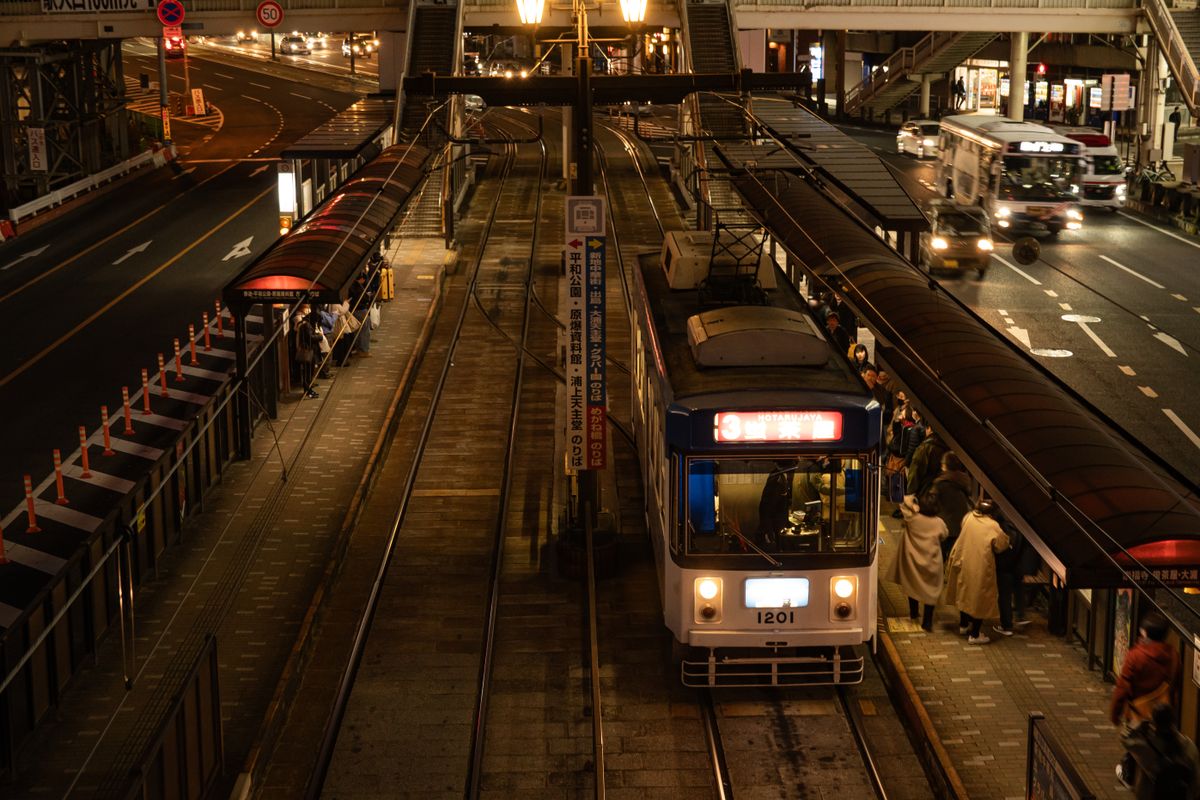
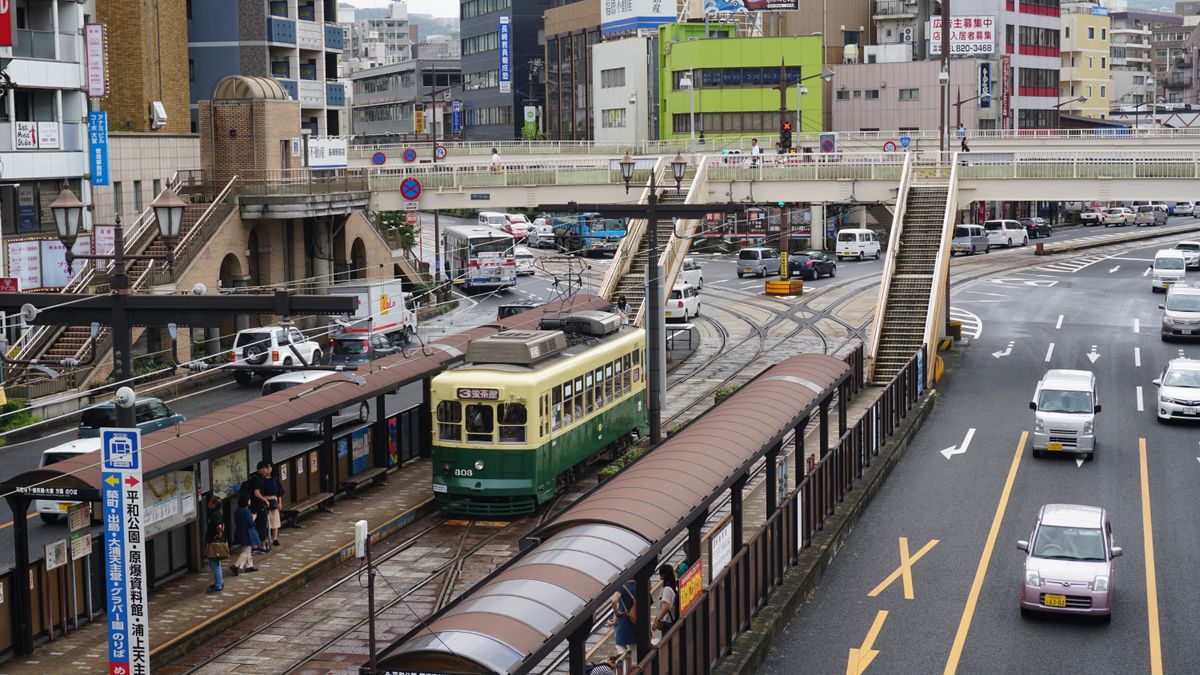
The closest tram stops are Heiwa Kōen (Peace Park) and Hamaguchi-machi on the Nagasaki tram network. Most visitors arrive on the No. 1 or No. 3 streetcar from Nagasaki Station — a journey of about 12–15 minutes that costs a flat ¥140 (around $0.95).
How to Get to Nagasaki Peace Park
From Nagasaki Station
If you arrive into Nagasaki on the new Nishi-Kyushu Shinkansen, you will step out at Nagasaki Station and find the tram stop directly in front of the building. Take Tram Line 1 (blue) or Line 3 (red) heading north, and get off at the Heiwa Kōen (Peace Park) stop. The total journey takes about 15 minutes. A single ticket is ¥140 (~$0.95) regardless of distance, and you pay the driver in coins when you exit. A one-day tram pass (¥600 / ~$4) is excellent value if you plan to combine the park with other Nagasaki sights.
From Fukuoka (Hakata)
Most foreign visitors reach Nagasaki via Fukuoka, the largest city in Kyushu. The Kamome limited express train runs from Hakata Station to Takeo-Onsen, where you transfer to the Nishi-Kyushu Shinkansen. Total journey time is around 1 hour 20 minutes. Reserved seat fare is roughly ¥6,050 (~$41) one way, and the entire route is covered by the Japan Rail Pass and the JR Kyushu Rail Pass.
From Tokyo or Osaka
From Tokyo, the most efficient route is to fly to Nagasaki Airport (NGS), about 90 minutes by air. Domestic flights start around ¥15,000–¥25,000 (~$100–170). From Nagasaki Airport, an airport bus runs directly into Nagasaki city in about 45 minutes for ¥1,200 (~$8). From Osaka, you can either fly or combine Sanyo Shinkansen + Kamome + Nishi-Kyushu Shinkansen for a 4-hour rail journey.
By Taxi or Rideshare
A taxi from Nagasaki Station to Peace Park costs roughly ¥1,500–¥2,000 (~$10–14) and takes 10–12 minutes. For travelers with limited mobility, this is a worthwhile splurge.
If you are planning your overall Japan transport budget, you may want to compare options in our Japan Rail Pass: Is It Worth It? guide before committing.
Inside Nagasaki Peace Park: A Self-Guided Walking Tour
The Peace Statue
The first thing most visitors see is the 9.7-metre bronze Peace Statue, unveiled in 1955 and now the symbol of the entire memorial. Sculpted by the Nagasaki-born artist Seibo Kitamura, the statue depicts a seated male figure with his right hand pointing toward the sky — a reference to the threat of atomic weapons — and his left hand extended horizontally, representing eternal peace. His closed eyes are a prayer for the souls of the victims, while his crossed right leg is poised to stand and walk, suggesting movement toward a peaceful future. Take a moment to read the small bronze plaque beside the statue; the sculptor’s own explanation of each element is one of the most moving artist statements you will ever read.
Most travelers find themselves wanting to sit quietly on the benches in front of the statue for at least ten minutes. There is no need to rush. School groups from across Japan visit constantly, and you may see lines of small children placing folded paper cranes at the base.
The Fountain of Peace
South of the Peace Statue stands the Fountain of Peace, built in 1969. Its design — water spreading outward like the wings of a dove — commemorates the survivors who, in the hours after the blast, crawled through ruined streets begging for water. A small inscription beside the fountain quotes a child who died of radiation poisoning: “I was thirsty beyond endurance. There was something oily on the surface of the water, but I wanted water so badly that I drank it just as it was.” Bring a tissue.
Monuments from Around the World
Lining the central avenue of the park are donated sculptures and stelae from countries around the world — the Czech Republic, China, Brazil, the former East Germany, Italy, Cuba, Bulgaria and more. Each was sent by a national government or municipal body as a gesture of solidarity. You can spend a full hour reading the inscriptions and tracing the politics of the Cold War through them. The Soviet Union’s contribution, donated in 1985, is one of the most striking.
The Maiden of Peace and Folded Cranes
Along the lower paths, look for the Maiden of Peace statue and several “thousand cranes” displays. The crane motif comes from Sadako Sasaki, the Hiroshima girl who folded paper cranes while dying of leukaemia and inspired a Japanese tradition that has spread worldwide. School groups from across Asia visit Nagasaki to lay garlands of brightly coloured cranes at these monuments. If you want to add your own, you can buy small crane garlands at the gift shop attached to the Atomic Bomb Museum.
The Nagasaki Atomic Bomb Museum
A 5-minute walk from Peace Park, the Atomic Bomb Museum (原爆資料館, Genbaku Shiryōkan) is — there is no gentler way to say this — extraordinarily difficult. Allow at least 90 minutes and prepare emotionally before you go in. Many visitors emerge in silence and find a quiet bench to sit on for a long time afterwards.
Admission is ¥200 for adults (~$1.35), ¥100 for high school and university students, and ¥50 for elementary and junior high students. Audio guides are available in English, Chinese, Korean, French, Spanish, German, Portuguese, Russian and Vietnamese for ¥157 (~$1). The audio guide is excellent and I strongly recommend it — many of the most powerful exhibits have additional context that is not translated on the wall placards.
What You Will See
The museum is organised chronologically. The first section sets the scene of pre-war Nagasaki — a thriving port city with a 400-year Catholic minority, shipbuilding industries and a diverse population including foreign residents. Then comes a sudden, devastating shift: a reconstruction of a clock stopped at 11:02 a.m., melted glass bottles fused into impossible shapes, charred school lunch boxes still containing rice, a small bicycle twisted into a sculpture of grief.
The middle galleries deal with the human cost — through photographs (some of which have content warnings), survivor testimony, and the medical reality of acute radiation syndrome. The museum does not flinch from showing what an atomic bomb does to a human body, but it does so with restraint and dignity. Several rooms include translated diaries from teenagers who survived only to die in the weeks that followed. These are difficult to read but they are why the museum exists.
The final section is a sober but ultimately hopeful look at the global movement against nuclear weapons. You will see signed petitions, treaties, and statements from international leaders. The exit is deliberately quiet — a long, dim corridor lined with the names of victims, leading out into a small reflecting pool. Sit there for a few minutes before you head back into the sunlight.
Book your hotel on Agoda (Best prices guaranteed) →
The National Peace Memorial Hall for the Atomic Bomb Victims
Directly next door to the Atomic Bomb Museum, the National Peace Memorial Hall (国立長崎原爆死没者追悼平和祈念館) is a separate building designed by Akira Kuryu and opened in 2003. It is free to enter, and it is one of the most architecturally restrained memorial spaces I have ever visited.
The building is largely underground, lit through a glass-paned ceiling that reflects the sky. At the centre is a hall of light featuring 12 thin columns of fibre-optic glass, each representing one of the 12 communities most affected by the bombing. Around the walls are shelves containing the registered names of every victim — currently more than 189,000. A small library on the upper floor holds digital copies of survivor testimonies, which you can listen to with English subtitles.
This building is not flashy. It is not designed to teach you facts. It is designed to be a place to sit and grieve, and that is exactly what most Japanese visitors do. Spending 30 minutes here, after the intensity of the museum next door, will help your mind process what you have seen.
The Hypocenter Park (Bakushinchi Kōen)
One level below the Peace Park, accessible via a long escalator, sits the Hypocenter Park. At its centre stands a simple black granite obelisk marking the exact spot above which the bomb detonated, 500 metres in the air. Nothing else. No flashy plaques. Just the obelisk, a low fence, and a small grass-covered mound that contains earth from the surrounding scorched ground gathered after the bombing.
Around the obelisk are several extraordinary surviving artefacts: a section of brick wall from the original Urakami Cathedral, displaying the curve of its eastern apse; the original surrounding stone foundations of houses; and signs in Japanese and English explaining what stood where. Standing here, looking up at the sky, is the closest most people will ever come to comprehending what happened on August 9, 1945.
Urakami Cathedral — A Detour You Should Take
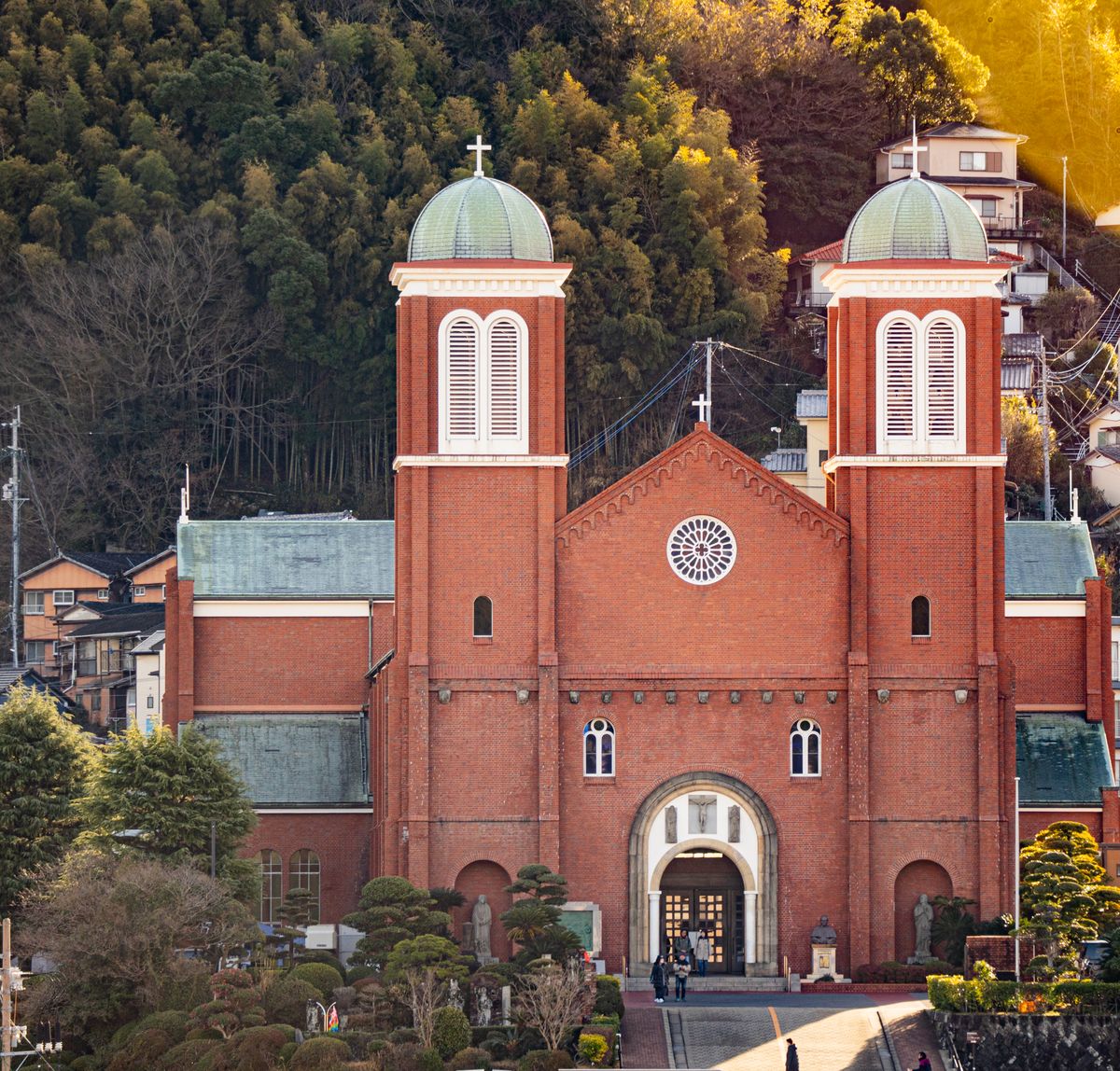
Five minutes’ walk north of the hypocenter sits the rebuilt Urakami Cathedral (Catholic Church of the Immaculate Conception). The original cathedral, completed in 1925, was the largest Catholic church in East Asia. When the bomb detonated, the building’s massive granite walls collapsed in seconds, killing the priests, nuns and parishioners who had gathered for the morning Angelus prayer. Two scorched bells were eventually recovered; one is on display outside the rebuilt cathedral, while the other is in the Atomic Bomb Museum.
The current cathedral was rebuilt in 1959 on the same foundations. It is an active Catholic church, so be mindful if you visit during Mass times. Inside, look for the wooden statue of the Virgin Mary that survived the blast — her face is partially charred, her eyes are hollow, and she is now an icon for survivors. Nagasaki’s Catholic heritage is one of the most remarkable cultural threads running through southern Japan, and many visitors find that understanding this dimension transforms the way they experience the Peace Park.
Practical Visiting Tips
Opening Hours and Best Time to Visit
The Peace Park itself is open 24 hours and has no admission fee. The Atomic Bomb Museum is open daily from 8:30 a.m. to 5:30 p.m. (extended to 6:30 p.m. in May–August, and 8:00 p.m. on August 7–9). The National Peace Memorial Hall is open 8:30 a.m. to 5:30 p.m. with similar seasonal extensions. The best time to visit is in the morning, ideally arriving by 9:00 a.m. before the school groups arrive and before the heat of summer days makes the open park uncomfortable.
How Long to Allow
Plan for a minimum of 3.5 hours: Peace Park (45 min), Hypocenter Park (30 min), Atomic Bomb Museum (90 min), Peace Memorial Hall (30 min), Urakami Cathedral (30 min). If you want time to sit quietly between sites, allocate a full half-day.
What to Bring
- Tissues and a quiet mindset
- Water and sunscreen in summer (the open park is exposed)
- An umbrella in June and September (rainy season and typhoon season)
- ¥200–¥500 in small coins for museum admission and tram fares
- A notebook if you want to take notes from exhibit captions
- Comfortable walking shoes (the complex involves stairs and slopes)
Staying Connected
The Peace Park has free public Wi-Fi but it can be patchy. Most travelers find a Japan eSIM essential for navigating between sites and translating exhibit text on the fly.
Get your Japan eSIM (Stay connected from day 1) →
How to Behave: Reflective Tourism in Nagasaki
This part of the article is the most important. Nagasaki Peace Park is not Shibuya Crossing. It is not Universal Studios. It is not a place for influencer photo shoots, peace signs or smiling group portraits. Here is what is expected of visitors, drawn from posted guidelines and the unwritten norms of Japanese visitors:
Photography
Photography is permitted in the outdoor park and Hypocenter Park, but please do not pose with the Peace Statue, do not climb on monuments, and do not block sightlines for other visitors. Inside the Atomic Bomb Museum, photography is permitted in most rooms but flash is prohibited and a few specific exhibits (artefacts in glass cases) are marked “no photos.” Inside the National Peace Memorial Hall, photography is generally discouraged. Be especially careful around school groups — never photograph children’s faces.
Volume and Behaviour
Keep voices low across the entire complex. Save your conversations for the cafe afterwards. Do not eat or drink inside the park, and do not bring food or drinks into the museum or memorial hall. If you need a break, the museum has a small cafeteria on the basement level.
Clothing
There is no formal dress code, but please dress as you would for visiting a memorial or place of worship. Skip the loud party shirts and slogan caps. Cover shoulders if you can.
If You Are American, British, Russian, Chinese or Korean
You may feel an unexpected weight when reading certain placards. Many travelers from countries directly connected to the events of 1945 — as aggressor, victim, ally or occupied colony — have written about their visits as transformative. Allow yourself to feel that weight, and resist the urge to debate or contextualise the events with your travel companions while still inside the museum. There will be time for that conversation later, perhaps over dinner. The museum is a place to absorb, not to argue.
Beyond the Peace Park: What Else to See in Nagasaki
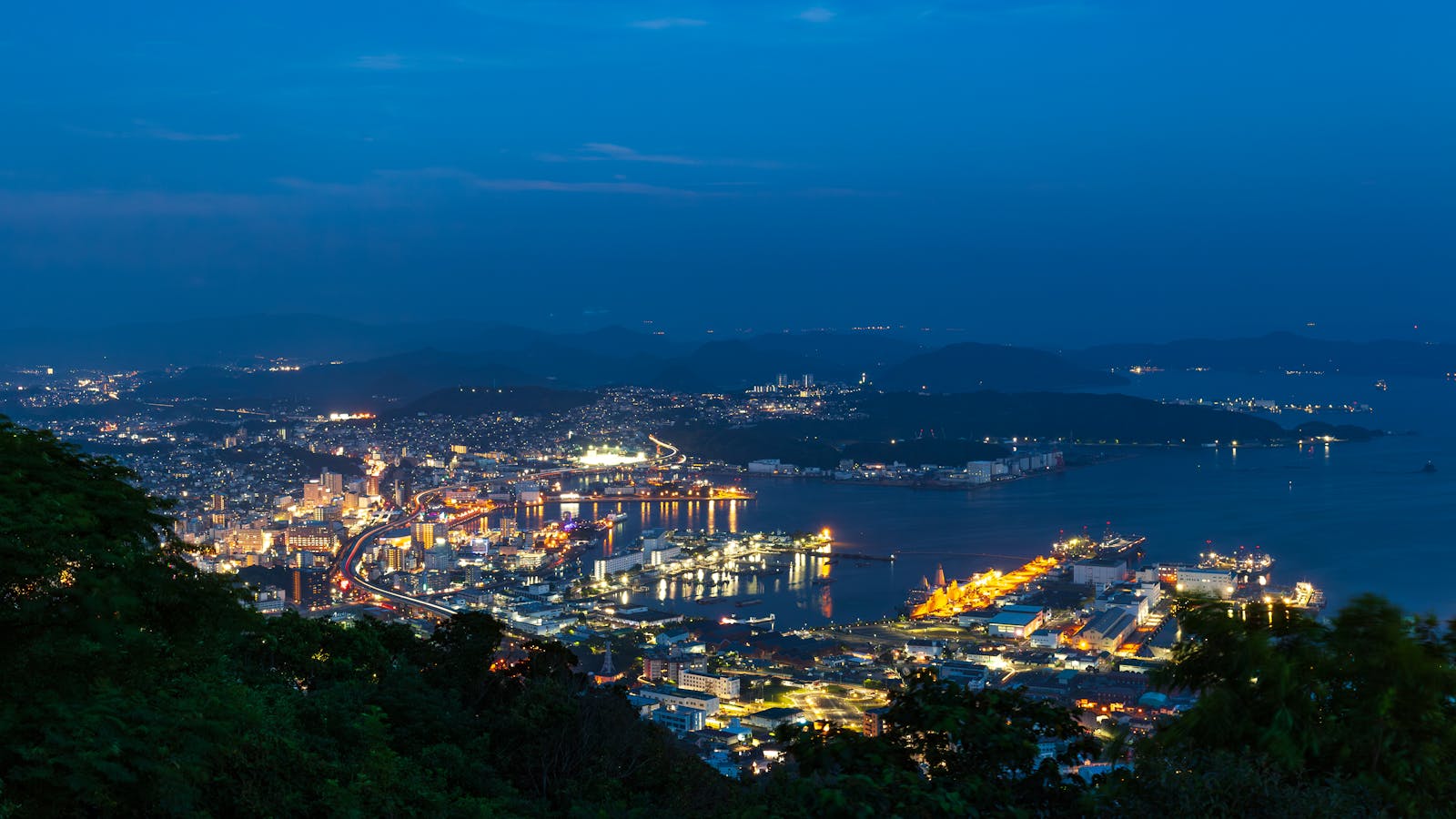
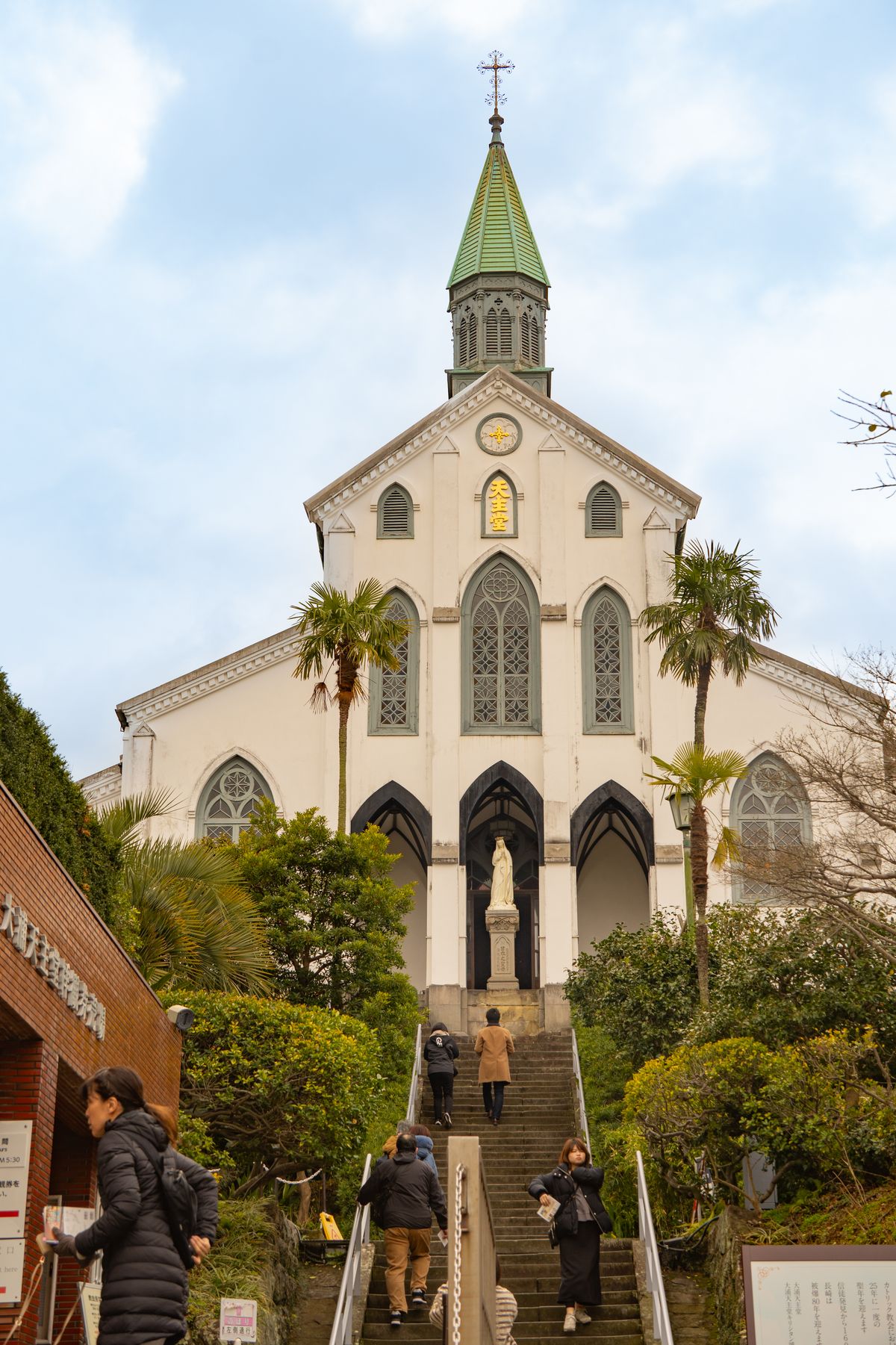
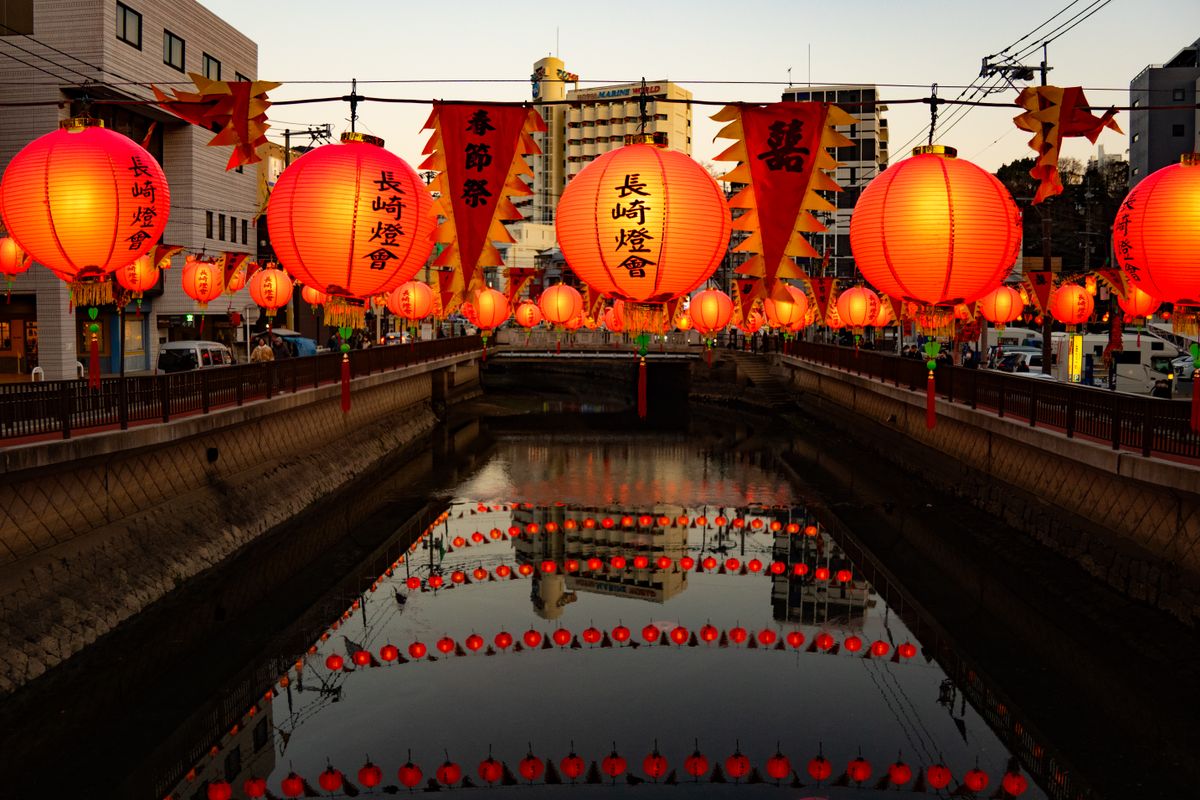
Once you have spent your morning at the Peace Park complex, Nagasaki opens up into one of the most distinctive cities in Japan. It is a port town squeezed between steep hills and the sea, with stone churches, Chinatown lanterns, Dutch trading-post replicas, and harbour views that have earned it a place on the list of Japan’s “Three Great Night Views.” Consider extending your stay by at least one full extra day to take in:
Glover Garden — A hilltop garden built around the surviving Western-style mansions of 19th-century foreign traders. The harbour views from the upper terrace are spectacular, especially at sunset.
Dejima — The reconstructed Dutch trading post that was, for over 200 years, the only point of contact between Japan and the West during the country’s period of isolation. The reconstructed warehouses and offices give a vivid sense of how this tiny artificial island once functioned as Japan’s window onto the world.
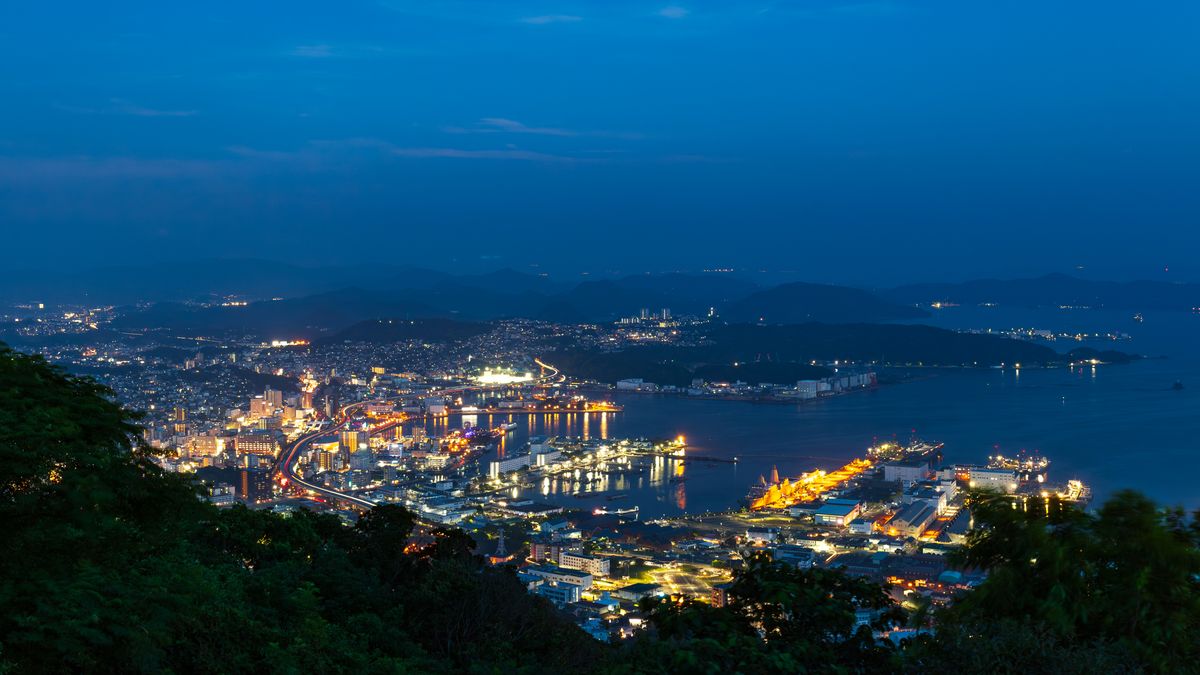
Mount Inasa — A 333-metre peak just west of central Nagasaki, accessible by ropeway. The panoramic night view from the summit is one of Japan’s most beloved viewpoints, and on a clear evening the lights of the city, ships in the harbour and the distant mountains form a panorama that few cities anywhere can match.
Chinatown (Shinchi) — Japan’s oldest Chinatown and the home of champon noodles, a flour-rich soupy noodle dish unique to Nagasaki. A bowl costs around ¥900 (~$6) at one of the historic shops.
Hashima Island (Gunkanjima) — A half-day boat tour to a haunting abandoned coal-mining island. For the full story, see our Hashima Island Guide.
If you are planning to combine Nagasaki with other Kyushu destinations, check our broader Japan destinations guide and our complete Nagasaki travel guide for itinerary ideas.
Where to Stay Near Peace Park
Most foreign visitors choose to stay in central Nagasaki — around Nagasaki Station or the Hamanomachi shopping arcade — because the city is small and the tram connects everything in 15 minutes. There are, however, a handful of hotels within walking distance of the park itself.
Best central choice: Hotels around Nagasaki Station offer easy access to both Peace Park (one tram ride) and the harbour. Expect ¥9,000–¥18,000 per night (~$60–$120).
Luxury option: Hotels on the southern slopes near Glover Garden offer the famous Nagasaki night view from their windows. Expect ¥20,000–¥40,000 per night (~$135–$270).
Budget option: Business hotels and guesthouses around the Hamaguchi-machi tram stop put you within 10 minutes’ walk of Peace Park, often for ¥6,000–¥9,000 (~$40–$60).
Search hotel deals on Yahoo! Travel →
Where to Eat After Your Visit
A Peace Park visit is heavy on the heart, and many travelers find that a slow, comforting meal helps them transition back into the rest of their day. Nagasaki happens to have one of the most distinctive food cultures in Japan, a legacy of its centuries as a multicultural port.
Champon — A creamy pork-bone broth noodle dish topped with squid, pork, vegetables and Chinese fish cake. Try it at Shikairō in Chinatown, which claims to have invented the dish in the 1890s.
Sara udon — Crispy thin noodles topped with a thick, glossy seafood and vegetable sauce. The closest Western equivalent is a chow-mein-style “platter noodle.”
Castella — A honey-coloured Portuguese-derived sponge cake brought to Nagasaki in the 16th century. Buy a sliced loaf to take home as a souvenir.
Toruko rice — A wonderfully eccentric plate of pilaf, spaghetti and pork cutlet with curry sauce. There is nothing Turkish about it. It is, in the best possible sense, a Nagasaki invention.
For more regional food inspiration across Kyushu, see our Japan food experiences guide and our Japan street food guide.
A Suggested 1-Day Nagasaki Itinerary
If you have only one day in Nagasaki and want to centre it around the Peace Park, here is a balanced plan:
8:30 a.m. — Take the tram from Nagasaki Station to Heiwa Kōen stop.
8:45 a.m. — Walk through the Peace Park; spend time at the Peace Statue and Fountain of Peace.
9:45 a.m. — Take the escalator down to the Hypocenter Park.
10:15 a.m. — Visit the Atomic Bomb Museum (90 minutes minimum).
11:45 a.m. — Enter the National Peace Memorial Hall (30 minutes).
12:15 p.m. — Walk to Urakami Cathedral.
1:00 p.m. — Lunch at a champon shop or Chinatown.
2:30 p.m. — Tram to Glover Garden for a lighter afternoon.
5:30 p.m. — Ropeway to Mount Inasa for sunset.
7:00 p.m. — Dinner near Hamanomachi.
When to Visit: Seasons and Events
August 9 — The Annual Peace Ceremony. The most important day of the year at Peace Park. At 11:02 a.m. exactly, a moment of silence is observed across Japan. International dignitaries, mayors of cities affected by nuclear weapons, and survivors deliver speeches. If you can be in Nagasaki on this date, it is one of the most meaningful experiences you can have in Japan — but expect crowds and book accommodation 6–12 months in advance.
Spring (March–May) — Pleasant weather, cherry blossoms along the lower paths of the park, and very manageable crowds.
Summer (June–August) — Hot and humid. Carry water. June is rainy season; August is dramatic but emotional.
Autumn (September–November) — The best time to visit. Crisp, clear weather, lighter crowds, beautiful skies over the harbour.
Winter (December–February) — Cold by Kyushu standards but rarely snowy. February brings the Nagasaki Lantern Festival across the city.
Frequently Asked Questions
Is the Nagasaki Peace Park appropriate for children?
The outdoor park is appropriate for all ages, and you will see Japanese school groups of every age there. The Atomic Bomb Museum, however, contains graphic content — including photographs of severe burn victims and reconstructions of injured bodies. Parents of children under about 10 should preview the museum first or skip it in favour of the outdoor park and Memorial Hall. Older children and teenagers tend to find the museum educationally important; it is a regular destination for Japanese middle school field trips, and the museum is designed with school audiences in mind.
How long does a full visit to the Peace Park complex take?
Plan for at least 3.5 hours to cover the Peace Park, Hypocenter Park, Atomic Bomb Museum and National Peace Memorial Hall. Adding Urakami Cathedral makes it 4 hours. A more relaxed pace with breaks and reflection time is closer to 5 hours, or essentially a full morning into early afternoon.
Is photography allowed inside the Atomic Bomb Museum?
Yes, photography is allowed in most rooms of the museum, but flash is not. A small number of specific exhibits — particularly artefacts in glass cases and certain photographs — are marked with “no photos” signs and should be respected. Photography is discouraged in the National Peace Memorial Hall. Throughout, please be quiet about taking photographs, do not pose for selfies in front of human remains or images of suffering, and never include other visitors’ faces — especially children — in your shots.
Can I visit Nagasaki Peace Park and Hiroshima Peace Memorial in the same trip?
Yes, and many travelers do. The two cities are about 4 hours apart by Shinkansen, and you can connect them via Kokura or Hakata. However, doing both back-to-back is emotionally heavy — most people find that one full day at each site, separated by at least one “lighter” day in between (such as Miyajima or Kurashiki) helps the experiences settle. Each city tells the story differently: Hiroshima focuses on the international peace movement and reconstruction, while Nagasaki dwells more deeply on the human and religious dimensions of loss.
What is the difference between the Atomic Bomb Museum and the National Peace Memorial Hall?
The Atomic Bomb Museum is a traditional history museum with artefacts, photographs and exhibits explaining the events of August 9, 1945 and the global nuclear weapons movement. It is run by Nagasaki City and charges a small admission fee. The National Peace Memorial Hall, opened in 2003, is a contemplative architectural memorial space run by the national government. It contains the names of victims and digital archives of survivor testimony. It is free, smaller, and designed for silence and remembrance rather than education. Most visitors do both, in that order — first the museum to learn, then the memorial hall to reflect.
Is the Peace Park wheelchair accessible?
Mostly yes. The Peace Statue area is reached by escalator and is accessible. The Atomic Bomb Museum and National Peace Memorial Hall are fully accessible with elevators. The Hypocenter Park involves some sloped paths but is navigable. Urakami Cathedral requires climbing about 50 steps to reach the entrance, although there is a wheelchair-accessible side entrance — ask at the small office to the right of the main door.
Can I leave a paper crane garland?
Yes, and many visitors do. Crane garlands (“senbazuru”) can be purchased pre-made at the Atomic Bomb Museum gift shop and at small shops outside the park. There are designated racks beside the Peace Statue, the Children’s Peace Monument and the Maiden of Peace where you can hang them. School groups from around the world send crane garlands by post throughout the year, and the park staff display them in rotation. Folding 1,000 cranes yourself and bringing them in person is considered an especially heartfelt gesture.
Are guided tours available in English?
Yes. Volunteer English-language guides (“Nagasaki Peace Guides”) can be booked free of charge for 2-hour tours of the Peace Park complex. Reservations should be made at least 3 days in advance through the Nagasaki City tourism office website. Several private tour operators also offer paid Peace Park tours combined with Glover Garden, Dejima and the city’s historic Catholic churches. If you want a deeper understanding of the historical context, a guided tour is highly recommended — many of the guides are family members of survivors and bring a personal perspective that you cannot find on any audio guide or placard.
Will I see survivors (hibakusha)?
Increasingly rarely. As of 2026, fewer than 100,000 registered hibakusha remain alive across Japan, and most are in their 80s or 90s. Occasionally a survivor will give a public talk in the museum’s auditorium; ask at the front desk for the day’s schedule. Hearing a hibakusha speak in person is one of the most extraordinary experiences any traveler can have in Japan, and within a decade it will no longer be possible.
Practical Tips Summary
- Arrive by 9:00 a.m. to beat school groups and summer heat.
- Buy a ¥600 one-day tram pass for unlimited Nagasaki tram rides.
- Bring tissues, water, sunscreen and comfortable walking shoes.
- Audio guides at the museum cost ¥157 and are excellent.
- Allow 3.5–5 hours for the full complex.
- Keep your voice low across the entire memorial area.
- No flash photography in the museum; no photography inside the Memorial Hall.
- Do not pose for cheerful group photos in front of monuments.
- Free volunteer English guides bookable 3+ days in advance.
- August 9 is the annual memorial ceremony — book accommodation 6+ months ahead.
- Combine with Glover Garden, Dejima and Mount Inasa for a full day in the city.
- An eSIM is invaluable for translating exhibit signs and navigating between sites.
Book Japan tours and hotels on JTB →
Final Thoughts
There are landmarks in Japan that delight you, landmarks that surprise you, and landmarks that you visit and forget within a week. Nagasaki Peace Park is none of these. It is a place that will rearrange parts of how you understand the 20th century, the place of cities in history, and the responsibility we carry as travelers and as citizens of countries with the power to inflict suffering on this scale. Most visitors emerge calmer, slower, and quieter than they went in.
The Peace Park does not ask you to feel guilty. It does not ask you to take a political position. It asks one thing: that you remember. Take your time. Sit with it. Walk slowly. And when you leave, take a piece of that quiet with you back into the world.
For more first-timer guidance on planning your trip, see our Japan Travel Tips for First-Timers and our Japan Destinations Guide.
Going to Japan? Talk to locals with confidence.
Hirameki Japanese — instant offline translation, camera translation, furigana + romaji, and 314 free flashcards. No login. Works without internet.

Plan your Japan trip
Two things every first-timer should book
Some links are affiliate links. If you book through them we may earn a small commission at no extra cost to you.