For decades, Akihabara (秋葉原) — known affectionately as "Akiba" by locals — has been the most concentrated, electric, and unapologetically eccentric neighbourhood in Tokyo. What began in the 1940s as a chaotic post-war black market for radios and electronic parts has transformed across three distinct eras: first into the Electric Town (Denki-gai), supplying Japan’s post-war boom in home appliances; then into the world’s most famous computer and gadget shopping district through the 1980s and 1990s; and finally, from the early 2000s onwards, into the global epicentre of otaku culture — the universe of anime, manga, video games, idols, cosplay, maid cafés, and collectibles.
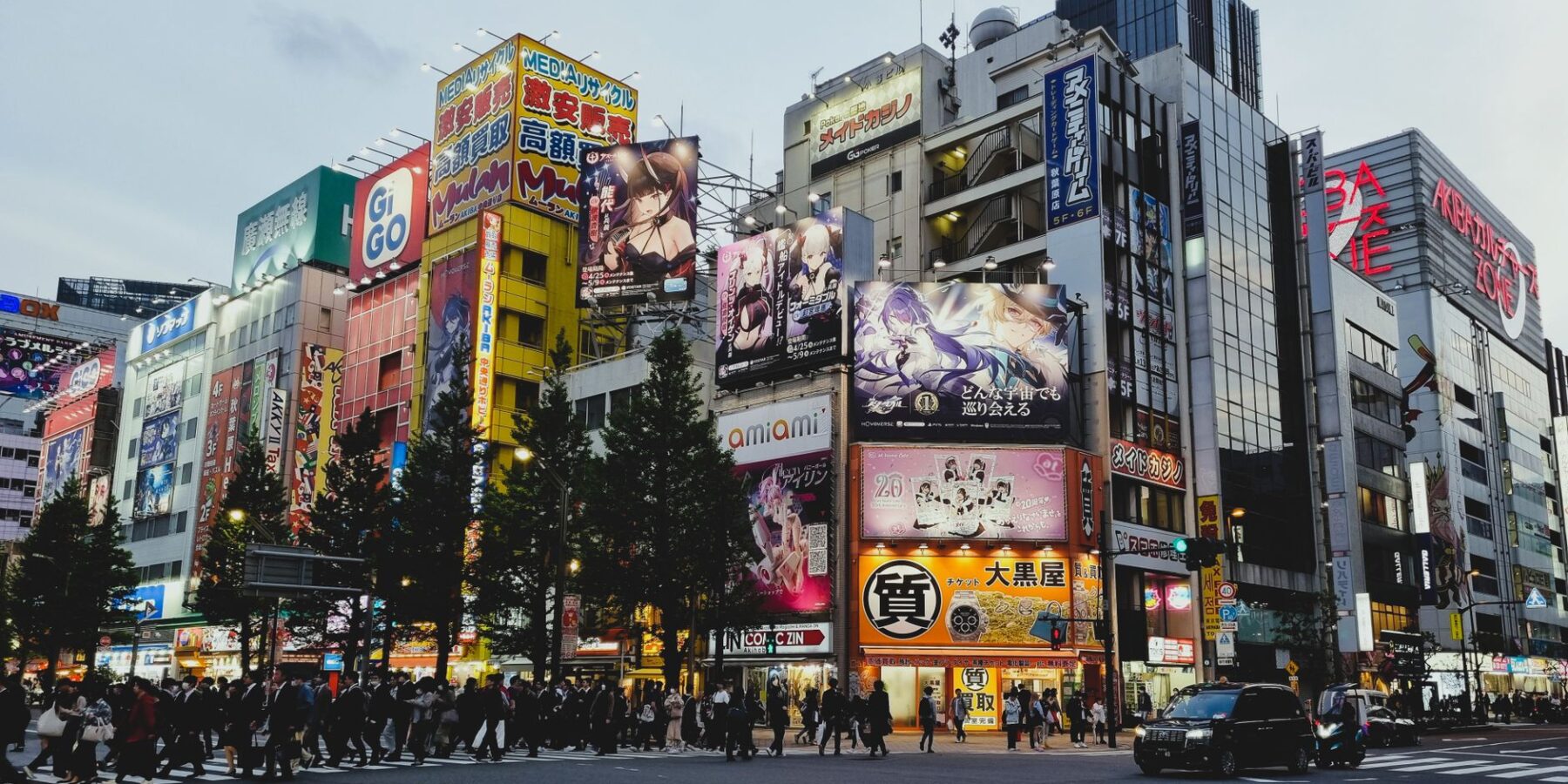
For first-time visitors to Japan — whether you have followed anime since childhood, are simply curious about Japanese pop culture, or just want to experience one of Tokyo’s most photographable neighbourhoods — Akihabara is unmissable. The signs alone are unforgettable: massive multi-storey buildings clad in giant character billboards, neon LED screens flashing trailers for the latest games, narrow side streets stacked with retro arcades, capsule toy stores, and tiny specialist shops selling everything from second-hand camera lenses to Sailor Moon figurines from 1992.
This complete guide walks you through the entire Akihabara experience: a brief history of how it became the centre of otaku culture, the neighbourhood’s key streets and landmarks, the best electronics stores, the must-visit anime and manga megastores, retro game shops, idol theatres, maid café etiquette, the most iconic photo spots, where to eat, where to stay nearby, and how to fit Akihabara into a wider Tokyo trip. Whether you have three hours or three days, you will leave with a deeper understanding of one of the most unique urban experiences anywhere on Earth.
Before you start exploring Akihabara’s shops, make sure your phone is connected — many stores have apps for tax-free shopping and discount coupons that require data. Get your Japan eSIM (Stay connected from day 1) →
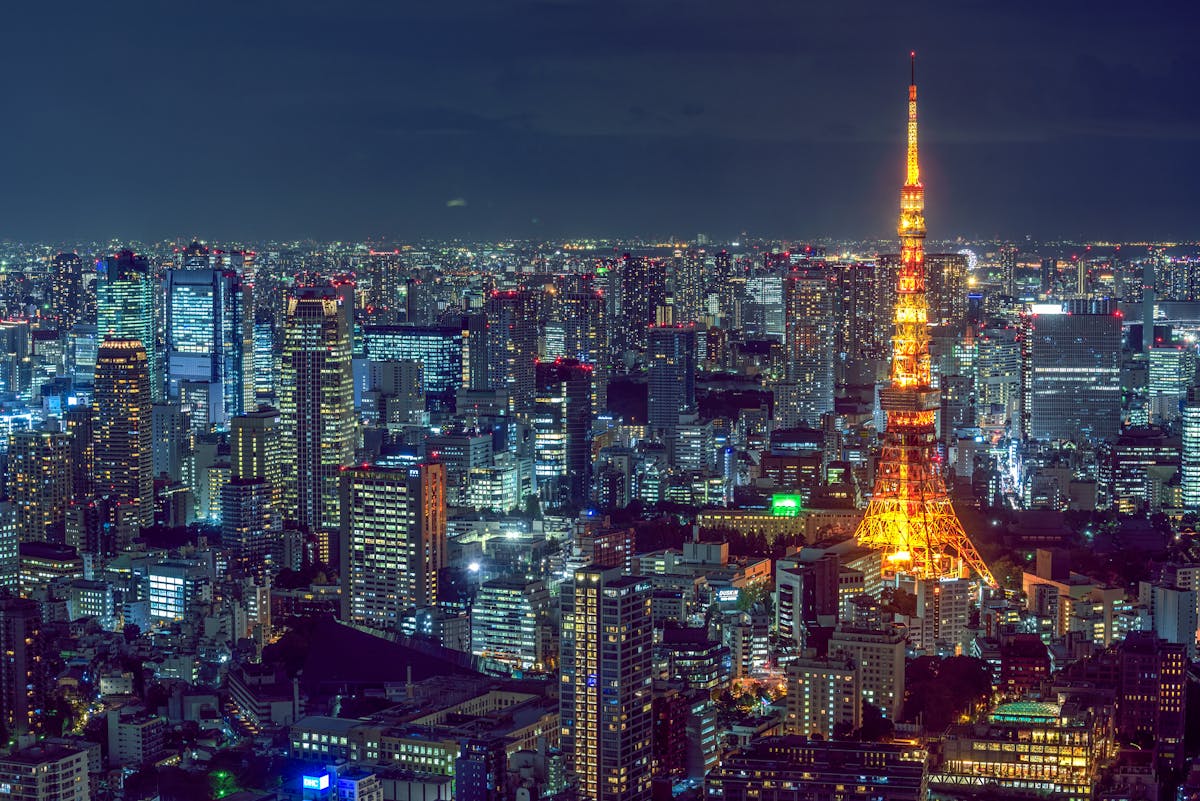
A Brief History of Akihabara: From Black Market to Otaku Capital
Akihabara’s name comes from a small fire-prevention shrine called Akiba Shrine (秋葉神社), built in 1869 to protect the area from the devastating fires that frequently swept through the wooden city of Edo (old Tokyo). The shrine was eventually moved, but the name "Akihabara" (literally "field of autumn leaves") stuck.
The neighbourhood’s identity began with the post-WWII black market. In the late 1940s, occupational authorities had outlawed unlicensed radio assembly, but parts continued to flow into Akihabara from electronics technical schools and surplus military stockpiles. By the 1950s, more than 500 small electronics shops had clustered around the station, supplying both hobbyists and the booming consumer-electronics industry.
Through the 1960s, 1970s, and 1980s, Akihabara was synonymous with home appliances and consumer electronics. Tokyo’s working-class families came here to buy washing machines, televisions, refrigerators, and stereos. By the 1990s, the focus had shifted to personal computers, peripherals, and software — Akihabara was where Tokyo built its computers, programmed them, and bought the games to play on them.
The transformation into otaku capital began around 2000–2005. As large electronics chain stores like Yamada Denki and Bic Camera spread to suburbs across Japan, Akihabara’s pure-electronics dominance faded. The void was rapidly filled by anime, manga, and game retailers — most notably Animate, Mandarake, K-Books, and Tora no Ana — that were already established in the neighbourhood and now expanded dramatically. Maid cafés opened in 2001 with the legendary "Cure Maid Café." The 2005 hit film and TV series "Densha Otoko" (Train Man), set in Akihabara, brought the otaku subculture into the Japanese mainstream. By 2010, Akihabara had cemented its identity as the global capital of anime and manga shopping.
How to Get to Akihabara
By Train
Akihabara is one of the easiest neighbourhoods in Tokyo to reach by train. The main station, Akihabara Station (秋葉原駅), is served by:
- JR Yamanote Line — the Tokyo loop line. About 4 minutes from Tokyo Station, 5 minutes from Ueno, 23 minutes from Shinjuku, about 27 minutes from Shibuya. Fares are a few hundred yen or less (JR East raised fares on March 14, 2026).
- JR Sobu Line (Local) — direct connections to Shinjuku, Yotsuya, and beyond.
- JR Keihin-Tohoku Line — north-south rapid line connecting Yokohama, Ueno, and Saitama.
- Tokyo Metro Hibiya Line — direct subway access from Roppongi, Ginza, Tsukiji, and Ueno.
- Tsukuba Express — to/from northern Tokyo and Tsukuba Science City in Ibaraki.
Most international visitors arrive via the Yamanote Line — Akihabara is one of its 30 stations and on a typical Tokyo itinerary you will pass through it multiple times. The famous Electric Town Exit (denki-gai-guchi, 電気街口) on the west side of the station deposits you directly in the heart of the otaku district.
From Narita and Haneda Airports
- From Narita Airport: Take the JR Narita Express to Tokyo Station, then transfer to the Yamanote Line for two stops (via Kanda) to Akihabara. Total: about 1 hour 15 minutes; fare around ¥3,070 (approx. USD $20.80). Alternatively, the cheaper Keisei Skyliner runs to Nippori (40 minutes) where you transfer to the Yamanote Line for four more stops.
- From Haneda Airport: Take the Tokyo Monorail to Hamamatsucho (~17 minutes), then the Yamanote Line to Akihabara (12 minutes). Total: about 35 minutes; fare around ¥670 (approx. USD $4.50).
- Airport transfer with luggage: If you are travelling with significant luggage and prefer a direct ride, Book airport transfer with Welcome Pickups →
Akihabara’s Layout: The Streets You Need to Know
Akihabara is essentially built around the JR station, with the famous shopping district extending mostly on the west and northwest sides. The whole area is very walkable; you can cover the major streets on foot in a single afternoon. Here are the key streets and zones:
Chuo-dori (Main Street, 中央通り)
The wide main avenue running north-south through the heart of Akihabara. On Sundays and public holidays from 1:00 pm to 6:00 pm (April–September) or 1:00 pm to 5:00 pm (October–March), Chuo-dori becomes a pedestrian paradise (hokōsha tengoku), closed to traffic. This is when the area is at its liveliest, with cosplayers, street performers, idol promotions, and tourists filling the entire road.
Major landmarks along Chuo-dori include the AKB48 Theatre Café, the Sega Akihabara arcade, Don Quijote Akihabara, Yodobashi Camera Multimedia Akiba, and several large anime megastores.
Soto-Kanda Backstreets
The narrow streets that web off Chuo-dori to the west and northwest, particularly the alleys just west of Chuo-dori, are home to the highest concentration of specialist hobby and collectible shops. Walk slowly: you will pass shops dedicated to single anime franchises, vintage Famicom games, military scale models, replica weapons, gachapon machines, and idol photo cards. The Mandarake Complex, Surugaya, K-Books, and Lashinbang are scattered through these alleys.
Electric Town (Denki-gai)
The blocks immediately west of the JR Akihabara Electric Town Exit. This is the historic heart of Akihabara’s electronics legacy — multi-storey shops selling computer parts, cables, semiconductors, vintage radios, and audio equipment. Many shops here are aimed at hobbyists and engineers; English may be limited but staff are happy to help.
Kanda Myojin Approach
Walk 8 minutes northwest of Akihabara Station and you reach Kanda Myojin (神田明神) — a major historic Shinto shrine that sits on the boundary between the otaku world and the historic Edo merchant district. The shrine is the patron of the area’s electronic and IT industries, and it has lovingly embraced its otaku audience: you can buy ema (wooden votive plaques) decorated with anime characters, and the shrine partners with anime productions for promotional events. A wonderful, surreal Tokyo contrast.
The Best Electronics Stores in Akihabara
While Akihabara is no longer the only place in Tokyo to buy electronics, it remains a top destination — especially for niche items, second-hand and vintage gear, and parts unavailable elsewhere. The following large stores are tourist-friendly with English signs and tax-free counters.
Yodobashi Camera Multimedia Akiba
The single largest electronics store in Tokyo by floor area. Eight floors of cameras, laptops, smartphones, audio, kitchen appliances, anime merchandise, toys, books, watches, beauty products, and a top-floor restaurant area. Tax-free counters on multiple floors. The basement floor has a vast selection of audio gear; the top floors include a golf simulator and bowling alley. Even if you don’t plan to buy electronics, it’s worth visiting just to grasp the scale of Japanese consumer-tech retail.
- Address: 1-1 Kanda Hanaokachō, Chiyoda-ku
- Hours: 9:30 am – 10:00 pm daily
- Tax-free: Yes (passport or Visit Japan Web QR code, ¥5,000+ before tax; refunded after an airport customs check from November 1, 2026 — see Practical Tips)
Bic Camera AKIBA
A massive seven-floor store competing directly with Yodobashi. Slightly different ranges and frequently different price promotions; serious shoppers compare both before buying.
Don Quijote Akihabara
Strictly speaking not an electronics store, but a chaotic general discount store famous for tax-free shopping, late hours, and a vast selection of cheap electronics, snacks, cosmetics, and quirky souvenirs. The Akihabara branch is also home to the AKB48 Theatre on its 8th floor (more on that below). Open until 5:00 am — perfect after a long evening.
Specialist Shops
For specific needs, smaller specialist shops shine:
- Akky International — international duty-free electronics, voltage converters, English-speaking staff.
- Fujiya Camera — used cameras, lenses, and photographic equipment, second-hand prices typically 30–50% below new.
- Ohashi Camera Akihabara — vintage and high-end second-hand cameras.
- Liberty — second-hand audio gear, vintage hi-fi equipment.
- Chuomusen — vintage electronics, parts, and electronics museum atmosphere.
Anime, Manga, and Pop Culture: The Must-Visit Megastores
This is what most international visitors come for. Akihabara’s anime, manga, and figure-collecting megastores can absorb a full day on their own. Here are the most important.
Animate Akihabara
Animate is Japan’s largest anime and manga retail chain, and the Akihabara flagship is one of the country’s most important pop culture stores. Six floors of new manga, anime DVDs and Blu-rays, official character merchandise, music CDs, idol goods, voice actor goods, doujinshi (fan works), and a top-floor café area. The basement is dedicated to female-targeted franchises (otome, BL, idol groups). Excellent for finding the latest releases and exclusive pre-order goods.
- Address: 4-3-2 Soto-Kanda, Chiyoda-ku
- Hours: 10:00 am – 9:00 pm daily
- Tax-free: Yes
Mandarake Complex
Mandarake is the king of second-hand anime and manga collectibles. The Akihabara Complex is an 8-storey treasure trove organised by genre and era — from vintage Showa-period manga and toys, to 1990s Sailor Moon and Dragon Ball figures, to current cels and production materials. Each floor specialises (mecha, shōjo, idol, doujinshi, etc.). For collectors, Mandarake is the most important single store in Tokyo.
- Address: 3-11-12 Soto-Kanda
- Hours: 12:00 pm – 8:00 pm daily
Surugaya
Surugaya is a chain of mid-sized stores that specialise in second-hand anime/games/figures at slightly more accessible prices than Mandarake. Several Surugaya branches in Akihabara cater to different niches (toys, figures, retro games). Excellent for hunting bargains.
Kotobukiya
Akihabara’s flagship store of one of Japan’s most important figure manufacturers. Kotobukiya specialises in plastic-model kits and high-quality scaled figures from anime, comics, and video games. The store is a destination for collectors, with frequent exclusive releases and limited editions.
Volks Hobby Square
Specialising in Super Dollfie and other ball-jointed dolls, plastic models, and high-end figure kits. Even non-collectors find the store fascinating; the dolls are stunning.
Tora no Ana / Comic Toranoana
Specialist in doujinshi (fan-made manga, often produced by amateur artists at Comiket and similar events). For visitors curious about Japan’s remarkable fan-creation culture, this is essential. Note: many Tora no Ana shops have explicit age-restricted floors clearly marked.
K-Books
K-Books has multiple Akihabara branches, each specialising in different niches: idol photo books and goods, doujinshi, character merchandise, and male/female-oriented content. Excellent for finding rare merchandise from older series.
Lashinbang
Another second-hand specialist with a strong selection of figures, character goods, and trading cards.
Pokémon Center Mega Tokyo (technically Ikebukuro)
The flagship Pokémon Center is in Ikebukuro, but Akihabara has the smaller Pokémon Card store and Pokémon merchandise sections in larger shops. For diehard Pokémon fans, a side trip to Ikebukuro is worth it; for a quick fix, Yodobashi Akiba has a good Pokémon section.
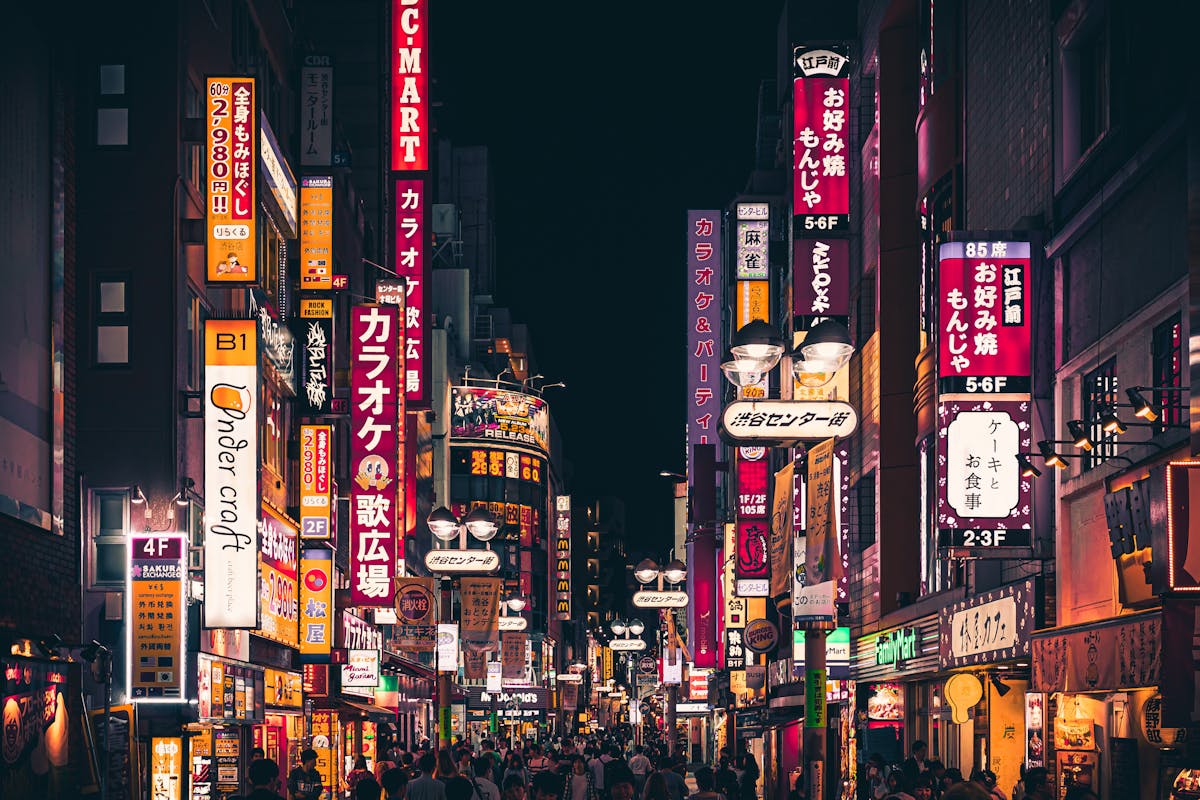
Retro Games and Arcades: A Time Machine to 1990s Japan
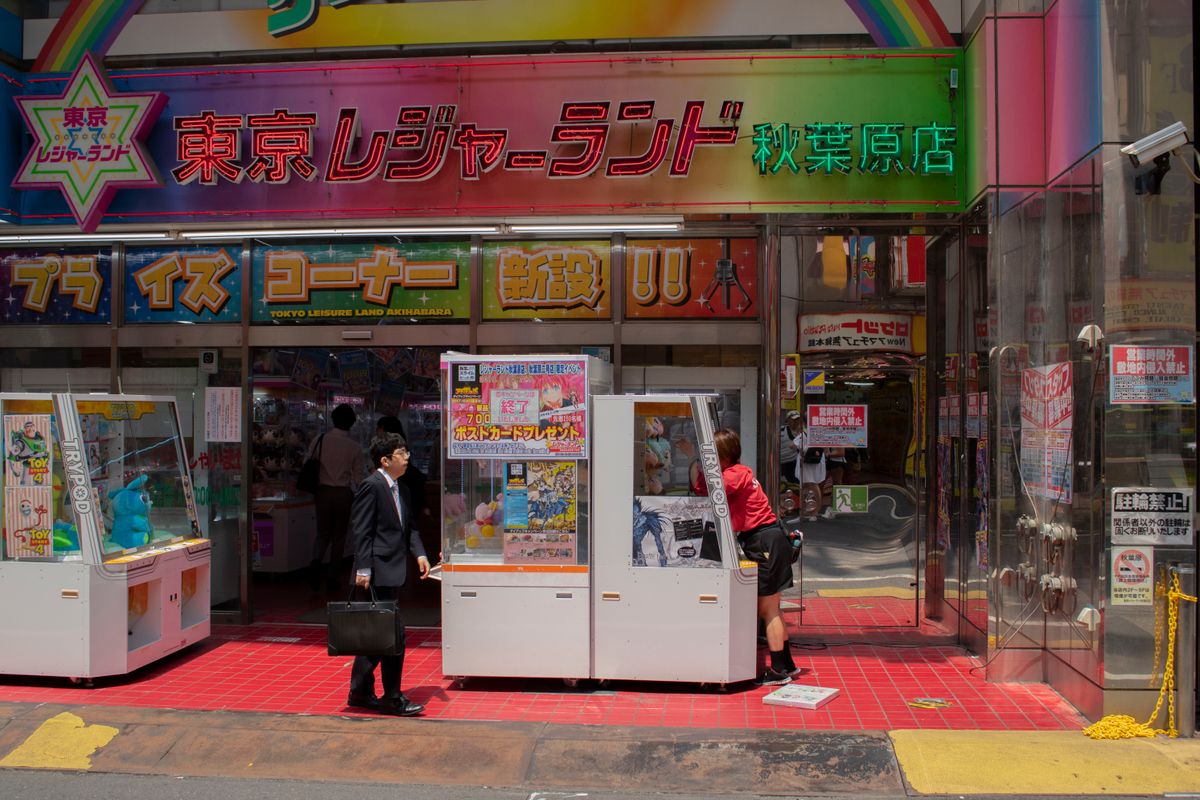
Akihabara is the world’s best place to find vintage video games, including titles never released outside Japan, in original Japanese boxes, often in mint condition. The retro game scene is concentrated in a few legendary shops.
Super Potato
The most internationally famous retro game shop in Japan. Three floors of Famicom, Super Famicom, Mega Drive, PC Engine, Saturn, Dreamcast, Nintendo 64, Game Boy, and original PlayStation games — many in original boxes with manuals. The top floor is a working retro arcade where you can play classic 1980s and 1990s arcade machines. Even visitors who don’t plan to buy will enjoy browsing.
- Address: 1-11-2 Soto-Kanda, 3rd–5th floors
- Hours: 11:00 am – 8:00 pm daily
Friends Akihabara
A smaller but well-curated retro shop with reasonable prices and friendly English-speaking staff.
Beep Akihabara
Specialist for very vintage and pre-Famicom hardware: PC-88, MSX, FM-7, X68000, and other Japan-only home computer platforms. A paradise for hardcore retro computing enthusiasts.
Sega Akihabara Building (formerly "Akihabara Sega" gaming centre)
The famous five-storey Sega game arcade building remains a major Akihabara landmark even after Sega exited the operating business — now operated under the GiGO brand. Each floor specialises (UFO catchers, music games like maimai and Beatmania, fighting games, photo booths). Iconic exterior with the giant-character LED screens on the side. Free to enter; bring ¥100 coins.
Taito Station
Another major chain arcade across multiple floors, specialising in rhythm games, fighting games, and vast sections of crane-game UFO catchers — Akihabara’s favourite low-cost entertainment.
Hey (Hirose Entertainment Yard)
Smaller but particularly beloved by retro game fans for its excellent selection of working classic arcade machines.
Maid Cafés: A Quirky Akihabara Tradition
Maid cafés are perhaps the most internationally recognised symbol of Akihabara’s otaku culture. The first opened in 2001 (the now-closed Cure Maid Café), and dozens have followed. The concept: a themed café where waitresses in maid costumes treat each customer as the "master" (goshujinsama) or "mistress" (ojōsama) of the household, performing songs, drawing on omurice with ketchup, and playing simple games at the table.
For first-time visitors, maid cafés can feel either delightful or bewildering — sometimes both. They are aimed at a Japanese audience and are firmly tongue-in-cheek; the staff are performers playing characters, not anything else. Many cafés have strict rules (no photos of staff without permission, no physical contact, no asking for personal information), and prices are higher than ordinary cafés to cover the entertainment.
Notable Maid Cafés in Akihabara
- Maidreamin (めいどりーみん) — the largest chain, with multiple Akihabara branches including the flagship "Maidreamin Akihabara Honten". English-friendly menus and websites; the most tourist-accessible introduction. Set courses typically ¥1,500–¥3,000 (approx. USD $10–$20) including a drink, dessert, photo, and a song or game.
- @Home Café (アットホームカフェ) — another major chain with five Akihabara branches and a long-running anime tie-in show. Multiple themed seasonal menus.
- Mai:lish — a more elegant, classic-Victorian-style maid café for those who prefer the more refined atmosphere over the sparkle-and-pop variety.
How to Visit a Maid Café (Etiquette)
- Most maid cafés charge a seating fee of ¥500–¥1,000 in addition to your order.
- Ordering at least one drink is required.
- Photographing staff is usually prohibited unless you pay for a polaroid (cheki) — typically ¥500–¥1,500 each.
- Asking staff for outside contact, social media accounts, or personal information is strictly prohibited and will end your visit.
- The performance — songs, dances, table games — is the entire point. Going just for food/drink without engaging defeats the experience.
- Tipping is not customary in Japan and is not expected here either.
Idols, Theatres, and AKB48
Akihabara is the spiritual home of Japan’s idol industry — the world of teenage and twenty-something pop singers performing as part of named groups. The most famous of these is AKB48 (named after Akihabara), founded by producer Yasushi Akimoto in 2005 around the concept of "idols you can meet" — performing live almost daily in their own theatre, with rotating lineups of dozens of members.
AKB48 Theatre
The AKB48 Theatre is on the 8th floor of the Don Quijote Akihabara building. Tickets to performances are sold via lottery to AKB48 members’ official fan club, with international and tourist allocations also available; expect to enter a lottery for desired dates. Tickets when won cost around ¥3,800 (approx. USD $26).
If you cannot get tickets, the building’s ground floor sometimes has photo and merchandise displays, and the AKB48 official shop is open to all.
Other Idol Theatres
- SCANDAL UEY (Idol Stage Akihabara) — host to a rotating lineup of indie idol groups, with affordable tickets typically ¥500–¥2,000 per show.
- Twin Box Akihabara — multi-purpose live house and idol venue.
- P.A.R.M.S — small idol-focused live venue with intimate shows.
Photography Spots in Akihabara
For travellers focused on photography, Akihabara is one of Tokyo’s most rewarding districts. Here are the top photo spots:
- Chuo-dori at dusk — the giant character billboards on the Sega building, the AKB48 building, and various department stores light up brilliantly at sunset and early evening.
- Pedestrian paradise (Sundays) — Chuo-dori with no traffic offers wide-angle shots impossible at other times.
- Mansei Bridge (Manseibashi) — the elegant red-brick bridge over the Kanda River, a heritage railway viaduct, gives a striking historic contrast to the pop-culture neon.
- 2k540 Aki-Oka Artisan — a covered craft and design market under the JR train tracks between Akihabara and Okachimachi, with visually stunning industrial-cool photographic appeal.
- Kanda Myojin Shrine — anime-themed ema and torii gate composition, especially during festival season.
- Gachapon Kaikan — corridors of capsule-toy machines stacked floor to ceiling in colourful pattern.
Where to Eat in Akihabara
Akihabara is not internationally famous for its food, but the neighbourhood has strong options across price points and styles — from quick conveyor-belt sushi and standing ramen to themed cafés and wonderfully kitsch concept restaurants.
Themed and Concept Restaurants
- Gundam Café — recently relocated/closed in some forms; check current status. When operating, themed menus tied to the Gundam franchise.
- AKB48 Café — the official AKB48 group café, with rotating themed menus tied to current group projects.
- Pasela Resorts (Akiba) — anime-themed honey toast and karaoke combinations; iconic with otaku visitors.
Ramen, Curry, and Tonkatsu
- Kyushu Jangara Ramen — the Akihabara branch of one of Tokyo’s best-known ramen chains, serving rich tonkotsu pork bone broth from Kyushu. Bowls around ¥900–¥1,200.
- Go! Go! Curry Akihabara — Kanazawa-style thick brown curry served with breaded cutlet. The Akihabara branch is on the iconic main shopping street; bowls around ¥600–¥1,000.
- Tonkatsu Marugo — locally famous tonkatsu (deep-fried breaded pork cutlet) restaurant just outside Akihabara Station’s south side.
Sushi
- Sushi Zanmai Akihabara — popular conveyor-belt sushi chain branch, English menus, fresh fish.
- Genki Sushi Akihabara — slightly more theatrical chain conveyor-belt sushi, plates ordered via touchscreen and delivered by "bullet train" track.
Standing and Quick Food
- Akihabara Station Soba Stands — quick standing soba and udon noodle shops inside the station; meals ¥400–¥800.
- Mister Donut and Doutor Coffee — chain coffee and donut shops for quick refuels.
Late-Night Eating
Akihabara is not as late-night as Shinjuku or Shibuya, but Don Quijote Akihabara has a basement food court and several 24-hour conveni stores; many ramen shops in the area stay open until midnight or later. For an unusual late-night experience, try the small standing bars (tachinomi) on the alleys behind the station.
Where to Stay Near Akihabara
Akihabara is well-connected by train, but staying nearby means you can explore early morning, late at night, and walk back at any time. The neighbourhood has a strong mix of business hotels, capsule hotels, and a few premium options.
Mid-Range Hotels
- Hotel Mystays Akihabara — clean, modern business hotel with English-friendly staff. Rates around ¥10,000–¥17,000 per night (approx. USD $68–$115).
- Akihabara Washington Hotel — chain business hotel with reliable quality. Rates similar to above.
- JR-East Hotel Mets Akihabara — directly above the JR station; ideal for late arrivals or early departures. Rates around ¥12,000–¥20,000 per night (approx. USD $81–$135).
Capsule and Budget
- Nine Hours Akihabara — modern capsule hotel for short stays, around ¥4,500–¥6,500 per night (approx. USD $30–$44).
- The Centurion Cabin & Spa Akihabara — premium capsule with on-site sauna and bath.
- Akihabara Bay Hotel — women-only capsule hotel.
Higher-End Options
For larger rooms and higher-end service, consider hotels in nearby Tokyo Station or Ginza (4–5 minutes by train). Compare rates and book your preferred option: Book your hotel on Agoda (Best prices guaranteed) →
Combining Akihabara with the Rest of Tokyo
Akihabara fits well into a wider Tokyo itinerary. Here are some natural pairings:
- Akihabara + Asakusa + Ueno: Ueno is two stops away on the Yamanote or Hibiya Line, and Asakusa is a short Ginza Line ride from Ueno. A morning of temples in Asakusa, afternoon of museums in Ueno, evening of pop culture in Akihabara.
- Akihabara + Tokyo Station + Marunouchi — the historical and business heart of Tokyo, just one stop south. Easy half-day combination.
- Akihabara + Kanda + Jimbocho — the "old-knowledge" route. Akihabara for new-media pop culture, Kanda for historic soba restaurants and shrines, Jimbocho for Japan’s densest concentration of used and antique bookshops. A surprisingly thematic and rewarding day.
- Akihabara + Nakano Broadway — for hardcore otaku, Nakano Broadway in west Tokyo is the "other Mandarake mecca" — denser, more obsessive, slightly cheaper. About 30 minutes by train.
- Akihabara + Ikebukuro Otome Road — for visitors interested in female-targeted otaku culture (BL, otome, idol-girl-group merchandise), Ikebukuro’s Otome Road complements Akihabara.
For more Tokyo planning, see our Tokyo Neighbourhoods Guide and explore all Japan destinations.
A Suggested Half-Day and Full-Day Itinerary
Quick Half-Day (3 hours)
10:00 am — Arrive at JR Akihabara Station, exit via Electric Town Exit. Walk Chuo-dori north to absorb the visual scale.
10:30 am — First stop: Yodobashi Camera Multimedia Akiba — at least an hour, including the anime/figure floors.
11:30 am — Lunch at Go! Go! Curry or Kyushu Jangara Ramen.
12:30 pm — Animate Akihabara for 60 minutes.
1:30 pm — End at Mandarake Complex for collectibles browsing.
Full Day (8–9 hours)
9:30 am — Arrive Akihabara. Coffee and a quick orientation walk along Chuo-dori. Visit Kanda Myojin Shrine for the unusual anime-meets-history experience.
10:30 am — Yodobashi Camera Multimedia Akiba.
12:00 pm — Lunch (try a tonkatsu set or themed café).
1:00 pm — Animate Akihabara, then K-Books and Kotobukiya.
3:00 pm — Mandarake Complex (allow 90 minutes for collectors).
4:30 pm — Super Potato for retro gaming.
5:30 pm — Maid café experience (Maidreamin or @Home).
7:00 pm — Dinner. Then walk Chuo-dori and side streets to see the neon at night.
9:00 pm — Sega/GiGO arcade (multi-floor) for crane games, photo booths, or rhythm games.
10:30 pm — End at Don Quijote Akihabara (open late) for last-minute shopping.
Practical Tips for Visiting Akihabara
- Sunday afternoon is the best time for the full Akihabara atmosphere, when Chuo-dori becomes a pedestrian zone and street performers, idols, and cosplayers fill the road.
- Bring your passport (or a Visit Japan Web tax-free QR code where accepted) for tax-free shopping at any single store totalling ¥5,000 or more (before tax) in a single day. From November 1, 2026 you pay the full price including tax, then have your purchases confirmed at the customs tax-free kiosk at the airport before you check your bags; the shop or its refund agent pays the tax back afterwards. Keep every item on each receipt together and unused until then, as Customs checks purchases per receipt, and the goods must clear Customs and leave Japan within 90 days of purchase. See our step-by-step guide to the new tax-free refund system.
- Compare prices between Yodobashi, Bic Camera, and Don Quijote before buying anything significant. Prices can differ by 5–15%.
- Many shops are cash-only, especially smaller specialist shops on side streets. Carry ¥10,000–¥20,000 in cash if you plan to buy anything beyond the major chains. ATMs at Japan Post and 7-Eleven accept foreign cards.
- Adult content warning — many anime, manga, and figure stores have explicit adult-content floors. These are clearly marked as "18+" (often "成人向け" in Japanese) and require ID. Younger family members should not enter these floors.
- Backpacks and bag-checks — some smaller second-hand stores ask you to leave large bags at the front. Carry a foldable shopping bag for purchases.
- Pedestrian paradise hours vary by season — confirm before relying on it: 1:00 pm – 5:00 pm (April–September), 1:00 pm – 6:00 pm (October–March), Sundays and public holidays only.
- Photography rules differ between shops — most second-hand stores prohibit interior photos; most large chain stores allow it. Always ask if uncertain. Never photograph maid café staff outside the cheki polaroid system.
- Many shop staff speak limited English, but pointing at items, calculator-based prices, and translation apps work well. The major chain stores have multilingual signage.
- Tax-free coupons — apps and websites for major chains often offer extra discounts beyond tax-free. Yodobashi and Bic Camera both have English coupon pages.
- For collectors, bring a small reference list of items you want to buy. Akihabara’s scale can overwhelm even seasoned collectors; a list keeps you focused.
Budget Guide for an Akihabara Day
- Train fare from central Tokyo: ¥150–¥210 each way
- Lunch: ¥600–¥1,500
- Coffee/snack: ¥400–¥700
- Maid café experience: ¥1,500–¥3,000
- Arcade gaming: ¥1,000–¥3,000
- Dinner: ¥1,200–¥2,500
- Total day budget (no shopping): ¥5,000–¥10,500 (approx. USD $34–$71)
Of course, shopping is the wildcard — purchases can range from ¥0 (browsing only) to thousands of dollars (rare collectible figures, vintage games, or premium electronics). For broader Japan budgeting, see our Japan Budget Travel Guide.
Frequently Asked Questions About Akihabara
Is Akihabara still worth visiting if I’m not into anime?
Yes — even visitors with zero interest in anime tend to enjoy Akihabara as a sensory experience. The scale, neon, crowds, and oddly polite chaos are unique to Tokyo. The retro-electronics shops, the photography opportunities, the Sunday pedestrian paradise, the Kanda Myojin Shrine contrast, and the food scene all reward a visit on their own. A 2–3 hour walk-through is worthwhile for almost any traveller.
What is the best day and time to visit?
Sunday afternoon (around 1:00 pm onwards) is the peak Akihabara experience, with the pedestrian paradise on Chuo-dori. Saturdays are the next-busiest, with most shops fully open. Weekday afternoons are quieter and good for serious collectors who want to browse without crowds. Early mornings (before 11:00 am) are too early — most pop-culture shops open at 10:00 am or later, with some side-street specialists opening at 12:00 pm.
Is Akihabara safe? Is it family-friendly?
Akihabara is extremely safe. Tokyo overall has some of the lowest urban crime rates anywhere in the world. As for family suitability — most of Akihabara is fully appropriate for children, who often love the arcades, gachapon machines, and toy stores. However, some specialist anime/manga shops have explicit adult-content floors clearly marked "18+" or "成人向け". These are typically on upper or back floors and not visible from main areas. As long as you avoid those clearly marked sections, the family experience is excellent.
How much Japanese do I need to speak in Akihabara?
Very little. Most large chain stores have multilingual signs, English-speaking staff at tax-free counters, and translation apps work well at smaller shops. For ordering food, point-and-show menus and ticket-vending machines (with English buttons in many places) handle the most common situations. A few polite phrases ("arigatou gozaimasu" — thank you, "sumimasen" — excuse me) go a long way.
Are maid cafés appropriate for first-time tourists?
Yes, the major mainstream chains like Maidreamin and @Home Café are entirely tourist-friendly, with English menus, photo opportunities, and a clearly defined "performance" framing. They are essentially a themed-restaurant experience, comparable to a Disney character restaurant in tone. Avoid the smaller, less-mainstream "concept" cafés with unclear branding unless you know what you’re booking. Always read reviews before visiting.
What should I buy in Akihabara that I cannot get at home?
The single highest-value purchases tend to be: (1) Limited-edition figures — many manufacturers produce Japan-only or pre-order-only versions; (2) Doujinshi — fan-created manga, almost impossible to find legally outside Japan; (3) Retro Famicom and Super Famicom games in original boxes — extraordinary value compared to international collectors’ markets; (4) Pokémon and idol photo cards — vast selection at all price points; (5) Specialist Japan-only electronics — premium audio gear, certain camera lens models, and professional-grade hobby tools.
Is the Yodobashi Camera in Akihabara the same as the one in Shinjuku?
Yodobashi has multiple Tokyo branches; the Akihabara branch (Yodobashi Multimedia Akiba) is the largest, but Shinjuku’s Nishi-guchi store is also massive. Akihabara has slightly more anime/figure focus and a larger overall floor area; Shinjuku has more emphasis on cameras and mobile phones. Prices are typically the same across branches.
Can I find anime exclusive to specific franchises?
Almost certainly yes. Akihabara’s combined inventory across Animate, Mandarake, Surugaya, K-Books, Lashinbang, and dozens of specialist shops covers every major and most minor franchises. For very specific or rare items, consider also visiting Nakano Broadway in west Tokyo (a 30-minute train ride) and Ikebukuro Otome Road for female-oriented merchandise.
What about the AKB48 theatre — can a tourist actually see a show?
Yes, but it requires planning. Tickets are allocated via lottery, with international and tourist allocations available through the official AKB48 fan club website (some translation help may be needed). Lotteries open weeks in advance for specific dates. Even without a ticket, the building’s ground-floor merchandise area, periodic photo displays, and the broader maid-café-pop-culture vibe of Don Quijote Akihabara make it worth a stop.
Final Thoughts: Why Akihabara Is Essential Tokyo
Akihabara is, in its own way, as essential to a first-time Tokyo trip as Shibuya Crossing or Senso-ji Temple. It is a neighbourhood that has continually reinvented itself, from black-market radio parts to consumer electronics to the global capital of anime — yet through every transformation, the underlying spirit has remained the same: a place where enthusiasts gather, where minor obsessions are taken seriously, and where commerce, craft, and fandom blur into something uniquely Japanese.
You do not need to be an anime fan to find Akihabara fascinating. The visual density of the neon, the careful organisation of the specialist shops, the gentle politeness of even the strangest cafés, the way historical shrines coexist with maid cosplay outside the JR station — all combine to give you a window into one of Japan’s most distinctive subcultures. Spend half a day, a full day, or three; bring a list of things to find, or simply wander and let the neighbourhood surprise you. Either way, Akihabara will give you stories and souvenirs that will outlast almost any other Tokyo experience.
Plan your wider trip with our Tokyo Neighbourhoods Guide, our First-Timer’s Travel Tips, and our complete Japan Destinations directory.
Going to Japan? Speak Japanese with confidence.
Hirameki Japanese — camera translate for menus and signs, a two-way conversation mode, and furigana + romaji on every phrase. Free to download with kana charts, conversation mode and starter words; a one-time purchase unlocks everything.

Plan your Japan trip
Two things every first-timer should book
Some links are affiliate links. If you book through them we may earn a small commission at no extra cost to you.