At the far western tip of Japan’s main island of Honshu lies a prefecture that most first-time visitors race straight past on the bullet train. That is a mistake. Yamaguchi Prefecture is home to two of western Japan’s most extraordinary sights, one carved by water over hundreds of thousands of years and the other built by human hands in a single inspired act of engineering. The first is Akiyoshido, the largest and longest limestone cave in Japan, hidden beneath a rolling plateau of grass and white rock. The second is the Kintaikyo Bridge, a graceful five-arched wooden span in the castle town of Iwakuni that has been rebuilt and revered for more than three and a half centuries.
This guide is for travelers who have never been to Japan and want to know exactly why these two places are worth the detour, how to reach them, when to go, what they cost, and how to combine them into a memorable one- or two-day trip. We will also cover where to stay, what to eat, and how to fit Yamaguchi into a wider journey through western Japan. If you are still deciding where to go, our overview of the best hidden gems in Japan and our full destinations guide are good places to start.
Why Yamaguchi Deserves a Spot on Your Japan Route
Yamaguchi occupies the strategic point where Honshu nearly touches the southern island of Kyushu, separated only by the narrow Kanmon Strait. For centuries this made the region a crossroads of trade, samurai politics, and ideas, and it played an outsized role in the events that ended Japan’s feudal era and launched its modern age. Today it remains comparatively untouched by international tourism, which is precisely its appeal: you can stand inside a cathedral-sized cavern or cross a 17th-century bridge without fighting through the crowds you would find at Japan’s marquee sights.
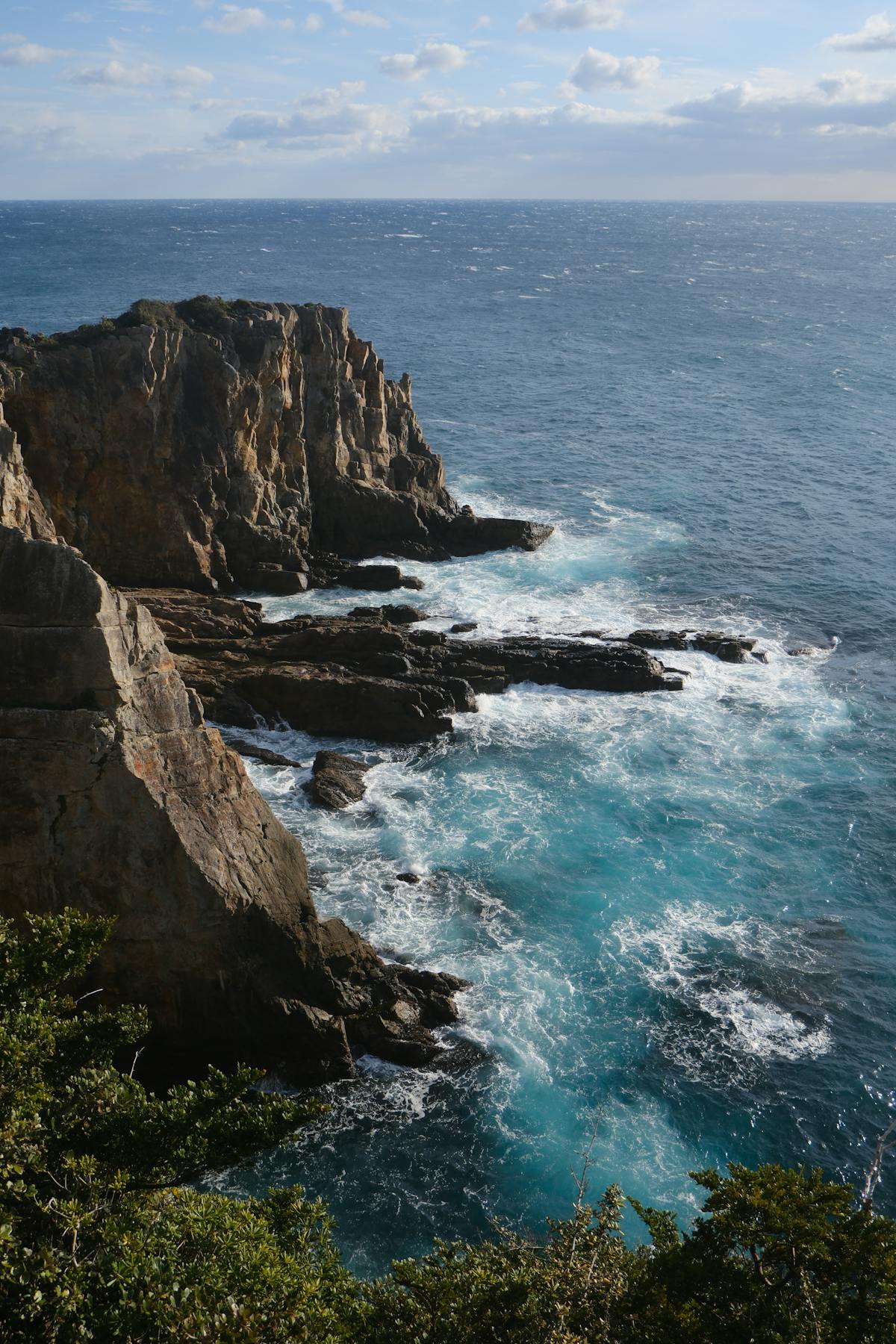
The prefecture is also wonderfully varied. Within a short drive you can move from the karst grasslands of Akiyoshidai to the dramatic coastline of the Japan Sea, the samurai streets of Hagi, and the orange torii gates of Motonosumi Shrine perched above crashing waves. The two attractions in this guide, Akiyoshido and Kintaikyo, sit on opposite sides of the prefecture, so understanding the geography helps you plan: Kintaikyo is in Iwakuni in the east, easily reached from Hiroshima, while Akiyoshido is in the central-western interior, closer to the cities of Yamaguchi and Shimonoseki. For a fuller picture of everything the region offers, see our Yamaguchi travel guide.
Because Yamaguchi sees relatively few foreign visitors, English support is more limited than in the big cities and public transport to the rural sights can be sparse. None of that should put you off; it simply means a little planning pays off, and the reward is an experience that feels genuinely your own. Let us begin underground.
Akiyoshido: Inside Japan’s Largest Limestone Cave
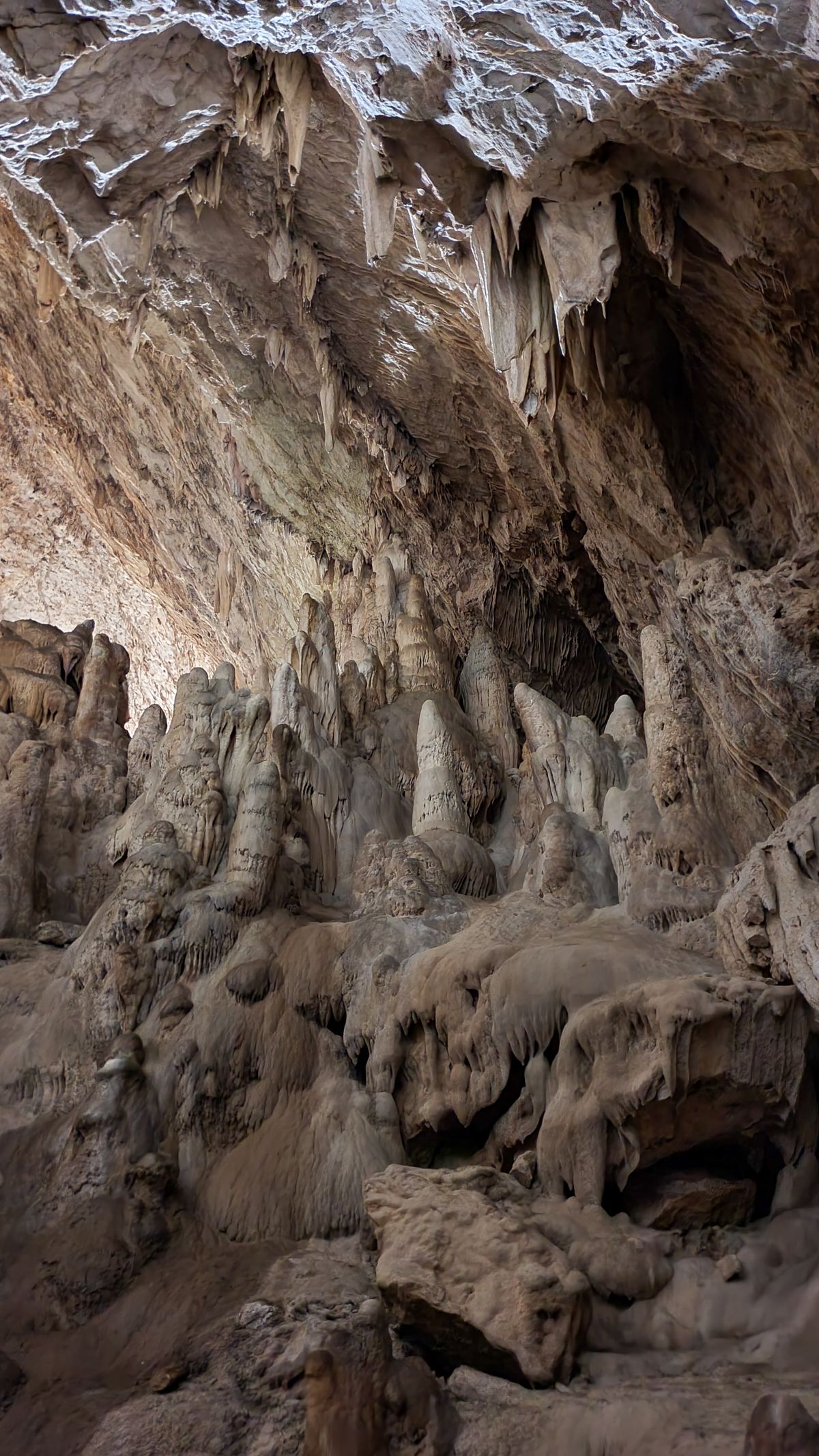
Akiyoshido (sometimes written Akiyoshi-do, where do means cave) is the largest limestone cavern in Japan. The full cave system extends for roughly 10 kilometers, of which about 1 kilometer is open to the public along a well-maintained, gently sloping path. It sits beneath the Akiyoshidai plateau in Mine City, central Yamaguchi, and was formed over an almost unimaginable span of time as rainwater slowly dissolved the limestone laid down when this area was a coral reef some 300 million years ago.
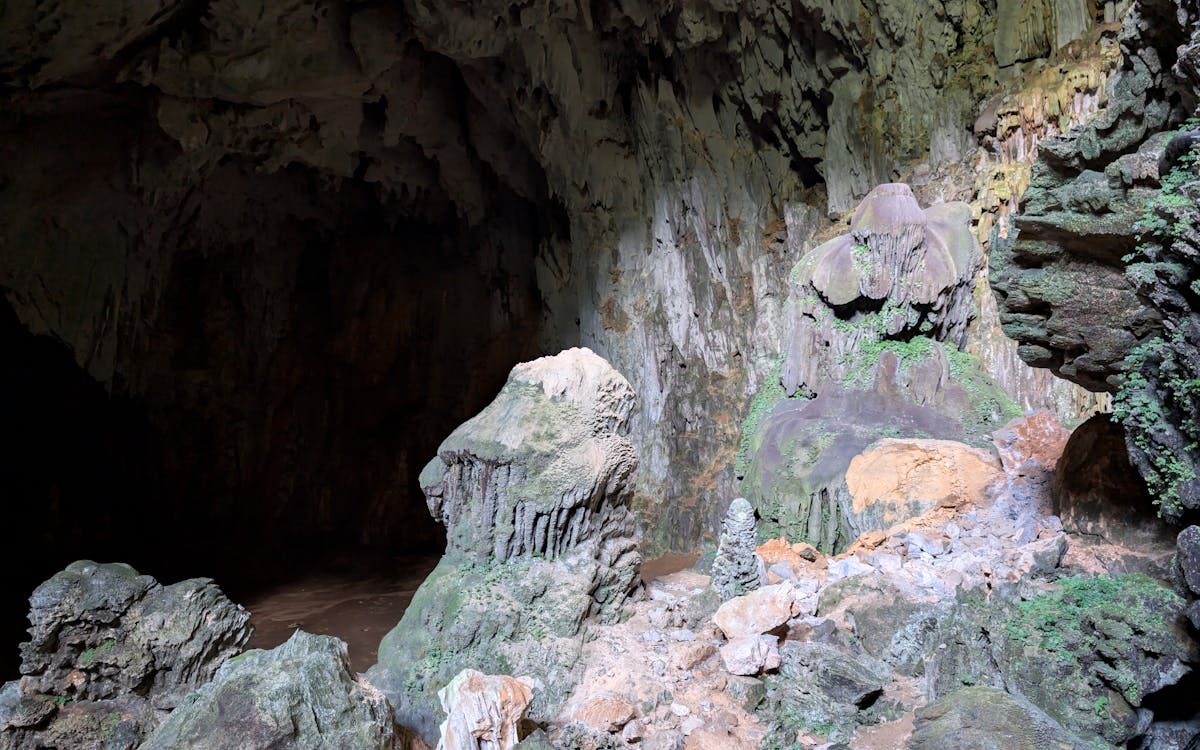
Stepping inside is a shift into another world. The temperature holds steady at around 17°C (63°F) all year, which feels deliciously cool in summer and mild in winter, so a light layer is useful no matter the season. The air is damp, the lighting is atmospheric, and the scale is genuinely humbling: in places the ceiling soars dozens of meters overhead and an underground river runs alongside the walkway.
What to look for inside
The cave’s formations have been given evocative names over the years, and spotting them is part of the fun. The most famous is Hyakumaizara, the “Hundred Plates,” a hillside of terraced limestone pools that look like a cascade of overlapping dishes, formed as mineral-rich water deposited rims of calcite over millennia. Other highlights include Kogane-bashira, the “Golden Pillar,” a 15-meter column where a stalactite and stalagmite have fused into a single towering form, and the Daikokubashira, another monumental pillar. Look also for the slowly dripping stalactites, the flowstone “curtains,” and the deep blue pools of the underground river.
Practical visiting information
Admission to Akiyoshido is around ¥1,300 (about $9) for adults, with discounts for students and children. The cave is open year-round, typically from about 8:30 a.m. to 5:30 p.m., with slightly shorter winter hours. Allow 60 to 90 minutes to walk the public route at a relaxed pace. The main path is paved and lit but does have slopes and some uneven, damp sections, so wear shoes with good grip; the standard route is manageable for most visitors, though there is also a steeper adventure course for an extra fee that branches off for those wanting a more rugged experience. There are two entrances, the main entrance and the Kurotani entrance, plus an elevator entrance that connects directly up to the plateau above, which is the clever way to combine the cave with the grasslands without backtracking.
Because Akiyoshido sits in the rural interior, having a working data connection for maps, bus times, and translation is genuinely helpful out here. It is worth arranging an eSIM so you stay connected from the moment you land → rather than relying on patchy free Wi-Fi in the countryside.
Akiyoshidai: The Karst Plateau Above the Cave
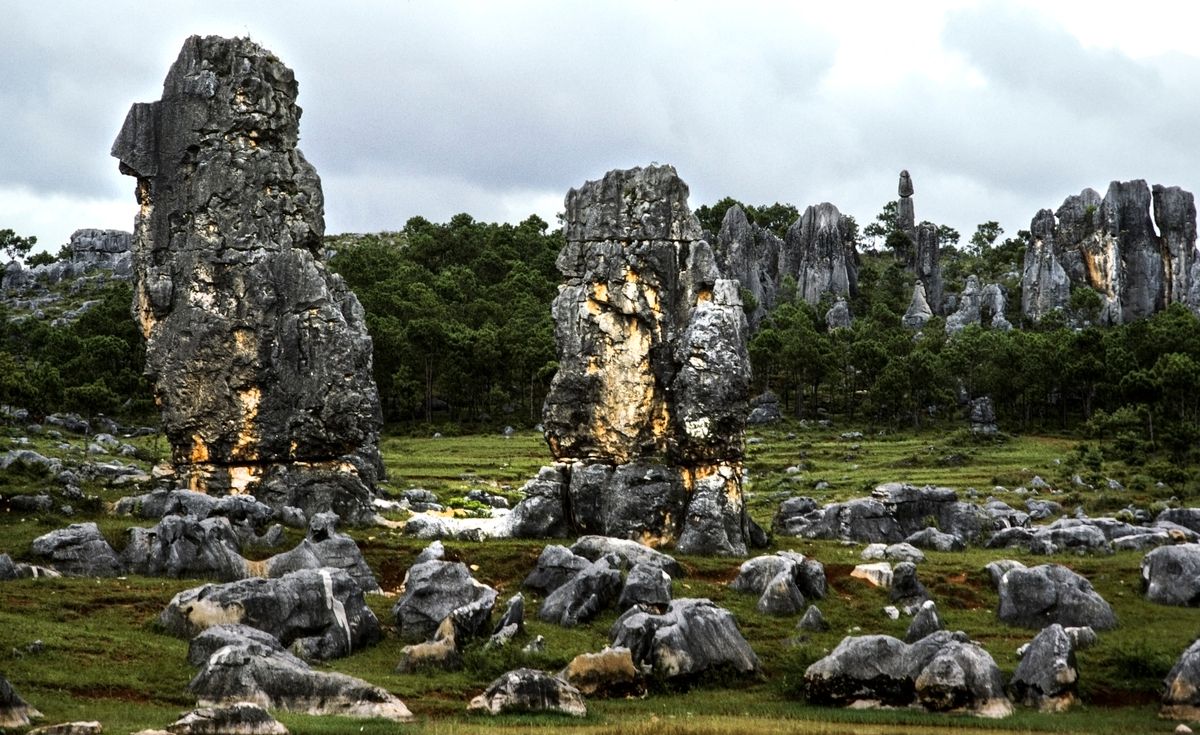
Most visitors come for the cave and are surprised to discover that the landscape above it is just as remarkable. Akiyoshidai is Japan’s largest karst plateau, a vast expanse of rolling green grassland from which thousands of jagged grey limestone rocks protrude like the backs of grazing sheep. It is one of the most distinctive landscapes in the entire country and could not look less like the popular image of Japan.
The plateau covers around 130 square kilometers and is criss-crossed by walking trails and a scenic road. From the observation deck near the top of the cave elevator, you can take in the full sweep of the grasslands, which turn a rich green in summer and a tawny gold in autumn. In late winter the plateau is subject to a controlled burn (yamayaki) that clears the old grass and keeps the karst landscape open; the blackened ground gives way to fresh green within weeks, part of a centuries-old cycle of land management.
Walking even a short loop on the plateau is highly recommended. The trails are gentle, the views constantly shift, and the sense of space is a tonic after Japan’s dense cities. The Akiyoshidai Karst Observatory and the nearby science museum explain the geology for those who want to understand how cave and plateau formed together. Combining 60 to 90 minutes in the cave with an hour on the plateau makes for a satisfying half-day, and the elevator entrance means you can ride up from the cave and come out onto the grassland without retracing your steps.
Kintaikyo Bridge: Iwakuni’s Five-Arched Masterpiece
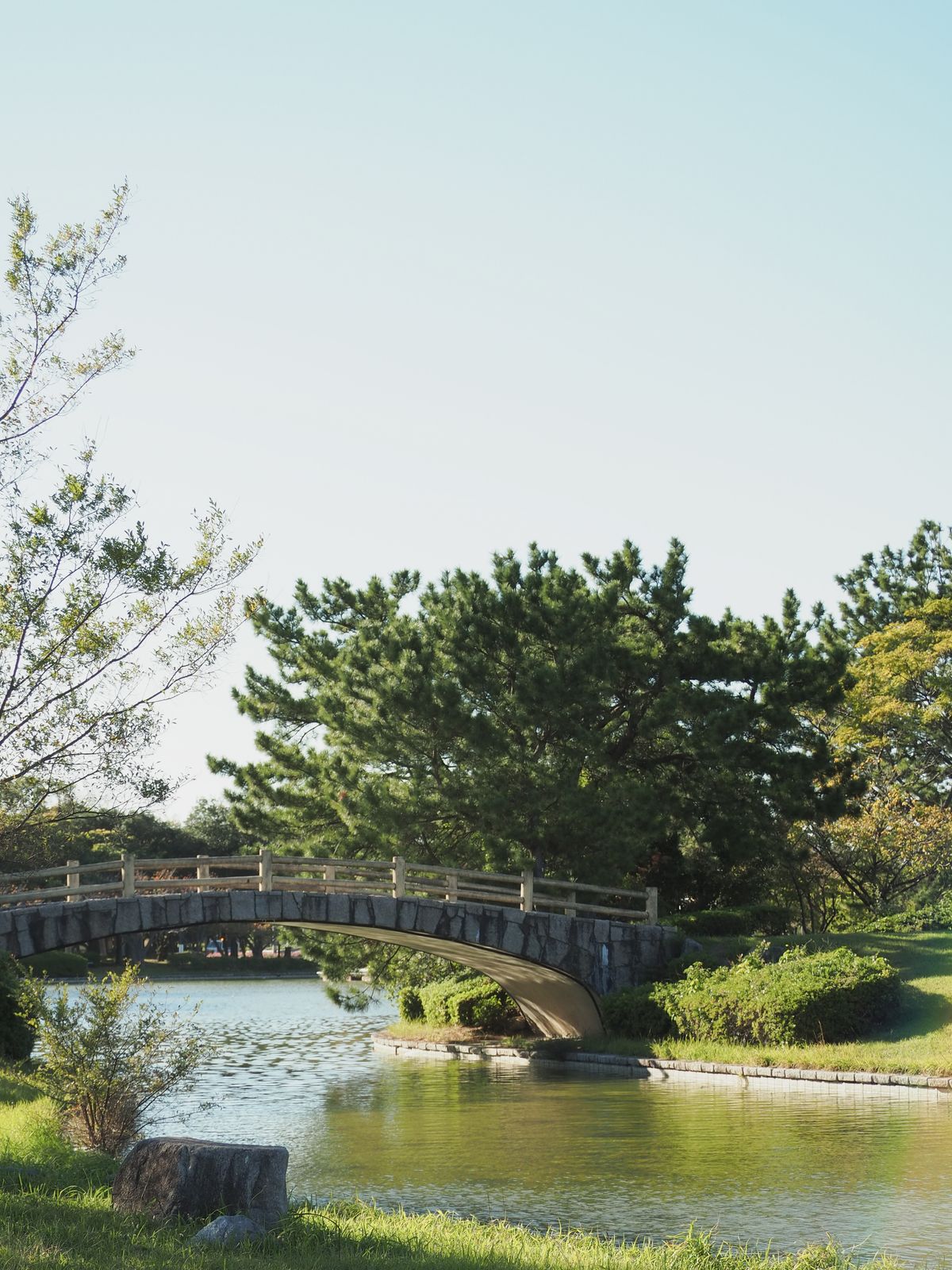
On the eastern side of Yamaguchi, in the castle town of Iwakuni, stands one of Japan’s three most famous bridges. The Kintaikyo (“Brocade Sash Bridge”) is a wooden footbridge of five sweeping arches that crosses the broad Nishiki River, its silhouette so elegant it has become a symbol of the whole region. It is, quite simply, one of the most beautiful pieces of traditional engineering in the country.
The bridge was first completed in 1673 by the local lord Kikkawa Hiroyoshi, who was determined to build a span that the river’s frequent floods could not sweep away, as previous bridges had been. The solution was a series of high arches resting on massive stone piers, joined with intricate interlocking woodwork and almost no nails. The original survived for nearly 280 years until a typhoon finally destroyed it in 1950; it was faithfully rebuilt in 1953 using the same traditional techniques, and the wooden arches are periodically renewed by craftsmen who keep the centuries-old joinery alive. Walking across, you can feel the gentle rise and fall of each arch beneath your feet, a sensation unique to this bridge.
Visiting the bridge
Crossing the Kintaikyo costs around ¥310 (about $2) for adults for a round-trip ticket, and a combination ticket bundles the bridge with the cable car and Iwakuni Castle for roughly ¥970 ($6.50), which is the best value if you plan to see everything. The bridge is open and lit in the evenings, and there is no single best angle: photographers love it from the riverbank at sunrise and sunset, framed by cherry blossoms in spring or fiery maples in autumn.
The riverside park on both banks is a destination in itself, with broad lawns, food stalls, and in summer the centuries-old tradition of ukai, cormorant fishing, in which fishermen in boats use trained cormorants to catch sweetfish by torchlight, just as they have for hundreds of years. Iwakuni is also where you will find one of Japan’s most beloved soft-serve ice cream stands, famous locally for offering an enormous range of flavors, a fun and inexpensive treat after crossing the bridge.
Iwakuni Beyond the Bridge
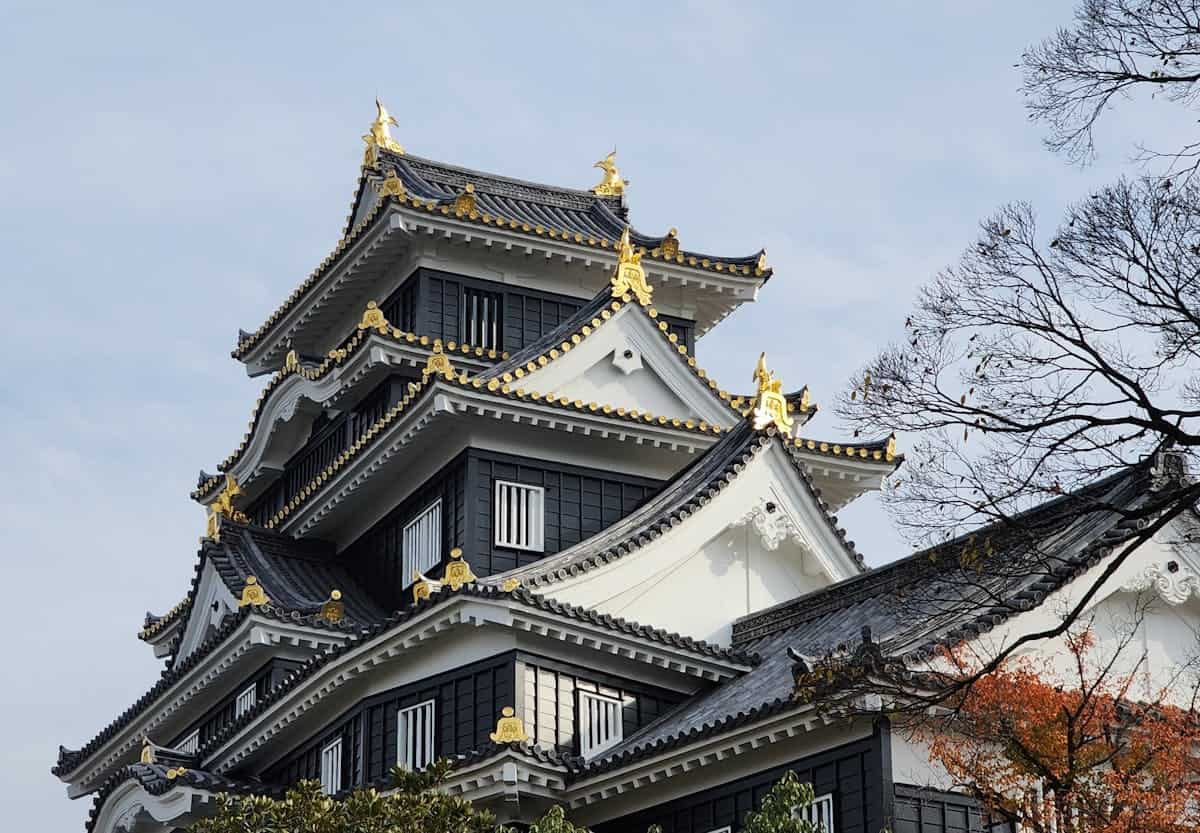
The Kintaikyo is the headline act, but the hillside above the river holds more. Take the short cable car up Shiroyama hill to reach Iwakuni Castle, a striking reconstruction of the original 17th-century fortress that was dismantled only a few years after it was built, under the shogunate’s strict “one castle per domain” rule. The current keep, rebuilt in 1962, offers commanding views over the river, the famous bridge below, and on clear days out to the islands of the Seto Inland Sea.
At the foot of the hill, the former samurai district of Kikko Park preserves old residences, gardens, and the Kikkawa family’s history. Look out for one of Iwakuni’s most curious residents: the white snakes of Iwakuni, a naturally occurring albino strain of rat snake found almost nowhere else, protected as a national treasure and displayed at a dedicated viewing facility. Revered locally as messengers of the goddess of fortune, they are a genuinely unusual cultural footnote that children especially enjoy.
Because Iwakuni sits just across the prefectural border from Hiroshima, many travelers visit the bridge as a half-day trip from there, pairing it with the city’s peace sites and the floating torii of Miyajima. If you are organizing transfers between the airport, the bridge, and your hotel and would rather not wrestle with rural bus timetables, you can arrange a private airport transfer with NearMe → for a smoother door-to-door journey.
When to Visit: Seasons in Yamaguchi

Yamaguchi is a year-round destination, but each season offers something different, and the cave is a useful all-weather backup whatever the forecast.
Spring (late March to April) is arguably the prettiest time, when hundreds of cherry trees along the Nishiki River frame the Kintaikyo in soft pink and the Akiyoshidai grassland greens up. Cherry blossom season here usually peaks in early April, a little after the main rush in Tokyo and Kyoto, which can mean fewer crowds.
Summer (June to August) is hot and humid above ground, which is exactly when the constant 17°C interior of Akiyoshido becomes a blessing. Summer also brings the cormorant fishing season at Iwakuni and lush green plateau views.
Autumn (late October to November) may be the single best season. The maples around the bridge and across the hillsides turn vivid red and gold, the air is crisp, and the plateau glows tawny in the low sun. It is prime time for photographers.
Winter (December to February) is quiet and cold but rarely heavily snowy on the lowlands. The cave stays at its mild constant temperature, and late winter brings the dramatic controlled grass burning on Akiyoshidai. Crowds are thinnest, and accommodation is at its cheapest.
Getting to and Around Yamaguchi
Yamaguchi is well connected by the Shinkansen, but the two attractions in this guide are in different parts of the prefecture, so it helps to plan around your priority.
Reaching Kintaikyo Bridge (Iwakuni)
Iwakuni is easy. Take the Sanyo Shinkansen to Shin-Iwakuni Station, from which a bus reaches the bridge in about 15 minutes, or use the JR Sanyo Line to Iwakuni Station and a local bus. From Hiroshima, Iwakuni is under an hour by train plus a short bus, making the bridge a very doable half-day trip. Iwakuni also has a small airport with flights from Tokyo (Haneda). For help deciding how to use the bullet train network efficiently, see our Japan Shinkansen guide.
Reaching Akiyoshido and Akiyoshidai
The cave is more remote. The usual approach is to take the Shinkansen to Shin-Yamaguchi Station, then a direct bus to Akiyoshido that takes around 45 minutes to an hour. Buses also run from the cities of Yamaguchi and Shimonoseki, and seasonally from Hagi on the Japan Sea coast. Services are not frequent, so check the timetable carefully and plan your return bus before you set off, especially later in the day.
Renting a car
Given the distances and the thin bus schedules, renting a car is by far the most flexible way to experience rural Yamaguchi, and it lets you link Akiyoshido with the Japan Sea coast, Hagi, and Motonosumi Shrine in a single day. Roads are quiet and well signposted. You will need an international driving permit obtained in your home country before you travel. Drivers should note that Japan drives on the left.
Where to Stay in Yamaguchi
Your base depends on which attractions you are prioritizing. For the Kintaikyo Bridge, many visitors simply stay in Hiroshima, which has the widest range of hotels and the easiest transport, and visit Iwakuni as a day trip; there are also pleasant riverside ryokan right by the bridge in Iwakuni itself, including historic inns where you wake to a view of the arches. For Akiyoshido, the small onsen town of Yuda Onsen near Yamaguchi City makes a relaxing base with hot-spring hotels, or you can stay in Shimonoseki for seafood and the Kanmon Strait.
Across the prefecture, expect business hotels from around ¥7,000 to ¥13,000 ($46 to $86) per night for a double, and onsen ryokan with meals from ¥15,000 to ¥30,000 ($99 to $198) per person. Because Yamaguchi is not a major international hub, comparing rates across booking platforms is the easiest way to find value; you can check hotel availability and prices on Agoda → for Hiroshima, Iwakuni, and Yamaguchi City before you decide where to base yourself.
What to Eat in Yamaguchi
Yamaguchi punches well above its weight at the table. The prefecture is Japan’s spiritual home of fugu (pufferfish), centered on the port of Shimonoseki, where licensed chefs prepare it as paper-thin sashimi, in hotpot, and deep-fried; it is a once-in-a-trip splurge for the adventurous. Other local specialties include kawara soba, green tea noodles served sizzling on a hot roof tile with beef and egg, and the citrusy natsumikan oranges of Hagi. Around Iwakuni, look for Iwakuni-zushi, a pressed, layered sushi traditionally made for festivals, and of course that famous tower of soft-serve ice cream by the bridge.
A Sample One- to Two-Day Yamaguchi Itinerary
Because Akiyoshido and Kintaikyo sit on opposite sides of the prefecture, the most efficient plan depends on whether you have a car. Here are two realistic options.
Option A: Two days by train and bus
Day 1 (East): Base yourself in Hiroshima. In the morning, take the train and bus to Iwakuni, cross the Kintaikyo Bridge, ride the cable car up to Iwakuni Castle for the view, visit the white snakes, and reward yourself with soft-serve by the river. Return to Hiroshima in the late afternoon.
Day 2 (West): Take the Shinkansen to Shin-Yamaguchi, then the direct bus to Akiyoshido. Explore the cave, ride the elevator up to the Akiyoshidai plateau, and walk a grassland loop before catching the bus back. If time allows, stop at Yuda Onsen for a soak before moving on.
Option B: One long day by rental car
With a car, energetic travelers can link both sights in a single packed day, though it involves a long cross-prefecture drive. More comfortably, devote the morning to Akiyoshido and Akiyoshidai, then drive to the Japan Sea coast for Motonosumi Shrine and lunch in Hagi, saving Iwakuni and the bridge for the following day on your way toward Hiroshima. A car turns Yamaguchi from a series of disconnected stops into a flowing road trip.
What a Yamaguchi Trip Costs
Yamaguchi is very affordable by Japanese standards. Here is a rough per-person daily guide for a mid-range traveler, in yen and US dollars, excluding long-distance Shinkansen fares.
Daily budget breakdown
Accommodation: A business hotel double runs ¥7,000 to ¥13,000 ($46 to $86), or about ¥4,000 to ¥6,500 ($26 to $43) per person sharing. An onsen ryokan with two meals is ¥15,000 to ¥30,000 ($99 to $198) per person and covers dinner and breakfast.
Attractions: Akiyoshido admission is around ¥1,300 ($9); the Kintaikyo round-trip plus cable car and castle combination ticket is about ¥970 ($6.50). Even a full day of sightseeing rarely tops ¥3,000 ($20) in entry fees.
Food: A casual noodle lunch is ¥800 to ¥1,500 ($5 to $10); a relaxed dinner with a drink ¥2,000 to ¥4,000 ($13 to $26). A fugu course is a deliberate splurge that can run ¥6,000 to ¥15,000 ($40 to $99) and up.
Transport: Local buses and trains to the sights add up to roughly ¥2,000 to ¥4,000 ($13 to $26) per day; a rental car is about ¥6,000 to ¥9,000 ($40 to $60) per day including basic insurance.
All told, a mid-range visitor should budget roughly ¥11,000 to ¥17,000 ($75 to $115) per person per day excluding the Shinkansen, less if you stay in business hotels and eat casually. For more ways to stretch your yen across the country, see our budget travel guide.
Practical Tips for Visiting Akiyoshido and Kintaikyo
- Bring a light layer for the cave. Akiyoshido stays at a constant 17°C (63°F). It feels cool in summer and damp year-round, so a thin jacket and grippy shoes make the walk comfortable.
- Check rural bus times before you set out. Buses to Akiyoshido and around Iwakuni are infrequent. Note your return departure in advance so you are not stranded, especially in the late afternoon.
- Use the cave elevator to reach the plateau. Riding the elevator from inside the cave up to Akiyoshidai saves a long backtrack and lets you experience both the cavern and the grassland in one smooth loop.
- Buy the Iwakuni combination ticket. If you plan to ride the cable car and enter the castle, the combined bridge-plus-cable-car-plus-castle ticket is cheaper than buying each separately.
- Consider a car for the west of the prefecture. A rental car (with an international driving permit) unlocks the Japan Sea coast, Hagi, and Motonosumi Shrine that buses reach only awkwardly.
- Carry cash. Rural Yamaguchi still favors cash. Withdraw yen at convenience-store or post-office ATMs, which accept foreign cards, before heading into the countryside.
- Pair the bridge with Hiroshima. Iwakuni is under an hour from Hiroshima, so the Kintaikyo slots neatly alongside the city’s peace sites and Miyajima.
- Stay connected. Mapping rural routes and reading Japanese-only timetables is far easier with mobile data, so arrange a SIM or eSIM before you arrive.
The Story Beneath the Surface: How Akiyoshido Formed
Understanding how Akiyoshido and its plateau came to be makes a visit far richer. Hundreds of millions of years ago, long before Japan existed in its current form, this region lay beneath a warm tropical sea as a vast coral reef. Over immense spans of time the remains of corals and shellfish compacted into thick layers of limestone. Tectonic forces later lifted these layers, and rainwater, made faintly acidic by carbon dioxide, began to seep into cracks in the rock.
That mildly acidic water did the patient work of carving. Drop by drop it dissolved the limestone, hollowing out passages and chambers and creating the underground river that still flows through Akiyoshido today. Where mineral-rich water dripped and evaporated, it left behind calcite, building the stalactites that hang from the ceiling and the stalagmites that rise from the floor, sometimes meeting to form the great pillars the cave is famous for. The terraced pools of the Hundred Plates formed as thin rims of calcite were deposited at the edges of shallow water, growing outward over thousands of years into the rippling, plate-like formation visitors marvel at now.
Above ground, the same dissolving process shaped the Akiyoshidai plateau. Rainwater widened joints in the limestone into the jagged grey pinnacles that stud the grassland, while sinkholes and hidden drainage channels funnel water down into the cave system below. Cave and plateau are therefore two halves of a single landscape, a karst topography that geologists travel a long way to study. Recognizing this connection as you ride the elevator from the cool dark of the cavern up into the bright open grassland is one of the quiet pleasures of the visit.
Combining Your Trip with the Rest of Yamaguchi
If you have come this far west, it is well worth giving Yamaguchi more than a single day. The prefecture strings together a remarkable run of sights, most of them far quieter than anything on the standard tourist trail.
Hagi: a samurai time capsule
On the Japan Sea coast, the castle town of Hagi preserves entire streets of whitewashed samurai and merchant houses, earthen walls, and old temples, much as they stood in the Edo period. Hagi was also a cradle of the reformers who helped topple the shogunate, and several of their former homes and schools survive as part of a UNESCO World Heritage listing. The town is famous, too, for Hagi-yaki, a prized style of pottery with a soft, crackled glaze that collectors treasure. Hagi pairs naturally with Akiyoshido on a western Yamaguchi loop.
Motonosumi Shrine and the Japan Sea coast
One of the most photographed sights in the prefecture is Motonosumi Shrine, where 123 bright orange torii gates tumble down a green headland toward the crashing surf of the Japan Sea. It is often compared to Kyoto’s Fushimi Inari but set against the ocean and almost crowd-free. Nearby, the white-sand beaches and turquoise water of Tsunoshima, reached by a long, scenic bridge, look more like the tropics than western Honshu and are a favorite summer escape.
Shimonoseki and the Kanmon Strait
At the prefecture’s western edge, the port city of Shimonoseki guards the narrow Kanmon Strait that separates Honshu from Kyushu. This is Japan’s fugu capital, and its Karato Market is the place to try the famous pufferfish alongside mountains of fresh sushi. The strait itself is steeped in history as the site of a decisive 12th-century sea battle, and you can walk or cycle through an undersea pedestrian tunnel to set foot on the island of Kyushu, a quirky bragging right for any traveler.
Things to Know Before You Go
A few cultural and practical notes will help your visit go smoothly, especially if this is your first time in Japan. Tipping is not expected anywhere in the country, including restaurants and taxis, and attempting to tip can cause confusion; excellent service is simply standard. Convenience stores are everywhere and are genuinely useful for cash withdrawals, quick meals, and umbrellas. When visiting shrines and temples, a quiet, respectful manner is appreciated, and you should follow any posted rules about photography. Inside Akiyoshido, do not touch the formations, as the natural oils on skin can halt their slow growth, and stay on the marked path. Finally, weather on the Japan Sea side can change quickly, so a packable rain layer is wise in any season. For a broader primer on customs, money, and getting around, our first-timer’s travel tips cover the essentials.
Photography and the Best Viewpoints
Both attractions reward a little planning if you want to come home with memorable photos. At the Kintaikyo Bridge, the classic composition captures all five arches in profile from the gravel riverbank slightly downstream, ideally in the soft light of early morning or the golden hour before sunset, when the wood glows and the river is calm enough to mirror the arches. In spring, frame the bridge behind a foreground of cherry blossoms; in autumn, position the maples of the riverside park to bracket the span. After dark, the bridge is illuminated, offering a quieter and more dramatic scene once the day-trippers have left. For a wider perspective, ride the cable car up to Iwakuni Castle, from where you can shoot the bridge, the river, and the town in a single sweeping view.
Inside Akiyoshido, photography is permitted but flash is discouraged, both to protect the experience for others and because the cave’s own atmospheric lighting produces far better results. A phone or camera that handles low light well will capture the scale of the chambers and the texture of the formations; steadying yourself against the railing helps in the dim conditions. Up on Akiyoshidai, the observation deck near the cave elevator gives the cleanest panorama of the limestone-studded grassland, and the late-afternoon light rakes across the plateau to throw the white rocks into relief. These few timing choices turn good snapshots into the kind of images that make friends back home add Yamaguchi to their own lists.
Frequently Asked Questions
How long does it take to walk through Akiyoshido cave?
The public route is about 1 kilometer long, and most visitors take 60 to 90 minutes to walk it at a relaxed pace, pausing at the major formations like the Hundred Plates and the Golden Pillar. The path is paved and lit but has gentle slopes and damp, occasionally uneven sections, so wear shoes with good grip. If you add the Akiyoshidai plateau above, budget a comfortable half-day for both.
Can I visit both Akiyoshido and Kintaikyo Bridge in one day?
It is possible but tight, because they sit on opposite sides of Yamaguchi. By public transport it is genuinely difficult to do both well in a single day. With a rental car it can be done, but you will spend a lot of time driving. Most travelers give each attraction its own half-day or visit them on separate days, often basing themselves near Hiroshima for the bridge and near Yamaguchi City for the cave.
Is the Kintaikyo Bridge worth the entrance fee?
Yes. At around ¥310 for a round trip, it is inexpensive, and crossing the wooden arches, feeling them rise and fall underfoot, is an experience you cannot get elsewhere. The riverside setting, the cable car up to Iwakuni Castle, and the seasonal cherry blossoms or autumn maples make the modest fee excellent value, especially with the combination ticket.
What is the best time of year to visit?
Spring (early April) brings cherry blossoms along the river by the bridge, and autumn (November) brings spectacular maple foliage; both are ideal. Summer is hot above ground but perfect for enjoying the cave’s cool, constant 17°C interior. Winter is quiet and cheap, with the cave unaffected by the cold and the dramatic grass-burning on Akiyoshidai in late winter.
How do I get to Yamaguchi from Tokyo or Osaka?
Take the Sanyo Shinkansen west. For the Kintaikyo Bridge, alight at Shin-Iwakuni; for the cave, alight at Shin-Yamaguchi and continue by bus. From Tokyo the bullet train takes roughly four and a half to five hours to reach this part of Honshu, and from Osaka around two hours, so many travelers combine Yamaguchi with stops in Hiroshima or Hakata along the way.
Are these attractions suitable for families and older travelers?
Largely, yes. The Kintaikyo Bridge and the riverside park are easy and flat aside from the bridge’s gentle arches, and the cable car handles the climb to the castle. Akiyoshido’s standard route is paved and lit and manageable for most people, though the slopes and damp surfaces call for care; those with serious mobility concerns should note the inclines. Children tend to love both the cave and the white snakes of Iwakuni.
Is there much English support in Yamaguchi?
Less than in Tokyo or Kyoto, since the prefecture sees fewer international visitors. Major sites have some English signage and pamphlets, but rural bus timetables and smaller restaurants may be Japanese-only. A translation app and a working data connection smooth over the gaps, and locals are friendly and helpful even across a language barrier.
Final Thoughts
Yamaguchi is the kind of place that rewards travelers willing to step off the bullet-train superhighway for a day or two. In Akiyoshido you walk through Japan’s largest cave and emerge onto a karst grassland unlike anywhere else in the country; in Iwakuni you cross a 350-year-old wooden bridge whose graceful arches have inspired artists for generations. Add the white snakes, the hilltop castle, the fugu of Shimonoseki, and the orange torii of the Japan Sea coast, and you have a region that feels like a well-kept secret. Plan around the seasons, sort out your transport and connectivity in advance, and let the quiet, uncrowded corners of western Honshu surprise you at every turn. When you are ready to map out the rest of your trip, our guide to Japan’s hidden gems and full destinations guide will help you keep the discoveries coming.
Going to Japan? Talk to locals with confidence.
Hirameki Japanese — instant offline translation, camera translation, furigana + romaji, and 314 free flashcards. No login. Works without internet.

Plan your Japan trip
Two things every first-timer should book
Some links are affiliate links. If you book through them we may earn a small commission at no extra cost to you.