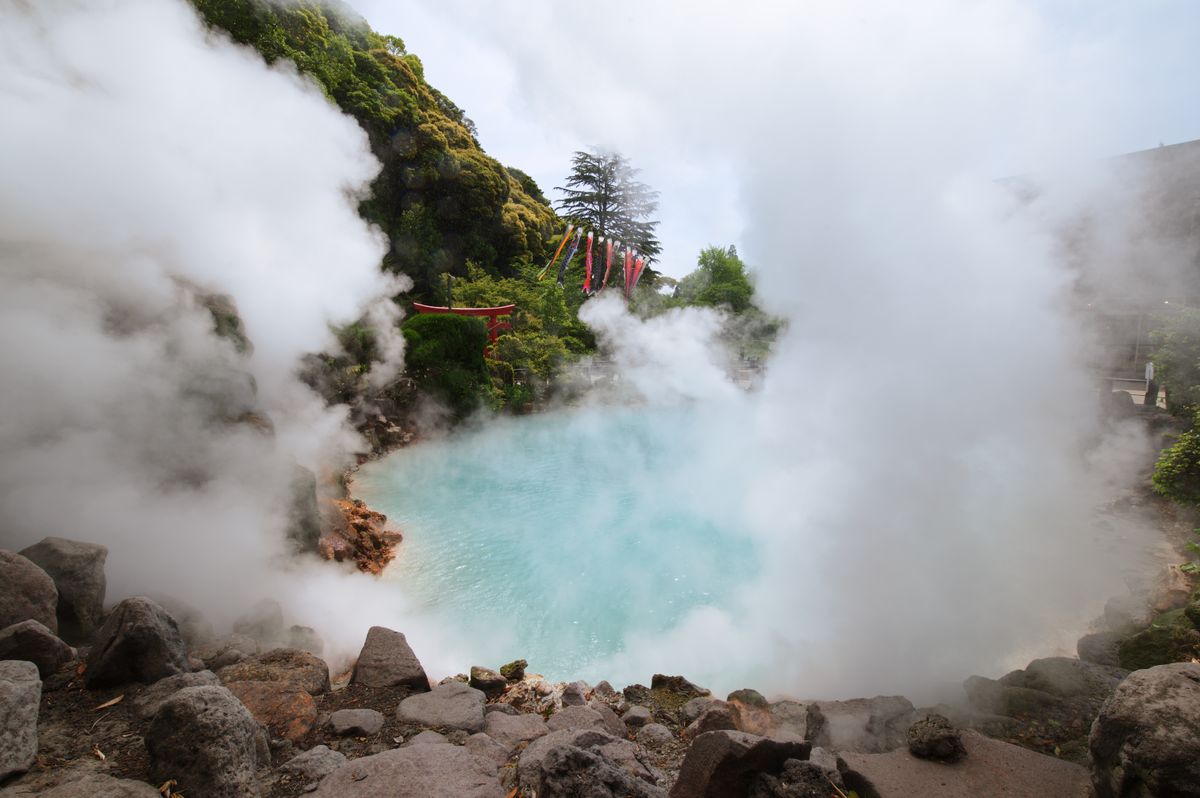
If you have to pick just one onsen town to visit in Japan, the answer for many seasoned travellers is Kusatsu (草津温泉) in Gunma Prefecture. Famous for its theatrical wooden water-cooling ceremony, scalding sulphur baths, and a literally steaming central plaza known as the Yubatake, Kusatsu has been ranked the number-one hot spring resort in Japan for over 20 consecutive years. It sits in the alpine highlands of Gunma at 1,200 metres above sea level — the closest of Japan’s “great three” onsen towns to Tokyo, and the only one that genuinely feels like a working hot spring village rather than a museum.
Kusatsu’s hot springs gush up at over 4,000 litres per minute, more than any other resort in Japan. The water is so acidic it sterilises everything it touches — locals joke that the only thing it can’t dissolve is heartbreak. Bathers immerse in 47°C waters, and the steam rises so thickly through the central plaza that on cold winter mornings you can barely see the buildings 10 metres away.
This guide is for first-time visitors to Japan who want to experience an authentic Japanese hot spring town with proper depth — not a 30-minute stop on a tour bus. We’ll cover everything you need to plan a Kusatsu trip: how to get there from Tokyo, where to stay, what to eat, when to visit, the ritual of the bath, and how to combine it with other Gunma highlights into a perfect 2–3 day side trip from your main itinerary.
Why Kusatsu Tops Japan’s Onsen Rankings
Every year the Japanese travel magazine Onsen Hyakusen surveys hundreds of onsen specialists, ryokan owners, and travel professionals to rank Japan’s best hot spring resorts. Kusatsu has held the number-one position for 22 consecutive years (as of the most recent ranking). The reasons are simple: water quality, atmosphere, and infrastructure for visitors.
The water itself is exceptional. With a pH of around 2.0, Kusatsu’s hot springs are among the most acidic in Japan — strong enough to kill virtually all bacteria. This is why Kusatsu was historically considered a healing spa: medieval samurai with battle wounds, post-war veterans with skin diseases, and modern urbanites with chronic conditions all came here for treatment. The water is rich in sulphur, iron, and trace minerals, with a strong sulphurous smell that lingers in your hair for hours after bathing.
Then there’s the atmosphere. Unlike many onsen towns that are essentially clusters of large hotels with little public space, Kusatsu’s central plaza — the Yubatake — is alive day and night. Visitors in cotton yukata robes wander between bathhouses, food stalls, and small shops. Wooden boardwalks let you stand directly above bubbling spring water. Steam pours upward continuously. After dark, the plaza is illuminated and the experience becomes positively cinematic.
Getting to Kusatsu from Tokyo
Kusatsu is one of the most accessible onsen experiences in Japan if you’re starting from Tokyo. The journey by public transport takes 3 to 4 hours total and is straightforward to plan, even for a first-timer with no Japanese.
By Limited Express Train and Bus
The classic route uses the Limited Express “Kusatsu” or “Kusatsu-Shima” train from Ueno Station to Naganohara-Kusatsuguchi Station, then a 25-minute JR bus to Kusatsu Onsen Bus Terminal. Total journey time is approximately 3 hours 45 minutes. A reserved seat on the Limited Express costs around ¥6,300 (~$42 USD); the bus from Naganohara is ¥710 (~$5 USD).
Both segments are covered by the JR East Tokyo Wide Pass (¥15,000 for 3 days), which is excellent value if you plan additional day trips to Nikko, Karuizawa, or Mt. Fuji. The pass also covers some Shinkansen routes including Gala Yuzawa (ski season only) — note that Niigata city and Kanazawa require separate passes.
By Hokuriku Shinkansen + Bus
Slightly faster (and often cheaper if you’re not using a pass) is the Hokuriku Shinkansen from Tokyo Station to Karuizawa, then JR Bus from Karuizawa to Kusatsu. The Shinkansen leg is just 70 minutes; the connecting bus is 80 minutes. Total time is around 2 hours 45 minutes plus connection time. Cost: Shinkansen ¥6,020 + bus ¥2,240 = ¥8,260 (~$55 USD) one-way.
By Direct Highway Bus
The cheapest option is the direct JR Bus Kanto highway bus from Shinjuku to Kusatsu Onsen Bus Terminal. Travel time is about 4 hours; cost is ¥3,500–¥4,000 (~$23–$27 USD) one-way. Two buses depart in the morning and one in the early afternoon. Reserve in advance during cherry blossom season, autumn foliage, or the New Year period as buses sell out.
For your hotel booking — which becomes the linchpin of your trip — start with Book your hotel on Agoda (Best prices guaranteed) → and compare with luxury ryokan options on Ikyu.com →.
Local Transport Inside Kusatsu
The town centre is compact and walkable — most ryokan are within 10 minutes of the Yubatake. Free public foot baths (ashiyu) are scattered throughout the streets, and the bus terminal is a 5-minute walk from the central plaza. There’s no need to rent a car or hire taxis if you stick to the town centre.
The Yubatake: Kusatsu’s Beating Heart
The Yubatake (湯畑, “hot water field”) is what makes Kusatsu unique. In the centre of town, scalding spring water at over 70°C is channelled through a network of long wooden boxes that allow it to cool to bathing temperature before flowing into the surrounding bathhouses. The water also deposits a thick layer of yunohana (literally “hot spring flower”) — the mineral sulphur sediment used as a bath additive that you can take home.
The Yubatake produces around 4,000 litres of hot spring water per minute — enough to fill a 25-metre swimming pool every 75 seconds. The volume of steam rising into the air is staggering, and the smell of sulphur is unmistakable. Wooden walkways lead all the way around the plaza, and benches let you sit and watch the spectacle for as long as you want.
Light-Up After Dark
From sunset until 23:00, the entire Yubatake is illuminated by warm amber lights that reflect off the rising steam. This is the iconic Kusatsu image — wooden bathhouse silhouettes, shadowy yukata-clad figures, glowing water. Photographers should use a tripod (allowed) and aim for blue hour around 30 minutes after sunset for the best light balance.
The Yumomi Show — Cooling Hot Water by Hand
Kusatsu’s most unusual cultural experience is the Yumomi (湯もみ), a traditional water-cooling ceremony performed at the Netsu-no-Yu (熱乃湯) bathhouse facing the Yubatake. Because Kusatsu’s water emerges at over 70°C — far too hot to bathe in — locals historically used long wooden paddles to stir the water and cool it down without diluting the mineral content. Over time this practical task evolved into a synchronised dance accompanied by traditional folk songs.
The Yumomi show runs six times daily (typically 9:30, 10:00, 10:30, 15:30, 16:00, 16:30) and lasts about 20 minutes. Visitors can participate in the final segment, picking up a paddle and stirring the water alongside the performers. Admission is ¥700 (~$5 USD); pay at the door — no advance booking required. Photography is allowed during the performance but flash is discouraged.
Bathing in Kusatsu: The Three-Bath Strategy
While Kusatsu has dozens of bathhouses, locals recommend a three-bath approach to fully experience the water: one large public bath for the social atmosphere, one small secret bath for the authentic local feel, and one ryokan bath for the comfort and ritual of staying overnight.
Otaki-no-Yu (大滝乃湯)
The town’s most popular public bath, Otaki-no-Yu features multiple indoor pools at progressively higher temperatures (38°C, 40°C, 42°C, 44°C) plus an outdoor rotenburo. Most beautifully, there’s a stepped “awase-yu” (合わせ湯) area where you walk between four pools each one degree hotter than the last — the traditional Kusatsu bathing method. Admission ¥980 (~$7 USD). Open 9:00–21:00.
Sai-no-Kawara Outdoor Rotenburo
About a 15-minute walk from the Yubatake, this enormous open-air bath is set into a forested park where multiple natural springs gush up around stone-edged pools. The outdoor experience is incomparable, especially in winter snow or autumn foliage. Admission ¥700 (~$5 USD). Open 7:00–20:00 (April–November), 9:00–20:00 (December–March).
Free Public Baths
Three small bathhouses in the town centre — Shirahata-no-Yu, Chiyo-no-Yu, and Jizo-no-Yu — are completely free, open 5:00–23:00, and available to anyone (residents and tourists alike). These are tiny one-or-two-pool baths, more like neighbourhood facilities than tourist attractions. The water is intensely hot and acidic. Bring your own small towel; no rental available. The cultural experience of bathing alongside elderly locals at 6:00 AM is one of the most authentic things you can do in Japan.
Onsen Etiquette
The basic rules of Japanese onsen apply at Kusatsu:
- Wash thoroughly at the seated shower stations before entering any pool. Use the soap and shampoo provided.
- No swimwear — Japanese baths are nude and gender-segregated. Bring a small “modesty towel” to cover yourself while walking, but do not put it in the water.
- No tattoos in many traditional bathhouses, though Kusatsu has become more permissive in recent years. Otaki-no-Yu and Sai-no-Kawara now allow tattoos. Some private ryokan baths still don’t. Check before arriving.
- Tie up long hair so it doesn’t touch the water.
- Stay hydrated — onsen bathing is dehydrating, and Kusatsu’s high acidity intensifies the effect.
Read more about Japanese onsen etiquette before your trip — the basics make a big difference to your comfort and confidence.
Where to Stay in Kusatsu
Kusatsu has more than 100 ryokan and hotels ranging from luxury kaiseki resorts to budget guesthouses. The general rule: stay within walking distance of the Yubatake (within 600 metres) for maximum atmosphere. Outlying hotels are quieter but require a shuttle bus to access the central plaza.
Luxury Ryokan
Naraya (奈良屋) is one of the most famous and historic ryokan in town, dating to 1830. Rooms feature private rotenburo with direct Yubatake spring water, traditional kaiseki dinners using local Joshu wagyu beef and yamame trout, and immaculate service. Doubles with two meals start around ¥45,000 (~$300 USD). Books out 2–3 months in advance for weekends.
Hotel Ichii is similarly upscale, located right on the Yubatake. Multiple bath options including a top-floor rooftop rotenburo with town views. Doubles with two meals around ¥35,000–¥55,000 (~$235–$370 USD).
Mid-Range Ryokan
Sakurai is a family-run mid-sized ryokan a 5-minute walk from the Yubatake with consistently strong reviews. Doubles with two meals around ¥22,000 (~$147 USD). Excellent kaiseki dinner, friendly English-speaking staff.
Hotel Vista Premio Kusatsu offers Western-style rooms for travellers who prefer beds over futon, but with full ryokan-style bathing facilities. Doubles around ¥18,000–¥25,000 (~$120–$167 USD).
Budget Options
Kusatsu Now Resort and several minshuku (family-run guesthouses) offer rooms from ¥8,000 per person without meals (~$53 USD). The cheapest beds in town are at Kusatsu Onsen Hostel, with dorm beds from ¥3,500 (~$23 USD). Hostels still have access to the public baths around town.
For comparison shopping, check rates on Yahoo! Travel for hotel deals → and Find great hotel deals on Airtrip → across the same dates.
What to Eat in Kusatsu
Gunma is famous for konnyaku (yam jelly), Joshu wagyu beef, oyaki (stuffed dumplings), and high-quality leeks. Kusatsu’s restaurants and food stalls feature regional specialties along with onsen-town classics.
Onsen Tamago
The classic Kusatsu snack is onsen tamago — eggs slowly cooked in mineral-rich hot spring water until the white is custard-soft and the yolk is creamy. Vendors around the Yubatake sell them for ¥150 (~$1 USD) each, served warm with a small splash of soy sauce. Eat one as you walk; perfect after a hot bath.
Yu-no-Hana Manju
These small steamed buns filled with sweet bean paste are Kusatsu’s signature souvenir. Boxes of 10–20 sell for ¥800–¥1,500 (~$5–$10 USD). The shop Tsutsujitei has been making them since 1888 and remains the most popular brand. Try one fresh — they’re best eaten within 24 hours.
Joshu Wagyu Beef
Gunma’s premium beef, with marbling that rivals Kobe and Matsusaka. Many Kusatsu ryokan serve it as part of the kaiseki dinner. For lunch options, Yakiniku Mantaroh near the Yubatake serves Joshu beef sets from ¥2,800 (~$19 USD). Kusatsu also has several shabu-shabu and sukiyaki specialists.
Konnyaku
Gunma produces 90% of Japan’s konnyaku, a low-calorie yam jelly. Kusatsu has multiple konnyaku-themed restaurants serving sashimi-style raw konnyaku, oden hotpot, and konnyaku desserts. Try Konnyaku Park in nearby Kanra for a free factory tour and tastings.
Soba and Tempura
The Naganohara region produces excellent buckwheat. Several soba restaurants near the Yubatake offer fresh handmade noodles with mountain vegetable tempura. Sets from ¥1,500 (~$10 USD).
Best Time to Visit Kusatsu
Kusatsu is genuinely a four-season destination — there’s no bad time to visit, but each season offers a different experience.
Winter (December–March)
The most atmospheric season, especially January and February. Heavy snowfall blankets the town (typically 70–150 cm on the ground), and the contrast of steam, snow, and amber lighting at the Yubatake is unforgettable. The Kusatsu Onsen Snow Resort (a 10-minute bus ride from town) offers excellent skiing and snowboarding from late December through early April. Pack proper winter gear; daily highs hover around 0–3°C.
Spring (April–May)
April brings cherry blossoms (typically peaking around April 25–May 5 in Kusatsu — much later than Tokyo) and Golden Week crowds. May is mild, lush, and the new green of the surrounding hills is gorgeous. Daily highs 14–22°C.
Summer (June–August)
Kusatsu’s high elevation (1,200 m) makes it an excellent escape from Tokyo’s summer heat. Average August daytime temperatures are 25°C — about 8°C cooler than Tokyo. June can be rainy but is less crowded. Hiking trails around Mt. Shirane and the Sai-no-Kawara open in summer.
Autumn (October–November)
Mid-October to mid-November is the best foliage season. The surrounding mountains turn vivid red and gold; the Sainokawara Park is at peak photogenic. Crowds are heavy on weekends but manageable midweek. Daily highs 10–17°C.
Things to Do Beyond the Baths
Most visitors come to Kusatsu for the onsen, but there’s enough else to do to fill a comfortable two- to three-day stay.
Sainokawara Park
A 15-minute walk west of the Yubatake, this scenic park surrounds a series of natural hot spring streams flowing through forest. Stone Buddha statues line the pathways. The park hosts the famous outdoor rotenburo as well as a children’s free public foot bath. In autumn, this is one of the most photogenic spots in Gunma.
Kusatsu International Music Academy
Every August since 1979, Kusatsu hosts an internationally renowned classical music festival featuring over 100 concerts in the Music Hall and around town. Tickets from ¥3,000 (~$20 USD). The festival has hosted soloists from the Berlin Philharmonic, Vienna Philharmonic, and Tokyo Symphony.
Mt. Shirane Volcano
Kusatsu sits at the foot of the active volcano Mt. Shirane (2,160 m). When the volcano is not in alert status, hikers can drive or take a bus up to the crater rim and walk around the eerie green Yugama crater lake. The lake’s water is so acidic (pH 1.0) that nothing lives in it. Check Japan Meteorological Agency volcano warnings before going — the mountain has periodic eruption alerts that close the trails.
Karuizawa Day Trip
An 80-minute bus ride from Kusatsu, Karuizawa is Japan’s most upscale resort town — once a summer retreat for John Lennon and Yoko Ono. Outlet shopping, gourmet bakeries, and forested cycling paths make it a perfect contrast to Kusatsu’s traditional onsen feel. The Hokuriku Shinkansen connects Karuizawa to Tokyo (70 min).
Snow Monkeys at Jigokudani
While not strictly in Gunma, the famous snow monkey park in nearby Nagano is a 3.5-hour drive and a popular pairing for visitors with their own car. Without a car, it’s logistically challenging from Kusatsu directly.
Suggested Itineraries
One-Night Express Trip
Day 1: Depart Tokyo morning → arrive Kusatsu lunchtime → check in to ryokan → afternoon free for Yubatake exploration and a public bath → dinner at ryokan → evening Yubatake light-up → late-night soak
Day 2: Early morning bath → ryokan breakfast → Yumomi show 9:30 → Sai-no-Kawara Park and outdoor rotenburo → lunch → depart for Tokyo arriving early evening
Two-Night Standard Trip
Same as above but add: Day 2 afternoon, hike around Mt. Shirane (weather permitting) or visit Karuizawa for outlet shopping. Day 3, leisurely morning, last bath, depart after lunch.
Three-Night Deep-Dive
Add a day in Karuizawa with overnight there, or extend with a Niigata onsen leg. Combine with a Tokyo Wide Pass for maximum value.
Practical Tips for Your Visit
- Book your ryokan first, then transport. Ryokan availability drives the trip more than train tickets.
- Pack a small towel. Free public baths don’t provide them. ¥200 from any convenience store; many ryokan supply them as souvenirs.
- Wear comfortable shoes. Stone-paved streets can be slippery, especially in winter.
- Bring cash. Many small bathhouses, food stalls, and souvenir shops are cash-only. ATMs at the post office and 7-Eleven near the bus terminal accept foreign cards.
- Stay connected with an eSIM. Most ryokan have free Wi-Fi, but for travel between baths and town navigation, mobile data helps. Get your Japan eSIM (Stay connected from day 1) →
- Yukata loaning is included at most ryokan. Wear it around town in the evening — totally normal and expected.
- Acidic water tarnishes silver jewellery permanently. Remove rings, necklaces, and watches before bathing.
- Skin sensitivity: The water can sting cuts and intensify rashes. Soak shorter sessions if you have sensitive skin.
- Hydrate before and after baths. Vending machines at every ryokan dispense local mineral water, milk drinks, and Calpis.
- Plan for snow if visiting Dec–March. Roads are well-cleared but snow boots help.
Useful Japanese Phrases
- Onsen wa doko desu ka? (温泉はどこですか?) — Where is the hot spring?
- Atsui! (あつい!) — It’s hot! (used liberally in Kusatsu)
- Mizu o kudasai (水をください) — Water please
- Tsumetai mizu wa arimasu ka? (冷たい水はありますか?) — Do you have cold water?
- Onsen wa nan-ji made desu ka? (温泉は何時までですか?) — Until what time is the bath open?
- Oishii desu (おいしいです) — It’s delicious
Budget Breakdown
Realistic per-person budget for a two-day, one-night Kusatsu trip from Tokyo:
- Round-trip transport (Limited Express + bus): ¥14,000 (~$93 USD)
- Ryokan with two meals (mid-range): ¥22,000 (~$147 USD)
- Otaki-no-Yu admission: ¥980 (~$7 USD)
- Sai-no-Kawara admission: ¥700 (~$5 USD)
- Yumomi show: ¥700 (~$5 USD)
- Lunch (out): ¥1,500 (~$10 USD)
- Snacks (onsen tamago, manju): ¥800 (~$5 USD)
- Souvenirs: ¥2,000 (~$13 USD)
- Total: ¥42,680 (~$285 USD)
For two travellers sharing a room, budget around ¥75,000–¥100,000 (~$500–$667 USD) depending on ryokan choice. Luxury option with Naraya or similar can run ¥150,000+ (~$1,000+ USD) per couple.
For more budget travel guidance, see our Budget Travel Japan guide. For broader Japanese culture context, our Japan first-timers’ tips covers everything from money to manners.
Frequently Asked Questions
Can I visit Kusatsu as a day trip from Tokyo?
Technically yes, but it’s not recommended. Round-trip transit eats 7–8 hours, leaving only 4 hours in town — not enough to truly experience the baths and atmosphere. Kusatsu is a place that reveals itself slowly: the steam at dawn, the lit-up plaza after dinner, the silence after the last visitor leaves. One overnight stay is the minimum we’d suggest. Two nights is ideal.
Do I need to know Japanese to visit Kusatsu?
No. The Yubatake area has decent English signage, most ryokan staff speak basic English, and major bathhouses post English bathing instructions. Smartphone translation apps cover any gaps. Older shopkeepers and free public bath regulars usually don’t speak English but are friendly with gestures.
Are tattoos allowed at Kusatsu’s baths?
Increasingly yes. The two main public baths — Otaki-no-Yu and Sai-no-Kawara — now allow tattoos. Some traditional ryokan still don’t, but most modern ones have relaxed their rules. Always check with the ryokan when booking. Cover-up patches are sold at the front desks of stricter properties.
Can children visit Kusatsu’s baths?
Yes. Family-friendly bathhouses with lower-temperature pools include Otaki-no-Yu and the free Jizo-no-Yu. Children under 6 enter most baths free. Keep them hydrated and limit individual bath sessions to 5–10 minutes due to the heat and acidity.
Is Kusatsu suitable for solo travellers?
Excellent. Many ryokan offer single rooms (a rare find in Japanese onsen). The Yumomi show, the public baths, and the Yubatake plaza are all enjoyable solo. Walking around town in yukata at night feels safe. Restaurants accommodate solo diners without awkwardness.
What about people who don’t like very hot baths?
Otaki-no-Yu and Sai-no-Kawara have multiple pools at different temperatures, including cooler 38–40°C options. Many ryokan have private family baths (kashikiri-buro) where you control the temperature. Outdoor baths in winter feel less hot due to the cold air contrast — easier for first-timers.
Is Kusatsu wheelchair accessible?
Partially. The Yubatake plaza has barrier-free walkways and observation decks. Otaki-no-Yu has accessible facilities including a roll-in changing room. Many older bathhouses and small ryokan have steps and tatami floors that present challenges. Hotel Ichii and several modern hotels are fully accessible. Check with specific properties when booking.
How does Kusatsu compare to Hakone or Beppu?
Hakone is more urban and commercialised, with art museums and Mt. Fuji views. Beppu is much larger, hotter, and more diverse (eight different “hells”), but less atmospheric than Kusatsu. Kusatsu wins for traditional onsen-town atmosphere and water quality. Many onsen connoisseurs rank Kusatsu’s water higher than any other in Japan.
Can I bring my own food into the baths?
No food or drinks in the bath area itself, but ryokan and bathhouses have post-bath relaxation rooms where you can buy beer, ice cream, or local milk drinks. The Yubatake plaza has many takeaway food stalls open until late evening.
Is the smell of sulphur strong?
Yes. The town smells distinctly like rotten eggs in the central area, especially around the Yubatake. After 30 minutes you stop noticing. Your hair and clothing will retain the smell for a day or two — many travellers consider this a feature rather than a bug. Silver jewellery will tarnish; remove before bathing.
What if I have skin conditions or open wounds?
Kusatsu’s water has been used for centuries to treat skin conditions, but the high acidity can sting cuts and aggravate sensitive skin. Limit your first soak to 5 minutes. If you have a serious condition, consult a doctor before visiting. Several ryokan have onsite spa treatments that combine bathing with massage.
How Kusatsu Compares to Other Japanese Onsen Towns
If you’re trying to choose between onsen destinations, here’s a quick rundown of how Kusatsu compares to its main rivals.
Vs. Hakone: Hakone is closer to Tokyo (90 minutes) and has art museums, Mt. Fuji views, and a more urban feel. Kusatsu is more traditional, has hotter and more acidic water, and feels more like rural Japan.
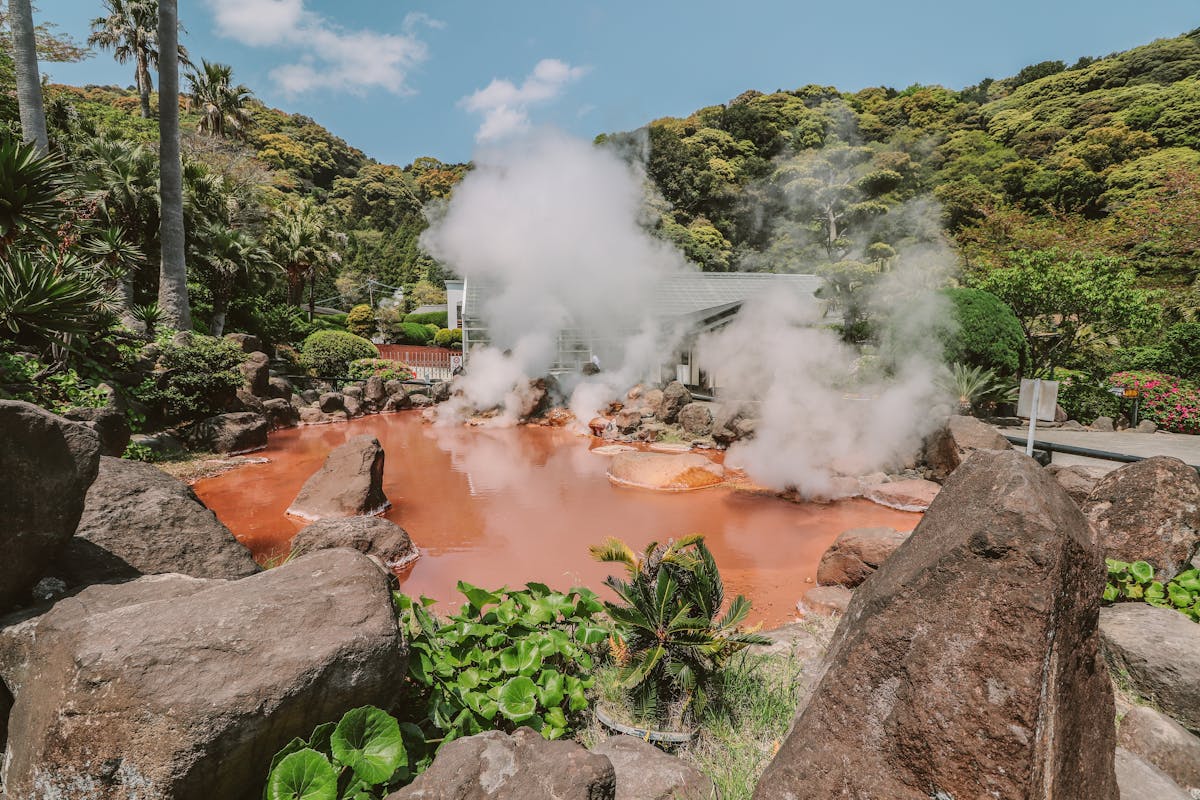
Vs. Beppu: Beppu (Kyushu) has greater volume of springs and the famous “eight hells” — bubbling, coloured pools that are sights rather than baths. Kusatsu is smaller, more walkable, and has stronger atmosphere.
Vs. Noboribetsu: Noboribetsu (Hokkaido) is dramatically scenic with its Hell Valley, but the town itself is mostly large modern hotels. Kusatsu’s old-town character is stronger.
Vs. Yufuin: Yufuin (Oita) is gentler, more boutique, and known for art galleries and cafés. Kusatsu is rougher and more authentic.
Vs. Ginzan Onsen: Ginzan (Yamagata) is smaller, more romantic, and harder to reach. Kusatsu is more accessible and has more variety.
For a deeper look at planning around Japan’s hot spring options, read our guides on Best Ryokan in Japan and Japanese Onsen Etiquette.
Combining Kusatsu With a Wider Itinerary
Kusatsu fits beautifully into several types of Japan trips. Here are common pairings.
Kusatsu + Karuizawa
The classic two-night trip: traditional onsen + upscale resort town. Karuizawa offers Western-style cafés, outlet shopping, and easy access back to Tokyo via the Hokuriku Shinkansen. Total: 3 days.
Kusatsu + Nikko + Tokyo
A 5-day Kanto loop: Tokyo (2 nights) → Nikko (1 night) → Kusatsu (2 nights). Covered by the JR East Tokyo Wide Pass. Hits a UNESCO World Heritage site, an active volcano onsen, and Japan’s mega-city.
Kusatsu + Snow Resorts
Kusatsu + Tohoku Loop
For travellers with 7–10 days, extend from Kusatsu via Niigata to Yamagata’s Ginzan Onsen or Akita’s Kakunodate samurai district. The 5-day JR East Tohoku Pass covers much of this.
Money-Saving Tips for Kusatsu
Kusatsu can be done affordably without sacrificing the experience. Three free public baths (Shirahata-no-Yu, Chiyo-no-Yu, Jizo-no-Yu) give authentic local soaks at zero cost. Onsen tamago and street snacks at the Yubatake make excellent cheap meals. Convenience stores stock local milk drinks, beer, and onigiri at supermarket prices.
Mid-week stays (Sunday–Thursday nights) are 20–35% cheaper than weekend rates at most ryokan. Booking 60+ days in advance often unlocks early-bird rates. The JR East Tokyo Wide Pass (¥15,000) covers all transport for 3 days and pays for itself if you also do Nikko.
For travellers willing to skip dinner at the ryokan, “sudomari” (room-only) rates are typically ¥6,000–¥10,000 less per person than rates with kaiseki — and the town has plenty of restaurants to fill the gap. Use those savings on an extra ryokan night instead. Compare current rates on Agoda for Kusatsu accommodations →.
The History and Science of Kusatsu’s Springs
Kusatsu’s hot springs have been documented for over 800 years. The legendary 12th-century shogun Minamoto Yoritomo is said to have bathed here while hunting in the Gunma highlands. By the Edo period, daimyo lords were sending retainers to convalesce in Kusatsu’s healing waters. In 1876, the German physician Erwin Bälz, court doctor to the Meiji Emperor, declared Kusatsu’s water “the finest in the world for its medicinal qualities” and helped introduce European-style hydrotherapy methods that influenced the bathhouse layouts you see today.
The geology behind the heat: Kusatsu sits on the eastern flank of the active Shirane volcanic complex. Magma chambers beneath the surface heat groundwater that percolates downward through fissures in the bedrock. As the water rises back through volcanic minerals, it picks up sulphur, hydrogen sulphide, iron, aluminium, and trace amounts of arsenic — all of which contribute to the famous antiseptic, mineral-rich character. The pH 2.0 acidity rivals strong vinegar.
Modern medical research has documented measurable benefits from regular bathing: improved circulation, accelerated healing of certain skin conditions including psoriasis and eczema, reduced muscle inflammation, and stress relief through the parasympathetic nervous system. Kusatsu offers ten-day “toji” (湯治) therapeutic stays where guests follow a structured bathing schedule with rest periods — a tradition continuing largely unchanged for centuries.
Cultural Etiquette Beyond the Baths
While the bathing rules are fairly well-documented, several less-obvious cultural points help foreign visitors blend in smoothly:
Yukata wear: Always wrap left over right when tying your yukata — right over left is reserved for funerals. The obi (sash) ties on the side or back, never in the front. Wear the yukata to dinner, around town, and even on a brief walk to a public bath. It’s perfectly acceptable to leave your room in a yukata at any hour.
Slipper protocol: Inside the ryokan, you wear slippers in hallways but switch to bare feet on tatami flooring. There are also separate “toilet slippers” left at the bathroom door — do not wear them out into the hallway (a common foreigner faux pas).
Dinner timing: Kaiseki dinner is served at a specific time, usually 18:00 or 18:30. Arrive promptly. Many ryokan close their kitchen by 19:30, so don’t expect to dine late.
Tipping: Not customary and can offend. Show appreciation through politeness and small gifts (omiyage) instead.
What to Pack for Kusatsu
Most ryokan provide yukata, towels, toothbrushes, hair dryers, and basic toiletries — but a few items are worth bringing yourself:
- A waterproof phone case if you want photos at the public baths (cameras prohibited inside the bath area)
- Reef-safe sunscreen for outdoor rotenburo in summer
- Reading material — late-evening downtime in your tatami room is part of the magic
- Slip-on shoes that are easy to remove and put on (you’ll do it 20+ times a day)
- A small zip-lock bag for damp swimsuits if visiting both the public outdoor pools and indoor baths
- Power bank for phone — long days on your feet drain batteries
- An extra layer for early morning baths and evening Yubatake walks
Sustainability and Visitor Etiquette
As Kusatsu’s popularity has grown, so have concerns about overtourism. The town has implemented several initiatives to balance visitor numbers with quality of experience: a paid parking system that funds town maintenance, encouragement to use shuttle buses rather than rental cars, and signage in multiple languages reminding visitors not to throw items into the Yubatake (locals fish out an astonishing variety of trash and coins each week). Most importantly, respect the residents — many ryokan are owned by families who have lived here for generations, and the town only retains its atmosphere because of their continued care.
Avoid loud conversations late at night, particularly around the Yubatake after 22:00. Keep voices low in the public baths. If you smoke, use designated areas only. Many ryokan are entirely smoke-free indoors.
Final Thoughts
Kusatsu is more than just a hot spring town — it’s a complete cultural immersion in one of Japan’s oldest living traditions. The water is exceptional. The atmosphere is unforgettable. The town manages to balance tradition and accessibility in a way that few other onsen destinations achieve.
For first-time visitors to Japan, Kusatsu offers the perfect counterpoint to Tokyo’s intensity and Kyoto’s tourist crowds. Two nights here will leave you with stronger memories than two nights almost anywhere else in the country. The ritual of the bath, the steam at dawn, the wooden boardwalks of the Yubatake, the smell of sulphur and old wood — these are the kinds of details that define a Japan trip and become the stories you tell years later.
Plan ahead, book a ryokan with character, pack a yukata-friendly attitude, and prepare for one of the most rewarding stops on your Japan itinerary. For more inspiration, explore our complete destinations guide and remember to book your airport transfer with NearMe → for a smooth start to your trip.
Related Hot Spring (Onsen) Guides
Soak in more of Japan’s best hot springs with these related onsen guides: Kurokawa Onsen’s riverside baths, Ginzan Onsen’s fairy-tale snow village, Noboribetsu, Hokkaido’s famous hot spring resort, Arima Onsen near Kobe, and Kinosaki Onsen’s seven hot springs.
Going to Japan? Talk to locals with confidence.
Hirameki Japanese — instant offline translation, camera translation, furigana + romaji, and 314 free flashcards. No login. Works without internet.

Plan your Japan trip
Two things every first-timer should book
Some links are affiliate links. If you book through them we may earn a small commission at no extra cost to you.