The izakaya (居酒屋) is the beating heart of Japanese social life. Part bar, part restaurant, part community centre, the izakaya is where ordinary Japanese people go to eat, drink, relax, and connect — after work, on weekends, and on any occasion that warrants food and conversation. For travellers who want to move beyond tourist-oriented dining and experience how Japanese people actually eat and drink, a night at a good izakaya is essential.
This guide explains what an izakaya is, how to behave inside one, what to order, and where to find the best izakayas in Tokyo, Osaka, and Kyoto.
What is an Izakaya?
The word izakaya combines i (to be, to stay) with sakaya (sake shop), reflecting the origins of these establishments as places where you could sit and drink sake on the premises. Modern izakayas are casual gastropubs serving small shared dishes alongside beer, sake, shochu, whisky highballs, and non-alcoholic drinks.
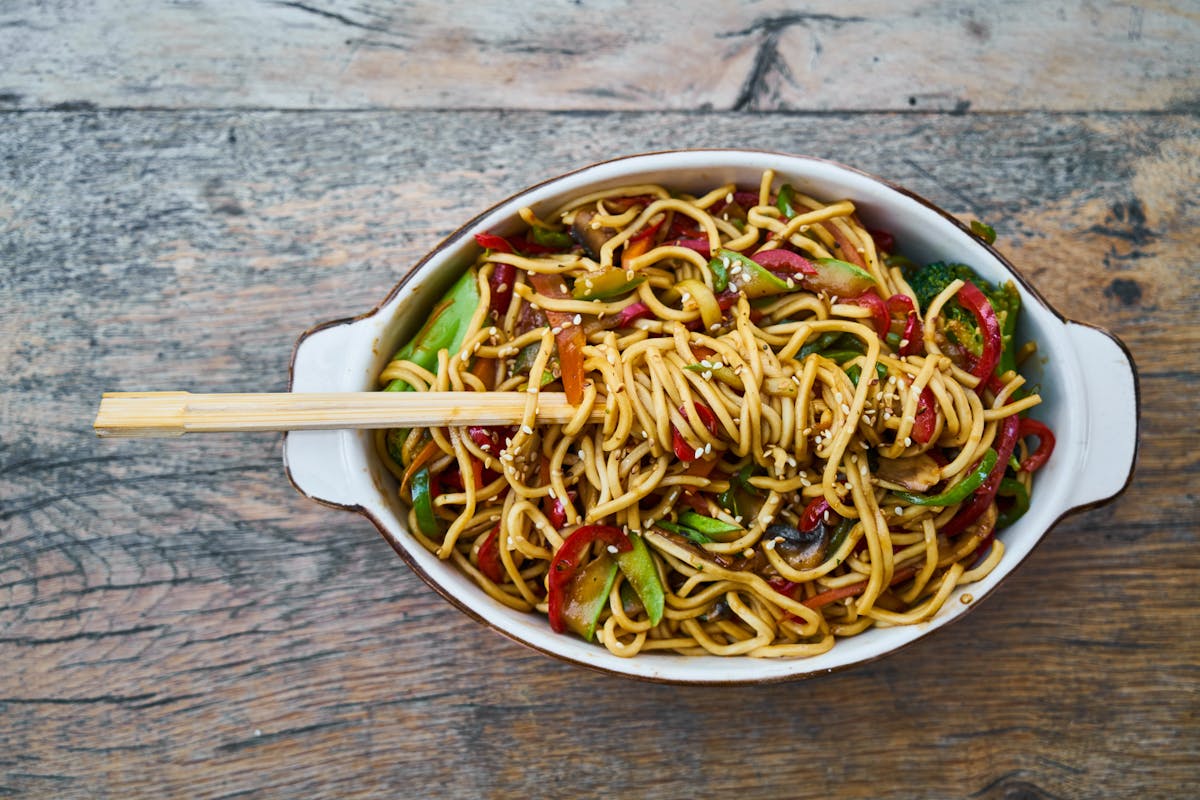
The key difference from a Western pub or bar: at an izakaya, food is central, not incidental. You do not go to an izakaya just to drink — you go to eat a series of small dishes while drinking. The menu is typically large, with dozens of items across multiple categories: grilled skewers, fried dishes, salads, tofu preparations, sashimi, noodle dishes, and rice. The social ritual is to order rounds of drinks and food continuously throughout the evening rather than ordering a main course and being done.
Types of Izakayas
Chain Izakayas (チェーン居酒屋)
Large chain izakayas like Torikizoku, Watami, Shirokiya, and Izakaya Ohsho are excellent for first-time visitors. They typically have picture menus in Japanese with photographs (some have English translations), good-value food, and a straightforward, welcoming atmosphere. Torikizoku is famous for its single-price menu (all items ¥360–¥380 as of 2025) featuring unlimited yakitori grilled skewers. These are not fine dining experiences, but they are authentic, affordable, and fun.
Independent Neighbourhood Izakayas
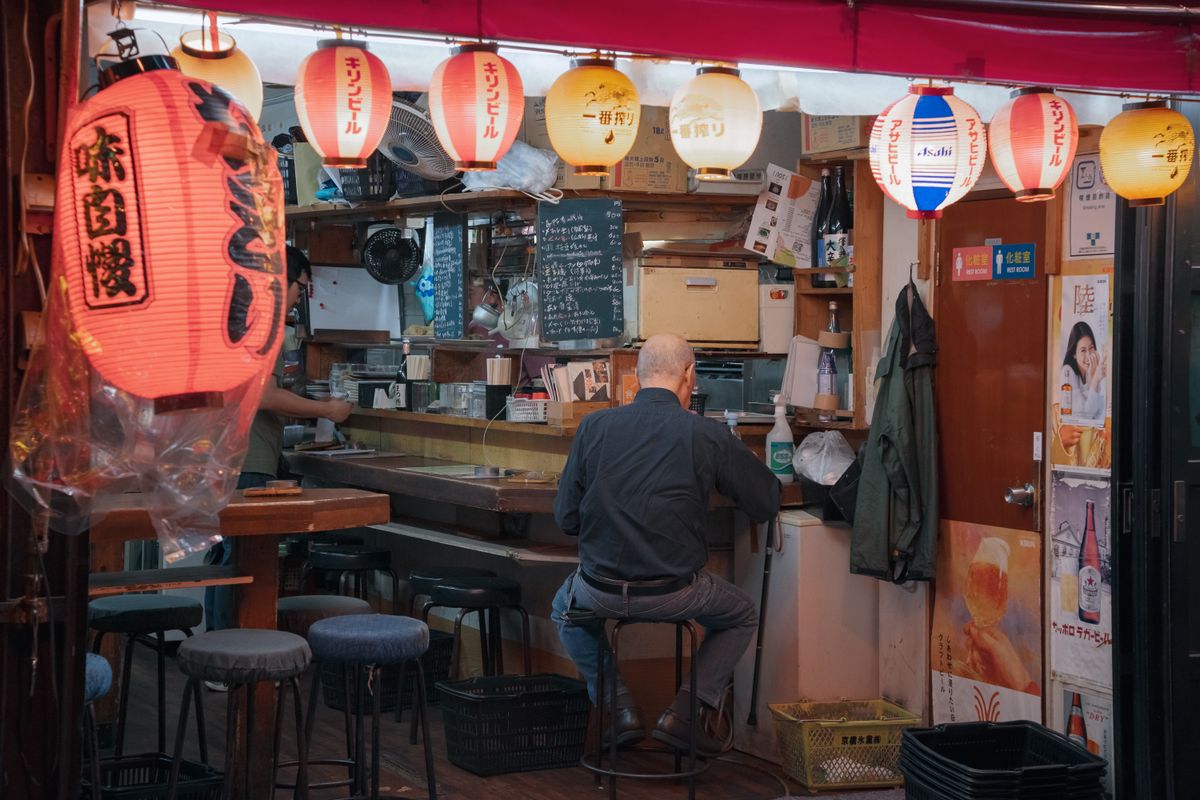
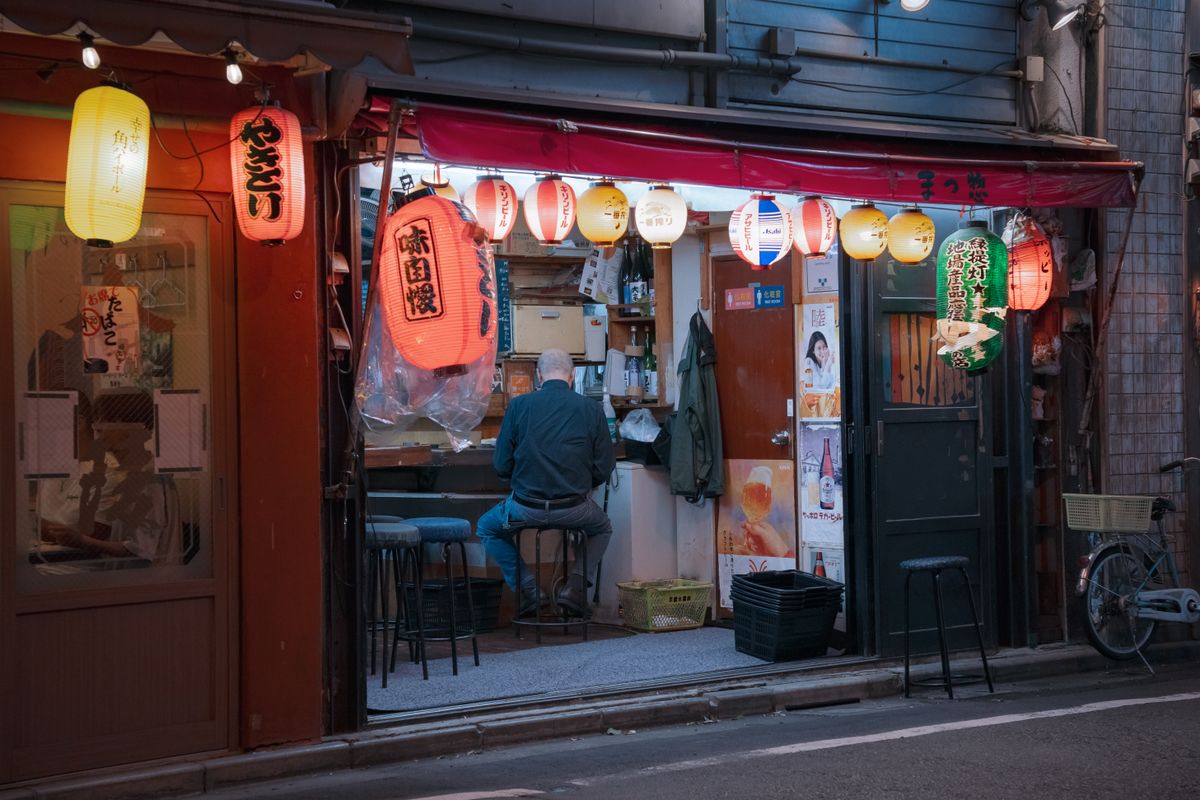
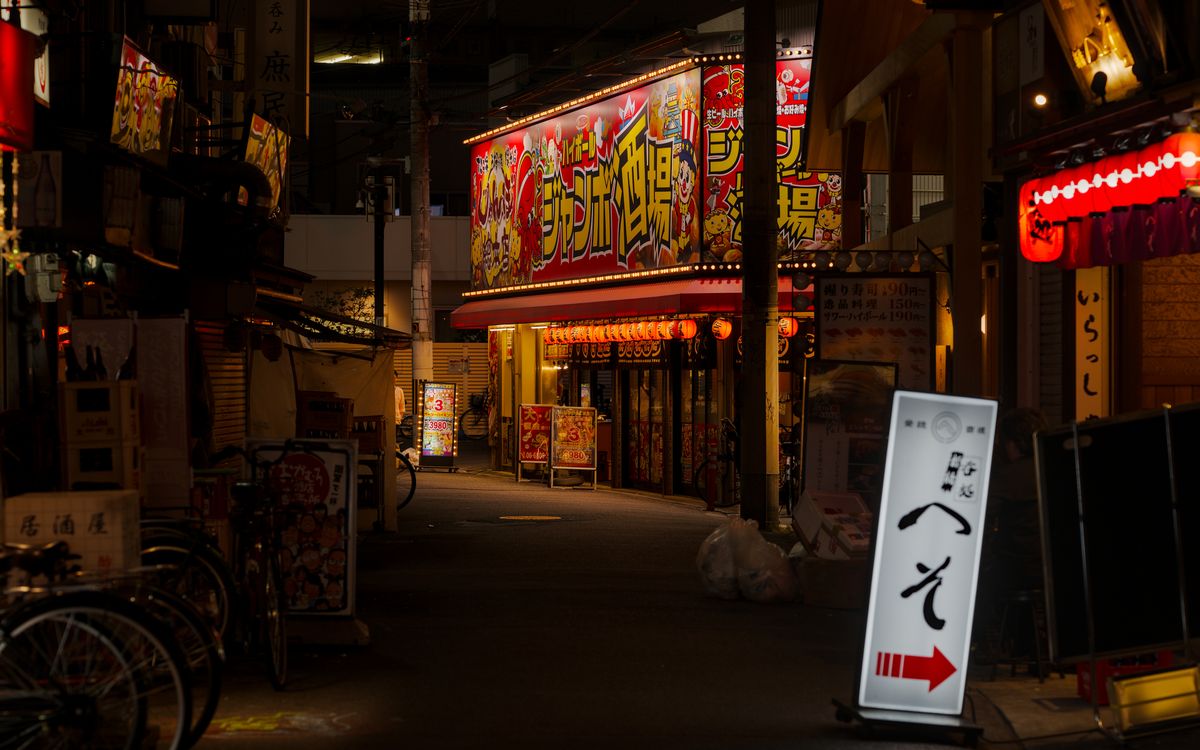
Local izakayas tucked into Tokyo’s back alleys and Osaka’s covered shopping arcades are often the most memorable. These are typically small (10–20 seats), run by a husband-and-wife team, with no English menu and an unspoken assumption that you will drink a lot and eat heartily. Finding a local izakaya under the elevated train tracks in Yurakucho (Tokyo) or in Namba’s covered arcades (Osaka) is one of the great simple pleasures of Japanese travel. Use a pointing gesture and “kore kudasai” (this please) when ordering from a Japanese-only menu.
Yakitori Speciality Izakayas
Yakitori izakayas focus primarily on skewered grilled chicken (yakitori), typically cooked over charcoal (sumiyaki). The best yakitori specialists source their chicken from specific farms and use every part of the bird: breast, thigh, skin, liver, heart, gizzard, neck, and even the cartilage at the tip of the breastbone (nankotsu). Yakitori is ordered by the piece (typically ¥80–¥180 per skewer) or in sets. Order the momo (thigh) and negima (thigh alternating with Welsh onion) as your starting points.
Kushikatsu and Kushiyaki Izakayas
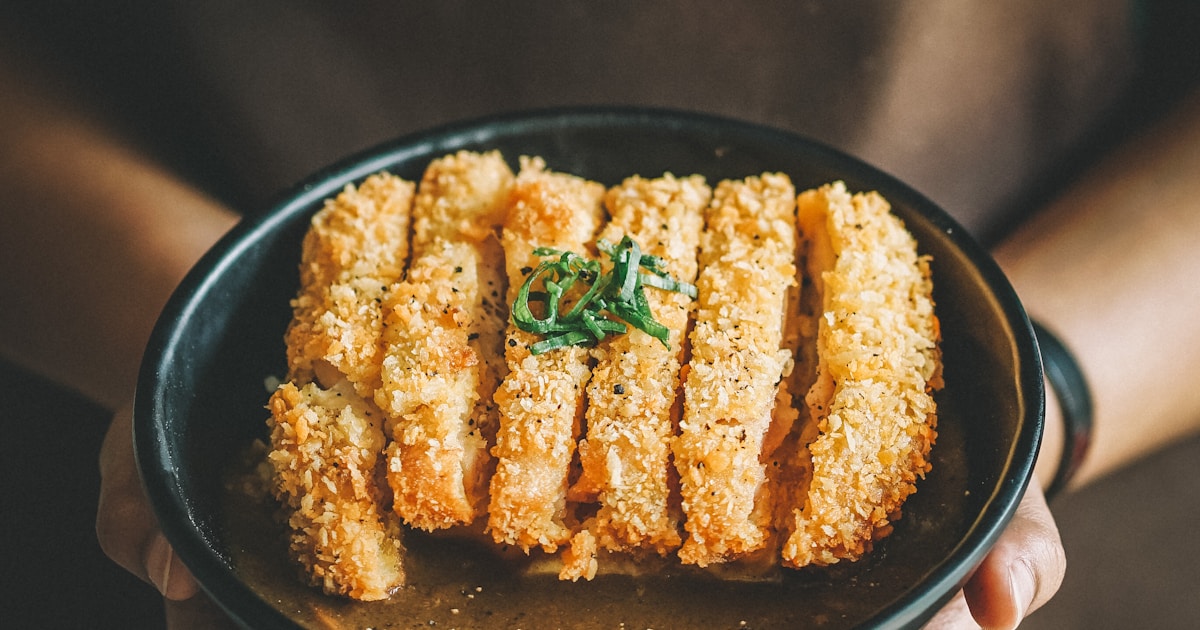
Kushikatsu (deep-fried breaded skewers) originated in Osaka and is one of the great izakaya experiences. Everything is skewered and deep fried in a light panko breadcrumb batter: pork, beef, seafood, vegetables, quail eggs, lotus root. The crucial rule at kushikatsu restaurants: you dip your skewer in the communal sauce pot only once. Double-dipping is an absolute prohibition (signs in English remind you). A full kushikatsu meal with drinks costs approximately ¥2,500–¥4,000 per person.
How to Behave at an Izakaya
Entering: Say “irasshaimase” is not required from you — it is what staff say to you. You may be asked “nan-mei sama desuka?” (how many people?) — answer with the number of fingers. The host will seat you.
The oshibori: You will receive a hot or cold rolled towel (oshibori) for cleaning your hands. Use it on your hands only, not your face (the latter is acceptable but slightly casual).
The otoshi: At most izakayas, a small mandatory appetiser (otoshi or tsukidashi) will arrive automatically and be added to your bill — typically ¥300–¥600 per person. This is not a mistake; it is a table charge custom. The appetiser is usually something simple like edamame, pickled vegetables, or a small piece of tofu.
Ordering drinks first: The convention is to order drinks immediately when the server comes (even before deciding on food). The first drink round is always quick. Standard opening drinks: beer (nama biiru), whisky highball (hai-bo-ru), shochu on the rocks (shochu on za rokku), or non-alcoholic: orange juice, oolong tea.
Ordering food progressively: Do not try to order everything at once. Pick three or four dishes to start, let them arrive and be eaten, then order more. A good izakaya meal lasts 2–3 hours with multiple ordering rounds.
Saying kanpai: Before the first drink, it is customary for everyone at the table to raise their glass and say “kanpai!” (cheers). This is done at the start — nobody drinks until kanpai has been said.
What to Order at an Izakaya
Essential Izakaya Dishes
Edamame (枝豆): Salted boiled soybeans in the pod. Typically ¥300–¥500. The universal izakaya starter — order it immediately with your first drink.
Karaage (唐揚げ): Japanese fried chicken marinated in soy sauce, ginger, and mirin, fried until golden and crispy. Often served with lemon and Japanese mayonnaise. One of Japan’s most beloved dishes. ¥500–¥900.
Tamagoyaki (卵焼き): Sweet rolled Japanese omelette, sometimes served with grated daikon radish. A distinctly Japanese izakaya staple. ¥400–¥700.
Agedashi Tofu (揚げ出し豆腐): Lightly battered silken tofu in a delicate dashi broth, topped with grated ginger and sliced spring onion. Beautifully delicate and warming. ¥500–¥800.
Potato Salad (ポテトサラダ): Japanese potato salad is subtly different from Western versions — creamier, milder, often with cucumber and carrot. A comfort food staple. ¥400–¥600.
Sashimi Moriawase (刺身盛り合わせ): Assorted raw fish slices. The quality varies enormously between izakayas — good izakayas source fresh daily; chain izakayas tend to have lower quality. ¥800–¥2,000.
Yaki-onigiri (焼きおにぎり): Grilled rice balls basted with soy sauce — a satisfying carb base for a long izakaya evening. ¥200–¥400 each.
締め (shime) — the closing dish: Japanese custom is to end an izakaya meal with a carbohydrate-rich “closing dish” — ramen, ochazuke (rice in green tea broth), or plain rice. This is partly cultural (filling the stomach before drinking stops) and partly practical comfort eating. Highly recommended.
What to Drink
Nama biiru (生ビール): Draft beer. The standard opening drink. Kirin, Sapporo, Asahi, or Suntory on tap. ¥400–¥700.
Highball (ハイボール): Japanese whisky (typically Suntory Kakubin) mixed with soda water over ice. Refreshing, lower alcohol than straight whisky, and excellent with food. ¥400–¥600.
Shochu (焼酎): A Japanese distilled spirit made from sweet potato, barley, or rice. Lower alcohol than whisky but higher than beer. Served on the rocks, with water, or in hot water (oyu-wari). ¥400–¥600.
Nihonshu / Sake (日本酒): Rice wine. Warm sake (atsukan) is particularly comforting in winter. Cold premium sake (reishu) in small ceramic cups is the more refined option. ¥500–¥900.
Non-alcoholic: Oolong tea (uron-cha), barley tea (mugi-cha), orange juice, ginger ale, or the Japanese favourite muuzu (mocktail-style drinks) are all widely available. Nobody will pressure you to drink alcohol.
Nomihoudai (All-You-Can-Drink)
Many izakayas offer a nomihoudai (飲み放題) all-you-can-drink option for a set period (typically 90 minutes or 2 hours) at a flat price (¥1,500–¥2,500 per person). This usually includes beer, highballs, shochu cocktails, sake, wine, and soft drinks. For groups planning a long evening, this is good value. Note that ordering speed decreases near the end of the allotted time as staff try to manage inventory — order your round with about 20 minutes remaining.
Best Izakaya Districts in Japan
Yurakucho, Tokyo: The elevated Yamanote Line runs directly above a dense cluster of small izakayas, ramen shops, and yakitori stalls. The atmosphere under the tracks — dim lighting, train rumbling overhead, smoke from charcoal grills drifting into the narrow alley — is extraordinarily atmospheric. This is quintessential Tokyo.
Shinjuku Omoide Yokocho (“Memory Lane”), Tokyo: A tiny alley near Shinjuku Station’s west exit, packed with cramped yakitori and ramen stalls. Atmospheric, photogenic, and genuinely atmospheric — though increasingly touristic. Go for the experience.
Namba and Dotonbori, Osaka: The covered shopping arcades (shotengai) around Namba have excellent local izakayas mixed in among the tourist restaurants. Hozenji Yokocho, a moss-covered alley near the Hozenji Shrine, has some of Osaka’s most characterful restaurant dining.
Nishiki Market area, Kyoto: The side streets around Nishiki Market and Teramachi-dori have a range of izakayas. Less boisterous than Osaka or Tokyo but with charming small establishments serving excellent local ingredients.
Useful Japanese Phrases for Izakayas
“Sumimasen” (すみません) — Excuse me / to call for a waiter’s attention
“Toriaezu, nama biiru onegaishimasu” (とりあえず、生ビールお願いします) — For now, a draft beer please (the standard izakaya opening phrase)
“Kore wo kudasai” (これをください) — I will have this please (pointing at menu)
“Kanpai!” (乾杯) — Cheers!
“Oishii desu” (おいしいです) — This is delicious
“Okaikei onegaishimasu” (お会計お願いします) — The bill please
Budget for an Izakaya Evening
A typical izakaya evening (food + drinks, 2–3 hours) costs approximately:
Budget: ¥1,500–¥2,500 per person (chain izakaya, simple dishes, 2–3 drinks)
Mid-range: ¥3,000–¥5,000 per person (quality independent izakaya, varied menu, 3–4 drinks)
Premium: ¥6,000–¥10,000 per person (specialist yakitori or kaiseki-influenced izakaya, premium sake)
Nomihoudai (all-you-can-drink) adds ¥1,500–¥2,500 but can save money for big drinkers on a long evening.
Frequently Asked Questions
Q: Do izakayas have English menus?
A: Chain izakayas often have English menus or picture menus. Independent neighbourhood izakayas typically have Japanese-only menus. Google Translate’s camera mode can translate menus in real time — very useful. Alternatively, simply point at dishes on adjacent tables or use the phrase “osusume wa nan desu ka?” (what do you recommend?).
Q: Are izakayas suitable for vegetarians?
A: Challenging but manageable. Japanese cuisine relies heavily on dashi (fish stock) and many dishes contain meat or seafood. Edamame, agedashi tofu, tamagoyaki, potato salad, and most vegetable dishes are generally vegan/vegetarian-safe (check on dashi use). Vegetarian izakayas do exist in major cities but are uncommon.
Q: Is it rude to not drink alcohol at an izakaya?
A: Not at all. Non-alcoholic options are available at all izakayas and staff will not make you feel unwelcome for ordering juice, tea, or soft drinks. The social focus is on sharing food and enjoying company, not on drinking.
Q: What time do izakayas open and close?
A: Most open around 17:00–18:00 and close around 23:00–00:00, with some staying open until 2:00–3:00 AM in busy areas. Friday and Saturday nights run late; weeknight closing times vary.
Final Thoughts
An izakaya evening is one of the most genuine cultural experiences available to a visitor in Japan. The combination of excellent food, diverse drinks, warm atmosphere, and the particular joy of eating communally over several hours is deeply satisfying in a way that formal restaurant dining rarely is. Even with the language barrier, izakayas are welcoming places — a smile, a pointing gesture, and a willingness to eat whatever arrives are all you really need. Go often, order widely, and say kanpai with enthusiasm.
Related guides
- How to Read a Japanese Restaurant Menu (Even With Zero Japanese)
- Essential Japanese Phrases for Travelers (and How to Read Menus on the Spot)
- Aomori Nebuta Festival Guide 2026: A First-Timer’s Guide to Japan’s Giant Glowing Floats and How to Dance in the Parade
Going to Japan? Talk to locals with confidence.
Hirameki Japanese — instant offline translation, camera translation, furigana + romaji, and 314 free flashcards. No login. Works without internet.

Plan your Japan trip
Two things every first-timer should book
Some links are affiliate links. If you book through them we may earn a small commission at no extra cost to you.