In this guide
- The honest answer, in numbers
- Where English-only travel is easy
- Where the gaps are
- Your no-Japanese toolkit
- Japanese writing in three minutes
- A day without Japanese, step by step
- How to read a Japanese menu
- Ordering at an izakaya
- Ramen-shop ticket machines
- Vending machines
- Station ticket machines
- Convenience stores: the easy win
- Drugstores and medicine labels
- Reading addresses and finding places
- Toilet buttons
- Onsen and public baths
- Booking things without Japanese
- Beyond the big cities
- Communicating without words
- Common mistakes to avoid
- When you need help
- Advice by type of trip
- Frequently asked questions
- Plan the rest of your trip
The honest answer, in numbers
The Japan Tourism Agency surveyed 4,110 visitors leaving Japan from Narita, Haneda, Kansai, Fukuoka and New Chitose airports between November 2025 and January 2026. Asked what problems they had faced during the trip:
| Problem | Share of visitors |
|---|---|
| No trouble at all | 43.7% |
| Few rubbish bins | 17.2% |
| Communicating with staff | 15.4% |
| Crowding | 12.9% |
| Using public transport | 11.3% |
| Multilingual signs | 10.9% |
| Using credit or debit cards | 10.7% |
Two things stand out. First, language is a real but minority problem: roughly one visitor in seven had trouble communicating with staff. Second, several of the other problems, such as transport, signs and card payments, are partly language problems too. A ticket machine you cannot read or a sign without English is a communication gap of a different kind.
JNTO’s own advice matches this: English is generally understood in tourist areas, airports, hotels and on major transport, but rural areas and small shops may not have English speakers. Plan for the gaps and they rarely spoil a trip.
Where English-only travel is easy
- Airports and major stations: signs in English (and usually Chinese and Korean), and staff used to visitors.
- Trains in the big cities: announcements and displays in English on many lines, station numbers on maps, and ticket machines with a language button. Tokyo Metro’s machines have an “International Languages” button at the top right.
- Hotels: city hotels handle check-in in English, and front desk staff will help with calls and notes in Japanese.
- Chain restaurants and cafes: picture menus, ticket machines or tablet ordering mean you can often order without speaking at all.
- Convenience stores: the total shows on a screen and the questions follow a script you can learn in minutes.
- Major sights: English signs, pamphlets and ticket counters at the best-known temples, castles and museums.
On the classic first-timer route of Tokyo, Kyoto, Osaka and Hiroshima, you can go days without needing a word of Japanese, especially if you have mobile data for maps.
Where the gaps are
- Small, family-run restaurants: often the best food, with handwritten, Japanese-only menus and no pictures. This is where most travelers give up and go to a chain. They don’t need to; see the menu section below.
- Rural areas: once you leave the main routes, English signs and English-speaking staff thin out, and cash matters more.
- Anything spoken on the spot: a delay announcement on a local line, a pharmacist’s question, a taxi driver checking the destination.
- Handwritten or temporary notices: a “closed today” sign, a platform change, an onsen’s rules board.
- Phone calls: some restaurants take bookings only by phone. Ask your hotel to call for you.
- Problems: Tokyo’s police note that their online lost-item search is in Japanese only and that they generally do not make international calls, and JNTO notes that clinics generally take cash only.
None of these is a reason to avoid them. They are simply the places where you will reach for your phone.
Your no-Japanese toolkit
- A translation app with camera mode. Google Translate and, on iPhone, Apple Translate cover most needs; Apple Translate works fully offline for downloaded languages. VoiceTra, a free app from Japan’s national research institute NICT, is good for travel conversations. Our guide to the best translation apps for Japan compares them, including which work offline.
- Mobile data. Maps, live translation and transit apps need a connection. An eSIM such as Airalo, Yesim or Saily installs before you fly; see our eSIM comparison.
- An IC card and some cash. An IC card (Suica, PASMO or ICOCA) pays for trains, buses and many small purchases without any conversation. Carry cash too: JNTO notes that small stores and guest houses may only accept cash. See our IC card guide and cash or card guide.
- Things written down in Japanese. Hotel addresses (copy them from your booking), an allergy or dietary card, and any medical condition. Save them as screenshots so they work offline.
- A handful of phrases. Sumimasen (excuse me), arigatō gozaimasu (thank you), kore o kudasai (this one, please). Our essential Japanese phrases guide has the rest, organized by situation.
- A safety app. The free Safety tips app, supervised by the Japan Tourism Agency, sends earthquake, tsunami and weather alerts in 15 languages.
Japanese writing in three minutes
You will see three scripts, often in the same sentence. Knowing which is which makes signs and menus far less intimidating.
- Kanji (漢字): characters that originally came from Chinese, each carrying meaning: 駅 (eki, station), 出口 (deguchi, exit), 牛 (gyū, beef). There are thousands, and nobody expects visitors to read them. Camera translation handles kanji best.
- Hiragana (ひらがな): a rounded script of 46 basic characters, used for grammar and native words, such as the ください in “kore o kudasai”. It also appears as small reading aids, called furigana, printed above kanji.
- Katakana (カタカナ): an angular script of 46 basic characters, used mainly for words from other languages. This is the visitor’s friend: ホテル (hoteru, hotel), タクシー (takushī, taxi), ビール (bīru, beer), カード (kādo, card), コインロッカー (koin rokkā, coin locker).
- Romaji: Japanese written in the Latin alphabet. Station names, many street signs and some menus show it, so you can match what you see with your map app.
If you learn one thing before a trip, make it katakana. A few weeks of short daily practice is a realistic goal, and a menu with カレー (karē, curry) or ハンバーグ (hanbāgu, hamburger steak) suddenly becomes readable without a phone. Our app Hirameki Japanese includes free hiragana and katakana charts with quizzes if you want a structured way to learn them.
A day without Japanese, step by step
Here is how a typical first day in a Japanese city goes for a visitor with no Japanese, and where language actually comes up.
Arriving at the airport
Airport signs are in English, and immigration and customs follow clearly marked routes. If you set up an eSIM before departure, you can open your map app as soon as you land and follow the route to your hotel. Buy or set up an IC card for the train; machines and counters at major airports are used to visitors.
The train into the city
Tap in with your IC card, or buy a ticket after pressing the language button. On many big-city lines, onboard displays and announcements are in English as well as Japanese, and station numbers (a letter for the line and a number for the station, such as G09) let you follow along even when you can’t read the name.
Checking in
City hotels check you in in English. Ask the front desk now for anything you may need later: a card with the hotel’s address in Japanese for taxis, a restaurant booking, or the nearest pharmacy.
Lunch at a ramen shop
There is a ticket machine by the door: money in, press a button, hand the ticket to staff. If the buttons have no pictures, photograph the panel and translate it. If a queue forms behind you, step aside while you decide.
An afternoon of sightseeing
Major temples, castles and museums have English signs and ticket counters. Watch for 撮影禁止 (satsuei kinshi, no photography), and take your shoes off where you see a shoe rack or a raised wooden floor.
A konbini stop
Drinks and snacks at a convenience store: the total shows on a screen, and “daijōbu desu” answers the bag question if you don’t need one.
Dinner at an izakaya
Point at the drinks list, expect a small otoshi starter, order dishes in rounds, and finish with “okaikei onegaishimasu” (the bill, please). If the menu is Japanese only, use the three-step method below.
Getting back
For a taxi, show the driver the address card from your hotel. On many Japanese taxis the rear door opens and closes automatically, so let the driver handle it.
How to read a Japanese menu
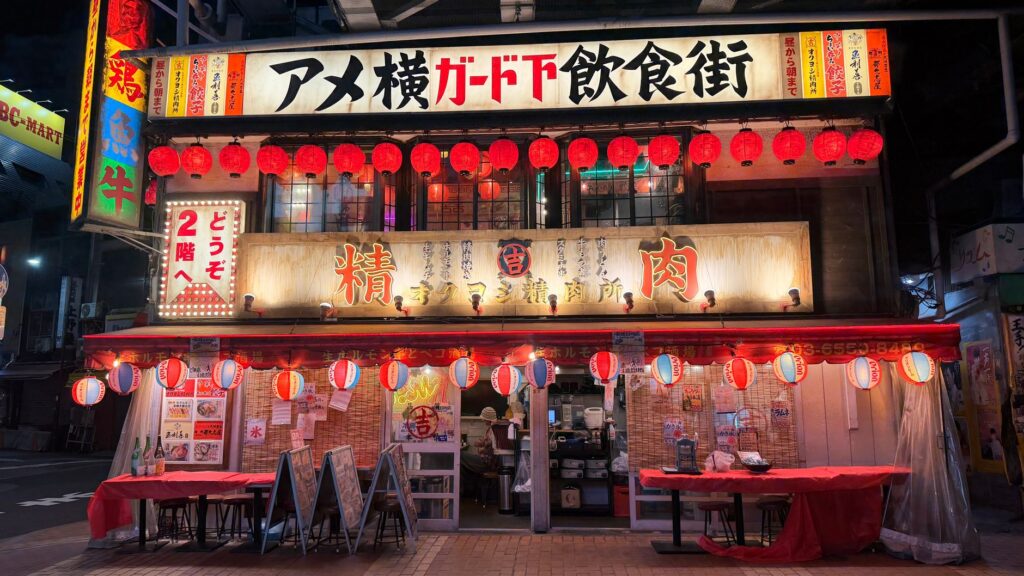
Speaking is the easy part of eating out in Japan. Reading is the wall. A small ramen counter or izakaya may have nothing but a board of handwritten Japanese: no English, no pictures, no plastic food models. Three steps get you through it.
Step 1: camera translation
Take a photo of the menu and translate the photo, rather than holding a shaky live view over a long list. Work one section at a time. Google notes that small or stylized text may translate poorly, so for a handwritten board, photograph it close up. Expect some dish names to be translated word for word into nonsense; when that happens, look at the ingredient words instead.
Step 2: recognize the ingredients
Even when the dish name is a mystery, a few characters tell you what is in it. These are worth recognizing:
| Japanese | Reading | Meaning |
|---|---|---|
| 牛 | gyū | Beef |
| 豚 | buta / ton | Pork |
| 鶏 | tori / kei | Chicken |
| 魚 | sakana | Fish |
| 海老 / えび | ebi | Shrimp |
| 蟹 / かに | kani | Crab |
| 卵 / 玉子 | tamago | Egg |
| 野菜 | yasai | Vegetables |
| 豆腐 | tōfu | Tofu |
| 麺 | men | Noodles |
| ご飯 | gohan | Rice |
| 焼き | yaki | Grilled or fried |
| 揚げ | age | Deep-fried |
| 煮 | ni | Simmered |
| 生 | nama | Raw; on a drinks list, draft beer |
| 辛い | karai | Spicy |
Step 3: know the dish types
| Japanese | Reading | What it is |
|---|---|---|
| 丼 | don | A bowl of rice with a topping: gyūdon (beef), oyakodon (chicken and egg), katsudon (pork cutlet) |
| 定食 | teishoku | Set meal: a main dish with rice, soup and small sides |
| ラーメン | rāmen | Ramen |
| うどん / そば | udon / soba | Thick wheat noodles / buckwheat noodles |
| 焼き鳥 | yakitori | Grilled chicken skewers |
| 天ぷら | tenpura | Tempura: battered and deep-fried seafood or vegetables |
| 刺身 | sashimi | Sliced raw fish |
| 寿司 | sushi | Sushi |
| 唐揚げ | karaage | Japanese fried chicken |
| お好み焼き | okonomiyaki | Savory pancake cooked on a griddle |
| カレー | karē | Japanese curry with rice |
Two more things on the menu affect the bill. Look for 税込 (zeikomi, tax included) or 税抜 / 税別 (before tax) next to prices, and for 大盛り (ōmori, large portion), which usually costs a little more. If buckwheat is a concern, note that soba is made from buckwheat, one of Japan’s nine mandatory allergen labels on packaged food; restaurant menus are not covered by that labeling, so ask.
When there is no menu you can use
- Ask for an English menu: 英語のメニューはありますか。(eigo no menyū wa arimasu ka?).
- Ask for the recommendation: おすすめは何ですか?(osusume wa nan desu ka?), or look for the word おすすめ on the board.
- Point at another table: JNTO’s phrase handbook gives あの人が食べているのと同じのをください。(“I’d like what that person is eating.”)
- Show a written allergy card before you order, never after.
Ordering at an izakaya
An izakaya is a Japanese pub that serves many small dishes to share. It is one of the best meals in Japan and slightly more complicated than a restaurant, so it helps to know the flow:
- Drinks first. Staff usually ask for your drink order as soon as you sit. “Nama” means a draft beer, and pointing at the drinks list works.
- Otoshi arrives. A small starter comes with the first drink. GO TOKYO describes it as “usually charged per person” and “generally not optional”, so it is not an error on your bill.
- Order in rounds. Order a few dishes, then more later, rather than everything at once.
- Call staff with “sumimasen”, or with a call button or ordering tablet if the table has one.
- Pay at the table or at the register near the entrance; say “okaikei onegaishimasu” (the bill, please).
If you see 飲み放題 (nomihōdai), that is all-you-can-drink for a fixed price, usually with a time limit; 食べ放題 (tabehōdai) is all-you-can-eat. Ask how long it lasts before ordering. Our street food guide and Osaka food guide have more on eating out.
Ramen-shop ticket machines
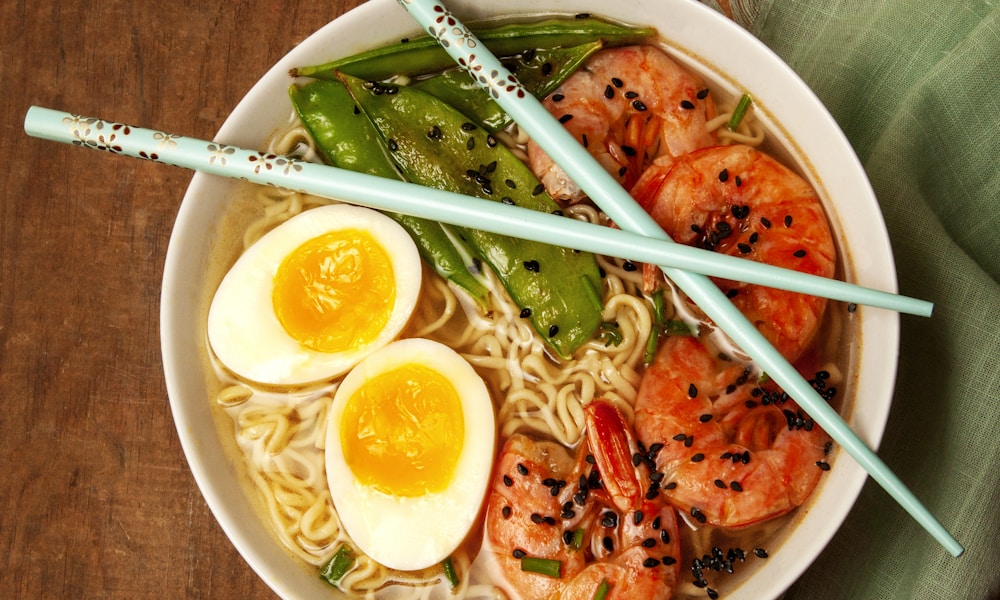
Many ramen shops and other casual restaurants use a meal-ticket machine, called a shokkenki (食券機). The Tokyo government’s GO TOKYO guide explains the system: buy a meal ticket at the machine near the entrance first, hand it to staff, then sit. No conversation needed.
- Put money in first. GO TOKYO’s ramen guide notes the machines take cash; have coins and ¥1,000 notes ready, as some machines may not take larger notes. If a machine has an IC card reader, you can tap instead.
- Press the button for your dish. Buttons may be labeled only in Japanese, with pictures and prices beside them. Point your camera translator at the panel if there are no pictures.
- Add extras. Toppings, a larger portion (大盛り, ōmori) or a drink are usually separate buttons. Look for 味玉 (ajitama, seasoned egg), チャーシュー (chāshū, sliced pork) and 替え玉 (kaedama, a refill of noodles).
- Take your tickets and change, hand the tickets to staff at the counter, and sit where they point.
Staff may ask a question when you hand over the ticket, such as how firm you want the noodles. If you do not understand, “futsū de” (regular, please) is a safe answer for most such choices. If you are completely stuck at the machine, “sumimasen, osusume wa dore desu ka?” (excuse me, which do you recommend?) gets a staff member to point. Our ramen guide explains the styles.
Vending machines
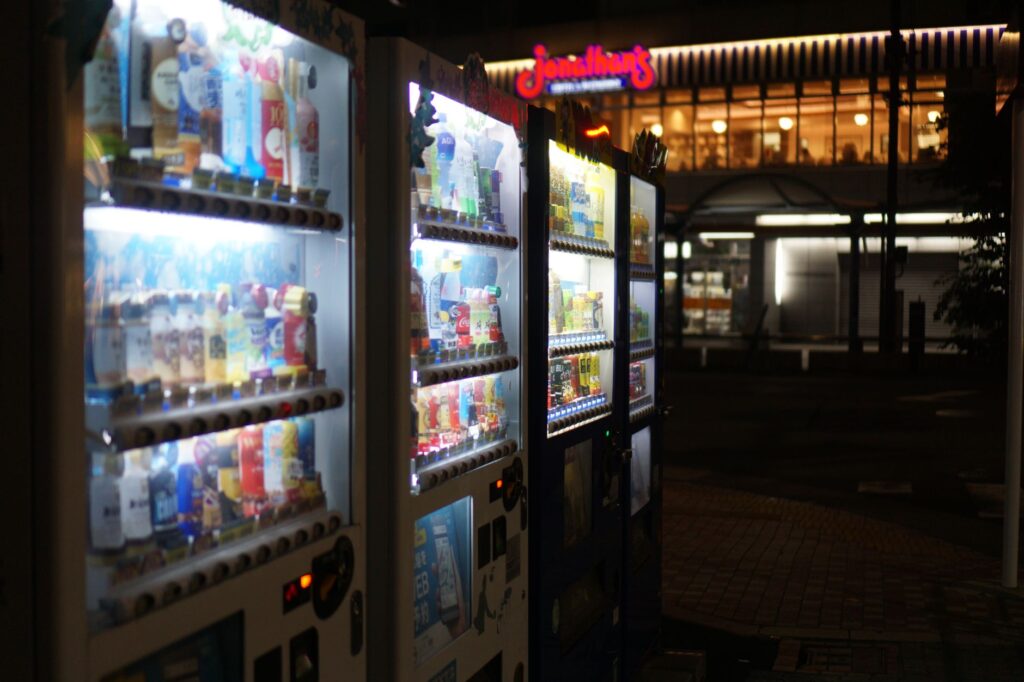
Japan’s vending machines are famous, and the numbers are large. The Japan Vending Machine Manufacturers Association counted 3,881,700 vending and automatic service machines at the end of 2025, of which 2,585,200 were vending machines and 2,178,800 sold drinks. A beverage-industry survey reported that soft-drink machines fell to about 1.95 million at the end of 2025, below two million for the first time in some 30 years. They are still everywhere: on platforms, in residential streets and on the way up shrine paths.
How to use one
- Pay: coins, notes, and on many machines an IC card or phone. JNTO notes IC cards and smartphone apps work at “many vending machines”, and Tokyo Metro says a charged PASMO pays at vending machines in station areas.
- Hot or cold: many machines sell hot drinks too, especially in the colder months. Look for the words あったか〜い (attakāi, warm) and つめた〜い (tsumetāi, cold) on or under each drink. Hot cans can be very hot to hold.
- Read the label: if the drinks are unfamiliar, camera translation tells you green tea (緑茶, ryokucha) from barley tea (麦茶, mugicha) or canned coffee (コーヒー, kōhī). Black coffee is often marked ブラック (burakku) or 無糖 (mutō, unsweetened).
- Bins: the bins beside a machine are usually meant only for cans and bottles. Few public bins was the top complaint in the visitor survey, so carry a small bag for other rubbish.
Station ticket machines
With an IC card, you will rarely need a station ticket machine. When you do, they are less scary than they look:
- Language first: press the language button before anything else. On Tokyo Metro it is labeled “International Languages”, at the top right, and you can choose your destination by alphabet or by line and station number.
- Paying: Tokyo Metro says credit cards are accepted only for passes; regular tickets are bought with coins and notes. IC card top-ups at ticket machines are cash only.
- Changing tickets: JR East and other railways plan to switch paper magnetic tickets to QR-code tickets from spring 2027, so machines and tickets will change over the next few years.
- If something goes wrong: many machines have a call button, often marked 呼出 (yobidashi), that connects you to station staff. Or go to the staffed gate and say “sumimasen” while showing your ticket.
For the shinkansen, reserved-seat machines have English menus, and our shinkansen guide walks through buying a ticket.
Planning your trip? Get our free 7-Day Japan Itinerary (PDF)
Get the free guide →Convenience stores: the easy win
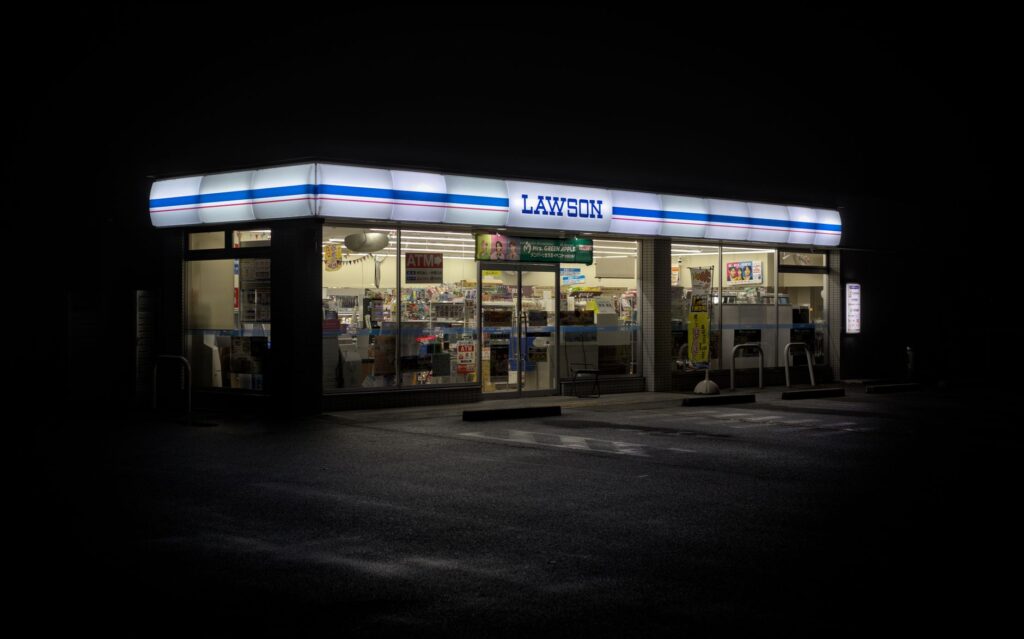
A konbini needs almost no Japanese. The total appears on a screen facing you, and staff ask the same few questions: whether you need a bag (plastic bags have been charged for since July 2020), whether to heat a boxed meal, sometimes whether you have a point card. “Hai, onegaishimasu” (yes, please) and “daijōbu desu” (no, thank you) answer nearly all of them. Our konbini guide covers what to buy, and the phrases guide has a table of what staff say and how to answer.
Drugstores and medicine labels
Drugstores are easy to find in Japanese cities and are the usual first stop for a cold, a headache or a blister. The products are the hard part: packaging is in Japanese, and similar-looking boxes can contain very different medicines. Camera-translate the box, then confirm with the pharmacist or staff by showing your symptom on your phone. These words appear on many boxes and shelf labels:
| Japanese | Reading | Meaning |
|---|---|---|
| 風邪 | kaze | Cold (illness) |
| 頭痛 | zutsū | Headache |
| 痛み止め | itamidome | Painkiller |
| 胃腸 | ichō | Stomach and digestion |
| 酔い止め | yoidome | Motion sickness |
| 目薬 | megusuri | Eye drops |
| 絆創膏 | bansōkō | Plasters, adhesive bandages |
| 1日3回 | ichinichi sankai | Three times a day |
| 食後 | shokugo | After meals |
| 眠くなる | nemuku naru | May cause drowsiness |
If you have allergies to any medicine, write them down in Japanese before you travel, and show the note before buying. For anything more than a minor problem, see a doctor: Tokyo’s HIMAWARI line (03-5285-8181) helps find clinics with foreign-language support.
Reading addresses and finding places
Japanese addresses work differently from most Western ones, which is another reason to rely on map pins rather than street names:
- Largest to smallest: an address runs from prefecture to city, ward, district and then block numbers, such as 1-9-11, rather than starting with a street name.
- Most small streets have no name. Buildings are found by district and block, so “which street is it on?” often has no answer.
- Buildings and floors matter. A restaurant may be on the fourth floor of a building with a different name. Look for the building name, and for floor marks such as 1F, 4F or B1 (first basement floor).
- Use a pin. Ask hotels and restaurants for a map link, and save places in your map app. For a taxi, the pin plus the Japanese address is the clearest combination.
- Station exits are numbered. Big stations have many exits, and directions often say “exit A2” or “west exit (西口, nishiguchi)”. Following the right exit can save a long walk.
Toilet buttons
Japanese toilets are clean and easy to find in stations, konbini and department stores, but the control panel can be a puzzle, and the buttons are not always labeled in English. Pictures usually help, and these words cover the rest:
| Japanese | Reading | Meaning |
|---|---|---|
| 流す | nagasu | Flush |
| 大 / 小 | dai / shō | Full flush / light flush |
| 止 | tomeru | Stop (press this to end any spray) |
| おしり | oshiri | Rear wash |
| ビデ | bide | Bidet (front wash) |
| 水勢 | suisei | Water pressure |
| 音 | oto | Flushing sound for privacy |
Some toilets flush automatically when you stand up, or with a hand sensor on the wall. The call button for emergencies is often red and labeled 呼出 (yobidashi); avoid pressing it by mistake when looking for the flush.
Onsen and public baths
Hot-spring baths (onsen) and public bathhouses (sento) post their rules, often in Japanese only at smaller places. The basics are the same almost everywhere:
- Find the right side: 男 or 男湯 (otoko-yu) is the men’s bath, 女 or 女湯 (onna-yu) the women’s. Curtains are often blue for men and red for women, but read the character, because colors vary and some inns swap the sides on different days.
- Look for 湯 (yu): it means hot water and marks the baths; ゆ in hiragana means the same.
- Undress in the changing room and leave your clothes in a basket or locker.
- Wash your whole body at the shower stations before getting into the bath.
- Keep your small towel out of the water; fold it on your head or leave it at the side.
- Tattoos: policies vary. Some baths refuse guests with tattoos, others allow them or ask you to cover them. Check before you go, or ask タトゥーは大丈夫ですか? (tatū wa daijōbu desu ka? Are tattoos OK?).
Booking things without Japanese
- Hotels: book through English-language sites such as Agoda, and save the Japanese address from the confirmation for taxis.
- Restaurants: popular places often need a booking. Some restaurant booking sites have English versions; for phone-only restaurants, ask your hotel to call. If your plans change, cancel: a missed booking hurts a small restaurant.
- Tours and tickets: English-language tours and attraction tickets can be booked through Klook, which avoids explaining things at a counter.
- Long-distance trains: shinkansen reserved-seat machines have English menus. If a rail pass suits your route, the JR Pass on Klook can be bought before you fly.
- Airport transfers: if you would rather not navigate on day one, Welcome Pickups arranges a driver to meet you at arrivals.
Beyond the big cities
Rural Japan is where travel without Japanese takes more preparation, and often where the trip becomes most memorable. Expect:
- Fewer English signs and staff. Download offline maps and offline translation before you go.
- More cash. JNTO notes rural places may still only accept cash, even hotels.
- Local buses with their own systems. On many local buses you board at the back or middle door, take a small numbered ticket (整理券, seiriken), and pay the fare shown next to your number on the display when you get off. Watch what other passengers do, and have coins ready; many buses have a change machine by the driver.
- Small inns. Owners may speak little English but are used to visitors with translation apps. Send questions by email or message before arrival, when you can translate carefully.
- Restaurants that close early or keep irregular hours. Look for 定休日 (teikyūbi, regular closing day) and 準備中 (junbichū, preparing, closed for now) on the door.
A little extra preparation goes a long way here, and people in smaller places are often especially patient with visitors who try a few words.
Communicating without words
When the app fails and the phrases run out, a few gestures and habits help:
- Point and show. Pointing at a menu, a map or a product is normal and polite.
- Write numbers. Writing a number on your phone or on paper avoids confusion over prices, times and party size.
- The X sign: crossing your arms or index fingers in an X means “no” or “not allowed”; you may see staff use it. A circle made with your arms or fingers means “OK”.
- The hand wave: waving a hand side to side in front of the face is a common way to say “no” or “not me”.
- Counting on fingers: holding up fingers for the number of people at a restaurant door works everywhere.
- Short written English. Many people read English more easily than they speak it, so a short written sentence on your screen can work better than speech.
Common mistakes to avoid
- Assuming cards work everywhere. Carry cash, especially for rural areas, small restaurants and clinics.
- Not downloading offline languages and maps before going underground or into the mountains.
- Relying on spoken place names. Kanji names can be read in more than one way; show them written.
- Deciding at a ticket machine with a queue behind you. Step aside, translate, decide, then come back.
- Disputing the otoshi. At izakaya, a small per-person starter charge is normal.
- Tipping. JNTO says it is not common in restaurants, bars, cafes, taxis or hotels, and money left on the table can cause confusion.
- Talking loudly on trains. People keep their voices low and avoid phone calls on board; follow their lead.
- Giving up on small restaurants. With a camera translator and the menu words above, they are well within reach.
When you need help
Start with “sumimasen” and show your question on your phone. For lost items, go to a koban (police box); Tokyo’s police say officers there “can handle all kinds of issues”. Your hotel front desk can make calls for you. For phone help, the Japan Visitor Hotline (050-3816-2787) runs 24 hours in English, Chinese and Korean, and the JNTO TIC Call Center (050-3416-0010, 9:00–17:00 daily) answers sightseeing questions.
In an emergency, dial 110 for police and 119 for fire or ambulance. Tokyo’s police say an interpreter joins the call if you do not speak Japanese, and Tokyo’s 119 centers have English-speaking staff at all times. Our phrases guide has emergency phrases, lost-property steps and medical help lines in detail.
Advice by type of trip
First trip, big cities
You will manage with English, a translation app and mobile data. Learn the core phrases for politeness, and practice the menu and ticket-machine steps above so small restaurants do not put you off.
Rural or off-the-beaten-path trip
Download offline maps and offline translation, carry more cash, write down your accommodation addresses in Japanese, and allow extra time for buses and trains that run less often.
Family trip
Prepare allergy and dietary cards for each family member, keep the hotel address on every adult’s phone, and teach children “sumimasen” and “arigatō”: staff love it.
Older travelers
If a smartphone is not comfortable, a printed set of key phrases and addresses, or a dedicated translation device, can replace the apps. Hotels can help arrange taxis so you do not need to explain destinations on the street.
Travelers who don’t speak English
Many tools cover other languages: VoiceTra handles 33 and Google Translate lists up to 249. The Japan Visitor Hotline helps in English, Chinese and Korean, and Tokyo’s 119 provides interpretation in Chinese, Korean, Portuguese and Spanish as well as English.
Frequently asked questions
Can I visit Japan speaking only English? Yes. JNTO says English is generally understood in tourist areas, airports, hotels and major transport. Prepare a translation app and a few phrases for small restaurants and rural areas.
Do Japanese people speak English? In tourist areas, many people in hotels and transport do. Elsewhere, spoken English may be limited, but written English is often easier; show short sentences on your screen.
How do I read a menu with no English or pictures? Photograph it and use camera translation, look for the ingredient words (牛 beef, 豚 pork, 鶏 chicken, 魚 fish), ask for the recommendation (osusume), or point at another table.
How do ramen ticket machines work? Put money in, press the button for your dish and any extras, take the tickets and hand them to staff before you sit. GO TOKYO notes the machines take cash.
Do vending machines take cards? Many take IC cards or phone payments; JNTO says IC cards and smartphone apps work at “many vending machines”. Carry coins as a backup.
How do I know if a vending machine drink is hot or cold? Look for あったか〜い (warm) or つめた〜い (cold) on or under the drink. Hot drinks are sold mainly in the colder months.
Can I buy train tickets without Japanese? Yes. Press the language button first; Tokyo Metro’s is labeled “International Languages”. With an IC card you can skip ticket machines for most trips.
What if I get lost or lose something? Go to a koban (police box) or ask station staff. The Japan Visitor Hotline (050-3816-2787) helps 24 hours in English, Chinese and Korean.
How do I find a restaurant or shop from its address? Use a map pin rather than the street address. Japanese addresses go from prefecture down to block numbers, most small streets have no name, and many places are on an upper floor of a building with a different name.
Should I learn Japanese before a two-week trip? A handful of polite phrases is enough. Learning katakana, the script used for borrowed words like コーヒー (coffee), is a bonus that makes menus and signs much easier.
Plan the rest of your trip
- Essential Japanese phrases for travelers
- Best translation apps for Japan
- Suica vs PASMO: IC cards
- Japan convenience stores guide
- Japan ramen guide
- Best eSIM for Japan
- Hirameki Japanese app
Sources: Japan Tourism Agency visitor survey (April 2026); JNTO (FAQ, cashless, Japanese language and hotline pages, Tourist’s Language Handbook); GO TOKYO (restaurant guide, March 2026; ramen guide); Tokyo Metro (ticket machines, PASMO); Japan Vending Machine Manufacturers Association (machine counts, end of 2025); beverage-industry survey reported by Kyodo (April 2026); Tokyo Metropolitan Police Department; Tokyo Fire Department; Consumer Affairs Agency (allergen labeling); joint railway release on QR tickets (October 2026) (checked October 2026). If you spot something out of date, please let us know.
Going to Japan? Speak Japanese with confidence.
Hirameki Japanese — camera translate for menus and signs, a two-way conversation mode, and furigana + romaji on every phrase. Free to download with kana charts, conversation mode and starter words; a one-time purchase unlocks everything.

Plan your Japan trip
Two things every first-timer should book
Some links are affiliate links. If you book through them we may earn a small commission at no extra cost to you.