I grew up in Ozu, in southern Ehime, the prefecture that is home to Dogo Onsen. This guide sets out the manners and rules as Japan’s government agencies, JNTO and the onsen towns themselves describe them, checked in October 2026, so you can relax instead of worrying about getting it wrong.
In this guide
- What counts as an onsen
- Onsen, sento and ryokan baths
- Onsen etiquette, step by step
- Quick do’s and don’ts
- Children and gender rules
- Mixed bathing and bathing wraps
- Tattoos at onsen
- Health and safety
- Kinds of baths and waters
- Famous public baths and 2026 prices
- Which onsen town suits you
- Using a sento in Tokyo
- Practical tips: towels, money, lockers
- Japanese words you will see on signs
- Frequently asked questions
- Plan the rest of your trip
What counts as an onsen
Under Japan’s Onsen Law of 1948, an onsen is hot water, mineral water, steam or gas from underground that is either at least 25°C at the source or contains at least one of 19 listed substances in a set amount, such as 1,000 mg of dissolved solids per kilogram. That means a cold spring can legally be an onsen: of the 27,899 hot-spring sources counted by the Ministry of the Environment at the end of March 2025, 4,074 were below 25°C. A narrower class, “therapeutic springs”, must meet higher thresholds.
- Scale: the ministry counted 2,839 onsen areas with accommodation and 13,425 lodgings using onsen water, which hosted about 125 million overnight guests in fiscal 2024. Oita Prefecture, home of Beppu, has the most sources (5,094) and the largest flow.
- Spring types: signs use ten types: simple, chloride, hydrogen-carbonate, sulfate, carbon dioxide, iron, acidic, iodine, sulfur and radioactive springs.
- The analysis sign: every facility must display the spring’s components, contraindications and bathing cautions. Since 2005, it must also say whether the water is heated, diluted, recirculated or disinfected, and why.
Look for 源泉かけ流し (gensen kakenagashi), which means the source water flows through without being recirculated; 循環 means recirculated, 加温 heated and 加水 with water added.
Onsen, sento and ryokan baths
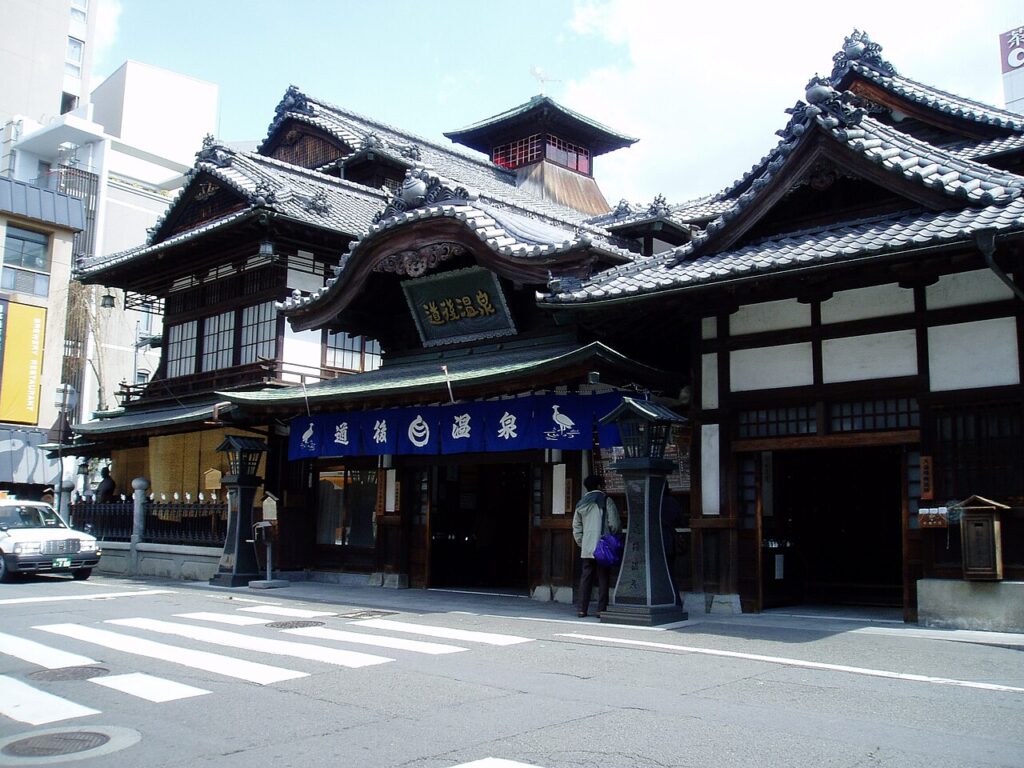
- Public onsen baths: bathhouses in onsen towns, such as Dogo Onsen Honkan or the “soto-yu” public baths of Kinosaki and Kusatsu, open to anyone for a fee.
- Sento: neighborhood public baths licensed under the Public Bath Act. The difference from an onsen is the licence, not necessarily the water: the Ministry of the Environment counts 7,721 public baths nationwide using onsen water, 142 of them in Tokyo. In Tokyo, sento prices are capped by the government; an adult bath costs ¥600 from August 1, 2026. Japan had 2,847 ordinary neighborhood public baths in March 2024, and the number is still falling.
- Super sento and leisure baths: larger complexes with several baths, saunas, restaurants and rest areas, often with higher prices.
- Ryokan and hotel baths: large shared baths (daiyokujo), outdoor baths and sometimes private baths for guests, covered by the Inns and Hotels Act and its national hygiene guideline rather than the Public Bath Act. Many ryokan also let day visitors bathe for a fee; in Noboribetsu, for example, ryokan day bathing ranges from ¥1,000 to ¥2,500.
- Community baths: in onsen towns you will also see 外湯 (sotoyu, public bathhouses outside the inns) and 共同浴場 (kyodo yokujo, community baths run for locals). These are usually the cheapest and simplest baths, often with no soap or shampoo provided.
Some towns certify real hot-spring water. Since November 2023, Kinosaki has displayed a “natural onsen supply” certificate at facilities that use the town’s onsen water, so you can tell a genuine onsen bath from an ordinary one.
The manners are essentially the same everywhere. For choosing a place to stay, see our best ryokan guide and our guide to types of accommodation.
Onsen etiquette, step by step
1. Before you go
The Ministry of the Environment’s bathing guidance advises not bathing right before or after a meal, avoiding bathing after drinking alcohol, resting about 30 minutes after exercise, and drinking a glass of water first. Kusatsu’s onsen operator is more specific: wait at least two hours after drinking and 30–60 minutes after a meal. Older people, children and people with disabilities should preferably not bathe alone.
2. Shoes off and pay
Take your shoes off at the entrance or before the changing room, and put them in a shoe locker if there is one (下足箱). Pay at the counter or ticket machine; towels, soap and shampoo may be sold or rented here.
3. In the changing room
JNTO notes that changing rooms are always gender-specific, as are the vast majority of baths. Find the curtain or door marked for your gender (男 for men, 女 for women). Undress completely; clothes, including swimwear, stay in the basket or locker. Keep valuables in a locker or with the front desk; at Tokyo sento you take the locker key into the bath with you. If you are staying at a hotel or ryokan, JNTO suggests leaving valuables in the room safe. Coin lockers usually cost ¥100, sometimes returned when you open them: Kusatsu’s Sainokawara has free valuables lockers and ¥100 coin lockers, and Beppu’s Takegawara a ¥100 coin locker.
4. Take only a small towel
Bring the small towel into the bathing area for washing and modesty. The large bath towel stays in the changing room.
5. Wash before you soak
At the washing stations, sit on the stool and wash thoroughly with soap and shampoo, rinse completely and remove makeup, JNTO advises. Then pour hot water over yourself before entering the bath (kakeyu). The Ministry of the Environment suggests starting from your hands and feet to get used to the temperature; Kusatsu suggests pouring water over your head and neck first. Not every bath has washing stations: Kusatsu’s large open-air Sainokawara bath has none, so use the pouring basin there.
6. Tie up your hair
Tie up long hair or wrap it in a towel so it does not touch the water.
7. Enter slowly and stay quiet
Ease yourself in. Speak softly, and don’t swim, splash or put your head under the water. Rest your small towel on your head or the edge of the bath, never in the water; the ministry’s posted cautions say towels must not go in the tub, to keep the water clean.
8. No phones or cameras
Phones and cameras in the bathing area are “absolutely forbidden”, JNTO says, to protect other bathers’ privacy, especially children’s.
9. Keep it short at first
The ministry’s guidance is 3 to 10 minutes per soak at first, depending on the temperature, extending to 15–20 minutes once you are used to it; the Consumer Affairs Agency advises up to 10 minutes at 41°C or lower. Get out slowly to avoid dizziness, and if you feel unwell, call for help and lie down with your head low.
10. Dry off before you go back
Wipe yourself down with your small towel before returning to the changing room, so you don’t drip on the floor; Kinosaki and Tokyo’s sento association both list this as a basic manner. The ministry suggests not rinsing off the onsen water but patting yourself dry, dressing warmly and resting about 30 minutes; people with sensitive skin should rinse after strongly acidic or sulfur springs. JNTO adds that rinsing is personal preference. Drink another glass of water afterwards.
Quick do’s and don’ts
| Do | Don’t |
|---|---|
| Wash thoroughly before entering | Get in the bath without washing |
| Keep the small towel on your head or the side | Put towels in the water |
| Tie up long hair | Dunk your head or let hair float in the bath |
| Speak softly | Swim, splash or shout |
| Dry off before the changing room | Drip across the changing room floor |
| Drink water before and after | Bathe after drinking alcohol or a big meal |
| Leave your phone in the locker | Take photos or videos anywhere in the bathing area |
| Check the tattoo rule before you go | Assume every bath has the same rules |
Children and gender rules
Baths are separated by gender, and children grow out of going into a parent’s bath of the opposite sex. Japan’s health ministry guideline, revised in December 2020, says men and women aged about 7 or older must not bathe together, lowered from about 10. The binding age is set by each prefecture’s ordinance:
- As of April 2025, 33 prefectures set the line at 7 years old, five at 8 (Aichi, Shiga, Tottori, Kumamoto and Miyazaki), and nine set no age in the ordinance itself; none still uses 10.
- Tokyo moved to 7 in January 2022. In Oita (Beppu), a parent can take a child into the opposite-sex bath only up to age 6. Other places moved to 7 in stages: Kitakyushu in July 2021, Sendai in October 2021, Yamanashi in October 2022 and Shizuoka in October 2023. Osaka put the age of 7 into its hygiene guideline in March 2021, although its ordinance names no age.
- Gunma, home of Kusatsu, still lets preschool children go into the opposite-sex bath with a parent.
- The same 7-year line appears in the national guideline for inns, so it applies to ryokan and hotel baths too.
- Facilities can set their own line: Tenzan in Hakone asks children taller than 110 cm to use their own sex’s bath.
- Babies are welcome at many public baths; Kusatsu’s Sainokawara accepts babies from about six months, and some Kinosaki baths have baby bath chairs and a small children’s tub.
The same guidance notes that baths are divided by physical sex characteristics. If you need privacy for any reason, a private bath (kashikiri) or a room with its own bath is the simplest option.
Mixed bathing and bathing wraps
Mixed bathing (konyoku) is rare today. Where it exists, there are usually set rules about what you may wear:
- Kusatsu, Sainokawara: every Friday from 17:30 to 20:00 (last entry 19:30, except specified days) the men’s open-air bath becomes mixed. Women can rent a bathing wrap (yuami-gi) for ¥400 or wear a swimsuit; men receive a free wrap and must wear it; there are no children’s wraps, so children wear swimsuits.
- Sukayu Onsen, Aomori: the large “Sennin-buro” mixed bath has a women-only hour from 8:00 to 9:00, and optional bathing wraps can be rented for ¥500 (only Sukayu’s own wraps are allowed).
- Bathing garments for scars: Kinosaki’s public baths allow bathing garments for people with surgery scars, such as after breast cancer, if they are put on in the changing room and rinsed before entering the tub. Beppu’s Takegawara Onsen lends such covers free by reservation, and Dogo also allows them.
Tattoos at onsen
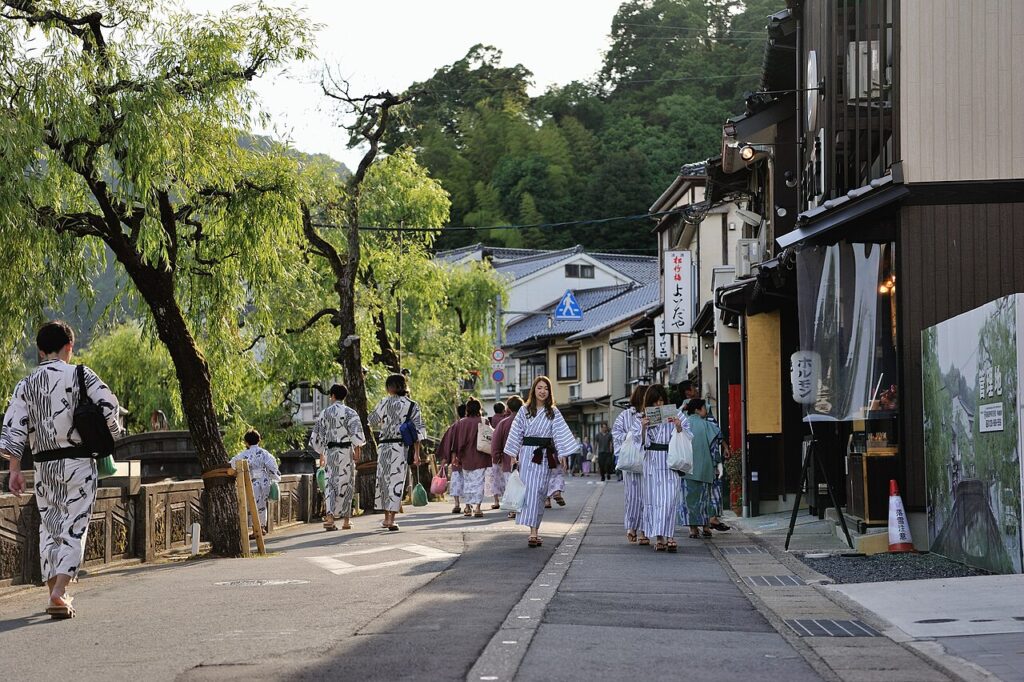
There is no national rule. In 2016 the Japan Tourism Agency told hotel, ryokan and onsen associations that refusing bathers “solely because of tattoos is not appropriate” and suggested options such as cover stickers or private baths, but each facility decides. JNTO says some traditional onsen refuse tattoos, more now accept them, and cover sheets work only for very small tattoos. Examples from official sources in 2025–2026:
| Place | Rule |
|---|---|
| Kinosaki Onsen public baths | “All seven public hot springs… allow tattoos of all sizes, with no need to cover them up” (ryokan baths may differ) |
| Kusatsu’s three public day baths | Do not particularly refuse tattooed guests |
| Hoshino Resorts (KAI and others) | Welcomes tattooed guests from April 1, 2026, with limits at some baths open to non-guests |
| Hakone Kowakien Yunessun | From October 2025, the Mori-no-Yu onsen is open to tattooed guests if two of its own cover seals fully cover the tattoo |
| Hakone Tenzan | Tattooed guests accepted if alone; tattooed groups refused |
| Super Hotel chain, some temple onsen | Tattoos refused in the public bath |
The details matter. Kusatsu’s English page says “the vast majority of Kusatsu Onsen inns and bath facilities are welcoming to those with non-gang-related body art”. At Yunessun, tattoos, even small ones, are refused in principle; the swimsuit zone is fine if a rash guard covers them, and the Mori-no-Yu onsen only with the two paid seals. Hoshino Resorts’ 2026 rule still asks guests to cover tattoos with up to eight 8 × 10 cm stickers at baths that are open to non-guests. Tenzan excludes one small-tub bath. Dogo’s official site no longer states any tattoo policy, so ask before you go.
If you have a tattoo
- Check the facility’s own website, ideally the Japanese page, which is often more up to date than the English one.
- Ask by email before you book a ryokan, and mention the size and where it is.
- Choose towns with clear public rules, such as Kinosaki and Kusatsu.
- Remember that cover stickers only work for small tattoos, as JNTO notes.
- Book a private bath or a room with its own bath for complete peace of mind.
The surest option is a private bath. Kusatsu’s Otakinoyu, for example, rents a private bath for ¥2,000 an hour on top of admission, by reservation. Tenzan in Hakone has private rooms from ¥4,500 for two hours. Many ryokan have private baths or rooms with their own outdoor bath; you can compare ryokan with private baths for your dates on Agoda and filter for rooms with an in-room bath.
Planning your trip? Get our free 7-Day Japan Itinerary (PDF)
Get the free guide →Health and safety
Bathing is relaxing, but it carries real risks, especially for older people. Japan’s Consumer Affairs Agency reported 7,776 deaths from drowning in or falling into a bathtub in 2024, about 95% of them people aged 65 or older, and warns that accidents rise as winter approaches. Its safe-bathing advice:
- Warm up the changing room and bathroom first to reduce the temperature shock.
- Drink water before bathing.
- Avoid bathing right after meals, after alcohol or after taking medicine.
- Use water of 41°C or lower and soak for up to 10 minutes.
- Don’t stand up suddenly from the bath.
- Tell someone before you bathe.
The Ministry of the Environment’s onsen guidance
- Older people and people with high blood pressure, heart disease or a history of stroke should avoid baths of 42°C or more.
- People with weak heart or lung function should prefer half-body baths.
- For the first few days of a stay, bathe once or twice a day, later up to two or three times.
- “Yuatari” (bath fatigue): three days to a week into a stay you may feel unwell, sleep badly or get skin irritation; cut down or stop until you recover.
- Don’t bathe with an acute illness, especially a fever, or with serious heart, lung or kidney disease.
- Acidic and sulfur springs are not suitable for sensitive skin.
Onsen water can be hotter than you expect. Beppu says its municipal baths are relatively hot, and some have a separate あつ湯 (atsu-yu, hot tub) and ぬる湯 (nuru-yu, cooler tub); start with the cooler one. Kusatsu suggests just 5–10 minutes for your first bath and tells visitors not to tough it out.
Pregnancy: the ministry’s English leaflet says pregnant women can bathe in onsen, but should not stay in long or in very hot water, and should take care on slippery floors. Pregnancy was removed from the general contraindications in 2014.
Drinking onsen water: some springs can be drunk, but the ministry’s guidance says children under 15 should not in principle, and adults should drink no more than 500 ml a day. Only drink where a sign says 飲泉 (drinking spring).
Hot-and-cold alternating is popular, especially with saunas, but we found no official support for health claims about it; the official advice is to reduce sudden temperature changes.
Kinds of baths and waters
- Rotenburo: open-air baths, often with views of mountains, rivers or the sea.
- Kashikiri and family baths: private baths you reserve for a set time, ideal for families, couples and anyone who wants privacy.
- Ashiyu: free or cheap foot baths in many onsen towns; Beppu’s “hells” have foot baths at several sites.
- Sand baths: you are buried in naturally heated sand, at Ibusuki’s “Saraku” (¥1,500 including yukata) and Beppu’s Takegawara Onsen (¥1,500).
- Steam baths: Beppu’s Kannawa Mushiyu, a stone room where you lie on sweet-flag leaves, said to date from 1276 (¥700).
- Colored waters: iron springs come out clear and turn brown in the air; Noboribetsu calls them “aka-yu” (red bath) and warns white towels turn reddish. Arima’s “kinsen” is brown with iron and salt, its “ginsen” clear.
- Strongly acidic water: Kusatsu’s water has a pH of 2.05; the operator says a one-yen coin dissolves in it in about a week.
The ministry lists bathing benefits for some spring types, such as sulfur springs for certain skin conditions and carbon-dioxide springs for poor circulation, but treat these as general guidance rather than medical advice.
Famous public baths and 2026 prices
Dogo Onsen (Matsuyama, Ehime)
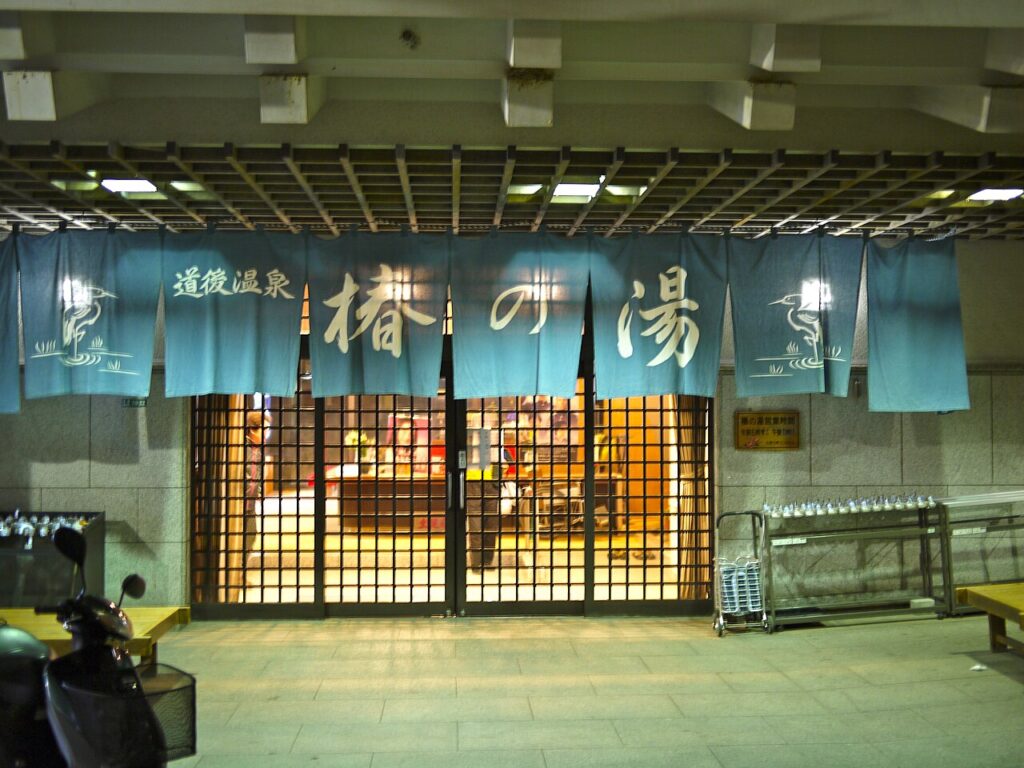
Dogo Onsen Honkan fully reopened in July 2024 after five and a half years of conservation work. The basic Kami-no-Yu bath costs ¥700 (6:00–23:00) and has shampoo and soap; towels are rented for about ¥100. Tsubaki-no-Yu, the locals’ bathhouse, costs ¥500 from May 2026 and has no shampoo or soap, and Asuka-no-Yu’s ground-floor bath costs ¥610. A three-bath pass covering one entry to each costs ¥1,440. All three accept cards, IC cards and QR payments. For a more relaxed visit, the Honkan’s Kami-no-Yu second-floor lounge (¥1,300) adds a yukata, tea and a sweet, and the Tama-no-Yu second-floor course (¥2,000) includes towels and the smaller Tama-no-Yu bath. The Honkan has no open-air bath; Asuka-no-Yu’s ground floor does. The water comes from 18 source wells at 20–55°C, blended to about 42°C, and is neither heated nor diluted. Bathing garments for surgery scars are allowed at all three; swimsuits and underwear are not. When Tsubaki-no-Yu is busy, you take a numbered tag and are called by voice. See our Dogo Onsen guide.
Kusatsu (Gunma)
Kusatsu’s three public day baths were repriced in September 2025: Sainokawara open-air bath ¥800, Otakinoyu ¥1,200 and Gozanoyu ¥900, or a three-bath pass for ¥2,100 with no expiry. All take cards and IC cards. Sainokawara is a large open-air bath of about 500 m² (for men and women combined) with no washing area or hair dryer, and towels are sold, not rented; Otakinoyu and Gozanoyu provide shampoo and body soap.
| Bath | Adult / child | Hours |
|---|---|---|
| Sainokawara | ¥800 / ¥400 | Apr–Nov 7:00–20:00; Dec–Mar 9:00–20:00 (last entry 19:30) |
| Otakinoyu | ¥1,200 / ¥600 | 9:00–21:00 (last entry 20:00) |
| Gozanoyu | ¥900 / ¥450 | Apr–Nov 7:00–21:00; Dec–Mar 8:00–21:00 |
| Three-bath pass | ¥2,100 / ¥1,050 | No expiry; sold at the three baths |
Children’s prices apply from age 3 to the end of elementary school. Gozanoyu sells milk and coffee milk for ¥130 each.
Kinosaki (Hyogo)
Kinosaki’s public baths cost ¥800 per entry, or ¥1,500 for a one-day “Yumepa” pass for day visitors; ryokan guests are usually given a pass at check-in. Of the seven baths, Sato-no-yu has been closed since March 2024, and Kono-yu is closed for renovation until October 30, 2026 (planned), so check which baths are open; Kinosaki publishes live crowd information online.
| Bath | Hours | Closed |
|---|---|---|
| Ichi-no-yu | 7:00–23:00 | Wednesday |
| Goshono-yu | 7:00–23:00 | Thursday |
| Jizo-yu | 7:00–23:00 | Monday |
| Mandara-yu | 15:00–23:00 | Wednesday (open from 15:00 on Wednesdays while Kono-yu is closed) |
| Yanagi-yu | 15:00–23:00 | Thursday |
| Kono-yu | 7:00–23:00 | Tuesday; closed for renovation until October 30, 2026 (planned) |
| Sato-no-yu | Closed | Closed since March 31, 2024 |
Last entry is 30 minutes before closing, and children aged 3 to elementary school pay ¥400 (¥750 for the Yumepa pass). See our Kinosaki Onsen guide.
Beppu (Oita)
Takegawara Onsen, founded in 1879 with its current building from 1938, charges just ¥300 for the regular bath (6:30–22:30) and ¥1,500 for the sand bath (no reservations; numbered tags on the day). Kannawa Mushiyu steam bath costs ¥700. The “Jigoku Meguri” hells are seven hot springs for viewing, not bathing (¥2,400 for all seven). Beppu City lists the Beppu Beach Sand Bath as abolished, so don’t plan around it.
- Takegawara details: children ¥100, under school age free; closed on the third Wednesday of the month (the next day if it is a holiday). Towels cost ¥350, a shampoo set ¥100 and the hair dryer ¥100 for 7 minutes. The sand bath (age 6 and over) runs 8:00–22:30 with last entry at 21:30, for up to eight people at a time.
- Kannawa Mushiyu details: for junior high school age and over; from October 1, 2026 to January 31, 2027 it is open 7:30–19:30 (last entry 19:00), closed on the fourth Thursday. Yukata rental is ¥220, and the foot steam bath outside is free.
- The hells: four of the seven are National Places of Scenic Beauty; they are open 8:00–17:00 all year. Children pay ¥1,200 for all seven. You can’t bathe in them, but the Umi, Chinoike, Oniishibozu and Kamado hells have foot baths.
- No reservations: Beppu’s municipal baths take no bookings.
Others
- Arima Onsen (Kobe): Kin-no-yu ¥800 (weekdays ¥650), Gin-no-yu ¥700; see our Arima guide.
- Ibusuki (Kagoshima): Saraku sand steam bath ¥1,500 including yukata, or ¥800 for the onsen only; ¥2,000 in peak periods (Golden Week, Obon, Silver Week and December 29–January 3). Open 8:30–21:00 (last entry 20:00), with no entry from 12:00 to 13:00 on weekdays; bath towels rent for ¥300. The source water comes out at 84.7°C.
- Hakone Tenzan: ¥1,450 for adults, ¥700 for children.
- Noboribetsu (Hokkaido): the Sagiri-yu public bath costs ¥550 (9:00–21:00); Noboribetsu and nearby Karurusu have ten types of spring.
- Sukayu (Aomori): day bathing rises from ¥1,000 to ¥1,500 (children ¥500) on December 1, 2026, with hours of 9:00–16:00 and tickets from a cash-only machine.
- Ginzan Onsen (Yamagata): from December 19, 2026 to March 7, 2027, day visitors must park at Taisho Roman-kan outside the village and take a reserved shuttle. Round trips cost ¥700–¥1,200 booked in advance or ¥1,000–¥1,500 on the day, depending on the time slot; booking for the 9:00–14:00 slots opens November 1, 2026 and closes at 17:00 the day before. Don’t walk the 2 km road in winter: it has no sidewalk and blizzards are common.
Which onsen town suits you
| If you want | Try | Why |
|---|---|---|
| Clear tattoo rules | Kinosaki, Kusatsu | Kinosaki’s public baths accept all tattoos; Kusatsu’s three day baths don’t refuse them |
| A bath-hopping evening in a yukata | Kinosaki | Several public baths along one willow-lined street, with a one-day pass |
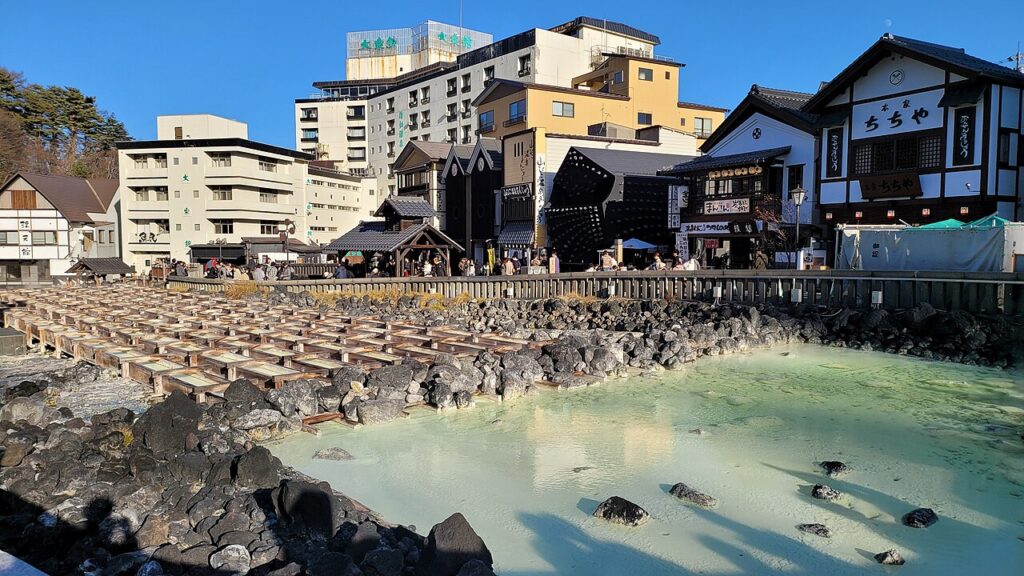
| Strong, unusual water | Kusatsu | Acidic water of about pH 2 and the steaming Yubatake in the town center |
| The lowest prices and variety | Beppu | ¥300 at Takegawara, plus sand and steam baths and the seven hells |
| History, close to a city | Dogo (Matsuyama) | A historic bathhouse reached by tram from central Matsuyama, with a ¥1,440 three-bath pass |
| A day trip from Osaka or Kobe | Arima | Brown “kinsen” and clear “ginsen” waters; Arima calls itself one of Japan’s three ancient springs |
| A sand bath by the sea | Ibusuki | Naturally heated sand at Saraku, yukata included |
| Snow and mountain scenery | Ginzan, Sukayu | Winter villages in the north; check the shuttle and price changes first |
For the full trip around these towns, our two-week itinerary shows how to fit an onsen night between the big cities. When you have picked a town, compare onsen ryokan and hotels on Agoda; many ryokan guests get a public-bath pass, as in Kinosaki.
Using a sento in Tokyo
Tokyo has about 400 sento, and a visit is a great way to experience everyday bathing culture. The Tokyo Sento Association’s steps:
- Put your shoes in the shoe locker.
- Pay at the counter (¥600 for adults from August 2026; ¥200 for ages 6–11).
- Undress in the changing room and leave valuables with the front desk.
- Take your locker key and small towel into the bathroom.
- Set up a basin and stool and wash before entering.
- Soak; the water is usually around 42°C.
- Dry off before going back to the changing room.
Most sento sell towels, shampoo and soap, and some provide shampoo free. The association publishes guides in English, Chinese and Korean and an etiquette animation.
Practical tips: towels, money, lockers
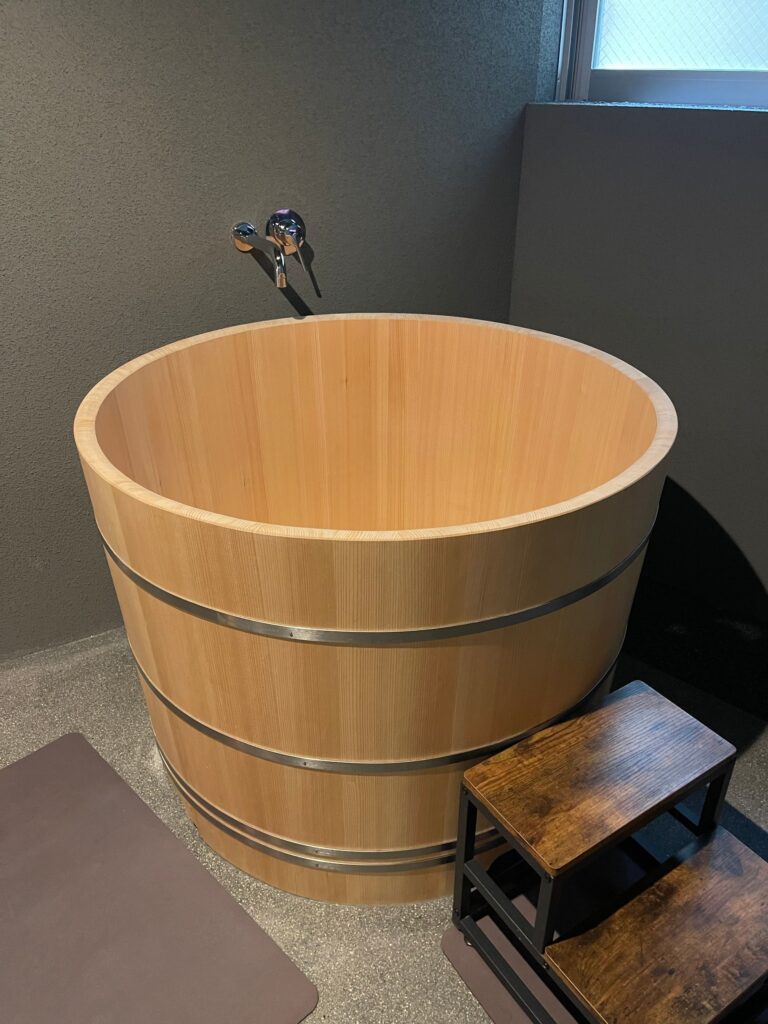
- Towels: bring a small towel and a bath towel, or buy or rent them. Prices vary: Dogo rents towels for about ¥100, Otakinoyu rents a towel set for ¥250, and Sainokawara sells towels from ¥380.
- Soap and shampoo: provided at many large baths, but not at some community baths such as Tsubaki-no-Yu or Takegawara, which sell them.
- Money: Dogo, Kusatsu and Ibusuki accept cards and QR payments, but some baths, such as Sukayu’s ticket machine, are cash only. Carry some coins for lockers and hair dryers.
- Bath tax: overnight stays in onsen areas usually add a bath tax (入湯税), with a standard rate of ¥150 per person per night, as in Dogo. Beppu uses bands by the price of the stay and meals per person per day: ¥50 at ¥1,500–¥2,000, ¥250 from ¥6,001 to ¥50,000 and ¥500 above ¥50,000, halved for stays of seven nights or more. Children under 12, community baths and ordinary public baths are exempt there.
- Bookings: most public baths can’t be booked; you just turn up. Private baths often need a reservation, such as Otakinoyu’s, and Takegawara’s sand bath gives out numbered tags on the day.
- Re-entry: at some baths, such as Sainokawara and Otakinoyu, leaving and coming back means paying again.
- Language: many towns publish manners in English, and picture signs are common. Kinosaki’s manners are in English, Traditional Chinese, French and German; Tokyo’s sento association has English, Chinese and Korean guides and an etiquette animation; Kusatsu’s three-bath site is in English, Korean and Chinese; and the Ministry of the Environment’s safety leaflet is in English, Chinese and Korean. For other notices, a camera translator helps; our own app, Hirameki Japanese, translates signs and has a free conversation mode for questions at the front desk.
- Accessibility: all of Kinosaki’s public baths allow wheelchairs into the changing room and walking sticks into the bathroom; some, like Sainokawara, are not barrier-free.
- After the bath: Kusatsu suggests changing into a yukata after bathing, since sulfur can weaken fabric, and many baths sell cold milk and coffee milk, a classic after-bath treat.
Japanese words you will see on signs
| Japanese | Reading | Meaning |
|---|---|---|
| 男 / 殿方 | otoko / tonogata | Men |
| 女 / 婦人 | onna / fujin | Women |
| 湯 / ゆ / ♨ | yu | Hot water, bath, hot spring |
| 脱衣所 | datsuijo | Changing room |
| 洗い場 | araiba | Washing area |
| かけ湯 | kakeyu | Rinse before entering |
| 露天風呂 | rotenburo | Open-air bath |
| 大浴場 / 内湯 | daiyokujō / uchiyu | Large bath / indoor bath |
| 貸切風呂 / 家族風呂 | kashikiri-buro / kazoku-buro | Private bath / family bath |
| 混浴 | kon’yoku | Mixed bathing |
| 足湯 | ashiyu | Foot bath |
| 水風呂 | mizuburo | Cold plunge |
| 源泉かけ流し | gensen kakenagashi | Fresh source water, not recirculated |
| 撮影禁止 | satsuei kinshi | No photography |
| 刺青・タトゥーお断り | irezumi / tatū okotowari | Tattoos not allowed |
| 飲泉 / 飲用不可 | insen / in’yō fuka | Drinking spring / not drinkable |
| 湯あみ着 | yuami-gi | Bathing wrap |
| 入浴着 | nyūyokugi | Bathing garment, for example for surgery scars |
| 外湯 / 共同浴場 | sotoyu / kyōdō yokujō | Public bathhouse in an onsen town / community bath |
| 女性専用 | josei sen’yō | Women only |
| あつ湯 / ぬる湯 | atsu-yu / nuru-yu | Hot tub / cooler tub |
| 上がり湯 | agari-yu | Final rinse after bathing |
| 入浴料 / 入湯税 | nyūyokuryō / nyūtōzei | Bath fee / bath tax |
| 券売機 | kenbaiki | Ticket machine |
| 下足箱 / 貴重品 | gesokubako / kichōhin | Shoe lockers / valuables |
| 温泉分析書 | onsen bunsekisho | Spring analysis sign |
| 循環 / 加温 / 加水 | junkan / kaon / kasui | Recirculated / heated / water added |
| 清掃中 | seisō-chū | Cleaning in progress |
| 本日休業 / 定休日 | honjitsu kyūgyō / teikyūbi | Closed today / regular closing day |
For more, see our essential Japanese phrases.
Frequently asked questions
Do you have to be naked in a Japanese onsen? Yes, in gender-separated baths you bathe nude; swimwear stays in the changing room. A few mixed baths, such as Kusatsu’s Friday evenings and Sukayu, allow bathing wraps or swimsuits.
Can I go to an onsen with tattoos? It depends on the facility. All of Kinosaki’s public baths accept tattoos, Kusatsu’s three public day baths don’t refuse them, and Hoshino Resorts welcomes tattoos from April 2026. Some baths still refuse; private baths are always an option.
How long should I stay in an onsen? The Ministry of the Environment suggests 3–10 minutes at first, up to 15–20 minutes once used to it; the Consumer Affairs Agency advises up to 10 minutes at 41°C or lower.
Can children go into the opposite-sex bath with a parent? Only while young. In most prefectures the limit is about age 7; a few use 8.
Can I go to an onsen while pregnant? The Ministry of the Environment says pregnant women can bathe in onsen, but should avoid long or very hot soaks and take care on slippery floors.
Should I rinse off after the onsen? The ministry suggests not rinsing off the onsen water, except for people with sensitive skin after acidic or sulfur springs. JNTO says it is personal preference.
What should I bring to an onsen? A small towel and a bath towel (or money to buy or rent them), a hair tie and some coins for lockers. Many large baths provide soap and shampoo; community baths often don’t.
What is the difference between an onsen and a sento? An onsen uses natural hot-spring water as defined by law; a sento is a licensed public bathhouse, which may use tap water or onsen water. The manners are the same.
Can I take photos in an onsen? No. Photos and videos are forbidden in bathing areas to protect other bathers’ privacy.
Can I take a baby to an onsen? Often, yes. Kusatsu’s Sainokawara accepts babies from about six months, and some of Kinosaki’s public baths have baby bath chairs and a small children’s tub. Check each facility’s rules, and keep the soak short.
Do I need to book a public bath? Usually not. Beppu’s municipal baths take no reservations, and most public baths work on a first-come basis. Private baths, such as Otakinoyu’s in Kusatsu, and some special courses need booking.
How much does an onsen cost? Public baths in the examples above range from about ¥300 (Takegawara in Beppu) to ¥1,500, with leisure complexes and private baths costing more.
Plan the rest of your trip
- Dogo Onsen guide
- Kinosaki Onsen guide
- Arima Onsen guide
- Best ryokan in Japan
- Types of accommodation in Japan
- Best time to visit Japan
Sources: Ministry of the Environment (Onsen Law definitions, FY2024 onsen statistics, bathing standards and English leaflet); Ministry of Health, Labour and Welfare (public bath statistics and hygiene guidelines, June 2023); Research Institute for Local Government (prefectural ordinance survey, November 2025); Tokyo Metropolitan Government; Consumer Affairs Agency (bath safety, December 2025); Japan Tourism Agency (2016 tattoo notice); JNTO (onsen etiquette); Tokyo Sento Association; Kinosaki Onsen Tourism Association; Kusatsu Onsen Tourism Public Corporation; Beppu City; Beppu Jigoku Association; Ibusuki tourism; Noboribetsu International Tourism and Convention Association; Arima Onsen Tourism Association; Hakone Kowakien Yunessun; Tenzan; Sukayu Onsen; Ginzan Onsen; Hoshino Resorts; Dogo Onsen official site (checked October 2026). Rules and prices change; please check before you go and let us know if you spot something out of date.
Going to Japan? Speak Japanese with confidence.
Hirameki Japanese — camera translate for menus and signs, a two-way conversation mode, and furigana + romaji on every phrase. Free to download with kana charts, conversation mode and starter words; a one-time purchase unlocks everything.

Plan your Japan trip
Two things every first-timer should book
Some links are affiliate links. If you book through them we may earn a small commission at no extra cost to you.