Introduction to Okayama Prefecture
Okayama Prefecture, situated along the Seto Inland Sea coast of western Honshu, offers an exceptional combination of classical Japanese culture, outstanding natural landscapes, and world-class contemporary art that makes it one of the most rewarding destinations in the Chugoku region. Known as the Sunshine Prefecture for its enviably low rainfall and sunny climate, Okayama is home to Korakuen, one of Japan’s three great gardens, the imposing Okayama Castle, the beautifully preserved Edo-period townscape of Kurashiki Bikan Historical Quarter, and the Seto Inland Sea with its cluster of islands that have become one of the world’s most celebrated art destinations.
Okayama’s position on the Sanyo Shinkansen line places it between Hiroshima and Kobe, making it easily accessible from both the Kansai and Hiroshima areas. Yet despite its accessibility, Okayama remains genuinely off the standard tourist itinerary for most international visitors, meaning that exceptional cultural sites and natural landscapes can be experienced with a fraction of the crowds found at more famous nearby destinations. This guide covers everything you need to plan an outstanding trip to Okayama and the Seto Inland Sea islands.
Top Attractions in Okayama Prefecture
Korakuen Garden: One of Japan’s Three Great Gardens
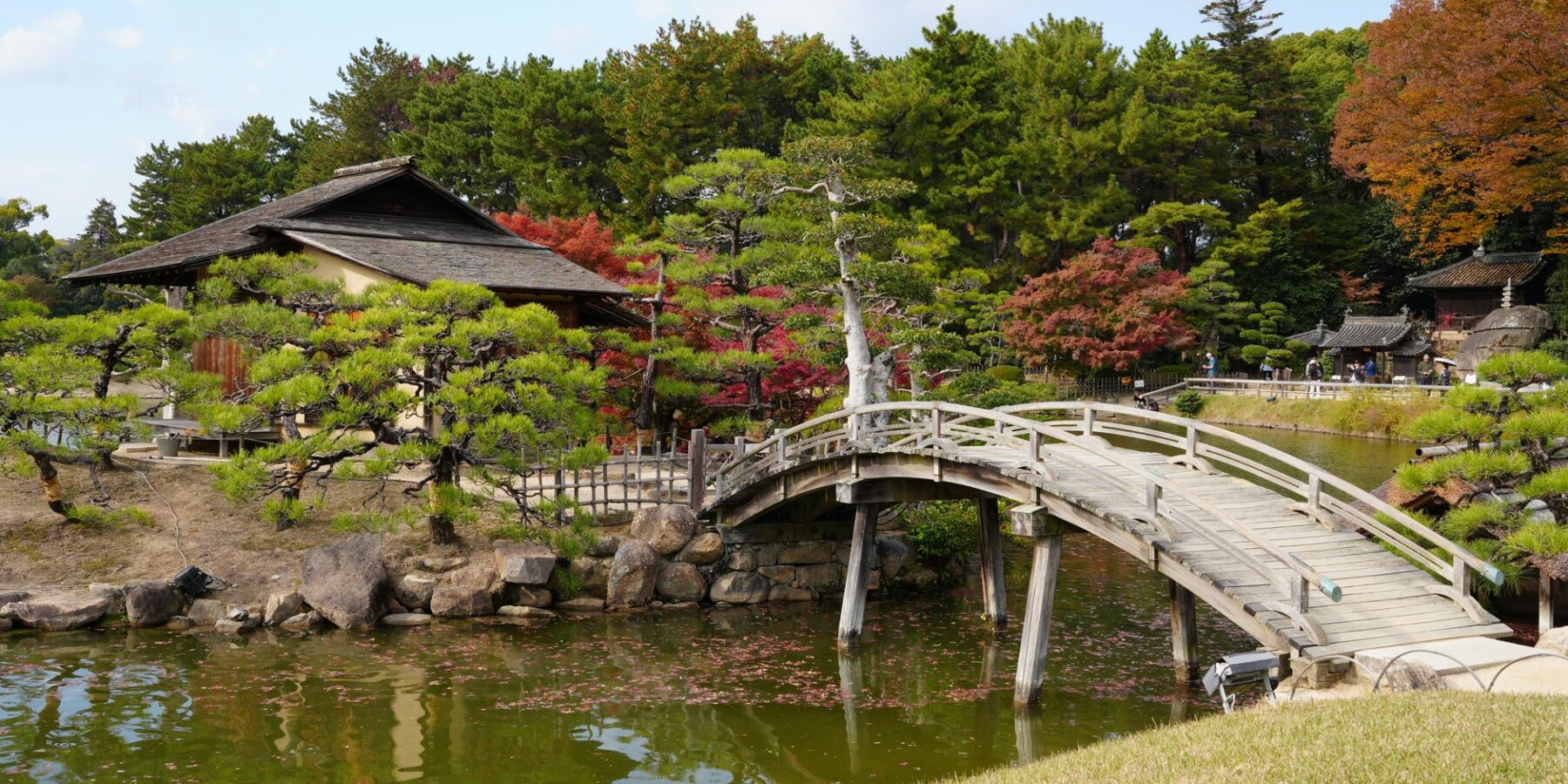
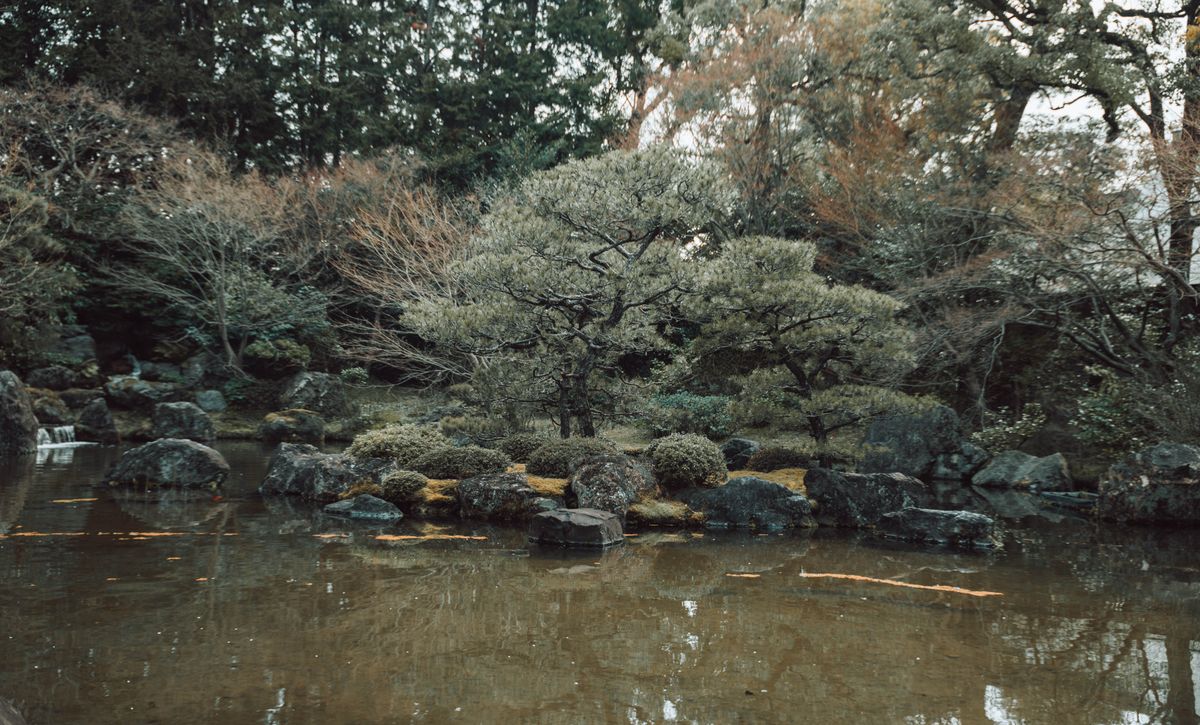
Korakuen is widely recognized as one of Japan’s three great gardens alongside Kenroku-en in Kanazawa and Kairaku-en in Mito, and many garden enthusiasts argue that it surpasses both in the sophistication and harmony of its design. Created between 1687 and 1700 as the garden of the Okayama domain’s ruling Ikeda clan, Korakuen covers approximately 13 hectares and is centered on a large central lawn — an unusual feature in traditional Japanese gardens — surrounded by ponds, streams, tea houses, plum and cherry orchards, and carefully composed vistas that frame Okayama Castle as a borrowed landscape element in the garden’s design.
The genius of Korakuen is the variety of experiences it offers within a single composition. Areas of open lawn give way to dense woodland, intimate tea garden enclosures, and lakeside promenades in a sequence that continuously surprises and delights. The circular walking route takes approximately 1 to 1.5 hours at a leisurely pace, with each turn revealing a new composition of water, stone, vegetation, and borrowed scenery from the castle and mountains beyond. The garden is particularly beautiful in early morning when mist rises from the ponds, during cherry blossom season when the orchards bloom, and in autumn when the maple trees display their fullest color.
Special seasonal events at Korakuen include the summer Yukata Garden Party, when the garden is illuminated after dark and visitors in yukata (summer kimono) stroll the paths by lantern light, and the autumn Okayama Korakuen Moon-Viewing, when the harvest moon reflects in the garden ponds in a tradition of elegant outdoor poetry appreciation that has been practiced here for centuries.
Kurashiki Bikan Historical Quarter
Kurashiki, a city 15 minutes from Okayama by JR train, contains one of Japan’s most beautifully preserved Edo-period merchant townscapes. The Bikan Historical Quarter (Beautiful View Quarter) centers on a historic canal lined with weeping willows and overlooked by traditional white-walled kura (storehouses) that were once used to store rice and other goods transported by boat from the Seto Inland Sea. Today the storehouses have been beautifully converted into museums, galleries, boutique hotels, cafes, and specialty shops while retaining their exterior architectural character completely intact.
The Ohara Museum of Art, housed in a neo-classical building at the canal’s edge, is Japan’s first Western-style art museum and contains an extraordinary collection of European art including works by El Greco, Monet, Renoir, Matisse, and Picasso assembled by the cotton merchant Ohara Magosaburo in the early 20th century. The museum complex has expanded over the decades to include Japanese modern art and crafts galleries, making it one of the most comprehensive regional art museums in Japan.
The Bikan Quarter is at its most atmospheric in the early morning before the tour groups arrive, when the willows trail in the still canal water and the white-walled storehouses reflect perfectly in the surface. A boat tour through the narrow canal offers a delightful low-perspective view of the historic architecture. The surrounding streets contain numerous craft shops selling Okayama specialties including Bizen pottery, Japanese denim (the Kojima district in Kurashiki is the birthplace of Japanese denim), and local sake.
Okayama Castle: The Crow Castle
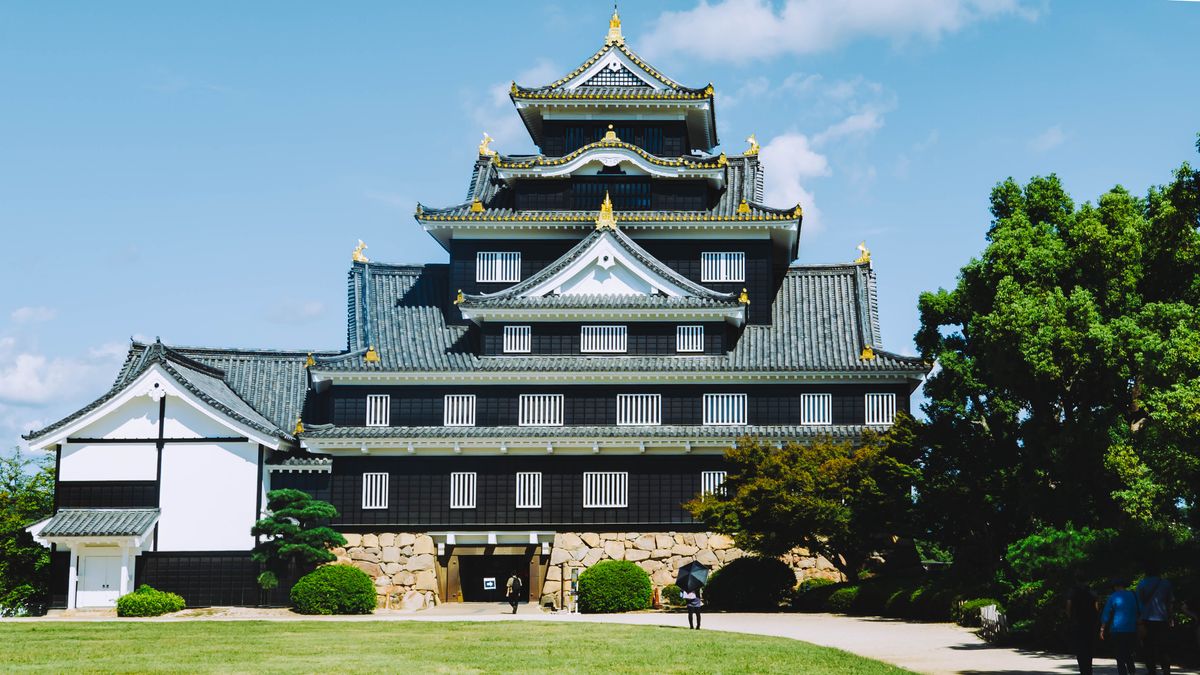
Okayama Castle, known as Uu-jo (Crow Castle) for the distinctive black lacquered exterior boards that cover its walls, stands immediately adjacent to Korakuen garden and forms an essential visual counterpoint to the garden’s soft, natural textures. The original castle, built in the late 16th century and expanded by the Ikeda clan in the early Edo period, was designated a National Treasure before being destroyed by Allied bombing in 1945. The current reconstruction, completed in 1966, is faithful to the original design and houses an excellent museum of feudal history, armor, and the traditions of Okayama domain.
The castle’s black exterior is genuinely striking and provides a dramatic contrast to the white-walled castles of Himeji and Nagoya. Visiting Korakuen and Okayama Castle together in a single day is the natural approach, with the garden and castle facing each other across the Asahi River. The view of the black castle tower from within the garden, with the castle reflected in the garden’s central pond, is one of Okayama’s signature landscape compositions and among the most photogenic castle views in Japan.
Naoshima: World Capital of Contemporary Art (Kagawa Prefecture) (Kagawa Prefecture, accessible from Okayama)
Naoshima Island — administratively part of Kagawa Prefecture but most easily accessed by ferry from Uno Port near Okayama — has transformed itself over the past three decades from a declining industrial island into one of the world’s most celebrated destinations for contemporary art. Through the visionary Benesse Art Site Naoshima project, which began in the 1980s under the direction of publisher Soichiro Fukutake, the island now contains a remarkable constellation of world-class art institutions and installations in dialogue with the island’s traditional fishing village character and extraordinary Seto Inland Sea setting.
The Chichu Art Museum, designed by architect Tadao Ando and built almost entirely underground to preserve the island’s landscape, contains five paintings by Claude Monet alongside works by Walter De Maria and James Turrell in spaces specifically designed to display each work to maximum effect. The Benesse House Museum combines a luxury hotel with a permanent collection of international contemporary art in a building that opens onto the Seto Inland Sea. The Art House Project has converted traditional wooden houses in the old village into site-specific artworks, creating a living museum that visitors explore by bicycle through the island’s narrow lanes.
Washuzan and Seto Ohashi Bridge
Washuzan hill on the southern coast of Okayama Prefecture offers one of the best views of the Seto Inland Sea and the Seto Ohashi Bridge — the longest bridge in Japan, connecting Okayama and Shikoku across a chain of small islands. The view from Washuzan’s summit observation area encompasses dozens of islands, the graceful curves of the bridge, and the characteristic silver-grey light of the Seto Inland Sea on a clear day, creating a panorama that has been inspiring poets and artists for centuries. The hill is accessible by bus from Kojima Station and rewards even a brief visit.
Getting to Okayama
Okayama is served by the Sanyo Shinkansen, connecting to Osaka in approximately 50 minutes, Hiroshima in 35 minutes, and Tokyo in approximately 3 hours and 15 minutes. Okayama Station is the main transportation hub for the prefecture and is where visitors arriving by shinkansen change to local services for Kurashiki and the Seto Inland Sea ferry terminals. The Japan Rail Pass covers all shinkansen (the Nozomi and Mizuho with an extra NOZOMI MIZUHO Ticket) and JR local services in Okayama, making it very economical for pass holders.
Before heading out, make sure you have a Japan eSIM ready to navigate, translate, and share photos without worrying about connectivity. Get your Japan eSIM (Stay connected from day 1) →
For international visitors arriving from Kansai, the combination of Okayama with Hiroshima and Miyajima on a westward journey along the Sanyo coast is a natural itinerary. The Setouchi Triennale art festival, held on Naoshima and nearby islands every three years, brings significant international attention and visitor numbers to the Okayama area during its run.
Getting Around Okayama
Within Okayama City, the Higashiyama tram line connects Okayama Station to the Korakuen garden and castle area conveniently and inexpensively. Kurashiki is 15 minutes by JR Sanyo Line from Okayama Station. For Naoshima and the Seto Inland Sea islands, ferries depart from Uno Port (about 50 minutes by JR from Okayama Station) with regular service to Naoshima and the other art islands. Bicycle rental on Naoshima itself is the best way to navigate the island’s artworks and beaches.
For rural Okayama and destinations like Tsuyama and the Bitchu Matsuyama Castle, a rental car or local JR trains are the options. Bitchu Matsuyama Castle, accessible from Bitchu-Takahashi Station, is one of Japan’s most dramatically situated original castles, perched on a mountain ridge at 430 meters elevation — the highest surviving original castle in Japan. The walk up through mountain mist to discover this modest but extraordinary castle is one of Okayama’s most memorable hidden experiences.
Where to Stay in Okayama
Okayama City offers the most comprehensive accommodation options, with business hotels and mid-range properties clustered around Okayama Station. Kurashiki’s Bikan Quarter has several excellent boutique hotels and traditional inns converted from historic kura storehouses, offering an atmospheric stay in the heart of the historic townscape — these properties book out well in advance during peak season and need early reservation. Naoshima has a small number of accommodation options including Benesse House, which is both a contemporary art museum and a luxury hotel offering guests 24-hour access to its exceptional collection.
Food and Local Specialties in Okayama
Okayama’s food culture benefits from both the exceptional seafood of the Seto Inland Sea and the high-quality agricultural products of the prefecture’s mild, sunny climate. Barazushi (Okayama bara-zushi) is the prefecture’s signature dish — a large, festive mixed-sushi platter combining vinegared rice with an array of seasonal vegetables, pickles, and Seto Inland Sea seafood including conger eel, shrimp, and seasonal fish. The dish is prepared for special occasions and festivals and reflects Okayama’s historically prosperous merchant culture.
Okayama’s Muscat grapes and white peaches are considered the finest in Japan and are prized luxury gifts. The prefecture’s mild climate is ideal for grape cultivation, and the sweet, aromatic Muscat of Alexandria variety grown here commands premium prices in Japanese markets. Bizen pottery, one of Japan’s six ancient kiln traditions, uses local clay and wood-firing techniques to produce works of distinctive beauty and utility that make outstanding and distinctive souvenirs.
Day Trips and Nearby Destinations
Okayama’s central location on the Sanyo coast makes it an excellent base for day trips in multiple directions. Hiroshima and Miyajima are 35 to 50 minutes west by shinkansen. Himeji, with its magnificent UNESCO World Heritage castle, is 30 minutes east by shinkansen. Tottori, with its remarkable sand dunes and mountain scenery, is about 2 hours from Okayama by the JR Super Inaba limited express via the Chizu Express line. The Setouchi art island circuit — Naoshima, Teshima, Inujima, and Shodoshima — can be explored as a multi-day trip from Okayama by combining ferry services.
Best Time to Visit Okayama
Okayama’s Sunshine Prefecture reputation makes it a pleasant destination year-round, with significantly less rainfall than neighboring prefectures. Spring is outstanding for cherry blossoms at Korakuen and Okayama Castle, and for the comfortable temperatures ideal for cycling on Naoshima. The Setouchi Triennale, held in spring, summer, and autumn of its triennial year, brings international art events and additional programming to the islands. Autumn is excellent for foliage at Korakuen and for the harvest season of Okayama’s famous Muscat grapes (white peaches peak earlier, in summer).
Hidden Gems and Local Tips for Okayama
Bitchu Matsuyama Castle, mentioned above, is one of Japan’s most extraordinary hidden experiences — a genuine original castle that receives a tiny fraction of the visitors of the famous castles despite being arguably more dramatic in its mountaintop setting. The autumn sea of clouds that sometimes fills the valleys below the castle at dawn, with only the castle tower and mountain peaks visible above the mist, is one of Japan’s most sought-after nature photography subjects. The cloud sea phenomenon typically occurs from late September through early December on cool, clear mornings after recent rain.
Inujima island, accessible by ferry from Okayama’s Hoden port, contains the remarkable Inujima Seirensho Art Museum, built within a copper refinery that operated from 1909 to 1919. The museum, designed by architect Hiroshi Sambuichi with artwork by Yukinori Yanagi, uses the existing industrial infrastructure as an integral part of the artwork, creating one of the most conceptually rich art experiences in Japan. Local tip: Okayama’s depachika (department store basement food halls) at the major department stores near Okayama Station are excellent for trying local specialties including barazushi, Muscat sweets, and Bizen sake.
Practical Information for Okayama
Okayama Prefecture operates on Japan Standard Time (JST, UTC+9). The prefecture has excellent English-language tourism materials, particularly for Naoshima and the art islands where the Benesse Art Site produces outstanding multilingual guides. Korakuen and Kurashiki Bikan Quarter both have English signage and visitor facilities. Ferry schedules to the Seto Inland Sea islands should be checked in advance as service frequency varies by season. Credit cards are widely accepted at larger tourist venues, but carry cash for small shops, eateries and stalls.
Budget Guide for Okayama
Okayama is a moderately priced destination. Korakuen entry is 410 yen, Okayama Castle is 320 yen, and Ohara Museum of Art in Kurashiki is 1,300 yen. Ferry to Naoshima costs approximately 740 yen return from Uno Port. The main Naoshima art venues — Chichu Art Museum, Benesse House Museum, and Art House Project — each charge separate entry fees of 2,000 to 2,200 yen, so budget 6,000 to 8,000 yen for a full art island day including transport. Budget travelers can stay in Okayama City for 6,000 to 8,000 yen per night. Mid-range accommodation in Kurashiki’s Bikan Quarter or Naoshima runs 15,000 to 30,000 yen per person including meals.
Frequently Asked Questions About Okayama
Is Okayama worth visiting?
Absolutely. Okayama offers an exceptional combination of classical Japanese culture at Korakuen garden and Kurashiki, contemporary art at Naoshima and the Seto Inland Sea islands, outstanding food culture, and a genuinely sunny, pleasant climate. It is one of western Japan’s most rewarding destinations and pairs naturally with Hiroshima for a two-city western Honshu itinerary.
How many days should I spend in Okayama?
Two to three days covers the main Okayama attractions thoroughly. Day one for Korakuen garden and Okayama Castle, day two for Kurashiki Bikan Quarter and the Ohara Museum of Art, and day three for a full day on Naoshima. If you add Teshima and Inujima or the Bitchu Matsuyama Castle, add another day. The prefecture is compact enough that a focused three-day visit covers most highlights without feeling rushed.
Is Naoshima worth visiting?
Naoshima is one of the world’s great art destinations and absolutely worth visiting for anyone with an interest in contemporary art, architecture, or design. The Chichu Art Museum alone justifies the trip — its spaces designed specifically for Monet’s Water Lilies, the James Turrell light works, and Walter De Maria’s site-specific installation are unlike anything else available in Japan or the world. Budget a full day for Naoshima, arrive early, and pace yourself through the various venues.
What makes Korakuen different from other Japanese gardens?
Korakuen is distinguished by its large central lawn, which is unusual among Japan’s major gardens and creates an openness and sense of scale that contrasts beautifully with the more enclosed compositions typical of Japanese garden design. The garden’s integration of Okayama Castle as a borrowed landscape element within the overall composition is masterly. The variety of experiences — from open lawn to intimate tea garden, from orchard to lakeside promenade — within a single garden also sets Korakuen apart from gardens with more singular design concepts.
Can I combine Okayama and Hiroshima in one trip?
Yes, Okayama and Hiroshima are an excellent combination. The shinkansen journey between them takes only 35 minutes, making it straightforward to base in one city and day-trip to the other. A logical itinerary is two nights in Okayama covering the garden, castle, Kurashiki, and Naoshima, followed by two nights in Hiroshima covering the Peace Memorial, Miyajima, and the western Hiroshima coast. The Japan Rail Pass covers JR trains between the two cities, though Nozomi trains need an extra fee.
What is Japanese denim and why is it associated with Okayama?
The Kojima district in Kurashiki is widely recognized as the birthplace of Japanese denim production. In the 1960s, when American jeans were imported into Japan and became cultural symbols, Kojima craftspeople began producing their own version using traditional Japanese textile craftsmanship — tight weaving, deep indigo dyeing, and meticulous finishing. The result was Japanese selvedge denim, now recognized worldwide as some of the finest denim fabric available. Several denim shops in Kojima’s Jeans Street specialize in Japanese selvedge products and offer custom dyeing and fitting services.
What is Bizen pottery?
Bizen pottery is one of Japan’s six ancient kiln traditions, produced in the Bizen area of southeastern Okayama Prefecture for over 1,000 years. Distinguished by its absence of glaze — the unique surface effects are created entirely by the interaction of wood ash with the clay during long wood-firing sessions in traditional anagama kilns — Bizen pottery has a characteristic warm, reddish-brown color with variations created by the fire pattern during firing. The pottery is especially prized for tea ceremony utensils and sake cups, where its porous, rough texture is said to enhance the flavor of liquids. The Imbe area in Bizen City has numerous galleries, studios, and workshops where visitors can purchase works and observe potters at work.
3-Day Okayama Itinerary: Gardens, Castle, and Art Islands
Day 1: Okayama City – Castle and Korakuen Garden
Arrive at Okayama Station via Shinkansen from Tokyo (3h20m) or Osaka (45m). Head directly to Korakuen Garden — one of Japan’s three great gardens, completed in 1700 by the Ikeda feudal clan. Unlike Kyoto’s intimate garden designs, Korakuen is expansive, with wide lawns, tea fields, plum and cherry groves, and ponds that create an open, strolling landscape of extraordinary serenity. The garden’s centerpiece is a raised earthen viewing mound (yuishinzan) offering panoramic views of the garden with Okayama Castle (“Crow Castle,” so named for its striking black lacquered exterior) as a backdrop — one of Japan’s most photogenic garden-castle combinations. Afternoon: cross the bridge to Okayama Castle and explore its museum interior housing samurai armor and Edo period artifacts. Evening: try kibi dango (sweet millet dumplings — the folk tale snack of Momotaro the Peach Boy, Okayama’s beloved legendary hero) and dinner at one of the restaurants near the covered Omotecho shopping arcade.
Day 2: Kurashiki Bikan Historical Quarter
Take the JR Sanyo Line to Kurashiki (15 minutes from Okayama). The Kurashiki Bikan Historical Quarter surrounding the old canal is one of Japan’s most beautifully preserved merchant town districts — white-walled (namamoko kabe) storehouses from the 17th–19th centuries line a willow-draped canal navigated by traditional flat-bottomed boats. Many storehouses have been converted into museums, galleries, boutique shops, and cafes. The Ohara Museum of Art inside the quarter holds Japan’s first Western art museum — a remarkable collection of Impressionist and Post-Impressionist paintings including works by El Greco, Monet, and Picasso, accumulated by the Ohara textile industry family in the early 20th century. Spend the morning exploring the canal district and the afternoon in the museum. Evening: join a traditional punt boat tour along the canal at dusk when the lanterns reflect in the still water.
Day 3: Naoshima Art Island
Take the Uno Line from Okayama to Uno Port (50 minutes), then a 20-minute ferry to Naoshima Island — the world’s most celebrated art island. Naoshima has been transformed by the Benesse Art Site project since 1992 into a living museum where internationally renowned artists have created site-specific works integrated into the island’s traditional fishing village landscape. Chichu Art Museum (designed by Tadao Ando, partially underground) houses monumental works by Claude Monet, James Turrell, and Walter De Maria in a building where natural light is the primary medium. Benesse House Museum combines accommodation and contemporary art in a Tadao Ando building overlooking the Seto Inland Sea. The iconic Yellow Pumpkin by Yayoi Kusama on the pier is one of Japan’s most photographed artworks. Return to Okayama in the evening for departure or overnight.
Shopping Guide: Okayama Souvenirs
Okayama’s fruit-growing reputation provides its finest food souvenirs. White peaches (Okayama hakuto) and Shine Muscat grapes — both developed in Okayama and the finest in Japan — are the prefecture’s ultimate seasonal food gifts (summer and autumn respectively). Boxed versions for transport and processed products (peach jelly, grape wine, peach jam) are available year-round. Kibi dango (millet dumplings) — the legendary snack of Momotaro — come in traditional and modern flavor variations and make charming regional confections. Bizen-yaki pottery from the ancient Bizen kilns (one of Japan’s six original medieval kiln traditions) features distinctive unglazed, flame-marked stoneware prized by tea ceremony practitioners. Contemporary Bizen works in cups, vases, and plates make excellent artisan souvenirs available at the Bizen Pottery Traditional and Contemporary Art Museum shop and at kilns throughout Bizen City.
Family-Friendly Activities in Okayama
The Momotaro (Peach Boy) legend is Okayama’s cultural gift to Japanese children — the beloved folk tale of a boy born from a giant peach who befriends a dog, monkey, and pheasant to defeat demons is the most famous children’s story in Japan, and Okayama celebrates this identity enthusiastically. The Momotaro Jinja Shrine, dedicated to the legendary hero, features charming demon statues and is child-friendly. Traditional kibi dango making workshops in the Okayama area allow children to craft the story’s famous dumplings. Okayama Prefectural Museum has excellent historical exhibits including full-scale reproductions of Edo period rooms that older children find fascinating. The Naoshima Art Island outdoor artworks — giant sculptures, colorful installations, and the Kusama pumpkins — delight children who appreciate art on a human scale rather than behind museum glass. In summer, the Seto Inland Sea beaches on islands accessible by ferry from Okayama’s ports offer calm, shallow swimming ideal for families.
Solo Travel Tips for Okayama
Okayama’s compact layout makes it excellent for solo exploration. The main attractions of Korakuen Garden, Okayama Castle, and the Omotecho shopping arcade are walkable from the station. The JR Sanyo Line to Kurashiki is straightforward and frequent. For Naoshima, solo visitors should plan carefully around ferry schedules (last ferry back to Uno is typically 5 PM or later depending on season) and pre-book the Chichu Art Museum timed-entry tickets online. Cycling between Naoshima’s art sites is the ideal solo transport — rental bicycles are available at the port and the island’s scale is perfect for a day’s cycling. Solo travelers based in Okayama City will find excellent izakaya culture around the station and Omotecho area, with local sake from Okayama breweries and fresh Seto Inland Sea seafood prominently featured.
Frequently Asked Questions About Okayama
Is Korakuen better than Kenrokuen in Kanazawa?
Both are among Japan’s three great gardens and are genuinely extraordinary, but they offer distinct aesthetic experiences. Kenrokuen in Kanazawa is more dramatic, with hills, cascading water features, and elaborate stone arrangements — a more typically “Japanese” garden design. Korakuen is more open and spacious, with wide lawns and the added spectacle of Okayama Castle as a backdrop. Korakuen is generally less crowded than Kenrokuen. For many visitors, the combination of garden and adjacent castle makes Korakuen’s overall experience slightly more complete.
How do I get to Naoshima from Okayama?
Take the JR Uno Line from Okayama Station to Uno Station (about 50 minutes, ¥580). From Uno Port, ferries operated by Uno Port Ferry and Shodo Steamship run to Miyanoura Port on Naoshima (20 minutes, ¥370 one-way). Ferries run approximately every 60-90 minutes throughout the day. The last return ferry from Naoshima is typically around 6-7 PM (check current schedules at Naoshima’s tourism website). A day trip from Okayama is entirely feasible with early departure.
What is Bizen pottery?
Bizen-yaki is one of Japan’s six ancient kiln traditions, with a continuous history of over 1,000 years in Bizen City (eastern Okayama). Unlike most Japanese ceramics, Bizen pottery uses no glaze — instead, the distinctive surface patterns (hidasuki fire marks, goma sesame-seed patterns, and botamochi rice cake shapes) are created by the interaction of ash, rice straw wrapping, and flame during long firings in traditional anagama (tunnel kilns). The resulting stoneware has an earthy, organic beauty highly valued in the tea ceremony world and by contemporary ceramic collectors worldwide.
Is Okayama good for day trips?
Okayama is an excellent base for day trips throughout the Chugoku and Shikoku regions. Hiroshima and Miyajima are just 35 minutes by Shinkansen. Naoshima and other Seto Inland Sea art islands (Teshima, Inujima) are accessible by ferry. Kurashiki is 15 minutes by local train. Himeji Castle in Hyogo Prefecture is 30 minutes east by Shinkansen. This central location — between Osaka and Hiroshima on the Sanyo Shinkansen line — makes Okayama one of the most strategically placed cities in western Japan for multi-destination travel.
Okayama’s Cultural Scene and Hidden Gems
Beyond its famous garden, castle, and art island, Okayama has a rich cultural scene worth exploring. Okayama Prefectural Museum of Art in the city center houses a strong collection of Japanese modern painting and rotating exhibitions of exceptional quality. The Orient Museum near the garden specializes in ancient West Asian and Middle Eastern art — an unusually specialized collection reflecting Okayama’s historical role as a trading hub. The city’s Omotecho covered shopping arcade (1.3 km long, one of Japan’s longest) mixes fashion boutiques, department stores, and traditional food shops in an entertaining mix of old and new Japan.
Okayama Prefecture’s Kibi Plain cycling route connects ancient burial mounds (kofun), Shinto shrines, and traditional villages on a flat 17-km dedicated cycling path between Okayama and Soja — one of Japan’s finest historical cycling experiences. The Momotaro folk tale route follows this path, and signage in English connects the landmarks with the legend. Bicycles are available for rent at Okayama Station. The prefecture’s eastern region around Tsuyama has an exceptionally preserved castle town with samurai streets and one of Japan’s finest castle parks, well worth a half-day visit for those with extra time in the prefecture.
Okayama’s fruit culture extends beyond its famous peaches and Shine Muscat grapes. The Kibigawa River valley is also known for premium blueberries, figs, and Pione grapes, with farm picking experiences available from summer through autumn. The prefecture’s mild Seto Inland Sea climate and fertile alluvial plains make it one of Japan’s premier agricultural regions, and the direct-sale farm stands (michi-no-eki) throughout the prefecture offer extraordinary fresh produce at farm prices.
Okayama Prefecture rewards every type of traveler — whether drawn by history, art, nature, or gastronomy. With excellent transport connections and a wealth of authentic experiences unavailable in Japan’s overcrowded tourist centers, this is one of western Japan’s most compelling and underappreciated destinations. Plan at least two to three days to experience the full depth this remarkable prefecture has to offer.
Related guides
- Tomonoura Travel Guide 2026: A First-Timer’s Guide to Japan’s Best-Preserved Edo-Era Port Town in Hiroshima
- Shimanami Kaido Cycling Guide 2026: How to Ride Japan’s Island-Hopping Bike Route Across the Seto Inland Sea
- Miyajima Travel Guide 2026: A First-Timer’s Guide to the Floating Torii, Itsukushima Shrine, Mount Misen and Hiroshima’s Sacred Island
Going to Japan? Speak Japanese with confidence.
Hirameki Japanese — camera translate for menus and signs, a two-way conversation mode, and furigana + romaji on every phrase. Free to download with kana charts, conversation mode and starter words; a one-time purchase unlocks everything.
⬇ Get it on the App Store
Plan your Japan trip
Two things every first-timer should book
Some links are affiliate links. If you book through them we may earn a small commission at no extra cost to you.