Okinawa is a different Japan. Strung out across the warm seas between Kyushu and Taiwan, this chain of subtropical islands was once the independent Ryukyu Kingdom, and centuries of trade with China, Southeast Asia and later the United States gave it a food culture unlike anywhere else in the country. If you arrive expecting sushi and ramen, you are in for a surprise. Okinawan cooking is built on pork, bitter melon, sea grapes, tropical fruit, brown sugar and a fierce local spirit called awamori — and it comes wrapped in one of the most famous longevity stories on the planet.
This guide is written for first-time visitors who want to eat their way through Okinawa with confidence. We will cover the must-try dishes, where to find them, what they cost in both yen and US dollars, how the islands’ “longevity diet” actually works, and the practical details — from market etiquette to ordering awamori — that make the difference between a good food trip and a great one. Whether you are basing yourself in Naha or island-hopping out to Ishigaki, this is everything you need to know about eating in Okinawa.
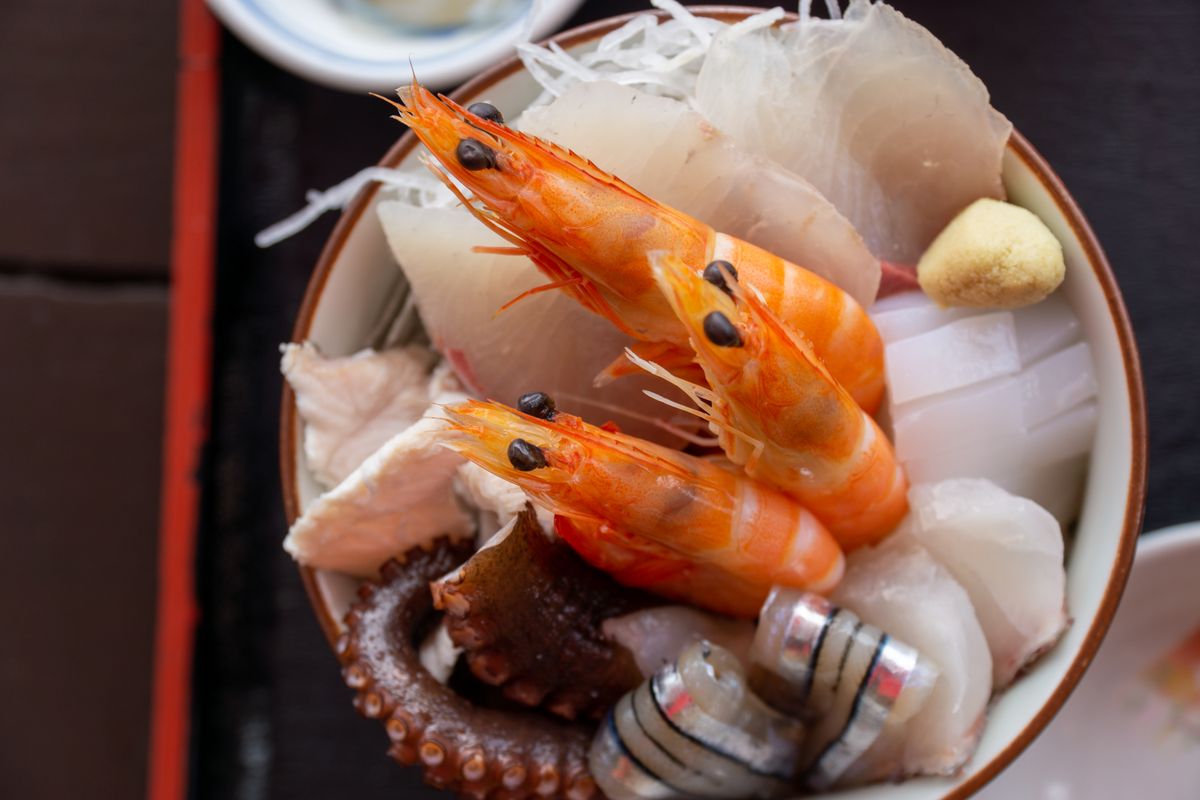
Why Okinawan Food Is Unlike Anywhere Else in Japan
To understand Okinawan food, you have to understand that for most of its history Okinawa was not part of Japan at all. The Ryukyu Kingdom (1429–1879) was a sovereign maritime nation that paid tribute to China and traded actively with Korea, Siam, Java and the Japanese mainland. Cooks in the royal court at Shuri absorbed Chinese techniques — stir-frying, slow-braising pork, steaming — and married them to local ingredients. When the kingdom was annexed by Japan, and again after the United States administered the islands from 1945 until 1972, new influences kept arriving. The result is a cuisine that feels Japanese, Chinese and American all at once, yet is wholly its own.
The signature ingredient is pork. Okinawans famously say they use “every part of the pig but the squeal,” and you will see this proven across menus: pork belly braised until it melts, pig’s ear sliced thin and dressed with vinegar, even pig’s feet stewed until gelatinous. Alongside the pork sit ingredients you will rarely meet on the mainland: goya (bitter melon), shima-rakkyo (island shallots), umibudo (sea grapes that pop like caviar), purple beni-imo sweet potato, and brown sugar from the sugarcane fields that blanket the islands.
There is also the famous health angle. Okinawa was one of the original “Blue Zones,” regions identified as having unusually high numbers of people living past 100. Researchers have long pointed to the traditional Okinawan diet — heavy in vegetables and tofu, moderate in pork, light in rice, and eaten according to the principle of hara hachi bu (eating until you are 80 percent full) — as one likely factor. You do not need to follow it religiously to enjoy it, but it does mean that eating well here can also mean eating healthily.
If this is your first trip to the country and you want the broader context before you arrive, our Japan travel tips for first-timers covers the essentials, and the wider destinations guide will help you slot Okinawa into a longer itinerary.
The Must-Try Okinawan Dishes
Okinawa’s most iconic dishes are cheap, generous and easy to find. Here is what to order and roughly what to expect to pay. As a rough guide for budgeting, ¥150 is about US$1 at 2026 exchange rates, so a ¥900 plate is around US$6.
Goya Champuru
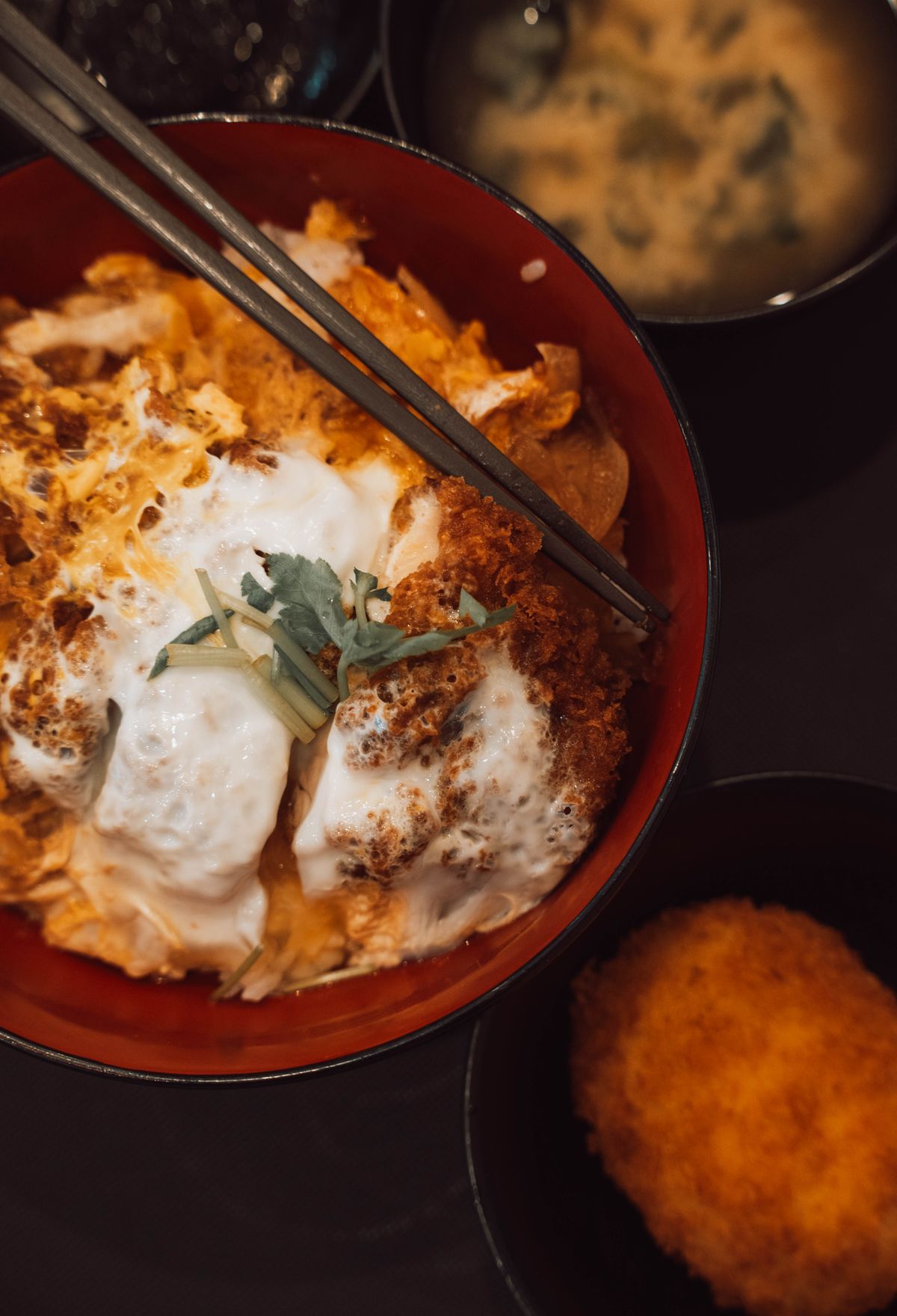
If you eat one thing in Okinawa, make it goya champuru. Champuru means “mixed” or “stir-fried” in the Okinawan language, and this is the dish that defines the islands: bitter melon stir-fried with firm island tofu, egg, and slices of pork or canned luncheon meat. The bitterness of the goya is the whole point — it is bracing, slightly medicinal, and utterly addictive once you adjust. Expect to pay ¥700–¥1,000 (about US$5–$7) for a plate at a casual diner, usually served as part of a set (teishoku) with rice, miso soup and pickles for ¥900–¥1,300.
Okinawa Soba
Despite the name, Okinawa soba contains no buckwheat. The noodles are thick, chewy wheat noodles closer to udon, served in a clear, pork-and-bonito broth. The classic topping is soki (tender stewed pork spare ribs) or rafute (braised pork belly), finished with pickled ginger, spring onion and a sprinkle of koregusu, a fiery condiment of chili peppers steeped in awamori. A bowl runs ¥600–¥900 (US$4–$6). Regional variations abound — on Miyako Island the noodles are flatter, while Yaeyama soba near Ishigaki uses thin, round noodles.
Rafute (Braised Pork Belly)
Rafute is the crown jewel of Ryukyu court cuisine: pork belly simmered for hours in awamori, soy sauce and brown sugar until the fat turns silky and the meat falls apart. It is rich, sweet and savory all at once. You will find it as a topping on soba, as a small dish in an izakaya (¥600–¥900), or as the centerpiece of a traditional Ryukyu set meal.
Taco Rice
Taco rice is the most delicious thing to come out of the American military presence on Okinawa. Invented in the 1980s near a US base, it takes the fillings of a taco — seasoned ground beef, shredded lettuce, tomato and cheese — and piles them over a bed of white rice. It sounds improbable and tastes fantastic, and it has become a genuine local comfort food. A plate costs ¥600–¥900 (US$4–$6) and is sold everywhere from diners to convenience stores.
Umibudo (Sea Grapes)
Umibudo, or “sea grapes,” are a type of seaweed whose tiny green spheres burst with a briny pop when you bite them. Served chilled with a ponzu or vinegar dipping sauce, they are refreshing, faintly salty and unlike any texture you have eaten before. A small dish costs ¥500–¥800. They are a signature Okinawan delicacy and a must-order in any seafood izakaya.
Goya, Pork and the Rest of the Champuru Family
Beyond goya champuru, the champuru family is broad. Fu champuru uses wheat gluten that soaks up egg and seasoning; somen champuru stir-fries thin somen noodles; tofu champuru leans on island tofu. Each is hearty, inexpensive (¥700–¥1,000) and a window into Okinawan home cooking.
More Okinawan Specialties Worth Hunting Down
Once you have worked through the headline dishes, Okinawa rewards the curious with a deep bench of lesser-known specialties. These are the plates that locals order without thinking and that many visitors never discover.
Jimami Tofu
Jimami tofu is not really tofu at all — it is made from peanuts rather than soybeans, giving it a silky, almost custard-like texture and a gentle nutty sweetness. It is usually served chilled with a drizzle of sweet soy-based sauce, sometimes as a dessert and sometimes as an appetizer. A small dish costs ¥300–¥500 and it is one of the most quietly delicious things on any Ryukyu menu. If you only try one “hidden” Okinawan dish, make it this one.
Agu Pork
Agu is Okinawa’s native black pig, a heritage breed prized for its marbling, mild flavor and sweet fat. It nearly went extinct after the war and was painstakingly revived, so it is now something of a delicacy. You will find agu pork in shabu-shabu hot pots, grilled as steak, or in upgraded versions of soba and champuru. An agu shabu-shabu set typically costs ¥2,500–¥4,500 (US$17–$30) and is one of the island’s great affordable luxuries.
Tebichi and Nakami Soup
For the adventurous, Okinawa’s nose-to-tail pork tradition produces two classic soups. Tebichi is pig’s trotter stewed for hours until the skin and tendon turn meltingly gelatinous, often served in a clear broth with daikon and konbu. Nakami no suimono is a clear soup of carefully cleaned pork intestines, traditionally eaten at New Year and celebrations. Both run ¥600–¥1,000 and reveal just how completely Okinawans use the pig.
Mimiga (Pig’s Ear)
Mimiga is thinly sliced pig’s ear, boiled and then dressed with vinegar, peanut sauce or miso. The appeal is the texture — a crunchy, cartilaginous snap quite unlike any other part of the animal. It is a popular izakaya nibble to go with awamori and costs ¥400–¥700 a plate.
Mozuku Seaweed
Okinawa produces the vast majority of Japan’s mozuku, a slippery, thread-like seaweed usually served chilled in a vinegar dressing (mozuku-su) or fried into crisp tempura fritters. Tangy, refreshing and full of minerals, it is a staple starter and a great example of the island’s healthful, sea-forward cooking. A dish costs ¥300–¥500.
Hirayachi
Hirayachi is Okinawa’s answer to a savory pancake — a thin, quick batter studded with spring onion and sometimes tuna or egg, pan-fried and cut into wedges. It is humble home cooking, the kind of thing Okinawan families whip up on a rainy day, and you will occasionally find it at markets and casual diners for ¥300–¥500.
Okinawan Sweets, Snacks and Tropical Fruit
Okinawa’s subtropical climate and its history as a sugar producer give it a distinctive sweet tooth. These are the treats to seek out and the snacks to bring home.
Sata Andagi
Often called “Okinawan doughnuts,” sata andagi are dense, golden balls of fried dough, crisp outside and cakey within, lightly sweetened with the island’s brown sugar. Sold warm at markets and festivals for around ¥100–¥150 each, they are the perfect walking snack and a beloved souvenir when boxed.
Beni-imo Treats
The vivid purple beni-imo (Okinawan sweet potato) appears in everything from tarts to ice cream to KitKats. The beni-imo tart, a buttery shell filled with smooth purple sweet-potato paste, is the single most popular edible souvenir from Okinawa. A box of individually wrapped tarts costs ¥1,000–¥1,500 and travels well.
Brown Sugar (Kokuto)
Okinawa’s kokuto (unrefined black sugar) is sold in chunks to eat like candy, ground for cooking, or pressed into sweets. It has a deep, almost molasses-like flavor. A bag makes an inexpensive, genuinely local gift for under ¥500.
Chinsuko
Chinsuko are small, crumbly shortbread-style biscuits made from flour, lard and sugar, dating back to the Ryukyu royal court where they were a luxury reserved for nobility. Today they are Okinawa’s most ubiquitous edible souvenir, sold in every flavor from plain to beni-imo to salt (using Okinawa’s prized sea salt). A box costs ¥500–¥1,000 and the individually wrapped pieces make them ideal for sharing back home.
Blue Seal Ice Cream
Blue Seal is an Okinawan institution — an ice cream brand that began on the US military bases in 1948 and became a local icon. Its signature flavors lean tropical and local: beni-imo, Okinawan salt cookie, shikuwasa, mango and sugarcane. A scoop costs ¥400–¥600 and is the perfect antidote to the subtropical heat. You will spot the cheerful blue-and-white shops across the islands.
Tropical Fruit
Thanks to its climate, Okinawa grows fruit you will not find elsewhere in Japan: shikuwasa (a tart citrus used in drinks and dressings), Okinawan pineapple (sweet and low-acid), dragon fruit, mango and acerola. Visit between June and August for peak mango season, when a premium gift-grade Okinawan mango can cost ¥3,000–¥5,000 but a perfectly good eating mango is far cheaper at a roadside market.
Awamori and What to Drink in Okinawa
Okinawa makes its own spirit, and it is older than mainland Japan’s sake-brewing traditions in some respects. Awamori is distilled from long-grain Thai indica rice using black koji mold unique to the islands, a technique that arrived via the kingdom’s trade with Siam centuries ago. It is typically 30–43 percent alcohol, and aged awamori — called kusu — mellows beautifully over years in clay pots.
How to Drink Awamori
Locals most often drink awamori mizuwari (cut with water and ice) or oyuwari (with hot water), which softens its punch and lets the aroma open up. A glass at an izakaya costs ¥400–¥600; a full bottle to take home ranges from ¥1,200 for everyday awamori to ¥5,000 and well beyond for aged kusu. Order it alongside rafute or umibudo and you have the classic Okinawan pairing.
Orion Beer
Orion is Okinawa’s hometown beer, a crisp, light lager that is practically a symbol of the islands. It is the perfect foil for a hot, humid day and a plate of taco rice. Expect ¥350–¥550 for a draft. Beer lovers can tour the Orion Happy Park brewery in Nago in the north of the main island; reservations are recommended in advance.
Shikuwasa Juice and Bukubuku-cha
For something non-alcoholic, try fresh shikuwasa juice — tart, citrusy and refreshing — or seek out bukubuku-cha, a traditional Ryukyu tea topped with a tall, frothy foam of toasted-rice tea whipped by hand. It is a charming ceremonial drink found in a handful of Naha teahouses.
Where to Eat: Markets, Diners and Districts
You do not need a restaurant reservation to eat brilliantly in Okinawa. The best food is often found in casual diners, covered markets and roadside stops. Here is where to go.
Makishi Public Market (Naha)
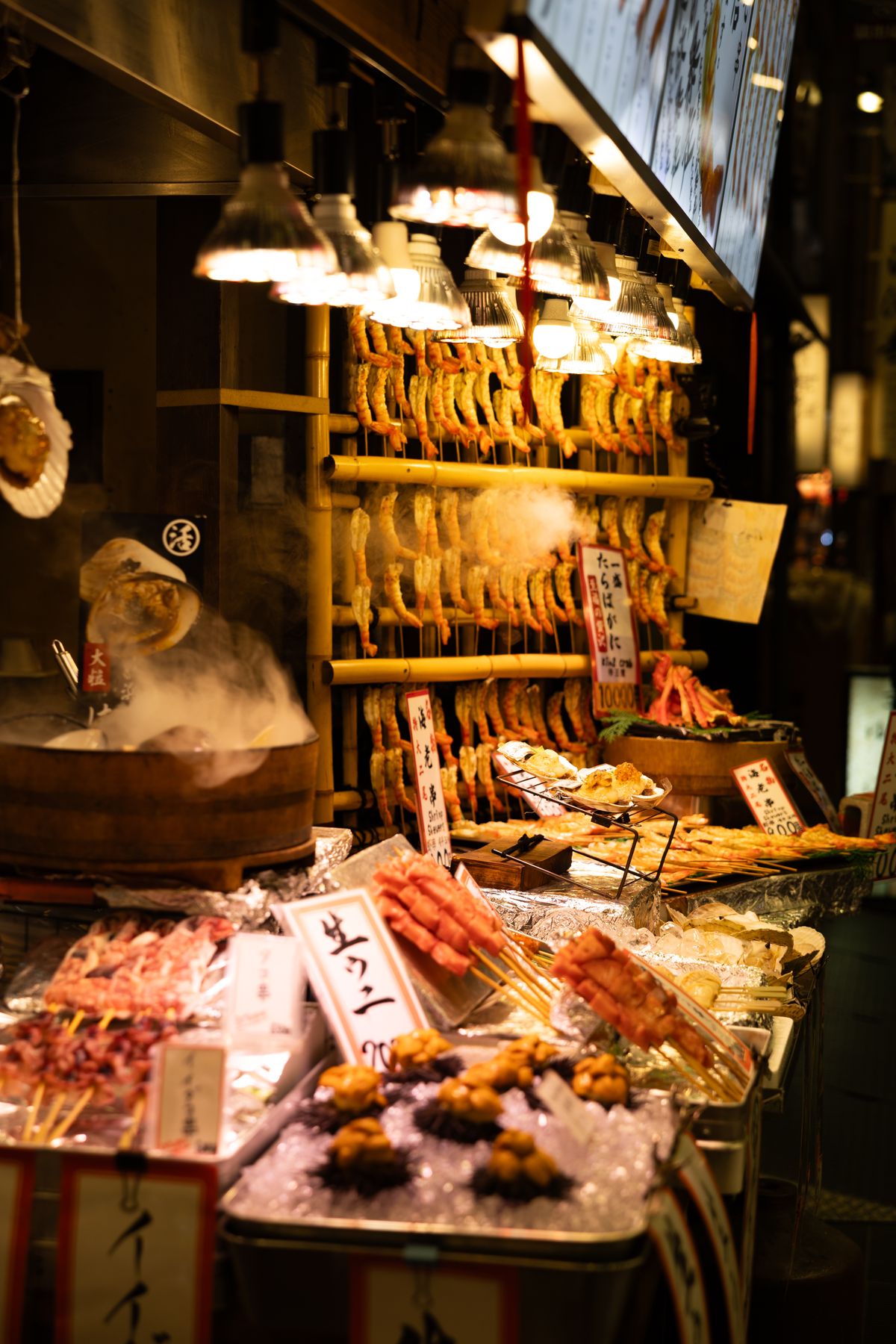
The first Makishi Public Market in central Naha is the beating heart of Okinawan food. On the ground floor, fishmongers and butchers sell vivid tropical fish, sea grapes, pork and island vegetables; head upstairs and the market’s restaurants will cook your market purchases for a small fee (a system known as mochiagari), or you can simply order from their menus. It is the single best place to sample a wide range of Okinawan dishes in one visit. It sits just off Kokusai-dori, Naha’s main street, and is walkable from most central hotels. For more on the city itself, see our Naha travel guide.
Kokusai-dori (International Street)
Naha’s mile-long main drag is lined with izakaya, souvenir shops and restaurants. It is touristy, but it is also a reliable place to find taco rice, Okinawa soba, awamori bars and live sanshin (the three-stringed Okinawan banjo) music with your dinner. Wander the side streets off the main avenue for smaller, more atmospheric spots.
Shokudo (Home-Style Diners)
The unsung heroes of Okinawan eating are the humble shokudo — family-run diners serving enormous, cheap set meals. Order a champuru teishoku and you will get a main, rice, soup and sides for around ¥900–¥1,200. Portions are famously generous, and these diners are where you eat like an Okinawan rather than a tourist.
Beyond the Main Island
The Okinawan Longevity Diet Explained
Okinawa’s reputation as a land of centenarians has made its traditional diet famous worldwide. While modern fast food has eroded some of those health outcomes among younger generations, the traditional eating pattern is still very much alive and remains genuinely instructive for visitors.
What the Traditional Diet Looks Like
The classic Okinawan diet is overwhelmingly plant-based: sweet potato (historically the staple, more than rice), bitter melon and other vegetables, soy in the form of island tofu, and seaweed including the famous sea grapes. Pork features regularly but in modest amounts, and it is typically braised slowly so much of the fat renders away. Fish is common; heavily processed food, traditionally, was rare. The diet is naturally low in calories but rich in nutrients.
Hara Hachi Bu
Just as important as what Okinawans traditionally ate is how much. The Confucian-derived principle of hara hachi bu — eating until you are about 80 percent full rather than stuffed — is a built-in form of calorie moderation. It is a habit worth borrowing on any trip: stop a little before you feel full, and you will enjoy your next meal all the more.
Eating the Longevity Way as a Visitor
You can absolutely eat the “Blue Zone” way as a tourist. Order champuru dishes loaded with vegetables and tofu, choose Okinawa soba with vegetables, snack on tropical fruit instead of processed sweets, and balance the rich pork dishes with the abundant greens. The food is delicious enough that eating healthily never feels like a sacrifice.
Practical Tips for Eating in Okinawa
A few practical notes will smooth your culinary adventure across the islands:
- Carry cash. While Naha and larger restaurants increasingly take cards, many shokudo, market stalls and smaller island eateries are cash-only. Keep ¥10,000–¥20,000 in yen on hand.
- Lunch sets are the best value. Many restaurants serve generous teishoku (set meals) at lunch for ¥900–¥1,300 — a great way to try multiple dishes affordably.
- Learn a few words. In Okinawan, mensore means “welcome” and nifee deebiru means “thank you.” Locals appreciate the effort even if you stick to Japanese or English for ordering.
- Embrace the bitterness. Goya is meant to be bitter. Give it two or three bites before deciding — most visitors come around to loving it.
- Try the market mochiagari system. At Makishi Market, buy fresh fish or shellfish downstairs and have an upstairs restaurant cook it for a small fee. It is fun and delicious.
- Pace your awamori. It is stronger than sake. Drink it cut with water or hot water, and alternate with water as you go.
- Stay connected. Reviews, maps and translation apps are invaluable for finding diners off the main streets. Sort out mobile data before you land — you can get a Japan eSIM and stay connected from day one →.
- Book accommodation near Kokusai-dori or Makishi if food is your priority — you will be within walking distance of the best eating. Compare options and book your Okinawa hotel on Agoda (best prices guaranteed) →.
Sample One-Day Okinawa Food Itinerary (Naha)
If you have a single day to eat your way through Naha, here is how to structure it:
- Morning: Start at Makishi Public Market. Browse the fishmongers, try a few snacks, and have an early lunch of fresh seafood cooked upstairs (¥2,000–¥3,000 for a generous spread).
- Midday: Walk Kokusai-dori, sampling sata andagi (¥100–¥150) and a beni-imo tart with coffee.
- Afternoon: Duck into a shokudo for a goya champuru teishoku (¥1,000) if you are still hungry, or rest before dinner.
- Evening: Settle into an izakaya for rafute, umibudo and Okinawa soba, washed down with awamori mizuwari and an Orion beer, ideally with live sanshin music (¥3,000–¥4,500 per person).
For more street-food inspiration before your trip, our Japan street food guide and Japan food experiences guide are full of ideas you can carry over to the islands.
A Regional Guide to Eating Across the Okinawan Islands
Okinawa is not a single place but an archipelago of more than 150 islands spread over hundreds of kilometers, and the food changes as you travel. Here is how the eating varies from the main island to the far-flung Yaeyamas.
Southern Main Island (Naha and Around)
This is where most visitors land and where the dining scene is densest. Naha gives you Makishi Market, Kokusai-dori, countless izakaya and the full range of Okinawan classics in one walkable area. The south is also home to historic sites and the reconstruction of Shuri Castle, the former royal palace whose kitchens defined Ryukyu court cuisine. Base yourself here for at least the first few days and you can eat your way through every dish in this guide without renting a car.
Central and Northern Main Island
Heading north, the landscape opens into pineapple farms, the Orion brewery at Nago, and the Yanbaru forest. The American influence is strongest in the central area around the former base towns, where you will find the best taco rice, A&W root beer floats and burger joints sitting cheerfully alongside traditional soba shops. The north is agricultural — tropical fruit stands, fresh pineapple and roadside michi-no-eki (roadside stations) selling local produce make for excellent grazing on a drive.
Ishigaki and the Yaeyama Islands
A roughly one-hour flight southwest of Naha brings you to Ishigaki, the gateway to the Yaeyama Islands. This is cattle country, and Ishigaki beef is the star — richly marbled wagyu sold for a fraction of the price of more famous mainland brands. Yaeyama soba uses thin, round noodles, and the islands have their own awamori distilleries. Nearby Taketomi Island, with its preserved Ryukyu village, is a lovely day trip for slow lunches.
Miyako Island
Halfway between the main island and the Yaeyamas, Miyako is famous for some of Japan’s most beautiful beaches and for its own distinct soba, made with flatter noodles and often hiding the toppings beneath the noodles in the traditional style. Miyako also produces excellent awamori and sea salt. The pace is slower and the seafood is superb.
Getting between the islands almost always means a short flight or ferry, so plan your eating around your route. If you are island-hopping, booking accommodation in advance is wise during peak summer and holiday periods — you can compare island hotels and book on Agoda → to lock in the best-located stays.
Edible Souvenirs: What to Bring Home
Okinawan food makes for some of the best souvenirs in Japan because so much of it travels well and is unmistakably local. Here is what to pack in your suitcase:
- Beni-imo tarts — the purple sweet-potato tart is the classic Okinawa gift (¥1,000–¥1,500 a box).
- Chinsuko biscuits — individually wrapped, long-lasting and available in many flavors (¥500–¥1,000).
- Kokuto (brown sugar) — chunks or powder, deeply flavorful and cheap (under ¥500).
- Awamori — a bottle of everyday awamori (¥1,200) or aged kusu (¥3,000+) for the spirits lover.
- Okinawan sea salt (Nuchima-su) — mineral-rich salt harvested from the surrounding seas, a great cooking gift.
- Shikuwasa products — juice, ponzu and dressings made from the local citrus.
- Koregusu — the awamori-and-chili condiment, a small bottle that packs a punch and a story.
The basement food floors of department stores, the shops along Kokusai-dori, and the airport’s departure area are all reliable for last-minute edible gifts. Naha Airport in particular has an excellent selection if you run out of time in the city.
Dietary Needs, Allergies and Ordering Tips
Okinawan food is pork- and seafood-heavy, which means travelers with dietary restrictions need to plan a little. A few pointers:
- Pork is everywhere, including in broths and stir-fries that may not look meaty. If you avoid pork for religious or dietary reasons, ask specifically and consider seafood-forward dishes or vegetable champuru made without meat.
- Dashi (fish stock) underpins many soups and sauces, so strict vegetarians and vegans should confirm. Tofu champuru, jimami tofu, mozuku and tropical fruit are safer bets.
- Peanuts appear in jimami tofu and some dressings — important to know if you have a nut allergy.
- Gluten is present in the wheat-based Okinawa soba noodles and fu (wheat gluten), so coeliac travelers should be cautious.
- Translation helps enormously. A translation app lets you show your restrictions in Japanese, which is far more reliable than relying on English menus. This is one more reason to arrange data before you arrive — you can set up a Japan eSIM in minutes → and have maps and translation ready from the moment you land.
Frequently Asked Questions
What food is Okinawa most famous for?
Okinawa is most famous for goya champuru (bitter melon stir-fried with tofu, egg and pork), Okinawa soba (thick wheat noodles in pork broth), rafute (slow-braised pork belly), and taco rice (a local American-Japanese fusion). Sea grapes (umibudo), sata andagi doughnuts and the brown-sugar sweets are also iconic. Pork is central to almost everything.
Is Okinawan food spicy?
Not by default. Okinawan cooking is more savory and slightly sweet than spicy. However, a popular condiment called koregusu — chili peppers steeped in awamori — lets you add heat to noodles and other dishes at the table, so you can spice things up as much as you like.
How much does it cost to eat in Okinawa?
Eating in Okinawa is excellent value. A set meal (teishoku) at a casual diner runs ¥900–¥1,300 (about US$6–$9), a bowl of Okinawa soba is ¥600–¥900, and an izakaya dinner with drinks averages ¥3,000–¥4,500 (US$20–$30) per person. Budget travelers can eat very well for under ¥3,000 a day, while a splurge on Ishigaki beef will cost ¥3,000–¥6,000.
Is Okinawan food healthy?
The traditional Okinawan diet is widely regarded as one of the world’s healthiest, built on vegetables, tofu, sweet potato, seaweed and modest amounts of slow-cooked pork, and eaten under the principle of hara hachi bu (stopping at 80 percent full). It was a major factor in Okinawa’s status as a “Blue Zone” of longevity. Modern fast food is widely available too, but it is easy to eat the traditional, healthy way as a visitor.
What should I drink in Okinawa?
The local spirit is awamori, distilled from rice and usually served cut with water or hot water; aged awamori (kusu) is especially smooth. Orion is the beloved local beer. For non-alcoholic options, try tart shikuwasa citrus juice or, if you can find it, the frothy traditional bukubuku-cha tea.
Can vegetarians eat well in Okinawa?
It can be a challenge because pork and bonito-based broths are central, but it is possible. Tofu champuru, fu champuru and vegetable-forward dishes exist, and goya, sea grapes and tropical fruit are naturally plant-based. Vegetarians should learn to ask whether dishes contain pork or fish stock, and a translation app or eSIM-connected phone makes this much easier. Larger restaurants in Naha increasingly offer vegetarian options.
When is the best time to visit Okinawa for food?
Okinawa is a year-round food destination, but summer (June to August) brings peak tropical fruit, especially mango and pineapple, along with festival food stalls. Spring and autumn offer pleasant weather for market-hopping without the intense summer heat. Note that the rainy season runs roughly May to June and typhoon season peaks August to September.
Okinawan Dining Etiquette and Culture
Eating in Okinawa is relaxed and welcoming, but a little cultural awareness goes a long way. The islands have their own customs that sit slightly apart from mainland Japan, and understanding them deepens the experience.
Meals here are social and unhurried. The Okinawan concept of yuimaru — mutual cooperation and community spirit — carries into the dinner table, where dishes are often shared and conversation lingers long after the plates are cleared. In an izakaya, expect to order a steady stream of small dishes rather than one large plate each, and to pass them around. Do not rush; lingering is part of the pleasure.
As on the mainland, tipping is not expected and can cause confusion, so do not leave money on the table. Say itadakimasu before eating and gochisosama deshita when you finish, just as you would elsewhere in Japan; locals will be delighted if you add the Okinawan nifee deebiru (“thank you”) as well. When drinking awamori in company, it is polite to pour for others and let them pour for you rather than topping up your own glass.
Many of the most rewarding meals happen when you let go of the menu. Tell a shokudo owner or izakaya chef that it is your first time in Okinawa and ask for their recommendation — osusume wa nan desu ka? — and you will often be steered toward the day’s best dish. Okinawans are proud of their food and genuinely pleased to share it with curious visitors.
The Okinawan Food Calendar and Festivals
Timing your visit around the seasons and festivals adds another layer to an Okinawan food trip. The subtropical climate means produce peaks at different times than on the mainland, and the islands’ festival culture is rich with food.
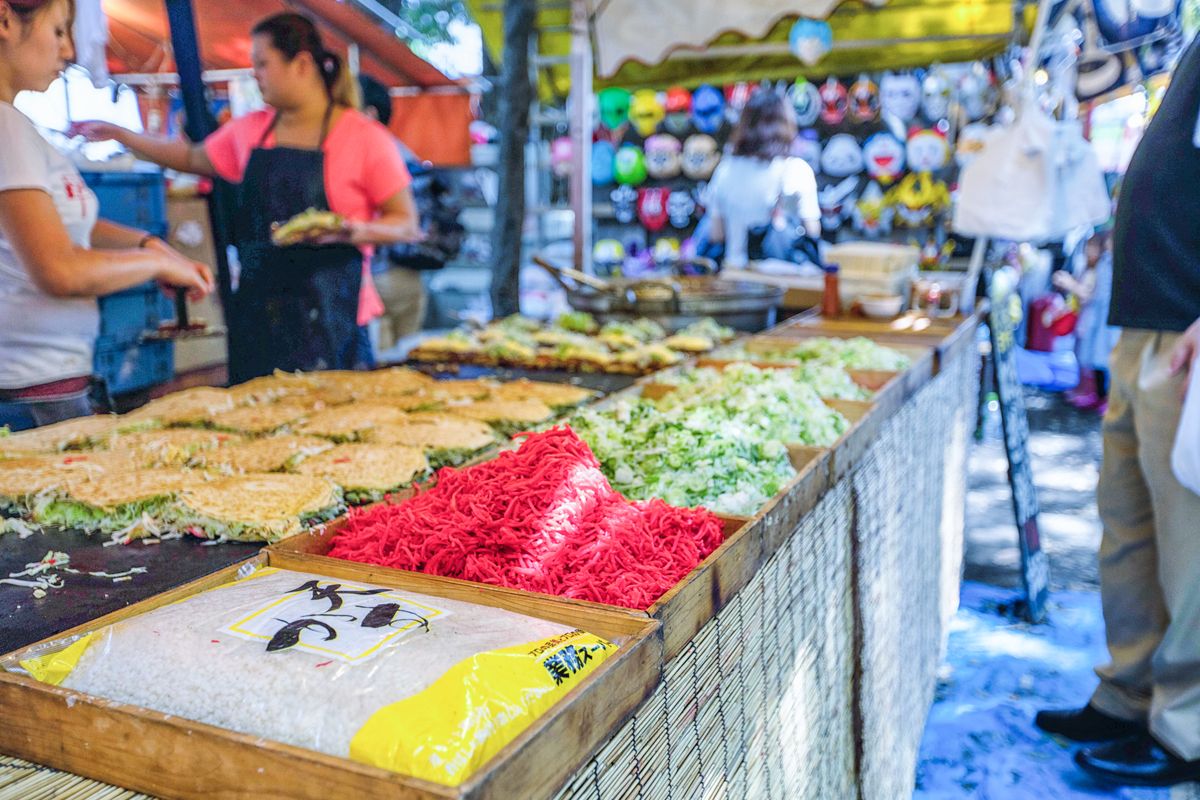
Summer is the season of abundance. Mango ripens from June through August, pineapple is at its sweetest, and goya — the bitter melon that gives champuru its name — is in peak season, which is why locals say summer is the time to eat it. Summer also brings Eisa, the energetic Okinawan drum-and-dance festivals held around the Obon period, where food stalls sell yakisoba, sata andagi, grilled skewers and shaved ice (kakigori) flavored with brown sugar and tropical fruit.
Autumn and winter are gentler, with comfortable temperatures ideal for market visits and hot bowls of soba. New Year brings traditional dishes like nakami soup and special pork preparations eaten with family. Even in the cooler months Okinawa rarely gets cold, so outdoor eating and roadside fruit stands remain a pleasure year-round. Whenever you come, there is a seasonal specialty waiting — one more reason this is a food destination for every month of the calendar.
Final Thoughts
Okinawa rewards curious eaters more than almost anywhere in Japan. The food tells the story of an island kingdom that traded across Asia, weathered war and occupation, and emerged with a cuisine that is generous, healthful and quietly proud of its own identity. Order the goya even if you think you will not like it, sip awamori with hot water as the locals do, and let a market vendor or shokudo owner steer you toward their favorite dish. Pair it with a few days on the beaches and in the markets, sort out your data and hotel in advance, and you will leave understanding why Okinawans treat their food — and their long, slow meals — as one of the great pleasures of life.
More than anything, give yourself time. The best Okinawan food experiences are rarely about ticking off a famous restaurant; they are about a slow market breakfast, an unplanned bowl of soba in a tiny shokudo, a glass of awamori shared with strangers as a sanshin plays. Eat with curiosity, follow the locals’ lead, and let the islands’ generous, unhurried spirit set the pace of your meals. Mensore — welcome to the table.
Going to Japan? Talk to locals with confidence.
Hirameki Japanese — instant offline translation, camera translation, furigana + romaji, and 314 free flashcards. No login. Works without internet.

Plan your Japan trip
Two things every first-timer should book
Some links are affiliate links. If you book through them we may earn a small commission at no extra cost to you.