Why Kagawa Is Japan’s Undisputed Udon Capital
If you asked a Japanese person where to find the best udon noodles in the country, the answer would almost certainly be Kagawa Prefecture on the island of Shikoku. This compact, often-overlooked prefecture has staked its entire identity on a single noodle — the thick, chewy, silky wheat noodle known as Sanuki udon — and it has become so intertwined with the place that Kagawa is officially nicknamed Udon Prefecture. Signs at the airport welcome you to “Udon Prefecture.” There is even a dedicated “Udon Prefectural Governor” as a tourism mascot.
But this is not mere marketing. Kagawa genuinely produces some of the finest udon in the world, and the phenomenon of travelling through the prefecture visiting bowl after bowl at different shops — a practice devotees call the udon pilgrimage — is one of the most rewarding food experiences Japan has to offer. For first-time visitors to Japan who love good food, this is a trip that will linger in your memory for years.
This complete guide covers everything you need to know about the Kagawa udon pilgrimage: the history of Sanuki udon, how the udon culture works, how to get to Kagawa, the best udon restaurants to visit, how to order, what to pay, and how to plan the perfect udon day or multi-day trip. Let’s start eating.
Before we dive into the noodles, a quick practical note: Kagawa is a rural prefecture and having mobile data for navigation is essential. Get your Japan eSIM (Stay connected from day 1) →
The History of Sanuki Udon: How One Noodle Defined a Prefecture
Sanuki is the old feudal domain name for what is now Kagawa Prefecture, and Sanuki udon has been produced here for at least 800 years. The precise origin is debated, but one popular account credits the Buddhist monk Kukai (also known as Kobo Daishi, founder of Shingon Buddhism and the Shikoku Pilgrimage) with introducing udon-making techniques from Tang Dynasty China during the Heian period (794–1185).
What is not in doubt is that the conditions in Kagawa are uniquely suited to producing excellent udon noodles. The prefecture’s warm, dry climate and rich wheat-growing plains produce high-quality soft wheat flour. Kagawa also benefits from easy access to Harima Nada soy sauce (from nearby Hyogo) and Iriko (dried sardine) dashi stock — the two ingredients that together define the distinctive flavour of Sanuki udon broth.
The culture around udon in Kagawa is deeply egalitarian and unpretentious. The most beloved udon shops are often small, no-frills, family-run establishments that have been operating for decades. Prices are extraordinarily low. The focus is entirely on the quality of the noodle itself — its texture, its chewiness, its sheen — and the subtlety of a perfectly balanced broth.
The Udon Boom and the Modern Pilgrimage
The modern udon pilgrimage culture took off in the 1990s when a group of food enthusiasts began systematically visiting every udon shop in Kagawa and writing about their experiences. This grassroots movement eventually spawned guidebooks, websites, apps, and ultimately inspired a nationwide revival of interest in high-quality udon. Today, Kagawa has well over 700 udon restaurants — an extraordinary density for a prefecture of just 950,000 people — and draws food tourists from across Japan and around the world.
Understanding the Different Types of Sanuki Udon
Before you walk into your first udon shop, it is worth understanding the different ways Sanuki udon can be ordered and served. The variations are significant and choosing the right style for your taste is part of the fun.
By Service Style
Many Kagawa udon shops, particularly the most casual and local ones, operate a self-service system that can be a little confusing at first. Here is how it typically works at a serufu (self-service) shop:
- Pick up a tray at the entrance.
- Choose your udon style and size (more on sizes below) and tell the person at the counter: e.g., “Kake no nami, hitotsu” (one medium kake udon).
- Wait a few seconds while the noodles are cooked or reheated in hot water and then placed in a bowl with broth.
- Take your bowl to the topping station and add whatever you like: tempura pieces, green onions, raw egg, grated ginger, sesame, etc. Toppings are either free (help yourself) or priced individually.
- Take your tray to the cashier and pay. At some shops you pay at the end; at others you pay at the start.
By Temperature
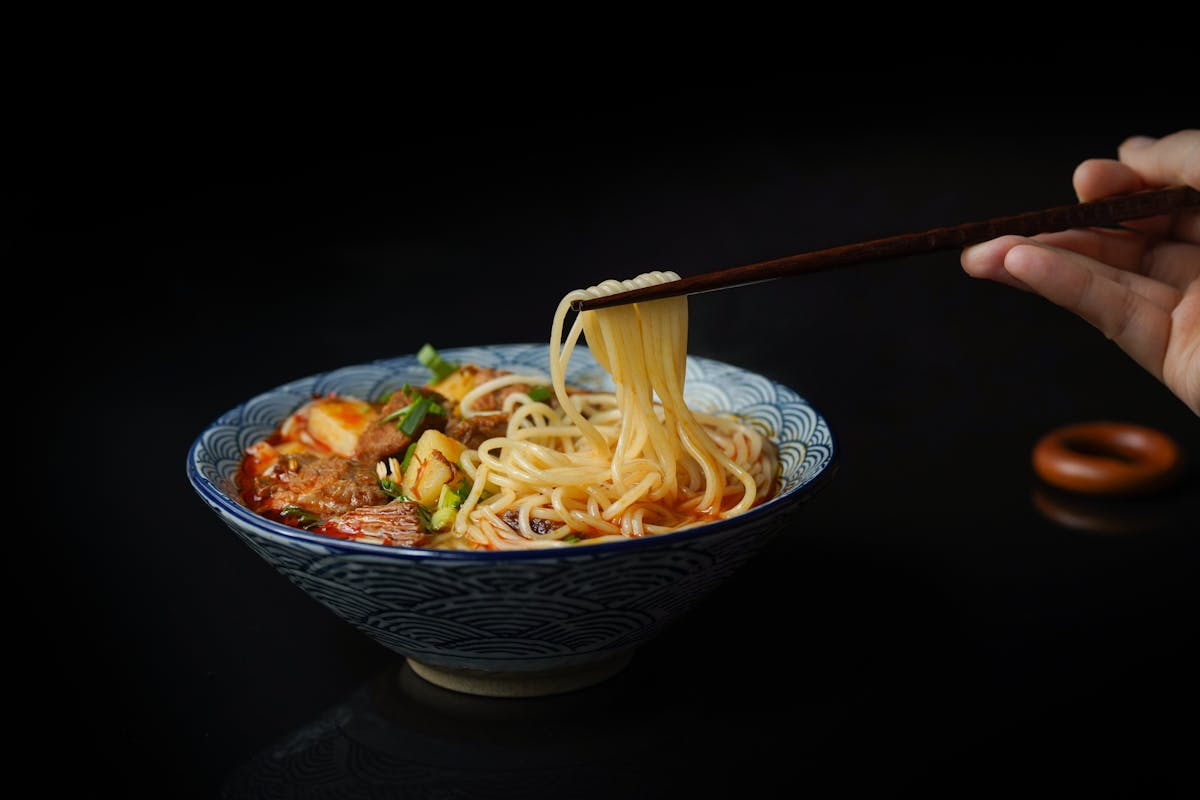
- Kake udon (かけうどん): The simplest and most fundamental form. Plain noodles in a hot dashi broth made from iriko (dried sardine) with soy sauce and mirin. Topped simply with sliced spring onion. This is the purest expression of Sanuki udon flavour and should be your first bowl.
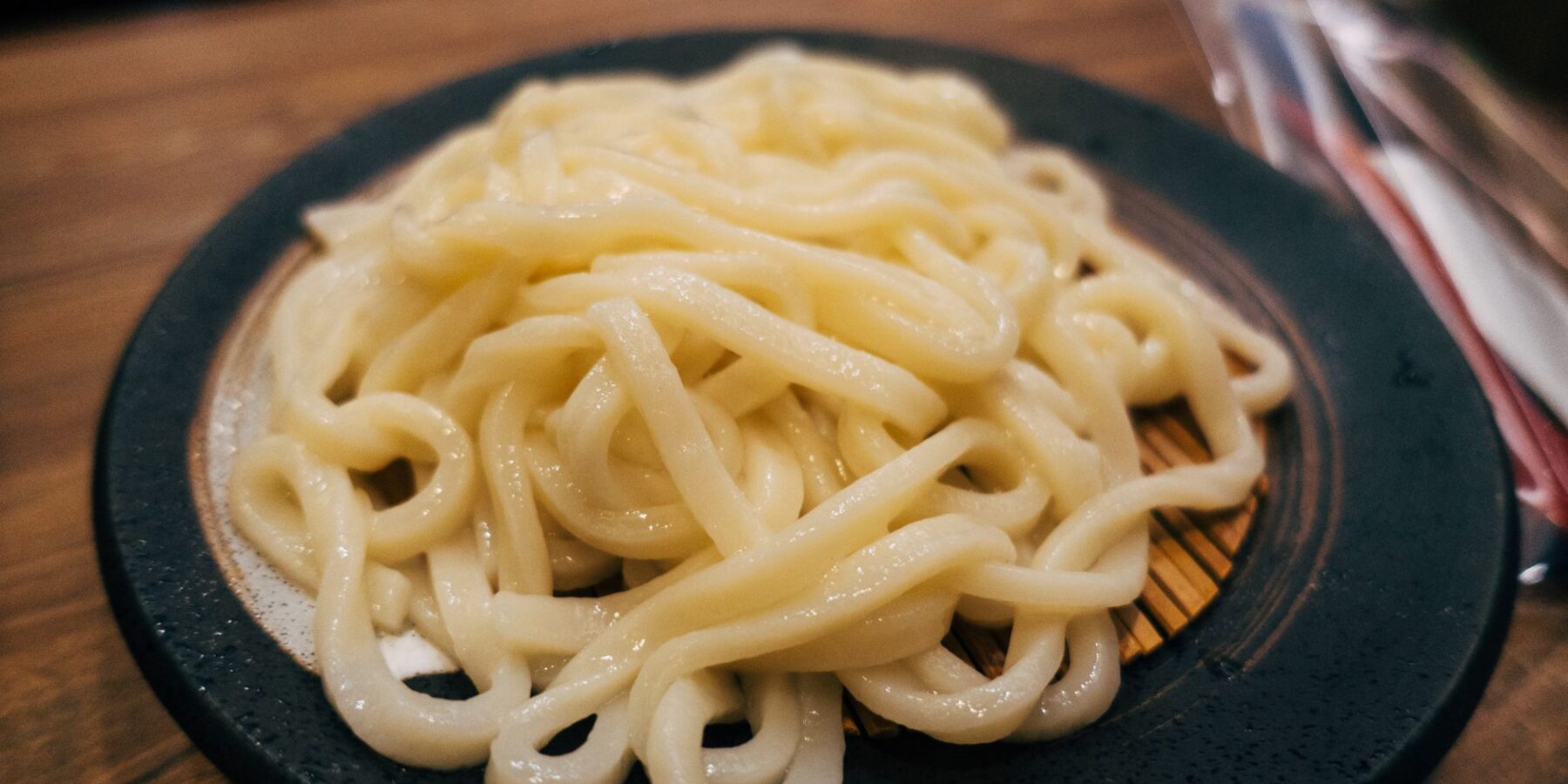
- Zaru udon / Morisoba style (ざるうどん): Cold noodles, drained and served on a bamboo tray. You dip the noodles into a small cup of cold concentrated dashi-soy broth (tsuyu). This is the definitive summer option and a wonderful way to appreciate the texture of the noodle without the broth.
- Kamaage udon (釜揚げうどん): Noodles served straight from the cooking pot into a bowl of hot cooking water, with a separate bowl of thick dipping sauce. The noodles are softer and have a starchier texture than usual. A classic cold-weather option.
- Kamatama udon (釜玉うどん): A Kagawa-born innovation — hot noodles straight from the pot, topped with a raw egg. The residual heat partly cooks the egg as you mix it through the noodles. Often finished with soy sauce and spring onion. Rich, silky, and deeply satisfying.
By Size
Most Kagawa udon shops offer udon in three sizes:
- Sho (小 / small): Approximately 200–250g of noodles. Perfect for an intermediate stop when doing the udon pilgrimage.
- Nami (並 / medium): Approximately 300–350g. A standard meal-sized portion for most people.
- Dai (大 / large): Approximately 400–500g or more. For serious eaters only.
If you are planning to visit multiple shops in one day — the pilgrimage way — order sho (small) at each stop. Even at small sizes, the noodles are filling.
How to Get to Kagawa Prefecture
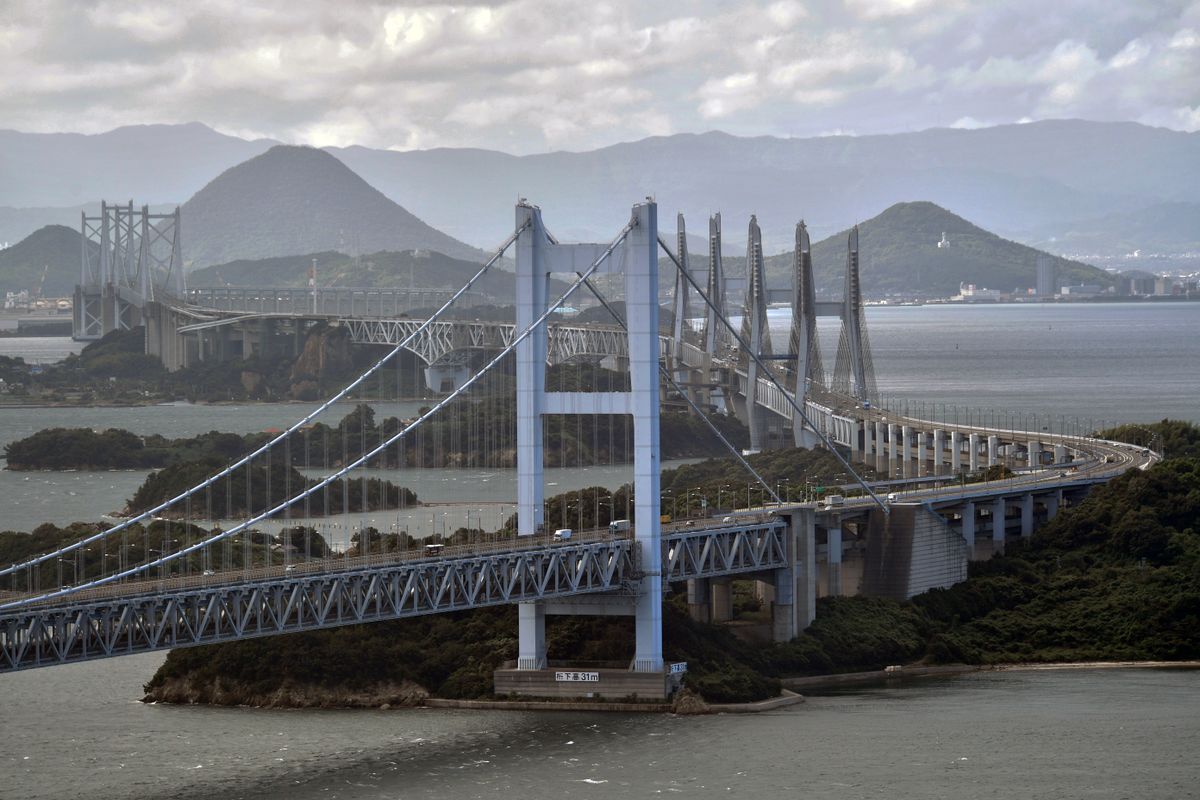
Kagawa is located on the northern coast of Shikoku island, across the Seto Inland Sea from Honshu. Getting there is straightforward from major cities.
From Tokyo
The most convenient route from Tokyo to Kagawa’s capital Takamatsu is by plane: flights from Tokyo (Haneda) to Takamatsu Airport take approximately 1 hour 20 minutes. Domestic flights on ANA and JAL start from around ¥12,680 one way with advance discount fares, but peak-period fares can reach ¥30,000 or more.
Alternatively, take the Shinkansen from Tokyo to Okayama (approximately 3 hours 20 minutes, ¥16,000–¥18,000 / ~$109–$122 USD), then the Marine Liner express train across the Seto Ohashi Bridge to Takamatsu (approximately 55 minutes, ¥1,570 / ~$11 USD). Total journey time: approximately 4.5 hours. If you have a Japan Rail Pass, both legs are covered.
From Osaka or Kyoto
From Osaka (Shin-Osaka Station), take the Shinkansen to Okayama (approximately 45 minutes, ¥5,500–¥6,000 / ~$37–$41 USD), then the Marine Liner to Takamatsu (55 minutes). Total time: approximately 2 hours. Highly convenient for those basing themselves in Kansai.
From Kyoto, the journey is similar: Shinkansen to Okayama (approximately 1 hour, ¥6,000–¥7,000 / ~$41–$48 USD), then Marine Liner to Takamatsu.
Getting Around Kagawa
Most of the best udon shops are spread across Kagawa Prefecture, not just in Takamatsu city. To do the udon pilgrimage properly, you will need transport. Options include:
- Rental car: Strongly recommended. A car gives you the freedom to visit shops in rural areas that are unreachable by public transport. International Driving Permits are accepted. Rent from Takamatsu Airport or Takamatsu Station.
- Bicycle: Takamatsu and the surrounding flat plains are very cycle-friendly. Some udon shops rent bicycles and tourist offices provide udon cycling maps.
- Taxi tours: Some taxi companies in Kagawa offer udon pilgrimage packages where the driver takes you from shop to shop on a curated route. An excellent option for those without driving licences.
- Local buses and trains: Feasible for Takamatsu city shops, but difficult for the full pilgrimage experience.
The Best Udon Shops in Kagawa: A Guide for First-Timers
With over 700 udon restaurants in the prefecture, knowing where to start can be overwhelming. Here is a curated selection of highly recommended shops, organised by area, that represent the very best of Kagawa’s udon culture.
Takamatsu Area Udon Shops
Udon Baka Ichidai (うどんバカ一代) — One of the most famous shops in Takamatsu, known for their kamatama udon. The shop has a slightly theatrical presentation with open kitchen viewing. Expect a queue at peak times. Basic kamatama medium: ¥350 (~$2.40 USD).
Marugame Seimen — Note: Do not confuse the chain restaurant “Marugame Seimen” with actual Kagawa udon culture. The chain is fine but not representative. When people talk about the best udon in Kagawa, they mean local independent shops.
Kogane (こがね製麺所) — A self-service shop near Takamatsu Station popular with office workers and tourists alike. Reliable, affordable, authentic. Kake udon small: ¥200 (~$1.36 USD). A great entry point for first-timers.
Marugame and Central Kagawa
Nakamura Udon (中村うどん) — A legendary shop in the rice fields outside Marugame. Operating since 1950, it is the kind of place where farmers stop in for breakfast udon. Extremely local atmosphere. Kake medium: ¥220 (~$1.50 USD). Note: The shop can have unusual or seasonal hours — call ahead if possible.
Hara Hara (はら家) — Located on the outskirts of Marugame, known for exceptional hand-kneaded noodle texture and a warm, family atmosphere. Popular with local regulars. Kamatama medium: ¥280 (~$1.90 USD).
Kotohira Area
Nakano Udon School (中野うどん学校) — If you want to learn how to make udon noodles yourself, this cooking school near Kotohira (home of Konpira-san shrine) offers 90-minute udon-making classes with full English support. Cost: ¥1,900 (~$13 USD) per person. You knead, cut, and cook your own noodles, then eat them. A fantastic experience and great for families.
Zentsuji and Western Kagawa
Yamashita Udon (山下うどん) — Located near Zentsuji (the birthplace of the monk Kukai), this shop is famous for its kamaage udon and the rich, deeply savoury dipping sauce that accompanies it. A pilgrimage to this shop feels doubly appropriate given the spiritual connections of the area. Kamaage medium: ¥550 (~$3.75 USD).
Sanuki Area and Eastern Kagawa
Hashimoto (はしもと) — In the Sanuki area east of Takamatsu, this tiny shop is notorious for its unconventional opening hours (often only a few hours in the morning until sold out) and its exceptionally chewy, hand-stretched noodles. Worth the planning effort. Kake small: ¥180 (~$1.22 USD).
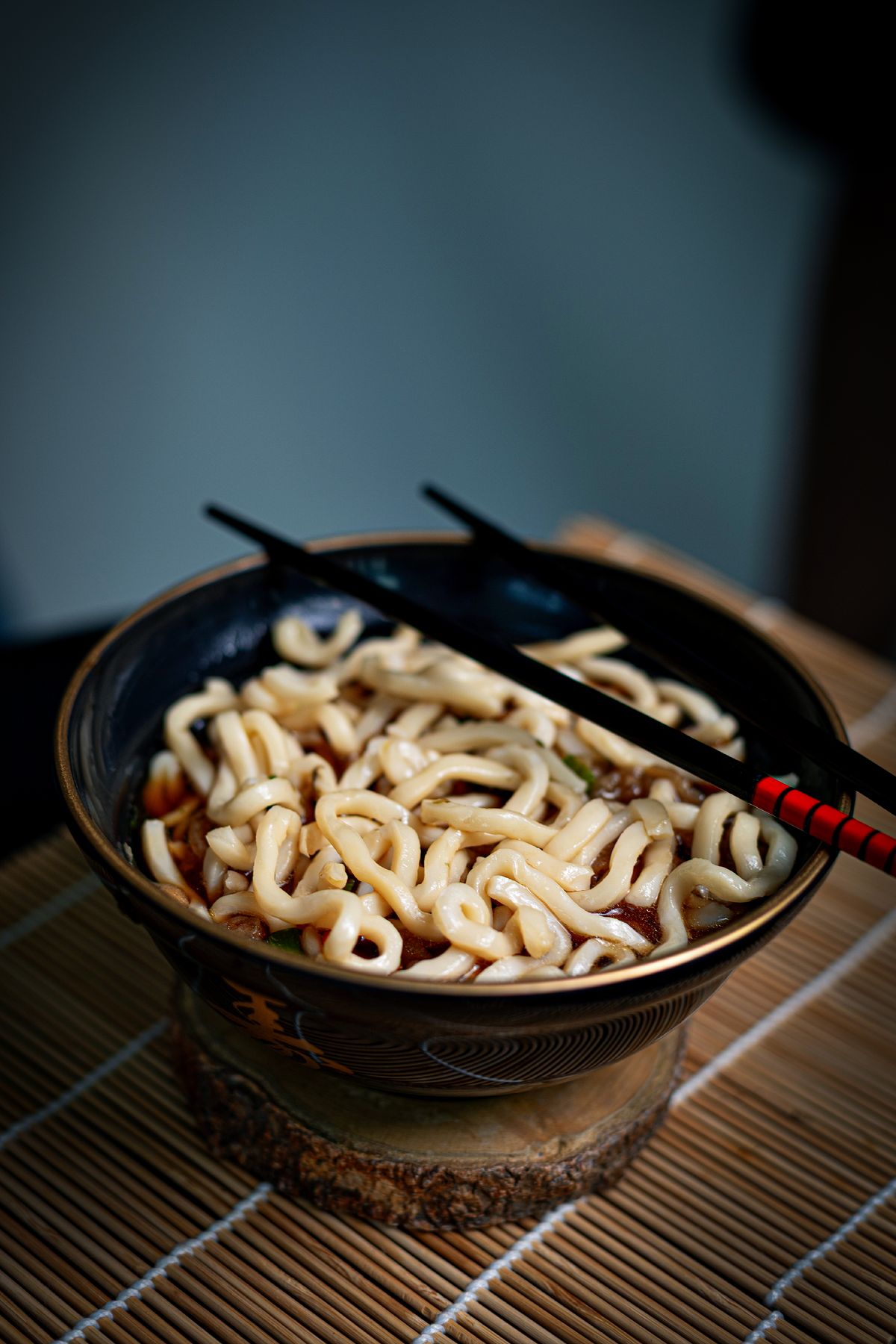
How to Order Udon in Kagawa: A Step-by-Step Guide
One of the joys of the Kagawa udon experience is its informality, but the self-service system can be briefly confusing if you’ve never encountered it. Here is a simple guide.
At a Self-Service (Serufu) Shop
- Pick up a tray at the entrance and join the queue.
- When you reach the counter, say what you want. The most basic order is: “Kake, nami, hitotsu” (One medium kake udon). Or show them a picture on your phone — staff are very accustomed to pointing at menu items.
- The cook will place the noodles in a bowl and ladle hot broth over them. Take your bowl.
- Move to the topping counter. Common free toppings include sliced spring onion (negi), grated ginger, sesame seeds, and in some shops raw egg. Take what you want.
- Paid toppings such as tempura (tenpura) are usually displayed nearby at ¥100–¥200 (~$0.68–$1.36 USD) each. Common choices: kakiage (mixed vegetable tempura), chikuwa (fish cake), ebi (prawn).
- Pay at the cashier (usually at the exit of the counter area, before you sit down).
- Eat and enjoy.
Useful Udon Vocabulary
- Kake (かけ) — hot noodles in broth
- Zaru (ざる) — cold noodles with dipping sauce
- Kamatama (釜玉) — hot noodles with raw egg
- Kamaage (釜揚げ) — noodles in pot water with dipping sauce
- Sho (小) — small size
- Nami (並) — medium size
- Dai (大) — large size
- Tenpura (天ぷら) — tempura topping
- Hitotsu (一つ) — one (quantity)
Planning the Perfect Udon Pilgrimage Day
The key to a successful udon pilgrimage is pacing yourself. Start early (many of the best shops open at 7 or 8 AM and close when they sell out — often by noon), order small sizes at each stop, and allow for gentle exploring between meals.
Sample One-Day Udon Pilgrimage Itinerary
8:00 AM — Nakamura Udon, Marugame
Start your day with a simple kake udon (small) in a farm setting. The atmosphere and quality at this legendary shop are unbeatable for breakfast.
9:30 AM — Yamashita Udon, Zentsuji
Head west to Zentsuji and try the famous kamaage udon at Yamashita. The thick, slightly sweet dipping sauce is unlike anything else in Kagawa.
11:00 AM — Kotohira Shrine (Konpira-san)
Take a break from eating and climb the 785 stone steps to Konpira-san, one of Japan’s most famous and historic Shinto shrines. The views over the Kagawa plains are rewarding and the exercise will help with digestion.
12:30 PM — Hara Hara, Marugame
Return to Marugame for a kamatama udon at Hara Hara. By now you’ll be developing a real sense of the differences between shops and styles.
2:00 PM — Takamatsu City
Drive to Takamatsu and explore Ritsurin Garden (栗林公園), one of Japan’s finest traditional landscape gardens (entry ¥420 / ~$2.85 USD). A peaceful afternoon break.
4:00 PM — Udon Baka Ichidai, Takamatsu
One final bowl to close the day — the kamatama here is rich and luxurious. A fitting end to a day well spent.
For more food adventures across Japan, explore our guide to Japan’s best street food and check out our complete Japan food experiences guide for inspiration beyond Kagawa.
Beyond Udon: What Else to See and Do in Kagawa
While udon is the star attraction, Kagawa has more to offer than noodles alone. Here are the best additional attractions to incorporate into your trip.
Ritsurin Garden, Takamatsu
Considered one of Japan’s finest traditional landscape gardens, Ritsurin Garden (栗林公園) took over 100 years to complete during the Edo period and covers 75 hectares of exquisitely designed ponds, hills, bridges, and pine trees. It is significantly less crowded than the famous gardens of Kyoto. Entry: ¥420 (~$2.85 USD). Open daily. Particularly beautiful in spring cherry blossom season and autumn foliage.
Naoshima Art Island
A ferry ride of about 50 minutes (or around 30 minutes by high-speed boat) from Takamatsu Port brings you to Naoshima, one of Japan’s most celebrated contemporary art destinations. The island hosts world-class museums by architect Tadao Ando (Chichu Art Museum, Benesse House Museum), outdoor installations, and art-transformed villages. Budget at least a full day for Naoshima. Museum entry: ¥1,000–¥2,100 (~$7–$14 USD) per museum. Entry to some outdoor works is free.
Kotohira Shrine (Konpira-san)
Konpira-san is one of Japan’s most revered and historic Shinto shrines, dedicated to the guardian of seafarers. The main shrine is reached via 785 stone steps; the inner shrine requires climbing all the way to 1,368 steps. The staircase is lined with stone lanterns and vendors selling traditional sweets and souvenirs. Views from the top over the Kagawa plains and Seto Inland Sea are spectacular. Free to climb; small entry fees for inner halls.
Shodo Island
Shodo Island (小豆島) is Kagawa’s largest island, famous for olive groves (the first in Japan), soy sauce production, and stunning coastal scenery including the dramatic Kankakei Gorge. The island is reached by ferry from Takamatsu in approximately 60–75 minutes. Worth including if you have an extra day in Kagawa.
Zentsuji Temple
Zentsuji is the 75th temple on the famous 88-temple Shikoku Pilgrimage circuit and is especially significant as the birthplace of the monk Kukai. The temple complex is the largest on the entire Shikoku circuit, covering 45,000 square metres, and includes a spectacular five-storey pagoda. Entry to outer grounds: free. Inner halls and treasure house: ¥500 (~$3.40 USD). Easily combined with a Yamashita Udon visit nearby.
Where to Stay in Kagawa
Takamatsu is the obvious base for exploring Kagawa and doing the udon pilgrimage, with the best range of accommodation and the easiest transport connections.
Accommodation Options in Takamatsu
- Budget: Business hotels and capsule hotels near Takamatsu Station typically cost ¥5,000–¥8,000 per night (~$34–$54 USD) for a single room.
- Mid-range: Comfortable hotels with Western and Japanese-style rooms run ¥10,000–¥18,000 per night (~$68–$122 USD). Look for hotels near Takamatsu Station or the central shopping arcades.
- Splurge: Kagawa has some excellent ryokan particularly around Kotohira and the coastal areas. Expect ¥20,000–¥40,000+ per person including meals (~$136–$272+ USD).
For the best hotel deals in Kagawa and across Japan: Book your hotel on Agoda (Best prices guaranteed) →
Practical Tips for the Kagawa Udon Pilgrimage
- Start early. The best udon shops open at 7–9 AM and many sell out and close by noon or early afternoon. Plan your pilgrimage around morning hours.
- Order small (sho) at every stop. Even small portions add up quickly. Three small bowls at different shops will leave you comfortably full — more than comfortable.
- Bring cash. Many udon shops in Kagawa are cash-only, and prices are so low that cards are rarely needed anyway. ¥3,000–¥5,000 (~$20–$34 USD) will cover a full day of udon eating.
- Slurp your noodles. In Japan, slurping noodles is perfectly acceptable (and some say recommended — it enhances the flavour). Do not be self-conscious about it.
- Do not add toppings before tasting the broth. At your first bowl, try the udon and broth plain before adding condiments. This lets you appreciate the base flavour the shop is proud of.
- Check opening hours. Many small Kagawa udon shops keep unusual hours — open only for breakfast, closed on certain weekdays, or closing when the day’s noodles run out. Always check before driving out of your way.
- Get an udon map. Tourist offices at Takamatsu Airport and Takamatsu Station provide free English-language udon pilgrimage maps with recommended shops plotted by area. These are invaluable.
- Don’t overlook the dashi. The broth (dashi) at Kagawa udon shops is as important as the noodles. Made from iriko (small dried sardines) and often blended with kombu and bonito, it has a deep, clean, slightly oceanic sweetness that is unique to the region.
- Stay connected for navigation. Google Maps works well for finding udon shops in rural Kagawa. Use Get your Japan eSIM (Stay connected from day 1) → to keep your maps and translation apps working throughout your trip.
- Learn to make udon. The Nakano Udon School near Kotohira offers English-friendly classes where you can knead, cut, and cook your own Sanuki udon to take home. Book in advance, especially in peak seasons.
A Budget Guide to the Kagawa Udon Pilgrimage
One of the great joys of the udon pilgrimage is how extraordinarily affordable it is. Here is a typical day’s budget:
Full-Day Udon Pilgrimage Budget
- 4 bowls of udon (small sizes): ¥800–¥1,400 (~$5.45–$9.50 USD)
- Tempura toppings across 2 bowls: ¥200–¥400 (~$1.36–$2.72 USD)
- Ritsurin Garden entry: ¥420 (~$2.85 USD)
- Konpira-san (climbing, no entry fees required for main shrine): Free
- Rental car (one day, including fuel): ¥6,000–¥9,000 (~$41–$61 USD)
- Total food and activities: approximately ¥1,500–¥2,500 (~$10–$17 USD)
- Total including car rental: approximately ¥8,000–¥12,000 (~$54–$82 USD)
This is extraordinarily good value, particularly compared to the cost of eating out in Tokyo or Kyoto. The Kagawa udon pilgrimage is one of the best-value food experiences in all of Japan.
For more ideas on exploring Japan’s incredible destinations, browse our full destinations section.
Frequently Asked Questions About the Kagawa Udon Pilgrimage
How many udon shops can I realistically visit in one day?
Most first-time pilgrims comfortably visit 3–5 shops in a single day, ordering small (sho) portions at each stop. Veterans of the pilgrimage occasionally hit 8–10 shops in a day, but this requires very small portions and considerable stamina. A more relaxed 4-shop day with sightseeing in between is ideal for most visitors. Quality over quantity is the right approach — linger over each bowl and appreciate the differences between shops.
Is gluten-free or vegan udon available in Kagawa?
Traditional Sanuki udon is made from wheat flour and is not gluten-free. Vegan options are possible — kake udon without the iriko (sardine) dashi can sometimes be requested, though many shops use the same dashi for everything and cannot easily substitute. If you have dietary restrictions, research specific shops in advance and contact them to ask. The udon school near Kotohira may be able to accommodate special requests for classes. Unfortunately, Kagawa’s udon culture is not well set up for gluten-free visitors.
What is the best udon for a first-time visitor to try?
For absolute beginners, start with kamatama udon — hot noodles with a raw egg stirred through, finished with soy sauce. It is rich, comforting, and gives you an immediate sense of why Kagawa udon is special. After that, try kake udon (plain noodles in hot broth) to appreciate the purity of the broth and noodle texture without distractions. Between these two styles you will quickly understand why Kagawa people are so passionate about their prefecture’s noodles.
Do I need to speak Japanese to do the udon pilgrimage?
You absolutely do not need Japanese to enjoy the udon pilgrimage. Most Kagawa udon shops have picture menus or plastic food displays. Pointing at what you want works perfectly well, and staff at tourist-frequented shops are very accustomed to international visitors. The basic vocabulary (kake, kamatama, sho, nami) will be enough to get you through most situations. A translation app on your phone is useful for reading shop names and checking addresses.
Are Kagawa udon shops open on public holidays?
Many small, family-run udon shops in Kagawa are closed on certain public holidays or take irregular breaks. The most popular tourist-oriented shops tend to stay open, but rural farm-adjacent shops sometimes close. Always check current opening hours online or call ahead, particularly around New Year (January 1–3), Golden Week (late April to early May), Obon (mid-August), and other major Japanese holidays.
Can I take udon home as a souvenir from Kagawa?
Yes! Dried or semi-dried Sanuki udon noodles are one of the most popular souvenirs from Kagawa and are available at airports, supermarkets, and specialty shops throughout the prefecture. Takamatsu Airport has an excellent selection of packaged Sanuki udon, udon dashi soup packets, and udon-related gifts. Many packages include English instructions for cooking. They make wonderful, lightweight, and uniquely meaningful gifts.
Is Kagawa easy to combine with other Shikoku destinations?
Yes, Kagawa pairs naturally with other Shikoku destinations. Takamatsu is an excellent hub from which to explore Tokushima (Iya Valley vine bridges, Awa Odori festival) to the east and Ehime (Matsuyama Castle, Dogo Onsen, Shimanami Kaido cycling) to the west. A 4–5 day Shikoku itinerary based in Takamatsu with day trips or one-night stops in other prefectures is very practical and very rewarding.
Final Thoughts: Why Every Japan Visitor Should Do the Udon Pilgrimage
The Kagawa udon pilgrimage is one of those travel experiences that seems, on paper, almost too simple to justify a special trip — after all, you’re just eating noodles. But anyone who has done it will tell you that it becomes something much more meaningful than that. It is about the textures and subtleties of one of Japan’s greatest culinary traditions, experienced in its most pure and authentic form. It is about the generosity of a food culture where extraordinary quality costs almost nothing. It is about the people — farmers, fishermen, students, office workers — who eat this food every day with obvious pleasure and pride.
For first-time visitors to Japan who want to go beyond the famous temples and castles and experience the country through its living food culture, the Kagawa udon pilgrimage is unforgettable. Pack an appetite, bring your curiosity, and go with an open mind. You will leave Kagawa fuller in every sense of the word.
Ready to plan your Japan adventure? Browse our full Japan destinations guide and find detailed guides to every region, from Hokkaido to Okinawa. And explore our guide to Japan’s best food experiences for more inspiration beyond the noodle bowl.
Going to Japan? Speak Japanese with confidence.
Hirameki Japanese — camera translate for menus and signs, a two-way conversation mode, and furigana + romaji on every phrase. Free to download with kana charts, conversation mode and starter words; a one-time purchase unlocks everything.

Plan your Japan trip
Two things every first-timer should book
Some links are affiliate links. If you book through them we may earn a small commission at no extra cost to you.